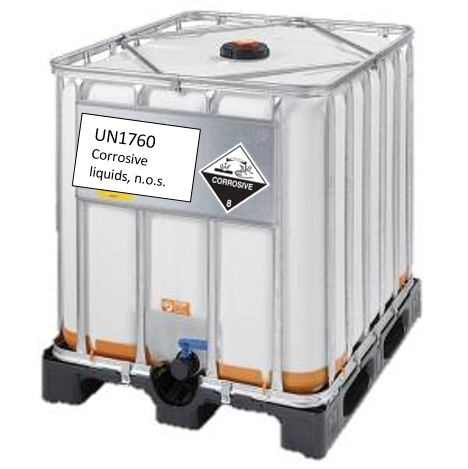
Q&A: Is my tote a bulk packaging? Is it subject to regulation when shipped empty?
A question from a former coworker on August 29, 2017:
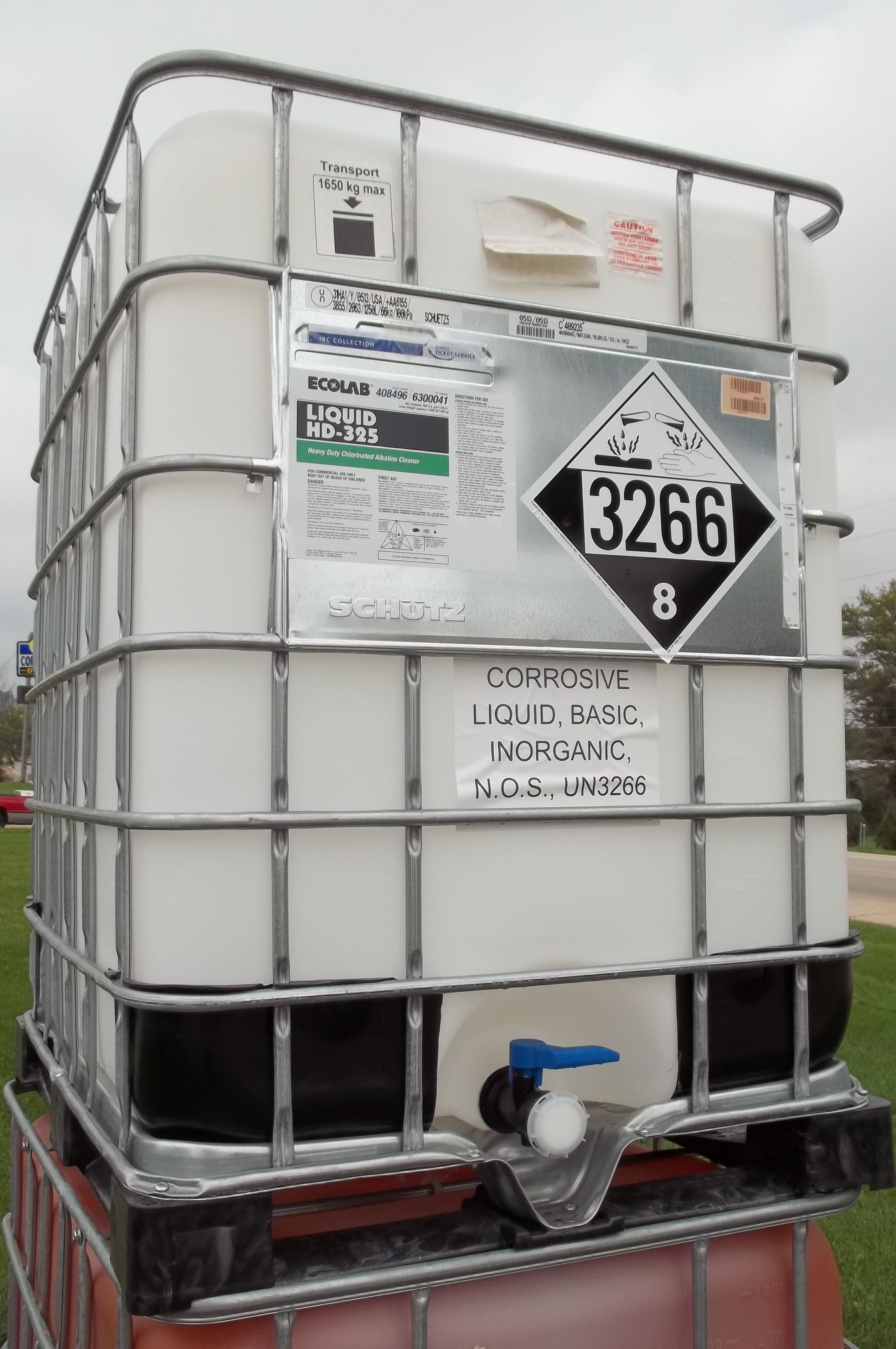
Good morning Dan. We have a client that has soaps coming to the facility that are corrosive in totes. They have contracted a recycling service to come pick up the empty totes. The service provider is being very conservative and wants to ship the totes as hazardous material, even though the totes are empty by normal practical means. They are stating the totes are 150 pounds each so when over six are shipped they are asking the client to provide placards for the shipment. The client is not DOT registered, they normally do not offer hazardous substances for transportation. Does the client take on liability for misrepresenting the shipment? (should not be shipped as a hazardous substance) I assume they would need to become registered and pay the annual fee, correct? If they only ship six totes (900 pounds), they would not require placarding and therefore would not need to be registered. However, if the transporter still wants to ship with a placard, could the client be responsible for misrepresenting the load by providing placards and signing shipping papers? Where is this addressed in the rules?
My reply that same day:
Thanks for contacting me.
Unless, “sufficiently cleaned of residue and purged of vapors to remove any potential hazard…” the packaging is subject to full regulation as a hazardous material when offered for transportation. Read: “Emptying” a Hazardous Material Packaging. 49 CFR 172.514(b) states this clearly for a bulk packaging.
Therefore, a bulk packaging containing any residue of a hazardous material must be shipped as a fully regulated HazMat. This means that HazMat labels, marks, and/or placards are required on the packaging and on the vehicle as applicable. A shipping paper describing the hazardous material must accompany the shipment. All personnel involved in its off-site transportation must receive HazMat Employee training.
Any amount of a HazMat in a bulk packaging requires the display of placards on the vehicle. It does not matter the weight of the HazMat nor the number of bulk packagings. 49 CFR 172.504(c) offers an exception for display of placards on a vehicle but not for bulk packagings or the really nasty HazMat of Placarding Table 1 at 49 CFR 172.504(e).
The shipper is responsible for the classification and shipment of the HazMat in compliance with the Hazardous Materials Regulations. They will get the fine, not the carrier.
Options:
Ship empty totes as fully regulated HazMat.
Rinse out totes so no hazard remains. Discharge wastewater down drain to POTW. Then offer for transport. No hazardous residue = no HazMat regulations.
Add chemical and/or absorbent to totes to neutralize Class 8 Corrosive. No hazardous residue = no HazMat regulations.
Hope this helps. Please contact me with any questions.
It may not have been the answer he was hoping for but it did help:
Thank you so much Dan. I didn’t realize the totes were considered bulk packages and the “empty” definition does not apply. I’ve not really worked much with totes and I have learned something new again.
This really helps. Thank you.
Contact me with any questions you may have about the transportation of hazardous materials by air, highway, vessel, or rail
Q&A: What are the California regulations for a Commercial Motor Vehicle?
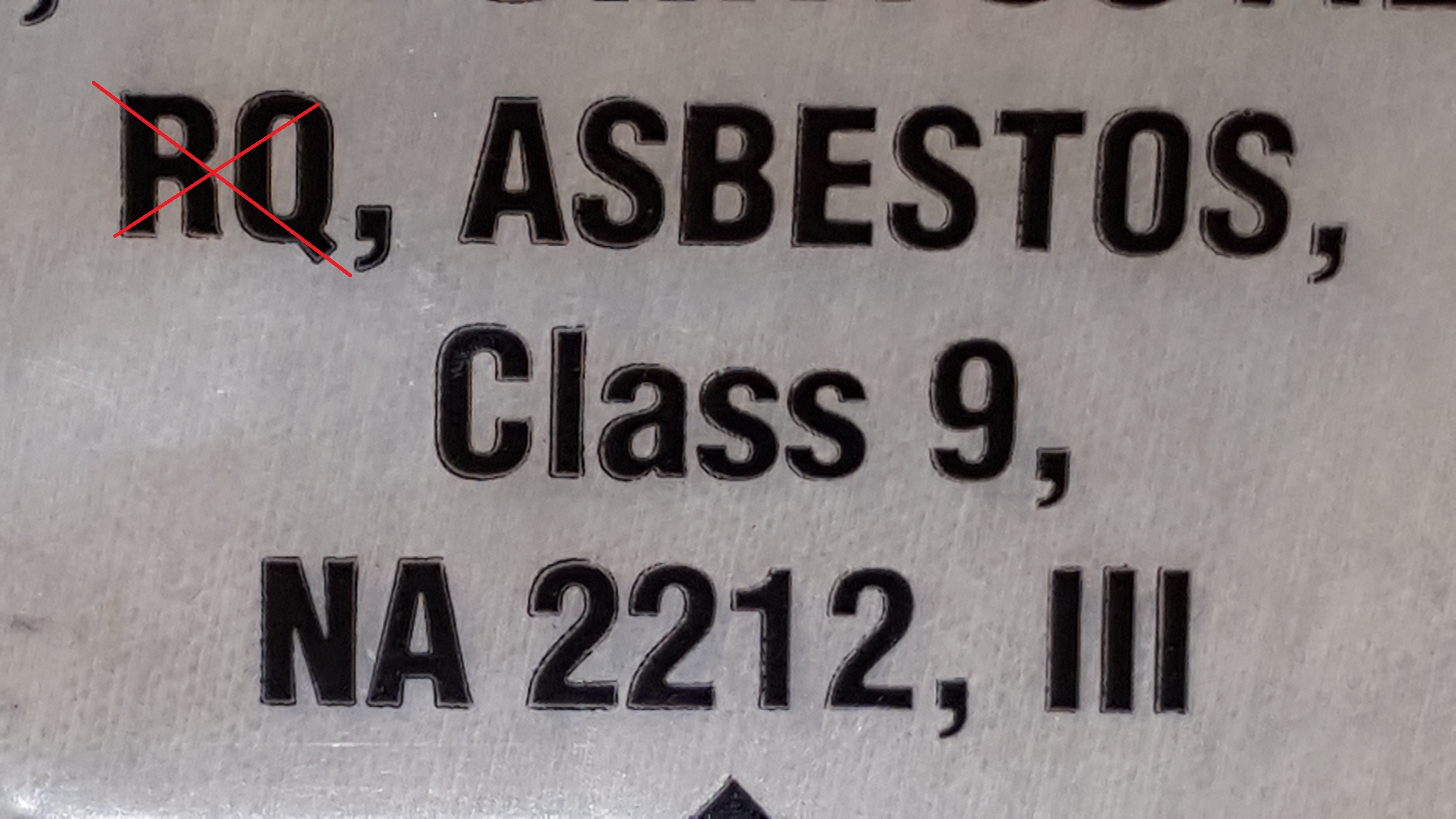
The question came by way of a telephone conversation on August 28, 2017 (no transcript available). A gentleman was interested in the transport of asbestos waste – a hazardous material per USDOT/PHMSA regulations if friable – in California. He needed to know if the transport in commerce of asbestos waste was subject to California regulations as a commercial motor vehicle (CMV). I had the time to research the California regulations (this isn’t my usual area of expertise) and fire off to him some information in an email that same day:
Please see below for some guidance regarding the status of CMVs in California.
Title 13 of the California Vehicle Code (CVC) part 260 defines a commercial vehicle:
A commercial vehicle is a type of vehicle:
Used or maintained for the transportation of persons for hire, compensation, or profit (for example, a taxi or limousine).
Designed, used, or maintained primarily for the transportation of property.
Types of motor vehicles include but are not limited to:
Motor Truck (CVC 410)
Pickup (CVC 471)
Per 13.005, commercial vehicles must be registered – and pay fees – based on their gross vehicle weight (GVW).
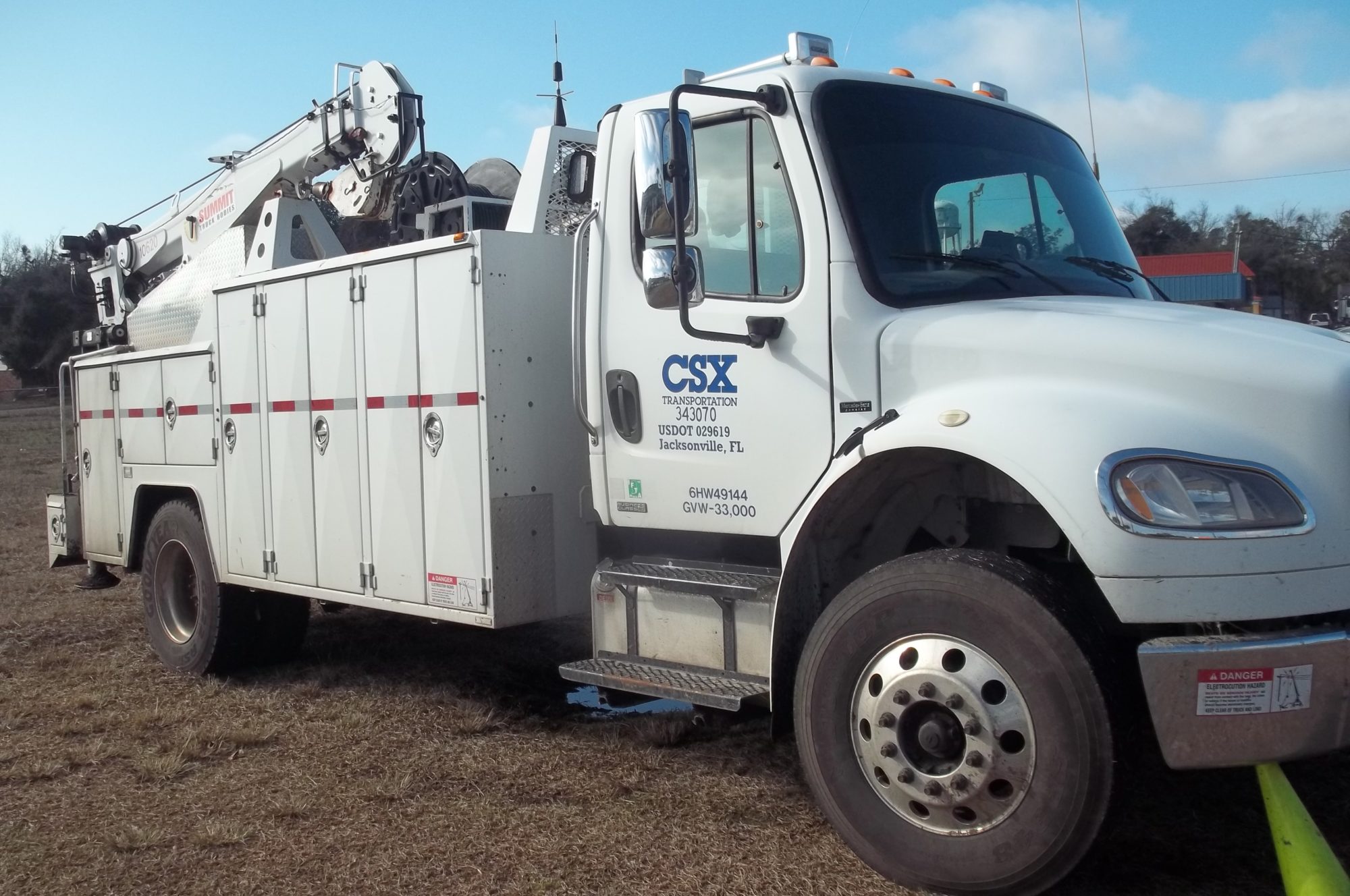
Based on the above it appears that the California definition of a CMV (aka: Regulated Vehicle) is more strict than the Federal regulations or other states.
Also:
The transporter of a hazardous waste (RCRA or non-RCRA) must be registered with DTSC.
CVC §15278(a)(4) requires a HazMat endorsement for those who drive a vehicle requiring placards.
As noted earlier, asbestos as a Class 9 Miscellaneous is not required to display placards.
Other hazardous waste (both RCRA & non-RCRA) may require the display of placards depending on the quantity.
The transportation in commerce of hazardous materials – which includes asbestos waste – is subject to the regulations of several agencies: OSHA, for the potential exposure to employees; USEPA, to reduce the impact of its disposal on the environment; USDOT/PHMSA, for its safe transportation on public roadways; and those of your state if the transportation is for a business. Some states, like California, have even more strict regulations for the operation of commercial motor vehicles (CMVs).
Q&A: Can I ship half-full drum of hazardous materials?
A question from a member of our armed services (thanks for your service!) on August 28, 2018:
Can you ship half full 55 gallon drum?
My reply 11 minutes later:
Thank you for contacting me.
There is nothing in the Hazardous Materials Regulations (HMR) of the USDOT/PHMSA that forbids the shipment of a half-full packaging. It is OK to ship a half-full 55-gallon drum.
Please don’t hesitate to contact me with any other questions.
Thank you again for your training last week. It was very informative.
We have a question regarding shipping between US and Canada, along with questions of how the customer would ship this material once in Canada. The safety data sheets (SDSs) are different between the US and Canada. This is making the Canadian distributor hold our shipment before receiving. Do we need to mark these shipments in accordance to the Canada SDS or the US SDS? Also, if we mark them according to the US SDS, does the distributor have to change the markings in order to ship within Canada? Thank you in advance for your assistance.
Best Regards,
SEVERAL SAFETY DATA SHEETS (SDS) WERE ATTACHED TO THE EMAIL
And I did reply that night after reviewing the SDS he had provided (08.15.17):
I will try to answer your questions below.
I cannot answer questions about the SDS with great confidence as it is a requirement of OSHA regulations with which I am not experienced.
However, under the new OSHA HazCom Standard as revised by OSHA’s adoption of the Global Harmonization System (GHS) an SDS should be the same throughout the world. I have no explanation why section 2 of the SDS for Part A differs between the U.S. version and the Canadian. It must be an error as it should be the same in both.
Section 14 appears to be incomplete in all four SDS. It does not include a basic description for the HazMat under IATA or IMDG.
As addressed in my training, the U.S. and Canada have a reciprocal agreement for the transport of HazMat / Dangerous Goods between the two countries by highway or rail. Read: The Transport of HazMat Between the U.S. and Canada.
Based on the information provided it appears that all of the materials are a Class 3 Flammable Liquid and the best shipping description is: UN1133, Adhesives, 3, Packing Group II (or PG I. It depends on the initial boiling point and that data isn’t available on the SDS.)
The above shipping description should suffice in both U.S. and Canada.
I hope this helps. Please don’t hesitate to contact me with any questions.
Contact me with any questions you may have about the transportation of hazardous materials by air, highway, vessel, or rail
They are also claiming that, due to the flash point, we can’t ship limited quantity. In your opinion is this the case?
And I had a quick answer ready for him:
They are incorrect. A Class 3 Flammable Liquid adhesive can be shipped as a limited quantity no matter the flash point. There are limits on the net quantity of the HazMat in the package based on the Packing Group which is determined, in part, on the HazMat’s flash point. The limited quantity exception also has a limit on the gross weight of the package for all HazMat no matter the Packing Group.
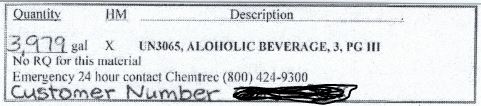
I have a rather easy question but I would like some clarification. Our company transports HM for a customer and I noticed something that looks a little off on their pre-printed HM BOL’s. They list no Unit of Measure (e.g., 1 Tanker) however they list a volume in gallons before the HM description, for example: # of gallons – UN1170, Ethyl Alcohol, 3, PGII.
Per CFR §172.202(a)(5) it appears their BOL is printed incorrectly as it does no have a UOM. Can this method be used and still remain in compliance with regulation?
My training tells me it should listed in this manner: 1 Tanker – UN1170 Ethyl Alcohol 3 PGII. # of gallons. Am I correct?
Regards,
My reply that same day:
Thank you for contacting me. I will try to answer your question. Please see below.
Per 49 CFR 172.202(a)(5) the total quantity of HazMat on a shipping paper (e.g. bill of lading) must be indicated by mass or volume and must include an indication of the unit of measure.
Per §172.202(a)(5)(iii) the following are excepted from the above requirement: Bulk packages, provided some indication of the total quantity is shown. e.g. “1 cargo tank” or “2 IBCs”. In other words, the total quantity and UOM of a HazMat is not required for a tanker (aka: cargo tank).
Per §172.202(c)(1) the total quantity of the material must appear before or after, or both before and after the basic description. Abbreviations may be used for UOM.
In sum:
The total quantity in gallons is not required on a shipping paper for a bulk packaging such as a tanker truck. An indication of the total quantity e.g. “1 cargo tank” will suffice.
If a total quantity is displayed then a unit of measure must be displayed as well. It is a violation to display the quantity in gallons and not have the unit of measure.
The safest thing to to is to remove the total quantity and unit of measure and go with just the indication of total quantity: “1 cargo tank” either before or after the basic description.
I hope this helps.
Please don’t hesitate to contact me with any other questions.
But he still had some questions for me (08.08.17):
Relating your explanation below to my customers pre-printed HM BoL’s, it appears since they use a UOM in gallons on their pre-printed BoL’s they will need to hand write the total quantity (1 Tanker) after the basic description. Will this meet compliance if done this way?
And I had a reply (08.08.17):
Please see below:
The total quantity in gallons is not required for a tanker. Simply “1 tanker” will suffice for both the total quantity and the number and type of packaging.
If a total quantity in gallons is used it must also include the UOM.
If the BoL already displays the total quantity in gallons and the UOM then all that is required is the number and type of packaging. In that case “1 tanker” will suffice. The number and type of packaging can be displayed before or after the basic description.
I hope that answers your question? If still unclear perhaps I will understand better if you email me a scanned copy of the BoL with the relevant information.
Interested in site specific training at your site that covers this topic, and more!
Questioner did just what I requested and sent me a copy of the bill of lading:
I really appreciate your assistance. I have attached a copy of the information in question.
Having the BoL in question in front of me was very helpful. I now had a final answer ready:
I understand better now. Unless I am missing something, the BoL does indicate the total quantity with the UOM. The placement before the basic description is acceptable. It is, however, lacking the number and type of packages required by §172.202(a)(7). As you indicated earlier, this can be added after the basic description as “1 cargo tank”.
I hope THAT answers your question.
That was the answer he needed (08.09.17):
Daniel,
Thank you for your assistance, your guidance has helped.
Contact me with any questions you may have about the transportation of hazardous materials by air, highway, vessel, or rail
FAQ: What does USDOT mean by a “contract carrier”?
USDOT/PHMSA regulations at 49 CFR 173.29(c) for transport of empty packagings refer to a “contract carrier” but the Hazardous Materials Regulations (HMR) do not define this term. (Neither does it define “common carrier” or “private carrier”, other terms used in the same section of the regulations.) What then is a “contract carrier” as the term is used by USDOT/PHMSA?
The first place to look for the definition of a word or term used by the HMR is 171.8 – Definitions. But you won’t find any mention of “contract carrier” there.
Contact me with any questions you may have about the transportation of hazardous materials by air, highway, vessel, or rail
Sometimes a term used only by a specific section of the HMR will be defined in that section. But no luck finding the definition of “contract carrier” in §173.29 either.
Perhaps it can be found in the regulations of the Federal Motor Carrier Safety Administration (a sister administration to PHMSA within the USDOT), since it is the one that regulates commercial motor vehicles? However, “Since January 1, 2007 FMCSA has been required by law not to distinguish between common and contract carriers, as they were previously defined.” Due to a loop-hole in the regulations this did not go into affect until January 17, 2017. Read about it on the FMCSA website.
An indication of what USDOT/PHMSA means by the term “contract carrier” can be found in this letter of interpretation from July 25, 2003 (02-0259):
The term “contract carrier” is used in the HMR in the same manner as in the former Interstate Commerce Act (“the Act, “now repealed) to mean a person who transports by motor vehicle, for compensation, passengers or property in commerce “under continuing contracts with one person or a limited number of persons either (a) for the furnishing of transportation services through the assignment of motor vehicles for a continuing period of time to the exclusive use of such person served or (b) for the furnishing of transportation services designed to meet the distinct need of each individual customer.”
And further…
A contract carrier provides “specialized service” to its customers…”
So, in my words, a contract carrier operates under a contract to provide specific transportation services – by motor vehicle over a public roadway – to a single person or limited number of persons.
FAQ: Is DOT certification required for a person to provide information in section 14 of the Safety Data Sheet?
Since the advent of the Safety Data Sheet (SDS) – formerly known as the Material Safety Data Sheet (MSDS) – there has been some confusion regarding the use of and authorization of section 14 of the SDS, entitled: Transportation Information. The name alone seems to indicate that the shipper of a hazardous material may rely on the information in section 14 when making their HazMat Classification. It would also seem logical then that the person completing section 14 would require HazMat Employee training per 49 CFR 172, subpart H of the USDOT/PHMSA Hazardous Materials Regulations. This however, is not the case. See below for my reply to this FAQ.
Contact me with any questions you may have about the transportation of hazardous materials by air, highway, vessel, or rail
In some other countries (I don’t know which) all 16 sections of the SDS are authorized (i.e. the information contained in them must be correct and is subject to enforcement if incorrect).
Neither OSHA, EPA, nor DOT has authorized sections 12 – 15 of the SDS. Therefore, to the best of my understanding (I am not an OSHA expert), the person providing the information for sections 12 – 15 is not subject to enforcement if the information is incorrect.
Since section 14 of the SDS is not authorized by DOT, I don’t believe providing information for section 14 meets the definition of a HazMat Employee. Though, HazMat Employee training is good idea for any such person.
Further, if a person performs a HazMat classification for their own purposes (shipping a HazMat), that activity meets the definition of a HazMat Employee and requires training.
Summary:
My recommendation is that anyone involved in the transportation of a hazardous material, including completion of section 14 of the SDS, receive HazMat Employee training every three years.
On-Site Accumulation and Off-Site Transportation of Spent or Used Lithium Batteries
Lithium cells and batteries pose a variety of risks due to their potential for an uncontrolled chain reaction resulting in heat and fire. When discarded they display the characteristic of Reactivity as defined by USEPA (and states) and are therefore regulated as a hazardous waste. When offered for off-site transportation they are regulated as a Class 9 Miscellaneous by the USDOT/PHMSA.
However, both of these agencies allow for a “deregulation” or even an exception from full regulation if specified requirements are met. This article is meant to be a source of useful information for anyone who seeks to comply with the regulations of the USEPA (and their state environmental agency) and the USDOT/PHMSA but also wants to take advantage of a relief from full regulation when they can. (more…)
Q&A: What labels, marks, and placards are required on an IBC shipped domestically within the U.S. and internationally by vessel?
A question from a customer of mine who had attended my Onsite Training at their facility several months before:
Hi Dan,
I hope this finds you doing well.
During the training session back in April, there was a question raised about “do we need to apply a placard to IBCs (aka: intermediate bulk container) or can we use the 4” x 4” labels”. I cannot remember what the answer to this question was.
We ship a number of IBCs of Class 8 Corrosive Material not only domestically but also via ocean and today we place a class 8 placard on opposing sides of the IBC. Is this required or can we use the smaller 4” x 4” class 8 label?
Thanks for the help.
Best regards,
I was ready with an answer for the first half of his question but needed more time for the second part:
I can answer part of your question now. The other part will take more time and research. Please see below.
For transportation within the U.S. according to the regulations of PHMSA, there are several options for the marking, labeling, and/or placarding of an IBC. One option available is to mark and label the IBC in the same manner as a non-bulk packaging. This means a single HazMat label (4″ x 4″) near the proper shipping name and the identification number (ID number at least 12 mm high). This article I wrote explains the available options, including the above: How to Mark, Label, and/or Placard an IBC of HazMat.
The requirements for hazard communication on an IBC per the Dangerous Goods Code of the International Maritime Organization (IMO) are not immediately known to me. I will need to research the answer and reply.
I now have an answer to the second part of your question. Please see below.
Per the IMDG Code (i.e. the regulations of the IMO), an IBC of more than 450 L (119 gal) must be marked on two opposing sides (5.2.1.4) and must be labeled on two opposing sides (5.2.2.1.7).
This differs from the domestic regulations of PHMSA which has many options but includes an option to label and mark on only one side.
I hope this helps. Please contact me with any other questions.
The answer still required some clarification:
Hi Daniel,
Thanks for this information. The last part of our question relates to the size. Today we place a placard on each side of the tote but we are wondering if we can use a 4” x 4” label instead. This would be easier and less costly.
Thanks again.
And clarification was forthcoming:
In both instances (domestic and international) a 4″ x 4″ HazMat label is acceptable.
And appreciated!
Thanks!!!!!!
Contact me with any questions you may have about the transportation of hazardous materials by air, highway, vessel, or rail
It’s not that uncommon that days, weeks, months, or even years after a training session a customer reaches out to me for clarification on some aspect of the regulations. I don’t charge for these services and answer questions gladly! I understand that the day – or days – of Onsite Training can be overwhelming. It may take sometime to process the information and apply it to your regulated activities; that’s when the questions come up. In the case of this customer my training was my second time to their site to provide the following training over the course of two days (16 hours):
Lithium Cells or Batteries Shipped for Disposal or Recycling
This article will explain the Hazardous Materials Regulations (HMR) of the USDOT/PHMSA for the packaging and transport of lithium cells or batteries shipped for disposal or recycling.
The transportation in commerce of lithium cells or batteries is subject to myriad regulations, both domestic and international. However, within the HMR at 49 CFR 173.185(d) is an exception to full regulation for lithium cells or batteries when shipped for the purposes of disposal or recycling.
Before we begin…
Though brief – two sentences making one paragraph – the exception contains terms identified elsewhere in the HMR and references to other regulations as a condition of compliance. It will be helpful to identify some of these up front.
The testing and record keeping requirements of §173.185(a) are referenced as one of the reliefs offered by this exception. While the testing and record keeping are to be performed by the lithium cell or battery manufacturer, it is the responsibility of the shipper to ensure the data is available.
The exception requires the lithium cells or batteries to be packaged in a “strong outer packaging”. Definitions may vary but this could be something as simple as a sturdy cardboard box. More description of a strong outer packaging is provided later in this article.
The exception provides relief from the specification packaging requirements at §173.185(b)(3)(ii). A specification packaging is one designed, manufactured, tested, and marked to indicate it meets certain criteria established by the USDOT and/or the United Nations and will be able to withstand the conditions of transport.
The U.S. Environmental Protection Agency (USEPA) requires a person to manage the waste it generates – including lithium cells or batteries shipped for recycling or disposal – subject to the regulations of the Resource Conservation and Recovery Act (RCRA). Lithium cells or batteries to be shipped for recycling or disposal may be managed as a hazardous waste with the characteristic of reactivity (D003). Lithium cells or batteries to be shipped for recycling only may be managed as a universal waste.
Contact me with any questions you may have about the transportation of hazardous materials by air, highway, vessel, or rail
The exception is valuable to shippers of lithium cells and batteries transported for disposal or recycling but it has its limits. Be certain your intended shipment falls within the scope and applicability of the exception. The limits of the exception identified here apply to all lithium cells or batteries subject to §173.185(d).
This particular exception is found only within the HMR of the USDOT/PHMSA. The Dangerous Goods Regulations of the International Air Transport Association (IATA) do not allow for the transport of lithium cells or batteries by air if shipped for the purpose of disposal or recycling. The Dangerous Goods Code of the International Maritime Organization (IMO) do allow for the transport of lithium cells or batteries by vessel for the purpose of disposal or recycling but not in the same manner as the USDOT/PHMSA.
The exception does not apply to lithium cells or batteries that are damaged, defective, or part of a recall. Those are subject to regulation under §173.185(f).
Both lithium cells and batteries are subject to this exception.
Both lithium ion (including lithium ion polymer) and lithium metal (including lithium alloy) cells and batteries are subject to this exception.
Of the three (3) possible configurations for shipping lithium cells and batteries, only two are subject to this exception:
Lithium cells or batteries shipped alone – subject to the exception.
Lithium cells or batteries contained in equipment – subject to the exception.
Lithium cells or batteries packed with equipment – not mentioned in §173.185(d) and therefore – I believe – not subject to the exception.
Mode of transportation must be by motor vehicle only. As noted earlier, the IATA Dangerous Goods Regulations do not allow for the transport of lithium cells or batteries by air for the purpose of disposal or recycling.
Lithium cell or battery must be transported to one of the following:
A facility for the purpose of recycling the lithium cells or batteries. A recycling facility is not required to have a permit though under USEPA’s regulations a waste generator is responsible for the final disposal of the lithium cells or batteries.
Conditions of the exception and the relief from the HMR:
The conditions of the exception and the relief it offers can be divided into two parts. These two parts will be considered separately.
Part 1 applies to all lithium cells or batteries shipped for disposal or recycling. It offers partial relief from the HMR if its conditions are met.
Part 2 applies solely to a lithium cell or battery subject to the part 1 conditions that also meets the size, packaging, and hazard communication conditions in §173.185(c)(1)-(3); in other words, a “smaller lithium battery”. Those lithium cells or batteries subject to part 2 of the exception are excepted from most requirements of the HMR.
Lithium cells or batteries must be packed in a “strong outer packaging”. For a detailed explanation of what USDOT/PHMSA means by a “strong outer packaging” refer to this article: What is a strong outer packaging? In brief, a strong outer packaging is:
…outermost enclosure…
…provides protection against release of contents…
…sturdy, durable…
…meets general packing requirements of §173, subpart B…
…need not comply with specification packaging requirements of §178…
Strong outer packagings? Sure!
The packaging must comply with the general packing requirements of §173.24 (General requirements for packagings and packages) and §173.24a (Additional general requirements for non-bulk packagings and packages). These are the same general packing requirements to be met by a “strong outer packaging”. This isn’t nearly as challenging as it may seem. The general packing requirements – though too long to list in their entirety here – are pretty basic. In brief they are:
No release of hazmat to the environment.
Effectiveness of packaging not reduced by transport.
No hazmat reside on outside of package.
May only use authorized packaging.
Packaging must be compatible with hazmat.
Characteristics of hazmat must be within specifications of packaging (if specification packaging is used).
More…
Though excepted from the specification packaging requirements of §173.185(b)(3) (see later in this article) the lithium cells or batteries must still comply with the following (LOI 15-0100 and LOI 14-0246):
§173.185(b)(1) which mandates compliance with the general packing requirements of §173, subpart B (again?!?)
§173.185(b)(2): lithium cells or batteries must be packaged in a manner to prevent all of the following:
Short circuits.
Movement within the outer package.
Accidental activation of the equipment.
§173.185(b)(3)(i) which requires lithium cells or batteries to be placed in non-metallic inner packagings that completely enclose the cells or batteries, and separate them from contact with equipment, other devices, or conductive materials (e.g. metal) in the package.
“…non-metallic inner packagings that completely enclose the cells or batteries…”? Sure!
Relief from the HMR (part 1):
The conditions of part 1 of the exception – if complied with – offer the following relief from full regulation:
The lithium cells or batteries are excepted from the testing and record keeping requirements of §173.185(a) which are explained in this article: General Requirements and Provisions for the Transportation of Lithium Batteries but you don’t need to read it. Just be glad that compliance with this paragraph means you don’t have to meet the testing and record keeping requirements for lithium cells or batteries.
The “strong outer packaging” (see earlier in this article) used to contain the lithium cells or batteries for shipment does not need to meet the specification packaging requirements of §173.185(b)(3).
Conditions of the exception and relief from the HMR (part 2):
A lithium cell or battery in compliance with all of the conditions of part 1 that also meets the requirements of §173.185(c) for its size, packaging, and hazard communication (otherwise known as a “smaller lithium cell or battery”) is not subject to any other requirements found in the HMR for the following:
Shipping papers
Package marks or markings
HazMat labels
Placards
Emergency information
HazMat Employee training
What is a “smaller lithium cell or battery”?
Industry and EPA hazardous waste No.
Hazardous waste
Hazard code
F020
Wastes (except wastewater and spent carbon from hydrogen chloride purification) from the production or manufacturing use (as a reactant, chemical intermediate, or component in a formulating process) of tri- or tetrachlorophenol, or of intermediates used to produce their pesticide derivatives. (This listing does not include wastes from the production of Hexachlorophene from highly purified 2,4,5-trichlorophenol.)
(H)
F021
Wastes (except wastewater and spent carbon from hydrogen chloride purification) from the production or manufacturing use (as a reactant, chemical intermediate, or component in a formulating process) of pentachlorophenol, or of intermediates used to produce its derivatives
(H)
F022
Wastes (except wastewater and spent carbon from hydrogen chloride purification) from the manufacturing use (as a reactant, chemical intermediate, or component in a formulating process) of tetra-, penta-, or hexachlorobenzenes under alkaline conditions
(H)
F023
Wastes (except wastewater and spent carbon from hydrogen chloride purification) from the production of materials on equipment previously used for the production or manufacturing use (as a reactant, chemical intermediate, or component in a formulating process) of tri- and tetrachlorophenols. (This listing does not include wastes from equipment used only for the production or use of Hexachlorophene from highly purified 2,4,5-trichlorophenol.)
(H)
F026
Wastes (except wastewater and spent carbon from hydrogen chloride purification) from the production of materials on equipment previously used for the manufacturing use (as a reactant, chemical intermediate, or component in a formulating process) of tetra-, penta-, or hexachlorobenzene under alkaline conditions
(H)
F027
Discarded unused formulations containing tri-, tetra-, or pentachlorophenol or discarded unused formulations containing compounds derived from these chlorophenols. (This listing does not include formulations containing Hexachlorophene sythesized from prepurified 2,4,5-trichlorophenol as the sole component.)
(H)
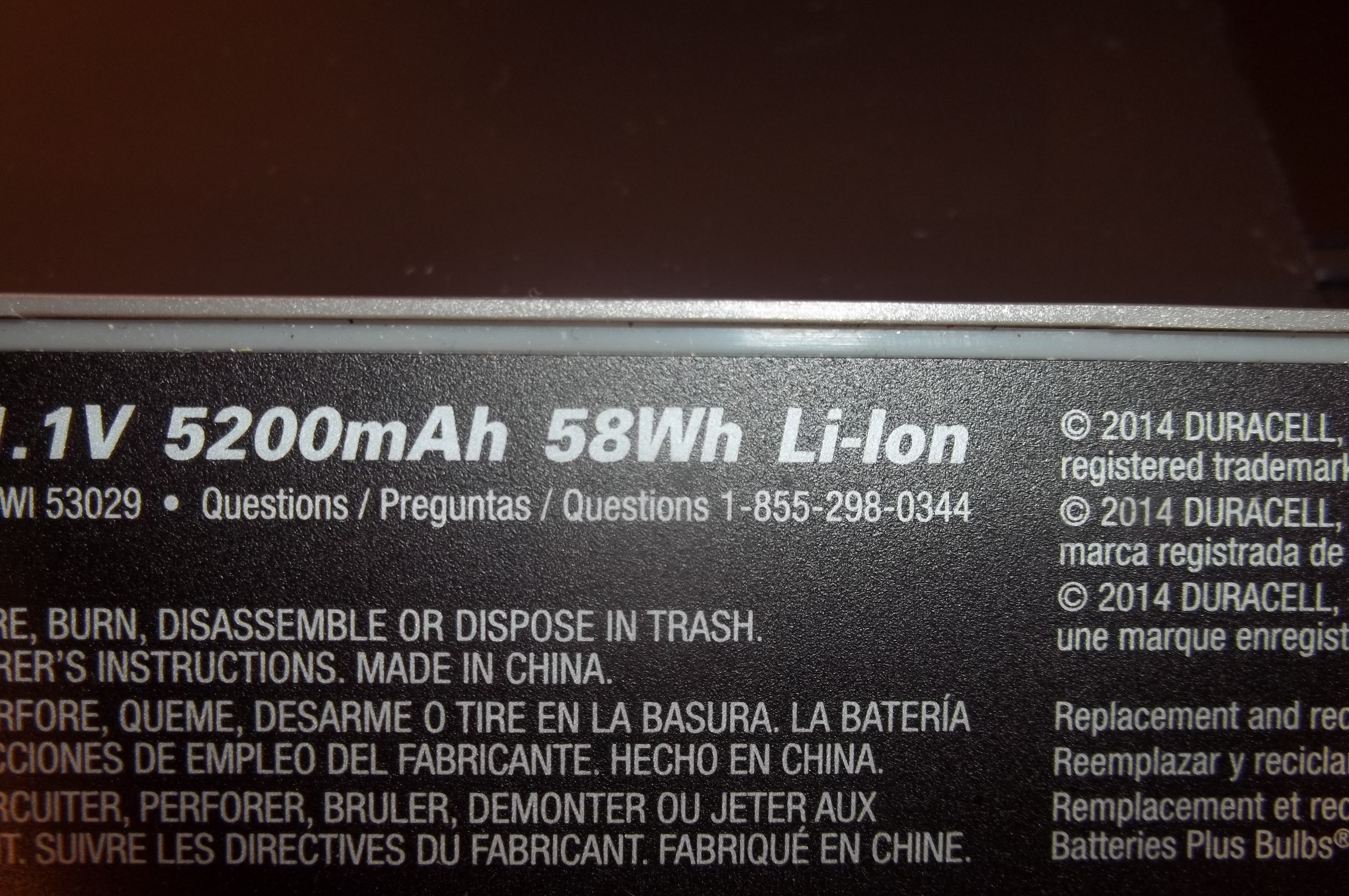
This lithium ion battery was removed from a lap top computer.
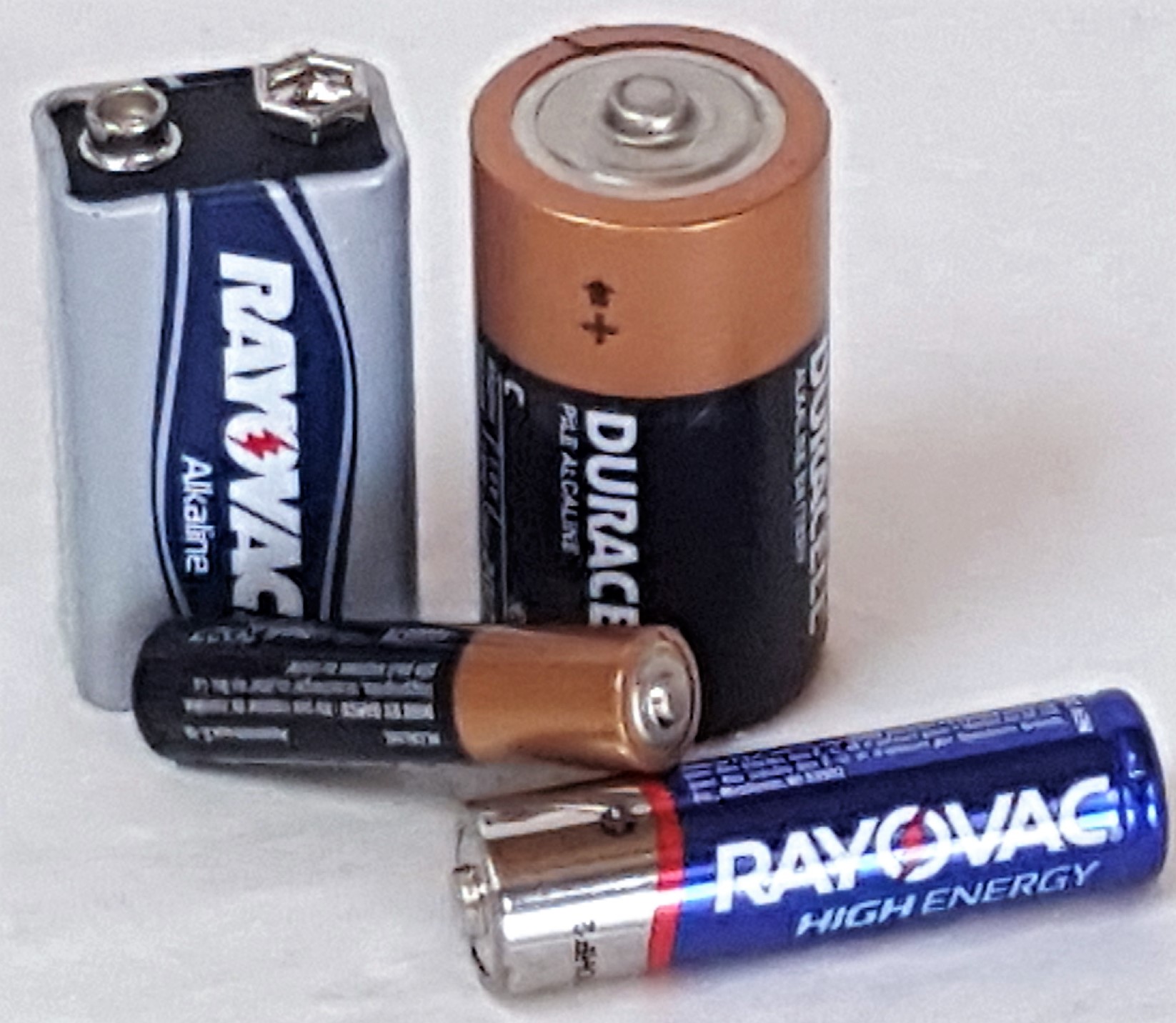
As a rule of thumb: most lithium cells or batteries used in consumer products meet the definition of a “smaller lithium cell or battery”.
For a complete description of the packaging and hazard communication requirements of §173.185(c) you’ll have to research it yourself or wait for a later article. The most restrictive requirement applicable to shipments of lithium cells or batteries for disposal or recycling is found at §173.185(c)(1)(vi) which limits the gross package weight to no more than 30 kg (66 lb) unless the lithium cells or batteries are contained in equipment.
If you like this information, please share it using any of the social media platforms identified below.
You’ll look real smart recommending my articles!
In sum:
That may seem like a lot – and it is! But if you’ll allow me to break it down into some common language and make a few generalizations you’ll see that this exception offers pretty good relief from full regulation without too much trouble.
Accumulate and ship lithium cells and batteries gathered from consumer devices.
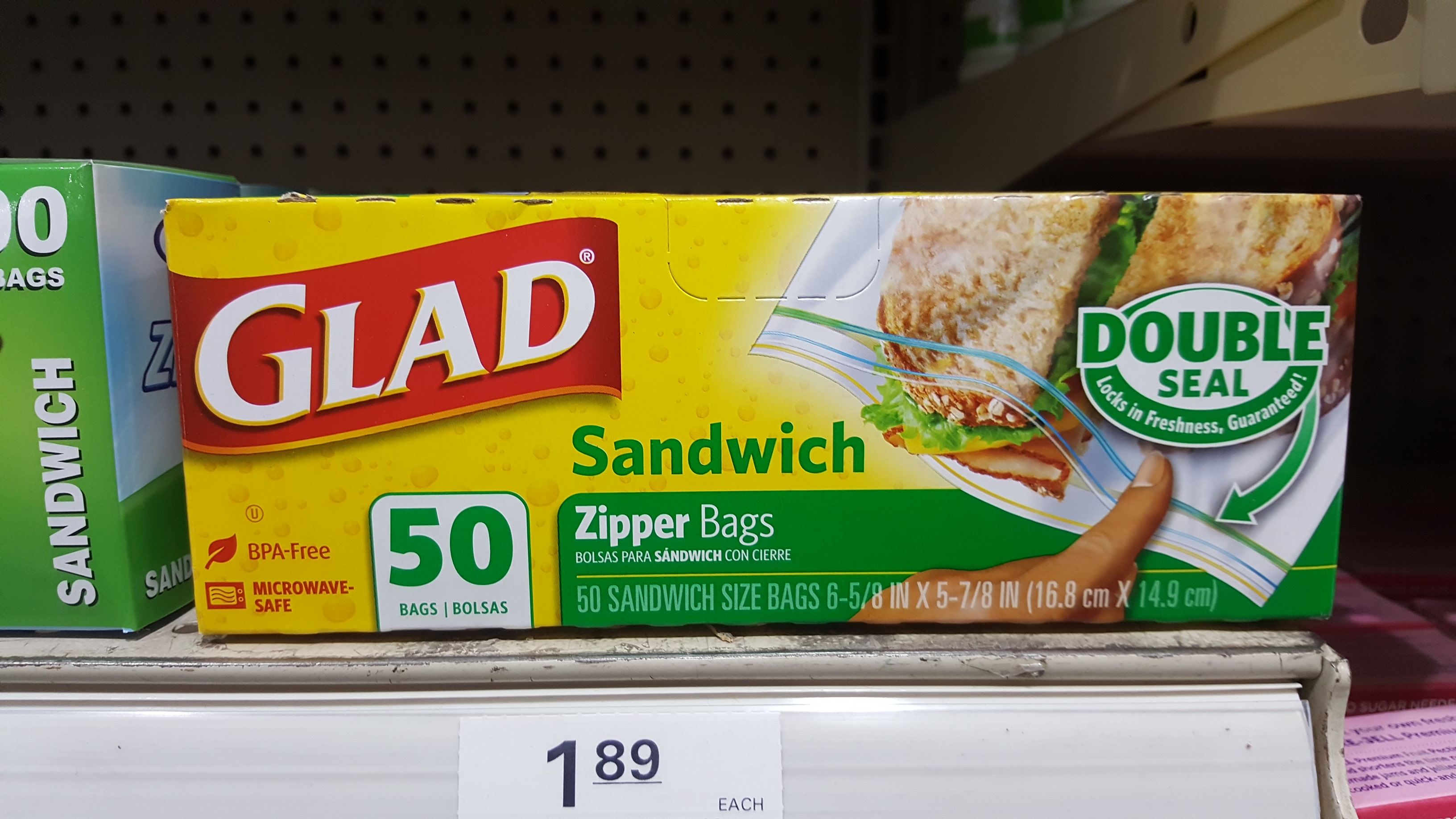
Package each lithium cell or battery in a plastic sandwich bag.
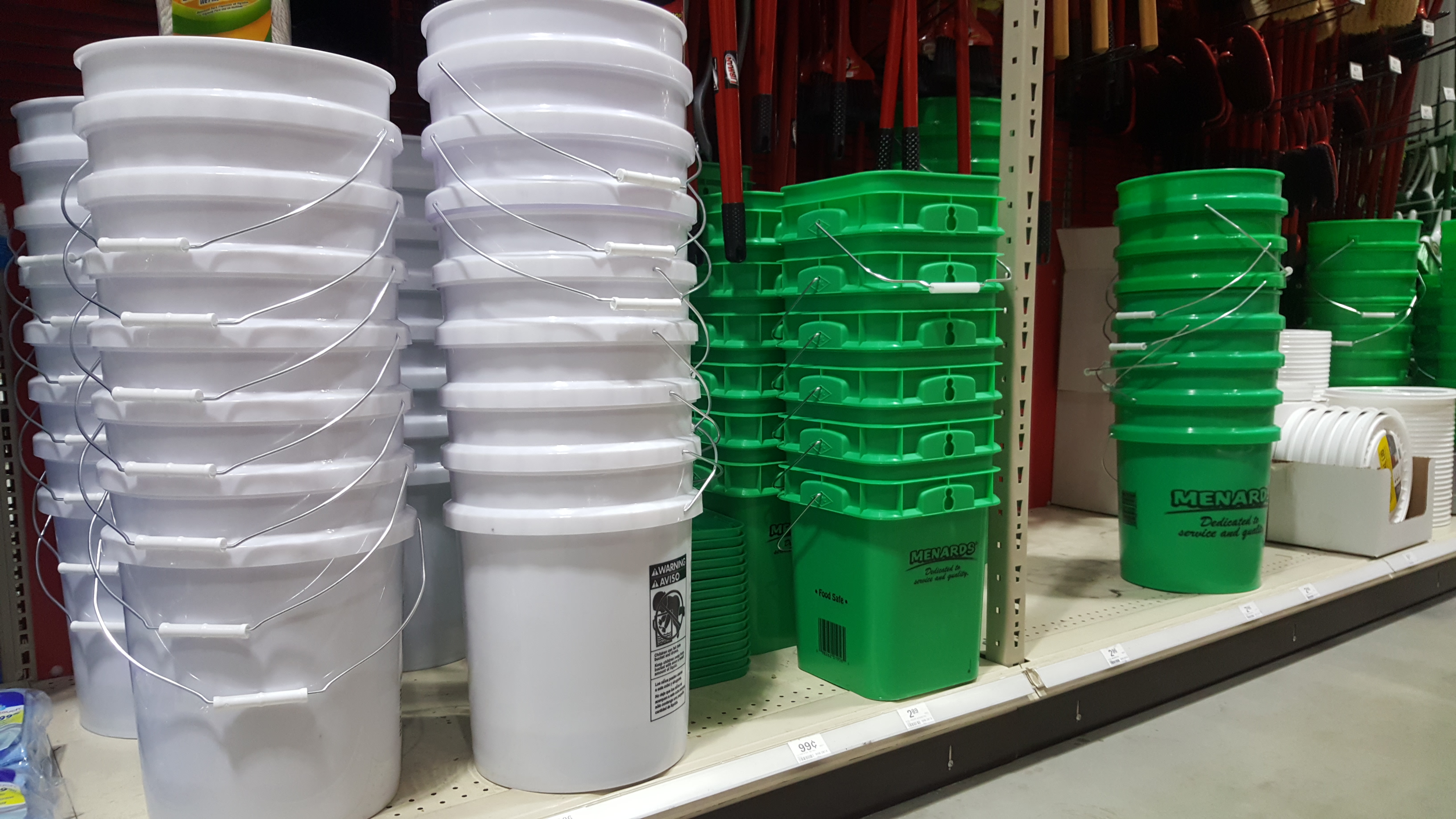
Place each lithium cell or battery in a sturdy cardboard or plastic container purchased at a hardware store.
Maintain the gross package weight to no more than 30 kg (66 lb). For this reason it might be a good idea to limit the packaging to a volume of 5-gallons.
Use some common sense when filling and closing the packaging.
As you can see, the transport of lithium cells or batteries is not easy and is not likely to get any easier. If you ship lithium cells or batteries for any reason other than for recycling or disposal you will be subject to entirely different – and likely more strict – regulations. Be sure to carefully research the regulations and consult with an expert before you make a critical decision.
Frequently Asked Questions:
Q: May lithium ion cells and batteries and lithium metal cells and batteries be combined in the same package in compliance with §173.185(d)?
Q: May dry cell alkaline batteries and lithium cells and batteries be combined in the same package in compliance with 173.185(d)?
A: Yes, if the dry cell alkaline batteries meet all of the requirements of Special Provision 130(b) and are therefore no longer subject to the HMR, i.e. a non-hazardous material, when transported by highway. Note: there is an exception for used dry-cell alkaline batteries shipped for recycling or disposal at Special Provision 130(d). Used dry-cell alkaline batteries shipped subject to the exception at Special Provision 130(d) may not be combined in the same package with batteries of a different chemistry, i.e. lithium cells or batteries (LOI 09-0160).
Q: May batteries of a different chemistry, such as a lead-acid battery, and lithium cells and batteries be combined in the same package in compliance with §173.185(d)?
A: No. The scope and applicability of §173.185(d) is limited solely to lithium cells and batteries. Only non-hazardous materials (e.g. a used dry-cell alkaline battery in compliance with Special Provision 130(b)) may be combined with lithium cells and batteries in compliance with §173.185(d). Note: in all cases the shipper is required to ensure the materials combined in a package will not react violently or prove incompatible to the contents or the packaging.
Q: What’s the big deal about lithium cells and batteries?
A: Test data has shown that even while partially discharged, lithium cells and batteries pose a risk of evolving a dangerous quantity of heat while in transportation (LOI 09-0160).
Q: Can damaged, defective, or recalled lithium cells or batteries be transported in comliance with the HMR?
A: Yes, if done in compliance with §173.185(f).
Q: Is §173.185(d) my only option for shipping lithium cells or batteries for recycling or disposal?
A: No. §173.185(g) allows a shipper to obtain an approval from USDOT/PHMSA to ship lithium cells or batteries in a manner not prescribed by the HMR. A shipper also has the option to obtain a special permit to allow it to ship hazardous materials in a manner not prescribed by the HMR. Read: Special Permits, Exemptions, Approvals, and Exceptions to the Hazardous Materials Regulations