PO Box 1232 Freeport, IL 61032

A Different Kind Of Training

A Different Kind Of Training

A Different Kind Of Training

FAQ: What is a transport vehicle?

The Hazardous Materials Regulations (HMR) of the USDOT/PHMSA contain many packagings and vehicles used for the transport in commerce of hazardous materials (HazMat).  Some, such as the single packaging are easily explained and – hopefully – understood.  Some, though superficially simple, may require a more detailed explanation when considered along with other packaging types.  One of these is the term transport vehicle.

A transport vehicle is defined at 49 CFR 171.8:

Transport vehicle means a cargo-carrying vehicle such as an automobile, van, tractor, truck, semitrailer, tank car or rail car used for the transportation of a cargo by any mode.  Each cargo-carrying body (trailer, rail car, etc.) is a separate transport vehicle.

Contact me with any questions you may have about the transportation of hazardous materials by air, highway, vessel, or rail

International and Domestic

Daniels Training Services, Inc.

815.821.1550

Info@DanielsTraining.com

https://danielstraining.com/

Okay, so let’s break down that definition and add a little explanation and context:

“…means a cargo-carrying vehicle…”

For the purposes of the HMR if it doesn’t carry cargo, USDOT/PHMSA regulations don’t apply.  So, it must be cargo-carrying.  Though “vehicle” isn’t defined by the HMR, it is a commonly-used term which means, a thing used for transporting people or goods, especially on land…

“…such as…”

Included in the definition of a transport vehicle are the following:

Notice that the list only includes vehicles used for transport by land (highway and rail).  Can’t an aircraft or vessel used for the transport of a hazardous material be a transport vehicle?  The answer is no, an aircraft or vessel does not meet the definition of a transport vehicle.  Which brings us to our next point…

“…by any mode…”

Mode is also defined at §171.8 as:

Mode means any of the following transportation methods; rail, highway, air, or water.

If taken literally, a transport vehicle could be used by any mode, including air or water.  This should mean that a transport vehicle could be an aircraft (air) or a vessel (water), but it isn’t.  A phone call to USDOT/PHMSA provided an answer, just not a clear one.  USDOT/PHMSA was not able to tell me why an aircraft or a vessel is not a transport vehicle, it just isn’t.  And USDOT/PHMSA wasn’t able to tell me why, if neither an aircraft nor vessel is a transport vehicle, the words, “…by any mode…” were included in the definition, they just are.  So, lacking any clear justification: USDOT/PHMSA does not consider an aircraft or vessel to be a transport vehicle.

This USDOT/PHMSA letter of interpretation clarifies the terms, motor vehicle and transport vehicle.  It also states that motor vehicle cargo carrying components are considered transport vehicles. (LOI 12-0220)

Like this article?

Subscribe to my Monthly Newsletter

No marketing emails!

“Each cargo-carrying body (trailer, rail car, etc.) is a separate transport vehicle.”

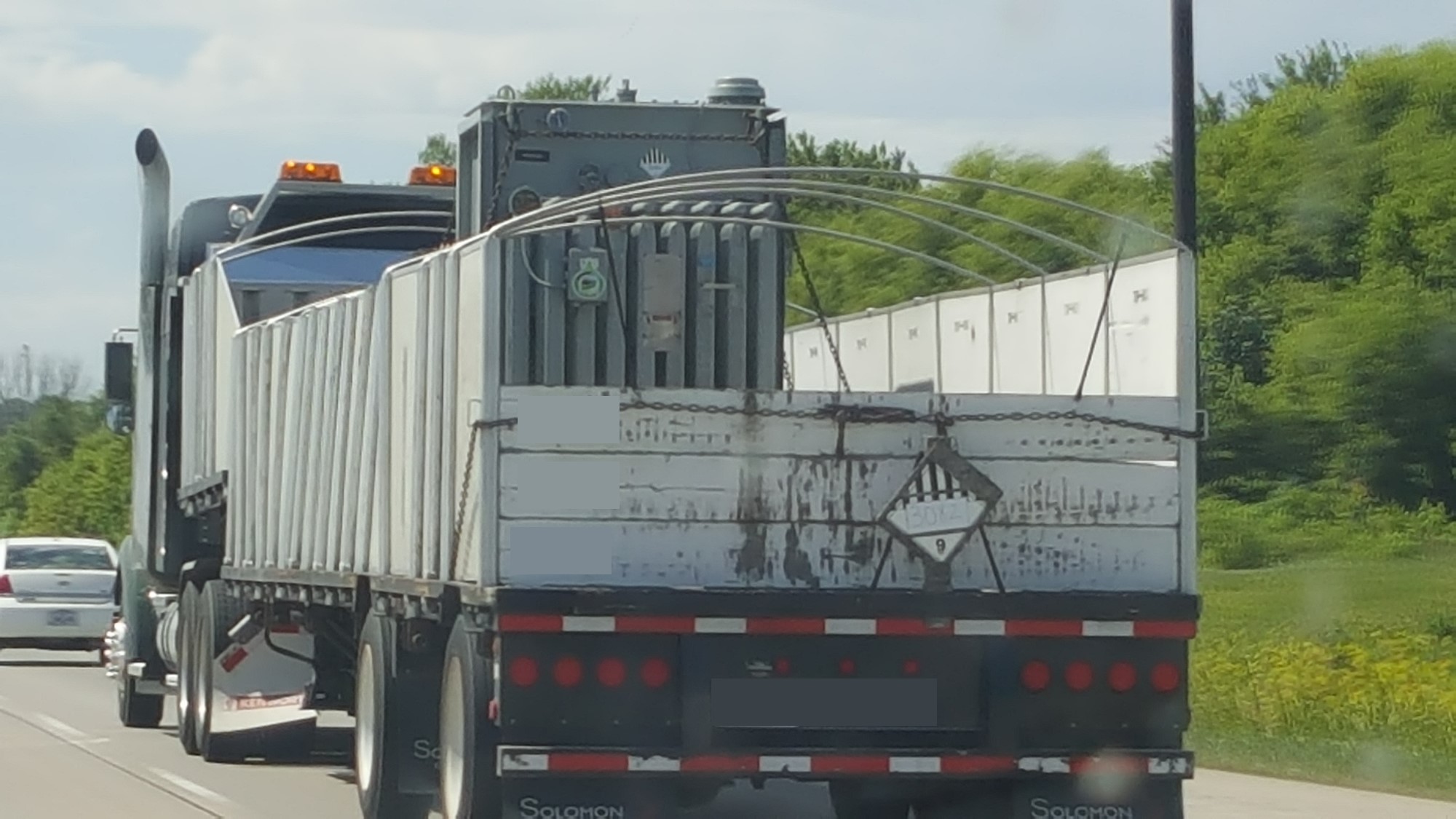
This last sentence of the definition has the most impact on HazMat transportation; particularly the hazard communication methods on a semitrailer or rail car.  Since each cargo-carrying body (e.g., a trailer or rail car) is considered to be a separate transport vehicle, each must display the required hazard communication methods (i.e., placards or marks) for the HazMat it contains.  The images below are of separate cargo-carrying bodies on a single vehicle.

Interested in site specific training at your site that covers this topic, and more!

Ask me about my Onsite Training

Lithium ion batteries

FAQ: Why limit a lithium ion battery’s state of charge in transport?

From the Federal Register / Vol. 84, No. 44 / Wednesday, March 6, 2019:

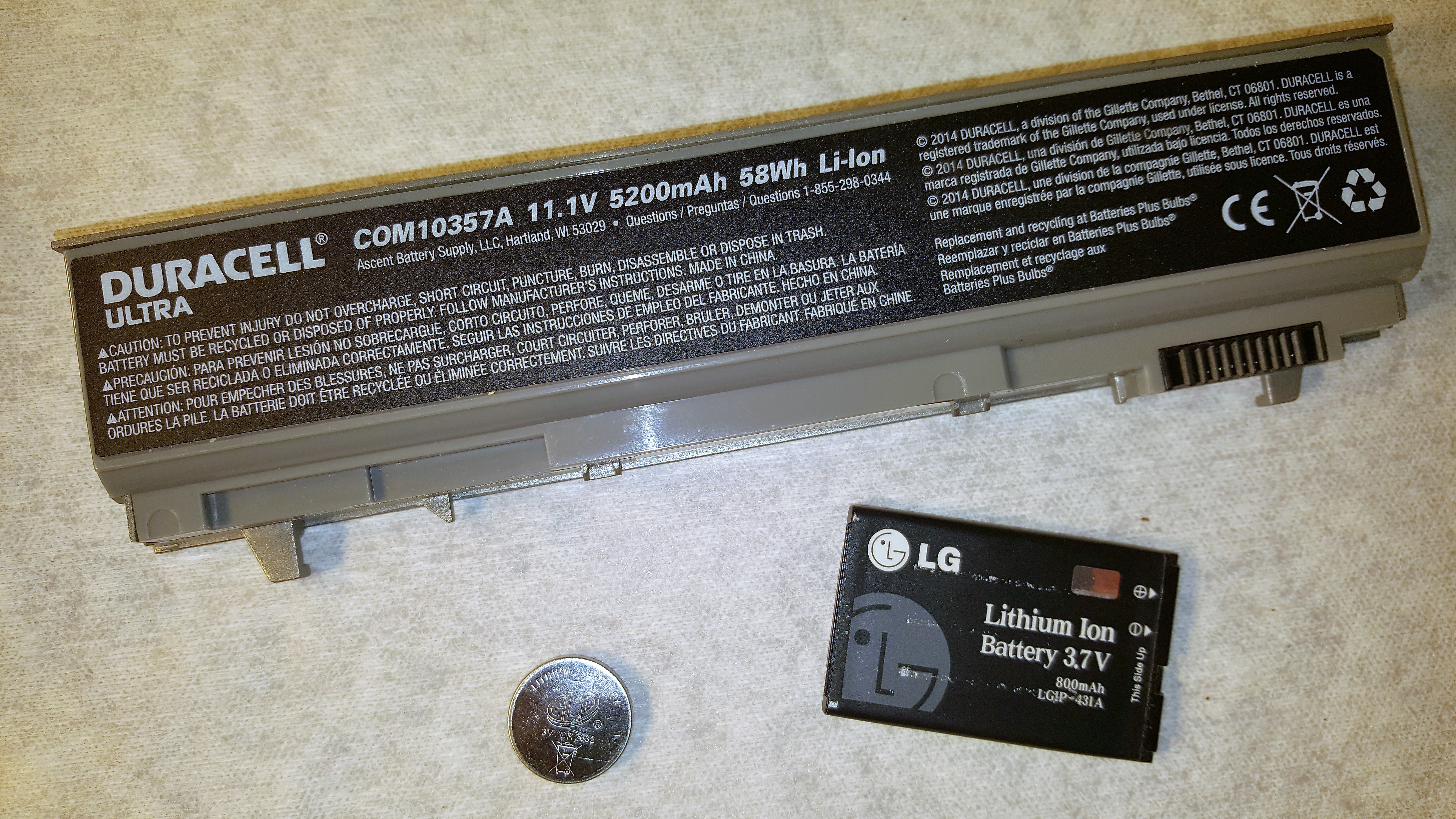
Lithium ion batteries contain both a chemical and an electrical hazard. This combination of hazards creates a unique challenge when lithium ion batteries are to be transported by air. Though still containing a hazard and still subject to regulation, a lithium metal battery does not present the same challenges as does a lithium ion battery.

Note:

There are three types of batteries subject to regulations in transport:

·         Lithium ion (includes ion polymer)

·         Lithium metal (includes lithium alloy)

·         Lithium hybrid (contains both lithium metal and lithium ion cells)

While there are several possible initiating factors that may cause a lithium ion battery to be the cause of a HazMat incident, multiple independent studies have shown that, independent of the initiating factor, reducing the state of charge measurably reduces both the likelihood and consequence of an incident involving lithium ion batteries.  Most significantly, lowering the state of charge reduces or eliminates the ability of a cell within a lithium ion battery to experience thermal runaway and the potential for propagation.

Specifically, reducing the state of charge of a lithium ion cell or battery:

  • Decreases the likelihood of thermal runaway.
  • Decrease or eliminates the potential for thermal runaway to spread to adjacent cells or batteries.
  • Increases the cell’s ability to tolerate a short circuit and significantly reduces the maximum temperature achieved at the point of shorting.
  • Reduces the quantities of gases released if thermal runaway occurs.
  • Reduces the magnitude of the heating rate if thermal runaway occurs.

Contact me with any questions you may have about the transportation of hazardous materials by air, highway, vessel, or rail

International and Domestic

Daniels Training Services, Inc.

815.821.1550

Info@DanielsTraining.com

https://danielstraining.com/

So, “Why did USDOT/PHMSA recently (effective 03.06.19) join the International Civil Aviation Administration (ICAO) and the International Air Transport Association (IATA) in prohibiting the transport by cargo air of a lithium ion cell or battery – packed alone, not with or in the equipment it is meant to power – unless the battery is reduced to a state of charge of no more than thirty percent (30%) of its rated capacity?”  Because a battery at this charge poses less risk of causing a HazMat incident in transportation.

Visibility Requirements for Hazardous Material Placards on a Rail Car

In the general placarding requirements of 49 CFR 172.504(a) of the USDOT/PHMSA Hazardous Materials Regulations (HMR), it states that when required each bulk packaging, freight container, unit load device, transport vehicle, or rail car “must be placarded on each side and each end”.  Simple enough, right?

It becomes more complicated when we consider the visibility and display of those placards on a motor vehicle or rail car.

The purpose of this article is to address solely the requirements of the HMR at §172.516(a) for the display of placards on a rail car.

The display of placards on a rail car (and motor vehicle & transport vehicle) is addressed in §172.516(a).  (I have added emphasis):

Each placard on a motor vehicle and each placard on a rail car must be clearly visible from the direction it faces, except from the direction of another transport vehicle or rail car to which the motor vehicle or rail car is coupled.  This requirement may be met by the placards displayed on the freight containers or portable tanks loaded on a motor vehicle or rail car.

We begin back in §172.504(a) where it states that if required a rail car must be placarded on each side and each end.  Easy.  However, §172.516(a) tells us that the placard must be clearly visible from the direction it faces.  That means a placard should be clearly visible to a person standing on the side of the rail car on which it is displayed.

However, this requirement for visibility need not be met when the placard is displayed on either end of a rail car that is coupled to another rail car.  This means that the placards on the ends (front and back) of a rail car must be present, but need not be clearly visible if the rail car is coupled to another rail car.

Contact me with any questions you may have about the transportation of hazardous materials by air, highway, vessel, or rail

International and Domestic

Daniels Training Services, Inc.

815.821.1550

Info@DanielsTraining.com

https://danielstraining.com/

Below are images of tank cars in a train displaying placards on their sides (clearly visible) and ends (not so clearly visible).

Since the tank car is a type of rail car and it contains the hazardous material, the placarding requirement is met by its display of the placard.  But what if the hazardous material is contained in a portable tank or freight container that is then carried by a flat car (another type of rail car)?  §172.516(a) goes on to state that – if loaded on a rail car – the display of placards on a freight container or portable tank will meet the requirements.

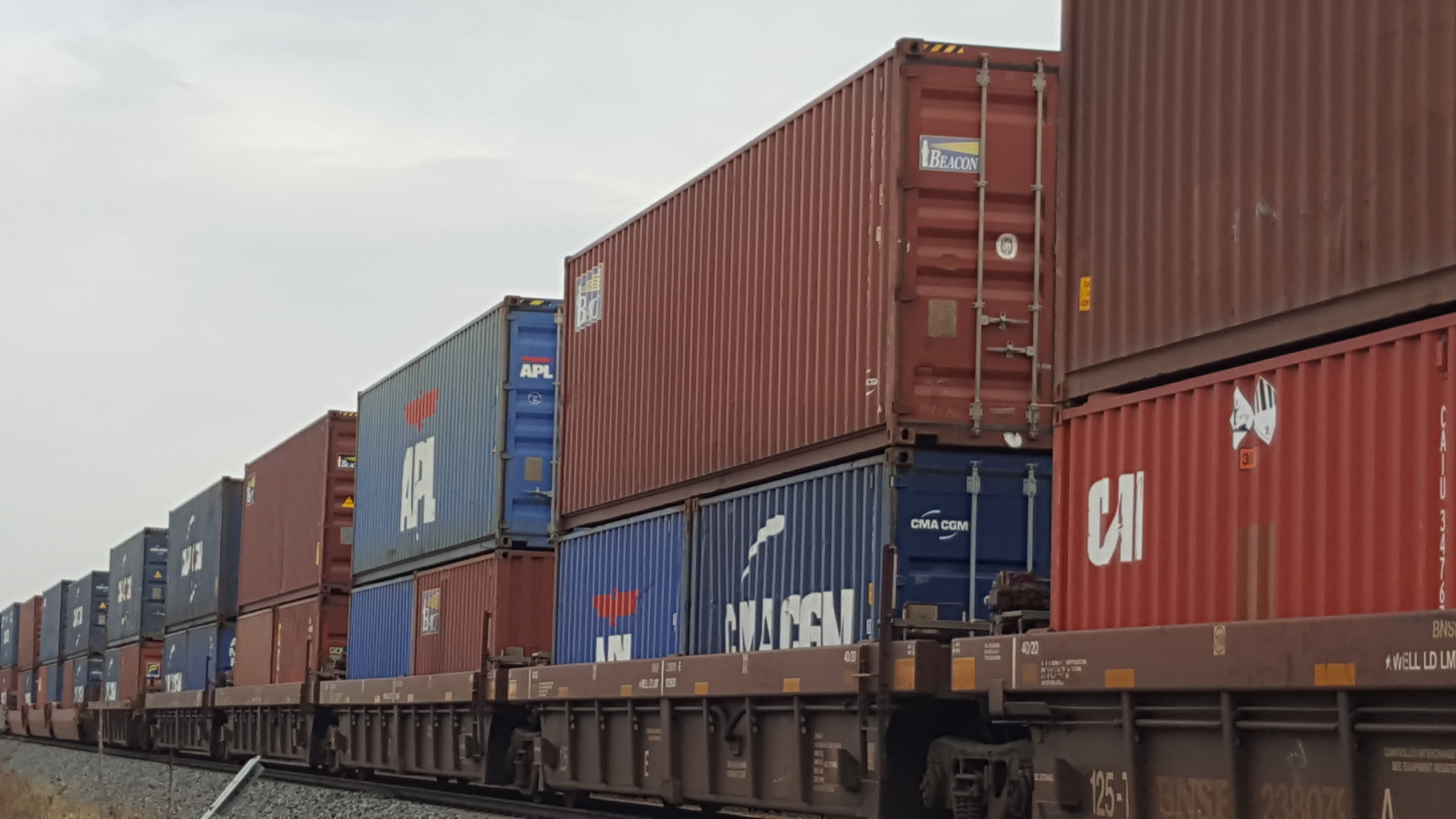
Below is an image of freight containers on rail cars (flat cars) displaying placards on their sides (clearly visible) and ends (not so clearly visible).  Per 172.516(a) it is perfectly acceptable that the placards are displayed on the freight container and not on the rail car itself.Freight containers of HazMat on railcars

Freight containers on rail car

Like this article?

Subscribe to my Monthly Newsletter

No marketing emails!

The display of placards on a motor vehicle / transport vehicle presents more of a challenge, but that will be addressed in a later article.

You may also be interested in this article on the General Display Requirements for Placards.

If you’re interested in the display of placards on a rail car you may also be interested in the USDOT/PHMSA HazMat Employee training that I provide.  Please contact me for a free discussion and/or estimate.

Q&A: Is the HazMat endorsement on the CDL required for transporting PCBs?

A question (12.12.17):

Hello,

As part of the power industry we come into contact with materials containing PCB’s. My question is prior to a sample being taken, therefore assuming it is indeed PCB contaminated, does that require the HazMat endorsement for our drivers? I saw a previous response you gave stating it directly related to the amount of PCB’s in the object, but it is much easier to take samples and test materials after they have been transported back to our facility. Will that require the special licensure?

Thanks.

Contact me with any questions you may have about the transportation of hazardous materials by air, highway, vessel, or rail

International and Domestic

Daniels Training Services, Inc.

815.821.1550

Info@DanielsTraining.com

https://danielstraining.com/

My answer the same day:

Thank you for contacting me.  I am happy to answer your question.  Please see below.

  • PCBs and PCB-contaminated materials are a Reportable Quantity (RQ) of a hazardous substance if there is at least 1 lb of PCBs in the package (the RQ of PCBs is 1 lb).  This is a result of the concentration and the total weight of oil in the package:
  • If a Reportable Quantity of a hazardous substance is present, the material is a hazardous material per USDOT/PHMSA Hazardous Materials Regulations.
  • If it does not meet the defining criteria for any of the first eight hazard classes, then it will be a Class 9 Miscellaneous hazardous material.
  • A Class 9 Miscellaneous does not require the display of placards on the vehicle when transported within the U.S.  Read: Is the Class 9 Placard Required?
  • If placards are not required on the vehicle, then the hazmat endorsement is not required on the CDL.  Indeed, depending on the size of the vehicle and if it crosses state lines it may not be a commercial motor vehicle at all.  Read more about Commercial Motor Vehicles
  • Hazmat employee training is required for anyone involved in the transport of a hazardous material.
  • The operator of a motor vehicle that transports hazmat requires hazmat employee training and an additional component for Driver Training.  Driver training is not required if the hazmat endorsement is maintained on the CDL.
  • The Materials of Trade exception will provide you relief from most hazmat regulations (even training!) if applicable.  Read:  The Materials of Trade Exception.
In sum:PCB Transformer Class 9 Placard
  • You may assume the oil to contain regulated amounts of PCBs and transport as a hazardous material under the Materials of Trade Exception.
I hope this helps.  Please contact me with any other questions.

Q&A: Is this a marine pollutant?

A question.  December 5, 2017:

Good afternoon, I’m looking for some clarification on class 9 hazmat material.

One of our customers, their product is considered a class 9 Marine Pollutant, we have always been instructed that this only needed to be classified as a pollutant if going over international waters.  All I can find online is that it does not need to be placard, only marked and identified on the BOL.   My question is when getting quotes from or LTL carriers do we need to be getting this quoted as hazmat material, or can we quote as normal material since we do not cross any bodies of water, except rivers.

Reading through your sight has cleared a lot of things up, one question I do have is on the Bulk.  Our customers packaged: 1) plastic bag, then in a box. 2) in a box.  Most boxes are packaged at 25kg. then shipments are pallatized, boxes per pallet range from 5-40 boxes (100 kg to 1000 kg).  Since each form of the product is boxed in 25kg packages is this considered bulk even though it is not all “together”

Contact me with any questions you may have about the transportation of hazardous materials by air, highway, vessel, or rail

International and Domestic

Daniels Training Services, Inc.

815.821.1550

Info@DanielsTraining.com

https://danielstraining.com/

My reply that same day:

Thank you for contacting me.  I will try to answer your question below.

  • Per USDOT regulations a marine pollutant must meet three criteria (read: What is a Marine Pollutant?):
    • ID’d by name in table of marine pollutants.  Found in Appendix B to the Hazardous Materials Table at 49 CFR 172.101.
    • Above concentration threshold:  10% or more for a marine pollutant, 1% or more for a severe marine pollutant.
    • Transported by vessel or in a bulk packaging.  Read:  Bulk Packaging for HazMat Explained!  Therefore, even if transported by highway or rail, it is possible to have a marine pollutant if it is in a bulk packaging.
  • If classified as a marine pollutant and it does not meet the criteria of any other hazard class it must be classified as a Class 9 Miscellaneous.  All other HazMat regulations apply but a Class 9 is not required to display the Class 9 Miscellaneous placard on the vehicle.  Read: Is the Class 9 Placard Required?
  • Since a Class 9 does not require the display of a placard, the driver of the motor vehicle transporting it does not require the HazMat endorsement on the CDL.  However, it is still regulated as a hazardous material which means the driver – and all others involved in its transportation – must have HazMat Employee training (I provide this training).
  • What you describe (“…1) plastic bag, then in a box. 2) in a box.”) is not a bulk packaging.  It is an overpack, which is subject to its own regulations.
I hope this helps.  Please don’t hesitate to contact me with any other questions.

Q&A: Do I need the HazMat endorsement on my CDL to haul UN2211, Polymeric beads?

Pretty simple question from December 4, 2017:

I’m hauling UN2211 class 9 Polymeric Beads 44K lbs

Do I need to be Hazmat Endorsed as a Carrier to haul this?

Pretty simple answer:

No. The Class 9 placard is not required to be displayed on a motor vehicle within the U.S. Read: Is the class 9 placard required?

However, if you are transporting a bulk packaging (read: Bulk Packaging for HazMat Explained!), you must display the identification number (2211) on all four sides of the vehicle. You MAY choose to display the identification number on the class 9 placard.

Since the Class 9 placard is not required to be displayed, you are not required to have the HazMat endorsement on your CDL.  The HazMat endorsement is only required if you transport a quantity of HazMat that requires the display of placards.

However, if you transport any quantity of HazMat you must have HazMat Employee training to include a component on safe driving.

I hope this helps. Please contact me with any other questions.

His reply:

Thank you for the clarification.  Basically I’m not Hazmat Endorsed.  My drivers are not Hazmat certified.  But because it’s a UN2211 Class 9. Then we can still haul it even though it’s over 2,000 LBS.

My clarification:

Yes.  That is correct.

  • Placards are not required for Class 9 in the U.S. no matter the amount.
  • The HazMat endorsement on the CDL is only required if the vehicle transports a quantity of HazMat that requires placards.
  • However, HazMat Employee training is required for anyone involved in the transportation of a hazardous material – even Class 9.
  • An additional component of Driver Training should be added to HazMat Employee training.
  • Also, though terms such as “Hazmat Endorsed” or “Hazmat certified” are used in the industry, they don’t exist in the regulations.  The regulations of the Federal Motor Carrier Safety Administration (FMCSA) refer simply to the HazMat Endorsement on the Commercial Driver’s License (CDL).

FAQ: What is a rail car?

The transport of a hazardous material can be accomplished by any one of four modes (rail, highway, air, or water) and by even more forms of a transport vehicle.  If the mode of transport is rail, the transport vehicle used must be a rail car.  But just what is a rail car?

Rail car is defined at 49 CFR 171.8:

Rail car means a car designed to carry freight or non-passenger personnel by rail, and includes a box car, flat car, gondola car, hopper car, tank car, and occupied caboose.

So, let’s break it down:

A rail car is designed to carry freight or non-passenger personnel by rail.  This differentiates it from a passenger rail car.

A rail car includes, but is not limited to, the following:

  • Box car
  • Flat car
  • Gondola car
  • Hopper car
  • Tank car. Read about the use of the this un-defined term in the USDOT/PHMSA Hazardous Materials Regulations: What is a tank car?
  • Occupied caboose

Contact me with any questions you may have about the transportation of hazardous materials by air, highway, vessel, or rail

International and Domestic

Daniels Training Services, Inc.

815.821.1550

Info@DanielsTraining.com

https://danielstraining.com/

And that’s about it.

Q: Are any of these a rail car? (see images below)

A: Yes.  All of those images contain examples of a rail car.

Q: Well, is this a rail car?

A: Yes, but perhaps not in the way that you think.  The large metal boxes are freight containers. They are being transported on a flat car which, as indicated by the definition, is a type of rail car.

Daniels Training Services, Inc.

815.821.1550

Info@DanielsTraining.com

https://danielstraining.com/

FAQ: What is a motor vehicle?

The transport of a hazardous material can be accomplished by four modes (rail, highway, air, or water) and by even more forms of a transport vehicle.  If the mode of transport is highway, the transport vehicle used must be a motor vehicle.  But just what is a motor vehicle?

Motor vehicle is defined at 49 CFR 171.8:

Motor vehicle includes a vehicle, machine, tractor, trailer, or semitrailer, or any combination thereof, propelled or drawn by mechanical power and used upon the highways in the transportation of passengers or property. It does not include a vehicle, locomotive, or car operated exclusively on a rail or rails, or a trolley bus operated by electric power derived from a fixed overhead wire, furnishing local passenger transportation similar to street-railway service.

So, let’s break it down:

A motor vehicle includes, but is not limited to, the following or any combination of them:

  • Vehicle
  • Machine
  • Tractor
  • Trailer
  • Semitrailer

Now, you might be thinking, “Hold on, how can a trailer or semitrailer be a motor vehicle?”  Well, we’re not done.  A motor vehicle must be, “propelled or drawn by a mechanical power”.  So, a trailer just sitting there is not a motor vehicle.  Combined with a vehicle, machine, tractor, or some other mechanical power, and it becomes a motor vehicle.

Where you can go with a motor vehicle is limited solely to highways.  This doesn’t mean just the interstate, it means any road with public access.

And, for the purposes of the USDOT/PHMSA Hazardous Materials Regulations, a motor vehicle must be used for the transportation of passengers or property.

That’s about it.  The rest of the definition is spent explaining what a motor vehicle is not: a vehicle, locomotive, or car operated on rails or a passenger trolley.

Contact me with any questions you may have about the transportation of hazardous materials by air, highway, vessel, or rail

International and Domestic

Daniels Training Services, Inc.

815.821.1550

Info@DanielsTraining.com

https://danielstraining.com/

Frequently asked questions:

Q:  Is this a motor vehicle? (see images below)

A:  No.  Since it is not, “…propelled or drawn by mechanical power…” it can’t be a motor vehicle.

Q: But what if I use one of the above to transport a hazardous material by highway? Would it be subject to the HMR?

A: No, again.  Since it is not a motor vehicle, it does not fall with USDOT/PHMSA’s regulatory scope of transportation functions at 171.1(c) which includes “…movement of a hazardous material by rail car, aircraft, motor vehicle, or vessel…” (emphasis mine).  So, no mechanical power, no motor vehicle.  No motor vehicle, no applicable Hazardous Materials Regulations.

Q: Well, is this a motor vehicle? (see images below).

A: Yes.  Each of these is a motor vehicle.

Q:  How do a motor vehicle and a transport vehicle (also defined in §171.8) differ?

A:  Though they sound similar, a motor vehicle and a transport vehicle are defined separately and have distinct requirements under the HMR.  Refer to this article for a full explanation of a transport vehicle.  In brief, the cargo carrying components of a motor vehicle, e.g. the trailer or trailers of a semitrailer, are considered separate transport vehicles (Q1/A1 of LOI 12-0220).

Q&A: Is there a required color for package orientation arrows?

The question (11.24.17):

Daniel,

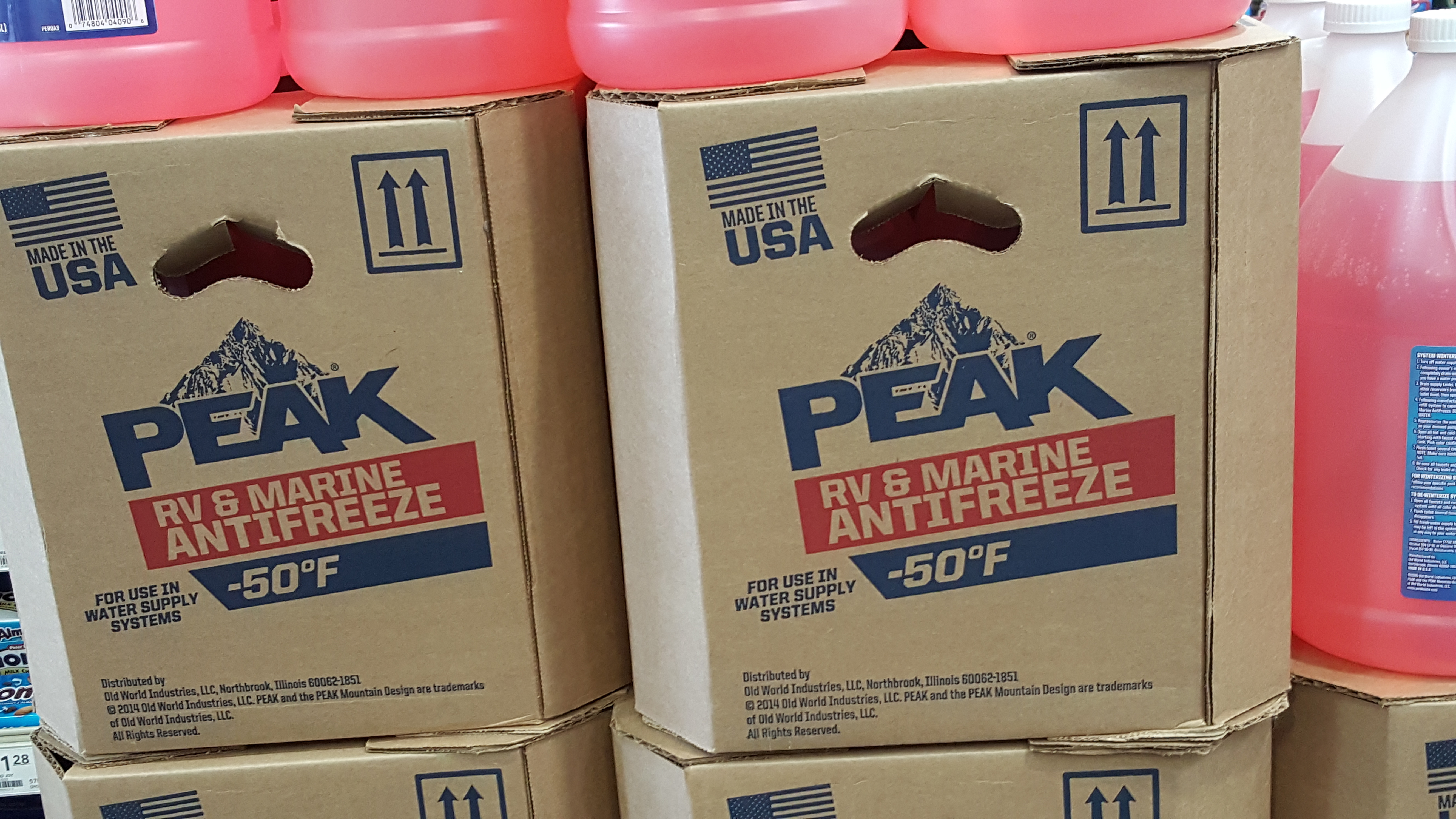
I enjoyed watching some of your YouTube videos this week while researching Limited Quantity ground shipments and packaging requirements. (What is the Limited Quantity Exception?)  You mentioned a couple times in your videos that orientation arrows are required on all limited quantity packages that contain liquids in inner packagings. I then read the below link on your website (Package Orientation Arrows on HazMat Packaging) and saw the below images of the orientation arrows for the antifreeze. The arrows appear to be blue instead of black or red as per 172.312. This also reminded me of a product that I’ve purchased in the past <<packaging name>> from <<packaging supplier>>, which also has blue orientation arrows, yet they say that their product is “Limited Quantities Tested”. I’ve sent an email to <<packaging supplier>> for clarification but wanted to ask you as well since it relates to your web posting. Are blue arrows allowed as long as they are also on a contrasting background?

Thanks,

My answer the same day:HazMat packaging with package orientation arrows

Thank you for contacting me and thank you for viewing my videos.

**Note about the YouTube videos:  In order for my channel on YouTube to be authorized I must have at least 10,000 public views.  Anything you can do to encourage others to view my channel would be great.**

In answer to your question:  the Hazardous Materials Regulations of USDOT/PHMSA at 49 CFR 172.312 (a)(2) require the orientation arrows to be either black or red and must be on a background that is white or other suitable contrasting background.

So, while the background does not have to be white and may be “…other suitable contrasting background”.  The arrows must be “…either black or red…”  Any other color for the arrows is a violation of the HMR.

I contacted the HazMat Info Line and they confirmed this interpretation.

Please don’t hesitate to contact me if you have any other questions about orientation arrows or the limited quantity exception.

Conclusion:

I admit, I was a bit surprised that the USDOT/PHMSA Hazardous Materials Regulations clearly limit the color of the orientation arrows to either black or red when it is not uncommon to see them displayed as blue.  Just another example of a company violating the HMR due to its ignorance of its requirements.

As a shipper or carrier of hazardous materials, don’t let your ignorance lead to a violation.  Contact me to answer your questions and to provide the training necessary for HazMat Employees.

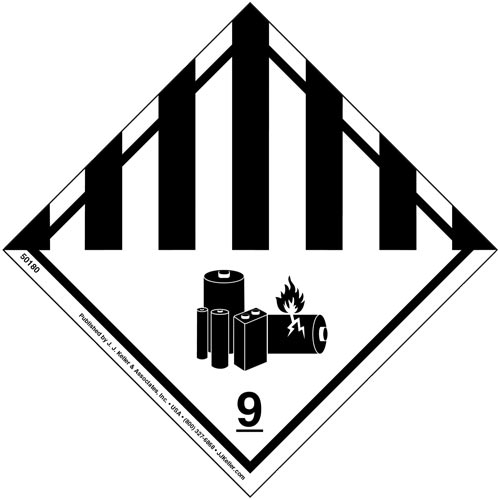
Q&A: What is the required size of the new Class 9 Lithium Battery label?

This question came to me over a year ago (January 14, 2018).  A time when the Class 9 Lithium Battery label was not yet mandatory but the question of its size was still important.  Since January 1st of 2019, when use of the label became mandatory for regulated shipments of lithium batteries, it is more critical still.

Hello Daniel,

I have a query about Class 9 Lithium Battery Label that what is the Size of the label to be printed?

I found somewhere mentioned 100 mm x 100 mm, is this diagonal or edge dimension? What if the box size is smaller to print this size what is the smaller size can be printed?

Class 9 Lithium Battery label
The mandatory Class 9 label for regulated packages of lithium batteries after 01.01.19.

Thanks & Regards,

My reply the next day (01.14.18):

I believe I have an answer for your question.  The answer depends upon the mode of transportation and the applicable regulations.  Please see below.

USDOT/PHMSA for the transport of HazMat within the U.S. (usually limited to highway or rail):

  • The Hazardous Materials Regulations of USDOT/PHMSA at 49 CFR 172.407(c)(1) require the hazmat label to be at least 100 mm (3.9″) on each side.  There are 4 sides to the label, each side must be a minimum of 100 mm (3.9″).
  • However, §172.407(c)(1)(i) allows the dimensions of the label and its features to be reduced proportionally if the size of the package so requires.  Symbol and other elements of the label must remain clearly visible.
  • Also, §172.406(b)(1) allows for the display of the label on a “securely affixed tag” or other suitable means if the HazMat is not a Class 7 Radioactive and the dimensions of the package are less than those of the required label.

So, per the USDOT/PHMSA regulations a label may be reduced in size as necessary to fit on the package.  There is no minimum size requirement.  The label can be as small as necessary to fit on the package as long as it continues to communicate the necessary information. Or, as an option, a label may be displayed on a tag secured to the package.

International Maritime Organization (IMO) for the international transport of dangerous goods by vessel:

  • The IMO Dangerous Goods Code at 5.2.2.2.1.1 mandates the label to be a minimum of 100 mm on a side.  The image at 5.2.2.2.1.1 clearly indicates the 100 mm minimum applies to each diagonal side of the label.
  • 5.2.2.2.1.1.3 allows for a proportional reduction in the size of the labels if the package is too small and if the symbols and other elements of the label remain clearly visible.
  • Also, 5.2.2.1.6 allows the label to be displayed on a “securely affixed tag” or other suitable means if the package is too small.

Contact me with any questions you may have about the transportation of hazardous materials by air, highway, vessel, or rail

International and Domestic

Daniels Training Services, Inc.

815.821.1550

Info@DanielsTraining.com

https://danielstraining.com/

Similar to USDOT/PHMSA, the IMDG Code sets a minimum size for the label on a package.  However, the label may be smaller than this minimum if required by the size of the package.  The shipper also has the option to display the label on a tag or by other means if the size of the package hinders display of a full-size label.

International Air Transport Association (IATA) for the international and domestic transport of dangerous goods by air:

  • 7.2.2.3.2(a) of the IATA Dangerous Goods Regulations establishes a minimum dimension of 100 mm for each side of a label.
  • 7.2.2.3.1 allows for reduced dimensions of a label’s size (labels may have dimensions that are half of the 100 mm minimum, but no less), but only for the following dangerous goods and only when displayed on a package of an infectious substance that is too small to display the full-size label:
    • Class 2.1 Non-flammable, non-toxic gas
    • Class 6 Infectious substance
    • Class 9 Miscellaneous
  • 7.2.6.1(d) allows for the display of the label on a “strong tag(s)” but only when the package is of such an irregular shape that a label cannot be attached or printed on its surface.
  • 7.2.6.1(e) requires the shipper to ensure the package is of such a size that there is adequate space to affix all required labels.

It should be no surprise the regulations of IATA are more strict than any other agency.  In brief, the IATA Dangerous Goods Regulations do not allow for the reduction in size of the hazard label except in very limited circumstances, and then, a reduction in size of no more than half of the minimum size.  IATA goes further than either of the other agencies in specifying that the shipper must use a packaging that is big enough for all required labels – and package marks.

I hope this helps.  Please contact me with any other questions.

Conclusion:

That seemed to do it!  If the transport of hazardous materials (aka: dangerous goods) is required for your business, make sure you are doing it in compliance with the applicable regulations.  Though similar in many ways, there are significant differences between the regulations of USDOT/PHMSA, IMO, & IATA, even when dealing with something as insignificant as the display of a hazard label on a package.  Contact me to assist you with compliance.

Search Website