Q&A: Can I transport asbestos in a regular Ford van?
Just one of those questions I receive all the time:
hi so i was wondering what would the be the safest way to transport asbestos in a regular ford van?
thank you!
My reply:
I apologize for my delay. I will try to answer your question. Please see below.
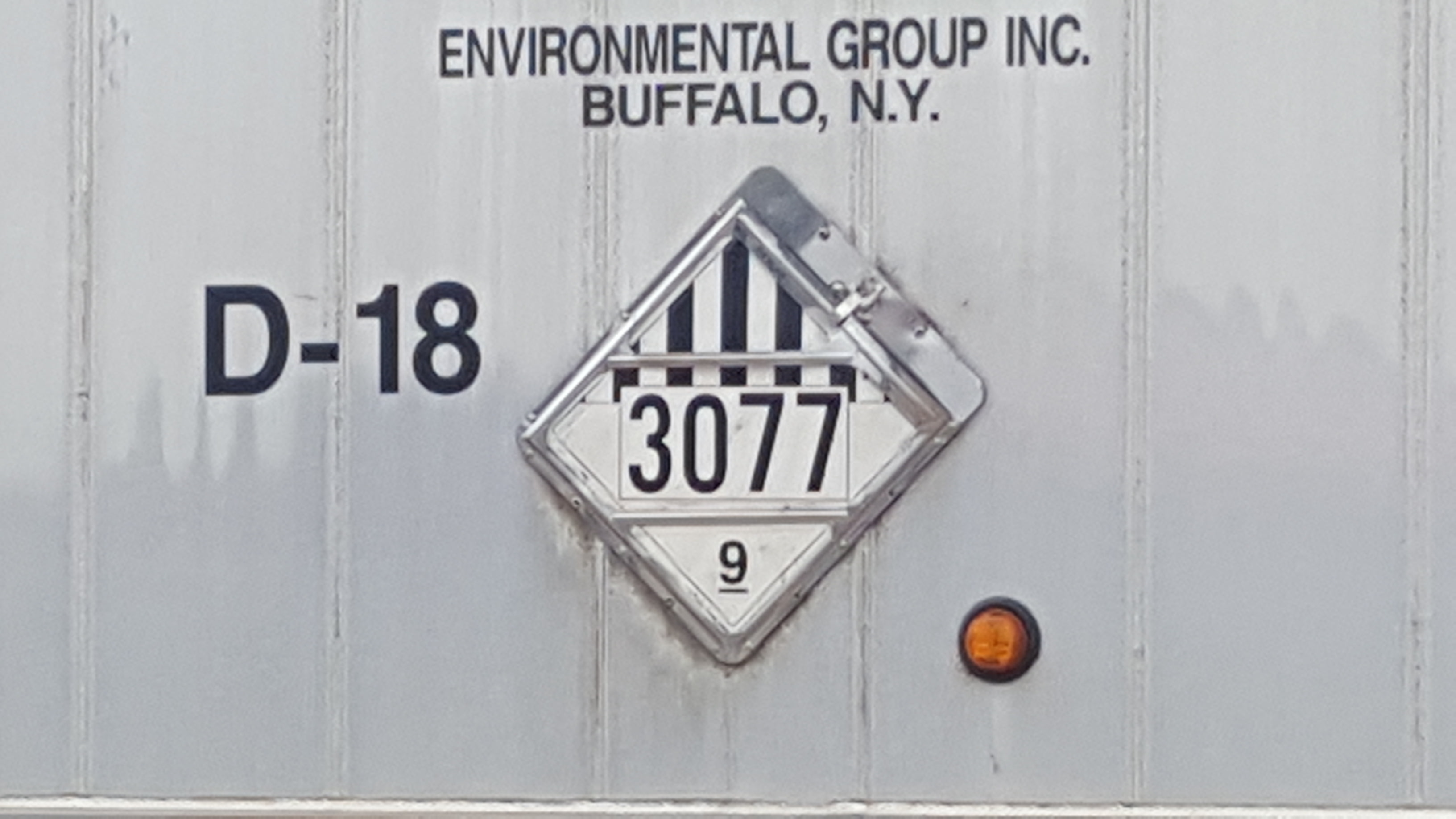
If friable (able to reduce to dust by hand pressure), asbestos is regulated as a hazardous material by USDOT/PHMSA.
If transported by or for a business on a public roadway (i.e. “in commerce) it is subject to full regulation of USDOT/PHMSA. This includes but is not limited to: shipping paper, HazMat labels & markings on the package, authorized packaging, training for HazMat Employees.
As a Class 9 Miscellaneous hazardous material, asbestos in transportation does not require placards to be displayed on the vehicle (read: Is the Class 9 Placard Required?) If the vehicle is less than 10,000 lbs and does not leave your state it is unlikely to be subject to regulation as a commercial motor vehicle (check with your state!).
I hope this helps. Please don’t hesitate to contact me with any other questions.
Q&A: How may I transport red diesel in a frac tank?
A question from someone in the HazMat transportation business (06.02.17):
The company I work for hauls frac tanks recently we had a tank that was used to store red diesel heating oil when we went to pick up the tank there was a gallon or two residual left in tank are we allowed to transport the tank with residuals in it and do we need paper work and placards.
My attempt to buy some time that same day:
Please give me some time to research and provide an answer.
My reply eleven days later (06.13.17):
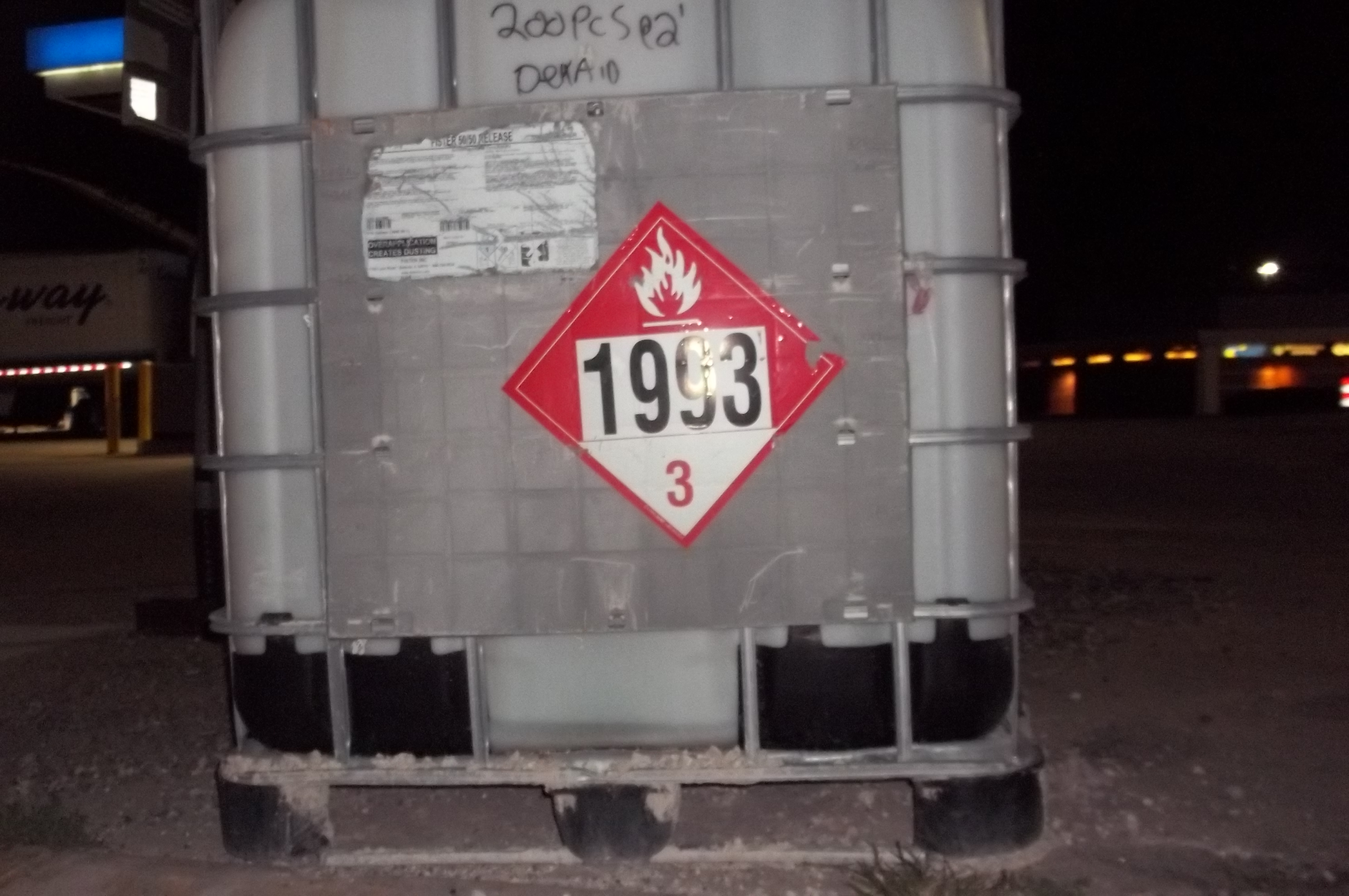
UN1993, Diesel fuel in an intermediate bulk container
Thank you for your patience. I will try to answer your question. Please see below.
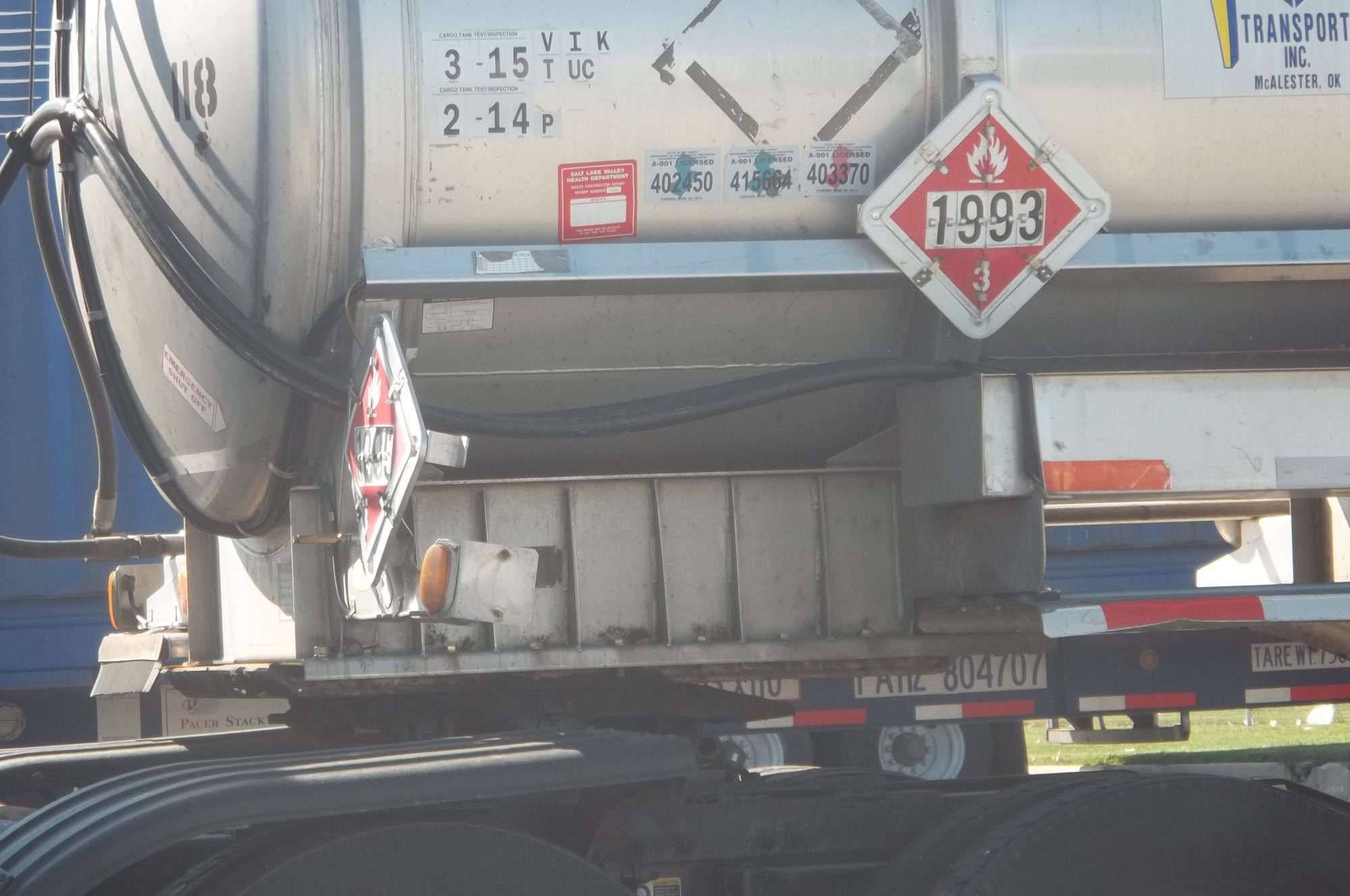
A bulk packaging (e.g. frac tank) is not subject to the exception and if it contains any residue of a hazardous material must be transported in commerce as a fully-regulated HazMat.
A fully regulated bulk packaging transported in commerce requires placards, shipping paper, trained personnel, &etc.
I hope this helps. Please don’t hesitate to contact me with any other questions.
Contact me with any questions you may have about the transportation of hazardous materials by air, highway, vessel, or rail
Below are my thoughts on some of the top 25 hazardous materials violations:
Rank 1 (4,241 violations): Package not secure in vehicle. This regulation is located in Part 177 and usually assumed to be the responsibility solely of the driver. However, 49 CFR 173.30 and this letter of interpretation (05-0267) make it clear that the shipper or offeror of a hazardous materials shipment will be held responsible for the HazMat’s securement in the vehicle if it is the shipper / offeror that loads the HazMat in the vehicle.
Rank 2 (1,739 violations): Failing to provide carrier required placards. Often overlooked by shippers is their responsibility to offer the proper placards to the driver of the vehicle.
Rank 8 (1,383 violations): Maintenance / accessibility of emergency response information. While it is the responsibility of the shipper to provide the emergency response information (see Rank 10, below) it is the responsibility of the driver to maintain access to the emergency response information during transportation.
Rank 10 (1,129 violations): Emergency response information not available. The shipper must provide emergency response information to the driver.
Rank 12 (921 violations): Failing to enter basic description of hazardous material in proper sequence. Really?!? This regulation has been in effect since January 1, 2013; over five years! How could anyone not know the sequence to the basic description?
Rank 13 (773 violations): Offering hazardous materials without preparing a shipping paper. OK, that’s even worse!
Rank 16 (686 violations): Accepting / transporting hazardous materials not prepared properly. It is the responsibility of the driver to reject a shipment that is not in compliance with the regulations.
It is important for both shippers and carriers of HazMat to realize that these violations – and the fines that accompany them – while they may have been made during the pre-transportation and vehicle loading phases were discovered during the HazMat’s transportation. This means that while your facility may not be inspected by USDOT the vehicle transporting your HazMat may be stopped by enforcement authorities where violations of the Hazardous Materials Regulations will lead them back to your door.
If you like this article, please share it using any of the social media platforms identified at the bottom of this article.
You’ll look real smart recommending my articles!
The HazMat Employee training I offer is inexpensive and easy compared to the potential violations and fines you face for non-compliance.
Q&A: When must I register with USDOT as a shipper of hazardous materials?
From someone within the regulated community through my website on May 12, 2017:
Message Body:
Hi! I ran across your website when I was searching for information on PHMSA HazMat Transportation Regulations. I was hoping that you could confirm what I am thinking.
We purchase one HazMat product from <Supplier> – UN3501, Chemical Under Pressure, Flammable, N.O.S. (Dimethyl Ether and Methyl Acetate), 2.1. We receive a pallet of material at our location and ship out individual boxes of the material as the customer orders via a 3rd party HazMat certified shipper. The product is in a 26.2 lb cylinder (one cylinder per box that meets HazMat packaging requirements all done by <supplier>) with an overpack box that contains all required markings (done by <supplier>). We train our shipping & receiving employees on General Awareness & Safety Training, Dangerous Goods Paperwork DOT Training and Function-specific training to handle the product and complete shipping papers.
Our customer is wanting a lower price on the material. The only way that we can do this is to purchase a larger quantity from <supplier> (4 pallets of material at a time). I want to make sure that we are following all of the rules and double checked the 49CFR. In section 107.601, Subpart G, it talks about registering with the DOT. Please verify my thinking: 1) Since we are not planning on shipping (or offering for shipment) a large or bulk quantity to our customer we do not have to register with DOT (the most we would ever ship to our customer is 1 pallet (628.8 lbs of material) and 2) I am not 100% certain about what is considered bulk product. Since the product is in canisters and has an overpack, it is not considered bulk?
Any clarification you could provide would be very helpful.
Thank you,
The HazMat you describe does not meet any of criteria of registration identified by USDOT/PHMSA at 49 CFR 107.601. To simplify the regulations for your question:
The quantity of HazMat does not require the display of placards on the vehicle as it is subject to the placarding exception at 49 CFR 172.504(c).
An overpack is not a bulk packaging. An overpack is defined at 49 CFR 171.8 as:
Overpack, except as provided in subpart K of part 178 of this subchapter, means an enclosure that is used by a single consignor to provide protection or convenience in handling of a package or to consolidate two or more packages. Overpack does not include a transport vehicle, freight container, or aircraft unit load device. Examples of overpacks are one or more packages:
(1) Placed or stacked onto a load board such as a pallet and secured by strapping, shrink wrapping, stretch wrapping, or other suitable means; or
(2) Placed in a protective outer packaging such as a box or crate.
Thank you so much Daniel! Your original reply must have go into spam. I appreciate your help and will contact you if we need any USDOT/PHMSA HazMat Employee training done.
Q&A: What tanker specification is required for non-HazMat?
A question from someone within the trucking industry (05.03.17). Sent to the Contact Me page on my website:
Daniel,
What standard would apply to a tanker trailer hauling NON-hazardous liquids?
I keep getting referred to DOT 406/407, but those do not apply as far as I can tell because they apply to the hauling of HAZMAT only.
Where should I be looking?
Thanks!
My reply that same day:
PHMSA/US DOT does not regulate non-hazardous material in transportation. There are no specifications for a cargo tank truck used to transport non-haz.
But not so fast!
A cargo tank – or any packaging – marked to indicate it conforms to a DOT Specification or a UN Standard must conform to that specification or standard even if it is used to contain a non-hazardous material for transportation. If a packaging – including but not limited to a cargo – tank is marked to indicate it conforms to a DOT Specification or a UN Standard but does not and is being used for the transport of a non-hazardous material the name plate and specification plate should be made illegible by covering with duct tape or a hinged metal plate.
Contact me with any questions you may have about the transportation of hazardous materials by air, highway, vessel, or rail
Q&A: Can a driver with a CLP drive an “empty” tanker with hazmat residue?
A question from someone within the trucking industry on April 27, 2017:
Before a driver with a CLP (commercial learners permit) can drive an empty tanker (with a previous hazmat load) does the tank have to be “certified” as “cleaned” or safe before the driver can use it for training and/or testing?
My answer that same day:
I am not aware of anything in the USDOT regulations pertaining to empty packaging at 49 CFR 173.29 – Empty packagings or those for Cargo Tanks at 49 CFR 173.33 – Hazardous materials in cargo tank motor vehicles that require a cargo tank (aka: “tanker”) to be certified as clean.
If a cargo tank does has not been “sufficiently cleaned of residue and purged of vapors to remove any potential hazard” then it is subject to full regulation as a hazardous material.
The certification from a cleaner of a cargo tank will not be sufficient if the above criteria is not met.
If a cargo tank contains any residue of a hazardous material at all it must be transported in commerce as a fully regulated hazmat which means the display of placards and the driver maintaining the HazMat endorsement on his/her CDL. The Commercial Learner’s Permit does not allow for the transport of a packaging (e.g. cargo tank) that must display placards.
In sum: A driver with a CLP may not operate a cargo tank containing any residue of a hazardous material.
I hope this helps. Please don’t hesitate to contact me with any other questions.
Q&A: What manifest do I use when shipping medical waste?
A question from out of the blue (04.24.17):
Hello Daniel my question is when transporting regulated medical waste what is the proper manifest to use
Thank you for your attention to my question.
It took me a few weeks to reply (I replied 05.10.17). I was real busy back then:
Thank you for contacting me. I apologize for the delay in my response. Please see below.
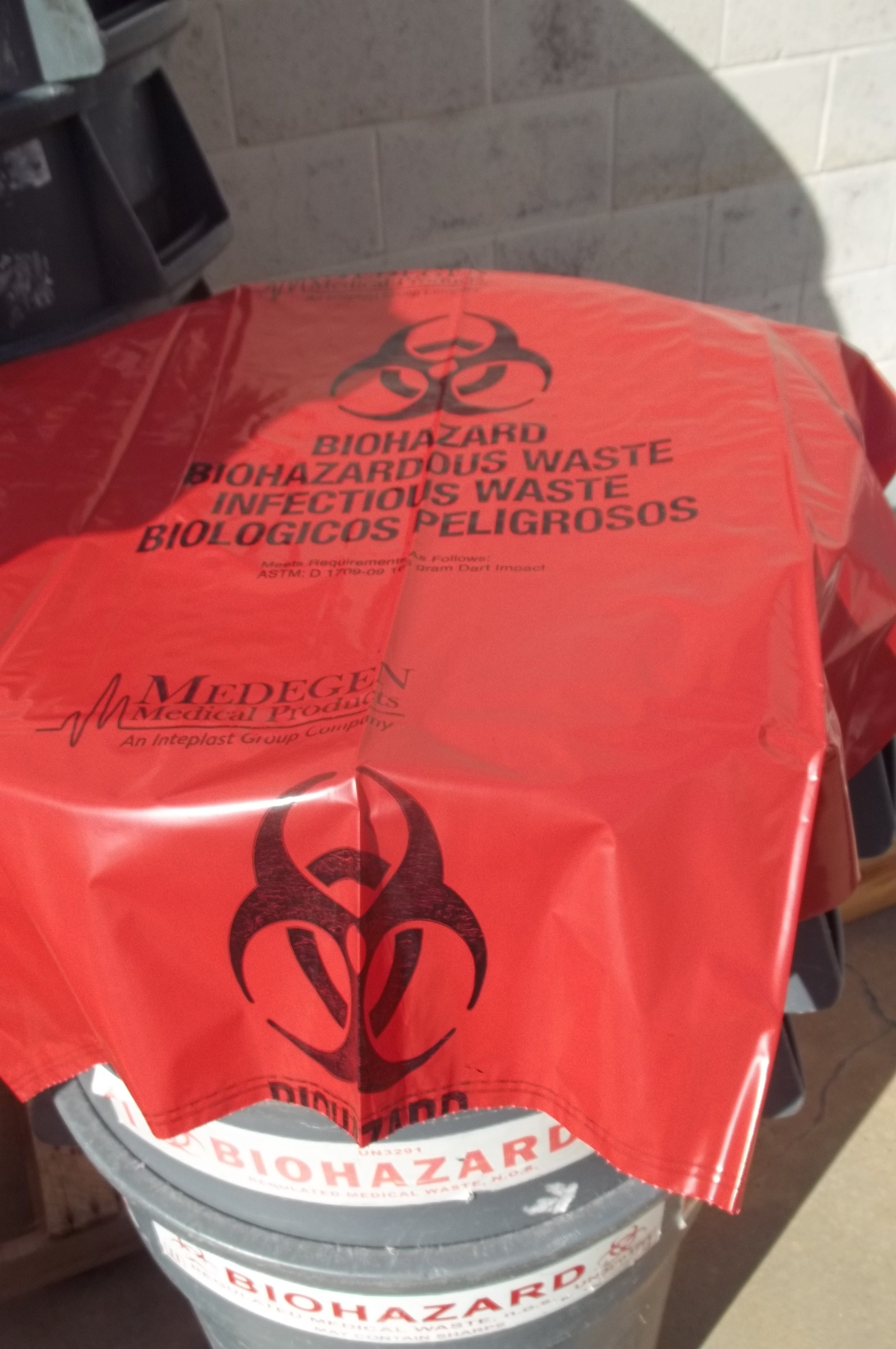
The answer to your questions depends on whether or not the regulated medical waste is subject to the Hazardous Materials Regulations of the USDOT. It may be subject to an exception from full regulation. Please read: The Identification and Transportation of a Regulated Medical Waste.
Also, since regulated medical waste is not regulated by the USEPA it may be subject to state-specific regulations. Some states require the use of a state-specific shipping document for regulated medical waste, e.g. Potentially Infectious Medical Waste in Illinois.
I hope this helps. Please don’t hesitate to contact me with any other questions.
Interested in site specific training at your site that covers this topic, and more!
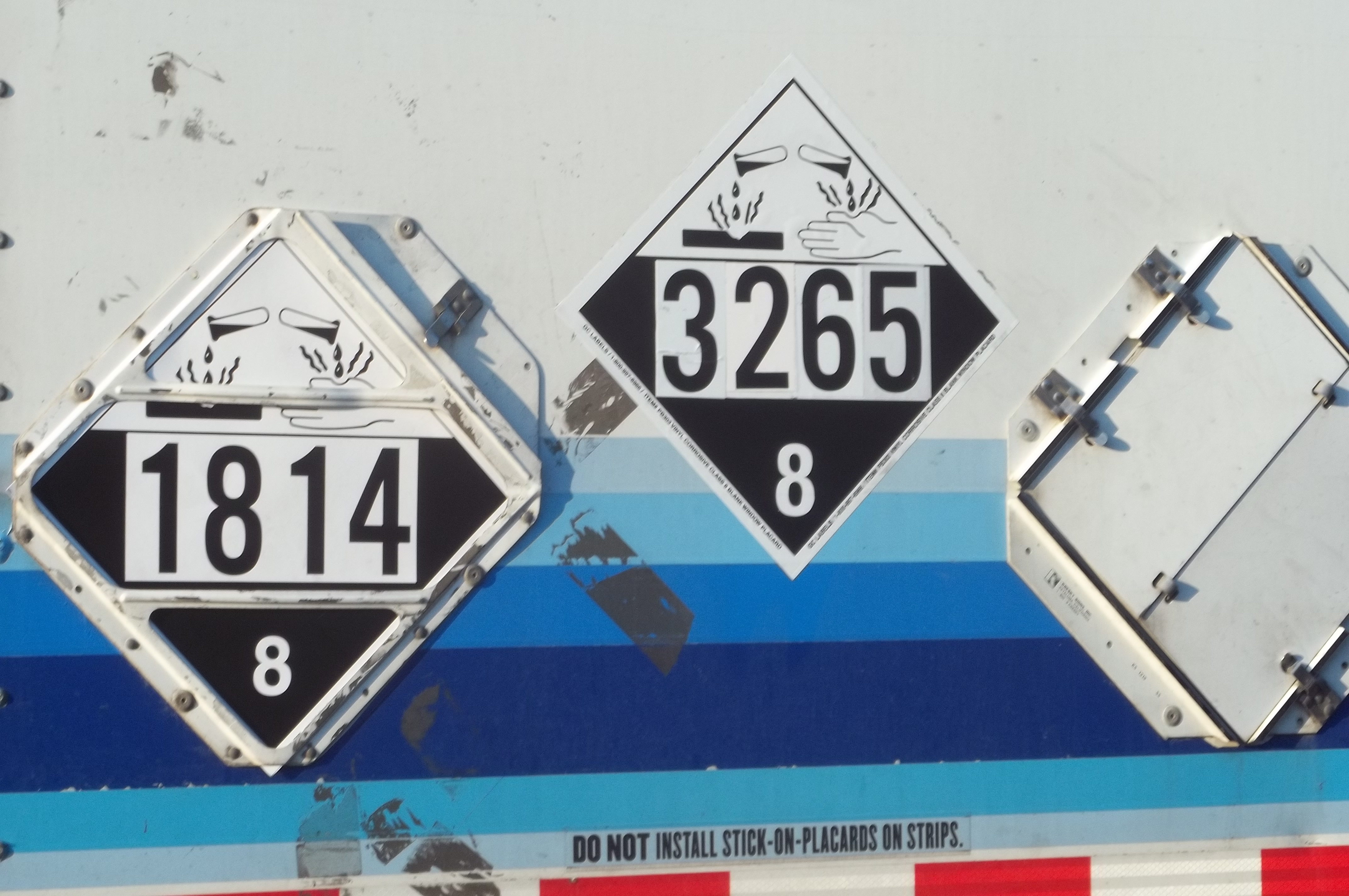
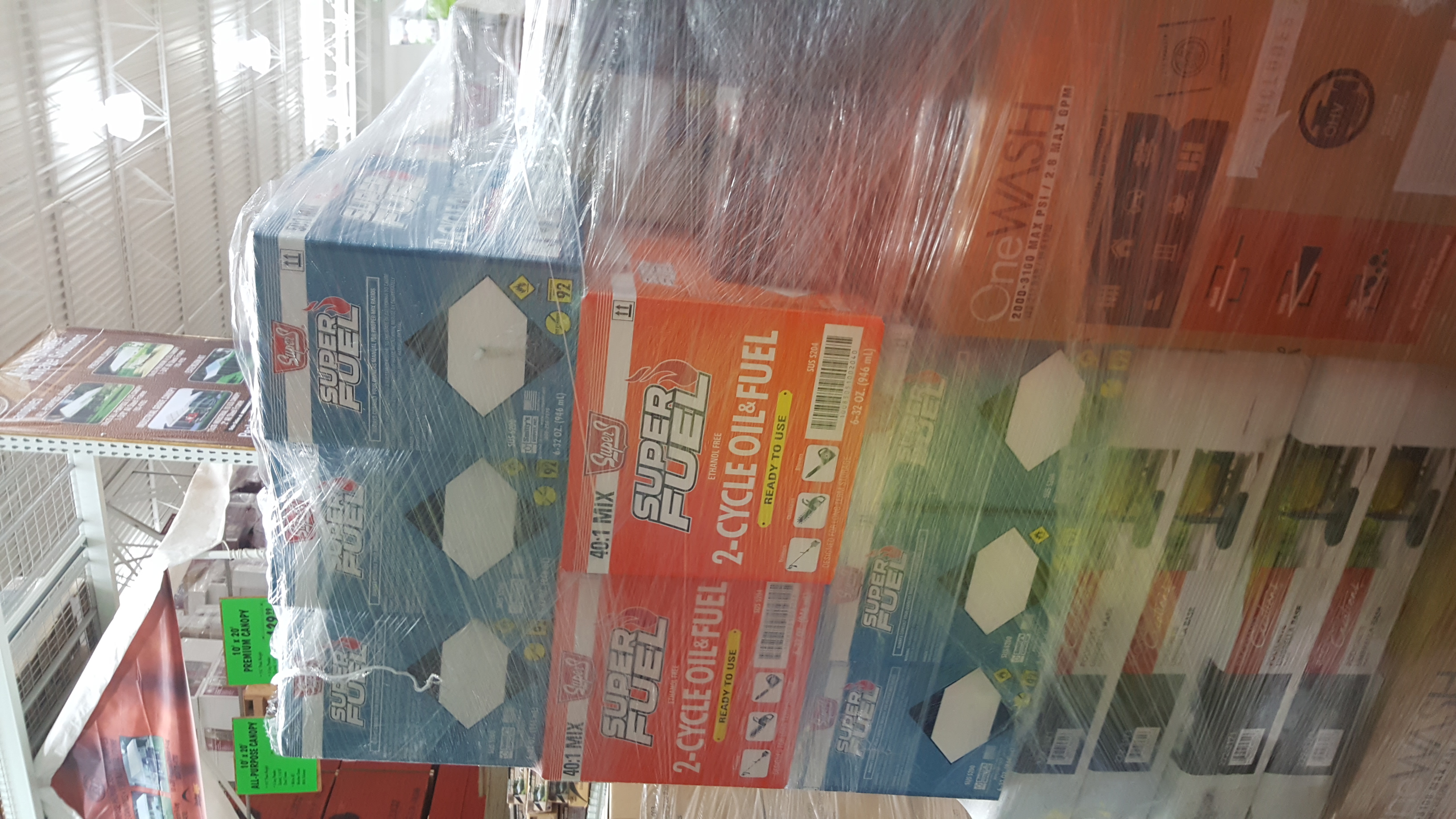
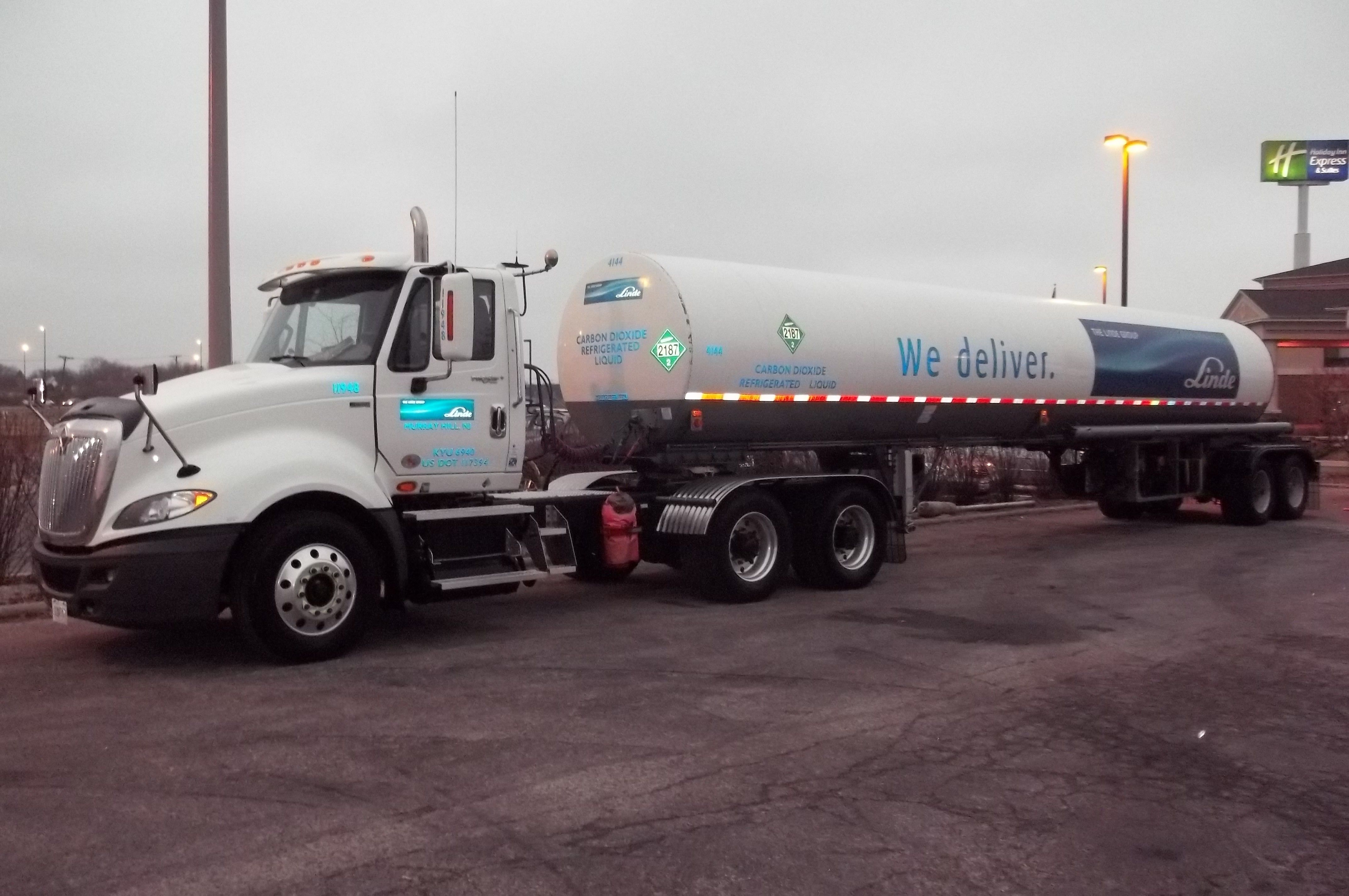
The transportation of hazardous materials (hazmat) is all around us. Below are images taken during my travels when I’ve come across the transportation in commerce of a hazmat. In each situation I know little about the shipper or the carrier other than what I can read on the vehicle. However, because the persons involved in the transport of these hazardous materials are trained HazMat Employees (along with an additional component of Safe Driver Training for the drivers) the vehicles and packagings display the hazard communication methods (placards and package marks) required by the Hazardous Materials Regulations (HMR) of the Pipeline and Hazardous Materials Safety Administration within the U.S Department of Transportation (USDOT/PHMSA). It’s the display of these hazard communication methods that allow me to determine the contents of the vehicles to the degree that I have in the images below. Please read my comments related to each of the images and see if you agree with my conclusions. (more…)
What’s on/in those trucks?
The transportation of hazardous materials (hazmat) is all around us. Below are images taken during my travels when I’ve come across the transportation in commerce of a hazmat. In each situation I know little about the shipper or the carrier other than what I can read on the vehicle. However, because the persons involved in the transport of these hazardous materials are trained HazMat Employees (along with an additional component of Safe Driver Training for the drivers) the vehicles and packagings display the hazard communication methods (placards and package marks) required by the Hazardous Materials Regulations (HMR) of the Pipeline and Hazardous Materials Safety Administration within the U.S Department of Transportation (USDOT/PHMSA). It’s the display of these hazard communication methods that allow me to determine the contents of the vehicles to the degree that I have in the images below. Please read my comments related to each of the images and see if you agree with my conclusions. (more…)
Q&A: Is an emergency response phone number always required on a hazmat shipping paper?
Sent from an iPhone: All hazmat shipping papers will have a emergency number true or false?
Me: Except for a very few specific exemptions, true.
The emergency response telephone number is not required on the following:
A hazmat shipped as a limited quantity.
Materials properly described under the following shipping names:
Battery powered equipment
Battery powered vehicle
Carbon dioxide, solid
Castor bean
Castor flake
Castor meal
Castor pomace
Consumer commodity
Dry ice
Engines, internal combustion
Fish meal, stabilized
Fish scrap, stabilized
Krill Meal, PG III
Refrigerating machine
Vehicle, flammable gas powered
Vehicle flammable liquid powered
Wheelchair, electric
Transport vehicles or freight containers containing lading that has been fumigated and displays the FUMIGANT mark, unless other hazmat are present in the cargo transport unit.
Contact me with any questions you may have about the transportation of hazardous materials by air, highway, vessel, or rail