PO Box 1232 Freeport, IL 61032

A Different Kind Of Training

A Different Kind Of Training

A Different Kind Of Training

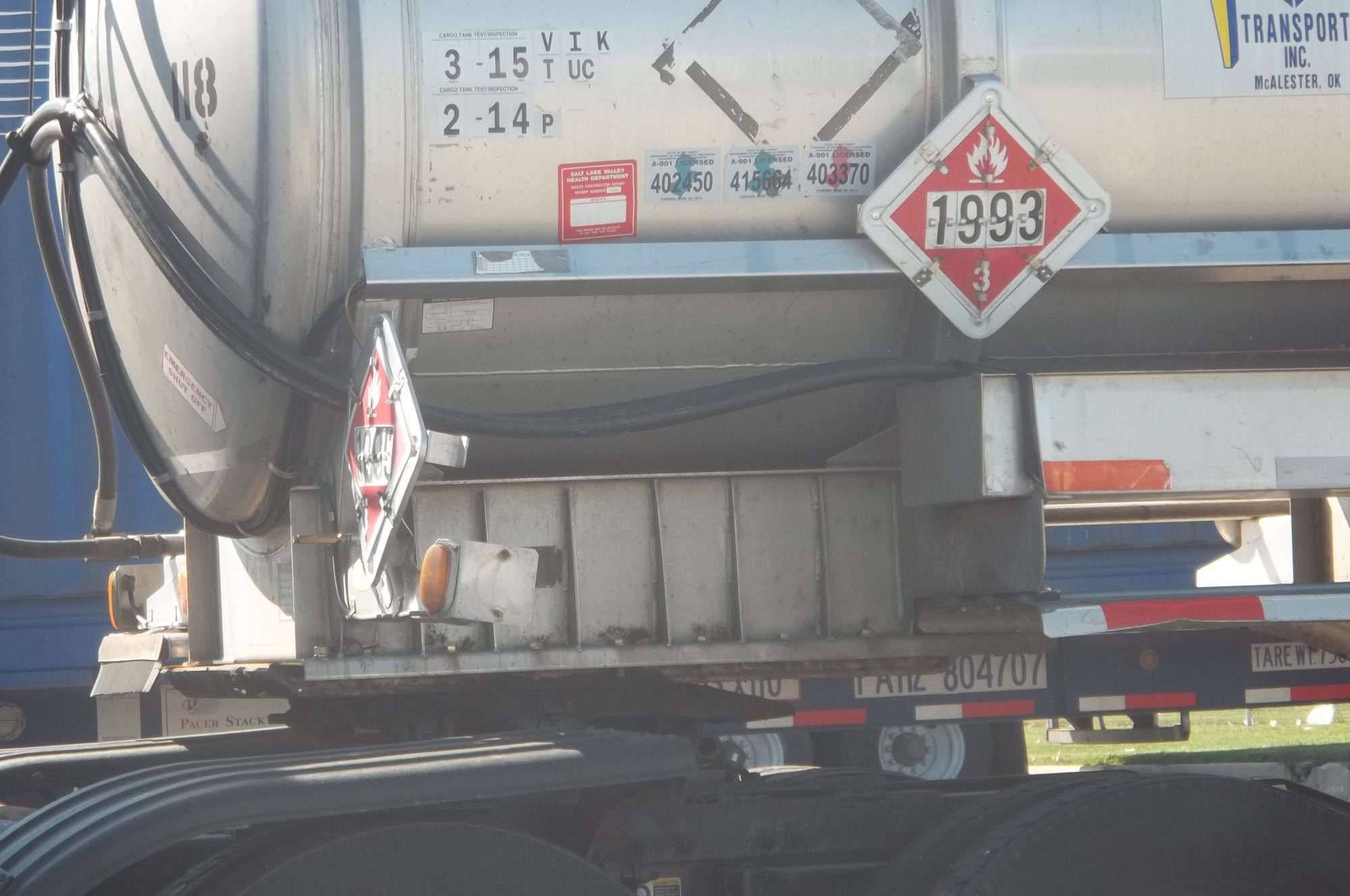
Placard and identification number for diesel fuel

Q&A: Are my Deck Engines and Diesel Fuel Subject to the Hazardous Materials Regulations?

From the contact form on my website on December 9, 2016:

We have a trailer with two Deck Engines w/ a 400 Gal. Diesel Tank that supply’s Fuel to both engines.

Question 1. Do we have to Placard the on all for sides of the tank.

2. Does the driver need a Haz-mat Endorsement. Thanks.

(the email included a picture of a flat bed trailer hauling the deck engine and two intermediate bulk containers of diesel fuel.)

Contact me with any questions you may have about the transportation of hazardous materials by air, highway, vessel, or rail

International and Domestic

Daniels Training Services, Inc.

815.821.1550

Info@DanielsTraining.com

https://danielstraining.com/

My reply December 11th:

Please see below:

  • Diesel fuel is classified as a Class 3 Combustible Liquid.
  • The diesel tanks on the trailer classify as a bulk packaging. The packaging is known as an IBC or Intermediate Bulk Container.
  • A bulk packaging of a combustible liquid is not subject to the exception at 49 CFR 173.150(f).
  • The requirements to use DOT specification packaging is not applicable to a bulk packaging of a Class 3 Combustible Liquid.
  • The placarding requirements of 49 CFR 172, subpart F do apply to this HazMat.
  • Per 49 CFR 172.514(c)(4) an IBC is required to display the applicable placards on two opposing sides. The 4-digit identification number must appear on or near the placard. Alternatively, the IBC may display HazMat labels and the proper shipping name and identification number on only one side.  Read:  HazMat Labels, Placards, and Marks on an IBC.
  • Per 49 CFR 172.504(a) each transport vehicle required to display placards (as in this situation) must display them on all four sides of the vehicle.
  • 49 CFR 172.516(a) requires the placards to be visible from the direction they face.
  • The placards on the IBCs may suffice to replace the required placards on the side of the truck that the placarded IBCs face. In short, if placards are displayed on the IBCs so that they are visible from all four sides of the vehicle, you can meet both requirements with the same 4 placards. A more conservative approach is the display placards or HazMat labels on the IBCs as required and also display placards on all four sides of the vehicle.

I hope this helps.

Please don’t hesitate to contact me with any other questions.

I guess that did it because I didn’t hear back from him.

Please feel free to contact me if you have any questions about the transportation of a combustible liquid.  See below for links to other articles for more information.
Q&A: Do I Describe the Inner Receptacle of a Combination Packaging on the Shipper’s Declaration for Dangerous Goods?

A question from an attendee of my Onsite Training (12.01.16):

Hello Daniel,The question is: On the DGD is it proper to put the outer packaging in the Quantity and type of packaging column.  (This is how we have been filling it out since you trained us with no problems from any shipping company)

The forwarder is stating it should say Plastic (Which in the inner packaging) instead of Fiberboard Box (Which is the outer packaging).

Thank you!

I got right on it and had to return to her for some clarification (12.01.16):

I am researching an answer.

Can you provide a description – or a picture – of what the package in question looks like?
  • Is it two fiberboard boxes inside a third fiberboard box that makes the outer packaging?
  • Or is it two plastic inner receptacles inside a fiberboard box?
  • Or something else?

Please advise.

Her reply the next day (12.02.16):
It is nine plastic inner receptacles inside a fiberboard box.

Contact me with any questions you may have about the transportation of hazardous materials by air, highway, vessel, or rail

International and Domestic

Daniels Training Services, Inc.

815.821.1550

Info@DanielsTraining.com

https://danielstraining.com/

I had a reply ready by December 5th:

I have an answer for you, thank you for your patience.  Please see below.

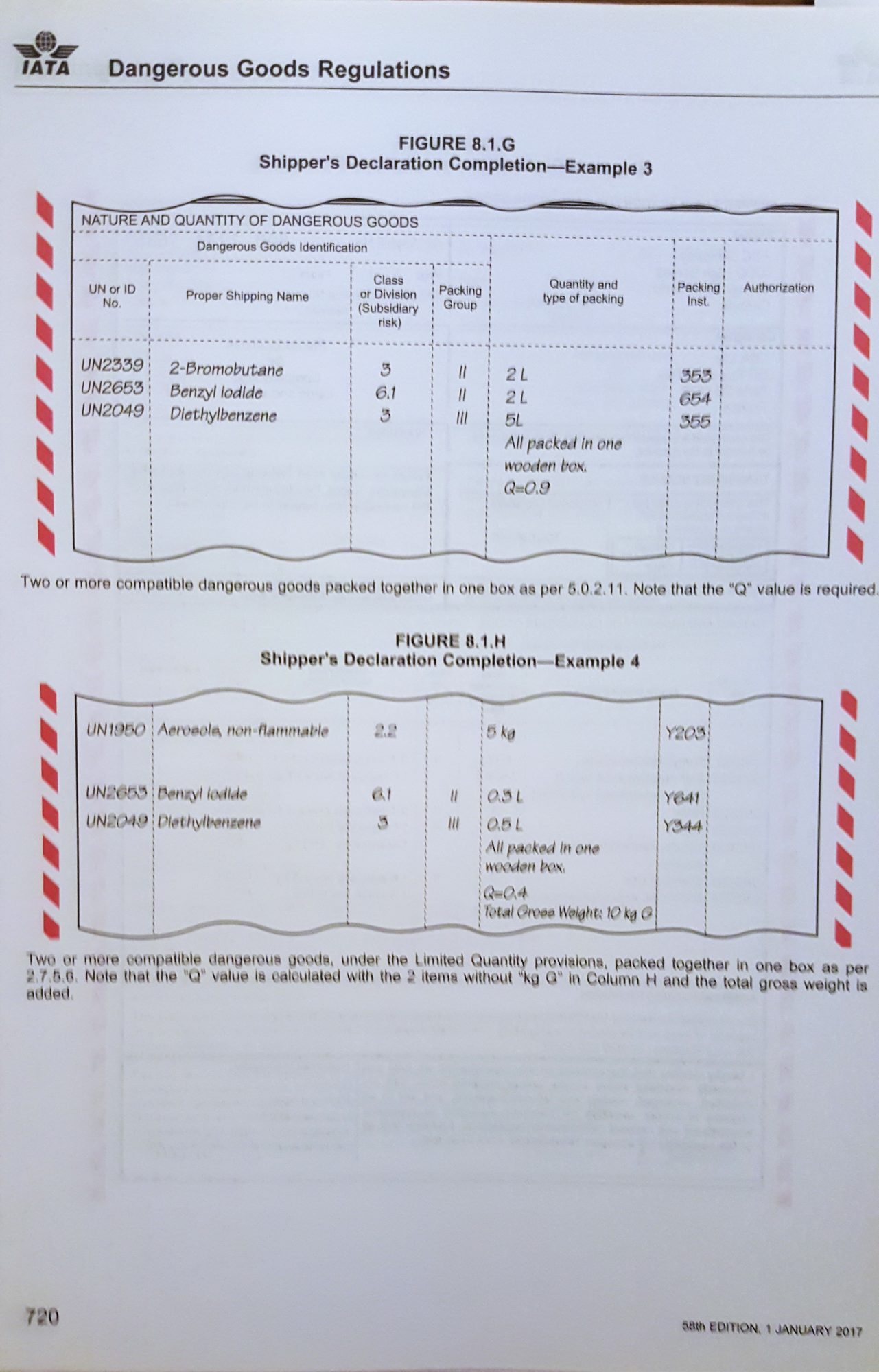
  • For all packed in one there is no requirement to describe the inner packagings.
  • All that is required is to show the net quantity of each of the different dangerous goods in the packaging followed by the statement “all packed in one (type of packaging)” and then the Q value.
  • Some examples of this are shown in the IATA Dangerous Goods Regulations:  Figure 8.1.G and Figure 8.1.H.

    Page of the IATA Dangerous Goods Regulations
    Figure 8.1.G and Figure 8.1.H.

This matches the overall intent of the DGR when describing dangerous goods on the Shipper’s Declaration for Dangerous Goods:  To describe the packages one will see when viewing the consignment, i.e. the outer packagings, and not the inner packagings or receptacles.

I hope this helps.  Please don’t hesitate to contact me with any questions.

That did it!

Thank you!

The transportation of dangerous goods (aka: HazMat) requires initial training before performing a regulated function and new training within 24 months (i.e. biennial).  Please don’t hesitate to contact me if you require this training or if you just have a question.  I’m here to help.

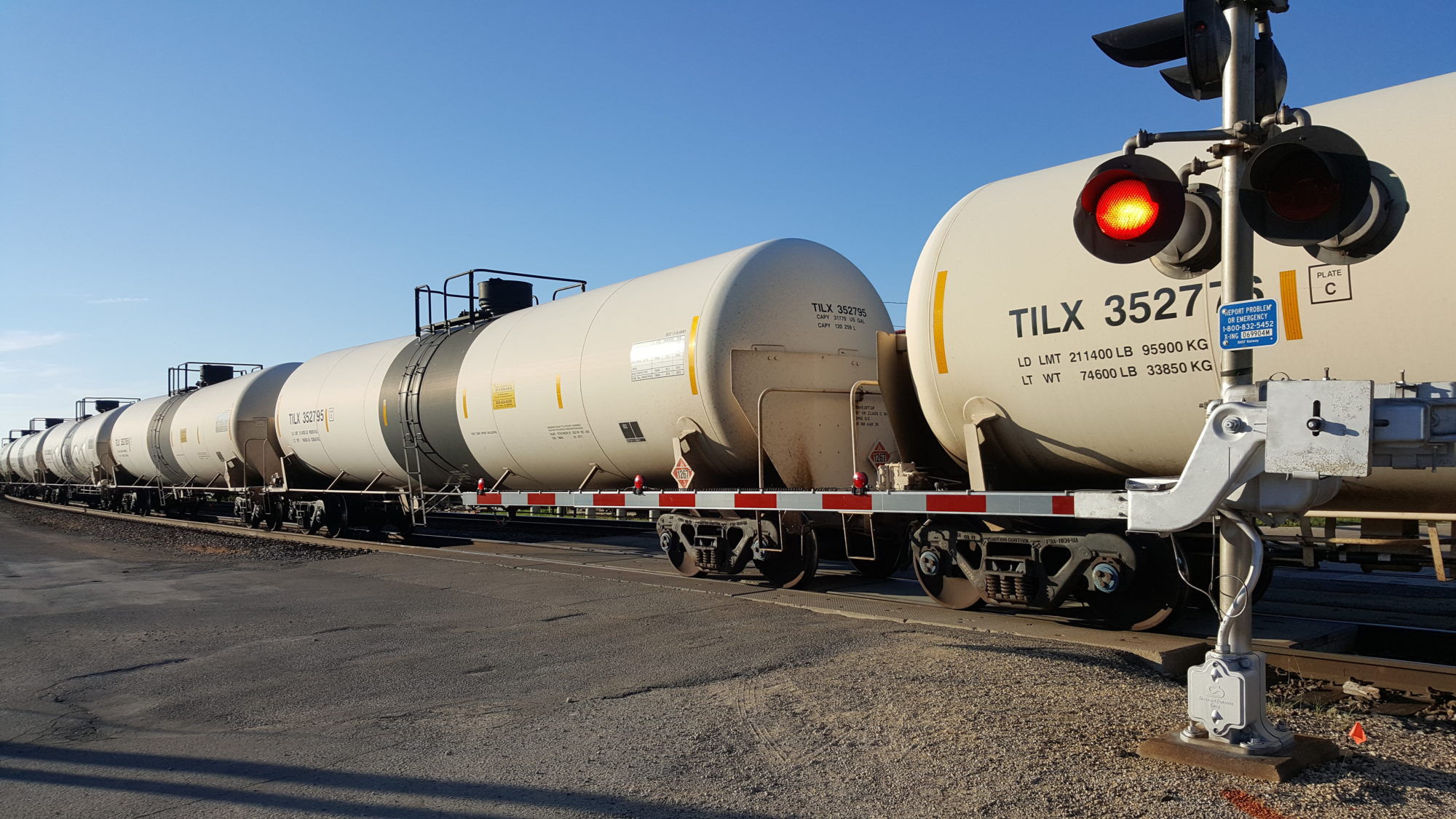
rail car of HazMat

Top Ten Best Practices For Rail Shippers

If you ship hazardous materials by rail there are a lot of things you have to take into consideration in addition to the standard requirements of all HazMat shippers.  These include:

  • The requirements and limitations on the use of tank cars for specific HazMat at 49 CFR 173.10
  • The requirements for loading/unloading and preparing tank cars for transportation at §173.31.
  • The marking requirements for tank cars and multi-unit tank car tanks at §173.330.
  • The additional planning requirements for transportation by rail at §172.820 within the existing regulations for a Safety and Security Plan in Subpart I of Part 172.
  • The option for use of an electronic shipping paper available at §172.201(a)(5).

…and others found throughout the Hazardous Materials Regulations.

While the guidance below will not ensure complete compliance with the HMR, it will assist a shipper of HazMat by rail to identify the best practices to achieve compliance.

Contact me with any questions you may have about the transportation of hazardous materials by air, highway, vessel, or rail

International and Domestic

Daniels Training Services, Inc.

815.821.1550

Info@DanielsTraining.com

https://danielstraining.com/

  1. Develop and implement a securement policy which includes pre-loading inspections, post-loading inspections and corresponding safety checklists.
    • Special attention should be given to ensure that no overloading of rail cars occurs, especially hazardous materials.
  2. Perform extra inspections of valves and manways for tightness (one of the leading causes of leaks/spills in rail transportation incidents).
    • After loading, leak-test the car by applying at least 10 psig of pressure over the maximum estimated transportation pressure. all valves, packing gland nuts, closures and flanges should be checked using leak detection solution or ultrasonic instrument. After completing the leak test, pressure should be released or reduced.
    • If a pressure test is impractical or unsafe, the car should be held and reinspected after twenty-four (24) hours, and valves and fittings tightened as needed to ensure proper securement.
  3.  Review shipping papers to ensure the proper information is provided.
    • Promote electronic data interchange (EDI) for all shipments.
  4. Ensure that proper placarding is maintained for all rail cars.
    • Shippers should eliminate using paper placards whenever possible.
  5. For Canadian shipments ensure that the emergency response plan is correct and updated for plant sites and transportation related releases.
    • Ensure that the emergency response plan is exercised annually (drill).
    • Shippers should show proper ERP number and associated telephone number on dangerous goods subject to the EDP requirements of transport Canada.
    • Ensure that emergency contacts ans telephone numbers and plant site are correct and updated regularly.
  6. Key training programs should be implemented to:
    • Ensure that all railroad personnel who enter a plant site are properly trained and/or receive orientation (especially for emergency actions).
    • Establish, document, communicate and implement a company-wide tank car securement training program.
    • Establish , document, train and implement a procedure for tank car customers to report poor securement, hard-to-operate valves and other fitting problems.
    • Establish , document, train and implement company-wide preventative maintenance practices for tank cars.
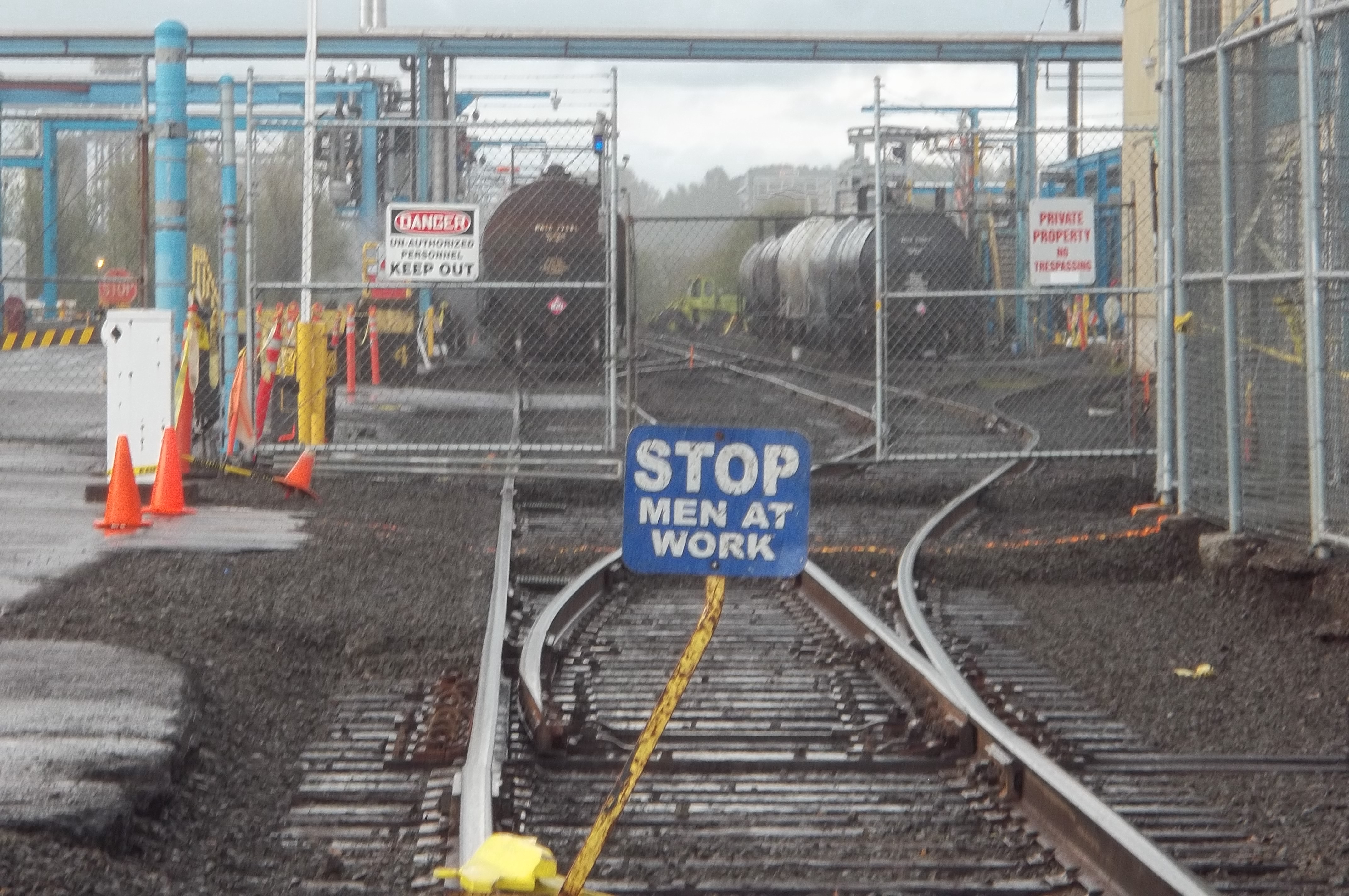
  7. STOP Men at WorkEnsure that all rail crossings within the plant site are properly marked with warning signs.
  8. Ensure rail lines are clear, switches are aligned properly, and car brakes are released before moving cars.
  9. Have plant personnel closely observe rail crews when they are operating within a plant site to assure plant and rail safety are being maintained.
  10. Have a documented routine process for providing feedback to the rail carrier.

PHMSA Releases Mobile App for Online CFR

The Bullet:

PHMSA has developed and released a mobile app to allow for access to the Hazardous Materials Regulations online.

Who:

The U.S. Department of Transportation’s (DOT) Pipeline and Hazardous Materials Safety Administration (PHMSA).

What:
  • It is a simplified version of the web-based application which was released to the public in March of 2016.
  • It provides the first-ever mobile access to search, view, and navigate PHMSA’s Hazardous Materials Regulations in 49 CFR parts 100-180 for the classifying, handling, and packaging of hazardous materials by all modes (highway, rail, aircraft, and vessel).  Read:  Modal-Specific Training Requirements of PHMSA.
  • It provides the first-ever mobile access to PHMSA’s Pipeline Safety Regulations in 49 CFR parts 190-199.
  • It is also unique because it allows users to navigate regulations at the paragraph level.
Where:

The oCFR app was released to both Apple’s App Store and the Google Play Store for use on iOS and Android mobile devices.  You can find the oCFR with these links: Google Play Store (for Android devices) and iTunes (for iPhones and iPads).

When:

Released July 6, 2017.

Why:

PHMSA continues to improve safety and public access to the latest transportation regulations.  The oCFR mobile application is a simplified version of the web-based application which was released to the public in March of 2016.

How:

The oCFR app was released to both Apple’s App Store and the Google Play Store for use on iOS and Android mobile devices.

Contact me with any questions you may have about the transportation of hazardous materials by air, highway, vessel, or rail

International and Domestic

Daniels Training Services, Inc.

815.821.1550

Info@DanielsTraining.com

https://danielstraining.com/

More Information:

Contact for media: Patricia Klinger: (202) 366-4831

Access to the regulations is only part of the equation.  To make your compliance with the Hazardous Materials Regulations “add up” you must provide HazMat Employee training for all personnel involved in the transportation of hazardous materials.

Rail car, Freight Container, Cargo Transport Unit

Quick Take: Modal-Specific Training Requirements of the Hazardous Material Regulations

The requirement for initial and triennial training of HazMat Employees can be found within the Hazardous Materials Regulations (HMR) at 49 CFR 172, subpart H. Requirements include:

  • Provide initial training within ninety (90) days of employment as a HazMat Employee or change of job function to those of a HazMat Employee.
  • Prior to receiving initial training HazMat Employee must be under the direct supervision of a trained and knowledgeable person while performing the job function of a HazMat Employee.
  • Recurrent training must be provided within three (3) years of the initial training date.
  • HazMat Employee training must include the following:
    • General Awareness/Familiarization
    • Function Specific Responsibilities
    • Safety
    • Security General Awareness
    • In-Depth Security (if applicable)
    • Safe Driver (if applicable)
  • HazMat Employee training must include a test.

Contact me with any questions you may have about the transportation of hazardous materials by air, highway, vessel, or rail

International and Domestic

Daniels Training Services, Inc.

815.821.1550

Info@DanielsTraining.com

https://danielstraining.com/

What you may not know is that there are other training requirements specific to persons who transport HazMat by a particular mode of transportation.  These are identified below.

  • 49 CFR 175.20: each HazMat Employee involved in the transportation by air of a HazMat must receive HazMat Employee training and the training required by 14 CFR parts 121 and 135.
  • 49 CFR 177.800 and §177.816: each HazMat Employee that operates a motor vehicle over a public roadway for the transport of HazMat must receive HazMat Employee training as well as training on the following:
    • The requirements of §177.
    • The applicable regulations of the Federal Motor Carrier Safety Administration (FMCSA) for the operation of a commercial motor vehicle at §390 through §397.
    • Driver training must include the subjects specified at §177.816.
 

Read:  Driver Training Requirements of the USDOT

  • 49 CFR 176.13: each HazMat Employee involved in the transportation of a HazMat by vessel must receive HazMat Employee training as well as receive training on the applicable requirements of §176.
  • Interestingly, there are no modal-specific training requirements for the transportation of HazMat by rail within the HMR.

The above training is not required for those who ship or receive hazardous materials but is intended for those who take part in the HazMat transportation by the particular mode.  For example, the personnel at your shipping dock require solely HazMat Employee training while the truck driver who loads and transports the HazMat to its destination requires HazMat Employee training as well as the modal-specific training requirements of 49 CFR Part 177.

Contact me with any questions you may have about the transportation of hazardous materials by air, highway, vessel, or rail

International and Domestic

Daniels Training Services, Inc.

815.821.1550

Info@DanielsTraining.com

https://danielstraining.com/

Proposed Revisions to USPS Mailing Standards for the Transport of Lithium Batteries

If you are a shipper lithium cells or batteries in commerce you are likely aware of the current regulations applicable to their transport in commerce:

  • Transportation solely within the U.S. (domestic) by all modes (highway, rail, vessel, & air) subject to the Hazardous Material Regulations (HMR) of the Pipeline and Hazardous Materials Safety Administration of the USDOT (PHMSA/USDOT).
  • International transportation by vessel subject to the regulations of the International Maritime Organization (IMO).
  • Domestic and international transportation by air subject to the regulations of the International Civil Aviation Administration (ICAO) but, more practically, those of the International Air Transport Association (IATA) which is used by the majority of the worlds air carriers.
  • Domestic and international transportation with the U.S. Mail subject to the standards of the United States Postal Service (USPS).

The purpose of this article is to identify what are currently (as of 07.31.17) proposed revisions to the mailing standards of the USPS.

Note:  Unless specifically referenced, for the purposes of this article the term “battery” or “batteries” should be assumed to include “cell” or “cells”.

(more…)

Quick Take: Determination of Packing Group for a Class 8 Corrosive

Whether shipping a hazardous material or dangerous good by highway, air, rail or vessel; whether transported internationally or within the U.S.; the shipper of a hazardous material is responsible for its classification.  This includes – among other things – determining the applicable hazard class – or division – and the packing group, if it has one.  This is a requirement of all three regulatory agencies that regulate the transportation in commerce of hazardous materials/dangerous goods:

  • The Pipeline and Hazardous Materials Safety Administration (PHMSA) within the U.S. Department of Transportation (USDOT).
  • The International Air Transport Association (IATA) whose regulations are based on those of the International Civil Aviation Administration (ICAO).
  • The International Maritime Organization (IMO).

The purpose of this article is to provide the regulatory standard for determining the packing group of a Class 8 Corrosive.

The good news is that all three regulatory agencies for the transport of hazardous materials use the same criteria for the classification of a Class 8 Corrosive.  This includes the determination of its packing group.  Unlike IATA and the IMO, however, PHMSA does not tabulate its data and instead requires the reader to find their way through some confusing text.  The table below can be seen in almost exactly this form in the regulations of IATA and the IMO and neatly clarifies those of PHMSA.

Interested in a Webinar that covers this topic, and more!

My Webinar Training Schedule

[table “Class8PG” not found /]

Remember:  there are eight other hazard classes, some of them with their own criteria for determining the packing group.  Make certain you consider each of them and a lot more when you classify your HazMat/dangerous good prior to offering it for transportation.

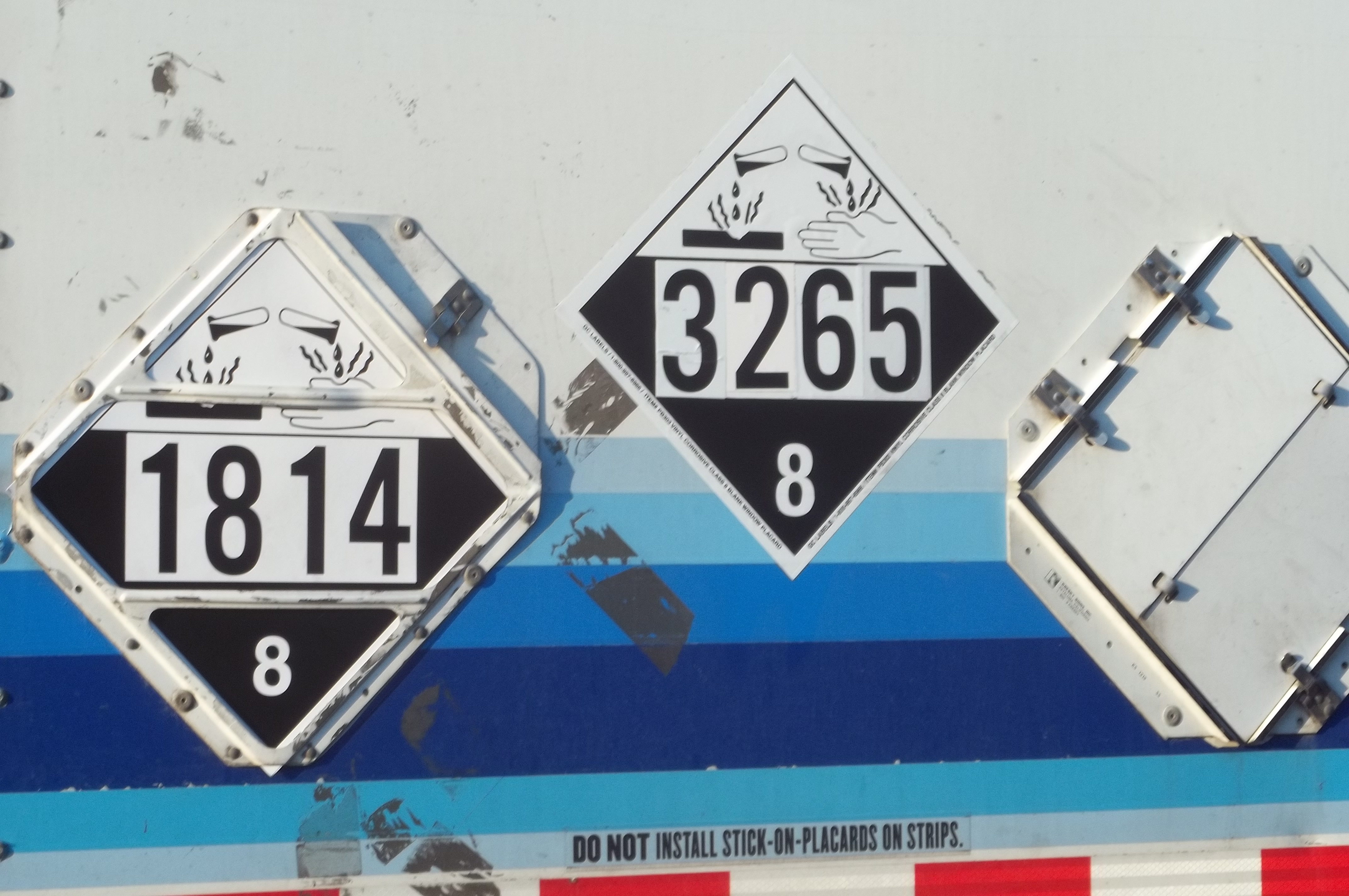
Class 8 Corrosive PlacardsPlease don’t hesitate to contact me if you require any assistance in the classification of your hazardous material.

Contact me with any questions you may have about the transportation of hazardous materials by air, highway, vessel, or rail

International and Domestic

Daniels Training Services, Inc.

815.821.1550

Info@DanielsTraining.com

https://danielstraining.com/

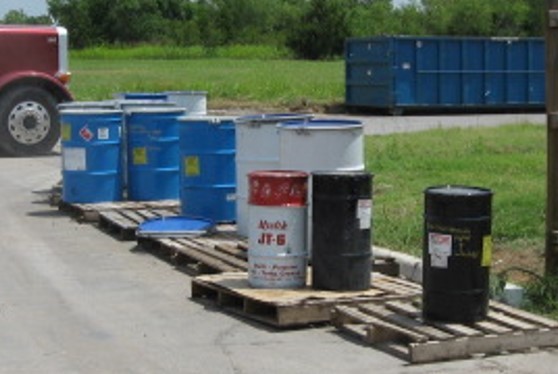
Outdoor storage of hazardous waste containers

Q&A: Lab Packs and Satellite Accumulation Areas for Hazardous Waste

(12.12.16) From a customer who had just completed one of my RCRA Training Webinars:

Hi Daniel,

Thanks for the training today. I am working on completing the evaluation and will get that to you soon.

I have a couple of follow up questions. We are an SQG (Small Quantity Generator of hazardous waste).

Not sure of your hazardous waste generator status?

Take this short survey

  • Outdoor storage of hazardous waste containersIf you have a Lab-Pack with F and U codes, could you send those offsite in the same drum if they are going to be treated the same?
  • Do you have any guidance on how frequently Lab-Packs should be sent out?
  • Do you have any additional guidance on satellite accumulation and having it be in line of site? We have some satellite accumulation in the lab’s walk in closet in a flammable cabinet rather than out in the general work space. It is generated in the lab.

Thank you.

Contact me with any questions you may have about the generation, identification, management, and disposal of hazardous waste

Daniels Training Services, Inc.

815.821.1550

Info@DanielsTraining.com

https://danielstraining.com/

My reply that same day:

Thank you for contacting me. Please see below:

  • EPA regulations do not address the off-site transportation of hazardous waste other than to reference USDOT regulations.  Editor’s note:  This isn’t entirely correct as the USEPA does have pre-transportation requirements for the off-site transportation of hazardous waste (read: USEPA Requirements for off-site Transportation of Hazardous Waste Containers and read how the regulations for marking hazardous waste containers have changed under the new Generator Improvements Rule.  And, of course, USEPA regulations apply to a hazardous waste from ‘cradle-to-grave’ which includes its transportation.
  • USDOT regulations at 49 CFR 173.12(b)(2)(i) regarding the shipment of hazardous waste lab packs reads in part: “Each outer packaging may contain only one class of waste material.” So, the waste codes don’t matter. Nor does the ultimate treatment method. What matters is the USDOT hazard class of the hazard waste. It is quite possible that both an F-code and U-code hazardous waste are in the same USDOT hazard class, i.e. both are Class 3 Flammable Liquids and can therefore be packaged in the same container.  Other requirements for 49 CFR 173.12(b) must be met for the shipment of hazardous waste lab packs.
  • I am not aware of any guidance on how frequently lab packs must be sent off-site for disposal. However, as an SQG you must not accumulate hazardous waste on-site beyond 180 days or 270 days if the TSDF you must use is >200 miles away. 30 day extensions are available in extreme circumstances. Also, you must not accumulate >6,000 kg of hazardous waste on-site at one time.
  • ‘Line of sight’ is only one way to comply with the second of two requirements for a satellite accumulation container. The goal is to have the container ‘under the control of the operator’. Two acceptable methods to accomplish this are: 1. ‘Line of sight’ & 2. Container is secured in some manner where access is limited to operator(s). This second method could be accomplished by keeping it in a secure cabinet in a work area that is restricted to those who generate the waste, e.g. lab personnel. Based on your description, it sounds like your satellite accumulation container is ‘under the control of the operator’.

I hope this helps.

Please don’t hesitate to contact me with any other questions.

And that was it!

Whether you need training, a consultation, or just have a question about the management of waste or the transportation of hazardous materials, please don’t hesitate to contact me.

Quick Take: Number of Regulatory Requirements by Generator Status

If you generate a hazardous waste you are subject to the hazardous waste generator regulations of the USEPA – and your state – for its cradle-to-grave management.  Your regulatory responsibilities are relative to the amount of hazardous waste you generate;  the more hazardous waste you generate, the more responsibilities you have under the regulations.  Just what are your responsibilities?  Well, there are too many of them to list here but the data below provides an indication of the relative responsibilities of a hazardous waste generator under the regulations of the Resource Conservation and Recovery Act (RCRA).

Not sure of your hazardous waste generator status?

Take this short survey

The Responsibilities of a Hazardous Waste Generator Under USEPA Regulations:
  • Large Quantity Generator (LQG):  88 requirements.
  • Small Quantity Generator (SQG):  74 requirements.
  • Conditionally Exempt Small Quantity Generator (CESQG): 4 requirements.

From a presentation at the 2017 Environmental Trade Fair and Conference hosted by the Texas Commission on Environmental Quality (TCEQ).
Though the numbers may not be exact, or the regulations may be different in your state, or the regulations have changed by the time you read this.

Contact me with any questions you may have about the generation, identification, management, and disposal of hazardous waste

Daniels Training Services, Inc.

815.821.1550

Info@DanielsTraining.com

https://danielstraining.com/

Did I mention “change”?  The Generator Improvements Rule went into effect on May 30, 2017 and made significant and numerous changes to the RCRA regulations applicable to a generator of hazardous waste.  Read a summary of the new rule:  Summary of the Generator Improvements Rule.  Or better yet, contact me with any questions you may have about the regulations for a generator of hazardous waste.

TCEQ Pollution Prevention Waste Management Workshop – Registration Now Open!

The Texas Commission on Environmental Quality (TCEQ) requires Pollution Prevention plans for the following facilities in Texas:

  • Large Quantity Generator of hazardous waste.
  • Small Quantity Generator of hazardous waste.
  • Facility that submits the Toxic Release Inventory (TRI) Form R Report.

Not sure of your hazardous waste generator status?

 Take this short survey

This workshop hosted by TCEQ will provide information on programs and resources to help create, continue, and publicize a facility’s P2 and waste management efforts.

Registration:
Early Registration (through Aug. 31): $79.00
Registration (Sept. 1 – Sept.19): $159.00
Onsite Registration (Sept. 20): $179.00

Location:
J.J. Pickle Center
10100 Burnet Road, Bldg 137
Austin, TX 78758

For more information, visit the event webpage:  Pollution Prevention Waste Management Workshop

Contact me with any questions you may have about the generation, identification, management, and disposal of hazardous waste in Texas

Daniels Training Services, Inc.

815.821.1550

Info@DanielsTraining.com

https://danielstraining.com/

Search Website