PO Box 1232 Freeport, IL 61032

A Different Kind Of Training

A Different Kind Of Training

A Different Kind Of Training

Hazardous Waste Spill

Small Quantity Generators of Hazardous Waste “Basic Plan” for Emergency Preparedness and Response

If you are a Small Quantity Generator (SQG) of hazardous waste, you may be aware of the regulations at 40 CFR 262.34(d)(4) that require you – along with large quantity generators and treatment storage and disposal facilities – to comply with the Emergency Preparedness and Prevention regulations of 40 CFR 265, Subpart C.  You may not be aware of the requirements of 40 CFR 262.34(d)(5) for emergency procedures which apply solely to SQGs.  These regulations are sometimes referred to as an SQG’s “Basic Plan”.  They include the following:

Not sure of your hazardous waste generator status?  Take this short survey

  1. At all times there must be at least one employee either on the premises or on call (i.e., available to respond to an emergency by reaching the facility within a short period of time) with the responsibility for coordinating all emergency response measures.  This employee is the emergency coordinator.
  2. §262.34(d)(5)(iii) requires an SQG to “ensure that all employees are thoroughly familiar with proper waste handling and emergency procedures, relevant to their responsibilities during normal facility operations and emergencies”.  This is typically interpreted to mean some kind of training.
  3. The following information must be posted next to any telephone that may be used in a hazardous waste fire, spill, or emergency:
    • The name and telephone number of the emergency coordinator;
    • Location of fire extinguishers and spill control material, and, if present, fire alarm; and
    • The telephone number of the fire department, unless the facility has a direct alarm.
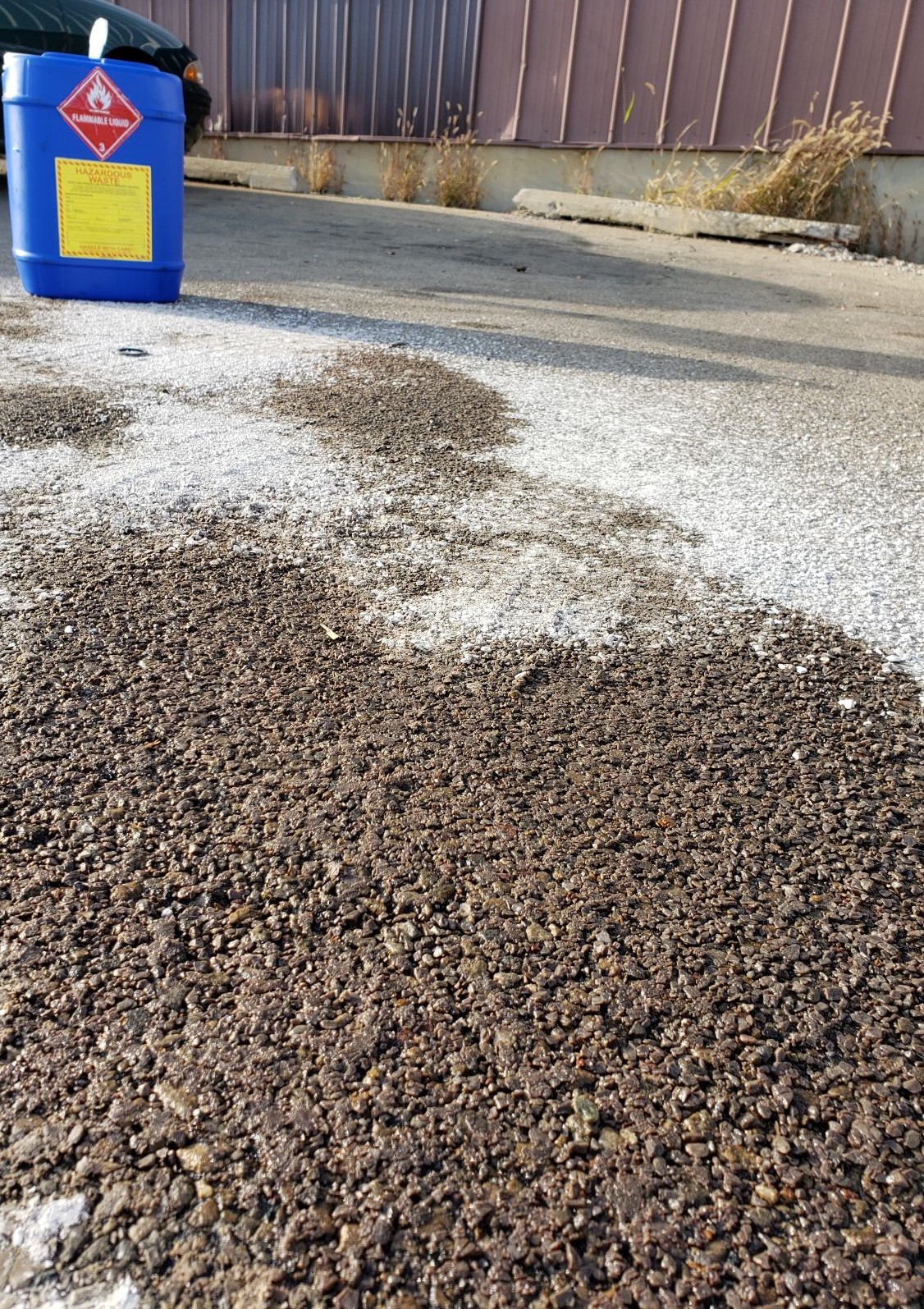
§262.34(d)(5)(iv) goes on to specify the applicable responses for an SQGs emergency coordinator in the event of a fire, spill, or an event that could threaten human health outside the facility or a spill that has reached surface water:Hazardous Waste Spill
  • Fire:  Call the fire department or attempt to extinguish it using a fire extinguisher.
  • Spill:  Contain the flow as much as possible and, as soon as practicable, clean up the waste and any contaminated materials or soil.
  •  Threaten human health outside the facility or spill to surface waters:  Immediately notify the National Response Center (800.424.8802) and report the following information:
    1. The name, address, and U.S. EPA Identification Number of the generator;
    2. Date, time, and type of incident (e.g., spill or fire);
    3. Quantity and type of hazardous waste involved in the incident;
    4. Extent of injuries, if any; and
    5. Estimated quantity and disposition of recovered materials, if any.

Being a Small Quantity Generator of hazardous waste does not relieve you entirely of the burden of regulatory compliance.  Make certain that you are in compliance with all the regulations applicable to SQGs.

Q: Does any of this have to be contained within a document such as a Basic Plan?

A: No.  Though the term Basic Plan is sometimes used when referring to these regulations, there is no requirement in the USEPA regulations to contain this information in a plan or any other document.  Some states, however, may have more strict regulations and may require a plan or some other similar document in addition to these federal regulations.

Contact me with any questions you may have about the generation, identification, management, and disposal of hazardous waste

Daniels Training Services, Inc.

815.821.1550

Info@DanielsTraining.com

https://danielstraining.com/

Used Oil Management in Wisconsin

If you generate a waste oil as a by-product of your operations (ie. a Generator of Used Oil) you may be able to take advantage of the relaxed regulatory requirements of the US EPA and the Wisconsin DNR for the management of this waste as a Used Oil.  In addition to less restrictions for on-site handling, the used oil regulations of the US EPA at 40 CFR 279 and the Wisconsin DNR at ch. NR 679, Wisconsin Administrative Code provide used oil generators with additional options for transportation and recycling.

Definition of Used Oil:

A used oil is defined by regulation as, “Any oil that has been refined from crude oil, or any synthetic oil, that has been used and as a result of such use is contaminated by physical or chemical impurities.”  It is worth some repetition in order to emphasize the most important conditions of this definition, a used oil must be…

  1. Refined from crude oil or any synthetic oil; it cannot be a vegetable or animal oil/grease,
  2. Used; it cannot be virgin or unused, and;
  3. Contaminated as a result of its use by physical or chemical impurities (ie. is too spent or too dirty for continued use).

Refer to Table 1 for further description of what can and cannot be regulated as a used oil.

Table 1:

A Used Oil may be…

A Used Oil Cannot be…

Motor oils

Fuel product storage tank bottoms

Greases

Fuel product spill cleanup material

Emulsions

Unused or virgin oil

Coolants

Animal and vegetable oils and grease

Heating media

Antifreeze

Brake fluids

Materials used as cleaning agents

Transmission fluids

Materials used only for their solvent properties

Other hydraulic fluids

 An oil containing >1,000 ppm total halogens

Electrical insulating oils

Metalworking fluids

Refrigeration oils

If your used oil meets the above definition, then it may be managed per the used oil regulations even if it meets the definition of a characteristic hazardous waste.  You may not use the used oil option if it contains a listed hazardous waste.  Table 2 contains a summary of characteristic and listed hazardous waste.

Table 2:

Characteristic Hazardous Waste

Listed Hazardous Waste

Description

Waste Codes

Description

Waste Codes

Ignitable

D001

Non-Specific Sources

F001 – F039

Corrosive

D002

Specific Sources

K001 – K181

Reactive

D003

Discarded commercial chemical products, off-specification species, container residues, and spill residues thereof (Acute).

P001 – P205

Toxic

D004 – D043

Discarded commercial chemical products, off-specification species, container residues, and spill residues thereof (Toxic).

U001 – U411

Applicability of Used Oil Regulations:

Even if the above definition is met, there are some instances where you may not be able to manage your waste according to the used oil regulations.  The used oil regulations are designed to encourage recycling but also protect the environment; this requires the exclusion of some waste from management as a used oil.

First, it is assumed that all used oil generated will be recycled instead of disposed as a waste.  This allows you as the generator to comply with the used oil regulations regardless if a transporter, processor, or other handler down the line decides to dispose of it as a waste instead of recycle.  In that case the burden of complying with the applicable hazardous waste regulations lies with the handler who decides on disposal over recycling and does not impact your handling of it as a used oil.

One way your oil may be ineligible for management as a used oil is because of something known as the “Rebuttable Presumption”.  It works like this:  at some point prior to recycling your used oil must be sampled and analyzed to determine its total halogen content (fluorine, chlorine, bromine, iodine, or astatine) by the transporter, processor, re-refiner,transfer facility, or other handler – a generator may perform the analysis but it is not required.  If the results of this test indicate the total halogen content is >1,000 ppm, then the used oil is presumed to contain a spent chlorinated solvent and to be a listed hazardous waste from a non-specific source with the waste codes of either F001 or F002 (see Table 2).  This presumption, known as the “Rebuttable Presumption”, precludes the waste’s management as a used oil unless you as the generator are able to do one of the following:

  1. Find an exemption/exclusion from the “Rebuttable Presumption”.
  2. Rebut the presumption by demonstrating the oil does not contain a listed hazardous waste.

A second way your oil may be ineligible for the used oil option is if it has been mixed with a characteristic hazardous waste and the resulting mixture exhibits any of the characteristics of a hazardous waste; an exception to this exists for a waste that is hazardous solely for the characteristic of ignitability.  If an ignitable hazardous waste is mixed with a used oil the resulting mixture may be managed as a used oil as long as it doesn’t display the characteristic of ignitability.

And, of course, the mixture of an oil with any listed hazardous waste precludes its management as a used oil.

See Table 2 for a summary of characteristic and listed hazardous waste.

Requirements for Management of Used Oil:

The used oil regulations contain specific requirements for generators, they include:

  • Label containers, above-ground tanks, and underground tank fill pipes as “Used Oil”.  This is very important, labeling as “Waste Oil”, “Bad Oil”, “Oil for Recycling”, etc. is frequently cited as a violation by the US EPA and the WDNR.
  • Maintain used oil containers and tanks in good condition with no leaking.
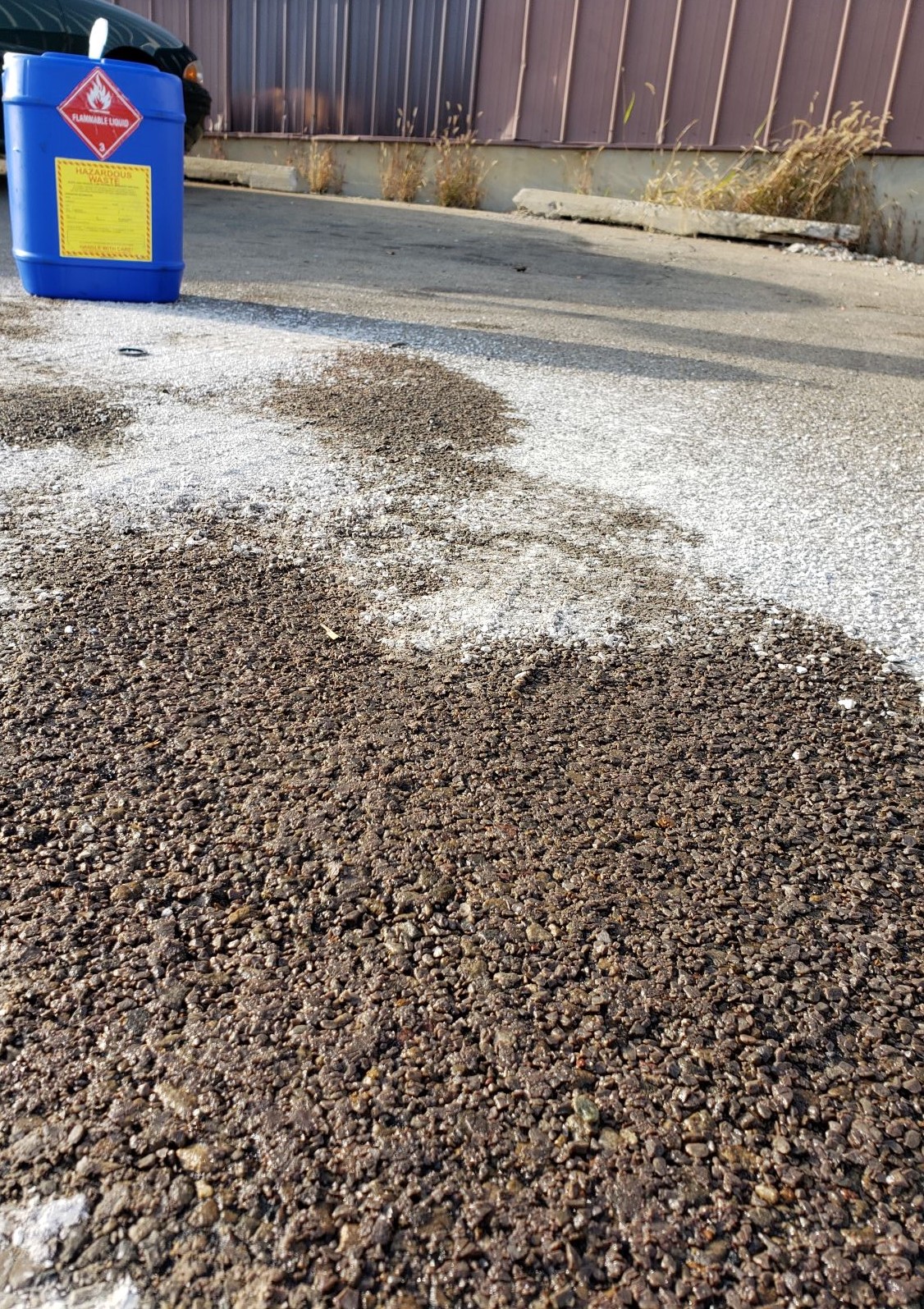
  • If a leak or spill occurs, promptly clean it up with dry methods and dispose of any waste properly.
  • Also, you should…
    • Comply with the applicable WI Department of Commerce Flammable, Combustible and Hazardous Liquids requirements in ch. Comm 10, Wis. Adm. Code.
    • Comply with the US EPA Spill Prevention, Control and Countermeasure (SPCC) regulations of the Clean Water Act if your on-site storage of all oil is above threshold amounts.

Transportation of Used Oil:

The used oil transporter you select must comply with the following:

  • Have a US EPA identification number and a WDNR solid waste transportation license.
  • Meet all applicable regulations of the US DOT for the transportation of hazardous materials.
  • Comply with the used oil regulations (Federal and State) applicable to used oil transporters.

There is a special arrangement you may be able to make with your transporter known as the tolling arrangement that removes the requirement for the transporter to have a US EPA identification number; the requirement for a WDNR solid waste transportation license remains however.   To be eligible for the tolling arrangement the used oil must be reclaimed under a contractual agreement where the reclaimed oil is returned by the processor or re-refiner to the generator for use as a lubricant, cutting oil or coolant.

Management Options for Used Oil:

A used oil generator also has some options available that make the management and disposal of used oil even easier and possibly a net benefit:

  1. You may self-transport up to 55 gallons of your own used oil to a registered used oil collection center or between your facilities to a central aggregation point.  You may also transport used oil collected from household do-it-yourselfers or small farmers (those who generate an average of <25 gal/month of used oil in a calendar year) to your facility or an aggregation point.  In either case, the transportation must be in a company or employee-owned vehicle.
  2. You may filter, clean, or otherwise recondition used oil for reuse on-site.
  3. You may burn used oil on-site in a space heater if all of the following conditions are met:
    • Maximum design capacity of the heater is ≤500,000 BTU”s/hour.
    • Combustion gases are vented to the outside.
    • Sources of used oil are limited to:  on-site generation or other locations owned by the company (you can use self-transportation to aggregate volumes) or receive directly (without a middle-man or used oil marketer) from household do-it-yourselfers or small farmers.

Prohibitions on the Management of Used Oil:

Used oil may not be…

  • Managed in surface impoundments or waste piles unless permitted.
  • Used as a dust suppressant.
  • Burned in a non-exempt boiler or space heater (see above).

Conclusion:

Used oil is a type of waste that both the US EPA and the WDNR believe can be managed in a way that protects human health and the environment without resorting to full regulation as a hazardous waste under the Resource Conservation and Recovery Act (RCRA).  For this reason the used oil regulations were created.  Make certain that you comply with the relaxed regulatory requirements and take advantage of the options available to you as a generator of used oil.

What is the Rebuttable Presumption for Used Oil?

As a generator (aka:  handler) of Used Oil you have the option to manage it according to the relaxed regulatory requirements of 40 CFR 279 instead of the more stringent regulations for the management of hazardous waste.  This option is available even if the used oil meets the definition of a characteristic hazardous waste (read more about the options for management of Used Oil).  If you choose to utilize the used oil option, you should be aware of the Rebuttable Presumption and your responsibility to prove that your used oil is not a listed hazardous waste and ineligible for the used oil option.

According to 40 CFR 279.10(b)(1)(ii) a used oil containing more than 1,000 ppm total halogens (fluorine, chlorine, bromine, iodine, or astatine) is presumed to be a hazardous waste because it has been mixed with halogenated hazardous waste listed in 40 CFR 261, subpart D.  In other words, if the total concentration of halogens is determined to be above the threshold amount, it is presumed that a chlorinated solvent is present requiring the application of the F002 waste code for a spent solvent.  This presumption limits your options for management of the waste to the following:

  1. Give up on rebutting the presumption and manage the used oil as a hazardous waste.
  2. Determine if an exemption/exclusion from the “Rebuttable Presumption” exists (see below).
  3. Demonstrate through testinggenerator knowledge or some combination of both that the used oil is not a listed hazardous waste.

Remember, whether you pursue #2 or #3 of the above the burden of proof is on you.  If relying on an exemption/exclusion, ensure it applies to your operations.  If collecting a sample for analysis ensure you use the proper sampling and test methods.  And, if relying on generator knowledge of materials and processes, be sure to use reliable sources of information.  Whichever method you choose take care to document your methods, sources, and conclusions.  For further guidance on rebutting the “Rebuttable Presumption” refer to Section IV of this US EPA guidance document (905-R03-005).

You will not need to rebut the presumption if one of the following exemptions/exclusions apply to your operations:

  • A metalworking oil containing chlorinated paraffins where it will be processed by reclamation through a tolling arrangement as described in 40 CFR 279.24(c).
  • A used oil contaminated with chlorofluorocarbons (CFC’s) removed from refrigeration units where the CFC’s are sent for reclamation [40 CFR 279.10(b)(1)(ii)(B)].
  • A mixture of used oil and TSCA-regulated PCB’s is exempt from regulation as a hazardous waste (as long as it is hazardous only for toxicity characteristic codes D018-D0043).  It may be regulated as a used oil if the PCB concentration is <50 ppm or as a TSCA-regulated PCB waste if the concentration is ≥50 ppm [40 CFR 279.10(i)].
  • Used oil from a Conditionally Exempt Small Quantity Generator (CESQG) of hazardous waste may be managed as a used oil no matter the concentration of total halogens consistent with 40 CFR 261.5(j).
  • A “do-it-yourselfer” used oil generator and/or farmer who generates an average of 25 gal/month or less of used oil in a calendar year are subject to the exclusion of household solid waste from the definition of hazardous waste at 40 CFR 261.4(b) and 40 CFR 279.20.(1) and (4).

The determination of halogen content must be made prior to recycling – including burning as a fuel – or re-processing and may be made by any of the following parties:

  1. Used oil processors and re-refiners must make the determination of total halogen content and maintain records until plant closure.
  2. Used oil transporters and transfer facilities, marketers, and burners must make the determination of total halogen content and maintain records for three years.
  3. Used oil generators/handlers are not required to determine total halogen content, however, it may be helpful to make the determination in order to be able to rebut the presumption if it arises.

The presence of halogens in used oil above 1,000 ppm leads to the presumption that it is a listed hazardous waste and no longer eligible for the relaxed regulations of the used oil option.  If this occurs, the “Rebuttable Presumption” puts the burden on you to either cite the applicable exemption or rebut the presumption through a combination of testing and generator knowledge.  Be prepared to either cite the applicable exemption/exclusion or assemble the necessary information to rebut the “Rebuttable Presumption”.

The used oil regulations found at 40 CFR 279 are just one small part of the RCRA regulations that apply to any facility that generates hazardous waste.  Another aspect of the regulations require annual training for Large Quantity Generators (LQG’s) of hazardous waste.  Contact me to discuss the training you need to maintain compliance at your facility.

Reporting Releases of Hazardous Substances and Extremely Hazardous Substances

A release of a Hazardous Substance above the RQ at your facility or during transportation must be reported to the applicable Federal, State, and local emergency response agencies.  To perform the required reporting it is necessary to understand the two separate Acts/regulations that created them and their inter-relation.

The Comprehensive Environmental Response, Compensation, & Liability Act (CERCLA) also known as Superfund, passed in 1980 created a list of Hazardous Substances along with threshold amounts in lbs/kg that triggered reporting if released into the environment in a 24 hour period.  EPCRA (The Emergency Planning and Community Right to Know Act) was passed in 1986 in the wake of the release of a toxic pesticide in Bhopal, India that killed thousands of people.  The purpose of EPCRA was to increase the public’s access to information about the hazardous substances that are or had the potential to be released to the environment.  It also created a list of Extremely Hazardous Substances with their own reporting thresholds and expanded the notification process in the event of a release of a Hazardous Substance (which continued to be regulated under CERCLA as well).

This 1-2 punch of legislation created two sets of regulations that, at times, overlap in their reporting responsibilities.  In the event of a spill or release – either on your property or off – you must be aware of your reporting responsibilities under the applicable regulations.HazMat packaging along highway

The table below outlines and summarizes the regulations of CERCLA found at 40 CFR 302 and EPCRA found at 40 CFR 355.

Legislation:

CERCLA – The Comprehensive Environmental Response, Compensation, & Liability Act

aka:  Superfund

EPCRA – The Emergency Planning and Community Right to Know Act.

aka:  Title III of SARA (The Superfund Amendment and Reauthorization Act).

Date legislation passed:

1980

1986

The regulations:

40 CFR 302

40 CFR 355

Administrative agency:

US EPA

US EPA

1.       Must report releases of:

Hazardous Substances

Hazardous Substances

and

Extremely Hazardous Substances

2.       Identified at:

Table 302.4 of 40 CFR 302

Table 302.4 of 40 CFR 302

and

Appendices A & B of 40 CFR 355

3.       When a release is:

Equal to or greater than the Reportable Quantity (RQ) in a 24 hour period.

Equal to or greater than the Reportable Quantity (RQ) in a 24 hour period.

4.       Must immediately notify:

The National Response Center

Community emergency coordinator for the Local Emergency Planning Committee (LEPC) of any area likely to be affected by the release.  Notify relevant local emergency response personnel if no LEPC.

and

State Emergency Response Commission (SERC) of any State likely to be affected by the release.

 5.       Form of immediate notification must be:

Phone:  800.424.8802

(202.267.2675 in Washington DC)

or

Fax:  202.267.1322

Per 40 CFR 302.6

Oral with information required by

40 CFR 355.40(a).

6.       Immediate notification must be made by:

Owner, operator, or person in charge.

Owner, operator, or person in charge.

7.       Follow-up notification must be:

None required.

Written as soon as practicable after the release with information required by 40 CFR 355.40(b).

If release occurs during transportation or storage incident to transportation:

Same

Notify the 911 operator, or regular operator if 911 not available, immediately with information required by 40 CFR 355.40(a).

A written follow-up notification is not required in this situation.

Releases exempt from notification requirements:
  1. Releases of radionuclides meeting the criteria identified at 302.6(c).
  2. RQ releases of solid particles of antimony, arsenic, beryllium, cadmium, chromium, copper, lead, nickel, selenium, silver, thallium, or zinc is not required if the mean diameter of the particles released is >100 micrometers (0.004 inches).
  3. Releases in amounts <1,000 lb/24 hrs of nitrogen oxide, or nitrogen dioxide to the air which are the result of combustion and combustion-related activities [see 302.6(e)(1-2)].
  4. Release to the air of any hazardous substance from animal waste at farms [see 302.6(e)(3)].
  1. Release results in exposure to persons solely within the boundaries of your facility.
  2. Release that is a federally permitted release as defined in Section 101(10) of CERCLA.
  3. Release of a pesticide product that is exempt from reporting under Section 103(e) of CERCLA.
  4. Release that does not meet the definition of release under Section 101(22) of CERCLA and is therefore exempt from CERCLA Section 103(a) reporting.
  5. Radionuclide release that occurs in accordance with 355.31(e).
  6. Release less than 1,000 lb/24 hr of nitrogen oxide or nitrogen dioxide to the air which is the result of combustion and combustion related activities.
  7. Releases to the air resulting from animal waste at farms meeting the criteria of 355.31(g) and (h).

Like this article?

Subscribe to my Monthly Newsletter

No marketing emails!

So, in the event of a release of a substance above the RQ in a 24 hour period…

  • If it appears only on the CERCLA list (aka:  Hazardous Substance), you must complete the reporting requirements of both CERCLA and EPCRA.
  • If it appears on both the CERCLA list (aka:  Hazardous Substance) and the EPCRA list (aka:  Extremely Hazardous Substance), you must complete the reporting requirements of both CERCLA and EPCRA.
  • If it appears only on the EPCRA list (aka:  Extremely Hazardous Substance), you must complete the reporting requirements of EPCRA only.
Depending on the type of material released (oils, hazardous wastes, etc.), the location of the release, and the environment the material is release into, you may have other reporting responsibilities under the Clean Air Act, Clean Water Act, The Resource Conservation and Recovery Act, The Hazardous Materials Transportation Act, and more.  Carefully research your potential reporting requirements based on the conditions found at your facility.

Daniels Training Services, Inc.

815.821.1550

Info@DanielsTraining.com

https://danielstraining.com/

Release to waters of the state

The Notification Requirements for a Release Under CERCLA and EPCRA

Both CERCLA and EPCRA require you to report a release of a Hazardous Substance or Extremely Hazardous Substance (EHS) above its Reportable Quantity (RQ) in a 24 hour period.  Read:  Reporting Releases of Hazardous Substances and Extremely Hazardous Substances.  Also: What Does CERCLA Identify as a Hazardous Substance?

Notification takes two forms:

  • Immediate notification by owner, operator, or person in charge to the NRC, LEPC, and SERC.
  • Written follow-up notification(s) to LEPC and SERC “as soon as practicable after the release“.

What is meant by immediate?  And what is meant by:  “as soon as practicable after the release“?  This article will shed some light on these very important requirements. (more…)

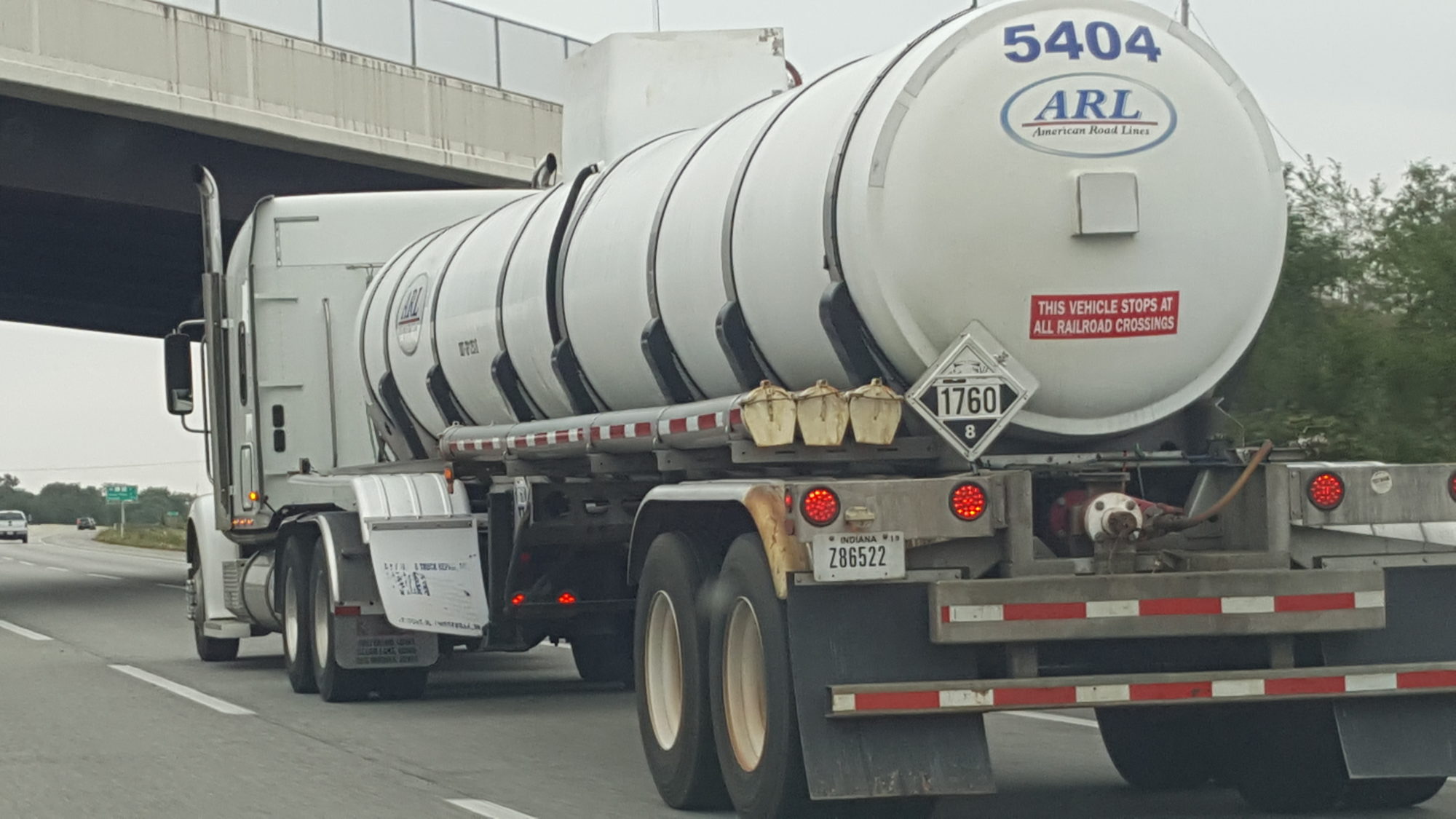
Cargo Tank with Class

Have you Registered with the USDOT/PHMSA as a Shipper or Carrier of Hazardous Materials?

Both shippers and carriers of hazardous materials are required to register and pay a fee annually with the Pipeline and Hazardous Materials Administration (PHMSA) of the USDOT.  Don’t be surprised if you haven’t heard of it; despite its widespread applicability, it’s been my experience that many HazMat shippers are unaware of this mandate.  All the information you need to know about who must register and how can be found on the USDOT/PHMSA website and in the regulations found at 49 CFR 107.601-107.620.  I’ll summarize the key points below. (more…)

What is a Spent Material and When is it a Solid Waste?

A spent material is defined at 40 CFR 261.1(c)(1) as any  material that has been used and as a result of contamination can no longer serve the purpose for which it was produced without processing.  Examples of spent materials include:  spent solvents, spent activated carbon, spent catalysts, and spent acids.  A spent material is part of a broader category of used or residual waste-like materials called secondary materials, which includes:

  1. spent materials,
  2. sludges,
  3. by-products,
  4. commercial chemical products, and;
  5. scrap metal.

To be a spent material it must be…

  1. Used and;
  2. Because of its use is contaminated or otherwise unable to do what it was produced to do, unless it undergoes regeneration, reclamation, or reprocessing.  Contamination could be any impurity, factor, or circumstance which causes the material to be taken out of service.

Table 1 in 40 CFR 261.2(c) documents the recycling activities available for all secondary materials (including spent materials) and if those recycling options affect the material’s definition as a solid waste.  For a full understanding of all of the potential options available, you’ll have to read the regulations, but in a nutshell:  spent materials are a solid waste if recycled when

  • Applied to the land or used to produce products that are applied to the land (Column 1 of Table 1).
  • Used for energy recovery or used to produce a fuel (Column 2 of Table 1).
  • Reclaimed, that is processed to recover a usable product or regenerated (Column 3 of Table 1).  There are, however, a bunch of exceptions to this rule that allow for the reclamation of spent materials that are not solid wastes.
  • Accumulated speculatively.

Remember, if a secondary material is a solid waste, it has the potential to be a hazardous waste unless exempted elsewhere in the regulations.  If it is not a solid waste, then it cannot be a hazardous waste.

Learn more about the reclamation of spent solvents by distillation.

My RCRA training and HazMat Employee training addresses topics like these and many more.  If you can’t attend one of my training workshops, contact me for a free consultation.

What is Speculative Accumulation?

Certain wastes that are to be recycled are not considered to be solid wastes, and therefore cannot be hazardous waste and are not subject to RCRA regulations, if the wastes meet the requirements of 40 CFR 261.2(c).  In brief, this means the recycled waste cannot be…

  • Used in a manner constituting disposal.
  • Applied to the land.
  • Burned for energy recovery.
  • And in some cases, reclaimed.

But in all cases except Commercial Chemical Products, if the wastes are accumulated too long they become a solid waste pursuant to the speculative accumulation provisions of 40 CFR 261.2(c)(4).  Speculative accumulation was created to ensure that recycling methods are legitimate and not an attempt to dodge full regulation under RCRA for wastes stored indefinitely prior to recycling.  The regulations describing speculative accumulation can be found at 40 CFR 261.1(c)(8) and summarized as follows:

  • A material accumulated before recycling is not accumulated speculatively if you can demonstrate…
    1. It is potentially recyclable and there is a feasible means of recycling it, and;
    2. 75% by weight or volume of the material present at the beginning of a calendar year (January 1) is either recycled or transferred to another site for recycling by the end of the calendar year (December 31st).  If 75% has not been processed in this way by the end of the calendar year, then the remaining amount becomes a solid waste.  If it is also a hazardous waste, it is subject to the hazardous waste generator accumulation requirements of 40 CFR 262.34 (RO14199).

Also, note the following

  • In calculating the percentage threshold, the 75% requirement is to be applied to each distinct type of material that is recycled in the same way.
  • The determination of speculative accumulation does not apply to materials accumulating in a unit exempt from the hazardous waste determination pursuant to 40 CFR 261.4(c).  That is hazardous waste generated in product or raw material tanks, vehicles, pipelines, or manufacturing process unit and stored for ≤90 days.
  • Once removed from accumulation for recycling, wastes are no longer considered to be accumulated speculatively.

It is interesting to note that the speculative accumulation requirement only applies to solid wastes that are to be recycled and the exclusion from the definition of solid waste.  It does not apply to the recycling of hazardous waste and its exclusion from regulation.  Therefore the determination of speculative accumulation does not apply to materials that are already defined as a solid waste, except for hazardous waste utilized for precious metal recovery.

My Hazardous Waste Personnel Training will teach you how to make a hazardous waste determination including speculative accumulation and your requirements as a generator of hazardous waste.  It will also meet the training requirements of the US EPA.  Contact me to meet your training mandate.


What is a Marine Pollutant per PHMSA/USDOT Hazardous Materials Regulations?

You might think this topic does not apply to you since you do not ship any hazardous materials by vessel or over water.  Think again.  The requirements to properly identify a marine pollutant, record its presence on the shipping paper, and mark the container may apply to shipments by motor vehicle, rail car, or aircraft that never come close to water.

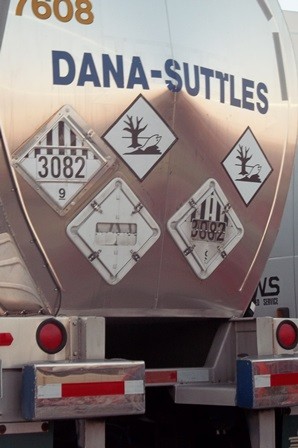
Marine pollutant mark and class 9 placard

Note:

The information in this article applies solely to the classification of a marine pollutant subject to the U.S. regulations of the PHMSA/USDOT.  It is not to be used for international transportation by vessel or by air.


The definition of marine pollutants at 49 CFR 171.8 refers to Appendix B of the Hazardous Materials Table found at 49 CFR 172.101.  To be a marine pollutant and therefore subject to the regulations, two criteria must be met:

  1. The material is listed in Appendix B to the Hazardous Materials Table, and;
  2. If in a solution or mixture, the material is in a concentration of ≥10% for all materials listed or is ≥1% if identified as a severe marine pollutant.

So what is a severe marine pollutant?  It is those materials listed in Appendix B that contain the letters “PP” in column 1.

If the two above criteria are met, then you have a marine pollutant, but what are you to do with it?  49 CFR 171.4 excepts all non-bulk shipments of marine pollutants by motor vehicle, rail car, or aircraft from complying with the hazardous materials regulations.  In other words, if you are shipping a marine pollutant, you need only comply with the applicable regulations if…

  • Shipping by vessel over water, or;
  • In a bulk packaging by motor vehicle, rail car, or aircraft.

If your shipment contains a marine pollutant your only requirement is to insure that its presence is communicated on the shipping paper and the packaging, no other restrictions apply.

Shipping Paper per 49 CFR 172.203(l):

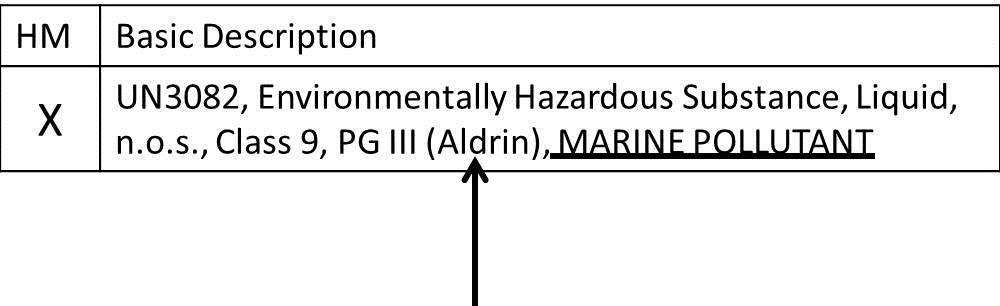
  1.  If the marine pollutant is not identified by name in the proper shipping name, then its name must appear in (parenthesis) near the basic description.  If there are two or more marine pollutants in the material, then at least two of the most hazardous marine pollutants must be listed.
  2. The words “Marine Pollutant” must appear near the basic description.


Shipments of a marine pollutant by motor vehicle, rail car, or aircraft that are also an oil subject to the requirements of 49 CFR 130.11 are not required to record the above information on the shipping paper if the material is identified as an oil in a phrase near the basic description.

Like this article?

Subscribe to my Monthly Newsletter

No marketing emails!

 Markings per 49 CFR 172.322:

  1. For shipment of a non-bulk packaging by vessel, refer to 49 CFR 172.322(a).
  2. A shipment of a bulk packaging by motor vehicle, rail car, or aircraft must have the MARINE POLLUTANT mark on at least two opposing sides if the packaging has a capacity of <1,000 gallons or on all four sides if >1,000 gallons.  In either case, a marking the size of a placard (9.84″x9.84″) may be used.
  3. The transport vehicle or freight container that contains a bulk packaging marked as indicated above must be marked with the MARINE POLLUTANT mark.  This marking must be the same size as a placard.
  4. 49 CFR 172.322(d) lists some situations where the MARINE POLLUTANT mark is not required.
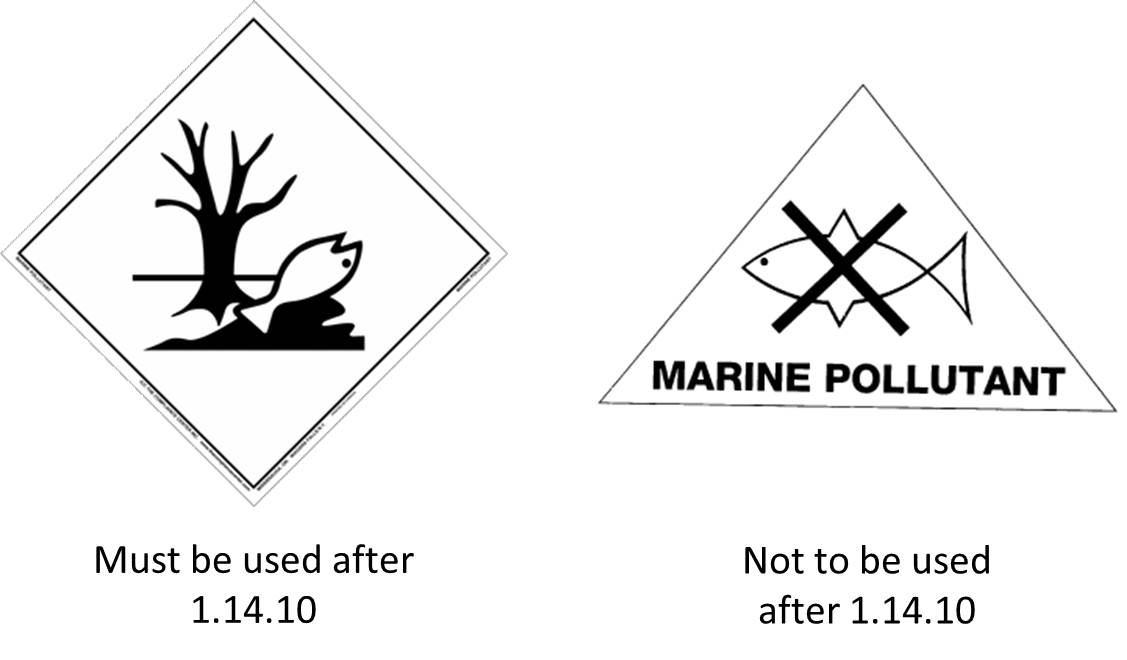
  5. Since 1.14.10 the MARINE POLLUTANT marking changed as indicated below.

Contact me with any questions you may have about the transportation of hazardous materials by air, highway, vessel, or rail

International and Domestic

Daniels Training Services, Inc.

815.821.1550

Info@DanielsTraining.com

https://danielstraining.com/

The proper transportation of hazardous materials requires a full understanding of the Hazardous Materials Regulations and how they may apply to your operations.  Even a one-time shipment of a hazardous material may result in a violation if all the regulations of the HMR – including marine pollutants – are not followed exactly.  My training – either Onsite Training, Web-Based Training or some combination – is one way for you to learn about the Hazardous Material Regulations of the PHMSA/USDOT.


Counting Hazardous Waste Accumulation for Generator Status – Satellite Accumulation Areas

The US EPA regulations that allow for the management of hazardous waste in Satellite Accumulation Areas (SAA’s) provides great flexibility to hazardous waste generators who are able to take advantage of the regulations at 40 CFR 262.34(c).  Benefits include:

  • No on-site accumulation time limit (check with your State to confirm this).
  • No requirement for weekly inspections of SAA’s.
  • Training not required for facility personnel who work only at SAA’s.
  • RCRA air emission standards at 40 CFR 265, Subpart AA, BB, & CC don’t apply.

That should be enough, but some mistakenly think that there is one more benefit:  The hazardous waste accumulated in SAA’s does not count toward your monthly hazardous waste generator status determination.  This is mistaken.  Hazardous waste in SAA’s does count towards your monthly hazardous waste generator status; here’s why:

A generator of hazardous waste is required to count all the hazardous waste generated in their facility in a calendar month to determine their generator status unless specifically exempted.  Wastes that are not required to be counted towards generator status are identified in 40 CFR 261.5(c) and in a past article of mine:  Counting Hazardous Waste to Determine Generator Status.  Hazardous wastes accumulated in SAA’s are not included in this list of excluded wastes and must therefore be included in your monthly determination of your hazardous waste generator status (RO 14703 – #12 of the FAQ’s).

Determination of your hazardous waste generator status is an early important step.  If you are a Large Quantity Generator of hazardous waste (LQG) you must also train facility personnel annually to ensure compliance with the RCRA regulations.  Contact me for a free consultation of your RCRA & DOT HazMat Employee training needs.

Search Website