Attendance During Loading and Unloading of Hazardous Materials From a Cargo Tank
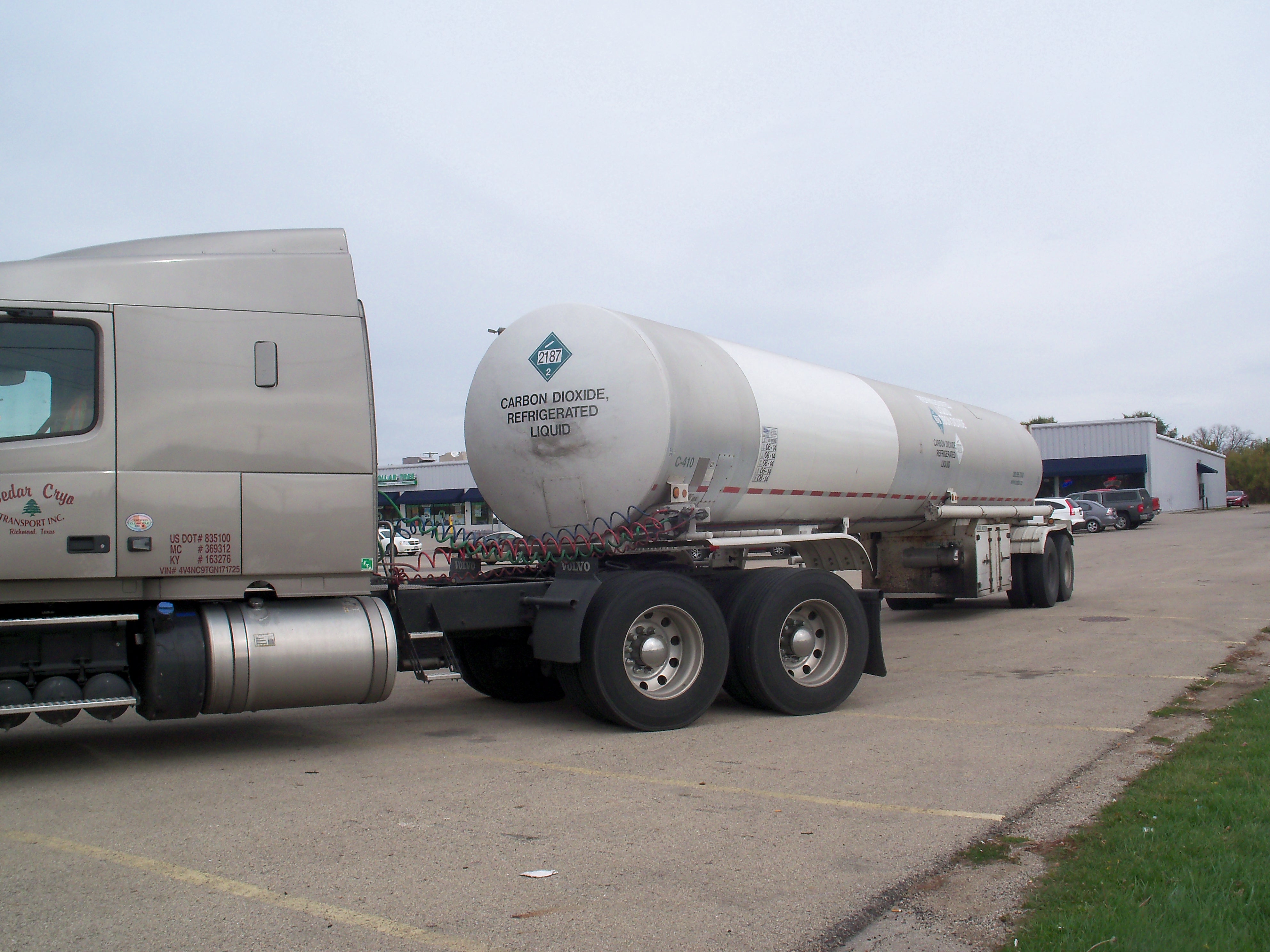
A cargo tank is a type of packaging that when combined with a motor vehicle for highway transportation becomes a cargo tank motor vehicle (commonly referred to as a tanker truck). While its operation on a public roadway is the responsibility of the motor carrier, the responsibility to ensure attendance during loading or unloading of the cargo tank may be the responsibility of the motor carrier, the shipper of the HazMat, i.e., the person who offers it for transportation, a person operating the facility where transportation begins or ends, a contractor working for any one of the previous, or a third party.
The Hazardous Materials Regulations (HMR) of the Pipeline and Hazardous Materials Safety Administration within the U.S. Department of Transportation (USDOT/PHMSA) regulate the loading and unloading of a cargo tank when it is performed incidental to transportation. It is the HMR that indicates who is responsible to ensure attendance by a qualified person at all times during loading and unloading of HazMat from a cargo tank.
The purpose of this article is to identify and explain the attendance requirements of USDOT/PHMSA at 49 CFR 177.834(i) of the HMR for the loading and unloading of hazardous materials from a cargo tank. (more…)
Q&A: Can I use the Dangerous Placard for this HazMat load with Class 9 Miscellaneous?
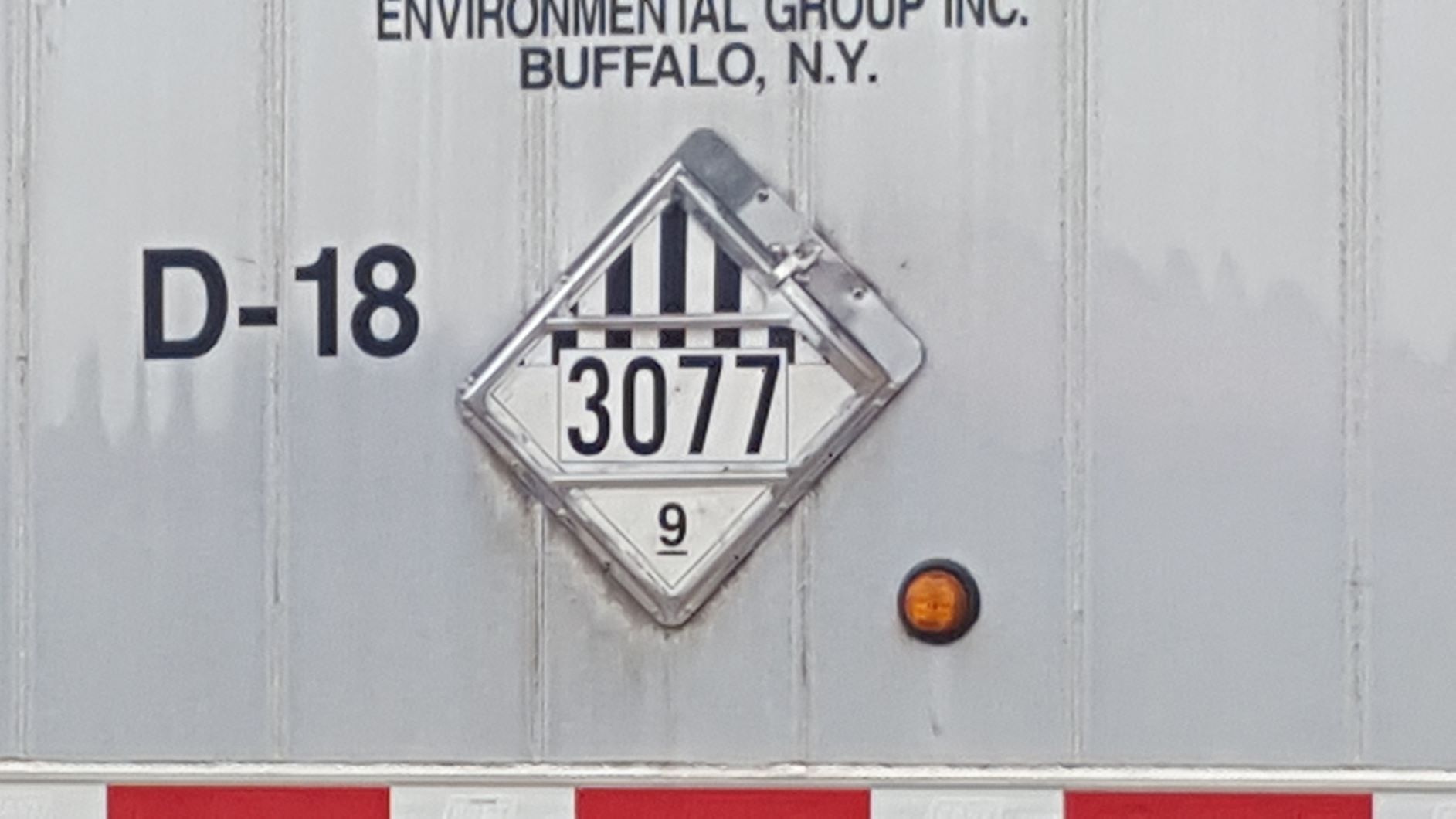
Got a question about dangerous placard, today I picked up 10,000 pounds of bulk class 9 3077 1500 pounds non bulk class 3 400 pounds non bulk class 4.1 700 pounds non bulk class 8 30 pounds non bulk class 2.1 and 600 pounds non bulk 6.1 pgll at one facility so I put a bulk 9 3077 and a Dangerous on the trailer but my company said I could not cover the 1500 pounds of class 3 with the Dangerous because it was over 1001 pounds and that I should have put a bulk 9 3077 class 3 and a Dangerous. Who’s right and why?
My reply a few days later on May 20, 2020:
Thank you for contacting me. I will try to answer your question. Please see below.
Contact me with any questions you may have about the transportation of hazardous materials by air, highway, vessel, or rail
1,500 lb Class 3 Flammable Liquid in non-bulk packagings.
400 lb Division 4.1 Flammable Solid in non-bulk packagings.
700 lb Class 8 Corrosive Material in non-bulk packagings.
30 lb Division 2.1 Flammable Gas in non-bulk packagings.
600 lb of Division 6.1 Poisonous Material (Packing Group II) in non-bulk packagings.
Whew!
Summary of applicable Hazardous Materials Regulations (HMR) of the Pipeline and Hazardous Materials Safety Administration within the U.S. Department of Transportation (USDOT/PHMSA):
Pursuant to 49 CFR 172.504(a) a vehicle transporting any amount of HazMat must display the applicable placards on the vehicle.
However, §172.504(c) allows for an exception from placarding if a non-bulk packaging of placarding Table 2 HazMat, and in a quantity of less than 454 kg (1,001 lb).
Pursuant to §172.331(c) if a bulk packaging is contained within a vehicle and the HazMat’s identification number marked on the bulk packaging is not visible, the identification number must be displayed on the vehicle.
When the HazMat’s identification number is required to be displayed on a vehicle, it may be displayed in any of the following methods per §172.332:
On orange panel.
On the placard.
On a white square-on-point.
Under §172.502(c), placards may be displayed on a vehicle, even when not required, if the placarding otherwise conforms to the requirements of the HMR. This is known as permissive placarding.
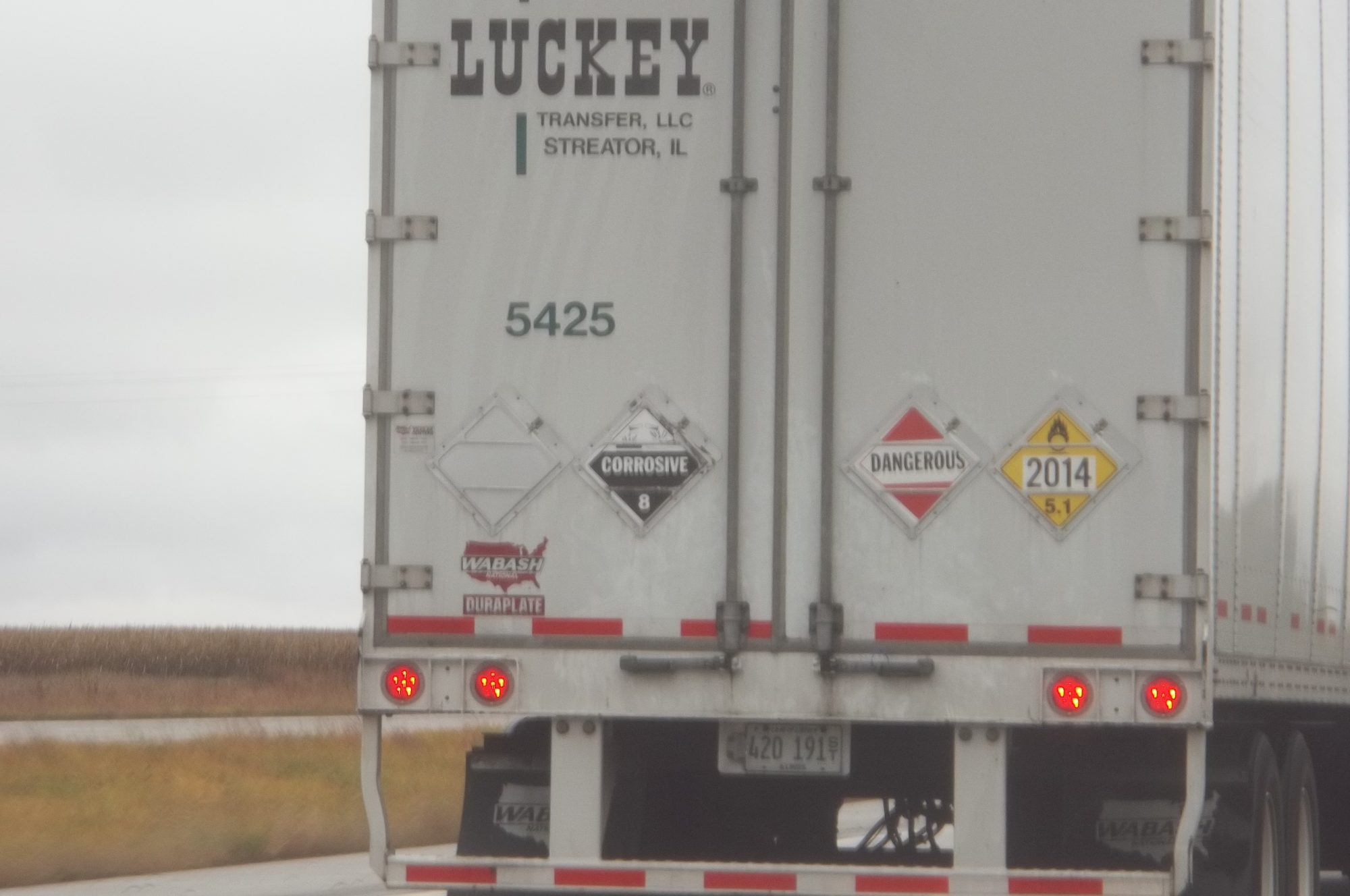
§172.504(b) allows for the display of the Dangerous placard on a vehicle as an option instead of the individual placards under the following conditions:
HazMat is in non-bulk packagings.
Vehicle contains two or more categories of HazMat that require placards specified in placarding Table 2. Note: the use of the word “require” here is misleading since, subject to permissive placarding, placards may be displayed on a vehicle even when not required. Therefore, this might better read, “vehicle contains two or more categories of HazMat where a placard type is indicated in placarding Table 2, but not necessarily required by the HMR.”
The Dangerous placard may not be used for a HazMat if 1,000 kg (2,205 lb) or more of that HazMat is loaded on a vehicle at one facility. Note: if 1,000 kg (2,205 lb) or more of a single HazMat is loaded on a vehicle at one facility, that portion of the load on the vehicle cannot be represented by the Dangerous placard; instead the placard specified in placarding Table 2 for that HazMat must be displayed.
Pursuant to §172.504(f)(9) the Class 9 Miscellaneous placard is not required to be displayed on a vehicle in the U.S. It is allowed to be displayed under permissive placarding; and, if in a bulk packaging, the identification number of the HazMat may be displayed on the placard, on an orange panel, or white square-on-point.
While not required, the Class 9 Miscellaneous placard may be displayed on a vehicle in the U.S.
This letter of interpretation (LOI 97-0099) is too old to be displayed on USDOT/PHMSA’s website but it indicates the quantity of a Class 9 Miscellaneous is not required to be included when determining the applicability of the placarding exception threshold (454 kg or 1,001 lb). Note: However, under permissive placarding, the quantity of Class 9 Miscellaneous may be included when determining the option to display the Dangerous placard. The HMR is unclear on this point. I submitted a request for a letter of interpretation from USDOT/PHMSA in June of 2020 and will post a link once received.
Since the Class 9 Miscellaneous is in a bulk packaging, it cannot be covered by the Dangerous placard.
While the display of the Class 9 Miscellaneous placard is not required within the U.S. it may be displayed subject to permissive placarding. Also, since the Class 9 Miscellaneous is in a bulk packaging it’s identification number (3077) must be displayed on the vehicle. It’s display on the placard is one allowed option.
Since all of the remaining HazMat loaded at the facility are non-bulk packagings, found in placarding Table 2, and not more than 1,000 kg (2,205 lb), the Dangerous placard may be used to account for the remaining HazMat.
I hope this helps. Please contact me with any other questions.
If you like this article, please share it using any of the social media platforms identified at the bottom of this article.
You’ll look real smart recommending my articles!
FAQ: What is a portable tank?
The Definition:
The Hazardous Materials Regulations (HMR) of the Pipeline and Hazardous Materials Safety Administration within the U.S. Department of Transportation (USDOT/PHMSA) define a portable tank at 49 CFR 171.8.
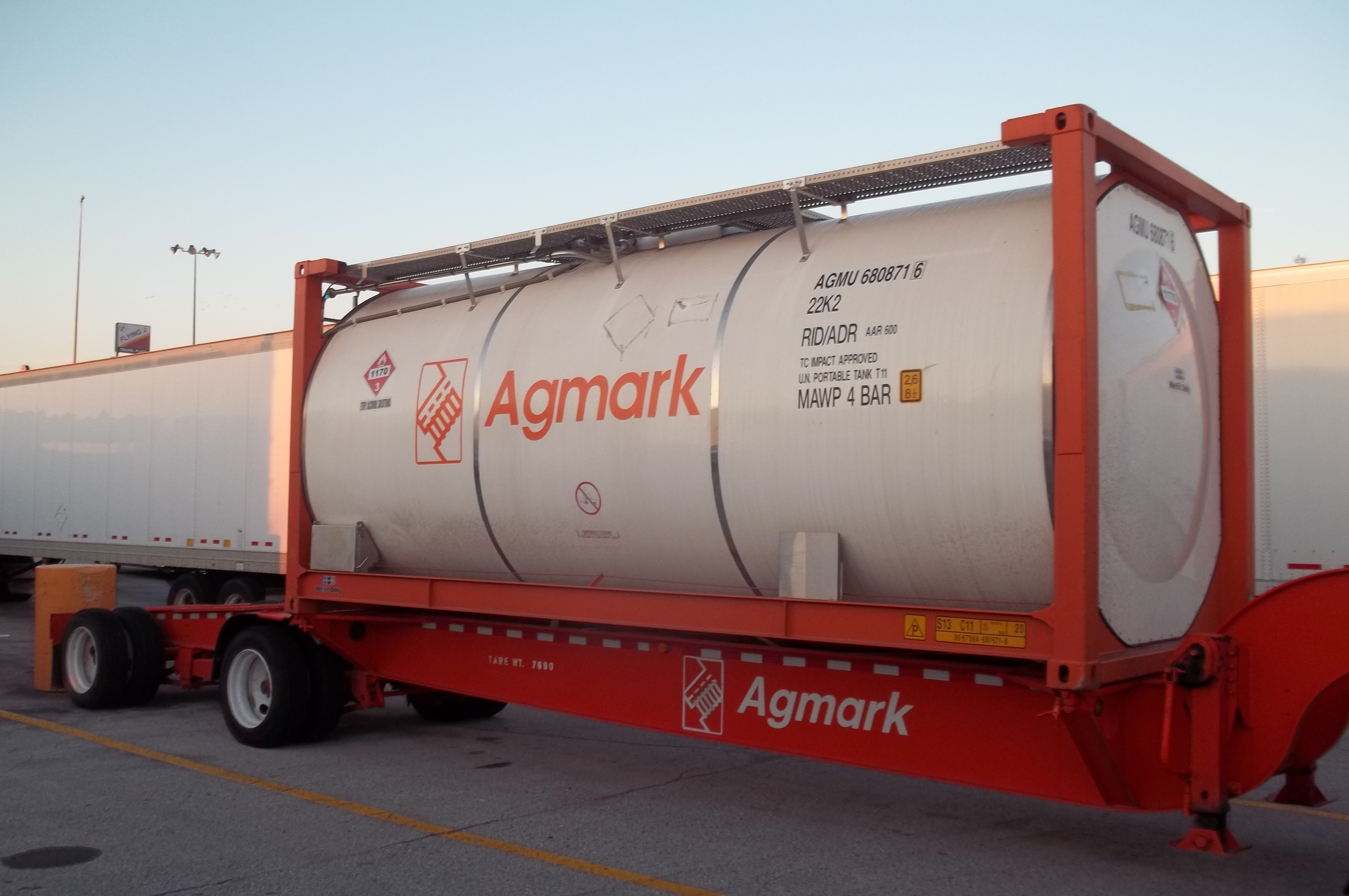
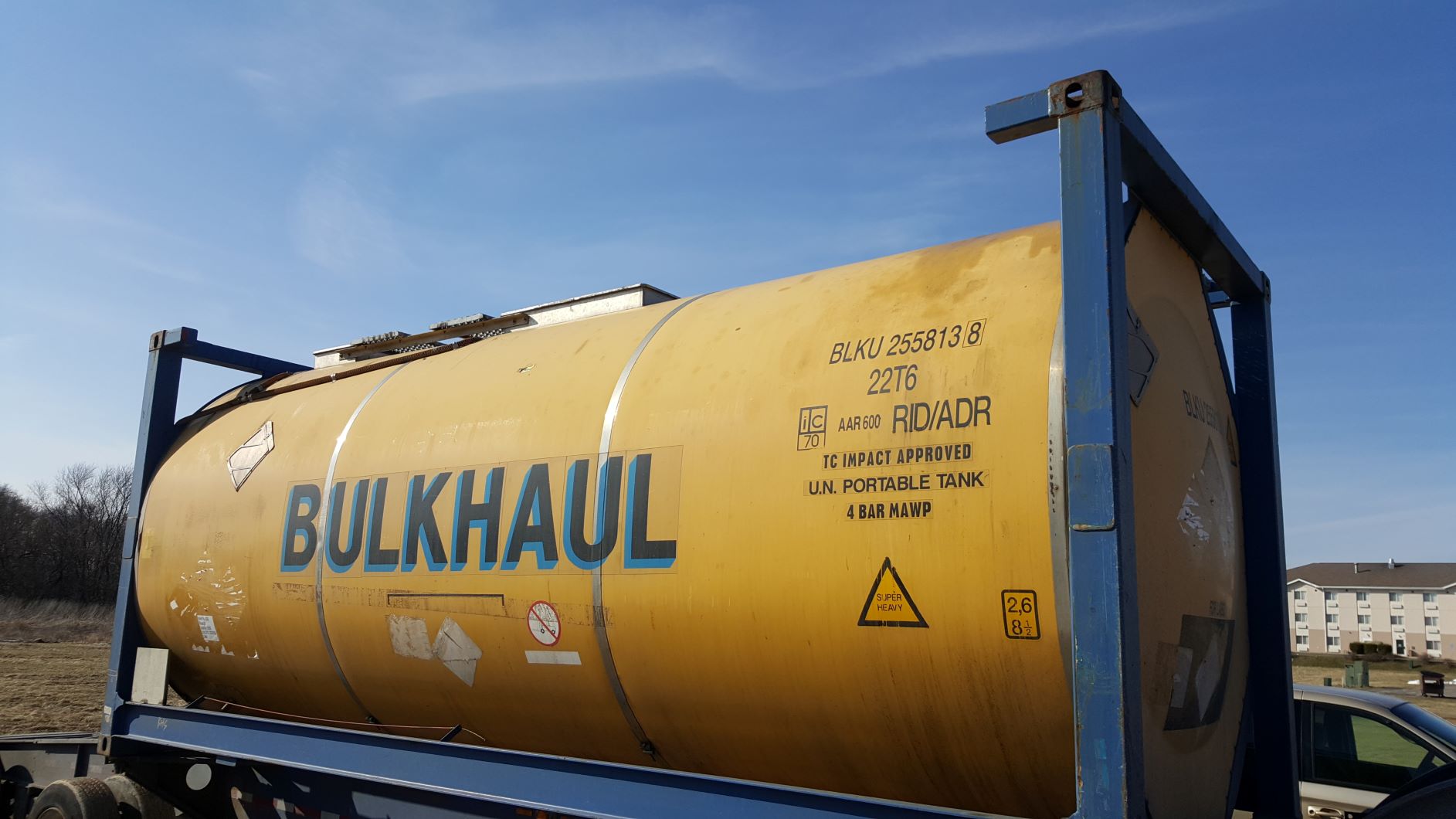
Portable tank means a bulk packaging (except a cylinder having a water capacity of 1000 pounds or less) designed primarily to be loaded onto, or on, or temporarily attached to a transport vehicle or ship and equipped with skids, mountings, or accessories to facilitate handling of the tank by mechanical means. It does not include a cargo tank, tank car, multi-unit tank car tank, or trailer carrying 3AX, 3AAX, or 3T cylinders.
A portable tank is a bulk packaging. A bulk packaging is also defined at §171.8 and explained in this article: Bulk Packaging for HazMat Explained! But for the purposes of this article a bulk packaging has a maximum capacity of more than any of the following:
450 L (119 gallons) as a receptacle for a liquid.
400 kg (882 pounds) and 450 L (119 gallons) as a receptacle for a solid.
Water capacity of 454 kg (1,000 pounds) as a receptacle for a gas. Note: a water capacity of 454 kg (1,000 pounds) calculates out to a volume of 450 L (119 gallons).
However, a portable tank may be a non-bulk packaging if it is a cylinder (defined at §171.8) with a water capacity of 1,000 pounds or less.
A portable tank is not designed to be permanently attached to a transport vehicle or ship. This differentiates it from the cargo tank which is permanently attached to or forms part of a vehicle.
A portable tank is equipped with the following:
Skids
Mountings
Accessories to facilitate handling of the tank by mechanical means.
And finally…
A portable tank is not any of the following:
Cargo tank
Tank car (rail)
Multi-unit tank car tank (rail)
A trailer carrying 3AX, 3AAX, or 3T cylinders
Q: Could a cylinder be a portable tank?
A: No. The definition (as of 06.06.20) is unclear as to whether a cylinder could ever be a portable tank. The opening sentence refers to a cylinder having a water capacity of 1000 pounds or less, which is a non-bulk packaging. It seems to be saying that a portable tank is a bulk packaging but it could also be a cylinder if it is a non-bulk packaging. Also, the last sentence specifically excludes the packaging types a portable tank is not. Included here is a trailer carrying 3AX, 3AAX, or 3T cylinders, but not all cylinders. It seems to leave open the possibility that some non-bulk cylinders could meet the definition of a portable tank. Conversation with USDOT/PHMSA HazMat Info Line revealed the following time-line to the progression of the definition of portable tank:
The original definition published in 1976 did not include the reference to bulk packaging since that term did not yet exist. The reference to cylinders was present then.
In 1987 the definition of portable tank was modified to include the reference to bulk packaging but the misleading references to cylinders remained.
In conclusion: disregard the reference to cylinders in the definition of a portable tank. A portable tank can’t be a cylinder. USDOT/PHMSA will correct this error in a later rule change.
FAQ: What is a cargo tank and/or cargo tank motor vehicle (CTMV)?
The Definitions:
The Hazardous Materials Regulations (HMR) of the Pipeline and Hazardous Materials Safety Administration within the U.S. Department of Transportation (USDOT/PHMSA) define both a cargo tank and a cargo tank motor vehicle at 49 CFR 171.8.
Cargo tank means a bulk packaging that:
(1) Is a tank intended primarily for the carriage of liquids or gases and includes appurtenances, reinforcements, fittings, and closures (for the definition of a tank, see 49 CFR 178.320, 178.337-1, or 178.338-1, as applicable);
(2) Is permanently attached to or forms a part of a motor vehicle, or is not permanently attached to a motor vehicle but which, by reason of its size, construction or attachment to a motor vehicle is loaded or unloaded without being removed from the motor vehicle; and
(3) Is not fabricated under a specification for cylinders, intermediate bulk containers, multi-unit tank car tanks, portable tanks, or tank cars.
And…
Cargo tank motor vehicle means a motor vehicle with one or more cargo tanks permanently attached to or forming an integral part of the motor vehicle.
So lets break it down…
A cargo tank is a bulk packaging. A bulk packaging is also defined at §171.8 and explained in this article: Bulk Packaging for HazMat Explained! But for the purposes of this article a bulk packaging has a maximum capacity of more than any of the following:
450 L (119 gallons) as a receptacle for a liquid.
400 kg (882 pounds) and 450 L (119 gallons) as a receptacle for a solid.
Water capacity of 454 kg (1,000 pounds) as a receptacle for a gas. Note: a water capacity of 454 kg (1,000 pounds) calculates out to a volume of 450 L (119 gallons).
A cargo tank is intended primarily for carriage of liquids or gases but is not limited solely to those two phases of matter and may be used for a solid.
It is a tank and includes the appurtenances, reinforcements, fittings, and closures associated with a tank. Applicable definitions are found as follows:
§178.320 for the general requirements applicable to all DOT specification CTMVs.
§178.337-1 for the general requirements for a CTMV primarily for transportation of compressed gas (specification MC-331).
§178.338-1 for the general requirements for an insulated CTMV (specification MC-338).
It is permanently attached to or forms a part of a motor vehicle.
Or…
Is not permanently attached to a motor vehicle but must be loaded or unloaded without being removed from the motor vehicle.
And finally…
It is not manufactured to the specifications of any of the following (i.e., it isn’t any of the following):
Cylinder
Intermediate bulk container (IBC)
Multi-unit tank car tank (rail)
Portable tank
Tank car (rail)
Contact me with any questions you may have about the transportation of hazardous materials by air, highway, vessel, or rail
So what then is a cargo tank motor vehicle (CTMV)?
I think the definition of §171.8 answers that question without an explanation from me.
Relief of Requirements for Periodic Tests and Inspections of Cargo Tanks and Portable Tanks within the State of Alaska
The Bullet:
Due to the ongoing Coronavirus Disease 2019 (COVID-19) public health emergency, USDOT/PHMSA and USDOT/FMCSA will not take enforcement action against any person operating a CTMV or portable tank that is not more than 90 days beyond its testing or inspection date.
The Pipeline and Hazardous Materials Safety Administration within the U.S. Department of Transportation (USDOT/PHMSA).
The Federal Motor Carrier Safety Administration within the U.S. Department of Transportation (USDOT/FMCSA).
Department of Health and Human Services (HHS).
What:
Cargo tank motor vehicles (CTMVs) and portable tanks are subject to the following requirements for periodic testing and inspection:
Per 49 CFR 180.407(a)(1) a CTMV may not be filled with a HazMat and offered for transportation if it has exceeded its periodic test or inspection due date as indicated in §180.407(c).
Per §180.605(a) a portable tank may not be returned for transportation if it has exceeded its periodic test or inspection due date as indicated in §180.605(c).
The enforcement discretion applies only to the following:
CTMVs and portable tanks transporting HazMat along Alaska’s state highways.
CTMVs / portable tanks are no more than 90 days beyond required periodic testing or inspection dates.
USDOT/PHMSA and USDOT/FMCSA will not take enforcement action against any person operating a CTMV or portable tank that is not more than 90 days beyond its testing or inspection date, as required by 49 CFR §§ 180.407(a)(1) and (c), or 180.605(a) and (c).
To qualify for this enforcement discretion a motor carrier must complete the following:
CTMVs and portable tanks are not more than 90 days beyond the required periodic testing or inspection date.
Comply with the HMR to the maximum extent practicable.
Document why COVID-19 travel restrictions make compliance with the periodic testing and inspection regulations impracticable prior to operating CTMVs or portable tanks.
Make such documentation available for inspection by USDOT/FMCSA or USDOT/PHMSA.
Where:
This relief applies only to CTMVs and portable tanks transported by highway within the State of Alaska.
Shipments by other modes of transportation and in other states and territories of the U.S. must meet all requirements of the Hazardous Materials Regulations (HMR; 49 CFR Parts 171-180) unless relief has been provided elsewhere.
Contact me with any questions you may have about the transportation of hazardous materials by air, highway, vessel, or rail
This Notice of Enforcement Discretion is effective as long as the public health emergency due to COVID-19 declared by HHS is in effect, or 90 days from its date of issuance (August 08, 2020).
The ongoing COVID-19 public health emergency has created travel restrictions throughout the U.S.
Travel restrictions within the state of Alaska and between Alaska and the contiguous 48 states have reduced the number of available inspectors.
How:
USDOT/PHMSA plays a leading role in the safe transportation of hazardous materials by all modes: highway, rail, air, & vessel. This includes the testing and inspection requirements for CMTVs and portable tanks.
Conclusion:
Yet another example of a regulatory agency providing relief from compliance with full regulations when necessary but in a very limited scope. Make certain your operations comply with all other requirements of the HMR – and the Federal Motor Carriers Safety Regulations (FMCSR) – if you are a motor carrier or a person operating a CTMV or transporting a portable tank. Contact me if you require HazMat Employee Training required by USDOT/PHMSA and Driver Training.
Off-Site Transportation of COVID-19 Waste
The COVID-19 public health emergency within the U.S. has created an unprecedented challenge for EHS professionals. One challenge: what to do with the waste generated during the testing for the coronavirus and the treatment of those with COVID-19? An earlier article (FAQ: Are wastes associated with COVID-19 a hazardous waste?) explained the status of this waste under Federal regulations of the USEPA and state regulations – primarily for its on-site management.
This article will address the regulatory requirements of the U.S. Environmental Protection Agency (USEPA), state environmental regulatory agencies, and the Pipeline and Hazardous Materials Safety Administration within the U.S. Department of Transportation (USDOT/PHMSA) for the off-site transportation of waste contaminated – or potentially contaminated – with SARS-CoV-2 (the virus that causes COVID-19). (more…)
USDOT Notice of Enforcement Discretion for the Manufacturing of Packaging Designs Beyond Periodic Retesting Dates
The Bullet:
Due to the COVID-19 public health emergency, USDOT/PHMSA issued a notice of enforcement discretion for the continued manufacturing of United Nations (UN) Performance Oriented Packaging used in the transportation of hazardous materials (HazMat) which have exceeded their periodic retesting dates. USDOT/PHMSA is providing temporary relief from enforcement action if packaging manufacturers are unable to conduct periodic design qualification retesting within 90-days of a retest date due to COVID-19 operational disruptions.
William S. Schoonover / Associate Administrator for Hazardous Materials Safety
The agency: the Pipeline and Hazardous Materials Safety Administration within the U.S. Department of Transportation (USDOT/PHMSA).
The affected: manufacturers of United Nations Performance Oriented Packaging.
What does the HMR require?
The Hazardous Materials Regulations (HMR, 49 CFR Parts 171-180) prescribe that UN Performance Oriented Packaging design types be subjected to periodic retesting every twelve (12) to twenty-four (24) months, depending on the design type (see §178.601(e), §178.801(e), §178.955(e), and §178.1035(e)).
Periodic design testing is required to recertify the design type for continued production of a UN Performance Oriented Packaging.
PHMSA gives notice that it will not take enforcement action against any company that continues to manufacture a UN Performance Oriented Packaging conforming to a tested design that is not more than 90 days beyond its periodic retest date.
The relief applies to manufacturers of:
Non-bulk packagings.
Intermediate bulk containers (IBCs).
Large packagings.
Flexible bulk containers.
This relief only applies to designs tested and certified for Packing Group (PG) II (Y-marked) or PG III (Z-marked) hazardous materials. PG I (X-marked) designs are not eligible for this enforcement discretion.
All production tests required under the HMR must still be met during the manufacturing process. As such, relief from production testing is not being granted. For example, the requirements in §178.604 and §178.813 for leakproofness testing of non-bulk packages and IBCs continue to apply.
The following packaging types are eligible for relief from the periodic retest requirement:
UN Specification non-bulk packagings manufactured in accordance with part 178, subpart L and M to PG II and III performance standards.
UN Specification IBCs manufactured in accordance with part 178, subpart N and O to PG II and III performance standards.
UN Specification large packagings manufactured in accordance with part 178, subpart P and Q to PG II and III performance standards.
UN Specification flexible bulk containers manufactured in accordance with part 178, subpart R and S.
To qualify for this enforcement discretion, a manufacturer must document the reasons why compliance is not possible prior to manufacturing packagings which are not more than 90 days beyond the required periodic retesting date.
The packaging manufacturer must maintain a copy of the document stating why compliance is not possible and the most recent test report (design qualification or periodic retest, as appropriate) until the packaging is again successfully retested.
USDOT/PHMSA expects manufacturers to complete missing tests in a timely manner as soon as testing capability is regained.
No other relief from HMR requirements (e.g., production leakproofness testing) is provided in this notice.
Where:
This relief applies to manufacturers of UN Performance Oriented Packaging regardless of whether they are domestic (within U.S.) or foreign (manufactured outside of U.S.).
Note: UN standard packaging manufactured outside the U.S. is an authorized packaging subject to the conditions and limitations of §173.24(d)(2).
When:
Photo by Martin Sanchez on Unsplash
Date of issuance: April 20, 2020.
This Notice of Enforcement Discretion is effective while the Department of Health and Human Services (HHS) January 31, 2020, determination that a public health emergency pursuant to Section 319 of the Public Health Service Act related to COVID-191 is in effect (see: https://www.phe.gov/emergency/news/healthactions/phe/Pages/2019-nCoV.aspx), or 90 days from the date of issuance of this Notice (July 19, 2020), whichever is sooner.
Due to the Coronavirus Disease 2019 (COVID-19) public health emergency, the USDOT/PHMSA) has received several inquiries from members of the regulated community requesting an extension of periodic retest date requirements for packaging used in the transportation of hazardous materials.
Industry stakeholders state that, absent an extension of these periods, continued manufacturing of packagings that conform to tested designs would be inhibited, and a shortage of available UN Specification packagings may develop.
Non-bulk packaging design types such as drums, jerricans, pails, IBCs, large packagings, and flexible bulk containers are subject to frequent quality control testing in production to verify conformance with design specifications. Additionally, all liquid-rated non-bulk packagings and IBCs as well as IBCs intended to be discharged under pressure are subjected to production leakproofness testing in accordance with HMR requirements prior to filling.
Note:
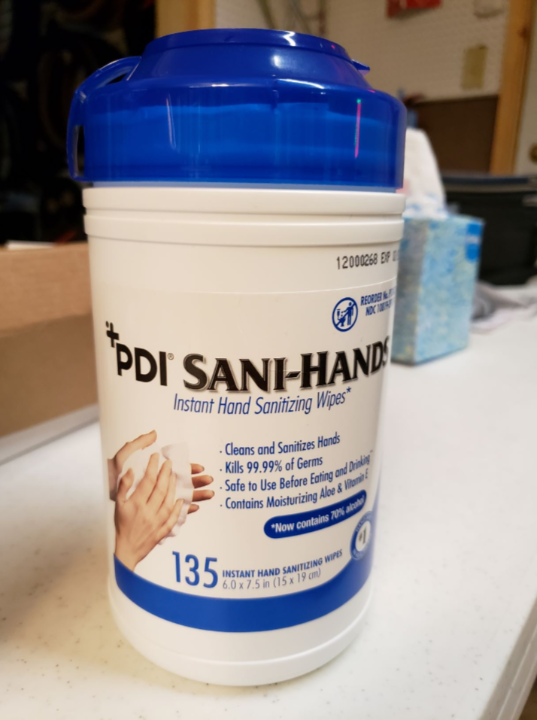
Centers for Disease Control and Prevention (CDC) recommends consumers use an alcohol-based hand sanitizer that contains at least 60% ethanol or 70% isopropanol.
How:
USDOT/PHMSA’s mission is to protect people and the environment by advancing the safe transportation of energy and other hazardous materials that are essential to our daily lives. To do this, the agency establishes national policy, sets and enforces standards, educates, and conducts research to prevent incidents.
This document is a temporary notice of enforcement discretion. Regulated entities may rely on this notice as a safeguard from departmental enforcement as described herein. To the extent this notice includes guidance on how regulated entities may comply with existing regulations, it does not have the force and effect of law and is not meant to bind the regulated entities in any way.
Conclusion:
As the COVID-19 public health emergency continues to affect the world’s economy through its manufacturing and transportation industries (and many others), USDOT/PHMSA and other U.S. regulatory agencies will continue to offer reliefs of this kind. Refer to my blog for other instances of regulatory relief offered by USDOT/PHMSA and USEPA.
Notice as well that this relief came after petitioning by “industry stakeholders”; ‘the squeaky wheel gets the grease!” If you find your industry hindered by compliance with the HMR during the COVID-19 public health emergency, be sure to ask USDOT/PHMSA for relief.
USDOT Offers Relief From Regulation for Transport of Sanitizers and Disinfectants During COVID-19 Public Health Emergency
The Bullet:
During this public health emergency, USDOT/PHMSA is providing relief for certain hazardous materials (HazMat), e.g., sanitizing and disinfecting materials, transported for the purpose of protecting the health and safety of employees – and contractors – directly supporting the logistical operations of transportation companies. The relief – as an enforcement discretion – mirrors the relief provided for HazMat transported under the materials of trade exception at 49 CFR 173 .6.
The materials of trade exception exempts certain hazardous materials and quantities in motor vehicle shipments from the requirements of the Hazardous Materials Regulations (HMR). Under the HMR, a material of trade means a hazardous material that is carried on a motor vehicle for one of three reasons:
Protecting the health and safety of the motor vehicle operator or passengers.
Supporting the operation or maintenance of a motor vehicle.
By a private motor carrier in direct support of a principal business that is other than transportation by motor vehicle.
Sanitizing and disinfecting products transported by a logistics company’s own transportation network to support the health and safety of employees at the company’s facilities do not meet any of these three definitions. Therefore, the materials of trade exception will not address this specific need which is the intent of this relief.
USDOT/PHMSA gives notice that it will not take enforcement action against any carrier transporting sanitizing and disinfecting materials carried on a motor vehicle for the purposes of protecting the health and safety of employees of the carrier – this includes contractors working for the carrier – provided the following criteria are met:
The sanitizing and disinfecting materials are being provided to protect the health and safety of employees and eligible contractors who directly support the operations of the carrier, such as by sorting packages, loading and unloading packages, and driving delivery vehicles.
The sanitizing and disinfecting materials are transported by motor vehicle.
The shipment complies with the hazard class, quantity, packaging, hazard communication, and aggregate gross weight requirements specified in 49 CFR § 173.6 Materials of Trade provisions.
Transport of these materials for purposes other than use by employees or contractors of the carrier (e.g., retail sale) is not authorized.
Contact me with any questions you may have about the transportation of hazardous materials by air, highway, vessel, or rail
This relief applies to transportation within the United States.
Photo by Elevate on Unsplash
When:
Date of issuance: April 20, 2020.
This Notice of Enforcement Discretion is effective while the COVID-19 public health emergency exists, or 90 days from the date of issuance of this Notice, whichever is sooner.
Because of the ongoing Coronavirus Disease 2019 (COVID-19) public health emergency, there has been a notable increase in the demand for products used for sanitization and disinfection purposes – many of which may be classified as HazMat for transportation as defined by the HMR.
An alcohol-based sanitizer may be a Class 3 Flammable Liquid.
A disinfectant may be a Class 8 Corrosive Material.
How:
PHMSA’s mission is to protect people and the environment by advancing the safe transportation of energy and other hazardous materials that are essential to our daily lives. To do this, the agency establishes national policy, sets and enforces standards, educates, and conducts research to prevent incidents. We also prepare the public and first responders to reduce consequences if an incident does occur.
FAQ: How do I maintain social distancing when exchanging HazMat shipping papers?
Under the Hazardous Materials Regulations (HMR) of the Pipeline and Hazardous Materials Safety Administration within the U.S. Department of Transportation (USDOT/PHMSA), no physical contact between parties is required during the creation, review, certification, and exchange of shipping papers created to accompany consignments of hazardous materials (HazMat).
Shipping papers may be exchanged by any of the following methods:
Attach the document to a clipboard, place it on a table, and step away while the paper is signed.
Send the document via email or other means of electronic transmission.
Q: Does that second bullet point, “send the document via email or other means of electronic transmission.” mean an electronic version of the shipping paper will suffice and the driver does not require a paper copy in his/her possession during transportation?
A: No. The language of USDOT/PHMSA’s notice is unclear and can be misleading. The HMR at 49 CFR 172.201(a)(5) allow for an electronic shipping paper only for consignments of HazMat transported by rail and §177.817(e) requires the driver of the motor vehicle to maintain a paper copy of the shipping paper when the HazMat is in transportation. I believe what USDOT/PHMSA means here is that a shipper may prepare a shipping paper and email it to the carrier who may then print, sign as a representative of the shipper (this is discussed later in the notice), and maintain a paper copy during transportation.
Photo by LOGAN WEAVER on Unsplash
What about the shipper’s certification statement?
§172.204(d) of the HMR indicates the shipper’s certification on a shipping paper,
Must be legibly signed by a principal, officer, partner, or employee of the shipper or his agent; and may be legibly signed manually by typewriter, or by other mechanical means.
The person signing the shipper’s certification statement may be an agent of the shipper, this may be an employee of the carrier. The driver may sign the certification statement as an agent of the shipper if he/she has direct knowledge that the materials are in proper condition for transportation (LOI 11-0201).
The shipper may request a person – e.g., the driver – to sign the shipping paper on its behalf. This request may be made verbally or in writing and may be transmitted electronically (e.g., text message or email).
Using the methods outlined above, it is possible for shippers and carriers to satisfy the safety requirements of the HMR while maintaining appropriate social distancing
USDOT/PHMSA Temporary Policy for Transportation of Alcohol-Based Hand Sanitizer REVISED 12.07.20
Because of the ongoing COVID-19 public health emergency, the Pipeline and Hazardous Materials Safety Division within the U.S. Department of Transportation (USDOT/PHMSA) is providing temporary relief from the Hazardous Materials Regulations (HMR) for the manufacturers and subsequent transporters of alcohol-based Hand Sanitizers made under specific FDA guidance.
The purpose of this article is to identify and explain the requirements of the USDOT/PHMSA Temporary Policy for the Transportation of Certain Alcohol-Based Hand Sanitizer Products During the Public Health Emergency (COVID-19). (more…)