Q&A: Do I have to placard bulk tanks when they’re empty?
The question, November 05, 2020:
Good afternoon,
I have a question about carrying bulk tanks. I recently got stop and was told that I was in violation because I didn’t have my placards showing with flammable material. I told the DOT officer that my bulk tanks were empty and that to my understanding that once you are empty you cant show your placards as flammable anymore. Well, long story short I got a ticket for not showing my placards as flammable even though the totes were empty.
Are the “bulk tanks” or “totes” you refer to a bulk packaging? I presume they are.
Are the bulk tanks / totes empty to the point where they are sufficiently cleaned of residue and purged of vapors to remove any potential hazard per 49 CFR 173.29(b)(2)(ii)? I presume they are not and still contain some residue of the HazMat.
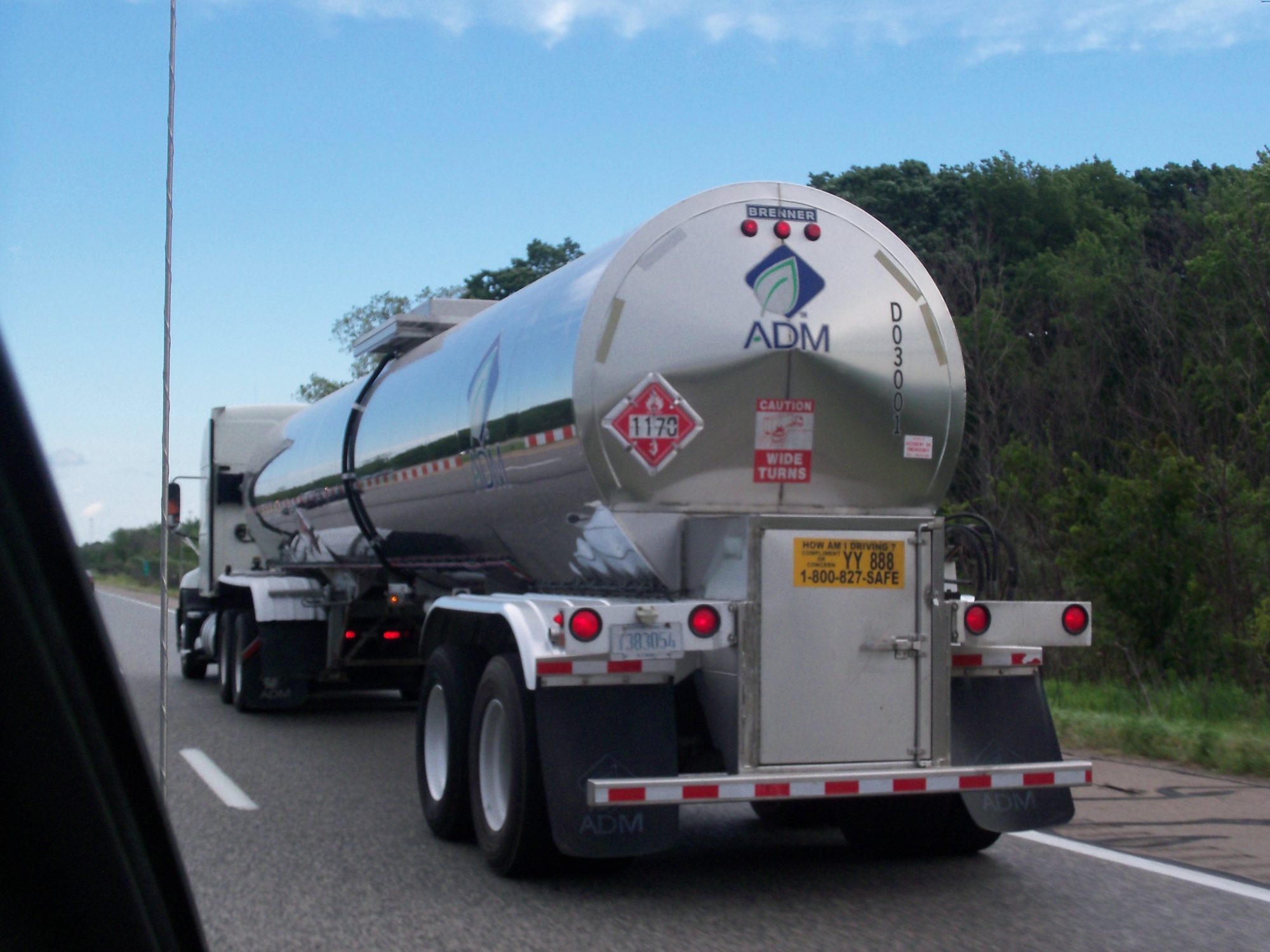
If this situation involves a bulk packaging that still contains the residue of a Class 3 Flammable Liquid (even just vapors), then – unfortunately – the DOT officer is correct in that the packaging must continue to display the placards it was required to display when full. In fact, the entire consignment is subject to full regulation, which requires:
Required display of placards and identification number on the bulk packaging.
Probably didn’t help him much since he already had the ticket. But, better to be sure for next time.
Contact me before you or one of your drivers are ticketed by USDOT for a HazMat transportation violation.
Q&A: Do I need the HazMat and tanker endorsement for Class 9 in totes?
A question from somewhere in America December 07, 2020:
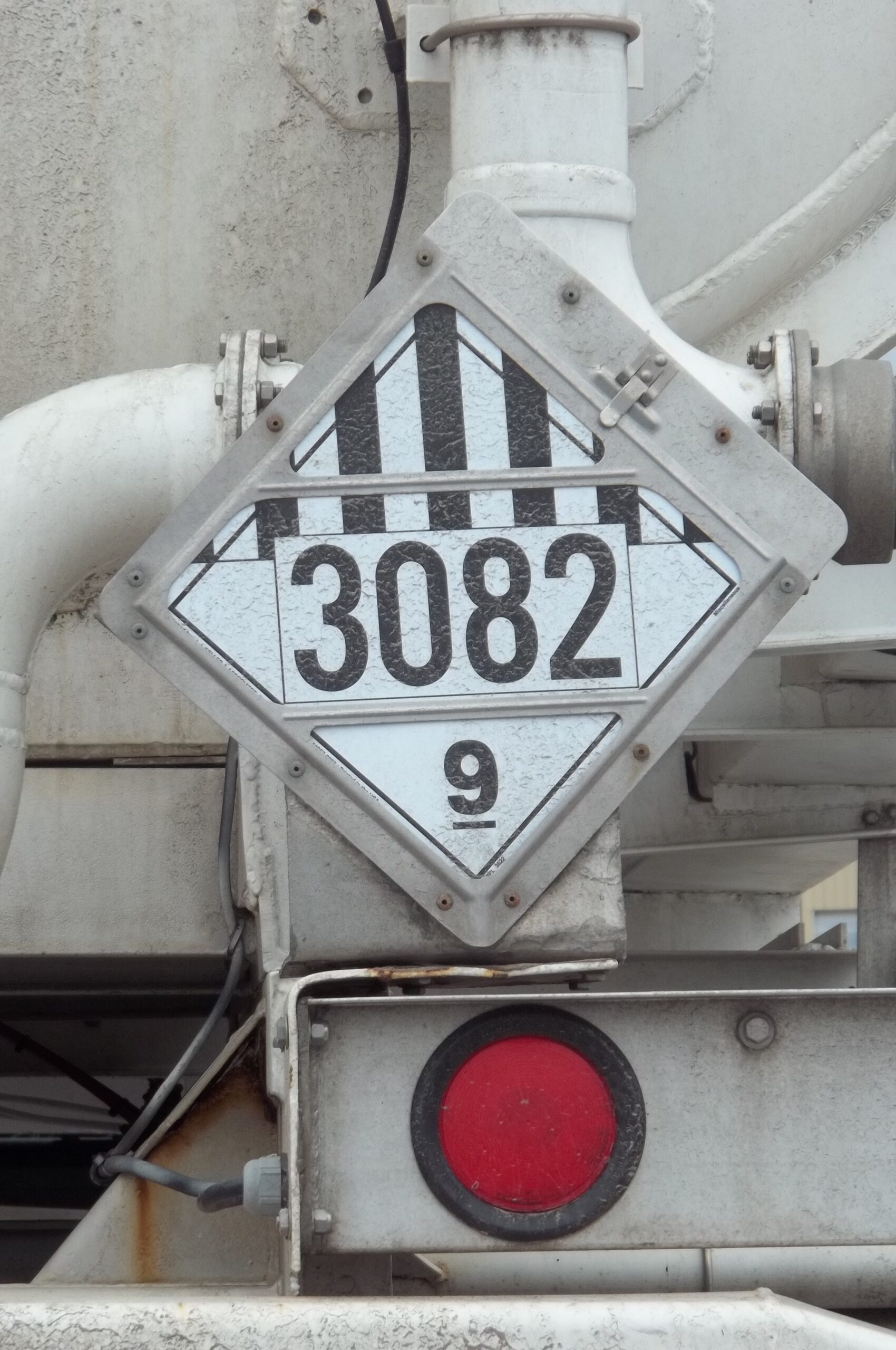
so I read a couple of your articles. we haul class 9 3082 16 totes about 40,000. does the driver need tanker and haz mat endorsement to haul. I know it needs placard.
thanks,
My reply on December 9th:
Thank you for contacting me. Please see below for answers to your questions.
I presume you are referring to the following two endorsements on the commercial driver’s license (CDL):
The HazMat endorsement is required only if the vehicle transports a type and quantity of hazardous material that requires the display of placards on the vehicle.
Pursuant to 49 CFR 383.3, states may make an exception from CDL requirements – including endorsements – for certain operations within their jurisdiction. This includes:
Military drivers (actually, each state must exempt individuals who operate CMVs for military purposes).
Farmers, firefighters, emergency response vehicles drivers, and drivers removing snow and ice.
Certain drivers in Alaska.
Certain drivers in farm-related service industries.
The tank vehicle endorsement on a CDL is required if the vehicle meets the definition of a tank vehicle at 49 CFR 383.5:
Tank vehicle means any commercial motor vehicle that is designed to transport any liquid or gaseous materials within a tank or tanks having an individual rated capacity of more than 119 gallons and an aggregate rated capacity of 1,000 gallons or more that is either permanently or temporarily attached to the vehicle or the chassis. A commercial motor vehicle transporting an empty storage container tank, not designed for transportation, with a rated capacity of 1,000 gallons or more that is temporarily attached to a flatbed trailer is not considered a tank vehicle.
Since the definition includes, “…either permanently or temporarily attached to the vehicle or the chassis.” you might think (as I did) that this would not apply to an intermediate bulk container (IBC or “tote”) loaded in or on a vehicle. However, it does:
Q: Does the definition of tank vehicle include loaded intermediate bulk containers (IBCs) or other tanks temporarily attached to a CMV?
A: Yes. The new definition is intended to cover (1) a vehicle transporting an IBC or other tank used for any liquid or gaseous materials, with an individual rated capacity of 1,000 gallons or more that is either permanently or temporarily attached to the vehicle or chassis; or (2) a vehicle used to transport multiple IBCs or other tanks having an individual rated capacity of more than 119 gallons and an aggregate rated capacity of 1,000 gallons or more that are permanently or temporarily attached to the vehicle or the chassis.
In the situation you describe, placards are not required, therefore the HazMat endorsement is not required. The vehicle does meet the definition of a tank vehicle and therefore the tank vehicle endorsement is required. However, since the driver is operating a motor vehicle transporting a hazardous material, he/she will require USDOT/PHMSA HazMat Employee training and must include Driver Training.
I hope this helps. Please contact me with any other questions.
Contact me with any questions you may have about the transportation of hazardous materials by air, highway, vessel, or rail
Thank you for your reply. I was thinking the same, but wasn’t positive …
Thanks,
Conclusion:
Though the Hazardous Materials Regulations of the Pipeline and Hazardous Materials Safety Administration (PHMSA) are entirely different from the Federal Motor Carrier Safety Regulations of the Federal Motor Carrier Safety Administration (FMCSA), sometimes they overlap, as is the case here. Sometimes it is necessary for training to meet the requirements of both PHMSA and FMCSA. I can provide that training.
Q&A: Is it legal to hand write the UN numbers on a placard with a magic marker?
Another one of the questions I get. This one in December of 2020:
Is it legal to hand write the UN numbers on a black UN placard with a magic marker ?
My reply:
Yes. Maybe.
Per 49 CFR 172.338, if more than one of the identification number markings displayed on placards, orange panels, or white square-on-points is lost, damaged, or destroyed during transportation, the carrier shall replace all missing or damaged identification numbers as soon as practicable.
In such case the numbers may be entered by hand using an indelible marking material as long as it is legible.
So, it can only be done by the carrier (i.e., driver) and can only be done during transportation, i.e., while on the road.
Contact me with any questions you may have about the transportation of hazardous materials by air, highway, vessel, or rail
I hope this helps. Please contact me with any other questions.
Q&A: What hazard communication is required on a package of a lithium metal cell (button cell battery) in equipment?
A question (09.30.20):
We are a company the produces products that contain a lithium metal cell battery as a back up battery for the time and date. The cell contains 0.015g of lithium, and the products have one of these built into them.
I have gone through the training program and am certified for shipping batteries, but as you are already well aware, the regulations are a VERY difficult read. I have spent 30+ hours pouring through them thus far, largely because we use lithium metal cells and we use lithium ion batteries as well (34g of lithium in each) , and the regulations are different between them.
My question is this. In reading through 49 CFR 173.185, I am confused by the content in 173.185(c) Exceptions for smaller cells and batteries. If I am reading that correctly, as long as the singular lithium metal cell and in some models a singular lithium ion battery are built into our equipment and are mechanically secure and the product is in an OFF state, we are not required to apply the lithium warning labels on the products. Where we need apply the special markings is when we ship the cells or batteries out as a replacement part.
In your opinion, am I understanding this correctly?
Your confirmation/clarification on this would be greatly appreciated.
You are not entirely correct. Please see below for clarification.
Lithium ion and lithium metal batteries have the same packaging requirements under the USDOT/PHMSA Hazardous Materials Regulations (HMR). As you indicate, these are found at 49 CFR 173.185.
You may be confused with the packaging requirements for transportation of lithium batteries by air according to the Dangerous Goods Regulations of the International Air Transport Association (IATA). Those have separate packing instructions for lithium ion batteries (PI 965, 966, 967) and lithium metal batteries (PI 968, 969, 970).
Also you refer to lithium metal cells and lithium ion batteries as having “…34g of lithium in each”. While lithium metal cells and batteries are classified according the grams (g) of lithium they contain, a lithium ion cell or battery is classified by its Watt-hour (Wh) rating.
Also, a lithium metal cell or battery with 34 grams of lithium metal is not a smaller lithium battery applicable for the packaging exception at 49 CFR 173.185(c). It instead is subject to full packaging requirements of 49 CFR 173.185(a-b). A lithium ion battery with a Wh rating of 34 is a smaller lithium ion battery eligible for the smaller lithium battery exception at 49 CFR 173.185(c). See below for a table summarizing the classification of lithium batteries based on lithium content.
Industry and EPA hazardous waste No.
Hazardous waste
Hazard code
F020
Wastes (except wastewater and spent carbon from hydrogen chloride purification) from the production or manufacturing use (as a reactant, chemical intermediate, or component in a formulating process) of tri- or tetrachlorophenol, or of intermediates used to produce their pesticide derivatives. (This listing does not include wastes from the production of Hexachlorophene from highly purified 2,4,5-trichlorophenol.)
(H)
F021
Wastes (except wastewater and spent carbon from hydrogen chloride purification) from the production or manufacturing use (as a reactant, chemical intermediate, or component in a formulating process) of pentachlorophenol, or of intermediates used to produce its derivatives
(H)
F022
Wastes (except wastewater and spent carbon from hydrogen chloride purification) from the manufacturing use (as a reactant, chemical intermediate, or component in a formulating process) of tetra-, penta-, or hexachlorobenzenes under alkaline conditions
(H)
F023
Wastes (except wastewater and spent carbon from hydrogen chloride purification) from the production of materials on equipment previously used for the production or manufacturing use (as a reactant, chemical intermediate, or component in a formulating process) of tri- and tetrachlorophenols. (This listing does not include wastes from equipment used only for the production or use of Hexachlorophene from highly purified 2,4,5-trichlorophenol.)
(H)
F026
Wastes (except wastewater and spent carbon from hydrogen chloride purification) from the production of materials on equipment previously used for the manufacturing use (as a reactant, chemical intermediate, or component in a formulating process) of tetra-, penta-, or hexachlorobenzene under alkaline conditions
(H)
F027
Discarded unused formulations containing tri-, tetra-, or pentachlorophenol or discarded unused formulations containing compounds derived from these chlorophenols. (This listing does not include formulations containing Hexachlorophene sythesized from prepurified 2,4,5-trichlorophenol as the sole component.)
(H)
Please forgive me if the above clarifications seem dismissive, but I wanted to clear up any misconceptions before proceeding. You are correct that the regulations for the transportation of lithium batteries are very complex.
Please see below for an answer to your question:
All lithium cells and batteries, regardless of lithium content or whether lithium metal or lithium ion, if contained in equipment have the same basic packaging requirements under the HMR [49 CFR 173.185(b)(4)]:
Outer packaging, if used, must be constructed of suitable materials of adequate strength and design…
Outer packaging isn’t required if batteries are contained in equipment that provides equivalent protection.
Equipment must be secured against movement within the outer packaging (if used, see above).
Equipment must be packed to prevent accidental operation during transport. Note, this is more stringent than, “…product is in an OFF state”.
Hazard communication per 49 CFR 173.185(c)(3):
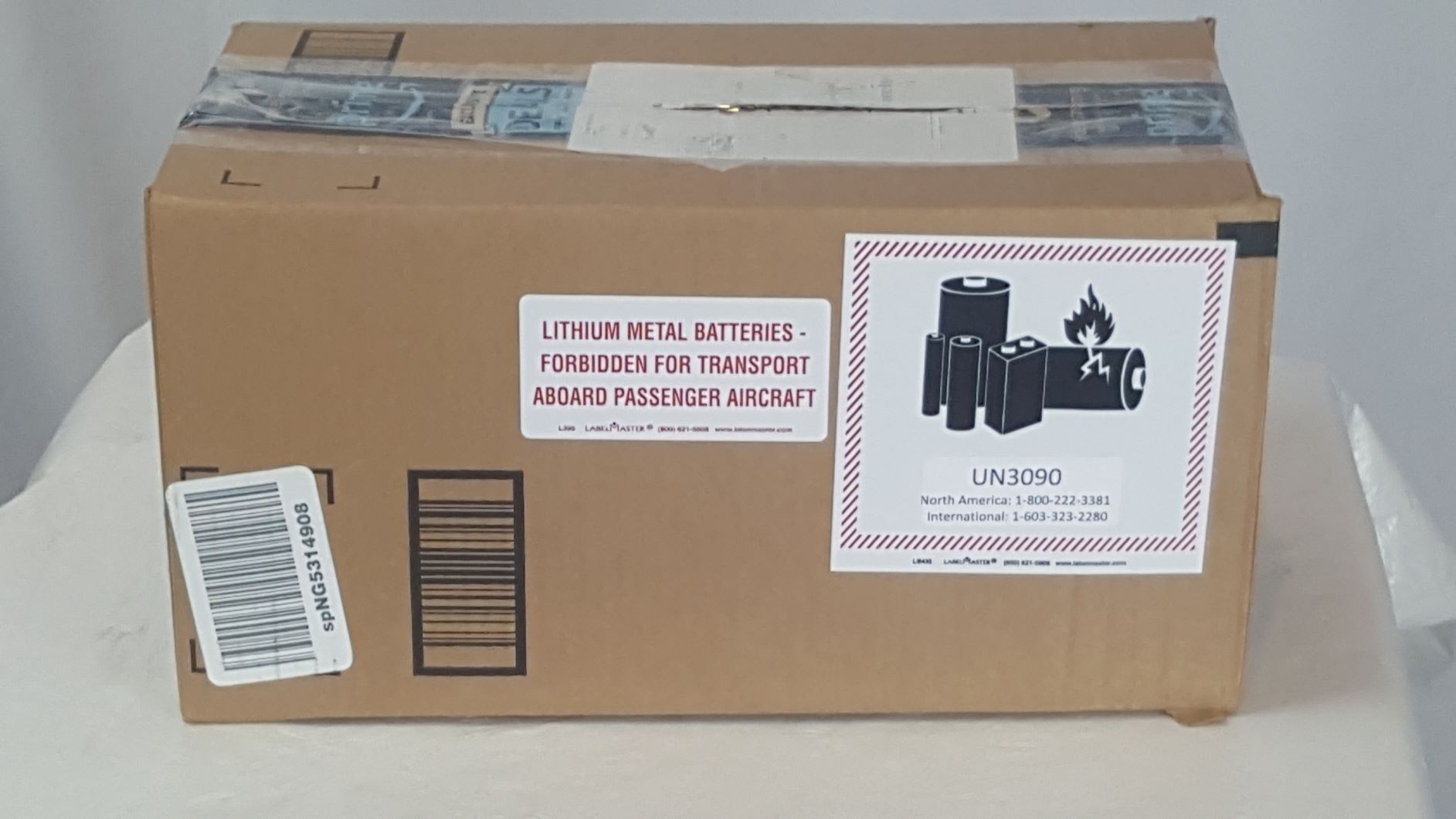
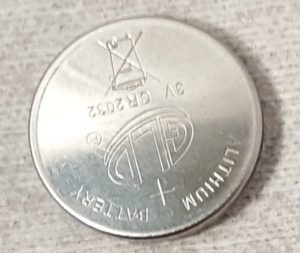
A package solely of button cell batteries contained in equipment is not required to display the lithium battery mark regardless of the number of batteries or number of packages in the consignment. This may be your situation as you refer to a lithium metal cell battery as a backup battery for time and date.
A package solely of smaller lithium cells or batteries (not button cell) contained in equipment must display the lithium battery mark only under the following circumstances:
More than four (4) cells contained in equipment.
Or…
More than two (2) batteries contained in equipment.
Or…
More than two (2) packages of either per consignment.
So, unless your package or consignment is above one of those thresholds, the lithium battery mark is not required to be displayed on a package of a lithium cell or battery contained in equipment.
Smaller lithium metal battery packed alone
Also, pursuant to §173.185(c)(1)(iii) a package of smaller lithium cells or batteries contained in equipment must display the Cargo Aircraft Only label or a specified package mark indicating the package is not acceptable as cargo on a passenger aircraft if the net quantity of lithium battery in the package is more than 5 kg.
A smaller lithium cell or battery packed alone must always display the lithium battery mark. It must also display the Cargo Aircraft Only label or a specified package mark indicating the package is not acceptable as cargo on a passenger aircraft.
I suggest you contact me for further clarification.
The regulations for the transportation of lithium batteries (cells or batteries) are complex and they change frequently. Another factor is the differing regulations for different modes of transport: highway and rail (i.e., ground) v. vessel v. aircraft. Contact me with questions or if you require the training necessary to safely transport lithium batteries.
Changes to the Limited Quantity Exception for Hazardous Materials in 2021
In a Final Rule issued November 25, 2020 the Pipeline and Hazardous Materials Safety Administration within the U.S. Department of Transportation (USDOT/PHMSA) amended it Hazardous Materials Regulations (HMR) to clarify, update, and provide relief from various regulatory requirements. A review of the entire Final Rule and its impact on the HMR is not the purpose of this article (whew!). The purpose of this article is to identify and explain two changes to the HMR from this Final Rule related to the classification and packaging of certain hazardous materials (HazMat) under the limited quantity exception.
Notice of Proposed Rulemaking (NPRM) issued: August 14, 2019
Final rule published in Federal Register: November 25, 2020
Effective date: December 28, 2020
These changes to the HMR apply solely to HazMat offered for transportation and/or transported anywhere to, from, or through the U.S. However, the changes to the Limited Quantity exception were done at least in part to harmonize the HMR with existing international regulations. Therefore, the relief from regulation offered by this Final Rule already exist in the international regulations of the following:
Of the nineteen changes made by this Final Rule, two of them affect the regulations of the limited quantity exception:
Limited Quantity for Hydrogen Peroxide:
The rule establishes a limited quantity provisions of 1 L per inner container for UN2014, Hydrogen peroxide, aqueous solution. This is for solutions between 20 and 60% hydrogen peroxide. USDOT/PHMSA recognized that international regulations and standards already permitted this substance to be transported as a limited quantity, so it was an anomaly that the HMR didn’t allow such an exception. Therefore, USDOT/PHMSA revised Column (8A) of the HMT for “UN2014, Hydrogen peroxide aqueous solution” to allow limited quantity packaging for this material by referencing the exception in 49 CFR 173.152.
Limited Quantity Harmonization:
A petitioner requested USDOT/PHMSA to extend the eligibility of the limited quantity exception to 45 additional hazardous materials. Just as for UN2014, Hydrogen peroxide aqueous solution (see above), these HazMat were already eligible for the exception under the international standards. USDOT/PHMSA conducted a technical review and determined that a total of 114 entries on the Hazardous Materials Table – including the 45 originally requested – are not in alignment with the UN Model Regulations permitting limited quantity shipment of hazardous materials. During its review USDOT/PHMSA also determined that these hazardous materials currently without limited quantity exceptions are of the same hazard classes as materials for which the HMR already contains an exception allowing limited quantity shipment.
Based on its technical review USDOT/PHMSA came to the following conclusions:
Prior to this revision, the HMR’s limited quantity exception was inconsistent with the international standards.
Expanding the applicability of the limited quantity exception would not adversely affect safety.
Significant changes to the Hazardous Materials Regulations can occur with or without your knowledge. While USDOT/PHMSA HazMat Employee training is required triennially (every three years), it may not hurt to attend training more frequently.
USDOT/PHMSA Makes Miscellaneous Changes to Hazardous Materials Regulations to Reduce Regulatory Burden
The Bullet:
The Pipeline and Hazardous Materials Safety Administration (PHMSA) is amending the Hazardous Materials Regulations in response to 24 petitions for rulemaking submitted by the regulated community between February 2015 and March 2018. This final rule updates, clarifies, or provides relief from various regulatory requirements without adversely affecting safety. PHMSA also, as of the effective date of this final rule, withdraws its September 28, 2017 enforcement discretion regarding the phase-out of mobile refrigeration systems.
Revising § 173.31 to prohibit the use of tank cars with shells or heads constructed of non-normalized steel in the transportation of poison-by-inhalation hazard (PIH) materials by rail after December 31, 2020.
Harmonizing availability of limited quantity shipping exceptions for more than 100 entries for corrosive materials in the Hazardous Materials Table (HMT, § 172.101).More…
USDOT/PHMSA is increasing the numbers of hazardous materials eligible for the limited quantity exception
Revising Column (8A) of the HMT for “UN2014, Hydrogen peroxide aqueous solution” to allow limited quantity packaging for this material by referencing the exception in § 173.152. More…
Revising § 172.302(b)(2) to allow a minimum height of 12 mm (0.47 inches) for a proper shipping name marked on a portable tank with a capacity of less than 3,785 L (1,000 gallons).
Revising § 173.28(c)(1)(i) to allow for regulatory flexibility for cleaning metal drums for reuse and clarifying the existing cleaning standard.
Revising § 173.5b to allow for the continued use of portable and mobile refrigerator systems placed into service prior to 1991 that are rated to a minimum service pressure of 250 pounds per square inch (psig).
Incorporating by reference updated editions of multiple Compressed Gas Association (CGA) publications into § 171.7.
Removing the reference to special provision 103 in § 172.101 from Column (7) for four HMT entries.
Removing the words “manufactured before September 1, 1995” from § 180.417(a)(3) to allow for an alternative report for cargo tanks manufactured after September 1, 1995.
Revising the basis weight tolerance provided in § 178.521 from ±5 percent to ±10 percent from the nominal basis weight reported in the initial design qualification test report for paper shipping sacks.
Revising § 173.308(d)(3) to harmonize with the International Maritime Dangerous Goods (IMDG) Code by removing the requirement for a closed transport container to have the warning mark “WARNING—MAY CONTAIN EXPLOSIVE MIXTURES WITH AIR—KEEP IGNITION SOURCES AWAY WHEN OPENING” when transporting lighters.
Revising §§ 173.244(a)(2) and 173.314(c) to make the “interim” rail tank car specifications the “final” specifications for the transportation of PIH materials.
Revising § 173.31 to prohibit the use of certain rail tank cars for the transportation of PIH materials after December 31, 2027.
Allowing all waste materials to be managed in accordance with the lab pack exception and associated paragraphs in § 173.12 irrespective of whether they meet the definition of a hazardous waste per Environmental Protection Agency (EPA) regulations implementing the Resource Conservation and Recovery Act (RCRA).
Incorporating by reference the 2017 edition of the American Society of Mechanical Engineers (ASME) Boiler and Pressure Vessel Code (BPVC) Sections II (Parts A and B), V, VIII (Division 1), and IX into § 171.7.
Revising §§ 171.23, 173.302, and 173.304 to permit the import of filled pi-marked foreign pressure receptacles for intermediate storage, transport to point of use, discharge, and export as well as the import of certain pi-marked foreign pressure receptacles for filling, intermediate storage, and export.
Revising § 172.101(c) to clarify that the word “stabilized” must be included as part of the proper shipping name when stabilization is required for transportation.
Revising § 171.7(r) to update the address of the Institute of Makers of Explosives (IME) and to incorporate by reference the Association of Energy Service Companies (AESC)/IME Jet Perforating Gun (JPG) Standard, also known as the “Guide to Obtaining DOT Approval of Jet Perforating Guns using AESC/IME Perforating Gun Specifications,” Ver. 02, dated September 1, 2017.
Incorporating by reference the January 1, 2018, edition of the American Pyrotechnics Association (APA) Standard 87-1 A, B, C, “Standard for Construction and Approval for Transportation of Fireworks, Novelties, and Theatrical Pyrotechnics,” replacing the December 1, 2001 edition into § 171.7.
Contact me with any questions you may have about the transportation of hazardous materials by air, highway, vessel, or rail
The Hazardous Materials Regulations of USDOT/PHMSA are applicable to the transportation of hazardous materials in commerce to, from, or through the U.S.
Transportation subject to regulation is both interstate and intrastate.
When:
Notice of proposed rulemaking (NPRM) published: August 14, 2019
Comment period for NPRM ended: October 15, 2019
Final rule published in Federal Register: November 25, 2020
Effective date: December 28, 2020
Delayed compliance date: Except as provided by the compliance timelines set forth in this final rule in connection with petitions for rulemaking P-1646, P-1691 and P-1692, compliance with the amendments adopted in this final rule is required beginning November 26, 2021.
Why:
This final rule revises the Hazardous Materials Regulations (HMR) in response to petitions for rulemaking submitted by shippers, carriers, manufacturers, and industry representatives.
These revisions update, clarify, or provide relief from various regulatory requirements without adversely affecting safety.
The Administrative Procedure Act [1] requires Federal agencies to give interested persons the right to petition an agency to issue, amend, or repeal a rule.
USDOT/PHMSA implementing regulations at 49 Code of Federal Regulations (CFR) 5.13(c) and 106.95, respectively, allow persons to ask PHMSA to add, revise, or delete a regulation by filing a petition for rulemaking containing adequate support for the requested action.
Conclusion:
The HMR are revised as determined to be necessary by USDOT/PHMSA. While some of those revisions may increase the regulatory burden of shippers and carriers of HazMat, the regulations of this final rule are intended to reduce that regulatory burden. Regardless of the intent of the change, as a person with a direct affect on the safe transportation of hazardous materials – i.e., a HazMat Employee – you must comply with the Hazardous Materials Regulations. My HazMat Employee training can help you to maintain this compliance
Q&A: Is a VSQG subject to the annual HazMat registration?
I manage the EHS program for two of <Company’s>> manufacturing facilities, and one of them is a very small quantity generator of hazardous waste (VSQG). Is this VSQG facility subject to the annual HazMat registration? I have heard different answers. We are part of a bigger parent corporation which is a large quantity generator of hazardous waste (LQG) but I’m not sure if this makes a difference since these are separate facilities. We always have our waste picked up for transport to a TSDF by an outside vendor.
Thank you in advance for your help.
Not sure of your hazardous waste generator category?
I apologize for my delay in responding. Your email was caught by my spam filter. Please see below.
A facility’s hazardous waste generator status is not a factor in determination of the USDOT/PHMSA registration requirements for shippers and carriers.
However, hazardous waste is to be considered when determining the applicability of the six (6) criteria for registration.
As defined by USDOT/PHMSA, the waste generated by a VSQG is not subject to USDOT/PHMSA a hazardous waste (I know, it sounds crazy, but that’s the way it is). However, the waste generated by a VSQG could be a hazardous material for other reasons, e.g., a spent solvent generated by a VSQG is not a hazardous waste but it may be a Class 3 Flammable Liquid and therefore a hazardous material subject to registration. Read: FAQ: How does USDOT/PHMSA classify a hazardous waste?
As part of a bigger corporation it is most likely that the operations of all facilities within <<Company>> are covered by one corporate registration. If that is the case you need only obtain a copy of the following:
Registration statement filed with USDOT/PHMSA.
Certificate of Registration
form and ensure it includes the state(s) you operate in.
The waste pickup and transport by an outside vendor is not a factor. You are still the shipper of the hazardous material (i.e., the person who offers).
I hope this helps. Please contact me with any other questions.
Another satisfied customer:
Thanks for the clarification!
Q&A: Does a driver need HazMat certification to haul ferrous sulphate (UN3077)?
A question on June 29, 2020:
Good afternoon,
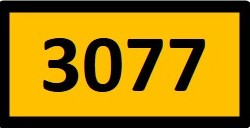
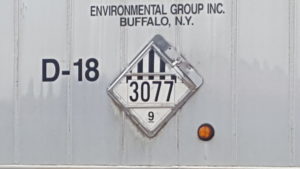
Does a driver need to be hazmat certified to haul 22 palletized tote bags of ferrous sulphate each weighing 2050 lbs? The shipper offers the rectangular orange four digit placard that says 3077 in black letters, but claims the driver isn’t required to be hazmat endorsed for their loads within the US. Each bag has the diamond shaped 3077, Class 9 placard stamped on it but the load is required to be tarped. Can our non-hazmat drivers take these loads and if so…should they not use placards?
Thank you for your help! I want to make sure we are legally able to use non-hazmat guys before sending them to load.
Contact me with any questions you may have about the transportation of hazardous materials by air, highway, vessel, or rail
Thank you for contacting me. Your non-HazMat drivers (drivers without the HazMat endorsement on their CDL) may transport those loads. They may or may not display the Class 9 placard on their vehicle as they wish. Please see below.
However, the driver – and anyone else involved in transportation – must have initial and triennial recurrent USDOT HazMat Employee training. In addition, drivers must have Driver Training.
Though not required, the Class 9 Miscellaneous placard is frequently displayed on motor vehicles in the U.S.
I hope this helps. Please contact me with any other questions or if you wish for me to provide USDOT HazMat Employee training.
Just checking back in (07.06.20):
Do you have any other questions for me? May I be of any further assistance?
The reply that same day:
Thank you very much for your response to my question. I really appreciate you getting back to me. As of right now I don’t have any other questions but I will reach out if anything comes up.
Actually what is the time commitment and cost involved with getting hazmat endorsement?
I don’t know the time commitment to obtain the HazMat endorsement on the CDL. It is not something I address. It depends on the requirements of your state.
I do provide USDOT HazMat Employee training which is required in addition to the HazMat endorsement if your job has a direct effect on the safe transportation of hazardous materials.
Q&A: Is the marine pollutant label required for transport by ground?
(June 26, 2020) A question from a customer of mine:
hi Daniel
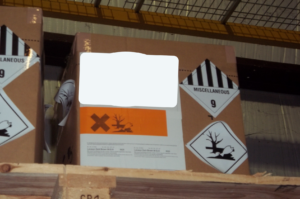
I am shipping two boxes of un3077 environmentally hazardous substances, solid., n.o.s. ( dibutyl phthalate), 9, III. This is going ground to Texas. my question is do we have to put the marine pollutant label if its going ground.
I know marine pollutant labels is required for some going ocean. I am also wondering do we have to apply this label if its going air with the class 9.
thanks for your help.
Contact me with any questions you may have about the transportation of hazardous materials by air, highway, vessel, or rail
A non-bulk packaging transported by ground in the U.S. is not subject to regulation as a marine pollutant.
My reply that same day:
Thank you for contacting me. Please see below.
A marine pollutant is classified by USDOT/PHMSA for transportation within the U.S. as follows:
It must be identified by name in Appendix B of the Hazardous Materials Table at 49 CFR 172.101 (the Marine Pollutant Table).
The named marine pollutant must be at a concentration in a solution or mixture of 10% or more for a marine pollutant or 1% or more for a severe marine pollutant.
The substance must be transported in any packaging (bulk or non-bulk) by vessel or in a bulk packaging by highway, rail, or aircraft.
Your email does not indicate if the two boxes are bulk packaging or non-bulk packaging. Based on my knowledge of your operations I will presume them to be a non-bulk packaging.
A non-bulk packaging transported by highway within the U.S. can not be a marine pollutant subject to the Hazardous Materials Regulations (HMR) of the USDOT/PHMSA.
Also, dibutyl phthalate is not identified as a marine pollutant in the Marine Pollutant Table, so that’s strike three right there.
Unless subject to the HMR as a hazardous material for some other reason, this substance will not be regulated as a hazardous materials when offered for transport by highway within the U.S.
You are correct that the classification of a marine pollutant subject to the International Maritime Organization Dangerous Goods Code (IMDG Code) differs from that of USDOT/PHMSA. It is quite possible this substance is a marine pollutant subject to the IMDG Code. More information is necessary to make that classification. If a marine pollutant per the IMDG Code and it does not display any other hazards, e.g., flammability, corrosivity, it will be classified as a Class 9 Miscellaneous.
If to be transported by air, the Dangerous Goods Regulations of the International Air Transport Association (IATA) will apply. IATA classifies a marine pollutant in the same manner as the IMO, therefore, it is quite possible (more information is necessary to be certain) this substance is a marine pollutant – and therefore a Class 9 Miscellaneous as well – when transportation is by air.
I hope this helps. Please contact me with any other questions.
I have a couple of questions on behalf of the US Army Europe.
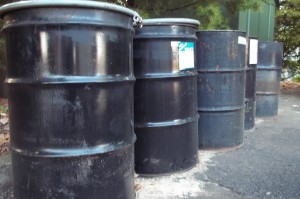
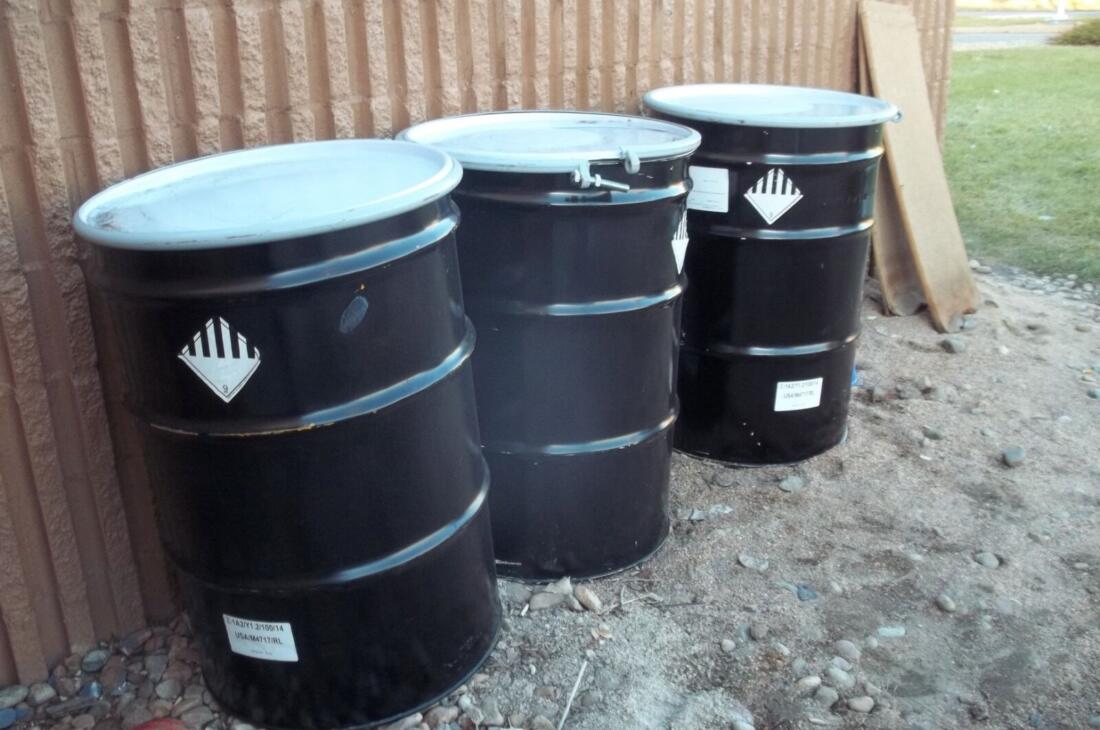
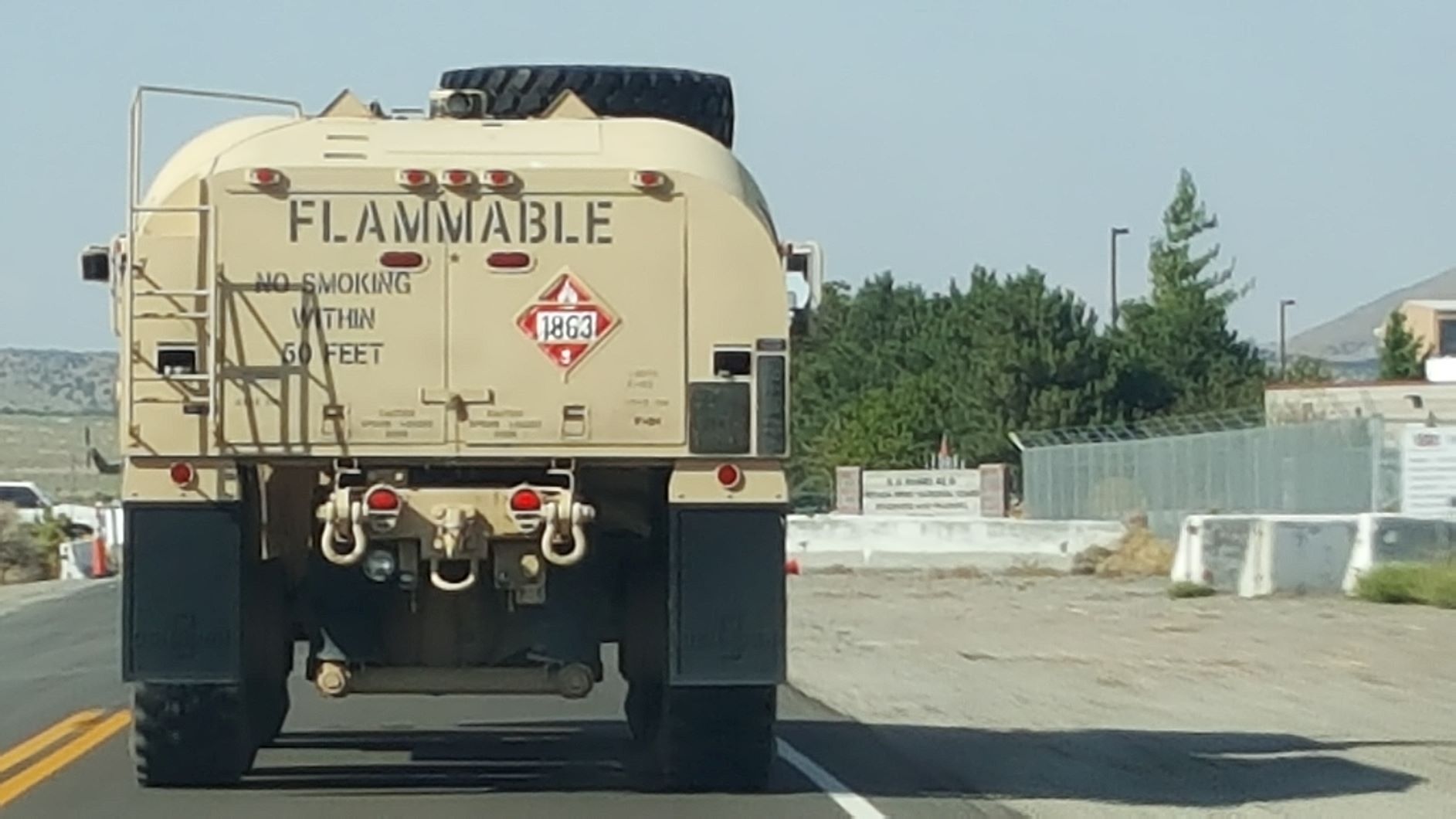
Situation: We have DOT 406 Bulk Fuel Cargo Tanks that must be returned to numerous Army bases across the USA from Europe. The tanks have contained fuel and have been completely drained (including pipes, pumps and removal filtering systems) according to the manufacturers technical manuals. There may be “Crevice” residue fuel trapped in pipe connection seals that is undrainable. We will use military vessels to get them back from Europe to the nearest port in the USA. The tanks will have onward shipping by commercial trucks to their final destinations in the USA. We find no examples or provisions in the 49 CFR 171-173 that define “Cleaning/Purging” certificates or statements. We want to make sure that the “Cleaning/Purging” certificate statement we prepare here in Europe is acceptable for commercial carriers in the USA to authorize them to carry these Bulk Fuel Cargo tanks as a Non-Hazardous Material shipment.
Question 1. What resource document tells me the “SHIPPER” is responsible to know the exact provisions (standards) of what is meant by sufficiently cleaned of residue and purged of Flammable Liquid Vapors” for the below fuel types?
Question 2. Must tanks be cleaned with liquid substance?
Question 3. Or is “Draining all liquids & ventilating vapors below LEL levels to satisfy both terms, “Sufficiently Cleaned of Residue and Purged of Flammable Liquid Vapors” even if the temporary LEL of 0.00%(V) is recorded?
As you can see above, all these fuels have different Lower/Upper Explosion Limits.
Question 4. Would you recommend that we set the standard with a LEL of 0.00% (V)?
Purpose of your efforts will help us establish a template certificate “Drain/Clean/Purge” statement for Fuel Cargo Tanks shipping for Soldiers returning from missions in support of the US Army in Europe.
Thank you in advance for any assistance you may provide us.
Contact me with any questions you may have about the transportation of hazardous materials by air, highway, vessel, or rail
Question 1: There is no clear regulatory citation on this specific point in the USDOT/PHMSA Hazardous Materials Regulations (HMR).
At 49 CFR 171.8 a person who offers or offeror of a hazardous material (aka: the shipper) is a person who performs or is responsible for performing a pre-transportation function (described at 49 CFR 171.1(b)) or makes the HazMat available to the carrier.
The shipper is responsible for compliance with 49 CFR 173.29 Empty packagings as it is with the remainder of part 173.
The shipper must determine if the consignment is a HazMat and if so, what type and communicate that information to the carrier. This requires the shipper to determine if a packaging, “Is sufficiently cleaned of residue and purged of vapors to remove any potential hazard”, or “Is refilled with a material which is not hazardous to such an extent that any residue remaining in the packaging no longer poses a hazard;”
Question 2: This is easier. No.
Question 3: The HMR do not reference the LEL or UEL. It is up to the shipper to ensure compliance with 49 CFR 173.29. The HMR do not indicate how to do this.
Question 4: I have no recommendation other than you ensure compliance with 49 CFR 173.29.
Your purpose: I think it a good idea to draft a “certificate of drain/clean/purge” though one is not required by the HMR. In my experience, most carriers wish to see one if they suspect the presence of HazMat.
I hope this helps. Please contact me with any other questions.
Conclusion:
That seemed to have answered the question since I did not hear back from him/her. I did not mention in my reply the potential use of the Government Employee Exemption. I did not mention it since the email indicated the cargo tanks would be transported by commercial carrier within the U.S. The use of a commercial carrier precludes use of the Government Employee Exemption.


 Issued by the Pipeline and Hazardous Materials Safety Administration within the U.S. Department of Transportation (USDOT/PHMSA).

 Situation: