PO Box 1232 Freeport, IL 61032

A Different Kind Of Training

A Different Kind Of Training

A Different Kind Of Training

Flammable and Combustible Liquid Hazardous Materials

Both Flammable and Combustible Liquids are Class 3 hazardous materials defined and described by the USDOT/PHMSA at 49 CFR 173.120.  Too often, this type of hazardous material is assumed to be the same as a USEPA hazardous waste with the characteristic of ignitability (D001).  Though similar in many respects, the terms originate from different federal agencies and have differing determination criteria.  The purpose of this article is to identfiy and describe both a Class 3 Flammable Liquid and a Class 3 Combustible Liquid as defined and regulated by USDOT/PHMSA.

For more information about ignitable hazardous waste read: US EPA Determination of an Ignitable Liquid as a Hazardous Waste.

Like this article?

Subscribe to my Monthly Newsletter

No marketing emails!

A Flammable Liquid “means a liquid having a flash point of ≤60°C (140°F), or any material in a liquid phase with a flash point ≥37.8°C (100°F) that is intentionally heated and offered for transportation or transported at or above its flash point in a bulk packaging…”

So, to meet the definition of a Class 3 Flammable Liquid it must be…

  1. A liquid with a flash point of ≤60°C (140°F), or;
  2. Any material with a flash point ≥37.8°C (100°F), that is…
    • Intentionally heated and offered for transportation, or;
    • Transported at or above its flash point in a bulk packaging.

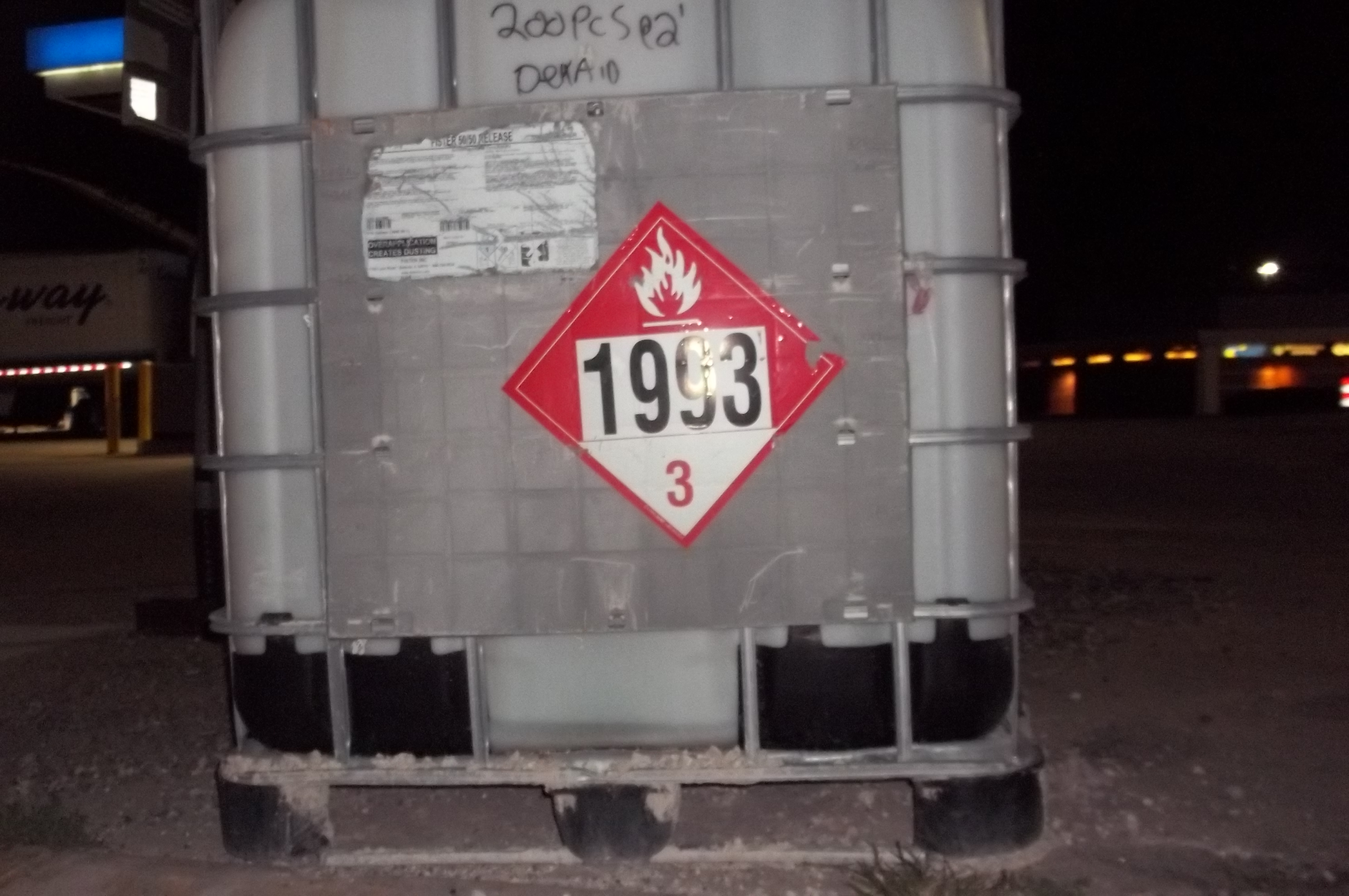
Even if matching the above description, the following materials are exempt from definition as a Flammable Liquid:UN1993 in Intermediate Bulk Container
  1. Any liquid meeting one of the definitions of a Class 2 (Divisions 2.1, 2.2, & 2.3) compressed gas at 49 CFR 173.115.
  2. Any mixture having one or more components with a flash point ≥60°C (140°F), that make up at least 99% of the total volume of the mixture, if the mixture is not offered for transportation or transported at or above its flash point.
  3. Any liquid with a flash point >35°C (95°F) that does not sustain combustion according to ASTM D 2406 (IBR, see §171.7 of this subchapter) or the procedure in appendix H of this part.
  4. Any liquid with a flash point >35°C (95°F) and with a fire point >100°C (212°F) according to ISO 2592 (IBR, see §171.7 of this subchapter).
  5. Any liquid with a flash point >35°C (95°F) which is in a water-miscible solution with a water content of more than 90% by mass.

Interested in site specific training at your site that covers this topic, and more!

Ask me about my Onsite Training

A Combustible Liquid “means any liquid that does not meet the definition of any other hazard class specified in this subchapter and has a flash point >60°C (140°F) and <93°C (200°F).”

So, to meet the US DOT definition of a Class 3 Combustible Liquid it must…

  1. Not meet the definition of any other US DOT hazard class, and;
  2. Be a liquid with a flash point >60°C (140°F) and <93°C (200°F).

In some cases, the US DOT will allow you to reclassify a Flammable Liquid as a Combustible Liquid to take advantage of the reduced regulatory burden when transporting Combustible Liquids.

Contact me with any questions you may have about the transportation of hazardous materials by air, highway, vessel, or rail

International and Domestic

Daniels Training Services, Inc.

815.821.1550

Info@DanielsTraining.com

https://danielstraining.com/

Whether it’s a Flammable Liquid, Combustible Liquid, or liquid Ignitable hazardous waste it is your responsibility to keep them straight and to determine if you are subject to their unique regulations when handling or transporting them.

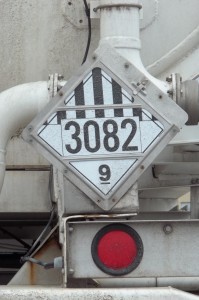
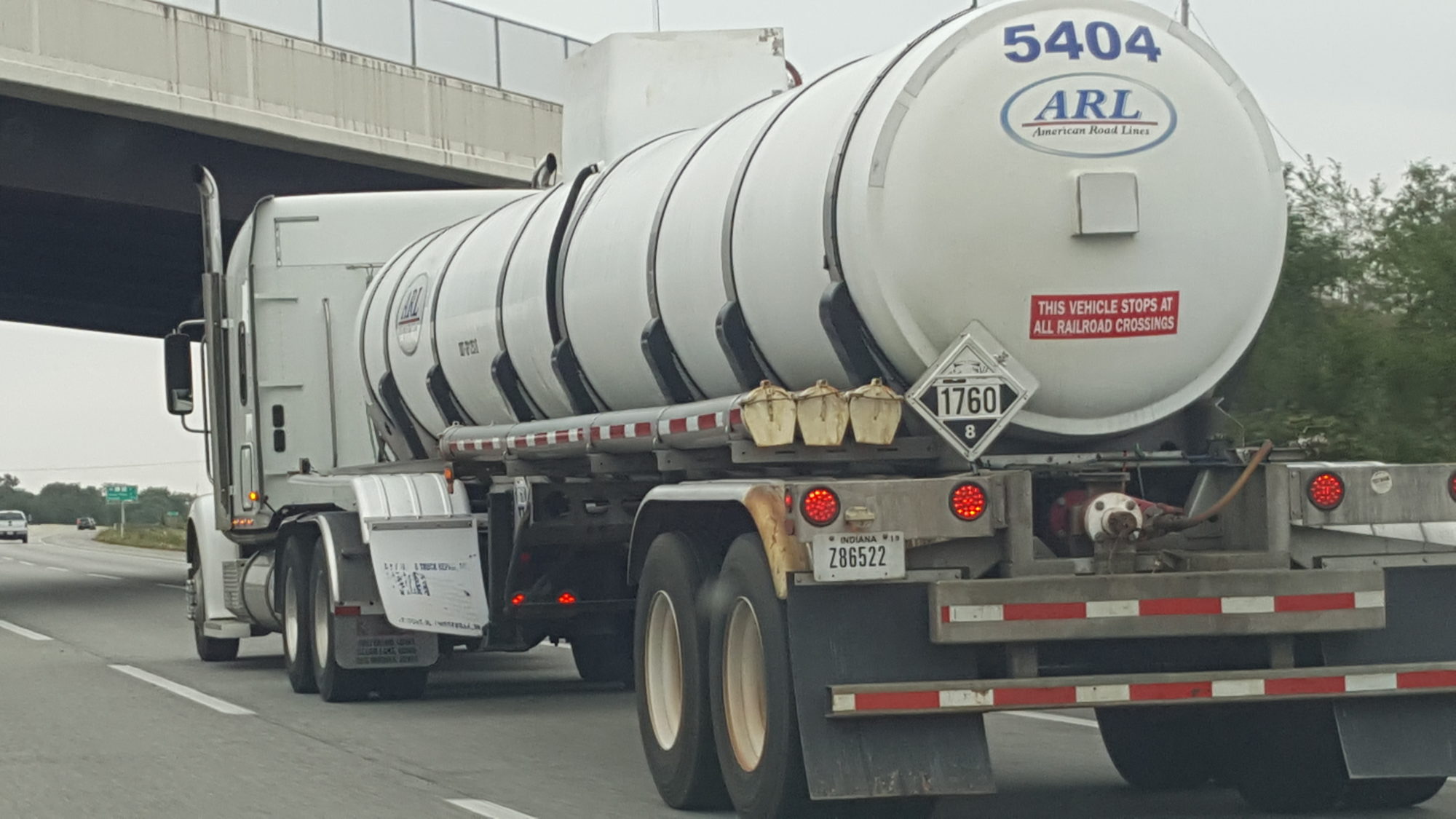
Class 9 placards on cargo tank truck

Is the CLASS 9 Placard Required?

For international transportation (anywhere outside the U.S.) the answer is yes; the CLASS 9 placard must be used if the applicable placarding threshold is met.  For domestic transportation, including international transportation that occurs within the US, the answer is no; the CLASS 9 placard is not required pursuant to a placarding exception found at 49 CFR 172.504(f)(9).

Like this article?

Subscribe to my Monthly Newsletter

No marketing emails!

This is true even if the CLASS 9 hazardous material…

  • Is in a bulk packaging, or;
  • The aggregate weight of Table 2 hazardous materials on the vehicle (including CLASS 9) is ≥1,001 pounds.

    Display of Class 9 Miscellaneous Placard
    The Class 9 Placard is not required within the U.S.

But we’ve all seen the CLASS 9 placard in use on the highways, so what gives?  While not required, the CLASS 9 placard is allowed for domestic transportation if desired by the Carrier.  It is frequently seen when used to mark bulk packagings of >1,000 gallons (including motor vehicles) on all four sides with the identification number.  If this is the case, a CLASS 9 placard would be seen with the four digit identification number displayed across its middle.

You may think the placarding of a truck hauling HazMat is the concern of the driver, but it is your responsibility as the Shipper to offer placards to the driver of your hazardous materials shipment.

Contact me with any questions you may have about the transportation of hazardous materials by air, highway, vessel, or rail

International and Domestic

Daniels Training Services

815.821.1550

Info@DanielsTraining.com

https://danielstraining.com/

There’s even more to learn about the transportation of hazardous materials, and I can help.  Contact me for a free consultation.

Summary of Changes from the 2008 Emergency Response Guidebook to the 2012 ERG

The Emergency Response Guidebook, updated for 2012, was recently released for publication and is now widely available.  If you rely on the ERG as a source of information in an emergency or use it as a training tool as I do, you should be aware of the differences in the 2012 version from the 2008.  These are summarized below.

The cover has been updated but retains its distinctive orange color.

Several sections of general information (the white pages) have been moved from the front to the back.

Sections have been expanded and/or revised, including:

  • Shipping Documents (Papers).
  • How to Use this Guidebook during an Incident.
  • User’s Guide.
  • Isolation and Evacuation Distances.
  • Who to Call for Assistance.
  • Table of Placards and Initial Response Guide to Use On-Scene.
  • Rail Car Identification Chart.
  • Road Trailer Identification Chart.
  • Fire and Spill Control.
  • Pipeline Safety Information.
  • Criminal/Terrorist Use of Chemical/Biological/Radiological Agents.
  • Glossary.
  • Publication Data (and related information).
  • Emergency Response Telephone Numbers.

New Dangerous Goods/Hazardous Materials have been added to the YELLOW bordered pages (Dangerous Goods/Hazardous Materials listed by Identification Number) and BLUE bordered pages (Dangerous Goods/Hazardous Materials listed by Proper Shipping Name).

Emergency response information for some dangerous goods/hazardous materials in the ORANGE bordered pages have been revised.

The following changes to the Table of Initial Isolation and Protective Action Distances and the Table of Water-Reactive Materials Which Produce Toxic Gases (the Green-bordered pages):

  • Added Table 3 for six gases which are toxic by inhalation.
  • Revised some of the Initial Isolation and Protective Action Distances.

Added a Boiling Liquid Expanding Vapor Explosion (BLEVE) Chart to Fire and Spill Control Section.

Added an Improvised Explosive Device (IED) Safe Standoff distances Chart to Criminal Terrorist Section.

Check out the PHMSA website for more information about the 2012 ERG.

Contact me for a free consultation on the HazMat Employee training required by the US Department of Transportation.

On-Site Training by Daniels Training Services

The last few weeks have been busy, and the next few look to be busy as well (no complaints).  Besides my Public Training Workshops held weekly throughout the year, I have had to provide on-site training, sometimes on short notice.  What is on-site training?  And why does it consume so much of my time?  The answer to the first question is simple:  For one low flat fee, I will bring my high-quality training (DOT HazMat Employee and EPA Hazardous Waste Personnel) to your company or to another location if more convenient for you.  The answer to the second question is due to the extra work that goes into creating on-site training for a facility.  My list of  On-Site Training Benefits below will make this clear.

 On-Site Training Benefits:

  • Eliminate time lost traveling to distant training.  No matter the length of off-site training, you have to assume you will lose an entire day’s productivity if employees must travel.  There is no loss of time when I bring the training to you.
  • Save money on travel, food, and lodging costs.  By having the training at your site, using your existing resources, your ancillary costs are virtually nil.  Having some sandwiches delivered would be nice, though.
  • Flexibility in scheduling.  Need the training to start at 5am and go until 7pm in order to catch all the shifts?  No problem.  Need training on a Saturday?  No problem.  Need more than one day of training?  Again, no problem.  I’ve conducted training in all sorts of circumstances and times.  I understand the needs of production and the difficulty in taking people away from work to attend training.  Let me work with you to ensure you get the training you need without sacrificing production.
  • Site specific training.  I will work with you to construct a training presentation that focuses on the regulations that affect your facility (Federal, State, and local) and ignores those that don’t.  If possible, I tour the site with you the day before the training taking pictures (if allowed) that I incorporate into the training.  The training will inform your employees of the regulations and then reveal how they are (or are not) in practice at your facility.  Both HazMat Employee training and Hazardous Waste Personnel training requires site-specific information in order to be complete, a general overview of the regulations will not do.
  • Employee interaction.  One thing I enjoy about on-site training is when an issue I have brought up spurs discussion among trainees.  If the right mix of managers and shop-floor employees are present a resolution of an issue may result.  Those times I like to stand back and let the discussion proceed, providing direction from the regulations if necessary, the training can wait.
  • Coordination of information.  Nothing is more frustrating than arguments over the regulations due to different trainers providing different opinions.  With on-site training everyone hears the same information from the same source.
  • Answers to your questions.  I won’t pretend I know the answer if I don’t.  Instead I’ll write your question down and get you an answer at a later date.

    The Downside to On-Site Training:

    Well, you don’t have that nice long drive through traffic.  And no overnight stay in a luxury hotel…
    So, with all those benefits and no discernible downside, why not consider on-site training?  Cost for on-site training is low and when you figure in the benefits listed above, you’ll come out way ahead.  Contact me for a free consultation to determine your training needs.


Who or What is a “Person” in the Eyes of the US DOT and the US EPA?

It might seem simple, but then again, nothing is simple with the Feds (US EPA and US DOT).  Consequently their definition – yes, it’s defined in the regulations – of a “person” doesn’t align with the standard English definition.  It’s important to know the regulatory definition, however, since it’s used to determine responsibility for compliance with the respective regulations.

The US Department of Transportation definition at at 49 CFR 171.8:

Person means an individual, corporation, company, association, firm, partnership, society, joint stock company; or a government, Indian Tribe, or authority of a government or Tribe, that offers a hazardous material for transportation in commerce, transports a hazardous material to support a commercial enterprise, or designs, manufactures, fabricates, inspects, marks, maintains, reconditions, repairs, or tests a package, container, or packaging component that is represented, marked, certified, or sold as qualified for use in transporting hazardous material in commerce. This term does not include the United States Postal Service or, for purposes of 49 U.S.C. 5123 and 5124, a Department, agency, or instrumentality of the government.

The US Environmental Protection Agency definition at 40 CFR 260.10:

Person means an individual, trust, firm, joint stock company, Federal Agency, corporation (including a government corporation), partnership, association, State, municipality, commission, political subdivision of a State, or any interstate body.

In both cases the word may refer to an individual or to a business or government entity that person represents.  Unless you’re the United States Postal Service and engaged in the transportation of hazardous materials the definition of a “person” according to the US DOT or the US EPA will apply to you.

Daniels Training Services

815.821.1550

Info@DanielsTraining.com

https://danielstraining.com/

So, you and the company/government that employs you are a “person”.  Your next step is to determine your regulatory responsibility:  Are you a HazMat Employer?  Do you generate a hazardous waste?  What is your hazardous waste generator status?  Have you trained your HazMat Employees and your Facility Personnel?  I can assist you with the training which in turn will help all the rest to become clear.  Please contact me for a free training consultation.

Recordkeeping Requirements of the US DOT for HazMat Employee Training

If you train your HazMat Employees triennially as required by US DOT regulations at 49 CFR 172, Subpart H; you are no doubt aware that in addition to training, §172.702(d) requires you to test them on the training requirements found in §172.704(a), these are:

  1. General Awareness/Familiarization
  2. Function Specific
  3. Safety/Emergency Response
  4. Security General Awareness
  5. In-Depth Security (if applicable)

§172.704(d) indicates the records that must be retained to document the successfully completed training:

  • The hazmat employee’s name;
  • The most recent training completion date of the hazmat employee’s training;
  • A description, copy, or the location of the training materials used to meet the requirements in paragraph (a) of this section;
  • The name and address of the person providing the training; and
  • Certification that the hazmat employee has been trained and tested, as required by this subpart.

Notice, there is no mention of the test itself; and indeed, it is not necessary to retain a copy of the test as a record of HazMat Employee training (10-0122).

But what could it hurt?  Why not retain the test with the remainder of the training documentation?  One word:  LITIGATION.  I’m no lawyer, but I’ve been told that if your training is the subject of a legal proceeding, the presence of even a single wrong answer on the test could be used to demonstrate your HazMat Employees were not properly trained.  So, what to do?

  1. Train and test your HazMat Employees triennially.
  2. Retain the records required by §172.704(d) and no more.  Be prepared to provide them if requested by the US DOT.
  3. Ensure that your HazMat Employees get the best training possible.

I can help with all of the above.  Attend one of my training workshops or contact me to provide on-site training for all of your HazMat Employees.  Either way you will receive high quality training at a good price.  And you can decide for yourself what to do with the test.

Cargo Tank with Class

Have you Registered with the USDOT/PHMSA as a Shipper or Carrier of Hazardous Materials?

Both shippers and carriers of hazardous materials are required to register and pay a fee annually with the Pipeline and Hazardous Materials Administration (PHMSA) of the USDOT.  Don’t be surprised if you haven’t heard of it; despite its widespread applicability, it’s been my experience that many HazMat shippers are unaware of this mandate.  All the information you need to know about who must register and how can be found on the USDOT/PHMSA website and in the regulations found at 49 CFR 107.601-107.620.  I’ll summarize the key points below. (more…)

What is a Marine Pollutant per PHMSA/USDOT Hazardous Materials Regulations?

You might think this topic does not apply to you since you do not ship any hazardous materials by vessel or over water.  Think again.  The requirements to properly identify a marine pollutant, record its presence on the shipping paper, and mark the container may apply to shipments by motor vehicle, rail car, or aircraft that never come close to water.

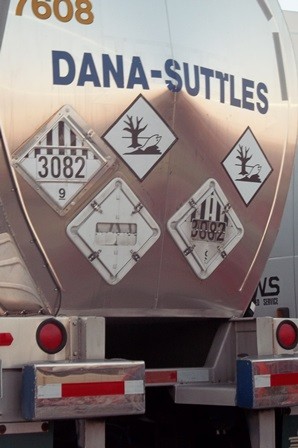
Marine pollutant mark and class 9 placard

Note:

The information in this article applies solely to the classification of a marine pollutant subject to the U.S. regulations of the PHMSA/USDOT.  It is not to be used for international transportation by vessel or by air.


The definition of marine pollutants at 49 CFR 171.8 refers to Appendix B of the Hazardous Materials Table found at 49 CFR 172.101.  To be a marine pollutant and therefore subject to the regulations, two criteria must be met:

  1. The material is listed in Appendix B to the Hazardous Materials Table, and;
  2. If in a solution or mixture, the material is in a concentration of ≥10% for all materials listed or is ≥1% if identified as a severe marine pollutant.

So what is a severe marine pollutant?  It is those materials listed in Appendix B that contain the letters “PP” in column 1.

If the two above criteria are met, then you have a marine pollutant, but what are you to do with it?  49 CFR 171.4 excepts all non-bulk shipments of marine pollutants by motor vehicle, rail car, or aircraft from complying with the hazardous materials regulations.  In other words, if you are shipping a marine pollutant, you need only comply with the applicable regulations if…

  • Shipping by vessel over water, or;
  • In a bulk packaging by motor vehicle, rail car, or aircraft.

If your shipment contains a marine pollutant your only requirement is to insure that its presence is communicated on the shipping paper and the packaging, no other restrictions apply.

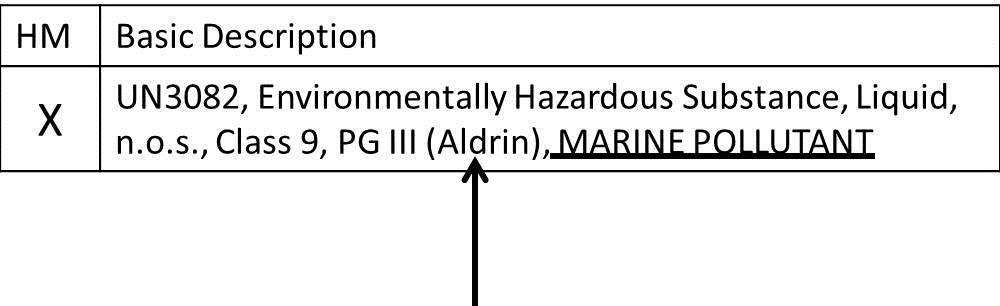
Shipping Paper per 49 CFR 172.203(l):

  1.  If the marine pollutant is not identified by name in the proper shipping name, then its name must appear in (parenthesis) near the basic description.  If there are two or more marine pollutants in the material, then at least two of the most hazardous marine pollutants must be listed.
  2. The words “Marine Pollutant” must appear near the basic description.


Shipments of a marine pollutant by motor vehicle, rail car, or aircraft that are also an oil subject to the requirements of 49 CFR 130.11 are not required to record the above information on the shipping paper if the material is identified as an oil in a phrase near the basic description.

Like this article?

Subscribe to my Monthly Newsletter

No marketing emails!

 Markings per 49 CFR 172.322:

  1. For shipment of a non-bulk packaging by vessel, refer to 49 CFR 172.322(a).
  2. A shipment of a bulk packaging by motor vehicle, rail car, or aircraft must have the MARINE POLLUTANT mark on at least two opposing sides if the packaging has a capacity of <1,000 gallons or on all four sides if >1,000 gallons.  In either case, a marking the size of a placard (9.84″x9.84″) may be used.
  3. The transport vehicle or freight container that contains a bulk packaging marked as indicated above must be marked with the MARINE POLLUTANT mark.  This marking must be the same size as a placard.
  4. 49 CFR 172.322(d) lists some situations where the MARINE POLLUTANT mark is not required.
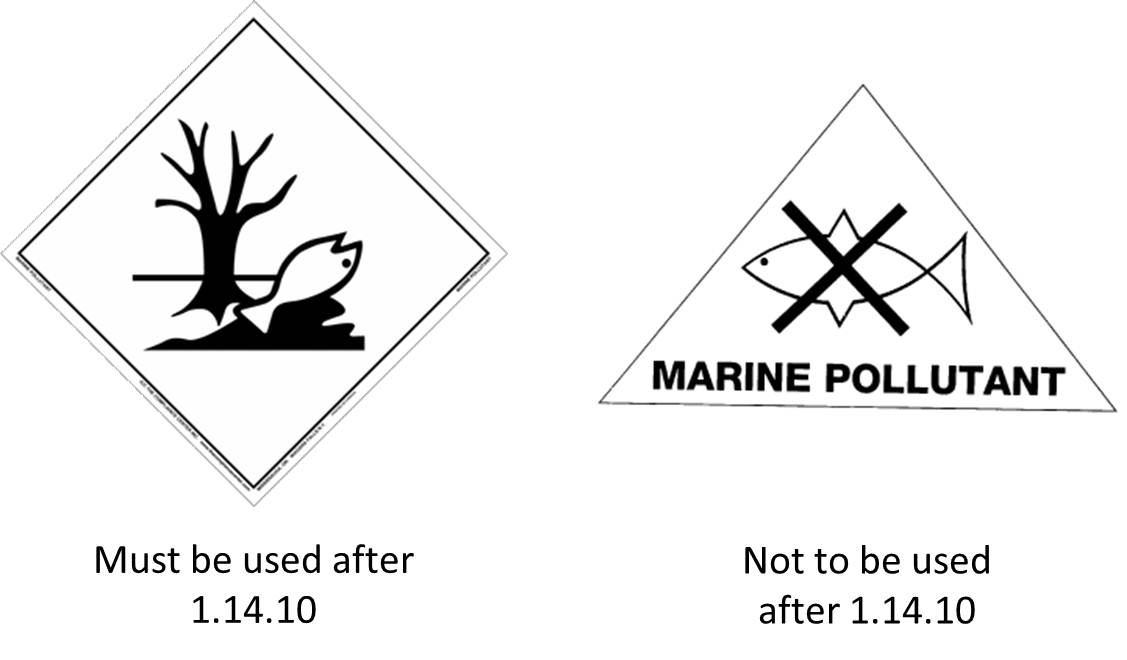
  5. Since 1.14.10 the MARINE POLLUTANT marking changed as indicated below.

Contact me with any questions you may have about the transportation of hazardous materials by air, highway, vessel, or rail

International and Domestic

Daniels Training Services, Inc.

815.821.1550

Info@DanielsTraining.com

https://danielstraining.com/

The proper transportation of hazardous materials requires a full understanding of the Hazardous Materials Regulations and how they may apply to your operations.  Even a one-time shipment of a hazardous material may result in a violation if all the regulations of the HMR – including marine pollutants – are not followed exactly.  My training – either Onsite Training, Web-Based Training or some combination – is one way for you to learn about the Hazardous Material Regulations of the PHMSA/USDOT.


Exemptions From the Requirement to use a Shipping Paper When Transporting a Hazardous Material

Believe it or not, there are times when a shipping paper is not required for the transportation of a hazardous material in commerce.  Since it is the responsibility of the Shipper to describe the hazardous material on the shipping paper, your awareness of this exclusion is important.  The regulations for the applicability of the shipping paper to the transportation of a hazardous material are found at 49 CFR 172.200 and explained below.  (more…)

How to Distinguish a Hazardous Material From non-Hazardous Material on a Shipping Paper

When preparing a shipping paper you are required to distinguish the hazardous materials (such as solvent-based paints, resins, adhesives, acids, etc.) from any materials that are not hazardous (hydraulic oils, water-based paints, pallets, widgets, etc.).  49 CFR 172.201(a)(1) specifies your options to distinguish the hazardous materials from the non-hazardous, they are:

  1. Enter the hazardous material first in order of appearance.
  2. Print the basic description of the hazardous material (identification number, proper shipping name, hazard class, & Packing Group) in a color that clearly contrasts with the shipping description of the non-hazardous material.
  3. If the shipping paper is a reproduction, where a difference in ink color won’t be detected, the entry for a hazardous material may be highlighted with a contrasting color to distinguish if from non-hazardous materials.
  4. If a column captioned ‘HM’ (for Hazardous Material) before the basic description is present, you may place an ‘X’ in this column on the same line as the entry for the hazardous material.  Entries for non-hazardous materials would not receive an ‘X’ in the ‘HM’ column.  You may replace the ‘X’ with ‘RQ’ if the hazardous material is also a Reportable Quantity of a hazardous substance.

Contact me with any questions you may have about the generation, identification, management, and disposal of hazardous waste

Daniels Training Services, Inc.

815.821.1550

Info@DanielsTraining.com

https://danielstraining.com/

Whether you prepare shipping papers, which includes Bills of Lading and Uniform Hazardous Waste Manifests, or merely review and sign them, you must be aware of these requirements to distinguish the hazardous materials from non-hazardous materials.

Search Website