PO Box 1232 Freeport, IL 61032

A Different Kind Of Training

A Different Kind Of Training

A Different Kind Of Training

Transportation of Hazardous Materials Between the US and Canada

Persons responsible for the safe transportation of hazardous materials within the U.S., known as HazMat Employees, must receive the training required by the US DOT at 49 CFR 172, Subpart H.  If you only ship hazardous materials domestically, by highway or rail, then this is the only training necessary.

The transportation of HazMat in Canada – known there as dangerous goods – is subject to the regulations of Transport Canada:  The Canadian Transportation of Dangerous Goods Regulations.  Transport Canada has similar training requirements to those of the US DOT for all persons involved in the handling, offering for transport and/or transporting of dangerous goods.  With a few exceptions for differences between the two country’s regulations (see below); both the US DOT @ 171.12 and Transport Canada generally accept compliance with the other’s regulations for transport by highway or rail between the two countries.

This acceptance extends to the allowance of training completed per the regulations of one country (either the US or Canada) to meet the training requirements of the other for the transportation of HazMat/dangerous goods by highway or rail.  In other words, HazMat Employees trained and tested per the requirements of the US DOT may handle, offer for transport, or transport a HazMat/dangerous good into, from, and/or through Canada by highway or rail.  Conversely, a person trained according to the requirements of Transport Canada’s regulations may handle, offer for transport, or transport a HazMat/dangerous good into, from, and/or through the US by highway or rail.  This guidance document from Transport Canada explains their side of this agreement (RDIMS #5907129, June 2010).

Regardless of the understanding between the two countries (limited only to shipments by highway or rail), as the shipper of a hazardous material/dangerous good, it is your responsibility to ensure your compliance with the regulations of the respective national agency.  Below are a few situations where compliance with one nation’s regulations will not suffice for the requirements of the other:

  • A hazardous material/dangerous good forbidden by one country but not by the other.
  • A hazardous material/dangerous good regulated by one country but not by the other.
  • The hazardous material/dangerous good is transported under an exception to the regulations recognized by one country but not the other.
  • Other differences in the regulations.  Example:  The Class 9 placard is required to be used in Canada if applicable, but is not required to be used in the US under any circumstances.

Also please note that an agreement of accepting compliance with another country’s regulations for transportation within another does not exist between the US and Mexico.

Determination of compliance with the regulations, both domestic and international, is your responsibility as the shipper of a hazardous material/dangerous good.  As a HazMat Employer you must also ensure your HazMat Employees are properly trained.  My training will not only meet the regulatory requirements, but it will give you the tools you need to ensure compliance with the regulations, no matter the destination of your hazardous materials.


 

Exceptions to the Hazardous Materials Regulations for the Transportation of Aqueous Solutions of Alcohol

In an earlier article I discussed the exception to the Hazardous Materials Regulations of the US DOT (HMR) available for the transportation in commerce of certain alcoholic beverages that are designed for consumption and not for industrial use.  There is also an exception to the HMR available for the transportation in commerce of aqueous solutions of alcohol that are not intended for consumption and would instead – I assume – have an industrial or commercial application.

The exception for aqueous solutions of alcohol, found at 49 CFR 173.150(e), allows for two options provided the materials is an aqueous solution containing ≤24% alcohol by volume and no other hazardous material…

  1. May be re-classed as a combustible liquid.  The Combustible Liquid Exception, if you haven’t heard of it before, provides relief from all of the HMR if certain conditions are met.  This article of mine reviews the Combustible Liquid Exception to the HMR.
  2. Is not subject to the requirements of the HMR if it contains ≥50% water.

And what does “not subject to the requirements of the HMR” mean in practice?  Well, it means none of the below is necessary for your shipment:

  • Shipping papers
  • Placards
  • Labels
  • Markings
  • Specification packaging
  • HazMat Employee training
  • Registration with the PHMSA

Like many other exceptions to the HMR, this one is allowed by the US DOT because the Agency feels the transportation of this material will not pose an unreasonable risk to human health or the environment when transported in commerce.  Those materials that it determines to pose an unreasonable risk are subject to the full regulations of the HMR.  HazMat Employee training is a good way for you to learn about the transportation of hazardous materials, exceptions to the HMR, and your responsibilities as a HazMat Employer and a shipper of hazardous materials.  Contact me for a free consultation of your training needs.

Exceptions to the Hazardous Materials Regulations for the Transportation of Alcoholic Beverages – 49 CFR 173.150(d)

Truck Transporting Alcoholic Beverages
Don’t see any placards; do you?

You’ve probably noticed that the various alcohol distribution trucks you see on the road do not display placards for flammable liquids as you might expect; why?  The answer is the exception to the Hazardous Materials Regulations of the USDOT/PHMSA for the transportation in commerce of alcoholic beverages found at 49 CFR 173.150(d).

49 CFR 173.150(d) reads:

Alcoholic beverages. (1) An alcoholic beverage (wine and distilled spirits as defined in 27 CFR 4.10 and 5.11), when transported via motor vehicle, vessel, or rail, is not subject to the requirements of this subchapter if the alcoholic beverage:

(i) Contains 24 percent or less alcohol by volume;

(ii) Is contained in an inner packaging of 5 L (1.3 gallons) or less; or

(iii) Is a Packing Group III alcoholic beverage contained in a packaging 250 liters (66 gallons) or less;

(2) An alcoholic beverage (wine and distilled spirits as defined in 27 CFR 4.10 and 5.11), when transported via aircraft, is not subject to the requirements of this subchapter if the alcoholic beverage:

(i) Contains 24 percent or less alcohol by volume;

(ii) For transportation aboard a passenger-carrying aircraft, contains more than 24% but not more than 70% alcohol by volume when in unopened retail packagings not exceeding 5 liters (1.3 gallons) carried in carry-on or checked baggage, with a total net quantity per person of 5 liters (1.3) gallons (See §175.10(a)(4) of this subchapter); or

(iii) When carried as cargo, contains more than 24% but not more than 70% alcohol by volume in an inner packaging not exceeding 5 L (1.3 gallons).

So, we must first determine if our HazMat meets the definition of an alcoholic beverage for the purposes of this exception.  An alcoholic beverage must be one of the following two:

  • Wine as defined at 27 CFR 4.10.

    A bottle of wine
    Drink – and ship HazMat – responsibly!

Or…

  • Distilled spirits as defined at 27 CFR 5.11.

Definitions for both are included at the end of this article.

Like this article?

Subscribe to my Monthly Newsletter

No marketing emails!

So, if it is an alcoholic beverage, it is not subject to the HMR (shipping papers, placards, labels, markings, specification packaging, etc.) if it…

  • Contains ≤24% alcohol by volume.

Or…

  • Is in an inner packaging of 5L (1.3 gallons) or less.

Or…

  • Is a Packing Group III alcoholic beverage in a packaging of ≤250L (66 gallons).

Two USDOT/PHMSA interpretations confirm that this exception may be used for alcoholic beverages that meet any one of the above three conditions:  §173.150(d)(1)(i), (ii), or (iii). (10-0014, 09-0140)  Though both of the letters of interpretation are answering question about shipping alcoholic beverages by air, they still make reference to the three conditions of §173.150(d)(1).

Note a subtle but important distinction in the packaging type of these conditions.  §173.150(d)(1)(ii) refers to an “inner packaging” whereas §173.150(d)(1)(iii) refers simply to a “packaging”.  The use of the term inner packaging refers to a container that will be placed into outer packaging forming what’s known as combination packaging for its transportation.  An example of this would be a 1 gallon jug of wine (inner packaging) packed into a wooden crate (outer packaging or just “packaging”) for shipment .  §173.150(d)(1)(ii) doesn’t limit the volume of the outer packaging, so it could be much more than 66 gallons.

The condition of §173.150(d)(1)(iii) does not set a limit on the alcohol content or the volume of the inner packaging but it does limit its use to a Packing Group III Flammable Liquid, the least dangerous of the flammable liquids, and limits the volume of the entire packaging to no more than 66 gallons.

The transportation of an alcoholic beverage by air (either passenger or cargo) may be subject to an exception found at 173.150(d)(2).  That article will have to wait until a later day, however.  If you’re interested  just ask me and I’ll look into it.

If your HazMat is not an alcoholic beverage designed for consumption, there may still be an exception available for its transportation if it meets the definition of an aqueous solution of alcohol.  Read this article for an exception available for the transportation of aqueous solutions of alcohol.

Definitions:

Wine. (1) Wine as defined in section 610 and section 617 of the Revenue Act of 1918 (26 U.S.C. 5381-5392), only if for nonindustrial use and containing not less than 7 percent and not more than 24 percent of alcohol by volume; and

(2) Other alcoholic beverages not so defined, but made in the manner of wine, including sparkling and carbonated wine, wine made from condensed grape must, wine made from other agricultural products than the juice of sound, ripe grapes, imitation wine, compounds sold as wine, vermouth, cider, perry, and sake, only if for nonindustrial use and containing not less than 7 percent and not more than 24 percent of alcohol by volume.

Distilled spirits. Ethyl alcohol, hydrated oxide of ethyl, spirits of wine, whisky, rum, brandy, gin, and other distilled spirits, including all dilutions and mixtures thereof, for nonindustrial use. The term “distilled spirits” shall not include mixtures containing wine, bottled at 48 degrees of proof or less, if the mixture contains more than 50 percent wine on a proof gallon basis.

Note that while wine has a defined alcohol content (≥7% and ≤24%) distilled spirits do not.  Both, however, are meant for “nonindustrial use”.

Daniels Training Services

815.821.1550

Info@DanielsTraining.com

https://danielstraining.com/

You may not have anything to do with the shipment of alcoholic beverages, but this article illustrates the fact that hazardous materials, the HMR, and exceptions to the HMR surround us everyday.  Many materials we regard as common:  fuel, wine, batteries, cleaners, and more, are all hazardous materials regulated in some way by the USDOT/PHMSA when transported in commerce.  This includes the hazardous materials, including hazardous waste, received at or shipped from your facility.  Contact me for a free consultation of your training needs.

Using a “Permanent” Shipping Paper for the Transportation of Hazardous Materials

Purpose:

The purpose of this article is to identify and explain the regulations of USDOT/PHMSA for the use of a permanent shipping paper to describe a consignment of hazardous materials in transportation by motor vehicle.

Before we Begin:

The Pipeline and Hazardous Materials Safety Administration within the U.S. Department of Transportation (USDOT/PHMSA) creates and enforces the Hazardous Materials Regulations (HMR) for the transportation of hazardous materials (HazMat) in commerce to, from, or through the U.S. by all modes of transportation: motor vehicle, aircraft, railcar, or vessel.

Scope and Applicability:

The regulations addressed in this article apply solely to the transportation of HazMat by motor vehicle within the U.S.

Introduction:

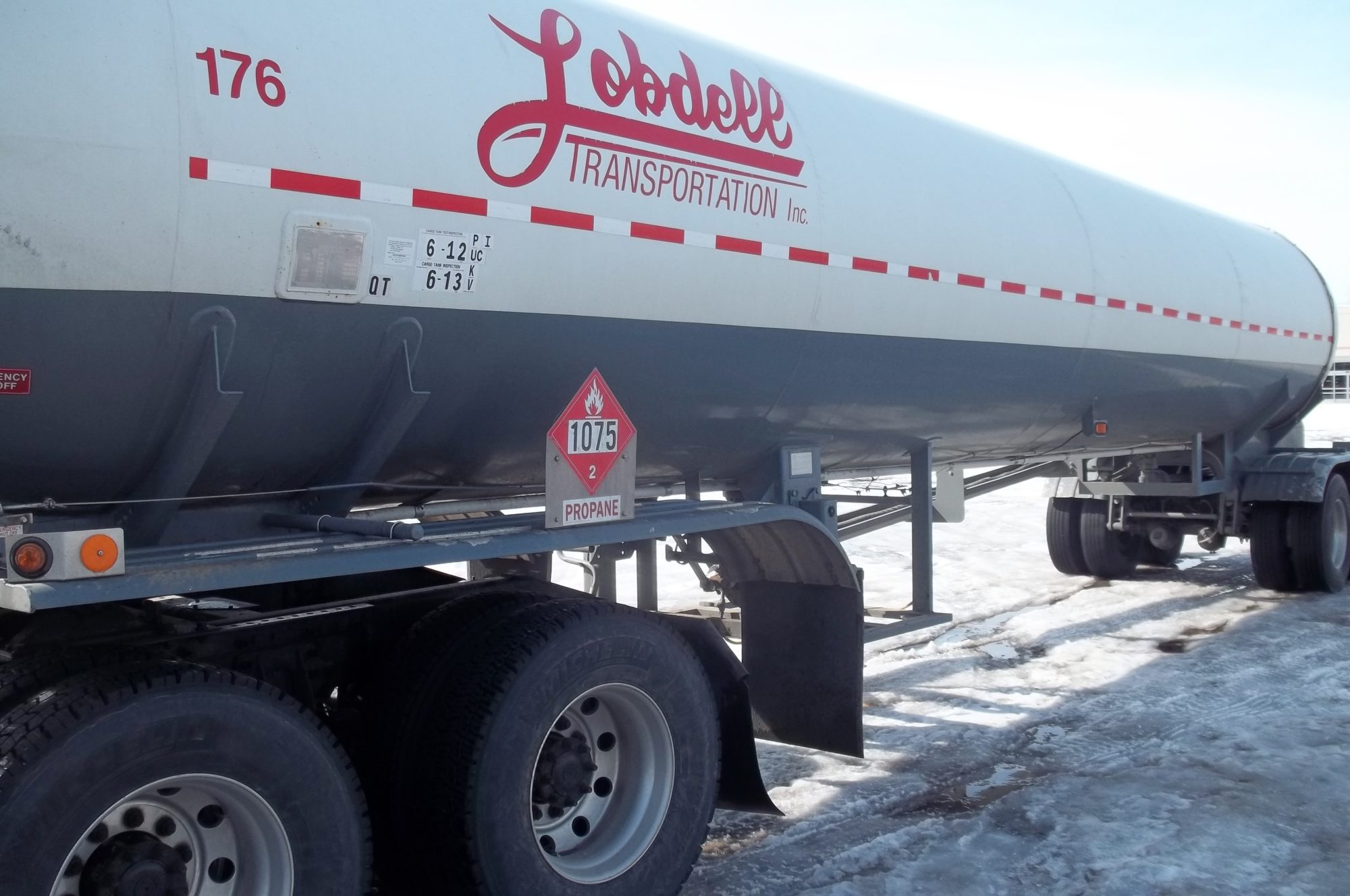
There are some situations where the use of a shipping paper for each shipment of a hazardous material is burdensome and, as it turns out, unnecessary. For example, a company may use its own trucks and drivers to deliver Liquified Petroleum Gas (LPG) to several customer locations in a single day. The driver starts with a large volume of HazMat which declines in volume as deliveries are made at each client site. The hazardous material (LPG) remains the same, the only thing that changes is the reduction in volume.Image of cargo tank with propane

In the above example, may a carrier use a single shipping paper, without change, for multiple shipments of one or more hazardous materials (assuming each separate hazardous material has the same shipping name and identification number) instead of using a separate shipping paper for each delivery?  The answer is yes.  Such a document is known as a Permanent” Shipping Paper and is allowed pursuant to 49 CFR 172.201(e):

A motor carrier (as defined in §390.5 of subchapter B of chapter III of subtitle B) using a shipping paper without change for multiple shipments of one or more hazardous materials having the same shipping name and identification number may retain a single copy of the shipping paper, instead of a copy for each shipment made, if the carrier also retains a record of each shipment made, to include shipping name, identification number, quantity transported, and date of shipment.

Like this article?

Subscribe to my Monthly Newsletter

No marketing emails!

This interpretation letter from the PHMSA explains further its acceptance of the use of a “Permanent” Shipping Paper based on §172.201(e) (03-0003).

If using a “Permanent” Shipping Paper, the carrier must retain a record of each shipment made.  This could be a delivery or billing receipt or some other company-specific document.  Pursuant to 49 CFR 172.201(e) the record for each shipment must include the following:

  1. Shipping name.
  2. Identification number.
  3. Quantity transported.
  4. Date of shipment.

As LOI 03-0003 goes on to explain, the delivery of a partial amount of the hazardous material does not require a change to the “Permanent” Shipping Paper but the pick up of additional quantities of hazardous materials that are not described on the shipping paper does require a modification to the “Permanent” Shipping Paper if the total quantity on the vehicle ever exceeds the amount described on the shipping paper.

Learn More:

Contact me with any questions you may have about the transportation of hazardous materials by air, highway, vessel, or rail

International and Domestic

Daniels Training Services, Inc.

815.821.1550

Info@DanielsTraining.com

https://danielstraining.com/

Conclusion:

The use of a “Permanent” Shipping Paper could be a great benefit to a carrier who makes a large number of deliveries of the same hazardous material(s).  One of the things I enjoy most about training is bringing something like this to the attention of someone in the industry who needs to know.  Contact me about my training services and see what you can learn that will benefit you.

Before you Go:


The Hazardous Materials Description on a Shipping Paper

In an earlier article I explained that a shipping paper may be used for shipments of both hazardous and non-hazardous materials.  I also identified the different forms a shipping paper may take, such as:  uniform hazardous waste manifest, bill of lading, and others.  Though it may appear in many forms, if used for the transportation of a hazardous material (HazMat) all shipping papers must contain a hazardous materials description.  The Hazardous Materials Regulations (HMR) of the Pipeline and Hazardous Materials Safety Administration within the U.S. Department of Transportation (USDOT/PHMSA) mandate the information that must be included in the hazardous materials description.  These regulations can be found in the HMR at 49 CFR 172.202.  A hazardous materials description must include the following:

  1. The identification number shown in column 4 of the Hazardous Materials Table.
  2. The proper shipping name shown in column 2 of the Hazardous Materials Table.
  3. The hazard class or division number.
  4. The Packing Group.
  5. Unless transported by air, the total quantity of HazMat by mass or volume.  There are other requirements for transportation by air explained further at §172.202(a)(6).
  6. The number and type of packages.

Like this article?

Subscribe to my Monthly Newsletter

No marketing emails!

§172.203 identifies additional description requirements that must be included as part of the hazardous materials description, if applicable:

  1. Special Permits.
  2. Limited Quantities.
  3. Hazardous Substances.
  4. Radioactive Material.
  5. Empty Packagings.
  6. Transportation by Air.
  7. Transportation by Rail.
  8. Transportation by Highway (applicable to anhydrous ammonia and liquefied petroleum gas only).
  9. Transportation by Water.
  10. Technical Names for “n.o.s.” and Other Generic Descriptions.
  11. Marine Pollutants.
  12. Poisonous Materials.
  13. Elevated Temperature Materials.
  14. Organic Peroxides and Self-Reactive Materials.
  15. Liquefied Petroleum Gas (LPG).

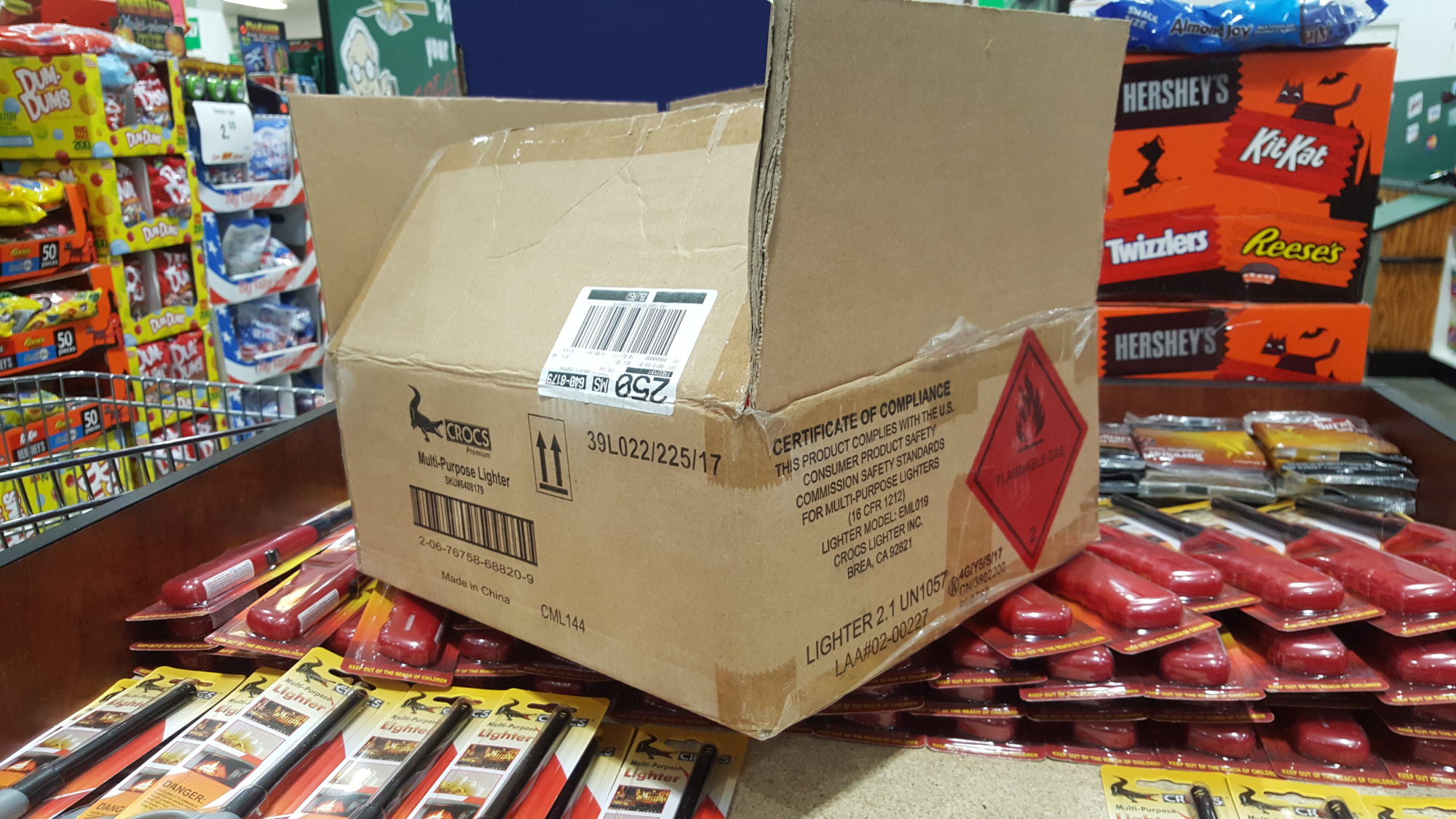
Package for UN1057 LighterYou may include additional information about the hazardous material on the shipping paper provided it is consistent with the required description.  You must take care not to include so much additional information that the purpose of the shipping paper:  the communication of the potential hazards of the material, are lost.

§172, Subpart C also identifies other information that must be included on a shipping paper:

  1. Emergency response telephone number [§172.201(d)].
  2. The shipper’s certification (§172.204).

Contact me with any questions you may have about the transportation of hazardous materials by air, highway, vessel, or rail

International and Domestic

Daniels Training Services, Inc.

815.821.1550

Info@DanielsTraining.com

https://danielstraining.com/

The purpose of the hazardous materials description on a shipping paper is to inform anyone who comes in contact with the shipment of the potential hazards associated with it.  The hazardous materials description does no good, however, if your HazMat Employees are not trained in the ways to interpret that information.  My training gives your employees (and you) the tools and the knowledge to perform their jobs safely and in compliance with the regulations.

What is a Shipping Paper?

Shipping Paper is defined at 49 CFR 171.8 as:

Shipping paper means a shipping order, bill of lading, manifest or other shipping document serving a similar purpose and prepared in accordance with subpart C of part 172 of this chapter.

So what is it, exactly…?  A bill of lading?  A Uniform Hazardous Waste Manifest?  A shipping order?  A shipping document?  Half a page of scribbled lines?

Yes to all.

As far as the USDOT/PHMSA (the Pipeline and Hazardous Materials Safety Administration, the administration within US DOT responsible for hazardous material transportation) is concerned a shipping paper is a document whose purpose is to provide information about a material (hazardous or non-hazardous) when in transportation.  The USDOT/PHMSA doesn’t care (their own words) what the shipping paper looks like, what format is used, or whether it is printed by machine or by hand.

Now, if you are transporting (a carrier) or offering for transport (a shipper) a hazardous material (HazMat) in commerce, then the USDOT/PHMSA requires the shipping paper to meet its requirements at 49 CFR, Subpart C.  Even in this case, the USDOT/PHMSA does not require a specific type or form of shipping paper.  You may create your own, even write one up by hand, as long as it meets the requirements of §172, Subpart C.

There are some hazardous material shipments that require a specific type of shipping paper; such as the transportation of a hazardous waste for which the US Environmental Protection Agency (USEPA) requires a Uniform Hazardous Waste Manifest.  Or a bill of lading which is required pursuant to the regulations (49 CFR 375.505) of the Federal Motor Carrier Safety Administration (FMCSA, another administration within the US DOT).  In both cases however, the use of a specific form is required by an agency other than the USDOT/PHMSA.

Contact me with any questions you may have about the transportation of hazardous materials by air, highway, vessel, or rail

International and Domestic

Daniels Training Services

815.821.1550

Info@DanielsTraining.com

https://danielstraining.com/

Whatever its appearance, the regulations of §172, Subpart C are specific about what information must be included on a hazardous material shipping paper.  My HazMat Employee training covers these requirements and where you must go to get the information.  Contact me to discuss your HazMat transportation requirements.

Shipment of Empty Division 2.2 Compressed Gas Cylinders

When transported in commerce, a Division 2.2 Non-Flammable Gas must comply with all of the requirements of the Hazardous Material Regulations (HMR) of the US Department of Transportation.  When empty, a packaging of Division 2.2 Non-Flammable Gas is allowed to use an exception found at 49 CFR 173.29 that allows for the transportation of the empty packaging as a non-hazardous material, not subject to the HMR.  This is important, because 49 CFR 173.29(a) states the US DOT’s position that, besides exceptions to the regulation, like this one, an empty packaging containing residue is regulated the same as if the packaging was full; it reads,

Except as otherwise provided in this section, an empty packaging containing only the residue of a hazardous material shall be offered for transportation and transported in the same manner as when it previously contained a greater quantity of that hazardous material.

To use this exception to the HMR, the packaging must meet the following conditions:

  1. Packaging contains only the residue of a Division 2.2 Non-Flammable Gas.
  2. The gas is not ammonia, anhydrous.
  3. There are no subsidiary hazards associated with the gas.
  4. The gas is at a gauge pressure of <200 kPA (29.0 psig); at 20°C (68°F).
  5. No material in the packaging is a Hazardous Substance, Hazardous Waste, or a Marine Pollutant as defined at 49 CFR 171.8.

This means that as long as it meets the above 5 conditions, an empty Division 2.2 Non-Flammable Gas may be shipped off-site (eg. returned to the supplier for reuse) without the need for shipping papers, placards, labels, markings, trained personnel, etc.

As the shipper of an empty packaging of a Division 2.2 Non-Flammable Gas you are responsible to ensure that all markings, labels, and placards that identify the empty packaging as a hazardous material are removed, obliterated, or securely covered.  This is not necessary if…

  1. The packaging is not visible in transportation, and;
  2. The packaging is loaded by the shipper and unloaded by the shipper or consignee.  Per 49 CFR 171.8, “Consignee means the person or place shown on a shipping document, package marking, or other media as the location to which a carrier is directed to transport a hazardous material.”

The transportation of hazardous materials can be tricky.  Sometimes there is an exception like this one for certain hazardous materials, and sometimes there isn’t.  It’s up to you to know which regulations apply to your operations and how to comply with them.  Attendance at my HazMat Employee Training is a good way to learn what you need to know in order to safely ship hazardous materials.

Why Doesn’t a Bulk Packaging Include a Barge or Vessel?

A Bulk Packaging, defined at 49 CFR 171.8:  “Means a packaging, other than a vessel or a barge, including a transport vehicle or freight container, in which hazardous materials are loaded with no intermediate form of containment. A Large Packaging in which hazardous materials are loaded with an intermediate form of containment, such as one or more articles or inner packagings, is also a bulk packaging. Additionally, a bulk packaging has:

  1. A maximum capacity greater than 450 L (119 gallons) as a receptacle for a liquid;
  2. A maximum net mass greater than 400 kg (882 pounds) and a maximum capacity greater than 450 L (119 gallons) as a receptacle for a solid; or
  3. A water capacity greater than 454 kg (1000 pounds) as a receptacle for a gas as defined in §173.115 of this subchapter.”

Simple enough, but why is it that a vessel or barge is specifically excluded from the definition of a Bulk Packaging?

Before we get to the answer, let’s make sure we understand the terms, both of which are defined at 49 CFR 171.8:

  • “Vessel includes every description of watercraft, used or capable of being used as a means of transportation on the water.”
  • “Barge means a non-self propelled vessel.”

The answer, is that any material, including a hazardous material, loaded directly into the hold of a vessel or barge is subject to the regulations of the US Coast Guard and not the Pipeline and Hazardous Materials Administration (PHMSA) of the US DOT and therefore not subject to the Hazardous Material Regulations.

The transportation of hazardous materials involves many different methods (air, water, highway, rail) each of which is subject to the regulations of the PHMSA.  But other Federal agencies have their own authority and their own regulations that may impact the shipment as well.  Learn what you need to know about the transportation of hazardous materials at my training, either On-Site or Public Workshop/Open Enrollment.  Contact me for a free consultation on your training needs.

Elevated Temperature Liquid, n.o.s.

What is an Elevated Temperature Material?

Defined at 49 CFR 171.8, “Elevated Temperature Material means a material which, when offered for transportation or transported in a bulk packaging:

  1. Is in a liquid phase and at a temperature at or above 100 °C (212 °F);
  2. Is in a liquid phase with a flash point at or above 38 °C (100 °F) that is intentionally heated and offered for transportation or transported at or above its flash point;or,
  3. Is in a solid phase and at a temperature at or above 240 °C (464 °F).”

Note that in addition to meeting one of the three conditions listed it also must be “offered for transportation or transported in a bulk packaging…” in order to be defined as an Elevated Temperature Material.  That means, the same material transported in a non-bulk packaging can not be an Elevated Temperature Material.

Understanding what is, and isn’t, an Elevated Temperature Material is important since it is specifically included in the definition of a Hazardous Material, also at 49 CFR 171.8, “Hazardous material means a substance or material that the Secretary of Transportation has determined is capable of posing an unreasonable risk to health, safety, and property when transported in commerce, and has designated as hazardous under section 5103 of Federal hazardous materials transportation law (49 U.S.C. 5103). The term includes hazardous substances, hazardous wastes, marine pollutants, Elevated Temperature Materials, materials designated as hazardous in the Hazardous Materials Table (see 49 CFR 172.101), and materials that meet the defining criteria for hazard classes and divisions in part 173 of subchapter C of this chapter.”

An Elevated Temperature Material may be a hazardous material solely because it matches the definition in §171.8 or it may possess additional hazards (flammable, corrosive, reactive, etc.).  Either way, you must choose a proper shipping name from the Hazardous Materials Table and follow the requirements of the Hazardous Material Regulations.

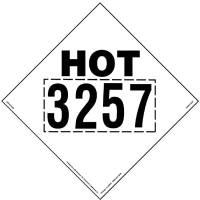
On the shipping paper, the word “HOT” must immediately proceed the proper shipping name unless “elevated temperature” or “molten” is already included in the proper shipping name [49 CFR 172.203(n)].  However, you may include the word “HOT” on the shipping paper, even if not required, as additional information.

While there is no “HOT” label or placard, you must ensure that the bulk packaging containing your Elevated Temperature Material is labeled and placarded pursuant to 49 CFR 172, Subpart F applicable to its hazard class (Flammable, Class 9, or other).  The labeling and placarding requirements for bulk packagings can be complicated, but in general:

  • A bulk packaging of ≥1,000 gallons capacity must be placarded and marked with the identification number on all four sides.
  • A bulk packaging of <1,000 gallons capacity may be placarded or labeled on two opposing sides and may be marked with the identification number on two opposing sides.

Like this article?

Subscribe to my Monthly Newsletter

No marketing emails!

There are, however, marking requirements specific to Elevated Temperature Materials found at 49 CFR 172.325, they include:

  • A bulk packaging containing an Elevated Temperature Material must display the “HOT” marking on two opposing sides.  This marking, while not a placard, must meet the specific requirements of §172.325(a) and have the “same outside dimensions as a placard”.
  • A bulk packaging of an Elevated Temperature Material that is molten aluminum or molten sulfur must be marked “MOLTEN ALUMINIUM” or “MOLTEN SULFUR” in the same manner as described in §172.325(a).
  • If the identification number marking is displayed on a white-square-on-point display configuration [§172.336(b)], the word “HOT” may be displayed in the upper corner of the display.  If you use this option, you must comply with the requirements of §172.325(c).

You should also check 49 CFR 173.427 which contains additional requirements for bulk packagings of certain Elevated Temperature Materials.

If you offer for shipment an Elevated Temperature Material, then you are a shipper of hazardous materials.  Any of your employees involved in the transportation of hazardous materials must receive triennial HazMat Employee Training.  Contact me to determine your training requirements and how best to meet them.

Daniels Training Services

815.821.1550

Info@DanielsTraining.com

https://danielstraining.com/

Flash Point for Classification of US DOT Flammable and Combustible Liquids

Flash Point is a term used by the US EPA when characterizing an Ignitable Hazardous Waste and the US DOT when classifying a Flammable or Combustible Liquid.  Though similar, there are differences in how these two Federal agencies define and describe this term.  If you work with solvent, inks, paints, resins, fuels, or many other organic hydrocarbons it is necessary for you to be familiar with how both the US DOT and the US EPA identify this term and its role in identifying a hazardous material or a hazardous waste.  The purpose of this article is to describe the use of the Flash Point for classifying a Flammable or Combustible Liquid per the regulations of the US DOT.  You may also be interested in the US EPA’s use of Flash Point for the Determination of a Characteristic Ignitable Liquid Hazardous Waste.

The US DOT defines Flash Point at 49 CFR 173.120(c)(1):  “Flash Point means the minimum temperature at which a liquid gives off vapor within a test vessel in sufficient concentration to form an ignitable mixture with air near the surface of the liquid.”  It goes on to describe the methods to determine Flash Point based on the characteristics of the sample:

1.  For a homogeneous, single-phase, liquid having a viscosity <45 S.U.S. at 38°C (100°F) that does not form a surface film while under test, one of the following test procedures shall be used:

    • Standard Method of Test for Flash Point by Tag Closed Cup Tester, (ASTM D 56) (IBR; see §171.7 of this subchapter).
    • Standard Test Methods for Flash Point of Liquids by Small Scale Closed-Cup Apparatus, (ASTM D 3278) (IBR; see §171.7 of this subchapter).
    • Standard Test Methods for Flash Point by Small Scale Closed Tester, (ASTM D 3828) (IBR; see §171.7 of this subchapter).

2.  For a liquid other than one meeting all the criteria of #1 above, one of the following test procedures must be used:

    • Standard Test Methods for Flash Point by Pensky-Martens Closed Cup Tester, (ASTM D 93) (IBR; see §171.7 of this subchapter).  For cutback asphalt, use Method B of ASTM D 93 or alternative tests authorized in this standard.
    • Standard Test Methods for Flash Point of Liquids by Small Scale Closed-Cup Appartus (ASTM D 3279) (IBR; see §171.7 of this subchapter).
    • Determination of Flash/No Flash – Closed Cup Equilibrium Method (ISO 1516) (IBR; see §171.7 of this subchapter).
    • Determination of Flash Point – Closed Cup Equilibrium Method (ISO 1523) (IBR; see §171.7 of this subchapter).
    • Determination of Flash Point – Pensky-Martens Closed Cup Method (ISO 2719) (IBR; see §171.7 of this subchapter).
    • Determination of Flash Point – Rapid Equilibrium Closed Cup Method (ISO 3679) (IBR; see §171.7 of this subchapter).
    • Determination of Flash/No Flash – Rapid Equilibrium Closed Cup Method (ISO 3680) (IBR; see §171.7 of this subchapter).
    • Determination of Flash Point – Abel Closed-Cup Method (ISO 13736) (IBR; see §171.7 of this subchapter).

3.  If the liquid is a mixture of compounds with different volatility and Flash Points (eg. mixed solvents and paint), its Flash Point must be determined by one of the methods in #’s 1 & 2 above on the material in the form in which it is to be shipped.  Note that the form it is to be shipped in may differ from the form in which is was received as product or its form at its point of generation as a hazardous waste.  If by this test the Flash Point is greater than -7°C (20°F), then a second test shall be made by the procedure described in §173.120(c)(2) which is too complicated for me to describe here.

4.  And one final thing:  for Flash Point determinations by Setaflash closed tester, the glass syringe specified need not be used as the method of measurement of the test sample if a minimum quantity of 2 mL (0.1 oz) is assured in the test cup.

These are just the regulations of the US DOT pertaining to the determination of one class of hazardous material:  Flammable and Combustible Liquids.  There are many more, and you must be familiar with all of them if you ship or receive hazardous materials in any quantity, including hazardous waste.  My one day of training addresses the regulations of both the US DOT and the US EPA, it will help you to properly classify your hazardous materials and identify your hazardous waste.  Contact me to schedule the right kind of training for you.

Search Website