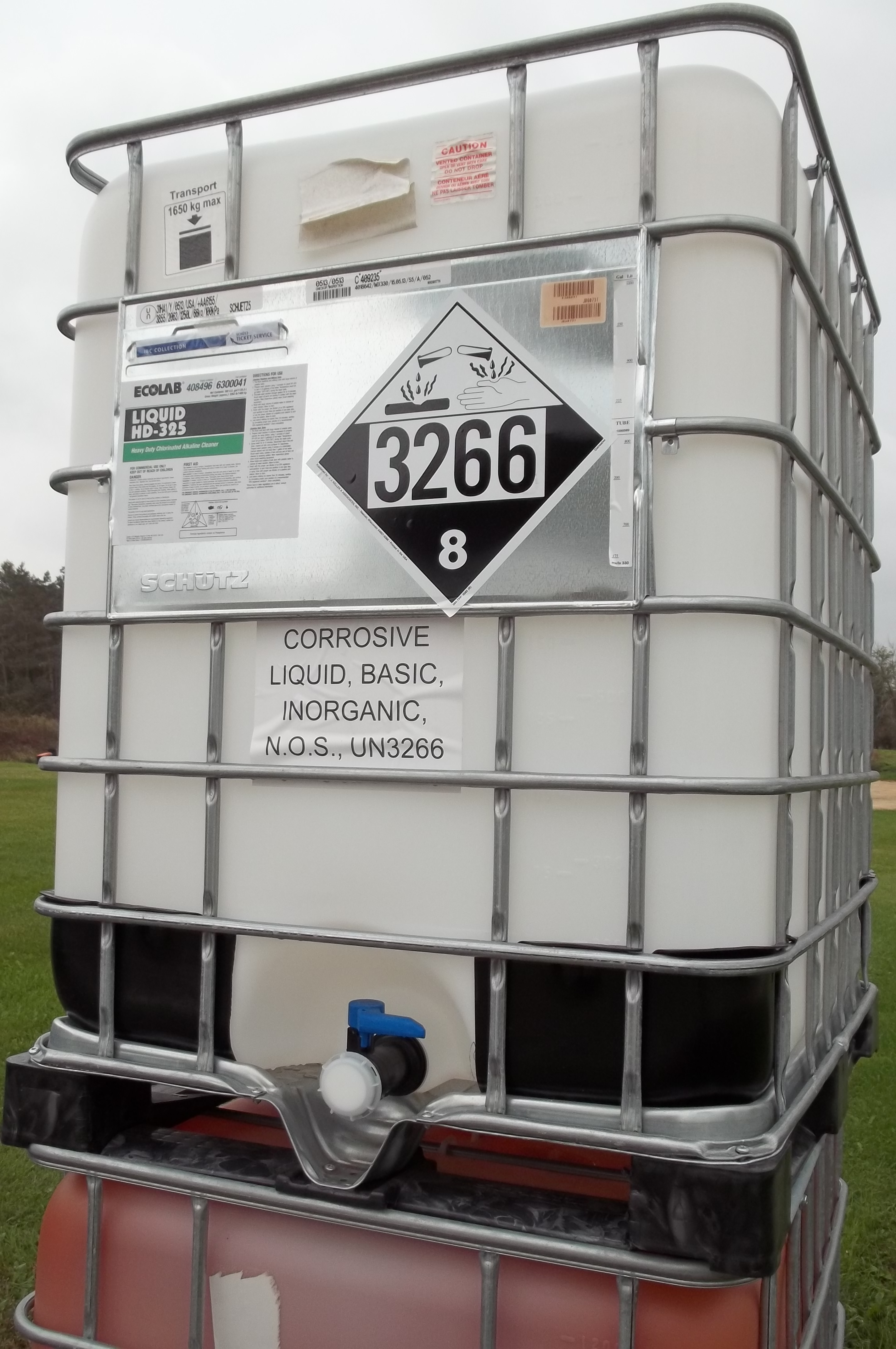
While there are many different types of HazMat packaging, all of them fall into one of two categories: bulk or non-bulk. The purpose of this article is to define and explain both bulk and non-bulk packagings pursuant to the Hazardous Materials Regulations (HMR) of the Pipeline and Hazardous Materials Safety Administration within the U.S. Department of Transportation (USDOT/PHMSA).
An Intermediate Bulk Container (IBC) is an example of a bulk packaging.
State Department Approves Canadian Company’s Plan to Transport More Oil to the U.S.
The Bullet:
In order to avoid a possibly lengthy review process similar to that of the Keystone XL pipeline, Enbridge, Inc. has proposed – and had it accepted by the U.S. State Department – an alternative.
Contact me with any questions you may have about the transportation of hazardous materials by air, highway, vessel, or rail
Enbridge, Inc. is a Canadian energy infrastructure company.
What:
The State Department, gave the green light to Enbridge on its new plan, Bloomberg News reports.
Where:
The effects of such a decision are likely to be felt throughout North America.
When:
Uncertain of the timeline, but based on the tenor of the article I believe this decision is currently in affect.
Why:
The approved plan avoids a review process similar to that faced by the Keystone XL pipeline.
How:
Quite simply: switch the crude oil from one pipeline to another before it crosses the border.
Conclusion:
Kate Jacobson, of MN350, a climate group that joined the National Wildlife Federation, Sierra Club and more in voicing concern over the pipeline:
The State Department has violated the public’s right to transparency and participation in approval of projects that impact the health and safety of our communities, land, water and climate.
And…
Allowing significantly more tar sand oil to flow before a full environmental impact analysis is complete is unacceptable and irresponsible.
But…
Advocates of shipping Canada’s crude oil to the U.S. argue the Keystone XL pipeline and others will help make the U.S. energy independent and secure.
The management of crude oil within the U.S. requires training on the HazMat Transportation Regulations of the PHMSA. Contact me for a free training consultation.
An Overview of New Regulations in the 56th Edition (2015) of the IATA Dangerous Goods Regulations
http://youtu.be/C_I12kEIEKg
The transportation of hazardous materials (aka: Dangerous Goods) by air will likely have to comply with the Dangerous Goods Regulations of the International Air Transport Association. I say “likely” because compliance with the DGR of IATA is a requirement of most air carriers – though not all.
If you must comply with the IATA DGR, subsection 1.5 requires you to provide training for applicable personnel initially and every two years thereafter.
Please contact me for a free consultation on the HazMat/Dangerous Goods regulations of the PHMSA/USDOT, IATA, or the International Maritime Organization.
Contact me with any questions you may have about the transportation of hazardous materials by air, highway, vessel, or rail
FedEx HazMat Employee and Dangerous Goods Training
Does FedEx require a Shipper of hazardous materials (HazMat) or dangerous goods who uses their services to attend FedEx Training?
Answer: No
From the FedEx website:
The federal government requires every dangerous goods shipper to have job-specific dangerous goods training before tendering a dangerous goods shipment to FedEx or any air carrier. Shippers are directly responsible for the correct transport of dangerous goods by air.
Also from the FedEx website…
The government regulations state:
Each person involved in the shipping and/or handling of dangerous goods must be trained.
Recurrent training must occur every two years. Exception: In the U.S., the Department of Transportation (DOT), as competent authority, allows training for shippers every three years.
An enforcement agency may review your training records at any time.
Note that while FedEx references the Federal training requirement of the USDOT – more specifically, it is the Pipeline & Hazardous Materials Safety Administration (PHMSA) that requires the training – they do not state that the training must be provided or authorized by FedEx. As long as the HazMat Employee training meets the requirements of the PHMSA, you will be good-to-go to ship your HazMat or dangerous goods with FedEx.
The same is true of the Dangerous Goods Regulations of IATA/ICAO and the IMO. In either case, FedEx may encourage you to take the training they offer or authorize, but it is not required.
The catch, however, is that FedEx, just like any other Carrier, may reject a material or article that it is offered for transportation without cause. So, if they were to require you to attend their training – which they don’t – you would have no choice but to comply or find another Carrier.
Contact me with any questions you may have about the transportation of hazardous materials by air, highway, vessel, or rail
What should you do? Make sure you get the best HazMat Employee or Dangerous Goods Training available at the best price and the least inconvenience. Contact me for a free training consultation.
August 2014 – Rules & Regulations, Proposed Rules, and Notices Regarding the Management of Hazardous Waste and the Transportation of Hazardous Materials
On its website the US Government Printing Office makes a wealth of Federal publications available for review and download; one of these is the Federal Register.
Published by the Office of the Federal Register, National Archives and Records Administration (NARA), the Federal Register is the official daily publication for rules, proposed rules, and notices of Federal agencies and organizations, as well as executive orders and other presidential documents.
See below for a brief summary of announcements in the Federal Register by the US EPA on the subject of Hazardous Waste and the Pipeline & Hazardous Materials Safety Administration (PHMSA), Federal Railroad Administration (FRA), and the Federal Aviation Administration (FAA) of the US DOT on the subject of Transportation of Hazardous Materials.
The Federal Register is a great way to look down the road and see potential changes to the regulations long before they are put into effect (sometimes The Rulemaking Process takes years before a final rule is issued, if ever). Knowledge of these potential changes provides you with several advantages:
Additional time to modify your business operations to comply.
Awareness of on what topics the regulatory agencies intend to focus their efforts.
The ability to register your concerns, complaints, suggestions, etc. in order to modify the proposed rule before a final rule is issued. It can be done, really!
Make changes to your training program to account for changes that become effective before the next training cycle.
Alert you to the need to re-train your employees prior to their next scheduled training cycle, if necessary.
Keep you abreast of changes to the regulations that affect your business and/or your industry group.
Please note that this is my best effort to identify the relevant announcements in the Federal Register that may be of interest to generators of hazardous waste and shippers of hazardous materials. I encourage you to review the list of Federal Register publications yourself to ensure regulatory compliance.
August 1, 2014 through August 31, 2014
USEPA – US Environmental Protection Agency:
`The USEPA regulates the cradle-to-grave management of hazardous waste.
Publications not related to the management of hazardous waste, solid waste, universal waste, or used oil are not included here.
Rules and Regulations:
Oklahoma: Final Authorization of State Hazardous Waste Management Program Revision Pages 51497 – 51500 [FR DOC # 2014-20647] PDF | Text | More
Proposed Rules:
Hazardous Waste Management System; Identification and Listing of Hazardous Waste; Proposed Exclusion. Pages 49252 – 49260 [FR DOC # 2014-19771] PDF | Text | More
Oklahoma: Final Authorization of State Hazardous Waste Management Program Revisions Pages 51520 – 51520 [FR DOC # 2014-20648] PDF | Text | More
Notices:
None
FAA – Federal Aviation Administration:
Publications not related to the transportation of hazardous materials are not included here.
Rules and Regulations:
None
Proposed Rules:
None
Notices:
None
FMCSA – Federal Motor Carrier Safety Administration:
The FMCSA sets the minimum standards for Commercial Driver’s Licenses
Publications not related to the transportation of hazardous materials are not included here.
Rules and Regulations:
None
Proposed Rules:
None
Notices:
None
FRA – Federal Railroad Administration:
Publications not related to the transportation of hazardous materials are not included here.
Rules and Regulations:
None
Proposed Rules:
None
Notices:
None
The PHMSA regulates the transportation of hazardous materials by all modes.
PHMSA – Pipeline and Hazardous Materials Safety Administration:
Publications not related to the transportation of hazardous materials are not included here.
Rules and Regulations:
Hazardous Materials: Transportation of Lithium Batteries. Pages 46011 – 46040 [FR DOC # 2014-18146] PDF | Text | More
Hazardous Materials: Failure To Pay Civil Penalties Pages 46194 – 46200[FR DOC # 2014-18617] PDF | Text | More
Proposed Rules:
Hazardous Materials: Enhanced Tank Car Standards and Operational Controls for High-Hazard Flammable Trains. Pages 45015 – 45079 [FR DOC # 2014-17764] PDF | Text | More
Hazardous Materials: Oil Spill Response Plans for High-Hazard Flammable Trains. Pages 45079 – 45083 [FR DOC # 2014-17762] PDF | Text | More
Hazardous Materials: Reverse Logistics (RRR) Pages 46748 – 46758 [FR DOC # 2014-18741] PDF | Text | More
Hazardous Materials: Special Permit and Approvals Standard Operating Procedures and Evaluation Process Pages 47047 – 47063 [FR DOC # 2014-18925] PDF | Text | More
Hazardous Materials: Harmonization With International Standards (RRR) Pages 50741 – 50834 [FR DOC # 2014-19161] PDF | Text | More
Notices:
Office of Hazardous Materials Safety; Notice of Application for Special Permits Pages 50983 – 50983 [FR DOC # 2014-20070] PDF | Text | More
Office of Hazardous Materials Safety; Special Permit Applications Pages 50984 – 50985 [FR DOC # 2014-20073] PDF | Text | More
Office of Hazardous Materials Safety; Notice of Delayed Special Permit Applications Pages 50985 – 50985 [FR DOC # 2014-20072] PDF | Text | More
Office of Hazardous Materials Safety; Notice of Applications for Modification of Special Permit Pages 50986 – 50986 [FR DOC # 2014-20071] PDF | Text | More
Information can be helpful but it’s useless if you are not able to make sense of it. You must be able to determine how any changes to the rules and regulations (final or proposed) will affect your operations, and communicate the necessary information to your personnel. I can help you to do that.
Good training can prevent fines and ensure compliance with all Federal and State regulations.
Please contact for a free training consultation to determine your regulatory requirements and how training can help you to attain and maintain compliance with the regulations of the US Environmental Protection Agency (and your state) and the PHMSA, FRA, FAA, & FMCSA of the US Department of Transportation.
What’s on That Truck? The Identification of Hazardous Materials in Transportation
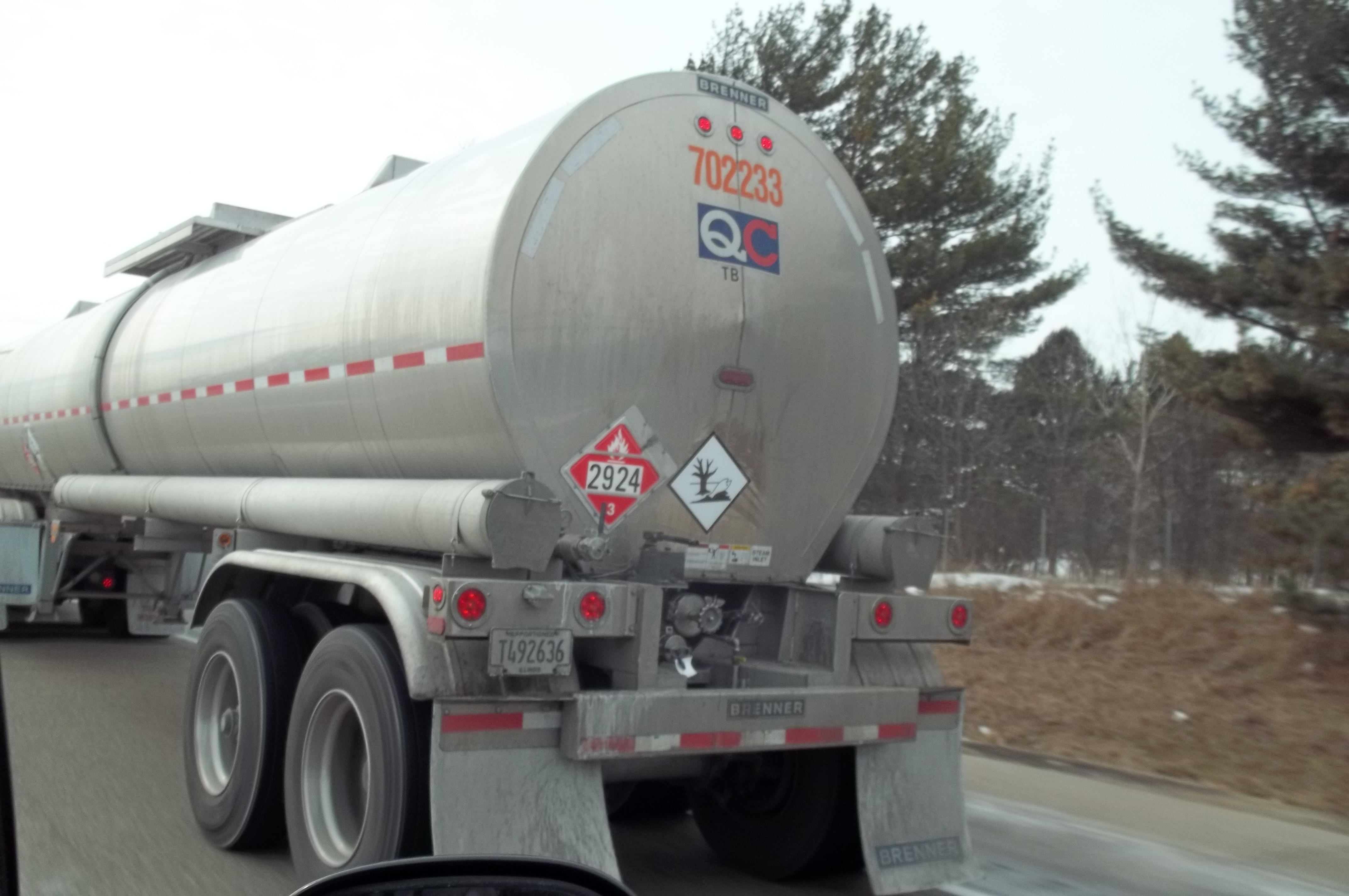
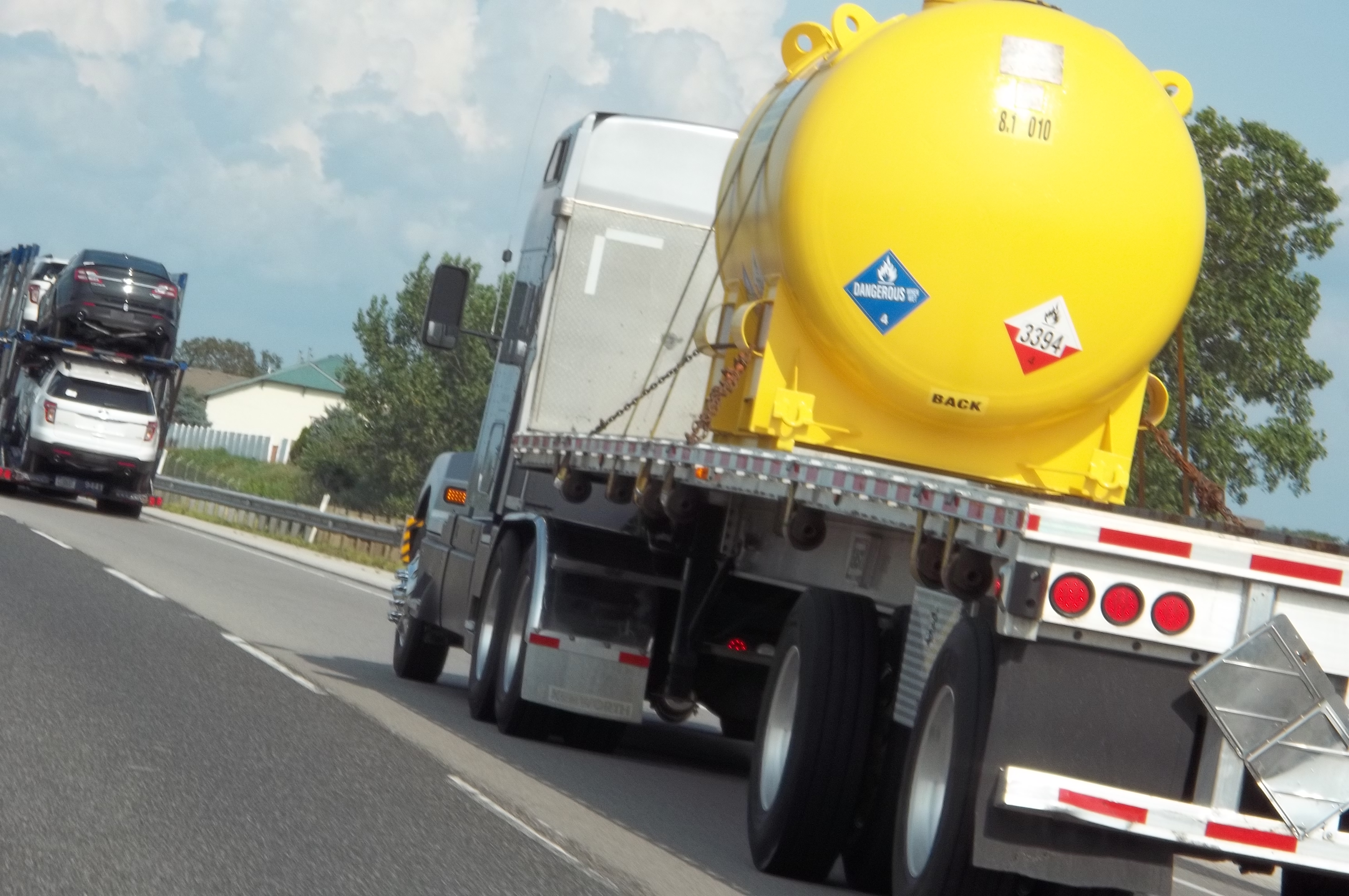
When traveling you may wonder about the potential hazards of the HazMat you see transported on our nation’s highways. Fortunately the Hazardous Material Regulations (HMR) of the Pipeline and Hazardous Materials Safety Administration (aka: PHMSA, one of many transportation-related administrations within the US Department of Transportation) require both Shippers and Carriers of HazMat to ensure it is transported in commerce safely and in a manner that communicates the potential hazards of the material. The purpose of this article is to take one example of HazMat in transportation and decipher the meaning of the hazard communication methods in use. The content of this article is based on the visible elements of the images in this article and my knowledge of the HMR.
Former Texas Logistics Company Manager Sentenced for Falsifying Shipping Documents
The Bullet:
The deliberate falsification of HazMat shipping papers by a company official led to conviction and sentencing in a criminal court.
The USEPA may enforce Federal regulations even in states such as Texas that have authorized hazardous waste programs of their own.
Who:
The Defendant is Mr. Ryan Thomas, former Logistics Manager for CES Environmental Services in Houston, Texas.
The case was investigated by EPA’s Criminal Investigation Division and the U.S. Department of Transportation, the Texas Commission on Environmental Quality, the Houston Police Department, the U.S. Department of Labor and the U.S. Coast Guard. It was prosecuted by the Department of Transportation with assistance of Department of Justice’s Environmental Crimes Section.
What:
Mr. Thomas was sentenced to 12 months’ probation, ordered to pay a $500 fine, and to serve 100 hours of community service.
Where:
The CES Environmental Services facilities in question are located in Houston and Port Arthur, TX.
Mr. Thomas was sentenced in U.S. District Court in Beaumont, Texas.
When:
Mr. Thomas was sentenced on July 14, 2014.
Why:
Mr. Thomas produced manifests that falsely indicated that three cargo tank motor vehicles of wastewater originated from the CES Houston plant when in fact, they were produced and shipped from the CES Port Arthur (PACES) plant. The PACES location had been placed on a moratorium after a November 3, 2008, accident in which a CES driver was overcome by vapors released during the offloading of wastewater. The disposal facility placed the moratorium on all loads of waste-water from the PACES location until the cause of the accident could be identified and new inbound load testing protocols were agreed to. Mr. Thomas’ actions sought to circumvent this moratorium.
How:
Criminal prosecution may result from deliberate violations of Agency regulations
The deliberate falsification of HazMat shipping papers caused this case to be treated as a criminal case and not a civil. The USEPA has the authority to turn cases such as these over to the Department of Justice who then prosecutes criminal cases on their behalf.
Conclusion:
Usually, violations of Agency regulations result in civil penalties and forfeitures. In situations where deliberate falsification is suspected – such as this one – criminal prosecution may result. Whether civil or criminal, no person or company wants to subject itself to the problems that non-compliance can bring. Make certain that your facility is in compliance with the regulations of the USEPA, your state, and the USDOT for the cradle-to-grave management of hazardous waste and the transportation of hazardous materials. I can assist you with compliance in several ways:
Contact me with any questions you may have about the transportation of hazardous materials
Reuse of HazMat Packaging for the Shipment of Hazardous Waste
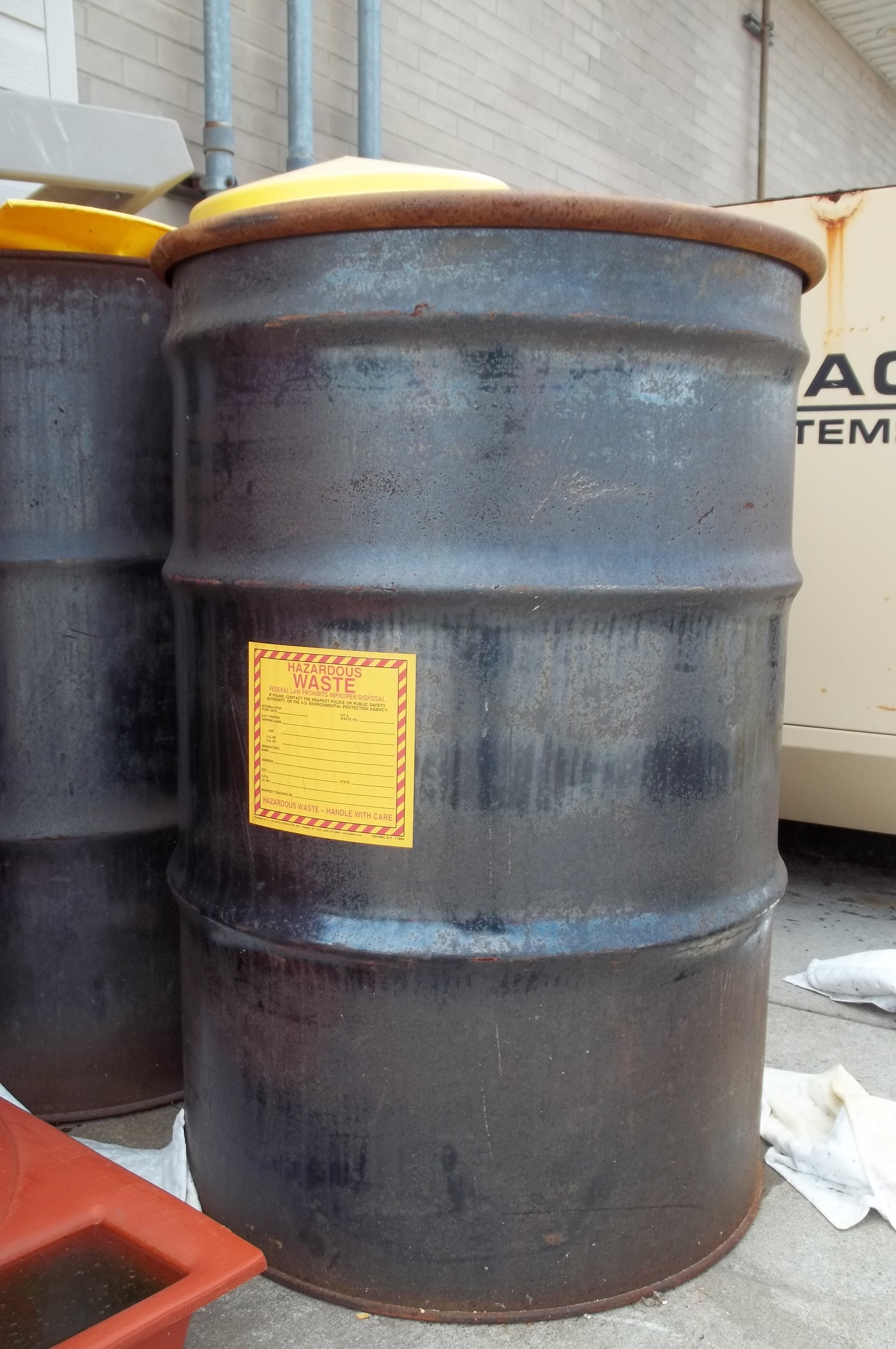
The reuse, reconditioning, and remanufacture of hazardous material packagings (both bulk and non-bulk) is addressed at 49 CFR 173.28 of the PHMSA/USDOT Hazardous Material Regulations. In general packagings and receptacles (bulk and non-bulk) used more than once must be in good condition and comply with all of the requirements of the HMR for HazMat packaging; including closure devices and cushioning materials. Before reuse, each packaging must be inspected by the Shipper and may not be reused unless free from incompatible residue, rupture, or other damage which reduces its structural integrity. Packagings not meeting the minimum thickness requirements prescribed in 49 CFR 173.28(b)(4)(i) may not be reused or reconditioned for reuse, though they may be acceptable for remanufacture. §173.28 goes on to identify the specific requirements and restrictions for the reuse, reconditioning and remanufacture of non-bulk packagings for the transportation of hazardous materials. §173.28(b)(6) however, contains an exception from this regulation for the reuse of a non-bulk packaging for the shipment of a hazardous waste.
When transported, a container of hazardous waste is subject to the regulations of the PHMSA/USDOT and the USEPA.
New Rules in the Works to Improve the Safety of Bulk Rail Transportation of Ethanol and Bakken Crude Oil
On July 23, 204 the US Department of Transportation announced two new rulemaking proposals – and a Report – issued by the PHMSA (the Pipeline and Hazardous Materials Safety Administration, one of many administrations/bureaus within the USDOT). It is meant to improve the safe transportation of large quantities of flammable materials by rail – particularly crude oil and ethanol. The comprehensive rulemaking includes the following:
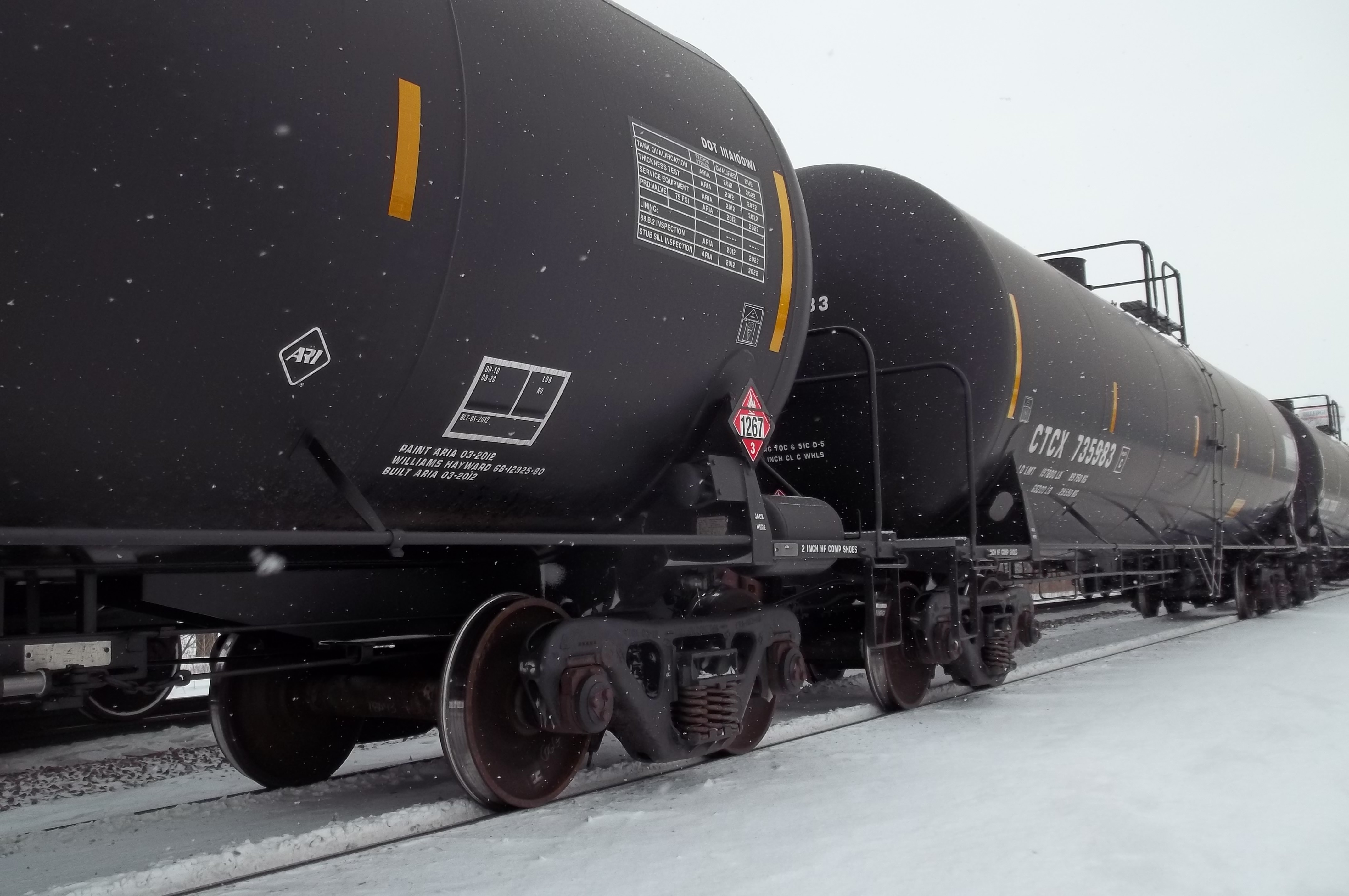
Railroad Tank Cars of Bakken Crude Oil passing through Illinois
Each of the above components of this announcement are summarized below.
Notice of Proposed Rulemaking (NPRM):
Under the NPRM, the PHMSA seeks comment on the following proposals:
A definition of a “high-hazard flammable train” (HHFT) as a train carrying 20 or more tank carloads of flammable liquids. This would include both ethanol and crude oil (Bakken and others).
Develop and implement a written sampling and testing program – certified by the Shipper of the HazMat – for all mined gases and liquids. This would include Bakken crude oil, but not ethanol.
Carriers must perform a routing analysis for HHFTs (both Bakken crude and ethanol) that would consider twenty-seven (27!) safety and security factors and then select a route for the rail cargo based on the analysis.
Codify the May 2014 Emergency Order requiring the Carriers of more than one million gallons of Bakken crude by rail to notify appropriate State Emergency Response Commissions (SERCs).
Speed restrictions for HHFTs (both Bakken crude and ethanol) that contain any tank cars not meeting the enhanced tank car standards proposed by this rule.
Require enhanced brake systems for all HHFTs (both Bakken crude and ethanol).
Require enhanced standards for both new and existing rail tank cars used to transport flammable liquids (both Bakken crude and ethanol) as part of a HHFT.
Hurry! All comments must be received by September 30th.
Advanced Notice of Proposed Rulemaking (ANPRM):
Published concurrently with the NPRM, the ANPRM seeks to gain information via comments from interested parties regarding expanding oil spill response planning requirements for shipments of flammable liquids (Bakken crude, ethanol, and more) by rail.
Hurry! All comments must be received by September 30th.
The Report:
Bakken Crude Oil Transported by Rail
Data collected from Operation Classification – a joint PHMSA and Federal Railroad Administration (FRA) effort initiated early in 2014 and specific to Bakken crude oil – has been summarized in a report issued along with the NPRM and ANPRM. The findings of the report indicate that Bakken crude oil is more flammable and volatile than other crude oils. The unexpectedly higher flammability and volatility of Bakken crude is believed to the cause of its initial misclassification; the use of improper packaging; and the resulting train derailments, fires, explosions, and deaths. In addition to the Report, Operation Classification resulted in a more robust test method for analyzing Bakken crude. This will likely form the basis for the written sampling and testing program referenced in the NPRM.
Anyone involved in the transportation by rail of flammable liquids – and particularly the transportation by rail of Bakken crude and/or ethanol – should carefully follow, and become involved in, these notices as they proceed through the rulemaking process.
I can provide the training your employees need to properly classify, package, and ship any hazardous material by any means (air, rail, highway, or vessel). Contact me for a free training consultation.