PO Box 1232 Freeport, IL 61032

A Different Kind Of Training

A Different Kind Of Training

A Different Kind Of Training

Determining a Class 8 Corrosive Material and a D002 Corrosive Hazardous Waste From the SDS

Question to me (3.19.15) from a customer who had recently attended one of my TRAINING SEMINARS:

Dan,

I have a waste that is liquid but has no pH because it is not water-based. The SDS says it is DOT Class 8 so that means it must corrode steel at >0.25 inches/ year.  RCRA has a similar criteria, but are DOT and RCRA referring to the same test standard? If yes, then I clearly have a hazardous waste. Let me know.

Thanks,

My reply, later that same day:

The EPA definition of the hazardous characteristic for corrosivity (40 CFR 216.22) is an aqueous solution with a pH of 2 or less or 12.5 or greater or…

(2) It is a liquid and corrodes steel (SAE 1020) at a rate greater than 6.35 mm (0.250 inch) per year at a test temperature of 55 °C (130 °F) as determined by Method 1110A in “Test Methods for Evaluating Solid Waste, Physical/Chemical Methods,” EPA Publication SW-846, and as incorporated by reference in §260.11 of this chapter.

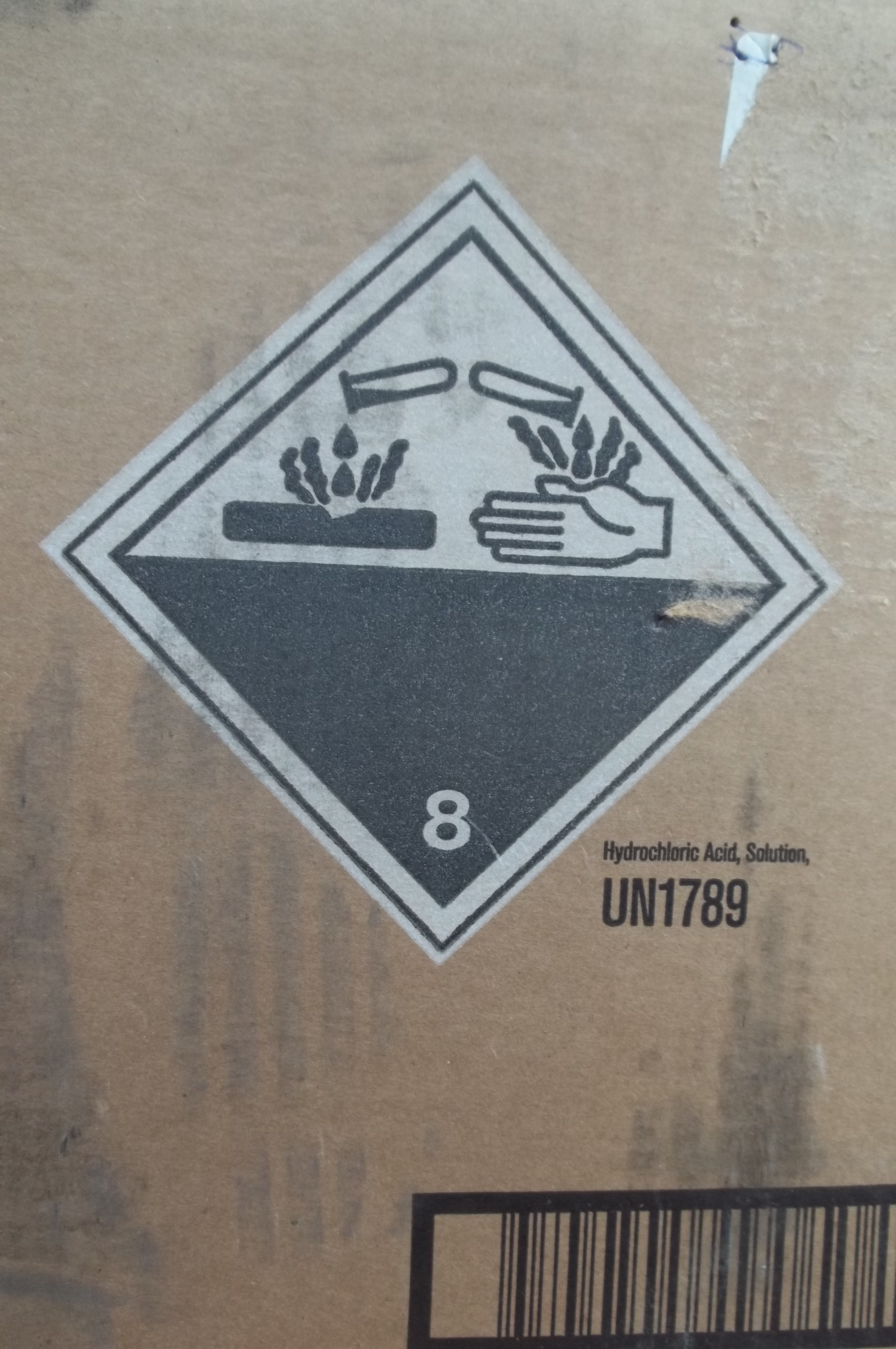
UN1789, Hydrochloric Acid SolutionThe DOT definition of Class 8 Corrosive includes a material that causes full thickness destruction of human skin at site of contact within a specified time period and…

A liquid, or a solid which may become liquid during transportation, that has a severe corrosion rate on steel or aluminum based on the criteria in §173.137(c)(2).

173.137(c)(2) indicates a corrosive material exhibits…

a corrosion on either steel or aluminum surfaces exceeding 6.25 mm (0.25 inch) a year at a test temperature of 55 °C (130 °F) when tested on both materials. The corrosion may be determined in accordance with the UN Manual of Tests and Criteria (IBR, see §171.7 of this subchapter) or other equivalent test methods.

I suggest you contact the supplier from the SDS to determine what test method they used.  If it is not SW-846 (note the “or other equivalent test method” in 173.137(c)(2)) it may be similar enough to yield the same result.  Also, once you determine the method the supplier used you may wish to contact a lab that performs both of the analysis types to see if there is a difference.
I hope this helps.
Dan
Customers quick reply (still 3.19.15):
Dan, Thanks. I’ll call my supplier & test lab.
I’m curious, so on 3.20.15 I write:
Please let me know what you learn from the lab.
Last correspondence on 3.20.15:
My lab only does ASTM 1110A.
Conclusion:
The test method performed by my customer’s lab (ASTM 1110A) is acceptable for purposes of determining the USEPA’s characteristic for corrosivity as that is referenced specifically at 40 CFR 261.22.  It may also be acceptable for determining if it is a Class 8 Corrosive Material as defined in the PHMSA/USDOT regulations even though it is not specifically referenced at 173.137(c)(2).  The inclusion of the language, “…or other equivalent test methods.”  may be interpreted to include ASTM 1110A as acceptable.
A note of warning:  my customers reference to section 14 of the SDS is worth a warning:
The SDS says it is DOT Class 8 so that means it must corrode steel at >0.25 inches/ year.
The information in the SDS (and the old MSDS, for that matter) is not authorized by PHMSA/USDOT for purposes of compliance with the Hazardous Material Regulations.  Therefore, any information on an SDS/MSDS that purports to provide PHMSA/USDOT regulatory information should be taken as guidance only and not be relied on solely for the purposes of determining compliance.Recommended orientation of placard holder

Contact me with any questions you may have about the transportation of hazardous materials by air, highway, vessel, or rail

International and Domestic

Daniels Training Services

815.821.1550

Info@DanielsTraining.com

https://danielstraining.com/

April 2015 – Rules & Regulations, Proposed Rules, and Notices Regarding the Management of Hazardous Waste and the Transportation of Hazardous Materials

On its website the US Government Printing Office makes a wealth of Federal publications available for review and download; one of these is the Federal Register.

Published by the Office of the Federal Register, National Archives and Records Administration (NARA), the Federal Register is the official daily publication for rules, proposed rules, and notices of Federal agencies and organizations, as well as executive orders and other presidential documents.

See below for a brief summary of announcements in the Federal Register by the US EPA on the subject of Hazardous Waste and the Pipeline & Hazardous Materials Safety Administration (PHMSA), Federal Railroad Administration (FRA), and the Federal Aviation Administration (FAA) of the US DOT on the subject of Transportation of Hazardous Materials.

The Federal Register is a great way to look down the road and see potential changes to the regulations long before they are put into effect (sometimes The Rulemaking Process takes years before a final rule is issued, if ever).  Knowledge of these potential changes provides you with several advantages:

  • Additional time to modify your business operations to comply.
  • Awareness of on what topics the regulatory agencies intend to focus their efforts.
  • The ability to register your concerns, complaints, suggestions, etc. in order to modify the proposed rule before a final rule is issued.  It can be done, really!
  • Make changes to your training program to account for changes that become effective before the next training cycle.
  • Alert you to the need to re-train your employees prior to their next scheduled training cycle, if necessary.
  • Keep you abreast of changes to the regulations that affect your business and/or your industry group.

Please note that this is my best effort to identify the relevant announcements in the Federal Register that may be of interest to generators of hazardous waste and shippers of hazardous materials.  I encourage you to review the list of Federal Register publications yourself to ensure regulatory compliance.

 April 1, 2015 through April 30, 2015

USEPA – US Environmental Protection Agency:

Publications not related to the management of hazardous waste, solid waste, universal waste, or used oil are not included here.

Rules and Regulations:

Hazardous and Solid Waste Management System; Disposal of Coal Combustion Residuals From Electric Utilities Pages 21301 – 21501 [FR DOC # 2015-00257] PDF | Text | More

Vermont: Final Authorization of State Hazardous Waste Management Program Revisions Pages 21650 – 21654 [FR DOC # 2015-08997] PDF | Text | More

Proposed Rules:

Vermont: Proposed Authorization of State Hazardous Waste Management Program Revisions Pages 21691 – 21692 [FR DOC # 2015-08996] PDF | Text | More

Contact me with any questions you may have about the management of hazardous waste

Daniels Training Services

815.821.1550

Info@DanielsTraining.com

https://danielstraining.com/


Notices:

Inquiry To Learn Whether Businesses Assert Business Confidentiality Claims Regarding Waste Import and Export Pages 19080 – 19084 [FR DOC # 2015-08064] PDF | Text | More

Agency Information Collection Activities; Proposed Collection; Comment Request; NESHAP for Hazardous Waste Combustors; Renewal Pages 20223 – 20224 [FR DOC # 2015-08661] PDF | Text | More

FAA – Federal Aviation Administration:

Publications not related to the transportation of hazardous materials are not included here.

Rules and Regulations:

None

Proposed Rules:

None

Notices:

None

FMCSA – Federal Motor Carrier Safety Administration:

Publications not related to the transportation of hazardous materials are not included here.

Rules and Regulations:

Civil Penalties Inflation Adjustments Pages 18146 – 18158 [FR DOC # 2015-07701] PDF | Text | More

Proposed Rules:

None

Notices:

National Hazardous Materials Route Registry Pages 23859 – 24009 [FR DOC # 2015-09701] PDF | Text | More

FRA – Federal Railroad Administration:

Publications not related to the transportation of hazardous materials are not included here.

Rules and Regulations:

None

Proposed Rules:

None

Notices:

Hazardous Materials: Information Requirements Related to the Transportation of Trains Carrying Specified Volumes of Flammable Liquids Pages 22778 – 22779 [FR DOC # 2015-09437] PDF | Text | More

Emergency Order Establishing a Maximum Operating Speed of 40 mph in High-Threat Urban Areas for Certain Trains Transporting Large Quantities of Class 3 Flammable Liquids Pages 23321 – 23326 [FR DOC # 2015-09614] PDF | Text | More

PHMSA – Pipeline and Hazardous Materials Safety Administration:

Publications not related to the transportation of hazardous materials are not included here.

Rules and Regulations:

Clarification on Policy for Additional Name Requests Regarding Fireworks Pages 17706 – 17707 [FR DOC # 2015-07425]   PDF | Text | More

Proposed Rules:

None

Notices:

Hazardous Materials: Explosive Approvals-Applicant Contact Information and Compliance With Special Provision 347 Pages 20066 – 20073 [FR DOC # 2015-08470] PDF | Text | More

Hazardous Materials: Delayed Applications Pages 22779 – 22780 [FR DOC # 2015-09354] PDF | Text | More

Hazardous Materials; Notice of Application for Modification of Special Permit Pages 22780 – 22781 [FR DOC # 2015-09356] PDF | Text | More

Hazardous Materials: Actions on Special Permit Applications Pages 22782 – 22784 [FR DOC # 2015-09355] PDF | Text | More

Hazardous Materials: Notice of Application for Special Permits Pages 22784 – 22785 [FR DOC # 2015-09352] PDF | Text | More

Hazardous Materials: Information Requirements Related to the Transportation of Trains Carrying Specified Volumes of Flammable Liquids Pages 22778 – 22779 [FR DOC # 2015-09437] PDF | Text | More

Hazardous Materials: Emergency Response Information Requirements Pages 22781 – 22782 [FR DOC # 2015-09436] PDF | Text | More

Pittsburgh, Pennsylvania Permit Requirements for Transportation of Hazardous Material Pages 23328 – 23328 [FR DOC # 2015-09632] PDF | Text | More

New York City Permit Requirements for Transportation of Certain Hazardous Materials Pages 23328 – 23329 [FR DOC # 2015-09634] PDF | Text | More

Hazardous Materials: Information Collection Activities Pages 23852 – 23854 [FR DOC # 2015-09896] PDF | Text | More

Hazardous Materials: Safety Advisory-Unauthorized Certification of Compressed Gas Cylinders Pages 23851 – 23852 [FR DOC # 2015-09937] PDF | Text | More

Information can be helpful but it’s useless if you are not able to make sense of it.  You must be able to determine how any changes to the rules and regulations (final or proposed) will affect your operations, and communicate the necessary information to your personnel.  I can help you to do that.

Contact me with any questions you may have about the transportation of hazardous materials by air, highway, vessel, or railInternational and Domestic

Daniels Training Services

815.821.1550

Info@DanielsTraining.com

https://danielstraining.com/


Please contact me for a free training consultation to determine your regulatory requirements and how training can help you to attain and maintain compliance with the regulations of the US Environmental Protection Agency (and your state) and the PHMSA, FAA, FRA, & FMCSA of the US Department Of Transportation.

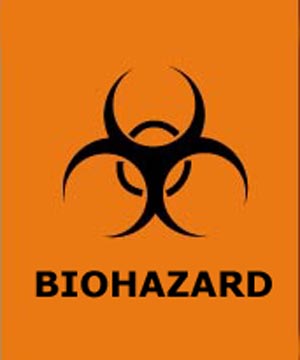
OSHA BioHazard Symbol

Q&A: Must I use the USDOT Division 6.2 Label or the OSHA BioHazard Mark on my Infectious Substance?

A question directed to me from the CONTACT ME page of my website on January 21, 2015:

I was reading your article on infectious labeling and marking. Under marking it  states that a “bulk” is (a) less than 1000 gallons or (b) greater than 1000. What about 49 CFR (Department of Transportation) §171.8 – Definitions and Abbreviations.

Bulk packaging means a packaging, other than a vessel or a barge, including a transport vehicle or freight container, in which hazardous materials are loaded with no intermediate form of containment.

A Large Packaging in which hazardous materials are loaded with an intermediate form of containment, such as one or more articles or inner packagings, is also a bulk packaging.

Additionally, a bulk packaging has: * * *
(1) A maximum capacity greater than 450 L (119 gallons) as a receptacle for a liquid;
(2) A maximum net mass greater than 400 kg (882 pounds) and a maximum capacity greater than 450 L (119 gallons) as a receptacle for a solid; or
(3) A water capacity greater than 454 kg (1000 pounds) as a receptacle for a gas as defined in §173.115 of this subchapter.

So therefore any package less than 119 gallons would be considered a non-bulk package. I personally have never seen an infectious or biohazard bulk package. It does not clearly state the information above – only stating a bulk is less than 1000 gallons.
Additionally, it is allowed to use either the DOT or the OSHA label correct?
I had an inspector recently tell me that I could not use the DOT label that the OSHA label was the only label allowed. Looking for some additional guidance.

My, as it turns out, overly optimistic reply that same day:

Thanks for the contact.  I will research the topic and reply to you a little bit later today.

My final reply, a few days late (1/26/15):

Thank you for contacting me about my article:  The BioHazard Marking for the Transportation of Infectious Substances.  I’ll do my best to answer your questions.

  • You are correct the Hazardous Materials Regulations (HMR) of the Pipeline and Hazardous Materials Safety Administration within the U.S. Department of Transportation (USDOT/PHMSa) define a bulk packaging at 49 CFR 171.8 as you indicate above.

Read more about bulk packaging

  • However, your understanding of my article is not correct. In the “Package Marks” section of my article I refer to the requirements to apply a marking to different sizes of a bulk packaging. A bulk packaging with a capacity of <1,000 gal must be marked on two opposing sides; whereas a bulk packaging of ≥1,000 gal must be marked on all four sides. Both are bulk packagings as they are both >119 gallons. The 1,000 gal threshold determines where the markings are applied on the respective bulk packaging.
  • My article explains that only UN3291 Regulated Medical Waste is authorized to be shipped in a bulk packaging.
  • My article identifies the situations where the Infectious Substance HazMat label is required, when the OSHA-compliant BioHazard label may be used as an alternative to the Infectious Substance HazMat label, and when the OSHA-compliant BioHazard label is required to be used.
  • There are two situations (identified in the “HazMat Labels” section of my article) where the DOT Infectious Substance HazMat label is required.  Perhaps that is the situation the inspector was speaking to.
I hope this helps.  Please don’t hesitate to contact me with any other questions.
Dan

Contact me with any questions you may have about the transportation of hazardous materials by air, highway, vessel, or rail

International and Domestic

Daniels Training Services

815.821.1550

Info@DanielsTraining.com

https://danielstraining.com/

And on January 28, 2015, another satisfied customer (well, not really a customer as they didn’t pay me.  But I’m glad to help):

Thanks!

Please feel free to contact me with any questions you may have about the transportation of hazardous materials (which includes Infectious Substances) and the regulations of the USDOT/PHMSA.

HazMat and Hazardous Waste at the Hotel

I spend a lot of time in hotels when I travel in order to provide the training required for businesses subject to the Hazardous Material Regulations of the PHMSA/USDOT and those subject to the hazardous waste regulations (codified from RCRA) of the USEPA.  And sometimes elements of those two activities (the regulations and my lodging accommodations) come together.

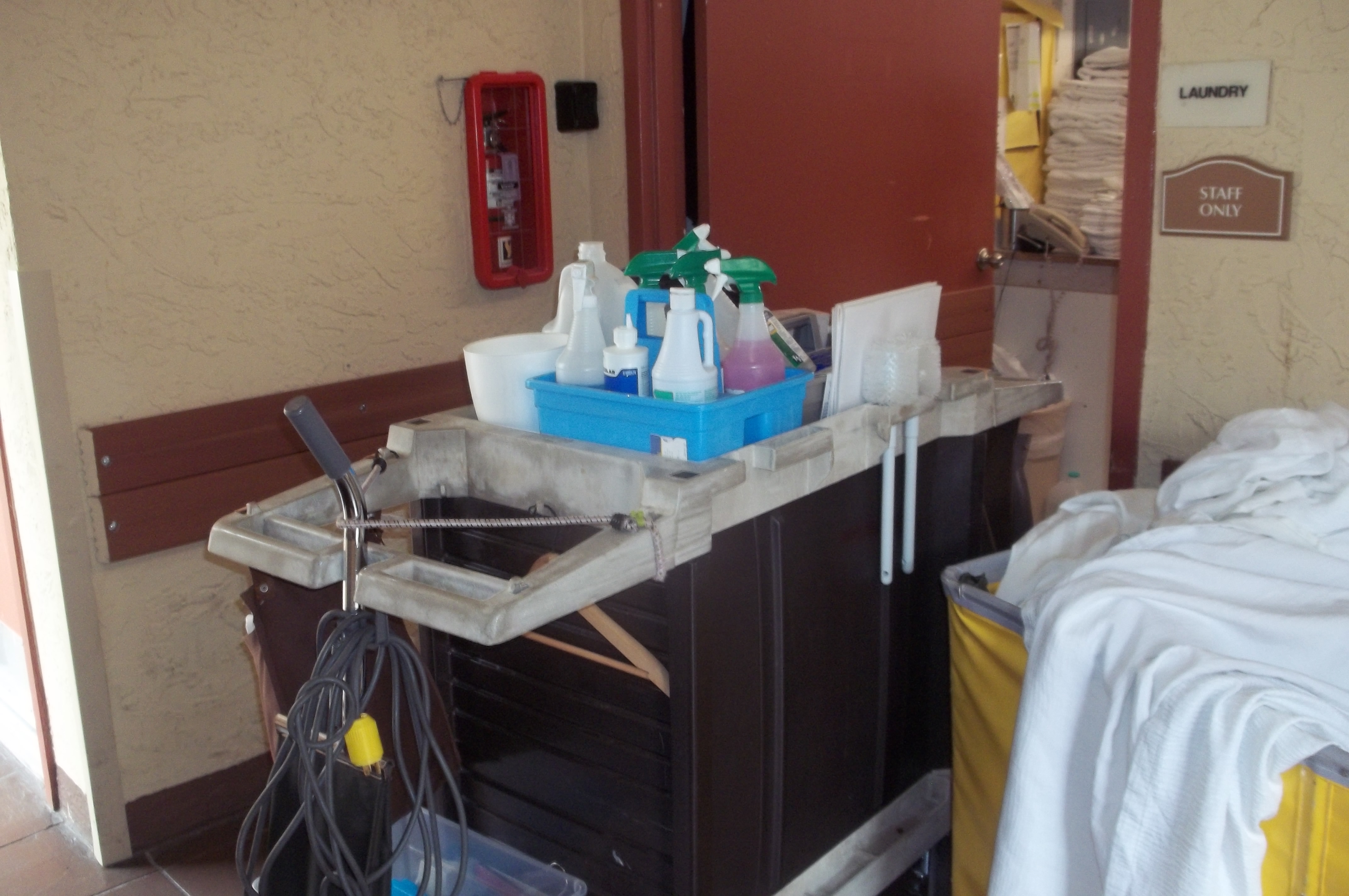
A hotel, like most businesses, requires some form of hazardous materials in order to provide a service or create a product.  In the case of a hotel these may include chemicals for cleaning its rooms or maintaining its pool.

Clean pool at Best Western Mission Bay
Clean pool = HazMat Transportation


In order to have these hazardous materials on-site the hotel must arrange to have them delivered and that, according to 49 CFR 171.1, makes them subject to the HMR:

Hotel cleaning chemicals are hazardous materials
Clean hotel = HazMat transportation

In addition, the law authorizes the Secretary to apply these regulations to persons who cause hazardous materials to be transported in commerce.

Does it matter that the amounts are small?  No.  Unless subject to one of the exceptions of 49 CFR 173 – and the amounts pictured here are not small enough to qualify for those exceptions – then all of the requirements of the HMR apply.  Including…wait for it…HazMat Employee training.

What about the waste generated by a hotel, is it subject to the hazardous waste regulations of the USEPA, and states with an authorized hazardous waste program?  The answer there is more complicated.

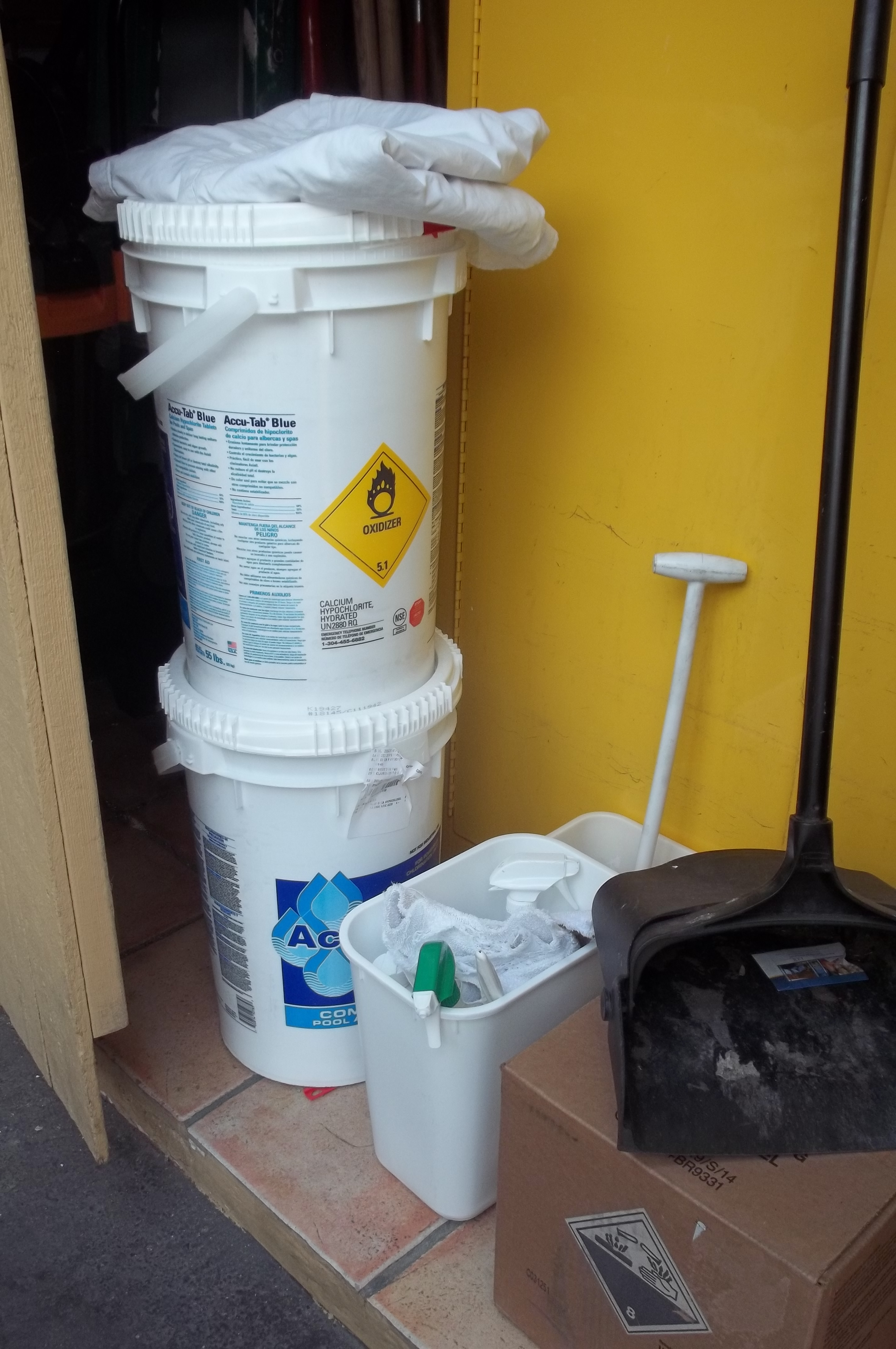
HazMat for pool maintenance
Supply of hazardous materials used to service the hotel’s pool.
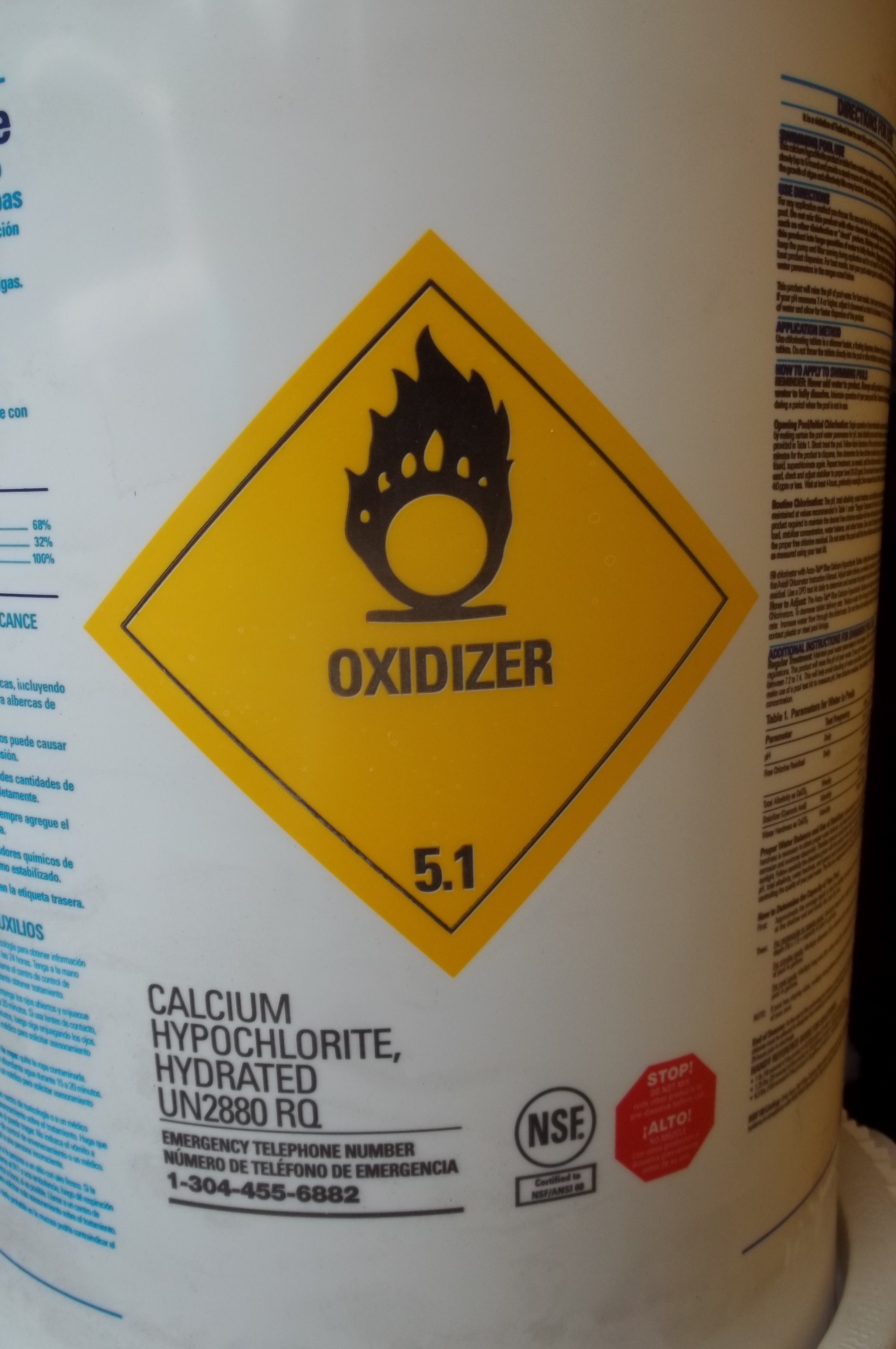
Pool cleaning chemical - Calcium Hypochlorite Hydrated
UN2880, Calcium Hypochlorite Hydrated – used for pool cleaning
UN1789, Hydrochloric Acid Solution
Hydrochloric acid solution – used to clean the pool

First of all, the regulations codified by the USEPA from the Resource Conservation and Recovery Act (RCRA) apply to all waste generated by a business, home, or government agency.  However, hotels are subject to a conditional exclusion from hazardous waste regulations for the routine waste they generate in servicing their customers.  It’s know as the Household Hazardous Waste Exclusion and is found at 40 CFR 261.4(a)(1).

The situation is further complicated because this hotel is located in California.  The California Department of Toxic Substances Control (DTSC) within the Cal EPA does not recognize the Federal Household Hazardous Waste Exclusion, so this hotel goes back to square one as a generator of hazardous waste.

Thanks to this conditional exclusion, a hotel that generates a waste during its normal activities is not required by Federal regulations to manage it as a hazardous waste.  A state, like California, may choose to make its regulations more strict and more broad than those of the USEPA and therefore make a business like a hotel subject to its State RCRA regulations.

Daniels Training Services

815.821.1550

Info@DanielsTraining.com

https://danielstraining.com/

The reach of the regulations, both those of the PHMSA/USDOT and those of the USEPA (and your State), go further than many first think.  Contact me if you have questions about the transportation of hazardous materials or the disposal of hazardous waste at your hotel.

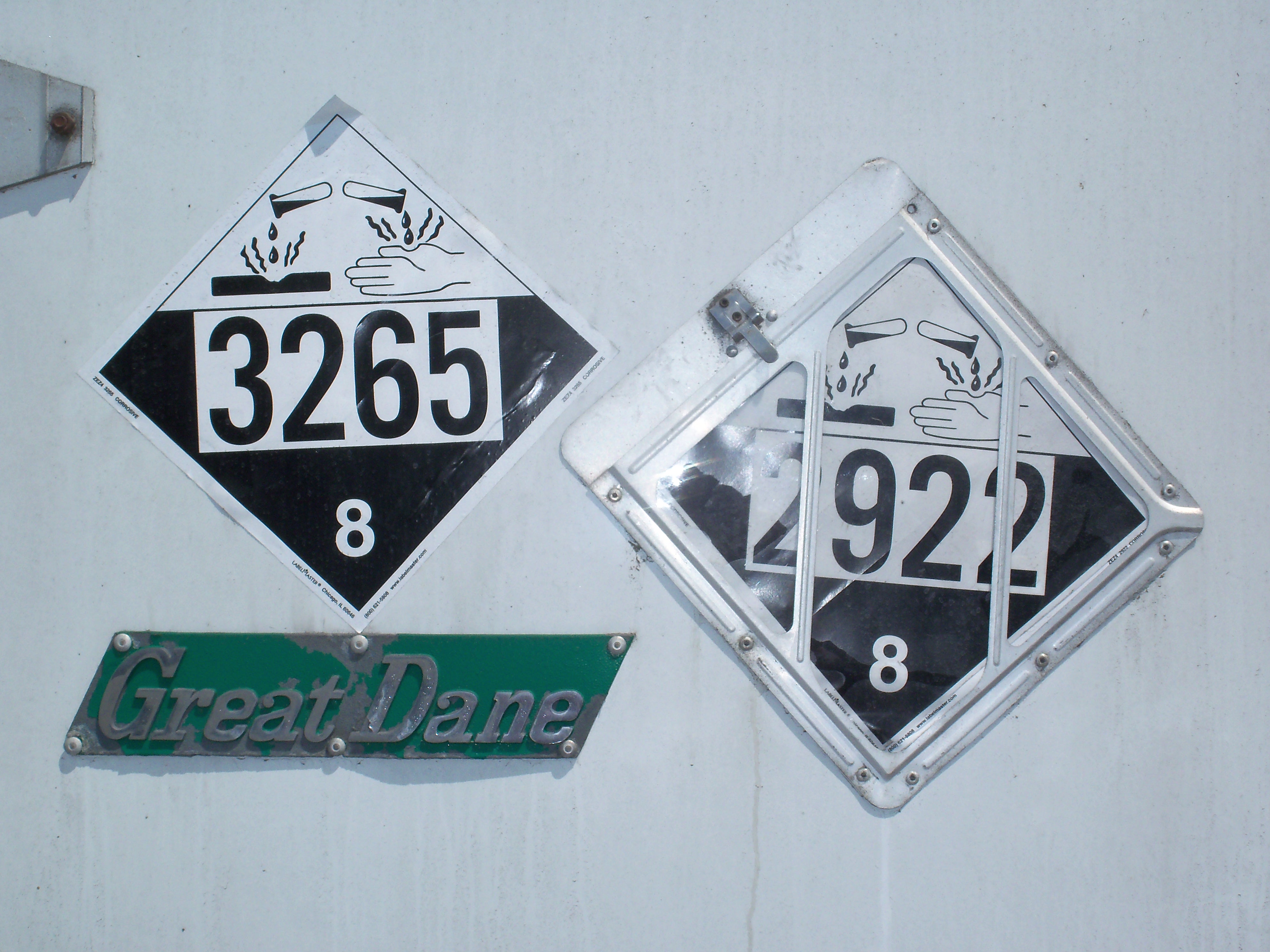
Placement of Placards on a Vehicle and 49 CFR 172.516(c)(2)

Pursuant to 49 CFR 172.516(c)(2):

Each placard on a transport vehicle, bulk packaging, freight container or aircraft unit load device must—

(2) Be located clear of appurtenances and devices such as ladders, pipes, doors, and tarpaulins;

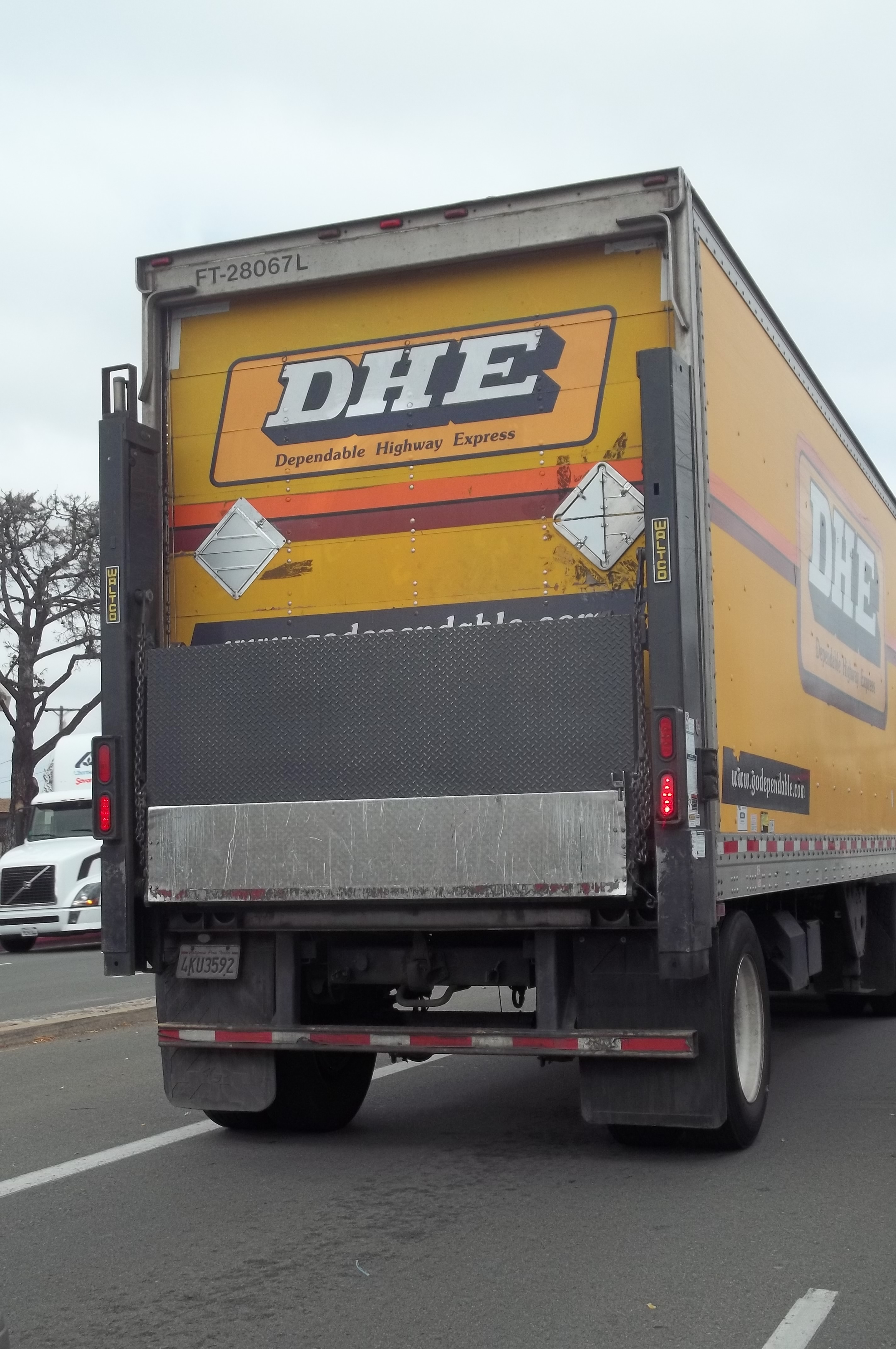
HazMat placard holders on a motor vehicle
Placards must be located clear of appurtenances and devices on the vehicle.

Notice how the placard holders on this vehicle are placed higher in order to ensure they are visible when the lift gate – an “appurtenance” or “device” if I ever saw one – is stowed in place for transportation.

Can the placards be too high on the side or end of the vehicle?  Or, too low?  No, at least not as far as the Hazardous Material Regulations of the PHMSA/USDOT are concerned.  There is no mention in the HMR of the specific placement of HazMat placards on the vehicle as long as they appear on all four sides, “…on each side and each end…” pursuant to §172.504 and meet the further requirements of §172.516, one of which we see here.  Other requirements of §172.516(c) include:

  • Placard must be securely attached to the vehicle or placed in a holder (as is the case in photo).
  • So far as practicable, placard must be located so that dirt or water is not directed to it from the wheels of the transport vehicle.
  • At a minimum the placard must be located at least 3 inches (76.0 mm.) away from any marking (such as advertising) that could make it harder to see.
  • Text printed on the placard must be displayed horizontally, reading from left to right.
  • Placard must be maintained by the carrier in good condition so that it doesn’t become unreadable due to dirt, damage, wear, &etc.
  • Placard must be affixed to a background of contrasting color, or must have a dotted or solid line outer border which contrasts with the background color.

Daniels Training Services

815.821.1550

Info@DanielsTraining.com

https://danielstraining.com/

Contact me if you’re uncertain of how to display HazMat placards on any bulk packaging, freight container, unit load device, transport vehicle or rail car.


Hazardous Materials Information Center

What are PHMSA Interpretation Letters?

Sometimes the Hazardous Materials Regulations (HMR; 49 CFR Parts 100-185) of the PHMSA/USDOT are not enough.  If you find yourself in a situation where you cannot find an answer to your HazMat transportation question you have three options:

  1. Apply your interpretation of the regulation to your situation and hope for the best.
  2. Contact PHMSA’s Hazardous Materials Information Center (HMIC).  They will answer your questions after reviewing the regulations and likely reviewing their database of interpretation letters. Hazardous Materials Information Center
  3. Contact me and I’ll answer your question after reviewing both the HMR and any applicable Letters of Interpretation in the PHMSA database.

Notice the similarity in the responses to actions 2 & 3?  I don’t recommend #1.  So, what are the PHMSA’s Letters of Interpretation?  Basically, they are PHMSA’s written clarifications of the HMR in the form of letters answering specific questions of the regulated community.  Since the letters are a response to specific questions and sets of conditions, they reflect only the agency’s current application of the HMR to those specific questions and conditions; care must be taken in applying them to your situation.

While these letters of interpretation can be used as a form of guidance in determining your compliance with the HMR, they are not legally-enforceable rights or obligations.  In other words, they are meant to be a guide toward understanding the HMR but do not replace or supersede them.  The letters of interpretation database is regularly reviewed by PHMSA for accuracy and applicability to the most recent version of the HMR.  Letters found to contain inaccurate or inapplicable information are removed and may be revised and reissued as necessary.  A letter which no longer appears on the database may no longer be valid.

HazMat Interpretations can be searched from two databases:

Contact me with any questions you may have about the transportation of hazardous materials by air, highway, vessel, or rail

International and Domestic

Daniels Training Services

815.821.1550

Info@DanielsTraining.com

https://danielstraining.com/

There are many sources of valid information when determining your compliance with the HMR and I like to think that I am one of them.  However you determine compliance, don’t overlook your responsibility to provide triennial HazMat Employee training for all of your employees involved in the handling – shipping, receiving, transportation – of a hazardous material.Daniels Training Services provides HazMat Employee Training

There’s Still Time! Take Part in the PHMSA’s HM-ACCESS Data Collection Effort

Sounds exciting, doesn’t it?

The Pipeline and Hazardous Materials Safety Administration’s (PHMSA’s) HM-ACCESS (Hazardous Materials-Automated Cargo Communications for Efficient and Safe Shipments) Project, also known as the Paperless Hazard Communications Pilot Program.

It just kinda’ rolls of the tongue and makes you want to sit down at a computer and start answering on-line survey questions.  No?  Is that just me?  Well, that explains why PHMSA (an administration within the USDOT responsible for the safe transportation of hazardous materials within the U.S.) is extending the deadline for participation in its HM ACCESS pilot Test from its original April 30th to May 15th, 2015.

See below for the text of the original notice and links to the on-line questionnaire and other important information.

What I’ll say about HM-ACCESS is this:  The PHMSA is proceeding toward a paperless (i.e. electronic) system for shipping papers used in the transportation of hazardous materials.  The result will have a significant impact on everyone involved in the transportation of hazardous materials:  Shippers, Carriers, freight forwarders, HazMat Employers, HazMat Employees, emergency responders, and a whole host of “interested parties”.  This means you.  Here is your chance to join in the conversation and perhaps have an impact on the Final Rule.

I completed the questionnaire in ~30 minutes.  So what are you waiting for? (more…)

Q&A: What are the Shipper’s Responsibilities for the Transport of Diesel Residue in Fuel Tank Trailers?

Question to the Contact Me page of my website on March 7, 2015:

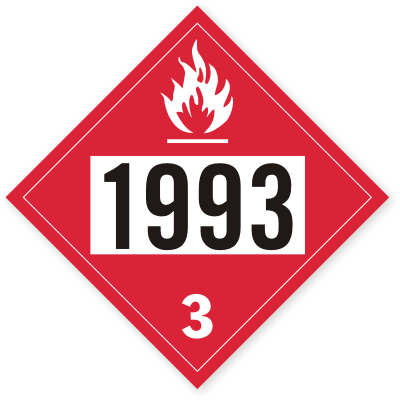
Combustible Placard with ID NumberLooking for guidance on the shippers responsibilities in reference to DOT hazmat regs when shipping empty 6,000 fuel tank trailers. The tank trailers have been re-built, pump tested, drained (but not triple rinsed), contain residual diesel fuel (50 gal or less) and will be loaded on another conveyance/trailer for transport (will not be towed).

My “Thanks and give me some time” response on March 9th:

That’s a good question. Let me do a little research and get back to you sometime later this week.

Questioner’s acknowledgement and a little more information (3.9.15):

Thank you Daniel.

We are being told the trailers must have a drain and purge certificate (be purged and triple rinsed) and hazmat certification documents prepared prior to shipment; however purging with water causes problems with the functionality of the tanker if it sets in storage for a while before shipment. The trailers are drained but there is residual diesel remaining in the pump filters, etc.

The Big Answer on March 13th:

What you describe (a 6,000 gal fuel tank trailer) is identified in the Hazardous Material Regulations (HMR) of PHMSA/USDOT as a Cargo Tank.  From 49 CFR 171.8:

Cargo tank means a bulk packaging that:
(1) Is a tank intended primarily for the carriage of liquids or gases and includes appurtenances, reinforcements, fittings, and closures (for the definition of a tank, see 49 CFR 178.320, 178.337-1, or 178.338-1, as applicable);
(2) Is permanently attached to or forms a part of a motor vehicle, or is not permanently attached to a motor vehicle but which, by reason of its size, construction or attachment to a motor vehicle is loaded or unloaded without being removed from the motor vehicle; and
(3) Is not fabricated under a specification for cylinders, intermediate bulk containers, multi-unit tank car tanks, portable tanks, or tank cars.

When a Cargo Tank is part of a motor vehicle it is identified as a Cargo Tank Motor Vehicle.  Also from 49 CFR 171.8:

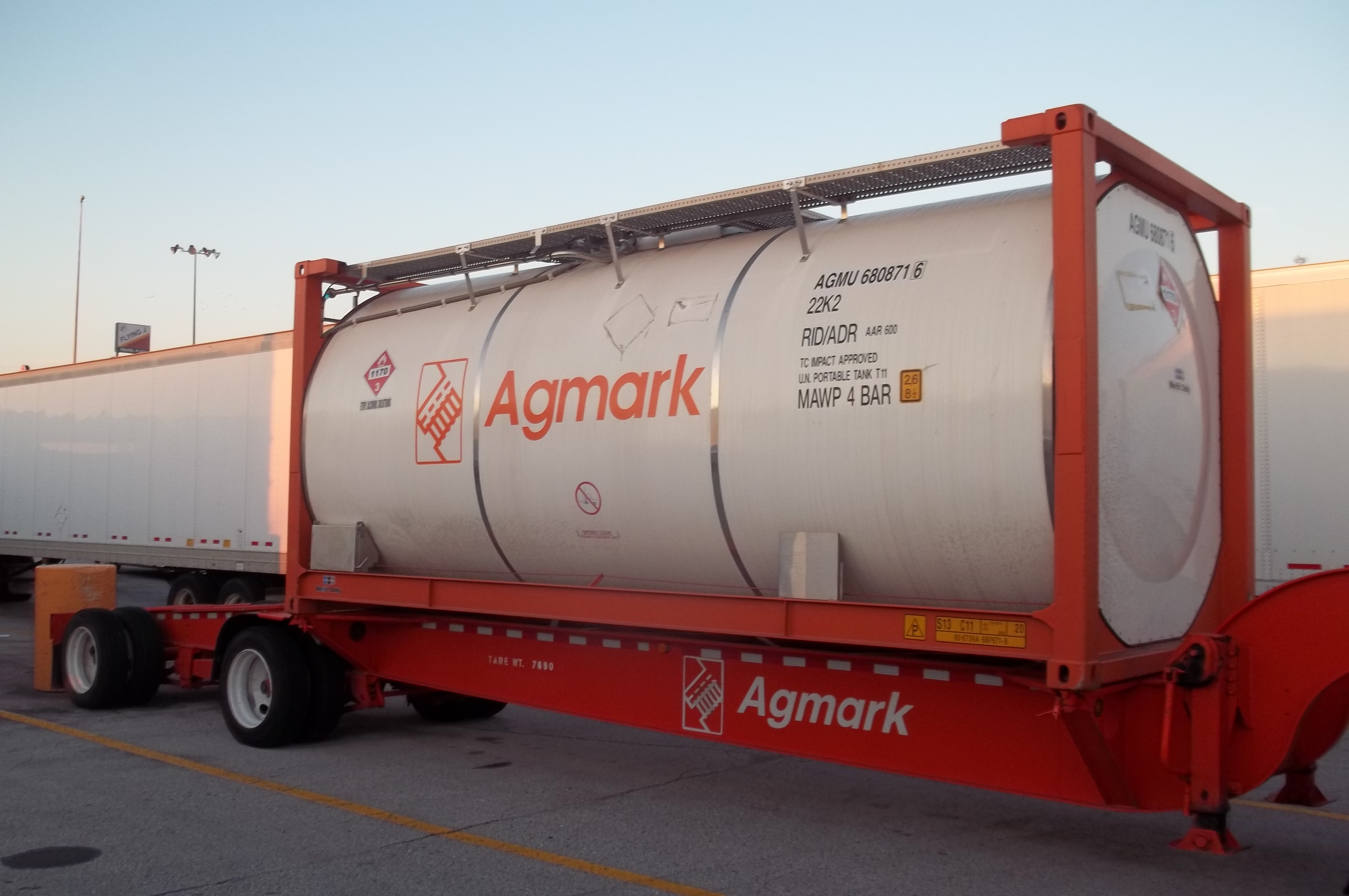
Portable tank used to transport HazMat by highway
An example of a portable tank

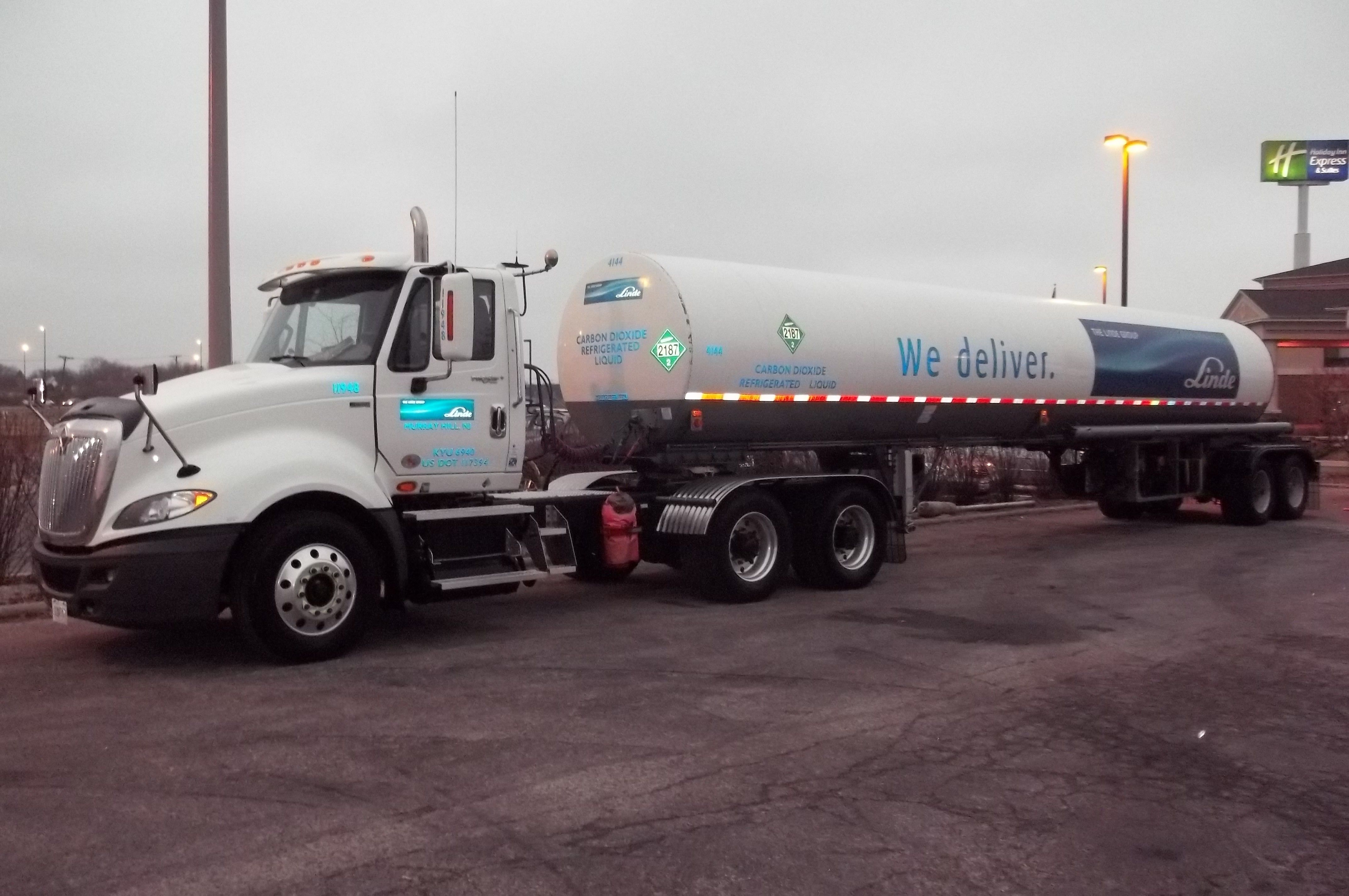
 Cargo tank motor vehicle means a motor vehicle with one or more cargo tanks permanently attached to or forming an integral part of the motor vehicle.

Cargo Tank Truck of Compressed Gas
Example of a cargo tank motor vehicle.

So, what you describe is the transportation of a Cargo Tank that contains the residue of a hazardous material (I assume the diesel fuel is a Class 3 Flammable or Combustible Liquid).  The HMR regulates a packaging containing any residue of a hazardous material the same as if it was full.  There is an exception from some of the requirements of the HMR available to packaging with HazMat residue, but it does not apply to a bulk packaging as in this situation.

Available options:
  • Transport the HazMat residue-containing Cargo Tanks as hazardous materials subject to all of the requirements of the HMR.  This includes shipping papers, placards, HazMat labels, markings, HazMat Employee training, registration as a Shipper of HazMat, providing emergency information, &etc.
  • Remove all residue from the Cargo Tanks so that they are rinsed, cleaned, and purged of all vapors.  Then ship as non-hazardous.
  • Fill the Cargo Tanks with some non-hazardous material that is compatible with the residual diesel fuel so that the resulting mixture is non-hazardous.
I hope this helps.  Please don’t hesitate to contact me with any other questions.
Dan
Another grateful HazMat Shipper (though not yet a customer) on March 13th:
Daniel,Thank you so much for taking the time to research this issue and I really appreciate the guidance and options you provided.

Contact me with any questions you may have about the transportation of hazardous materials by air, highway, vessel, or rail

International and Domestic

Daniels Training Services

815.821.1550

Info@DanielsTraining.com

https://danielstraining.com/

I receive and respond to questions like this all the time.  Let me help you with the questions you have about the transportation of hazardous materials.

The Additional Description on a Shipping Paper of a Hazardous Material: 49 CFR 172.203(n) – Elevated Temperature Material

If you transport or offer for shipment HazMat that meet the definition of an Elevated Temperature Material, than you must be aware of the requirement to provide an additional description on the shipping paper in some circumstances.  Please view this short Slideshare presentation and then contact me if you have any questions. (more…)

Published in the Federal Register in March 2015 for the Management of Hazardous Waste and the Transportation of Hazardous Materials

On its website the US Government Printing Office makes a wealth of Federal publications available for review and download; one of these is the Federal Register.

Published by the Office of the Federal Register, National Archives and Records Administration (NARA), the Federal Register is the official daily publication for rules, proposed rules, and notices of Federal agencies and organizations, as well as executive orders and other presidential documents.

See below for a brief summary of announcements in the Federal Register by the US EPA on the subject of Hazardous Waste and the Pipeline & Hazardous Materials Safety Administration (PHMSA), Federal Railroad Administration (FRA), and the Federal Aviation Administration (FAA) of the US DOT on the subject of Transportation of Hazardous Materials.

The Federal Register is a great way to look down the road and see potential changes to the regulations long before they are put into effect (sometimes The Rulemaking Process takes years before a final rule is issued, if ever).  Knowledge of these potential changes provides you with several advantages:

  • Additional time to modify your business operations to comply.
  • Awareness of on what topics the regulatory agencies intend to focus their efforts.
  • The ability to register your concerns, complaints, suggestions, etc. in order to modify the proposed rule before a final rule is issued.  It can be done, really!
  • Make changes to your training program to account for changes that become effective before the next training cycle.
  • Alert you to the need to re-train your employees prior to their next scheduled training cycle, if necessary.
  • Keep you abreast of changes to the regulations that affect your business and/or your industry group.

Please note that this is my best effort to identify the relevant announcements in the Federal Register that may be of interest to generators of hazardous waste and shippers of hazardous materials.  I encourage you to review the list of Federal Register publications yourself to ensure regulatory compliance.

 March 1, 2015 through March 31, 2015

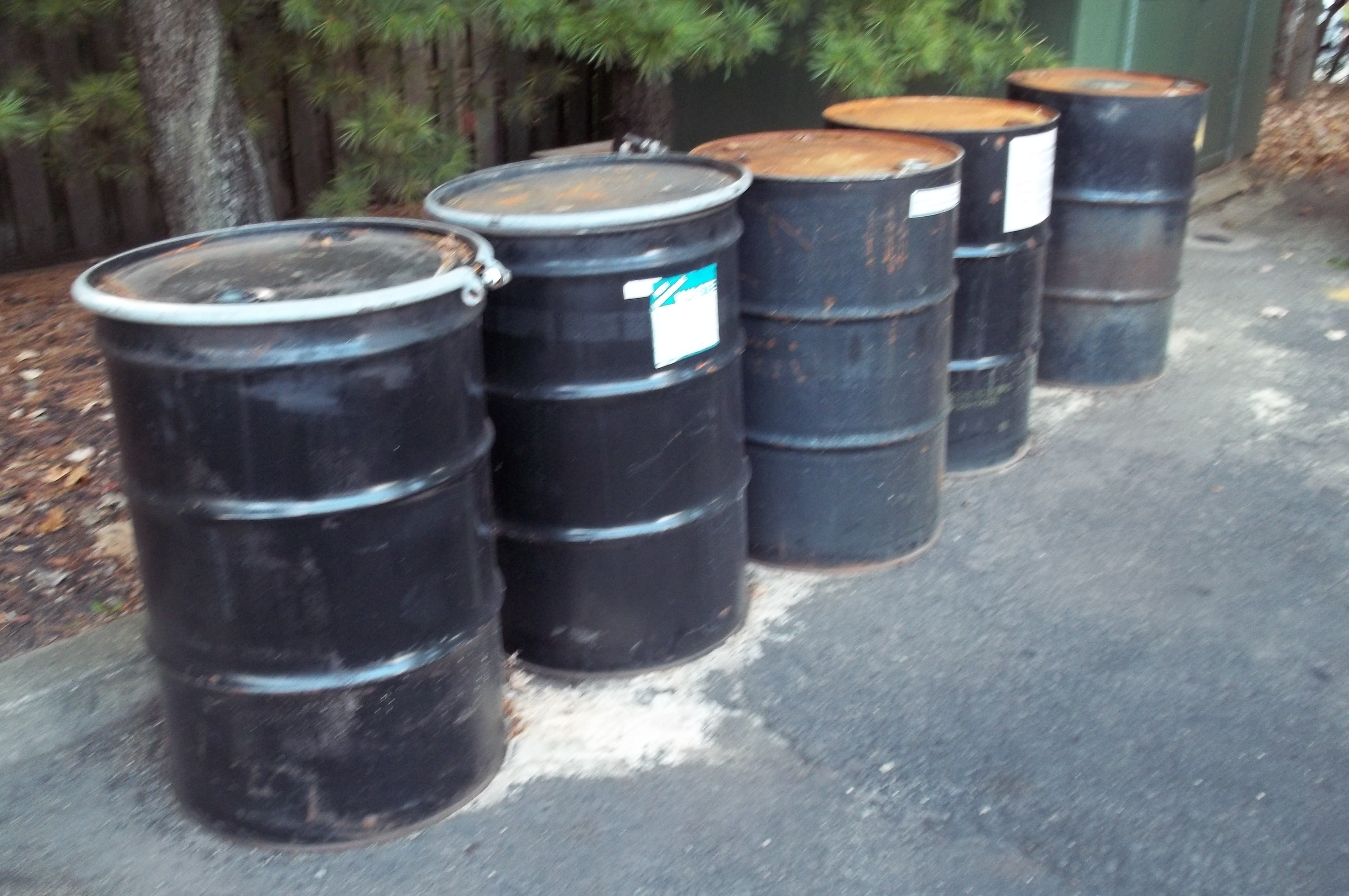
non-hazardous waste containersUSEPA – US Environmental Protection Agency:

Publications not related to the management of hazardous waste, solid waste, universal waste, or used oil are not included here.

Rules and Regulations:

Tennessee: Final Authorization of State Hazardous Waste Management Program Revisions Pages 14847 – 14852 [FR DOC # 2015-06512] PDF | Text | More

Proposed Rules:

Improving EPA Regulations Pages 12372 – 12373 [FR DOC # 2015-05303] PDF | Text | More

Contact me with any questions you may have about the management of hazardous waste

Daniels Training Services

815.821.1550

Info@DanielsTraining.com

https://danielstraining.com/

Tennessee: Final Authorization of State Hazardous Waste Management Program Revisions Pages 14894 – 14894 [FR DOC # 2015-06511] PDF | Text | More

Michigan: Final Authorization of State Hazardous Waste Management Program Revision Pages 17021 – 17024 [FR DOC # 2015-07347] PDF | Text | More

Notices:

Notice of Final Decision To Reissue the ArcelorMittal Burns Harbor, LLC Land-Ban Exemption Pages 12170 – 12171 [FR DOC # 2015-05240] PDF | Text | More

Notice of Final Decision To Reissue the Vickery Environmental, Inc. Land-Ban Exemption Pages 16374 – 16378 [FR DOC # 2015-06970] PDF | Text | More

transportation of HazMat by airFAA – Federal Aviation Administration:

Publications not related to the transportation of hazardous materials are not included here.

Rules and Regulations:

None

Proposed Rules:

None

Notices:

Nineteenth Meeting: RTCA Special Committee 225, Rechargeable Lithium Battery and Battery Systems Pages 14229 – 14229 [FR DOC # 2015-06260] PDF | Text | More

Hazardous Materials Safety Program Pages 14243 – 14244 [FR DOC # 2015-06158] PDF | Text | More

The FMCSA sets the minimum standards for Commercial Driver's Licenses
The FMCSA sets the minimum standards for Commercial Driver’s Licenses
FMCSA – Federal Motor Carrier Safety Administration:

Publications not related to the transportation of hazardous materials are not included here.

Rules and Regulations:

None

Proposed Rules:

Minimum Training Requirements for Entry-Level Drivers of Commercial Motor Vehicles: Negotiated Rulemaking Committee Meetings Pages 12136 – 12137 [FR DOC # 2015-05197] PDF | Text | More

Notices:

Motor Carrier Safety Advisory Committee (MCSAC): Public Meeting Pages 13663 – 13664 [FR DOC # 2015-05940] PDF | Text | More

FRA – Federal Railroad Administration:
Damaged placard from rail car
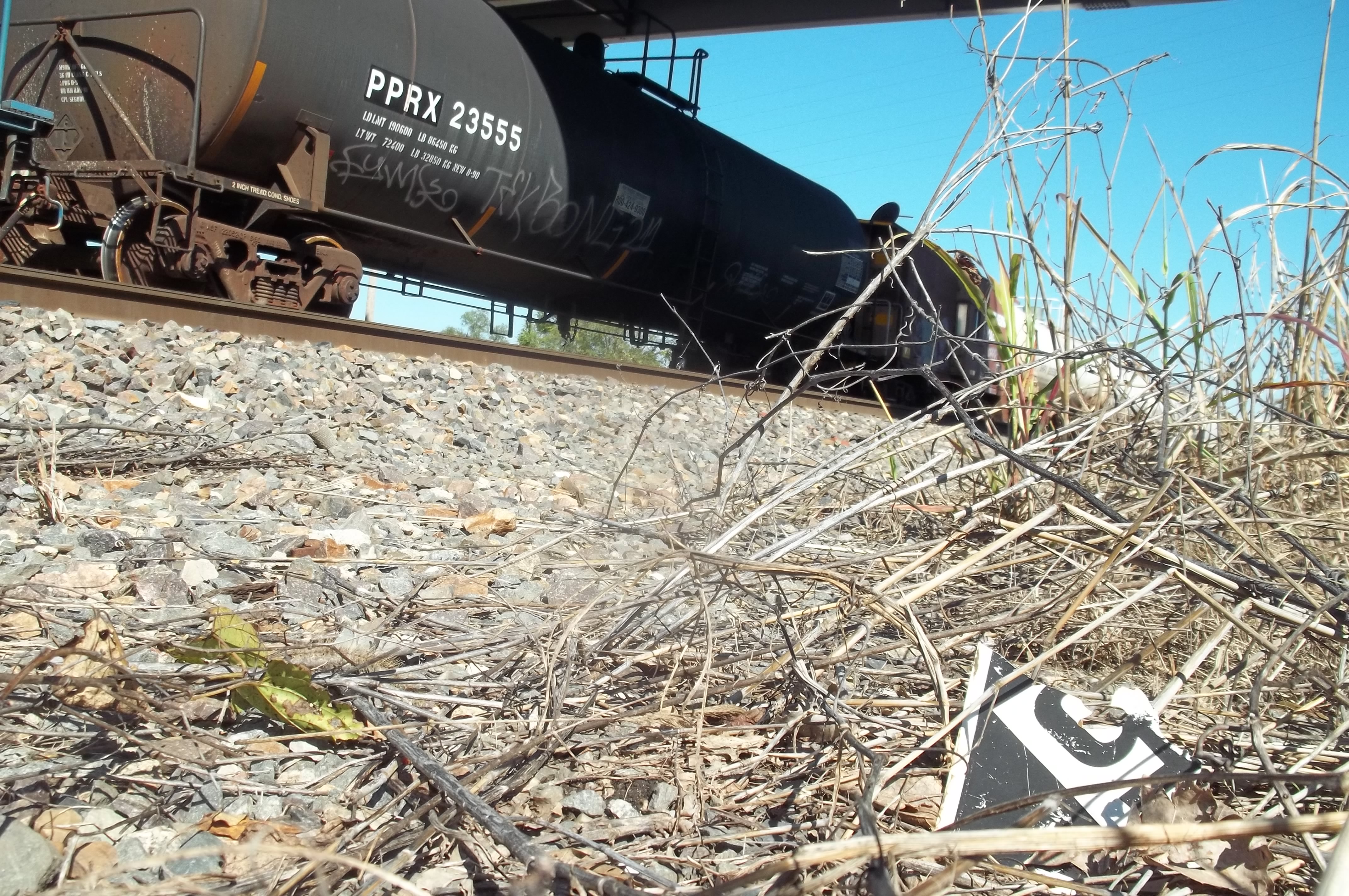
Picture 11 – Fragment of placard from rail car

Publications not related to the transportation of hazardous materials are not included here.

Rules and Regulations:

Railworthiness Directive for Railroad Tank Cars Equipped With Certain McKenzie Valve & Machining LLC Valves Pages 14027 – 14029 [FR DOC # 2015-06213] PDF | Text | More

Proposed Rules:

None

Notices:

Filing Process for Petitions for Waiver and Other Exemptions, Applications, and Special Approvals Pages 13458 – 13458 [FR DOC # 2015-05751] PDF | Text | More

Logo for the Pipeline and Hazardous Materials Safety Administration (PHMSA)PHMSA – Pipeline and Hazardous Materials Safety Administration:

Publications not related to the transportation of hazardous materials are not included here.

Rules and Regulations:

Hazardous Materials: Spare Fuel Cell Cartridges Containing Flammable Gas Transported by Aircraft in Passenger and Crew Member Checked Baggage Pages 16579 – 16583 [FR DOC # 2015-07109] PDF | Text | More

Proposed Rules:

None

Notices:

Hazardous Materials: Notice of Application for Modification of Special Permit Pages 15657 – 15658 [FR DOC # 2015-06473] PDF | Text | More

Hazardous Materials: Notice of Application for Special Permits Pages 15658 – 15659 [FR DOC # 2015-06469] PDF | Text | More

Hazardous Materials: Actions on Special Permit Applications Pages 15659 – 15660 [FR DOC # 2015-06463] PDF | Text | More

Hazardous Materials: Delayed Applications Pages 15660 – 15661 [FR DOC # 2015-06471] PDF | Text | More

Information can be helpful but it’s useless if you are not able to make sense of it.  You must be able to determine how any changes to the rules and regulations (final or proposed) will affect your operations, and communicate the necessary information to your personnel.  I can help you to do that.

Contact me with any questions you may have about the transportation of hazardous materials by air, highway, vessel, or rail

International and Domestic

Daniels Training Services

815.821.1550

Info@DanielsTraining.com

https://danielstraining.com/

Please contact me for a free training consultation to determine your regulatory requirements and how training can help you to attain and maintain compliance with the regulations of the US Environmental Protection Agency (and your state) and the PHMSA, FAA, FRA, & FMCSA of the US Department Of Transportation.

Search Website