PO Box 1232 Freeport, IL 61032

A Different Kind Of Training

A Different Kind Of Training

A Different Kind Of Training

Q&A: How can I ship a combustible liquid by air?

A question from the regulated community (10.24.17):

Good afternoon Daniel. I am shipping a combustible liquid and wanted to know if I can ship overnight by air if it falls under excepted quantity. It has a flashpoint of 80 Celsius. Will it require dangerous goods paperwork and placarding? If under 500mL I can ship by excepted quantity without placarding and paperwork correct? If over 500mL would it have to go ground only? I do not see combustibles in section 4.2 in the IATA book.

Thanks for your help sir.

Contact me with any questions you may have about the transportation of hazardous materials by air, highway, vessel, or rail

International and Domestic

Daniels Training Services, Inc.

815.821.1550

Info@DanielsTraining.com

https://danielstraining.com/

I knew this was going to be a tough question to answer because it referenced a classification unique to the U.S. (Combustible Liquid), a complicated packaging exception (excepted quantity), and two distinct sets of regulations (the USDOT/PHMSA Hazardous Materials Regulations for transport within the U.S. and the IATA Dangerous Goods Regulations for transport by air).  So, I asked for more information and more time:

Thank you for contacting me.

This is a very tough question which is taking me some time to research. If you can provide some additional information, that would be helpful:

  • What is the material? Does it have a classification other than combustible liquid?
  • Is the maximum net quantity of the inner packaging no more than 30 g or 30 ml?
  • Is the maximum net quantity of the outer packaging no more than 500 g or 500 ml?

Thank you and please advise.

He replied the next day (10.25.17):

Here is the SDS (SDS was attached to the email). Inner packaging would be 500mL. Maximum net quantity of the outer packaging would be 500mL.

The following relevant data was obtained from the SDS:

  • Contains: 95% N-MethylAminoPropylTriMethOxySilane and <5% Methanol
  • Flash point: 82 °C (179.6 °F)
  • Section 14 indicates classification as UN1993, Combustible liquid, n.o.s.
  • No classification per international regulations (IATA or IMO) is indicated.
  • No other information in SDS indicates material meets defining criteria of other HazMat / dangerous good.

Ball was back in my court.  I replied later that day:

I think I have an answer for you. Please see below.

  • Based on the SDS it is a hazardous material (HazMat) as defined by USDOT/PHMSA as a Class 3 Combustible Liquid.
  • The international regulations – including IATA – do not have a classification for, and do not regulate, a Combustible Liquid. Therefore, this material is not regulated per IATA.
  • 49 CFR 171.22(c) of the Hazardous Materials Regulations (HMR) requires a HazMat not subject to international regulations – e.g., a Class 3 Combustible Liquid – be subject to the HMR when transported to, from, or through the U.S. regardless of international regulations. This USDOT letter of interpretation confirms it (LOI 13-0020).
  • A Combustible Liquid transported within the U.S. is subject to the combustible liquid exception if it is not transported in a bulk packaging and is not classified as a hazardous substance, hazardous waste, or marine pollutant.  Based on the information provided I presume this HazMat is none of those.
  • To be be eligible as an excepted quantity per USDOT/PHMSA and IATA regulations the maximum net quantity of the inner packaging must be no more than 30 g / 30 mL and the maximum net quantity of the outer packaging must be no more than 500 g / 500 mL. Based on your earlier email your HazMat exceeds the maximum net quantity for the inner packaging and therefore can’t be transported as an excepted quantity.

In summary:

Based on the information provided the material as described is not subject to the regulations of either USDOT/PHMSA or IATA when transported within the U.S. or internationally by any mode as long as the requirements of the Combustible Liquid Exception are met.

I hope this helps.

Please don’t hesitate to contact me with any other questions.

Like this article?

Subscribe to my Monthly Newsletter

No marketing emails!

That appeared to satisfy him.

Great! Thanks Daniel. Some of these chemicals can be tricky when shipping.

Conclusion:

The transport of a hazardous material (aka: dangerous good) within the U.S. while subject to international regulations can be a challenge! The classification of a Class 3 Combustible Liquid and the application of the Combustible Liquid Exception are only two examples where international and domestic regulations must be made to work together. Other shipping challenges include: marine pollutants, hazardous substances, & lithium cells or batteries to name a few.  And of course, all regulations require periodic training for applicable personnel to ensure knowledge and compliance.

Daniels Training Services, Inc.

815.821.1550

Info@DanielsTraining.com

https://danielstraining.com/

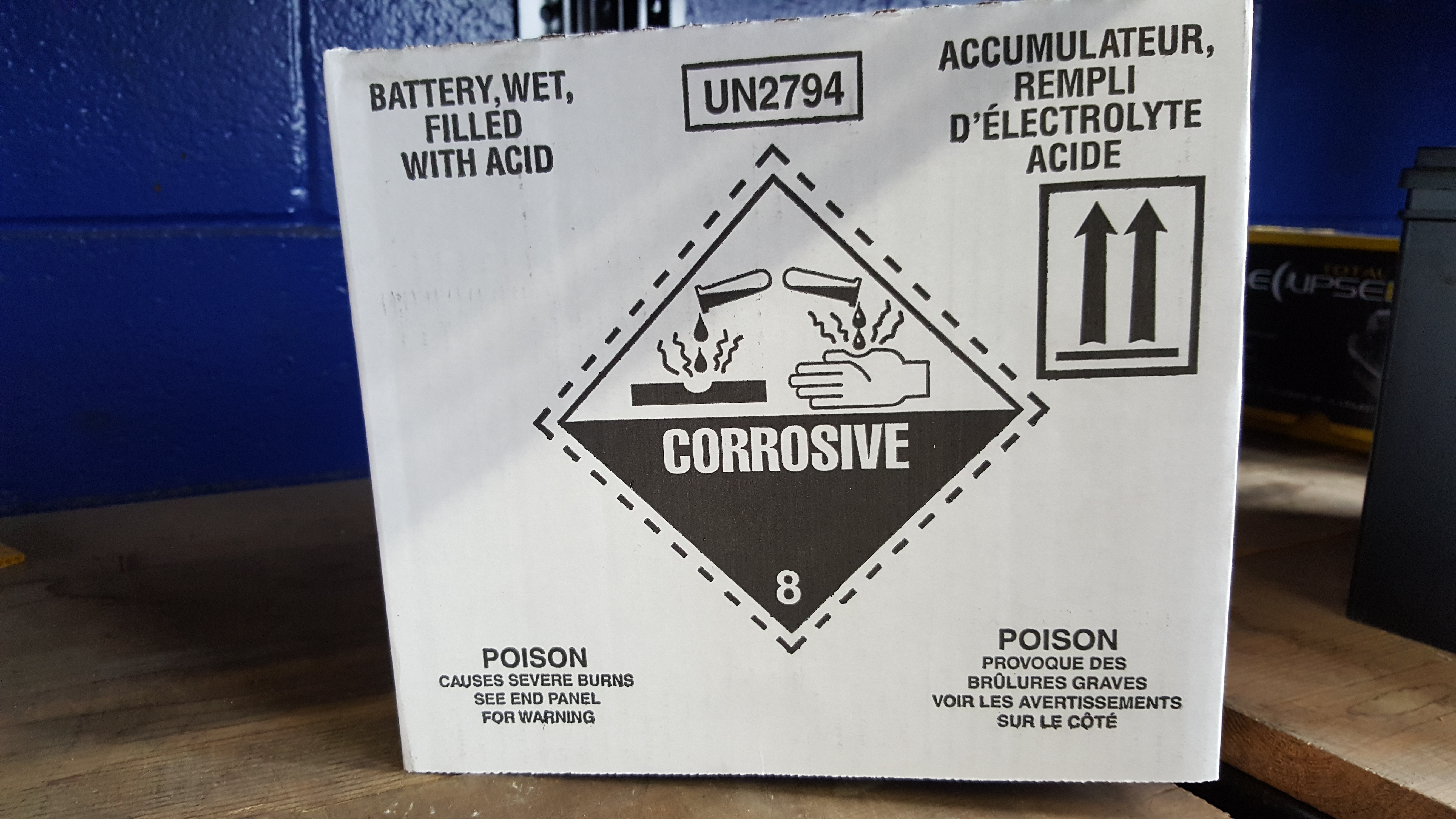
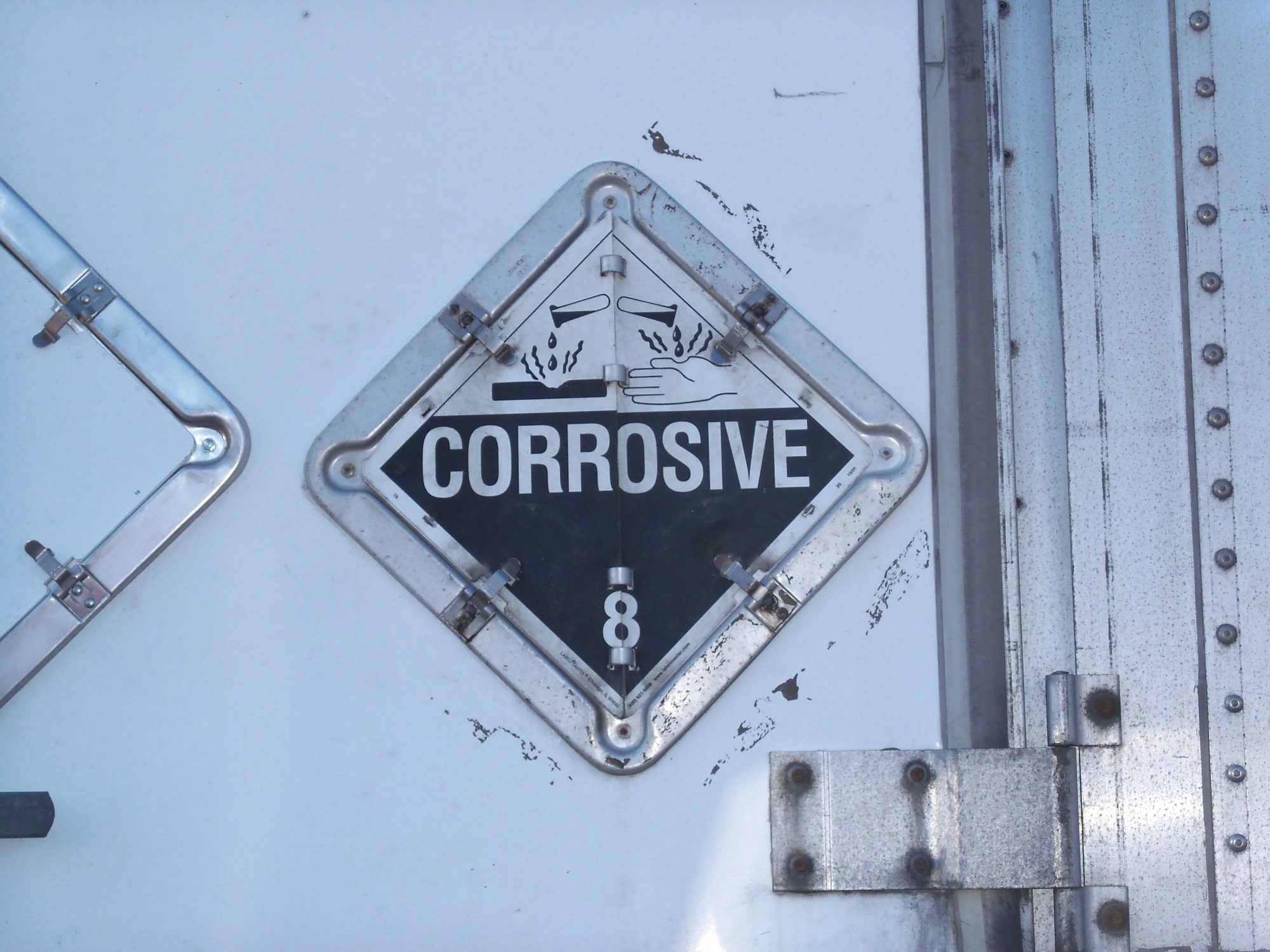
Image of Packaging with Class 8 label

Q&A: May I transport small quantities (car batteries & compressed nitrogen) by highway?

A question from somewhere in the U.S. (October 23, 2017):

Hi my name is <<name>>. I drive a box truck for work. We have two facilities. I transport materials back and forth. I carry minimum hazmat from time to time. What are the requirements for transporting say 6 car batteries. Or a very small bottle of compressed nitrogen?.  Do they need to be boxed up with placard on packaging and the proper emergency contact info on the outside of the box and should I have a b.o.l. for transportation with ads sheets. If you can help me I’d be so grateful. I’ve been back and forth with my concerns to the company and they basically ignore me.

Sincerely

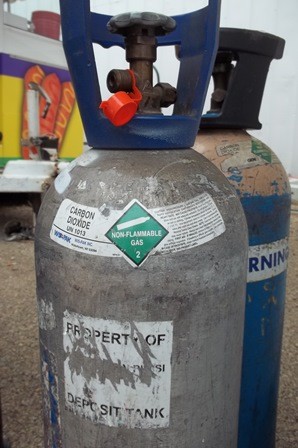
My reply that day:nitrogen gas cylinder

I believe I can answer your question.  Please see below:

  • It sounds like what you are describing is the transport of hazardous materials (HazMat) by a private motor carrier.
  • This type of transport is not subject to full USDOT regulation if transported according to the Materials of Trade Exception.
  • The cylinder of nitrogen is acceptable as long as its weight is no more than 100 kg.
  • Car batteries should be OK as long as each weighs no more than 30 kg.
  • Total HazMat on vehicle no more than 200 kg.
  • If in compliance with the above, only basic precautions need to be taken to secure the load, ID the HazMat, and inform the driver.
  • Also, the batteries alone may be transported under an exception from regulation found at 49 CFR 173.159(e) which is part of this article: Packaging Wet Batteries for Transportation

Interested in a Webinar that covers this topic, and more!

My Webinar Training Schedule

I hope this helps.

Please contact me with any other questions.
Onsite Training in action

FAQ: What are the Penalties for non-Compliance with the USDOT Regulations in 2019?

Like any decent regulatory agency the Pipeline and Hazardous Materials Safety Administration within the U.S. Department of Transportation (USDOT/PHMSA) issues monetary penalties for violations of its Hazardous Materials Regulations (HMR). And wouldn’t you know it, USDOT/PHMSA adjusts those penalties to keep pace with inflation. Below are the increased penalty amounts for 2019:

Note: all penalties are assessed per violation, per day.

  • Maximum civil penalty for a violation of the HMR: $78,976. An increase from $78,376 in 2018.
  • If the violation results in death, serious illness, severe injury, or substantial property damage:  $186,610.  An increase from $182,887 in 2018.
  • The minimum penalty for a violation related to HazMat Employee training:  $481.  An increase for $10 from $471 in 2018.

Remember, those amounts can be assessed separately for each day that each violation exists.

I’m sure you’ve been in a situation where someone has told you that the company can’t afford HazMat Employee training.  Looking at the above amounts I’d say it’s more correct to say the company can’t afford not to have HazMat Employee training.

Contact me with any questions you may have about the transportation of hazardous materials by air, highway, vessel, or rail

International and Domestic

Daniels Training Services, Inc.

815.821.1550

Info@DanielsTraining.com

https://danielstraining.com/

Q&A: What are the regulations for shipping a combustible liquid (paint) from U.S. to Canada?

An email query on October 20, 2017:

Hello,

Just read your article “US DOT Exception for Combustible Liquid Hazardous Materials” and it was very helpful to my company.

One question… can this combustible exemption be used when shipping to Canada?

My reply:

I will be able to assist you with this issue.  A few questions:

  • What is the mode of transport? Air, vessel, highway, or rail?
  • What is the flash point? <100 degrees F? 100 – 140 degrees F? >140 degrees F?
  • Will the packaging be bulk:  cargo tank, portable tank, IBC? Or, non-bulk:  55-gallon drum or smaller?

Thank you and please advise.

Looks like I didn’t move fast enough!:

Daniel,

Thank you so much for your quick response.

In the past half hour, I was able to speak with someone in Canadian “DOT” who was able to help answer all of my questions.

Thanks again for your response but they were able to straighten me out,

Like this article?

Subscribe to my Monthly Newsletter

No marketing emails!

But I’m a curious guy, always wanting to learn more:

Your welcome.

If you don’t mind taking the time, could you please confirm my initial determination (more research was planned) that a form of the U.S. combustible liquid exception is available in Canada if transport is by highway or rail?

My curiosity was rewarded:

Hello Daniel,

This is the response that I received from Transport Canada.

Makes sense to me!

Thanks again,

TEXT OF LETTER FROM TRANSPORT DANGEROUS GOODS (TDG) CANADA FOLLOWS:

Mr. <<>>

Flammable liquids in PG III are not regulated in Canada as a dangerous good if the flash point is above 37.8 C (~100 °F), they are exempt from shipping papers, labels, packaging, training, emergency response planning, by road under 1.33 as follows:

1.33 Class 3, Flammable Liquids: General Exemption

SOR/2008-34

Part 3 (Documentation), Part 4 (Dangerous Goods Safety Marks), Part 5 (Means of Containment), Part 6 (Training), Part 7 (Emergency Response Assistance Plan), Part 9 (Road) and Part 10 (Rail) do not apply to the handling, offering for transport or transporting of dangerous goods included in Class 3, Flammable Liquids, on a road vehicle, a railway vehicle or a ship on a domestic voyage if the dangerous goods

(a) have no subsidiary class;

(b) are included in Packing Group III and have a flash point greater than 37.8°C; and

(c) are in one or more small means of containment designed, constructed, filled, closed, secured and maintained so that under normal conditions of transport, including handling, there will be no accidental release of the dangerous goods that could endanger public safety.

In addition Part 9 of the regulations allows for reciprocity with US DOT requirements under 49 CFR to destination from USA to Canada IAW 49 CFR.

So, in short, yes you may ship as stated to destination in Canada.

Regards

D.W. (Dave) Greyeyes

Transport Dangerous Goods Inspector

Prairie and Northern Region – Surface

Transport Canada / Government of Canada

Room 305 101-22nd Street East, Saskatoon, SK., S7K 2L2

David.greyeyes@tc.gc.ca / Tel : 306 975 6246 / Fax: 306 975 4555 / TTY: 1.888.675.6863

TEXT OF LETTER TO TRANSPORT DANGEROUS GOODS (TDG) CANADA FOLLOWS:

Good Morning Sir/Madame,

I have a question about shipping combustible paint to Canada.  Our company is located in USA.

The paint that we are shipping to Canada has a flash point of 108 degree F (42 degrees C).  From what I understand, this classifies it as a combustible material in Canada.

Here in the US, combustible materials do not need any classification or labelling as they are exempt under US DOT laws.

Can I ship into Canada without labelling/hazardous documentation (same laws as in the US)?

Thanks very much for your time in this matter,

Contact me with any questions you may have about the transportation of hazardous materials by air, highway, vessel, or rail

International and Domestic

Daniels Training Services, Inc.

815.821.1550

Info@DanielsTraining.com

https://danielstraining.com/

Conclusion:

So there you have it, right from our neighbors to the north!  The combustible liquid exception found in USDOT/PHMSA regulations is valid in Canada as well.

Q&A: Is the entire name of the receiving facility required on the uniform hazardous waste manifest?

A question from my website (October 10, 2017):

Do i need to print the entire name of a waste receiving facility as permitted, or can I abbreviate it?

My reply that same day:

Thank you for contacting me. I will try to answer your question below:

  • The USEPA instructions for completing the Uniform Hazardous Waste Manifest include the following:

Item 8. Designated Facility Name, Site Address, and U.S. EPA ID Number
Enter the company name and site address of the facility designated to receive the waste listed on this manifest. Also enter the facility’s phone number and the U.S. EPA twelve digit identification number of the facility.

  • There is nothing that I can find in EPA regulations that prohibits the abbreviation of the designated facility. Nor is it specifically allowed.
  • USDOT regulations at 49 CFR 172.201(a)(3) prohibit the use of abbreviations in the shipping description unless specifically authorized by regulations. However, the designated facility is not part of the shipping description.
  • State regulations may be more strict than those of the USEPA and may contain a prohibition on the use of abbreviations, though I doubt it. You may wish to check with the state of both the generator and designated facility.

Like this article?

Subscribe to my Monthly Newsletter

No marketing emails!

  • In sum:  I don’t recommend abbreviating information on the Uniform Hazardous Waste Manifest but cannot find anything in the regulations – either USDOT or USEPA – that specifically prohibits it.

I hope this helps. Please don’t hesitate to contact me with any other questions.

At that seemed to do it because I didn’t hear anymore from him.

While I prefer to give clear answers based on precise language of the regulations, sometimes that isn’t possible.  As in this instance, the regulations don’t always address every possible circumstance.  In those situations I think it best to be conservative and play it safe.

Q&A: Do I have to placard the vehicle if placards are visible on IBCs?

A question (09.22.17):

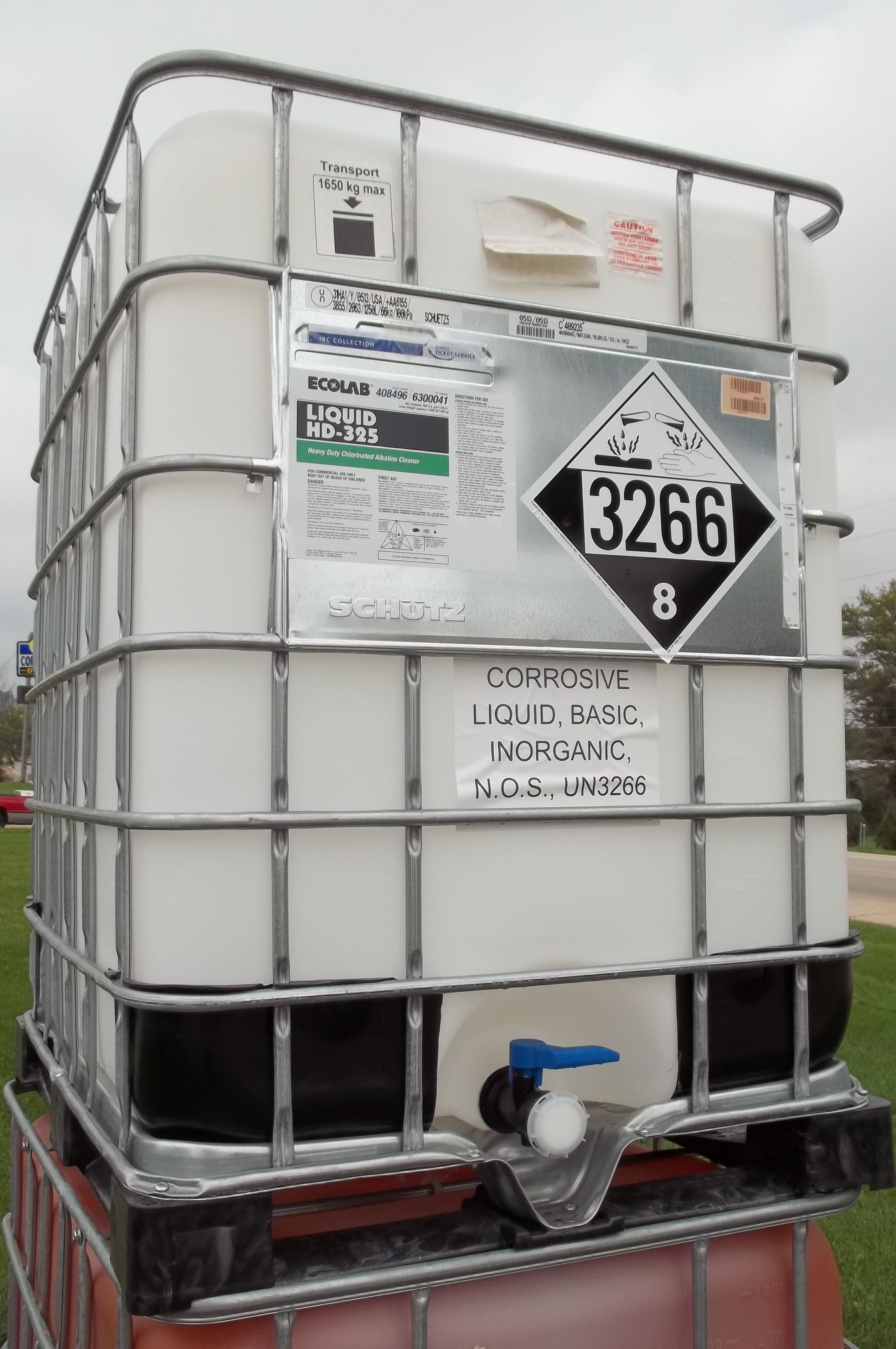
if you are carrying 2 – totes of sulfuric acid on flatbed rail side truck and the totes are placarded correctly with the un# bulk placards. Does the truck also have to be placarded with the same placards?UN3266 in Intermediate Bulk Container (IBC)

Contact me with any questions you may have about the transportation of hazardous materials by air, highway, vessel, or rail

International and Domestic

Daniels Training Services, Inc.

815.821.1550

Info@DanielsTraining.com

https://danielstraining.com/

My answer:

The answer to your question is yes, the truck must display the required placards in addition to those on the totes if by “tote” you mean an intermediate bulk container or IBC and not a portable tank as your subject line indicates.  Please see below.

  • 49 CFR 172.504(a) requires a transport vehicle to display placards on all four sides (i.e. each side and each end) unless the type and quantity of HazMat is excepted from placarding requirements.  This is not the case in your scenario.
  • 49 CFR 172.516(a) requires the placards on a vehicle to be clearly visible and allows the required display of placards to be replaced by their display on a freight container or portable tank.  An IBC is not indicated as an option for this exception.
  • 49 CFR 171.8 defines a freight container:  Freight container means a reusable container having a volume of 64 cubic feet or more, designed and constructed to permit being lifted with its contents intact and intended primarily for containment of packages (in unit form) during transportation.
  • 49 CFR 171.8 defines a portable tank: Portable tank means a bulk packaging (except a cylinder having a water capacity of 1000 pounds or less) designed primarily to be loaded onto, or on, or temporarily attached to a transport vehicle or ship and equipped with skids, mountings, or accessories to facilitate handling of the tank by mechanical means. It does not include a cargo tank, tank car, multi-unit tank car tank, or trailer carrying 3AX, 3AAX, or 3T cylinders.
  • 49 CFR 171.8 specifically defines an IBC as not a portable tank.

Like this article?

Subscribe to my Monthly Newsletter

No marketing emails!

In sum:

hinged placardThe display of placards and package marks (the 4-digit identification number) on the tote (aka: IBC) does not fulfill the requirement to display placards on all four sides of the vehicle.

Conclusion:

I receive questions like this all the time.  Sometimes – like this one – I’m surprised by the answer.  Make sure you know the regulations before you ship and risk a fine.  Contact me with your questions.

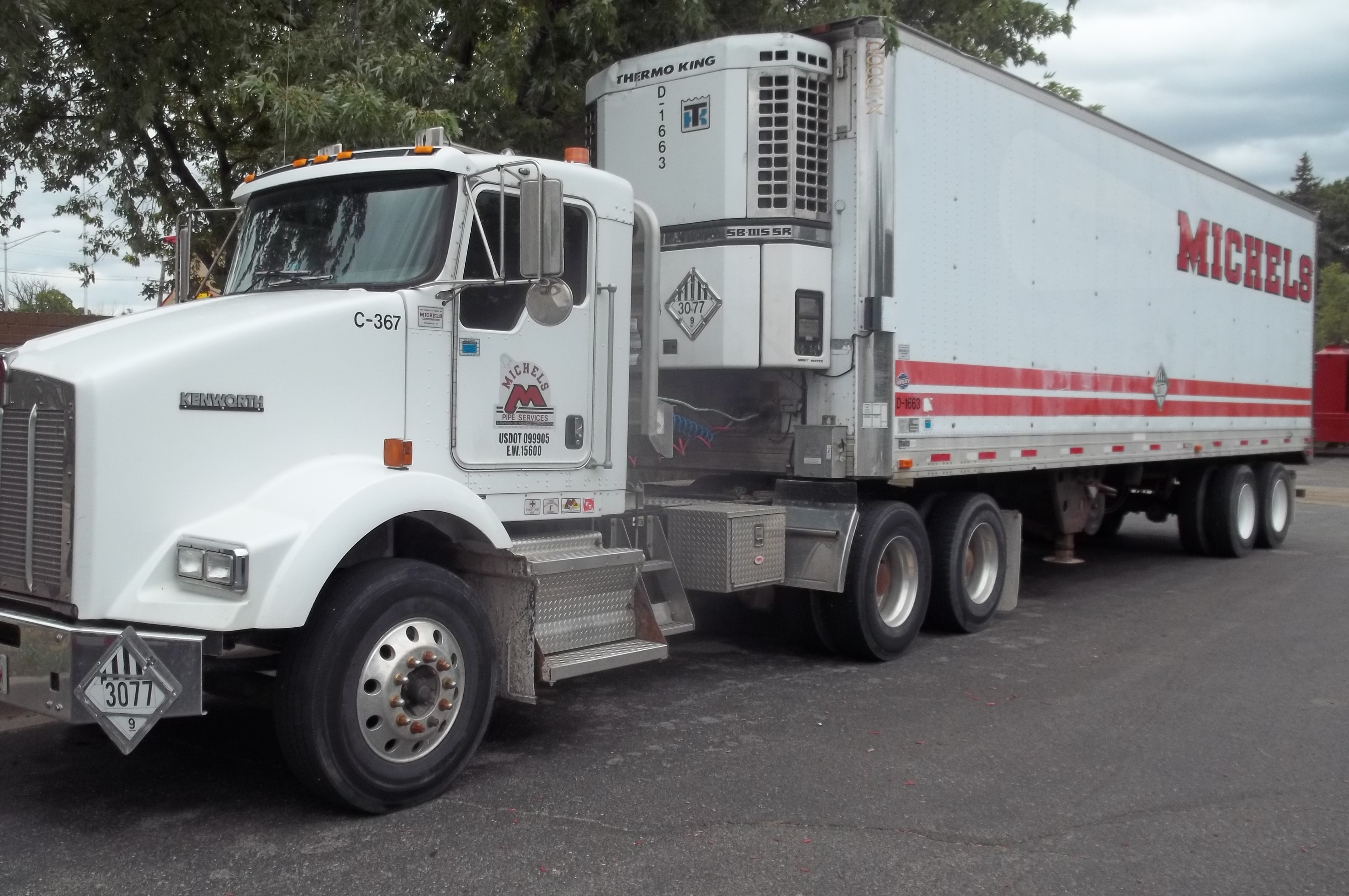
Semi-tractor trailer combination displaying Class 9 placard

Q&A: Is the HazMat endorsement required on the CDL when transporting Class 9?

A substantial percentage of the questions I receive pertain to Class 9 Miscellaneous and its placarding requirements.  Here’s one of them:

If a container has a class 9 placards and an orange placard with 4 digit # does the driver have to have hazmat endorsement on their license to haul? Product is agricultural pesticides and fertilizers.

Thanks

I was busy just then and wanted to give him a quick answer but also wished to provide more information. So, here’s my answer:

Short answer: No.

I will provide the long answer later today.

Contact me with any questions you may have about the transportation of hazardous materials by air, highway, vessel, or rail

International and Domestic

Daniels Training Services, Inc.

815.821.1550

Info@DanielsTraining.com

https://danielstraining.com/

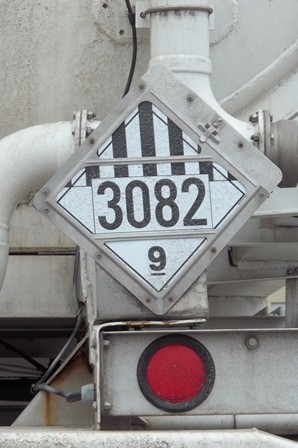
And later that night, I provided the long answer:Class 9 Miscellaneous placard on truck

I will provide a more complete answer to your question:

I hope this helps.  Please don’t hesitate to contact me if you have any other questions.

Also, you may wish to read:  Requirements for Training of HazMat Employee Drivers

That seemed to be the answer he needed because I didn’t hear any more from him.

The USDOT regulations for the transport of hazardous materials can be a challenge.  The challenge is increased when the USDOT regulations for a commercial motor vehicle are also a factor.  I can help you when the challenge is greatest.  Please contact me with questions or if you require USDOT training for HazMat Drivers.

Q&A: Are my “empty” tanks subject to USDOT regulations?

Here’s a question from September 18, 2017.  This guy had done his research (you can tell by his questions) but still required some guidance through the USDOT/PHMSA Hazardous Materials Regulations:

Good afternoon,

I’ve been doing some digging and I think I have the answer but I want to run it past you first.

What we’ll be doing: 2 – 400 gallon steel tanks fabricated to be about 4x6x5’ tall. They are open top tanks, like a cube. We’ll have them on a flatbed trailer. We will be taking them to a site, filling with diesel fuel, cleaning parts that are on site, draining the fuel and moving them to another site with no fuel in them. The driver will not have a commercial driver’s license (CDL). The GVW of the truck and trailer is less than 26,000 lb, so this is a CMV rig.

The combined gallons of the tanks is less than 1,000. We’re good. No endorsement needed. They are on a flatbed trailer. The intended use of the trailer is not for tanks, so it’s not considered a tanker. We’re good. No endorsement needed.

But, do we need to certify that the tanks are cleaned, purged, vapor free? We can rinse them very well at each cleaning station but they will no doubt a very small residual amount of fuel, at least a fuel smell – vapors.

If we rinse them with a degreaser to remove the odor, will that make us legal? Do we need to have them certified and then carry the cert with the us in the truck?

I think we need to have them certified clean and carry the cert. I hope I’m wrong.

What are your thoughts? Thank you very much.

Daniels Training Services, Inc.

815.821.1550

Info@DanielsTraining.com

https://danielstraining.com/

My reply that same day:

It looks like you have done your research. I will try to assist you as best I can. Please see below.

  • As long as the tanks are not being used to transport hazardous materials you are not subject to USDOT regulations.
  • If however, the tanks contain the residue of a hazardous material (diesel) – even vapors – then the transportation in commerce is subject to regulation. If that is the case, what you have are bulk packagings of a hazardous material which require placards.  Read: USDOT Regulations for the Transport of “Empty” Packagings
  • If placards are required to be displayed on a vehicle then, no matter the size, the driver must have a CDL with the HazMat endorsement.
  • A vehicle greater than 10,000 lbs but less than 26,000 lbs GVW engaged in interstate transport (i.e. between two states) is a commercial motor vehicle (CMV) subject to some – but not all – Federal regulations. A vehicle of >26,000 lbs GVW is subject to full regulation.
  • A vehicle engaged solely in intrastate transportation (does not leave the state) is subject solely to state regulations which may be more strict than Federal. Some states (e.g. California) regulate a CMV at less than 10,000 lbs.
  • The HazMat endorsement on a CDL is required only if the vehicle is required to display placards.
  • If the tanks are “sufficiently cleaned of residue and purged of vapors to remove any potential hazard”, then no HazMat exists, placards are not required.
  • A certification is not required in order to indicate the tanks are “empty” as defined above. It is up to you as the shipper to determine if the definition of “empty” has been met. You may wish to create some type of certificate for the driver to provide to an inspector if stopped, but it won’t mean anything if any harmful vapors remain in the tanks.
  • I assume from you question that you will not be transporting the diesel, that it will be on-site waiting for you. If this is the case then you are not a shipper or carrier of HazMat.
  • Almost all transport of HazMat is subject to regulation and will require HazMat Employee training.
  • I receive this question so frequently I turned it into an FAQ: Do I Need and “All Clean” Certificate for my Empty Cargo Tank?

I hope this helps. Please don’t hesitate to contact me with any other questions.

Like this article?

Subscribe to my Monthly Newsletter

No marketing emails!

This was clearly important to him because he replied immediately:

Thank you for your quick response.  Please scroll down and see the text below.  I found this in the regs – 49 CFR 173.29.  Great.

(b) Notwithstanding the requirements of paragraph (a) of this section, an empty packaging is not subject to any other requirements of this subchapter if it conforms to the following provisions:

(1) Any hazardous material shipping name and identification number markings, any hazard warning labels or placards, and any other markings indicating that the material is hazardous (e.g., RQ, INHALATION HAZARD) are removed, obliterated, or securely covered in transportation. This provision does not apply to transportation in a transport vehicle or a freight container if the packaging is not visible in transportation and the packaging is loaded by the shipper and unloaded by the shipper or consignee;

(2) The packaging—

(i) Is unused;

(ii) Is sufficiently cleaned of residue and purged of vapors to remove any potential hazard;

We have the opportunity to rinse, scrub with degreaser and rinse again at each site.  These sites are all over the country so we’ll be interstate.  But with no residuals and no vapors we will not be transporting anything hazardous, just an empty tank.

What I’d like to do is generate a certificate for the driver that has the regulations listed for the office to see when we’re pulled over.  I have no doubt we’ll be pulled over at some point.  I’ll reference the CFR and hopefully the nice officer will let us go on our way peacefully.

How does that all sound?

Interested in a Webinar that covers this topic, and more!

My Webinar Training Schedule

It didn’t sound too bad to me:

I think that sounds like a good idea.

Also, it may not hurt to contact a professional tank cleaner to see if they might let you have a look at the certificate they issue.  It might help you in selecting the wording for your certificate.

However, some language to the effect of “cleaned per 49 CFR 173.29(b)(2)(ii)…” would suffice.

Also, please note: the wastewater generated at each site will likely be a non-hazardous waste subject to state regulation.  For example, in Michigan it will likely be a Liquid Industrial By-Product.  In Pennsylvania, a residual waste.  In California, a non-RCRA hazardous waste.  In Texas a Non-Hazardous Industrial Solid Waste (Class 1 or Class 2).

Please contact me if you have any other questions about the transport of HazMat or the management of waste.

There were still some legs on this exchange:

We are working for a major oil company.  Our folks will check, but the client should have the means to dispose of / capture / store any rinse waters that are associated with their property.  Typically they would take care of that as they are the generators of such waste.

I do appreciate your help with this very much.

Have a good day.

And that was that!

Don’t let the regulations preclude you from conducting your business!  Don’t let your business prevent you from complying with the regulations!  Business can be done – and safely – if you research the regulations to ensure compliance.  I can assist you with your questions and hopefully help you to get the job done right.

Contact me with any questions you may have about the transportation of hazardous materials by air, highway, vessel, or rail

International and Domestic

Daniels Training Services, Inc.

815.821.1550

Info@DanielsTraining.com

https://danielstraining.com/

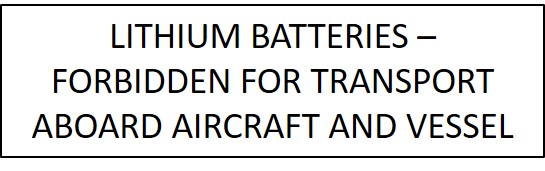
Lithium Battery Medium Forbidden Air and Vessel

Q&A: What transport regulations apply to lithium ion batteries in equipment?

A commonly-shipped HazMat that generates a lot of questions for me:  lithium batteries:

Hello,

I saw that you had answered a few questions about transporting batteries in the past, and I had one for you that I hope you can answer. My company is transporting (by ourselves, not shipping), several manufactured articles over the coming months and they all contain three Li-Ion cells wired series to produce a 12V, 144Wh battery. Do we need any special placards or packaging etc with these on board?

Thank you,

I required a little time to research the regulations but replied a few days later:

Thank you for contacting me.  I will do my best to answer your question below.

  • What you describe will be classified as a hazardous material when offered for transportation as:  UN3481, Lithium ion batteries contained in equipment, 9
  • A lithium ion battery of 144 Wh – while not below the initial threshold of 100 Wh – is subject to the smaller lithium battery exception per 49 CFR 173.185(c)(1)(iv) which has a threshold of 300 Wh.

    Note:

    Batteries used in most consumer products – laptops, phones, power tools – are lithium ion of less than 100 Watt hours.

  • Conditions of this particular exception include:
    • Transport by highway or rail only.
    • Outer packaging must be marked “LITHIUM BATTERIES – FORBIDDEN FOR TRANSPORT ABOARD AIRCRAFT AND VESSEL”.  The mark must be of a size specified in 173.185(c)(1)(v).
    • Equipment battery is contained in must provide sufficient protection or the equipment must be placed in a rigid outer packaging.
  • No other package marks or labels are required as long as there are no more than two lithium batteries per package and no more than two packages per shipment (consignment).
  • The general packing requirements of 49 CFR 173.185(a)(1) & (2) and 173.185(b)(1) & (2) & (4) apply.
  • No other requirements of the Hazardous Materials Regulations of USDOT apply.

Also…

  • Placards are not required to be displayed on a vehicle transporting any amount of Class 9 Miscellaneous. Curious? read more about the requirement to display the Class 9 placard.
  • Since placards are not required a HazMat endorsement on the driver’s CDL is not required.
  • A CDL may not be required depending on the weight of the vehicle and the type of transportation (interstate v. instrastate).

I hope this helps.

Please don’t hesitate to contact me with any questions.

I didn’t hear back from them so I assume my answer was enough.

There are two points I suggest you take from this article:

  • The bigger the battery – measured in Watt hours for lithium ion and grams of lithium metal for lithium metal – the more burdensome the regulations.
  • The regulations for the transport of lithium batteries are most strict by aircraft, less strict by vessel, and least strict by highway and rail.

And finally: don’t take the transport of lithium batteries lightly! There are regulations (domestic and international) for their transport by all modes (aircraft, vessel, highway, or rail).  Let me help you to navigate your way through them.

Contact me with any questions you may have about the transportation of hazardous materials by air, highway, vessel, or rail

International and Domestic

Daniels Training Services, Inc.

815.821.1550

Info@DanielsTraining.com

https://danielstraining.com/

Q&A: What placard do I need if I am hauling a gas and water mixture?

Just one of those questions I frequently get from out of the blue:

What placard do I need if I am hauling a gas and water mixture?

How many gallons of that can I haul in a trailer behind my personal truck without having to go through the DOT?

My reply:

I will try to answer your question.  Please see below.

  • You must first determine if what you intend to ship is a hazardous material (HazMat) per the regulations of the USDOT/PHMSA.  Depending on the concentration of water and gasoline, what you describe may be hazardous or non-hazardous.  For the purposes of this discussion I will assume it to be HazMat.
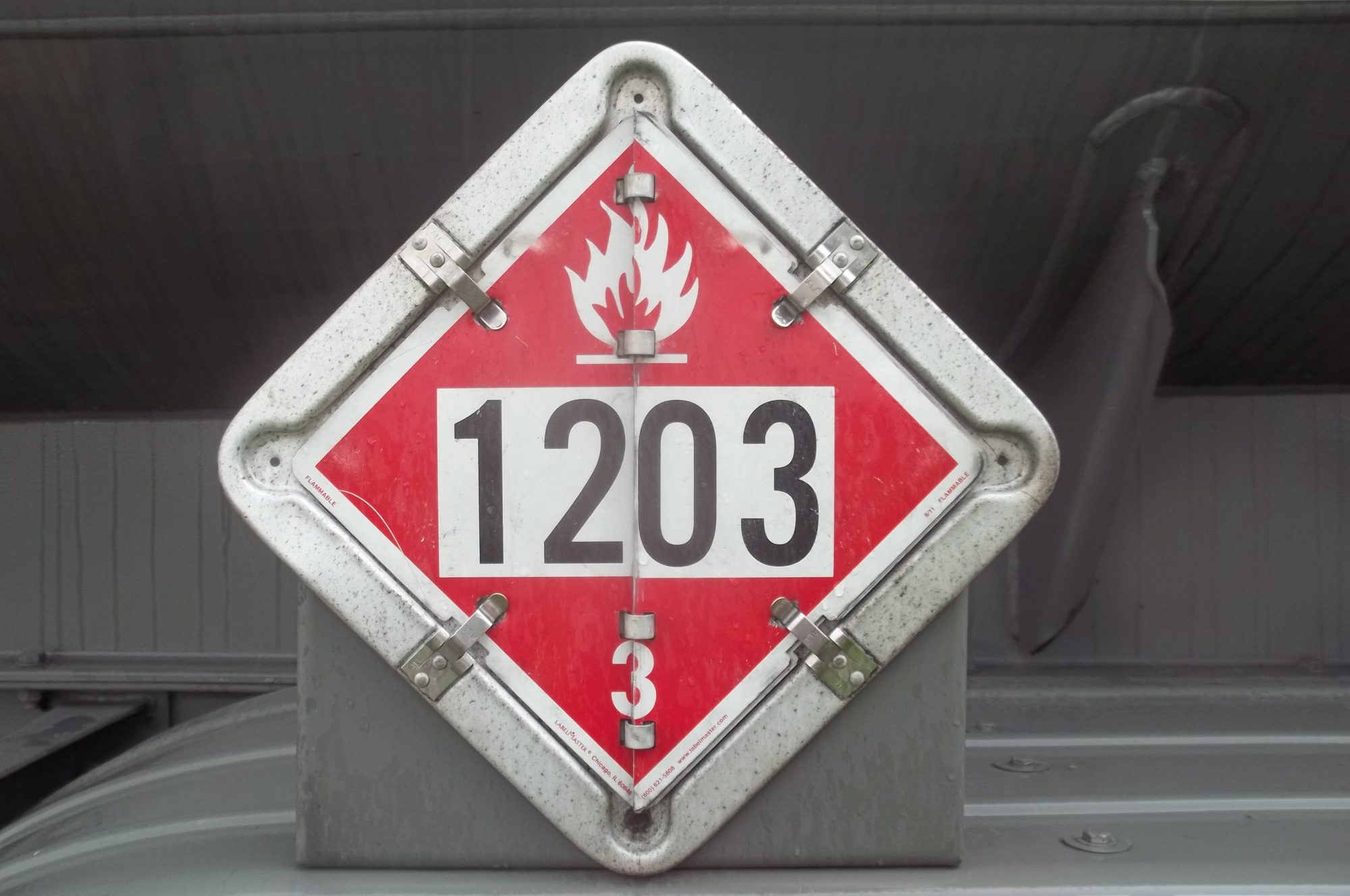
  • If the quantity of HazMat transported is 1,001 lb (454 kg) or more the vehicle must display placards and it must be registered as a commercial vehicle.Placard and ID Number for Gasoline
  • If the HazMat is in a bulk packaging the vehicle must display placards and the vehicle must be registered as a commercial vehicle.
  • If the gross vehicle weight is greater than 10,000 lbs (this includes the vehicle, the HazMat, &etc.) the vehicle must be registered as a commercial motor vehicle.
  • Some state regulations are more strict than the above Federal regulations and may regulate commercial vehicles at weights of less than 10,000 lbs. (California, for example).

Read this article to learn more about the determination of a commercial motor vehicle when transporting hazardous materials by highway.

I hope this helps.  Please don’t hesitate to contact me with any other questions.

And I assume that satisfied him because he didn’t reply (which also frequently happens).

Feel free to contact me if you have any questions about the transportation of a hazardous material and especially if you are uncertain about what is – and isn’t – a hazardous material.

Daniels Training Services, Inc.

815.821.1550

Info@DanielsTraining.com

https://danielstraining.com/

Search Website