PO Box 1232 Freeport, IL 61032

A Different Kind Of Training

A Different Kind Of Training

A Different Kind Of Training

New Size Requirement for the Identification Number Marking in 2017

Unless excepted by regulation, a non-bulk package of a hazardous material in – or offered for – transportation must display its identification number as a marking. The four-digit identification number (preceded by “UN”, “NA”, or “ID” as appropriate) is found in column four of the Hazardous Material Table.  Other package markings, not to mention HazMat labels, will be required as well but I don’t intend to get into that here.  The purpose of this article is to bring to your attention a new (as of January 1, 2017) minimum size requirement for the height of the identification number marking on a non-bulk packaging.

Contact me with any questions you may have about the transportation of hazardous materials by air, highway, vessel, or rail

International and Domestic

Daniels Training Services

815.821.1550

Info@DanielsTraining.com

https://danielstraining.com/

The citation for this regulation can be found in Title 49 of the Code of Federal Regulations part 172.301 (49 CFR 172.301). In paragraph (a) of this regulation the minimum height requirement for an identification number on a non-bulk packaging is established as follows.

[table “IDNumber” not found /]

Note 1: This is a minimum height requirement for the identification marking. There is no requirement for the width of the characters that make up the marking nor is there a requirement for the type of font used.

Note 2: This regulation went into effect on January 1, 2017 when the transitional exception from compliance at 49 CFR 172.301(a)(1)(i) ended.


There is one exception from the minimum height requirement remaining for certain permanently marked packagings. This exception is found at 49 CFR 172.301(a)(1)(ii). It’s conditions are summarized as follows:

  • Packaging is for domestic (within U.S.) transportation only.
  • Packaging manufactured prior to January 1, 2017.
  • Packaging is permanently marked with the identification number marking. Examples of an acceptable permanent marking include embossing or a heat stamp process.

If all of the above conditions are met, then the packaging may continue in service until the end of its useful life.

Like this article?

Subscribe to my Monthly Newsletter

No marketing emails!

The identification number is just one of the markings required on a hazardous material packaging. Many other markings have minimum size requirements as well, including but not limited to the following:

  • §173.3(c), each salvage packaging must be marked “SALVAGE” in letters at least 12 mm (0.5″) high.
  • §173.25(a)(4), the overpack is marked “OVERPACK” in letters at least 12 mm (0.5″) high.
  • §172.332(b)(1), an identification number for a bulk packaging on an orange panel must be 100 mm (3.9″) high and of black Helvetica Medium numerals.
  • §172.325(c), if both the identification number and the word “HOT” is displayed on a white-square-on-point display configuration, the word “HOT” must be in black letters having a height of at least 50 mm (2.0″).

There’s more, of course, but that will have to be for another article.  For now, make certain that the identification number marking on your non-bulk packagings of HazMat are in compliance with this new regulation.  And contact me if you require HazMat Employee training.

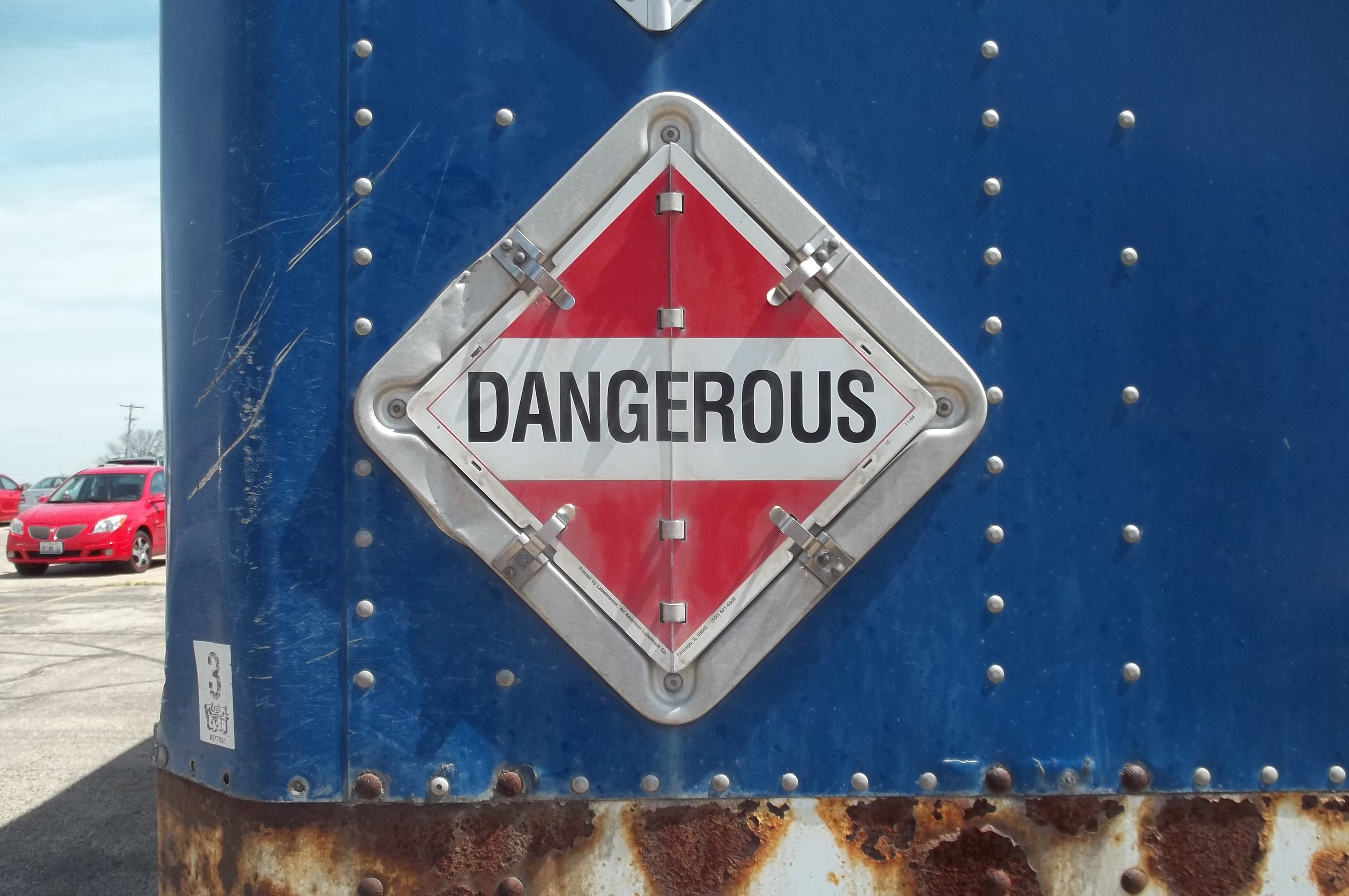
Q&A: I have two or more HazMat on a Vehicle. Can I use the Dangerous placard?

A common question for anyone who transports hazardous materials by highway is some variation of, “When, and how, do I use the Dangerous placard”? I received another of these questions from someone in the transportation industry on June 27, 2016:

If I have over 1,001 lbs but less than 2,205 lbs of a hazard class plus under 1,001 of another hazard class can I use a dangerous placard? All hazard classes are in table 2.Dangerous Placard

I had a response ready for him (6.27.16):

Thank you for contacting me with your question.  I believe I have an answer for you.

  • When a vehicle contains 1,001 pound of more of hazardous materials in non-bulk packages, it must display the applicable placard for each hazardous material [49 CFR 172.504(a)].  Unless an exception exists.
  • A vehicle that contains 2 or more hazardous materials in non-bulk packages that require placards may substitute the Dangerous placard for the placards representing each hazard  [49 CFR 172.504(b)].
  • The Dangerous placard option is not available for certain HazMat identified in Table 2 at 49 CFR 172.504(e)  [49 CFR 172.504(b)].
  • However, when 1,000 kg (2,205 lbs) or more of one category of material is loaded at one facility, the placard for that HazMat must be displayed on the vehicle  [49 CFR 172.504(b)].  Read:  When not to use the Dangerous Placard.

I hope this helps.

Please don’t hesitate to contact me with any other questions.
He wanted a little clarification so he re-phrased the question:
To better phrase my question, if I had say 1,400 lbs of class 8 Corrosive and 300 lbs of 2.2  Non-Flammable Gas could I use a Dangerous placard to cover both or could I just use a Corrosive placard to cover the class 8 only due to the class 2.2 being less than 1,001 lbs?  What if the class 8 was 800 lbs and the class 2.2 was 350 lbs for a total of 1,150 lbs?  How would I need to placard that, if at all?
Thanks,
My reply:

I will answer your questions separately:

  • Scenario 1:  1,400 lbs of class 8 Corrosive and 300 lbs of 2.2  Non-Flammable Gas.  In this scenario the aggregate weight of HazMat in Table 2 of 49 CFR 173.504(e) on the vehicle is ≥1,001 lbs which, per 49 CFR 173.504(a) and (c) requires the vehicle to display placards for both Class 8 and Class 2.2.  USDOT regulations at 49 CFR 173.504(b) allow for the option to display the Dangerous placard in situations where two or more HazMat on a vehicle are required to display placards.  That is the situation here.  Therefore:
    • Option 1 – Vehicle displays Class 8 Corrosive and Class 2.2 Non-Flammable Gas placards.
    • Option 2 – Vehicle displays Dangerous placard only.
  • Scenario 2:  Class 8 was 800 lbs and the class 2.2 was 350 lbs for a total of 1,150 lbs.  See Scenario 1.
  • Scenario 3 (mine):  Class 8 Corrosive 500 lbs.  Class 2.2 Non-Flammable Gas 300 lbs.  In this scenario the aggregate gross weight of the HazMat in Table 2 of 49 CFR 173.504(e) on the vehicle is <1,001 lbs.  Therefore, per 49 CFR 173.504(c) placards are not required to be displayed on the vehicle.  USDOT regulations at 49 CFR 173.502(c) allow for the display of placards when not required if the HazMat is present.  However, the Dangerous placard may only be displayed if required.  Therefore:
    • Option 1 – Vehicle displays no placards.
    • Option 2 – Vehicle displays Class 8 Corrosive and Class 2.2 Non-Flammable Gas placards.
I think that satisfied him.

The use of the Dangerous placard is a source of confusion for many in the transportation industry.  It’s certainly not the first question I’ve received.

Contact me with any questions you may have about the transportation of hazardous materials by air, highway, vessel, or rail

International and Domestic

Daniels Training Services

815.821.1550

Info@DanielsTraining.com

https://danielstraining.com/

Video From IATA: What are the Dangerous Goods Regulations?

Here is a short video produced by the International Air Transport Association (IATA) that succinctly describes IATA and its Dangerous Goods Regulations for the transport of dangerous goods by air.

I couldn’t say it any better myself!

Contact me with any questions you may have about the transportation of hazardous materials by air, highway, vessel, or rail

International and Domestic

Daniels Training Services

815.821.1550

Info@DanielsTraining.com

https://danielstraining.com/

Things to consider about IATA Dangerous Goods Training:
  • It is not required for employees who receive dangerous goods that were transported by aircraft unless they work at an airport or aircraft unloading facility.
  • Initial training must be provided before performing a regulated function.
  • Full renewal training must be provided within 24 months of initial training.
  • Employees must be tested as part of the training.  Successful completion of the test must be confirmed.

Also…

The IATA Dangerous Goods Regulations are updated each calendar year.  For 2017, the 58th Edition should be your only source for determining compliance.

Compliance with the Dangerous Goods Regulations of IATA are mandatory if you ship hazardous materials/dangerous goods by air either international or domestic.  In its Hazardous Material Regulations, the Pipeline and Hazardous Materials Safety Administration of the US Department of Transportation (PHMSA/USDOT) authorizes the use of the IATA Dangerous Goods Regulations – with certain additional requirements and limitations – for the transport of HazMat/dangerous goods to, from, or through the U.S.  Make certain you comply with both the domestic and international regulations when you ship hazardous materials/dangerous goods by air.

Overview of the RCRA Permit Program in 40 CFR 270

Persons who are a generator, transporter, or Treatment, Storage, and Disposal Facility (TSDF) for a hazardous waste  must notify the USEPA of their activity within 90 days of becoming subject to the regulations and receive a RCRA permit within 6 months of that date.  A regulated facility may not generate, transport, treat, store, or dispose of hazardous waste without a RCRA Permit.

The USEPA requires a RCRA permit for the “treatment”, “storage”, and “disposal” of any “hazardous waste”.  Each of these terms are defined in 40 CFR 270.2, and below.

Treatment means any method, technique, or process, including neutralization, designed to change the physical, chemical, or biological character or composition of any hazardous waste so as to neutralize such wastes, or so as to recover energy or material resources from the waste, or so as to render such waste non-hazardous, or less hazardous; safer to transport, store, or dispose of; or amenable for recovery, amenable for storage, or reduced in volume.

Storage means the holding of hazardous waste for a temporary period, at the end of which the hazardous waste is treated, disposed, or stored elsewhere.

Disposal means the discharge, deposit, injection, dumping, spilling, leaking, or placing of any hazardous waste into or on any land or water so that such hazardous waste or any constituent thereof may enter the environment or be emitted into the air or discharged into any waters, including ground water.

Hazardous waste means a hazardous waste as defined in 40 CFR 261.3.

By combining those definitions with the statement that precedes it, we come to the conclusion that any hazardous waste activity – including temporary on-site storage of a hazardous waste by a generator- requires a RCRA permit issued by the USEPA.

But, wait”, you say, “I’m a generator of a hazardous waste and I don’t have a RCRA permit! Am I in violation of the regulations?”

The answer is no, maybe.  Because, 40 CFR 270 goes on to describe specific inclusions and exclusions from the requirement to obtain a RCRA permit.

Specific inclusions.  A RCRA permit – and perhaps others – are required for the following activities:

  • Injection wells that dispose of hazardous waste.
  • The treatment, storage, or disposal of hazardous waste at facilities that require a Clean Water Act permit.
  • Barges or vessels that dispose of hazardous waste by ocean disposal and onshore hazardous waste treatment or storage facilities associated with ocean disposal.

Specific exclusions. The following persons are not required to obtain a RCRA permit:

  • Generators who accumulate hazardous waste on-site for less than the time periods provided in 40 CFR 262.34. These time limits are:
    • Large Quantity Generator:  No more than 90 days of on-site accumulation.  An extension is possible at the discretion of the USEPA or your state for  “unforeseen, temporary, and uncontrollable circumstances”.  An extension of up to 180 days is allowed for LQGs of an F006 hazardous waste under certain conditions.  Read about the extension to the on-site accumulation time limit for LQGs of F006 hazardous waste.
    • Small Quantity Generator:  No more than 180 days of on-site accumulation.   An extension is possible at the discretion of the USEPA or your state for  “unforeseen, temporary, and uncontrollable circumstances”.  An extension of up to 270 days is allowed if the TSDF the generator must use is 200 miles away or more.
    • Conditionally Exempt Small Quantity Generator (soon to be Very Small Quantity Generator):  No on-site accumulation time limit.


Read more about the on-site accumulation time limits and the available extensions for hazardous waste generators.

  • Farmers who dispose of hazardous waste pesticides from their own use.
  • Facilities that treat, store, or dispose of hazardous waste that is derived solely from generators that are excluded from regulation, i.e. conditionally exempt small quantity generators.
  • Totally enclosed treatment facilities.
  • Elementary neutralization units or wastewater treatment units.
  • Transporters who store manifested shipments of hazardous waste in containers at a transfer facility for no more than 10 days.
  • Persons who add absorbent material to waste in a container and persons adding waste to absorbent material in a container, provided that these actions occur at the moment waste is first placed in the container; and other generator container requirements are met.
  • Universal waste handlers and universal waste transporters that are subject to the universal waste regulations.
  • A New York State utility central collection facility consolidating hazardous waste in accordance with 40 CFR 262.90.

Further exclusions. A person is not required to obtain a RCRA permit for treatment or containment activities taken during the immediate response to any of the following situations:

  • A discharge of a hazardous waste.
  • An imminent and substantial threat of a discharge of a hazardous waste.
  • A discharge of a material which, when discharged, becomes a hazardous waste.
  • An immediate threat to human health, public safety, property, or the environment from the known or suspected presence of military munitions, other explosive material, or an explosive device.

Any treatment or containment activities that take place after the immediate response to any of the above is complete is subject to all applicable requirements of the EPA regulations, including a RCRA permit.

If a RCRA permit is required, TSDFs that engage in one of the following regulated activities may be eligible for a standardized RCRA permit:

  • The facility generates a hazardous waste and then non-thermally treats or stores the hazardous waste on site in tanks, containers, or containment buildings.
  • The facility  receives hazardous waste generated off-site by a generator under the same ownership as the receiving facility, and then stores or non-thermally treats the hazardous waste in containers, tanks, or containment buildings.

Contact me with any questions you may have about the generation, identification, management, and disposal of hazardous waste

Daniels Training Services

815.821.1550

Info@DanielsTraining.com

https://danielstraining.com/

There you have it!  While initially the regulations require a hazardous waste generator to have a RCRA permit, compliance with the on-site accumulation time limits applicable their status exempts them from the requirement to obtain a RCRA permit.  However, this means that non-compliance with those same on-site accumulation time limits – even by one day – makes a generator subject to the regulations requiring them to have a RCRA permit.  Not having a RCRA permit when you are required by federal and state regulations to have one could result in very serious penalties!  My Onsite Training for hazardous waste personnel is a great way to ensure that everyone at your facility is aware of these very important regulations.

Section 14 of the Safety Data Sheet – Can it help your HazMat classification?

Many times when classifying a hazardous material for transportation a shipper may rely upon Section 14 of the Safety Data Sheet (SDS), (formerly the Material Safety Data Sheet  or MSDS), for classification information.  After all, it’s entitled “Transport Information” and frequently contains classification information pertaining to all transportation regulatory agencies:

  • The Pipeline and Hazardous Materials Safety Administration (PHMSA) within the U.S. Department of Transportation (USDOT).
  • The International Air Transport Association (IATA).
  • The International Maritime Organization (IMO).

But is it correct?  Can you rely on the information it contains for your HazMat classification?  The answer:  maybe. (more…)

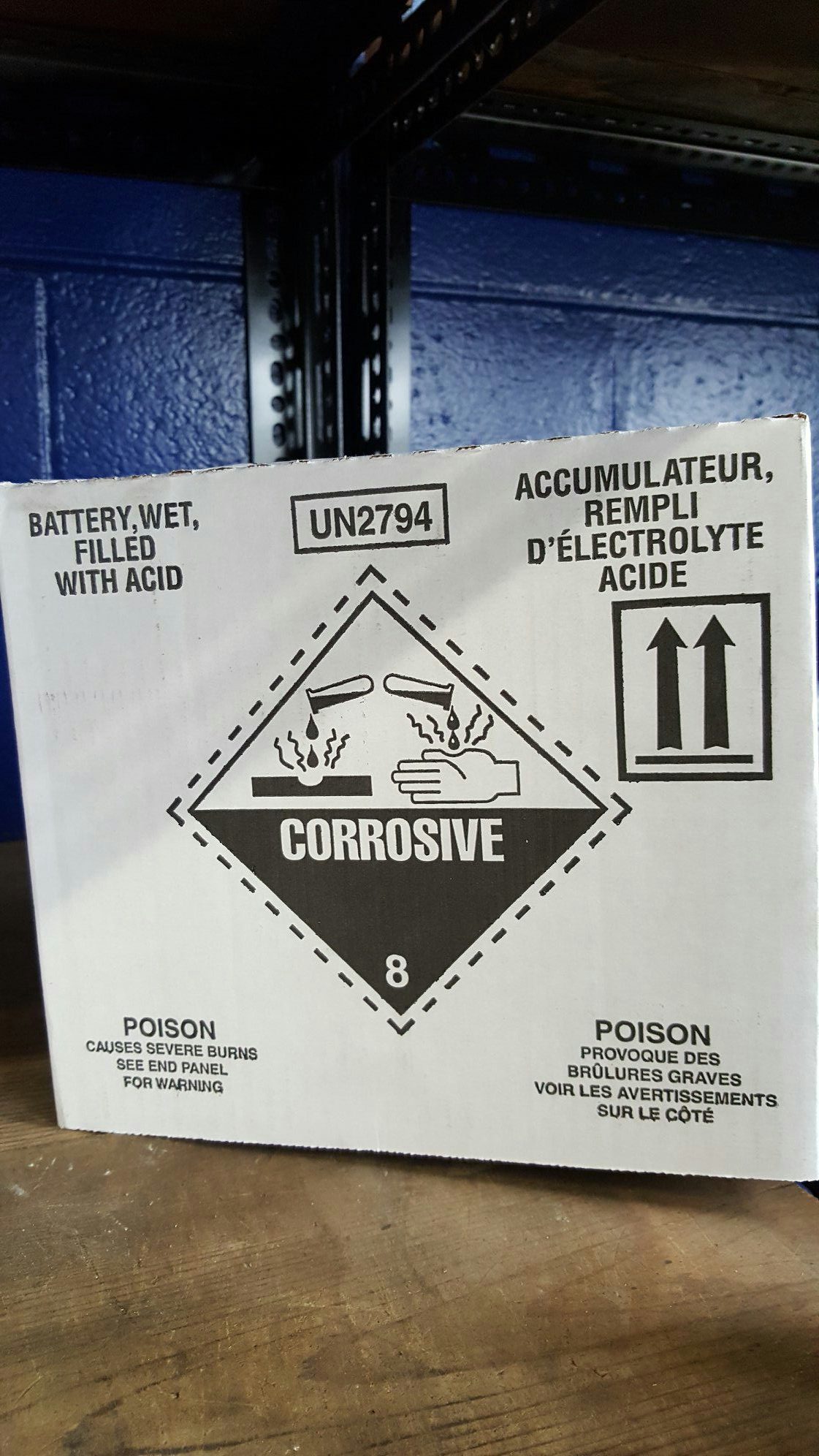
Package for UN2794

FAQs: Is it OK to identify an article or substance as a hazardous material when it is not?

Common Scenario:

Package for UN2794
This had better be a Class 8 Corrosive!

ompany A has a product X they wish to ship.  Product X does not meet the definition of a hazardous material but for various reasons (e.g. Company B ships a similar product and they classify it as HazMat, product X looks like it may be a HazMat, customer of Company A thinks product X is HazMat, Company A prefers to play it safe and ship product X as HazMat despite evidence to the contrary, &etc.) Company A chooses to ship product X as a hazardous material subject to full regulation under the PHMSA/USDOT Hazardous Material Regulations (HMR).  Is that OK?

Answer:

No it is not!  Though it may seem to be a safe option to ship something as a hazardous material when it is not, “What could go wrong?  We’re ‘playing it safe’ and being overly conservative.”  the HMR makes clear at 49 CFR 171.2(k) that this is not an option:

No person may, by marking or otherwise, represent that a hazardous material is present in a package, container, motor vehicle, rail car, aircraft, or vessel if the hazardous material is not present.

In other words, it is a violation to indicate a hazardous material is present in a package or vehicle when it is not.

Daniels Training Services

815.821.1550

Info@DanielsTraining.com

https://danielstraining.com/

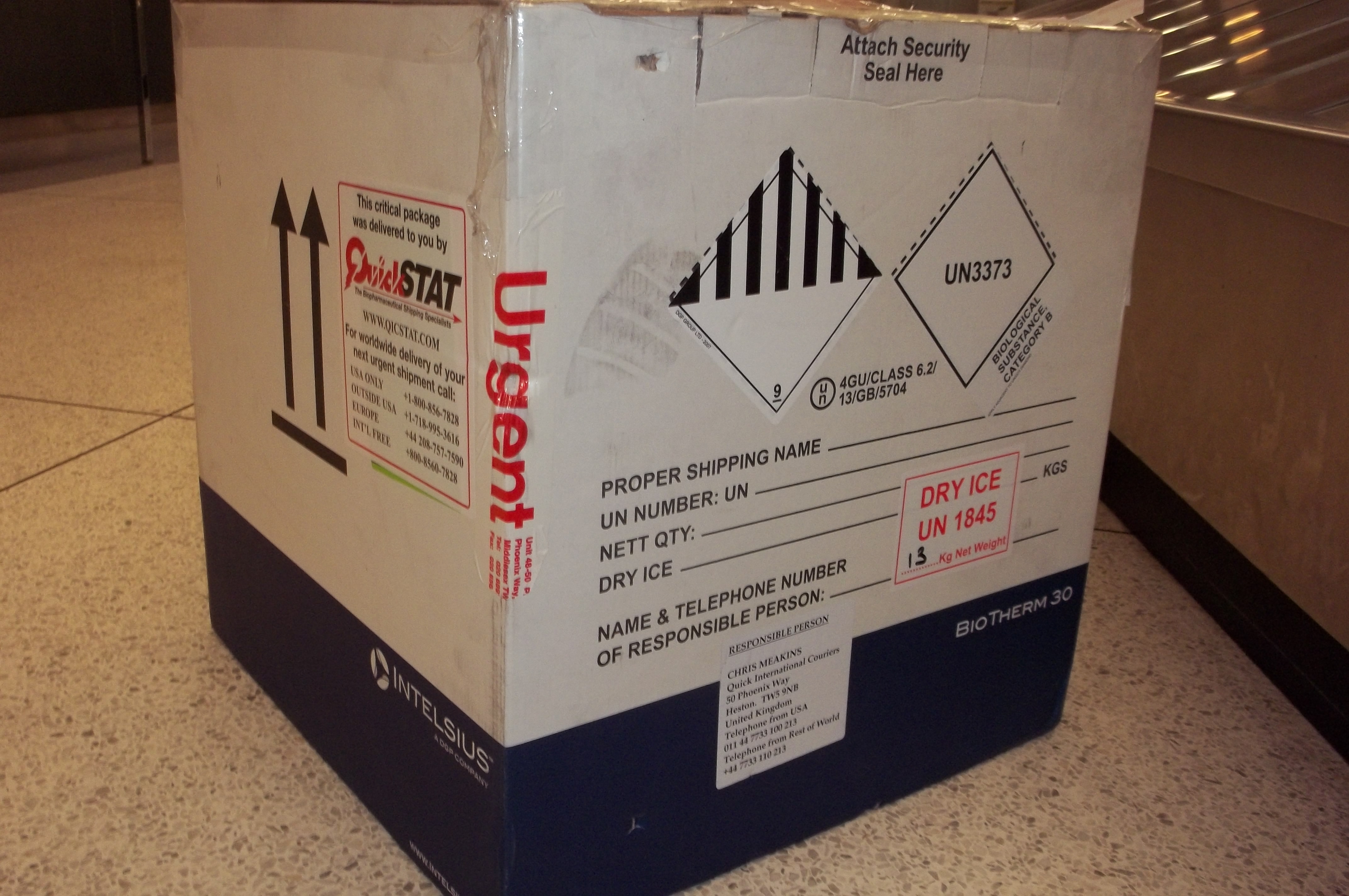
Package of UN3373

Articles or Substances that do not Require a Shipper’s Declaration for Dangerous Goods

The Dangerous Goods Regulations of the International Air Transport Association (IATA) are recognized by most of the world’s airlines as the standard for the transportation of dangerous goods by air.  In practice, anyone offering a dangerous good for transport by air must comply with the IATA Dangerous Goods Regulations as it will be required by the operator (aka: the air carrier) as a condition of accepting the dangerous good (aka: hazardous material or HazMat) for transportation.  Similar to the Hazardous Material Regulations of the PHMSA/USDOT, IATA assigns responsibilities to a shipper of dangerous goods by air to include, but not limited to, the following:

  • Identify and classify the dangerous good.
  • Provide necessary information to employees.
  • Ensure dangerous good is not forbidden for air transport.
  • Packaging must be authorized for dangerous good.
  • Markings and labels must be affixed to package.
  • All relevant personnel must receive training per Subsection 1.5 of the IATA DGR.
  • Required documentation, e.g. the Shipper’s Declaration for Dangerous Goods must be completed.

For a full description of the above, refer to Subsection 1.3 – Shipper’s Responsibilities of the IATA Dangerous Goods Regulations.

The purpose of this article is to identify the shipments of articles or substances that do not require a Shipper’s Declaration for Dangerous Goods when transported by air. (more…)

Q&A: Stool Samples in Ethanol

Most of the questions I receive come from industry.  A few from government.  And a few like this one on July 28, 2016:

Hi Daniel,

I am working on a small study and we will be collecting stool samples from subjects. Subjects will receive directly at their home  the  kit which includes  a small tube pre-filled with 5mL of ethanol. They will be asked to add sample to the pre-filled tube, put it back in the kit and send it via courier to our lab facility.
Researchers  sending the kit to subjects have all training for shipping hazardous materials and shipping materials meet the IATA and DOT regulation.
The question I have is regarding  patient shipping the kit back to the lab. What regulation applies to this part?

My initial reply later that day:

I will research that and get you an answer soon.

And here is my answer a long time later on October 8, 2016 (I’ve been working on my response times!):

I apologize for my delay in responding.  Hopefully my answer can still be of some use to you.  Please see below.

  • The samples may not be subject to regulation as a Division 6.2 Infectious Substance if they meet the criteria of 49 CFR 173.134(b)(11):

 (11) A human or animal sample (including, but not limited to, secreta, excreta, blood and its components, tissue and tissue fluids, and body parts) being transported for routine testing not related to the diagnosis of an infectious disease, such as for drug/alcohol testing, cholesterol testing, blood glucose level testing, prostate specific antibody testing, testing to monitor kidney or liver function, or pregnancy testing, or for tests for diagnosis of non-infectious diseases, such as cancer biopsies, and for which there is a low probability the sample is infectious.

  • The ethanol may be subject to the Excepted Quantity exception due to its volume.  If shipped as an Excepted Quantity, only a few of the DOT Hazardous Material Regulations apply (see 49 CFR 173.4a).
  • If shipped as a fully regulated hazardous material, then the shipment returned to you by the patient is subject to regulations since it is being done for a business and is therefore “in commerce”.
  • However, DOT regulations (more research will be required but I think IATA regulates it the same way) allow for more than one shipper for a HazMat.  Each shipper is responsible for the aspect of offering a HazMat for transportation that it performs.  In other words, the patient/customer is subject to the regulations for what they do and you are subject for what you do.  In that case, it is best for you to do as much as possible for the customer, e.g. shipping papers, packaging, labels, markings, directions to complete, &etc.  You then, are responsible for these aspects.  The customer is left only to package the HazMat and make final preparation for shipment.  This should be done only according to directions you provide.

In sum, I suggest you determine if what you intend to ship is excepted from regulation.  If so, its transportation should be easy.  If subject to full regulation, then provide as much information and resources as possible in order to make its return to you simple.

I hope this helps.
Please don’t hesitate to contact me with any other questions.
And that must have done it because they didn’t contact me with any other questions.
Whatever it is you need to offer for transportation and no matter how you wish to have it transported, the Hazardous Material Regulations of the PHMSA/USDOT have an option for you.  Perhaps you will have to ship it fully-regulated.  Perhaps an exception is available.  What’s important is that you research the HMR to ensure you are offering your HazMat for transportation in compliance with all regulations.

Contact me with any questions you may have about the transportation of hazardous materials by air, highway, vessel, or rail

International and Domestic

Daniels Training Services

815.821.1550

Info@DanielsTraining.com

https://danielstraining.com/

Contact me to help you with this research!

Q&A: Transport of Used Medical Devices

People find me in google searches – it happens! – and when they do they fire away with questions.  Like this one August 5, 2016:

I saw your web page and the invite to contact you with questions about the transportation of hazardous materials. My questions involve the shipping of used medical devices.

Example 1. A used biopsy sampling gun from a hospital being returned to the manufacturer for failure investigation.

Example 2. A used medical machine which collects urine which is being returned to the manufacturer for:

a) Reconditioning and return to same hospital or,

b) Disposal if broken.

Example 3. A used medical ultrasonic machine which comes in contact with various patients skin which is being returned to the manufacturer for reconditioning and return to same hospital.

Example 4. A used catheter being used for personal home healthcare being returned to the manufacturer for failure investigation.

It may be precautionary assumed that recondition / reusable devices being returned from a healthcare facility came in contact with bodily liquids from floors or sprays from patients.

It is also assumed that these liquids are Category B infectious substance.

What are the suggestions for each Example:

  1. Shipping Name
  2. Inner Packaging Material and Markings
  3. Outer Packaging Material and Markings
  4. Acceptable types of transportation (i.e. personal cars, company sales cars, licensed carriers, etc)

Also can any regulated hazardous material be shipped to any off-site storage facility while awaiting decision dispositions?

Thank you very much Daniel.

I was impressed – and a little intimidated – by the depth of his questioning:

Yow!  That’s a lot.  I’ll do my best to answer your questions in the next several days.

And several weeks later, I did (9.26.16):

I will do my best to answer your questions below.  I apologize for my delay.

  • All of what you describe meets the definition of a Used Health Care Product at 49 CFR 173.134(a)(8).
  • There is an exception from regulation as a hazardous material for used health care products at 49 CFR 173.134(b)(12)(ii).  Per this exception, a used health care product is not subject to USDOT regulations if the following conditions are met:
    • UHCP are drained of all free liquids.
    • UHCP are placed in a water-tight primary container.
    • Primary container is puncture-proof if required by UHCP.
    • BioHazard marking is displayed on primary container.
    • Primary container is placed in water-tight secondary container.
    • BioHazard marking is displayed on secondary container.
    • Secondary container is placed in outer packaging.
    • Sufficient cushioning is used to prevent movement of secondary container within outer packaging.
    • An itemized list of contents of secondary container and information regarding possible contamination with Division 6.2 infectious substance is placed between the secondary container and the outer packaging.
    • Persons involved in offering for transport or actual transport must know about the requirements of this exception.  HazMat Employee training is not required.

If packaged as summarized above (and explained in detail at 49 CFR 173.134(b)(12)(ii)), no other requirements of the USDOT Hazardous Material Regulations apply.

  1. Shipping name:  None.
  2. Inner packaging material and markings:  see above.
  3. Outer packaging material and markings:  see above.
  4. Acceptable transportation:  Any.  If the above is complied with, UHCP is not subject to USDOT regulation as a hazardous material.

Contact me with any questions you may have about the transportation of hazardous materials by air, highway, vessel, or rail

International and Domestic

Daniels Training Services

815.821.1550

Info@DanielsTraining.com

https://danielstraining.com/

Can any regulated HazMat be shipped to any off-site storage facility while awaiting decision dispositions?  I may need more information from you to understand exactly what you are asking but the short answer is yes.  USDOT does not regulate where a HazMat goes to.  Only that the Shipper is responsible to offer it to a transporter who then must transport it to its destination.

I hope this helps.
Please don’t hesitate to contact me with any other questions.


Q&A: How do I Ship Hazardous Waste Generated by Homeowners?

Here is a question I received almost a year ago on December 17, 2015 from a person who found me while searching the internet for an answer to his questions:

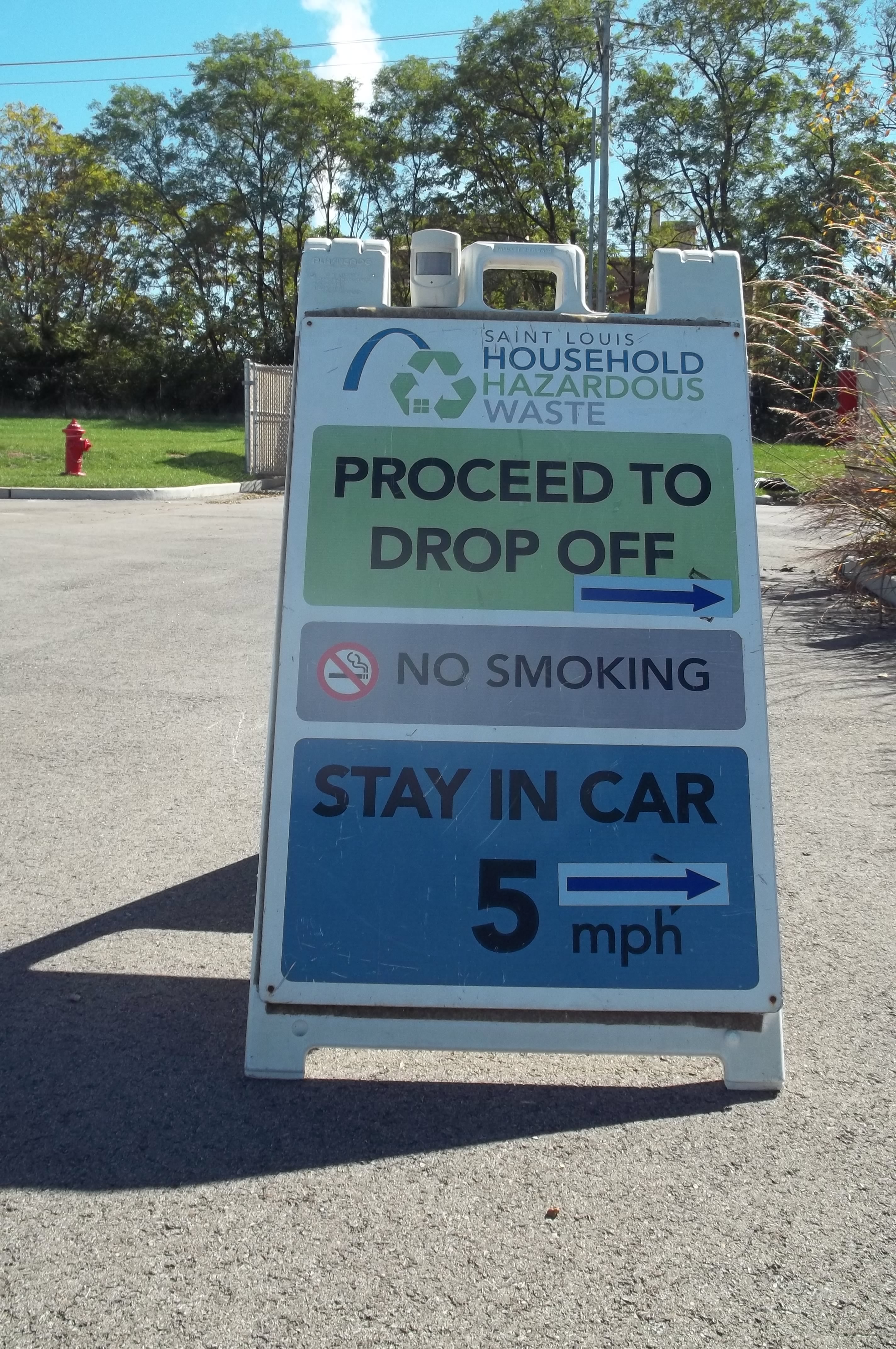
sign for household hazardous waste collection siteDaniel, hope this finds you well.  Could you give me your opinion on waste disposal companies using ORM-D for Household Hazardous Waste (HHW) shipping names (e.g. flammable paint, cleaners that may have low or high pH and others that may fit into DOT respective hazard classes).  I am concerned as the material is no longer packaged according to the original  ORM-D packaging.  Are you familiar with any US DOT interpretation that would allow that those shipping names continue to be used?  My concern comes from reviewing a waste disposal company that is still using ORM-D shipping names.  Thanks for input and thoughts.  Wish you a Merry Christmas, Thanks.

Well, it took me a few days.  But just before Christmas (12.22.15), I replied:

I apologize for my delay in replying to your question.  I’ll do my best to answer it below.

  • Waste collected from households is excluded from regulation as a hazardous waste at 40 CFR 261.4(b)(1).  See this short presentation for more information:  The Household Hazardous Waste Exclusion.
  • Due to the HHW exclusion, the waste does not require a Uniform Hazardous Waste Manifest when transported or offered for transportation by the Shipper/Generator.
  • USDOT/PHMSA regulations define a hazardous waste as a waste that requires the Uniform Hazardous Waste Manifest when transported.  Therefore, excluded HHW is not a hazardous waste per USDOT/PHMSA regulations.
  • As you describe, the excluded HHW may be a USDOT/PHMSA hazardous material for other reasons, e.g. Class 3 Flammable, Class 8 Corrosive, &etc.
  • Hazardous materials that meet the requirements of the Consumer Commodity exception may be re-classified as an ORM-D and shipped accordingly.  Read more about the Consumer Commodity Exception in this short article.
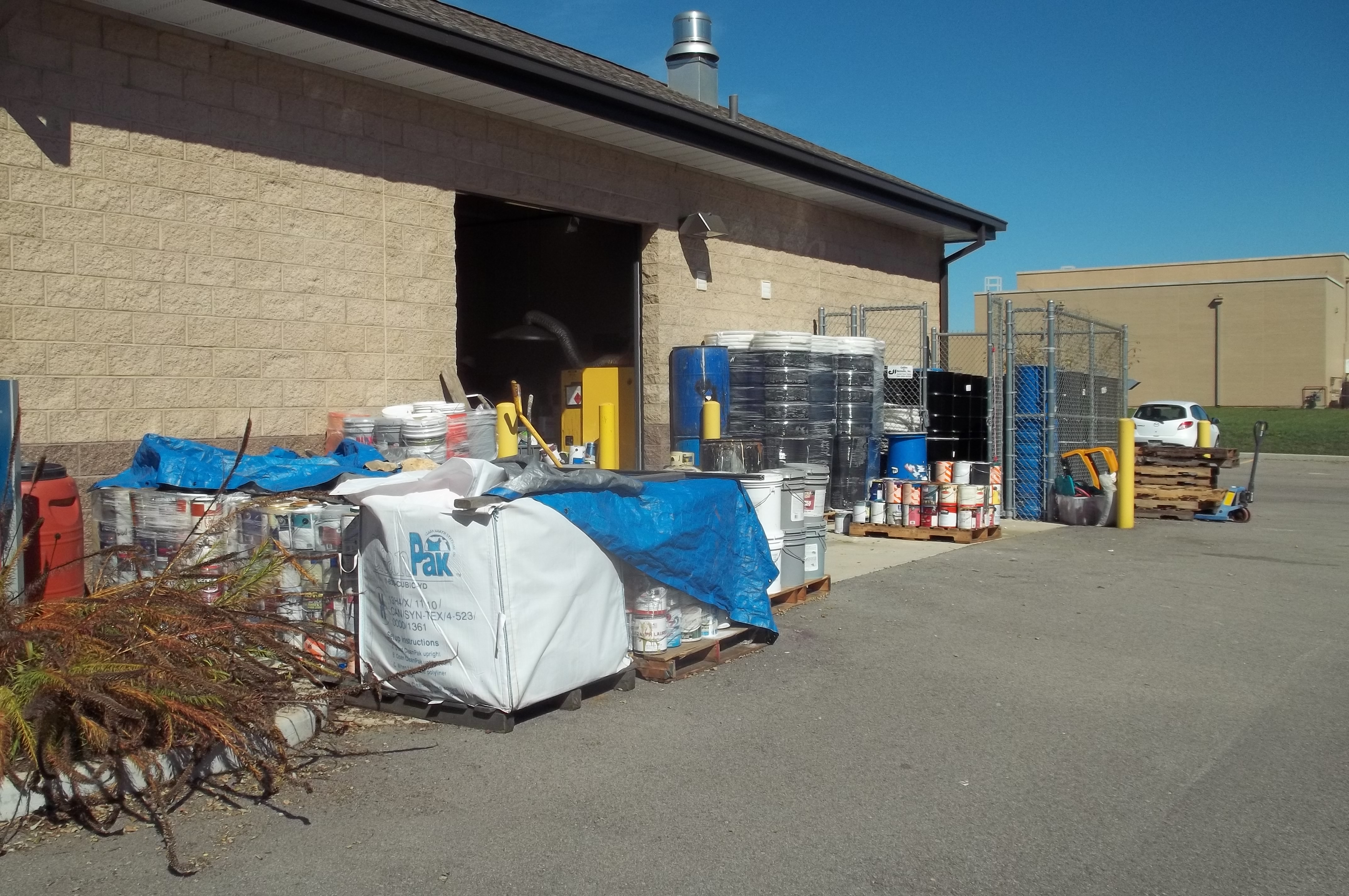
  • Use of the Consumer Commodity Exception for an excluded HHW does require compliance with specified packing instructions but it does not require the original packaging.Household hazardous waste accumulated at collection site

In sum, if the Shipper/Generator is complying with the HHW exclusion and the Consumer Commodity Exception, then they should be able to ship the waste as a Consumer Commodity.

 I hope this helps.  Please don’t hesitate to contact me with any other questions.
[maxbutton id=”1″]

Search Website