PO Box 1232 Freeport, IL 61032

A Different Kind Of Training

A Different Kind Of Training

A Different Kind Of Training

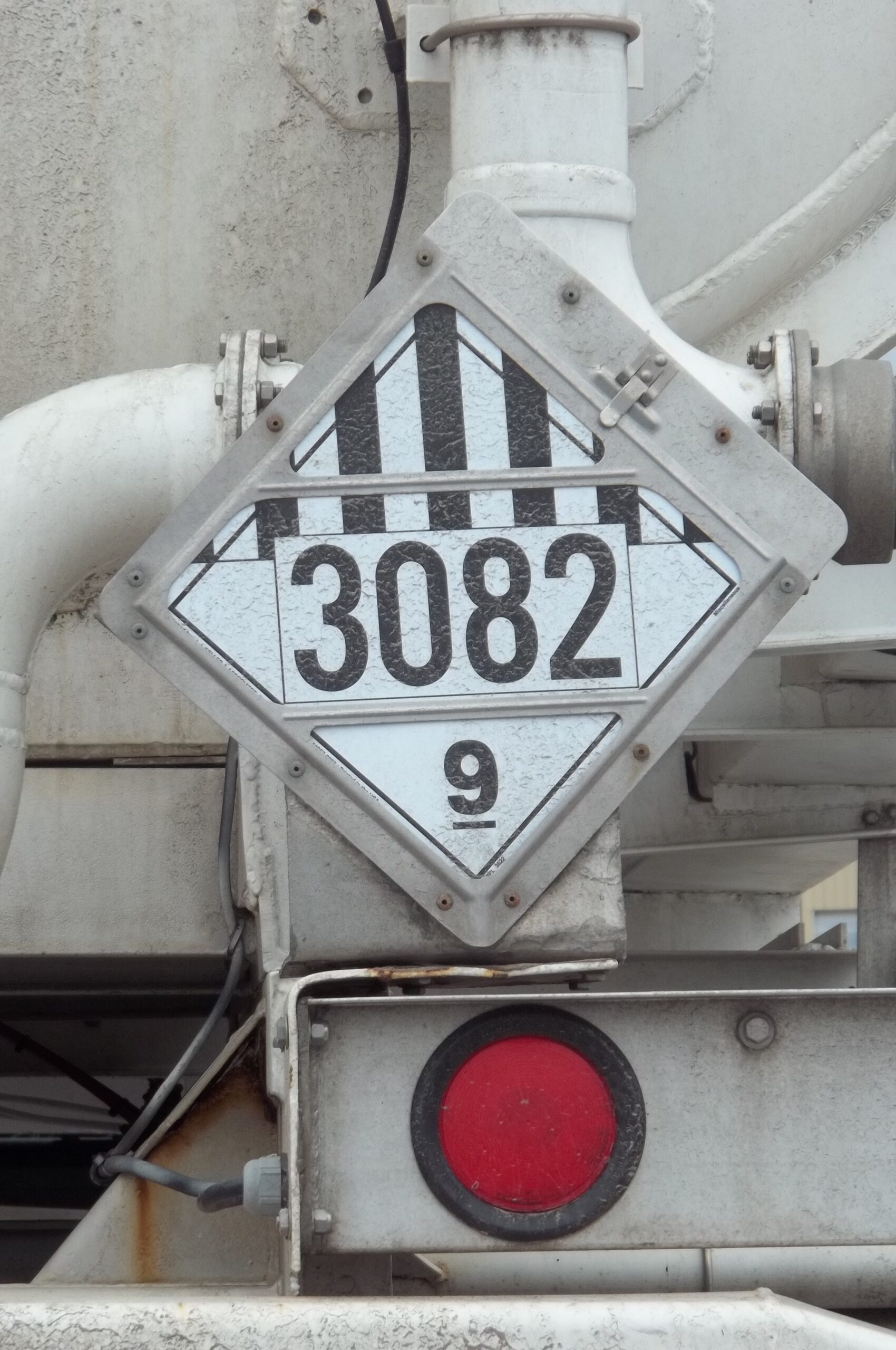
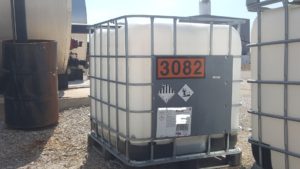
Display of Class 9 Miscellaneous Placard

Q&A: Do I need the HazMat and tanker endorsement for Class 9 in totes?

A question from somewhere in America December 07, 2020:

so I read a couple of your articles. we haul class 9 3082 16 totes about 40,000. does the driver need tanker and haz mat endorsement to haul. I know it needs placard.
thanks,

My reply on December 9th:

Thank you for contacting me. Please see below for answers to your questions.

  • I presume you are referring to the following two endorsements on the commercial driver’s license (CDL):
    • Hazardous materials endorsement (aka: HazMat endorsement)
    • Tank vehicle endorsement
  • I also presume the “tote” you refer to is an intermediate bulk container (IBC) and that it has a capacity of more than 119 gallons making it a bulk packaging.Class 9 label on IBC
  • The HazMat endorsement is required only if the vehicle transports a type and quantity of hazardous material that requires the display of placards on the vehicle.
    • Pursuant to 49 CFR 383.3, states may make an exception from CDL requirements – including endorsements – for certain operations within their jurisdiction. This includes:
      • Military drivers (actually, each state must exempt individuals who operate CMVs for military purposes).
      • Farmers, firefighters, emergency response vehicles drivers, and drivers removing snow and ice.
      • Certain drivers in Alaska.
      • Certain drivers in farm-related service industries.
      • Certain drivers in pyrotechnic industry.
      • Covered farm vehicles.
      • Certain drivers transporting diesel.
    • The Class 9 Miscellaneous placard is not required to be displayed on a vehicle in the U.S. However, pursuant to 49 CFR 172.502(c) a Class 9 Miscellaneous placard – or any placard for that matter – may be displayed on the vehicle if the HazMat is present on the vehicle.
    • Since the vehicle is not required to display placards for Class 9, the driver is not required to have the HazMat endorsement on their CDL.

Daniels Training Services, Inc.

815.821.1550

Info@DanielsTraining.com

https://danielstraining.com/

  • The tank vehicle endorsement on a CDL is required if the vehicle meets the definition of a tank vehicle at 49 CFR 383.5:

Tank vehicle means any commercial motor vehicle that is designed to transport any liquid or gaseous materials within a tank or tanks having an individual rated capacity of more than 119 gallons and an aggregate rated capacity of 1,000 gallons or more that is either permanently or temporarily attached to the vehicle or the chassis. A commercial motor vehicle transporting an empty storage container tank, not designed for transportation, with a rated capacity of 1,000 gallons or more that is temporarily attached to a flatbed trailer is not considered a tank vehicle.

  • Since the definition includes, “…either permanently or temporarily attached to the vehicle or the chassis.” you might think (as I did) that this would not apply to an intermediate bulk container (IBC or “tote”) loaded in or on a vehicle. However, it does:

Q: Does the definition of tank vehicle include loaded intermediate bulk containers (IBCs) or other tanks temporarily attached to a CMV?

A: Yes. The new definition is intended to cover (1) a vehicle transporting an IBC or other tank used for any liquid or gaseous materials, with an individual rated capacity of 1,000 gallons or more that is either permanently or temporarily attached to the vehicle or chassis; or (2) a vehicle used to transport multiple IBCs or other tanks having an individual rated capacity of more than 119 gallons and an aggregate rated capacity of 1,000 gallons or more that are permanently or temporarily attached to the vehicle or the chassis.

In the situation you describe, placards are not required, therefore the HazMat endorsement is not required. The vehicle does meet the definition of a tank vehicle and therefore the tank vehicle endorsement is required. However, since the driver is operating a motor vehicle transporting a hazardous material, he/she will require USDOT/PHMSA HazMat Employee training and must include Driver Training.

I hope this helps. Please contact me with any other questions.

Contact me with any questions you may have about the transportation of hazardous materials by air, highway, vessel, or rail

International and Domestic

Daniels Training Services, Inc.

815.821.1550

Info@DanielsTraining.com

https://danielstraining.com/

That confirmed what he thought:

Thank you for your reply. I was thinking the same, but wasn’t positive …

Thanks,

Conclusion:

Though the Hazardous Materials Regulations of the Pipeline and Hazardous Materials Safety Administration (PHMSA) are entirely different from the Federal Motor Carrier Safety Regulations of the Federal Motor Carrier Safety Administration (FMCSA), sometimes they overlap, as is the case here. Sometimes it is necessary for training to meet the requirements of both PHMSA and FMCSA. I can provide that training.

Q&A: Is this a U-listed hazardous waste?

It all started with a telephone conversation on 09.25.20 but spread into email correspondence (which I prefer). From the telephone conversation:
  • Person had a waste Butanol Solution recovered from a spill.
  • SDS indicated the following:
    • 70-80% nonionic surfactant.
    • 5-10% n-Butyl alcohol (CAS 71-36-3).
    • Flash point of 130 degrees Fahrenheit.
email correspondence began that same day:

I did receive the SDS on the butyl alcohol and it turns out it is a Butanol Solution with a flash point of 130 F. The chemical composition is 70-80% Nonionic Surfactant and 5-10% Butyl Alcohol (the kind that is on the U-list). Do you think this still meets the criteria for a U-listed waste for at this point? I realize it would receive a D001 and WA State Toxic WT02 for the liquid solution itself.

Thank you!

Like this article?

Subscribe to my Monthly Newsletter

No marketing emails!

My reply late on a Friday night (it’s what I do):

Please see below.

  • To be a P- or U-listed Haz Waste it must be pure or technical grade or the sole active ingredient in the solution. It does not seem to me that the U-listed material is the sole active ingredient in the solution so it would not be a U-listed Haz Waste.
  • The product would be a D001 but it is not certain that the recovered spilled material would still be below the fp. But it probably is.
  • I am not certain about the WT02 and its applicability. I would have to do more research.
Inquisitor’s reply even later that Friday night:

Thank you for responding back and on a Friday evening! I was thinking the same in that it would not fall under a U-listed waste since it was an ingredient in a solution at 10% maximum. Also appreciate the feedback on flash point for the recovered material. I did not consider that it may be above benchmarks so I think I will suggest testing to check.

I’ve got the state regs covered so no worries on that 😊.

Again thank you for your help. I will do a review with high marks. Be well and enjoy your weekend!

If you like this article, please share it using any of the social media platforms identified at the bottom of this article.

You’ll look real smart recommending my articles!

Conclusion:

Determination of a P- or U-listed hazardous waste is a challenge due to all of the complex requirements of this listed hazardous waste. However, just because it is difficult to determine doesn’t mean you are not a generator of a P- or U-listed hazardous waste. Generators need to take extra care in situations like this one where spilled material is recovered. If you ever have questions about the hazardous waste determination, don’t hesitate to contact me.

Image from email of 12.03.20

Q&A: How do I manage hazardous waste during months when my generator category changes?

A question from someone who had contacted me previously (12.03.20):

Hope you are doing well and enjoying the season so far 😊

I was hoping you could help me with another regulatory question regarding counting waste – or point me in the right direction. My question is about weekly inspections when a site becomes a SQG (200-2,200 lbs./mo.). Here’s the scenario:

A generator became a SQG in October when hazardous waste was generated in that month and weekly inspections have been conducted since that time while the waste has been on site. The weekly inspections will be stopped once the hazardous waste is shipped off which will be sometime this month (December). However a very small amount (less than 5 lbs) of new hazardous waste item was generated at the site today.

  • Does the small amount of new hazardous waste need to be included on the weekly inspection form with the other October waste items?
  • If so, once the October waste items are hauled off, would this new small December item need to have weekly inspections continued until it is shipped off?

Hopefully this is an easy answer for you. Thank you for your time and help!

Not sure of your hazardous waste generator category?

Take this short survey

Not an easy one, but I did have an answer:

Thank you for contacting me. Please see below for an answer:

  • In the month of October you were a small quantity generator of hazardous waste (SQG). I presume prior to that you were very small quantity generator (VSQG).
  • You are correct that for the month of October you must comply with SQG requirements for any hazardous waste generated in that month.
  • You must also comply with SQG requirements for that hazardous waste generated in October for as long as it remains on-site.
  • I presume in November & December you reverted back to VSQG category. Any Haz Waste generated in those months would be managed as a VSQG.
  • The small amount of hazardous waste generated in December while you were a VSQG is not subject to weekly inspection requirements since those are required for a SQG but not VSQG.
  • If your state has adopted the Generator Improvements Rule you have the option of the Episodic Waste Generation for VSQG.

I hope this helps. Please contact me with any other questions.

Daniels Training Services, Inc.

815.821.1550

Info@DanielsTraining.com

https://danielstraining.com/

They required a little clarification:

Thank you for your response!

Currently the October hazardous waste is still on-site and the generator is still complying with SQG requirements.  So my question is about the new hazardous waste.  Does it need to be included with the October waste count and therefore required to have weekly inspections until it is shipped off?

The October waste has taken a long time to get profiled and ready for disposal which will be hauled off in a couple weeks.  Once hauled off, the ship off date will be entered on the weekly inspection form and normally that would close it out.  However, if the small amount of new waste that was generated today has to be included on the weekly inspections, then does that mean it has to continue inspections until it is shipped off?

I also responded back in your email below in red font.

I figured I better clarify:

I’ll clarify.

  • The site is an SQG for October.
  • Any waste generated in October must comply with SQG until it is shipped off-site. This includes weekly inspections.
  • Site was a VSQG for November and December. Any waste generated in Nov or Dec is subject to VSQG regulations.
  • The site is not a SQG in Nov & Dec unless it generated more than  100 kg of Haz Waste in either of those months.
  • The small amount of waste generated in Dec as VSQG is subject to VSQG regulations. This means no weekly inspection for the waste generated in Dec.
  • Waste generated in Oct while site was SQG is subject to SQG regulations for as long as it remains on-site.
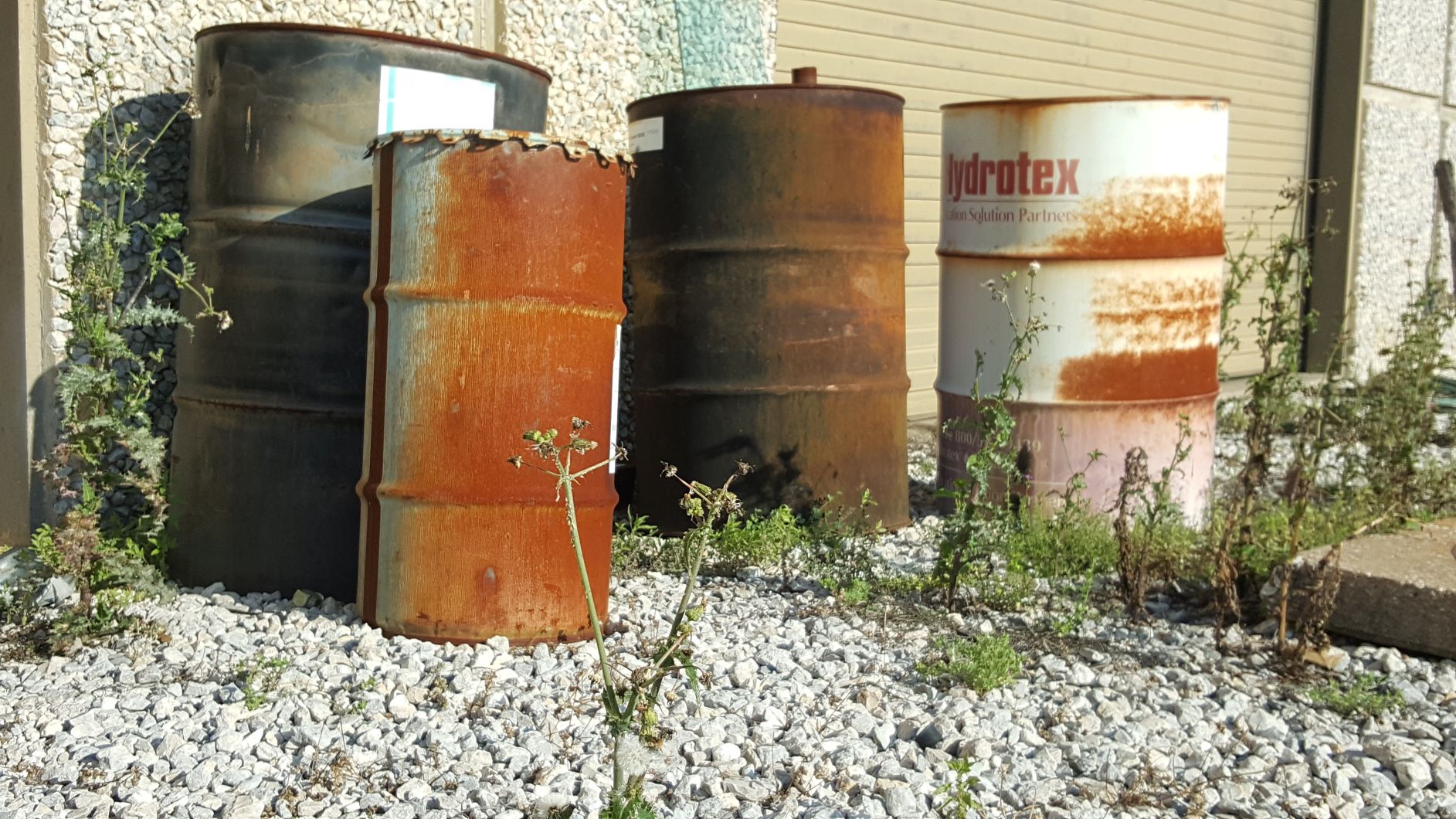
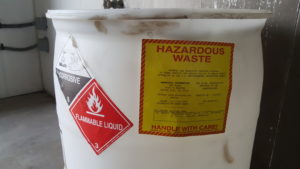
The clarification helped but more assistance was necessary:Drum of ignitable and corrosive hazardous waste

Okay great! I will wrap my head around this and re-look at it tomorrow. It makes sense. I could not find any regulation citation that points this out. Do you know where i could find that? No worries tonight of course! Thanks very much!

My reply:

There are no clearly expressed regulations on this point. However, this rather old USEPA guidance document clarifies this interpretation: Managing Hazardous Waste: A Guide for Small Businesses. On page 5 it reads:

Depending on your type of business, you might be regulated under different rules at different times. If, for example, you generate less than 220 lbs (100 kg) of hazardous waste during the month of June, you would be considered a CESQG for June, and your June waste would be subject to the hazardous waste management requirements for CESQGs. If, in July, you generate between 220 and 2,200 lbs (100 kg to 1,000 kg) of hazardous waste, your generator status would change, and you would be considered an SQG for July. Your July waste would then be subject to the management requirements for SQGs. If you mix the wastes generated during June and July, the entire mixture would be subject to the more stringent SQG standards.

Contact me with any questions you may have about the generation, identification, management, and disposal of hazardous waste

Daniels Training Services, Inc.

815.821.1550

Info@DanielsTraining.com

https://danielstraining.com/

That seemed to do it!

Hi Daniel,

I think I got it now and just wanted to thank you for the sound guidance on this.  It helped very much!

Take good care!

Conclusion:

The management of hazardous waste can be difficult enough when your generator category doesn’t change, but when it does, then things can get really difficult. Perhaps the easiest option is to comply with the requirements of the highest generator category, but if you can keep the wastes separate, you can manage them according to their applicable generator category.

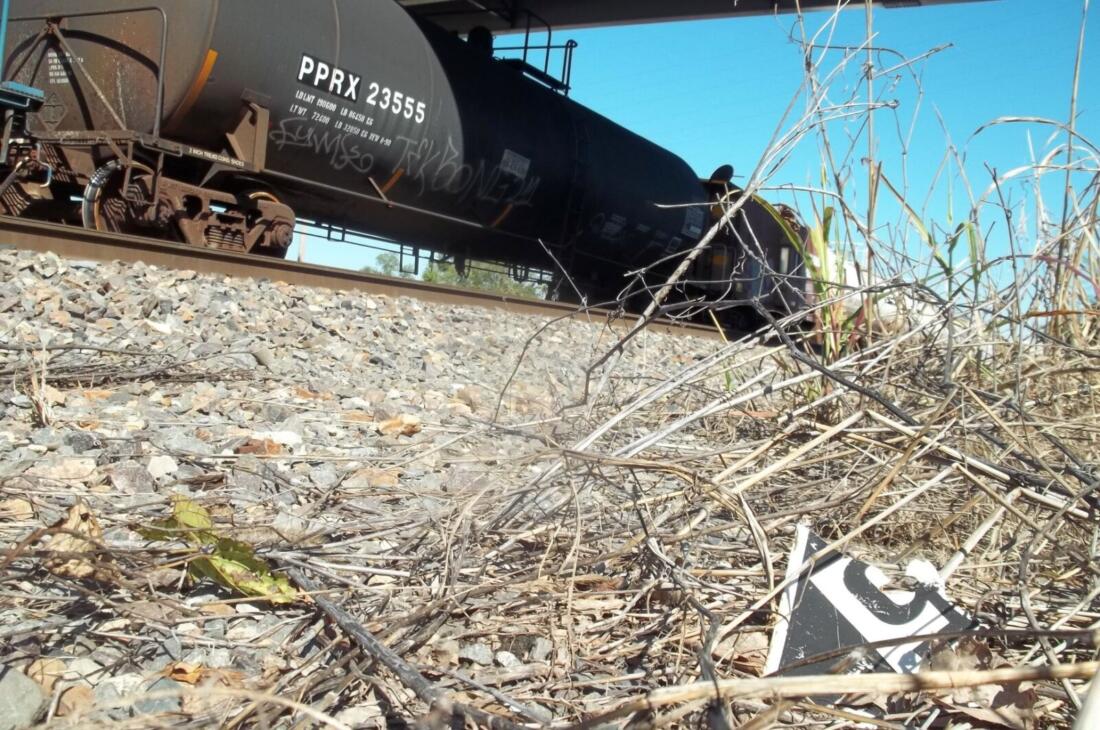
Damaged Placard with ID by Rail

Q&A: Is it legal to hand write the UN numbers on a placard with a magic marker?

Another one of the questions I get. This one in December of 2020:

Is it legal to hand write the UN numbers on a black UN placard with a magic marker ?

My reply:

Yes. Maybe.

Per 49 CFR 172.338, if more than one of the identification number markings displayed on placards, orange panels, or white square-on-points is lost, damaged, or destroyed during transportation, the carrier shall replace all missing or damaged identification numbers as soon as practicable.

In such case the numbers may be entered by hand using an indelible marking material as long as it is legible.

So, it can only be done by the carrier (i.e., driver) and can only be done during transportation, i.e., while on the road.

Contact me with any questions you may have about the transportation of hazardous materials by air, highway, vessel, or rail

International and Domestic

Daniels Training Services, Inc.

815.821.1550

Info@DanielsTraining.com

https://danielstraining.com/

I hope this helps. Please contact me with any other questions.

Industrial Solid Waste

Q&A: Is my waste a non-industrial waste in Texas?

A question from a waste generator in the great state of Texas back in November of 2020:

Hi, Daniel

I work in a privately own Petro chemical lab. We serve the public and many big Oil companies. We test crude oil and gases for composition mostly.

My question is we are should be listed as Non-industrial right?

Thanks!

My reply that same day:

Thank you for contacting me. Please see below.

Based on the regulations of the Texas Administrative Code (TAC) and guidance provided by TCEQ I believe the waste you generate qualifies as Industrial. Please see below:

Industrial versus Nonindustrial Wastes: Industrial wastes result from (or are incidental to)operations of industry, manufacturing, mining, or agriculture—for example, wastes from power generation plants, manufacturing facilities, and laboratories serving an industry. Nonindustrial wastes, by contrast, come from sources such as schools, hospitals, churches, dry cleaners, most service stations, and laboratories serving the public.

Contact me with any questions you may have about the generation, identification, management, and disposal of hazardous waste

Daniels Training Services, Inc.

815.821.1550

Info@DanielsTraining.com

https://danielstraining.com/

I hope this helps. Please contact me with any other questions.

The Requirements of 40 CFR 262.16(b)(9)(ii) Post Emergency Information for Small Quantity Generator of Hazardous Waste

Federal regulations of the U.S. Environmental Protection Agency (USEPA) require a small quantity generator of hazardous waste (SQG) to maintain equipment and processes to prevent a hazardous waste emergency and to respond to it if one occurs. The regulations are found in the following SQG conditions for exemption:

  • 40 CFR 262.16(b)(8) Preparedness and prevention
  • 40 CFR 262.16(b)(9) Emergency procedures

This article is the eighth in a series that closely examines and explains these regulations.

In the previous article in this series I addressed the requirements of 40 CFR 262.16(b)(9)(i) Emergency Coordinator for a Small Quantity Generator. That was the first of the Emergency Procedures requirements of §262.16(b)(9). This article is the second of those regulations.

The purpose of this article is to identify and explain: 40 CFR 262.16(b)(9)(ii) Post emergency information at small quantity generator of hazardous waste. (more…)

The Requirements of 40 CFR 262.16(b)(9)(i) Emergency Coordinator for Small Quantity Generator of Hazardous Waste

Federal regulations of the U.S. Environmental Protection Agency (USEPA) require a small quantity generator of hazardous waste (SQG) to maintain equipment and processes to prevent a hazardous waste emergency and to respond to it if one occurs. The regulations are found in the following SQG conditions for exemption:

  • 40 CFR 262.16(b)(8) Preparedness and prevention
  • 40 CFR 262.16(b)(9) Emergency procedures

This article is the seventh in a series that closely examines and explains these regulations.

In the previous article in this series I addressed the requirements of 40 CFR 262.16(b)(8)(vi) Arrangements with Local Authorities for a Small Quantity Generator. That was the last of the Preparedness and Prevention requirements of §262.16(b)(8). This article is the first of §262.16(b)(9) identifying the SQGs emergency response requirements.

The purpose of this article: 40 CFR 262.16(b)(9)(i) Emergency coordinator for small quantity generator of hazardous waste. (more…)

Minimum Training Requirements for Entry-Level Commercial Motor Vehicle Operators – Entry-Level Driver Training

The Bullet:

FMCSA established new minimum training standards for certain individuals applying for their CDL for the first time, an upgrade of their CDL, or a hazardous materials, passenger, or school bus endorsement for the first time. These individuals will be subject to the entry-level driver training (ELDT) requirements and must successfully complete a prescribed program of instruction before they will be permitted to take the CDL skills test or, in the case of the H endorsement, the knowledge test. Training must be provided by an entity that is listed on FMCSA’s Training Provider Registry (TPR).

Who is subject to ELDT Regulations?Driver of a commercial motor vehicle

ELDT is the baseline for training requirements for entry-level drivers. This includes those applying to:

  • Obtain a Class A or Class B CDL for the first time.
  • Upgrade an existing Class B CDL to a Class A CDL.
  • Obtain any one of the following endorsements to their CDL for the first time:
    • School bus (S)
    • Passenger (P)
    • Hazardous materials (H)

The ELDT regulations do not apply to the following:

  • The ELDT regulations are not retroactive; they do not apply to individuals holding a valid CDL or an S, P, or H endorsement issued prior to February 7, 2022.
  • If an applicant who obtains a commercial learner’s permit (CLP) prior to February 7, 2022, obtains a CDL before the CLP or renewed CLP expires, the applicant is not subject to the ELDT requirements.
  • Any individual who meets one of the exceptions for taking a skills test in 49 CFR Part 383 is also exempt from the ELDT requirements.
More Who:

The Federal Motor Carrier Safety Administration (FMCSA) is a separate administration within the U.S. Department of Transportation (USDOT). It’s primary mission  is to reduce crashes, injuries and fatalities involving large trucks and buses. To do this it creates and enforces regulations for operation of commercial motor vehicles (CMV).

Daniels Training Services, Inc.

815.821.1550

Info@DanielsTraining.com

https://danielstraining.com/

What ELDT is required?

Applicants must successfully complete a prescribed program of instruction presented by training provider listed on FMCSA’s TPR, prior to taking the State-administered CDL skills test.

What is the Training Provider Registry (TPR)?
  • The FMCSA Training Provider Registry is not yet operational; it will be in operation by the new compliance date of these regulations: 02.07.22.
  • The TPR will identify all training providers that registered with FMCSA and self-certified they meet the requirements for providing CDL training.
  • The TPR will retain a record of which CDL applicants have completed the new training and certification process outlined in the ELDT regulations.
  • The TPR will include all entities (including public and private CDL training programs and fleet-operated CDL training programs) that register with FMCSA and self-certify they meet the requirements for providing CDL training.
What FMCSA Regulations were Changed by this new Rule?
  • 49 CFR Part 380 Subpart F: Entry-Level Driver Training Requirements On and After February 7, 2020
  • 49 CFR Part 380 Subpart G: Registry of Entry-Level Driver Training Providers
  • 49 CFR § 383.71: Driver Application and Certification Procedures
  • 49 CFR § 383.73: State Procedures
  • 49 CFR § 384.230: Entry-Level Driver Certification

Contact me with any questions you may have about the transportation of hazardous materials by air, highway, vessel, or rail

International and Domestic

Daniels Training Services, Inc.

815.821.1550

Info@DanielsTraining.com

https://danielstraining.com/

Where:
  • This regulation is applicable all operation of a CMV within the U.S. when applying for a CDL, an upgrade to a CDL, or a certain endorsement to the CDL, as identified above.
  • Read: What is a commercial motor vehicle?
When:
Why:

FMCSA believes these regulations enhance the safety of CMV operations on our Nation’s highways by establishing a minimum standard for ELDT and increasing the number of drivers who receive ELDT.

How:

This rule is based on the authority of the Motor Carrier Act of 1935, the Motor Carrier Safety Act of 1984, and the Commercial Motor Vehicle Safety Act of 1986 (CMVSA). It also implements section 32304 of MAP-21.

Like this article?

Subscribe to my Monthly Newsletter

No marketing emails!

Conclusion:

Compliance with the FMCSA ELDT regulations is not required until February 07, 2022. Current regulations of the Pipeline and Hazardous Materials Safety Administration (PHMSA) require any person whose job has a direct affect on the safe transportation of hazardous materials (HazMat) to receive HazMat Employee training. This, of course, includes the operator of a motor vehicle transporting any quantity of HazMat who may also require Driver Training unless the requirements of 49 CFR 177.816 are met by the Hazardous Materials endorsement on their CDL.

For more Information:
  • To learn more about ELDT
  • For more information about the FMCSA’s Training Provider Registry.
    • Interested parties may sign up to receive news and updates from FMCSA about the TPR and the new requirements for CDL applicants, training providers, and State Driver Licensing Agencies (SDLAs).
    • States, or their third-party vendors, will need to modify their IT systems to retrieve data from the TPR. Training providers will also have the option to set up an interface to send data to the TPR web service. FMCSA will provide materials and information needed to meet the technical requirements for these web interfaces.
  • Contact FMCSA’s Office of Policy: FMCSA / Office of Policy (MC-P) / 1200 New Jersey Avenue, SE / Washington, DC 20590 / 202.366.2551


Q&A: Will the HazMat Employee Training Required by PHMSA Satisfy the Requirement for ELDT?

Question:

I’ve heard that entry-level driver training (ELDT) will be required as of February 07, 2022 for a driver seeking a hazardous materials (H) endorsement on their CDL for the first time. Can the HazMat Employee training required by PHMSA at 49 CFR 172.704 satisfy this new training requirement?

Answer:

No. First some clarification.

  • The Final Rule for ELDT was published December 08, 2016 [December 08, 2016; 81 FR 88732]. It had an initial compliance date of February 07, 2020 but this was later extended to February 07, 2022.
  • The rule created new training standards for each of the following:
    • Drivers applying for their CDL for the first time.
    • Drivers applying for an upgrade of their CDL (e.g., a Class B CDL holder seeking a Class A CDL).
    • Drivers seeking a hazardous materials (H), passenger (P), or school bus (S) endorsement for the first time.
  • Prior to having its compliance date pushed back from 02.07.20 to 02.07.22, FMCSA revised the training requirements for drivers upgrading their CDL from Class B to Class A [March 06, 2019; 84 FR 8029].
  • In the consideration of the new rule the Federal Motor Carrier Safety Administration (FMCSA) sought comment on allowing the HazMat Employee training required by the Pipeline and Hazardous Materials Safety Administration (PHMSA) at 49 CFR 172.704 to satisfy the additional training now required for the hazardous materials (H) endorsement on the CDL. After comments were received and considered by FMCSA it answered:

FMCSA concludes that PHMSA’s hazardous materials training requirements in §172.704 may not be used to satisfy the H endorsement curriculum requirements in today’s rule because the PHMSA regulations do not address the CMV-related topics included in the H endorsement curriculum.

Daniels Training Services, Inc.

815.821.1550

Info@DanielsTraining.com

https://danielstraining.com/

So the answer is still no, but now you know why. Even under the new rule, the FMCSA training requirement to obtain the hazardous materials endorsement on the CDL is separate from the PHMSA requirement to provide initial and triennial HazMat Employee training.

Training
Any person with a direct affect on the safe transport of HazMat must receive HazMat Employee training.

And don’t forget: maintenance of the H endorsement on the CDL may fulfill the requirements for Driver Training at §177.816 or it may not.


FAQ: How do I register to be placed on FMCSA’s Training Provider Registry (TPR)?

Before we begin…

In a flurry of proposed rules, final rules, amendments to the final rule, effective dates, compliance dates, and then an extension of the compliance date, the Federal Motor Carrier Safety Administration (FMCSA) within the U.S. Department of Transportation (USDOT), mandated entry-level driver training (ELDT) for certain drivers seeking a new or updated commercial driver’s license (CDL) or those seeking certain endorsements to their CDL for the first time. Read: Minimum Training Requirements for Entry-Level Commercial Motor Vehicle Operators – Entry-Level Driver Training

As part of this new rule FMCSA created a training provider registry (TPR) to both identify trainers eligible to provide ELDT and to track the certification of drivers once ELDT is completed. FMCSA’s TPR

Applicable regulations are at 49 CFR 380, subpart G

Contact me the when your USDOT HazMat Employee, training is due to expire.

How do I get myself on the TPR as a training provider?
What are the eligibility requirements for TPR registration?
  • Follow a curriculum that meets the applicable criteria in Appendices A-E of Part 380.
  • Utilize facilities that meet the criteria of §380.709.
  • Utilize vehicles that meet the criteria in §380.711.CDL Driver Training
  • Utilize driver instructors that meet the criteria in §380.713.
  • Meet recordkeeping requirements of §380.725.
  • Be licensed, certified, registered, or authorized to provide training in accordance with the applicable laws and regulations of any State where in-person training is conducted. However, State qualification requirements for theory instruction do not apply to providers offering online training only.
  • Allow FMCSA to audit or investigate its operations.

Like this article?

Subscribe to my Monthly Newsletter

No marketing emails!

Conclusion:

Training providers that wish to provide the ELDT required after February 07, 2022 must meet the eligibility requirements and register with FMCSA in order to receive their unique TPR number. I do not provide ELDT now, nor do I intend to. However, if a CMV contains any quantity of a hazardous material – not just a quantity that requires placards – then initial and triennial HazMat Employee training is required by the Pipeline and Hazardous Materials Safety Administration (PHMSA) within USDOT, and that’s when you call me. And a driver may also require HazMat Driver Training (I provide that, too!)

For more Information:
  • To learn more about ELDT
  • For more information about the FMCSA’s Training Provider Registry.
    • Interested parties may sign up to receive news and updates from FMCSA about the TPR and the new requirements for CDL applicants, training providers, and State Driver Licensing Agencies (SDLAs).
    • States, or their third-party vendors, will need to modify their IT systems to retrieve data from the TPR. Training providers will also have the option to set up an interface to send data to the TPR web service. FMCSA will provide materials and information needed to meet the technical requirements for these web interfaces.
  • Contact FMCSA’s Office of Policy: FMCSA / Office of Policy (MC-P) / 1200 New Jersey Avenue, SE / Washington, DC 20590 / 202.366.2551

Search Website