Announcements of Proposed Rules, Changes to the Rules, and Final Rules of the US DOT & US EPA – March 2013
On its website the US Government Printing Office makes a wealth of Federal publications available for review and download; one of these is the Federal Register.
Published by the Office of the Federal Register, National Archives and Records Administration (NARA), the Federal Register is the official daily publication for rules, proposed rules, and notices of Federal agencies and organizations, as well as executive orders and other presidential documents.
See below for a brief summary of announcements in the Federal Register by the US EPA on the subject of Hazardous Waste and the Pipeline & Hazardous Materials Safety Administration (PHMSA) of the US DOT on the subject of Transportation of Hazardous Materials. (more…)
The Order to the Basic Description
The Hazardous Materials Regulations of the USDOT/PHMSA contain specific requirements for the description of a hazardous material on a shipping paper, known as the Proper shipping Description. One component of the Proper Shipping Description is the Basic Description; the purpose of which is to – just like the name implies – provide a basic description of the potential hazards presented by a material in transportation. This article will explain how a change to the order of the Basic Description (effective January 1st, 2013) affects other responsibilities of a HazMat shipper and a possible source of confusion when using the Uniform Hazardous Waste Manifest for the transportation of a hazardous waste. (more…)
The Hazardous Materials Safety Permit Program
Perhaps you haven’t heard of the Hazardous Materials Safety Permit Program before, and there’s a good reason for that if you are a shipper of hazardous materials and not a carrier. The HMSP program is found not in the Hazardous Material Regulations of the PHMSA, but instead in the Regulations of the Federal Motor Carrier Safety Administration (FMCSA) at 49 CFR 385, Subpart E and apply to carriers who transport certain quantities of specified hazardous materials.
Why should the regulations of the FMCSA applicable to a carrier be a concern to you as a shipper of HazMat? Because 49 CFR 173.22(b) documents one of a HazMat Shipper’s responsibilities as:
No person may offer a motor carrier any hazardous material specified in 49 CFR 385.403 unless that motor carrier holds a safety permit issued by the Federal Motor Carrier Safety Administration.
So, the PHMSA, in referring to these regulations of the FMCSA places the responsibility on the shipper to ensure the carrier is in compliance with the applicable regulations prior to offering them a hazardous material for transportation. Read on to learn what types of hazardous materials are “specified in 49 CFR 385.403”. (more…)
The Components of a HazMat Safety and Security Plan
Known by many names, but referred to in the Hazardous Material Regulations at 49 CFR 172.802 as a Security Plan; it is a requirement for certain shippers and carriers of hazardous materials. An earlier article explained the regulatory process @ §172.800(b) for determining if you are required to complete a Security Plan which, in turn, requires you to conduct In-Depth Security Training for your HazMat Employees [§172.704(a)(5)]. The purpose of this article is to explain the components of a Security Plan as required by §172.802. (more…)
Vehicle Marking Requirements for Large Quantities of a Single Hazardous Materials in Non-Bulk Packagings
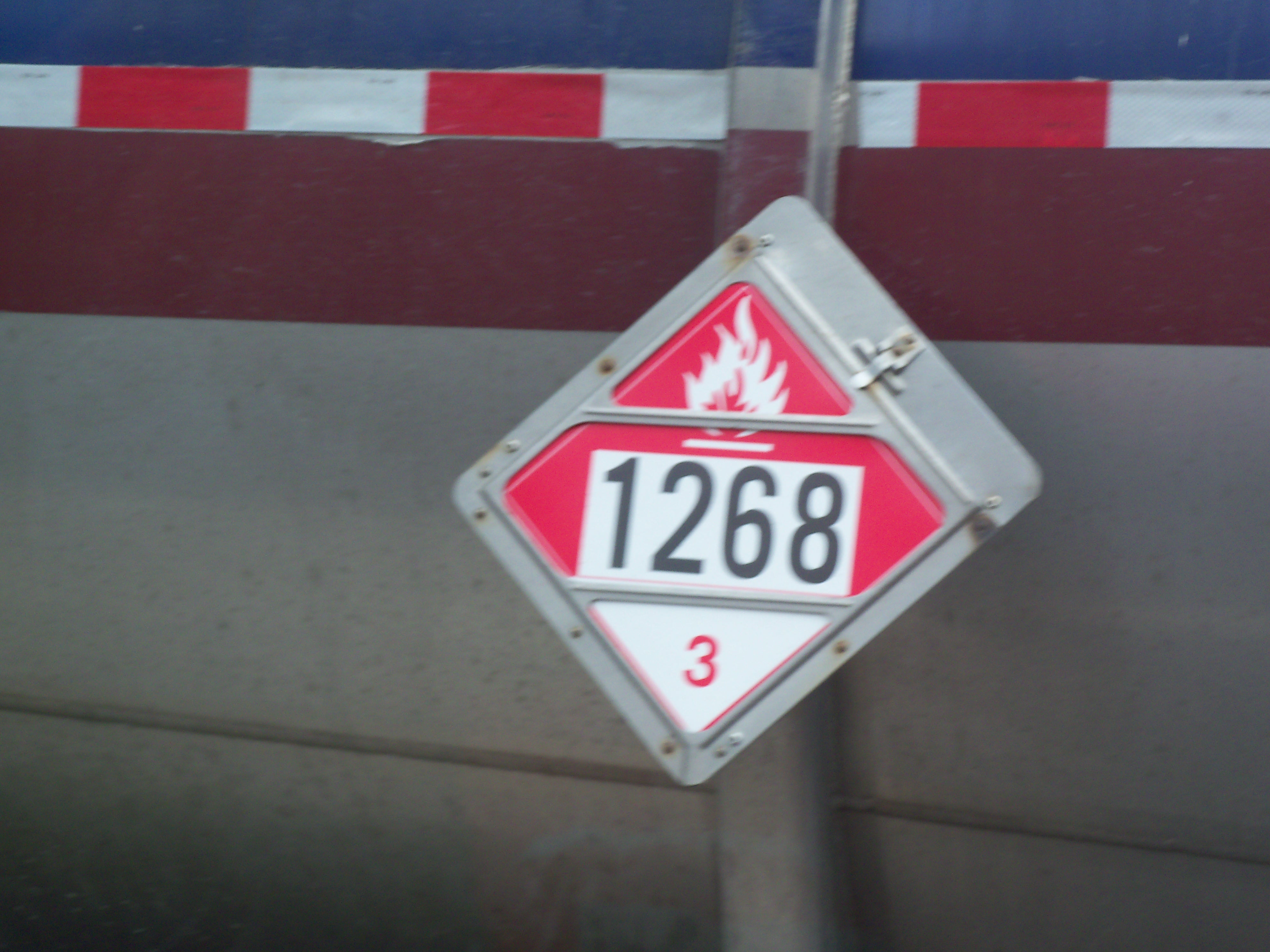
Generally, one can assume that the use of the Identification Number in association with the placard for a shipment of a hazardous material is limited to those shipments that are or contain a bulk packaging.
The identification number marking included on the placard affixed to a bulk packaging (Tank Truck) of a hazardous material
Such as:
The transport vehicle itself is a bulk packaging of greater than 1,000 gallons (eg. tank truck or railroad tank car).
A bulk packaging of any volume (eg. intermediate bulk packaging or IBC) is loaded into a transport vehicle where its identification number is no longer visible.
In either of the above, the Hazardous Material Regulations of the USDOT/PHMSA require that the transport vehicle be marked on both sides and each end with the identification number of the hazardous material. The identification number used must be determined from the Hazardous Materials Table and be displayed in association with the hazardous materials placard as required by §172.332 or §172.336 (either on an orange panel or a white square-on-point configuration).
Often overlooked by shippers and carriers alike, however, is the requirement in 49 CFR 172.301(a)(3) to mark a transport vehicle or freight container containing only a single hazardous material in non-bulk packages, on each side and each end with the identification number specified for the hazardous material in the § 172.101 Table, as long as the following requirements are met:
Each package is marked with the same proper shipping name and identification number;
The aggregate gross weight of the hazardous material is 4,000 kg (8,820 pounds) or more;
All of the hazardous material is loaded at one loading facility;
The transport vehicle or freight container contains no other material, hazardous or otherwise; and
The identification number marking requirement of this paragraph (a)(3) does not apply to Class 1, Class 7, or to non-bulk packagings for which identification numbers are not required.
Example:
Company A offers for shipment 20 x 55 gallon drums of Chromic Acid Solution weighing 11,009 pounds. The carrier makes the pickup of the Chromic Acid Solution and nothing else, and has no other material (hazardous or otherwise) loaded on the vehicle. In this situation, it is necessary to include the identification number for Chromic Acid Solution (UN1755) either on the placard or nearby as required by §172.332 or §172.336 (either on an orange panel or a white square-on-point configuration).
As you can see, the Hazardous Materials Regulations of the USDOT/PHMSA can be very complicated. Even the seemingly simple regulations pertaining to the use of the identification number marking on a transport vehicle or freight container can become difficult to comply with when certain situations arise. Training your HazMat Employees on the requirements of the HMR is a good way to ensure the transportation of hazardous materials to and from your facility is done safely and in compliance with the regulations.
Safety and Security Plans and In-Depth Security Training Required by the US DOT for Shippers and Carriers of HazMat
An often overlooked or misunderstood component of the Hazardous Material Regulations (HMR) is the requirement for a shipper or carrier of a hazardous material to comply with the regulations at 49 CFR 172, Subpart I which require a Safety and Security Plan and those at §172, Subpart H that require Security Awareness Training and In-Depth Security Training. The purpose of this article is to explain the method for determining applicability to these regulations. (more…)
Use of Placards on Non-Bulk Packagings of Hazardous Material
Unless an exception to the Hazardous Material Regulations (HMR) is available, every shipment of a hazardous material will require the use of each of the four hazard communication methods of the US DOT, they are:
Shipping papers
Placards
HazMat labels
Markings
Typically a placard is affixed to all four sides of a transport vehicle, such as a truck on the highway or a rail car. There are some situations, however, where a placard is required to be affixed to all four sides of a bulk packaging and there are some situations where the use of a placard or a HazMat label is an option on two sides of a bulk packaging. You can read more about the option to placard or label bulk packagings here: Use of Placards for HazMat Shipments in Bulk Packagings.
The purpose of this article is to answer a question asked at one of my Public Training Seminars: “Is it OK to use a placard on a non-bulk packaging of a hazardous material in place of the HazMat label?” (more…)
The Responsibility for Training and Testing of HazMat Employees
A question I am frequently asked is, “Will you certify my HazMat Employees have been trained?” or, “Do you provide HazMat certification for HazMat Employees?” or some variation on this theme. My answer, unfortunately, does not always satisfy my potential customers because in order to be true to the letter and the spirit of the regulations I must answer them, “No, I cannot certify the training I provide for your HazMat Employees, only you can do that.” The purpose of this article is to explain my reply, understand better the applicable regulations of the US DOT and maybe win back some of those lost prospects. (more…)
How to Identify and Train Your HazMat Employees
Announcements of Proposed Rules, Changes to the Rules, and Final Rules of the US DOT & US EPA – 2nd Half of February 2013
On its website the US Government Printing Office makes a wealth of Federal publications available for review and download; one of these is the Federal Register.
Published by the Office of the Federal Register, National Archives and Records Administration (NARA), the Federal Register is the official daily publication for rules, proposed rules, and notices of Federal agencies and organizations, as well as executive orders and other presidential documents.
The Federal Register is a great way to look down the road and see potential changes to the regulations long before they are put into effect (sometimes The Rulemaking Process takes years before a final rule is issued, if ever). Knowledge of these potential changes provides you with several advantages:
Additional time to modify your business operations to comply.
Awareness of on what topics the regulatory agencies intend to focus their efforts.
The ability to register your concerns, complaints, suggestions, etc. in order to modify the proposed rule before a final rule is issued. It can be done, really!
Make changes to your training program to account for changes that become effective before the next training cycle.
Alert you to the need to re-train your employees prior to their next scheduled training cycle, if necessary.
Keep you abreast of changes to the regulations that affect your business and/or your industry group.
See below for a brief summary of announcements in the Federal Register by the US EPA on the subject of Hazardous Waste and the Pipeline & Hazardous Materials Safety Administration (PHMSA) of the US DOT on the subject of Transportation of Hazardous Materials. Please note that this is my best effort to identify the relevant announcements in the Federal Register that may be of interest to generators of hazardous waste and shippers of hazardous materials. I encourage you to review the list of Federal Register publications yourself to ensure regulatory compliance.
Management of Solid Waste and Hazardous Waste (RCRA):
None
Information can be helpful but it’s useless if you are not able to make sense of it, determine how any changes to the rules and regulations (final or proposed) will affect your operations, and communicate the necessary information to your personnel. I can help you do that. Please contact me for a free consultation to determine your regulatory requirements and how training can help you to attain and maintain compliance.