PO Box 1232 Freeport, IL 61032

A Different Kind Of Training

A Different Kind Of Training

A Different Kind Of Training

Q&A: What Training is Required in Order for a Person at an SQG to Sign the Hazardous Waste Manifest?

(1.7.16)  Sometimes it doesn’t take much of a question to get my attention:

Training required to sign shipping manifest for SQG.

My reply that same day:

If your question is if training is required for employees of an SQG who sign the hazardous waste manifest, I will try to answer that below.

Please don’t hesitate to contact me with any other questions.
Daniel Stoehr
Daniels Training Services

Contact me with any questions you may have about the generation, identification, management, and disposal of hazardous waste

Daniels Training Services

815.821.1550

Info@DanielsTraining.com

https://danielstraining.com/

And that was it.  Haven’t heard from him since.  I’d like to hear from you though, if you have a question about the transportation of hazardous materials or the management of waste (hazardous, universal, non-hazardous, & used oil).

Q&A: Is an Instructor Necessary for HazMat Employee and RCRA Training?

An email from a past customer on 1.7.16:

Does self study training comply with EPA regulations? In other words can we have our people go through the materials on their own, take quizzes, etc and comply OR does someone here have to administer (classroom)?
What I have read is that the e-learning, classroom, etc. has to be “directed” by someone qualified. Does that mean that person has to give the classes or can we buy the materials and have them e-learn?
Class room traiinng is getting harder to get people to and e-learning is a little easier as people can do it when they have time, but want to make sure it complies with EPA/DOT.
Thanks

Since this was a past customer of my Onsite Training I didn’t want to lose them to eLearning (something I don’t currently do) but I had to tell them the truth (1.7.16):

Thank you for contacting me.  I’m happy to answer your questions.

USEPA/State regulations for training of hazardous waste personnel:
  • The requirement for a initial training and an annual review apply only to a large quantity generator of hazardous waste.
  • EPA regulations at 40 CFR 265.16(a)(2) require the training program to be directed by a person who has been trained per the initial and annual requirements:  “This program must be directed by a person trained in hazardous waste management procedures.”  So, at least one person must meet the training requirements of 40 CFR 265.16 in order to provide the training for others.
  • The EPA regulations do not forbid self-study or other elearning methods nor do they require a person direct a class of trainees.
  • Your state may regulations may be more strict than the EPA regulations – e.g. the regulations in Colorado require training to be both classroom and on-the-job.

USDOT regulations for training of HazMat Employees:

All states require annual training of Facility Personnel of an LQG
Be sure your RCRA Training addresses the regulations of your state.
  • DOT does not have a requirement that the training provider be trained or experienced in any way.
  • DOT regulations do not forbid self-study or other elearning methods nor do they require a person direct a class of trainees.
In both cases the regulations place the burden of responsibility of meeting the training requirements on the employer.  So, absent of a direct regulation of how to provide the training the employer must ensure the training requirement of 40 CFR 265.16 (EPA) and 49 CFR 172, Subpart H (DOT).
 
I provide both EPA (and state) and DOT training in the following formats:
Thank you very much and please don’t hesitate to contact me with any questions.
Also, you may be interested in my Monthly Newsletter on the Hazardous Waste regulations of the USEPA and the HazMat Transportation regulations of the USDOT.
NO MARKETING EMAILS.

Q&A: Shipping Chemistry Sets in Time for Christmas

An email I received December 17, 2015 (I swear I am not making this up!):

Hi Daniel,

I have a question regarding the hazmat shipping exception: Small Quantities for Highway and Rail. I’m trying to ship an order of chemistry sets which have 8 hazardous materials:

(3 grams)   Calcium Metal                                UN1401                                4.3

(25mL)       Hydrogen Peroxide                         UN2984                                5.1

(20 grams)  Magnesium                                    UN1869                                          4.1

(25 grams)  Potassium Persulfate                     UN1492                                5.1

(1 gram)     Silver Nitrate                                  UN1493                                5.1

(15 grams)  Potassium Permanganate               UN1490                                5.1

(30 grams)  Sodium Hydroxide                          UN1823                                8

(20mL)       Sulfuric Acid                                  UN2796                                8

Each chemical is in either Packing Group II or III. To my best judgement, this falls under the Small Quantities exception. Is that correct? Also, would the class 8 materials need to be shipped separately? When I researched segregation/compatibility, class 8 was the only class that raised an issue. Any help is greatly appreciated.

(12.18.16)  I was traveling and figured that a short answer was better than no answer, so I pointed him to the applicable regulation:

I can give you a quick answer right now.

Based on the information you’ve provided, I suggest you refer to 49 CFR 173.161 for packaging instructions for chemical kits and first aid kits.

Please don’t hesitate to contact me with any other questions.
A few days later, and back in the office, I decided to see if I could be of any more help (12.22.16):
I am back in the office and have more time to discuss the above with you if you have additional questions.

Like this article?

Subscribe to my Monthly Newsletter

No marketing emails!

A little too late for Christmas but he did write me back on January 4, 2016:

Sorry for the delayed response. If I were to ship the sets using the Small Quantities for Highway and Rail method, is the package still considered hazmat? There isn’t a large price difference in shipping the sets as hazmat, I’m just curious if I need to mark them as such or not.

Thanks for the help,
My reply that day:

The packing instructions of 49 CFR 173.161 allows for the transportation of chemical kits per the Small Quantity or Excepted Quantity exceptions.  If so, they still remain a hazardous material but are excepted from most of the requirements of the hazardous material regulations, e.g. specification packaging, shipping papers, HazMat labels, HazMat Employee training (perhaps!).

I suggest you refer to 173.161.
Please don’t hesitate to contact me with any questions or if you require HazMat Employee training.

Contact me with any questions you may have about the transportation of hazardous materials by air, highway, vessel, or rail

International and Domestic

Daniels Training Services

815.821.1550

Info@DanielsTraining.com

https://danielstraining.com/

I hope that limited assistance was enough to keep me on the “Good” list.

Don’t you hesitate to contact me with any questions you may have about the transportation of chemical kits, first aid kits, or any other hazardous material.

Q&A: Using the Marine Pollutant Marking by Land and Water

Here’s a question someone posted to Hazmat101, a Yahoogroup on December 1, 2015:

To  compare notes.

  1. Are marine pollutant placards required on a truck that contains non-bulk packages on its way to the port per 49 CFR? What if the truck has placards for Flammable packages?
  2. Are marine pollutant placards required on a freight  container with non-bulk packages shipped by water from the continental  U.S. to Hawaii  under 49 CFR (not the IMDG code)? What if the freight containers has placards for Flammable packages?
  3. Are marine pollutant placards required on a freight  container with non-bulk packages shipped by water under  the IMDG code? What if the freight container has placards for Flammable packages?

Citations appreciated.

Thanks in advance.

My reply that day (I must have been in the office!):
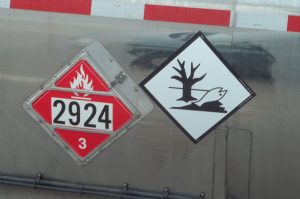
  • Just a point of clarification, the Marine Pollutant marking is not a label nor a placard even if it is the size of one or the other.  It is a marking (49 CFR 172.322).
  • Marine Pollutant MarkingThe marine pollutant marking is not required on a vehicle that is transporting non-bulk packagings by highway since per 49 CFR 171.4 the hazardous material regulations do not apply to a Marine Pollutant transported by highway (or rail or air) in a non-bulk packaging.  It might be OK to display the Marine Pollutant marking on the vehicle even if it is not required, but I am not certain.  The presence of the Flammable Liquid placard does not impact display of the Marine Pollutant marking.
  • A non-bulk packaging of a Marine Pollutant shipped by vessel is subject to the hazardous material regulations and therefore the non-bulk packaging and the freight container must bear the Marine Pollutant marking.  Marine Pollutant marking is not required on some non-bulk packagings of less than or equal to 5 L or 5 Kg (172.322(d)), however, a freight container of non-bulk packagings that do not have the Marine Pollutant marking due to 49 CFR 172.322(d) will still need to be marked with a placard-sized Marine Pollutant marking on all four sides (172.322(c)).The presence of the Flammable Liquid placard does Marine Pollutant Marking and Class 3 Placardnot impact display of the Marine Pollutant marking.
  • IMDG code requirements are the same as USDOT/PHMSA.  Non-bulk packaging of 5 liters or less or 5 Kg or less need not display the Marine Pollutant marking (5.2.1.6).  However, the freight container they are packed in must display the Marine Pollutant marking (5.3.2.3).  The presence of the Flammable Liquid placard does not impact display of the Marine Pollutant marking.
I hope this helps.  Please don’t hesitate to contact me with any other questions.
Daniel Stoehr
Daniels Training Services

Interested in a Webinar that covers this topic, and more!

My Webinar Training Schedule

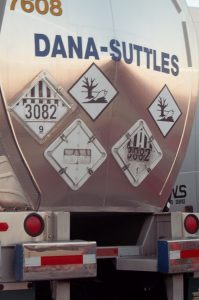
Cargo tank truck with Class 9 placards and the Marine Pollutant markingAnd a post from someone else in the group that same day as well:
PC:
-The 49CFR never calls it a placard but in 49CFR 172.322(c) it talks about a truck being labeled with the marine pollutant mark.-49CFR 171.4 As long as you are on the road and not the water marine pollutants in non-bulk packaging don’t have to follow the rules for marine pollutants.-49CFR 172.322 has rules for Marine Pollutants.

Contact me with any questions you may have about the transportation of hazardous materials by air, highway, vessel, or rail

International and Domestic

Daniels Training Services

815.821.1550

Info@DanielsTraining.com

https://danielstraining.com/

Determining Authorized Packaging for the Transportation of a Hazardous Material

The General Requirements for Packagings and Packages at 49 CFR 173.24(c) of the PHMSA/USDOT Hazardous Material Regulations (HMR) require the shipper of a hazardous material to use only a packaging that is authorized for its use.  What’s known as “authorized packaging”, therefore is required in one form or another for all shipments of hazardous materials.  What may differ between shipments of HazMat is how an authorized packaging is determined, for there are several.  The purpose of this article is to identify and explain the methods for determining an authorized packaging using the HMR.

Other Methods for Determining Authorized Packaging:

While columns 8 and 7 of the Hazardous Materials Table are used to determine authorized packaging for most HazMat (more on that in a little bit), some methods of transportation, HazMat quantities, and specific operations rely on other methods.  Those “other methods” for determining authorized packaging are identified at §173.24(c)(1)(ii).  A packaging may be authorized for transportation of a HazMat without referring to columns 8 and 7 of the Hazardous Materials Table if it is permitted under, and conforms to, the requirements of any one of the following:

  • An approval or authorization issued by the Bureau of Explosives.
  • The international transportation regulations of the ICAO Technical Instructions, the IMDG Code, Transport Canada TDG Regulations, or the IAEA Regulations.
  • A packaging exception applicable to one of the following:
    • Salvage drums and cylinders.
    • Small quantities by highway or rail.
    • Excepted quantities.
    • De minimis exceptions.
    • Agricultural operations.
    • Oilfield service vehicles
    • Mechanical displacement meter provers
    • Roadway striping vehicles.
    • Portable and mobile refrigeration systems.
    • HazMat transported as Materials of Trade.
    • Government operations and materials.
    • Non-specification packagings used in intrastate transportation.
    • Authorized packaging for transportation by aircraft.
    • Exceptions for transportation of HazMat by vessel.
Using Columns 8 and 7 to Determine a HazMat’s Authorized Packaging:

Notwithstanding the above, a packaging is authorized for use in the transportation of a hazardous material if…

  • The packaging is prescribed or permitted for the HazMat in column 8 of the Hazardous Materials Table at §172.101.

And…

  • It conforms to the requirements of the special provisions of column 7.

And…

  • If DOT specification packaging is required, it complies with the applicable packaging specifications in parts 178 or 179 of the HMR.

So, let’s start with column 8 of the Hazardous Materials table.  Instructions for its use are found at §172.101(i).  Column 8 is broken down into three sub-columns:

  • Column 8A identifies exceptions from some of the requirements of the HMR for certain HazMat. These exceptions are in addition to those already listed in this article and some more that aren’t but can be found in 49 CFR 173, subpart A.  “None” in column 8A means no packaging exceptions are authorized unless one is provided in column 7.
  • Column 8B prescribes the authorized packaging – and other applicable packaging requirements – for a non-bulk packaging. “None” in column 8B means a non-bulk packaging is not authorized unless one is provided in column 7.
  • Column 8C prescribes the authorized packaging – and other applicable packaging requirements – for a bulk packaging. “None” in column 8C means a bulk packaging is not authorized unless one is provided in column 7.

Authorized packagings for both bulk and non-bulk shipments of cylinders are identified in Column 8B.  Unless “None” appears in Column 8C, a bulk cylinder may be used if specified through the section referenced in Column 8B.

WHAT IS A BULK PACKAGING?
Question:
Yeah, but how?  When I look at column 8 all I see are numbers or “None”.  How does that tell me the authorized packaging?
Answer:
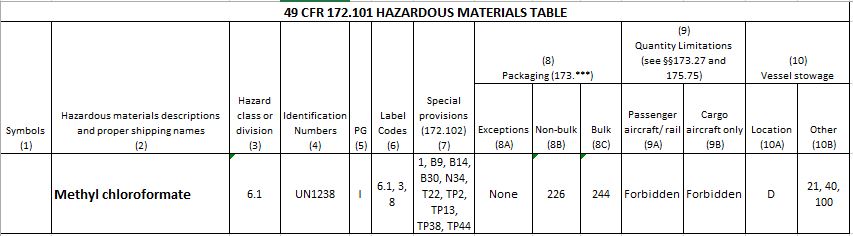
Columns 8A, 8B, and 8C specify the applicable sections of part 173 for available packaging exceptions (8A); non-bulk packaging requirements (8B), if applicable; and bulk packaging requirements (8C), if applicable.  It is presumed that the numerical entry in column 8 – unless “None” appears – is preceded by “49 CFR 173.”.  Therefore, the entry “226” in column 8B for Methyl chloroformate indicates that its non-bulk packaging requirements, including but not limited to its authorized packaging, can be found at 49 CFR 173.226.

Hazardous Materials Table entry for UN12388

And that’s not all because the packaging requirements identified in column 8 are in addition to the standard packaging requirements of §173.24 and other applicable requirements of subparts A and B of part 173.  A shipper must research these areas of the HMR as well to determine any other applicable packaging requirements.

That leaves the special provisions of column 7 of the Hazardous Materials Table; the instructions for which are found at §172.101(h).  The special provisions of column 7 are represented by codes – explained at §172.102 – for the special provisions that may or may not be applicable to a particular shipment of HazMat.  As noted elsewhere in this article the special provisions of column 7 may indicate the authorized packaging or an exception for a HazMat even when “None” appears in column 8 for that packaging.

It helps that the codes in column 7 are categorized by packaging or mode of transportation.  For example, a code beginning with “B” applies only to bulk packagings, while a code beginning with “R” applies only to transportation by rail.  Read:  The Meaning of the Special Provision Codes of Column 7.

Like this article?

Subscribe to my Monthly Newsletter

No marketing emails!

When not to use the Section Referenced in Column 8B or 8C to Determine Authorized Packaging:

There are two situations when a shipper must disregard the section of part 173 referenced in column 8 of the Hazardous Materials Table and instead refer to an alternative citation.  These two situations are explained below.

Situation #1:

If an entry in the Hazardous Materials Table contains an “A” – for aircraft – or “W” – for water – in column 1, that entry is only subject to the HMR if its mode of transportation is by aircraft or vessel (“W” = “Water” = vessel) unless it is a hazardous waste or hazardous substance.  If such a HazMat is transported by air or vessel the section of part 173 specified in column 8 is used to determine the packaging requirements, including authorized packaging.  If it is transported by motor vehicle or rail but is subject to the HMR due to it being a hazardous waste or hazardous substance, a shipper does not refer to the section of part 173 specified in column 8 but instead will refer to §173.203 if it is a liquid or §173.213 if it is a solid.

Example:

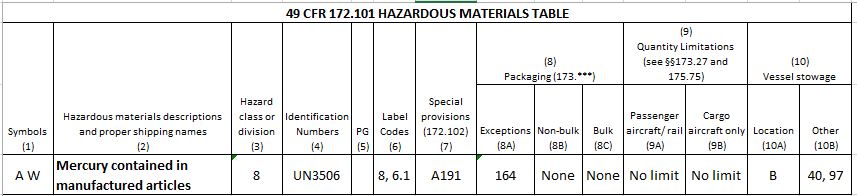
UN3506, Mercury contained in manufactured articles, 8 (6.1)

Hazardous Materials Table entry for UN3506


  • If transported by aircraft or vessel it’s subject to the HMR. §173.164 must be referenced to determine packaging requirements.
  • If transported by motor vehicle or rail and not a hazardous waste or hazardous substance it’s not subject to the HMR.
  • If transported by motor vehicle or rail and is either a hazardous waste or hazardous substance it’s subject to the HMR. §173.213 must be referenced to determine the packaging requirements.

Situation #2:

If a hazardous material is specifically named in column 2 of the Hazardous Materials Table and is shipped in a form that does not apply to the section of part 173 indicated in column 8, then the table at §172.101(i)(4) must be used to determine the appropriate section of part 173.

Packaging section reference for solid materialsCorresponding packaging section for liquid materials
§173.187§173.181
§173.211§173.201
§173.212§173.202
§173.213§173.203
§173.240§173.241
§173.242§173.243

Example:

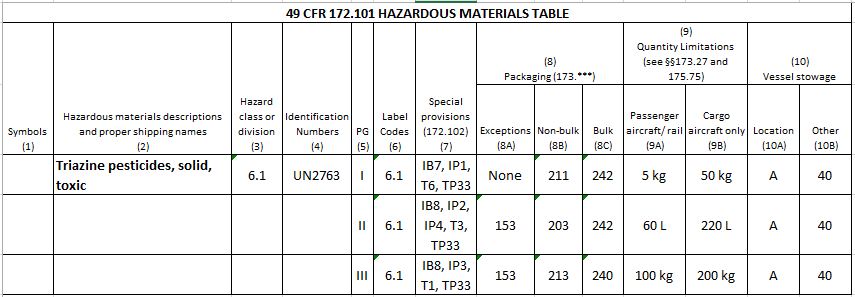
Hazardous Materials Table Entry for UN2763

UN2763, Triazine pesticides, solid, toxic, 6.1, I

  • If in a liquid form at the time it is offered for transportation disregard the reference to §173.211 in column 8B and instead refer to §173.201.

Contact me with any questions you may have about the transportation of hazardous materials by air, highway, vessel, or rail

International and Domestic

Daniels Training Services

815.821.1550

Info@DanielsTraining.com

https://danielstraining.com/

Conclusion:

The selection of an authorized packaging by the shipper of a HazMat is only one part of the packaging requirements for transportation in commerce of a hazardous material; a critical part.  When determining authorized packaging make certain you are not relying on information provided by someone else, or your “gut feeling”, or what you’ve always used for packaging in the past.  Only the Hazardous Material Regulations of the PHMSA/USDOT used as outlined in this article can identify the correct authorized packaging.

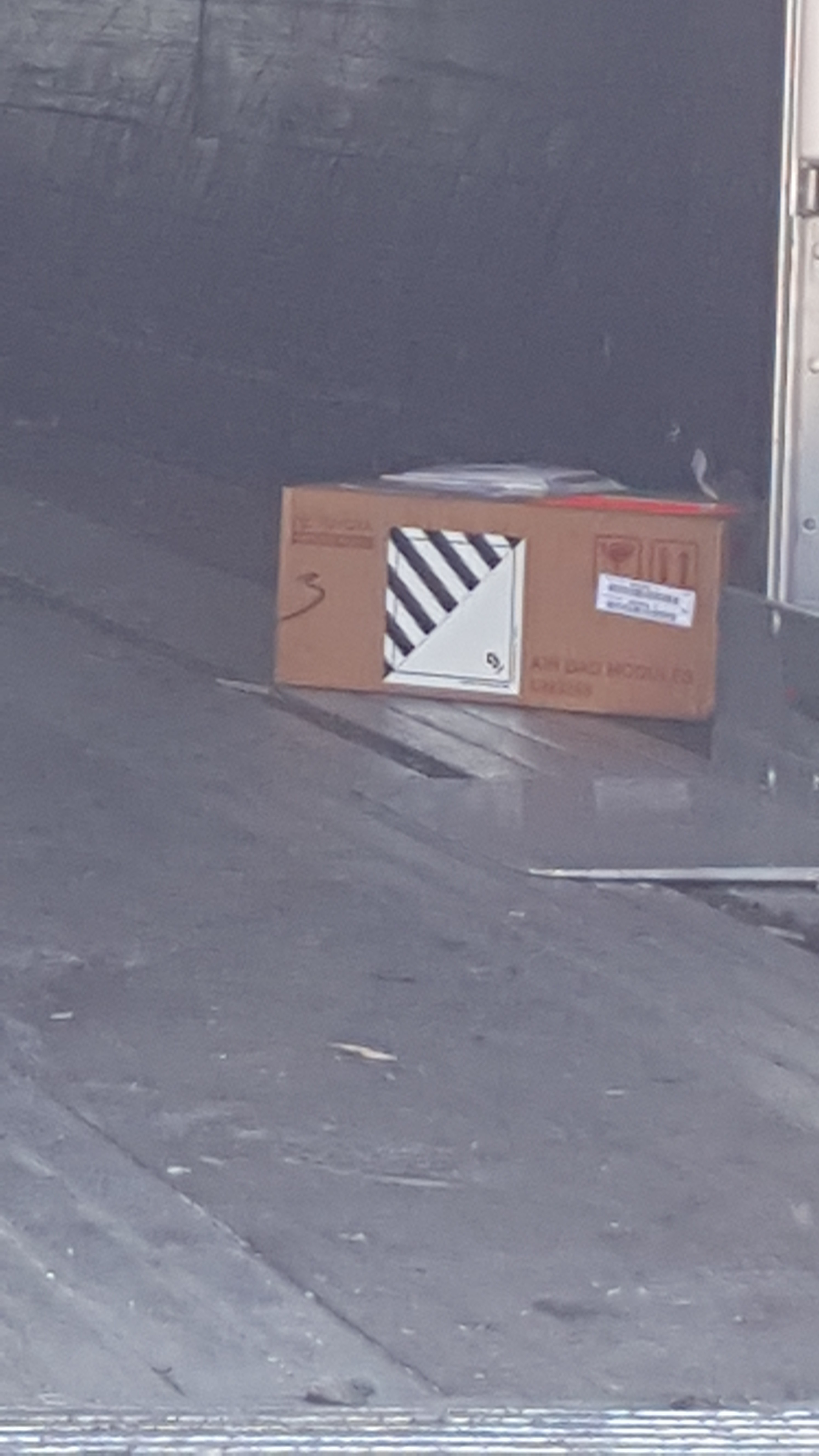
Packaging with class 9 HazMat label

An Explanation of USDOT’s Hazard Class 9 Miscellaneous

All hazardous materials subject to the regulations of the Pipeline and Hazardous Materials Safety Administration (PHMSA) within the USDOT must be classified as one or more of the nine hazard classes – or a division of a hazard class – identified at 49 CFR 173 subpart C (for Class 1 Explosives), subpart D (for hazardous materials other than Class 1 Explosive and Class 7 Radioactive), and subpart I (for Class 7 Radioactive).  while most hazard classes/divisions have very specific definitions based on their potential hazards, i.e. flash point, rate of corrosion, lethal dosage, &etc, one hazard class is deliberately vague in its definition.  Its vague definition results in the hazard class being applicable to many materials that might not normally be subject to the Hazardous Material Regulations.  It is hazard class 9 Miscellaneous, and the subject of this article. (more…)

Units of Measure Used in the Hazardous Material Regulations

Remember back in grade school when they told us that every other country in the world used the metric system and that America would be left behind if we didn’t change, pronto?

Well, they were half right.  I still pay for gas by the gallon and I still keep my speed below 55 mph to avoid a ticket but we also happen to be the most powerful country in the history of the world, so maybe the rest of the world needs to switch back to the U.S. standard.

But I’m not here to express my opinion on the metric system.  The purpose of this article is to identify the unit of measure used in the Hazardous Material Regulations (HMR) of PHMSA/USDOT and how to convert from metric units to the U.S. standard. (more…)

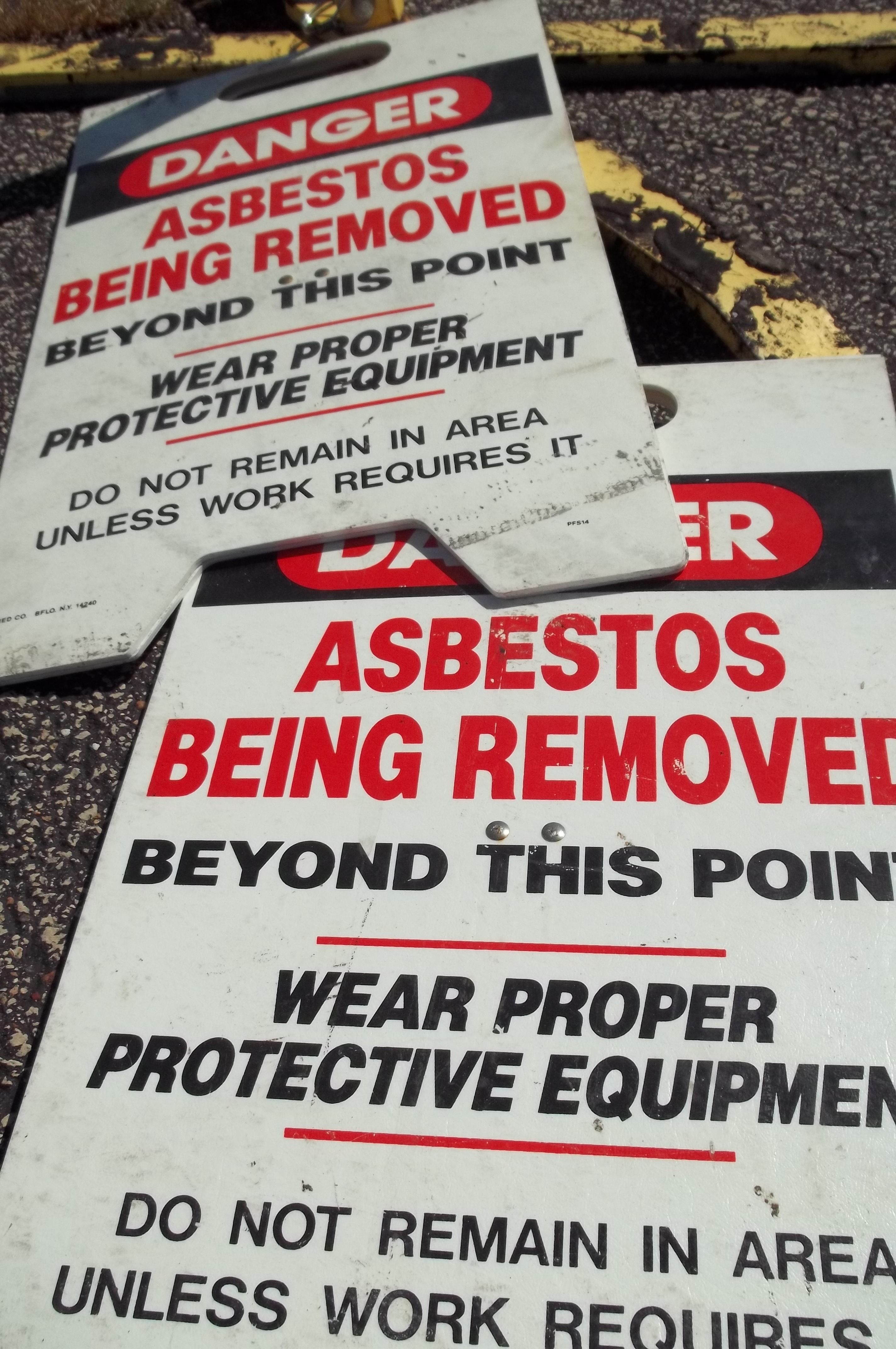
Asbestos Removal Sign

Q&A: Is the HazMat Endorsement Required When Transporting Asbestos?

December 8, 2015, not a customer but someone who needed help:

We are in the state of ########.  We will be hauling asbestos for a company, does my drivers need hazmat on their cdl’s?

I have read many conflicting items and just want to be sure we are covered correctly

  • Do we need to have hazmat?
  • Does the truck or container need to be placard?
  • Does the asbestos need to be wet?
  • Are there certain weight limits where it goes from no placards/no hazmat to yes placards/yes hazmat?

Any help will be greatly appreciated.

Thanks in advance.

My reply a few days later on December 11, 2015:

I apologize for my delay in responding.  I hope this is still of some use to you.

Asbestos is regulated as follows when in transportation:

  • When transported within the U.S. asbestos is a Class 9 Miscellaneous hazardous material except as noted below.
  • If asbestos is fixed in a binder material such as cement it is not a hazardous material when transported.
  • Class 9 Miscellaneous HazMat are not required to display a placard no matter the quantity in the vehicle or container.
  • The HazMat endorsement on the CDL is required only for drivers of placarded quantities of HazMat.

Based on the above, the answers to your questions are as follows:

  • The HazMat endorsement on the CDL is not required.
  • The vehicle or container does not require Class 9 Miscellaneous placards, no matter the quantity.
  • Wetting and bagging dusty asbestos is a requirement of OSHA and USEPA regulations and not those of the USDOT.  It would be a requirement of the Shipper of the asbestos who offers it to you and not to you as the Carrier.
  • The amount of asbestos does not change the fact that the use of Class 9 Miscellaneous placards is not required within the U.S.
  • Despite the above, you and your drivers are still transporting a hazardous material (unless it is fixed in a binder) and therefore require HazMat Employee training every three years.  I can provide you with this training.
I hope this helps.
The reply, later that day:

Thank you for your help and if we do need the training I will for sure contact you.

Thanks again.

Asbestos Removal SignAnd I meant it…

Thank you!  And please continue to contact me with any questions you may have.

And they decided to take me up on my offer (12.17.15):

I need to know if the below is for friable and non friable?  We were told we had to be cdl hazmat endorsed and trucks were to be placarded for friable.

And so, the next day, my reply:

Please see below.  Note that this is informal guidance.  For a full explanation of these regulations and how they affect your compliance I can provide you with my consulting services.

  • Asbestos, in various forms, is identified as a hazardous material by PHMSA/USDOT in the Hazardous Materials Table at 49 CFR 172.101.
  • PHMSA/USDOT regulations do not use or define the terms friable or non-friable.
  • However, Special Provision code 156 in column 7 of the Hazardous Materials Table reads as follows:

156   Asbestos that is immersed or fixed in a natural or artificial binder material, such as cement, plastic, asphalt, resins or mineral ore, or contained in manufactured products is not subject to the requirements of this subchapter.

  • Therefore, if asbestos meets the description of Special Provision 156, it is not subject to PHMSA/USDOT regulations when transported.  i.e. it is not a hazardous material.
  • If asbestos in transportation does not meet the description of Special Provision 156, then it would be a Class 9 Miscellaneous hazardous material.
  • A motor vehicle transporting Class 9 Miscellaneous Material is not required to be placarded within the U.S.
  • The Federal regulations of the FMCSA/USDOT and most states (check with your state) require a CDL with the HazMat endorsement for drivers of motor vehicles that transport a placarded amount of HazMat.
  • A CDL may be required for other reasons, such as vehicle weight, but the HazMat endorsement would not.
  • Even if a CDL with the HazMat endorsement is not required, asbestos that does not meet the description of Special Provision 156 remains a hazardous material and therefore HazMat Employee training is required.  I can provide this training.

Thank you and please don’t hesitate to contact me with any other questions.

Daniels Training Services

815.821.1550

Info@DanielsTraining.com

https://danielstraining.com/

Q&A: Reclassifying a Flammable Liquid to a Combustible Liquid

A question from a customer of mine after I had provided them with training:

Hi Daniel.  I just need clarification from what you had told us regarding reclassifying our product from Flammable to Combustible.  Do we need to change the Transport information on our SDS?  This is what is currently listed.

Section 14: Transport Information
UN number  3295
  • UN proper shipping name  Hydrocarbons, Liquid, N.O.S., 3, PG III
  • ICAO/IATAUN3295, Hydrocarbons, Liquid, N.O.S. 3, III
  • IMO/IMDG  UN3295, Hydrocarbons, Liquid, N.O.S. 3, III, (39.4°C)
  • ADR/RID  UN3295, Hydrocarbons, Liquid, N.O.S. 3, III, ADR
Not a good time for me.  I had to put them off:

I am about to begin a Webinar and am then preparing for transportation tomorrow morning.  I will get you an answer as soon as I can.

It took me a few days but I finally got them an answer:
My answers to your question is below.
  • While section 14 of the Safety Data Sheet is required to be completed, its information is for guidance purposes only as its content is not regulated by either OSHA (whose regulations require the SDS) or USDOT/PHMSA:

The SDS must also contain Sections 12 through 15, to be consistent with the UN Globally Harmonized System of Classification and Labeling of Chemicals (GHS), but OSHA will not enforce the content of these sections because they concern matters handled by other agencies.

  • But of course you want the information on your SDS to be as accurate as possible.
  • Describing the material as a Class 3 Flammable Liquid is correct since its flashpoint is below 140 degrees fahrenheit and its re-classification to a Class 3 Combustible Liquid and using the Combustible Liquid Exception are options, not mandatory.
  • If you wish to clarify why your SDS indicates it is a Flammable Liquid and you are shipping it as a Combustible Liquid, you may include language in Section 14 as follows:  Pursuant to 49 CFR 173.120(b)(2) and 49 CFR 173.150(f) a flammable liquid with a flash point at or above 100 degrees fahrenheit may be reclassed as a combustible liquid for transportation within the U.S. by motor vehicle or rail only.
I hope this is not too late to help.  Please don’t hesitate to contact me with any other questions.

Contact me with any questions you may have about the transportation of hazardous materials by air, highway, vessel, or rail

International and Domestic

Daniels Training Services

815.821.1550

Info@DanielsTraining.com

https://danielstraining.com/

It’s not uncommon for a customer to follow up with questions after Onsite Training or a Webinar.  And I’m only too happy to oblige.

Q&A: Using the Dangerous Placard in Place of Multiple HazMat Placards

A question posted to a Yahoo! Group back in November 2015:

Comparing notes.

For shipments in the U.S.
For shipments of hazardous materials that require placards of truck load of non-bulk packages, you are allowed to use the Dangerous placard in place of multiple hazard class placards (under certain conditions).

Can you you use the Dangerous placard if the load is only one Hazrad Class?

Same question for Canada for the Danger placard?

Thanks in advance.

Someone gave a reply before I did the next day:

49CFR 172.504 (b) DANGEROUS placard: …….”non-bulk packages with two or more categories of hazardous materials that require different placards specified in table 2 of paragraph (e) of this section may be placarded with a DANGEROUS placard instead of the separate placarding specified for each material…..”

So, it has to be 2 different hazards.  Also, can’t be used to substitute placarding from Table 1, and can’t be used if 1,000 kg (2205#’s) or more of ONE hazard class is loaded at one facility.

Here’s my reply just a few hours earlier:

I cannot speak with certainty about the Canada regulations, but I know that in the U.S. PHMSA/USDOT does not allow the use of the Dangerous Placard if there is only one HazMat on the vehicle.

Please see point #3 in this article:  When not to use the Dangerous placard.
I suspect that TDG Canada regulations are the same.
I hope I contributed something valuable to the conversation.

Like this article?

Subscribe to my Monthly Newsletter

No marketing emails!

Search Website