PO Box 1232 Freeport, IL 61032

A Different Kind Of Training

A Different Kind Of Training

A Different Kind Of Training

Q&A: Markings on a Bulk Packaging (Roll-off)

Another question through the Contact Me page of my website on April 3, 2016:

Dear Daniel,
A bulk container (rolloff box) requires to display the UN number in the sides?
Best Regards

My reply the next day (4.4.16):

Yes.  Pursuant to 49 CFR 172.302(a), a bulk packaging must display the identification number on all four sides if it has a capacity of 1,000 gallons or more and on two opposing sides if it has a capacity of less than 1,000 gallons.

Pursuant to 49 CFR 172.302(b), markings on a roll-off must have a width of at least 0.24 inch and a height of at least 2 inches.
I hope this helps.
Please don’t hesitate to contact me with any other questions.
Here’s some more information on this topic:

Contact me with any questions you may have about the transportation of hazardous materials by air, highway, vessel, or rail

International and Domestic

Daniels Training Services

815.821.1550

Info@DanielsTraining.com

https://danielstraining.com/

Q&A: Must a Shipper Provide a Copy of the Special Permit to the Carrier When Applicable?

A question received through my website (Contact me) on March 16, 2016:

In addition to the DOT-SP number being listed on the hazmat shipping paper, are you also required to send a copy of the DOT-SP with the hazmat shipment? We are primarily shipping 2.2 compressed gas with the DOT-SP stamped on the bottle. Thanks

My reply that same day:

The requirement to provide a copy of the special permit with the shipment will be indicated on the special permit.

In its general conditions the special permit will also require that everyone who must comply with its conditions must have a copy available.  Therefore, if the conditions of the special permit require any awareness of them by the carrier or the receiving facility, then you must provide a copy of it for them.  However, there are many special conditions that can function without the participation of the carrier or the receiving facility – and sometimes – the shipper.
That being said, it doesn’t hurt to provide a copy of the special permit with the shipping papers and instruct persons who may come in contact with it of their use.
I hope this helps.  Please don’t hesitate to contact me with any other questions.

The Specification Packaging Marking Requirements of 49 CFR 178.3

Most packagings intended for the transportation in commerce of a hazardous material must be designed, manufactured, and tested to meet either a DOT specification or a UN standard, which is then known as a specification packaging (Don’t confuse “specification packaging” with “DOT specification”, not all “specification packaging” is a “DOT specification” packaging, some may meet a UN standard).  A specification packaging must display a specification marking that meets the requirements of both of the following found in Title 49 of the Code of Federal Regulations:

  • The applicable regulations for the type of packaging; e.g. cylinders, portable tanks, non-bulk, intermediate bulk containers (IBCs), large packagings, and more throughout part 178.
  • The general specification marking requirements for all packagings found at §178.3

In this article I will identify and describe the requirements of 49 CFR 178.3 – specifically, those of §178.3(a) – for the display of the specification marking – either a DOT specification or a UN standard – on a specification packaging.

(more…)

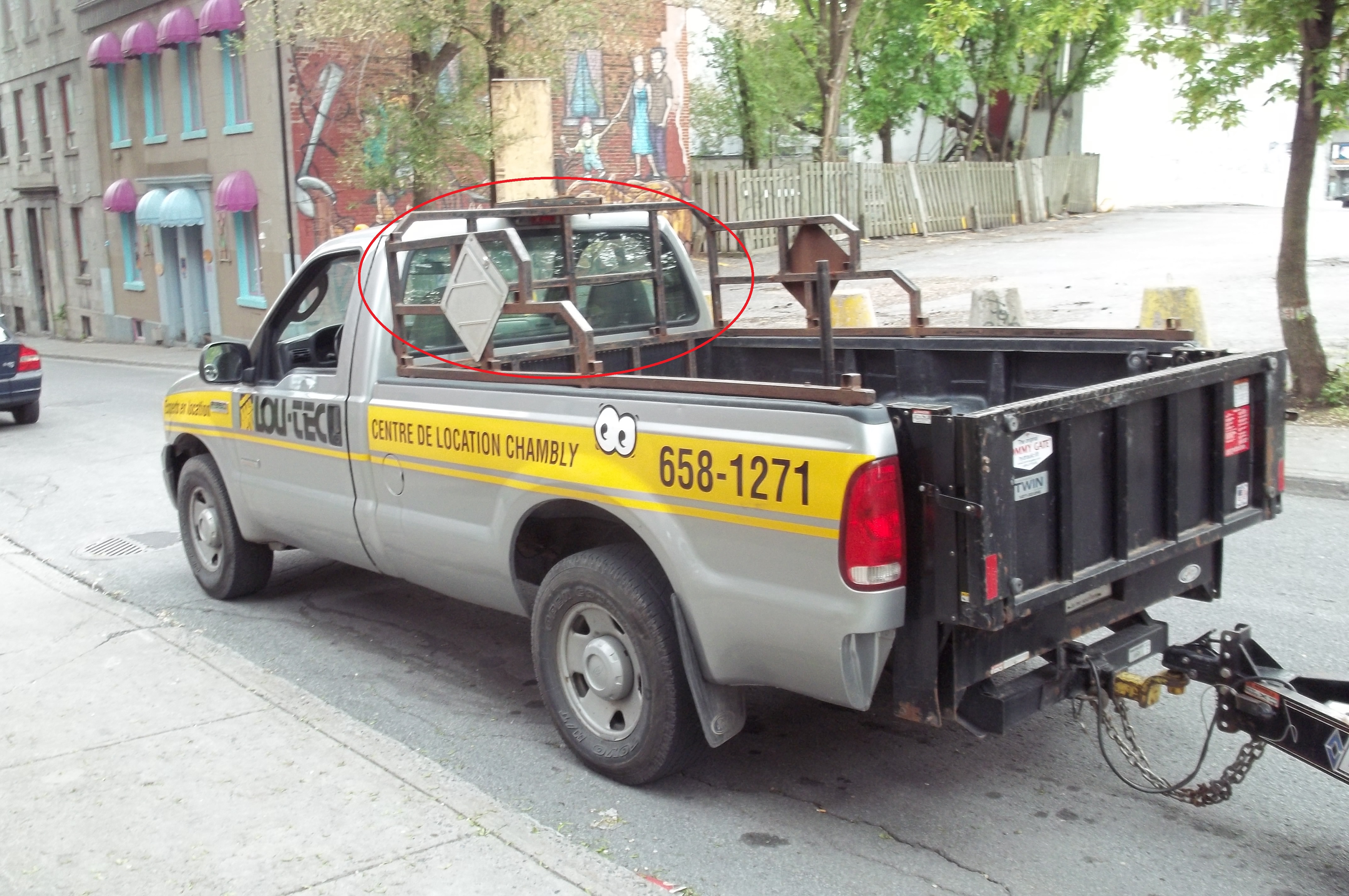
Commercial motor vehicle with headache rack

Q&A: Display of Placard on the Headache Rack of a Truck

This question came to me through my Facebook page on June 15th:

I found your website on Google. I have a question that I couldn’t find an answer to. I know hazmat placards must be visible from all 4 directions (with a few exceptions). But my question is this…specifically…
I have a 1-ton truck with a headache rack. Can I mount the front placard on the top of the headache rack so that it is 100% visible from the front? I would have the other 3 in the normal places. I read where it has to be mounted on both sides, front, & rear. It would not be actually “mounted” on the front, but it would be clearly visible. If it is acceptable, can you please tell me where it says it so that I can keep proof in the truck? Thank you for your time.

I replied the next day (6.16.16) and didn’t pretend to understand everything she was talking about:

Thank you for your question. I will reply later today or tomorrow.

Question: What is a headache rack?

The customer helped me out:

It is a metal guard that goes across the back of the truck to protect the driver & the rear windshield from any part of the load entering the cab.

Commercial motor vehicle with headache rack
The headache rack on this truck is circled in red.

With that information, I was ready to get to work (6.17.16):

OK. I’ll work on getting you an answer.

A few days later (6.21.16):

I apologize for my delay in responding. I have an answer for you.
49 CFR 172.504(a) requires placards to be displayed on each side and each end of a transport vehicle such as your 1-ton truck. 49 CFR 172.516(a) requires a placard to be clearly visible from the direction it faces, except for the direction of another transport vehicle (i.e. a tractor trailer combination where the placard on the front of the cargo trailer or tank is blocked from view by the tractor). There is no mention in the regulations of your specific situation. However, a letter of interpretation by the USDOT (LOI 09-0055) does address your issue. it reads, “Generally, placards on the sides and ends of the cargo-carrying portion of a vehicle’s cargo body satisfy requirements for placarding the sides and ends, even if they are not located at the outer perimeter of the vehicle, as long as they are readily visible and not obscured by appurtenances in the direction they face.”
A combination of the above-cited regulations and the LOI should suffice as proof that the method of mounting the placard as you propose is compliant with USDOT regulations.

I hope this helps.

Thank you and please contact me with any other questions.

And, once again, another question answered for someone that I may never hear from again (6.21.16).

Thank you for your help.

When the Marine Pollutant Mark is not Required

The purpose of this article is not to identify and explain a marine pollutant as regulated by the Hazardous Material Regulations of the PHMSA/USDOT; you can read all about that here:  What is a Marine Pollutant?  But, a brief summary will help; a marine pollutant is…

  • Defined at 49 CFR 171.8.
  • Listed by name in appendix B to the Hazardous Materials Table at §172.101.
  • If in a mixture or solution of one or more substances is at or above the following threshold concentrations:
    • 10% by weight for a regular marine pollutant
    • 1% by weight for a severe marine pollutant (identified with “PP”).

And…

  • Not excepted from regulation as a marine pollutant at §171.4(c).

The purpose of this article is also not to identify and explain all of the situations where the marine pollutant marking is not required on a packaging containing a regulated marine pollutant.  Those can be found at §172.322(d) and will have to wait to a later article.

Note:  To be quite frank, I find the exceptions from the marine pollutant mark detailed at §172.322(d)(1) and (2) to be contradictory and confusing.

The purpose of this article is to identify and explain just one of the four situations – found at §172.322(d)(3) – where the marine pollutant mark is not required on a bulk packaging, freight container or transport vehicle that already bears a HazMat label or placard.

(more…)

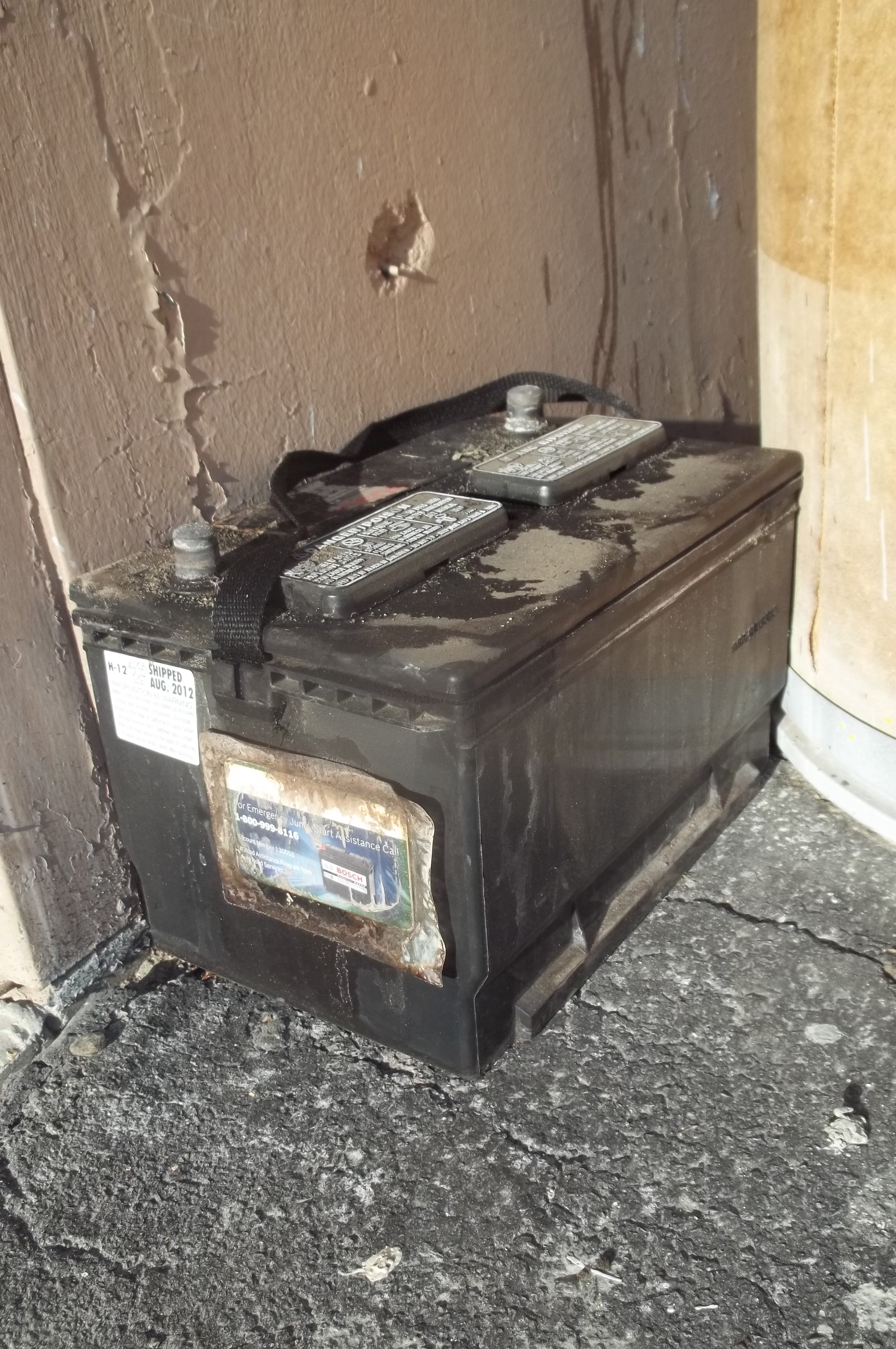
Liquid lead acid battery

Q&A: Transporting Lead Acid Batteries for Reclamation as a Material of Trade

A former coworker contacted me with a question on January 29, 2016:

I have a quick question for you Dan.  If a facility has 5 – 6 consumer (car type) lead-acid batteries that they want to take to a salvage yard for recycling, is there a DOT exemption or something that keeps them from being classified as a hazardous substance.  I think they need to transport with shipping papers and be properly labeled.  Let me know if you have any experience with this.Liquid lead acid battery

Thanks,

I had time to fire off a reply that day:

Please note below:

  • When discarded by recycling a liquid lead acid battery will be a hazardous waste per USEPA regulations.
  • Liquid lead acid batteries sent for reclamation are excluded from regulation as a hazardous waste per 40 CFR 266.80.
  • A liquid lead acid battery is a hazardous material per USDOT regulations.
  • A liquid lead acid battery that is not a hazardous waste may be transported by a non-transportation business under the Materials of Trade exception at 49 CFR 173.6.
  • The following is required under the Materials of Trade exception:
    • Secure batteries in vehicle.
    • Label batteries.
    • Likely batteries contain a Reportable Quantity (RQ) for lead, so this must be marked on the side.
    • Inform driver of Materials of Trade exception and some basic worker safety.
    • No more than 66 lbs/battery & no more than 440 lbs of HazMat in the vehicle.
FYI:  Even though this situation does not require HazMat Employee training, the fact that they receive hazardous materials makes them subject to the training requirements.  They may also need RCRA training.

Like this article?

Subscribe to my Monthly Newsletter

No marketing emails!

Note from Daniels Training Services:

My reply does not take into account the exception from regulation available to shippers of batteries found at 49 CFR 173.159(e).
Questions like this come into me all the time.  Sometimes they can be answered simply.  Sometimes more time and research is required.  Either way, I’m happy to answer any questions you may have about the transportation of hazardous materials or the generation and management of hazardous waste.

Daniels Training Services

815.821.1550

Info@DanielsTraining.com

https://danielstraining.com/

Q&A: Transporting an Infectious Substance (Division 6.2) in a Personal or Company Vehicle

I received this email January 25th from a customer who had attended one of my Training Seminars in the past:

Dan,
How have you been? You said to contact you if we have any questions. I was asked a question and I would like you to please review my answer. Can you help me out?

Question:
Can a 6.2 category B infectious substance be shipped in a personal or company vehicle?

Answer:
Yes, a company vehicle can be used to transport a 6.2 category B substance, if the following exemptions are met.
49 CFR 173.134 (b)(10) allows an exception to using a certified hazmat transporter to transport a category B substance for a patient sample (not a culture) and the private or contract carrier would have

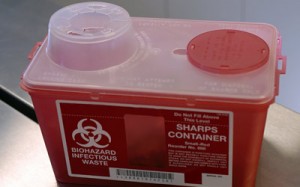
A container for discarded sharps
Used hypodermic needles may be a category B, Infectious Substance

to be used exclusively to transport such materials. The vehicle couldn’t be a private vehicle but could be a company fleet vehicle. The vehicle could not be used for transporting anything else during that individual trip. The vehicle couldn’t be a general delivery vehicle making several stops. DOT training would be required and a Shipping document and DOT packaging would be needed.

49 CFR 173.6 Materials of Trade allows an exemption for small quantities of biological product, human or animal samples for research, diagnosis, disease treatment or prevention etc. The packaging would have to be securely closed and protect against damage and leaking. The driver would have to know what they are shipping and if a reportable quantity is present and the material of trade regulations. Does not require training or a shipping document.

Thanks,

My reply later that day:

Your answer may be correct.  Give me a day or two to review and reply.

Contact me with any questions you may have about the transportation of hazardous materials by air, highway, vessel, or rail

International and Domestic

Daniels Training Services

815.821.1550

Info@DanielsTraining.com

https://danielstraining.com/

My full response on January 26, 2016:

Thanks for contacting me.  I’ll do my best to answer your questions below.

Transportation by a private motor carrier of a Division 6.2 Category B Infectious Substance:

You are mostly correct about the exception at 49 CFR 173.134(b)(10).  Please see below for a breakdown of that paragraph:

  • Paragraph §173.134(b) identifies sixteen (16) materials not subject to the HMR as a Division 6.2.  If they are a HazMat for some other reason (e.g., a Class 3 Flammable Liquid), they are then subject to the HMR.  Read my article: Exceptions to Division 6.2 Infectious Substances.
  • §173.134(b)(10) is an exception for samples or biological products that meet the following conditions:
    • It is not a Category A infectious substance.  Category A infectious substance as defined at §173.134(a)(1)(i) can cause permanent disability, life-threatening, or fatal disease in an otherwise healthy person.
    • It is one of the following:
      • Contained in a patient sample and transported for research, diagnosis, investigational activities, or disease treatment or prevention.

Or…

      • A biological product.
    • Transported in a motor vehicle (by highway) used exclusively to transport such materials (patient sample or biological product).
    • Transported by one of following:
      • Private motor carrier (carrier owns material it transports).

Or…

      • Contract carrier (under contract for specific job).
    • The following are OK to transport with sample or biological product if properly packaged and secured against exposure:
      • Medical or clinical equipment and lab products.
    • If sample or biological product is regulated medical waste per §173.134(a)(5), it must be transported as such.  This may require compliance with §173.134(c).

Where I believe you to be in error:

  • “The vehicle couldn’t be a private vehicle…”  A private vehicle may be used as long as it is a private or contract carrier.
  • “The vehicle could not be used for transporting anything else during that individual trip.” Some other materials are allowed if packaged and secured properly.
  • “DOT training would be required and a Shipping document and DOT packaging would be needed.”  Per §173.134(b), those materials subject to the exception are not subject to the HMR as a Division 6.2 Infectious Substance.

You are correct about the use of the Materials of Trade Exception.

Please don’t hesitate to contact me with any other questions.

Interested in a Webinar that covers this topic, and more!

My Webinar Training Schedule

I think I answered his question satisfactorily:

Thanks Dan for your response. I look forward to attending future training sessions with you.

This customer did his own research before contacting me but you don’t have to!  If you have a question about the transportation of hazardous materials or the management of waste – hazardous, universal, used oil, even non-hazardous – don’t hesitate to contact me.

The exception at 49 CFR 173.134(b)(10) removes the requirement for HazMat Employee training; but you may still benefit from the training I can provide!

FAA Proposes Civil Penalties Against Amazon for Alleged Violations of HazMat Transportation Regulations

The Bullet:

The Federal Aviation Administration (FAA) alleges that Amazon, Inc. violated USDOT regulations for the transportation of hazardous materials by air on several occasions.  It has proposed fines as a civil penalty for those alleged violations.

The information for this article regarding the alleged violations is derived from three FAA press releases.  Links to these press releases are at the end of this article.
Who:

Amazon.com, Inc., often referred to as simply Amazon, is an American electronic commerce and cloud computing company with headquarters in Seattle, Washington. Wikipedia

The Federal Aviation Administration (FAA) is the national aviation authority of the United States, with powers to regulate all aspects of American civil aviation. These include the construction and operation of airports, the management of air traffic, the certification of personnel and aircraft, and the protection of US assets during the launch or reentry of commercial space vehicles.  Wikipedia

Federal Aviation AdministratinoThe FAA is one administration or bureau of many within the U.S. Department of Transportation.  Another USDOT administration, PHMSA or the Pipeline and Hazardous Materials Safety Administration, is responsible for all regulations regarding the transportation of hazardous materials in commerce within the U.S.  In this situation the FAA is the investigation and enforcement agency for the PHMSA Hazardous Materials Regulations (HMR).

Unmentioned in the press release is an international agency Logo of the International Air Transport Associationknown as IATA, the International Air Transport Association, and its Dangerous Goods Regulations.  IATA is a creation of the airline industry – not of any government body – to set standards and regulate all transportation by air.  Its Dangerous Goods Regulations, though not officially adopted by PHMSA, is based on – and even a little more strict than – the Technical Instructions of the International Civil Aviation Administration (ICAO).  The ICAO Technical Instructions are adopted by PHMSA

If you like this article, please share it using any of the social media platforms identified at the bottom of this article.

You’ll look real smart recommending my articles!

What:

FAA alleges that in three separate incidents dating from 2014, Amazon did not comply with the HMR.  Though each incident involved different hazardous materials (from acid drain cleaners to a compressed gas) and different outcomes (injured UPS employees, leaking packages), the alleged violations were sadly similar.  They include:

  • Not classifying the intended shipments to determine if they were a hazardous material as defined at 49 CFR 171.8.
  • Not using the authorized packaging for the HazMat.  Authorized packaging is identified for each HazMat in part 173 of the HMR, referenced from column 8 of the Hazardous Materials Table at §172.101.
  • Not using packaging designed, manufactured, tested, and marked to indicate it meets the United Nations packaging standards.
  • Packages offered for transport were not marked or labeled to indicate the contents and its potential hazards.  The package marking and labeling requirements are at §172, subpart D and E, respectively.
  • Not preparing and providing to the carrier (Fed Ex or UPS) two copies of the shipping paper which is meant to describe the entire hazardous materials shipment.  One of the press releases refers to the Shipper’s Declaration of Dangerous Goods, which is the name for a shipping paper used exclusively by IATA.
  • Failing to provide emergency information.  Actually, a shipper of HazMat is required to provide two separate types of emergency information on or with the shipping paper.  Required emergency information includes:
    • Emergency Response Information that provides emergency responders and trained HazMat Employees critical information in the first few minutes of a spill, fire, or other HazMat incident.  Read:  The Shipper Must Provide Emergency Information.
    • Emergency Response Telephone is a phone number to call 24/7 whenever a HazMat is in transportation.  Its purpose is to provide emergency responders and trained HazMat Employees with immediate contact with a person who is knowledgeable about the hazards of the shipment and has basic emergency response awareness.  Read:  Providing the Emergency Response Phone Number.
    • “Amazon employees who handled the package had not received required hazardous materials training.”  You’ll forgive my bias but this is the big one.  Not providing initial and triennial HazMat Employee Training is bad enough.  But, if done right, training would have provided Amazon employees with the information and the tools necessary to properly classify and package the HazMat, apply the correct HazMat labels and markings, and complete the Shipper’s Declaration of Dangerous Goods – with the applicable emergency information.

Contact me with any questions you may have about the transportation of hazardous materials by air, highway, vessel, or rail

International and Domestic

Daniels Training Services

815.821.1550

Info@DanielsTraining.com

https://danielstraining.com/

The three proposed civil penalties are:

  • $350,000 for alleged violations of October 15, 2014
  • $78,000 for alleged violations of May 24, 2014
  • $52,000 for alleged violations of June 2, 2014
Where/When:
  • In a press release dated June 15, 2016, FAA alleged:  on October 15, 2014 Amazon offered to United Parcel Service (UPS) a package containg a one-gallon container of “Amazing! LIQUID FIRE,” a corrosive drain cleaner for transport from Louisville, KY to Boulder, CO.
  • In a press release dated June 22, 2016, FAA alleged:  on June 2, 2014, Amazon offered UPS a non-specification cardboard box containing a flammable gas for air transportation from Whitestown, IN to Glendale, CA.
  • In a press release also dated June 22, 2016, FAA alleged:  on May 24, 2014, Amazon offered Federal Express (FedEx) two cardboard boxes containing corrosive rust stain preventer for air transportation from Plainfield, IL to Davenport, FL.
Why:

Transportation of dangerous goods by airThe purpose of the HMR is to ensure the safe transportation in commerce of hazardous materials.  One of the responsibilities of the FAA is to ensure that HazMat transported by air within the U.S. is done in compliance with the HMR and the IATA Dangerous Goods Regulations.

Amazon has a history of violating the Hazardous Materials Regulations.  From February 2013 to September 2014 alone, Amazon was found to have violated the Hazardous Materials Regulations 24 other times.  FAA press release of June 13, 2016
How:

The FAA has the authority to enforce the Hazardous Materials Regulations of PHMSA when the mode of transportation is by aircraft.  The FAA will, in addition, enforce the IATA DGR if it is used within the U.S. by a carrier or shipper.

In 2015, the FAA handed out more than $4.5 million in civil penalties for improper shipments of hazardous materials aboard airplanes, up from $3.4 million in 2014.  Dallas Morning News
Conclusion:
  • Don’t assume that big companies have huge budgets to spend on regulatory compliance and therefore have all the answers when it comes to shipping HazMat.  Unless they have personnel dedicated to researching the regulations, and staying on top of new regulations – such as those for the transportation of lithium batteries – they can be just as in the dark as a small start-up.
  • One mainstream news article on this issue quoted an expert who stated regarding Amazon, “Before, when they were smaller, they didn’t have to make as many distinctions between ground and air.”  In fact, the Hazardous Materials Regulations of PHMSA apply to these HazMat no matter how they are transported in commerce (air, rail, highway, or vessel).  It’s just that the regulations for transportation by air are more strict than those by highway and rail (the regulations for transportation of HazMat by vessel are also pretty strict, just not as strict as those by air).
  • Another mainstream media article referred to these hazardous materials in these instances as “prohibited dangerous goods…”.  Without more information on the actual hazardous material and the volume of their packaging, it is impossible to know if it is “prohibited” for transportation by air or merely subject to the requirements of the HMR.  Many hazardous materials – including Class 1 explosives – may be transported by air if they are correctly classified, packaged, marked and labeled, and a shipping paper is prepared with the necessary emergency information.

Daniels Training Services

815.821.1550

Info@DanielsTraining.com

https://danielstraining.com/

More Information:

Q&A: How do I Ship a HazMat (Class 1 Explosive) Without a Packing Group?

Here’s a question back on January 8, 2016 from a frequent customer of mine:

Hi Dan,

I have a hazardous material that doesn’t have a packing group in the hazardous materials table in §172.101, and I’m stuck. I need to ship this material (signals, distress, ship UN0506) soon and need some direction. Any help would be greatly appreciated!

Here’s me With my Snappy Reply a few moments later:

I’m on it.

Give me a minute and I’ll get you a reply.

Dan

And the Final Answer Maybe an Hour Later:

OK.  Here we go:

  • UN0506, Signals, distress, ship is a hazard class 1.4S Explosive.
  • Most Class 1 Explosives do not have a packing group or default to packing group II.
  • Packing instructions for this HazMat are found at 49 CFR 173.62 (see column 8B of the hazardous materials table).
  • Explosives Table at 49 CFR 173.62 references packing instructions 135 for UN0506.
  • Packing instructions 135 (also in 49 CFR 173.62) indicate the authorized packaging (inner, intermediate, & outer):

Inline image 1

  • Must follow general packing requirements of 49 CFR 173.60.  These are pretty much common sense, e.g. “Inner packagings, fittings, and cushioning materials, and the placing of explosive substances or articles in packages, must be such that the explosive substance is prevented from becoming loose in the outer packaging during transportation.”  and more.

Also…

  • Packaging must meet packing group II requirements.  This means the packaging must have an X (PG I, II, III) or Y (PG II, III) in the second set of alpha-numeric code that makes up the UN specification marking on the packaging.
  • UN specification marking will also show the maximum gross weight for the packaging.  This max gross weight includes the weight of the packaging and the HazMat.
I hope this helps.  Please don’t hesitate to contact me with any questions.

Contact me with any questions you may have about the transportation of hazardous materials by air, highway, vessel, or rail

International and Domestic

Daniels Training Services

815.821.1550

Info@DanielsTraining.com

https://danielstraining.com/

Turns out, the customer did have some more questions for me (January 8, 2016):
I actually looked in your blog for the answer, as well as past training materials  after looking at the SDS. As of two days ago, I thought PG II, then the more I read into it, the more I doubted it. Would the following be acceptable for the label: 1 Fibreboard box, UN0506, signals, distress, 1.4S, PG II, and then the weight?
Thanks again!
My final answer:

Regarding HazMat labels & markings:

  • Identification number (UN0506) and proper shipping name (Signals, distress.  “ship” is optional).
  • HazMat label for Division 1.4S Explosive.
  • The other information you write of do not need to appear on the packaging as a label or marking, but they may need to appear on the shipping paper.
  • Do not use PG II on the shipping paper or anywhere else as it does not apply.
  • There may be a requirement for an additional description on the shipping paper if shipping by vessel.
  • Transportation by vessel and motor vehicle may have segregation requirements.

Interested in a Webinar that covers this topic, and more!

My Webinar Training Schedule

Classification of Lithium Batteries for Transportation in Commerce

Persons involved in the transportation in commerce of lithium batteries are subject to the regulations of at least one – or perhaps all – of the following regulatory agencies:

  • The Pipeline and Hazardous Materials Safety Administration (PHMSA) within the U.S. Department of Transportation (USDOT) for any transportation from, through, or to the United States.
  • The International Air Transport Association (IATA) for any transportation by air – international or domestic – if the carrier airline is a member of IATA.
  • The International Maritime Organization (IMO) for international transportation by vessel.
Note:Though the dangerous goods regulations of IATA are not authorized for use within the U.S. by USDOT/PHMSA, compliance with its regulations is acceptable since the IATA DGR are based on the Technical Instructions of the International Civil Aviation Administration (ICAO) – and are more strict in some cases.  The ICAO Technical Instructions are authorized for use within the U.S. by USDOT/PHMSA.

Each of these regulatory agencies have very similar regulations applicable to the transportation of lithium batteries.  They each, thankfully, also have very similar – but not the same – requirements for the classification of lithium batteries.  The classification of a lithium battery for transportation requires knowledge of four things:

  1. Is it a cell or battery?
  2. The type of lithium cell / battery.
  3. Its packaging configuration.
  4. The amount of lithium in the cell / battery.
  5. Net weight of cell / battery in the package.
  6. Number of cell / battery in the package.
  7. Number of cell / battery in the consignment.
  8. The condition of the cell / battery.
  9. The mode of transport.
  10. Applicable regulations.

Daniels Training Services

815.821.1550

Info@DanielsTraining.com

https://danielstraining.com/

The purpose of this article is to identify and explain the process of classifying lithium batteries for transportation by both domestic and international regulations. (more…)

Search Website