PO Box 1232 Freeport, IL 61032

A Different Kind Of Training

A Different Kind Of Training

A Different Kind Of Training

PHMSA Releases Mobile App for Online CFR

The Bullet:

PHMSA has developed and released a mobile app to allow for access to the Hazardous Materials Regulations online.

Who:

The U.S. Department of Transportation’s (DOT) Pipeline and Hazardous Materials Safety Administration (PHMSA).

What:
  • It is a simplified version of the web-based application which was released to the public in March of 2016.
  • It provides the first-ever mobile access to search, view, and navigate PHMSA’s Hazardous Materials Regulations in 49 CFR parts 100-180 for the classifying, handling, and packaging of hazardous materials by all modes (highway, rail, aircraft, and vessel).  Read:  Modal-Specific Training Requirements of PHMSA.
  • It provides the first-ever mobile access to PHMSA’s Pipeline Safety Regulations in 49 CFR parts 190-199.
  • It is also unique because it allows users to navigate regulations at the paragraph level.
Where:

The oCFR app was released to both Apple’s App Store and the Google Play Store for use on iOS and Android mobile devices.  You can find the oCFR with these links: Google Play Store (for Android devices) and iTunes (for iPhones and iPads).

When:

Released July 6, 2017.

Why:

PHMSA continues to improve safety and public access to the latest transportation regulations.  The oCFR mobile application is a simplified version of the web-based application which was released to the public in March of 2016.

How:

The oCFR app was released to both Apple’s App Store and the Google Play Store for use on iOS and Android mobile devices.

Contact me with any questions you may have about the transportation of hazardous materials by air, highway, vessel, or rail

International and Domestic

Daniels Training Services, Inc.

815.821.1550

Info@DanielsTraining.com

https://danielstraining.com/

More Information:

Contact for media: Patricia Klinger: (202) 366-4831

Access to the regulations is only part of the equation.  To make your compliance with the Hazardous Materials Regulations “add up” you must provide HazMat Employee training for all personnel involved in the transportation of hazardous materials.

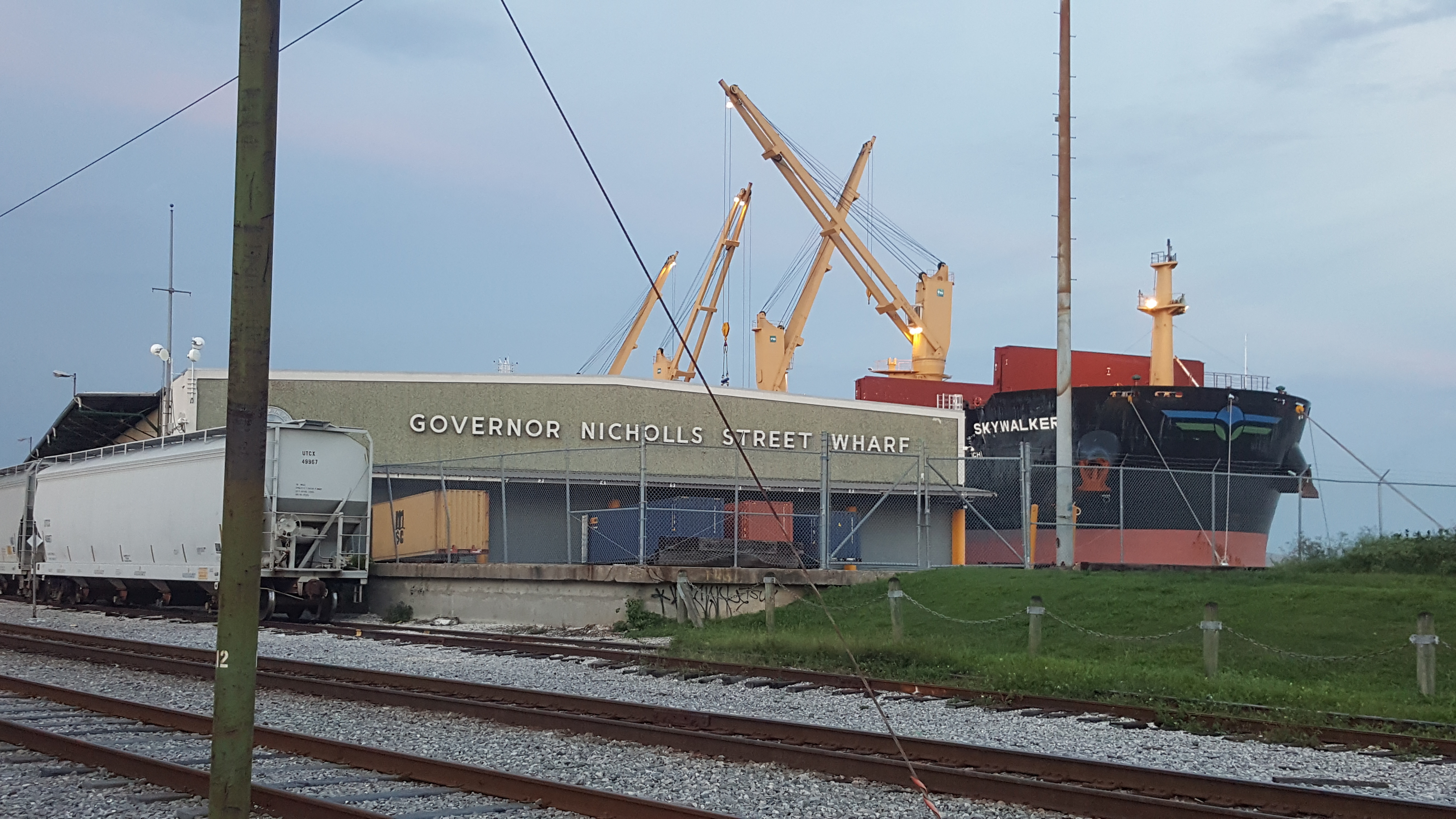
Rail car, Freight Container, Cargo Transport Unit

Quick Take: Modal-Specific Training Requirements of the Hazardous Material Regulations

The requirement for initial and triennial training of HazMat Employees can be found within the Hazardous Materials Regulations (HMR) at 49 CFR 172, subpart H. Requirements include:

  • Provide initial training within ninety (90) days of employment as a HazMat Employee or change of job function to those of a HazMat Employee.
  • Prior to receiving initial training HazMat Employee must be under the direct supervision of a trained and knowledgeable person while performing the job function of a HazMat Employee.
  • Recurrent training must be provided within three (3) years of the initial training date.
  • HazMat Employee training must include the following:
    • General Awareness/Familiarization
    • Function Specific Responsibilities
    • Safety
    • Security General Awareness
    • In-Depth Security (if applicable)
    • Safe Driver (if applicable)
  • HazMat Employee training must include a test.

Contact me with any questions you may have about the transportation of hazardous materials by air, highway, vessel, or rail

International and Domestic

Daniels Training Services, Inc.

815.821.1550

Info@DanielsTraining.com

https://danielstraining.com/

What you may not know is that there are other training requirements specific to persons who transport HazMat by a particular mode of transportation.  These are identified below.

  • 49 CFR 175.20: each HazMat Employee involved in the transportation by air of a HazMat must receive HazMat Employee training and the training required by 14 CFR parts 121 and 135.
  • 49 CFR 177.800 and §177.816: each HazMat Employee that operates a motor vehicle over a public roadway for the transport of HazMat must receive HazMat Employee training as well as training on the following:
    • The requirements of §177.
    • The applicable regulations of the Federal Motor Carrier Safety Administration (FMCSA) for the operation of a commercial motor vehicle at §390 through §397.
    • Driver training must include the subjects specified at §177.816.
 

Read:  Driver Training Requirements of the USDOT

  • 49 CFR 176.13: each HazMat Employee involved in the transportation of a HazMat by vessel must receive HazMat Employee training as well as receive training on the applicable requirements of §176.
  • Interestingly, there are no modal-specific training requirements for the transportation of HazMat by rail within the HMR.

The above training is not required for those who ship or receive hazardous materials but is intended for those who take part in the HazMat transportation by the particular mode.  For example, the personnel at your shipping dock require solely HazMat Employee training while the truck driver who loads and transports the HazMat to its destination requires HazMat Employee training as well as the modal-specific training requirements of 49 CFR Part 177.

Contact me with any questions you may have about the transportation of hazardous materials by air, highway, vessel, or rail

International and Domestic

Daniels Training Services, Inc.

815.821.1550

Info@DanielsTraining.com

https://danielstraining.com/

Quick Take: Determination of Packing Group for a Class 8 Corrosive

Whether shipping a hazardous material or dangerous good by highway, air, rail or vessel; whether transported internationally or within the U.S.; the shipper of a hazardous material is responsible for its classification.  This includes – among other things – determining the applicable hazard class – or division – and the packing group, if it has one.  This is a requirement of all three regulatory agencies that regulate the transportation in commerce of hazardous materials/dangerous goods:

  • The Pipeline and Hazardous Materials Safety Administration (PHMSA) within the U.S. Department of Transportation (USDOT).
  • The International Air Transport Association (IATA) whose regulations are based on those of the International Civil Aviation Administration (ICAO).
  • The International Maritime Organization (IMO).

The purpose of this article is to provide the regulatory standard for determining the packing group of a Class 8 Corrosive.

The good news is that all three regulatory agencies for the transport of hazardous materials use the same criteria for the classification of a Class 8 Corrosive.  This includes the determination of its packing group.  Unlike IATA and the IMO, however, PHMSA does not tabulate its data and instead requires the reader to find their way through some confusing text.  The table below can be seen in almost exactly this form in the regulations of IATA and the IMO and neatly clarifies those of PHMSA.

Interested in a Webinar that covers this topic, and more!

My Webinar Training Schedule

[table “Class8PG” not found /]

Remember:  there are eight other hazard classes, some of them with their own criteria for determining the packing group.  Make certain you consider each of them and a lot more when you classify your HazMat/dangerous good prior to offering it for transportation.

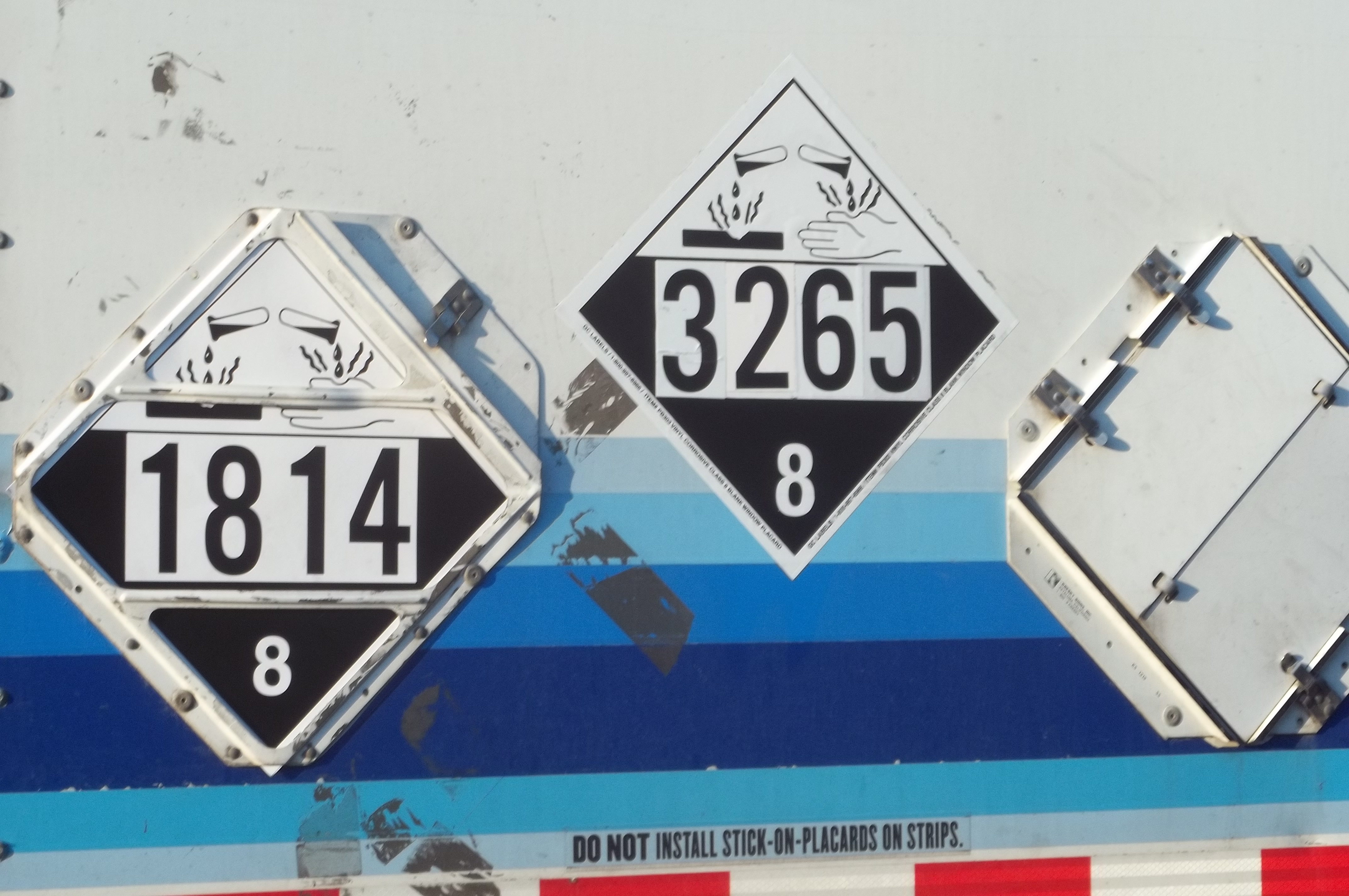
Class 8 Corrosive PlacardsPlease don’t hesitate to contact me if you require any assistance in the classification of your hazardous material.

Contact me with any questions you may have about the transportation of hazardous materials by air, highway, vessel, or rail

International and Domestic

Daniels Training Services, Inc.

815.821.1550

Info@DanielsTraining.com

https://danielstraining.com/

Q&A: Is this an overpack?

October 19, 2016. An email from someone within the regulated community:

40# Jerricans are placed in an enclosure. The enclosure consists of 4 walls 4′ high 4’across and 4′ wide. The walls can be disassembled from around the Jerricans. Would walls that can be disassembled from around these packages be considered a container, package, or enclosure? Would this assembly be considered a container, package, or enclosure? Thank you.

Note:  Per 49 CFR 171.8, Jerrican means a metal or plastic packaging of rectangular or polygonal cross-section.

My reply that same day:

I will attempt to answer your question. Please see below.

  • I assume the 40# Jerricans are the authorized packaging for a hazardous material, they meet the DOT specifications and are marked to show this, and have all the required HazMat labels and markings.
  • If the above is true, then anything you use to enclose the jerricans meets the definition of an overpack. What you describe is acceptable as an overpack. You can read more about an overpack (and a salvage drum) in this article I wrote for New Pig: Salvage Packaging vs. Overpacks: What’s the difference?
  • All HazMat labels and markings on the jerricans must be visible on the outside of the overpack along with the word “Overpack”. Labels and markings should appear on at least two opposing sides of the overpack.
  • For the purposes of the USDOT regulations it would be considered an Overpack. Other terms (container, package, or enclosure, &etc.) don’t apply.

I hope this helps.

Please don’t hesitate to contact me with any other questions.

My answer appeared to satisfy him (10.22.16):

Thank you so much!

The use of an overpack in the transportation of hazardous materials should be a simple thing, but it isn’t.  Some of this is due to the confusion between the terms “overpack” and “salvage packaging”; a confusion I tried to clear-up in my above-referenced article.  Some is due to a hesitancy on the part of the shipper or reluctance on the part of the carrier to deal with this additional requirement of shipping a hazardous material.  Whatever your concern, contact me if you have any questions about the use of an overpack for the transportation of your hazardous materials.

Contact me with any questions you may have about the transportation of hazardous materials by air, highway, vessel, or rail

International and Domestic

Daniels Training Services

815.821.1550

Info@DanielsTraining.com

https://danielstraining.com/

Cargo Tank Truck of Water

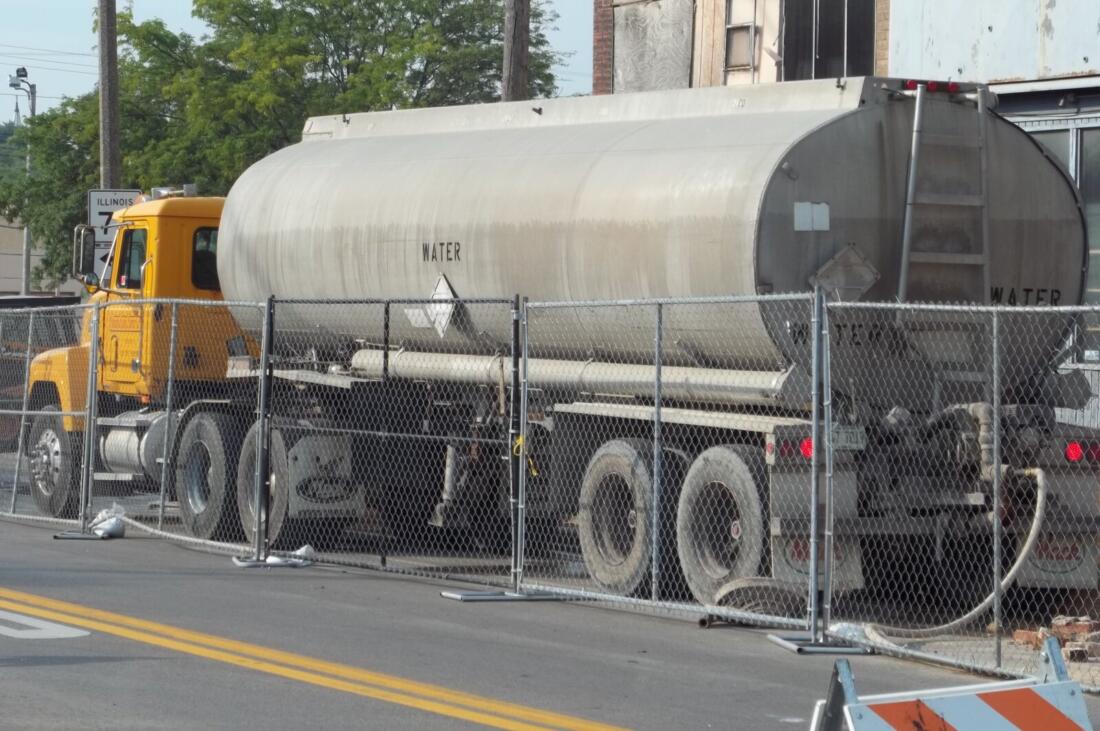
Q&A: Is the transportation of water subject to the USDOT Hazardous Material Regulations?

An email, October 4, 2016:

Hi can you drive a water tanker in the usa…. Without a purged vehicle certificate ? if tanker is empty ?

My answer that same day:

I am not certain about what other regulations may apply in this case, e.g. those of the Federal Motor Carrier Safety Administration (FMCSA), though I doubt it.

But I can say with certainty that water is not a hazardous material and is therefore not subject to the regulations of the Pipeline and Hazardous Materials Safety Administration (PHMSA) which, like FMCSA, is an administration within the USDOT.  Therefore, empty, not empty, purged vehicle certificate or not, it’s transportation within the U.S. is not subject to the Hazardous Material Regulations.
I hope this helps.
October 05, 2016:
Thanks so much Daniel!

Like this article?

Subscribe to my Monthly Newsletter

No marketing emails!

Easy, yes.  But important.  So many times I am asked to interpret the regulations of PHMSA/USDOT for the transportation of a certain “Hazardous Material” that turns out not to be a hazardous material at all!

Examples?

  • Lubricating or hydraulic oils
  • Food grade oils
  • Latex (water-base) paints
  • Intact fluorescent lamps
  • Alkaline batteries
  • Non-friable asbestos
  • Articles containing oils with low concentrations of PCBs
  • More!

What does it mean if an article or substance does not meet the USDOT definition of a hazardous material?  Well, it then is not subject to the Hazardous Materials Regulations of PHMSA/USDOT when transported in commerce or offered for transport in commerce.  Or, put more simply: not regulated by USDOT.

A non-hazardous material may be subject to the regulations of other regulatory agencies.  For example, oils of all types are regulated by USEPA under Clean Water Act regulations.

Before you can determine the applicable regulations for the transport of a hazardous material you must first answer this simple question:  Is it a hazardous material?

Contact me with any questions you may have about the transportation of hazardous materials by air, highway, vessel, or rail

International and Domestic

Daniels Training Services, Inc.

815.821.1550

Info@DanielsTraining.com

https://danielstraining.com/

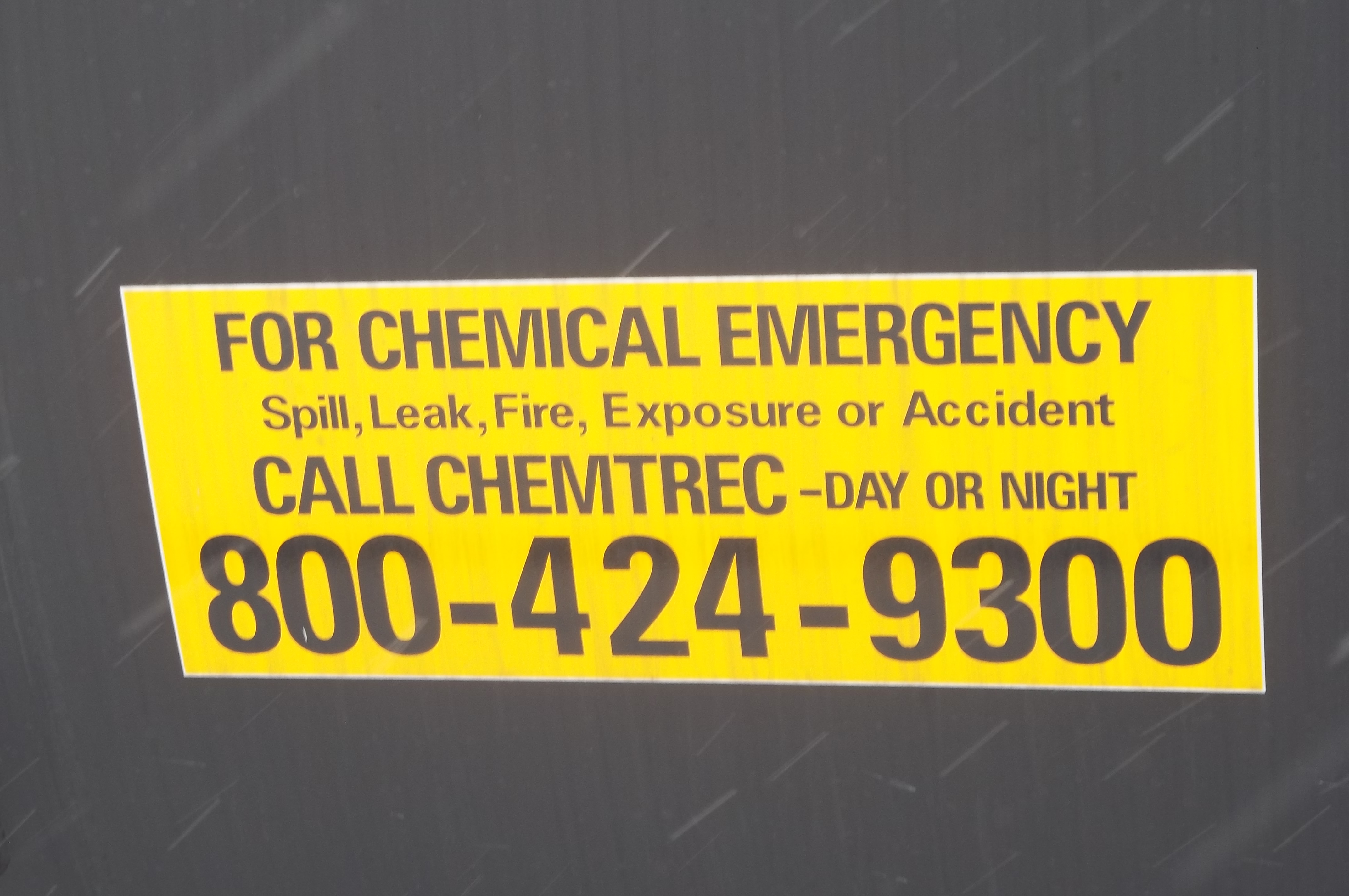
Contact information for CHEMTREC

FAQ: What is CHEMTREC?

CHEMTREC is the acronym for the Chemical Transportation Emergency Center.  It is a 24-hour emergency response service that provides assistance in the handling of incidents involving hazardous materials (aka: dangerous goods).

Unfortunately, I am not able to display CHEMTREC’s contact information in this article as Daniels Training Services, Inc. is not a registered customer of CHEMTREC.  CHEMTREC only allows its registered customers to portray its phone number on the following:

  1. Shipping Documents
  2. Safety Data Sheets (SDS)
  3. Product Packaging/Labeling
  4. Hazard Communication Labels

Contact me with any questions you may have about the transportation of hazardous materials by air, highway, vessel, or rail

International and Domestic

Daniels Training Services

815.821.1550

Info@DanielsTraining.com

https://danielstraining.com/

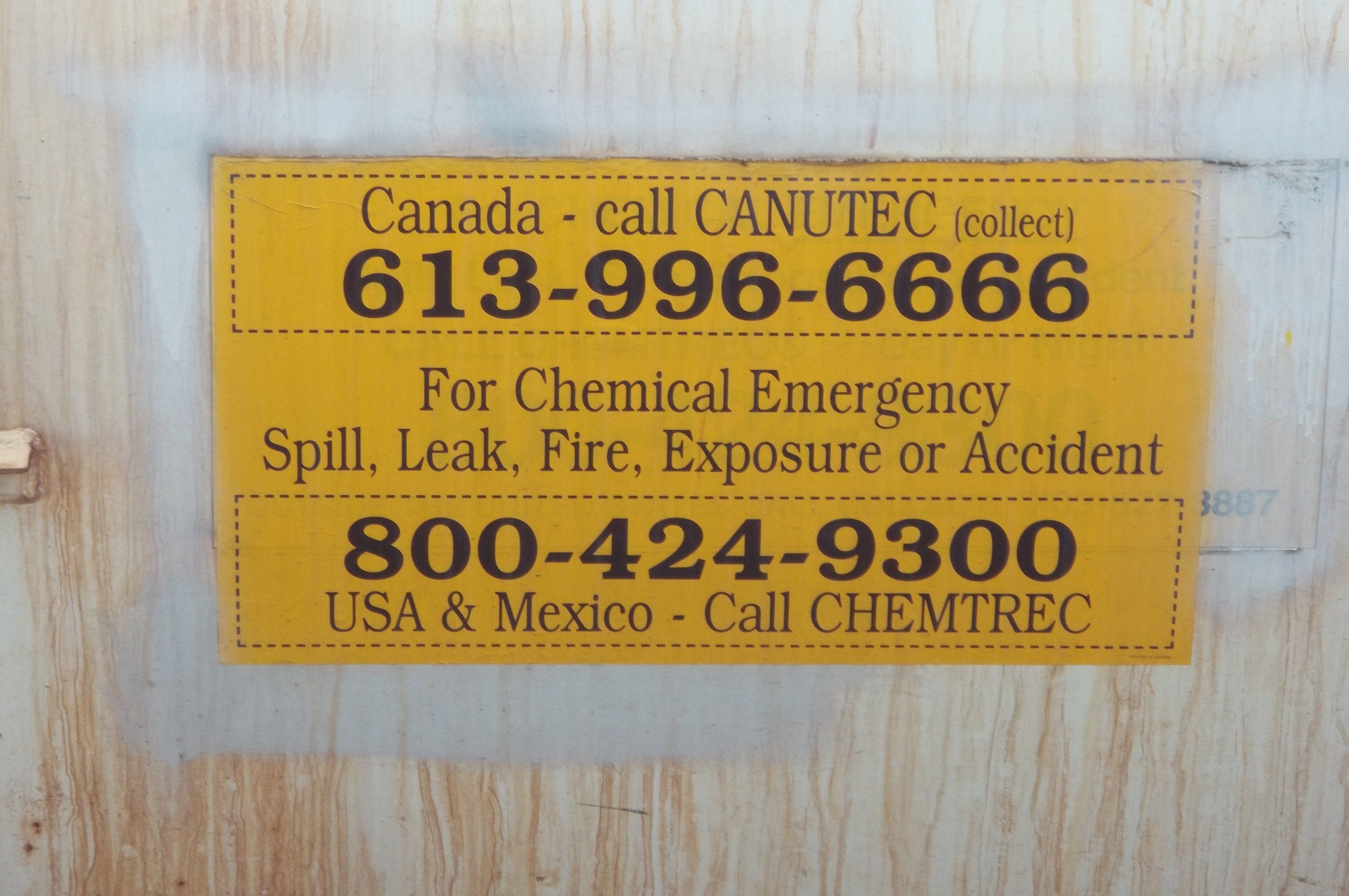
Rail car marking for CHEMTREC and CANUTEC

FAQ: What is CANUTEC?

CANUTEC is the acronym of the Canadian Transport Emergency Center. CANUTEC is operated by the Transport of Dangerous Good Directorate of Transport Canada (Canada’s version of the U.S. Department of Transportation). It provides a national bilingual (English and French) advisory service, including emergency response advise for incidents involving dangerous goods.
Contact information for CANUTEC is below:

  • Call collect 24-hours/day:  613.996.6666
  • By cellular phone in Canada only:  *666
  • For non-emergency inquiries 24-hours/day:  613.992.4624

Rail car marking for CHEMTREC and CANUTEC

Contact me with any questions you may have about the transportation of hazardous materials by air, highway, vessel, or rail

International and Domestic

Daniels Training Services

815.821.1550

Info@DanielsTraining.com

https://danielstraining.com/

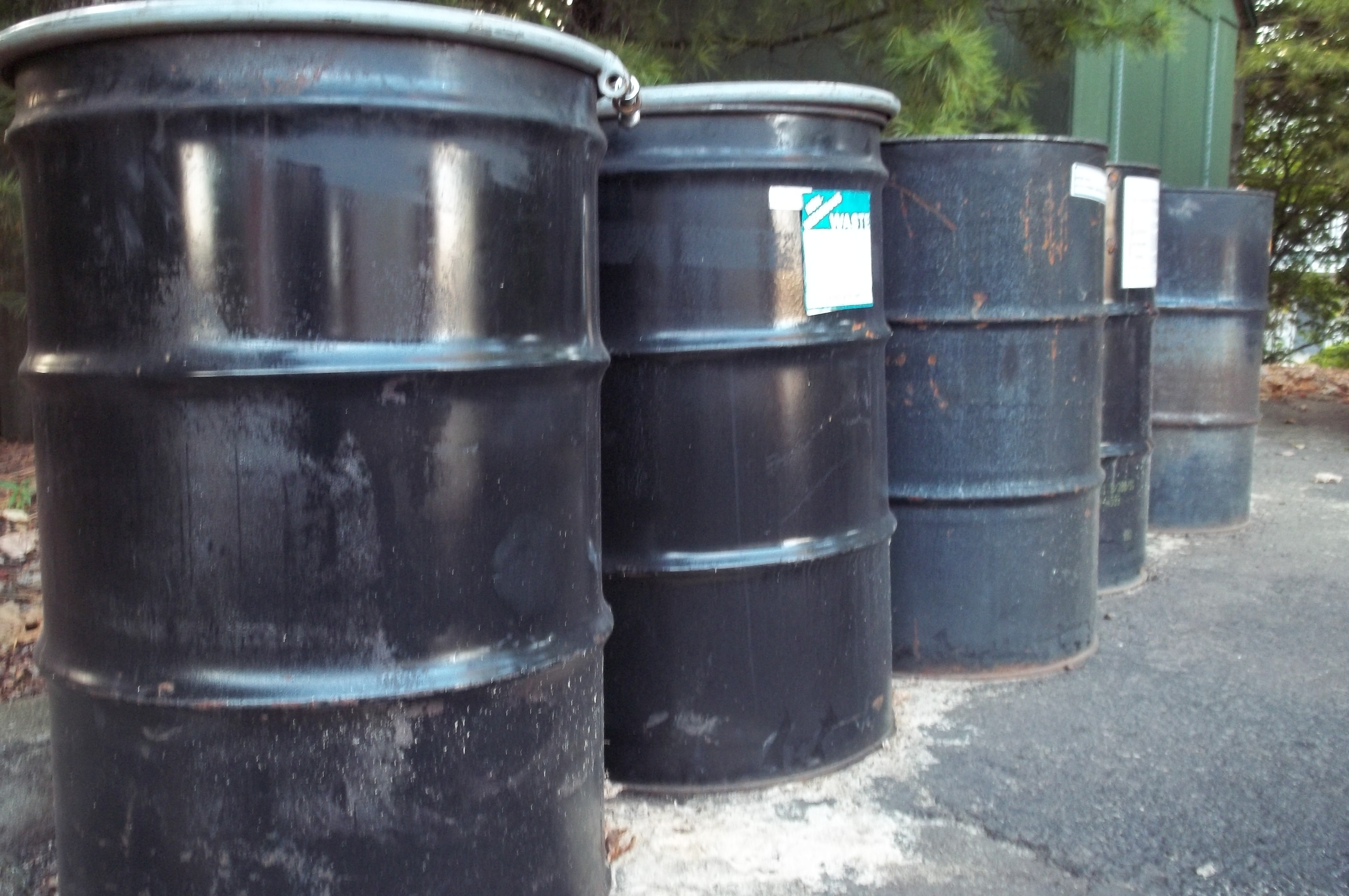
55-gallon drums of Non-Hazardous Waste

Q&A: Is Specification Packaging Required for the Transport of a Non-Hazardous Waste?

A unique situation.  One where I assist a company provide a service to its customers who wish to purchase packaging for the transport of their waste or other hazardous materials.  I’m the guy the supplier contacts when they are unsure of the needs of their customers.  Sometimes, as in this case, I provide additional consulting services to the supplier’s customer.  It all started on December 13, 2016…

Hi Daniel

Our customer has a 55 gallon drum filled with crushed #10 paint cans. He said it is not considered hazardous, but has the same question if it were. He wants to know if there is a limit to the amount he can ship in a 55 gallon drum, other than the rating in kg listed on the drum.

The drum he is looking at is rated UN 1A2/x430/s.

I am guessing you might have more questions!

Thanks!

My reply that same day to the supplier (my customer) and the person with the question (the supplier’s customer):

If the material to be shipped is not a hazardous material (crushed paint cans with no free liquids are not a hazardous material), then none of the Hazardous Material Regulations of the USDOT apply.  This includes the need for DOT specification packaging.

Therefore, since this is not a hazardous material – unless I’m missing something – the gross mass in kilograms for the package (430 kg in this case) doesn’t apply.  There is no limit to the weight of the packaging or the weight of the material in the packaging.
Additional information:
  • If this was a solid hazardous material, then specification packaging would be required and there would be two weight limits to take into account:
    • The manufacturers rated gross mass in kg for the entire package.  This is marked on the packaging as part of the DOT specification or UN Standard.
    • The maximum net mass of hazmat in the package (hazmat alone not the weight of the packaging), which for a steel drum is 400 kg or 882 lbs.
    • 882 lbs is the upper weight limit for a solid in a non-bulk packaging.  Read more:  What is a Bulk Packaging?

I hope this helps.

Please don’t hesitate to contact me with any other questions.

Contact me with any questions you may have about the generation, identification, management, and disposal of hazardous waste

Daniels Training Services

815.821.1550

Info@DanielsTraining.com

https://danielstraining.com/

The customer of the supplier had some questions just for me on 12.14.16:

Dan,

Thank you for clarifying things. So in my case, we are transporting crushed empty paint cans in 55 gallon drums. Since no liquids or hazmat remaining in the paint cans it is considered solid waste, and therefore the DOT requirements do not apply.

The two questions I have are below. I have a 55 gal drum that is designed for liquids. The UN number for the drum is (in 2 lines):
UN 1A2/Y1.5/150
16/USA/M4453

1. Can we use this drum (designed for liquids) to transfer our crushed solid waste?
2. And if so, how do I determine what the weight capacity/limit is for this particular drum to ship our solids in?   Unlike the markings for a 55 gal drum designed for solids, which specify a max weight, it the 55 gal drums for liquids does not specify a weight.

Thank you for your help!

Contact me with any questions you may have about the transportation of hazardous materials by air, highway, vessel, or rail

International and Domestic

Daniels Training Services

815.821.1550

Info@DanielsTraining.com

https://danielstraining.com/

We’d spoken on the phone about this as well but my answer that day was in the following email:

I will do my best to answer your questions and provide guidance.  Please see below:

  • For a waste to be hazardous per the regulations of the USEPA – and a state with an authorized hazardous waste program – it must either be listed or display a characteristic.
  • The empty, crushed, steel paint cans as you describe (even if a small amount of liquid is present) should not meet the USEPA definition of a hazardous waste.  Though it remains a solid waste and therefore subject to state regulation.
  • If recycled as scrap metal the paint cans are excluded from regulation as a solid waste.
  • The classification of a hazardous material per USDOT regulations is distinct from how USEPA determines a hazardous waste.  It is possible that a solid waste may be a USDOT hazardous material (e.g. asbestos).
  • Based on the information provided, it does not appear that the empty, crushed, steel paint cans are a hazardous material per USDOT regulations.
  • Answer to question #1:  Yes.  Since the empty, crushed steel paint cans are not a hazardous material subject to USDOT regulations, specification packaging is not required.  Any sturdy, leak-proof packaging that will contain the paint cans and is acceptable to the transporter will suffice.  Since it is not required by regulation, using specification packaging in this case may be viewed as an unnecessary expense.  Recycling as scrap metal may provide more cost savings.
  • Answer to question #2:  See answer to question #1.  The use of a specification packaging for the transport of solids when the packaging is rated for liquids is acceptable under certain conditions.  It is not applicable here.  I can assist you with this determination if you have other specific examples.
I hope this helps.
I answer a lot of questions for a lot of people.  Sometimes people pay me for my time.  Other times I offer free guidance to anyone with a question.  If you have a question about the management of waste or the transportation of hazardous materials, don’t hesitate to contact me!  Questions are free and normally my answers are as well.  If you have a question that you are unable to find an answer to, give me a try!

Daniels Training Services

815.821.1550

Info@DanielsTraining.com

https://danielstraining.com/

Q&A: What are the Packaging Specification Markings on an IBC?

Around the Fourth of July Holiday in 2016 I sent a “What’s up?” email to several past contacts.  One of them responded with this question:

If you are on holiday I hope your enjoying your 4th of July as well.
I do have one question.  Are you familiar with “markings” on ibc one way containers.  I call them stringers.
It starts of with the type of container/Y/Date/…….some specs, and date tested.
Then to the  far right of container will be a smaller marking from a reputable company that has retested the container.
For example M6148 L 3/15. a “L” or “General Maintenance” and the date of the re-test.
According to what I know, if the original “markings” are not clear or damaged from abuse that makes that container ineligible for haz mat shipping.
BUT…..what if the secondary marking to the right, from a reputable company,  is legible showing a current “L” retest that is current (2.5yrs) window…..would that make the container legal for shipping haz mat.
Call me if my inquiry makes no sense.

Daniels Training Services

815.821.1550

Info@DanielsTraining.com

https://danielstraining.com/

It took awhile, but almost two months later I responded:

I have an answer for you!

First of all, I apologize for my delayed response.  I’ve been busy providing Onsite Training and Webinar Training plus performing Consulting Services.  Questions like yours I research and reply to when I have the time.
The answer to your question is quite simple:
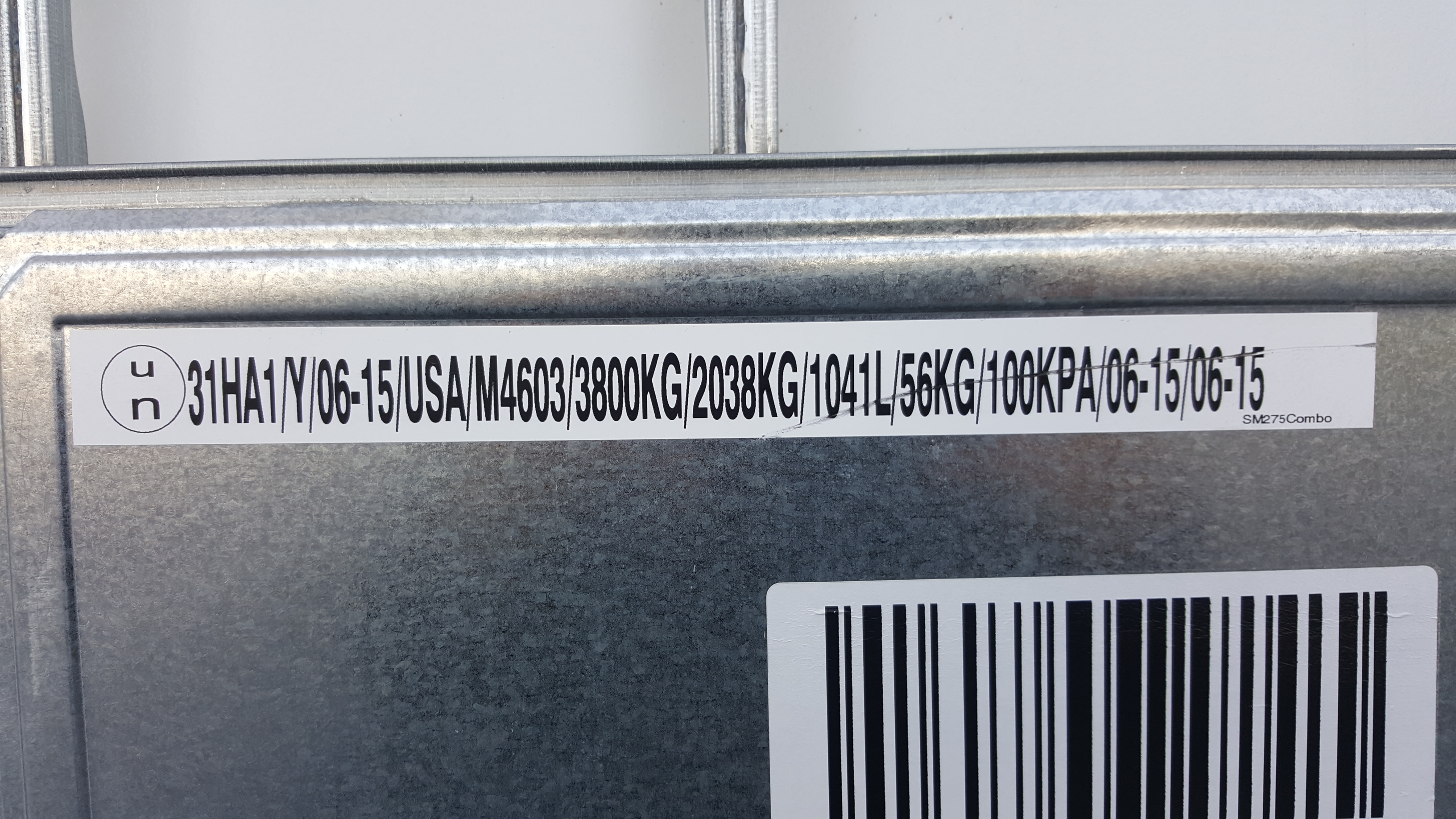
  • Per 49 CFR 173.35 General requirements for HazMat in IBCs, it is the responsibility of the shipper to ensure the markings required by 49 CFR 178.703 are present on an IBC before transportation.
  • Specification Packaging Marking on an IBC49 CFR 178.703 Marking of IBCs, requires the manufacturer of an IBC to mark it in a durable and clearly visible manner in the following sequence (49 CFR 178.703(a)):
    • United Nations symbol (UN).
    • Code number designating IBC type.
    • Capital letter (X, Y, or Z) indicating performance standard.
    • Month (designated numerically) and year (last two digits) of manufacture.
    • Country authorizing the allocation of the mark.  e.g. USA indicates IBC is manufactured and marked in the U.S. in compliance with the USDOT Hazardous Material Regulations.
    • The name and address or symbol of the manufacturer of the IBC.
    • The stacking test load in Kg.  ‘0’ = not designed for stacking.
    • The maximum permissible gross mass of the IBC and HazMat in Kg.
  • Additional markings are required at 49 CFR 178.703(b)(1) for rigid plastic & composite IBCs.
    • No sequence is specified.
    • Markings must be near the required markings (see above) and readily accessible for inspection.
    • Where units of measure are used, metric unit (i.e. Kg or L) must be included in marking.
    • Rated capacity in L of water.
    • Tare mass in Kg.
    • Gauge test pressure in kPa.
    • Date of last leakproofness test, if applicable (month and year).
    • Date of last inspection (month and year).
    • General requirements:
    • Required markings:
Answer:
The presence of a marking indicating the date of the last leakproofness test or inspection (name of company performing test or inspection and country where test or inspection took place is not required) does not remove the need for the IBC to be marked with its date of manufacture (month and year).
I hope this answers your question.  I have more information I learned during my research that I am willing to share with you.
Once again, I apologize for my tardiness.
Please don’t hesitate to contact me with any questions.
It took him almost a month to respond to all of that information, but when he did it was with more questions!

Daniel,

Thank you.
If I may i have another question.
We have a carrier we like using for hot shots.
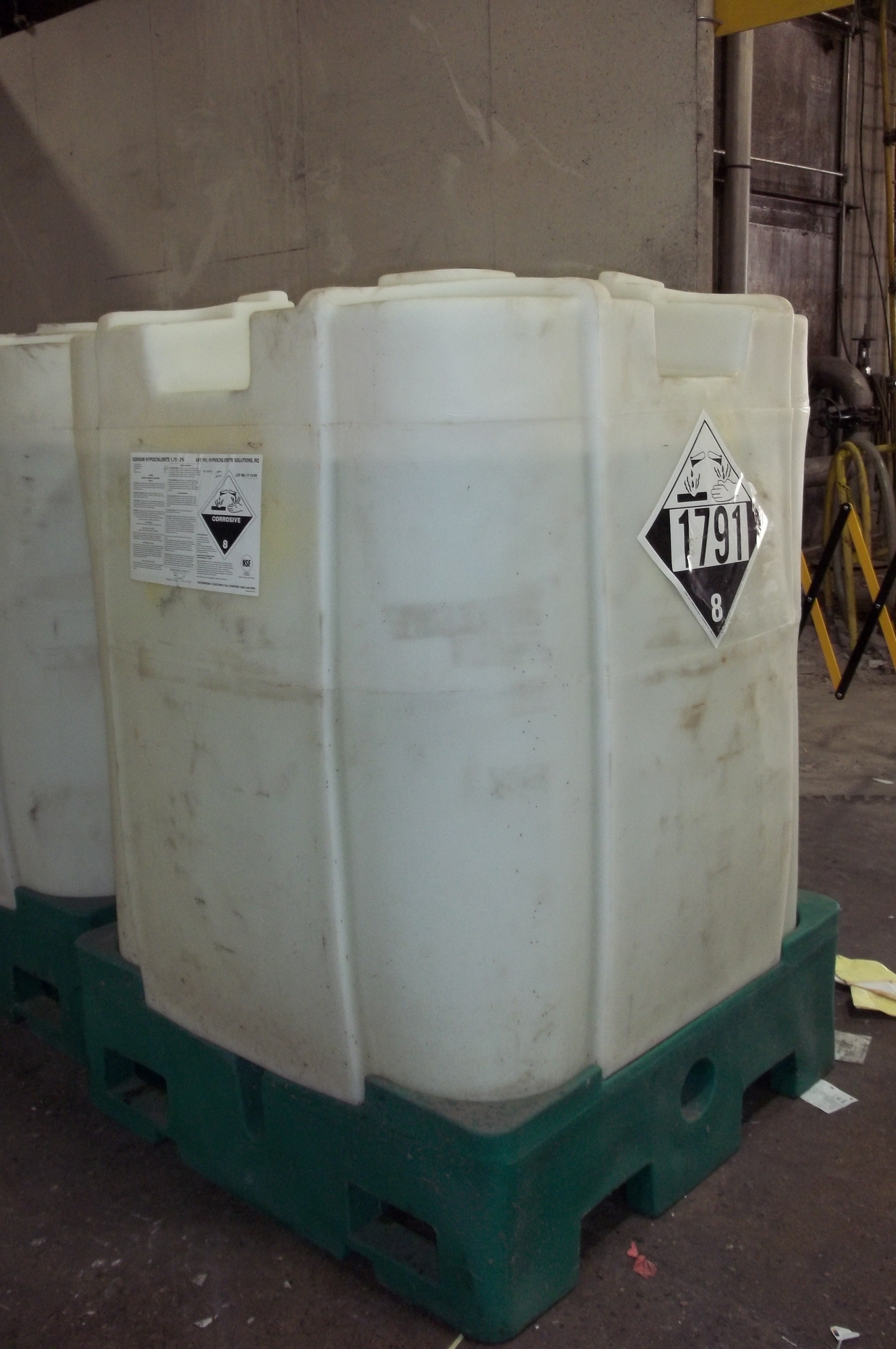
We will put 6 totes on his truck.  4 with 1760 ID and 2 with  1824 ID.  Both are Corrosive. We offer him placards for both ID’s.  He does not have means to attach placards to each side of his flatbed.  The sides are no issue. We also load equipment along with totes.  He will attach the placards on a 500g empty tank at the rear of his truck and also on the front end of his flatbed.  Is this acceptable, or legal?  So if you can imagine his flatbed with 6 totes, each tote having ID’s on them, and equipment such as tanks, pumps , etc……his flatbed placarded on each side, but the ends placarded on the tanks.
Thanks again.
My reply:
I will research and get you an answer.

Contact me with any questions you may have about the transportation of hazardous materials by air, highway, vessel, or rail

International and Domestic

Daniels Training Services

815.821.1550

Info@DanielsTraining.com

https://danielstraining.com/

As a teaser, I provided him with the following:

I will get you an answer on the above.
In the mean time…I wrote the following article for my blog based on the research I performed in answering your earlier question.  I hope they provide helpful information.
I hope this helps.
Finally, a few weeks later – and 3 1/2 months from his first question – I answered his latest query:
I will attempt to answer your question.  Please see below:
  • 49 CFR 172.504(a) requires placards on each side and each end of a vehicle required to display placards.
  • 49 CFR 172.516(a) requires placards to be clearly visible from the direction it faces, except when facing the tractor of a tractor/trailer combination.
  • The requirement of 49 CFR 172.516(a) may be met by the placards displayed on the vehicle or on the load itself if the display meets all of the requirements, i.e., readily visible, on background on contrasting color, clear of appurtenances and devices, &etc.  This PHMSA interpretation letter addresses this issue:  10-0075.
In sum, it is acceptable if the placards and identification numbers are mounted on the load and not on the vehicle as long as they are visible.  Without a picture I cannot be certain but I have a question about the visibility of the placard on the front tote on the flatbed.  Is it visible to the front?  Is the motive power separate from the trailer, i.e. a tractor/trailer combination?  Or, is it a straight truck?
I hope this helps.
If you have a question and want a free answer, don’t hesitate to contact me.  It may take me some time but I will respond!  If you want an answer faster, you’ll have to pay.  My consulting services will give you the answer you need in a timely manner so that you can continue with your business without fear of fines or incidents.  Whatever your question may be about the transport of hazardous materials or the management of waste (hazardous, universal, used oil, or non-hazardous), don’t hesitate to contact me.

What’s on That Truck? UN2304!

I saw this truck while negotiating through Chicago-area highway traffic.  Luckily I had an assistant riding shotgun to take these few photos.  I was at first intrigued by the combination of a Division 4.1 Flammable Solid placard and a HOT marking both on a cargo tank motor vehicle.  “What is on that truck?” I thought.  Some research into the Hazardous Materials Regulations (HMR) of the Pipeline and Hazardous Materials Safety Administration (PHMSA) of the U.S. Department of Transportation (USDOT) provided the answers I sought.

Using the identification number on the placard I was able to determine the shipping description from the Hazardous Materials Table at 49 CFR 172.101:

UN2304, Naphthalene, molten, 4.1, packing group III.

Like this article?

Subscribe to my Monthly Newsletter

No marketing emails!

It’s hazard class/division is 4.1 which is designated as Flammable Solid.  It would appear that we have a solid, but a cargo tank – as defined at 49 CFR 171.8 – is intended primarily for the carriage of liquids or gases.  Apparently, a molten material fills that middle ground between a solid (and thus the Division 4.1) and a liquid (and thus the cargo tank).

The special provision codes in column 7 of the Hazardous Materials Table (IB1, T1, TP3) apply to the transport of this HazMat in an intermediate bulk container (IBC), or portable tank, respectively; and thus are not applicable to the transport of UN2304 in a cargo tank.

Read:  The Meaning of the Symbols in Column 7 of the Hazardous Materials Table

Column 8 of the Hazardous Materials Table references the applicable section of Part 173 to identify the authorized packaging for the HazMat.

  • Column 8A for the Limited Quantity Exception.
  • Column 8B for a non-bulk packaging
  • Column 8C for a bulk packaging

Read:  What is a Bulk Packaging?

Read:  Authorized Packaging in Column 8 of the Hazardous Materials Table

The reference in column 8C for UN2304 is 241, therefore:  49 CFR 173.241 – Bulk packagings for certain low hazard liquid and solid materials.  Here again we see how molten naphthalene is managed as both a liquid and a solid.  Authorized cargo tanks for this HazMat are identified in subparagraph (b):

  • DOT specification cargo tank motor vehicles: MC 300, MC 301, MC 302, MC 303, MC 304, MC 305, MC 306, MC 307, MC 310, MC 311, MC 312, MC 330, MC 331, DOT 406, DOT 407, and DOT 412.
  • Non-DOT specification cargo tank motor vehicles suitable for transport of liquids.

That last point is interesting as it means that a DOT specification packaging is not mandated for the transport of UN2304, Naphthalene, molten in a cargo tank!  As this encounter took place at freeway speeds, I was not able to determine if it was a DOT specification cargo tank and if so, what type.

Contact me with any questions you may have about the transportation of hazardous materials by air, highway, vessel, or rail

International and Domestic

Daniels Training Services

815.821.1550

Info@DanielsTraining.com

https://danielstraining.com/

Since its transport is in a bulk packaging, the cargo tank must display the applicable placard for the hazard class or division of the HazMat, and that is clearly the case here.  While only two sides of the cargo tank are visible, I’m going to assume that the placard is visible on all four sides of the cargo tank as required.

The identification number for the HazMat: UN2304 minus the “UN”, is visible on the placard.  Despite its display on the placard it is actually a marking and is required by 49 CFR 172. 302(a)(1).

The display of the HOT marking – yes, I know it looks like a placard but it actually a marking – must be displayed on two opposing sides of a bulk packaging containing an elevated temperature material (49 CFR 172.325).  It appears in this case more than the required number of HOT markings was used since it’s visible on in these photos on both the back and right side of the cargo tank.  I will assume that the HOT marking is also displayed on the two unseen sides of the cargo tank making it visible on all four sides of the cargo tank.

Read:  What is an Elevated Temperature Material?

Read:  Q&A: How Must I Display the HOT Marking and the Identification Number on a Cargo Tank?

Read:  Additional Description on a Shipping Paper for Elevated Temperature Material

You can tell a lot about the hazardous materials transported in our midst if you know how to read the hazard communication methods: placards, labels, markings, and shipping papers; and know how to use the Hazardous Materials Regulations of PHMSA/USDOT.

I can help you to read the hazard communication methods and learn what they mean to you.  You must know this for the hazardous materials you work with every day.  Contact me to schedule the HazMat Employee training required by PHMSA/USDOT regulations.

Search Website