PO Box 1232 Freeport, IL 61032

A Different Kind Of Training

A Different Kind Of Training

A Different Kind Of Training

Q&A: What is the required size of the new Class 9 Lithium Battery label?

This question came to me over a year ago (January 14, 2018).  A time when the Class 9 Lithium Battery label was not yet mandatory but the question of its size was still important.  Since January 1st of 2019, when use of the label became mandatory for regulated shipments of lithium batteries, it is more critical still.

Hello Daniel,

I have a query about Class 9 Lithium Battery Label that what is the Size of the label to be printed?

I found somewhere mentioned 100 mm x 100 mm, is this diagonal or edge dimension? What if the box size is smaller to print this size what is the smaller size can be printed?
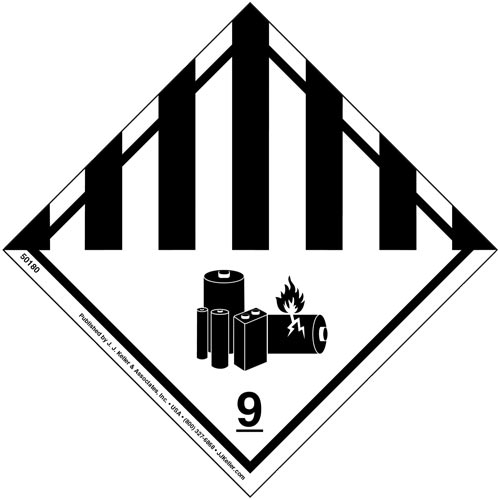
Class 9 Lithium Battery label
The mandatory Class 9 label for regulated packages of lithium batteries after 01.01.19.

Thanks & Regards,

My reply the next day (01.14.18):

I believe I have an answer for your question.  The answer depends upon the mode of transportation and the applicable regulations.  Please see below.

USDOT/PHMSA for the transport of HazMat within the U.S. (usually limited to highway or rail):

  • The Hazardous Materials Regulations of USDOT/PHMSA at 49 CFR 172.407(c)(1) require the hazmat label to be at least 100 mm (3.9″) on each side.  There are 4 sides to the label, each side must be a minimum of 100 mm (3.9″).
  • However, §172.407(c)(1)(i) allows the dimensions of the label and its features to be reduced proportionally if the size of the package so requires.  Symbol and other elements of the label must remain clearly visible.
  • Also, §172.406(b)(1) allows for the display of the label on a “securely affixed tag” or other suitable means if the HazMat is not a Class 7 Radioactive and the dimensions of the package are less than those of the required label.

So, per the USDOT/PHMSA regulations a label may be reduced in size as necessary to fit on the package.  There is no minimum size requirement.  The label can be as small as necessary to fit on the package as long as it continues to communicate the necessary information. Or, as an option, a label may be displayed on a tag secured to the package.

International Maritime Organization (IMO) for the international transport of dangerous goods by vessel:

  • The IMO Dangerous Goods Code at 5.2.2.2.1.1 mandates the label to be a minimum of 100 mm on a side.  The image at 5.2.2.2.1.1 clearly indicates the 100 mm minimum applies to each diagonal side of the label.
  • 5.2.2.2.1.1.3 allows for a proportional reduction in the size of the labels if the package is too small and if the symbols and other elements of the label remain clearly visible.
  • Also, 5.2.2.1.6 allows the label to be displayed on a “securely affixed tag” or other suitable means if the package is too small.

Contact me with any questions you may have about the transportation of hazardous materials by air, highway, vessel, or rail

International and Domestic

Daniels Training Services, Inc.

815.821.1550

Info@DanielsTraining.com

https://danielstraining.com/

Similar to USDOT/PHMSA, the IMDG Code sets a minimum size for the label on a package.  However, the label may be smaller than this minimum if required by the size of the package.  The shipper also has the option to display the label on a tag or by other means if the size of the package hinders display of a full-size label.

International Air Transport Association (IATA) for the international and domestic transport of dangerous goods by air:

  • 7.2.2.3.2(a) of the IATA Dangerous Goods Regulations establishes a minimum dimension of 100 mm for each side of a label.
  • 7.2.2.3.1 allows for reduced dimensions of a label’s size (labels may have dimensions that are half of the 100 mm minimum, but no less), but only for the following dangerous goods and only when displayed on a package of an infectious substance that is too small to display the full-size label:
    • Class 2.1 Non-flammable, non-toxic gas
    • Class 6 Infectious substance
    • Class 9 Miscellaneous
  • 7.2.6.1(d) allows for the display of the label on a “strong tag(s)” but only when the package is of such an irregular shape that a label cannot be attached or printed on its surface.
  • 7.2.6.1(e) requires the shipper to ensure the package is of such a size that there is adequate space to affix all required labels.

It should be no surprise the regulations of IATA are more strict than any other agency.  In brief, the IATA Dangerous Goods Regulations do not allow for the reduction in size of the hazard label except in very limited circumstances, and then, a reduction in size of no more than half of the minimum size.  IATA goes further than either of the other agencies in specifying that the shipper must use a packaging that is big enough for all required labels – and package marks.

I hope this helps.  Please contact me with any other questions.

Conclusion:

That seemed to do it!  If the transport of hazardous materials (aka: dangerous goods) is required for your business, make sure you are doing it in compliance with the applicable regulations.  Though similar in many ways, there are significant differences between the regulations of USDOT/PHMSA, IMO, & IATA, even when dealing with something as insignificant as the display of a hazard label on a package.  Contact me to assist you with compliance.

Q&A: What are the specifications for HazMat package orientation arrows?

A question during the summer of 2018 (07.24.18):

Daniel,

I am emailing you in reference to your article from 2015 on Package Orientation Arrows on HazMat Packaging: https://danielstraining.com/package-orientation-arrows-on-hazmat-packaging/

Is there any instructions on the requirements for these arrows/labels? Meaning does this have to be a certain size, color, multiple colors, etc…

I ship my product in a vented, 20 L container which is blow molded. I would like to incorporate the arrows in the mold itself so that I do not have to slap on one of these stickers every time. Please advise. Thanks!

Like this article?

Subscribe to my Monthly Newsletter

No marketing emails!

My reply that same day:

Thank you for contacting me.  Please see below.

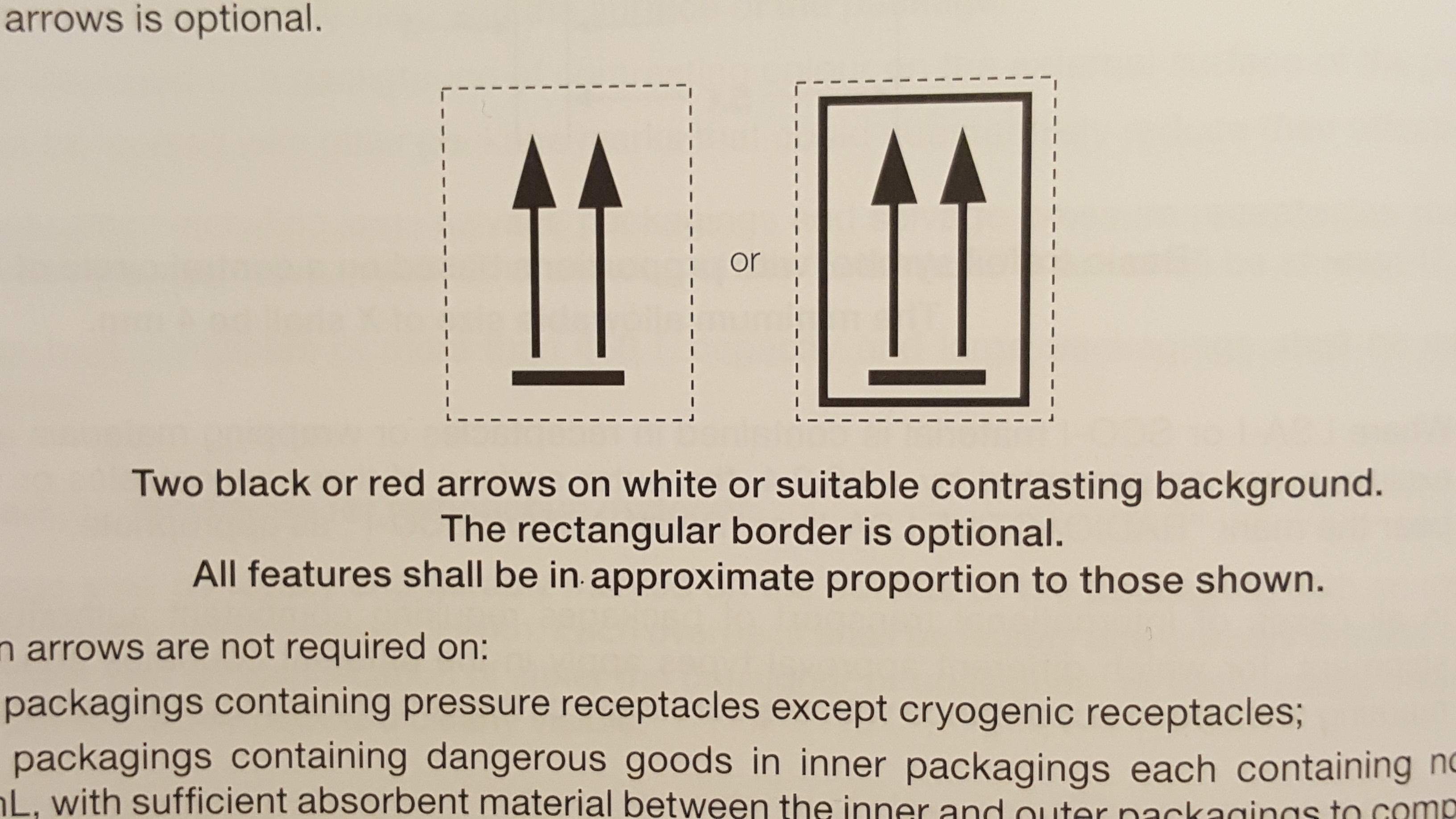
  • The specifications for the appearance of the orientation arrows within the domestic regulations of USDOT/PHMSA can be found at 49 CFR 172.312(a)(2).  Orientation arrows must be:
    • Similar to illustration shown (see below for example).
    • Black or red on white or other contrasting background.
    • Commensurate with size of package.  Exact dimensions are not specified.
    • Rectangular border around arrows is optional.

Package orientation arrow on HazMat Packaging

  • Specifications for appearance within IATA Dangerous Goods Regulations (transport by air) are at 7.2.4.4.
    • Same specifications as shown at 7.4.D or 7.4.E. (see below for images from IATA Dangerous Goods Regulations).
    • Also acceptable are pre-printed package orientation labels of the same specifications as Figure 7.4.D or 7.4.E (ISO Standard 780:1997).
    • Black or red on white or other contrasting background.
    • Minimum dimensions of 74 x 105 mm.
    • “THIS END UP” or “THIS SIDE UP” may be displayed on top of package.
    • “Dangerous Goods” may be inserted on the label below the line.
  • Specifications for appearance within IMO Dangerous Goods Code (transport by vessel) at 5.2.1.7.
    • Similar to illustration shown (see below for image from IMO Dangerous Goods Code).
    • Also acceptable are package marks meeting the specifications of ISO 780:1997
    • Rectangular
    • Of a size that is clearly visible commensurate with the size of the package.  Exact dimensions are not specified.
    • Black or red on white or other contrasting background.
    • Rectangular border is optional.

IMDG Code package orientation arrows

In all cases there must be two arrows and they must be displayed on two opposing sides.

I hope this helps.  Please contact me with any other questions.

Daniels Training Services, Inc.

815.821.1550

Info@DanielsTraining.com

https://danielstraining.com/

Conclusion:

That seemed to do it.  I hope he was able to incorporate the arrows into the blow mold the way he intended.  While I enjoy informing people of the regulations, I enjoy it even more when they are able to save money and improve their business because of it.

Q&A: Does the De Minimis exception apply to Division 6.1, Packing Group I Poisonous Materials?

Sometimes the questions I receive challenge me to re-visit older articles and dig deeper into the regulations.  Like this one from November 23 of 2017:

Dear Mr. Stoehr,

I saw the piece you wrote on applicability of  “De Minimis quantities” on your website. Are you suggesting that other classes of Hazardous Material such as Class 2, Division 5.2, Division 6.2,  and packing group I of other authorized HazMat are not allowed to be shipped in De Minimis quantities according to the rules for shipping De Minimis quantities? Looking forward to your reply. Thanks.

Best

Contact me with any questions you may have about the transportation of hazardous materials by air, highway, vessel, or rail

International and Domestic

Daniels Training Services, Inc.

815.821.1550

Info@DanielsTraining.com

https://danielstraining.com/

I researched the regulations, checked my article, and got back to him the same day:

Thank you for contacting me.  I will try to answer your question below.

  • Some HazMat, i.e., Division 6.2 Infectious Substance, is not eligible for the De Minimis Exception.
  • A packing group I of any HazMat is not subject to the De Minimis Exception.
  • The De Minimis Exception is only available to the following hazard classes and divisions of Packing Group II or III:
    • Class 3 Flammable and Combustible Liquid
    • Division 4.1 Flammable Solid
    • Division 4.2 Spontaneously Combustible
    • Division 4.3 Dangerous When Wet
    • Division 5.1 Oxidizer
    • Division 6.1 Poisonous Material
    • Class 8 Corrosive Material
    • Class 9 Miscellaneous
  • Read: The De Minimis Exception from the Hazardous Materials Regulations

I hope this helps.  Please don’t hesitate to contact me with any other questions.


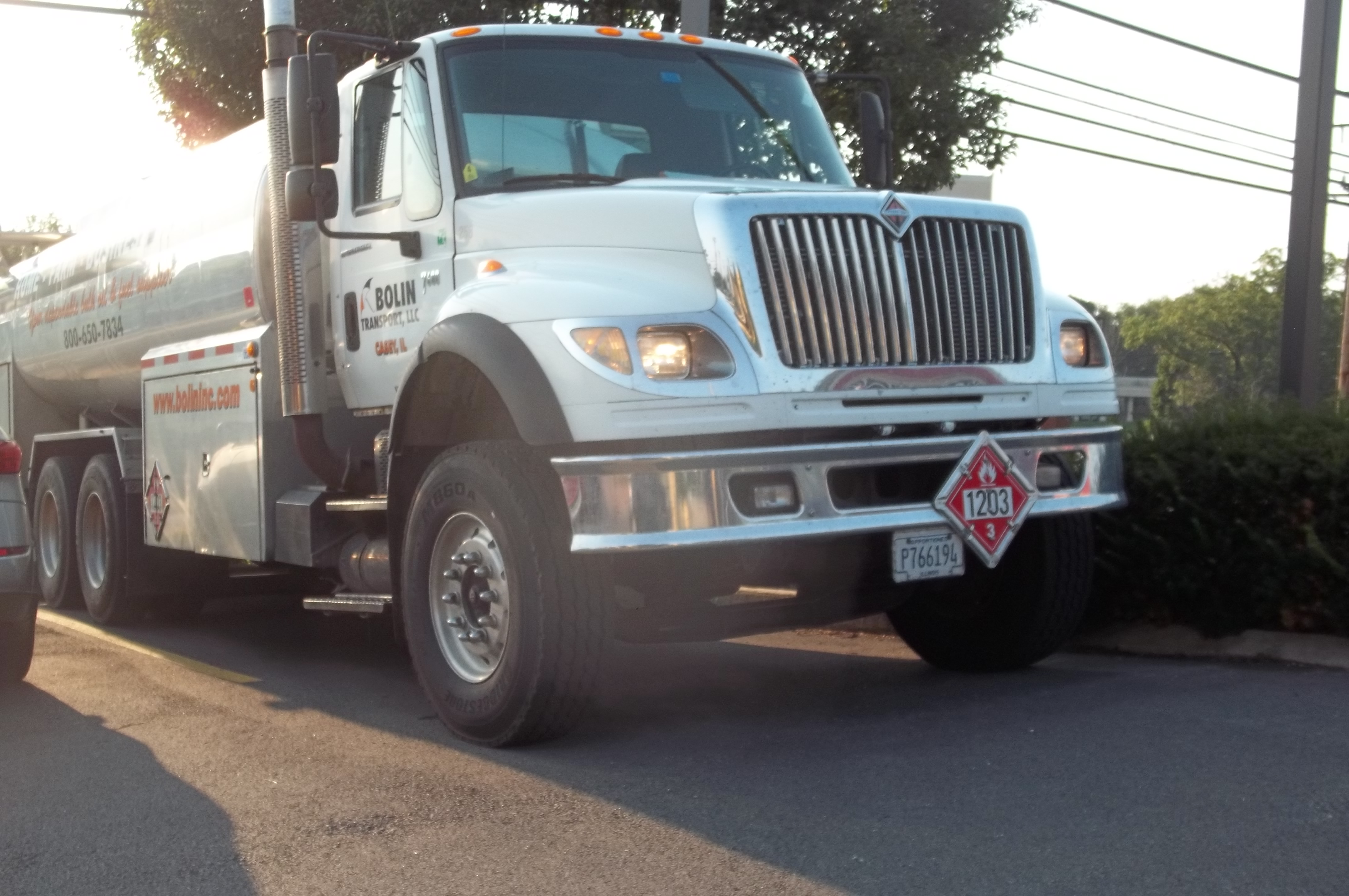
Cargo Tank Truck UN1203

Q&A: Do I need special paperwork that shows my truck has been cleaned and washed before transporting?

A question I received back on November 17, 2017:

I have a company that wants me to haul a used fuel truck that has hauled gas and diesel fuel they say it has been empty and setting in a storage lot for a period of time. Do I need special paperwork that shows that this truck has been cleaned and washed before transporting?

A pretty common question, so I was able to respond that same day:

Thank you for contacting me.  Please see below.

  • No.
  • It is the responsibility of the shipper (in this case the company that asked you to haul the fuel tank truck) to ensure that a packaging contains no residue of a HazMat and no dangers from it.  In the case of a Class 3 flammable liquid (gasoline & diesel) this would mean the absence of vapors.  The shipper does not need to provide a certification that the tank truck has been cleaned and purged.
  • It is the responsibility of the carrier (you) to reject a shipment if it is not in compliance with the regulations.  e.g. it is classified as non-HazMat but contains the residue – or vapors – of a class 3 flammable liquid and is therefore HazMat.

Contact me with any questions you may have about the transportation of hazardous materials by air, highway, vessel, or rail

International and Domestic

Daniels Training Services, Inc.

815.821.1550

Info@DanielsTraining.com

https://danielstraining.com/

In sum:

You may accept the cargo tank for transport as non-HazMat based solely on the certification of the shipper.  However, I highly recommend that you or your driver ensure there is no HazMat residue – not even vapors – in the cargo tank.  If any concern at all you should reject the shipment until it is rinsed, cleaned, and purged of all vapors so no hazard remains.  If this cannot be done it should be shipped as HazMat:  shipping paper, placards, HazMat Employee training &etc.
Please see below for more information:
cargo tank motor vehicle

Q&A: Do I need a purge ticket for my cargo tank?

A question from November 12, 2017:

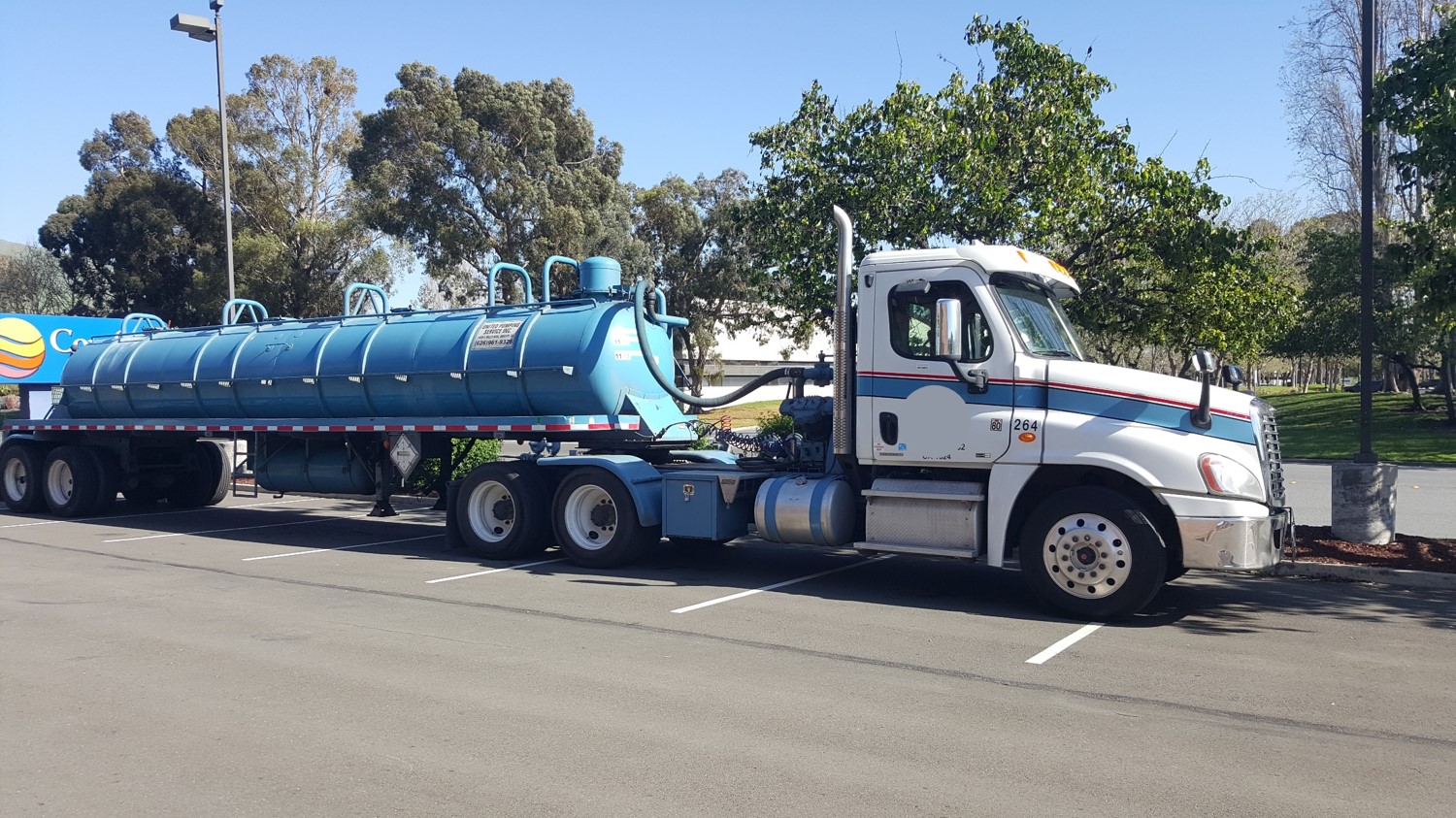
cargo tank motor vehicle
“tanker trailer” referred to in the hazardous materials regulations as: cargo tank

Hello, I just bought a tanker trailer and the seller said it was last used to haul non hazmat. The companies that want to transport it to me are asking for a wash ticket and that it be purged. Do I need to do that?

My reply the next day (11.13.17):

Thank you for contacting me. I will try to answer your question below.

  • The regulations of the USDOT do not require a wash/purge ticket for a packaging that contained a non-hazardous material. Non-HazMat are not subject to DOT’s Hazardous Materials Regulations.
  • The vehicle and trailer may be subject to other DOT regulations for licensing &etc.
  • If the trailer contained the residue (even vapors) of a hazardous material then it must be transported as one of the following:

Or…

    • Rinsed & cleaned & purged of all vapors so no hazard remains. In this case it can be shipped as non-HazMat.
  • A wash or purge ticket or certificate is not required to achieve the above. If you as the shipper are willing to certify that no hazard remains then it can be shipped as non-HazMat.
  • Of course, the carrier can always reject your certification and demand more – such as a wash/purge ticket – but it is not required by regulation.

In sum: you are not required to provide a wash/purge certificate in this case but you may need to or else find another carrier.

I hope this helps. Please don’t hesitate to contact me with any other questions.

His reply that day (kinda’ made all of my work for naught!):

Thank you for the clarification. I did go to the company that sold me the vehicle and I did receive a purge ticket. The carrier that wants to transport my trailer to me wanted one. I just wasn’t sure. Thanks for the info again.

Daniels Training Services, Inc.

815.821.1550

Info@DanielsTraining.com

https://danielstraining.com/

Conclusion:

I’m glad that it all worked out for this person.  This type of situation is not uncommon in the HazMat transportation industry; someone insists on something not required by the regulations.  Your options are either to “push back” and ask them to cite the regulations they are using as justification for their claim or meekly go along with their demands.  (I don’t intend to disparage the meek, they help to get a lot of things done.)

For more information on this topic read: Emptying a Hazardous Material Packaging

FAQ: What is a large packaging?

If you are a shipper of hazardous materials (HazMat) you are subject to the Hazardous Materials Regulations (HMR) of the Pipeline and Hazardous Materials Safety Administration within the U.S. Department of Transportation (USDOT/PHMSA).  The HMR identify a variety of packagings used for the transportation in commerce of hazardous materials.  One of these packagings to be explained in this article is the large packaging. (more…)

FAQ: What is a freight container?

A freight container is one of the many types of containers or packagings used for the transport of hazardous materials (HazMat) in commerce.  It, like other containers and packagings, is subject to the Hazardous Materials Regulations (HMR) of the Pipeline and Hazardous Materials Safety Administration within the U.S. Department of Transportation (USDOT/PHMSA).

Knowing a freight container when you see one is easy.  It’s harder to nail down a precise description for the following reasons which are explained later in this article:

  • It may be a bulk packaging or it may not depending on how it is used.
  • Since it is not a DOT specification packaging there are no standards for its design or construction in the HMR and no testing requirements to ensure it meets those standards.
  • A freight container may be transported by any mode.
  • And, it may be confused with a transport vehicle.  (At least I did).

I’ll do my best to dispel the confusion regarding the freight container in this article.

The term is defined at 49 CFR 171.8:

Freight container means a reusable container having a volume of 64 cubic feet or more, designed and constructed to permit being lifted with its contents intact and intended primarily for containment of packages (in unit form) during transportation.

Let’s break down that definition.

  • The use of the word “container” in “freight container” is important since the term usually used by USDOT/PHMSA is “packaging”.  It is one indication the freight container is not a specification packaging as that term is used in 49 CFR 178.
  • “Reusable container” means it is designed and manufactured for, and durable enough to withstand, repeated use.  It can do this without re-conditioning, which is usually required for reuse of a non-bulk packaging (if reuse is allowed at all).  A freight container is also not subject to the periodic re-test and re-inspection required of bulk packagings intended for repeated use.
  • “…a volume of 64 cubic feet or more” is approximately 479 gallons (or 1.81 cubic meters).  That means it has a capacity that meets the threshold criteria for a bulk packaging (>119 gallons).  However, other factors must be considered before it is certain a freight container is a bulk packaging (explained later in this article).  It is interesting to note that other than freight container, only the following packagings include a volume threshold as part of their definition:
    • UN cylinder
    • UN portable tank
    • UN tube
  • “…designed and constructed to permit being lifted with its contents intact…” requires the freight container to be rigid and not a flexible packaging.
  • “…intended primarily for containment of packages (in unit form)…” is interesting because the definition here indicates the primary intended use for a freight container but does not establish it as a requirement.  In other words, the definition doesn’t limit the use of a freight container to solely the containment of packages in their unit form such as inner articles or packages; it could be used to contain HazMat with no intermediate form of containment.
  • Conspicuous by its absence from the definition is any reference to a DOT packaging specification in part 178 of the HMR for a freight container.  A DOT specification is a standard for the design and construction of a packaging.  A DOT specification packaging must be capable of withstanding specific tests and must be marked to indicate the DOT specification it meets.  Lacking the DOT specification, it falls to the shipper to ensure the freight container is acceptable for the safe transportation of a hazardous material in commerce.
  • Also missing from the definition of freight container is the term, “cargo-carrying”.  This is what distinguishes it from a transport vehicle (e.g., a semitrailer).  While a freight container may contain cargo, it lacks the equipment and devices to carry it (i.e., it doesn’t have wheels) and so cannot be a transport vehicle (LOI 17-0005).

Like this article?

Subscribe to my Monthly Newsletter

No marketing emails!

Other definitions including freight container:

“Freight container” is included at least once in each of the following defined terms in §171.8:

  • Bulk packaging
  • Container ship
  • Intermodal container
  • Loading incidental to movement
  • Overpack
  • Pre-transportation function
  • Storage incidental to movement
  • Undeclared hazardous material
  • Unit load device

Of those, the inclusion of “freight container” in two of  the definitions (bulk packaging and overpack) is significant and will be explained here:

  • Bulk packaging – the definition includes, “Bulk packaging means a packaging, other than a vessel or a barge, including a transport vehicle or freight container, in which hazardous materials are loaded with no intermediate form of containment.” (emphasis added). So, a freight container may be a bulk packaging but only if it is in direct contact with the HazMat it contains without the use of packages as an intermediate form of containment.  This is unlikely since the definition of freight container indicates this is not its primary intended use.
  • Overpack – the definition includes, “Overpack does not include a transport vehicle, freight container, or aircraft unit load device.” (emphasis added).  This is to ensure that an overpack, which is not a packaging, not a container, but an enclosure, is not confused with the containers – such as the freight container – that – like the overpack – are not designed, manufactured, tested, or marked to indicate they meet a DOT specification.

Think of it this way: while it is possible that a freight container is a bulk packaging and it cannot be an overpack, it is more likely that a freight container will contain within it bulk packagings and/or overpacks along with other forms of hazardous materials packagings.  The freight container might then be loaded on a transport vehicle (a semitrailer or rail car) and transported in commerce.

Freight container in the regulations of the International Air Transport Association (IATA) and the International Maritime Organization (IMO):

Both IATA and the IMO have definitions of freight container that closely resemble the USDOT/PHMSA’s.  A full description of those will have to wait for another article.

Contact me with any questions you may have about the transportation of hazardous materials by air, highway, vessel, or rail

International and Domestic

Daniels Training Services, Inc.

815.821.1550

Info@DanielsTraining.com

https://danielstraining.com/

A simple container.  A complicated explanation.  Read the Hazardous Materials Regulations with care to ensure you are in compliance with all of its requirements for classification, packaging, hazard communication, emergency response, and training for the transportation in commerce of HazMat in freight container or any other type of container or packaging.

Q&A: What’s the difference between DOT’s small quantity exception and the limited quantity exception?

A question I received October 31, 2017 through the Contact me form on my website:

Subject: Domestic ground: small quantity exception 173.4 vs limited quantity

Hi Daniel,
I have found your website very helpful. I am wondering if you could expand on your discussion of the small quantity exceptions of 173.4 (https://danielstraining.com/what-is-the-small-quantity-exception-to-the-hmr/) and discuss how it compares with limited quantity. Especially within the United States, since FedEx (and I assume other carriers) does not charge a hazardous materials fee for limited quantity by ground. So, in that situation, which is preferable and why – 173.4 or limited?
Thank you for your consideration,

I was able to reply immediately:

Thank you for contacting me.

I will research your question and reply.

If you like this article, please share it using any of the social media platforms identified at the bottom of this article.

You’ll look real smart recommending my articles!

And by November 1st I had an answer for him:

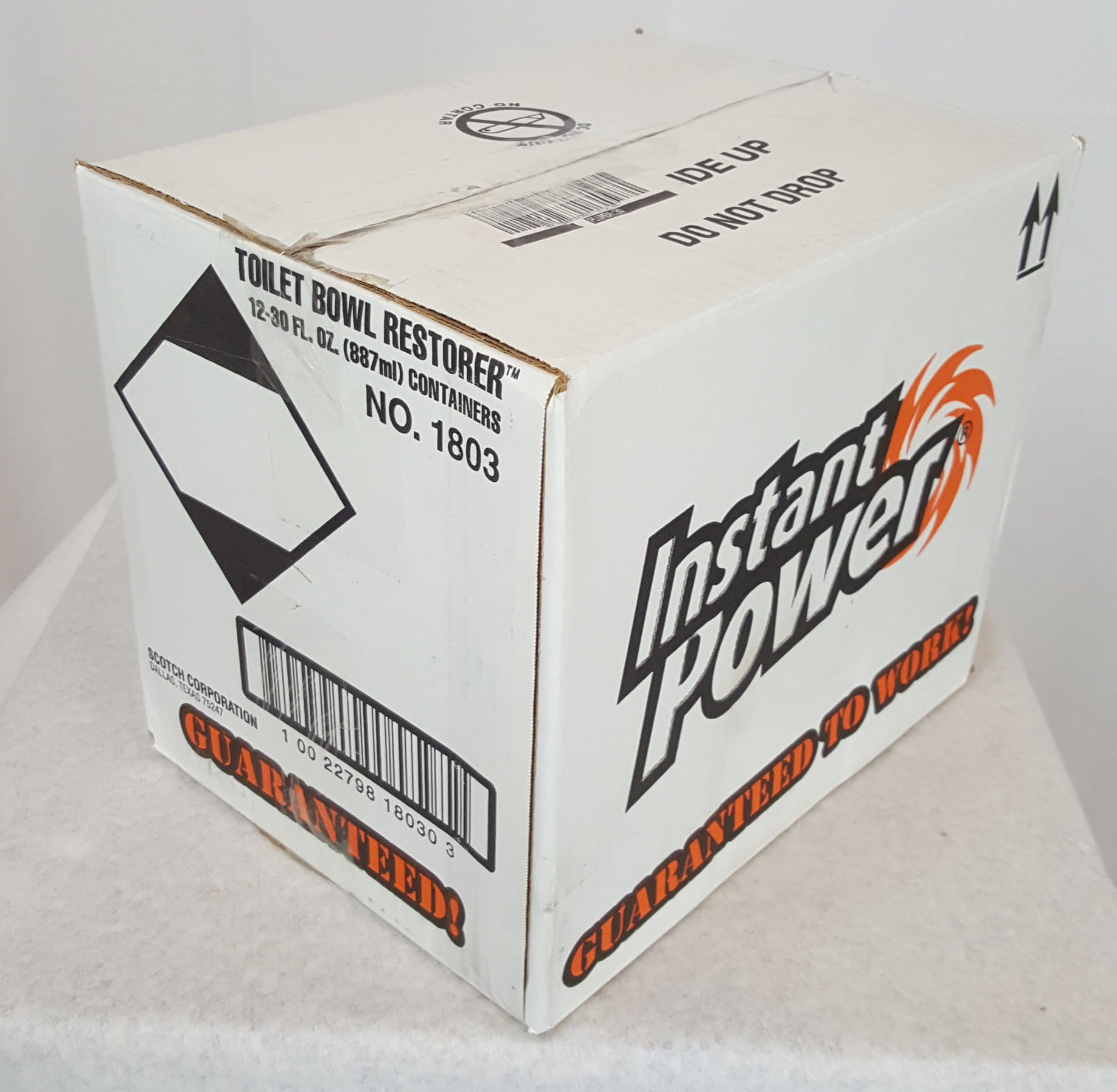
Limited Quantity in strong outer packaging
A hazardous material packaged as a limited quantity.

I will try to answer your question below. I will be able to provide more helpful information if you provide a more specific question.

  • The small quantity exception is for use only within the U.S. whereas the limited quantity exception is accepted in international transport.
  • The small quantity exception is for use only in transport by highway or rail whereas the limited quantity exception is available by all modes (highway, rail, air, vessel).
  • The small quantity exception is limited to a net quantity of 30 ml / 30 g for most HazMat and 1 g for others. The gross mass for a package of a small quantity must be no more than 29 kg. The net quantity limit for a limited quantity varies by HazMat but can be much higher. The gross mass for a limited quantity package is 30 kg.
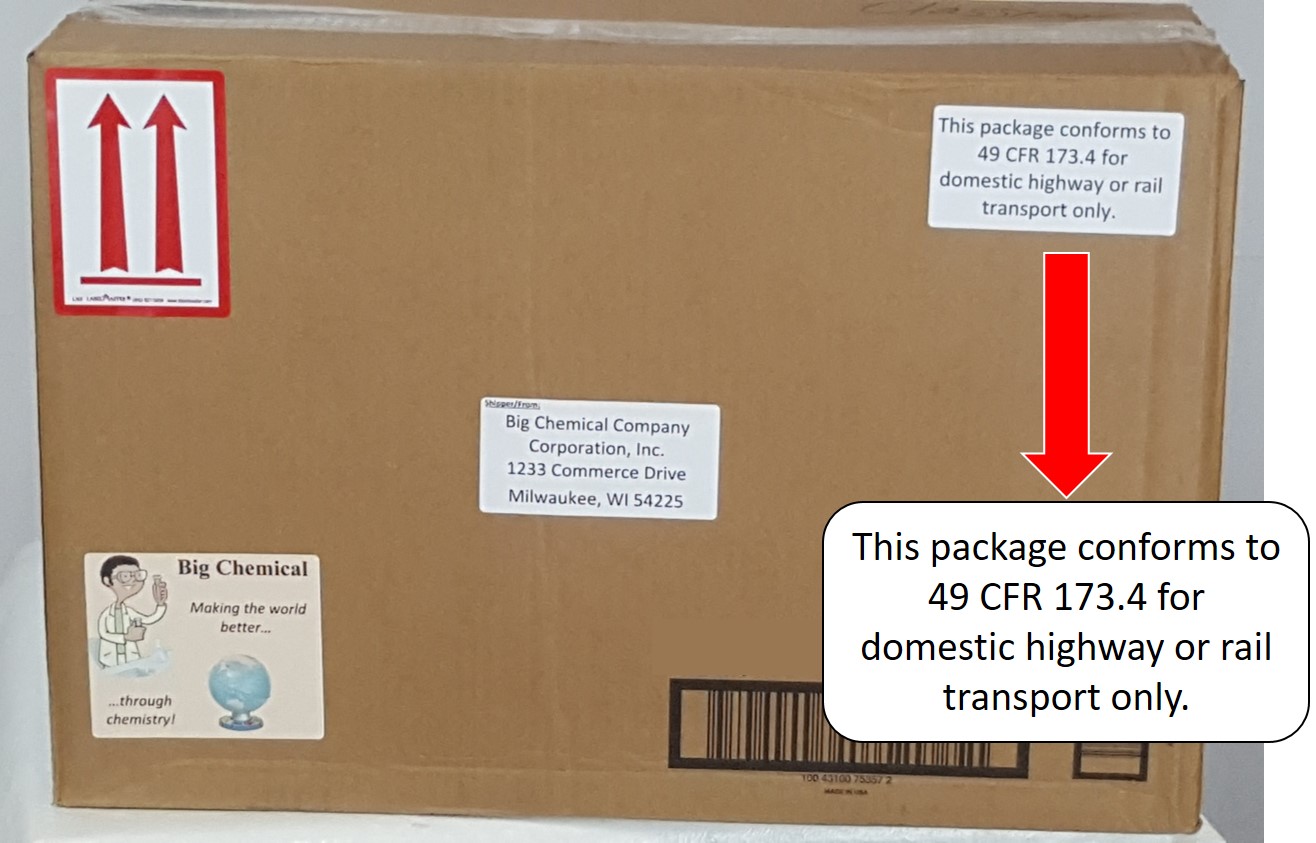
  • The big advantage to the small quantity exception, if the above limitations can be met, is that besides the requirements of the exception the HazMat packaged as a small quantity is not subject to any of the Hazardous Materials Regulations of PHMSA/USDOT.
  • HazMat shipped as a limited quantity is excepted from a lot of the HMR – notably the need for specification packaging – but the following remain:
    • Limited quantity mark.
    • Orientation arrows if liquid.
    • Shipping paper, unless by ground.
    • HazMat labels and other package marks if by air.
  • While the small quantity is excepted from all of the HMR the limited quantity is not. Therefore, when shipping a small quantity only the personnel involved in its classification would require HazMat Employee training; those involved in the packing, loading, & transport will not require training.  However, a limited quantity is not excepted from the training requirements and therefore all employees involved in its transport must receive HazMat Employee training.

I hope this helps.

Please contact me with any other questions.

Contact me with any questions you may have about the transportation of hazardous materials by air, highway, vessel, or rail

International and Domestic

Daniels Training Services, Inc.

815.821.1550

Info@DanielsTraining.com

https://danielstraining.com/

It looks like my information was helpful to him:

Hi Daniel,
I appreciate the very informative response. Based on the key differences you mentioned, I have just started to implement small quantity exemption and have discovered many products that we previously shipped as limited quantity ground are eligible. Thank you!
Best regards,

Small quantity exception package mark
A hazardous material packaged as a small quantity.

Conclusion:

I find this type of engagement very satisfying.  Some person out there – not a customer – has a good level of knowledge about the Hazardous Materials Regulations but needed some guidance and I was there to provide it.  In this situation it appears that my information will help this HazMat shipper to save money on shipping costs while maintaining HazMat transportation safety.

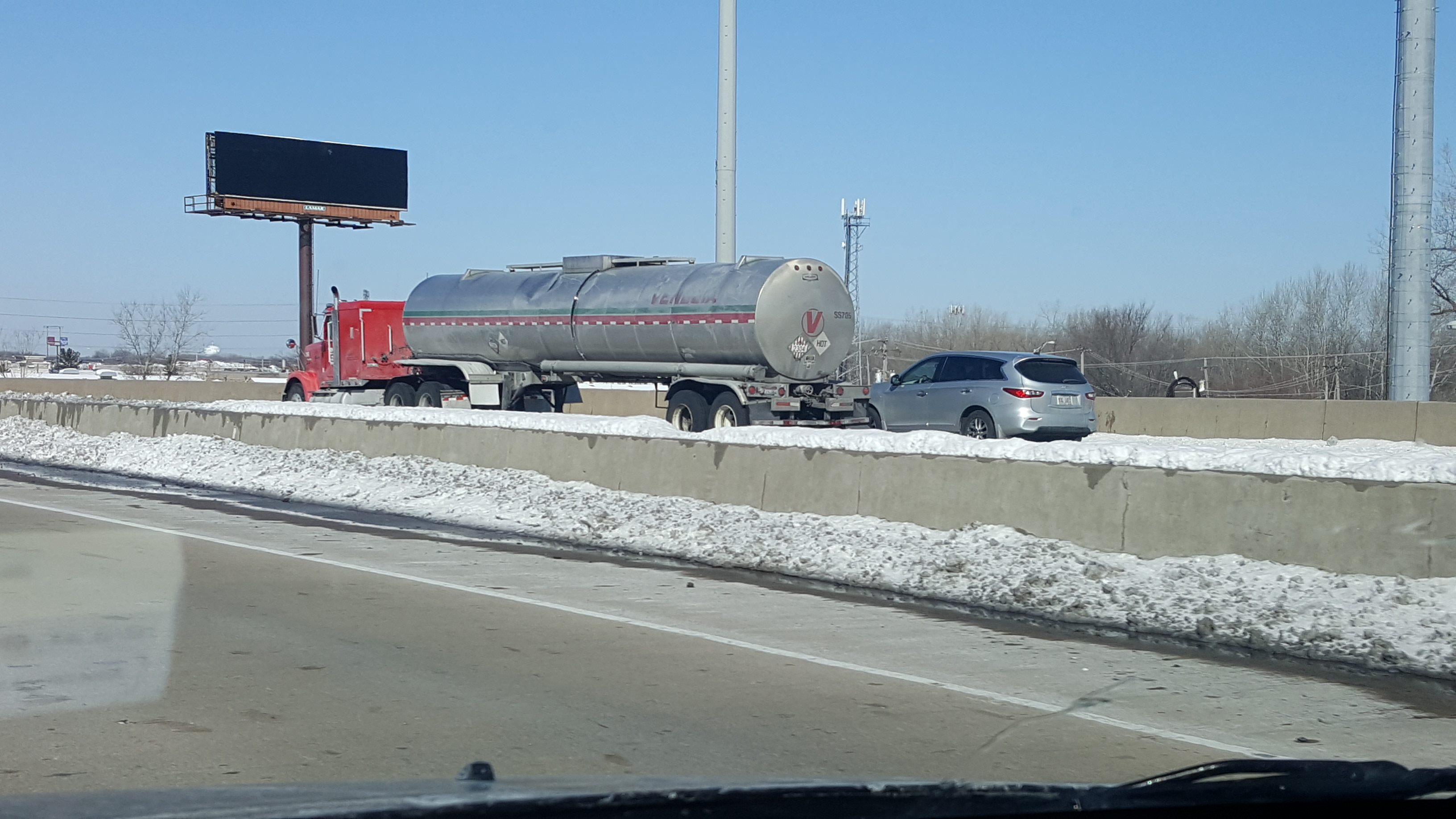
Cargo tank of UN2304, Naphthalene, molten

Exceptions to the Shipper’s Certification on a Hazardous Materials Shipping Paper

The Hazardous Materials Regulations (HMR) of the Pipeline and Hazardous Materials Safety Administration within the U.S. Department of Transportation (USDOT/PHMSA) apply to the transportation of hazardous materials (HazMat) to, from, or through the U.S. The HMR are codified in Title 49 of the Code of Federal Regulations (CFR).

Pursuant to 49 CFR 172.204, the shipper of a hazardous material – referred to as “each person who offers a hazardous material for transportation” – must provide a certification on the shipping paper that the HazMat shipment is in compliance with all of the Hazardous Materials Regulations.  However, there are exceptions to this rule when a HazMat may be offered for transportation and not require a shipper’s certification. Those exceptions are documented in 49 CFR 172.204(b) and explained in this article. (more…)

Q&A: Do I need a USDOT security plan to ship this HazMat?

Here’s a question from back in November of 2017:

Daniel
First question
Do we need a USDOT security plan for aluminum phosphide pesticides (Division 6.1 Poisonous Substance) if transported in compliance with special permit 13307 since that eliminates the need to display placards on the vehicle?
Second question
Can I send you our shipping paper to make sure we are in compliance, and how much for your time?
I don’t expect this for free.

My reply that same day:

Please see below for your answers:

  • 49 CFR 172.800(b)(9) indicates the safety and security plan – and therefore in-depth security training – is required for a person who ships a quantity of Division 4.3 that requires placards to be displayed on the vehicle.  You can read about the Safety and Security Plan and the determination of applicability in this article: Safety and Security Plan and In-Depth Security Training
  • Special Permit 13307 precludes the need for placards.  Therefore, this requirement does not apply to you. Read more about special permits, approvals, and exceptions from regulation.
  • My consulting costs are $150/hour.  The project you suggest will not take more than an hour.  Likely 1/2 hour.

Dan

Contact me with any questions you may have about the transportation of hazardous materials by air, highway, vessel, or rail

International and Domestic

Daniels Training Services, Inc.

815.821.1550

Info@DanielsTraining.com

https://danielstraining.com/

Search Website