PO Box 1232 Freeport, IL 61032

A Different Kind Of Training

A Different Kind Of Training

A Different Kind Of Training

Former Texas Logistics Company Manager Sentenced for Falsifying Shipping Documents

The Bullet:

The deliberate falsification of HazMat shipping papers by a company official led to conviction and sentencing in a criminal court.

TCEQ training for hazardous waste personnel
The USEPA may enforce Federal regulations even in states such as Texas that have authorized hazardous waste programs of their own.
Who:

The Defendant is Mr. Ryan Thomas, former Logistics Manager for CES Environmental Services in Houston, Texas.

The case was investigated by EPA’s Criminal Investigation Division and the U.S. Department of Transportation, the Texas Commission on Environmental Quality, the Houston Police Department, the U.S. Department of Labor and the U.S. Coast Guard. It was prosecuted by the Department of Transportation with assistance of Department of Justice’s Environmental Crimes Section.

What:

Mr. Thomas was sentenced to 12 months’ probation, ordered to pay a $500 fine, and to serve 100 hours of community service.

Where:

The CES Environmental Services facilities in question are located in Houston and Port Arthur, TX.

Mr. Thomas was sentenced in U.S. District Court in Beaumont, Texas.

When:

Mr. Thomas was sentenced on July 14, 2014.

Why:

Mr. Thomas produced manifests that falsely indicated that three cargo tank motor vehicles of wastewater originated from the CES Houston plant when in fact, they were produced and shipped from the CES Port Arthur (PACES) plant.  The PACES location had been placed on a moratorium after a November 3, 2008, accident in which a CES driver was overcome by vapors released during the offloading of wastewater.  The disposal facility placed the moratorium on all loads of waste-water from the PACES location until the cause of the accident could be identified and new inbound load testing protocols were agreed to.  Mr. Thomas’ actions sought to circumvent this moratorium.

How:
US Department of Justice will prosecute RCRA & HazMat violations
Criminal prosecution may result from deliberate violations of Agency regulations

The deliberate falsification of HazMat shipping papers caused this case to be treated as a criminal case and not a civil.  The USEPA has the authority to turn cases such as these over to the Department of Justice who then prosecutes criminal cases on their behalf.

Conclusion:

Usually, violations of Agency regulations result in civil penalties and forfeitures.  In situations where deliberate falsification is suspected – such as this one – criminal prosecution may result.  Whether civil or criminal, no person or company wants to subject itself to the problems that non-compliance can bring.  Make certain that your facility is in compliance with the regulations of the USEPA, your state, and the USDOT for the cradle-to-grave management of hazardous waste and the transportation of hazardous materials.  I can assist you with compliance in several ways:

Contact me with any questions you may have about the transportation of hazardous materials

Daniels Training Services

815.821.1550

Info@DanielsTraining.com

https://danielstraining.com/

  • Contact me with a question about the regulations or for a free training consultation.
  • Subscribe to my Monthly Newsletter.
  • Arrange for one of my many training options to ensure all of your personnel are familiar with the applicable regulations.

    Like this article?

    Subscribe to my Monthly Newsletter

    No marketing emails!

 

DNREC Inspector

Delaware Hospital Cited for Multiple RCRA Violations

The Bullet:

A hospital in Dover, DE was cited for multiple violations of state regulations by the DNREC.

Who:
Delaware Department of Natural Resources and Environmental Control Logo
The DNREC enforces RCRA regulations in Delaware

Bayhealth Kent General Hospital.  A Large Quantity Generator of hazardous waste and a Small Quantity Handler of Universal Waste.

Delaware Department of Natural Resources and Environmental Control (DNREC)

DNREC Contact: Ferree, Melissa A

DNREC Contact Phone: (302) 739-9403

What:

A generator of hazardous waste and a handler of universal waste is subject to regulations (based on the Resource Conservation and Recovery Act or RCRA) for the cradle to grave management of that waste.

Where:

Bayhealth Kent General Hospital is located at 640 South State Street Dover, DE 19901

When:

Date discovered:  July 31, 2014

Enforcement Action served August 22, 2014

Why:

The hospital was cited for the following violations of state regulations based upon the Resource Conservation and Recovery Act (RCRA):

  • Containers of hazardous waste were not marked with accumulation start date.
  • A list of personnel names and job titles was not maintained as part of the Facility Personnel training records.
  • Copies of the Uniform Hazardous Waste Manifest for off-site shipments of hazardous waste were not maintained for the required three years.
  • Universal waste lamps were not contained in containers or packages that were structurally sound, adequate to prevent breakage, and compatible with the contents.
  • Hazardous waste storage areas were not inspected at least weekly, and a written record of the inspections were not maintained for at least 3 years.
  • Hazardous waste containers in a Satellite Accumulation Area were not marked either with the words “Hazardous Waste” or with the word “Waste” and a description to identify the contents of the container (e.g., Waste Acetone, Waste Solvent).
  • Containers of universal waste batteries were not labeled/marked properly to identify the contents.
  • A copy of all notices, certifications, waste analysis data and other documentation produced pursuant to the RCRA regulations were not retained on site for a minimum of three years.
  • The exception report was not submitted to the DNREC as required when a signed copy of the Uniform Hazardous Waste Manifest was not received by the generator within 45 days of it being shipped off-site.
  • Hazardous waste (not in a Satellite Accumulation Area) was accumulated on-site for more than 90 days.  Accumulation of hazardous waste beyond 90 days requires a permit from DNREC.
  • Uniform Hazardous Waste Manifest was not prepared properly by the generator.
  • Written job description not maintained as part of the training records for each employee handling hazardous waste.
  • Waste containers and tanks were not labeled or clearly marked with the words “Hazardous Waste”.
  • Hazardous waste in a Satellite Accumulation Area was not maintained properly.
  • Containers of hazardous waste were not kept closed except for times when adding or removing waste.
  • Generator did not have a RCRA Contingency Plan.
  • Initial training not provided for all employees handling hazardous waste (ie. Facility Personnel).
  • Annual hazardous waste report not completed and submitted.
  • Hazardous waste determination not completed.
  • Arrangements and agreements with local authorities for emergency services were not made.
  • Hazardous waste generated on-site was offered for off-site transportation to transporters that had not received an EPA identification number and a Delaware hazardous waste transporter permit.
  • Hazardous waste generated on-site was transported for disposal to treatment, storage, or disposal facilities (TSDFs) that have not received an EPA identification number.
How:

As a state with an authorized hazardous waste program the DNREC is the lead agency for the enforcement of state environmental regulations in Delaware.  Violations such as these can be discovered during periodic unannounced inspections of a hazardous waste generator.

DNREC Inspector
The Delaware DNREC conducts unannounced RCRA inspections of regulated businesses
Conclusion:

A long list of violations – and an unspecified amount of fines – were assessed for what are – for the most part – relatively simple violations of the regulations.  While only a few of the violations directly relate to the requirement to provide initial and annual training for all Facility Personnel, all of them are things that a generator of hazardous waste should know and are topics addressed in my Training Seminars.  Further, my Onsite Training includes a site inspection and informal consultation that would have revealed these deficiencies before the training even took place.  Consider a situation like this when you determine if Hazardous Waste Personnel Training costs too much.

Contact me for a free training consultation.

Contact me with any questions you may have about the transportation of hazardous materials

 Daniels Training Services

815.821.1550

Info@DanielsTraining.com

https://danielstraining.com/

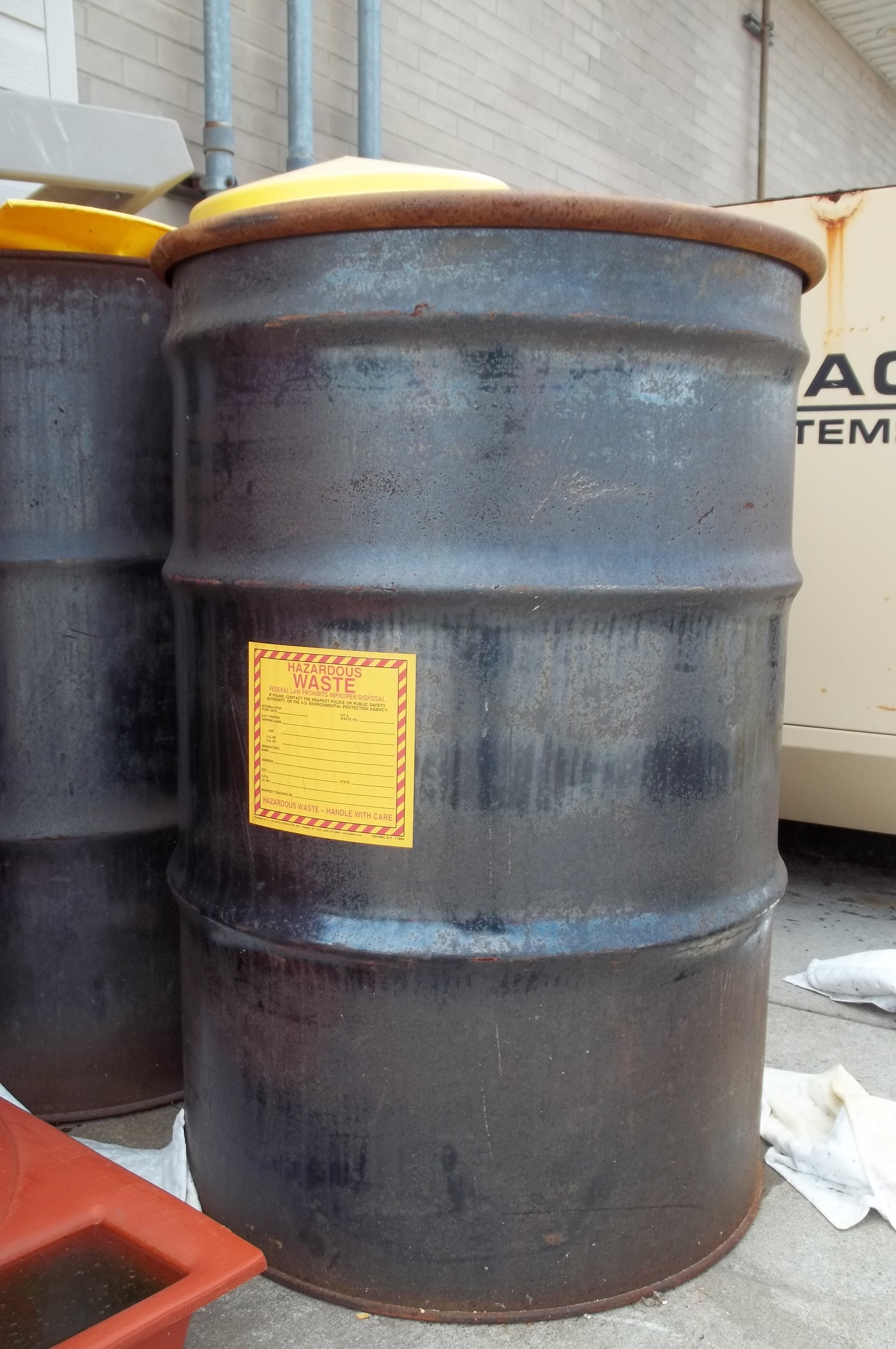
Hazardous waste container

Reuse of HazMat Packaging for the Shipment of Hazardous Waste

The reuse, reconditioning, and remanufacture of hazardous material packagings (both bulk and non-bulk) is addressed at 49 CFR 173.28 of the PHMSA/USDOT Hazardous Material Regulations.  In general packagings and receptacles (bulk and non-bulk) used more than once must be in good condition and comply with all of the requirements of the HMR for HazMat packaging; including closure devices and cushioning materials. Before reuse, each packaging must be inspected by the Shipper and may not be reused unless free from incompatible residue, rupture, or other damage which reduces its structural integrity.  Packagings not meeting the minimum thickness requirements prescribed in 49 CFR 173.28(b)(4)(i) may not be reused or reconditioned for reuse, though they may be acceptable for remanufacture.  §173.28 goes on to identify the specific requirements and restrictions for the reuse, reconditioning and remanufacture of non-bulk packagings for the transportation of hazardous materials.  §173.28(b)(6) however, contains an exception from this regulation for the reuse of a non-bulk packaging for the shipment of a hazardous waste.

Hazardous waste container
When transported, a container of hazardous waste is subject to the regulations of the PHMSA/USDOT and the USEPA.

(more…)

New Rules in the Works to Improve the Safety of Bulk Rail Transportation of Ethanol and Bakken Crude Oil

On July 23, 204 the US Department of Transportation announced two new rulemaking proposals – and a Report – issued by the PHMSA (the Pipeline and Hazardous Materials Safety Administration, one of many administrations/bureaus within the USDOT).  It is meant to improve the safe transportation of large quantities of flammable materials by rail – particularly crude oil and ethanol.  The comprehensive rulemaking includes the following:

Bakken Crude Oil by Rail
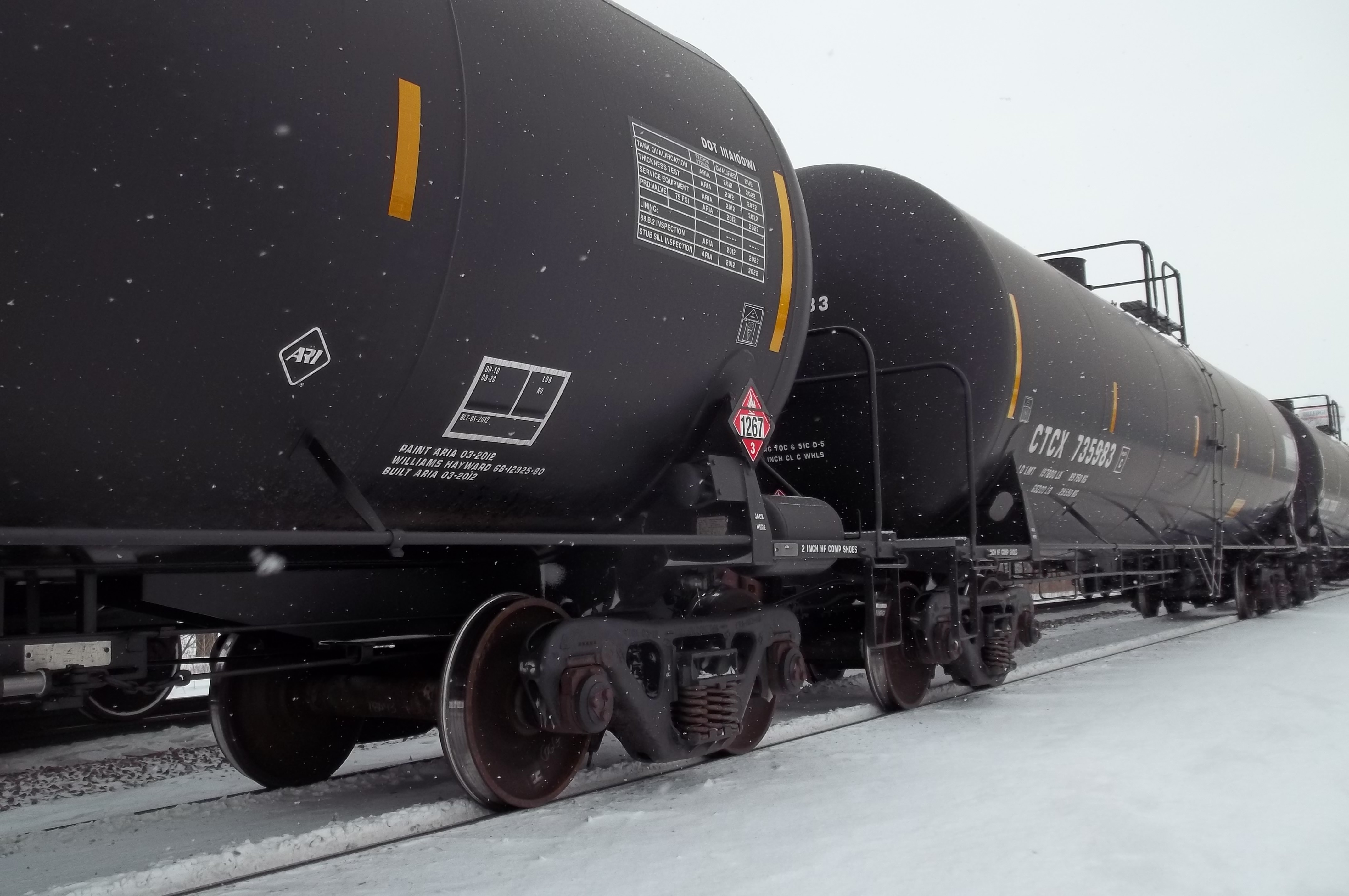
Railroad Tank Cars of Bakken Crude Oil passing through Illinois

Each of the above components of this announcement are summarized below.

Notice of Proposed Rulemaking (NPRM):

Under the NPRM, the PHMSA seeks comment on the following proposals:

  • A definition of a “high-hazard flammable train” (HHFT) as a train carrying 20 or more tank carloads of flammable liquids.  This would include both ethanol and crude oil (Bakken and others).
  • Develop and implement a written sampling and testing program – certified by the Shipper of the HazMat – for all mined gases and liquids.  This would include Bakken crude oil, but not ethanol.
  •  Carriers must perform a routing analysis for HHFTs (both Bakken crude and ethanol) that would consider twenty-seven (27!) safety and security factors and then select a route for the rail cargo based on the analysis.
  • Codify the May 2014 Emergency Order requiring the Carriers of more than one million gallons of Bakken crude by rail to notify appropriate State Emergency Response Commissions (SERCs).
  • Speed restrictions for HHFTs (both Bakken crude and ethanol) that contain any tank cars not meeting the enhanced tank car standards proposed by this rule.
  • Require enhanced brake systems for all HHFTs (both Bakken crude and ethanol).
  • Require enhanced standards for both new and existing rail tank cars used to transport flammable liquids (both Bakken crude and ethanol) as part of a HHFT.

    Hurry!  All comments must be received by September 30th.

Advanced Notice of Proposed Rulemaking (ANPRM):

Published concurrently with the NPRM, the ANPRM seeks to gain information via comments from interested parties regarding expanding oil spill response planning requirements for shipments of flammable liquids (Bakken crude, ethanol, and more) by rail.

Hurry!  All comments must be received by September 30th.

The Report:
Rail transportation of Bakken crude oil
Bakken Crude Oil Transported by Rail

Data collected from Operation Classification – a joint PHMSA and Federal Railroad Administration (FRA) effort initiated early in 2014 and specific to Bakken  crude oil – has been summarized in a report issued along with the NPRM and ANPRM.  The findings of the report indicate that Bakken crude oil is more flammable and volatile than other crude oils.  The unexpectedly higher flammability and volatility of Bakken crude is believed to the cause of its initial misclassification; the use of improper packaging; and the resulting train derailments, fires, explosions, and deaths.  In addition to the Report, Operation Classification resulted in a more robust test method for analyzing Bakken crude.  This will likely form the basis for the written sampling and testing program referenced in the NPRM.

Anyone involved in the transportation by rail of flammable liquids – and particularly the transportation by rail of Bakken crude and/or ethanol – should carefully follow, and become involved in, these notices as they proceed through the rulemaking process.

Daniels Training Services

815.821.1550

Info@DanielsTraining.com

https://danielstraining.com/

I can provide the training your employees need to properly classify, package, and ship any hazardous material by any means (air, rail, highway, or vessel).  Contact me for a free training consultation.

Components of Compliance: The Law, Regulations, and Guidance & Policy Documents

While most of the regulated community have some knowledge of the applicable regulations which with they must comply; and a passing familiarity with USEPA Guidance and Policy Documents; and a vague awareness of the law upon which they are all based; many lack a complete understanding of the relationship of these resources to their responsibility as a generator of hazardous waste.  The purpose of this article is to explain the role of these three elements:  the Resource Conservation and Recovery Act, the USEPA – and State – regulations, and Guidance & Policy Documents of both the USEPA and your state. (more…)

The Identification of Solid Waste in Texas

TCEQ training for hazardous waste personnel
TCEQ regulates hazardous and non-hazardous waste from both industrial and non-industrial facilities.

Though very similar to those of the USEPA, as a state with an authorized hazardous waste program under RCRA, Texas waste regulations – created and enforced by the Texas Commission on Environmental Quality (TCEQ) – have their own state-specific nuances.  For a person in Texas subject to these regulations, slight differences between state and Federal regulations can make a big difference.  This article will look at one aspect of the waste regulations of the TCEQ in Texas:  What is, and isn’t, a Solid Waste. (more…)

Exceptions to Division 6.2 (Infectious Substances)

The regulations of the PHMSA/USDOT at 49 CFR 173.134 contain the definitions and exceptions applicable to Division 6.2 Infectious Substances as they are regulated when in transportation or offered for transportation.  In an earlier article I attempted to explain how the transportation of a Regulated Medical Waste fits in this rather complicated regulation (read:  The Identification and Transportation of a Regulated Medical Waste).  In that article I referenced but did not identify the exceptions to regulation as a Division 6.2 Infectious Substance for certain materials and articles.  The purpose of this article is to identify and explain (if necessary) those materials that are not subject to the Hazardous Material Regulations as Division 6.2 Infectious Substances.

Biological Hazard Symbol
International Biological Hazard Symbol

(more…)

Reporting a Hazardous Substance Release in Missouri

To report a hazardous substance release, call the Environmental Emergency Response of the Missouri Department of Natural Resources (MODNR) @:

(573) 634-2436

24 hours a day

Also…

National Response Center:  1-800-424-8802
US EPA Region VII Spill Line:  (913) 281-0991
Chemtrec:  1-800-424-9300

Daniels Training Services

815.821.1550

Info@DanielsTraining.com

https://danielstraining.com/

Federal Register logo

July 2014 – Rules & Regulations, Proposed Rules, and Notices Regarding the Management of Hazardous Waste and the Transportation of Hazardous Materials

On its website the US Government Printing Office makes a wealth of Federal publications available for review and download; one of these is the Federal Register.

Published by the Office of the Federal Register, National Archives and Records Administration (NARA), the Federal Register is the official daily publication for rules, proposed rules, and notices of Federal agencies and organizations, as well as executive orders and other presidential documents.

See below for a brief summary of announcements in the Federal Register by the US EPA on the subject of Hazardous Waste and the Pipeline & Hazardous Materials Safety Administration (PHMSA), Federal Railroad Administration (FRA), and the Federal Aviation Administration (FAA) of the US DOT on the subject of Transportation of Hazardous Materials.

The Federal Register is a great way to look down the road and see potential changes to the regulations long before they are put into effect (sometimes The Rulemaking Process takes years before a final rule is issued, if ever).  Knowledge of these potential changes provides you with several advantages:

Federal Register logo
The Federal Register is the tool used by the US Government to communicate with interested parties
  • Additional time to modify your business operations to comply.
  • Awareness of on what topics the regulatory agencies intend to focus their efforts.
  • The ability to register your concerns, complaints, suggestions, etc. in order to modify the proposed rule before a final rule is issued.  It can be done, really!
  • Make changes to your training program to account for changes that become effective before the next training cycle.
  • Alert you to the need to re-train your employees prior to their next scheduled training cycle, if necessary.
  • Keep you abreast of changes to the regulations that affect your business and/or your industry group.

Please note that this is my best effort to identify the relevant announcements in the Federal Register that may be of interest to generators of hazardous waste and shippers of hazardous materials.  I encourage you to review the list of Federal Register publications yourself to ensure regulatory compliance.

July 1 through July 31, 2014

PHMSA – Pipeline and Hazardous Materials Safety Administration:

Rules and Regulations:

Hazardous Materials: Compatibility With the Regulations of the International Atomic Energy Agency (RRR) Pages 40589 – 40618 [FR DOC # 2014-15514]     PDF | Text | More

Shippers-General Requirements for Shipments and Packagings Pages 43266 – 43267 [FR DOC # 2014-17663]                PDF | Text | More

Proposed Rules:

Hazardous Materials: Requirements for the Safe Transportation of Bulk Explosives (RRR) Pages 41185 – 41211 [FR DOC # 2014-16382]        PDF | Text | More

Notices:

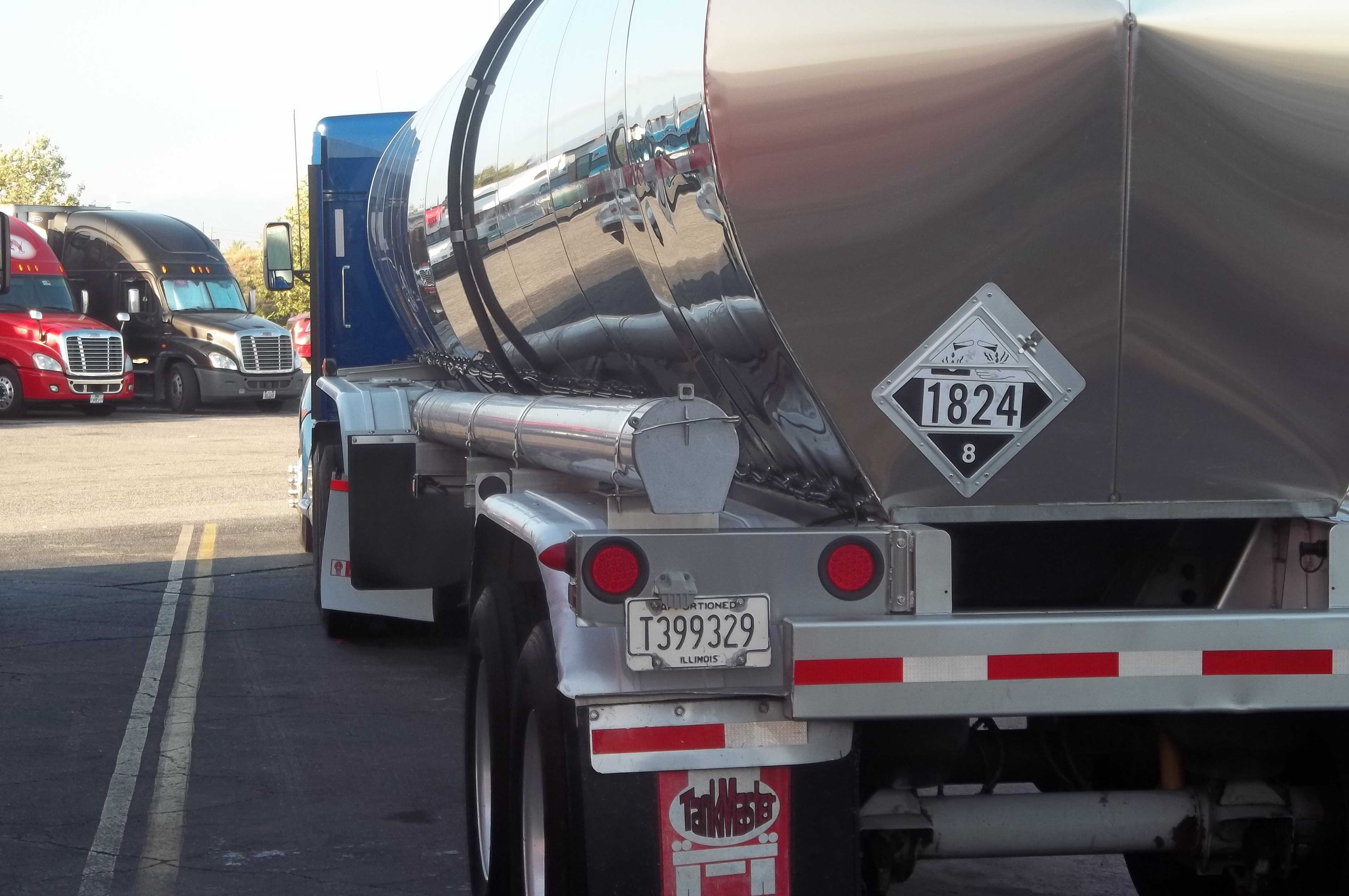
Tanker truck of Sodium Hydroxide Solution
the PHMSA regulates the domestic transportation of hazardous materials.


Safety Advisory: Unauthorized Certification of Compressed Gas Cylinders Pages 38126 – 38126 [FR DOC # 2014-15601]                PDF | Text | More

Office of Hazardous Materials Safety; Notice of Applications for Modification of Special Permit Pages 43815 – 43815 [FR DOC # 2014-17508]       PDF | Text | More

Office of Hazardous Materials Safety; Notice of Application for Special Permits Pages 43815 – 43816 [FR DOC # 2014-17506]                PDF | Text | More

Office of Hazardous Materials Safety; Special Permits; Applications Pages 43816 – 43818 [FR DOC # 2014-17507]                PDF | Text | More

Office of Hazardous Materials Safety Special Permits; Applications Pages 43818 – 43819 [FR DOC # 2014-17509]                PDF | Text | More 

FRA – Federal Railroad Administration:

Rules and Regulations:

Signal Systems Reporting Requirements Pages 37664 – 37669 [FR DOC # 2014-15336] PDF | Text | More

Proposed Rules:

None

Notices:

None

FAA – Federal Aviation Administration:

Rules and Regulations:

None

Proposed Rules:

None

Notices:

None

FMCSA – Federal Motor Carrier Safety Administration:


Commercial Motor Vehicle
FMCSA regulates the movement by highway of commercial motor vehicles

Rules and Regulations:

Hours of Service for Commercial Motor Vehicle Drivers; Regulatory Guidance Concerning Records of Duty Status Generated by Logging Software Programs Pages 39342 – 39343 [FR DOC # 2014-15951] PDF | Text | More

Proposed Rules:

None

Notices:

National Hazardous Materials Route Registry Pages 40843 – 40913 [FR DOC # 2014-15861] PDF | Text | More

Enhancements to the Motor Carrier Safety Measurement System (SMS) Web Site Pages 43117 – 43122 [FR DOC # 2014-17489]                PDF | Text | More            

USEPA – US Environmental Protection Agency:

Rules and Regulations:

Oklahoma: Incorporation by Reference of Approved State Hazardous Waste Management Program Pages 37226 – 37230 [FR DOC # 2014-15267]          PDF | Text | More

Proposed Rules:

Oklahoma: Incorporation by Reference of State Hazardous Waste Management Program Pages 37261 – 37262 [FR DOC # 2014-15268]        PDF | Text | More

Standards of Performance for Municipal Solid Waste Landfills Pages 41795 – 41843 [FR DOC # 2014-16405]                PDF | Text | More

Notices:

Proposed Determination to Restrict the Use of an Area as a Disposal Site; Pebble Deposit Area, Southwest Alaska Pages 42314 – 42318 [FR DOC # 2014-16920]      PDF | Text | More

Information can be helpful but it’s useless if you are not able to make sense of it.  You must be able to determine how any changes to the rules and regulations (final or proposed) will affect your operations, and communicate the necessary information to your personnel.  I can help you to do that.

Daniels Training Services

815.821.1550

Info@DanielsTraining.com

https://danielstraining.com/

Please contact for a free training consultation to determine your regulatory requirements and how training can help you to attain and maintain compliance with the regulations of the USEPA (and your state) and the PHMSA/USDOT.

Industrial Finishing Services investigated by MPCA for air quality, hazardous waste violations

The Bullet:

Industrial Finishing Services, a metal coating company, has been cited for air quality and hazardous waste violations at its facility in Perham. The company had been emitting hazardous air pollutants in quantities larger than allowed by its permit and had also begun construction on a new expansion before receiving a required MPCA permit. IFS has agreed to changes that will bring the facility into compliance with regulations and will pay a $60,000 civil penalty.  View the MPCA News Release.MPCA

Who:

Industrial Finishing Services (IFS), a metal coating company.

MPCA, the Minnesota Pollution Control Agency is authorized to manage the hazardous waste program of the Resource Conservation and Recovery Act in the State of Minnesota.

St. Paul • Brainerd • Detroit Lakes • Duluth • Mankato • Marshall • Rochester • Willmar
www.pca.state.mn.us

Toll-free and TDD 800-657-3864

What:

Alleged violations include:

  • Emissions of volatile organic compounds (VOCs) in excess of the facility’s permit thresholds.
  • Failure to install and operate a thermal oxidizer to control the emissions of hazardous air pollutants associated with the company’s coatings.
  • Failure to apply in a timely manner for a different category of air permit due to increasing levels of air emissions; should have applied in 2009 but did not do so until 2014.
  • Begun construction on a new expansion before receiving a required MPCA permit.
  • Issues with the RCRA Contingency Plan and emergency response planning.
  • Initial (within 6 months) and annual training of Facility Personnel.
  • Use of a non-licensed site for hazardous waste disposal.
  • Pollution risks posed by hazardous waste at the facility.

The company has agreed to changes that will bring the facility into compliance with air pollution and hazardous waste regulations. Many of the corrective actions have been completed. The company has also agreed to pay a $60,000 civil penalty.

Where:

Industrial Finishing Services (IFS) facility subject to these violations is located in Perham, MN.

When:

Initial MPCA inspection conducted Fall of 2013.  News release dated July 3, 2014.

Why:

The mission of the MPCA is to protect and improve the environment and enhance human health

How:

In Minnesota, the MPCA has the authority to create and enforce its own state-specific hazardous waste regulations as long as they are at least as strict and as broad as those of the USEPA.

Conclusion:

The proper management of hazardous waste requires awareness of both Federal and State regulations.  Failure to comply can result in significant fines and penalties.  Consider the cost of my Onsite Training versus a civil penalty such as this.  Once you do, please contact me for a free training consultation.

Daniels Training Services

815.821.1550

Info@DanielsTraining.com

https://danielstraining.com/

Search Website