Royal Farms Store in Dover, DE Issued RCRA Violation for not Conducting a Hazardous Waste Determination
The Bullet:
A Dover, DE store in the Royal Farms chain was issued a violation by the Delaware Department of Natural Resources and Environmental Control for a simple – but common – violation of the State’s hazardous waste regulations.
Contact me with any questions you may have about the transportation of hazardous materials by air, highway, vessel, or rail
As a generator of a solid waste, the store failed in its responsibility under both Federal and State regulations to conduct, and document, a hazardous waste determination.
Where:
Royal Farms Store #139
6 West Lebanon Road
Dover, DE 19901
When:
Date Discovered: 05/02/2014
Enforcement Action Served Date: 07/22/2014
Date Corrected: 08/21/2014
Why:
A person that discards any material generates a solid waste. Unless that person is exempt from regulation under the Resource Conservation and Recovery Act (RCRA) – and this store clearly is not – they must conduct a hazardous waste determination. This determination must be documented (no format is specified) and a record kept for at least three years from the last date the waste was shipped off-site for treatment, disposal, or recycling.
How:
The state of Delaware – like most other states – has an authorized hazardous waste program which requires it to enforce the RCRA regulations within its borders. A state that does not enforce its regulations stands to loose its authorization to manage its own hazardous waste program.
Conclusion:
A person can be forgiven of thinking that the hazardous waste regulations of RCRA apply only to large industries, utilities, landfills, and the like. It can be surprising to learn that a local retail store is subject to the same regulations. First and foremost among the RCRA regulations is to conduct a hazardous waste determination. From that, a solid waste generator can determine what status of hazardous waste generator they are, and what regulations apply to the cradle-to-grave management of their hazardous waste.
Not sure of your hazardous waste generator status?
Don’t wait for a Notice of Violation from your state to learn you are subject to the regulations. Contact me and I can assist you with the hazardous waste determination and any training you may require as well.
Labeling Universal Waste Containers for On-Site Storage
Both large quantity handlers and small quantity handlers of universal waste are required to identify the universal waste by one of three options:
Universal Waste…
Waste…
Used…
The name of the universal waste that follows will depend on its type. The USEPA identifies four universal waste categories, they are:
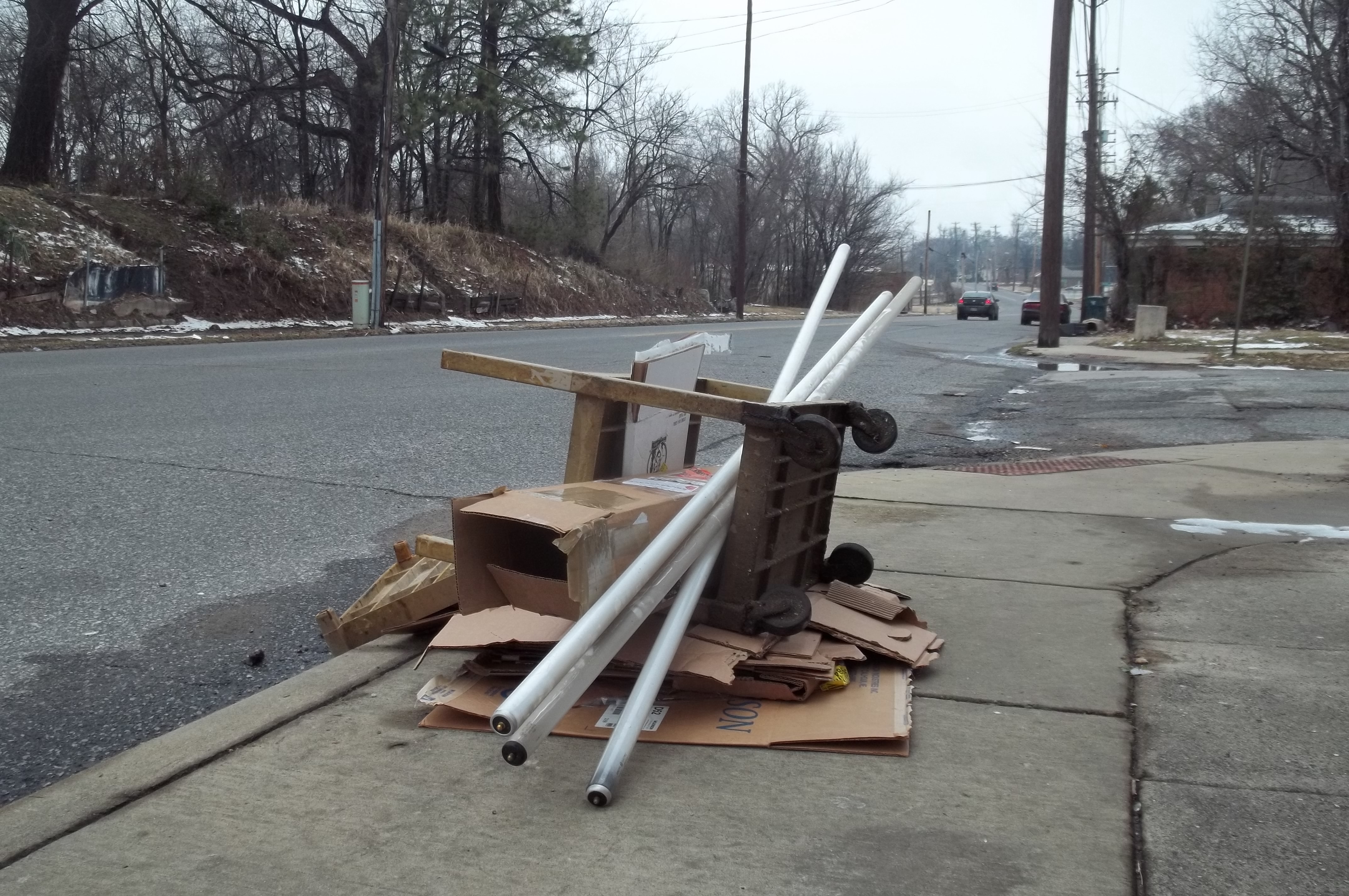
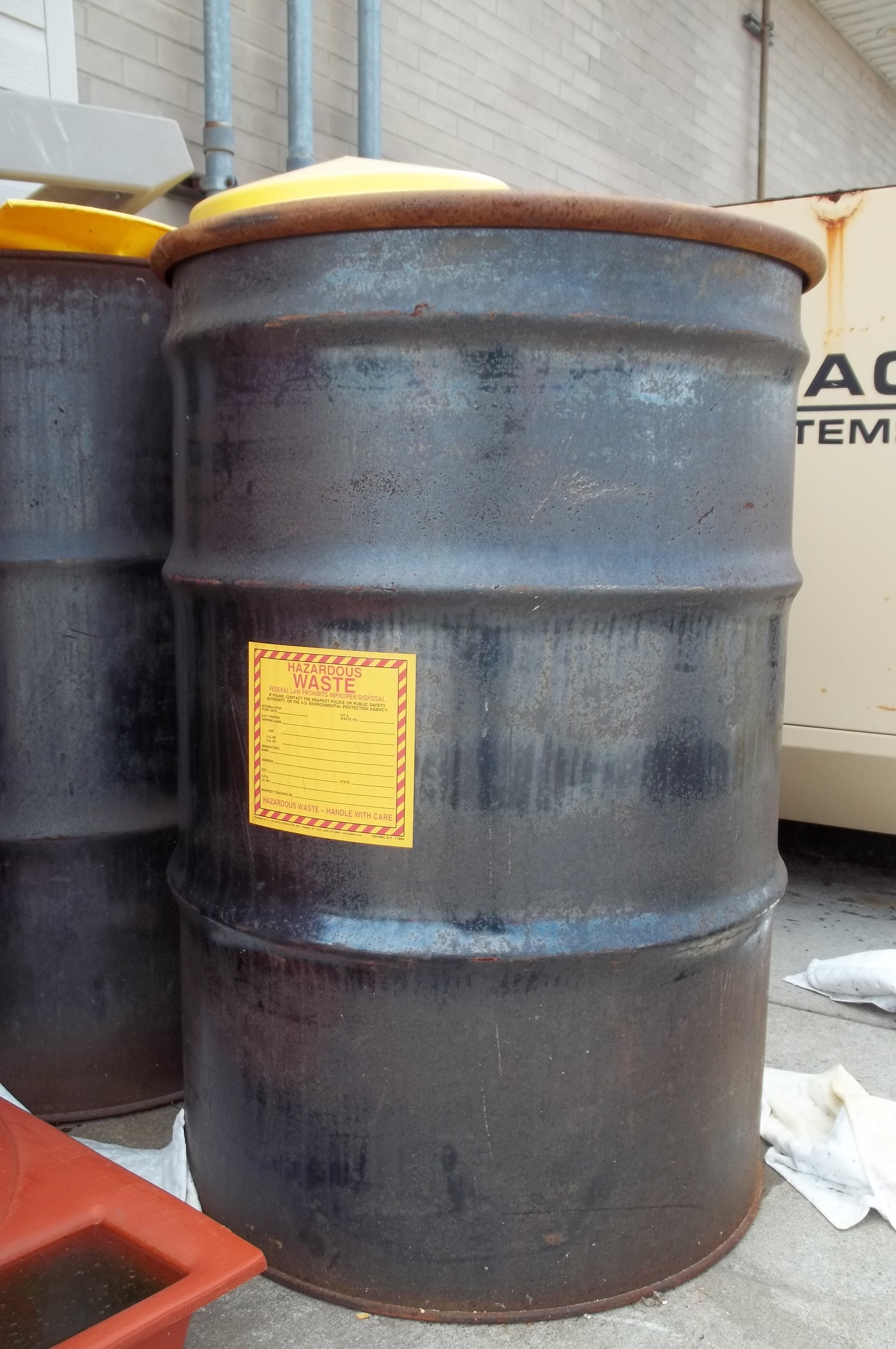
Does this look like proper management of a Universal Waste?
The labeling requirements of the first three are relatively simple (eg. “Waste Batteries” or “Universal Waste Lamps” or “Used Mercury Containing Devices” &etc.). The labeling of Recalled or Cancelled Pesticides is more challenging, if interested I recommend you read: Identification and Management of Universal Waste (slides 50-56).
Many states have added to this list of universal wastes, however I have found the labeling requirements to remain the same as these. Please check with your state to be sure.
You can be sure that the following examples are all a violation of Federal and State regulations:
“Bad Batteries”
“Spent Lamps”
“Batteries for Recycling”
And any other that isn’t one of the allowed options.
Since universal wastes have an on-site accumulation time limit of one year – and perhaps longer if necessary to facilitate disposal, confirm this with your state – you must indicate the date of initial accumulation in order to demonstrate the amount of time the universal waste has been on-site.
So, that’s two things that must be communicated:
The name of the universal waste.
Its date of initial accumulation.
The question remains, “How?”
Answering that question is the purpose of this article. (more…)
Hey! What’s on Those Trucks?
Anyone who travels the nation’s highways will see hazardous materials (HazMat) transported in commerce by some form of a motor vehicle. If in large quantities, like 5,000 gallons or more, the form of transportation will be a large tractor & semi-trailer combination vehicle. A hazardous material in transportation by motor vehicle is easily identified by the presence of placards on the vehicle (that’s assuming that the type and amount of HazMat mandates placarding and that, if required, the driver has placarded the vehicle properly). But let’s just assume that the motor vehicle you see transporting HazMat is correctly displaying each of the hazard communication methods required by the Hazardous Material Regulations (HMR) of the PHMSA/USDOT; what then? With the right information, you can detect the presence and decipher the meaning of the hazard communication methods used. The purpose of this article is to provide that information. (more…)
What are USEPA Special Wastes and the Bentsen & Bevill Wastes?
When the US Congress passed the Resource Conservation and Recovery Act (RCRA) on October 21, 1976 it did not identify hazardous waste. Instead it required the USEPA (founded December 2, 1970) to identify a hazardous waste (either by meeting a listing definition or by its characteristics) and ensure its cradle-to-grave management to prevent harm to human health and the environment. On December 18, 1978 USEPA responded to this mandate by proposing regulations for the management of hazardous waste under Subtitle C of RCRA. At this time it also proposed that certain wastes – six (6) categories of them – be deferred from management as a hazardous waste until further study could be conducted to determine the actual risk they posed to human health and the environment. This deferral was believed justified since the wastes, which came to be known as “Special Wastes”, were generated in large quantities and were believed – at the time – to pose less risk to human health and the environment than the hazardous wastes for which cradle-to-grave regulation was proposed. The “Special Wastes” proposed by USEPA were:
(Refer to the link for each of the above for more information regarding that Special Waste.)
With the ball back in their court, on October 12, 1980 the US Congress passed the Solid Waste Disposal Act Amendments of 1980. Among other changes to RCRA, the SWDA Amendments now exempted from regulation as a hazardous waste the Special Wastes identified by the USEPA in 1978. The exempted wastes became associated with the Congressmen who sponsored the amendments and thus came to be known as the Bentsen and Bevill wastes on behalf of Senator Lloyd Bentsen and Representative Thomas Bevill, respectively. Their amendments applied as follows:Cement Kiln Dust is a USEPA Special Waste
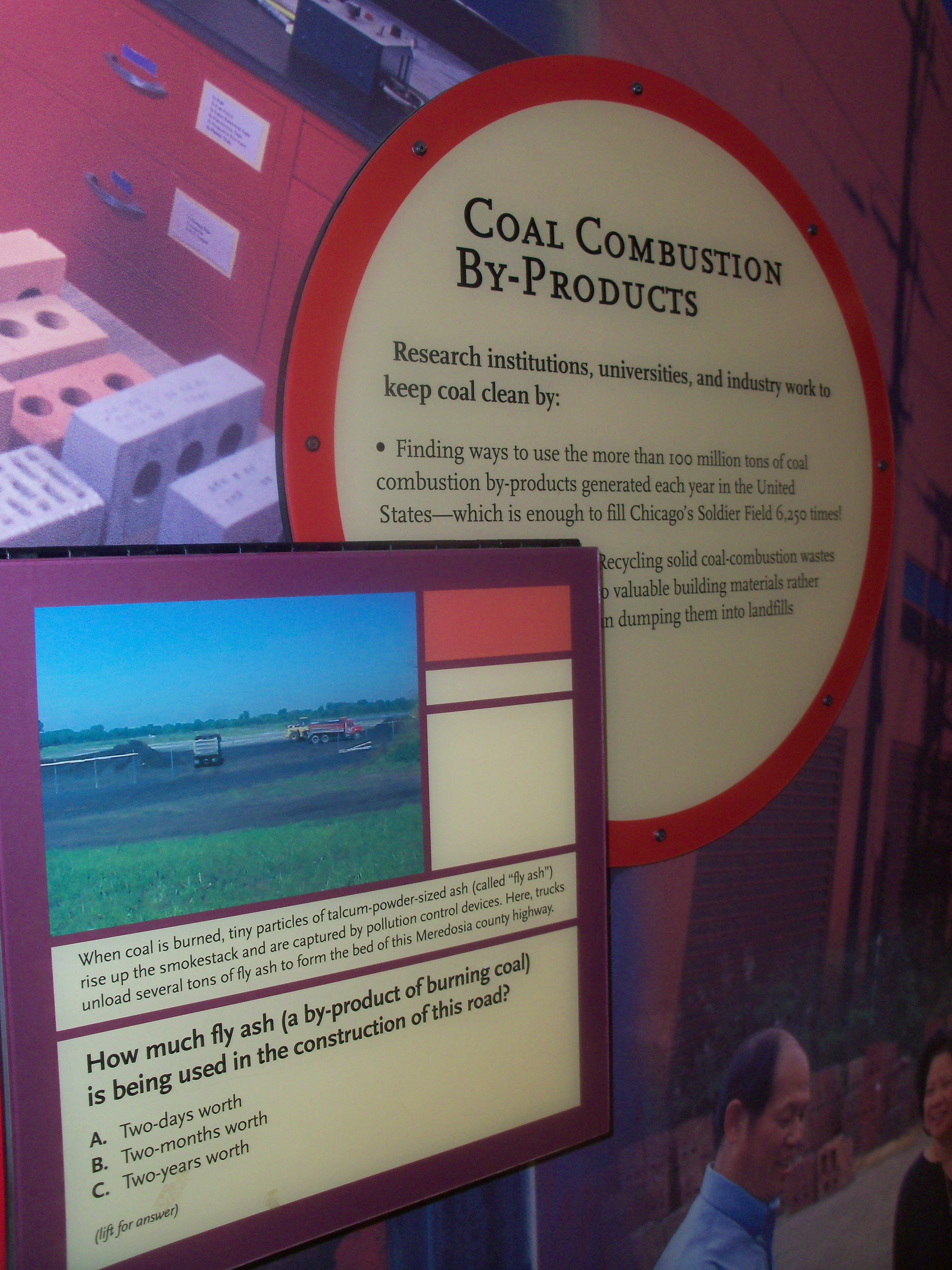
The Bevill Amendment—fly ash waste, bottom ash waste, slag waste, and flue gas emission control waste generated primarily from the combustion of coal or other fossil fuels; solid waste from the extraction, beneficiation, and processing of ores and minerals, including phosphate rock and overburden from the mining of uranium ore; and cement kiln dust. Encompassing the USEPA Special Wastes: Cement kiln dust; Mining waste, Phosphate rock mining, beneficiation, and processing waste, Uranium waste, & Utility waste (i.e., fossil fuel combustion waste). The Bentsen Amendment—drilling fluids, produced waters, and other wastes associated with the exploration, development, and production of crude oil or natural gas or geothermal energy. This amendment corresponded to the USEPA Special Waste for: Oil and gas drilling muds and oil production brines.
So…
USEPA Special Waste ≡ Bentsen and Bevill Waste
While the exemption lasted, the USEPA was required to complete a full assessment of each Special Waste and submit a formal report to Congress on its findings. The USEPA was given specific requirements for each Special Waste study and deadlines were established for submission of the final reports. After completion of each respective final report (aka: “Report to Congress”), USEPA had six months to determine if the Special Waste in question should be managed as a hazardous waste.
The exploration, production, and development of crude oil, natural gas, and geothermal energy may generate a Special Waste
USEPA issued a Report to Congress for each Special Waste between 1988 and 2002 and the final regulatory determinations have been made. With limited exceptions, the agency determined that regulation under Subtitle C was not warranted for the Bentsen and Bevill Wastes/Special Wastes. This then required the revision of Federal regulations in order to exclude, with conditions, the Special Waste from regulation as hazardous waste. These conditional exclusions can be found today at 40 CFR 261.4(b), and look like this:
Several mining wastes are Special Wastes
40 CFR §261.4(b) – Solid Wastes Which Are Not Hazardous Waste
So now you’re thinking, “Wait. There are six USEPA Special Wastes. Yet, their are only four RCRA conditional exclusions identified at 40 CFR 261.4(b). What gives?” The answer is that three of the original Special Wastes: Mining waste; Phosphate rock mining, beneficiation, and processing waste; and Uranium waste are wrapped up into one exclusion: §261.4(b)(7) Mining and Mineral Processing Wastes; which reflects how they were addressed in the Bevill Amendments of 1978.
The combustion of fossil fuels to generate energy may create a Special Waste
So that settles it, right? Well, not exactly…
Two original members of the USEPA Special Wastes that were converted into conditional exclusions at 40 CFR 261.4(b) have more recently come under increased scrutiny due primarily to two potential threats to human health and the environment that were not anticipated or investigated in the earlier Reports to Congress:
What’s next for these Bentsen and Bevill wastes? Stay tuned.
Remember, Special Wastes, though conditionally excluded from being a hazardous waste, remain a solid waste subject to State regulation under Subtitle D of RCRA.
Contact me if you have any questions about Special Wastes, or for a free RCRA Training Consultation.
Household Hazardous Waste Collection in Illinois – Fall of 2014
Hazardous waste generated by a household – including single and multiple residences, hotels and motels, bunkhouses, ranger stations, crew quarters, campgrounds, picnic grounds and day-use recreation areas – is specifically excluded from regulation as a hazardous waste at 40 CFR 261.4(b)(1), review my presentation: The Household Waste Exclusion from Definition as a Hazardous Waste [40 CFR 261.4(b)(1)]. That doesn’t mean you can – or should – throw all of your dangerous household waste into the trash. Many states and communities organize Household Hazardous Waste Collection sites as a way to gather and properly dispose of hazardous waste generated in households, and Illinois is no exception. Recently announced in the Illinois Environmental Protection Agency (IEPA) Citizens’ Bulletin (Fall 2014) are the remaining dates and locations for Household Hazardous Waste Collection Events in 2014 and the locations, hour-of-operation and phone numbers for the four (4) long-term household hazardous waste collection facilities it supports.
If you live in Illinois, desire to ensure the proper disposal of any household hazardous waste, but don’t want to hold on to it all in your basement until 2015, I suggest you do what you can to make it to one of these locations.
And don’t try to take in any waste – hazardous or otherwise – from your place of business!
Hazardous waste generated in and shipped from a household by a private citizen does not require RCRA Training or HazMat Employee Training. Such activity from a business does mandate such training. After you’ve ensured the proper disposal of your household hazardous waste, contact me for a free training consultation regarding the hazardous waste you generate at your employer.
Illinois EPA Fall Household Hazardous Waste Collection Events
The remaining household hazardous waste collections scheduled for the fall of 2014 are included below. Through household hazardous waste collections, citizens are given the opportunity to safely dispose of unused or leftover household products commonly found in homes, basements and garages.
Each one-day collection is scheduled from 8 a.m. to 3 p.m. on the specified Saturday:
September 27, 2014 Monticello, 904 Allerton Road, Piatt County
October 4, 2014 Lombard, Village of Lombard Public Works, 1051 South Hammerschmidt Avenue, DuPage County
October 11, 2014 Lincoln, County Fairgrounds, 1408 Short 11th Street, Logan County
October 18, 2014 Oregon, 421 West Pines Road, Ogle County
In addition to the above one-day collections, the Illinois EPA also continues to support the following long-term collection facilities:
Naperville, Fire Station #4, 1971 Brookdale Road, DuPage County Hours: Saturdays 9:00 AM – 2:00 PM, Sundays 9:00 AM – 2:00 PM, Phone: 630-420-6095
Rockford, Rock River Reclamation District, 3333 Kishwaukee, Winnebago County Hours: Saturdays8:00 AM – 4:00 PM, Sundays Noon – 4:00 PM, Phone: 815-987-5570
Chicago, Goose Island, 1150 North Branch, Cook County Hours: Tuesdays 7:00 AM – Noon, Thursdays 2:00 AM – 7:00 PM, and First Saturday of every month 8:00 AM – 3:00 PM, Phone: 312-744-7672
Gurnee, 1311 N. Estes Street, Lake County *Other collections are held through the Solid Waste Agency of Lake County (SWALCO). Contact SWALCO by phone: 847-336-9340 or website:www.swalco.org for more information.
Wastes Generated from the Exploration, Development, and Production of Crude Oil, Natural Gas, & Geothermal that are NOT Excluded from Regulation as a Hazardous Waste
Many wastes generated during the exploration, development, and production of crude oil, natural gas, and geothermal (E&P Wastes) are excluded from regulation as a hazardous waste pursuant to a RCRA conditional exclusion at 40 CFR 261.4(b)(5). While an earlier article listed examples of wastes generated by the crude oil, natural gas, and geothermal industry during their exploration, production, and development that are excluded from regulation as hazardous waste, there are other wastes from the same industries and similar processes that are not excluded. A list of some examples of non-exempt E&P Wastes follows:
Wastes Generated from the Exploration, Development, and Production of Crude Oil, Natural Gas, & Geothermal (E&P Wastes) that are Excluded from Regulation as Hazardous Waste
The regulations of the Resource Conservation and Recovery Act (RCRA), enforced by the USEPA and states with an authorized hazardous waste program (Does Your State Have an Authorized Hazardous Waste Program?) requires the cradle-to-grave management of all hazardous waste. For various reasons, some wastes that might otherwise be a hazardous waste are instead excluded from full regulation and allowed to be managed as non-hazardous solid waste. One group of six (6) such de-regulated wastes are known collectively as “special wastes”, and one of these six (6) are the wastes generated through the exploration, development, and production of crude oil, natural gas, and geothermal energy. The purpose of this article is to list examples of exempt E&P Wastes. A later article will identify examples of non-exempt E&P Wastes.
Certain wastes generated by the exploration, development, or production of oil or gas or geothermal resources are not hazardous waste.
A summary of the state regulations of Nevada pertaining to the management of hazardous waste, universal waste, used oil, and non-hazardous waste.
This information is provided as guidance only. Do not use to determine compliance with either State or Federal Regulations.
State Environmental Agency:
The Nevada Division of Environmental Protection (NDEP) is authorized by the USEPA to manage the regulations of the Resource Conservation and Recovery Act (RCRA) in Nevada.
The Regulations:
State regulations for the management of hazardous waste are found in the Nevada Administrative Code and the Nevada Revised Statutes.
Hazardous Waste Generator Status:
Nevada follows the Federal Rules for the definition of hazardous waste generator status:
Generate ≥1,000 kg/mo hazardous waste or >1 kg/mo acute hazardous waste or >100 kg/mo acute hazardous waste spill residue or soil = Large Quantity Generator of hazardous waste (LQG).
Generate >100 but <1,000 kg/mo hazardous waste = Small Quantity Generator of hazardous waste (SQG).
Generate ≤100 kg/mo hazardous waste and ≤1 kg/mo acute hazardous waste and ≤100 kg/mo acute hazardous waste spill residue or soil = Conditionally Exempt Small Quantity Generator of hazardous waste (CESQG).
Not sure of your hazardous waste generator status?
A Large Quantity Generator of hazardous waste and a Small Quantity Generator of hazardous waste in Nevada must have a nine-digit USEPA identification number assigned by the NDEP.
Nevada does not have state identification numbers for hazardous waste generators.
The permanent USEPA Identification Number is obtained by submitting a complete EPA Form 8700-12 “Notification of Regulated Waste Activity” application form to the Nevada Division of Environmental Protection. Application forms and instructions are provided from the U.S. EPA hazardous waste data forms internet website.
Emergency EPA Identification Numbers — Emergency EPA Identification Numbers are obtained directly from the U.S. EPA. Contact the U.S. EPA at (800) 300-2193.
Subsequent Notification — If your site already has an EPA Identification Number and you wish to change information (e.g., generator status, new site contact person, new owner, new mailing address, new regulated waste activity, etc.) use U.S. EPA form 8700-12 to submit a subsequent notification.
LQG RCRA Training – Initial training (w/i 6 months) and annual review.
SQG RCRA Training – Ensure all employees are “thoroughly familiar” with how to handle hazardous waste and how to respond to a hazardous waste emergency.
Nevada, like every other state since September 5, 2006, requires use of the Uniform Hazardous Waste Manifest for the transportation of a hazardous waste.
Nevada also has the following state-specific requirements related to the management of the Uniform Hazardous Waste Manifest:
If the Treatment, Storage, or Disposal Facility (TSDF) for the hazardous waste is outside of Nevada, the generator must mail to the NDEP a copy of the final Uniform Hazardous Waste Manifest (signed as received by the TSDF) within 30 days of the date of the TSDF’s signature. Mail the Manifest to:
Nevada Division of Environmental Protection
Bureau of Waste Management
901 S. Stewart Street, Suite 4001
Carson City, NV 89701-5249
(775) 687-9462
Reporting:
Large Quantity Generators of hazardous waste (not SQGs or CESQGs) must submit the Biennial Hazardous Waste Report by March 1st of every even-numbered year for the previous calendar year.
NDEP follows the Federal Rule at 40 CFR 262.34(c):
Limited to containers only, no tanks.
Container must be at or near point of generation of hazardous waste.
Container must be under the control of the operator of the process generating the hazardous waste.
No more than 55 gallons of hazardous waste or 1 quart of acute hazardous waste in a single satellite accumulation area.
No limit on number of satellite accumulation areas in a facility or the aggregate volume of hazardous waste maintained in satellite accumulation areas.
Container must be labeled with the words “Hazardous Waste” or some other description of the container contents, eg. “Paint Waste”.
May have more than one container in a single satellite accumulation area.
May have more than one type of hazardous waste in a single satellite accumulation area.
When 55 gallon or 1 quart volume threshold is reached, hazardous waste container must be immediately dated. Generator is allowed three calendar days to move the hazardous waste container from the satellite accumulation area to the central accumulation area (aka: 90/180 day accumulation area). Once moved to the central accumulation area, the generator may re-date the container and accumulate it on-site for the number of days appropriate for their hazardous waste generator status.
Container in satellite accumulation area must be kept closed except when adding or removing hazardous waste. Container must be maintained in good condition.
Containers in satellite accumulation areas are not subject to the following:
Training requirements for facility personnel, though training is still highly recommended.
Weekly container inspections, though recommended.
RCRA air emission standards of 40 CFR 265, Subpart CC.
Hazardous waste managed correctly in a satellite accumulation area is not subject to on-site accumulation time limits.
Hazardous waste managed in a satellite accumulation area continues to be counted towards a generators hazardous waste generator status.
Management of Solvent-Contaminated Wipes:
NDEP intends to adopt by reference the USEPA exclusion for solvent-contaminated wipes.
Pursuant to a conversation with the University of Nevada Environmental Program representative on September 12, 2014, NDEP intends to adopt the Federal exclusion in its current form at its next regularly scheduled legislative session in September or October 2015. In the interim, a company must conduct a hazardous waste determination for its solvent-contaminated wipes and manage them according to the hazardous waste regulations.
Use of State-Certified Labs for Hazardous Waste Determination:
Pursuant to Nevada Revised Statutes @ NRS 459.502, NDEP requires the use of state-certified labs for analysis completed as part of the hazardous waste determination: NDEP Laboratory Certification Program. The link to the Nevada Certified Lab List is in the middle of the page.
Reporting of Spills, Releases and Emergencies:
Be sure to manage hazardous waste according to State and Federal Regulations
Reporting spills in-state: 1-888-331-6337
Out of state: 1-775-687-9485
Non-Hazardous Waste:
In Nevada, a non-hazardous industrial waste must be managed on-site in a manner that does not cause harm to the environment or create a nuisance. In addition, non-hazardous industrial waste must be disposed of in a state-approve or RCRA permitted facility.
Do you have a question about some aspect of the Nevada hazardous waste regulations that you don’t see here? Please ask me. I’m glad to help.
Join the NDEP mailing list to receive notification of its public notices, hearings, workshops, and events relating to hazardous waste management in Nevada Hazardous Waste Electronic Email List
Free Technical Assistance is available for hazardous waste generators in Nevada from the Nevada Small Business Development Center Business Environmental Program:
Las Vegas (702) 866 5927
Reno (775) 834-3674
In-state Toll Free (800) 882 3233
Bulk Packaging for HazMat Explained!
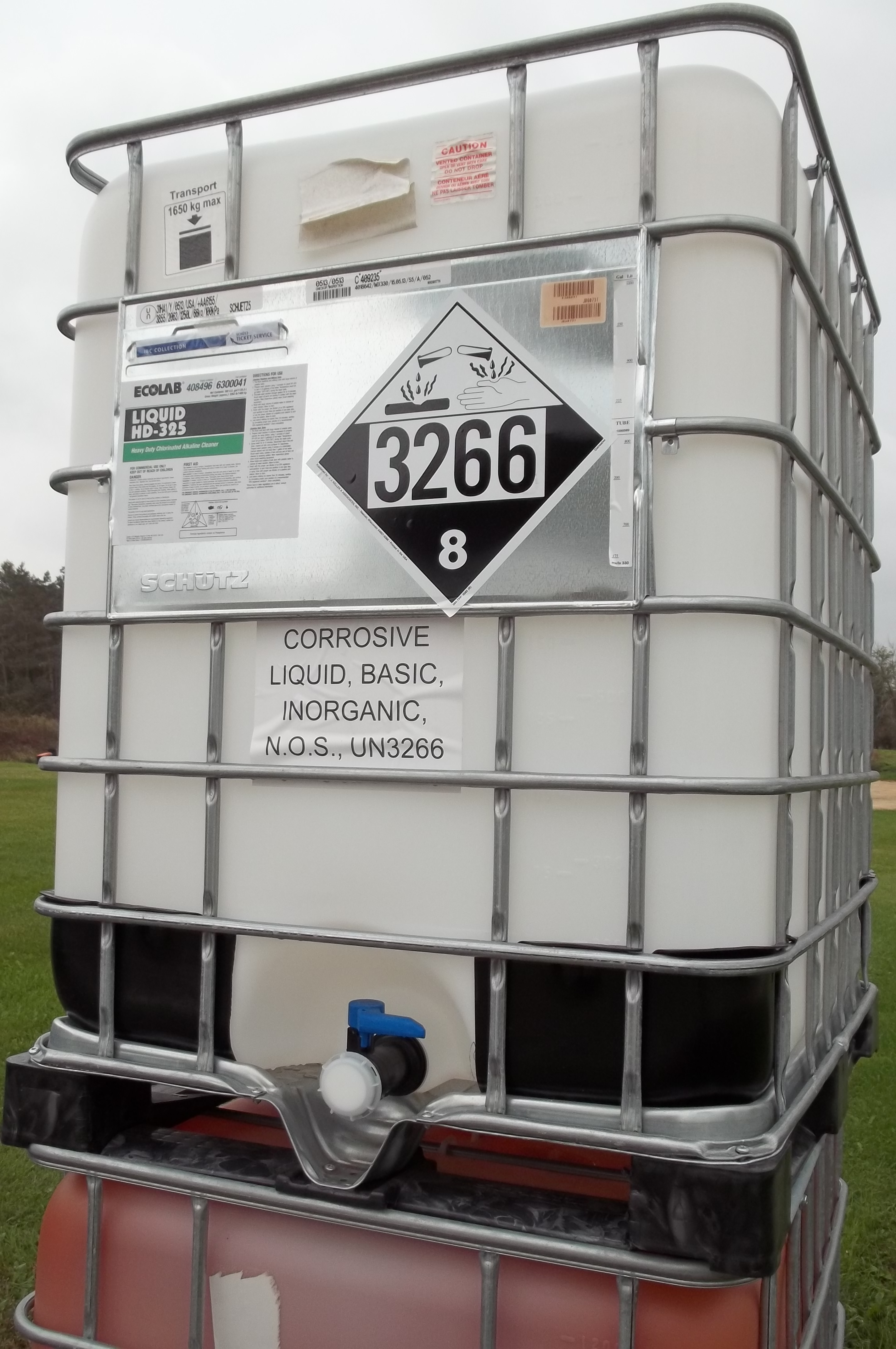
While there are many different types of HazMat packaging, all of them fall into one of two categories: bulk or non-bulk. The purpose of this article is to define and explain both bulk and non-bulk packagings pursuant to the Hazardous Materials Regulations (HMR) of the Pipeline and Hazardous Materials Safety Administration within the U.S. Department of Transportation (USDOT/PHMSA).
An Intermediate Bulk Container (IBC) is an example of a bulk packaging.
$2.5 Million Penalty to Settle Alleged Violations of RCRA, CAA, & CWA at Shreveport, LA Wastewater Plant
The Bullet:
Houston-based CCS (USA) Inc. and several of its operating subsidiaries will pay a $2.5 million civil penalty relating to operations at its Shreveport, Louisiana, industrial wastewater treatment plant, the Department of Justice, U.S. Environmental Protection Agency (EPA) and the state of Louisiana announced today. The settlement will resolve violations of the Clean Water Act, the Clean Air Act and the Resource Conservation and Recovery Act (RCRA). The $2.5 million civil penalty will be split evenly between the United States and state of Louisiana. The stipulation of settlement, filed in the U.S. District Court for the Western District of Louisiana, is subject to a 45-day public comment period and approval by the federal court.
Who:
From Wikipedia:
CCS Midstream Services, a Calgary, Alberta company is an operating company of Tervita (formerly CCS Corporation). Tervita has customer service facilities operating in Saskatchewan, Alberta and British Columbia and has become the largest company in Western Canada specializing in treatment, recovery and disposal of petroleum by-products.
CCS (USA) Inc. is a U.S. Branch of the Canadian company. Its headquarters are in Houston, TX.
What:
Violations of the environmental regulations of this sort can impact air, land, and water. The fine reflects the severity of the environmental impact and its breadth.
Where:
CCS Corporation (Tervita) is based in Calgary, Alberta in Canada.
UCS (USA) Inc. is based in Houston, TX.
The site of the alleged RCRA violations is a wastewater treatment plant in Shreveport, LA.
When:
CCS purchased the Shreveport, LA facility in 2006. At the time of the sale the USEPA and the Louisiana Department of Environmental Quality discovered the violations. The former owner of the site was sentence to a five-year prison sentence for the violations. CCS ceased wastewater treatment operations at the site at that time (~2006) and began removal of hazardous waste illegally stored on-site under the supervision of the USEPA.
USEPA news release date July 10, 2014.
Why:
The improper treatment, storage, and disposal of waste – especially hazardous waste – can cause significant environmental damage and affect the health and safety of people impacted by it. It is the purpose of the Resource Conservation and Recovery Act – and other Federal and State regulations – to prevent damage to human health and the environment through the improper management of waste.