PO Box 1232 Freeport, IL 61032

A Different Kind Of Training

A Different Kind Of Training

A Different Kind Of Training

DOT Chart 17 Banner

Quick Take: USDOT/PHMSA Releases DOT Chart 17 July 08, 2021. Replaces DOT Chart 16.

USDOT/PHMSA (the Pipeline and Hazardous Materials Safety Administration within the U.S. Department of Transportation) released the DOT Chart 17 – Hazardous Materials Markings, Labeling and Placarding Guide on July 08, 2021.

It replaces the DOT Chart 16 issued in August of 2017.

The purpose of the DOT Chart 17 is to assist shippers, carriers, and other stakeholders to quickly access information regarding hazardous materials markings, labels and placards.

Changes from the DOT Chart 16 to DOT Chart 17 are:
  • A new color scheme.
  • Hazardous Materials Markings:
    • Identification number display per 49 CFR 172.332 now includes the option of the white square-on-point configuration.
    • Removal of the Lithium Battery Handling Label. Transition to the Lithium Battery Handling Mark completed January 01, 2019 per §173.185.

Read: Lithium Battery Handling Label v. Lithium Battery Handling Mark

    • Removal of the ORM-D Consumer Commodity mark. Removal of the consumer commodity exception and required mark complete on January 01, 2021 per §172.316.
    • Inclusion of the Biohazard mark per §172.323.
    • Inclusion of the mark for petroleum sour crude oil in a bulk packaging per §172.327.

Like this article?

Subscribe to my Monthly Newsletter

No marketing emails!

  • Hazardous Materials Warning Labels:
    • Removal of “NEW” indicator for Class 9 Lithium Battery label. Its use for applicable packages of lithium batteries has been mandatory since January 01, 2019.
    • Removal of the optional display of the Class 9 Miscellaneous label. As of 01.20.21 there is only one option for display of the Class 9 Miscellaneous label.

Read: USDOT/PHMSA Revision to the Class 9 Label

  • Hazardous Materials Warning Placards: No changes.
  • General Guidelines on use of Warning Labels and Placards
    • Identification number display per §172.332 now includes the option of the white square-on-point configuration.

The DOT Chart 16 (now 17!) is a great tool to use in HazMat Employee Training and as a visual reminder of compliance once training is complete.

Daniels Training Services, Inc.

815.821.1550

Info@DanielsTraining.com

https://danielstraining.com/

Optional display of Class 9 label

Quick Take: USDOT/PHMSA Revision to Class 9 Miscellaneous Label

The Bullet:

Effective January 20, 2021 there are no longer two options for display of the Class 9 Miscellaneous label. As of o1.20.21, the only acceptable Class 9 label design is that without the horizontal line running across the label at its midpoint.

More information:

This change is to the Hazardous Materials Regulations (HMR) of the Pipeline and Hazardous Materials Safety Administration within the U.S. Department of Transportation (USDOT/PHMSA). The final rule was published in the Federal Register at 85 FR 83381, Dec. 21, 2020.

In a final rule published July 20, 2011, HM-218F [76 FR 43510], USDOT/PHMSA revised the Class 9 label design mandated in 49 CFR 172.446(a) by removing the horizontal line running across the label at its midpoint. This line had been previously required to harmonize with international standards and avoid delays or frustration of shipments. This new labeling requirement was to go into effect on August 19, 2011; however, to deplete existing stocks of labels with this horizontal line, USDOT/PHMSA provided at §172.446(c) that labels meeting the requirements in effect before August 19, 2011 could continue to be used until October 1, 2014. That transition period has since expired.

Furthermore, in §172.446(b), USDOT/PHMSA provided the option of using a solid horizontal line dividing the lower and upper half of the label consistent with the transition period specified in §172.446(c). However, with the expiration of the transition period, the solid line is no longer optional or allowed. Therefore, USDOT/PHMSA deleted the last sentence in §172.446(b), which indicated the solid line was optional.

This revision harmonizes the HMR with the international regulations (indicated below) that already mandated the display of the Class 9 label without the horizontal line across the midpoint.

  • Dangerous Goods Regulations of the International Air Transport Association (IATA) at 7.3.18.1.
  • The Dangerous Goods Code of the International Maritime Organization (IMO) at 5.2.2.2.2.

Contact me with any questions you may have about the transportation of hazardous materials by air, highway, vessel, or rail

International and Domestic

Daniels Training Services, Inc.

815.821.1550

Info@DanielsTraining.com

https://danielstraining.com/

Conclusion:

If you have any Class 9 Miscellaneous labels that have the horizontal line across the midpoint, throw them away. As of January 20, 2021 they are no longer allowed under any circumstances to be used as hazard communication for a hazardous material or dangerous good in transportation.

Q&A: Can I combine two or more HazMat in the same packaging?

Question – September 27, 2020

Subject: Mixed hazmat in same packaging

What are the rules for shipping compatible hazardous materials having different hazard classes packed within the same packaging?
What are the quantity limits per package?

I do not find a regulatory reference in 49 CFR for shipping mixed hazmat in the same package. Does such a rule exist?

Thanks!

Daniels Training Services, Inc.

815.821.1550

Info@DanielsTraining.com

https://danielstraining.com/

My reply (10.06.20):

Thank you for contacting me. I apologize for my delay. Please see below.

This reply is based on the Hazardous Materials Regulations (HMR) of the Pipeline and Hazardous Materials Safety Administration within the U.S. Department of Transportation (USDOT/PHMSA).

  • The HMR allows for mixed contents of hazardous materials (HazMat) in a packaging.
  • 49 CFR 173.24(e)(4) indicates the requirements for compatibility of mixed contents of hazardous materials (HazMat) in a packaging. In summary, it forbids HazMat to be packed or mixed together in the same outer packaging (HazMat or non-HazMat) if the materials are capable of reacting dangerously.
  • §173.24a(c) specifies the requirements for the inner and outer packagings when a non-bulk packaging contains mixed contents of HazMat.
  • Per package quantity limits only apply if transport is by air. The per package quantity limits by air are indicated in column 9A & 9B of the Hazardous Materials Table. Usually transport by air is done subject to the Dangerous Goods Regulations of the International Air Transport Association (IATA). If so, the IATA Dangerous Goods Regulations differ from the USDOT/PHMSA HMR.

Read: Calculating the “Q” Value for Different Dangerous Goods in a Single Outer Packaging (All Packed in One) for Transport by Air

  • §172.404(a) requires a package containing compatible hazardous materials having different hazard classes to display the HazMat label for each HazMat in the package.
  • A letter of interpretation LOI 09-0307 mandates the following:
    • The package marks for each HazMat in the package must be displayed.
    • Each HazMat in the package must be described separately on the shipping paper.
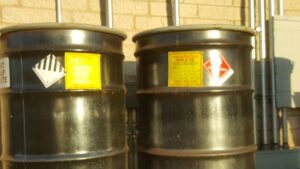
  • Drums of Hazardous Waste§173.12(b) provides an exception whereby a generic description from the Hazardous Materials Table may be used in place of specific chemical names, when two or more chemically compatible waste materials in the same hazard class are packaged in the same outside packaging. This exception however only applies to lab packs of hazardous waste.

I hope this helps. Please contact me with any other questions.

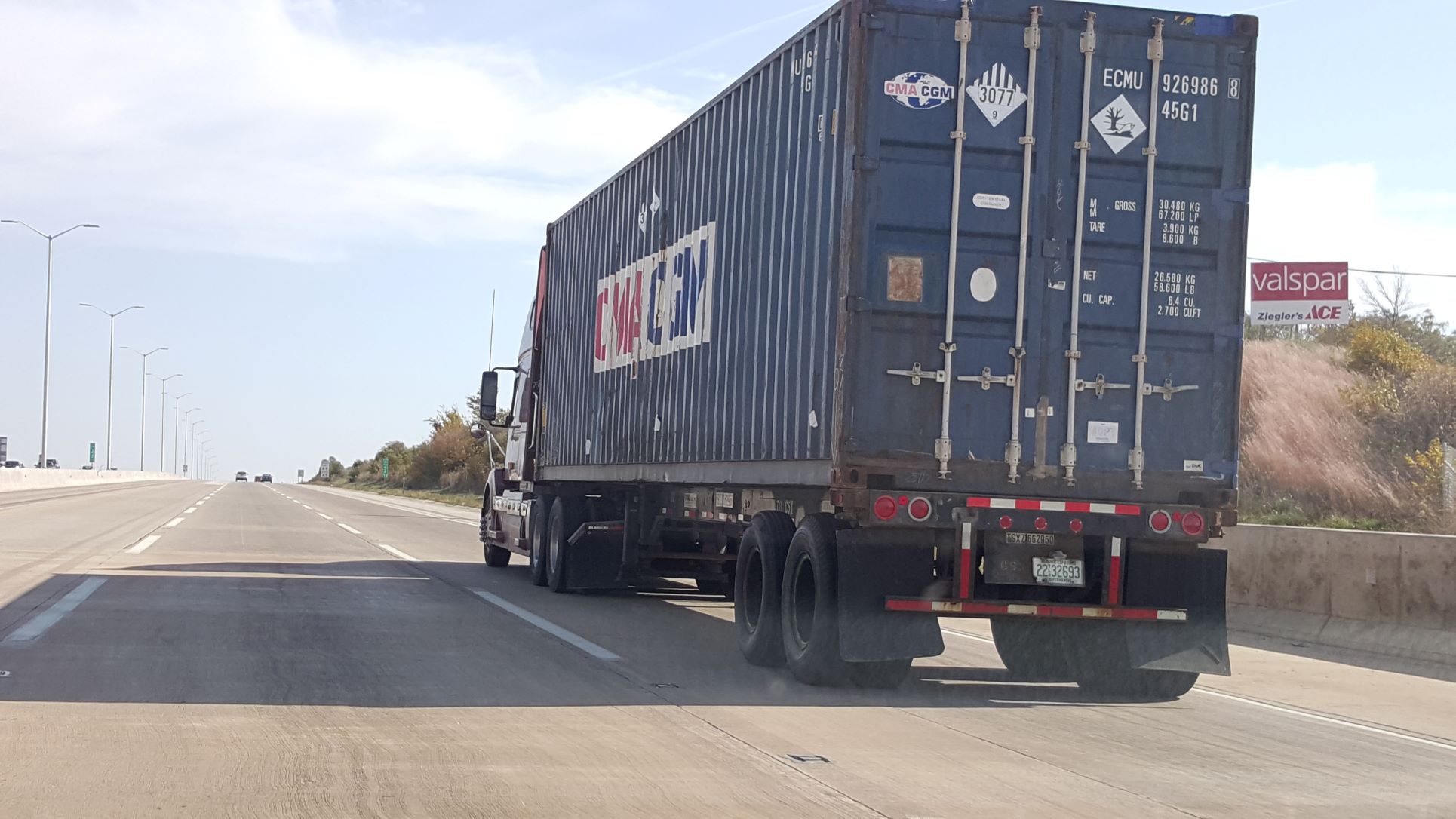
Placarded freight container

Q&A: Who is responsible for removing the placards from a freight container once transport of HazMat is complete?

It all began with a telephone call on November 18, 2020:

We receive hazardous materials delivered to our facility in a freight container. The freight container displays the required placards. The carrier deposits the freight container at our facility and departs. We unload the HazMat from the freight container over the next few hours. When making the next delivery the carrier retrieves the now empty freight container and take it I know not where.

cargo transport unit
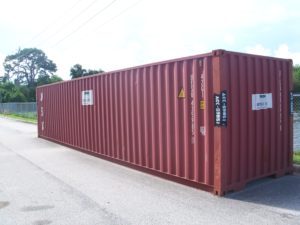
A freight container

It is been an ongoing argument with the carrier as to who is responsible for removing the placards from the empty freight container. They are displayed so high on the freight container that any effort by us to remove or deface them requires use of a ladder and safety issues we don’t wish to deal with. The driver refuses to remove the placards. The carrier will not pick up the empty freight container unless all of the placards are removed or covered up.

What are our options? Can the empty freight container be transported with the placards displayed? Are we responsible for removal of the placards? Or, is it the responsibility of the driver / carrier?

Please help us resolve this issue!

My reply:

Thank you for contacting me. Please see below for guidance:

  • Unfortunately, there are no clear directions in the hazardous Materials Regulations (HMR) to indicate who is responsible for the removal of hazard communication (e.g., placards, marks, labels) from any HazMat packaging or the freight container. However, 49 CFR 171.2 requires all forms of hazard communication to be removed from a package or vehicle if the HazMat is no longer present. Thus, all placards must be removed prior to transportation of the empty freight container. (LOI 03-0251)
  • Most responsibilities for the preparation of a HazMat and its packaging for transportation fall on the shipper (aka; the person who offers or the offeror of the HazMat). In this situation the empty freight container is being re-offered for transportation. It is the person who re-offers it for transportation that must ensure any existing placards not applicable to the current load are removed. (LOI 05-0050)

So…

  • The placards must be removed prior to transportation of the empty freight container.
  • This must be done by the person who re-offers the freight container for transport (i.e., the shipper).

Answer: It depends. Whoever arranges for the transport of the freight container once empty is the shipper and is therefore responsible for removal of the placards unless they have an agreement with someone else, e.g., the carrier or some other third party, who will perform all the responsibilities of the shipper or just that specific function.

It is not a clear-cut answer, but I think it is all we will get.

Like this article?

Subscribe to my Monthly Newsletter

No marketing emails!

Conclusion:

Unfortunately, the requirements, responsibilities, and directives of the HMR are not always clear. In this situation, it hinges on one question: “Who is the shipper?” If you are the shipper of a HazMat, the carrier, or simply receive HazMat, you are subject to the regulations of the USDOT/PHMSA and require some form of HazMat Employee training.

Shipper's Declaration for Dangerous Goods

FAQ: What articles or substances do not require a “Shipper’s Declaration for Dangerous Goods”?

Per Section 8 – Documentation of the International Air Transport Association (IATA) Dangerous Goods Regulations, a “Shipper’s Declaration for Dangerous Goods” must be completed by the shipper of each consignment of dangerous goods, except for the following:

  • UN3164, Articles, pressurized, hydraulic (see Packing Instruction 208(a)).
  • UN3164, Articles, pressurized, pneumatic (see Packing Instruction 208(a)).
  • UN3373, Biological substance, Category B (see Packing Instruction 650).
  • UN1845, Carbon dioxide, solid (Dry ice) when used as a refrigerant for other than dangerous goods (see Packing Instruction 954(c)).
  • Dangerous goods in excepted quantities (see 2.6.8).
  • UN3245, Genetically modified organisms, Genetically modified microorganisms (see Packing Instruction 959).
  • Lithium ion or lithium metal cells or batteries meeting the provisions of Section II of Packing Instructions 965-970.
  • UN2807, Magnetized material (see Packing Instruction 953).
  • Radioactive material, excepted packages (RRE) (see 10.5.8).

Contact me with any questions you may have about the transportation of hazardous materials by air, highway, vessel, or rail

International and Domestic

Daniels Training Services, Inc.

815.821.1550

Info@DanielsTraining.com

https://danielstraining.com/

Q&A: Are my alcohol wipes subject to USDOT Regulations?

A question asked on December 09, 2020:

Hello,

I found your article The Classification of Alcohol Wipes, and was hoping you could clarify for me:

We currently have these classified as a class 4.1 packing class II. We have been requiring our driver to placard when this item is over 1000 lbs.

I think I am reading your article correctly, that since these are in sealed packages, AND there is no free liquid, it is not regulated by the DOT. Is that correct? If so, there may be very little free liquid in the package, would that change it?

One more thing, does the size of the sealed roll change anything?

I greatly appreciate your help on this.

Thanks,

Daniels Training Services, Inc.

815.821.1550

Info@DanielsTraining.com

https://danielstraining.com/

My reply the same day:

Thank you for contacting me. Please see below.

  • If your product is classified as UN 3175, Solids containing flammable liquid, n.o.s., 4.1, II and meets the conditions of the special provision 47 it is not subject to USDOT regulations for its transportation within the U.S. No placards or any other hazard communication required.
  • Special provision 47 requires:
    • Small inner packagings consisting of sealed packets and articles.
    • Sealed packets or articles contain less than 10 mL of a Class 3 Flammable Liquid, e.g., ethanol, isopropanol, in Packing Group II or III.
    • Class 3 Flammable Liquid is absorbed onto a solid material (i.e., the wipe).
    • No free liquid in the packet.
  • Free liquid in the packet – even “very little” – does not meet the conditions of the special provision which requires: “…no free liquid”
  • The special provision does not limit the size of the inner packaging, only the amount of liquid it contains (10 mL).

I hope this helps. Please contact me with any other questions.

Like this article?

Subscribe to my Monthly Newsletter

No marketing emails!

Conclusion:

A good example where a shipper of a hazardous material is complying with the USDOT/PHMSA Hazardous Materials Regulations (HMR), but is doing more than is required. Compliance is necessary, but if an exception to full regulation is available – as is the case here – then the shipper may be able to save significant amounts of money by taking advantage of that exception. Don’t miss out on the exceptions to the HMR available to you! Contact me with questions.

40 CFR 262.17(a)(7)(i)(A)

FAQ: Is online training allowed for facility personnel of a large quantity generator of hazardous waste?

Answer: Yes.

The Generator Improvements Rule made a technical change to the regulations for personnel training at a large quantity generator of hazardous waste (LQG). This change to 40 CFR 262.17(a)(7)(i)(A) was made by the U.S. Environmental Protection Agency (USEPA) to bring the hazardous waste personnel training regulations up to date with existing industry practices.

Therefore, USEPA revised the regulations to allow a LQG to use online computer training in addition to classroom instruction and on-the-job training. The regulations include examples of online training: computer-based or electronic.

Contact me with any questions you may have about the generation, identification, management, and disposal of hazardous waste

Daniels Training Services, Inc.

815.821.1550

Info@DanielsTraining.com

https://danielstraining.com/

40 CFR 262.17(a)(7)(i)(A):

(7) Personnel training. (i)(A) Facility personnel must successfully complete a program of classroom instruction, online training (e.g., computer-based or electronic), or on-the-job training that teaches them to perform their duties in a way that ensures compliance with this part.

Read: Personnel Training for Hazardous Waste Generator

Personnel Training for Hazardous Waste Generator

The employees (aka: personnel) of a large quantity generator of hazardous waste (LQG) must successfully complete initial training with an annual review. Regulations of the U.S. Environmental Protection Agency (USEPA) mandate such training be provided in order for the LQG to maintain its exemption from regulation as a treatment, storage, or disposal facility (TSDF) of hazardous waste.

The purpose of this article is to explain the Federal regulations of the USEPA at 40 CFR 262.17(a)(7) for training of personnel at a large quantity generator of hazardous waste. (more…)

Q&A: Is an emergency response telephone number required?

A question received October 16, 2020:

Hello, my name is <<Name>> at <<Company>> in <<City, State>> a freight forwarder.

I found an article regarding CANUTEC you wrote, and I am writing this email because I need your help.

We have several hazmat import containers that containing butane steel cartridges, and SM Line, ocean carrier requested “24hrs emergency contact” on the IMO/Multimodal DG Form in one of the four companies below for inland rail transportation.

Chemtrec, Infortace, Chemtel, Canutec

We have handled the exact same cargo for 3~4years with other carriers, but never had like this problem.

I don’t know what to do, so please let me know if there is any way you can help me.

HAZMAT INFO:

  • UN 1075
  • PETROLEUM GASES, LIQUEFIED
  • CLASS 2.1, F-D, S-U
  • 54,120 STELL CYLINDERS IN 4,510 FIBERBOARD BOXES

Thank you!

My reply that same day:

Thank you for contacting me. I can assist you. Please see below.

  • The Hazardous Materials Regulations of the USDOT/PHMSA require the shipper (the person who “offers” a hazardous material for transportation) to provide the following to the carrier:
    • Emergency response information for the HazMat in transportation. (More on this below).
    • Emergency response phone number that will reach a person who is knowledgeable about the HazMat in transportation and has knowledge of the emergency response procedures.
  • The following is required of the emergency phone number:
    • Displayed clearly on shipping paper.
    • Will be answered by a person (not a machine) 24/7 whenever the HazMat is in transportation.
      As noted above, person must be knowledgeable about the HazMat and about emergency response.

Or…

    • If not knowledgeable, has immediate contact with a person who is.
  • The emergency phone number may be either of the following:
    • One of the commercial services indicated in your email (you must pay them a fee and provide them with information about your HazMat).
    • Some other person (e.g., an employee) if they can meet the requirements for knowledge and availability.
  • This is not a new regulation. It is possible you did not have this issue in the past because the carrier provided the emergency phone number or it was overlooked.
  • Please read:

I hope this helps. Please contact me with any other questions.

Contact me with any questions you may have about the transportation of hazardous materials by air, highway, vessel, or rail

International and Domestic

Daniels Training Services, Inc.

815.821.1550

Info@DanielsTraining.com

https://danielstraining.com/

That seemed to be all he needed to know:

Thank you for your help 🙂 I should learn a lot about Hazmat things.

Conclusion:

It’s not uncommon for a shipper of HazMat to be unfamiliar with all of their regulatory responsibilities. The Hazardous Materials Regulations of USDOT/PHMSA can be difficult to read and understand. This person was wise enough to ask for help. I’m glad I was able to help them.

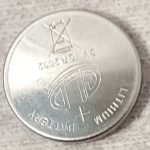
lithium metal button cell battery installed in equipment

Q&A: How do I mail a product containing a lithium metal button cell battery?

A question received September 23, 2020:

Hi Daniel,

I just stumbled across your website and specifically this article: March 6, 2019: USDOT Changes Regulations for Transport of Lithium Batteries

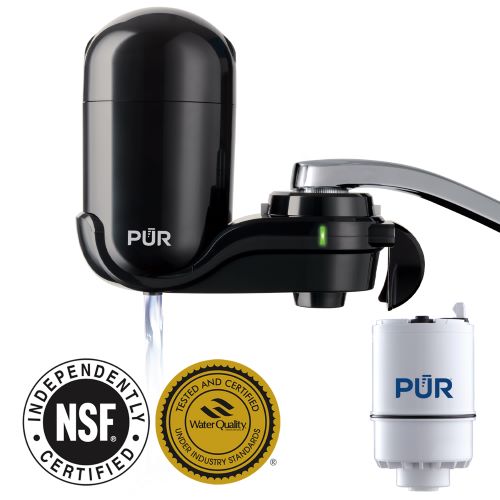
I am trying to mail a water filter like the one in the image I attached.lithium metal button cell battery installed in equipment

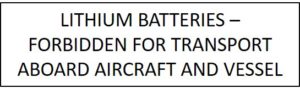
When it showed up to me it had some of the UN stickers and said “forbidden for transport by air or vessel”. It does have some type of battery in it to monitor when the filter life is up.

My question is, do I need to provide one of the UN stickers on the attached image to mail it with USPS? I’m just confused if the stickers are only required for mailing batteries themselves, or if the stickers are required when there is just a battery inside the unit.

Thank you!

My reply that same day:

I will try to answer your question. Please see below.

  • To give a complete answer the size and type of the lithium cell or battery must be known.
  • However, based on the image I will presume the following:
    • It is a cell and not a battery due to its presumed size and function in the equipment. Specifically, it is a button cell.
    • It is, as you indicate, contained in the equipment it is meant to power when in it is in transportation.
    • It is a lithium metal cell and not lithium ion since it is unlikely to be rechargeable as lithium ion batteries usually are.
    • It is a “smaller” lithium metal cell. That is, it has a lithium content of no more than 1 gram if a cell and no more than 2 grams if a battery.
  • The equipment and battery must be packed securely in a good outer packaging.
  • It is not subject to any other USDOT regulations for transport within the U.S. as long as my above presumptions are correct. There is no requirement for any marks or labels on the package.
  • If the battery is packed by itself more stringent regulations apply.
  • Please refer to U.S. Postal Service (USPS) regulations.

I hope this helps. Please contact me with any other questions.

His reply the next day (09.24.21):

Lithium metal button cell batteryThank you very much for your quick reply. I have a second one of these that I cracked open to find the battery. It is a button battery about the size of a nickel, so this would NOT require any markings on the package? And for the one I will be mailing the battery will be inside the unit just as it was from the manufacturer.

What would be a normal consumer product that would require the markings when shipping? Something like an iPhone?

Thank you for the USPS website reference!!

That same day I had an answer:

Please see below.

The transportation of lithium batteries (all batteries) is very complicated. Please be advised that I am providing only general guidance.

  • If you are shipping the batteries as part of a business you are subject to more strict penalties.
  • In general:
    • “Smaller” lithium cells or batteries (those typically used in consumer devices) are subject to less regulation.
    • Lithium cells or batteries packed and shipped in the equipment they are meant to power are subject to less regulation.
    • A button cell battery contained in the equipment it is meant to power is subject to very little regulation other than safe packaging.
    • The battery in an iphone – and most other consumer items – is smaller and therefore subject to little regulation. However, it is still subject to more regulation than a button cell contained in the equipment it is meant to power.
    • The requirement for the lithium battery mark depends on the number of factors:
      • All “smaller” lithium cells or batteries packed alone or with – but not in – the equipment they are meant to power require the display of the lithium battery mark.
      • The lithium battery mark is never required for “smaller” button cells or batteries contained in equipment (your situation).
      • For other “smaller” lithium cells or batteries contained in equipment, e.g., an iPhone, the lithium battery mark must be displayed if any of the following is true:
        • More than 4 cells in a package or more than 2 packages in a consignment.
        • More than 2 batteries in a package or more than 2 packages in a consignment.
    • The mark forbidding all air and vessel transport or forbidding just passenger aircraft depends on more complicated review of regulations. Regardless, it does not apply to your situation.

Please contact me with any other questions.

The questioner wanted clarification for their specific situation:

Thank you!

So since I am just mailing one unit, with a button cell battery contained inside the equipment, I should not include any markings on the package is what I am concluding from your bullet points, correct?

My reply:

Based on the information provided, that is correct.

He was grateful:

Thank you for your time!

Conclusion:

The USDOT/PHMSA Hazardous Materials Regulations (HMR) regarding the transportation of lithium batteries of any size and any configuration are very complicated. Any time I’m asked a question I make certain to go back to the most current edition of the HMR to confirm my answer. Don’t rely on hearsay or outdated regulations! Make sure you get it right.


Search Website