
In the front office, break room, shop floor, and the back of the glove compartment in your car, you’re sure to find those neat individual packets of alcohol wipes. Small towelettes soaked in alcohol – usually isopropanol or ethanol – they’re handy to have around for small clean-ups. But how are they transported? The purpose of this article is to provide guidance in the classification of alcohol wipes for the purposes of transportation and to identify and explain an exception to the Hazardous Material Regulations (HMR) of the USDOT/PHMSA. (more…)
The Classification of Alcohol Wipes
The Regulations of the e-Manifest System
The e-Manifest System is designed and almost entirely – not quite, still waiting on another piece of legislation and regulation that will determine how to pay for it – created by EPA to replace the current paper-b0und system. It’s run into a few snags, missed a few deadlines, and is currently scheduled for implementation in Spring of 2018. But honestly, given the recent presidential election, the future of all pending legislation is uncertain. Check out this simple infographic on the timeline of the e-Manifest System.
The purpose of this article is to identify and explain the new regulations created in order to implement the e-Manifest System.
Q&A: Hazardous Waste Determination for Lab Waste
A question from a former customer of mine on June 14, 2016:
Hello again Dan,
I’m sorry to bother you with another question but I’m having trouble deciphering this information. I’m looking to do some lab tests. I was first reviewing the SDS for the reagents involved and two include hazardous waste disposal.
The Peroxydisulfuric Acid, Dipotassium Salt in the Metals Prep set Reagent B and potassium cyanide in Lead TNT Reagent Vial. (Safety Data Sheets were attached to the email)
Could you please explain disposal considerations for both of these (how they must be disposed of and why). Is there any quantity guidelines (like you told me about As)?
Once again I greatly appreciate your help!
I replied a few days later on June 16th:
I will try to answer your questions and provide the answers you need.
- The Safety Data Sheet (SDS) is authorized and required to be used by OSHA, the Occupational Health and Safety Administration. While its information can be useful, it is not authorized by the USEPA. Specifically, sections 1 through 11 and 16 of the SDS are authorized and required by OSHA. Sections 12 through 15 – including section 13 Disposal Considerations – is not authorized or required by OSHA. Information in these unauthorized sections of the SDS is provided voluntarily the manufacturer and may not be relied upon for compliance.
- The generator of a waste must determine if a waste is hazardous and then manage it properly from “cradle-to-grave.”
- Based on the information on the SDS for the product Metals Prep Set Reagent B it is 100% Potassium persulfate and an oxidizer. If it retains the characteristic of an oxidizer at its point of generation as a waste, i.e. when you discard it, then it will be a hazardous waste for the characteristic of Ignitability (D001).
- Based on the information on the SDS for the product Lead TNT Reagent Vial it contains 60-70% potassium cyanide which is a p-listed material. It may be a p-listed hazardous waste if it is disposed of unused. If it is used then the P-code will not apply. It is also possible – but unlikely – that it could also be a hazardous waste for the characteristic of Reactivity (D003) if it emits cyanide gas at toxic levels.
Summary:
While the SDS can be a good source of information, it is not the final word on the determination of whether or not a waste is hazardous. It is important to note that the SDS describes an unused product and may not be an accurate description of that product when it becomes a waste.
The responsibility for the hazardous waste determination is solely the generator’s.
I hope this helps.
Please don’t hesitate to contact me with any questions or if you require HazMat Employee Training or Hazardous Waste Personnel Training.
That seemed to settle it!
Q&A: How do I Determine If I Have a Class 8 Corrosive per USDOT/PHMSA Regulations?
This conversation started with a phone call in late May 2016:
In sum, a business was trying to determine the information necessary in order to classify a substance as a Class 8 Corrosive for transportation in commerce. He had been told that the classification is based on the pH of the substance. I told him that I was almost certain that pH was not a factor in this classification but instead was based on the corrosion rate of the substance on human skin or on steel or aluminum. Not having a copy of the Hazardous Material Regulations with me at the time I took the call I couldn’t cite the regulation my answer was based on so I told him I would follow-up with an email.
And so I did. In an email of May 31, 2016:
My first answer was correct that the USDOT definition of a Class 8 Corrosive Material (liquid or solid) at 49 CFR 173.136 is not based on and does not refer to the pH. Whether a material is a Class 8 is based on two criteria:
- If it causes full thickness destruction of human skin at the site of contact within a specified period of time (see 49 CFR 173.137).
Or…
- If it has a severe corrosion rate on steel or aluminum (see 49 CFR 173.137).
“Whenever practical, in vitro test methods authorized in 173.137 of this part or historical data authorized in paragraph (c) of this section should be used to determine whether a material is corrosive.”
I hope this helps.
[maxbutton id=”1″]
He was pleased and had a question I couldn’t answer:
Very helpful! THX
Do you know where/who can perform these tests for our blend? Is it up to the manufacture?
… I have been in and around DOT regs for 15 years and wasn’t clear on this one
I’ll certainly keep you in mind.
I accepted the compliment but deflected the question:
You’re welcome.
I am not aware of a lab that performs the necessary analysis. I think if you Google the requirements and reference the regulations you should find one.
Dan
Q&A: Who is Required to Sign the Shipping Paper for a Hazardous Material?
A question from a regular inquisitor regarding the Hazardous Material Regulations (5.17.16):
Good morning.
Question- We generate our own manifest or shipping papers for both hazardous and non hazardous loads.
We produce our own chemicals and ship/carry them to job sites.
That being the case, is the driver/employee required to sign the manifest?
My reply that same day:
Thank you for contacting me. I’ll try to answer your question below:
- A signature or certification is not required from the driver/carrier on a HazMat shipping paper. Your company is the carrier of the HazMat since you transport it in commerce.
- 49 CFR 172.204 requires a signature certification from the shipper of a hazardous material (your company is also the shipper of the HazMat since you offer it for transportation).
However…
- 49 CFR 172.204(b)(1)(ii) includes an exception from the requirement for a shipper certification if the shipper is acting as a private carrier (i.e. transporting its own HazMat) and the HazMat will not be reshipped or transferred to another carrier.
In sum, based on what you described, your HazMat shipping paper does not require a signature or certification from either the shipper or the carrier (your company is both of these).
Once again a simple, but important, question is answered and the business of HazMat transportation can continue:
Thanks again.
Not included in my correspondence but helpful:
Contact me with any questions you may have about the transportation of hazardous materials by air, highway, vessel, or rail International and Domestic Daniels Training Services 815.821.1550 |
Q&A: Display of Identification Number on Bulk Packagings in Transportation
Daniels Training Services 815.821.1550 |
Here is a type of question I receive frequently (5.11.16):
Good Morning.
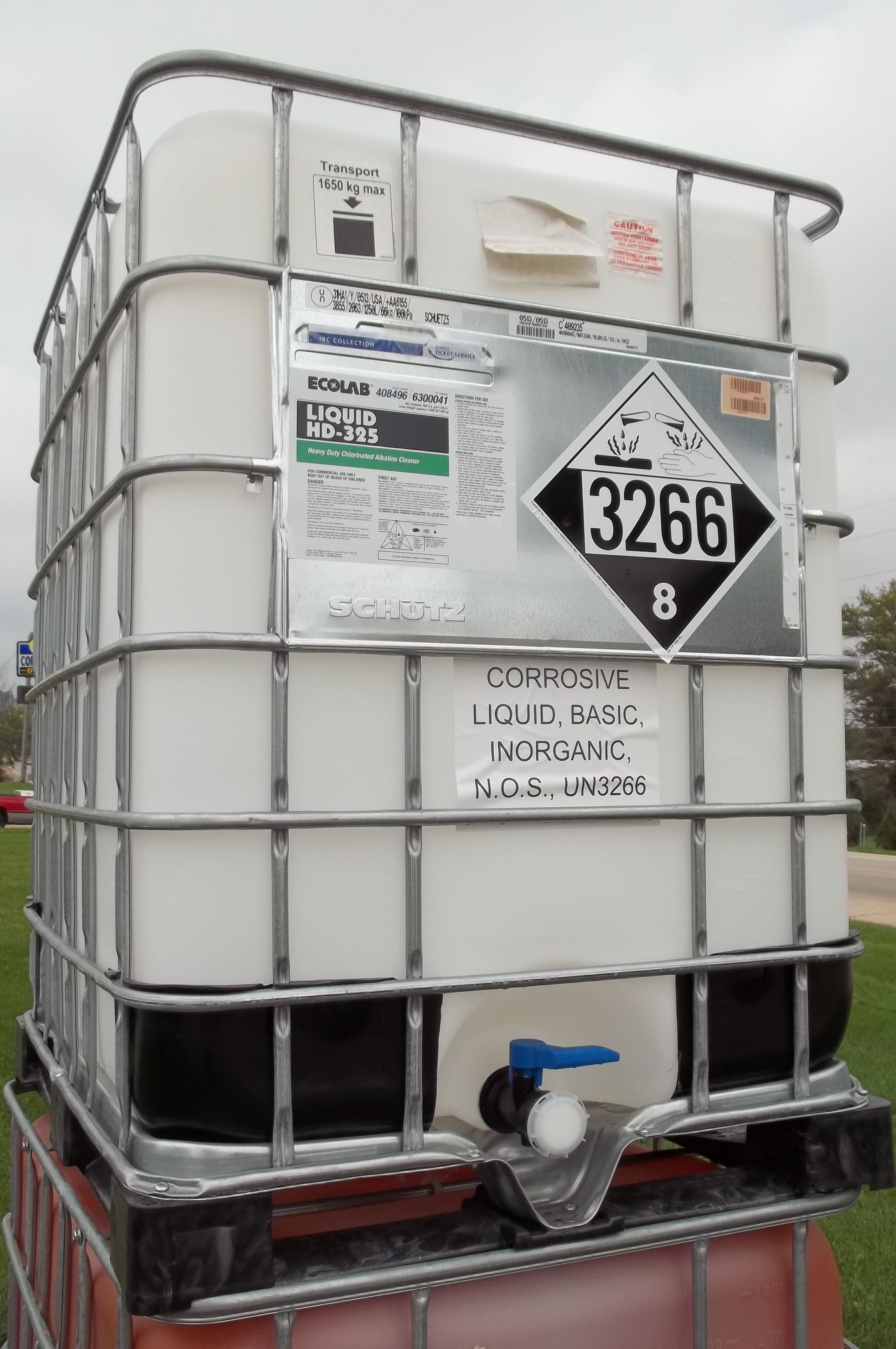
I’m pulling a gooseneck trailer which is carrying two one- way totes of 1760 (corrosive solution) and 1 tote of 1824 (50% caustic). Both totes have proper labels and Id’s on opposite ends. Can I placard the trailer using only (8) corrosive placards or do I need 2 sets of placards with proper id’s?
 My reply that day:
That is a good question. I will try to answer it here, if you need more information I can provide that later.
You are required to display the identification number for each bulk packaging of a different HazMat that you have on your vehicle. In this case you have two different identification numbers. You must display both on all four sides of the vehicle.
However, if the identification numbers are visible on the totes while in transportation on all four sides of the vehicle, then it is not necessary to display the identification number with the placards on the vehicle.
I hope this helps. Please don’t hesitate to contact me with any other questions.
He must have been waiting for an answer because within a few moments I received this reply with further questions:
Daniel,
First of all allow me to thank you for your prompt response.
Second, did i read correctly that a newsletter was available for purchase?
Third, I’m very aware of the difficulty of answering a DOT hazmat load question where there is no gray area.
So with that in mind, I have loaded 1 bulk package with ID’s on all four side thus not having to placard the vehicle.
But with 3 totes, 2 with 1760 and 1 with 1824, and only 2 id’s on opposite ends of each tote would that still allow me to use only 8 Corrosive placards?
I know…wow.
My reply that same day:
The newsletter is free, see the link below to subscribe.
Like this article? Subscribe to my Monthly Newsletter No marketing emails! |
You can display the solely the Class 8 placard on all four sides of the vehicle as long as both of the two distinct identification numbers (1760 & 1824) are visible on all four sides.
If the identification numbers are not visible on all four sides of the vehicle, then it is necessary to display them on the vehicle. This can be done in one of three ways:
- On the placard. One ID # per placard.
- On an orange panel near the placard. One ID # per orange panel but only one placard.

- On a white square-on-point near the placard. One ID # per white square-on-point but only one placard.
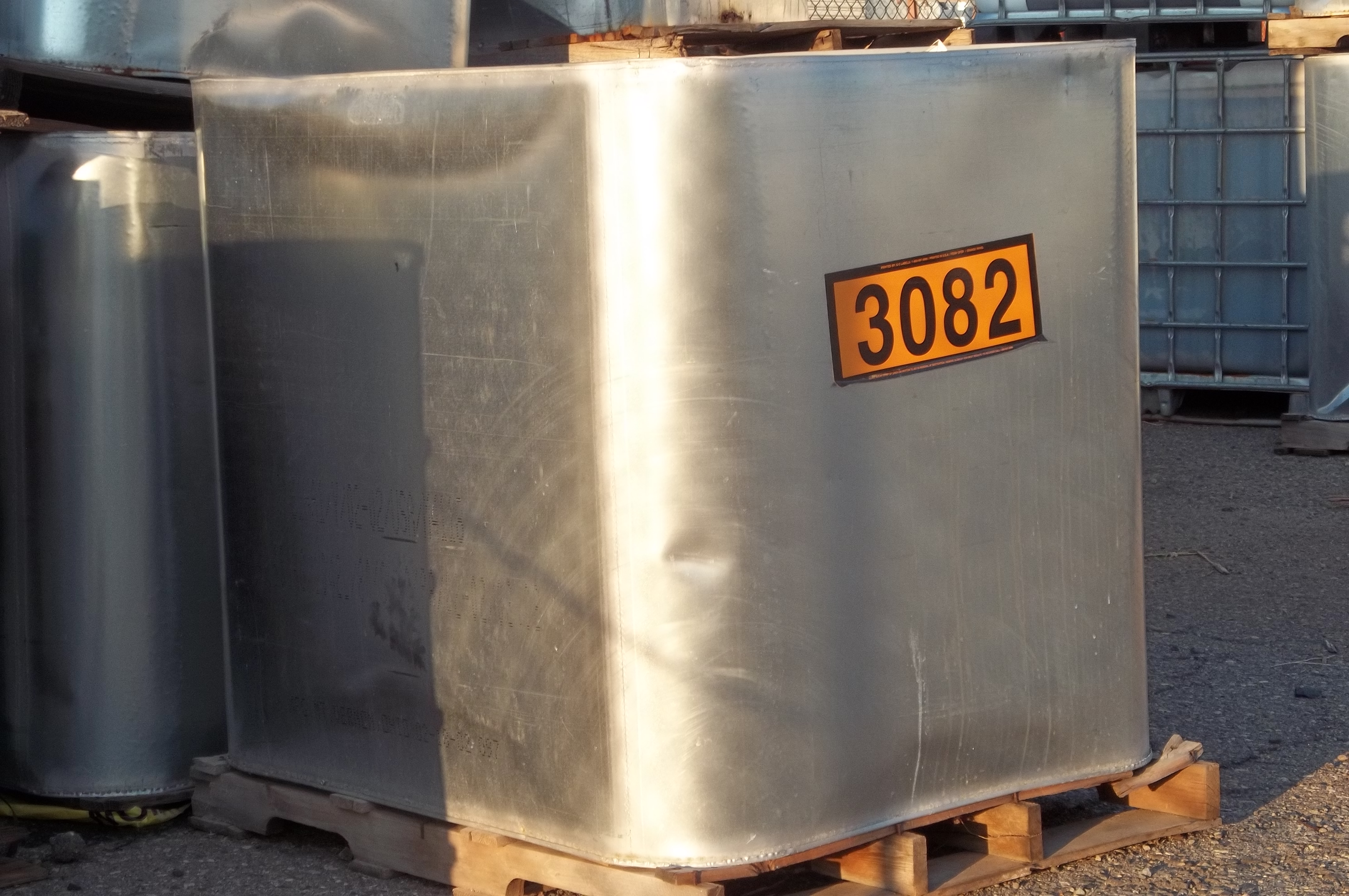
In short, both of the two ID #s and at least one placard for the hazard class must be visible on all four sides of the vehicle. How you do it is up to you.
I hope this helps. Please contact me with any other questions.
That must have done it because on May 12, 2016 I received the final message:
Thank you.
Contact me with any questions you may have about the transportation of hazardous materials by air, highway, vessel, or rail International and Domestic Daniels Training Services 815.821.1550 |
History of the e-Manifest System
In a separate article I document the requirements of the e-Manifest System for a hazardous waste generator.
Here I simply wanted to create a timeline for the important dates in the history of the e-Manifests implementation.
Contact me with any questions you may have about the generation, identification, management, and disposal of hazardous waste Daniels Training Services 815.821.1550 |
Responsibility of Hazardous Waste Transporters to Respond to Hazardous Waste Discharges
A transporter of hazardous waste is a person that moves hazardous waste between sites by highway, rail, water or air. Typically a hazardous waste transporter is the link between the generator of a hazardous waste and the site where it is recycled, treated, stored, or disposed of, aka: Treatment, Storage, or Disposal Facility or TSDF. Regulations of the U.S. Environmental Protection Agency (EPA) pertaining to hazardous waste transporters are found at 40 CFR 263. The requirements of a hazardous waste transporter include:
- Comply with all applicable regulations of the U.S. Department of Transportation (DOT) for the transport in commerce of a hazardous waste.
- Obtain an EPA Identification Number.
- Comply with transfer facility requirements, if applicable.
- Comply with EPA’s Hazardous Waste Manifest System.
- Respond to hazardous waste discharges that occur during transportation.
The purpose of this article is to explain the responsibility of a hazardous waste transporter to respond to a discharge of hazardous waste per 40 CFR 263, subpart C. (more…)
Q&A: Hazardous Waste Determination for Sodium Arsenite
May 6, 2016, a question from a past attendee of one of my Training Seminars (unfortunately, I don’t provide Training Seminars anymore. Check out my website for other training options: Onsite Training or Webinar Training).
Hi Dan
I took a class with you a couple years ago.
I have another question for you. I figure if you don’t know the answer you might be able to direct me to where I’d find it.
We would like to do a lab test which requires sodium arsenite which is a hazardous waste. In the test, the sodium arsenite will be greatly diluted. Does the diluted solution then become hazardous waste?
I would greatly appreciate any direction you can give me.
My reply the next day (May 7, 2016):
I will try to answer your question.
- If the diluted solution of sodium arsenite is to be discarded, it must be managed as a solid waste. The term “solid waste” as used by USEPA and most states is not limited to wastes in a solid form. A “solid waste” could be a solid, liquid, semi-solid, or containerized gas.
- The generator of a solid waste must conduct a hazardous waste determination.
- Sodium arsenite and the process of generation you indicate does not appear to be a listed hazardous waste. It does not appear on any of the following codifications of listed hazardous waste:
- Hazardous waste from non-specific sources (F-codes).
- Hazardous waste from specific sources (K-codes).
- Discarded commercial chemical products, off-specification species, container residues, and spill residues thereof (P-codes for acutely toxic and U-codes for toxic).
- Sodium arsenite does not appear to display the characteristic of any of the following hazardous wastes:
- Ignitability (D001)
- Corrosivity (D002)
- Reactivity (D003)
- Arsenic is a toxin identified by the USEPA at 40 CFR 261.24. It is possible, therefore, that it displays the characteristic of toxicity (D004 – D043) for arsenic (D004).
- A waste containing arsenic may be a toxic hazardous waste (D004) if it contains a leachable concentration of arsenic above the regulatory threshold of 5.0 mg/L. In other words, if it displays the characteristic of toxicity.
- Analysis by the Toxicity Characteristic Leachate Procedure (TCLP) is one way to determine the concentration of a toxin in leachate derived from a waste in a solid form. If the waste is already in a liquid form, the total concentration of the toxin must be determined.
- Another – and less expensive – method to determine if your waste displays the characteristic of toxicity is the “Rule of 20”. Read more about TCLP and alternatives to it here.
- It is possible, if greatly diluted, that the waste you discard may not be a toxic hazardous waste.
Thank you and please don’t hesitate to contact me if you have any other questions.
Contact me with any questions you may have about the generation, identification, management, and disposal of hazardous waste Daniels Training Services 815.821.1550 |
My reply appears to have been satisfactory:
Thank you VERY much! That makes a lot of sense.
Have a great weekend!
Five RCRA Hazardous Waste Violations You’re Probably Making Right Now — and can fix today!
I don’t mean to scare you, but this is important and I had to get your attention with the title. I’ve provided training and seen businesses all over this country in the past few years and I’ve observed these same violations time and again.
The bad news? An agency inspection – State or Federal – that results in the discovery of these violations could result in serious fines, even if no one was hurt or the environment damaged.
The good news? These violations – if you have them – are so easy to fix! Just an hour or two of time dedicated to them and you can be back in compliance before you go home today.
Disclaimer and Limitations:
I haven’t seen your facility (though I’d love to! Contact me for a free consultation and site visit that accompanies your Onsite Training) so I don’t know for sure what your status is with the environmental regulations. Also, I can only address the regulations of the U.S. Environmental Protection Agency (EPA) in this article. You may have more strict – or at least different – regulations of your state of which I am not aware. Once again, my Onsite Training is a great way to be trained on, and receive help coming into compliance with, state regulations if you do business in a state with an authorized hazardous waste program.
Contact me with any questions you may have about the generation, identification, management, and disposal of hazardous waste Daniels Training Services 815.821.1550 |
So, in no particular order, those violations and the simple fixes:
Violation #1:
Identifying a used oil tank or container as anything other than “Used Oil”. Unless you do business in Pennsylvania where it is identified as “Waste Oil” or California where it is “Hazardous Waste Used Oil”, the Federal regulations, and every state I am aware of, require a used oil generator to label containers, tanks and fill pipes for used oil as “Used Oil”. 40 CFR 279.22(c) couldn’t be more clear:
(c) Labels. (1) Containers and aboveground tanks used to store used oil at generator facilities must be labeled or marked clearly with the words “Used Oil.”
(2) Fill pipes used to transfer used oil into underground storage tanks at generator facilities must be labeled or marked clearly with the words “Used Oil.”
The Fix for Violation #1: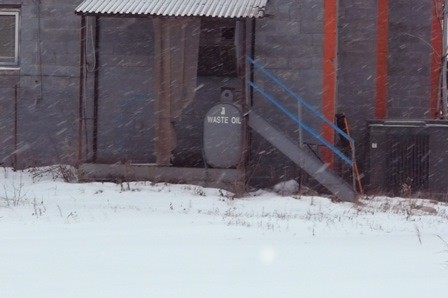
Print out “Used Oil” labels and affix them to every container or tank that contains used oil. That will do for today. Tomorrow, have someone create a stencil for “Used Oil” or devise some more durable form of identification.
Learn more!
Violation #2:
Not marking hazardous waste containers with the date of initial hazardous waste accumulation; i.e. the calendar date that the “first drop” of hazardous waste was placed in the container and the words “Hazardous Waste”. It’s simple really, the day that hazardous waste is first placed in a container it must be marked with the words “Hazardous Waste” and the date. This requirement applies to a large quantity generator of hazardous waste (LQG) per 40 CFR 262.34(a)(2 & 3):
(2) The date upon which each period of accumulation begins is clearly marked and visible for inspection on each container;
(3) While being accumulated on-site, each container and tank is labeled or marked clearly with the words, “Hazardous Waste”; and
It also applies to a small quantity generator of hazardous waste (SQG) per 40 CFR 262.34(d)(4), which refers back to the LQG responsibility at §262.34(a)(2 & 3):
(4) The generator complies with the requirements of paragraphs (a)(2) and (a)(3) of this section, the requirements of subpart C of part 265, with all applicable requirements under 40 CFR part 268; and
The following are not subject to these regulations:
- A conditionally exempt small quantity generator of hazardous waste (CESQG).
- An LQG or SQG that accumulates hazardous waste in a what’s commonly known as a “satellite accumulation area” pursuant to 40 CFR 262.34(c).
The Fix for Violation #2:
If you’re and LQG or SQG, take a walk around and make sure that every hazardous waste container – unless in a satellite accumulation area – is marked with the accumulation start date and “Hazardous Waste”. It doesn’t have to be fancy, it doesn’t have to be a pre-printed label, it doesn’t have to have any information other than what is indicated here (check with your state to be sure). Just make sure it is visible to your Hazardous Waste Personnel and to an inspector.
Violation #3:
Hazardous waste containers at an LQG or SQG that are not closed as required by 40 CFR 265.173(a), a section within 40 CFR 265, subpart I which is referred to as a requirement for both an LQG and an SQG.
(a) A container holding hazardous waste must always be closed during storage, except when it is necessary to add or remove waste.
“Closed” sounds like it should be easy to describe, but it’s not. It can be summarized as a performance standard that requires the container to be vapor-tight so there is no detectable release of vapors without the use of instruments and to be spill-proof so there will be no release of a hazardous waste even when the container is knocked over. That’s a pretty high standard and requires more than just a container’s lid held snugly in place.
The Fix to Violation #3:
If a container uses bungs or bolts for its closure, ensure they are in use at all times. Long-term training employees and providing them with the right tools will help ensure you stay in compliance. These latching lids from New Pig are one way to ensure compliance without hindering your employees access to the containers.
Learn more!
Violation #4:
A small quantity generator of hazardous waste that has not posted emergency contact information near its external communication devices. While a good idea for all hazardous waste generators – and indeed, all businesses regardless of the hazardous waste generated – EPA regulations at 40 CFR 262.34(d)(5)(ii) mandate this simple measure only for the SQG:
(ii) The generator must post the following information next to the telephone:
(A) The name and telephone number of the emergency coordinator;
(B) Location of fire extinguishers and spill control material, and, if present, fire alarm; and
(C) The telephone number of the fire department, unless the facility has a direct alarm.
Like this article? Subscribe to my Monthly Newsletter No marketing emails! |
The Fix for Violation #4:
You may want to check with your state environmental agency, but below I’ve provided a document from the Michigan DEQ website that meets the EPA requirements and likely that of your state as well. Just be sure to remove the reference to the “Michigan Pollution Emergency” phone number at the bottom of the page.
You must post this information near any communication device that would be used in an emergency to contact emergency response personnel outside of the facility.
Violation #5:
Universal waste containers not identified with one of the following options:
- “Universal Waste xxxxx”
- “Waste xxxxx”
- “Used xxxxx”
“xxxxx” in the above could be: “Battery(ies)”, “Lamp(s)”, “Mercury-Containing Device(s)”, or “Pesticides”. Or it could be a universal waste specific to your state. Both a small quantity handler and a large quantity handler of universal waste must comply with this simple requirement per 40 CFR 173.14(a) or §173.34(a):
(a) Universal waste batteries (i.e., each battery), or a container in which the batteries are contained, must be labeled or marked clearly with any one of the following phrases: “Universal Waste—Battery(ies),” or “Waste Battery(ies),” or “Used Battery(ies);”
The Fix for Violation #5:
“Simple” and yet so often done incorrectly. Don’t label your universal waste containers as “Bad lamps” or “Batteries to Recycle”, or “spent batteries”, or whatever else you can think of that is not one of the three available options.
No fancy labels are required. Just print them and slap them on the container, or nearby if you have a distinct storage area.
That’s enough for now!
Sure there are more, for starters:
- Not managing your hazardous waste container at or near the point of generation when in a satellite accumulation area per 40 CFR 262.34(c).
- Not including the home address and phone numbers of the emergency coordinators identified in your contingency plan.
- Accumulating hazardous waste on-site in excess of the time and/or volume limits of your hazardous waste generator status.
- Not completing a documented hazardous waste determination for all waste generated.
- More…
Contact me with any questions you may have about the generation, identification, management, and disposal of hazardous waste Daniels Training Services 815.821.1550 |
Those violations are more complicated to explain and the solutions will take more of your time. The five I’ve identified here are common occurrences with simple fixes. If you have any other questions regarding your compliance with the hazardous waste regulations of the USEPA or of your state, please don’t hesitate to contact me. I’ll help you with the easy stuff and the hard stuff.