PO Box 1232 Freeport, IL 61032

A Different Kind Of Training

A Different Kind Of Training

A Different Kind Of Training

Outdoor storage of hazardous waste containers

FAQ: What is a Central Accumulation Area?

It is the area, or areas, at the facility of a hazardous waste generator where hazardous waste accumulates if it meets the conditions for the accumulation of hazardous waste.

It is defined at 40 CFR 260.10 in the regulations of the US Environmental Protection Agency (EPA):

Central accumulation area means any on-site hazardous waste accumulation area with hazardous waste accumulating in units subject to either §262.16 (for small quantity generators) or §262.17 of this chapter (for large quantity generators). A central accumulation area at an eligible academic entity that chooses to operate under 40 CFR part 262 subpart K is also subject to §262.211 when accumulating unwanted material and/or hazardous waste.

Like this article?

Subscribe to my Monthly Newsletter

No marketing emails!

Please note the following about this term:
  • Its place in §260.10 is relatively new, only since May 30, 2017 when the Generator Improvements Rule went into effect.
  • The term was defined by EPA only as a matter of convenience.
  • The addition of the term does not establish any new regulatory standards or burden on generators.
  • Terms used in the past to refer to hazardous waste accumulation areas include:
    • “Generator accumulation area”
    • “Less-than-180-day area” for a small quantity generator (SQG)
    • “Less-than-90-day area” for large quantity generator (LQG)
  • The term “central accumulation area” was first defined at 40 CFR part 262, subpart K in December 0f 2008 to differentiate CAAs from satellite accumulation areas and laboratories in those regulations only.  Since that time it has become more widely used leading EPA to include it with its general definitions.
  • The definition of “central accumulation area” was removed from 40 CFR 262, subpart K by the Generator Improvements Rule.
  • A generator may have more than one central accumulation area (CAA) at their site.
  • The use of the word “central” does not denote a physical location nor indicate the generator must establish the CAA in a centrally located area within the site.
  • The CAA(s) can be in any location at the facility of either an SQG or LQG.

Contact me with any questions you may have about the generation, identification, management, and disposal of hazardous waste

Daniels Training Services, Inc.

815.821.1550

Info@DanielsTraining.com

https://danielstraining.com/

Q&A: The Marine Pollutant Exception

This is a question from a customer of mine.  I had provided them with HazMat Employee Training (to meet USDOT regulations), training for the shippers and packers of dangerous goods by air as required by the International Air Transport Association (IATA) and also training for shore-based personnel for dangerous goods by vessel per the International Maritime Organization (IMO).  Afterwards, they had some questions for me about specific shipping challenges.  Like all of my customers, I happily answered their questions at no cost.  For this particular question the customer had already sent me a Safety Data Sheet (SDS) for the product they wished to ship.  We had had a brief telephone conversation where I informed them the product was a marine pollutant and was subject to an exception.

Marine Pollutant MarkThe question (01.09.17):

Daniel –

During our conversation, you said that the IMO and IATA laid out an exception for the product I sent you the SDS for, where as long as it’s in an inner packaging ≤ 5L, it isn’t regulated per IATA.
A) Did I understand you correctly (is that true)?
B) Where did you see that? I’m just looking over the SDS and can’t find anything that would have tipped you off to that information, and I would like to read that exception myself.
C) Is that exception (if it is as I understand it) for the raw material itself, or for the UN 3082 entirely?
Also, did that exception also remove the Ltd. Qty. ‘G’ limitation?
Thanks for your help.
My reply the same day:
Please see below:
  • USDOT, IMO, & IATA have an exception from regulation specific to Marine Pollutants if they are below 5 kg/5 L per package.
  • The exception is not referenced in the SDS.  It can be found as follows:
    • 49 CFR 171.4 of the USDOT HMR.
    • Special Provision A197 of the IATA DGR, referenced from 7.1.5.3.
    • 2.10.2.7 of the IMO Dangerous Goods Code.
  • The exception would apply to any substance that meets the criteria for a marine pollutant.  The exception only applies to it as a a marine pollutant and does not except it from any other regulations.  For example, if a marine pollutant is also a Class 3 Flammable Liquid, it may be subject to the above marine pollutant exception but would remain regulated as a Class 3 Flammable Liquid.
  • The marine pollutant exception has nothing to do with the limited quantity exception.  The ‘G’ in the Dangerous Goods List only applies if you are shipping the HazMat as a limited quantity.
I hope that helps.
Please don’t hesitate to contact me with any other questions.
Some follow-up from the customer:

Daniel –

Thank you so much for your thorough response.
Correct me if I’m wrong, but wouldn’t the Special Provision A197 supersede the Limited Quantity exception in regard to relief of shipping limitations? Basically, as long as we are following the Special Provision, and not shipping it Ltd. Qty., my understanding is that the special provision allows us to ship the product un-regulated, therefore not being subject to any gross weight limitations as long as it’s being shipped below 5kg/L. Is that true?
I just want to make sure that I’m interpreting all of this accurately before I make my case to UPS HazMat. 🙂
Thanks again for your patience with us on this.
My reply:

You are correct.  Sequence is:

  1. Classify to determine if HazMat/dangerous good.
  2. If yes, determine if exception applies.  In this case, both the marine pollutant exception and the limited quantity exception apply.
  3. Choose exception to use or ship as fully regulated HazMat.
  4. If shipping per marine pollutant exception, then material is not regulated (i.e. not HazMat/dangerous good) as long as you comply with the requirements of the exception.
  5. The gross package weight limits of the limited quantity exception only apply if you choose to use that exception.  You are not doing that in this case.
Please don’t hesitate to contact me with any other questions.

Contact me with any questions you may have about the transportation of hazardous materials by air, highway, vessel, or rail

International and Domestic

Daniels Training Services, Inc.

815.821.1550

Info@DanielsTraining.com

https://danielstraining.com/

Conclusion:
This exchange represents a common challenge of complying with the Hazardous Materials Regulations: that of taking things step-by-step in an orderly process.  As my last email to the customer details, there is a process to compliance.  An action taken out of sequence – even if a correct action – could lead to a non-compliance.  One thing I strive for in my training is not to simply tell trainees what to do but to show them how it is done, and more importantly, to have them perform the actions themselves.  Identifying hazardous materials by their proper shipping name in the hazardous materials table, determining the proper packaging including what – if any – packaging exception is available, applying the four hazard communication methods (labels, marks, shipping papers, and placards)…it all must be done in the proper sequence.

Episodic Generation of Hazardous Waste for a Small Quantity Generator Under the Generator Improvements Rule

The Generator Improvements Rule includes over sixty (60) changes to the regulations of the U.S. Environmental Protection Agency (EPA) applicable to generators of hazardous waste.  The regulations created by the Generator Improvements Rule went into effect on May 30, 2017 at the Federal level; the status of these new regulations in your state may vary.  Read:  What is the Status of the Generator Improvements Rule in my State?

Among its new regulations (found at 40 CFR 262, Subpart L) is an allowance for some hazardous waste generators to temporarily exceed the hazardous waste generation limits of their status without a change to their generator status.

The purpose of this article is to describe how the new regulations may be used during an episodic event of hazardous waste generation at a small quantity generator of hazardous waste (SQG).

In a separate article I addressed the regulations for an episodic hazardous waste event at a very small quantity generator (VSQG). (more…)

FAQ: What are the Requirements of 40 CFR 265.17(b)?

EPA regulations at 40 CFR 265.17 contain the General Requirements for Ignitable, Reactive, or Incompatible Wastes.  They may apply to both generators of hazardous waste (large quantity generators and small quantity generators) and to hazardous waste Treatment, Storage, and Disposal Facilities (TSDFs).

40 CFR 265.17(b) reads:

(b) Where specifically required by other sections of this part, the treatment, storage, or disposal of ignitable or reactive waste, and the mixture or commingling of incompatible wastes, or incompatible wastes and materials, must be conducted so that it does not:

(1) Generate extreme heat or pressure, fire or explosion, or violent reaction;

(2) Produce uncontrolled toxic mists, fumes, dusts, or gases in sufficient quantities to threaten human health;

(3) Produce uncontrolled flammable fumes or gases in sufficient quantities to pose a risk of fire or explosions;

(4) Damage the structural integrity of the device or facility containing the waste; or

(5) Through other like means threaten human health or the environment.

This regulation is used as a means to permit the management of incompatible wastes – or incompatible waste/material combinations – when not allowed by EPA regulation as long as the responsible party is able to ensure the above conditions will be met.

An example of its use is found in the regulations applicable to a small quantity generator of hazardous waste (SQG) at 40 CFR 262.16(b)(2)(v):

(v) Special conditions for accumulation of incompatible wastes. (A) Incompatible wastes, or incompatible wastes and materials, (see appendix V of part 265 for examples) must not be placed in the same container, unless §265.17(b) of this chapter is complied with.

(B) Hazardous waste must not be placed in an unwashed container that previously held an incompatible waste or material (see appendix V of part 265 for examples), unless §265.17(b) of this chapter is complied with.

Emphasis added

Contact me with any questions you may have about the generation, identification, management, and disposal of hazardous waste

Daniels Training Services, Inc.

815.821.1550

Info@DanielsTraining.com

https://danielstraining.com/

In sum:

Don’t blow yourself up when managing incompatible wastes.

More Information:

Episodic Generation of Hazardous Waste for a Very Small Quantity Generator Under the Generator Improvements Rule

The Generator Improvements Rule includes over sixty (60) changes to the regulations of the U.S. Environmental Protection Agency (EPA) applicable to generators of hazardous waste.  The regulations created by the Generator Improvements Rule went into effect on May 30, 2017 at the Federal level; the status of these new regulations in your state may vary.  Read:  What is the Status of the Generator Improvements Rule in my State?

Among its new regulations (found at 40 CFR 262, Subpart L) is an allowance for some hazardous waste generators to temporarily exceed the hazardous waste generation limits of their status without a change to their generator status.

The purpose of this article is to describe how the new regulations may be used during an episodic event of hazardous waste generation at a very small quantity generator of hazardous waste (VSQG). (more…)

Petition to EPA for one Additional Hazardous Waste Episodic Event per Year

The Generator Improvements Rule created new regulations at 40 CFR 262, subpart L known as Alternative Standards for Episodic Generation.  These new regulations allow very small quantity generators of hazardous waste (VSQG) and small quantity generators of hazardous waste (SQG) to periodically exceed the thresholds for hazardous waste generation of their status (100 kg/mo and 1,000 kg/mo, respectively) without a change to their generator status.

In earlier articles I identified and explained the requirements for compliance with these new regulations for each applicable generator status.

Both a VSQG and SQG are limited to one episodic event per calendar year, unless a petition is granted by EPA under 40 CFR 262.233.

The purpose of this article is to explain the requirements of 40 CFR 262.233 for a very small quantity generator and a small quantity generator of hazardous waste to petition the EPA for one additional episodic event in a calendar year. (more…)

EPA 8700-12 Form

Notification to EPA for a Hazardous Waste Episodic Event

The Generator Improvements Rule contains a new less strict regulation at 40 CFR 262, Subpart L that allows a very small quantity generator of hazardous waste (VSQG) and a small quantity generator of hazardous waste (SQG) to temporarily exceed their generator accumulation thresholds (100 kg/mo and 1,000 kg/mo, respectively) if the alternative standards for episodic generation are met.

Both VSQG or SQG are required to notify the EPA if they wish to manage their waste under this new regulation.  The purpose of this article is to explain the notification requirements of 40 CFR 262.232 for the notification of the EPA by a VSQG or SQG. (more…)

FAQ: What Does EPA Mean by “each operating day”?

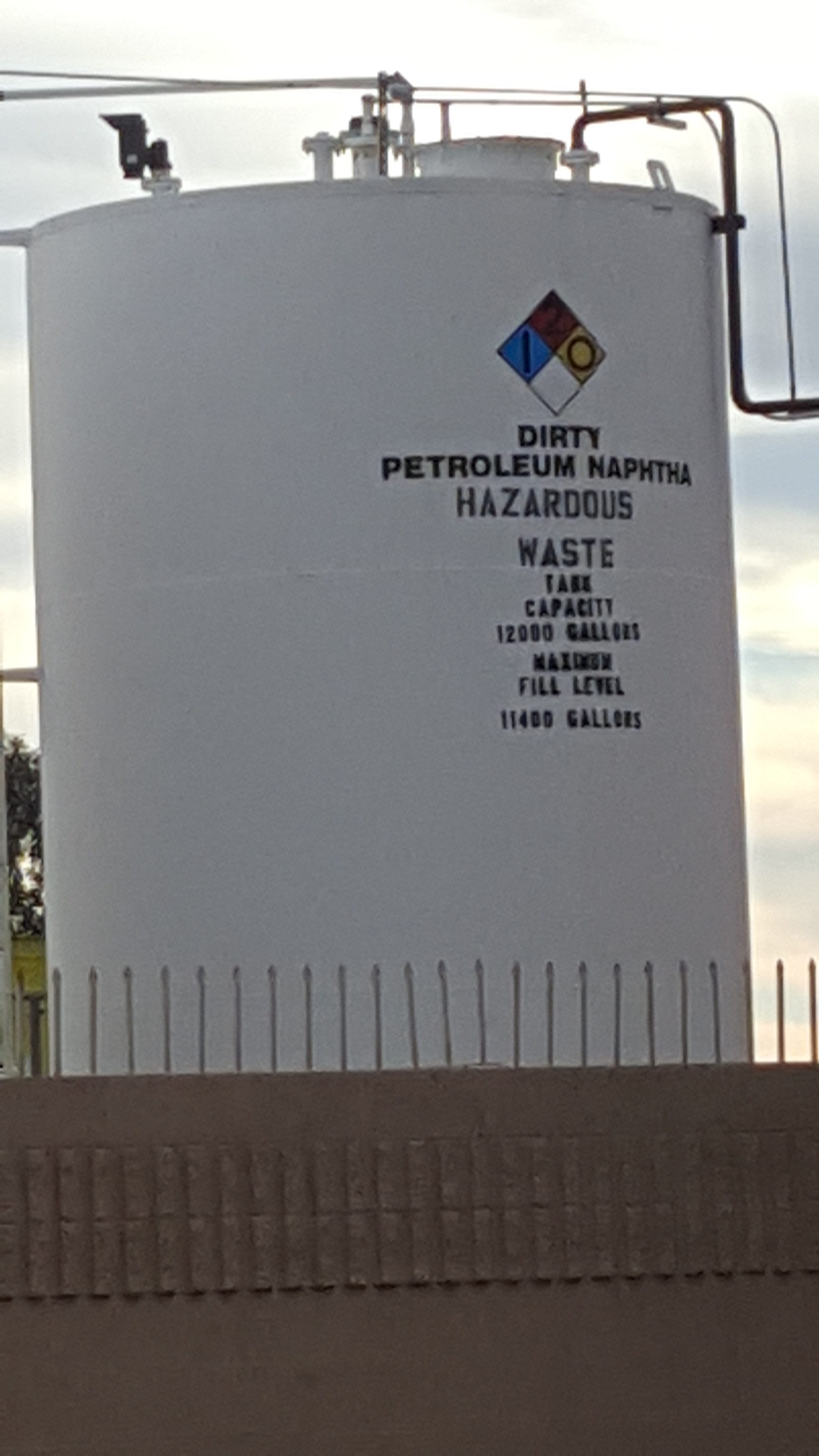
A generator that accumulates hazardous waste on-site in a tank (read: What is a hazardous waste tank?) must comply with regulations applicable to their generator status.

  • A large quantity generator (LQG) must manage its hazardous waste tank in compliance with 40 CFR 265, subpart J.
  • A small quantity generator (SQG) must manage its hazardous waste tank in compliance with 40 CFR 262.17(b)(3).  Prior to May 30, 2017 and the implementation of the Generator Improvements Rule these regulations were found at 40 CFR 265.201.

Tank of Hazardous WasteBoth of the above regulations require the generator to conduct inspections of various parts of the tank system at one of two frequencies: “at least weekly” or, “at least once each operating day”.

While, “at least weekly” has been widely – though not universally – interpreted to mean one inspection every seven (7) days, and “at least once…” is clear, what is meant by “…each operating day”?

EPA has clarified that “each operating day” has been defined as “every day the tank is in operation (i.e., storing or treating
hazardous waste) and not necessarily just on days the facility is open for business.”

The above is from the EPA document: Introduction to Tanks

By this EPA interpretation, every day hazardous waste is present in a tank is an “operating day”.  This would include weekends and holidays even when the facility is not in operation.

Contact me with any questions you may have about the generation, identification, management, and disposal of hazardous waste

Daniels Training Services, Inc.

815.821.1550

Info@DanielsTraining.com

https://danielstraining.com/

Hazardous Waste TSDF

FAQ: What is a Designated Facility?

Federal and state hazardous waste regulations frequently refer to a “designated facility”.  This term is especially important in understanding the regulations for the use of the uniform hazardous waste manifest at 40 CFR 262, subpart B.

Designated facility is defined at 40 CFR 260.10.

Designated facility means:

(1) A hazardous waste treatment, storage, or disposal facility which:

(i) Has received a permit (or interim status) in accordance with the requirements of parts 270 and 124 of this chapter;

(ii) Has received a permit (or interim status) from a State authorized in accordance with part 271 of this chapter; or

(iii) Is regulated under §261.6(c)(2) or subpart F of part 266 of this chapter; and

(iv) That has been designated on the manifest by the generator pursuant to §262.20.

(2) Designated facility also means a generator site designated on the manifest to receive its waste as a return shipment from a facility that has rejected the waste in accordance with §264.72(f) or §265.72(f) of this chapter.

(3) If a waste is destined to a facility in an authorized State which has not yet obtained authorization to regulate that particular waste as hazardous, then the designated facility must be a facility allowed by the receiving State to accept such waste.

So, that means a designated facility is one of the following:

  • A treatment, storage, or disposal facility (TSDF) for hazardous waste designated as such on the uniform hazardous waste manifest by the generator that is permitted by both EPA and a state with an authorized hazardous waste program.  Or, a TSDF (also designated by the generator on the manifest) that recycles recyclable materials without prior storage per 40 CFR 261.6(c)(2).  Or, a TSDF (also designated by the generator on the manifest) that recovers precious metals from recyclable materials per 40 CFR 266, subpart F.

Or…

  • A generator of hazardous waste designated on the uniform hazardous waste manifest to receive its own hazardous waste back as a rejected shipment from a TSDF.

Or…

  • A facility accepting hazardous waste in an authorized state that does not regulate that particular waste as hazardous (e.g. used oil generated in California is a hazardous waste.  It is not a hazardous waste in other states).  The facility must be allowed by its state to accept such waste.

Contact me with any questions you may have about the generation, identification, management, and disposal of hazardous waste

Daniels Training Services, Inc.

815.821.1550

Info@DanielsTraining.com

https://danielstraining.com/

barrel of hazardous waste

FAQ: What is the Status of the Generator Improvements Rule in my State?

The new USEPA regulations of the Generator Improvements Rule became effective on May 30, 2017 at the Federal level and in those states that lack an authorized hazardous waste program:

  • Alaska
  • Iowa
  • The Indian Nations
  • The territories Puerto Rico, American Samoa, N. Mariana and US Virgin Islands

States with an authorized hazardous waste program must adopt the more stringent requirements of the new rule on the following schedule:

  • States have until July 1, 2018 to adopt more stringent requirements of the new rule.
  • States have until July 1, 2019 to adopt more stringent requirements of the new rule if a change to state law is required.

Provisions of the new rule will not be effective in these states until they have adopted the new rule and have become authorized for the new provisions.

Authorized states are not required to adopt the requirements of the new rule that are less stringent or no more stringent than the current hazardous waste regulations.

Two states with an authorized hazardous waste program (New Jersey and Pennsylvania) immediately adopted the new rule when it went into effect on May 30, 2017.

Interested in a Webinar that covers this topic, and more!

My Webinar Training Schedule

More Information:

Search Website