PO Box 1232 Freeport, IL 61032

A Different Kind Of Training

A Different Kind Of Training

A Different Kind Of Training

Q&A: Are clothing contaminated with asbestos a hazardous material?

Question on February 13, 2018:

Daniel –

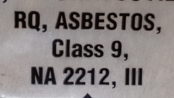
Is clothing (scrubs) contaminated with friable asbestos dust and fibers (< 1 pound of asbestos per package) being transported to a laundry facility using in commerce roadways regulated by DOT as a hazardous material and thus subject to the applicable packaging, marking, labeling, placarding and shipping paper requirements?  If so would the following be an appropriate proper shipping name?

“NA2212, Asbestos, PG III, 9 (mixture:  clothing contaminated with friable asbestos)”

My reply that same day:Shipping description for non-friable asbestos

Thank you for contacting me.  Please see below.

  • You are correct that friable asbestos is a hazardous material when transported in commerce.
  • The shipping description is as follows:  NA2212, Asbestos, 9, PG III. (Please note the sequence differs from what you have above.
  • “(mixture: clothing contaminated with friable asbestos)” is not required but is permitted.
  • If it is less than a pound of asbestos in each packaging it is not a reportable quantity (RQ) of a hazardous substance.  More than a pound per package is subject to additional regulation.  However, if unable to differentiate between the clothes and the asbestos, it will be necessary to consider the weight of the asbestos-contaminated clothing toward the 1 pound threshold.
  • Read:  Is asbestos waste a hazardous waste? A hazardous material?
  • Read:  The Government Employee Exemption  (I included this because the person’s email address indicated a government agency).

I hope this helps.  Please contact me with any other questions.

Contact me with any questions you may have about the transportation of hazardous materials by air, highway, vessel, or rail

International and Domestic

Daniels Training Services, Inc.

815.821.1550

Info@DanielsTraining.com

https://danielstraining.com/

That did it!

Thanks Daniel

Q&A: Are distilled drinks like whiskey a HazMat? May they be transported in wooden barrels?

Here’s one of those questions I love to get. Back on January 29, 2018:

Hi there,

Just wondering…

May distilled drinks , such as, e.g., whiskey, be transported in wooden barrels of 250, 300 or 400 liters?

What would it require…?

My reply that day:

Thank you for contacting me.  Please see below.

Depending on the alcohol content it is quite likely that your whisky is not subject to the regulations of USDOT/PHMSA.  Therefore, you may use any packaging that will contain the material.  There may be other regulations such as the ATF or FDA of which I am not familiar.

Please read:  Exceptions to the Hazardous Materials Regulations for the Transport of Alcohol

Thank you and please don’t hesitate to contact me with any other questions.

He required more clarification:

Thank you, Daniel.

I read the article but remained unsure.

The barrels have whiskey of ~63% ABV (by volume).

The barrels–wooden as they are straight from aging.

Does that throw further light?…

My clarification:

No problem.  It can be confusing.  Please see below.

  • 49 CFR 173.150(d) allows for an exception from all regulation of USDOT if the alcoholic beverage meets any one of the following:
    • No more than 24% ABV.  Yours is 63% so this won’t work.
    • In inner packagings of no more than 1.3 L (5 gal).  This won’t work for you either.
    • Be a packing group III alcoholic beverage in a packaging of 200 L or less.  Special provision 24 for the entry alcoholic beverages indicates an ABV of 24% to 70% is a packing group III.  Therefore, your whiskey is a PG III alcoholic beverage.  Any packaging of 200 L or less is not subject to USDOT regulations.  Any packaging greater than 200 L must be shipped as a hazardous material.  In that case you must determine if the wooden barrels meet the USDOT specifications for a HazMat packaging.  You must also comply with all of the other USDOT regulations for its transportation.

I hope this helps.

Please don’t hesitate to contact me with any other questions.

I wrote, “Please don’t hesitate to contact me with any other questions.” So he didn’t:

You are most helpful.

So under 200 L would be okay even at ~63% ABV.

Same regulations apply if aboard a marine or waterway vessel?

Me:
Yes.  Alcoholic beverage of PG III in packaging of 200 L or less is not subject to regulation by highway, rail, or vessel.  It will be subject to regulation by air.
Him:

I re-read the article and see this reference:

  • Is a Packing Group III alcoholic beverage in a packaging of ≤250L (66 gallons).

hence I see 250 L, not 200 L?

As well, which is the regulation that specifies it…?

Me:

You’re right.  The limit in the regulations is 250 L.  I saw yours in the email as 200 L and mistakenly focused on that.

Regulation is 49 CFR 173.150(d)(1)(iii).

Q:

Would you by any chance  know whether the same regulations apply across the entire NAFTA zone?

Like this article?

Subscribe to my Monthly Newsletter

No marketing emails!

A:
Please see below.
  • Both Canada and Mexico have their own national regulations.
  • Canada’s regulations are very similar to the U.S. and Canada allows for compliance with U.S. regs when hazmat is transported between the countries by highway or rail.
  • Mexico’s regulations are very different than those of the U.S. and they do not allow for compliance with U.S. regulations.
  • When transporting to Mexico or Canada by air or vessel you must comply with international regulations.
  • I would have to do further research to determine if the exception for alcoholic beverages exists in the international regulations and those of Mexico.  I can do this under my consulting services.

Please contact me if you have any further questions.

He did:

I will sure do (awaiting some other info).

So finally, when above 250 L (say 350 L), as per original question,  could you refer me to the applicable US regulation…?

Other than that will await the other issues pending (e.g., insurance).

You have been most helpful and appreciated.

A:

See below.

  • If greater than 250 L in a single container then you must ship as fully regulated hazmat.
  • Refer to the Hazardous Materials Table (49 CFR 172.101) entry for Alcoholic beverages.
    • Authorized packaging is indicated in column 8b.
    • Special provisions in column 7.
    • HazMat label in columns 3 & 6
  • Requirements for package marks, labels, placards, and shipping papers are in 49 CFR part 172.

Also, you must have HazMat Employee training required by USDOT prior to performing a regulated function.  My next HazMat Employee training webinar is always coming up:  My Webinar Training Schedule.

Please contact me if you have any other questions.

That seemed to do it. But on February 12, 2018 I checked back in:

Please let me know if you have any other questions for me.

Daniels Training Services, Inc.

815.821.1550

Info@DanielsTraining.com

https://danielstraining.com/

He did:

Hi Daniel and thank you for the follow up and request.

To be honest two items remain unresolved, in a sense.

The research was in order to deal  with insurance companies. To be clear about the status of we are requesting insurance for.

By and large we were answered by you. However, we would love to have simple language description of what is required if the container (read, barrel) is over 250 L. What exact security measures are required rather than referal to paragraphs etc.

as well, after we talked again to the insurer they expressed understanding but said that the need  also to consult with the Maritime transportation code (as we looked into seafaring the goods as well).

Once clear on that, the complete picture could, indeed, be of value to others, other readers etc.

Kind regards,

A:

Perhaps you should contact me via phone to discuss in more detail.

  • An alcoholic beverage of more than 250 L is subject to full regulation of the USDOT/PHMSA when transported within the U.S.
  • Hazmat transportation requirements include but are not limited to:
    • Classification of Haz<at.
    • Selection of packaging that is authorized by regulations, meets DOT specifications, complies with general requirements, and is filled and closed per the manufacturer’s instructions.
    • Application of hazard communication methods: package marks, hazmat labels, shipping papers, and placards for vehicle if applicable.
    • HazMat Employee training for applicable personnel (HazMat Employee training is what I do!)
    • Load securement and segregation.
  • While there are HazMat Security provisions within USDOT/PHMSA regulations – both “in-depth” and “general awareness” – only the general awareness security training requirements will apply to a hazmat of this type and packaging size.
  • The transportation of dangerous goods (aka: HazMat) by vessel in international waters is subject to the International Maritime Organization Dangerous Goods Code, which is similar to USDOT/PHMSA regulations but not exactly the same.

Please contact me with any further question.

Q:

Hi Daniel and, as always, thanks for the helpful input!Container ship

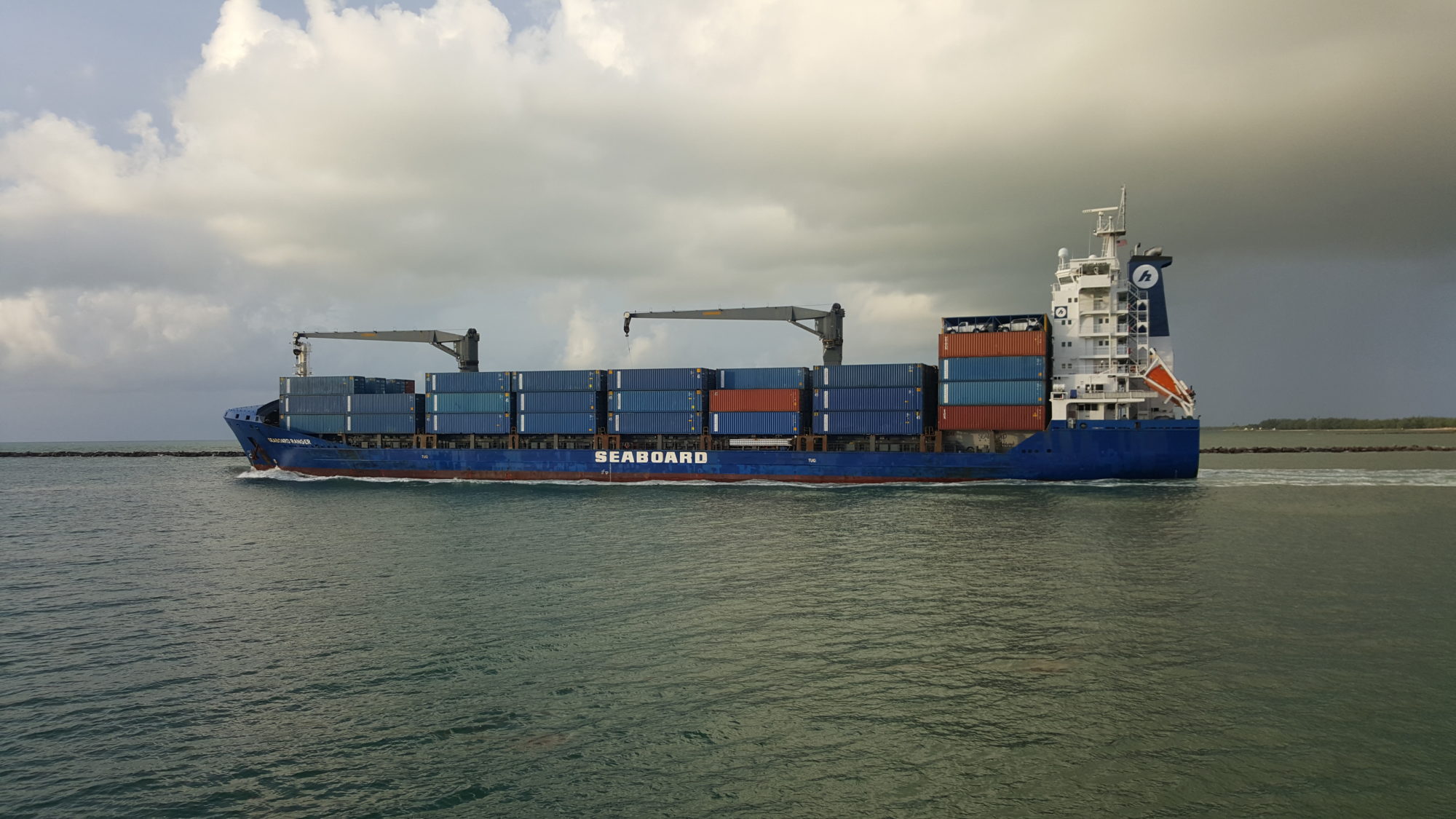
At the same time, the Int’. Maritime Code being “similar to USDOT/PHMSA regulations but not exactly the same” does it entail that barrels under 250L are exempt from any hazmat handling as per land transport?

Thankful again,

Contact me with any questions you may have about the transportation of hazardous materials by air, highway, vessel, or rail

International and Domestic

Daniels Training Services, Inc.

815.821.1550

Info@DanielsTraining.com

https://danielstraining.com/

A:

The IMDG Code has a special provision for alcoholic beverages (24% to 70% alcohol) that exempts from regulation packagings of 250 L or less.

Further research will be necessary but I suspect the regulations for the transport of this hazmat by highway, rail, or vessel (international or domestic) are the same.  Transport by air is a whole different story.

Let me know how I can help you.

And that seemed to do it!

As can be seen from this exchange, I stand ready to help anyone comply with the regulations for the transport of hazardous materials / dangerous goods.  Of course, what I prefer to do is training and consulting where I get paid, but these types of questions keep me sharp.  So don’t hesitate to send me yours!

The Lithium Battery Test Summary

The regulations for the transportation in commerce of lithium cells and batteries requires each cell or battery to be of the type proved to meet the requirements of specific test procedures of the United Nations. Under current regulations it is the responsibility of the battery manufacturer to perform the tests, maintain a record of satisfactory completion, and make such records available to an authorized representative upon request.  As of January 1, 2020, this responsibility expands (in some regulations) to include subsequent distributors of lithium cells and batteries.

The purpose of this article is to identify the regulatory requirements for applicable persons to test lithium a lithium cell or battery, maintain records of the test summary, and to provide a copy of the test summary upon request.
(more…)

Exceptions From USDOT Regulations for Compressed Gases

A compressed gas meeting the defining criteria of 49 CFR 173.115 must comply with the Hazardous Materials Regulations (HMR) of the USDOT/PHMSA when transported, or offered for transport, in commerce. However, there are some exceptions from full regulation for certain compressed gases.  These potentially excepted compressed gases are identified at §173.307. (more…)

Q&A: What are the the specifications in the IMDG Code and USDOT/PHMSA regulations for the Division 4.1 Flammable Solid placard?

This email came from India on February 12, 2019:

(India!)

Dear Sir,

Good Morning!

We are the manufacturer of Aluminium powder (UN1309, Aluminum powder, coated, 4.1, PG II). We request your help to know the details from the Hazardous material transportation regulation of IMDG, 2018 Edition 39 -18 Amendment or 49 CFR 172.546 (Class 4 placards specification). Please send the placard specification for class 4 details from the above latest regulations. Now we are following old regulatory placard specifications for the shipments. It is most Urgent. We are expecting your positive reply.

Thanking You.

Well, I’m just a guy from the Midwest so getting an email from India requesting my help is pretty cool. I had to reply right away.

Thank you for contacting me. I will try to answer your questions below.

  • Your question refers to both the International Maritime Organization and their Dangerous Goods Code (IMDG, 2018 Edition 39 -18 Amendment) and the Hazardous Materials Regulations (October 2018 Edition) of the Pipeline and Hazardous Materials Safety Administration within the U.S. Department of Transportation (USDOT/PHMSA).
  • The required specifications for the Division 4.1 placard are almost – but not quite – the same for both the IMO and the USDOT/PHMSA.
  • Hazardous Materials Regulations of USDOT/PHMSA:
    • 49 CFR 172.519 for general specifications and §172.546 for the Flammable Solid (Division 4.1) placard.
    • Outer dimensions of 250 mm x 250 mm.
    • Line inside the edge 12.5 mm from outside edge.
    • Class or division symbol must be as shown at §172.546.
    • Hazard class number in bottom point of placard must be at least 41 mm high.
    • Any words that appear on placard must be at least 41 mm high.
  • IMDG Code:
    • 5.3.1.2.1 for placard specifications and 5..2.2.2 for specimen labels.
    • Outer dimensions of 250 mm x 250 mm.
    • Line inside the edge 12.5 mm from outside edge.
    • Class or division symbol shall be positioned and sized in proportion to those shown in 5.2.2.2.2.
    • Hazard class or division number in bottom point of placard must be at least 25 mm high.

Contact me with any questions you may have about the transportation of hazardous materials by air, highway, vessel, or rail

International and Domestic

Daniels Training Services, Inc.

815.821.1550

Info@DanielsTraining.com

https://danielstraining.com/

There is much more information in the regulations than I am able to summarize here.

I suggest you contact ICC The Compliance Center to purchase the required placards. Indicate what you need them for and they will be able to sell you what you need.

I hope this helps. Please contact me with any other questions.

That seemed to do it!

Owners of Northwest’s Largest Electronics Recycling Firm Sentenced to Prison for Wire Fraud Conspiracy—Secretly Exposed Foreign Workers to Mercury Waste to Increase Corporate Profits and Enrich Themselves

The Bullet:

The owners and Chief Executive Officers of Total Reclaim, the Northwest’s largest recycler of electronic waste, were sentenced on April 23, 2019 in U.S. District Court in Seattle to 28 months in prison and three years of supervised release for conspiracy to commit wire fraud.

Who:
  • U.S. District Judge Richard A. Jones.
  • The case was investigated by the EPA’s Criminal Investigation Division and is being prosecuted by Assistant United States Attorney Seth Wilkinson.
  • Total Reclaim. A company owned by:
    • Craig Lorch, 61, of Seattle, WA
    • Jeff Zirkle, 55, of Bonney Lake, WA
  • The Basel Action Network (“BAN”) a non-governmental organization.

Contact me with any questions you may have about the generation, identification, management, and disposal of hazardous waste

Daniels Training Services, Inc.

815.821.1550

Info@DanielsTraining.com

https://danielstraining.com/

What:
  • Total Reclaim was the biggest participant in “E-Cycle Washington,” a program created by the Washington legislature to provide for the safe recycling of hazardous electronic products.
  • Under E-Cycle Washington, consumers drop off used electronics at stations such as Goodwill Industries free of charge. The program then paid Total Reclaim to recycle the electronics according to Washington Department of Ecology standards.
  • Those standards bar recyclers from sending hazardous electronics products overseas.
  • Total Reclaim signed a public pledge in which it promised not to “allow the export of hazardous E-waste we handle to be exported” to developing countries, where workers are known to disassemble electronics, which contain dangerous materials such as mercury, without safety precautions.
  • Total Reclaim signed agreements with customers, such as the City of Seattle, in which the customers agreed to pay Total Reclaim to recycle electronics in accordance with these standards.
  • The defendants secretly caused over 8 million pounds of mercury-containing flat screen monitors to be exported to Hong Kong.
  • To prevent customers and auditors from learning of the practice, Lorch and Zirkle falsified documents, made false statements to customers, and stored the monitors at an undisclosed facility while they awaited shipping.
  • Lorch and Zirkle have agreed to pay $945,663 in restitution.
Where:
  • The program operated within Washington state.
  • e-Waste was shipped to Hong Kong in China.
When:
  • The defendants’ fraud was discovered in 2014.
  • Lorch and Zirkle caused at least 8.3 million pounds of monitors to be shipped to Hong Kong between 2008 and 2015.
  • “Your conduct spanned seven years and only stopped because you were caught. You had multiple opportunities to say enough is enough,” Judge Jones said.
  • The pair were sentenced on April 23, 2019.

Interested in site specific training at your site that covers this topic, and more!

Ask me about my Onsite Training

Why:
  • Total Reclaim began secretly exporting flat screen monitors to Hong Kong to avoid the cost of safely recycling the monitors in the United States.
  • According to court filings, it would have cost Total Reclaim about $2.6 million to appropriately dispose of the monitors.
  • At the sentencing hearing, U.S. District Judge Richard A. Jones noted that with the men’s conduct could have impacted generations with mercury poisoning.
How:
Conclusion:

Read the full report from the USEPA Environmental Crimes Case Bulletin for March through April 2019.

Usually the violation of regulations and the improper management of waste results in fines alone. This case was different due to its scope and the level of deliberate deception involved.  Question: do you audit the companies that manage your waste (hazardous, non-hazardous, special, universal, used oil, recycled…whatever)?  If you don’t, you should.  The generator of a waste – any waste – has a cradle-to-grave responsibility for its management.

Daniels Training Services, Inc.

815.821.1550

Info@DanielsTraining.com

https://danielstraining.com/

Q&A: How can I ship a Class 3 Combustible Liquid by air?

A question via email on January 19, 2018 that was a follow-up to a telephone conversation:

Hi Dan,

I am following up on our phone conversation this morning on shipping combustible liquid.

Also, wondering if pharmaceutical drug products are exempt at all from regulation.

I have suggested to my client that we review the anticipated specific shipping protocols to develop specific shipping instructions – I will likely need your help with that.

Thanks so much!

Daniels Training Services, Inc.

815.821.1550

Info@DanielsTraining.com

https://danielstraining.com/

I will try to provide some guidance and helpful information. See below.

To answer the question about the applicable regulations when shipping a combustible liquid by air:

  • Your hazmat is a combustible liquid due to its high flashpoint.
  • Per 49 CFR 173.150(f)(2), the USDOT/PHMSA HazMat Regulations do not apply to a combustible liquid in a non-bulk packaging unless a Haz Substance, Haz Waste, or marine pollutant. Note: the limitation to only ground transport is a condition of the option to re-class a flammable liquid to a combustible liquid. It is not a condition in the exception of a combustible liquid from regulation.
  • Therefore, as long as it is not a Haz Substance, Haz Waste, marine pollutant or transported in a bulk packaging it is not subject to regulation within the U.S. even if transported by air.
  • If transported by air, it cannot be packaged in a bulk packaging since the only type of bulk packaging recognized by IATA is the IBC and its use is limited solely to UN3077 and can’t be used for a combustible liquid.
  • A combustible liquid in a single packaging up to 119 gallons is not subject to regulation within the U.S. by any mode of transport. And, a combustible liquid is not regulated by IATA.
  • I am not aware of an exception from regulation for pharmaceutical products.
  • There is an exception from regulation for a limited quantity of retail products containing ethyl alcohol at 49 CFR 173.150(g).

I hope this helps. Please contact me with any other questions.

Conclusion:

You may be wondering about his last comment, “I will likely need your help with that.” and to what he was referring.  In addition to providing training for the transport of hazardous materials and the management of waste, I also provide consulting services.  So if you have the training you need but still have a problem, contact me for help.

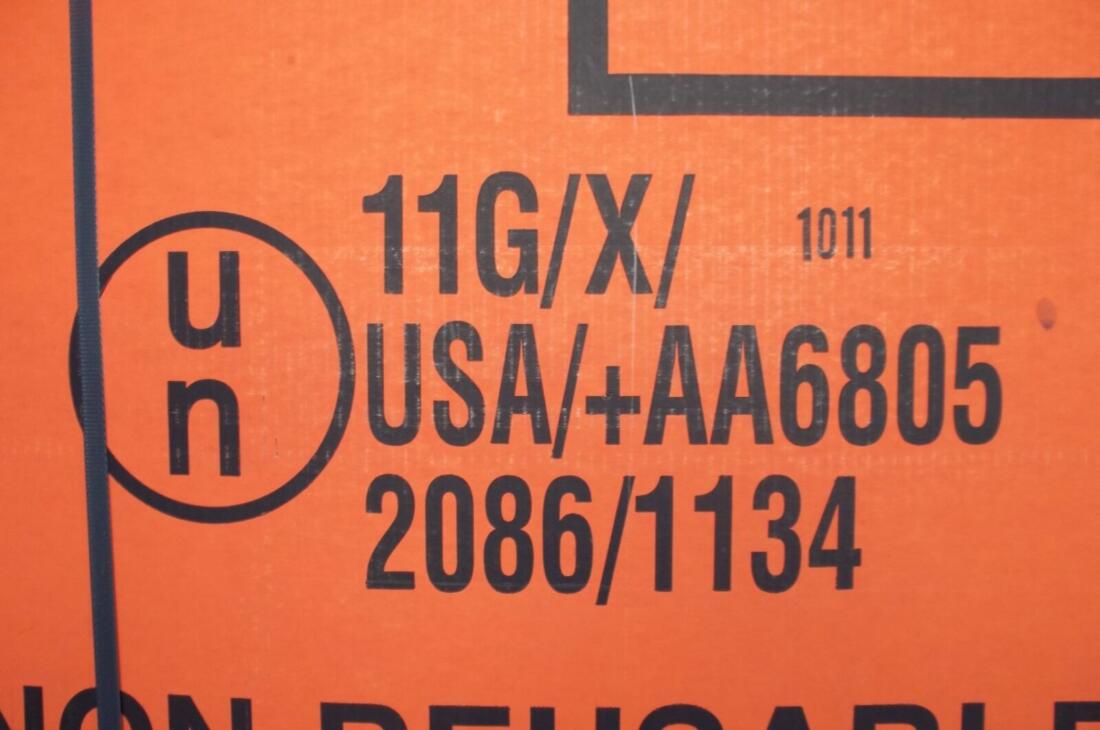
UN Standard Mark on IBC

Q&A: How long must a shipper of HazMat retain testing reports of their Performance Oriented Packaging?

A question from an environmental consulting firm I work with on January 18, 2018 regarding one of their clients:

Dan,

We have a client who asked what the duration of time that was required to maintain what he called, “UN POP Testing Reports.”

I believe he is referring to package certifications which are given after the packaging meets stress test guidelines and allows the person to request the packaging be made by a container manufacturer and include the specification mark.

I may also be incorrect in that presumption. Perhaps POP is referring to Performance-Oriented Packaging and means something else.

Can you shed some light on this please? Include any regulatory reference if possible.

Thanks

Like this article?

Subscribe to my Monthly Newsletter

No marketing emails!

My reply that same day:

He is probably referring to the Performance Oriented Packaging standard created by the UN to test and confirm a packaging meets a specification.  USDOT specification packaging includes UN Standard which is subject to POPS.

Maintaining records depends on their function.  If they are a shipper or carrier of hazmat, the answer is none.  They are not required to obtain or maintain the test records.
Persons involved in the manufacturer, design testing, and periodic retesting of a hazmat packaging must retain records as follows (this is only for non-bulk & IBCs):
  • 49 CFR 178.601(l) for non-bulk packaging & 178.801(l) for IBC:
    • Manufacturer: as long as manufactured and two years thereafter.
    • Design testing: six years after test successfully performed. Combination packaging or for Division 6.2: seven years.
    • Periodic retesting: one year after test successfully performed.  Combination packaging or for Division 6.2:  two years.

I hope this helps.  Please contact me with any other questions.

Contact me with any questions you may have about the transportation of hazardous materials by air, highway, vessel, or rail

International and Domestic

Daniels Training Services, Inc.

815.821.1550

Info@DanielsTraining.com

https://danielstraining.com/

Q&A: Do I have to provide the placard with the identification number on it?

A question from someone who had recently attended my Onsite Training (01.18.18):

I just had your DOT training this month, and I ask which placards to use when shipping our product(with a UN 3190 self heating solid). I am still having problems with drivers as to which placards to use.

Yesterday I shipped 123 drums of product each drum contains 200 lbs. This was shipped on 31 skids as a truck load at 24,600 lbs.

This is the problem:

It is my understanding that when I ship this product as a truck load I would use the placard (Spontaneously Combustible 4 )When the driver call the load in to his safety department they requested we use the placard (Spontaneously Combustible 4 with the UN 3190) on it. They would not take the load with out it. Because the amount was over 8,820 lbs it had to have the UN# on it.

So I gave the driver both types of placards. Is this right to do or not? Which placard is right to use in this case.

Thanks for any help you can give.

My reply the same day:

Good question.  Please see below.

Placards:

  • The placard for a Division 4.2 Spontaneously Combustible is required if the total amount of all hazmat on the vehicle is equal to or greater than 454 kg (1,001 lb).
  • The placard must meet the specifications for shape, design, &etc.
  • Placard must be displayed on all four sides of the vehicle.

Identification number mark:

  • Per 49 CFR 172.301(a)(3) a transport vehicle must display the identification number for a hazmat under the following conditions:
    • Non-bulk packaging (e.g., 55-gallon drum).
    • Vehicle contains only a single hazmat.
    • Each package is marked with the same proper shipping name and ID #.
    • Total weight of hazmat is equal to or greater than 4,000 kg (8,820 lb).
    • All hazmat loaded at one loading facility.
    • Transport vehicle contains no other material (hazmat or non-hazmat).
  • Identification number must be displayed on all four sides of vehicle.
  • Identification number may be displayed on placard or near placard on orange panel or white square-on-point.

Answer:  Vehicle must display placard for Division 4.2 with identification number (3190) on or near placard.  It is not necessary to provide both.

I hope this helps.  Please contact me with any other questions.
Hazardous waste container

Mixing Hazardous Waste with Non-Hazardous Waste Under the Generator Improvements Rule

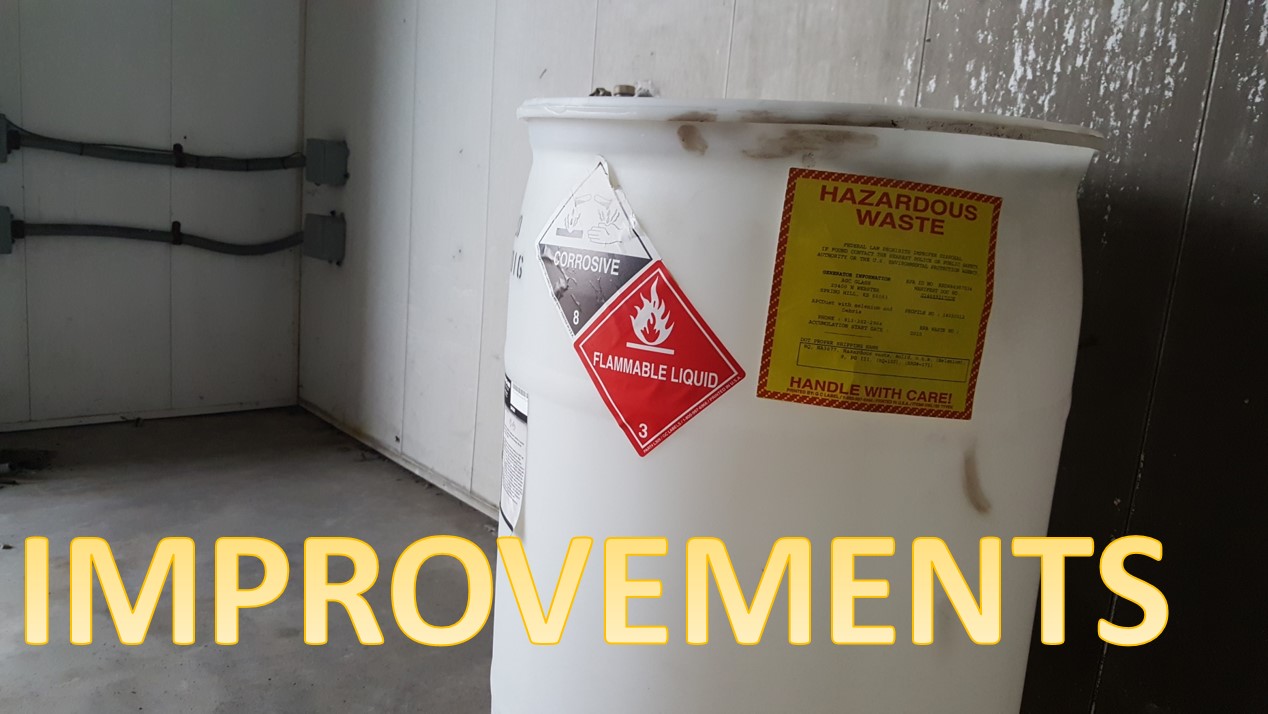
Generators of hazardous waste are required to conduct a hazardous waste determination and to count the hazardous waste generated in order to determine their hazardous waste generator category.  If a generator mixes its hazardous waste with a solid waste (i.e., a non-hazardous waste), the resulting mixture may have an effect on both of the just-mentioned regulatory requirements and a lot more.  For that reason, USEPA thought it wise to include revised regulations on the mixing of hazardous and non-hazardous waste in the Generator Improvements Rule.

The purpose of this article is to identify and explain the regulatory responsibilities at 40 CFR 262.13(f) for a hazardous waste generator if it mixes its hazardous waste with non-hazardous waste. (more…)

Search Website