PO Box 1232 Freeport, IL 61032

A Different Kind Of Training

A Different Kind Of Training

A Different Kind Of Training

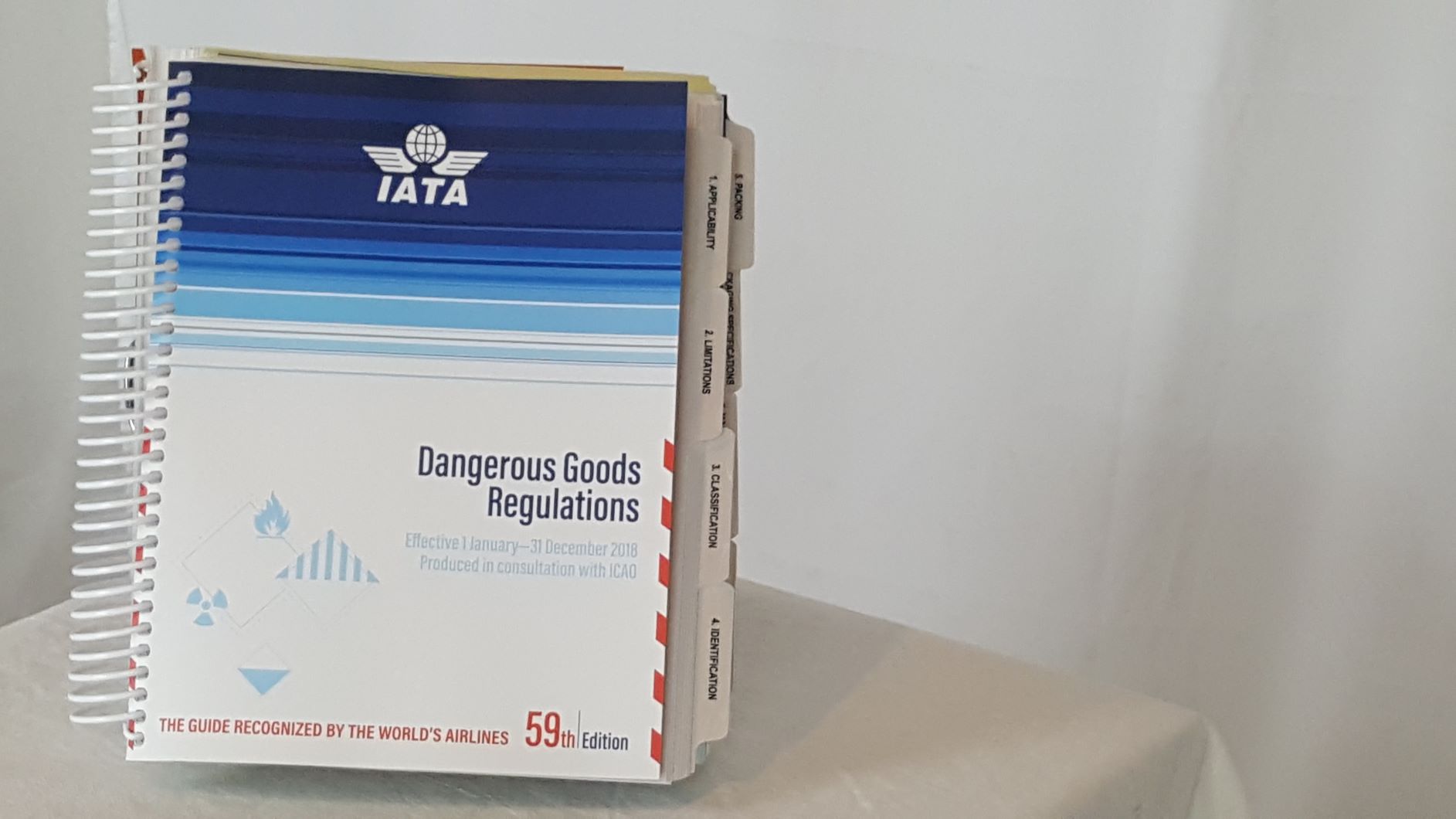
2018 (59th Edition) of IATA DGR

Q&A: May I include the ERG# with the IATA shipping description?

A question. May 11, 2018:

Mr. Stoehr,

My name is <<Redacted>>, and let me start by telling you that I have been enjoying your blogs and various compliance articles for years now. I stumbled across your page years ago searching for some RCRA info and I’ve had it bookmarked ever since. I’ve never taken one of your classes, but your articles are some of the best I’ve ever seen. You have a real talent for writing, and you make complex regulatory content very digestible. Thank you for all that you do.

I have a question for you, and before I ask it, I’ll understand if you can’t just answer it outright. If there’s a fee involved, I’m more than happy to pay it. Your knowledge and time are worth money.

Now on to my question:

I had a customer recently ask if there are any DOT rules that prohibit putting the ERG# in the full DOT shipping name, and I told him that based on my understanding, the rules in 49 CFR 172.202 don’t prevent you from including additional information (like the ERG number), as long as it appears after the USDOT Description in its proper sequence. I was discussing this with a colleague of mine and he told me that he thought IATA regulations actually require the ERG in the shipping name. I don’t have a copy of the IATA rules, but I’d like to have this assertion confirmed (just for my own academic curiosity). I don’t work in the IATA sphere at all, but I’d like to at least get that question put to bed.

Thanks for your time and let me know if this is something you can answer.

Me: *BLUSH* and a reply on May 14, 2018:

I have an answer for you.

  • There is nothing in the IATA Dangerous Goods Regulations that mandates the inclusion of the ERG # with the shipping description on the Shipper’s Declaration for Dangerous Goods.2018 (59th Edition) of IATA DGR
  • As a matter of fact, none of the emergency information required by USDOT/PHMSA is required by IATA. However, per USDOT state variation USG-12, the emergency phone number and emergency information is required for any shipment of HazMat transported from, to, or through the U.S.
    • FYI: State (i.e., a country like Brazil or China) and operator variations are included in Section 2 of the IATA Dangerous Goods Regulations.  These variations must be complied with and are subject to enforcement by USDOT just like the rest of the Dangerous Goods Regulations.
  • IATA does allow for additional information in the description (like emergency information) if it does not detract from the communication of the hazard.

I hope this helps.

Please contact me with any other questions.

Contact me with any questions you may have about the transportation of hazardous materials by air, highway, vessel, or rail

International and Domestic

Daniels Training Services, Inc.

815.821.1550

Info@DanielsTraining.com

https://danielstraining.com/

That seemed to do it (05.14.18):

Thank you sir! You’ve been most helpful!

Thanks again for what you do. Like I said before, your website and blog are the absolute best there is.

Q&A: Are placards required for the transport of this two-part resin system?

A question from someone who had recently attended one of my USDOT/PHMSA HazMat Employee Training Webinars (05.17.18):

Hi Daniel!

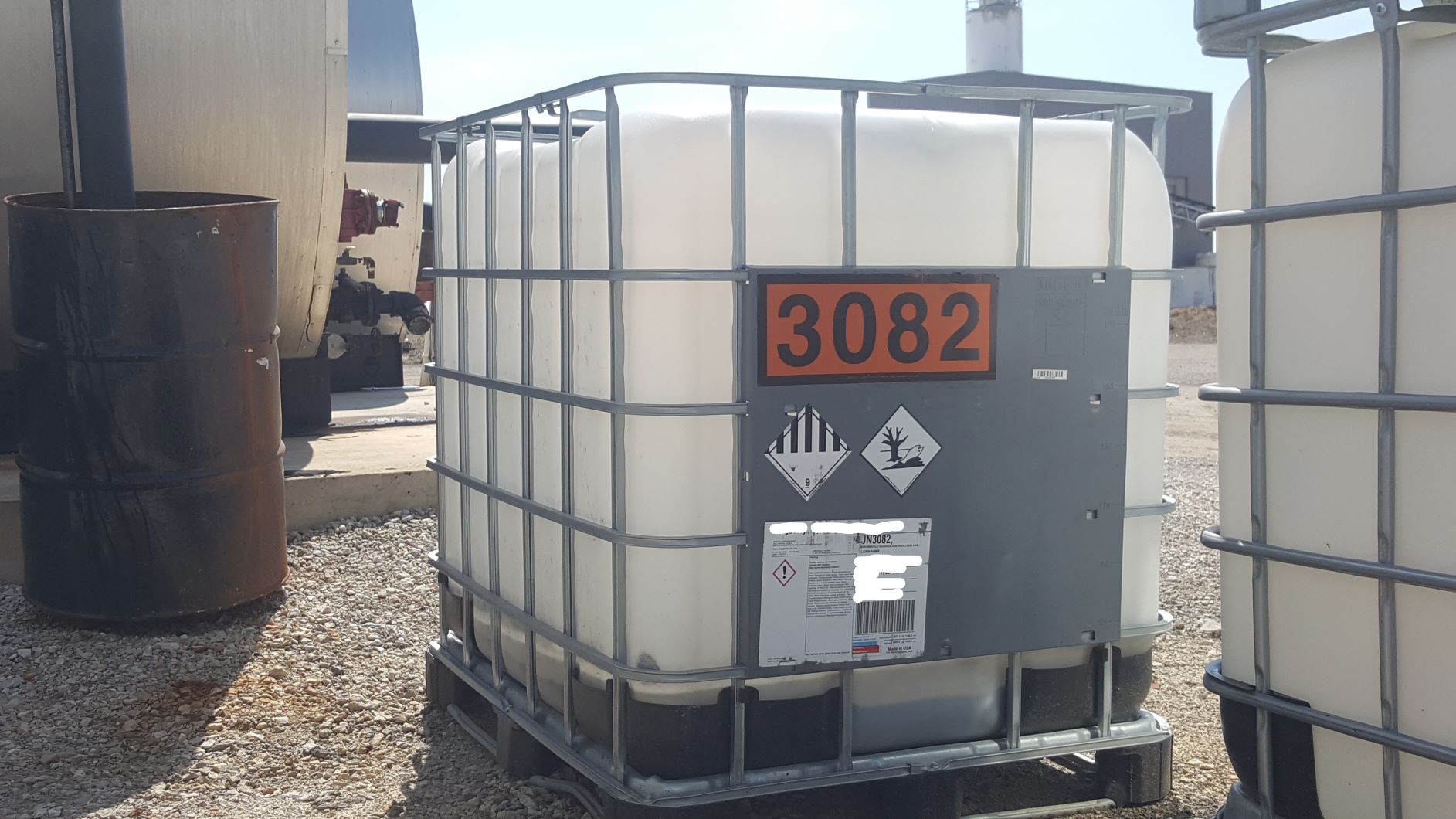
We have a product in totes (Product Name part A, ###A) which is a DOT HazMat class 9 (UN: NA3082, PG III, liquid) with an RQ of 11,111 lbs. In Section 14 of the SDS it states: “When in individual containers of less than the Product RQ, this material ships as non-regulated” – I’m not sure what this means. The product is shipped in totes/IBC (each approx. 3300 lbs – 330 gal) with about 4-6 per load.

My question is: does a semi truck trailer need to be placarded (class 9) when shipping about 4-6 totes (total max ~22,000 lbs; in bulk and >1,001 lbs)? According to your USDOT/PHMSA HazMat Employee training webinar I recently attended, placarding is required for any materials from Table 2 in bulk package (>119 gal) or >1,001 lbs. Also, on page 3 of the DOT Chart 16 (handout) it states for CLASS 9: “(Placarding) Not required for domestic transportation”.

Could you clarify this? No need to elaborate much, I’m just looking for the quick answer. The confusing part is the SDS statement…. and Chart 16.

Thank you very much!!

Contact me with any questions you may have about the transportation of hazardous materials by air, highway, vessel, or rail

International and Domestic

Daniels Training Services, Inc.

815.821.1550

Info@DanielsTraining.com

https://danielstraining.com/

A quick reply based on the available information:

Please see below.

  • Section 14 of the SDS cannot be relied upon for a hazmat classification. Read: Section 14 of the SDS, can it help with your HazMat Classification?
  • I am not aware of any hazardous substance with a reportable quantity (RQ) of 11,111 lbs. I believe the max RQ is 5,000 lbs.
  • It would be helpful to know the constituent in the product that is a hazardous substance. Can you provide an SDS for the product?
  • I won’t know for certain without seeing the SDS but I am confident the statement in section 14 is indicating that the material is not regulated as a HazMat unless it is a RQ of a hazardous substance.
  • If I knew the name of the HazMat and its concentration in the solution, I could determine if an RQ of a hazardous substance is present.
  • The Class 9 Miscellaneous placard is not required within the U.S.

I think a quick review of the SDS would indicate if a hazmat or not.

He was able to provide additional information:
Class 9 Placard
Class 9 Miscellaneous placard

Here is page 1 and page 10 of the SDS. Sorry for the poor quality of the image.

Thanks again!

Note from Daniels Training Services:  I did not include the images but below is the relevant content.
  • Text from section 14 SDS reads:  “Additional Transportation Information: When in individual containers of less than the product RQ, this materials ships as non-regulated.”
  • The hazardous substance component of the product was 4,4′-diphenylmethane Diisocyanate (MDI).  It has a RQ of 5,000 lb.
  • The information provided did not identify the concentration of MDI in the product.
  • As noted in the previous email, it is not required to display the Class 9 Miscellaneous placard in the U.S.
My reply:

Please see below. My response is based on the information provided.

  • Do not rely on section 14 of this SDS. In this SDS it contains several errors.  Unfortunately, this is not uncommon in my experience.
  • The product is only a hazardous substance if at a concentration of 10% or more in the solution and has a mass of 5,000 lbs (454 kg) or more in a single container. This is not possible in a single IBC of 3,300 lbs.
  • It does not appear to be a HazMat for any other reason that I can determine. However, it may contain other HazMat I am not aware from the information provided.

Like this article?

Subscribe to my Monthly Newsletter

No marketing emails!

He sought confirmation:

No need to placard trucks transporting this material then. Thanks for the clarification.

My final answer with a suggestion:

No, however, I do think this deserves more research. In my experience at least one of the two parts of a resin system are a HazMat.

Conclusion:

But that was the last I heard from him on that topic.

USEPA Final Rule: Aerosol Cans as Universal Waste

Effective February 07, 2020, the U.S. Environmental Protection Agency (USEPA) is adding hazardous waste aerosol cans to the universal waste program.  The Final Rule includes the following:

  • Defines an aerosol can.
  • Includes aerosol cans with existing management standards for other universal wastes.
  • Specific regulations for the puncturing and draining of aerosol cans.

The new rule allows for the accumulation, transportation, and on-site management – including puncturing and draining – of hazardous waste aerosol cans as a universal waste.

The purpose of this article is to identify and explain these new regulations and what you must do as a universal waste handler to comply with them. (more…)

Q&A: Is DOT registration required for a SQG?

Question (April 13, 2018):

Hi Daniel,

I had a quick question about the DOT Registration requirement (Subpart G).Hazardous Waste Paint

If a SQG of HW ships their waste (e.g. 3 drums >1001 lbs -needs placard) with Safety Kleen, the SQG needs to be registered?

Thanks

My answer that same day:

In the situation you describe, registration will be required. The hazardous waste generator status of the shipper is not a factor when determining if registration with PHMSA is necessary.

Please read: Have you Registered with PHMSA as a shipper of HazMat?

Thank you and please contact me with any other questions.

Contact me with any questions you may have about the generation, identification, management, and disposal of hazardous waste

Daniels Training Services, Inc.

815.821.1550

Info@DanielsTraining.com

https://danielstraining.com/

Conclusion:

So that was easy.  Please see below for some information on things left unsaid in that brief Q&A.

  • The customer asked about “DOT” but I answered as “PHMSA”; what gives?  The Pipeline and Hazardous Material Safety Administration (PHMSA) is one of thirteen (13) administrations within the U.S. Department of Transportation (DOT). PHMSA is responsible for ensuring the safe and secure movement of hazardous materials by all modes of transportation: highway, rail, vessel, aircraft. It therefore has overlapping authority with other administrations and bureaus within the DOT such as: Federal Aviation Administration (FAA), Federal Railroad Administration (FRA), Federal Motor Carrier Safety Administration (FMCSA), and others. Its authority may also overlap with the US Coast Guard. Note: while the Coast Guard is no longer a part of the DOT, it operates under a memorandum of understanding to enforce DOT regulations for transportation by vessel.  In casual conversation it’s OK to refer to USDOT regulations but if we’re trying to be precise we must use PHMSA or USDOT/PHMSA.
  • SQG?  This is a small quantity generator of hazardous waste.  A SQG generates more than 100 kg (220 lb) per month of hazardous waste but must not generate more than 1,000 kg (2,200 lb) per month.  Under USEPA’s hazardous waste regulations a SQG is subject to a moderate level of regulation, between that of a large quantity generator (LQG) and the very small quantity generator (VSQG).

Not sure of your hazardous waste generator status?

Take this short survey

If you are a generator of a hazardous waste subject to USEPA and state regulations you are likely also to be a shipper of hazardous materials (USEPA hazardous waste is one type of hazardous material) subject to USDOT/PHMSA regulations for its off-site transportation.

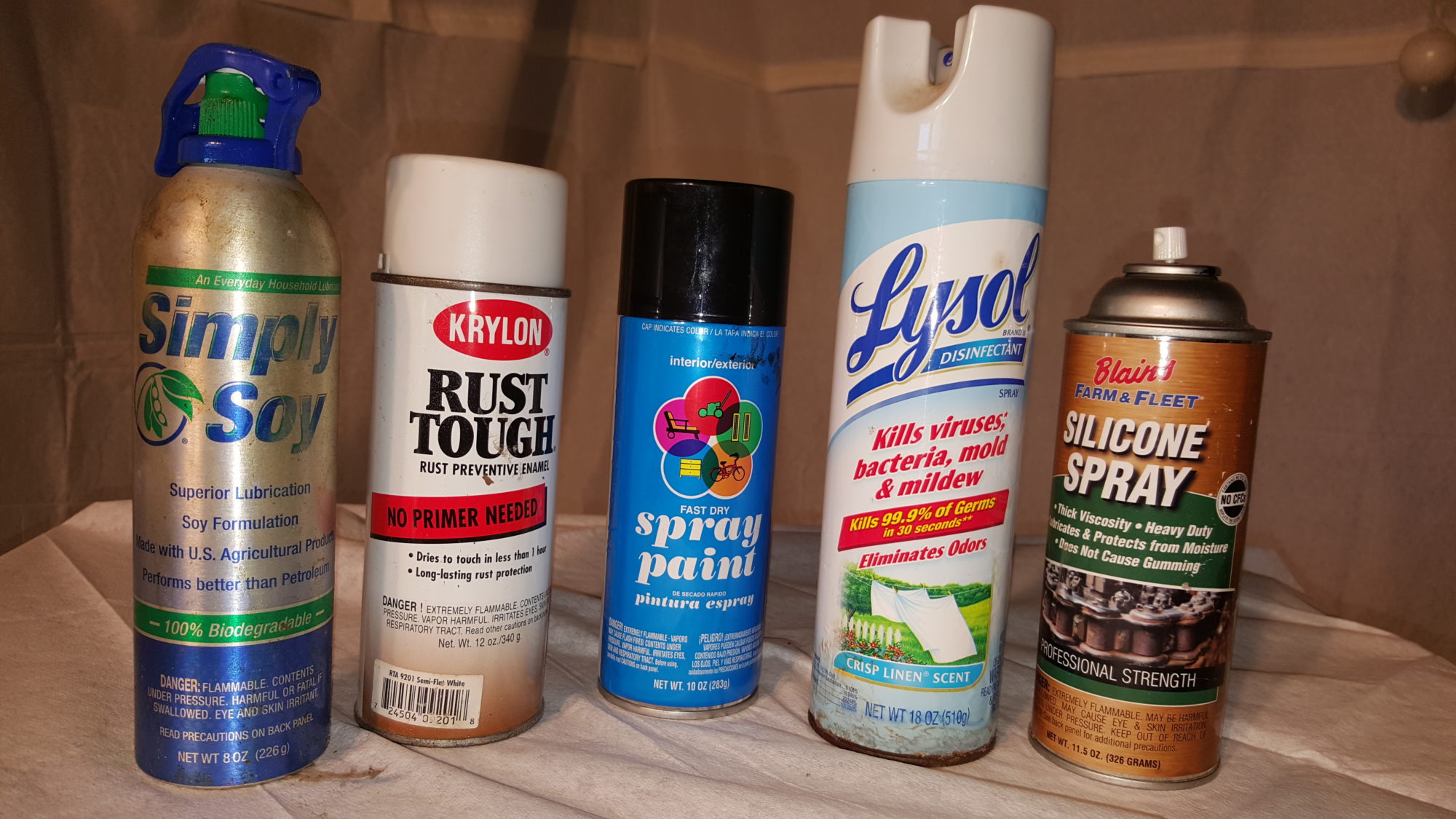
aerosol cans

FAQ: What is an aerosol can?

Aerosol cans are widely used for dispensing a broad range of products including paints, solvents, pesticides, food and personal care products, and many others.  the Household and Commercial Products Association estimates that 3.75 billion aerosol cans were filled in the U.S. in 2016 for use by commercial and industrial facilities as well as by households.

A typical aerosol can consists of several components, including (but not limited to) the following:

  • The can or container storing both propellant and the product.
  • An actuator or button at the top of the can that is pressed to deliver the product.
  • A valve, which controls delivery or flow of the product.
  • The propellant (a compressed gas or liquefied gas), which provides the pressure in the container to expel or release the product when the actuator is pressed to open the valve.
  • The product itself.
  • A dip tube, which is connected to the valve to bring the product up through the can to be released

The can itself is typically a small steel or aluminum container, designed to be hand-held, which is sealed with its contents under pressure. The can’s design is intended to prevent unwanted release of the contents to the environment under normal handling and storage conditions.

Daniels Training Services, Inc.

815.821.1550

                    Info@DanielsTraining.com

https://danielstraining.com/

Effective February 07, 2020, USEPA allows for the management of hazardous waste aerosol cans as a universal waste.  Management of aerosol cans as a universal waste can significantly reduce the burden of any person (business or government agency) that generates, transports, treats, recycles, or disposes of them.

Read more about the management of hazardous waste aerosol cans as as universal waste.

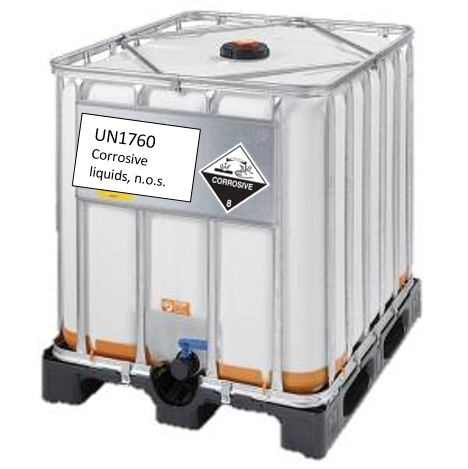
Class 9 label on IBC

Q&A: Which are required to be displayed on IBCs: placards or labels?

A question from a repeat customer on June 8, 2017.  (I’m frequently contacted by customers in the interim between their periodic training to answer questions).

Hi Dan,

I hope this finds you doing well.

During the training session back in April, there was a question raised about “do we need to apply a placard to IBCs or can we use the 4” x 4” labels”.  I cannot remember what the answer to this question was.

We ship a number of IBCs of class 8 material not only domestically but also via ocean and today we place a class 8 placard on opposing sides of the IBC.  Is this required or can we use the smaller 4” x 4” class 8 label?

Thanks for the help.

Best regards,

Contact me with any questions you may have about the transportation of hazardous materials by air, highway, vessel, or rail

International and Domestic

Daniels Training Services, Inc.

815.821.1550

Info@DanielsTraining.com

https://danielstraining.com/

My reply that same day:

Thank you for contacting me.

I can answer part of your question now.  The other part will take more time and research.  Please see below.
  • For transportation within the U.S. according to the regulations of PHMSA, there are several options for the marking, labeling, and/or placarding of an IBC.  One option available is to mark and label the IBC in the same manner as a non-bulk packaging.  This means a single HazMat label (4″ x 4″) near the proper shipping name and the identification number (ID number at least 12 mm high).  This article I wrote explains the available options, including the above:  How to Mark, Label, and/or Placard an IBC of HazMat.
  • The requirements for hazard communication on an IBC per the regulations of the IMO are not immediately known to me.  I will need to research the answer and reply.

I hope this helps.

He was grateful, but I wasn’t done!

Thanks Dan!!

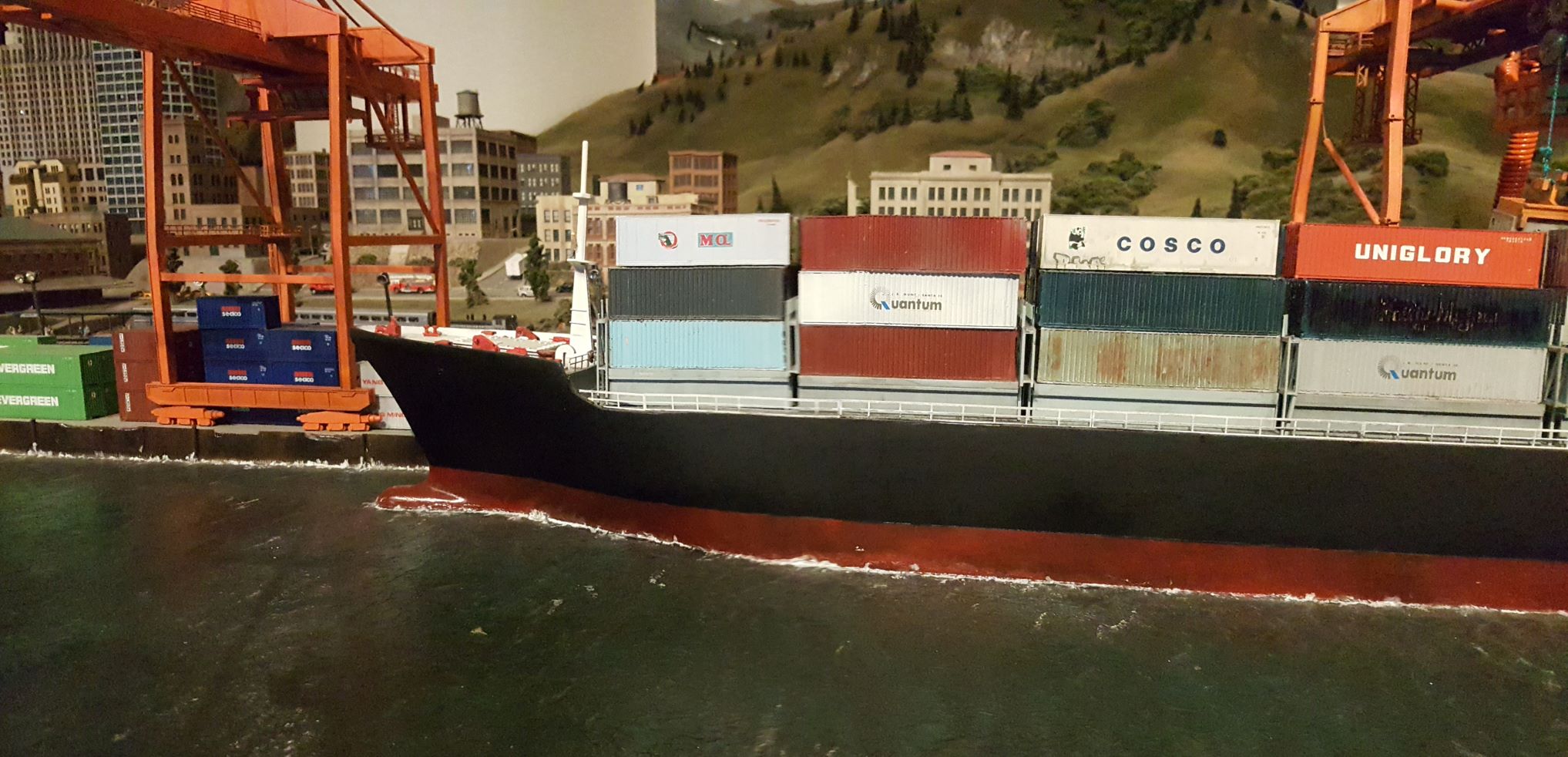
It took me until the next day to research the Dangerous Goods Code of the International Maritime Organization (IMDG Code):Model container ship

I now have an answer to the second part of your question.  Please see below.

  • Per the IMDG Code, an IBC of more than 450 L (119 gal) must be marked on two opposing sides (5.2.1.4) and must be labeled on two opposing sides (5.2.2.1.7).
  • This differs from the domestic regulations of PHMSA which has many options but includes an option to label and mark on only one side.

I hope this helps.  Please contact me with any other questions.

His reply the same day (06.09.17):

Hi Daniel,

Thanks for this information.  The last part of our question relates to the size.  Today we place a placard on each side of the tote but we are wondering if we can use a 4” x 4” label instead.  This would be easier and less costly.

Thanks again.

I wished to clarify the information:

In both instances (domestic and international) a 250 mm x 250 mm (approximately 4″ x 4″)  HazMat label is acceptable.

Wow! Look at all those exclamation marks! I think I helped him to save his company a lot of money!

Thanks!!!!!!

Interested in site specific training at your site that covers this topic, and more!

Ask me about my Onsite Training

Conclusion:

This exchange illustrates several important points about the applicable regulations and my services:

Q&A: What must a carrier know before transporting “empty” drums?

Question (05.02.18):

I am in the State of <<REDACTED>> and need to know the regulations regarding picking up and hauling empty drums.

I work for an Oil Company that delivers and picks up drums.  When picking up drums we sometimes come across drums that do not have any labels or markings of any kind.  We don’t know if it had hazardous material of any kind in it.  Of course these drums have some residue in them.Empty Drums for Pickup

Are we legal to pick up and haul these (so called) empty drums?

Please let me know what you think.

Thank you;

My initial answer May 08, 2018:

I apologize for my delay in responding. Please see below.

  • If a packaging does not contain a hazardous material or the residue of a hazardous material, then it is not required to display a label or marking of any kind. Even one to indicate it is non-hazardous.
  • In my experience most oil-based products are not hazardous materials as defined by USDOT/PHMSA.  Of course, that does not mean that every drum you come across can be assumed to be non-HazMat.
  • It is the responsibility of the shipper to classify its material as either hazardous or non-hazardous.
  • If the drums do not contain a hazardous material – or the residue of one – there are no regulations of the USDOT/PHMSA for its transportation.  In other words, no package labels or marks, no shipping paper, and no placards, &etc.
  • If the drums do contain the residue of a hazardous material, it may be transported according to the USDOT/PHMSA Regulations for Transport of Empty HazMat Packagings
  • Your state of operation is not a factor.  USDOT/PHMSA Hazardous Materials Regulations are the same nationwide.  However, state regulations may differ regarding the licensing, registration, and fees for a commercial motor vehicle.  This will require more research on your part.

I may be able to provide more assistance if you have more specific information about the oil.  Can you provide a safety data sheet (SDS)?

Please contact me with any other questions.

He had a follow-up question:

Should drums that do not have labels on them be transported? If you don’t know what product was in the drum, how can you know if you need to placard or not?

And my answer:

Good question.  I think my answer may not satisfy you:

  • If the residue in a drum is not a hazardous material then it is not required to be identified as either hazardous or non-hazardous.  i.e., no package labels or marks, no shipping paper, no placards, &etc.
  • It is the responsibility of the shipper (the one who offers the material for transport) to classify it as either hazardous or non-hazardous.
    • If the result of the classification is a non-HazMat, then the shipper is not required to provide any information to the carrier.
    • If it is classified as a HazMat, then the shipper must communicate to the carrier the information necessary for its safe transport.
  • The carrier must rely on the information provided by the shipper to transport the material.
  • Per 49 CFR 177.801, it is the responsibility of the carrier to reject a consignment if they determine it to be forbidden or otherwise not in compliance with the Hazardous Materials Regulations.

But of course you must make your own assessment of the risk to determine if it is indeed a hazardous material.

Conclusion:

Training in front of classI don’t like to give answers like that.  It seems clear to me the questioner was looking for some regulation that requires the shipper to indicate if a material is hazardous or not, and unfortunately, it does not.

One can only hope that everyone involved in the transport of a hazardous material has received high-quality HazMat Employee Training and complies with the Hazardous Materials Regulations.

Hazardous waste container

Preparedness, Prevention, and Emergency Procedures for Large Quantity Generator of Hazardous Waste

Both large quantity generators (LQG) and small quantity generators (SQG) of hazardous waste are required by federal regulations of the United States Environmental Protection Agency (USEPA) to take certain measures and have available certain equipment in order to prevent hazardous waste emergencies from occurring and to be prepared to respond to them if they do.  In the past the Preparedness and Prevention regulations for both LQG and SQG were the same and were found at 40 CFR 265, subpart C.

Spill of Hazardous WasteThe Generator Improvements Rule made some changes to these regulations.

  • Moved them from their former location for both LQG and SQG to distinct locations for each generator.
  • Made several revisions to the regulations applicable to both LQG and SQG.

In an earlier series of articles I identified and explained the requirements of 40 CFR 265, subpart C Preparedness and prevention for a LQG and SQG prior to the Generator Improvements Rule.  All of those articles are summarized here.  You may also research the requirements of 40 CFR 265, subpart D Contingency plan and emergency procedures (applicable solely to a LQG) here.  If your state has not yet adopted the Generator Improvements Rule, then these regulations are still applicable to your facility.

If you are interested in comparing the text of the regulations prior to and after the Generator Improvements Rule, you can view a “crosswalk” of the old to new regulations:  Comparison of New and Old Requirements in Generator Improvements Rule:  Preparedness, Prevention, and Emergency Procedures for Large Quantity Generators

The purpose of this article is to provide one source for the series of articles I will write identifying and explaining the requirements of 40 CFR 262, subpart M for preparedness, prevention, and emergency procedures of a hazardous waste emergency at a large quantity generator of hazardous waste.

How these regulations apply to a small quantity generator of hazardous waste  – found at 40 CFR 262.16(b)(8) – are addressed in this article:  Preparedness, Prevention, and Emergency Procedures for Small Quantity Generator of Hazardous Waste

Not sure of your hazardous waste generator status?

Take this short survey

(more…)

Hazardous waste container

The Requirements of 40 CFR 262.256 Arrangements with Local Authorities for Large Quantity Generator of Hazardous Waste

Federal regulations of the U.S. Environmental Protection Agency (USEPA) at 40 CFR 262.17(a)(6) require a large quantity generator of hazardous waste (LQG) to comply with the preparedness, prevention, and emergency procedure standards of 40 CFR 262, subpart M.  This article is the seventh in a series that looks closely at each of the sections in subpart M to clearly describe the responsibilities of a LQG.

The purpose of this article is to address the requirements of 40 CFR 262.256 Arrangements with local authorities. (more…)

Preparedness, Prevention, and Emergency Procedures for Small Quantity Generator of Hazardous Waste

Both large quantity generators (LQG) and small quantity generators (SQG) of hazardous waste are required by federal regulations of the United States Environmental Protection Agency (USEPA) to take certain measures and have available certain equipment in order to prevent hazardous waste emergencies from occurring and to be prepared to respond to them if they do.  In the past the Preparedness and Prevention regulations for both LQG and SQG were the same and were found at 40 CFR 265, subpart C.

Spill of Hazardous WasteThe Generator Improvements Rule made some changes to these regulations.

  • Moved them from their former location for both LQG and SQG to distinct locations for each generator.
  • Made several revisions to the regulations applicable to both LQG and SQG.

In an earlier series of articles I identified and explained the requirements of 40 CFR 265, subpart C Preparedness and Prevention for a LQG and SQG prior to the Generator Improvements Rule.  All of those articles are summarized here.  You may also research the requirements of 40 CFR 265, subpart D Contingency plan and emergency procedures (applicable solely to a LQG) here.  If your state has not yet adopted the Generator Improvements Rule, then these regulations are still applicable to your facility.

The purpose of this article is to provide one source for the series of articles I will write identifying and explaining the requirements of 40 CFR 262.16(b)(8) for preparedness and prevention and those of §262.16(b)(9) for emergency procedures at a small quantity generator of hazardous waste.

How these regulations apply to a large quantity generator of hazardous waste  – found at 40 CFR 262, subpart M from a referral at §262.17(a)(6) – are addressed in this article:  Preparedness, Prevention, and Emergency Procedures for Large Quantity Generator of Hazardous Waste

Not sure of your hazardous waste generator category?

Take this short survey

(more…)

Search Website