PO Box 1232 Freeport, IL 61032

A Different Kind Of Training

A Different Kind Of Training

A Different Kind Of Training

The Biennial Hazardous Waste Report for 2011

March 1st is the due date for submittal of the 2011 Biennial Hazardous Waste Report (EPA Form 8700-12 A/B).  Its purpose:  reporting to the EPA about the generation, management and final disposition of hazardous waste regulated by the Resource Conservation and Recovery Act (RCRA).  Though the US EPA requires the report be submitted every even-numbered year for the previous calendar year, some states have chosen to make it an annual requirement.

Each of the following regulated entities has a responsibility to submit the annual report:

  • Treatment Storage and Disposal Facility’s (TSDF’s) that treat, store, or dispose of hazardous waste on-site during the reporting year must submit the entire report.
  • Large Quantity Generators (LQG) of hazardous waste.  You are required to submit the entire report if you were an LQG for any calendar month in the reporting year.  If you wish, you need only report the waste you generated for the month you exceeded the LQG status threshold.
  • Small Quantity Generator (SQG) of hazardous waste.  An SQG may receive a notice to complete the report.  In this case you need only indicate on the form that you were an SQG for the reporting year, sign, and submit the report.

If you are unaware of your hazardous waste generator status, this survey will assist you.

The US EPA allows states to manage the RCRA Hazardous Waste Program themselves as long as their program is authorized by the Federal Agency.  To be authorized, state regulations must be at least as strict and as broad as the Federal regulations, they are allowed to be more strict and more broad.  A perfect example of this is that while the US EPA requires a Biennial Hazardous Waste Report, many states have made it an annual requirement, due each and every March 1st for the previous calendar year.  Another difference between the state and Federal level for this report is the requirement of some states, but not the US EPA, to submit the Off-Site Identification Form (Form OI).  In addition some states require separate annual reports – sometimes with fees – from companies within their borders, some examples:

  • Illinois has an annual Non-Hazardous Waste Report due February 1st.
  • Iowa (a state without an authorized RCRA Hazardous Waste Program) has an annual Hazardous Waste Activities Form due April 15th for LQG’s and SQG’s.
  • North Carolina has a Small Quantity Generator Waste Minimization Questionnaire due July 31st.

Check with your state environmental agency to determine what, if any, reporting requirements or fees they might have in addition to the US EPA.

There have been some changes to the report for 2011 in regards to definitions, source codes, form codes, and the instructions.  Minor changes were also made to the Site ID Form and the Form GM.  Read carefully the 2011 Hazardous Waste Report Instructions and Form for changes that may apply to you.

If you find yourself sitting at a desk with the report form and instructions and a stack of the previous year’s Uniform Hazardous Waste Manifests on February 29th, I urge you to consider a system to track your waste generation and off-site disposal.  Maintaining records throughout the year pays off big dividends when the Biennial (Annual in some states) Hazardous Waste Report is due.

To learn more about other regulatory requirements for hazardous waste generators including the training requirements of 40 CFR 265.16, attend one of my open enrollment training events.  This one day of training also meets the requirements of the PHMSA/US DOT for HazMat Employees involved in the transportation of hazardous materials.

Contact me to schedule on-site training!

Review my open enrollment training schedule and register now!

Subscribe to my monthly newsletter to receive articles like this every month.  No marketing emails at all, I promise.

The Exception From use of the Technical Name for Lab Pack Shipments of Hazardous Waste

Sometimes when shipping hazardous materials the proper shipping name does not adequately describe the contents of the shipment.  An example of this, found in the Hazardous Materials Table (HMT) at 49 CFR 172.101 is the proper shipping name of:  Flammable Liquids, n.o.s. This entry and others like it contain the letter ‘G’ in column 1 of the HMT.  The ‘G’ stands for generic and indicates that one or more technical names must be included with the proper shipping name on the shipping paper and on the package.

An earlier article I wrote addressed the requirement to use the technical name when shipping HazMat, you may read it here.  In this article I will address one of the exceptions for the shipment of hazardous waste in lab packs found in49 CFR 173.12.  The exception provides relief from the requirement to use technical names when shipping lab packs of hazardous waste.

The PHMSA doesn’t define a lab pack, instead it refers you to the Appendix C Glossary of the RCRA Compliance Manual 2011 which defines a lab pack as “Drums filled with many small containers packed in non-biodegradable absorbent materials.”   This type of packaging is most commonly used when a hazardous waste generator – not necessarily a “lab” – has many small containers of hazardous waste for disposal.

49 CFR 173.12(b) first specifically identifies the hazardous wastes that may not take advantage of this exception or any other found in this section, they are:

  1. A material poisonous-by-inhalation
  2. A Division 6.1, Packing Group I material
  3. Chloric Acid
  4. Oleum (fuming sulfuric acid)

It goes on to identify the Class and Division of lab packed hazardous waste that are excepted as long as they are packaged in combination packagings as required by this section (see below) and are shipped for disposal by highway, rail, or cargo vessel, they are:

  • Class 3 Flammable or Combustible Liquid
  • Division 4.1 Flammable Solid
  • Division 4.2 Spontaneously Combustible
  • Division 4.3 Dangerous When Wet
  • Division 5.1 Oxidizer
  • Division 5.2 Organic Peroxide
  • Division 6.1 Poison
  • Class 8 Corrosive
  • Class 9 Miscellaneous

What are the combination packaging requirements of this section that must be used if the hazardous waste lab packs are to utilize the exception?  Well, briefly…

The inner packaging must either be glass of ≤4 L (1 gal) rated capacity or metal or plastic of ≤20 L (5.3 gal) rated capacity.  Inner packagings of liquids must be surrounded by a chemically compatible absorbent material sufficient to absorb the liquid contents.

The outer packaging may contain only one Class of waste material, may not contain incompatibles (ie. acid and base, some organic and inorganic, etc.), and it must be a type of packaging listed in 49 CFR 173.12(b)(2)(ii).  Note that the US EPA land disposal restrictions at 40 CFR 268.42(c) limit the packaging/container you may use if the entire lab pack is going straight to landfill or incineration.  Also The gross weight of the combined packaging (inner & outer packaging, absorbents and contents) may not exceed 205 KG (452 lb).

So, before you prepare a lab pack of hazardous waste for off-site shipment, ask yourself, “Is it…

  • not a prohibited material?
  • an authorized Class or Division?
  • to be shipped by highway, rail, or cargo vessel?
  • packaged in compliance with combination packaging requirements of 49 CFR 173.12(b)(2)(ii)?

If you answered yes to all of the above, then you may take advantage of the following exceptions:

  1. A generic description from the Hazardous Materials Table may be used in place of specific chemical names, when two or more chemically compatible waste materials in the same hazard class are packaged in the same outside packaging.  This means that a combination packaging containing several containers of sulfuric, nitric, and hydrochloric acid can utilize the proper shipping name of:  Waste Corrosive Liquids, n.o.s.  Read here for an explanation of when to use the word “waste” with a proper shipping name.
  2. You need not include the technical name(s) on the shipping paper or on the package even if there is a ‘G’ in column 1 of the HMT for that proper shipping name.

But, as Columbo used to say, “Just one more thing…”  If the hazardous waste is also a hazardous substance(defined at 49 CFR 171.8), then it must be described as required in 49 CFR 172.203(c).  Which means you need to make sure the name of the hazardous substance and the letters ‘RQ’ are included with the proper shipping name on the shipping paper and the package.

To learn more about shipping hazardous waste, hazardous substances, hazardous materials, and all the requirements of a HazMat Employee, attend one of my training events.  My training also covers the US EPA training requirements for generators of hazardous waste.  You can complete both of these training requirements in one day.

Contact me to schedule on-site training!

Review my open enrollment training schedule and register now!

Subscribe to my monthly newsletter to receive articles like this every month.  No marketing emails at all, I promise.

Status of Special Permits of the US DOT for the Transportation of HazMat

A Special Permit is a document which authorizes a person to perform a function that is not currently authorized by the Hazardous Material Regulations (HMR).  They are allowed when a person can demonstrate that the function can be performed safely or is otherwise necessary, such as in the event of an emergency.  Much more about Special Permits, Exemptions, Approvals, and Regulatory Exceptions may be learned by reading an earlierarticle of mine on the subject.  The purpose of this article is to report the status of several Special Permits and what must be done if a person wishes to continue to use them.

DOT-SP 11248

This Special Permit authorizes the manufacture, marking, sale and use of a specially designed combination packaging system manufactured by HAZMATPAC, Inc. of Houston, TX.  A HazMat shipper or carrier does not need a written approval from the PHMSA in order for them to take advantage of its conditions.  A portion of the Special Permit was incorporated into 49 CFR 173.13(c)(1)(ii) (effective 10.1.10, HM233A) to allow for an alternative packaging configuration.  This incorporation into the regulations means that the alternative packaging method is now included specifically in 49 CFR 173.13 for all regulated shippers and carriers whereas before its use was limited solely to the Special Permit.  The Special Permit has an expiration date of 12.31.14 and must be renewed by HAZMATPAC or some other packaging manufacturer in order to continue its use.

DOT-SP 13192

This Special Permit authorizes the transportation by highway of certain cyanide mixtures capable of liberating hydrogen cyanide (HCN), with acids if both hazardous materials are packaged as lab packs or non-bulk packages.  Without this Special Permit, acids and cyanide mixtures capable of liberating HCN are prohibited from being transported in the same vehicle pursuant to 49 CFR 177.848(c).  The use of this Special Permit by a carrier or shipper requires written approval from the PHMSA.  However, effective 10.1.10 in HM233A, the segregation requirements of 49 CFR parts 174 (Carriage by Rail), 175 (Carriage by Vessel), and 177 (Carriage by Public Highway) were amended to allow for the transportation of lab pack quantities of Division 4.2 PG I, Division 5.2, and Division 6.1 PG I (Hazard Zone A) with other waste materials if specific packaging requirements are met.  This incorporates some of DOT-SP 13192 into the regulations, but not all.  A HazMat shipper or carrier must determine if they can now use the regulatory exception or if they must obtain approval from PHMSA to use the Special Permit.

DOT-SP 11624

This Special Permit allows for the transportation of certain hazard class 3 (flammable) waste paints and paint related materials in metal or plastic pails and then packaged in cubic yard boxes, dump trailers and roll-off containers.  This Special Permit is currently effective and none of its conditions have been incorporated into the Hazardous Materials Regulations (HMR) as an exception.  Therefore, a shipper or carrier of HazMat must have written approval from the PHMSA before it may avail itself of the conditions of this Special Permit.

DOT-SP 10949

This Special Permit authorizes the transportation by highway of lab pack quantities of cyanides with non-lab packed acids of ≤55 gallons per package.  This Special Permit is currently effective and none of its conditions have been incorporated into the Hazardous Materials Regulations (HMR) as an exception.  Therefore, a shipper or carrier of HazMat must have written approval from the PHMSA before it may avail itself of the conditions of this Special Permit.

Sometimes the PHMSA incorporates an entire Special Permit into the regulations as an exception if they feel confident the safety of HazMat Employees, emergency responders, and the general public is ensured.  Other times, as is the case with DOT-SP 11248 & DOT-SP 13192, only a portion of the Special Permit is incorporated into the regulations.  This leaves the shipper or carrier to determine if they must obtain written approval to use the Special Permit or if they can rely on the regulatory exception in the HMR.  Additional information about Special Permits can be found on the PHMSA website.  There you can perform a search of available Special Permits and who has received permission to use them.

You can learn more about the PHMSA HazMat regulations and how they apply to you at the ‘FAQs’ or ‘Articles’ pages of my website.  Or, you can register for one of my open enrollment training events where I fulfill the training requirements of the PHMSA at 49 CFR 172, Subpart H and the US EPA at 40 CFR 265.16.

Free Stuff from PHMSA for HazMat Employers

“In this world nothing can be said to be certain, except death and taxes.” – Benjamin Franklin, 1817.

One benefit of those taxes is the resources provided to you free of charge from government agencies.  One of those agencies, the PHMSA within the US DOT, makes available a wealth of resources on its website meant to assist HazMat Employers to identify and meet their requirements under the Hazardous Material Regulations (HMR).

One of those free resources I wish to share with you is the glossy brochure Does Your HazMat Training Measure Up? You may place a bulk order of these and have them delivered to your door or you can download and print a copy for yourself from the PHMSA website.  I suggest you have a copy of the brochure at hand as I summarize its contents below.

HazMat Employee Training Requirements:

  • The source of the HMR is the Federal hazardous materials transportation law (49 U.S.C. 5101 et seq.) which requires the training of ALL HazMat Employees.
  • HazMat Employer requirements to train and test its HazMat Employees.
  • The elements that must be included in HazMat training.
  • Training frequency – every three years.
  • Documentation of training.  This must be done exactly as the PHMSA requires.

Key Definitions:

I couldn’t say it better myself, so I won’t.  Read the brochure to confirm the following:

  • Training
  • HazMat Employer
  • HazMat Employee

Frequently Asked Questions:

A few key FAQ’s…

  • Who can conduct HazMat Employee training?
  • What are the requirements for the test?
  • Does an office secretary who completes a shipping paper (includes a hazardous waste manifest) require training?
  • And many more…

Some Very Good Reasons to Ensure Your Training “Measures Up”:

  • “Most transportation incidents involving hazardous materials are the result of human error.”
  • Heightens Employee Safety
  • Precludes Penalties
  • Increase Productivity
  • More…

Where You Can Get More Information:

Contact information for the PHMSA and its HazMat Info-Line

Additional Training Sources:

There is more available from the PHMSA; some for free and others at a reasonable charge.

You may decide that with these resources you can provide the training for your HazMat Employees.  Or, you may feel overwhelmed and determine that you should hire someone *ahem* to provide the training, testing, and record documentation for you.  HazMat Employee training that “Measures Up” is part of what I do.  I also provide the training required by the US EPA for generators of hazardous waste, read more about that training here.

I can provide this very important training in any format or location to suit your needs:

  • On-site training tailored specifically to your facility’s needs.  Contact me to schedule on-site training for only $1,749!
  • Open enrollment training which provides an in-depth overview of all of the regulations in one day.  Review my open enrollment training schedule and register now!
  • Keynote speaker or provide an educational session at your organization’s meeting or annual expo free of charge.  Contact me to discuss this further.


Subscribe to my monthly newsletter to receive articles like this every month.  No marketing emails at all, I promise.

Management of Alkaline Batteries

Batteries are one of those items that we are so used to seeing in our home life, that we sometimes forget that these can be generated as a waste at our place of work.  In the course of a day you may unknowingly come into contact with many different types of batteries in a variety of applications:

  • Rechargeable lithium batteries in your laptop or cellphone.
  • Dry cell lead acid batteries as back-up electricity sources for emergency signs and lighting.
  • Liquid-filled lead acid batteries in your car or your company’s fork-truck.
  • Disposable dry-cell alkaline batteries in your flashlight.

My goal for this article is to provide guidance on the US EPA and US DOT requirements for dry-cell alkaline batteries, but I will briefly address the regulatory requirements for other batteries as well.

When spent, you’re responsible to determine if your batteries are a  hazardous or non-hazardous waste.  In other words:  make a hazardous waste determination for your batteries per the US EPA hazardous waste regulations of40 CFR 262.11.  This is something you must do on a case-by-case basis, but you can presume the following:

Hazardous waste:

  • Lead acid (liquid or dry) – D008 for lead.
  • Nickel/cadmium (or NiCad) – D006 for cadmium.
  • Lithium – D003 for reactivity.
  • Silver ion – D011 for silver.

Non-hazardous waste:

  • Dry cell alkaline batteries (D, C, AA, AAA, 6 volt, & 9 volt).

If your spent batteries are a hazardous waste you have three options for on-site handling and off-site disposal:

But I said this article would be about dry-cell alkaline batteries so let’s get back to them.  Your options for disposal of these batteries as a non-hazardous, solid waste are:

Throw in trash: if non-hazardous and not generated as a by-product of an industrial process, you may be able to dispose of alkaline batteries in the trash the same as you do the trash from your front office, break rooms and other non-production areas.  I don’t recommend this, and your state, municipality or county, and the landfill operator may not like it either.  I suggest you speak with all of them before you choose this option.

Handle as universal waste:  this is OK, but technically incorrect since the regulations at 40 CFR 273.2(b)(3) limits the universal waste option only to batteries that are a hazardous waste.  Alkaline batteries do not meet the US EPA definition of a D002 corrosive waste since they are solid.  Your state may differ from the US EPA in the definition of a corrosive hazardous waste and in that case, an alkaline battery might be a hazardous waste and therefore eligible for handling as a universal waste.  I have not heard of the US EPA or any authorized state environmental agency complaining if alkaline batteries are disposed of as universal waste.

Other off-site recycling:  if the universal waste option does not work, then I suggest you find a company able to recycle your batteries.  There are many companies out there and they provide accumulation containers and shipping instructions as well.

This brings us to the final hurdle and that is the US DOT requirements for off-site shipments of alkaline batteries.  As recently as 2008 the PHMSA within the US DOT indicated that alkaline batteries (AA, D, and C cell) though not subject to the Hazardous Materials Regulations for transportation were required to be, “securely packaged and offered for transportation in a manner that prevents the dangerous evolution of heat (for example, by effective insulation of exposed terminals)” (49 CFR 172.102, special provision 130).  This meant (note past tense) that the terminals of alkaline batteries had to be covered with non-conductive tape or each battery individually bagged.

But hold on, in separate tests in the summer of 2009 petitioners to the US DOT proved that even in the most extreme circumstances, the batteries in question could not generate enough heat to be a hazard in transportation.  US DOT agreed and indicated that no alkaline batteries of 9 volt or lower – which includes (AA, AAA, C, D, 6-volt, & 9-volt) arenot subject to the hazardous material regulations.  I could not find the petitions and DOT response on-line, but these two agency interpretations refer to the original documents and confirm the US DOT’s position (09-0150R &09-0090R).

The hazardous batteries are, of course, subject to the HMR and some such as lithium batteries have very restrictive regulations for transportation.  You will have to research this further or wait for me to write an article on them too.

Alkaline batteries are not a hazardous waste per the regulations of the US EPA and they’re not a hazardous material (HazMat) per the regulations of the US DOT.  You could throw them in the trash if you want and no one could stop you, but I strongly suggest you don’t.  Find a reputable recycler, arrange for on-site collection of your batteries, and educate your employees to ensure their proper accumulation, transportation, and disposal.

Contact me to schedule on-site training for only $1,749!

Review my open enrollment training schedule and register now!

Subscribe to my monthly newsletter to receive articles like this every month.  No marketing emails at all, I promise.

20151107

The Hazardous Waste Determination for Spent Organic Solvents as an F-Listed Hazardous Waste

The US EPA has identified two different categories of hazardous waste:  characteristic and listed.  Characteristic hazardous waste must exhibit specific characteristic as defined at 40 CFR 261, Subpart C.  Usually lab analysis by a US EPA-approved test method plays an important part in characteristic hazardous waste determination, though not necessarily the only part.  Characteristic hazardous waste includes the following:

A listed hazardous waste must meet the defined use or status as listed at 40 CFR 261, Subpart D.  Analysis usually plays a minor role in determining if a waste is listed; safety data sheets (SDS) and generator knowledge are much more important in making this determination.  Listed wastes include the following:

  • F-listed waste from non-specific sources of a manufacturing process –waste codes F001 to F039.
  • K-listed waste from specific sources of a manufacturing process – waste codes K001 to K181.
  • P & U-listed waste from discarded commercial chemical products, off-specification species, container residues, and spill clean-up materials – waste codes P001 to P205 and U001 to U411.

The F-listed hazardous wastes can be further broken down into the following groups:

  • Spent solvent wastes (F001 – F005).
  • Wastes from electroplating and other metal finishing operations (F006 – F012, F019).
  • Dioxin-bearing wastes (F020 – F023 and F026 – F028).
  • Wastes from the production of certain chlorinated aliphatic hydrocarbons (F024, F025).
  • Wastes from wood preserving (F032, F034, and F035).
  • Petroleum refinery wastewater treatment sludges (F037 and F038).
  • Multi-source leachate (F039).

Like this article?

Subscribe to my Monthly Newsletter

No marketing emails!

Spent solvent wastes are the most commonly generated listed hazardous wastes because of their frequent use in manufacturing processes such as painting, degreasing, and cleaning.  Just because you utilize a process similar to these or use a solvent in some other way, does not necessarily mean you must apply an F-code, instead the correct application of an F-code depends on how the solvent is used, the percentage of its constituents before use, and – for F003 only – whether or not the characteristic of Ignitability is present.

Keep in mind that more than one waste code (listed and characteristic) may apply to any waste.  A D001 for Ignitability is common in many solvents.  Depending on how it was used, a solvent may contain metals above the regulatory threshold and require a D-code for Toxicity.

Also, as I’ll note later, some of these determinations can be very tricky and the states have taken slightly different interpretations than the US EPA; be sure to check with your state environmental agency to assist you in your waste determination.

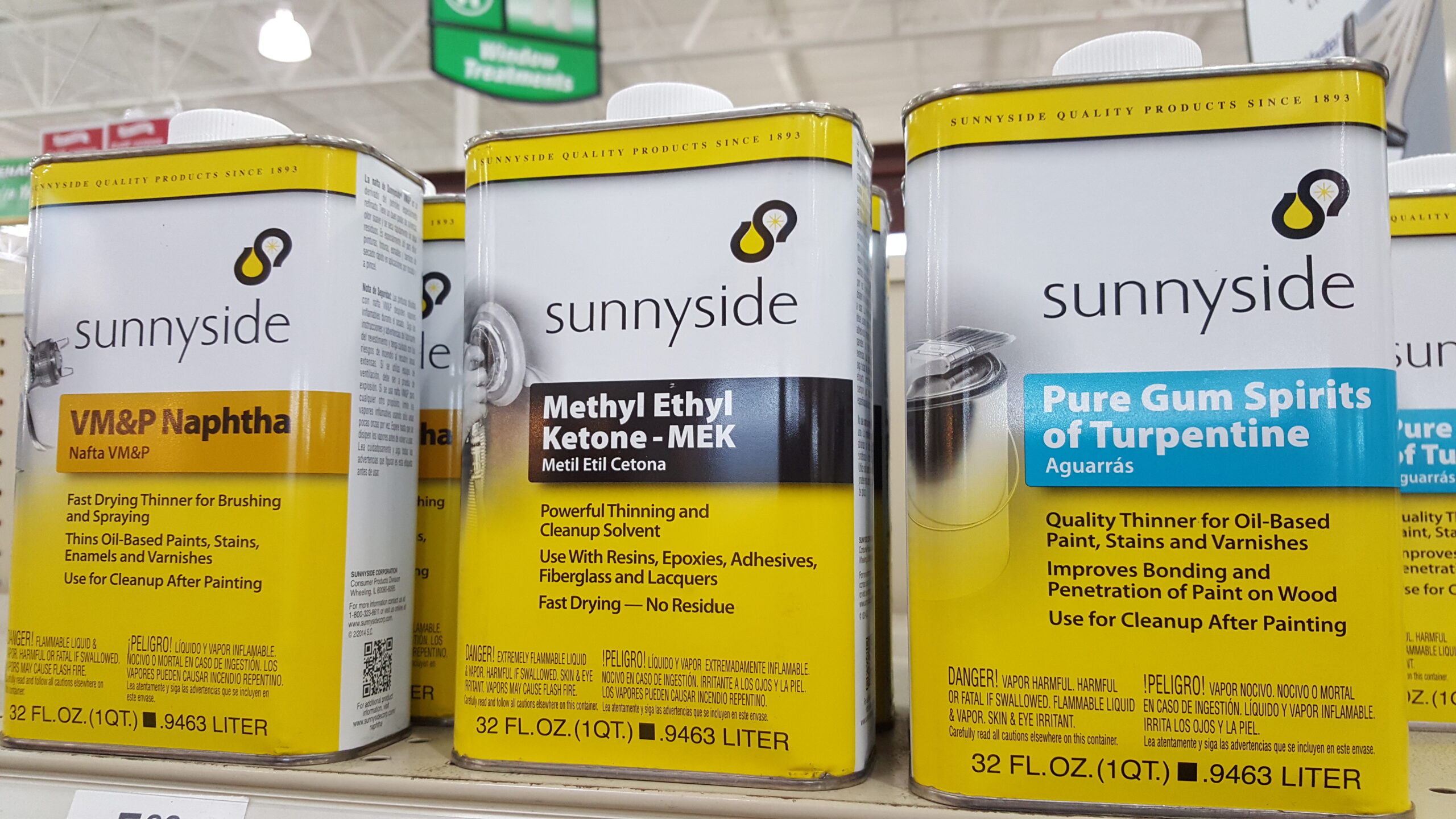
The first criteria in your waste determination is if the solvent in question is listed.  The list of thirty solvents (40 CFR 261.31) includes many common ones such as:  xylene, toluene, acetone, methylene chloride (aka: dichloromethane), and many others.  It doesn’t include common solvents such as:  mineral spirits or Stoddard solvent.  If its technical name does not appear on the list, than that F-code would not apply, though other waste codes may.

The F-listed solvents are:

[table “42” not found /]

Interested in site specific training at your site that covers this topic, and more!

Ask me about my Onsite Training

Second, the waste must have been used as a solvent for its solvent properties, that is, to solubilize (dissolve) or mobilize other constituents.  This includes:  degreasing, cleaning, fabric scouring, extractions, reactions, and synthesis media.  “Used as a solvent” does not include solvents used as ingredients in the formulation of a product.  The best example of this is a solvent used to thin paint; solvent used in this manner, even if listed and spent, would not be an F-listed hazardous waste.

Next, the solvent must be spent.  If it is virgin material, than an F-code would not apply, however it may have the characteristic of Ignitability (D001) and/or may be a U-listed waste (eg. acetone – U002, Benzene – U019, Toluene – U220).  A solvent is considered “spent” when it has been used and is no longer fit for use without being regenerated, reclaimed, or otherwise reprocessed (see 50 FR 53316, 12/31/85).

If being reclaimed by distillation or some other method, the solvent would not be spent and the F-code would not apply.  A material may be treated and reused in this manner until such time it is no longer useful to you and is therefore spent.  Note however, that the byproducts of the distillation process (still bottoms, pancakes, pugs, solids) are a listed hazardous waste if the above criteria are met.

A spent solvent that appears on the F-list still must meet some specific criteria before you can determine which waste code(s) – if any – will apply.

Contact me with any questions you may have about the generation, identification, management, and disposal of hazardous waste

Daniels Training Services, Inc.

815.821.1550

Info@DanielsTraining.com

https://danielstraining.com/

F001, F002, F004, & F005:

First, note the absence of F003, more on it later.  If a spent solvent mixture contains 10% or more of any one solvent listed in F001, F002, F004, & F005 or a combination of any of them at an aggregate of 10% or more, than all appropriate F-codes would apply.  The determination of the concentration must be made before use of the solvent, not once it has become spent and therefore requires the use of a MSDS.

F001:

The F001 waste code is only applied to a spent solvent “used in degreasing” which means a “large-scale industrial degreasing operation”.  The F001 waste code would not apply to a solvent used for some purpose other than degreasing.  Some – but not all – solvents are listed in both F001 & F002 (e.g. methylene chloride).  If listed in both you must determine which of the two waste codes to apply, you will not use both (RO 13469).

F003:

This one is really tricky.  There are two ways that a spent solvent may be F003 listed:

  1. The solvent mixture contains only an F003 listed solvent.  A technical grade concentration with small impurities is acceptable as well (RO 13675).  Or…
  2. The solvent mixture contains any F003 listed solvent at any concentration and any combination of other F-listed solvents (F001, F002, F004, F005) at a concentration of 10% or greater.

A final requirement for the application of the F003 waste code hinges on the spent solvent’s characteristic of Ignitability at the point of generation.  The F003 waste code is listed solely because of its characteristic of Ignitability, thus the ‘I’ in the “Hazard Code” column of the F-list table in 40 CFR 261.31.  What this means is that even if one of the two above criteria are met but the spent solvent does not have a flash point of <60 °C (140 ˚F) – and is therefore not a D001 ignitable hazardous waste – then the F003 waste code would not apply.  In other words, no D001…no F003.  Read: What are ICR-Only Listed Hazardous Waste?

Where the application of the F003 code gets even trickier is if you throw F003 solvent contaminated shop towels into the argument.  This will have to be a topic for a later article.  Also problematic is the determination of the flash point of the solvent at the point of generation.  In some cases, a waste may be an ignitable D001 hazardous waste at the point of generation but later lose this characteristic.  In that case, the D001 waste code may no longer apply but the land disposal restrictions of 40 CFR 268 might.  Also, some states don’t accept the whole, “the D001 used to apply, but now it doesn’t”.  Be sure to check with your state environmental agency to see how their interpretation of these regulations applies to your operations.

If you like this article, please share it using any of the social media platforms identified at the bottom of this article.

You’ll look real smart recommending my articles!

The above is only one small part of the hazardous waste determination process, which is something you must do and document for every waste you generate.  The determination is only the first step in determining your hazardous waste generator status and then the applicable requirements.  Contact me if you have any questions about F-Listed solvents, hazardous waste, the hazardous waste determination or any of the USEPA (and state) regulations for the cradle-to-grave management of hazardous waste.

Need to Sign a Uniform Hazardous Waste Manifest? Training is the Answer!

HazMat Employee & RCRA Training
A person who signs the Manifest must receive both HazMat Employee & RCRA training.

From the start I thought it a good idea for my training seminars to combine the requirements of the US DOT for HazMat Employees and the US EPA for facility personnel of hazardous waste generators into one day.  A generator of hazardous waste and a shipper of hazardous materials both engage in many activities regulated by the US EPA and the US DOT respectively.  Many of these activities are regulated solely by one Agency or the other, but some – such as the off-site shipment of hazardous waste – are regulated by both.  A critical step in the transportation of hazardous waste – and one regulated by both the US EPA and the US DOT – is the completion of the Uniform Hazardous Waste Manifest (manifest).  Anyone who has seen a manifest knows it includes a section for the “Generator’s/Offeror’s Certification” where the generator of the hazardous waste or their designee must sign.  A question then:  Does a person who signs a manifest require training as facility personnel of a hazardous waste generator?  As a shipper of hazardous materials?  Both? The answer:  Likely both (RO14687).

The training requirements for hazardous waste generators depends on your generator status (how much hazardous waste you generate) and not on specific activities like whether or not you ship hazardous waste off-site or sign a manifest.  However, if you are required to use a manifest for off-site shipments of hazardous waste it is likely that you are required to have some form of hazardous waste training.  If you don’t know already, take this survey to determine your hazardous waste generator status.  With your status known you can review the applicable regulations pertaining to training:

Not sure of your hazardous waste generator status?

Take this short survey

An LQG must annually train its facility personnel who handle hazardous waste or respond to hazardous waste emergencies.  This training must teach employees to perform their duties in compliance with the applicable regulations and how to respond to an emergency.  An SQG does not have a formal training requirement, but it must, “ensure that all employees are thoroughly familiar with proper waste handling and emergency procedures, relevant to their responsibilities during normal facility operations and emergencies.” While not required by regulation, it is understood that training will play some role in meeting this requirement for an SQG.  A CESQG has no training requirement – and indeed – very little regulatory compliance at all to be concerned with, including the manifest which a CESQG need not use.  You may read more about the hazardous waste generator training requirements here.

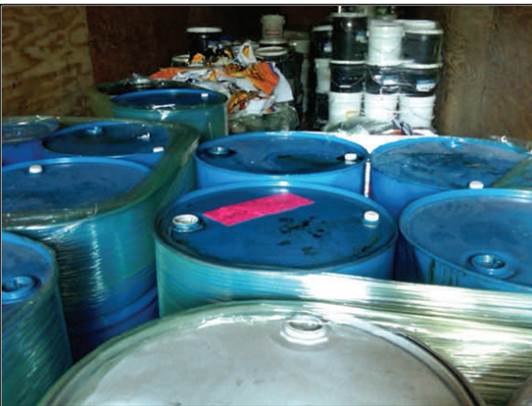
Photo of hazardous waste containers in a trailer
Containers of hazardous wastes prepared for off-site transportation.

The training requirements of the US DOT are not tiered as they are for hazardous waste generators under US EPA.  Nor is the need for training based on a threshold amount of material processed/generated.  Instead the need for training is determined by whether or not the activities engaged in meet the definition of a HazMat Employee which then require training.  A person who signs a manifest, and anyone else involved in the off-site shipment of hazardous waste, is a HazMat Employee as defined by US DOT. Pursuant to 49 CFR 172, Subpart H, a HazMat Employee must be trained and tested triennially on the following:

  • General Awareness/Familiarization
  • Function Specific
  • Emergency Response/Safety
  • Security General Awareness
  • In-Depth Security (if applicable)

Read this article for more information about the HazMat Employee training requirements.

The Uniform Hazardous Waste Manifest is a document created to meet the regulatory requirements of both the US EPA (and authorized state hazardous waste programs) and the US DOT.  As such any person involved with the completion, review, or signing of the manifest is subject to the training requirements of both the US EPA and the US DOT.  Any person involved with the off-site shipment of hazardous waste requires the training as well.  It has been my experience that even if not required by regulation, every manufacturer benefits from high quality training on the proper identification, handling, and disposal of hazardous waste and hazardous materials.

Daniels Training Services

815.821.1550/Info@DanielsTraining.com/https://danielstraining.com/

Contact me to schedule your training.

Or, register now for one of my

HazMat Employee and RCRA Training Seminars near you

Use of Placards for HazMat in Bulk Packagings

The placarding requirements for the transportation of hazardous materials can be very confusing.  Even during my years of driving a truck for Laidlaw Environmental Services I was often in doubt about placarding requirements.  I am frequently asked specific questions about placarding requirements where I must refer to 49 CFR 172, Subpart F for guidance.  Additional questions arise when one must determine the placarding requirement for bulk packagings instead of transportation vehicles.  49 CFR 172.514 is the section of the regulations that deals specifically with the placarding requirements of bulk packages and is the subject of this article.

Right at the beginning – 49 CFR 172.514(a) to be exact – the regulations make clear that it is the responsibility of the shipper and not the carrier to affix (eg. stick, attach, or fasten) the required placards to a bulk packaging.  This differs slightly from the placarding requirements for shipments of HazMat by highway found in 49 CFR 172.506 which require the shipper to provide the required placards to the driver of a motor vehicle (ie, carrier), but not to affix them.  More about the requirement of shippers to offer placards to a driver can be found here.

Contact me with any questions you may have about the transportation of hazardous materials by air, highway, vessel, or rail

International and Domestic

Daniels Training Services, Inc.

815.821.1550

Info@DanielsTraining.com

https://danielstraining.com/

Unless an exception for your HazMat packaging is identified in the regulations (see below), it must be placarded on each side and each end – all four sides.  If an exception exists for your bulk package you may use one of the following two options:

  1. Affix the applicable placards on two opposing sides only.
  2. Affix a HazMat Label on two opposite sides only per 49 CFR 172, Subpart E – specifically 49 CFR 172.406(e).

The excepted bulk packagings are as follows:

  • A portable tank with a capacity of <1,000 gallons.
  • A DOT 106 or 110 multi-unit tank car tank (railroad tank car designed to specifications).
  • Another bulk packaging – such as a bulk bag or box – with a capacity <640 cubic feet.  This does not include a portable tank, cargo tank, or tank car.
  • An Intermediate Bulk Container or IBC as defined at 49 CFR 171.8.  Read:  HazMat Labels, Markings, and Placards on an Intermediate Bulk Container
  • A Large Packaging as defined in 49 CFR 171.8.

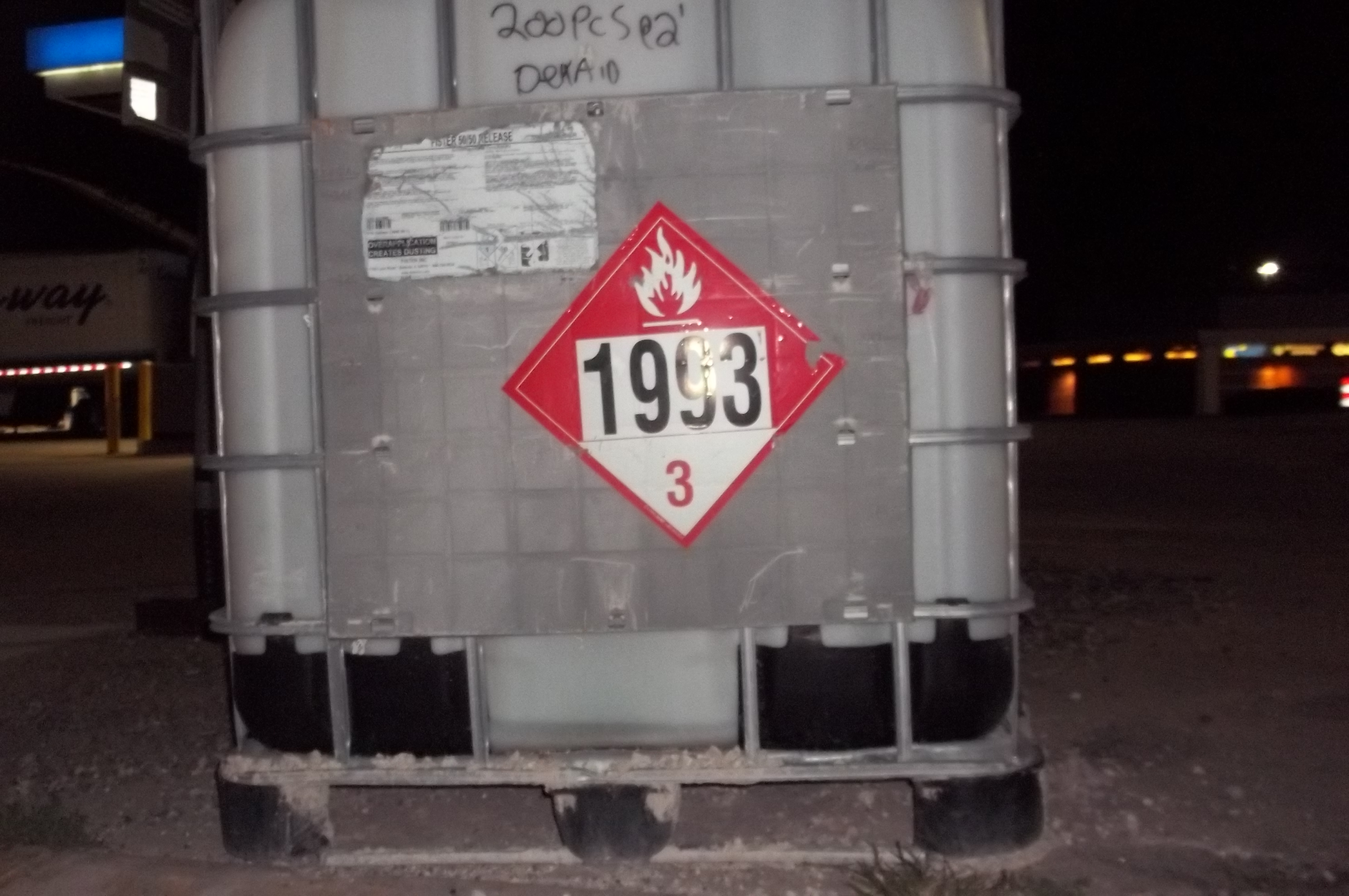
UN1993 in Intermediate Bulk ContainerIf a bulk packaging is not excepted and placarding is required, then the placards must remain even when it is empty unless it –

  • Is sufficiently cleaned of residue and purged of vapors to remove any potential hazard.
  • Is refilled with a different hazardous material to such an extent that the remaining residue is no longer hazardous.
  • It contains the residue of a Class 9 hazardous substance below the reportable quantity and any markings, labels, or placards indicating it is hazardous are removed, obliterated, or securely covered in transportation [49 CFR 173.29(b)(1)].

Contact me with any questions you may have about the generation, identification, management, and disposal of hazardous waste

Daniels Training Services, Inc.

815.821.1550

Info@DanielsTraining.com

https://danielstraining.com/

You may read more here about the requirements for shipping empty packages of hazardous materials.  You may also wish to learn much more about the Hazardous Material Regulations (HMR) of the US DOT and how they apply to you as a shipper of hazardous materials.  While you’re at it you may also wish to learn more about your regulatory requirements under the US EPA as a generator of hazardous waste.

Hazardous Waste Personnel Training

No matter the job, most professionals agree that good training is an effective way to communicate the proper procedure to perform a task.  If you generate any hazardous waste at all, you should have a method to communicate the appropriate information to affected employees; training may be the method you use.  Depending on the amount of hazardous waste you generate – take this survey to determine your generator status – you may be required to provide training of a specific format at a set frequency in order to maintain compliance.

  • Conditionally Exempt Small Quantity Generator (CESQG) of hazardous waste is not required by regulation to conduct any training for its facility personnel, though awareness of the applicable regulations and safe work practices is a good idea.
  • Small Quantity Generator (SQG) of hazardous waste is required to “ensure that all employees are thoroughly familiar with proper waste handling and emergency procedures, relevant to their responsibilities during normal facility operations and emergencies” [40 CFR 262.34(d)(5)(iii)].  While it does not explicitly require formal training, completion of some form of documented training of your employees is recommended to ensure compliance.
  • Large Quantity Generator (LQG) of hazardous waste must provide and document annual training for facility personnel as required by 40 CFR 265.16.

“But wait a minute”, you say; 40 CFR 265.16 –indeed all of 40 CFR 265 – is written for owners of hazardous waste Treatment Storage and Disposal Facilities (TSDF’s) and doesn’t apply to a generator of hazardous waste like me.  True, but the regulations for LQG’s found at 40 CFR 262.34(a)(4) mandate compliance with 40 CFR 265.16.  As an LQG you therefore have the same training requirement for your facility personnel as a TSDF.

Those who must receive training i.e., facility personnel are defined as “all persons who work at, or oversee the operations of, a hazardous waste facility, and whose actions or failure to act may result in noncompliance with the requirements of part 264 or 265 of this chapter” (40 CFR 260.10).  In other words, any employee – including temps, contractors, part or full-time, consultants, off-site managers, and others – whose lack of knowledge about the hazardous waste regulations could result in a violation of same must receive training.

One exception is employees who work only with hazardous waste in a satellite accumulation area (SAA).  This is because the regulations for SAA’s at 40 CFR 262.34(c)(1)(i) do not include a reference to the training requirements of 40 CFR 265.16 or any other.

It is up to you as the generator to determine the content of your training, US EPA only provides two performance standards:  the training must teach facility personnel…

  • “…to perform their duties in a way that ensures the facility’s compliance with the requirements of this part.”  And;
  • “…hazardous waste management procedures (including contingency plan implementation) relevant to the positions in which they are employed.”

So, you must identify what RCRA regulations are applicable to your facility and then instruct employees on what they must do to maintain compliance.  Training must also include procedures your facility has developed to manage its hazardous waste.

US EPA is clearer about what it expects the training to include regarding emergency response:  “At a minimum, the training program must be designed to ensure that facility personnel are able to respond effectively to emergencies by familiarizing them with emergency procedures, emergency equipment, and emergency systems, including where applicable:

  • Procedures for using, inspecting, repairing, and replacing facility emergency and monitoring equipment;
  • Key parameters for automatic waste feed cut-off systems;
  • Communications or alarm systems;
  • Response to fires or explosions;
  • Response to ground-water contamination incidents; and
  • Shutdown of operations.

Speaking of emergency response training, you may use this opportunity to meet other regulatory requirements, such as:

  • The Occupational Health and Safety Administration (OSHA) Hazard Communication Standard (29 CFR 1910.1200).
  • The OSHA Hazardous Waste Operations Standard or HAZWOPER (29 CFR 1910.120).
  • The Pipeline and Hazardous Materials Safety Administration (PHMSA) of the US DOT requires safety and emergency response training for HazMat Employees [49 CFR 172.704(a)(3)].

However, please note that these are the distinct training requirements of different agencies.  While it may be possible to combine them into one session, the responsibility to ensure all of the individual regulations are met is yours alone.

Some other useful information about RCRA facility personnel training:

  • An annual review of the initial training is required.  Read a US EPA interpretation letter for a more nuanced understanding of this requirement (RO 14286).
  • It may be classroom instruction or on-the-job training.
  • No duration for the training is set; it must take as long as necessary to convey the applicable information.
  • The training program must be directed by a person who has received training per the requirements of 40 CFR 265.16.
  • The requirement to properly document the training should be read carefully as it is very specific [40 CFR 265.16(d)].
  • Employees must be trained within 6 months of employment or new job assignment.

If you are an LQG, annual RCRA training is required for your facility personnel.  As noted just above, the person responsible for directing the training program must receive annual training as well.  Anyone who prepares a hazardous waste for off-site shipment or signs a manifest must also have the triennial HazMat Employee training required by PHMSA at 49 CFR 172, Subpart H.  My training – either open enrollment, or on-site – fulfills both of these training requirements in one day. I travel all over the country all year round, so check out my schedule to find a date and location convenient to you.  Or, contact me to schedule on-site training where I can train all of your HazMat Employees and facility personnel for one flat fee.

Working Relationship Between OSHA & EPA

Some companies, some industries, some locations just seem to be of greater interest to  one or more of the regulatory agencies:  the Occupational Health and Safety Administration (OSHA) of the US Department of Labor, the Environmental Protection Agency (US EPA), or the Pipeline and Hazardous Materials Safety Administration (PHMSA) of the US Department of Transportation.  It may be that one of these agencies is a common visitor to your property, but others you see less frequent or not at all.  While being inspected by one agency – let’s say OSHA – you may think you need not worry about compliance with the hazardous waste regulations enforced by the US EPA;  this is not so.  In this US EPA press release, the owner of a New Hampshire foundry faces criminal charges for the storage of hazardous waste for greater than 90 days without a permit.  There is nothing significant about the violation or the charge, what is significant is the fact that the chain of events was started when the violation was noted during OSHA inspections in April and August of 2009.  This is no accident, since 1991 the US EPA and OSHA have assisted each other in identifying and reporting potential violations of their respective regulations under a Memorandum of Understanding (MOU).

The purpose of the MOU is to establish and improve the working relationship between the US EPA & OSHA in order to improve their ability to detect potential violations and enforce their respective regulations.  The agencies agree to the fullest possible coordination between them at all levels which includes “referrals of alleged violations, and related matters concerning compliance and law enforcement…”  To do this US EPA and OSHA will exchange names and phone numbers of appropriate offices and personnel and keep such information up to date.  They will also conduct periodic training programs for each other’s personnel on the requirements of their respective regulations.  In short, US EPA will train OSHA personnel on what potential environmental violations they should look for when inspecting your company.  OSHA will do the same for US EPA personnel.

Under the MOU, an OSHA inspector must inform the US EPA if a potential environmental violation comes to their attention.  In turn, the US EPA must respond to such referrals:  “EPA shall respond to referrals from OSHA, and OSHA shall respond to referrals from EPA…” The agencies will have periodic meetings to track the progress of actions taken on these referrals.  You can expect US EPA to follow-up if OSHA informs them of a potential violation.

The MOU goes on to indicate that US EPA and OSHA may conduct joint inspections or separate.  If an alleged violation is found during a separate inspection, a referral shall be made.  Inspections may be part of an annual workplan developed by the agencies or ad hoc following an accident, injury, or reported violation.

No one wants a regulatory violation found during an inspection.  Even less do we want an unsafe or unwise situation to result in someone getting hurt or damaging the environment.  Better to know the regulations, comply with them, and keep everyone safe and the grass green.  My open enrollment training events will help you to do just that.  If you prefer, I can come to your site and train all of your employees in one day for a flat fee of $1,749.  Please contact me to discuss your training options further.

Search Website