PO Box 1232 Freeport, IL 61032

A Different Kind Of Training

A Different Kind Of Training

A Different Kind Of Training

CDL Test Center

FAQ: What instructor qualifications are required to provide FMCSA mandated ELDT?

Before we begin…

In a flurry of proposed rules, final rules, amendments to the final rule, effective dates, compliance dates, and then an extension of the compliance date, the Federal Motor Carrier Safety Administration (FMCSA) within the U.S. Department of Transportation (USDOT), mandated entry-level driver training (ELDT) for certain drivers seeking a new or updated commercial driver’s license (CDL) or those seeking certain endorsements to their CDL for the first time. Read: Minimum Training Requirements for Entry-Level Commercial Motor Vehicle Operators – Entry-Level Driver Training

As part of this new rule FMCSA created a training provider registry (TPR) to both identify trainers eligible to provide ELDT and to track the certification of drivers once ELDT is completed. FMCSA’s TPR

Applicable regulations are at 49 CFR 380, subpart G


Daniels Training Services, Inc.

815.821.1550

Info@DanielsTraining.com

https://danielstraining.com/

What are the instructor qualifications?

Theory training providers must utilize instructors that meet one of the following qualifications as defined at §380.605:

  • Instructor holds a CDL of the same (or higher) class and with all endorsements necessary to operate the CMV for which training is to be provided; and,
  • Instructor has at least 2 years of experience driving a CMV requiring a CDL of the same (or higher) class and/or the same endorsement and meets all applicable State qualification requirements for CMV instructors.

Or…

  • Instructor holds a CDL of the same (or higher) class and with all endorsements necessary to operate the CMV for which training is to be provided; and,
  • Instructor has at least 2 years of experience as a BTW CMV instructor and meets all applicable State qualification requirements for CMV instructors.

However…

  • An instructor is not required to hold a CDL of the same (or higher) class and with all endorsements necessary to operate the CMV for which training is to be provided, if the instructor previously held a CDL of the same (or higher) class and complies with all other requirements described above.
  • Training providers offering online content exclusively are not required to meet State qualification requirements for theory instructors.

And…

  • If an instructor’s CDL has been cancelled, suspended, or revoked due to any of the disqualifying offenses identified in §383.51, the instructor is prohibited from engaging in theory instruction for 2 years following the date his or her CDL is reinstated.

CDL Test CenterBehind the wheel (BTW) training providers must utilize instructors that meet one of the following qualifications as defined at §380.605.

  • Instructor holds a CDL of the same (or higher) class and with all endorsements necessary to operate the CMV for which training is to be provided; and,
  • Instructor has at least 2 years of experience driving a CMV requiring a CDL of the same or higher class and/or the same endorsement and meets all applicable State qualification requirements for CMV instructors.

Or…

  • Instructor holds a CDL of the same (or higher) class and with all endorsements necessary to operate the CMV for which training is to be provided; and,
  • Instructor has at least 2 years of experience as a BTW CMV instructor and meets all applicable State qualification requirements for CMV instructors.

However…

  • A BTW instructor who provides training solely on a range which is not a public road is not required to hold a CDL of the same (or higher) class and with all endorsements necessary to operate the CMV for which training is to be provided, as long as the instructor previously held a CDL of the same (or higher) class and with all endorsements necessary to operate the CMV for which training is to be provided, and complies with the other requirements described above.

And…

  • If an instructor’s CDL has been cancelled, suspended, or revoked due to any of the disqualifying offenses identified in §383.51, the instructor is prohibited from engaging in BTW instruction for 2 years following the date his or her CDL is reinstated.

Contact me the next time your USDOT HazMat Employee, training is due to expire.

Conclusion:

If you’ve read this far you are likely interested in being an instructor of ELDT. (Training providers that wish to provide the ELDT required after February 07, 2022 must register with FMCSA in order to receive their unique TPR number.)

ELDT training isn’t for me. I will continue to provide the training required by the Pipeline and Hazardous Materials Safety Administration (PHMSA) within USDOT, for any person with a direct affect on the safe transportation of hazardous materials (HazMat): HazMat Employee Training and, if necessary, HazMat Driver Training. This training requirement applies regardless of the applicability of the ELDT.

For more Information:
  • To learn more about ELDT
  • For more information about the FMCSA’s Training Provider Registry.
    • Interested parties may sign up to receive news and updates from FMCSA about the TPR and the new requirements for CDL applicants, training providers, and State Driver Licensing Agencies (SDLAs).
    • States, or their third-party vendors, will need to modify their IT systems to retrieve data from the TPR. Training providers will also have the option to set up an interface to send data to the TPR web service. FMCSA will provide materials and information needed to meet the technical requirements for these web interfaces.
  • Contact FMCSA’s Office of Policy: FMCSA / Office of Policy (MC-P) / 1200 New Jersey Avenue, SE / Washington, DC 20590 / 202.366.2551
CDL Driver Training

Q&A: Do all CDL drivers require ELDT?

A question June 23, 2020:

Daniel,
Do you still respond to questions regarding regulation?
If you do , my question is this….Do all CDL drivers that deal in hazmat required ELDT training to conform to 49CFR 380.503. Is it just for interstate drivers or both interstate and intrastate?
All our drivers work for the company and only drive intrastate.
Thank you in advance.

Some background information from Daniels Training Services:
The FMCSA sets the minimum standards for Commercial Driver’s Licenses
  • ELDT – Entry Level Driver Training
  • Interstate transportation is movement between two or more states.
  • Intrastate transportation is movement entirely within a single state.
  • FMCSA – Federal Motor Carrier Safety Administration. FMCSA regulates and provides safety oversight of commercial motor vehicles (CMVs).
  • FMCSA passed new regulations February 06, 2017 that established new minimum training standards for certain individuals in the following situations:
    • Those applying for their commercial driver’s license (CDL) for the first time.
    • Those applying for an upgrade of their CDL (e.g., a Class B CDL holder seeking a Class A CDL).
    • Those applying for a hazardous materials (H), passenger (P), or school bus (S) endorsement on their CDL for the first time.
  • The above must complete ELDT provided by an entity listed on FMCSA’s Training Provider Registry (TPR).
  • FMCSA extended the compliance date from February 07, 2020 to February 07, 2022.
  • Read it in the Federal Register: 81 FR 88732

Daniels Training Services, Inc.

815.821.1550

Info@DanielsTraining.com

https://danielstraining.com/

My reply on June 29th:

Thank you for contacting me. Please see below for a reply to your question.

  • The training referred to at 49 CFR 380.503 is applicable only until 02.07.20.
  • After 02.07.20 regulations of 49 CFR 380, subpart F apply. These training requirements apply to – among others – the following:
    • Drivers applying for new Class A or B CDL.
    • Drivers upgrading CDL (e.g., from B to A).
    • Drivers applying for HazMat endorsement for first time.
  • If a driver had the HazMat endorsement prior to 02.07.20, they do not need ELDT.
  • If applicable, it applies to both interstate and intrastate.
  • Note: a driver may transport HazMat but not require the HazMat endorsement on their CDL. That driver may never require ELDT.
  • FMCSA has extended the compliance date to 02.07.22.

Any employee with a direct effect on the safe transportation of hazardous materials must receive USDOT HazMat Employee Training.

I hope this helps. Please contact me with any other questions.

That seemed to do it:

Thank you.  That was well presented and understood.  Thank you again

Conclusion:

As I noted in my email reply to the question: not every driver of a motor vehicle transporting HazMat requires the HazMat endorsement on their CDL, e.g., driver transports only Class 9 Miscellaneous. However, any driver transporting any amount of HazMat will require HazMat Employee training and – likely – Driver Training.

Package of Lithium Metal Battery

Q&A: What hazard communication is required on a package of a lithium metal cell (button cell battery) in equipment?

A question (09.30.20):

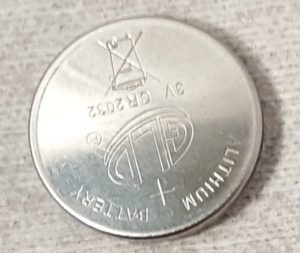
We are a company the produces products that contain a lithium metal cell battery as a back up battery for the time and date. The cell contains 0.015g of lithium, and the products have one of these built into them.Lithium ion button cell battery

I have gone through the training program and am certified for shipping batteries, but as you are already well aware, the regulations are a VERY difficult read. I have spent 30+ hours pouring through them thus far, largely because we use lithium metal cells and we use lithium ion batteries as well (34g of lithium in each) , and the regulations are different between them.

My question is this. In reading through 49 CFR 173.185, I am confused by the content in 173.185(c) Exceptions for smaller cells and batteries. If I am reading that correctly, as long as the singular lithium metal cell and in some models a singular lithium ion battery are built into our equipment and are mechanically secure and the product is in an OFF state, we are not required to apply the lithium warning labels on the products. Where we need apply the special markings is when we ship the cells or batteries out as a replacement part.

In your opinion, am I understanding this correctly?

Your confirmation/clarification on this would be greatly appreciated.

Daniels Training Services, Inc.

815.821.1550

Info@DanielsTraining.com

https://danielstraining.com/

My reply that same day:

Thank you for contacting me.

You are not entirely correct. Please see below for clarification.

  • Lithium ion and lithium metal batteries have the same packaging requirements under the USDOT/PHMSA Hazardous Materials Regulations (HMR). As you indicate, these are found at 49 CFR 173.185.
  • You may be confused with the packaging requirements for transportation of lithium batteries by air according to the Dangerous Goods Regulations of the International Air Transport Association (IATA). Those have separate packing instructions for lithium ion batteries (PI 965, 966, 967) and lithium metal batteries (PI 968, 969, 970).
  • Also you refer to lithium metal cells and lithium ion batteries as having “…34g of lithium in each”. While lithium metal cells and batteries are classified according the grams (g) of lithium they contain, a lithium ion cell or battery is classified by its Watt-hour (Wh) rating.
  • Also, a lithium metal cell or battery with 34 grams of lithium metal is not a smaller lithium battery applicable for the packaging exception at 49 CFR 173.185(c). It instead is subject to full packaging requirements of 49 CFR 173.185(a-b). A lithium ion battery with a Wh rating of 34 is a smaller lithium ion battery eligible for the smaller lithium battery exception at 49 CFR 173.185(c). See below for a table summarizing the classification of lithium batteries based on lithium content.
Industry and EPA hazardous waste No.Hazardous wasteHazard code
F020Wastes (except wastewater and spent carbon from hydrogen chloride purification) from the production or manufacturing use (as a reactant, chemical intermediate, or component in a formulating process) of tri- or tetrachlorophenol, or of intermediates used to produce their pesticide derivatives. (This listing does not include wastes from the production of Hexachlorophene from highly purified 2,4,5-trichlorophenol.)(H)
F021Wastes (except wastewater and spent carbon from hydrogen chloride purification) from the production or manufacturing use (as a reactant, chemical intermediate, or component in a formulating process) of pentachlorophenol, or of intermediates used to produce its derivatives(H)
F022Wastes (except wastewater and spent carbon from hydrogen chloride purification) from the manufacturing use (as a reactant, chemical intermediate, or component in a formulating process) of tetra-, penta-, or hexachlorobenzenes under alkaline conditions(H)
F023Wastes (except wastewater and spent carbon from hydrogen chloride purification) from the production of materials on equipment previously used for the production or manufacturing use (as a reactant, chemical intermediate, or component in a formulating process) of tri- and tetrachlorophenols. (This listing does not include wastes from equipment used only for the production or use of Hexachlorophene from highly purified 2,4,5-trichlorophenol.)(H)
F026Wastes (except wastewater and spent carbon from hydrogen chloride purification) from the production of materials on equipment previously used for the manufacturing use (as a reactant, chemical intermediate, or component in a formulating process) of tetra-, penta-, or hexachlorobenzene under alkaline conditions(H)
F027Discarded unused formulations containing tri-, tetra-, or pentachlorophenol or discarded unused formulations containing compounds derived from these chlorophenols. (This listing does not include formulations containing Hexachlorophene sythesized from prepurified 2,4,5-trichlorophenol as the sole component.)(H)

Please forgive me if the above clarifications seem dismissive, but I wanted to clear up any misconceptions before proceeding. You are correct that the regulations for the transportation of lithium batteries are very complex.

Please see below for an answer to your question:

  • All lithium cells and batteries, regardless of lithium content or whether lithium metal or lithium ion, if contained in equipment have the same basic packaging requirements under the HMR [49 CFR 173.185(b)(4)]:
    • Outer packaging, if used, must be constructed of suitable materials of adequate strength and design…
    • Outer packaging isn’t required if batteries are contained in equipment that provides equivalent protection.
    • Equipment must be secured against movement within the outer packaging (if used, see above).
    • Equipment must be packed to prevent accidental operation during transport. Note, this is more stringent than, “…product is in an OFF state”.
  • Hazard communication per 49 CFR 173.185(c)(3):
    • A package solely of button cell batteries contained in equipment is not required to display the lithium battery mark regardless of the number of batteries or number of packages in the consignment. This may be your situation as you refer to a lithium metal cell battery as a backup battery for time and date.
    • A package solely of smaller lithium cells or batteries (not button cell) contained in equipment must display the lithium battery mark only under the following circumstances:
      • More than four (4) cells contained in equipment.

Or…

      • More than two (2) batteries contained in equipment.

Or…

      • More than two (2) packages of either per consignment.
      • So, unless your package or consignment is above one of those thresholds, the lithium battery mark is not required to be displayed on a package of a lithium cell or battery contained in equipment.
Package of Lithium Metal Battery
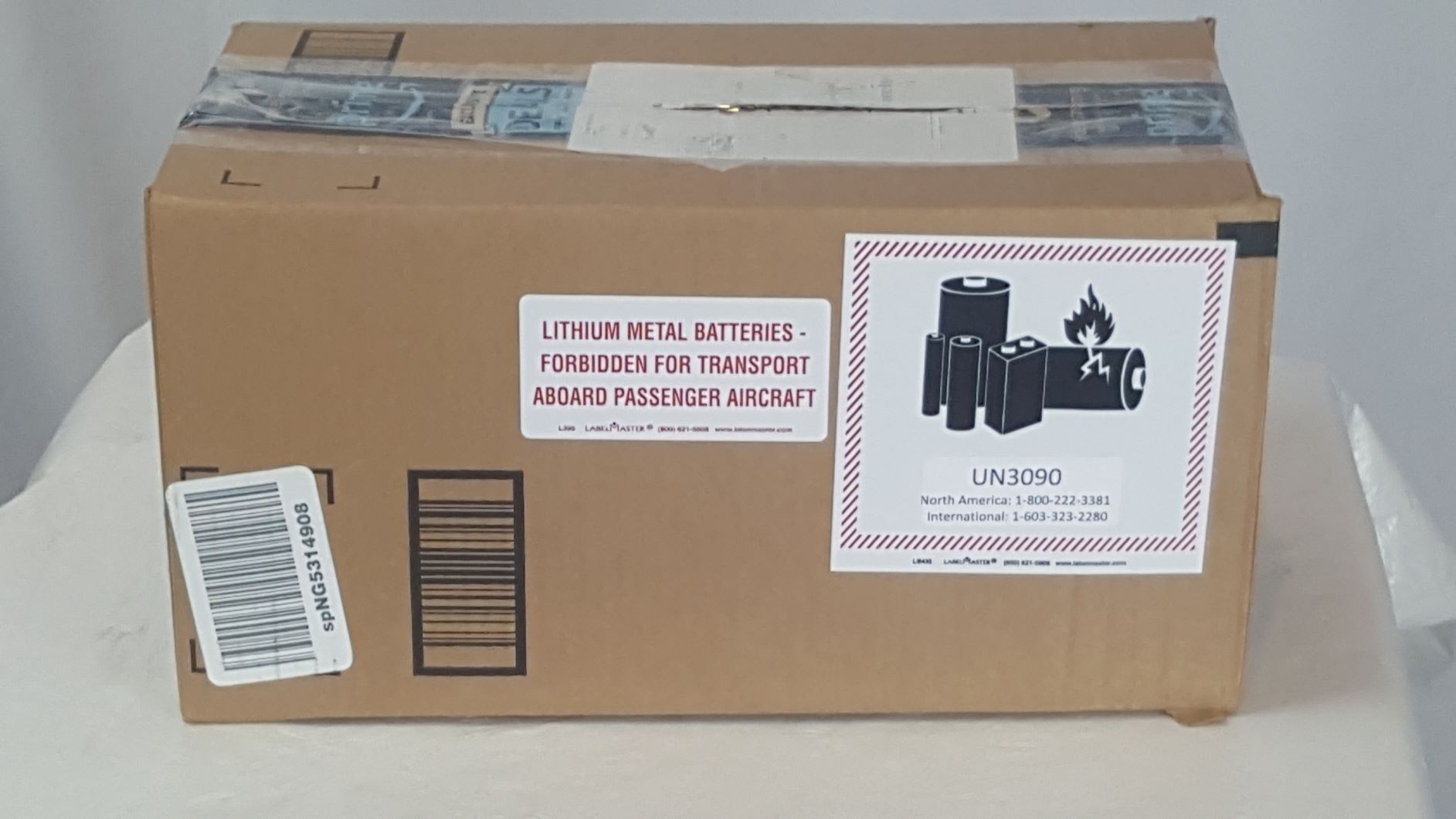
Smaller lithium metal battery packed alone
    • Also, pursuant to §173.185(c)(1)(iii) a package of smaller lithium cells or batteries contained in equipment must display the Cargo Aircraft Only label or a specified package mark indicating the package is not acceptable as cargo on a passenger aircraft if the net quantity of lithium battery in the package is more than 5 kg.
    • A smaller lithium cell or battery packed alone must always display the lithium battery mark. It must also display the Cargo Aircraft Only label or a specified package mark indicating the package is not acceptable as cargo on a passenger aircraft.

I suggest you contact me for further clarification.

Like this article?

Subscribe to my Monthly Newsletter

No marketing emails!

He didn’t. So I guess that was it.
Conclusion:

The regulations for the transportation of lithium batteries (cells or batteries) are complex and they change frequently. Another factor is the differing regulations for different modes of transport: highway and rail (i.e., ground) v. vessel v. aircraft. Contact me with questions or if you require the training necessary to safely transport lithium batteries.

Status of the IMDG Code for 2021

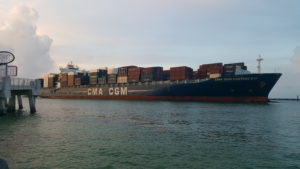
The International Maritime Organization (IMO) is a specialized agency of the United Nations responsible for the safety and security of international shipping and to prevent pollution from ships. Just one of its responsibilities is the development of the International Maritime Dangerous Goods Code (IMDG Code). Shore-based personnel who prepare dangerous goods for international transport by vessel must comply with the IMDG Code.Cargo Vessel

The IMDG Code is updated every two years in a standard amendment cycle. This is what that cycle should have looked like if 2020 was a normal year:

  • In the 4th quarter of an even-number year a new edition of the Code is published incorporating amendments added by IMO. So, in the Fall of 2020 the 2020 Edition, incorporating Amendment 40-20 should have been published.
  • On January 1 of the following odd-numbered year voluntary compliance with the new edition begins. The regulations of the previous edition remain valid in this transition year. So, as of January 1, 2021 both the 2020 Edition, incorporating Amendment 40-20 and the 2018 Edition, incorporating Amendment 39-18 should have been valid.
  • On January 1 of the following even-numbered year the new Edition comes into force, compliance with its regulations is mandatory and the previous Edition is obsolete. So, on January 1, 2022 compliance with the 2020 Edition, incorporating Amendment 40-20 should be mandatory and the 2018 Edition, incorporating Amendment 39-18 should be obsolete.

View this infographic to see how the IMDG Code amendment cycle works in a normal year

Daniels Training Services, Inc.

815.821.1550

Info@DanielsTraining.com

https://danielstraining.com/

2020 was not a normal year.

IMO’s meeting schedule was disrupted by the global public health crisis and the 2020 Edition of the IMDG Code is not yet available. IMO hopes to have it published in early 2021. Therefore, IMO announced a five-month delay in the mandatory compliance with the 2020 Edition of the IMDG Code.

  • The new mandatory date is June 1, 2022 instead of January 1, 2022.
  • Voluntary compliance remains January 1, 2021. (which I really don’t see the point of since the IMDG Code isn’t expected to be printed until several months into 2021!)
What this means to you:

Until the 2020 Edition of the IMDG Code is published you may continue to comply with the 2018 Edition. Even after the publication of the 2020 Edition on ??.??.21, you may continue to comply with the 2018 Edition during this transition year. And you may continue to comply with the 2018 Edition through January 1, 2022 (the normal cut-off) until June 1, 2022 which is the new date for mandatory compliance with the 2020 Edition.

Contact me the next time your USDOT, IATA (air), or IMO (vessel) training is due to expire.

Got it?

If you prepare a dangerous good for international transportation by vessel you – and perhaps other employees – must receive initial and triennial IMO Training and USDOT/PHMSA HazMat Employee Training. I can provide both.

Limited quantity packages

Changes to the Limited Quantity Exception for Hazardous Materials in 2021

In a Final Rule issued November 25, 2020 the Pipeline and Hazardous Materials Safety Administration within the U.S. Department of Transportation (USDOT/PHMSA) amended it Hazardous Materials Regulations (HMR) to clarify, update, and provide relief from various regulatory requirements. A review of the entire Final Rule and its impact on the HMR is not the purpose of this article (whew!). The purpose of this article is to identify and explain two changes to the HMR from this Final Rule related to the classification and packaging of certain hazardous materials (HazMat) under the limited quantity exception.

Before we begin…

You can read more about the Final Rule here: USDOT/PHMSA Makes Miscellaneous Changes to Hazardous Materials Regulations to Reduce Regulatory Burden

Scope and Applicability:
  • Notice of Proposed Rulemaking (NPRM) issued: August 14, 2019
  • Final rule published in Federal Register: November 25, 2020
  • Effective date: December 28, 2020
  • These changes to the HMR apply solely to HazMat offered for transportation and/or transported anywhere to, from, or through the U.S. However, the changes to the Limited Quantity exception were done at least in part to harmonize the HMR with existing international regulations. Therefore, the relief from regulation offered by this Final Rule already exist in the international regulations of the following:

Interested in a Webinar that covers this topic, and more!

My Webinar Training Schedule

Changes to Limited Quantity Exception:

Of the nineteen changes made by this Final Rule, two of them affect the regulations of the limited quantity exception:

Limited Quantity for Hydrogen Peroxide:

The rule establishes a limited quantity provisions of 1 L per inner container for UN2014, Hydrogen peroxide, aqueous solution. This is for solutions between 20 and 60% hydrogen peroxide. USDOT/PHMSA recognized that international regulations and standards already permitted this substance to be transported as a limited quantity, so it was an anomaly that the HMR didn’t allow such an exception. Therefore, USDOT/PHMSA revised Column (8A) of the HMT for “UN2014, Hydrogen peroxide aqueous solution” to allow limited quantity packaging for this material by referencing the exception in 49 CFR 173.152.

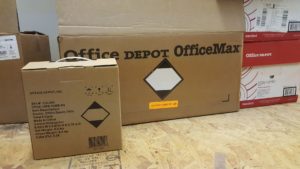
Limited Quantity Harmonization:Two limited quantity packages

A petitioner requested USDOT/PHMSA to extend the eligibility of the limited quantity exception to 45 additional hazardous materials. Just as for UN2014, Hydrogen peroxide aqueous solution (see above), these HazMat were already eligible for the exception under the international standards. USDOT/PHMSA conducted a technical review and determined that a total of 114 entries on the Hazardous Materials Table – including the 45 originally requested – are not in alignment with the UN Model Regulations permitting limited quantity shipment of hazardous materials. During its review USDOT/PHMSA also determined that these hazardous materials currently without limited quantity exceptions are of the same hazard classes as materials for which the HMR already contains an exception allowing limited quantity shipment.

Based on its technical review USDOT/PHMSA came to the following conclusions:

  • Prior to this revision, the HMR’s limited quantity exception was inconsistent with the international standards.
  • Expanding the applicability of the limited quantity exception would not adversely affect safety.

Daniels Training Services, Inc.

815.821.1550

Info@DanielsTraining.com

https://danielstraining.com/

As a result, the following hazardous materials are now eligible for the limited quantity exception:

USDOT HazMat EmployeeDecember 4thMore InformationREGISTER NOW
USEPA Hazardous Waste (RCRA)December 18thMore InformationREGISTER NOW

Like this article?

Subscribe to my Monthly Newsletter

No marketing emails!

Conclusion:

Significant changes to the Hazardous Materials Regulations can occur with or without your knowledge. While USDOT/PHMSA HazMat Employee training is required triennially (every three years), it may not hurt to attend training more frequently.

USDOT/PHMSA Makes Miscellaneous Changes to Hazardous Materials Regulations to Reduce Regulatory Burden

The Bullet:

The Pipeline and Hazardous Materials Safety Administration (PHMSA) is amending the Hazardous Materials Regulations in response to 24 petitions for rulemaking submitted by the regulated community between February 2015 and March 2018. This final rule updates, clarifies, or provides relief from various regulatory requirements without adversely affecting safety. PHMSA also, as of the effective date of this final rule, withdraws its September 28, 2017 enforcement discretion regarding the phase-out of mobile refrigeration systems.

Final rule published in Federal Register (85 FR 75680)

Who:
  • USDOT HQIssued by the Pipeline and Hazardous Materials Safety Administration within the U.S. Department of Transportation (USDOT/PHMSA).
  • For further information contact:
    • Steven Andrews at (202) 366-8553 in the Office of Hazardous Materials Safety / USDOT/PHMSA / 1200 New Jersey Avenue SE / Washington, DC 20590-0001.
What:
  • Document Citation: 85 FR 75680
  • Agency/Docket Number: PHMSA-2017-0120 (HM-219C)

Like this article?

Subscribe to my Monthly Newsletter

No marketing emails!

In this final rule, PHMSA is:

  • Revising § 173.31 to prohibit the use of tank cars with shells or heads constructed of non-normalized steel in the transportation of poison-by-inhalation hazard (PIH) materials by rail after December 31, 2020.
  • Harmonizing availability of limited quantity shipping exceptions for more than 100 entries for corrosive materials in the Hazardous Materials Table (HMT, § 172.101).More…

    Limited Quantity in strong outer packaging
    USDOT/PHMSA is increasing the numbers of hazardous materials eligible for the limited quantity exception
  • Revising Column (8A) of the HMT for “UN2014, Hydrogen peroxide aqueous solution” to allow limited quantity packaging for this material by referencing the exception in § 173.152. More…
  • Revising § 172.302(b)(2) to allow a minimum height of 12 mm (0.47 inches) for a proper shipping name marked on a portable tank with a capacity of less than 3,785 L (1,000 gallons).
  • Revising § 173.28(c)(1)(i) to allow for regulatory flexibility for cleaning metal drums for reuse and clarifying the existing cleaning standard.
  • Revising § 173.5b to allow for the continued use of portable and mobile refrigerator systems placed into service prior to 1991 that are rated to a minimum service pressure of 250 pounds per square inch (psig).
  • Incorporating by reference updated editions of multiple Compressed Gas Association (CGA) publications into § 171.7.
  • Removing the reference to special provision 103 in § 172.101 from Column (7) for four HMT entries.
  • Removing the words “manufactured before September 1, 1995” from § 180.417(a)(3) to allow for an alternative report for cargo tanks manufactured after September 1, 1995.
  • Revising the basis weight tolerance provided in § 178.521 from ±5 percent to ±10 percent from the nominal basis weight reported in the initial design qualification test report for paper shipping sacks.
  • Revising § 173.308(d)(3) to harmonize with the International Maritime Dangerous Goods (IMDG) Code by removing the requirement for a closed transport container to have the warning mark “WARNING—MAY CONTAIN EXPLOSIVE MIXTURES WITH AIR—KEEP IGNITION SOURCES AWAY WHEN OPENING” when transporting lighters.
  • Revising §§ 173.244(a)(2) and 173.314(c) to make the “interim” rail tank car specifications the “final” specifications for the transportation of PIH materials.
  • Revising § 173.31 to prohibit the use of certain rail tank cars for the transportation of PIH materials after December 31, 2027.
  • Allowing all waste materials to be managed in accordance with the lab pack exception and associated paragraphs in § 173.12 irrespective of whether they meet the definition of a hazardous waste per Environmental Protection Agency (EPA) regulations implementing the Resource Conservation and Recovery Act (RCRA).USEPA Special Wastes
  • Incorporating by reference the 2017 edition of the American Society of Mechanical Engineers (ASME) Boiler and Pressure Vessel Code (BPVC) Sections II (Parts A and B), V, VIII (Division 1), and IX into § 171.7.
  • Revising §§ 171.23, 173.302, and 173.304 to permit the import of filled pi-marked foreign pressure receptacles for intermediate storage, transport to point of use, discharge, and export as well as the import of certain pi-marked foreign pressure receptacles for filling, intermediate storage, and export.
  • Revising § 172.101(c) to clarify that the word “stabilized” must be included as part of the proper shipping name when stabilization is required for transportation.
  • Revising § 171.7(r) to update the address of the Institute of Makers of Explosives (IME) and to incorporate by reference the Association of Energy Service Companies (AESC)/IME Jet Perforating Gun (JPG) Standard, also known as the “Guide to Obtaining DOT Approval of Jet Perforating Guns using AESC/IME Perforating Gun Specifications,” Ver. 02, dated September 1, 2017.
  • Incorporating by reference the January 1, 2018, edition of the American Pyrotechnics Association (APA) Standard 87-1 A, B, C, “Standard for Construction and Approval for Transportation of Fireworks, Novelties, and Theatrical Pyrotechnics,” replacing the December 1, 2001 edition into § 171.7.

Contact me with any questions you may have about the transportation of hazardous materials by air, highway, vessel, or rail

International and Domestic

Daniels Training Services, Inc.

815.821.1550

Info@DanielsTraining.com

https://danielstraining.com/

Where:
  • The Hazardous Materials Regulations of USDOT/PHMSA are applicable to the transportation of hazardous materials in commerce to, from, or through the U.S.
  • Transportation subject to regulation is both interstate and intrastate.
When:
  • Notice of proposed rulemaking (NPRM) published: August 14, 2019
  • Comment period for NPRM ended: October 15, 2019
  • Final rule published in Federal Register: November 25, 2020
  • Effective date: December 28, 2020
  • Delayed compliance date: Except as provided by the compliance timelines set forth in this final rule in connection with petitions for rulemaking P-1646, P-1691 and P-1692, compliance with the amendments adopted in this final rule is required beginning November 26, 2021.
Why:
  • This final rule revises the Hazardous Materials Regulations (HMR) in response to petitions for rulemaking submitted by shippers, carriers, manufacturers, and industry representatives.
  • These revisions update, clarify, or provide relief from various regulatory requirements without adversely affecting safety.

Daniels Training Services, Inc.

815.821.1550

Info@DanielsTraining.com

https://danielstraining.com/

How:
  • The Administrative Procedure Act [1] requires Federal agencies to give interested persons the right to petition an agency to issue, amend, or repeal a rule.
  • USDOT/PHMSA implementing regulations at 49 Code of Federal Regulations (CFR) 5.13(c) and 106.95, respectively, allow persons to ask PHMSA to add, revise, or delete a regulation by filing a petition for rulemaking containing adequate support for the requested action.
Conclusion:

The HMR are revised as determined to be necessary by USDOT/PHMSA. While some of those revisions may increase the regulatory burden of shippers and carriers of HazMat, the regulations of this final rule are intended to reduce that regulatory burden. Regardless of the intent of the change, as a person with a direct affect on the safe transportation of hazardous materials – i.e., a HazMat Employee – you must comply with the Hazardous Materials Regulations. My HazMat Employee training can help you to maintain this compliance

Significant Changes and Amendments to the 62nd Edition (2021) of the IATA Dangerous Goods Regulations

The International Air Transport Association (IATA) publishes a new edition of its Dangerous Goods Regulations for each calendar year. In effect for the remainder of calendar year 2020 is the 61st edition. Beginning January 1, 2021 all transport of dangerous goods subject to IATA’s Dangerous Goods Regulations must be in compliance with the 62nd edition. The purpose of this article is to summarize the significant changes in store for 2021 in the 62nd edition.

Before we begin…
  • UPDATE: On January 18, 2021 IATA posted it’s first Addendum to the 62nd Edition of the IATA Dangerous Goods Regulations. These revisions are effective as of January 1, 2021.
  • UPDATE TO THE UPDATE: On February 23, 2021 IATA posted Addendum II to the 62nd Edition of the IATA Dangerous Goods Regulations. These revisions are effective January 1, 2021.
  • The IATA Dangerous Goods Regulations is a “field manual” of the Technical Instructions of the International Civil Aviation Organization (ICAO).
  • The ICAO Technical Instructions are updated every two years. However, the IATA Dangerous Goods Regulations are updated every calendar year due to frequent changes within the airline industry and a desire for greater safety and efficiency in air transportation of dangerous goods.
  • What’s inside the IATA Dangerous Goods Regulations? Good question:
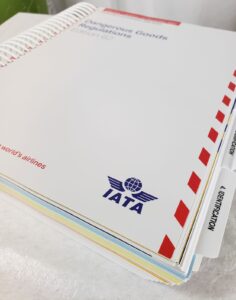
    IATA DGR 62nd Edition
    The 62nd Edition of the IATA Dangerous Goods Regulations is effective from January 1, 2021 to December 31, 2021
    • Section 1 – Applicability: shipper and operator responsibilities, training, security, incident reporting
    • Section 2 – Limitations: forbidden and hidden goods, storage and transport quantities, transport by post, transport by passengers/crew, limited quantity exception, excepted quantity exception, State and operator variations
    • Section 3 – Classification: defining criteria of hazard classes and divisions, multiple hazards, Packing Group
    • Section 4 – Identification: list of dangerous goods (blue pages), numerical cross-reference list, special provisions
    • Section 5 – Packing Instructions (yellow pages): Packing instructions – fully regulated and limited quantity – for all dangerous goods by passenger and cargo aircraft (PAX) and cargo aircraft only (CAO)
    • Section 6 – Packaging Specifications: inner packaging, UN, construction and testing, limited quantity
    • Section 7 – Marking and Labeling (pink pages): package marks, hazard labels, handling labels
    • Section 8 – Documentation (more pink pages): shipper’s declaration for dangerous goods, air waybill
    • Section 9 – Handling: storage, loading, inspection, information provision, reporting, training, document retention for operators (air carriers)
    • Section 10 – Radioactive material (a few more pink pages): transport, limitations, classification, identification, packing, testing, labelling, documentation, handling
    • Appendices: A-I
    • Index

Contact me with any questions you may have about the transportation of hazardous materials by air, highway, vessel, or rail

International and Domestic

Daniels Training Services, Inc.

815.821.1550

Info@DanielsTraining.com

https://danielstraining.com/

If a visual will help, watch this short video describing the IATA Dangerous Goods Regulations.

Scope and Applicability:
  • As noted above, this article will only address the significant changes to the 62nd Edition of the IATA Dangerous Goods Regulations for 2021.
  • This article is only a summary of a document available on the IATA website: Significant Changes and Amendments to the 62nd Edition (2021). Read it for a more thorough description of these changes and amendments for 2021.
  • Even the document available from IATA is not meant to be an exhaustive listing of all changes to the 62nd Edition. Make sure you do your research to confirm compliance.
  • This short video explains the reference marks used in the IATA Dangerous Goods Regulations to indicate changes to the DGR from the previous edition.
Significant Changes and Amendments to the 62nd Edition of the IATA Dangerous Goods Regulations for 2021:
Section 1 – Applicability

1.5 – Training Requirements. The training requirements have been revised to implement a competency-based approach to dangerous goods training and assessment. These changes were originally shown in Appendix I – Impending Changes of the 61st Edition (2020) and are now found in subsection 1.5 of the 62nd Edition for 2021. During a two-year transition period (until December 31, 2022) the training requirements from the 61st Edition may continue to be used. For this reason subsection 1.5 from the 61st Edition has been moved to Attachment A of Appendix H in the 62nd Edition.

Competency-based training is an effort by IATA to provide training focused on the key competencies and skills that each employee needs in order to perform specific tasks in the packaging, loading, and shipping of dangerous goods by air. What it means is that as of 12.31.22 your IATA Dangerous Goods training will have to change.

Other changes were made to the list of exceptions at 1.2.7 to include dangerous goods required for preservation of organs intended for transplant and pest management activities and new entries were added to the indicative list of high consequence dangerous goods in Table 1.7.A.

Section 2 – Limitations

Subsection 2.3 – revised to allow for passengers to carry the following dangerous goods:

  • Nickel-metal hydride or dry batteries
  • Self-inflating safety device and spare gas cartridges
  • Portable electronic devices (PED) and spare batteries for PED

Subsection 2.4 – revised to clarify the packing instructions (PI 954) required when dry ice is used as a refrigerant for UN3373 (Biological substance, category B) when the dangerous good is to be transported by post.UN3373 Mark

Contact me the next time your USDOT, IATA (air), or IMO (vessel) training is due to expire.

Section 3 – Classification
  • 3.6.2.5 – revised to add a new criteria to address solid medical waste containing Category A infectious substances.
  • 3.8.2 – revisions to the criteria for assignment of Packing Groups to corrosive substances and mixtures.
Section 4 – Identification

Several amendments to the List of Dangerous Goods in subsection 4.2. Including:

  • Addition of UN0511, UN0512, & UN0513 for Detonators, electronic in divisions 1.1B, 1.4B, and 1.4S respectively
  • Addition of new proper shipping name, Dangerous goods in articles to UN 3363
  • Addition of UN3549 for Medical waste, Category A, affecting animals or humans
  • UN2216, Fish meal, stabilized is no longer forbidden. It is now permitted on both passenger aircraft and cargo aircraft only
  • Packing instruction number for UN3291, Biomedical waste, n.o.s., Clinical waste, unspecified, n.o.s., Medical waste, n.o.s., and Regulated medical waste, n.o.s. has been changed from PI 622 to PI 621
  • “Stabilized” was added to the proper shipping name for UN2522, 2-Dimethylaminoethyl methacrylate

Amendments to special provisions in subsection 4.4 include:

  • Inclusion of the State of the operator as an approving authority (previously it was only the State of origin) for lithium batteries shipped under special provisions A88 (prototypes) and A99 (more than 35 kg OK for cargo aircraft only).
  • Special provisions A88 and A99 revised to require the packing instruction number shown on the Shipper’s Declaration be the one identified in the special provision from the Supplement to the ICAO Technical Instructions: PI 910 for A88 and PI 974 for A99.
  • To reflect the addition of a new proper shipping name to UN3363 (Dangerous goods in articles), the words “machinery or apparatus” in special provision A107 were replaced by “article”.
  • Revisions to A145 for waste gas cartridges and waste receptacles, small, containing gas.
  • Significant revisions to A154 to address transport of damaged and defective lithium batteries.
  • Revision to A201 to allow for the transport of lithium batteries as cargo on passenger aircraft if urgent medical need and with approval of State of origin and operator.

New special provisions:

  • A215 permits shipper to use a listed proper shipping name as the technical name for UN3077 and UN3082.
  • A219 (assigned to UN2216, Fish meal, stabilized) specifies antioxidants must be added to fish meal to prevent spontaneous combustion.
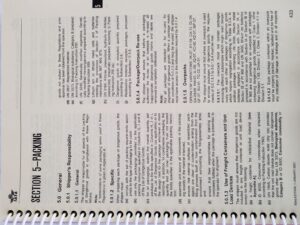
Section 5 – PackingSection 5 - Packing Instructions of IATA DGR
  • 5.0.2.5 – new text added clarifies a packaging may meet more than one tested design type and may bear more than one UN specification mark.

Revisions to packing instructions include:

  • PI 378 and PI 972 – permits fuel tanks of machinery to have up to 1/4 of a tank of fuel where the machinery cannot be loaded other than upright.
  • PI 457, PI 463, PI 465, PI 470, PI 471, PI 479, PI 482, PI 490, PI 491, and PI 555 – single packagings permitted by these packing instructions now align with those permitted in the UN Model Regulations and elsewhere in the DGR.
  • PI 492, PI 870, PI 971, and PI 972 – cells and/or batteries must be packed directly into the outer packagings.
  • PI 622 – renumbered to PI 621 to align with the UN Model Regulations.
  • PI 650 and PI 959 – diamond-shaped mark with the UN number must appear on one side of the package.
  • PI 956 – includes reference to UN 2216, Fish meal, stabilized.
  • PI 957 – allows for both combination and single packagings.
  • PI 962 – includes reference to the new proper shipping name Dangerous goods in articles and to use “article’ or “articles” in place of “machinery or apparatus”.
  • PI Y963 – a unit load device prepared by a single shipper may contain dry ice as a refrigerant for consumer commodities.
  • PI 965 to PI 970:
    • damaged or defective lithium cells or batteries are forbidden for air transport.
    • when section II of packing instructions are followed and packages from multiple packing instructions are on one air waybill, the compliance statement may be combined into a single statement. Examples are included in 8.2.7.
  • PI 967 and PI 970:
    • equipment must be secured against movement in the outer packaging.
    • multiple pieces of equipment in a package must be packed to prevent damage due to contact with other equipment in the package.

Daniels Training Services, Inc.

815.821.1550

Info@DanielsTraining.com

https://danielstraining.com/

Section 6 – Packaging Specifications and Performance Tests

Revisions to Section 6 include:

  • 6.0.4.1 and 6.5.3.1 – clarification of size of UN specification marks on packagings.
  • 6.0.4.2.1(f) – clarification of the application of the year of manufacture for plastic drums and jerricans.
  • 6.0.7 – new provision for packagings tested to more than one design type.
  • 6.1.7.2 – revision to maximum capacity for metal aerosols.
  • 6.2.2.7 and 6.2.7.7 – suitable internal protective coatings or treatments must be applied to aluminum and other metal drums if not compatible with contents. This provision already exists for steel drums and steel and aluminum jerricans.
  • 6.4.2 – revisions to the ISO references for UN cylinders and closed cryogenic receptacles.
Section 7 – Marking and LabellingSection 7 of IATA Dangerous Goods Regulations
  • 7.1.4.4.1 – the height of the UN/ID number and the letters “UN” or “ID” on packages may be smaller than 12 mm depending on the size of the package.
  • 7.1.5.5.3 – minimum dimensions of lithium battery mark have been revised.
Section 8 of IATA Dangerous Goods RegulationsSection 8 – Documentation
  • 8.1.6.9.2, Step 7 – requirements for description of multiple overpacks on Shipper’s Declaration revised. An additional example is provided at Figure 8.1.Q.
  • 8.2.1 – statement required on the air waybill when dangerous goods are offered on a Shipper’s Declaration revised to align with the language used on electronic documentation: Shipper’s Declaration is not “attached” but is “associated” with the air waybill. There is a two year transition period during which time either wording is acceptable.

If you like this article, please share it using any of the social media platforms identified at the bottom of this article.

Section 9 – Handling
  • 9.1.9 – now mandatory (previously recommended) that operators include the transport of dangerous goods as part of their safety risk assessment process.
  • 9.6.4 – requirement to provide report to State of origin deleted.
Section 10 – Radioactive Materials

Revisions to Section 10 include:

  • 10.0.1.1 – provisions for transport are based on Revision 1 of IAEA Safety Standards Series No. SSR-6.
  • replacement of “radiation level” by “dose rate”.
  • Table 10.3.1 – addition of new radionuclides for Germanium, Iridium, Nickel, Strontium, and Terbium.
  • 10.8.8.1 – revision to statement on the air waybill when dangerous goods are offered on a Shipper’s Declaration.
Appendix ADangerous goods on passenger aircraft

Changes, deletions, and additions in the glossary include:

  • addition of definitions for carry-on and checked baggage.
  • addition of definition for detonators, electronic.
  • addition of definition for dose rate.
  • deletion of “radiation level”.
  • revision to the definition for self-accelerating decomposition temperature.

Like this article?

Subscribe to my Monthly Newsletter

No marketing emails!

Appendix C
  • Table C.2 – changes to the list of currently assigned organic peroxides.
Appendix D
  • updates to contact information for competent authorities.
Appendix E
  • E.1 – changes to list of UN Specification Packaging Suppliers.
  • E.2 – changes to list of Package Testing Facilities.
Appendix F
  • revisions to list of Sales Agents (F.2), IATA Accredited Training Schools (F.3 – F.5) , and IATA Authorized Training Centers (F.6).
Appendix H
  • guidance material on development and implementation of competency-based training for dangerous goods has been revised based on input from training providers and member airlines.
  • Subsection 1.5 from the 61st Edition has been moved to Attachment A in Appendix H.

Contact me with any questions you may have about the transportation of hazardous materials by air, highway, vessel, or rail

International and Domestic

Daniels Training Services, Inc.

815.821.1550

Info@DanielsTraining.com

https://danielstraining.com/

Step 1: Purchase the 62nd Edition (2021) of the IATA Dangerous Goods Regulations

Step 2: Review the regulations to identify any changes from the previous edition that affect your compliance.

Step 3:  Contact me for in-depth site-specific IATA Dangerous Goods Training.

Hazardous Waste Central Accumulation Area

Q&A: Whom do I notify of the closure of my central accumulation area?

An email July 08, 2020:

Subject: Closure of a CAA at LQG

Message Body:

Hi there – I work for a LQG facility (large quantity generator of hazardous waste) that is moving into curtailment, so not actually “closing”. We will be moving into SQG status (small quantity generator of hazardous waste) by the end of the year and I would like to “close” our central accumulation areas so that we no longer need to do the weekly inspections. I live in WA State and as an LQG we do not have an operating record like you mentioned. (read: Closure of Hazardous Waste Accumulation Unit at Large Quantity Generator)Containers of hazardous waste

My question is this, do I just need to place a notice where I keep my current weekly CAA inspections stating that we are closing that CAA? Does that notice need to be sent to WA State Ecology? And these closure notices are not for individual SAA correct? I can just get rid of those as we start to dwindle production is what I have interpreted.

Thanks for any help!!!

Not sure of your hazardous waste generator category?

Take this short survey

My reply:

Thank you for contacting me. Please see below.

  • Washington has adopted the Generator Improvements Rule, so this regulation is in effect in WA. Check on the status of the Generator Improvements Rule in your state.
  • If you are changing from LQG to SQG you may, or may not, need to notify your state. You should check with WA State Ecology about that.
  • Weekly inspections of hazardous waste containers in the central accumulation area are required for an SQG as for an LQG.
  • The requirement to document closure of CAA applies to an LQG and not an SQG. If you make the change in generator category before closing the CAA, the requirement will not be applicable.
  • You may wish to document the closure of the CAA regardless (I think it is a good idea).
  • The requirement to make a note in the operating record is confusing since only permitted hazardous waste TSDFs have operating records. In your case, it means you make a note in your company’s files where it can be located later.
  • There is no requirement in the Generator Improvements Rule to submit the notice to your state. I don’t think WA changed the rule when it was adopted, so you should not need to submit to WA. It might not hurt to check with them.
  • You are correct there is no notification requirement for the “closure” of SAAs (satellite accumulation area).

I hope this helps. Please contact me with any other questions.

Contact me with any questions you may have about the generation, identification, management, and disposal of hazardous waste

Daniels Training Services, Inc.

815.821.1550

Info@DanielsTraining.com

https://danielstraining.com/

Not quite done:

Great thanks Daniel!

For the notice that I will put with my inspections and perhaps send to the state, is there a template that I am supposed to use or do I just make one up myself?

My reply:

No template. Just a note for the operating record.

Weekly Inspections of Hazardous Waste Containers in Central Accumulation Area

The regulations of the U.S. Environmental Protection Agency (USEPA) promulgated under the Resource Conservation and Recovery Act (RCRA) allow generators of hazardous waste to be exempt from many of the requirements applicable to a permitted or interim status treatment, storage, or disposal facility for hazardous waste (TSDF). To maintain this exemption, generators must comply with the regulations applicable to their generator category. One of those regulatory requirements for exemption is to conduct weekly inspections of hazardous waste containers at their facility.

The purpose of this article is to identify and describe the responsibilities of hazardous waste generators to conduct weekly inspections of hazardous waste containers in central accumulation areas.

Before we begin…

While the content of these regulations were not changed by the Generator Improvements Rule, their location was. Prior to the reorganization of USEPA regulations in the Generator Improvements Rule, the weekly inspection regulations were found at 40 CFR 265.174 referenced there by §262.34(b) for a large quantity generator of hazardous waste (LQG) and §262.34(d)(2) for a and small quantity generator of hazardous waste (SQG). After the Generator Improvements Rule the regulations are now found as indicated below:

  • 40 CFR 262.16(b)(2)(iv) for SQG
  • 40 CFR 262.17(a)(1)(v) for LQG

Not sure of your hazardous waste generator category?

Take this short survey

FYI: USEPA proposed in initial stages of the Generator Improvements Rule to require LQGs and SQGs to document the results of its inspections of hazardous waste accumulation areas. It did not adopt this proposed legislation.

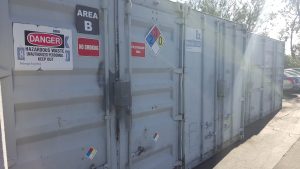
Scope and Applicability:hazardous waste storage area
  • The weekly inspections described in this article are required for both the large quantity generator of hazardous waste (LQG) at 40 CFR 262.17(a)(1)(v) and small quantity generator (SQG) at 40 CFR 262.16(b)(2)(iv). Weekly inspections are not required for a very small quantity generator of hazardous waste (VSQG). A VSQG may wish to consider some form of periodic inspections of its accumulated hazardous waste.
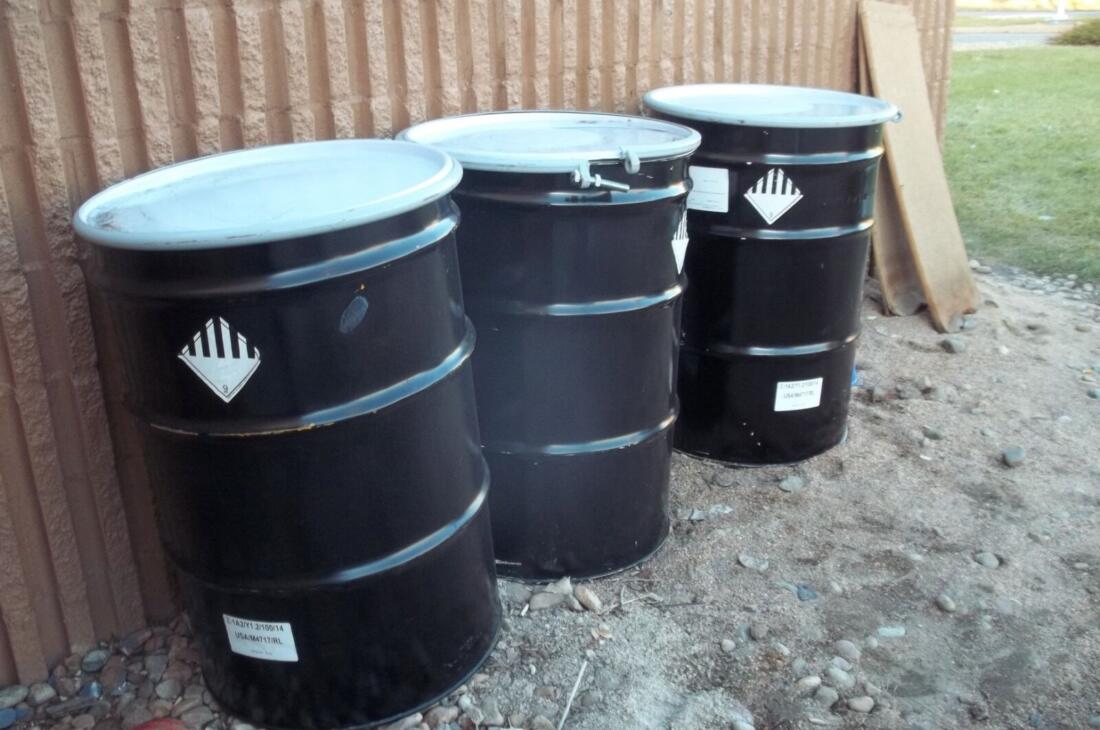
  • It is only hazardous waste that requires inspections. None of the following waste require inspections of any kind:
    • Universal waste
    • Used oil
    • Non-hazardous waste

Like this article?

Subscribe to my Monthly Newsletter

No marketing emails!

The text of the regulations:

40 CFR 262.16(b)(2)(iv) for SQG reads:

Inspections. At least weekly, the small quantity generator must inspect central accumulation areas. The small quantity generator must look for leaking containers and for deterioration of containers caused by corrosion or other factors. See paragraph (b)(2)(i) of this section for remedial action required if deterioration or leaks are detected.

40 CFR 262.16(a)(1)(v) for LQG reads:

Inspections. At least weekly, the large quantity generator must inspect central accumulation areas. The large quantity generator must look for leaking containers and for deterioration of containers caused by corrosion or other factors. See paragraph (a)(1)(ii) of this section for remedial action required if deterioration or leaks are detected.

What is weekly?

USEPA does not define what its use of the term weekly means; it has left the clarification of its meaning to the individual states. However, based on my experience, it is safe to assume that this does not mean once per calendar week, but rather every seven days. In other words, if you complete a weekly inspection on Wednesday December 21st and the next week on Thursday December 29th, eight days separate the inspections and you may have committed a violation. (Completing the 2nd inspection or or before the 28th would be within seven days and be in compliance). Also, the regulations do not say anything about suspending the requirement during facility shut-downs (either planned or unplanned). Therefore, the weekly inspections must be completed even when you are shut-down for the holidays or maintenance if hazardous waste remains in a CAA.

Contact me with any questions you may have about the generation, identification, management, and disposal of hazardous waste

Daniels Training Services, Inc.

815.821.1550

Info@DanielsTraining.com

https://danielstraining.com/

What areas are to be inspected?

The inspections are only to be of containers in a central accumulation area as the regulations clearly state. It does not apply to containers in a satellite accumulation area. The term central accumulation area was created by the Generator Improvements Rule as a matter of convenience by USEPA. It replaced a variety of other terms that had been used over the years. It simply refers to the area of the facility – LQG or SQG – where hazardous waste accumulates subject to the full regulations of the respective generator category. Read: FAQ: What is the central accumulation area?

What is the inspection looking for?

The sole purpose of the inspection is to look for:

  • Leaking containers.
  • Deterioration of containers caused by corrosion or other factors.

…and that’s it.

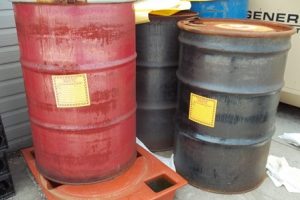
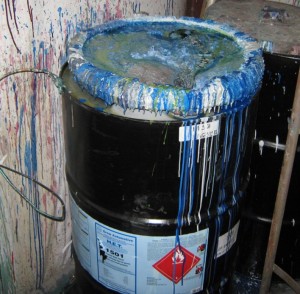
Hazardous waste container in poor condition
Weekly inspections can prevent situations like this

However, the following items may also be included in a weekly inspection of hazardous waste containers in a central accumulation area:

  • Container labeling.
  • Containers closed properly.
  • High liquid level or overflow of container.
  • Container structurally intact.
  • Wheels, if present, properly braked/chocked (remember: a 30,000 gallon rail tank car meets the definition of a container).
  • Containers located so as to minimize potential for puncture or release.
  • CAA pad, if present, free of chips, cracks, &etc.
  • Sump pump, if necessary, operative.
  • Check the date of initial accumulation to ensure sufficient time for on-site accumulation.

Also, the regulations of your state may be more stringent than those of the USEPA. It is possible state regulations may require some, or all, of the above recommendations; and may require even more.

What if leaks or deterioration are detected?

If leaks or deterioration of containers are detected during the weekly inspection, both SQG and LQG are referred to their respective remedial action regulations – §262.17(a)(1)(ii) for LQG and §262.16(b)(2)(i) for SQG. Response requirements are:

  • Immediately transfer the hazardous waste to a container in good condition.

Or…

  • Immediately manage the waste in some other way in compliance with the regulations of their generator category.

So, clearly the generator is required to immediately respond to correct leaking containers or signs of deterioration that may lead to a leak.

Interested in a Webinar that covers this topic, and more!

My Webinar Training Schedule

Is it necessary to document the inspection and keep a copy as a record?

Nope. Surprisingly, USEPA regulations do not require the weekly inspections to be documented nor does it have any recordkeeping requirements. However, it may be difficult to prove to an inspection (state or Federal) you are completing the inspections without some record to show for it. Therefore, as a best management practice it is recommended the LQG or SQG maintain a form that keeps a record of the following at a minimum:

  • Date and time of inspection.
  • Name of inspector.
  • Notation of observations made.
  • Date and nature of remedial actions if necessary.

Remember: USEPA proposed under the Generator Improvements Rule to require documentation of weekly inspections at a SQG or LQG but it did not adopt this proposal. Read: The Generator Improvements Rule and Weekly Inspections of Hazardous Waste Accumulation Units

Also, your state may be more stringent than USEPA regulations. It may require weekly inspections to be documented and may require even more than what is recommended above.

Conclusion:

Done weekly as required (some hazardous waste generators conduct bi-weekly inspections) and done correctly (don’t let it just be a “pencil-whipping exercise”) inspections of hazardous waste containers in a central accumulation area can help you to maintain compliance with the RCRA regulations at your facility.

Daniels Training Services, Inc.

815.821.1550

Info@DanielsTraining.com

https://danielstraining.com/

VSQG Hazardous Waste Drums

Q&A: Is a VSQG subject to the annual HazMat registration?

Question (07.01.20):

Hi Daniel,

I’m subscribed to your newsletter and was wondering if you can help me with a question.

I manage the EHS program for two of <Company’s>> manufacturing facilities, and one of them is a very small quantity generator of hazardous waste (VSQG). Is this VSQG facility subject to the annual HazMat registration? I have heard different answers. We are part of a bigger parent corporation which is a large quantity generator of hazardous waste (LQG) but I’m not sure if this makes a difference since these are separate facilities. We always have our waste picked up for transport to a TSDF by an outside vendor.

Thank you in advance for your help.

Not sure of your hazardous waste generator category?

Take this short survey

My reply the same day:

I apologize for my delay in responding. Your email was caught by my spam filter. Please see below.

  • A facility’s hazardous waste generator status is not a factor in determination of the USDOT/PHMSA registration requirements for shippers and carriers.
  • However, hazardous waste is to be considered when determining the applicability of the six (6) criteria for registration.
  • As defined by USDOT/PHMSA, the waste generated by a VSQG is not subject to USDOT/PHMSA a hazardous waste (I know, it sounds crazy, but that’s the way it is). However, the waste generated by a VSQG could be a hazardous material for other reasons, e.g., a spent solvent generated by a VSQG is not a hazardous waste but it may be a Class 3 Flammable Liquid and therefore a hazardous material subject to registration. Read: FAQ: How does USDOT/PHMSA classify a hazardous waste?
  • As part of a bigger corporation it is most likely that the operations of all facilities within <<Company>> are covered by one corporate registration. If that is the case you need only obtain a copy of the following:
    • Registration statement filed with USDOT/PHMSA.
    • Certificate of Registration
    • form and ensure it includes the state(s) you operate in.
  • The waste pickup and transport by an outside vendor is not a factor. You are still the shipper of the hazardous material (i.e., the person who offers).
  • Please read: Registration with PHMSA as Shipper or Carrier of HazMat

I hope this helps. Please contact me with any other questions.

Another satisfied customer:

Thanks for the clarification!

Search Website