PO Box 1232 Freeport, IL 61032

A Different Kind Of Training

A Different Kind Of Training

A Different Kind Of Training

Common Violations in Hazardous Waste Satellite Accumulation Areas

The US EPA regulations at 40 CFR 262.34(c) – known as the Satellite Accumulation Area (SAA) regulations even though the word “satellite” is not used – are designed to allow a generator of hazardous waste to accumulate a limited amount of hazardous waste onsite for an unlimited period of time.  This can be done without regard to the accumulation time limits for their respective generator status:

  • Large Quantity Generator (LQG) of hazardous waste:  ≤90 days for onsite accumulation/storage of hazardous waste.
  • Small Quantity Generator (SQG) of hazardous waste:  ≤180 days for onsite accumulation/storage of hazardous waste.

A Conditionally Exempt Small Quantity Generator (CESQG) of hazardous waste is allowed to accumulate hazardous waste onsite for an unlimited period of time and therefore would likely find no use for an SAA.

Advantages to accumulating hazardous waste in Satellite Accumulation Areas:

  • May accumulate hazardous waste onsite for an unlimited period of time.  Check with your State however; Missouri is one I am aware whose SAA regulations contain more restrictions than the Federal.
  • Not required to conduct a weekly inspection.
  • Not required to comply with the RCRA air emission standards of §265, Subparts A, B, & C.
  • Annual training is not required for facility personnel whose only exposure to hazardous waste is in SAA’s.
  • May be more than one container and may be more than one type of hazardous waste.
  • No limit to the number of SAA’s or total waste accumulated in SAA’s facility-wide.

Restrictions and requirements for using Satellite Accumulation Areas:

  • Limited to ≤55 gallons of hazardous waste per SAA.
  • May accumulate hazardous waste solely in containers as defined at §260.10.  Accumulation in tanks, containment buildings, or drip pads is not allowed.
  • Container must be labeled “Hazardous Waste” or other words to identify the contents, eg:  “Paint & Solvent Waste”.
  • Container must be closed except when adding or removing waste.
  • Container must be at or near the point of generation where waste initially accumulates; and,
  • Under the control of the operator of the process generating the waste.
  • When the limit of 55 gallons is reached:  (1) date the container.  (2)  three calendar days to move the container to a Central Accumulation Area (CAA or 90/180 Day Accumulation Area).

The Top 5 Satellite Accumulation Area violations:

  • Failure to keep the container closed except when adding or removing hazardous waste.
  • Failure to mark the container with the words, “Hazardous Waste” or other words describing the contents.
  • Container is not at or near the point of generation.
  • Storing >55 gallons of hazardous waste.
  • Not dating a container with hazardous waste above the 55 gallon threshold.
  • Not moving a dated container from the SAA to a CAA within 3 calendar days.  Note:  this is not 3 business days, and it is not 3 twenty-four hour periods.

Check with your State to ensure compliance.  Or, contact me with questions about management of hazardous waste in SAA’s, CAA’s, or in general.
Manufacturers of Hazardous Material Packaging & HazMat Employee Training

The regulations of the US DOT that mandate training of HazMat Employees can be found at 49 CFR 172, Subpart H.  According to §172.702(a), “A HazMat Employer shall ensure that each of its HazMat Employees is trained in accordance with the requirements prescribed in this subpart.”  The full definition of a HazMat Employer can be found at §171.8 and can be summarized as follows:

  • person who employees at least one HazMat Employee as defined at §171.8; or,
  • A person who is self-employed transporting materials in commerce; or,
  • A department or agency of any Federal or State government or Indian tribe.

WHO…

  • Transports a hazardous material in commerce;
  • Causes a hazardous material to be transported in commerce; or,
  • “Designs, manufactures, fabricates, inspects, marks, maintains, reconditions, repairs or tests a package, container, or packaging component that is represented, marked, certified, or sold by that person as qualified for use in transporting hazardous materials in commerce.”

It is this last category of HazMat Employer that is often overlooked or misunderstood, and so requires further explanation.  Based on this definition a HazMat Employer includes…

Someone whose business has anything to do, “designs, manufactures, fabricates, inspects, marks, maintains, reconditions, repairs or tests…” for any type of packaging, “…a package, container, or packaging component…” that it indicates, “…represented, marked, certified, or sold by that person…” is suitable for the transportation of hazardous materials, “…as qualified for use in transporting hazardous materials in commerce.”

If this is you, then you are a HazMat Employer.  As a HazMat Employer you are required to ensure that each of your HazMat Employees are trained and tested.  HazMat Employee training must include:

  • General Awareness/Familiarization
  • Function Specific Responsibilities
  • Safety/Emergency Response
  • Security General Awareness
  • In-Depth Security (if applicable)

However, pursuant to §172.704(e)(1), a HazMat Employee who is only involved in the manufacture of HazMat packagings and does not perform any other regulated function, such as handling hazardous materials in transportation, does not require Safety/Emergency Response training.

Whether you ship or receive hazardous materials, transport hazardous materials, or manufacture hazardous material packaging, you must provide HazMat Employee training every three years.  Contact me to provide the required training at a time and place of your choosing and at a price you can afford.

Management of Hazardous Waste in Michigan

A short presentation I made at the 2012 Michigan Safety Conference.  If you operate a business in Michigan, you should view this short Power Point to ensure you are not guilty of one of the Michigan DEQ’s “Top Nine Waste Violations”.

Selecting Packaging for the Transportation of a Hazardous Material or Hazardous Waste

QUESTION:  “Can a plastic 55-gallon drum – or any plastic container – be used for the transportation of a flammable liquid hazardous waste?”

ANSWER:  Yes.  There is nothing in the regulations of the US DOT or US EPA that precludes the general use of a plastic container for the transportation of a flammable liquid hazardous material or hazardous waste.  In fact, the applicable regulations refer to plastic drums, jerricans, and boxes as acceptable packagings for the shipment of a flammable liquid.  You should check with your State environmental agency or Fire Marshall to learn their requirements.

Selecting a container/packaging for a hazardous waste is important for several reasons; the two most important:

  • When the container/packaging is onsite and being used for the accumulation/storage of hazardous waste it is subject to the regulations of the US EPA or authorized State agency.
  • When offered for transportation and transported in commerce – assuming the hazardous waste is not treated or disposed onsite – the container/packaging is subject to the regulations of the US DOT.

The US EPA’s regulations for the onsite management of hazardous waste in containers are located at 40 CFR 265, Subpart I referred there from §262.34 they include basic requirements such as the container must be in good condition, compatible with its contents, kept closed when not filling or emptying, inspected, managed to prevent ruptures and leaks, and separated from incompatible waste.

The US DOT’s regulations for the transportation of that same hazardous waste are more descriptive and specific than those of the US EPA without necessarily being more restrictive.  This is because the hazardous waste will now leave your property and begin a journey of unknown duration and distance until it reaches its designated facility.  It is important that you are aware of the applicable regulations of the US DOT when selecting a container for the accumulation of your hazardous waste (the selection of the container for a hazardous material or a hazardous waste is known as a Pre-Transportation Function and must be done by a trained HazMat Employee) if you intend to offer the hazardous waste for shipment.

Begin at 49 CFR 173.24 – General Requirements for Packagings and Packages of the US DOT regulations to ensure the selection of the correct packaging.  This section is applicable to bulk and non-bulk packagings, new packagings and reused, and specification and non-specification packagings.  It requires that every packaging used for the shipment of a hazardous material  be designed, constructed, maintained, filled, limited to its contents, and closed, so that under the normal conditions of transportation there is…

  • No release to the environment.
  • No loss of effectiveness of the packaging due to normal conditions of transportation (temperature, humidity, pressure, shocks, loadings, vibrations, etc).
  • No mixture of gases or vapors in the package which could damage it.
  • No hazardous material residue on the outside of the package.

In addition to the above, a packaging must be authorized for a hazardous material shipment as specified in Column 8 of the Hazardous Materials Table (§172.101) and as otherwise required by §173.24(c,d).  You’ll have to refer to §173.24(c,d) for the full list of applicable parts and sections as its just too much to list.

The container must be closed properly and, no matter what the regulations require, it is the responsibility of the Shipper to ensure the packagings are compatible with their contents.

Column 8 of the Hazardous Materials Table entry for a Packing Group I (highest degree of danger) Flammable Liquid references §173.201 – Non-Bulk Packagings for Liquid Hazardous Materials in Packing Group I which includes the types of packagings (steel drum, fiber drum, steel box, plastic, etc.) authorized for the shipment of the applicable hazardous material.

Years ago, employed as a truck driver for Laidlaw Environmental Services I would have sworn up and down that you could not use a plastic container for the accumulation and transportation of a hazardous waste.  I now know that – at least according to the Federal regulations of the US DOT & US EPA – such a thing is acceptable.

Attend my training, ask your questions, and see what you learn.

Industrial Wastewater Discharge Exclusion From Regulation as a Solid Waste 40 CFR 261.4(a)(2)

The hazardous waste regulations of the Resource Conservation and Recovery Act (RCRA) created and enforced by the US EPA include an exclusion from regulation as a Solid Waste for certain Industrial Wastewater Discharges.

Irrigation Return Flows Exclusion From Regulation as a Solid Waste 40 CFR 261.4(a)(3)

Irrigation Return Flows are excluded from definition as a solid waste under the Resource Conservation and Recovery Act (RCRA) and therefore can not be a hazardous waste.

Please don’t hesitate to contact me with any questions.

The Nuclear Waste Exclusion From Regulation as a Solid Waste 40 CFR 261.4(a)(4)

Please view this short Power Point presentation to learn why nuclear waste is not regulated by the Resource Conservation and Recovery Act (RCRA) of the US EPA.

Please don’t hesitate to contact me with any questions.

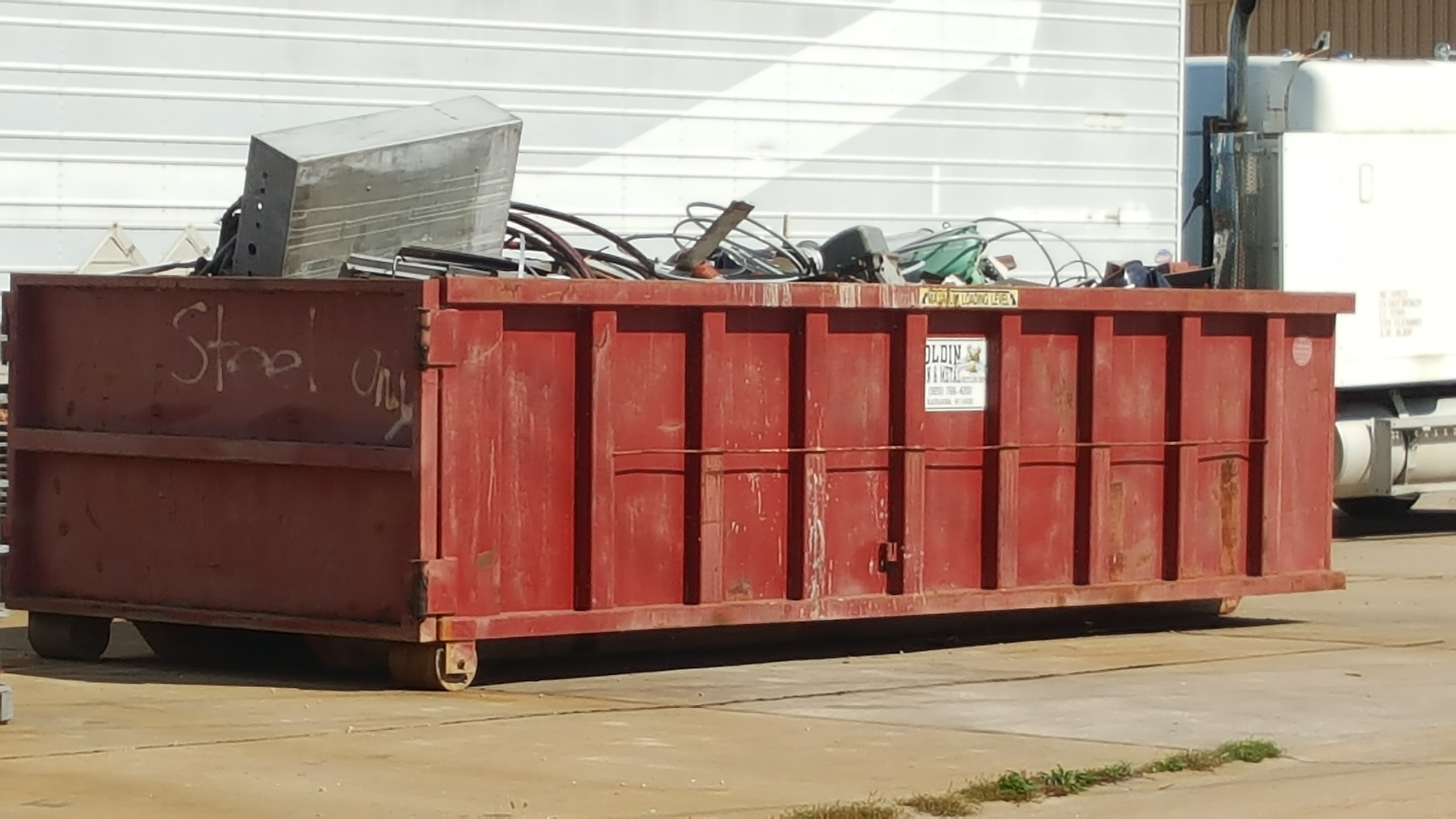
The Scrap Metal Exclusion From Solid Waste 40 CFR 261.4(a)(13)

The regulations of the US EPA include an exclusion from definition as a Solid Waste of Scrap Metal (as defined) being recycled.Open-top roll-off container holding scrap metal for recycling

Interested in site specific training at your site that covers this topic, and more!

Ask me about my Onsite Training

Sometimes a PowerPoint presentation is the best way to communicate a specific aspect of the regulations.  Please don’t hesitate to contact me with any questions.

Documenting RCRA Training for Facility Personnel

Pursuant to USEPA regulations in affect prior to May 30, 2017, at 40 CFR 262.34(a)(4) a large quantity generator of Hazardous Waste (LQG) must, among other things, comply with the training requirements of §265.16.  §265.16 is meant for permitted hazardous waste treatment storage and disposal facilities (TSDFs), but the direct reference to it from §262.34(a)(4) makes it applicable to an LQG as well.

As of May 30, 2017 and the Generator Improvements Rule, the training requirement for facility personnel of an LQG are now found at 40 CFR 262.17(a)(7).

Therefore, an LQG must train and document the training per the requirements of this section for each of its Facility Personnel.  Training documentation must include:

  1. Job title and name.
  2. A written job description.
  3. A written description of the type and amount of training provided; both introductory and annual refresher.
  4. Certification that the training has been given to, and completed by, facility personnel.

Of the above, it’s the written job description that I will seek to clarify here.  I’ve been asked, “What does US EPA want for a job description?”  In reference to the job description, §265.16(d)(2) – now 40 CFR 262.17(a)(7)(iv)(B) – reads:

This description may be consistent in its degree of specificity with descriptions of other similar positions in the same company location or bargaining unit, but must include the requisite skill, education, or other qualification, and duties of facility personnel assigned to each position;

Like this article?

Subscribe to my Monthly Newsletter

No marketing emails!

The Agency initially provides you with some freedom in determining what you will use to meet this requirement, “…may be consistent in its degree of specificity with descriptions of other similar positions in the same company location or bargaining unit…”  In other words, you don’t have to invent a Job Description from scratch, but instead can use a description similar to one already in use.

However, the next moment USEPA turns around and requires that your Job Description, “…must include the requisite skill, education, or other qualifications….” of your trained Facility Personnel, meaning:  the skill, education, or qualifications that are required for them to do their job.  Your Job Description must also include the, “…duties of facility personnel assigned to each position;”

And this from the preamble to the regulations when published in the Federal Register on May 19, 1980 (45 FR 33066):

…the only interest in the job descriptions of a facility personnel is to enable the Agency to determine if each person is receiving a level of training that is commensurate with the person’s duties and responsibilities.

In other words the role of the job description in the RCRA training record is to demonstrate to an Agency inspector that the training received is applicable to what the employee needs to know in order to do their job in compliance with the regulations.

Daniels Training Services - Onsite TrainingIs USEPA going to bite your head off if your training documentation doesn’t exactly meet the above description?  I don’t think so.  I think the most important thing is to get the training done.  And then, ensure the training record includes some form of a Job Description that reflects the employees responsibility for handling hazardous waste.  I provide attendees of all of my training with a form to document its proper completion.  Contact me to discuss the training required for Facility Personnel and for HazMat Employees.

Contact me with any questions you may have about the generation, identification, management, and disposal of hazardous waste

Daniels Training Services, Inc.

815.821.1550

Info@DanielsTraining.com

https://danielstraining.com/

Listed Hazardous Waste and Used Oil at a Conditionally Exempt Small Quantity Generator of Hazardous Waste

In a previous article I discussed the Used Oil Management Standard of the US EPA found at 40 CFR 279.  It allows you to manage a Used Oil according to a reduced regulatory burden even if it has the characteristics of a hazardous waste:

Characteristic Hazardous Waste:

  • D001 for Ignitability
  • D002 for Corrosivity
  • D003 for Reactivity
  • D004 – D043 for Toxicity

WITH ONE EXCEPTION you may not manage your waste according to the Used Oil Standard if any of the following are true:

  1. The Used Oil is determined to be a listed hazardous waste per 40 CFR 261, Subpart D.  See below for guidance on how you may rebut the presumption of your Used Oil being a listed hazardous waste.
  2. The Used Oil has been mixed with a Listed Waste.
  3. The Used Oil has been mixed with a characteristic hazardous waste and the resulting mixture exhibits any of the characteristics of a hazardous waste.  However, if a D001 Ignitable hazardous waste is mixed with a Used Oil it may still be managed as a Used Oil even if the resulting mixture exhibits the characteristic of Ignitability.

Read more about Mixtures of Used Oil and Hazardous Waste.

The exception referred to above applies to a Conditionally Exempt Small Quantity Generator (CESQG) of hazardous waste.  What this means is that a CESQG may mix any hazardous waste (listed or characteristic) with a Used Oil and manage the resulting mixture as a Used Oil (fb 14627).  This exception is not available to Large Quantity Generators and Small Quantity Generators of hazardous waste.

If the mixture contains >1,000 ppm total halogens, then it is subject to the Rebuttable Presumption regulations of the Used Oil Standard.  In this case the Presumption may be rebutted by the demonstration that the mixture is an excluded CESQG Used Oil mixture subject to §261.5(j) and §279.10(b)(3).

So, can a CESQG combine all of its hazardous waste (listed and characteristic) with its Used Oil and manage the resulting mixture according to the reduced regulatory requirements of the Used Oil Standard?  Yes.  Do I recommend this practice?  No.  Your State Agency and your Used Oil recycler may not be too crazy about it either.  In the final, it is your decision and responsibility as the generator of the waste to determine the applicable regulations and to comply with them.  My training, both US EPA Hazardous Waste Personnel and US DOT HazMat Employee, will help you to identify the applicable regulations and what you must do to maintain compliance.

Search Website