PO Box 1232 Freeport, IL 61032

A Different Kind Of Training

A Different Kind Of Training

A Different Kind Of Training

Notice of Probable Violation of the HMR Issued to Charleston, SC Company by the PHMSA – $9,600 Fine Possible

On February 26, 2013 the Office of Chief Counsel of the Pipeline and Hazardous Materials Safety Administration (PHMSA) alleged that Hagemeyer North America of Charleston, SC violated two provisions of the Hazardous Materials Regulations (HMR).

On August 23, 2012 a PHMSA investigator conducted a compliance inspection at the company’s facility in Pelham, AL which is a DOT-approved cylinder requalifying test facility.  It performs requalification of DOT high pressure 3A, 3AA, and 3AL cylinders through hydrostatic testing.  It also ships class 2 Compressed Gases and 3 Flammable and Combustible Liquids hazardous materials via highway on its own trucks and by commercial carriers.

The violations noted on August 23, 2012 were:
  1. Failure to condemn DOT-SP 9634 cylinders that showed permanent expansion in excess of the 5% limit prescribed by Section 7(b) of DOT-SP 9634, in violation of 49 CFR 171.2(a), (c), (g), and (j), §180.205(b), and §180.205(i)(1)(vii, and DOT-SP 9634.
  2. Failure to comply with the testing requirements of DOT-SP 11194 and maintain test records in accordance with 49 CFR 180.215(b)(2), in violation of §171.2(a), (c), (g), & (j), §180.3(a), §180.205(b) & (c), §180.215(b)(2), and DOT-SP 11194, §7(b)(2).

Read the full Notice of Probable Violation here.

On their own, these violations are rather obscure and wouldn’t be of interest to most shippers of hazardous materials.  What caught my eye was the inclusion of the facility’s special permits (DOT-SP 9634 & DOT-SP 11194) listed with the violations of the HMR.  What is a special permit and why must a company that certifies compressed gas cylinders for reuse comply with one?  A special permit (formerly known as an exemption) allows a person to operate in a manner not allowed by the HMR.  It functions as an alternative to the HMR and has requirements of its own that must be complied with at the risk of violations and fines – that appears to be the case here.

You can learn more about Special Permits and other US DOT exceptions to the HMR here:  Special Permits, Exemptions, Approvals, and Exceptions to the Hazardous Material Regulations of the US DOT.

If you are involved in any stage of the design, manufacture, testing, marking, reconditioning, etc. of a packaging used for hazardous materials, then you are a HazMat Employer and you must provide initial and triennial training for your HazMat Employees.  If your operations require the use of Special Permits, then the training must include the requirements of the Special Permit for applicable personnel.  I provide this training and can do so for you for one low, flat fee.
Please don’t hesitate to contact me for a free consultation of your training needs.

Maximum and Minimum Civil Penalties That can be Assessed by PHMSA

The Pipeline and Hazardous Materials Safety Administration (PHMSA) within the US DOT is allowed by Federal law assess fines for what it determines are violations of the Federal Hazardous Materials Transportation Law or the Hazardous Materials Regulations (49 CFR 171-180) committed on or after December 31, 2009.  That same Federal law sets a maximum and minimum limit to the civil penalties PHMSA ca assess.  The maximum civil penalty PHMSA can assess for a violation is $55,000 and a minimum of $250 per day for each violation.

The maximum limit goes up to $110,000 if the violation results in death, serious illness or severe injury, or substantial destruction of property.  Interestingly, the minimum civil penalty increases from $250 to $495 if the violation concerns training.

Fines from the PHMSA for violations of the HMR are real and expensive.  Better for you to spend your money providing high-quality training for your HazMat Employees instead of paying many times more the cost of training in fines.  That is not to mention the stigma of the violation, and costs related to contesting the violation or fixing the problem.  Contact me to schedule training that will save you from fines like these.

DOT, Inc of Denver, CO Pays $3,876 Civil Penalty for Violations of the HMR – Including not Providing Training for HazMat Employees

On February 5, 2013 the Pipeline and Hazardous Materials Safety Administration (PHMSA) of the US DOT signed a Compromise Order finding DOT, Inc of Denver, CO had committed three violations of the Hazardous Material Regulations (HMR).  As part of the compromise agreement, DOT, Inc agreed to pay a civil penalty of $3,876 for the violations.  This amount is quite reasonable given the maximum possible civil penalty for these violations is $165,000.

This outcome had its beginning on September 27, 2011 when a PHMSA investigator conducted a compliance investigation at the facility.  The investigator reported three alleged violations of the HMR and discussed them with company representatives during an exit briefing.  The investigator’s report, when filed, resulted in a recommendation to initiate the civil penalty action.  A Notice of Probable Violation was issued for three violations of the HMR proposing a $5,390 civil penalty.  DOT, Inc.’s reply and corrective action resulted in a reduction of the proposed civil penalty to that finally agreed upon.

Violations of the HMR noted were:

  1. Respondent represented, certified, and marked DOT specification cylinders as having been successfully retested, when Respondent failed to perform a complete visual inspection, in violation of 49 CFR 171.2(a), (c), (g), & (j) and §180.205(f).  $0 civil penalty for this violation.
  2. Respondent represented, certified, and marked DOT specification cylinders as having been successfully retested, when Respondent failed to confirm the accuracy of the pressure indicating device to within 500 psi of the test pressure, in violation of 49 CFR 171.2(a), (c), (g), & (j) and §170.205(g)(3).  $2,568 for this violation.
  3. Respondent allowed employees to perform functions subject to the HMR when the hazardous material employees had not received current training and testing, and Respondent did not maintain complete records of hazardous materials training, in violation of 49 CFR 171.2(a), (b), (e), and (f), and §172.702(a), (b), & (d) and §172.704(a), (b), and (d).  $1,308 for this violation.

Take note of the third violation as it indicates not only the absence of the required HazMat Employee Training but also that the Respondent did not maintain a complete set of records to document the training.  This is no surprise since the failure to train HazMat Employees and then to keep complete training records are the top two of the  US DOT’s six most frequently cited violations.

You may read here for the full Compromise Order from the PHMSA.

Compliance begins with training.  49 CFR 172, Subpart H requires you to train all of your HazMat Employees within 90 days of new employment or job responsibility and at least every three years after that.  My training will not only fulfill this regulatory requirement, but it will inform you and your employees of what they must do to perform their job duties in compliance with the regulations.  My Onsite Training goes further then this where for one low, flat fee I will come to your site and train all of your employees on just what they need to know to comply with the regulations.

Please don’t hesitate to contact me for a free training consultation.


General Marking Requirements for Non-Bulk Packagings of HazMat

The shipper of a hazardous material (HazMat) must ensure the correct hazard communication methods are used to identify the potential hazards posed by the material offered for transportation.  The four hazard communication methods required by the US DOT when offering a hazardous material for shipment are:

  • Shipping Papers
  • Placards
  • HazMat Labels
  • Markings

Of these four, HazMat Labels and Markings are the methods a HazMat Employee is most likely to encounter during routine job duties since these are applied to the HazMat packaging itself.  This article will address the general marking requirements for a non-bulk packaging of a hazardous material offered for transportation in commerce (49 CFR 172.301). (more…)

Announcements of Proposed Rules, Changes to the Rules, and Final Rules of the US DOT & US EPA – 1st Half of February 2013

On its website the US Government Printing Office makes a wealth of Federal publications available for review and download; one of these is the Federal Register.

Published by the Office of the Federal Register, National Archives and Records Administration (NARA), the Federal Register is the official daily publication for rules, proposed rules, and notices of Federal agencies and organizations, as well as executive orders and other presidential documents.

The Federal Register is a great way to look down the road and see potential changes to the regulations long before they are put into effect (sometimes The Rulemaking Process takes years before a final rule is issued, if ever).  Knowledge of these potential changes provides you with several advantages:

  • Additional time to modify your business operations to comply.
  • Awareness of on what topics the regulatory agencies intend to focus their efforts.
  • The ability to register your concerns, complaints, suggestions, etc. in order to modify the proposed rule before a final rule is issued.  It can be done, really!
  • Make changes to your training program to account for changes that become effective before the next training cycle.
  • Alert you to the need to re-train your employees prior to their next scheduled training cycle, if necessary.
  • Keep you abreast of changes to the regulations that affect your business and/or your industry group.
A very good example of important news being announced in the Federal Register is the very recent announcement of the US DOT’s extension of the authorization for use of the ORM-D classification.

See below for a brief summary of announcements in the Federal Register by the US EPA on the subject of Hazardous Waste and the Pipeline & Hazardous Materials Safety Administration (PHMSA) of the US DOT on the subject of Transportation of Hazardous Materials.  Please note that this is my best effort to identify the relevant announcements in the Federal Register that may be of interest to generators of hazardous waste and shippers of hazardous materials.  I encourage you to review the list of Federal Register publications yourself to ensure regulatory compliance.

February 2013

Transportation of Hazardous Materials:

Final Rule:  Hazardous Materials: Harmonization with International Standards (RRR) Pages 8431 – 8433 [FR DOC # C1-2012-31243]

Management of Solid Waste and Hazardous Waste (RCRA):

Final Rule:  Commercial and Industrial Solid Waste Incineration Units: Reconsideration and Final Amendments; Non-Hazardous Secondary Materials that are Solid Waste Pages 9111 – 9213 [FR DOC # 2012-31632]

Information can be helpful but it’s useless if you are not able to make sense of it, determine how any changes to the rules and regulations (final or proposed) will affect your operations, and communicate the necessary information to your personnel.  I can help you do that.  Please contact me for a free consultation to determine your regulatory requirements and how training can help you to attain and maintain compliance.


The 2016 Emergency Response Guidebook Available as Mobile App

Why the Emergency Response Guidebook?

The first 30 minutes are the most crucial when it comes to responding to a hazmat situation.

– Ray LaHood, former Secretary of Transportation

It is critical for  first responders, and trained HazMat Employees, to have immediate access to concise, accurate emergency response information.  The 2016 Emergency Response Guidebook (ERG) is a go-to manual to help first responders deal with HazMat Incidents during those critical first 30 minutes.  It is used by first responders in:

  • Quickly identifying the specific or generic classification of the material(s) involved in the incident, and;
  • Protecting themselves and the general public during this initial response phase of the incident.

HazMat Incident

It is the DOT’s goal to place an ERG in every public emergency service vehicle nationwide.  To date, nearly 14.5 million free copies have been distributed to the emergency response community through state emergency management coordinators.  Check with your state to see if you are eligible to obtain free copies of the 2016 ERG.

If you want to learn more about the 2016 ERG and how to use it, you have two options:

  1. Check out this instructional video on the DOT website:  How to Use the 2016 Emergency Response Guidebook (ERG).
  2. Attend on of my USDOT HazMat Employee training sessions, either Onsite or Webinar.  In them, I briefly describe the 2016 ERG, its use in an emergency, and the requirement of the HazMat shipper to provide emergency response information to the carrier.

Changes to the 2016 ERG:

Nobody’s perfect. Check out these corrections made to the 2016 ERG after its publication.

Q: But the 2016 ERG is at least three years out-of-date (as of March 2019), why would I use that?

A: Because the ERG is updated every four (4) years. The next update will be in 2020 (likely not available until July of that year).

Check out this summary of changes from the 2012 edition to the 2016 ERG

Contact me with any questions you may have about the transportation of hazardous materials by air, highway, vessel, or rail

International and Domestic

Daniels Training Services, Inc.

815.821.1550

Info@DanielsTraining.com

https://danielstraining.com/

Those seeking to get a copy of the 2016 ERG for themselves have some options:

And… there is the ERG2016 Mobile App:  Download the ERG2016 Mobile App

“The mobile app will make it easier for firefighters, police, and other emergency first responders to quickly locate the information they need, thanks to the electronic word search function, and will ensure easy reading even during nighttime emergencies.” – From the DOT website.

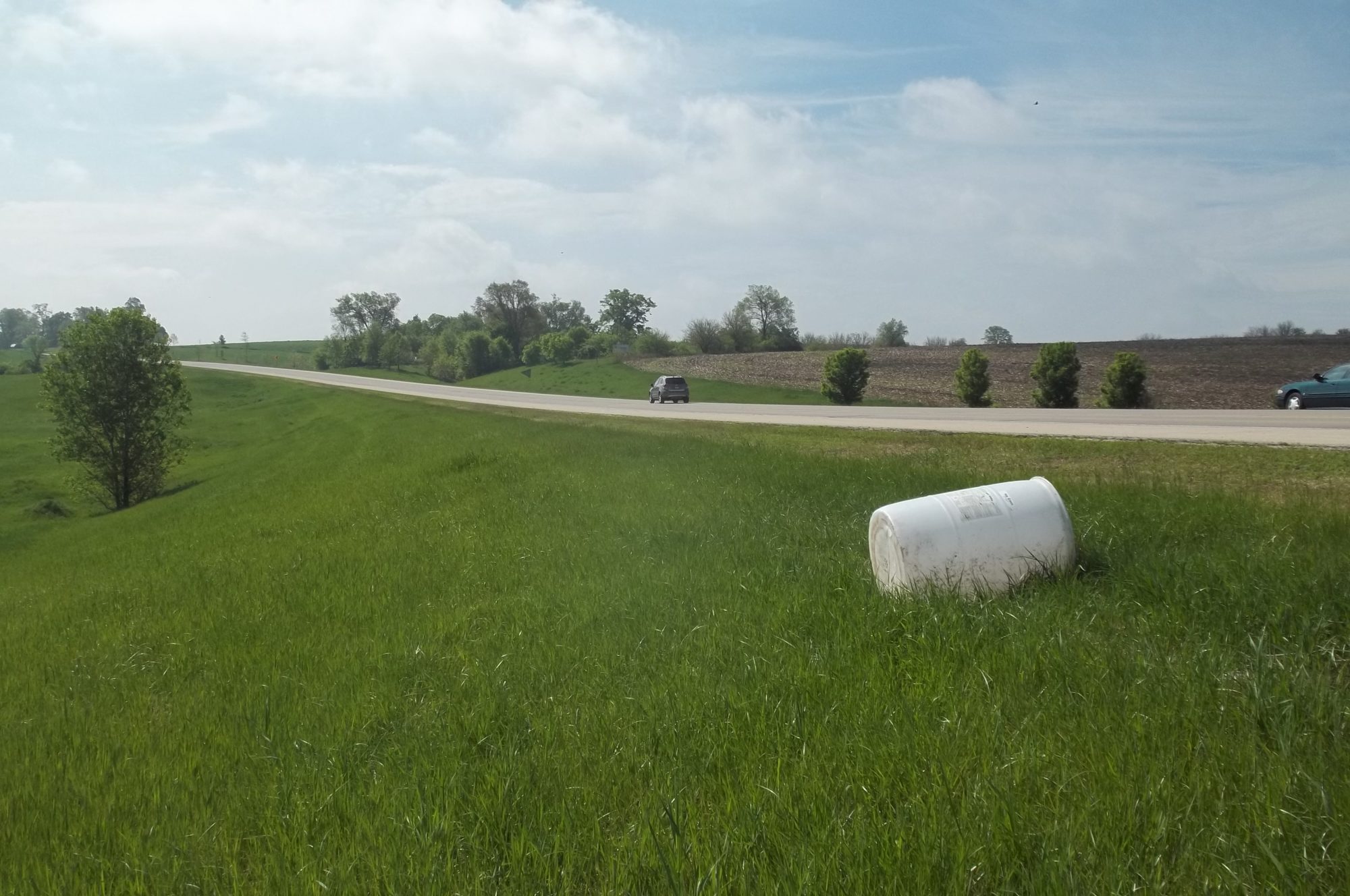
HazMat packaging along highwayHow can I use the ERG2016 Mobile App?

Q:  Is an electronic copy of the Emergency Response Guidebook acceptable to comply with 49 CFR 172.602 Emergency response information?  In other words, may the operator of a motor vehicle maintain the emergency response information required by 40 CFR 172.602 solely on a smartphone, tablet, or some other electronic device?

A:  No.  §172.602(b)(3)  states how the emergency response information must be presented by the shipper to the carrier: on the shipping paper or some other document.  The emergency response information must be on a document (e.g. a piece of paper) made available to the operator of the transport vehicle.

Like this article?

Subscribe to my Monthly Newsletter

No marketing emails!

Check out these related articles:

Announcements of Proposed Rules, Changes to the Rules, and Final Rules of the US DOT & US EPA – January 2013

On its website the US Government Printing Office makes a wealth of Federal publications available for review and download; one of these is the Federal Register.

Published by the Office of the Federal Register, National Archives and Records Administration (NARA), the Federal Register is the official daily publication for rules, proposed rules, and notices of Federal agencies and organizations, as well as executive orders and other presidential documents.

The Federal Register is a great way to look down the road and see potential changes to the regulations long before they are put into effect (sometimes The Rulemaking Process takes years before a final rule is issued, if ever).  Knowledge of these potential changes provides you with several advantages:

  • Additional time to modify your business operations to comply.
  • Awareness of on what topics the regulatory agencies intend to focus their efforts.
  • The ability to register your concerns, complaints, suggestions, etc. in order to modify the proposed rule before a final rule is issued.  It can be done, really!
  • Make changes to your training program to account for changes that become effective before the next training cycle.
  • Alert you to the need to re-train your employees prior to their next scheduled training cycle, if necessary.
  • Keep you abreast of changes to the regulations that affect your business and/or your industry group.
A very good example of important news being announced in the Federal Register is the very recent announcement of the US DOT’s extension of the authorization for use of the ORM-D classification.

See below for a brief summary of announcements in the Federal Register by the US EPA on the subject of Hazardous Waste and the Pipeline & Hazardous Materials Safety Administration (PHMSA) of the US DOT on the subject of Transportation of Hazardous Materials.  Please note that this is my best effort to identify the relevant announcements in the Federal Register that may be of interest to generators of hazardous waste and shippers of hazardous materials.  I encourage you to review the list of Federal Register publications yourself to ensure regulatory compliance.

January 2013

Transportation of Hazardous Materials:

Management of Hazardous Waste (RCRA)

Information can be helpful but it’s useless if you are not able to make sense of it, determine how any changes to the rules and regulations (final or proposed) will affect your operations, and communicate the necessary information to your personnel.  I can help you do that.  Please contact me for a free consultation to determine your regulatory requirements and how training can help you to attain and maintain compliance.

Authorization for use of ORM-D Classification (Consumer Commodity) Extended to end of 2020!

Announced January 7, 2013 in the Federal Register and effective January 1, 2013, the PHMSA of the US Department of Transportation granted the request of the American Coatings Association (ACA) to extend the authorization for use of the ORM-D classification and the use of the “Consumer Commodity, ORM-D” marking on packages transported by highway, rail, and vessel through the end of 2020!

The use of the ORM-D classification and the Consumer Commodity Exception was originally proposed by the PHMSA to be phased out on the following schedule:

  • January 1, 2013:  End use of ORM-D classification and Consumer Commodity Exception for transportation by air.  Instead use internationally-accepted Limited Quantity Exception and Marking.  This regulation remains in effect.
  • January 1, 2014:  End use of ORM-D classification and Consumer Commodity Exception for transportation by all other modes of transportation (highway, rail, vessel).  Instead use internationally-accepted Limited Quantity Exception and Marking.  This date has now been extended to January 1, 2021.

The news of this extension came as a surprise to me since I understood that the proposed extension was only to be through 2015!  The extension in this Final Rule is a lot longer and should be a great relief to those who ship hazardous materials that meet the definition of consumer commodities.

In the amendments to the Final Rule the PHMSA also:

  • Authorized the continued use of the square-on-point and ID number for limited quantity markings until January 1, 2015.
  • Exempted Limited Quantity shipments from reporting requirements under 49 CFR Part 171.
  • Authorized Limited Quantity material to be transported as Materials of Trade.

This represents a significant modification of a proposed regulation and will have a great impact on industries that ship Consumer Commodities (think of the hazardous chemicals on store shelves, them).  In subsequent articles I will explain more in depth the scope of these changes and how they will affect your operations.  For now, I refer you to the ACA website and an article by Heidi Mcauliffe.

For more information:

I now must modify my HazMat Employee training presentation in order to reflect these changes.  Attending my Public Training Seminar or arranging for Onsite Training is a good way for you to stay on top of changes like these and others that are coming down the pike.

“Forbidden” Materials in International and Domestic Transportation

In an earlier article I explained how the US Department of Transportation identifies materials and substances that are forbidden from transportation in commerce within the United States.  In brief a Forbidden Material is one of the following:

  • Identified as a “Forbidden” Material at 49 CFR 173.21.
  • Categorized as “Forbidden” in column 3 of the Hazardous Materials Table.
  • Identified as “Forbidden” by a specific mode of transportation in the Hazardous Materials Table:
    • Forbidden by passenger air or rail (column 9A).
    • Forbidden by cargo air (column 9B).

In another article I explained the US DOT’s authorization of international regulations and standards for the transportation of hazardous materials (known as dangerous goods internationally) both outside and inside the US.  The authorized international regulations and standards are:

  • The International Civil Aviation Organization’s Technical Instructions for the Safe Transport of Dangerous Goods by Air (ICAO Technical Instructions).
  • The International Maritime Dangerous Goods Code (IMDG Code).
  • Transport Canada’s Transportation of Dangerous Goods Regulations (Transport Canada TDG Regulations).
  • The International Atomic Energy Agency Regulations for the Safe Transport of Radioactive Material (IAEA Regulations).
  • And, though not referenced by the US DOT:  The International Air Transportation Association Dangerous Goods Regulations (IATA DGR).

The objective of this article is to explain your responsibility as a Shipper or Carrier if a material is determined to be Forbidden by one of these agencies and not the others.

Example 1:

A hazardous material/dangerous good is identified as Forbidden by an international agency, but not by the US DOT.

Answer:  Such a material can not be shipped according to international standards and regulations whether inside the US (domestically) or outside (internationally).  However, domestic transportation within the US in compliance with the Hazardous Material Regulations of the US DOT is allowed.

Example 2:

A hazardous material/dangerous good is identified as Forbidden in the HMR but is acceptable for transportation pursuant to one or all of the international agencies.

Answer:  Such a material is only acceptable for transportation under the international standards and regulations outside of the US, it may not be transported domestically [§171.22(e)], also (LOI 11-0252).

Example 3:

A material or substance is not designated as a hazardous material (HazMat) by the US DOT but is regulated as a dangerous good under international standards and regulations.

Answer:  The dangerous good may be transported in the US in full compliance with the applicable international transport standard or regulation [§171.22(d)], also the 3rd paragraph of LOI 12-0085).

Example 4:

A material or substance is designated as a hazardous material by the US DOT but is excepted from or not subject to international standards and regulations (ie. is not a dangerous good).

Answer:  The hazardous material must be transported in accordance with the HMR during all phases of domestic transportation.  Such a material would not be regulated in international transportation [§171.22(c)]

The transportation of hazardous materials within the US in compliance with the Hazardous Materials Regulations of the US DOT can be hard enough.  Transportation of hazardous materials/dangerous goods under international standards and regulations can make it even tougher.  Make certain your HazMat Employee Training teaches you what you need to know about the safe transportation of hazardous materials/dangerous goods.

What is a “Forbidden” Hazardous Material?

The Hazardous Materials Regulations (HMR) of the US DOT found at 49 CFR Parts 171-180 regulate the transportation of all hazardous materials in commerce.  A material or substance is determined to be hazardous if it poses an unreasonable risk to health, safety, and property when transported in commerce.  Some hazardous materials are determined by the US DOT to pose too great a risk for some modes of transportation:  passenger air/rail or cargo air; and others are banned from transportation in commerce altogether, these are the “Forbidden” Materials.

If you are a Shipper of a hazardous material (HazMat) you are responsible for its classification before offering it for transportation to a Carrier.  The identification of a “Forbidden” Material is an important part of that classification.  If you are a Carrier, you should be aware of “Forbidden” Materials and know what to look for when accepting shipments for transportation; the transportation in commerce of a “Forbidden” Material could result in a catastrophic HazMat incident which you do not want to be involved in, no matter who is at fault.  The purpose of this article is to explain how the HMR identifies a “Forbidden” Material and your responsibilities as a Shipper or Carrier.

The following materials are identified as Forbidden by the US DOT at 49 CFR 173.21 unless otherwise provided in the HMR:

  • Materials designated as “Forbidden” in column 3 of the Hazardous Materials Table at §172.101.
  • Forbidden explosives defined at §173.54.
  • Electrical devices (eg. batteries), which are likely to create sparks or generate heat, unless packaged to prevent such an occurrence.
  • A package with a specified magnetic field if to be transported by aircraft [§173.21(e)].
  • If packaged with another material (same packaging, freight container, or overpack) when the mixing of the two could create a hazard [§173.21(f)].
  • A package with a specified Self-Accelerated Decomposition Temperature (SADT) or a specified polymerization temperature if there will be an evolution of a dangerous quantity of heat or gas [§173.21(f)].  This paragraph goes on to describe in depth the specific conditions that apply to this description.  I encourage you to read this closely if it may apply to your operations at all.
  • Packages with a material that is not Forbidden that give off a flammable gas or vapor likely to create a flammable mixture with air in a transport vehicle.
  • Packages with a material (not classified as explosive) that will detonate in a fire.
  • A lighter as defined at §171.8 containing a Division 2.1 Flammable Gas or Class 3 Flammable Liquid unless it is of a design that is allowed by regulation or by the US DOT [§173.21(i)].
  • The “Ketone Peroxide” category of an organic peroxide calculated per §173.128(a)(4)(ii) to contain >9% available oxygen [§173.21(j)].  It includes but is not limited to:
    • Acetyl acetone peroxide
    • Cyclohexanone peroxide(s)
    • Diacetone alcohol peroxides
    • Methylcyclohexanone peroxide(s)
    • Methyl ethyl ketone peroxide(s)
    • Methyl isobutyl ketone peroxide(s)
  • An oxygen generator (chemical) as cargo in a passenger aircraft even if identified as acceptable elsewhere in the HMR.  However, an oxygen generator for a passenger’s personal or medical needs that meets the  requirements of §175.10(a)(7) is not a “Forbidden” Material.

Be aware that some hazardous materials are listed in the Hazardous Materials Table and then identified as “Forbidden” in column 3 (eg. Galactsan Trinitrate).  Refer to this PHMSA/USDOT website with a list of hazardous materials identified as Forbidden in column 3 of the Hazardous Materials Table:  Forbidden Materials (September 25, 2000).

Others may only be forbidden by a specific mode of transportation, but otherwise acceptable for transportation in commerce, examples:

  • Hydrogen, compressed:  Forbidden for transportation by passenger air or rail (column 9A of the Hazardous Materials Table).
  • Hydrogen Sulfide:  Forbidden for transportation by passenger air or rail (column 9A of the Hazardous Materials Table) and cargo air (column 9B).

So, what can you do with a “Forbidden” Material if you cannot transport it?  If offsite transportation is necessary, you have two options:

  • Change the material or package in some so that it no longer exhibits the characteristic of a “Forbidden” Material.
  • Apply for a Special Permit from the US DOT.

“Forbidden” Materials are one of those aspects that may never affect your operations under the HMR.  Or, it may be a significant factor in how you prepare for transportation or transport a hazardous material.  My training will teach you how to determine which of the regulations apply to you and what you must do to maintain compliance.  Please don’t hesitate to contact me with questions.

Search Website