PO Box 1232 Freeport, IL 61032

A Different Kind Of Training

A Different Kind Of Training

A Different Kind Of Training

Special Provision 130 of the Hazardous Materials Table for the Shipment of Batteries, Dry, Sealed, n.o.s.

If the classification of batteries you intend to offer for transportation leads you to this entry in the Hazardous Materials Table of 49 CFR 172.101:
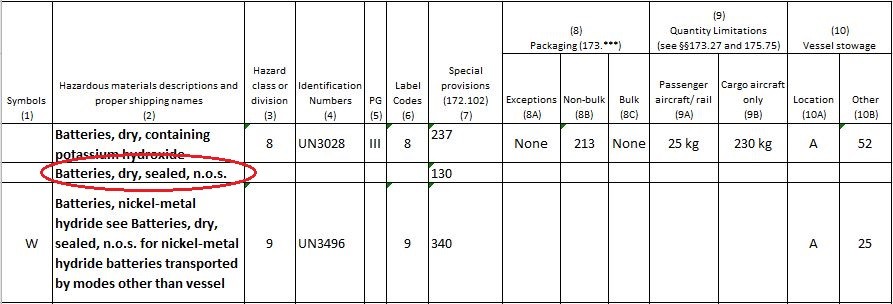
Batteries dry in HMT

Then, you may immediately notice the absence of any information in the Table other than the proper shipping name in column 2 and the Special Provision (130) in column 7.  The presence of the proper shipping name appearing in bold (Roman) print in column 2 indicates that PHMSA has identified it as a hazardous material; but we need to know more, and that leads us to the Special Provision in column 7.  According to 49 CFR 172.101(h):

(h) Column 7: Special provisions. Column 7 specifies codes for special provisions applicable to hazardous materials. When Column 7 refers to a special provision for a hazardous material, the meaning and requirements of that special provision are as set forth in §172.102 of this subpart.

So, to understand the meaning of Special Provision 130 you must refer to 49 CFR 172.102 where we find:

130 “Batteries, dry, sealed, n.o.s.,” commonly referred to as dry batteries, are hermetically sealed and generally utilize metals (other than lead) and/or carbon as electrodes. These batteries are typically used for portable power applications. The rechargeable (and some non-rechargeable) types have gelled alkaline electrolytes (rather than acidic) making it difficult for them to generate hydrogen or oxygen when overcharged and therefore, differentiating them from non-spillable batteries. Dry batteries specifically covered by another entry in the §172.101 Table must be transported in accordance with the requirements applicable to that entry. For example, nickel-metal hydride batteries transported by vessel in certain quantities are covered by another entry (see Batteries, nickel-metal hydride, UN3496). Dry batteries not specifically covered by another entry in the §172.101 Table are covered by this entry (i.e., Batteries, dry, sealed, n.o.s.) and are not subject to requirements of this subchapter except for the following:

(a) Incident reporting. For transportation by aircraft, a telephone report in accordance with §171.15(a) is required if a fire, violent rupture, explosion or dangerous evolution of heat (i.e., an amount of heat sufficient to be dangerous to packaging or personal safety to include charring of packaging, melting of packaging, scorching of packaging, or other evidence) occurs as a direct result of a dry battery. For all modes of transportation, a written report submitted, retained, and updated in accordance with §171.16 is required if a fire, violent rupture, explosion or dangerous evolution of heat occurs as a direct result of a dry battery or battery-powered device.

(b) Preparation for transport. Batteries and battery-powered device(s) containing batteries must be prepared and packaged for transport in a manner to prevent:

(1) A dangerous evolution of heat;

(2) Short circuits, including but not limited to the following methods:

(i) Packaging each battery or each battery-powered device when practicable, in fully enclosed inner packagings made of non-conductive material;

(ii) Separating or packaging batteries in a manner to prevent contact with other batteries, devices or conductive materials (e.g., metal) in the packagings; or

(iii) Ensuring exposed terminals or connectors are protected with non-conductive caps, non-conductive tape, or by other appropriate means; and

(3) Damage to terminals. If not impact resistant, the outer packaging should not be used as the sole means of protecting the battery terminals from damage or short circuiting. Batteries must be securely cushioned and packed to prevent shifting which could loosen terminal caps or reorient the terminals to produce short circuits. Batteries contained in devices must be securely installed. Terminal protection methods include but are not limited to the following:

(i) Securely attaching covers of sufficient strength to protect the terminals;

(ii) Packaging the battery in a rigid plastic packaging; or

(iii) Constructing the battery with terminals that are recessed or otherwise protected so that the terminals will not be subjected to damage if the package is dropped.

(c) Additional air transport requirements. For a battery whose voltage (electrical potential) exceeds 9 volts—

(1) When contained in a device, the device must be packaged in a manner that prevents unintentional activation or must have an independent means of preventing unintentional activation (e.g., packaging restricts access to activation switch, switch caps or locks, recessed switches, trigger locks, temperature sensitive circuit breakers, etc.); and

(2) An indication of compliance with this special provision must be provided by marking each package with the words “not restricted” or by including the words “not restricted” on a transport document such as an air waybill accompanying the shipment.

(d) Used or spent battery exception. Used or spent dry batteries of both non-rechargeable and rechargeable designs, with a marked rating up to 9-volt that are combined in the same package and transported by highway or rail for recycling, reconditioning, or disposal are not subject to this special provision or any other requirement of the HMR. Note that batteries utilizing different chemistries (i.e., those battery chemistries specifically covered by another entry in the §172.101 Table) as well as dry batteries with a marked rating greater than 9-volt may not be combined with used or spent batteries in the same package. Note also that this exception does not apply to batteries that have been reconditioned for reuse.

That’s a lot, and I don’t intend to go through all of it word-for-word; what I will do is break Special Provision 130 down into four basic sections and then summarize the requirements of each section.  The content of Special Provision 130 can be broken down into these four sections:  Description, Applicability, Requirements, and Exception for Used or Spent Batteries.

DescriptionDry Cell Alkaline Battery

“Batteries, dry, sealed, n.o.s. (aka:  dry batteries) are:

  • Hermetically sealed.
  • Generally utilize metals (not lead) and/or carbon as electrodes.
  • Typically used for portable power applications.
  • Rechargeable and non-rechargeable.
  • (Mostly) manufactured with gelled alkaline electrolytes (rather than acidic).
  • Differentiated from non-spillable batteries in that they are unlikely to generate Hydrogen or Oxygen when overcharged.
Applicability
  • Dry batteries that are specifically covered by another entry in the Hazardous Materials Table (eg. nickel-metal hydride batteries transported by vessel in certain quantities) must be transported in in compliance with the requirements of that entry.
  • Dry batteries not specifically covered by another entry in the Table are covered by this entry.
  • Special Provision 130 is applicable only to the proper shipping name of Batteries, dry, sealed, n.o.s. and does not appear anywhere else in the Hazardous Materials Table.
Requirements

Dry batteries covered by this entry are not subject to any of the Hazardous Materials Regulations of PHMSA when transported in commerce except for the following:

  • HazMat Incident reporting pursuant to 49 CFR 171.15 is required for dry batteries transported by air.
  • HazMat Incident reporting pursuant to 49 CFR 171.16 is required for all modes of transportation (air, vessel, highway, or rail) of dry batteries.
  • Batteries and battery-powered devices containing batteries must be prepared and packaged for transport in a manner to prevent a dangerous evolution of heat, a short circuit (packaging and separation methods are indicated), and damage to battery terminals (methods to protect terminals are indicated).
  • There are additional requirements for the transportation by air of batteries whose voltage exceed 9 volts.Transportation of a hazardous material by Aircraft
Exception for Used or Spent Batteries

Used or spent dry batteries meeting the following conditions are not subject to this Special Provision or to any of the Hazardous Material Regulations of PHMSA when transported in commerce:

  • Must be used or spent.
  • May be rechargeable or non-rechargeable design.
  • Marked rating may not exceed 9 volts.
  • May be combined in the same package without inner packaging or other separation within the package.
  • Must be transported by highway or rail; not by vessel or air.
  • Purpose of transportation must be for recycling, reconditioning, or disposal.
  • Dry batteries subject to a different entry in the Hazardous Materials Table may not be transported in the same package as dry batteries subject to this exception.
  • Dry batteries with a marked rating of greater than 9-volt may not be transported in the same package as dry batteries subject to this exception.
  • This exception does not apply to batteries that have been reconditioned for reuse.

Question:  Does Special Provision 130 apply to the transportation of spent alkaline dry cell batteries?

Answer:  Yes.  LOI 09-0090.

While the transportation of batteries, particularly lithium batteries, can be complicated and restrictive; the transportation of certain dry batteries (eg. spent alkaline dry cell batteries with a marked rating of no more than 9-volt) can be quite simple if you are familiar with the HMR and know how to apply the exceptions it provides.

Contact me with any questions you may have about the transportation of hazardous materials by air, highway, vessel, or rail

International and Domestic

Daniels Training Services

815.821.1550

Info@DanielsTraining.com

https://danielstraining.com/

My training for personnel involved in the transportation of hazardous materials or dangerous goods, by all modes, both international and domestic, will provide this understanding and ensure compliance with the training requirements of the Pipeline and Hazardous Materials Safety Administration of the USDOT, the International Air Transport Association, and the International Maritime Organization.

Classification of a Material Having More Than one Hazard – 49 CFR 173.2a

As a Shipper you are required to classify a hazardous material prior to offering it for transportation; to do this you must be familiar with the definition of a hazardous material at 49 CFR 171.8.

Hazardous material means a substance or material that the Secretary of Transportation has determined is capable of posing an unreasonable risk to health, safety, and property when transported in commerce, and has designated as hazardous under section 5103 of Federal hazardous materials transportation law (49 U.S.C. 5103). The term includes hazardous substances, hazardous wastes, marine pollutants, elevated temperature materials, materials designated as hazardous in the Hazardous Materials Table (see 49 CFR 172.101), and materials that meet the defining criteria for hazard classes and divisions in part 173 of this subchapter.

Since the definition of a hazardous material includes “…materials that meet the defining criteria for hazard classes and divisions…” it is critical that you know what those hazard classes and divisions are.  49 CFR 173.2 indicates the hazardous material classes and divisions determined by PHMSA for the classification of a hazardous material; they are:

  • Class 1 Explosives
    • Division 1.1 Explosives with a mass explosion hazard
    • Division 1.2 Explosives with a projection hazard
    • Division 1.3 Explosives with predominately a fire hazard
    • Division 1.4 Explosives with no significant blast hazard
    • Division 1.5 Very insensitive explosives; blasting agents
    • Division 1.6 Extremely insensitive detonating substances
  • Class 2 Compresses gases
    • Division 2.1 Flammable gas
    • Division 2.2 Non-flammable compressed gas
    • Division 2.3 Poisonous gas
  • Class 3 Flammable and combustible liquid
  • Class 4 Flammable and reactive solids
    • Division 4.1 Flammable solid
    • Division 4.2 Spontaneously combustible material
    • Division 4.3 Dangerous when wet material
  • Class 5 Oxidizers and organic peroxides
  • Division 5.1 Oxidizer
  • Division 5.2 Organic peroxide
  • Class 6 Poisonous/Toxic materials
    • Division 6.1 Poisonous materials
    • Division 6.2 Infectious substances (Etiologic agent)
  • Class 7 Radioactive material
  • Class 8 Corrosive material
  • Class 9 Miscellaneous hazardous material
  • Other Regulated Material: ORM-D

But what if your hazardous material is not listed by its technical name in the Hazardous Materials Table of 49 CFR 172.101 and it meets the defining criteria of more than one hazard class or division?  What then?  In that case, the Shipper must determine which of the hazards is the primary and which is the subsidiary – or subsidiaries if there is more than one.  The purpose of this article is to explain the procedure at 49 CFR 173.2a for classifying a hazardous material that has more than one hazard. (more…)

Propane Cylinder

Be Safe When Using Propane Cylinders

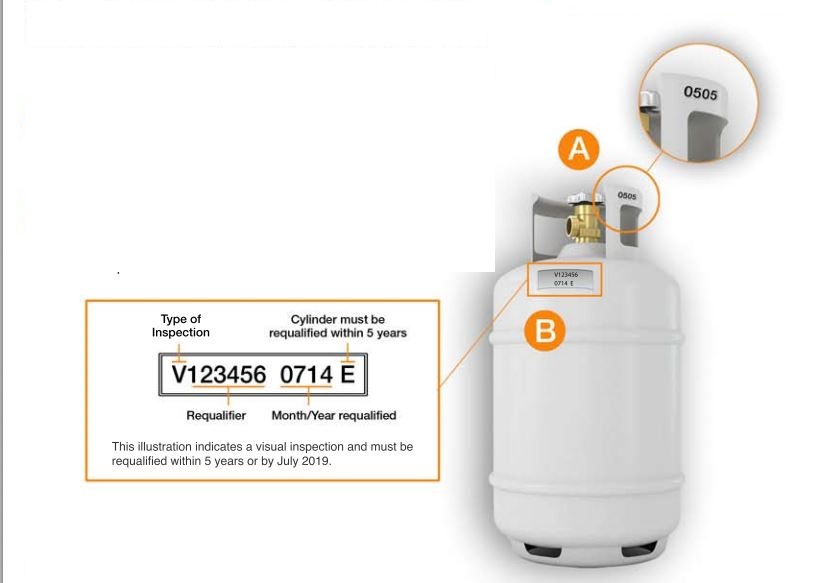
Like all hazardous material packagings, propane cylinders must be designed, manufactured, and tested to meet the specifications codified at 49 CFR 178.  Propane cylinders must also be requalified at periodic intervals to ensure they remain safe for use.  Unfortunately, all to often private citizens & businesses will use propane cylinders that have exceeded their requalification date.  Catastrophic failure of out-of-date propane cylinders has resulted in property damage, personal injury, and death.  Since propane cylinders must be marked to indicate their qualification status, it is easy to determine if your propane cylinders are safe for use.  To determine the qualification status of your propane cylinders, look for these markings on the cylinder:

A:  Manufacturing Date

Cylinders must be requalified within twelve (12) years of manufacture (by May 2017 in the illustration below).

B:  Requalification Date

If the cylinder is older than twelve (12) years, look for a “requalification date”.

Propane Cylinder

If you ship, receive, or transport propane – or any other hazardous material – you must provide training every three years for your HazMat Employees.  Contact me for a free training consultation.

Contact me with any questions you may have about the transportation of hazardous materials by air, highway, vessel, or rail

International and Domestic

Daniels Training Services

815.821.1550

Info@DanielsTraining.com

https://danielstraining.com/

Refer to this guidance document from the PHMSA (English and Spanish).

PHMSA Amends its Rules: Shippers and Carriers of HazMat may not Operate Until all Civil Penalties are Paid

Announcements from regulatory agencies of the US Government in the Federal Register can have a profound impact on your business.  Therefore it’s important for you to continuously monitor Federal Register publications for announcements applicable to your operations.  I can help you to do this.

Sometimes an announcement in the Federal Register calls for a more thorough explanation than just what is conveyed by the headline.  That is the point of this article.  Here I will briefly summarize, and provide access to more information, on a specific Federal Register announcement:  Hazardous Materials:  Falure to Pay Civil Penalties. (more…)

Federal Aviation Administratino

Federal Aviation Administration Announces Public Meeting Date

Announcements from regulatory agencies of the US Government in the Federal Register can have a profound impact on your business.  Therefore it’s important for you to continuously monitor Federal Register publications for announcements applicable to your operations.  I can help you to do this.

Sometimes an announcement in the Federal Register calls for a more thorough explanation than just what is conveyed by the headline.  That is the point of this article.  Here I will briefly summarize, and provide access to more information, on a specific Federal Register announcement:  Public Meeting to be Held in Washingon DC on October 14, 2014.

What agency is making the announcement?

The Federal Aviation Administration (FAA) and the Pipeline and Hazardous Materials Safety Administration (PHMSA), two of many administrations within the US Department of Transportation.

Daniels Training Services

815.821.1550

Info@DanielsTraining.com

https://danielstraining.com/

When was this announced in the Federal Register?

Tuesday, September 23, 2014

Any other dates I need to know?

The public meeting will be held on Tuesday, October 14, 2014 from 9 a.m. until 12 p.m.

What type of action is this?

Notice of Public Meeting.

How is the announcement identified?

Hazardous Materials Safety Program
Pages 56847 – 56847 [FR DOC # 2014-22603]

I don’t have all day.  Can you sum it up for me and I’ll determine if I need to read the whole thing?

In preparation for the International Civil Aviation Organization’s (ICAO) Dangerous Goods Panel’s (DGP’s) meeting to be held October 20-24, 2014, in Rio de Janeiro, Brazil, the FAA’s Office of Hazardous Materials Safety and the Pipeline and Hazardous Materials Safety Administration’s (PHMSA) Office of Hazardous Materials Safety announce a public meeting.

Where can I look for more information?

Questions regarding the meeting can be directed to Ms. Janet McLaughlin, Deputy Director, Office of Hazardous Materials Safety, ADG-2, Federal Aviation Administration, 800 Independence Avenue SW., Washington, DC 20591; telephone (202) 267-7530. Email: 9-AWA-ASH-ADG-HazMat@faa.gov. Questions in advance of the meeting for PHMSA can be directed to Mr. Shane Kelley, Assistant International Standards Coordinator, Pipeline and Hazardous Materials Safety Administration, PHH-10, 1200 New Jersey Ave. SE., Washington, DC 20590, telephone (202) 366-8553, Email: shane.kelley@dot.gov.

 For the full Federal Register publication:  PDF | Text | More

Daniels Training Services

815.821.1550

Info@DanielsTraining.com

https://danielstraining.com/

Hazardous Materials: Reverse Logistics (RRR) An Extension to the Comment Period – Announced by the PHMSA in the September 2014 Federal Register

Announcements from regulatory agencies of the US Government in the Federal Register can have a profound impact on your business.  Therefore it’s important for you to continuously monitor Federal Register publications for announcements applicable to your operations.  I can help you to do this.

Sometimes an announcement in the Federal Register calls for a more thorough explanation than just what is conveyed by the headline.  That is the point of this article.  Here I will briefly summarize, and provide access to more information, on a specific Federal Register announcement:  Hazardous Materials:  Reverse Logistics (RRR). (more…)

PHMSA

Hazardous Materials: Reverse Logistics (RRR) – An Announcement from the PHMSA in the August 2014 Federal Register

Announcements from regulatory agencies of the US Government in the Federal Register can have a profound impact on your business.  Therefore it’s important for you to continuously monitor Federal Register publications for announcements applicable to your operations.  I can help you to do this.

Sometimes an announcement in the Federal Register calls for a more thorough explanation than just what is conveyed by the headline.  That is the point of this article.  Here I will briefly summarize, and provide access to more information, on a specific Federal Register announcement:  Hazardous Materials:  Reverse Logistics (RRR). (more…)

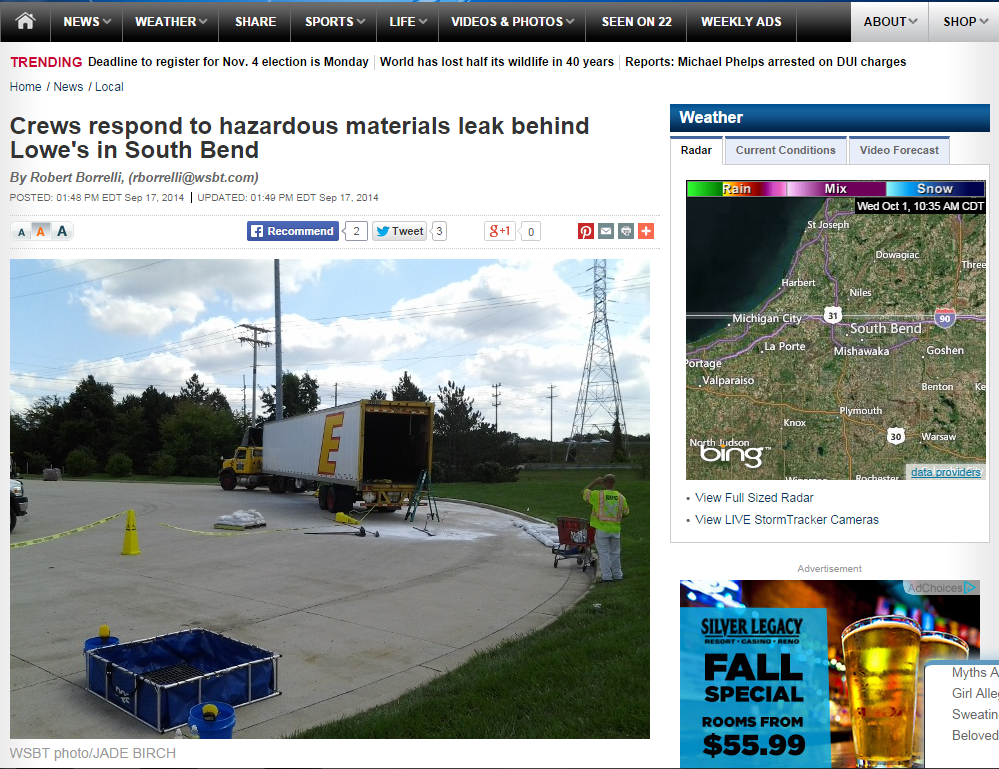
What’s Wrong With This Picture? HazMat Release at South Bend, IN Lowe’s

This is how the release was reported on the WSBT website:

Webpage of WSBT in South Bend, IN


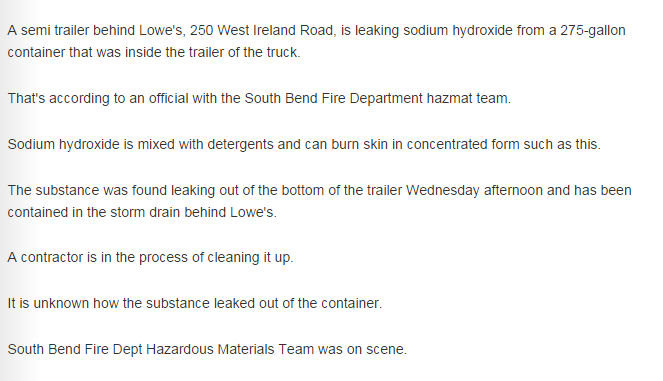
With the accompanying text:

Text from WSBT website re HazMat Spill

Read the article yourself here:  Crews Respond to Hazardous Materials Leak Behind Lowe’s in South Bend

A leak of some sodium hydroxide.  Seems pretty simple, right?  But a close look at the picture and text of the article gives me pause.  I believe there is the potential for a violation of the Hazardous Material Regulations of the PHMSA/USDOT, and it’s not the leak.  Read the original article closely then see what I can discern from it.  After you’ve read my article tell me if you think I got it right or not.  What I intend to do here is compare the available information to the applicable regulations (the HMR) and then provide my conclusion. (more…)

HazMat transportation by highway

September 2014 – Rules & Regulations, Proposed Rules, and Notices Regarding the Management of Hazardous Waste and the Transportation of Hazardous Materials

On its website the US Government Printing Office makes a wealth of Federal publications available for review and download; one of these is the Federal Register.

Published by the Office of the Federal Register, National Archives and Records Administration (NARA), the Federal Register is the official daily publication for rules, proposed rules, and notices of Federal agencies and organizations, as well as executive orders and other presidential documents.

Code of Federal Regulations
The Code of Federal Regulations (CFR) is the source of US Federal Regulations

See below for a brief summary of announcements in the Federal Register by the US EPA on the subject of Hazardous Waste and the Pipeline & Hazardous Materials Safety Administration (PHMSA), Federal Railroad Administration (FRA), and the Federal Aviation Administration (FAA) of the US DOT on the subject of Transportation of Hazardous Materials.

The Federal Register is a great way to look down the road and see potential changes to the regulations long before they are put into effect (sometimes The Rulemaking Process takes years before a final rule is issued, if ever).  Knowledge of these potential changes provides you with several advantages:

  • Additional time to modify your business operations to comply.
  • Awareness of on what topics the regulatory agencies intend to focus their efforts.
  • The ability to register your concerns, complaints, suggestions, etc. in order to modify the proposed rule before a final rule is issued.  It can be done, really!
  • Make changes to your training program to account for changes that become effective before the next training cycle.
  • Alert you to the need to re-train your employees prior to their next scheduled training cycle, if necessary.
  • Keep you abreast of changes to the regulations that affect your business and/or your industry group.

Please note that this is my best effort to identify the relevant announcements in the Federal Register that may be of interest to generators of hazardous waste and shippers of hazardous materials.  I encourage you to review the list of Federal Register publications yourself to ensure regulatory compliance.

September 1, 2014 through September 30, 2014

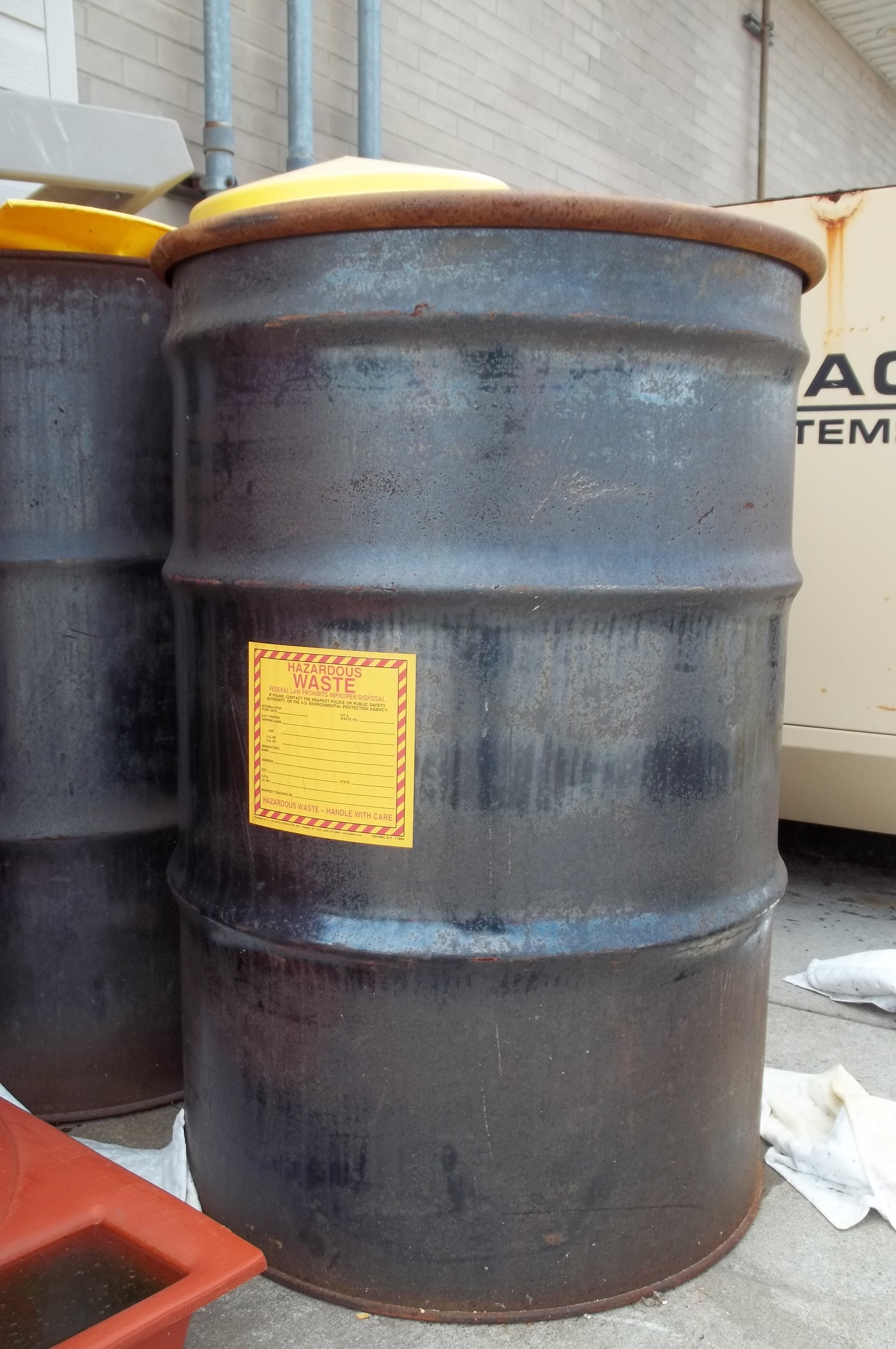
Hazardous waste container
Be sure to manage hazardous waste according to State and Federal Regulations
USEPA – US Environmental Protection Agency:

Publications not related to the management of hazardous waste, solid waste, universal waste, or used oil are not included here.

Rules and Regulations:

Texas: Final Authorization of State Hazardous Waste Management Program Revision Pages 52220 – 52224 [FR DOC # 2014-20789]        PDF | Text | More

Approval and Promulgation of State Plans for Designated Facilities and Pollutants: New Hampshire; Revised State Plan for Large and Small Municipal Waste Combustors Pages 52201 – 52205 [FR DOC # 2014-20803]        PDF | Text | More


Contact me with any questions you may have about the management of hazardous waste

Daniels Training Services

815.821.1550

Info@DanielsTraining.com

https://danielstraining.com/

Proposed Rules:

Texas: Final Authorization of State Hazardous Waste Management Program Revisions Pages 52275 – 52276 [FR DOC # 2014-20788]        PDF | Text | More

Approval and Promulgation of State Plans for Designated Facilities and Pollutants: New Hampshire; Revised State Plan for Large and Small Municipal Waste Combustors Pages 52275 – 52275 [FR DOC # 2014-20800]       PDF | Text | More

Notices:

None

FAA – Federal Aviation Administration:transportation of HazMat by air

Publications not related to the transportation of hazardous materials are not included here.

Rules and Regulations:

Special Conditions: Boeing, Model 767-200/-300 Series Airplane, as Modified by Avionics Support Group; Installed Rechargeable Lithium Batteries and Battery Systems Pages 58243 – 58245 [FR DOC # 2014-23042]        PDF | Text | More

Proposed Rules:

None

Notices:

Hazardous Materials Safety Program Pages 56847 – 56847 [FR DOC # 2014-22603]        PDF | Text | More

FMCSA – Federal Motor Carrier Safety Administration:

Publications not related to the transportation of hazardous materials are not included here.

Rules and Regulations:

None

Proposed Rules:

None

Notices:

None

FRA – Federal Railroad Administration:
Rail transportation of Bakken Crude Oil
Large volumes of hazardous materials are transported by rail.

Publications not related to the transportation of hazardous materials are not included here.

Rules and Regulations:

None

Proposed Rules:

Securement of Unattended Equipment Pages 53356 – 53383 [FR DOC # 2014-21253]         PDF | Text | More

Notice of Petition for Approval of a Railroad Safety Program Plan Pages 58029 – 58029 [FR DOC # 2014-22876]   PDF | Text | More

Notices:

None

PHMSA – Pipeline and Hazardous Materials Safety Administration:HazMat transportation by highway

Publications not related to the transportation of hazardous materials are not included here.

Rules and Regulations:

Hazardous Materials: Emergency Restriction/Prohibition Order Pages 55403 – 55406 [FR DOC # 2014-21968]        PDF | Text | More

Clarification on Fireworks Policy Regarding Display Aerial Shells With Attachments Pages 56988 – 56989 [FR DOC # 2014-22706]       PDF | Text | More

Clarification on Fireworks Policy Regarding Display Mines Pages 56989 – 56990 [FR DOC # 2014-22705]        PDF | Text | More

Proposed Rules:

Hazardous Materials: Special Permit and Approvals Standard Operating Procedures and Evaluation Process Pages 54676 – 54676 [FR DOC # 2014-21776]         PDF | Text | More

Hazardous Materials: Reverse Logistics (RRR) Pages 57494 – 57495 [FR DOC # 2014-22759]         PDF | Text | More

Notices:

Hazardous Materials: Revisions of the Emergency Response Guidebook Pages 52106 – 52107 [FR DOC # 2014-20683]         PDF | Text | More

Information Collection Activities Pages 58031 – 58041 [FR DOC # 2014-22903]  PDF | Text | More

Special Permit Applications Pages 58864 – 58865 [FR DOC # 2014-23071]       PDF | Text | More

Notice of Applications for Modification of Special PermitPages 58865 – 58866 [FR DOC # 2014-23069]       PDF | Text | More

Information can be helpful but it’s useless if you are not able to make sense of it.  You must be able to determine how any changes to the rules and regulations (final or proposed) will affect your operations, and communicate the necessary information to your personnel.  I can help you to do that.

Contact me with any questions you may have about the transportation of hazardous materials by air, highway, vessel, or rail

International and Domestic

Daniels Training Services

815.821.1550

Info@DanielsTraining.com

https://danielstraining.com/

Please contact for a free training consultation to determine your regulatory requirements and how training can help you to attain and maintain compliance with the regulations of the US Environmental Protection Agency (and your state) and the PHMSA, FAA, FRA, & FMCSA of the US Department Of Transportation.

Hey! What’s on Those Trucks?

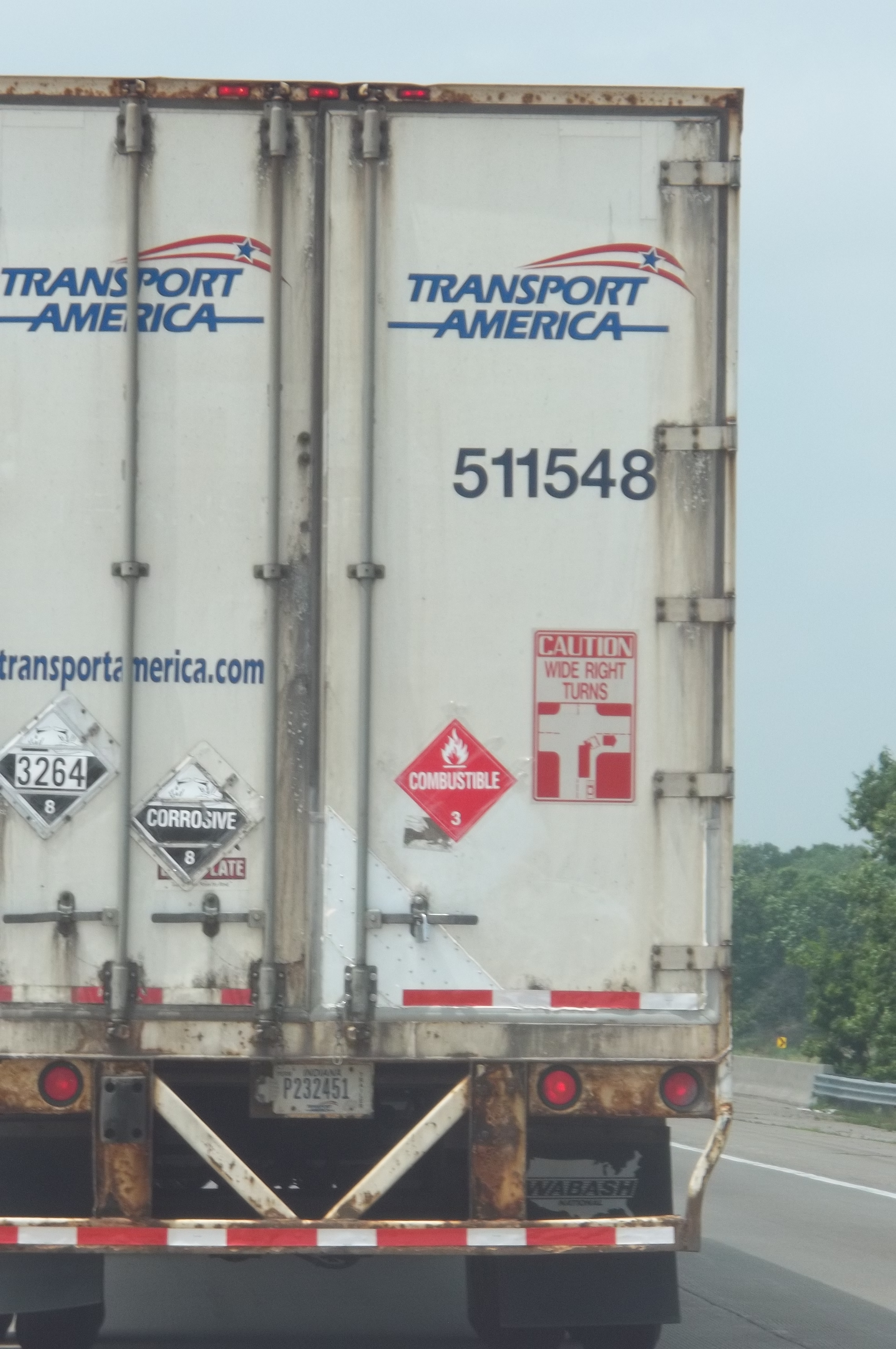
Anyone who travels the nation’s highways will see hazardous materials (HazMat) transported in commerce by some form of a motor vehicle.  If in large quantities, like 5,000 gallons or more, the form of transportation will be a large tractor & semi-trailer combination vehicle.  A hazardous material in transportation by motor vehicle is easily identified by the presence of placards on the vehicle (that’s assuming that the type and amount of HazMat mandates placarding and that, if required, the driver has placarded the vehicle properly).  But let’s just assume that the motor vehicle you see transporting HazMat is correctly displaying each of the hazard communication methods required by the Hazardous Material Regulations (HMR) of the PHMSA/USDOT; what then?  With the right information, you can detect the presence and decipher the meaning of the hazard communication methods used.  The purpose of this article is to provide that information. (more…)

Search Website