A question from a past Onsite Training customer (4.20.15):
Daniel,
I have a question. We need to ship out a sample approximately a quart of transformer oil which contains 550 ppm PCBs. If the material is below the RQ value (see enclosed letter), what type of labeling is required, or does it since it’s below the RQ value?
My reply that same day:
I will take a look at it and get back to you.
Turns out he didn’t need the information after all (4.20.15):
No problem, I found out that my lab can do the testing, so I don’t have to ship the material out.
Did that stop me? No! (April 22, 2015):
Not sure if you require this information any more, but here goes:
A PCB oil is only a hazardous materials subject to USDOT regulations in transportation if there is 1 lb or greater of PCBs in a single packaging. 1 quart at 550 ppm would be well below 1 lb of PCBs, therefore it is not a HazMat when transported.
A PCB oil of this concentration would be subject to TSCA regulations of which I am not very familiar.
I hope this helps.
Dan
Wait, how did you know that?
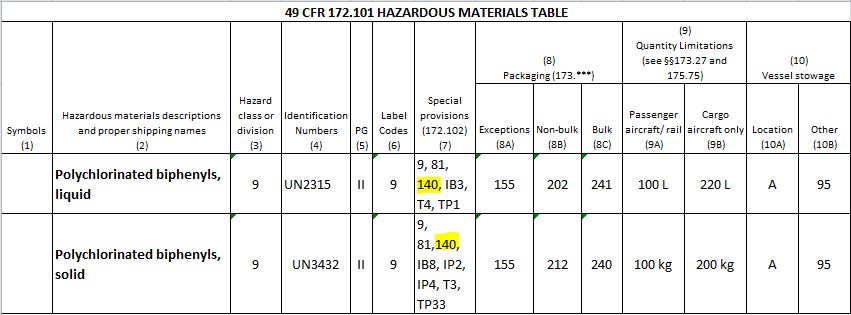
First of all, let’s look at the entry for PCBs in the Hazardous Materials Table (49 CFR 172.101):
So, you’d think that PCBs are a hazardous material when offered for transportation and that my response to my customer was wrong. But…you’d say that before looking up the meaning of Special Provision 140 in column 7, which reads:
This material is regulated only when it meets the defining criteria for a hazardous substance or a marine pollutant…
So, is it a marine pollutant?
PCBs are identified on the marine pollutant list at Appendix B to 49 CFR 172.101, but to be regulated as a marine pollutant it must also offered for transportation by vessel or transported in a bulk packaging, neither of which is the case here.
Is it a hazardous substance?
No, because a Reportable Quantity of PCBs is 1 pound, as I described in my email of 4.22.15, the volume of oil and concentration of PCBs put it well below this amount.
Contact me with any questions you may have about the transportation of hazardous materials by air, highway, vessel, or rail
There you have it. While the amount and concentration of PCB oil considered for transportation was not a hazardous material, a different packaging and volume might be. Be sure to carefully research the Hazardous Material Regulations of the PHMSA/USDOT before you send that sample to the lab.
Or, contact me to answer your questions or to provide HazMat Employee training.
Hazardous Materials Prohibited as Luggage on a Passenger Aircraft
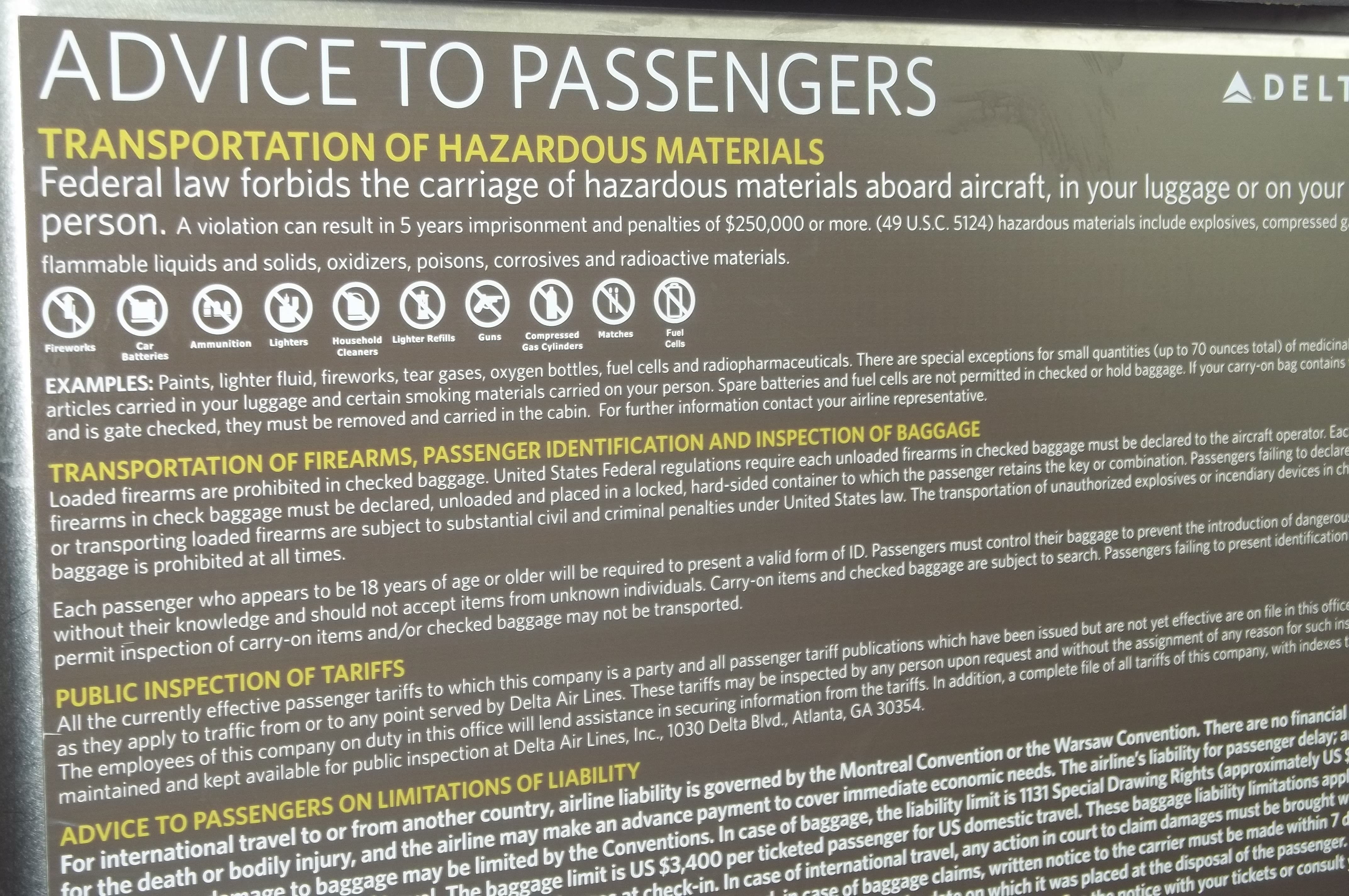
If you travel by air as much as I do (that’s what Onsite Training requires), you’ve seen the signs forbidding the transportation of hazardous materials aboard passenger aircraft, either in checked baggage or carry-on. The purpose of this article is to identify the source of those signs, summarize the requirements of the regulations, and provide additional sources of information for the harried traveler. (more…)
Air Shipment of Samples with Ethanol
Not every question I receive comes from an industrial facility embedded on the outskirts of some major city or from a busy transportation hub in the nation’s heartland. Some, like this one on March 14th, 2015, come from exotic locations I can only hope to visit some day.
Hi Daniel,
I am currently on a research cruise and accumulated a large amount of samples preserved in 95% ethanol. By the end of the cruise I will have around 20 samples of 250 ml of ethanol for a total of 5L. The samples need to be shipped in dry ice (preferably by air) from San Diego to Hawaii. I was wondering if you knew of a way to do this. It clearly exceeds the excepted and limited quantity, and I don’t have access to a trained haz-mat officer at port.
Thank you in advance for your help.
You can tell I was impressed (3.14.15):
Wow! What an interesting question. I happen to be in the office today (it’s Saturday morning here in Illinois) so I will do my best to shoot you an answer later today.
Here’s what I sent to him later that day. (Yeah, I work Saturdays.):
First of all, I made the determination based on the available information that the ethanol is a Class 3, Packing Group II. Also, I assume you intend to ship this per the IATA Dangerous Goods Regulations even though the transportation you describe could be subject solely to PHMSA/USDOT regulations if you could find an air carrier that does not require compliance with the IATA DGR.
Note from Dan: The domestic transportation of a hazardous material is always subject to the Hazardous Material Regulations of the the PHMSA/USDOT. A domestic shipper of HazMat by air will likely also have to comply with the Dangerous Goods Regulations of IATA; this depends on your air carrier since most - but not all - require compliance with the IATA DGR. The international transportation of a HazMat (called dangerous goods) by air must comply with the IATA DGR. The direct transportation of a HazMat from San Diego, CA to Hawaii is not international transportation and therefore is only required to comply with the HMR unless the carrier requires compliance with the IATA DGR as well. Got it?
Based on that assumption and the information you provided, I agree with you that the total quantity of 5 L exceeds the limits for shipping Ethanol, PG II as a Limited Quantity (max net quantity of 1 L) and as an Excepted Quantity (max inner packaging of 30 g/30 ml and max outer packaging of 500 g/500 ml) and therefore may not take advantage of those exceptions. It is within the quantity limits for shipment as fully regulated dangerous good on a passenger aircraft and, of course, on cargo aircraft.
Special Provision A180 (Column M of the List of Dangerous Goods) reads as follows:
A180 Non-infectious specimens, such as specimens of mammals, birds, amphibians, reptiles, fish, insects and other invertebrates containing small quantities of UN 1170, UN 1198, UN 1987, or UN 1219 are not subject to these Regulations provided the following packing and marking requirements are met:
(a) specimens are:
1. wrapped in paper towel and/or cheesecloth moistened with alcohol or an alcohol solution and then placed in a plastic bag that is heat-sealed. Any free liquid in the bag must not exceed 30 mL; or
2. placed in vials or other rigid containers with no more than 30 mL of alcohol or an alcohol solution;
(b) the prepared specimens are then placed in a plastic bag that is then heat–sealed;
(c) the bagged specimens are then placed inside a another plastic bag with absorbent material then heat sealed;
(d) the finished bag is then placed in a strong outer packaging with suitable cushioning material;
(e) the total quantity of flammable liquid per outer packaging must not exceed 1 L; and
(f) the completed package is marked “scientific research specimens, not restricted Special Provision A180 applies”.
The words “not restricted” and the special provision number A180 must be included in the description of the substance on the Air Waybill as required by 8.2.6, when an Air Waybill is issued.
Note here that the total quantity of flammable liquid per outer packaging cannot exceed 1 L which is less than your proposed total quantity of 5 L and the max allowed quantity of ethanol inside the package is 30 mL which also exceeds your 250 mL/vial.
It appears that you will be required to ship the samples as a dangerous good subject to full regulation under the IATA DGR unless you can reduce the size of both the inner and outer packaging.
Also, must follow packing instruction 954 for the Dry Ice.
I wish I had better news for you. If you could just collect smaller samples, they might not be subject to the regulations and then the dry ice would not be either.
As for shipping it as a dangerous good, that should not be too difficult. Contact Fed Ex or UPS.
Please don’t hesitate to contact me with any other questions.
He fired back on March 16th:
Hi Daniel, I apologize for the ongoing requests for advice.So would it help if I don’t use dry ice AND reduce the sample volume
from 250ml of ethanol per bottle to 30ml of ethanol per vial?How would I have to pack this then? Can I place 30 vials with 30ml
ethanol in a bag with absorbent material, then place the bag into a
box, and then place that box into another box that is aligned with
absorbent material and a plastic bag?
Thank you for your help.
A quick reply the same day:
If you are able to reduce the volume of ethanol in each vial to 30 ml and you don’t use dry ice, then I believe your best option is to meet the packaging requirements of Special Provision A180 (read them carefully, what you propose is not quite what the regulations require). If you are able to do this, then your consignment is not subject to the Dangerous Goods regulations of IATA.
A problem I just discovered is that – based on a quick review of the regulations – USDOT does not recognize the same Special Provision for UN1170 as IATA. It appears that even at 30 ml/vial you would need to ship it as a Limited Quantity which provides some relief from the HazMat regulations, but not as much as SP 180 offers. If you are shipping to, from, or w/i the U.S. you must comply with USDOT regulations.
I don’t mind the questions, keep them coming.
Whatever you decide, please keep me in mind the next time you need HazMat/IATA/IMO training.
Some more information was needed (3.17.15):
Hi Daniel,
thank you for the detailed answer. I really appreciate it.
Ok, so what are the packing regulations for Limited Quantity (30mL vials for up to 1L)? I hate to ask these trivial things, but the internet in the middle of the Pacific is not the greatest and hence it is quite hard to google these things.
This cruise is called ABYSSLINE cruise and its onboard the R/V Thomas Thompson. We have 3 different cruise blogs:
You can also follow all the activities under the twitter hashtag #AB02
We are currently at 12deg 01.642′ N , 117deg 19.513′ W.
Thanks for the help.
My reply that same day:
Packaging requirements for a Limited Quantity of ethanol can be found at 49 CFR 173.150 and are fairly simple:
Non-bulk packaging (i.e. <119 gallons).
Combination packaging (i.e. inner packaging and outer packaging).
“strong outer packaging”
Limits on volume of inner packaging based on packing group of HazMat.
Shipment by air has additional general packing requirements.
Shipment by air requires labels and markings in addition to Limited Quantity marking.
However, you will likely also have to comply with requirements of IATA Dangerous Goods Regulations (depending on the requirements of your air carrier). I have access to those regulations but cannot print and send them as I can the USDOT. IATA regulations are similar to USDOT but may have more restrictions and may also have Carrier variations not included in USDOT.
I am sharing this email with someone (Ron Harvey of Echelon Environmental) who may be able to help you out with the actual shipment of this HazMat.
Thanks for the information about your cruise.
And that’s where my involvement ended. My inquisitor contacted Ron who assisted him through the final steps of packaging and shipping the hazardous material/dangerous good.
Contact me with any questions you may have about the transportation of hazardous materials by air, highway, vessel, or rail
Please don’t hesitate to contact me with your questions about the transportation of dangerous goods/hazardous materials.
Safe Transportation of Energy Products (STEP) by USDOT/PHMSA
In response to recent accidents involving crude oil shipments by rail in the U.S. and Canada, U.S. Transportation Secretary Anthony Foxx has issued a “Call to Action,” calling on rail company executives, associations, shippers, and others to discuss how stakeholders can prevent or mitigate the consequences of rail accidents that involve flammable liquids.
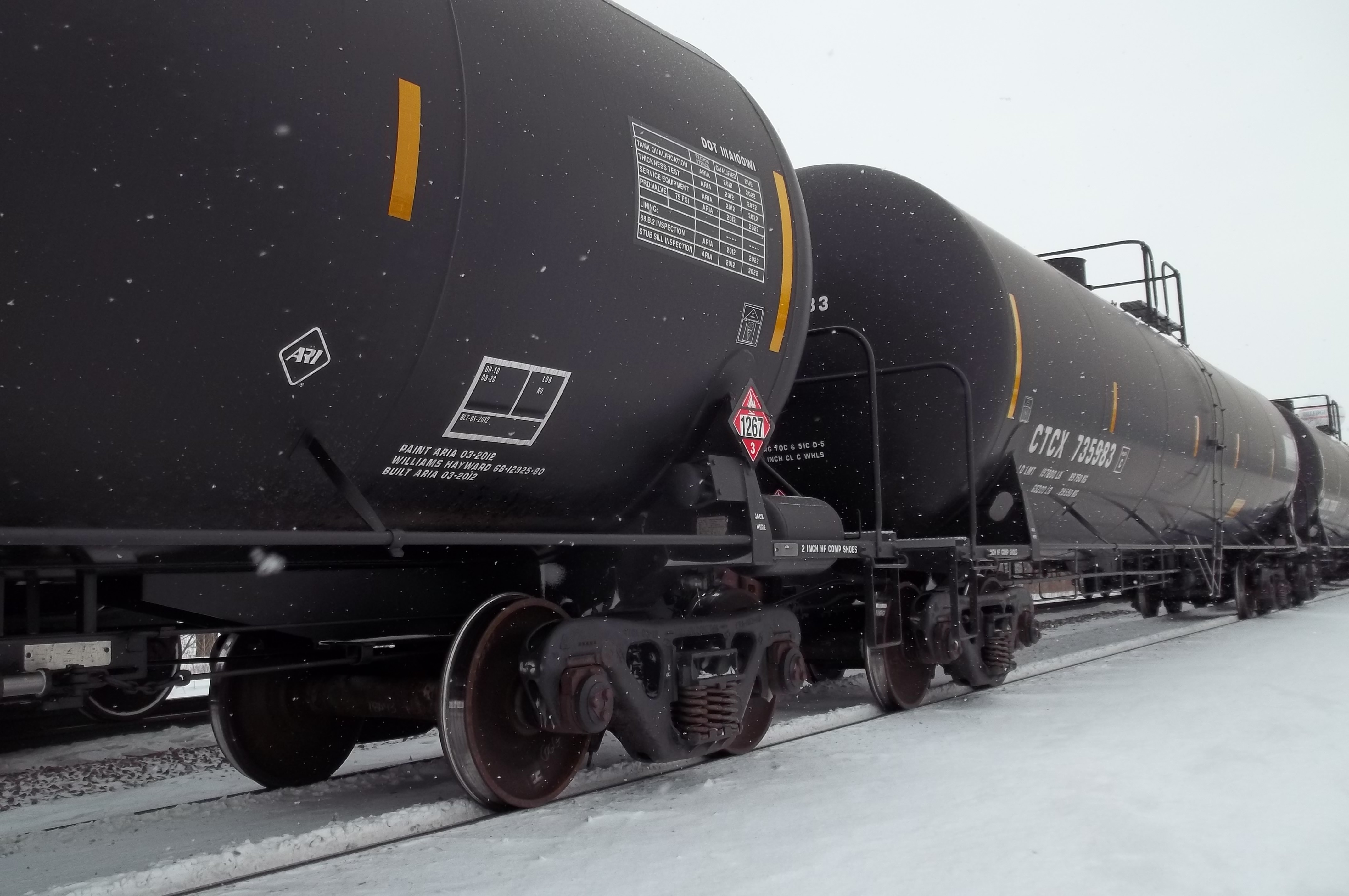
Railroad Tank Cars of Bakken Crude Oil passing through Illinois
The following companies have voluntarily submitted testing data to the US Department of Transportation in response. The information shared consists of data gathered from samples of petroleum crude oil from the Bakken region of North Dakota. We will continue to post updates as more companies respond to the Department’s industry-wide effort aimed at enhancing the safe transport of flammable liquids by rail.
Company Name
Date Received
Number of Samples
Notes
WPX Energy
5/29/2014
16
Tested for RVP, FP, BP, API, chemical breakdown of light ends, benzene content.
EOG Resources
5/27/2014
35
Tested for RVP, FP, BP, H2S.
North Dakota
Petroleum Council
5/17/2014
152
Tested for RVP, FP, BP, API Specific Gravity, chemical breakdown of light ends, H2S.
American Fuel &
Petrochemical
Manufacturers
5/14/2014
1,400
Tested for RVP, FP, BP, rail tank car pressure, chemical breakdown of light ends, H2S, corrosivity.
Statoil & Gas
5/13/2014
43
Tested for RVP, FP, BP, API Specific Gravity, sulfur content, H2S.
Phillips 66
5/09/2014
16
Tested for FP, BP, API Specific Gravity, sulfur content, sediment & water content, TVP, RVP, H2S, chemical breakdown of light ends.
Great Northern Midstream
5/08/2014
10
Tested for FP, BP, H2S, chemical breakdown of light ends, Benzene.
ExxonMobil
4/17/2014
15
Tested for density, H2S, FP, BP, RVP and chemical breakdown of light ends, benzene content.
Continental Resources
3/18/2014
1
Tested for API Specific Gravity, sulfur content, RVP, ethane, propane and butane.
Plains All American
3/11/2014
24
Tested for FP, BP, API Specific Gravity, sulfur content, RVP.
Savage
2/28/2014
12
Tested for FP, BP, RVP, and sulfur content.
Notes:
H2S = Hydrogen Sulfide; BP = Boiling Point
FP = Flash Point
RVP = Reid Vapor Pressure
API = American Petroleum Institute
TVP = True Vapor Pressure
Contact me with any questions you may have about the transportation of hazardous materials by air, highway, vessel, or rail
New Regulations! Announcements in the Federal Register for May 2015 From USEPA (RCRA only) and HazMat Transportation Issues of the FAA, FMCSA, FRA, & PHMSA
On its website the US Government Printing Office makes a wealth of Federal publications available for review and download; one of these is the Federal Register.
The Federal Register is the tool used by the US Government to communicate with interested parties
Published by the Office of the Federal Register, National Archives and Records Administration (NARA), the Federal Register is the official daily publication for rules, proposed rules, and notices of Federal agencies and organizations, as well as executive orders and other presidential documents.
See below for a brief summary of announcements in the Federal Register by the US EPA on the subject of Hazardous Waste and the Pipeline & Hazardous Materials Safety Administration (PHMSA), Federal Railroad Administration (FRA), and the Federal Aviation Administration (FAA) of the US DOT on the subject of Transportation of Hazardous Materials.
The Federal Register is a great way to look down the road and see potential changes to the regulations long before they are put into effect (sometimes The Rulemaking Process takes years before a final rule is issued, if ever). Knowledge of these potential changes provides you with several advantages:
Additional time to modify your business operations to comply.
Awareness of on what topics the regulatory agencies intend to focus their efforts.
The ability to register your concerns, complaints, suggestions, etc. in order to modify the proposed rule before a final rule is issued. It can be done, really!
Make changes to your training program to account for changes that become effective before the next training cycle.
Alert you to the need to re-train your employees prior to their next scheduled training cycle, if necessary.
Keep you abreast of changes to the regulations that affect your business and/or your industry group.
Please note that this is my best effort to identify the relevant announcements in the Federal Register that may be of interest to generators of hazardous waste and shippers of hazardous materials. I encourage you to review the list of Federal Register publications yourself to ensure regulatory compliance.
May 1, 2015 through May 31, 2015
USEPA – US Environmental Protection Agency:
Publications not related to the management of hazardous waste, solid waste, universal waste, or used oil are not included here.
Rules and Regulations:
None
Proposed Rules:
None
Contact me with any questions you may have about the management of hazardous waste
Publications not related to the transportation of hazardous materials are not included here.
Rules and Regulations:
None
Proposed Rules:
None
Notices:
None
FMCSA – Federal Motor Carrier Safety Administration:
Publications not related to the transportation of hazardous materials are not included here.
Rules and Regulations:
None
Proposed Rules:
None
Notices:
None
FRA – Federal Railroad Administration:
Publications not related to the transportation of hazardous materials are not included here.
Rules and Regulations:
None
Proposed Rules:
None
Notices:
Railroad Safety Advisory Committee; Notice of Meeting Pages 26988 – 26988 [FR DOC # 2015-11269] PDF | Text | More
Proposed Agency Information Collection Activities; Comment Request Pages 30109 – 30110 [FR DOC # 2015-12579] PDF | Text | More
Proposed Agency Information Collection Activities; Comment Request Pages 30110 – 30112 [FR DOC # 2015-12584] PDF | Text | More
Proposed Agency Information Collection Activities; Comment Request Pages 30112 – 30113 [FR DOC # 2015-12578] PDF | Text | More
Proposed Agency Information Collection Activities; Comment Request Pages 30113 – 30114 [FR DOC # 2015-12580] PDF | Text | More
PHMSA – Pipeline and Hazardous Materials Safety Administration:
Publications not related to the transportation of hazardous materials are not included here.
Rules and Regulations:
Hazardous Materials: Enhanced Tank Car Standards and Operational Controls for High-Hazard Flammable Trains Pages 26643 – 26750 [FR DOC # 2015-10670] PDF | Text | More
Proposed Rules:
None
Notices:
International Standards on the Transport of Dangerous Goods Pages 26617 – 26618 [FR DOC # 2015-11104] PDF | Text | More
Hazardous Materials: Information Collection Activities Pages 27844 – 27845 [FR DOC # 2015-11625] PDF | Text | More
Hazardous Materials: Notice of Application for Special Permits Pages 29156 – 29157 [FR DOC # 2015-11817] PDF | Text | More
Hazardous Materials: Notice of Application for Modification of Special Permit Pages 29157 – 29158 [FR DOC # 2015-11825] PDF | Text | More
Hazardous Materials: Delayed Applications Pages 29387 – 29388 [FR DOC # 2015-11815] PDF | Text | More
Hazardous Materials: Actions on Special Permit Applications Pages 29388 – 29389 [FR DOC # 2015-11827] PDF | Text | More
Information can be helpful but it’s useless if you are not able to make sense of it. You must be able to determine how any changes to the rules and regulations (final or proposed) will affect your operations, and communicate the necessary information to your personnel. I can help you to do that.
Contact me with any questions you may have about the transportation of hazardous materials by air, highway, vessel, or rail
Please contact me for a free training consultation to determine your regulatory requirements and how training can help you to attain and maintain compliance with the regulations of the US Environmental Protection Agency (and your state) and the PHMSA, FAA, FRA, & FMCSA of the US Department of Transportation.
Sample Video: HazMat Employee Training Webinar
If you’ve ever considered registering for one of my HazMat Employee Training Webinars but decided against it because of past poor experiences, I encourage you to take just 3.5 minutes to view this short video clip I recorded from a HazMat Employee Training Webinar I conducted on May 11, 2015.
It’s nowhere near the full training, but this short segment will – I believe – demonstrate to you that my live, interactive (you can ask questions at any time) webinars will meet your regulatory training requirements in a fast (3 hours), efficient (scheduled 1/month right at your desk), and cost-effective (only $189/person) manner.
Proper Transportation of a 2,000 Pound Battery for Reclamation
FEBRUARY 26, 2015: A QUESTION FROM A PREVIOUS ATTENDEE OF ONE OF MY TRAINING SEMINARS:
I had a question come up about transporting batteries to a recycle vendor. A 2000 lb lead acid battery that is on one of my trucks going to a scrapper. What is required. Are you going to need a placard on the truck and label on the battery as corrosive along with the paperwork or is it an ORM-D? How does DOT view this type of load?
MY REPLY ON MARCH 2ND (I WAS BUSY!):
Sorry for the delay in replying. I can get you an answer, but I need some more information: Please clarify what you mean by “on one of my trucks going to a scrapper.” Is this battery still connected to a vehicle? Is the vehicle gas-powered (gasoline)? How will it be transported? In a vehicle? On a vehicle? Towed by a vehicle?
Please advise on the above and I can get you an answer.
CUSTOMER REPLIED (3.3.15):
One of our trucks from our distribution center, a 53’ trailer semi, was transporting a bad forklift battery to a scrap vendor. The battery was skidded up and packed correctly according to DOT regs. It was going via semi, over highway, to the scrap vendor. Essentially its an ORM-D for recycle so you’re outside of RCRA.
MY QUICK REPLY ON MARCH 3RD:
You are correct on several counts and should be in compliance with DOT & EPA regulations overall. Some clarification:
A lead acid battery of the type you describe is a hazardous material per DOT regulations when offered for transportation.
A battery of this size is not subject to the ORM-D Exception.
Pursuant to DOT regs [49 CFR 173.159(d)] authorized packaging for shipping a battery of this type includes “secured to skids or pallets”. Other basic packaging requirements must be met.
DOT regs [49 CFR 173.159(e)] include an exception from full regulation as a hazardous material for batteries of this type if they are secured properly and other basic requirements are met. Therefore, no shipping papers, placards, labels, or markings as a hazardous material are required.
A lead acid battery sent for recycling is a hazardous waste pursuant to the regulations of the EPA.
However, an exclusion exists for a Recyclable Material as a lead acid battery if it is sent for reclamation (40 CFR 266, Subpart G). Per this exclusion a lead acid battery sent for reclamation is not subject to the regulations as a hazardous waste. This exclusion does not apply if the battery is sent for disposal other than reclamation.
I hope this helps. Please don’t hesitate to contact me with any questions.
Do you have questions about the transportation of batteries with vehicles being sent for scrap? Ask me!
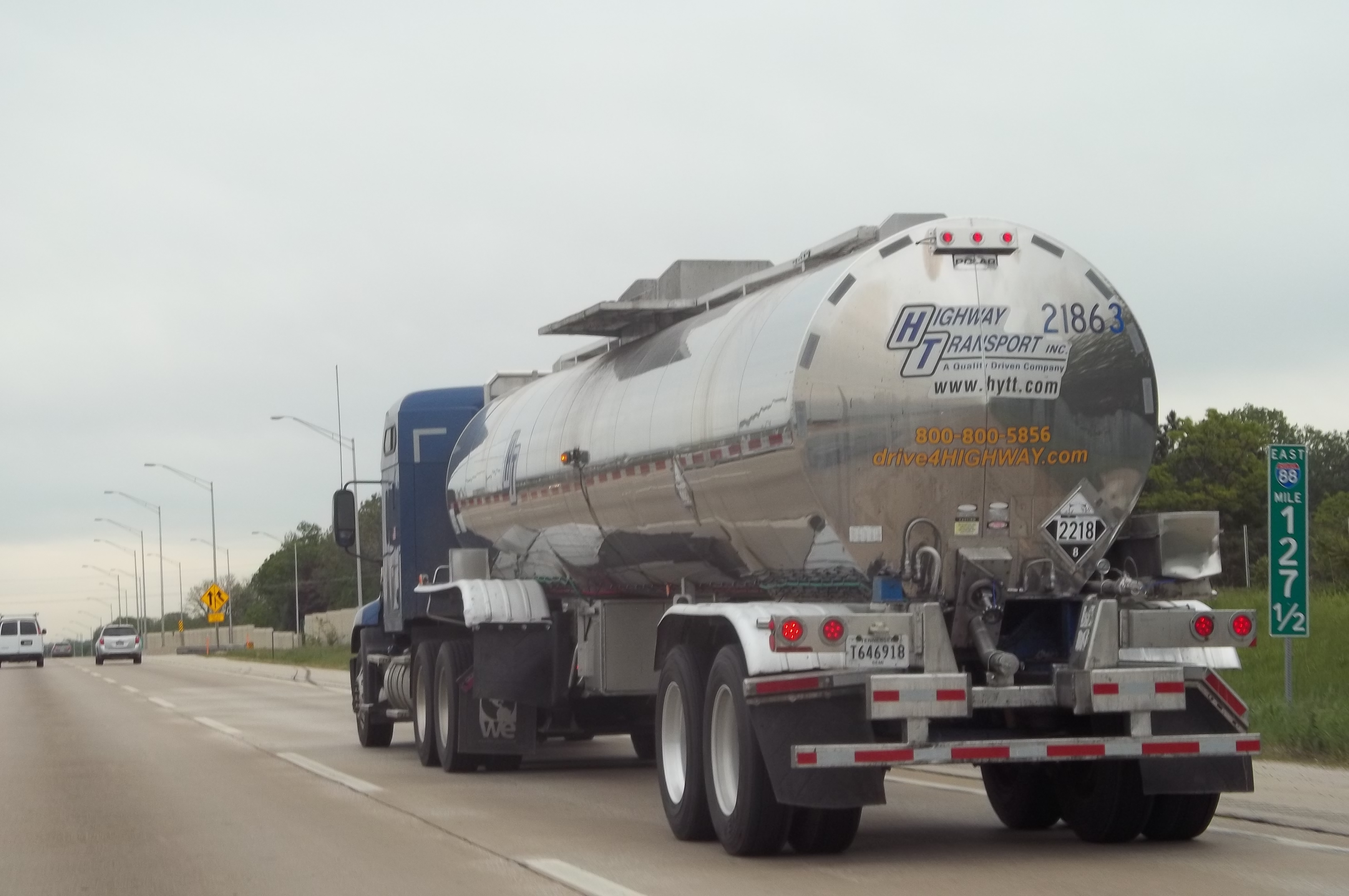
Drive our nation’s highways and you’ll see hazardous materials in transportation. Drive on some of the main transportation corridors – like Interstate 80 (I-80) – and you’ll see some very interesting HazMat transported in commerce.
What is the hazardous material on that truck?
And if you’re like me, you want to know what it is being transported in the vehicles you see on the highway. Like this one.
Gross Weight v. Net Explosive Weight When Transporting Explosives
In this business you just never know from what industry within the regulated community you might receive a question. Like this one from a person with whom I’d had no prior business; he contacted me through MY WEBSITE with a question on March 23, 2015:
Oilfield operations will occasionally require the transportation in commerce of hazardous materials
I’m going to be loading gun carriers for the oilfield with shaped charges and det cord. My previous job with <<redacted>>, we were told by DOT when we transported our guns that we only needed to count the explosive weight and not the gun carrier itself (shipping container) What is the proper way to calculate the weight to transport perforating guns. Any information would be greatly appreciated.
My honest reply the next day (3.24.15):
That question is going to take a little research (and time). I have not yet had experience with DOT regulations for explosives, but am confident I can answer your question after digging into the regulations.
I’ll try to get you an answer later this week or early next.
True to my word, here’s my reply on March 30th:
The answer to your question depends on what area of the HMR you are seeking to determine compliance. I will do my best to summarize the requirements below based on the information available.
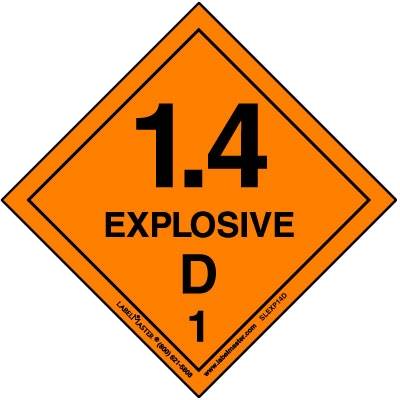
I believe you are describing the proper shipping name from column 2 of the Hazardous Materials Table (49 CFR 172.101) of: Jet perforating guns, chargedoil well, with detonator (either hazard class 1.1D or 1.4D). Both hazard classes have the same special provisions (found in column 7 of the Hazardous Materials Table) and authorized packaging (found in column 8 of the Hazardous Materials Table).
Determining compliance based on net explosive weight v. weight of jet perforating gun:
The packing instructions (US1 in Table of Packing Methods at 49 CFR 173.62) include limits on the weight of the explosive content at 1(b): “Each shaped charge affixed to the gun may not contain more than 112 g (4 ounces) of explosives.” and 1(e)(ii & iii): “A jet perforating gun classed as 1.4D may be transported by a private offshore supply vessel only when the gun is carried in a motor vehicle as specified in paragraph (d) of this packing method or on offshore well tool pallets provided that: (i) All the conditions specified in paragraphs (a), (b), and (c) of this packing method are met; (ii) The total explosive contents do not exceed 90.8 kg (200 pounds) per tool pallet; (iii) Each cargo vessel compartment may contain up to 90.8 kg (200 pounds) of explosive content if the segregation requirements in §176.83(b) of this subchapter are met; and (iv) When more than one vehicle or tool pallet is stowed “on deck” a minimum horizontal separation of 3 m (9.8 feet) must be provided.” Otherwise there are no references to weight in the packing instructions. So here, it is the weight of just the explosive content that matters and not the weight of the entire gun. There is no reference in US1 to inner, outer, or intermediate packaging, because the gun itself is considered to be the authorized packaging.
The placarding determination at 49 CFR 172.504 includes specific information about placarding explosives, but no reference is made to using the weight of the entire article (jet perforating gun) or just the explosive content. It is my opinion, absent of guidance from USDOT, that the weight of the entire article (jet perforating gun) would be considered when determining the need for displaying placards. More information on the topic of placarding this HazMat is contained later in this article.
49 CFR 172.202(a)(5)(i) for describing the total quantity of a HazMat on a shipping paper reads as follows: “For Class 1 materials, the quantity must be the net explosive mass. For an explosive that is an article, such as Cartridges, small arms, the net explosive mass may be expressed in terms of the net mass of either the article or the explosive materials contained in the article.” (emphasis mine) I believe the jet perforating guns are an article and therefore have the option to be described on the shipping paper by either the net mass of the entire article or just the explosive content. There are several USDOT letters of interpretation that confirm this interpretation:
I hope this helps. Please let me know if you have any other questions.
Thinking the issue resolved – another happy customer, right? – I sent this email on April 9, 2015:
Certain fireworks are also a Class 1 hazardous material
With your permission I’d like to use the text of our emails (all names removed) as an article in my blog and newsletter.
Please let me know if that is OK.
The reply from my – not entirely satisfied – customer the next day (4.10.15):
Dan, as long as my name and the company name isn’t in there I don’t see a problem with it, maybe someone else can shed some light on the subject of net vs. gross explosive weight and placarding accordingly.
Thanks
Wait. What?! My reply on April 11, 2015:
I appreciate you letting me use the content of our emails. Does your email indicate that I did not answer your question entirely? I’d be more than happy to provide more information if you have any unanswered questions.
Still some unanswered questions (4.11.15):
Not entirely, I understand that most oilfield companies count gross weight which is the weight of the explosives and the weight of the gun barrels for placarding, at <<redacted>> we were told by somebody with dot that we only had to go by net explosive weight and not gross so we didn’t have to placard our vehicles even though we were carrying more than 1000 lbs gross weight.
OK, let me try that again (4.11.15):
USDOT HazMat Employee training is what I do!
I’ll research that question further and get you an answer next week.
My reply on April 22, 2015:
OK! I think I have the answer you are looking for and it is right in the regulations.
49 CFR 172.504(c) indicates an exception from placarding requirements for a non-bulk packaging of a placard Table 2 material of less than 1,001 lbs aggregate gross weight of hazardous material.
“Aggregate gross weight” refers to the combined weight of the HazMat and the completed package (e.g. a 55-gallon drum and the HazMat it contains). This requires that both the explosive content and the weight of the gun be considered for the purposes of determining placards.
Assumptions regarding the HazMat in question:
It is a placard Table 2 HazMat.
It is in a non-bulk packaging.
With the information you provided, my assumptions (see above), reference to 49 CFR 172.504(c), and a conversation with the PHMSA, I have determined that the entire weight of the explosive content and the gun itself (i.e. the aggregate gross weight) must be used when making the placarding determination for a vehicle.
If you like, I can assist you in submitting a request for a letter of interpretation to PHMSA to conclusively determine this regulation.
I hope this helps.
My follow-up on May 7, 2015:
Just curious if you have any more questions for me on this matter? If you are not yet satisfied with my answer, I’d be happy to dig a little deeper. If this is the answer you’re looking for and the issue is closed, I’d appreciate it if you would OK me to use the content of these emails (no identifying information) in an article on my website.
Thanks and please contact me with any questions you may have.
Contact me with any questions you may have about the transportation of hazardous materials by air, highway, vessel, or rail
And now, finally, the satisfied customer I was hoping for! (5.7.15):
Yes, I believe you have answered my question, sorry I haven’t got back to you sooner, been very busy, I don’t mind that you use the info on your website.
Thanks again
Q&A: Displaying the DANGEROUS Placard on a Motor Vehicle
Question from previously unknown contact on April 2, 2015 through the Contact Me page of my website:
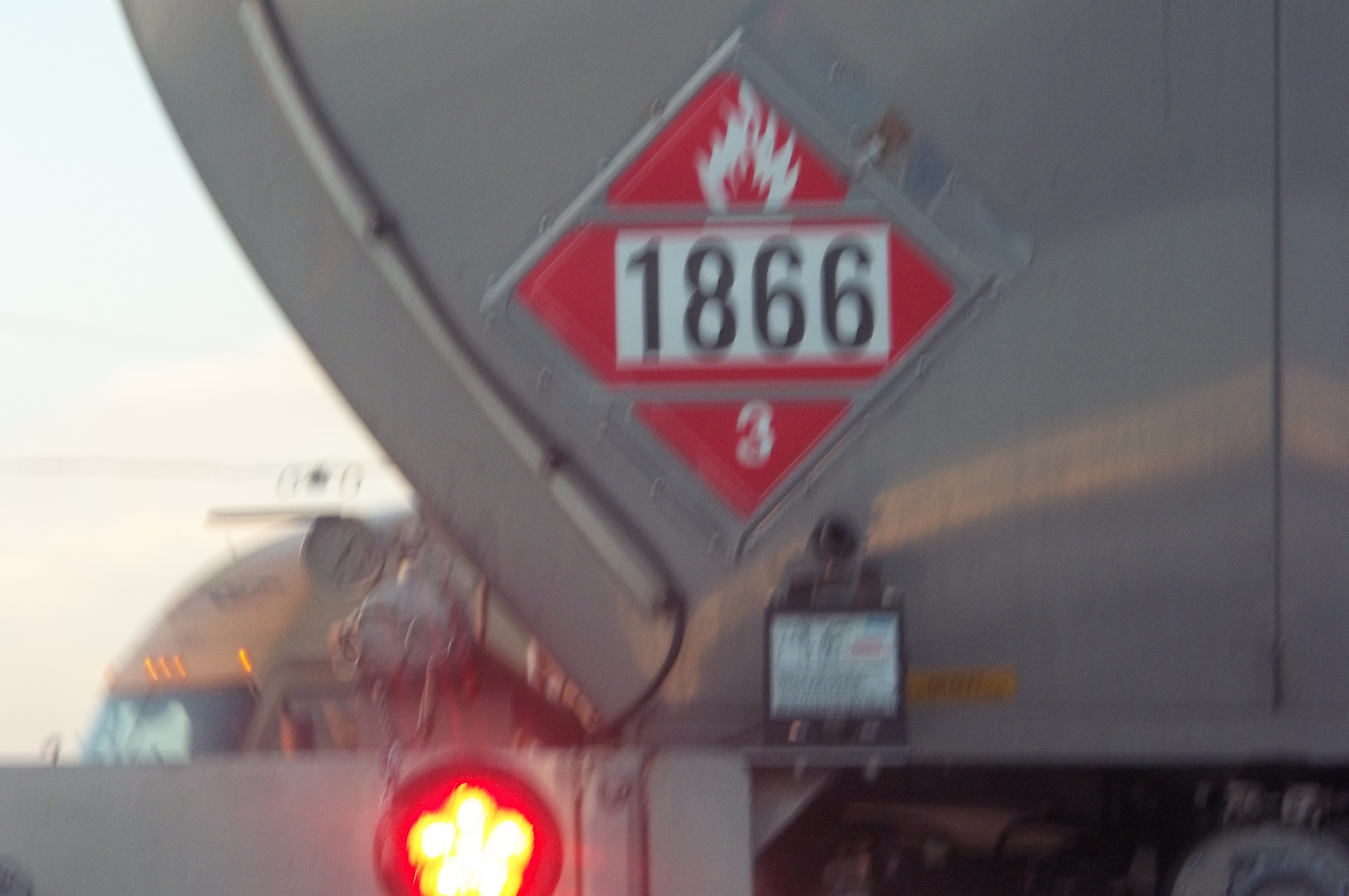
Placard on Cargo Tank Motor Vehicle for UN1866 Resin Solutions
Good morning, to my understanding I’ve known that we need placards on flammable over 1000 lb. But when we have 324lb. of 4.1 Flammable and 525 lb. of UN1866, resin solution. Is it ok to use Dangerous only or both placards? Tks!
My reply later that same day:
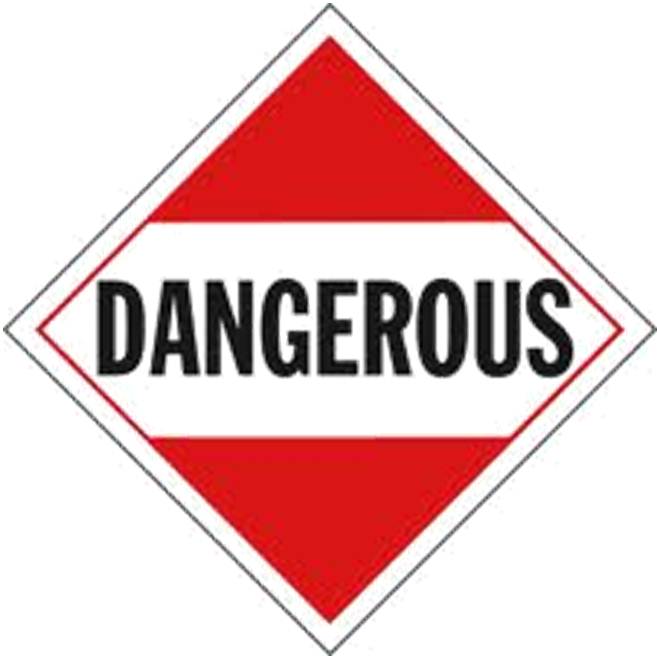
The Dangerous Placard can be used in a variety of situations – with limitations – when transporting HazMat
Thank you for contacting me. I will try to answer your question below:
You are correct that vehicles transporting quantities of most HazMat, including Class 3 Flammable Liquids, of ≥1,001 lbs must display HazMat Placards on all four sides of the vehicle.
The amount of HazMat you describe is not enough to require placards to be displayed on the vehicle (324 lbs + 525 lbs = 849 lbs). Though the driver may display placards in this instance if he wishes to. Please read this article: Driver Option to Display Placards When not Required.
If displaying placards at the driver’s discretion or if there is enough HazMat to require placarding the vehicle (e.g. 501 lbs of Division 4.1 Flammable Solid and 500 lbs of Class 3 Flammable Liquid) the driver has two options: 1. Display the distinct placards for the separate HazMat (4.1 Flammable Solid & 3 Flammable Liquid) or; 2. Display the Dangerous placard alone. Please read this article: Use of the Dangerous Placard for Shipments of HazMat.
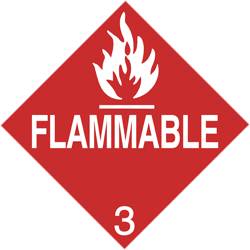
The display of the Class 3 Flammable Liquid placard is required for certain shipments of HazMat

 Did that stop me? No! (April 22, 2015):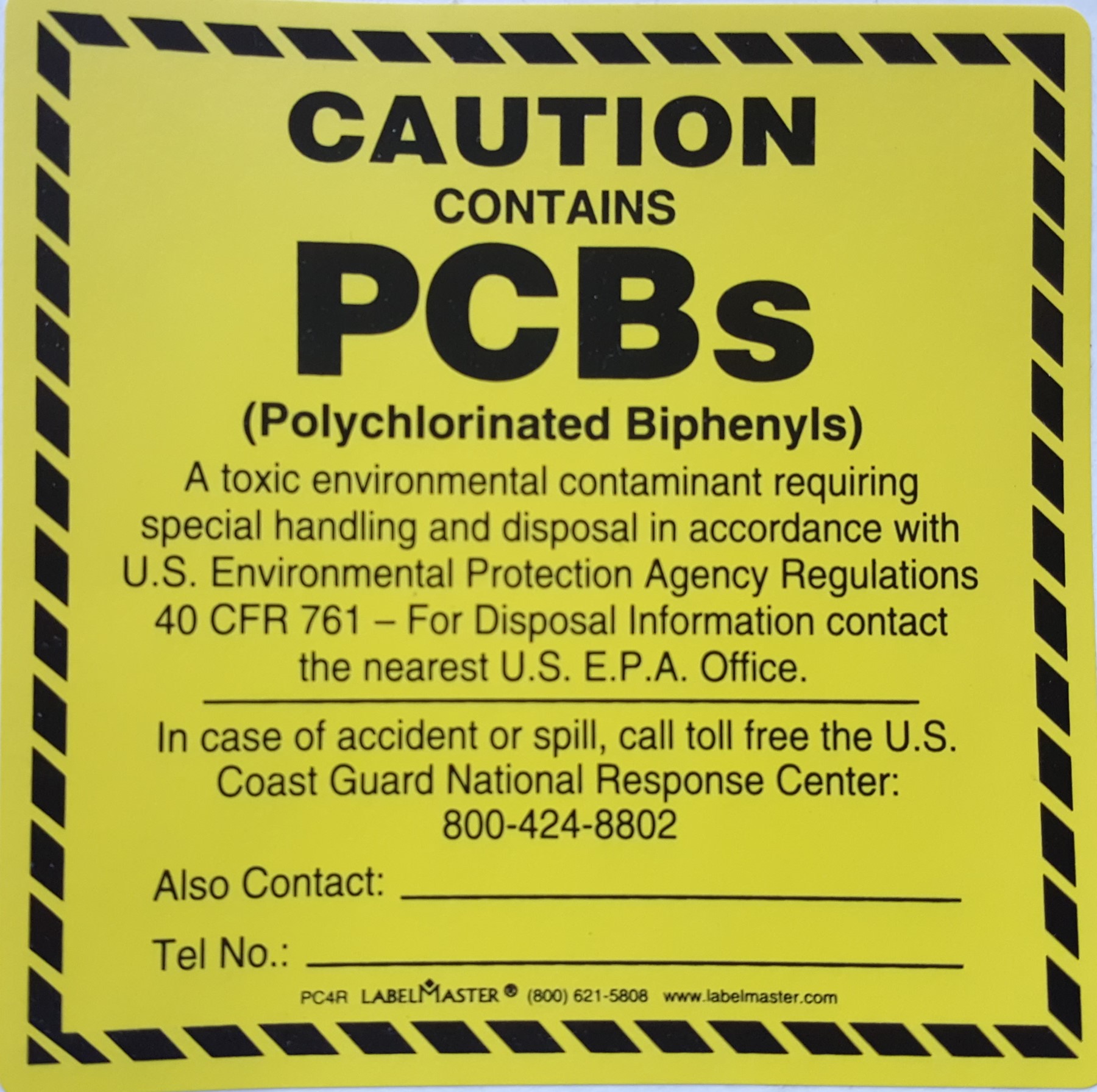
 seen the signs forbidding the transportation of hazardous materials aboard passenger aircraft, either in checked baggage or carry-on. The purpose of this article is to identify the source of those signs, summarize the requirements of the regulations, and provide additional sources of information for the harried traveler.