PO Box 1232 Freeport, IL 61032

A Different Kind Of Training

A Different Kind Of Training

A Different Kind Of Training

Q&A: Transport of Used Medical Devices

People find me in google searches – it happens! – and when they do they fire away with questions.  Like this one August 5, 2016:

I saw your web page and the invite to contact you with questions about the transportation of hazardous materials. My questions involve the shipping of used medical devices.

Example 1. A used biopsy sampling gun from a hospital being returned to the manufacturer for failure investigation.

Example 2. A used medical machine which collects urine which is being returned to the manufacturer for:

a) Reconditioning and return to same hospital or,

b) Disposal if broken.

Example 3. A used medical ultrasonic machine which comes in contact with various patients skin which is being returned to the manufacturer for reconditioning and return to same hospital.

Example 4. A used catheter being used for personal home healthcare being returned to the manufacturer for failure investigation.

It may be precautionary assumed that recondition / reusable devices being returned from a healthcare facility came in contact with bodily liquids from floors or sprays from patients.

It is also assumed that these liquids are Category B infectious substance.

What are the suggestions for each Example:

  1. Shipping Name
  2. Inner Packaging Material and Markings
  3. Outer Packaging Material and Markings
  4. Acceptable types of transportation (i.e. personal cars, company sales cars, licensed carriers, etc)

Also can any regulated hazardous material be shipped to any off-site storage facility while awaiting decision dispositions?

Thank you very much Daniel.

I was impressed – and a little intimidated – by the depth of his questioning:

Yow!  That’s a lot.  I’ll do my best to answer your questions in the next several days.

And several weeks later, I did (9.26.16):

I will do my best to answer your questions below.  I apologize for my delay.

  • All of what you describe meets the definition of a Used Health Care Product at 49 CFR 173.134(a)(8).
  • There is an exception from regulation as a hazardous material for used health care products at 49 CFR 173.134(b)(12)(ii).  Per this exception, a used health care product is not subject to USDOT regulations if the following conditions are met:
    • UHCP are drained of all free liquids.
    • UHCP are placed in a water-tight primary container.
    • Primary container is puncture-proof if required by UHCP.
    • BioHazard marking is displayed on primary container.
    • Primary container is placed in water-tight secondary container.
    • BioHazard marking is displayed on secondary container.
    • Secondary container is placed in outer packaging.
    • Sufficient cushioning is used to prevent movement of secondary container within outer packaging.
    • An itemized list of contents of secondary container and information regarding possible contamination with Division 6.2 infectious substance is placed between the secondary container and the outer packaging.
    • Persons involved in offering for transport or actual transport must know about the requirements of this exception.  HazMat Employee training is not required.

If packaged as summarized above (and explained in detail at 49 CFR 173.134(b)(12)(ii)), no other requirements of the USDOT Hazardous Material Regulations apply.

  1. Shipping name:  None.
  2. Inner packaging material and markings:  see above.
  3. Outer packaging material and markings:  see above.
  4. Acceptable transportation:  Any.  If the above is complied with, UHCP is not subject to USDOT regulation as a hazardous material.

Contact me with any questions you may have about the transportation of hazardous materials by air, highway, vessel, or rail

International and Domestic

Daniels Training Services

815.821.1550

Info@DanielsTraining.com

https://danielstraining.com/

Can any regulated HazMat be shipped to any off-site storage facility while awaiting decision dispositions?  I may need more information from you to understand exactly what you are asking but the short answer is yes.  USDOT does not regulate where a HazMat goes to.  Only that the Shipper is responsible to offer it to a transporter who then must transport it to its destination.
I hope this helps.
Please don’t hesitate to contact me with any other questions.


Q&A: How do I Ship Hazardous Waste Generated by Homeowners?

Here is a question I received almost a year ago on December 17, 2015 from a person who found me while searching the internet for an answer to his questions:

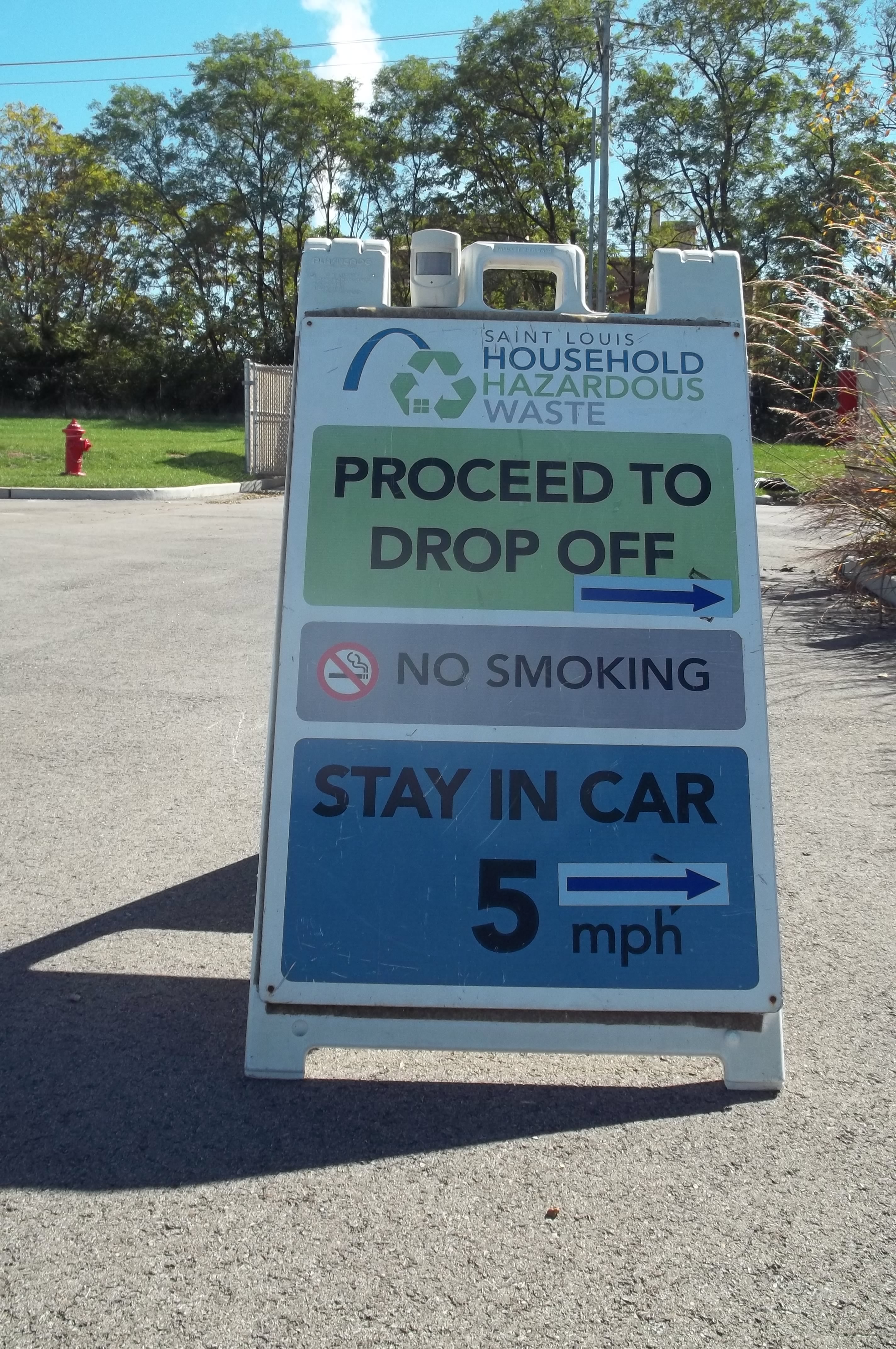
sign for household hazardous waste collection siteDaniel, hope this finds you well.  Could you give me your opinion on waste disposal companies using ORM-D for Household Hazardous Waste (HHW) shipping names (e.g. flammable paint, cleaners that may have low or high pH and others that may fit into DOT respective hazard classes).  I am concerned as the material is no longer packaged according to the original  ORM-D packaging.  Are you familiar with any US DOT interpretation that would allow that those shipping names continue to be used?  My concern comes from reviewing a waste disposal company that is still using ORM-D shipping names.  Thanks for input and thoughts.  Wish you a Merry Christmas, Thanks.

Well, it took me a few days.  But just before Christmas (12.22.15), I replied:

I apologize for my delay in replying to your question.  I’ll do my best to answer it below.

  • Waste collected from households is excluded from regulation as a hazardous waste at 40 CFR 261.4(b)(1).  See this short presentation for more information:  The Household Hazardous Waste Exclusion.
  • Due to the HHW exclusion, the waste does not require a Uniform Hazardous Waste Manifest when transported or offered for transportation by the Shipper/Generator.
  • USDOT/PHMSA regulations define a hazardous waste as a waste that requires the Uniform Hazardous Waste Manifest when transported.  Therefore, excluded HHW is not a hazardous waste per USDOT/PHMSA regulations.
  • As you describe, the excluded HHW may be a USDOT/PHMSA hazardous material for other reasons, e.g. Class 3 Flammable, Class 8 Corrosive, &etc.
  • Hazardous materials that meet the requirements of the Consumer Commodity exception may be re-classified as an ORM-D and shipped accordingly.  Read more about the Consumer Commodity Exception in this short article.
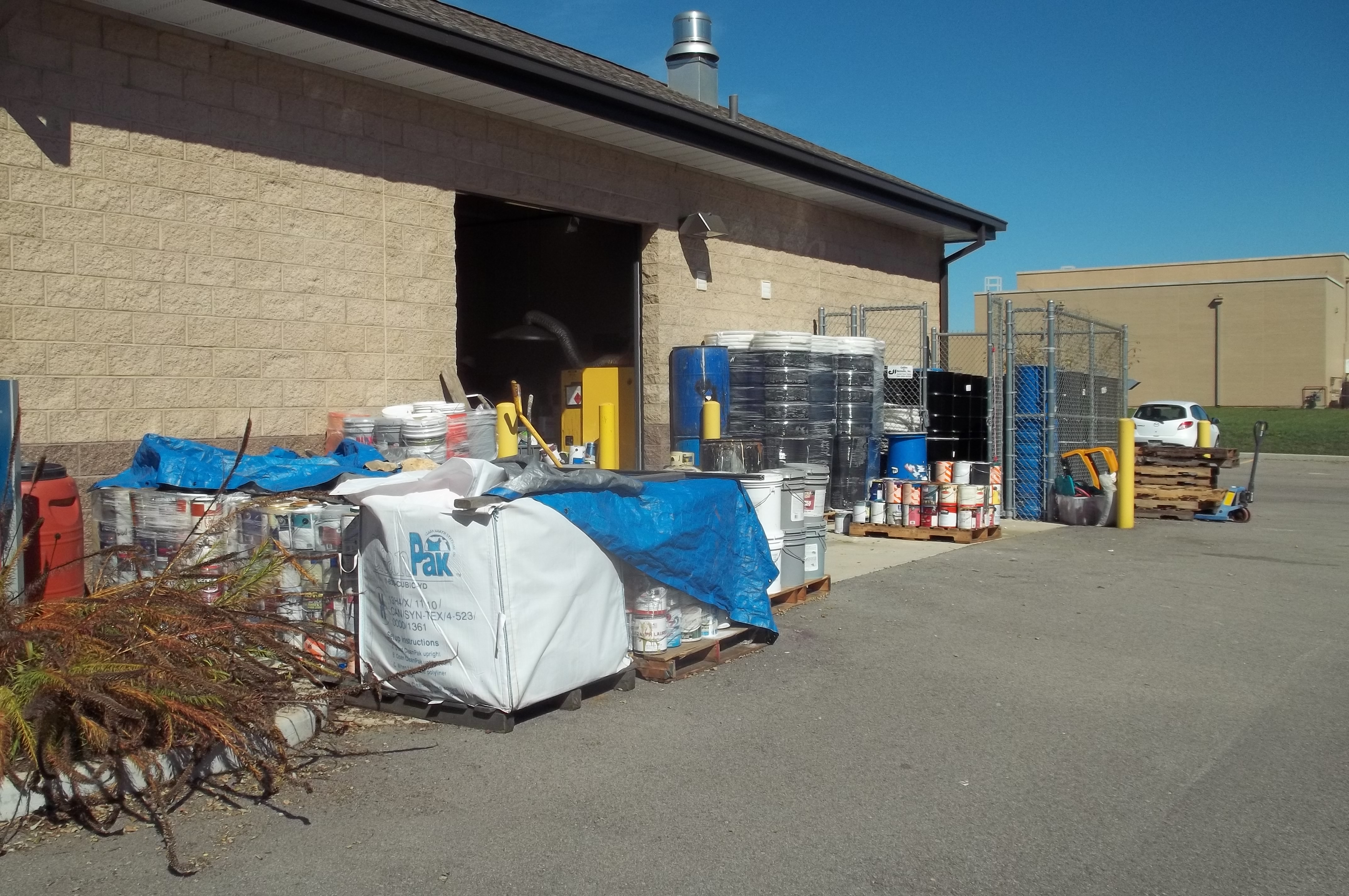
  • Use of the Consumer Commodity Exception for an excluded HHW does require compliance with specified packing instructions but it does not require the original packaging.Household hazardous waste accumulated at collection site

In sum, if the Shipper/Generator is complying with the HHW exclusion and the Consumer Commodity Exception, then they should be able to ship the waste as a Consumer Commodity.

 I hope this helps.  Please don’t hesitate to contact me with any other questions.
[maxbutton id=”1″]

The Classification of Alcohol Wipes

In the front office, break room, shop floor, and the back of the glove compartment in your car, you’re sure to find those neat individual packets of alcohol wipes. Small towelettes soaked in alcohol – usually isopropanol or ethanol – they’re handy to have around for small clean-ups. But how are they transported? The purpose of this article is to provide guidance in the classification of alcohol wipes for the purposes of transportation and to identify and explain an exception to the Hazardous Material Regulations (HMR) of the USDOT/PHMSA. (more…)

Q&A: How do I Determine If I Have a Class 8 Corrosive per USDOT/PHMSA Regulations?

This conversation started with a phone call in late May 2016:

In sum, a business was trying to determine the information necessary in order to classify a substance as a Class 8 Corrosive for transportation in commerce.  He had been told that the classification is based on the pH of the substance.  I told him that I was almost certain that pH was not a factor in this classification but instead was based on the corrosion rate of the substance on human skin or on steel or aluminum.  Not having a copy of the Hazardous Material Regulations with me at the time I took the call I couldn’t cite the regulation my answer was based on so I told him I would follow-up with an email.

And so I did.  In an email of May 31, 2016:

My first answer was correct that the USDOT definition of a Class 8 Corrosive Material (liquid or solid) at 49 CFR 173.136 is not based on and does not refer to the pH.  Whether a material is a Class 8 is based on two criteria:

  • If it causes full thickness destruction of human skin at the site of contact within a specified period of time (see 49 CFR 173.137).

Or…

  • If it has a severe corrosion rate on steel or aluminum (see 49 CFR 173.137).
“Whenever practical, in vitro test methods authorized in 173.137 of this part or historical data authorized in paragraph (c) of this section should be used to determine whether a material is corrosive.”
I hope this helps.
[maxbutton id=”1″]

He was pleased and had a question I couldn’t answer:

Very helpful!  THX
Do you know where/who can perform these tests for our blend?   Is it up to the manufacture?
… I have been in and around DOT regs for 15 years and wasn’t clear on this one
I’ll certainly keep you in mind.

I accepted the compliment but deflected the question:

You’re welcome.
I am not aware of a lab that performs the necessary analysis.  I think if you Google the requirements and reference the regulations you should find one.
Dan

Q&A: Who is Required to Sign the Shipping Paper for a Hazardous Material?

A question from a regular inquisitor regarding the Hazardous Material Regulations (5.17.16):

Good morning.
Question- We generate our own manifest or shipping papers for both hazardous and non hazardous loads.
We produce our own chemicals and ship/carry them to job sites.
That being the case, is the driver/employee required to sign the manifest?

My reply that same day:

Thank you for contacting me.  I’ll try to answer your question below:

  • A signature or certification is not required from the driver/carrier on a HazMat shipping paper.  Your company is the carrier of the HazMat since you transport it in commerce.
  • 49 CFR 172.204 requires a signature certification from the shipper of a hazardous material (your company is also the shipper of the HazMat since you offer it for transportation).

However…

  • 49 CFR 172.204(b)(1)(ii) includes an exception from the requirement for a shipper certification if the shipper is acting as a private carrier (i.e. transporting its own HazMat) and the HazMat will not be reshipped or transferred to another carrier.
In sum, based on what you described, your HazMat shipping paper does not require a signature or certification from either the shipper or the carrier (your company is both of these).
Once again a simple, but important, question is answered and the business of HazMat transportation can continue:
Thanks again.
Not included in my correspondence but helpful:

Contact me with any questions you may have about the transportation of hazardous materials by air, highway, vessel, or rail

International and Domestic

Daniels Training Services

815.821.1550

Info@DanielsTraining.com

https://danielstraining.com/

Q&A: Display of Identification Number on Bulk Packagings in Transportation

Daniels Training Services

815.821.1550

Info@DanielsTraining.com

https://danielstraining.com/

Here is a type of question I receive frequently (5.11.16):

Good Morning.
I’m pulling a gooseneck trailer which is carrying two one- way totes of 1760 (corrosive solution) and 1 tote of 1824 (50% caustic). Both totes have proper labels and Id’s on opposite ends. Can I placard the trailer using only (8) corrosive placards or do I need 2 sets of placards with proper id’s?

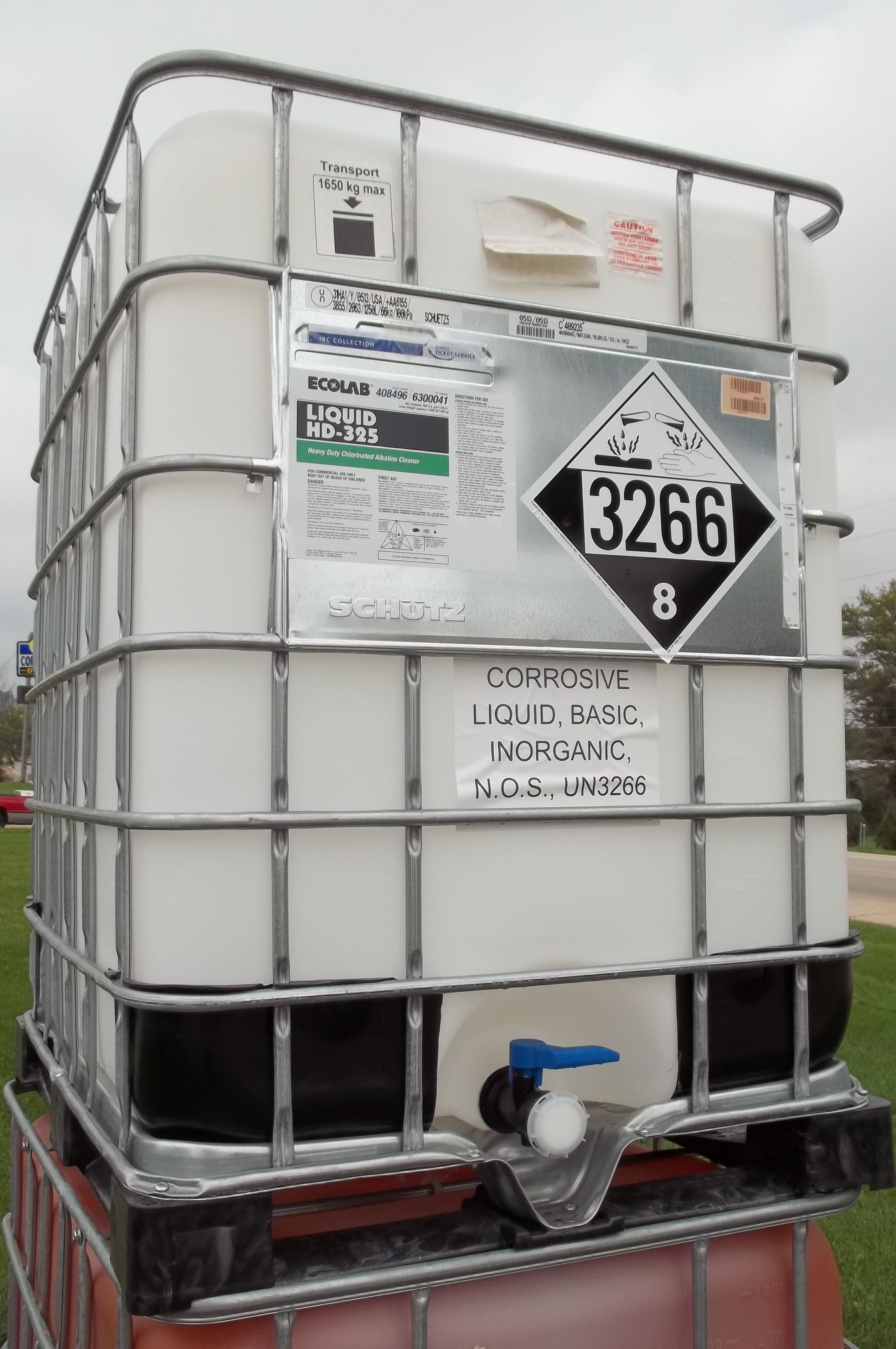
UN3266 in Intermediate Bulk Container (IBC)My reply that day:

That is a good question. I will try to answer it here, if you need more information I can provide that later.

You are required to display the identification number for each bulk packaging of a different HazMat that you have on your vehicle. In this case you have two different identification numbers. You must display both on all four sides of the vehicle.

However, if the identification numbers are visible on the totes while in transportation on all four sides of the vehicle, then it is not necessary to display the identification number with the placards on the vehicle.

I hope this helps. Please don’t hesitate to contact me with any other questions.

He must have been waiting for an answer because within a few moments I received this reply with further questions:

Daniel,

First of all allow me to thank you for your prompt response.
Second, did i read correctly  that a newsletter was available for purchase?
Third, I’m very aware of the difficulty of answering a DOT hazmat load question where there is no gray area.
So with that in mind, I have loaded 1 bulk package with ID’s on all four side thus not having to placard the vehicle.
But with 3 totes, 2 with 1760 and 1 with 1824,  and only 2 id’s on opposite ends of each tote would that still allow me to use only 8 Corrosive placards?
I know…wow.
My reply that same day:

The newsletter is free, see the link below to subscribe.

Like this article?

Subscribe to my Monthly Newsletter

No marketing emails!

You can display the solely the Class 8 placard on all four sides of the vehicle as long as both of the two distinct identification numbers (1760 & 1824) are visible on all four sides.
If the identification numbers are not visible on all four sides of the vehicle, then it is necessary to display them on the vehicle.  This can be done in one of three ways:
  • On the placard.  One ID # per placard.
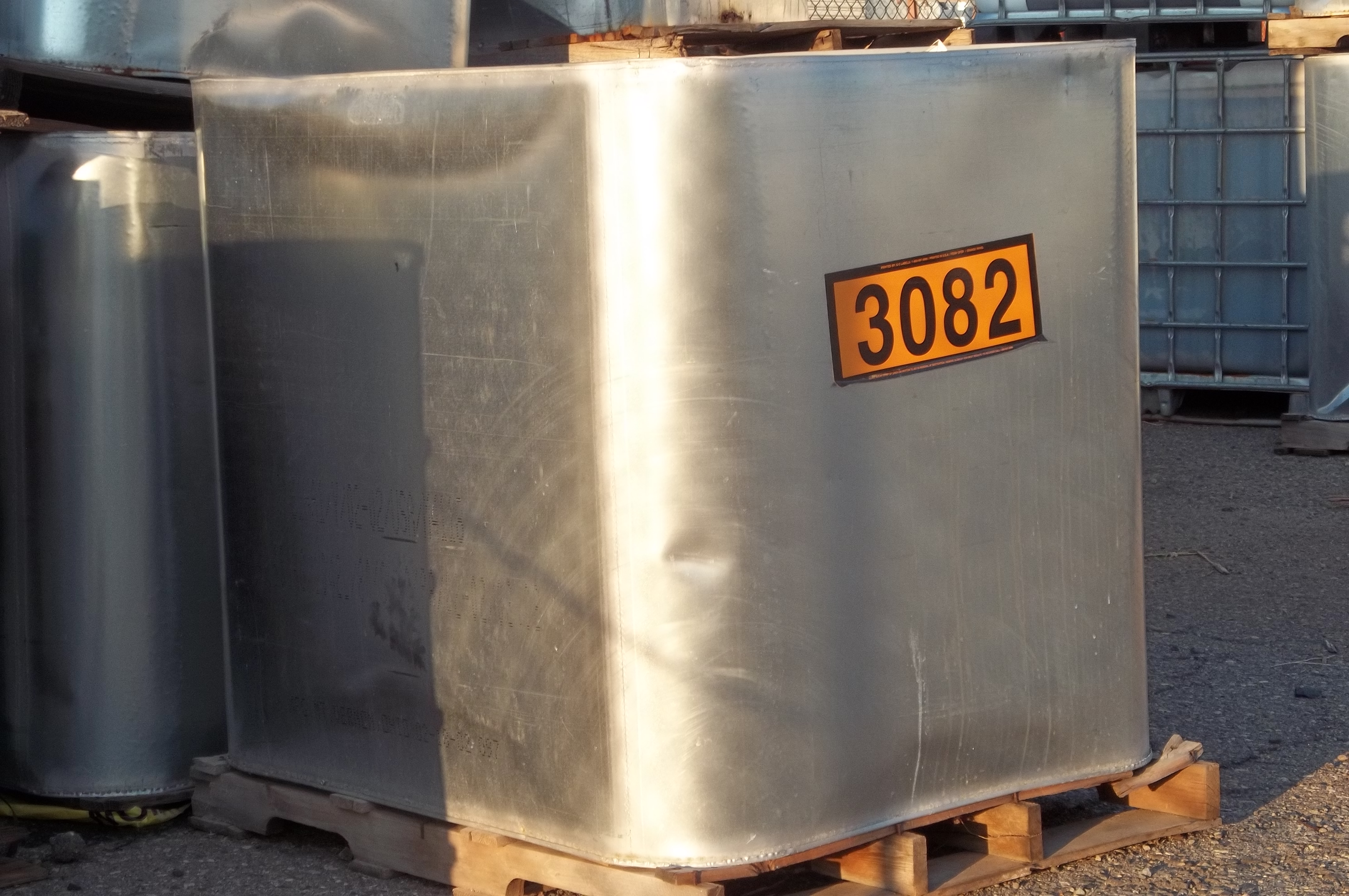
  • On an orange panel near the placard.  One ID # per orange panel but only one placard.Intermediate Bulk Container of UN3082
  • On a white square-on-point near the placard.  One ID # per white  square-on-point but only one placard.
In short, both of the two ID #s and at least one placard for the hazard class must be visible on all four sides of the vehicle.  How you do it is up to you.
I hope this helps.  Please contact me with any other questions.
That must have done it because on May 12, 2016 I received the final message:
Thank you.

Contact me with any questions you may have about the transportation of hazardous materials by air, highway, vessel, or rail

International and Domestic

Daniels Training Services

815.821.1550

Info@DanielsTraining.com

https://danielstraining.com/

Q&A: The Display of “HOT” or the Identification Number Marking on Packages of Elevated Temperature Materials

This question came through my website May 2, 2016 from someone I’ve never done business with prior to – or since – this contact:

To Whom It May Concern,

I saw a recent post you made on your web site regarding elevated temperature materials, a requirements for labeling requirements.

Can you answer the following question for me?

Does the transportation of liquid asphalt, if shipped above 212 degrees F, as an elevated temperature material, require the use of 4-digit identification number on shipping documents, placards, or panels as named in part 11 Section 172.101, Publication BOE 6000?

Any advice or guidance would be greatly appreciated.

My reply on May 2nd, to buy myself some time:

I will research the information and get back to you with an answer this week.

And then, on May 7, 2016:

I will attempt to answer your question below.

An elevated temperature material is defined at 49 CFR 171.8, as a material in a bulk packaging that…
  • Is in a liquid phase and at a temperature at or above 100 °C (212 °F);
  • Is in a liquid phase with a flash point at or above 38 °C (100 °F) that is intentionally heated and offered for transportation or transported at or above its flash point;or,
  • Is in a solid phase and at a temperature at or above 240 °C (464 °F).

What you describe appears to be an Elevated Temperature Material.  If that is the case, then it must be shipped as a fully regulated hazardous material which includes but is not limited to:

  • Shipping papers, including the additional description (see below).
  • Placards will not be required if the HazMat is solely a Class 9 Miscellaneous.  Why not?  Class 9 Placards are not required within the U.S.
  • Labels are not required on a bulk packaging.
  • The following package markings:
    • The HazMat’s 4-digit identification number (UN3257) on two opposing sides of a bulk packaging with a capacity of <1,000 gallons or on all four sides of a bulk packaging with a capacity of ≥1,000 gallons.  The identification number must be displayed on all four sides of a cargo tank or tank car.
    • “HOT” must be displayed on two opposing sides of any bulk packaging.
More information:
Please don’t hesitate to contact me if you have any questions.
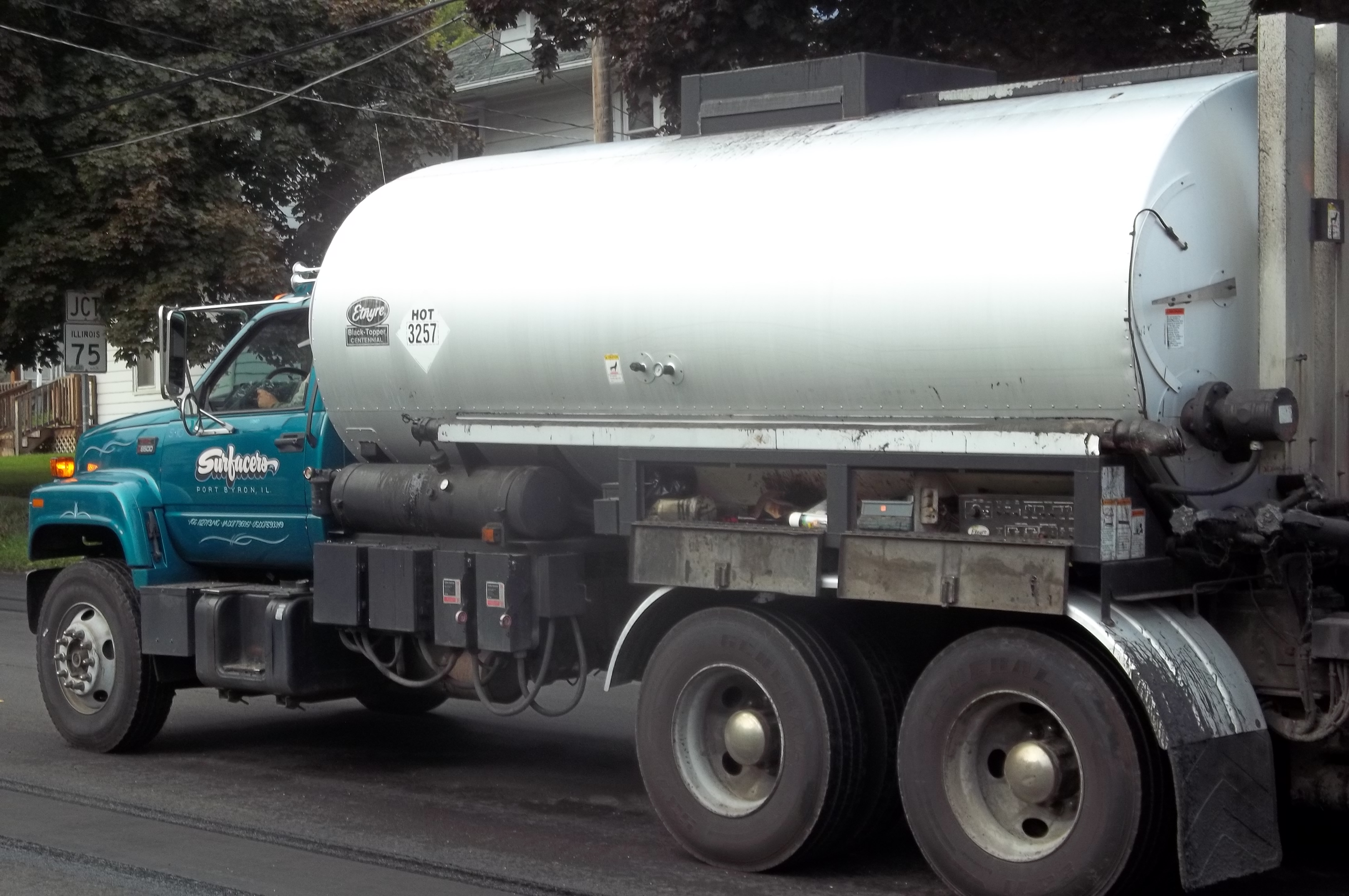
cargo tank motor vehicle of UN3257I thought that might be it, but a few days later (5.09.16) he replied with more questions:
Thank you for taking a look at this issue.  I am very appreciative, and I hope you don’t find my follow up question unnecessarily argumentative.
However, I am just 100% not sure I agree with your conclusion.
I do agree that the product is an elevated temperature material.    However, I am not convinced the four digit identifier is required to be on the car or paperwork, as opposed to just using the word “HOT” on two placards placed on the rail car and on the  BOL.
Per CFR 172.325(a)  – “bulk packaging containing elevated temperature material must be marked on two opposing sides with the word ‘HOT’”.  There is no mention of the requirement to use the four digit Identifier, only the word “HOT”.  In fact, under  CFR 172.325(c) it states, “If identification number is displayed…” .  Hence the CFR’s use of the word “IF” certainly makes it sound like the four digit identifier is optional.
As you correctly point out in your email, “
According to 49 CFR 172.504(f)- (9), “For Class 9, a CLASS 9 placard is not required for domestic transportation, including that portion of international transportation, defined in § 171.8 of this subchapter, which occurs within the United States. However, a bulk packaging must be marked with the appropriate identification number on a CLASS 9 placard, an orange panel, or a white square-on-point display configuration as required by subpart D of this part.”
The language is pretty clear that while “a bulk packaging must be marked with the appropriate identification number on class 9 placard”  it continues on further to say “OR a white square-on-point display” indicating that either can be used, and if a white square-on-point display is used then there is no 4 digit identifier is required.
I would greatly appreciate your further thoughts based on these arguments.
Full text here and below…
§ 172.325 Elevated temperature materials.
(a) Except as provided in paragraph (b) of this section, a bulk packaging containing an elevated temperature material must be marked on two opposing sides with the word “HOT” in black or white Gothic lettering on a contrasting background. The marking must be displayed on the packaging itself or in black lettering on a plain white square-on-point configuration having the same outside dimensions as a placard. (See § 172.302(b) for size of markings on bulk packagings.)
(b) Bulk packagings containing molten aluminum or molten sulfur must be marked “MOLTEN ALUMINUM” or “MOLTEN SULFUR”, respectively, in the same manner as prescribed in paragraph (a) of this section.
(c) If the identification number is displayed on a white-square-on-point display configuration, as prescribed in § 172.336(b), the word “HOT” may be displayed in the upper corner of the same white-square-on-point display configuration. The word “HOT” must be in black letters having a height of at least 50 mm (2.0 inches). Except for size, these markings shall be as illustrated for an Elevated temperature material, liquid, n.o.s.:

Like this article?

Subscribe to my Monthly Newsletter

No marketing emails!

I didn’t mind his challenge.  It caused me to think deeper about the regulations before I replied that same day:

I agree with the regulatory citation you indicated but not the conclusion you draw.  In your previous email you state:

The language is pretty clear that while “a bulk packaging must be marked with the appropriate identification number on class 9 placard”  it continues on further to say “OR a white square-on-point display” indicating that either can be used, and if a white square-on-point display is used then there is no 4 digit identifier is required.

My interpretation of the Hazardous Material Regulations  you reference is this:

  • The regulations require a bulk package of a HazMat to be marked with the identification number.  Indeed, all HazMat packages must be marked with the identification number unless an exception to the Hazardous Material Regulations applies.
  • The identification number may be displayed on a placard, or an orange panel, or a white square-on-point.
  • If the white square-on-point is used the word “HOT” may be included in the upper corner if the HazMat is also an Elevated Temperature Material.
  • It does not say that the display of the identification number on the white square-on-point is a replacement for the “HOT” marking or vice versa.

The “HOT” marking is required on a cargo tank of an Elevated Temperature Material in addition to the identification number, not as a replacement for it.

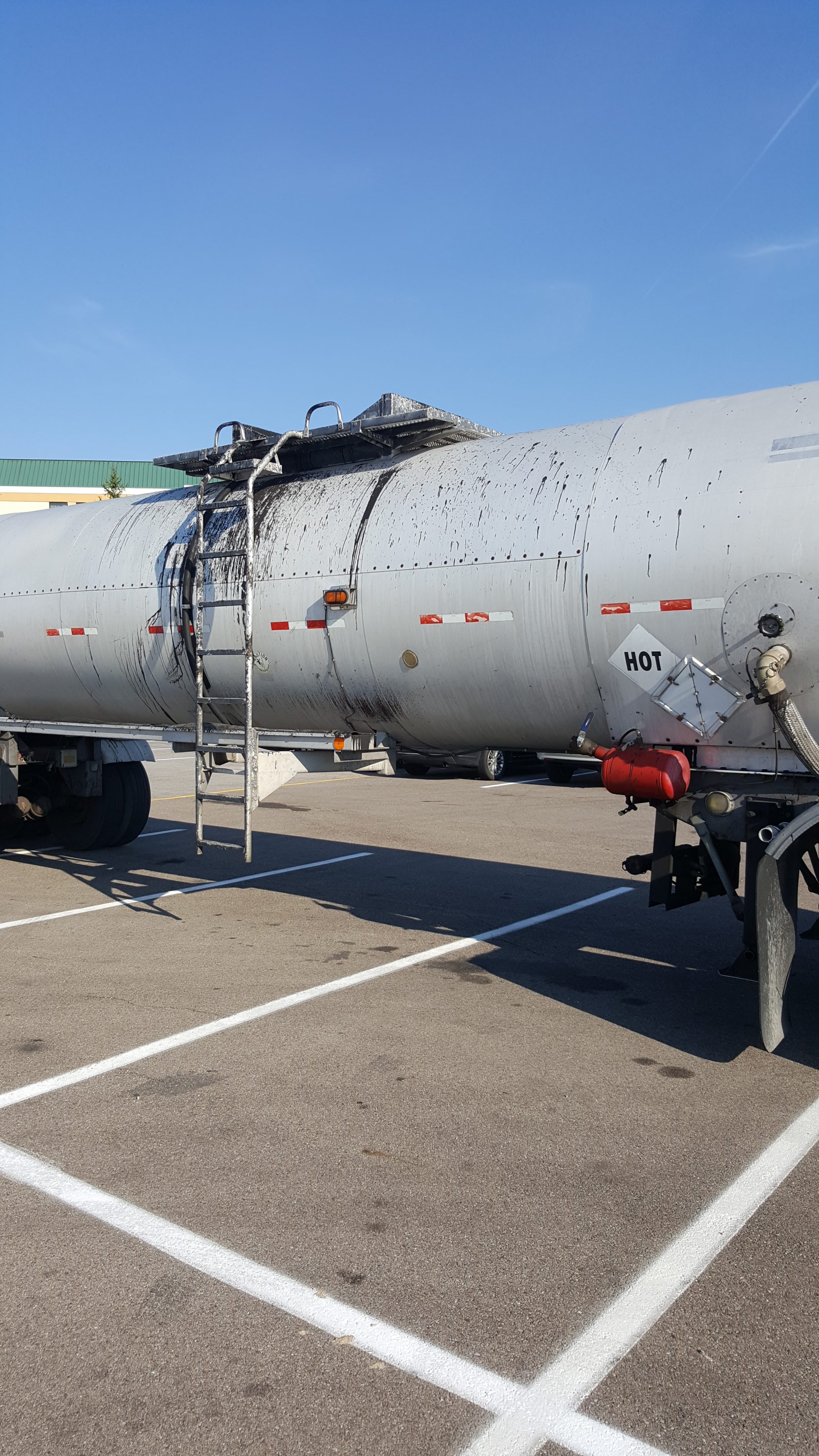
cargo tank truck with elevated temperature material
This cargo tank is missing its identification number
I’m happy to continue this discussion with you.
Clearly this issue was important to him and he had given it a lot of thought (5.09.16):
Dan,

Hope you don’t mind the back and forth on this.
You state, “The regulations require a bulk packaging to be marked with the identification number.”  However, per CFR 172.504(f) -9 it states, “However, a bulk packaging must be marked with the appropriate identification number on a CLASS 9 placard, an orange panel, OR a white square-on-point display configuration as required by subpart D of this part.”
Does the “or” not mean or?
Our exchanges got shorter as we refined our arguments (5.10.16):

You are correct.  The “or”, however, pertains to the options for how to display the identification number not if you display the identification number.  Display of the ID # is not optional.

Please let me know your opinion on this.

May 10, 2016, Finally my answer satisfied him!

Thanks for clarifying!   That helps.

Contact me with any questions you may have about the transportation of hazardous materials by air, highway, vessel, or rail

International and Domestic

Daniels Training Services

815.821.1550

Info@DanielsTraining.com

https://danielstraining.com/

I was glad to help and couldn’t resist a shameless plug:

No problem. Glad I could help. Please let me know if I can answer any other questions you may have.

Or if you require any training.

The Difference Between a Salvage Drum and an Overpack for the Transportation of a Hazardous Material

The requirements for use of a salvage drum are explained in the USDOT/PHMSA Hazardous Material Regulations at 49 CFR 173.3(c).  Those for the overpack are explained at §173.25(a).  Both salvage drum and overpack are defined at §171.8.  These are two distinct regulatory terms and yet there is a lot of confusion about which is which and when one is chosen and the other is required.  To answer these questions I refer you to an article I wrote for New Pig:

Salvage Packaging vs. Overpacks:  What’s the difference?

It has the advantage of containing links to more information about each of these packagings from New Pig’s catalog.

Contact me with any questions you may have about the transportation of hazardous materials by air, highway, vessel, or rail

International and Domestic

Daniels Training Services

815.821.1550

Info@DanielsTraining.com

https://danielstraining.com/


Additional Specification Packaging Markings on Intermediate Bulk Containers of Hazardous Materials

In an earlier article I identified and explained the requirements of 49 CFR 178.703(a) that mandate the manufacturer of an Intermediate Bulk Container (IBC) mark it with certain letters, numerals, and symbols to indicate that it is specification packaging designed, manufactured and tested to meet a UN standard.  But the markings required by paragraph (a) of §178.703 may not always be enough.  In paragraph (b) of §178.703 markings are identified that are to be displayed on an IBC, “in addition to markings required in paragraph (a) of this section”.

The purpose of this article is to identify and explain the requirements of 49 CFR 178.703(b) for additional specification packaging markings to be used on intermediate bulk containers.
(more…)

Specification packaging marking on IBC

Specification Packaging Markings on Intermediate Bulk Containers of Hazardous Materials

Like all packagings used for the transportation in commerce of a hazardous material an Intermediate Bulk Container (IBC) must be authorized for the HazMat it is intended to contain. It must also, unless an exception is used, be designed, manufactured, and tested to meet a specification in the form of the UN standards (UN for United Nations) and be marked to demonstrate this.

Note:  Specification packaging for an IBC – like all other non-bulk packagings but unlike most bulk packagings – means the UN standard and not the DOT specification.

In an earlier article I identified and explained the general requirements for all specification packaging markings at 49 CFR 178.3.  This article will expand on those general requirements and look just at those that apply to an Intermediate Bulk Container at §178.703. (more…)

Search Website