PO Box 1232 Freeport, IL 61032

A Different Kind Of Training

A Different Kind Of Training

A Different Kind Of Training

New York Coke Maker and Environmental Control Manager Convicted of CAA and RCRA Crimes

From the USEPA Office of Criminal Enforcement, Forensics, and Training

Environmental Crimes Case Bulletin for March 2013

On March 28, 2013, TONAWANDA COKE CORPORATION (TCC) was convicted by a federal jury in federal district court for the Western District of New York of 11 counts of violating the Clean Air Act and three counts of violating the Resource Conservation and Recovery Act.  In addition, Tonawanda Coke Environmental Control Manager, MARK L. KAMHOLZ, of West Seneca, N.Y., was found guilty of 11 counts of violating the Clean Air Act, one count of obstruction of justice and three counts of violating the Resource Conservation and Recovery Act.  The charges carry a maximum combined penalty up to 75 years in prison and fines in excess of $200 million.  Sentencing is scheduled for July 15, 2013.

The offenses related to the release of coke oven gas containing benzene into the air through an unreported pressure relief valve. In addition, a coke-quenching tower was operated without baffles, a pollution control device required by TCC’s Title V Clean Air Act permit designed to reduce the particulate matter that is released into the air during coke quenches.  In addition, prior to an inspection conducted by EPA in April of 2009, Kamholz told another TCC employee to conceal the fact that the unreported pressure relief valve, during normal operations, emitted coke oven gas directly into the air, in violation of the TCC’s operating permit. The defendants also stored, treated and disposed of hazardous waste without a permit to do so, in violation of the Resource Conservation and Recovery Act. These offenses related to TCC’s practice of mixing its coal tar sludge, a listed hazardous waste that is toxic for benzene, on the ground in violation of hazardous waste regulations.  The case was investigated by EPA’s Criminal Investigation Division and investigators of the New York State Department of Environmental Conservation Police.
The Four Hazard Communication Methods of the Hazardous Material Regulations

The Hazardous Material Regulations (HMR) of the PHMSA/USDOT require the use of the four (4) hazard communication methods whenever a hazardous material is transported in commerce.   Its purpose:  to communicate the potential hazards of a material to anyone who may come into contact with it while it’s in transportation.  It does this by utilizing a variety of symbols, numbers, colors, and text.  This article will take a closer look at each of the Four Hazard Communication Methods:

  • Shipping papers
  • Placards
  • HazMat labels
  • Markings

(more…)

Happy Mother’s Day!

One of the great joys and challenges of having my own business has been working closely with my wife to make it work.  We discussed me quitting my job to start this business extensively, but in the end it was my decision, and I made it knowing I had the experience to provide quality training to my customers.  What I didn’t know:  making arrangements for travel, food, and lodging, and handling the finances I delegated to her.  While I had to learn a lot in order to put together my training materials, I at least had 20+ years experience in the industry to build on.  She has performed beautifully despite having no prior experience with the responsibilities I gave her.  It means a lot to me to know that I need only tell her where I’m going and when and leave the rest up to her.  The day before my travel she provides me with everything I need to know to get to the job and back safely, and she does it wonderfully.

But first and foremost, she is my Wife and the Mother of our three beautiful children.  She has always been my best friend and will always be my companion.  I know that the health and well-being of our home and our children rests largely in her capable hands.

It is my great hope that as my business grows and succeeds I can require less of her and we are able to spend more time together.  More than anything, I am glad that she is the Mother of, and Mom to, my children.

I love you Charlotte!

Who or What is a HazMat Employee? And What Training is Required?

The Identification and Management of Universal Waste in Iowa and Illinois

The Household Waste Exclusion from Definition as a Hazardous Waste [40 CFR 261.4(b)(1)]

Determining the Effective Date for the Retention of Records for Hazardous Waste Generators per the Requirements of RCRA

The hazardous waste regulations of the Resource Conservation and Recovery Act (RCRA) require Large Quantity Generators (LQG) and Small Quantity Generators (SQG) of hazardous waste to retain a copy of certain documents as a record of compliance.  While there are slight variations in where and how the records are to be maintained (refer to this article on RCRA’s recordkeeping requirements), there are two points on which the regulations agree:

  1. Records must be made available to an agent of the USEPA or an authorized state upon request.
  2. Records must be maintained for three (3) years from the effective date of the compliance document.

This article will identify the effective date for record retention of documents generated per the the hazardous waste regulations of the USEPA.  Keep in mind that your State may add additional recordkeeping requirements on top of those identified below. (more…)

“Emptying” a Hazardous Material Packaging

In the Hazardous Material Regulations (HMR) at 49 CFR 173.29(a) you learn that as far as the PHMSA/USDOT is concerned, the transportation in commerce of an “empty” packaging that still contains the residue of a hazardous material is subject to the same regulations as when it was full.

Except as otherwise provided in this section, an empty packaging containing only the residue of a hazardous material shall be offered for transportation and transported in the same manner as when it previously contained a greater quantity of that hazardous material.

The regulation also identifies an exception to full regulation under the HMR for “empty” packagings with hazardous material residue and identifies the standards to be met in order for a packaging to be considered free of any hazard and therefore not subject to any of the HMR. (more…)

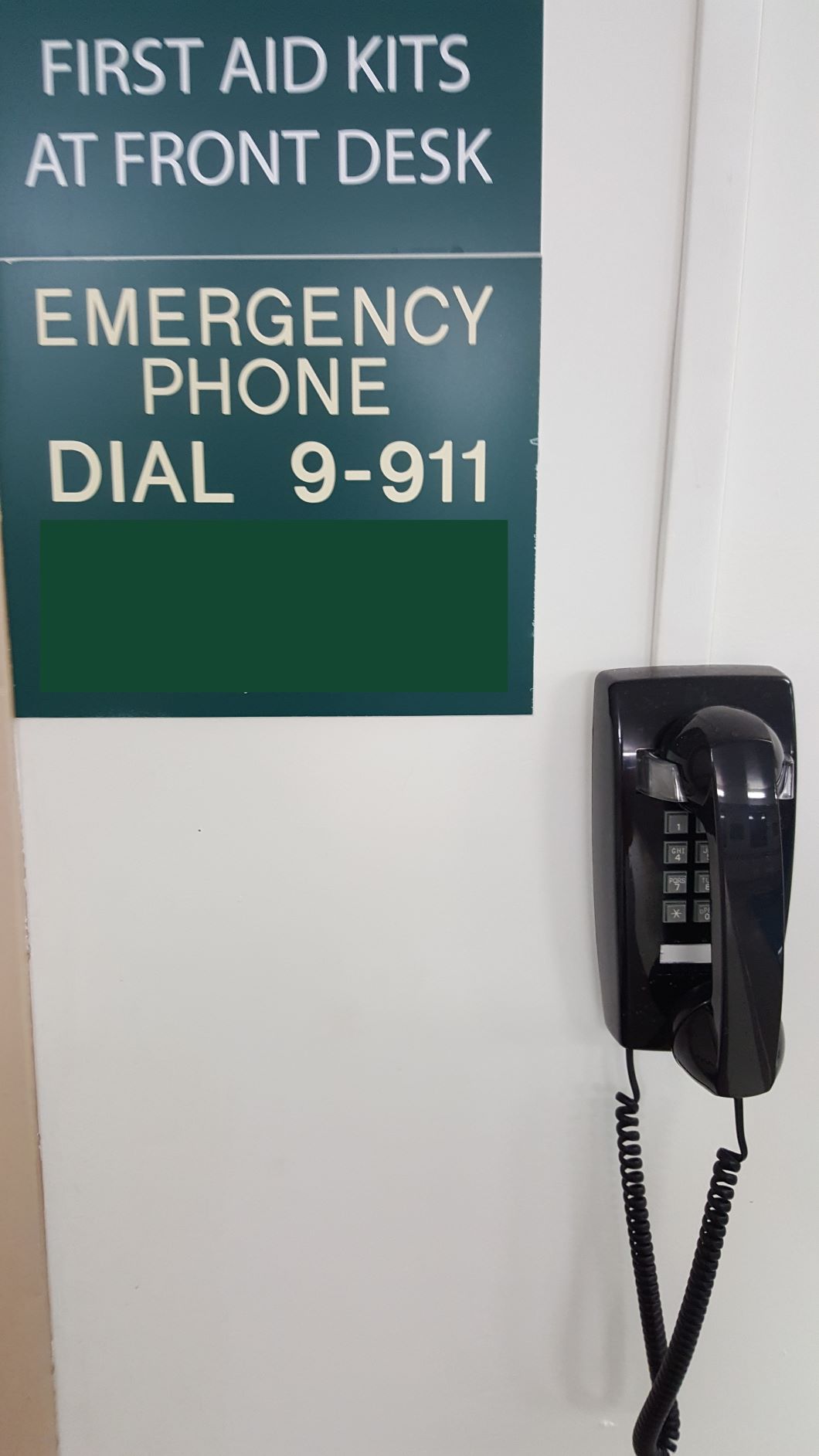
Emergency phone

The Requirements of 40 CFR 265.33 Testing and Maintenance of Equipment for Generators of Hazardous Waste

In the previous article of this series I described the requirements of 40 CFR 265.32 – Required equipment.  That section identified the equipment (communication, spill response, and fire suppression) required of applicable facilities (LQGs and SQGs).

This article is the fourth in a series that will look closely at each section of 40 CFR 265, Subpart C and explain its requirements, how they apply to generators of hazardous waste, and what is required for compliance.  Keep in mind that the regulations of your State may differ from these Federal regulations.

The purpose of this article: identify and explain the requirements of 40 CFR 265.33 – Testing and maintenance of equipment for generators of hazardous waste under the emergency preparedness and prevention regulations of 40 CFR 265, subpart C.

Hold on a minute!  These regulations were revised and moved to a new location within Title 40 of the CFR by the Generator Improvements Rule.  If your state has not yet adopted the Generator Improvements Rule, then this article is still applicable to you (but it won’t be for much longer).  If your state has adopted and been authorized to enforce the Generator Improvements Rule, then these regulations no longer apply to you.  Read: What is the status of the Generator Improvements Rule in my state?

To see an explanation of these regulations as revised by the Generator Improvements Rule you must refer to the following:

Not sure of your hazardous waste generator category?

Take this short survey

To see an explanation of the regulations prior to the revisions of the Generator Improvements Rule, please continue reading this article.

(more…)

2nd Half of April 2013 – Announcements of Proposed Rules, Changes to the Rules, and Final Rules for RCRA & the HMR

On its website the US Government Printing Office makes a wealth of Federal publications available for review and download; one of these is the Federal Register.

Published by the Office of the Federal Register, National Archives and Records Administration (NARA), the Federal Register is the official daily publication for rules, proposed rules, and notices of Federal agencies and organizations, as well as executive orders and other presidential documents.

See below for a brief summary of announcements in the Federal Register by the US EPA on the subject of Hazardous Waste and the Pipeline & Hazardous Materials Safety Administration (PHMSA) of the US DOT on the subject of Transportation of Hazardous Materials. (more…)

Search Website