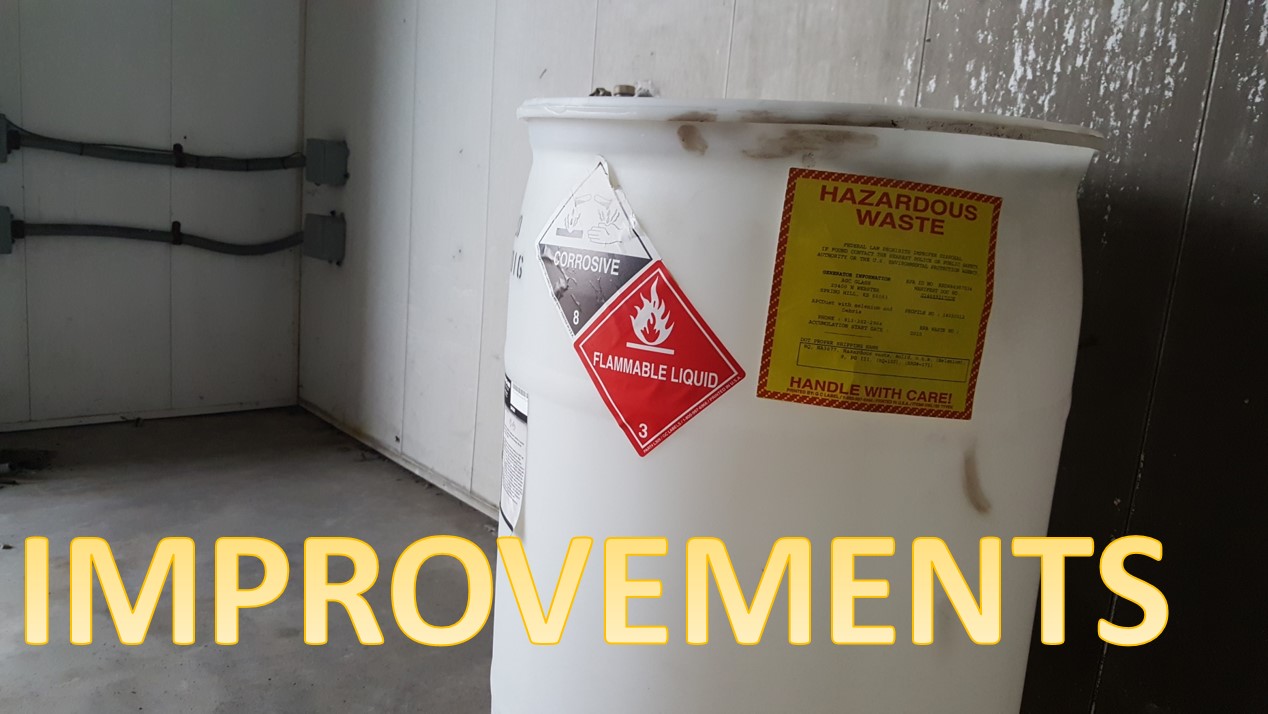
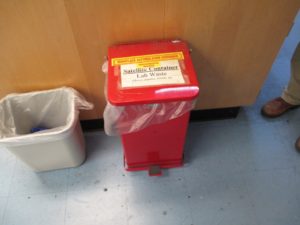
“An Indication of the Hazards of the Contents”: Mark and Label Hazardous Waste Containers in a Satellite Accumulation Area Under the Generator Improvements Rule
Both the large quantity generator (LQG) and small quantity generator (SQG) of hazardous waste are required by Federal regulations of the United States Environmental Protection Agency (USEPA) to display hazard communication in the form of marks and labels on the hazardous waste accumulation units in use at their facility. This includes containers of hazardous waste in both the central accumulation area (CAA) and satellite accumulation area (SAA).
These – and other – Federal regulations changed with the effective date of the Generator Improvements Rule on May 30, 2017. Regulations now require the generator to indicate the hazards of the contents in addition to other required marks and labels.
The purpose of this article is to identify and explain the requirements of the Generator Improvements Rule for the display of hazard communication on hazardous waste containers in a satellite accumulation area per 40 CFR 262.15. (more…)
Satellite Accumulation of Hazardous Waste Under the Generator of Improvements Rule
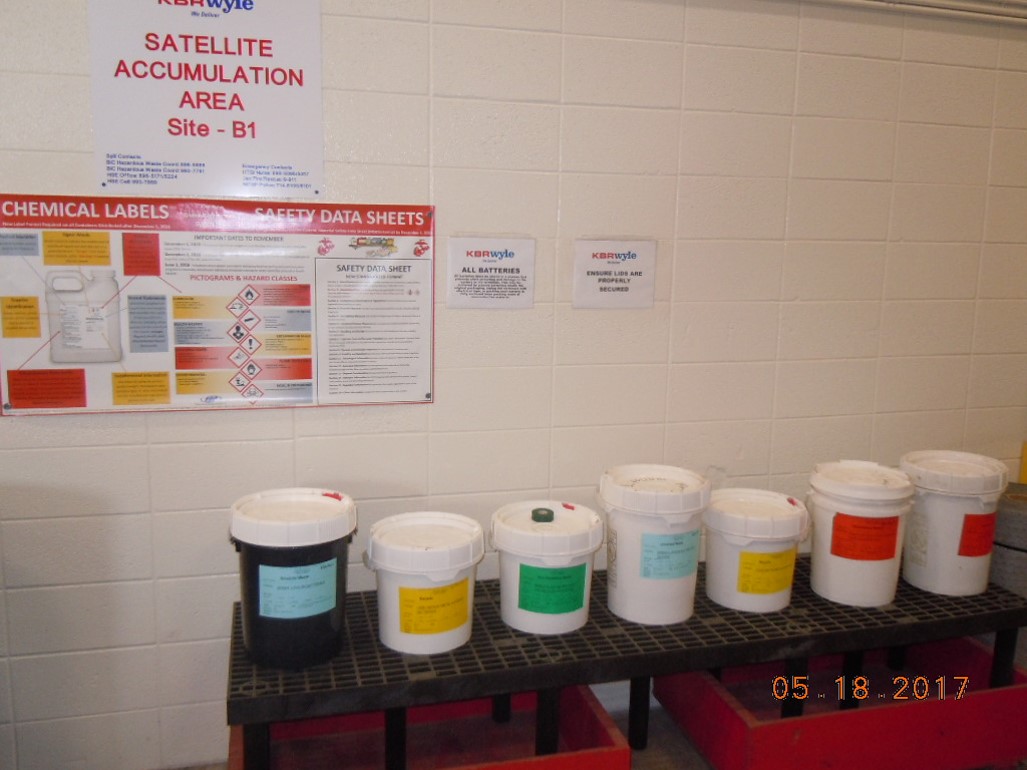
The option to manage hazardous waste in a satellite accumulation area (SAA) in addition to or instead of a central accumulation area (CAA) is available to both the large quantity generator of hazardous waste (LQG) and small quantity generator of hazardous waste (SQG). When accumulated in a SAA hazardous waste containers are subject to less regulation than when accumulated in a CAA.
Not sure of your hazardous waste generator category?
Made several revisions to the regulations for accumulation and management of hazardous waste in a SAA.
The purpose of this article is to provide one source for the series of articles I will write identifying and explaining the changes made by the Generator Improvements Rule to the regulations for the accumulation of hazardous waste in a satellite accumulation area (SAA).
The U.S. Environmental Protection Agency (USEPA) proposed six changes to the regulations for SAAs. In addition to these six proposed regulatory changes, USEPA discussed two additional issues in the preamble to the proposed rule. In the end, USEPA finalized the six proposed changes with three additional minor changes for a total of nine regulatory changes. It also took non-regulatory actions based on the two issues addressed in the preamble.
The nine changes to the satellite accumulation area regulations by the Generator Improvements Rule are:
If you like this article, please share it using any of the social media platforms identified at the bottom of this article.
Conclusion:
If you use SAAs for the on-site accumulation of hazardous waste, your Hazardous Waste Personnel Training must include them. Otherwise, you run the risk of a violation of Federal or State regulations. Contact me for the training you are required to provide to Hazardous Waste Personnel regardless of your generator category.
Q&A: Can I cure, process, then dispose universal waste paint in the garbage? Asking for a friend in Texas.
A question from the Lone Star State August 12, 2020:
Hi Daniel,
I have a question pertaining to the PPRW. We are SQH and I have been trying to figure out if it’s ok to Cure, process, and then dispose of our paint that is classified as UW in the garbage. Some people are saying yes that this is allowed but I can not seem to find where the information and code for this is.
I would greatly appreciate your help and advice.
Note: PPRW = Universal Waste Paint and Paint-Related Waste
Note: SQH = Small Quantity Handler of universal waste
Must have been snagged by my spam filter because I didn’t reply until August 18th:
I can assist you. Question: What state are you in?
As the generator of a waste you must determine if it is a hazardous waste.
If a hazardous waste, you have the option (in Texas) to manage PPRW as a universal waste.
Universal waste paint & paint-related waste is unique to Texas. It is not recognized by Federal regulations of USEPA. Some states have similar universal waste types, e.g., oil-based finishes in Pennsylvania, but not nearly as broad as that of Texas.
If you choose to manage as a universal waste instead of hazardous waste you must then manage it subject to Texas universal waste regulations.
Texas regulations at 30 TAC 335.261(b)(18) read: (a small quantity handler of universal waste is…) “Prohibited from diluting or treating universal waste, except when responding to releases…”
What you describe would be considered treatment and is not allowed.
Also, universal waste may only be sent to another handler or to a destination facility, not a solid waste landfill.
I hope this helps. Please contact me with any other questions.
Conclusion:
I did not hear back from them. It may not have been the answer they wanted, but it does inform them of what they must do to comply with the regulations of the TCEQ for Texas.
Contact me the next time hazardous waste generator USEPA training is due to expire.
Though I’m based in Illinois, I conduct training all over the country and have been to Texas for training several times. If travel costs are a limiting factor (my Onsite Training includes reimbursement for my travel costs) the same training can be provided by a live interactive webinar.
Q&A: What are the restrictions for transporting ethanol (>70%) from Europe to West Africa?
I get questions from all over the world. Like this one on October 19, 2020:
Hi Daniel,
I am trying to make sense of all the regulations regarding shipping dangerous goods for my PhD study and ended up on your website.
Would you perhaps be able to clarify some things for me?
Not sure if this is a problem if you specialize more in US regulations: I am looking for West/Central Africa to Europe exchanges! I am just going to start with what I hope to be a simple question: what are the restrictions for transporting ethanol (>70%) from Europe to West Africa, in terms of volume, packaging and paperwork?
I got really confused with technical details when reading up on things, so your help will be much appreciated!
Kind regards,
Contact me with any questions you may have about the transportation of hazardous materials by air, highway, vessel, or rail
What is the volume of ethanol you intend to ship? Per inner packaging? Per outer packaging?
I look forward to assisting you.
More information was quickly provided:
Dear Daniel,
Thank you very much for your swift reply.
So, on the way there, right now it looks like I will have to take 5 to 6 bottles of 1L “with me” when travelling by plane to West Africa. Is that allowed, what arrangements should be made?
On the way back, it gets a bit more complicated:
we are looking at perhaps 5 to 10 samples of lion tissue in 50mL tubes (so ethanol < 500ml) per box
but with many more (~100) faecal samples in same tubes but with silica beads (I’m specifying this as I believe this will impact your answer)
That quantity of dangerous good you indicate: 5-6 x 1L of Ethanol, cannot be transported by air as a passenger’s checked or carry-on baggage per 2.3 of the International Air Transport Association Dangerous Goods Regulations (IATA DGR). It must be shipped as a fully-regulated dangerous good.
You must contact a commercial air carrier (UPS, FedEx, other) to arrange for its transport by air as a dangerous good.
The samples coming back may be easier as they may be transported as passenger baggage without air carrier approval if it can meet the requirements of 2.3.5.12 of the IATA DGR:
Non-infectious specimens.
Wrapped in paper or cloth and then heat-sealed bag w/ no more than 30 mL of free liquid or vials or rigid container in heat-sealed bag of no more than 30 mL free liquids.
Placed in another plastic bag with absorbent.
Finished bag placed in strong outer packagings with suitable cushioning.
No more than 1 L of ethanol in completed packaging.
Package marked: “scientific research specimens, not restricted”
I hope this helps. Please contact me with any other questions.
The next day, October 20, 2020 (maybe it was the same day in Europe, I don’t know.):
Dear Daniel,
Thank you very much for all the info, this is very helpful!
Not a heat sealed bag
Any chance zip-lock bags can be accepted instead of heat-sealed ones? I think I know your answer but I have to ask just in case.
You also say no more than 1L of ethanol in completed packaging. Does this also mean that just a 1L bottle ethanol, maybe in particular packaging, in passenger baggage is fine? Just checking where the limits are.
Many thanks for your time and help,
My reply:
Please see below.
The regulations require a heat-sealed bag (and more) for the samples as baggage.
The limit of no more than 1 L of ethanol (or other flammable liquid used as preservative) is just for the samples as baggage. It requires the inner packagings within the completed package to contain no more than 30 mL of ethanol as free liquid. You may not transport a 1 L bottle of ethanol as baggage on an aircraft, no matter the packaging.
The 1 L bottles you intend to bring to Africa must be packaged and shipped as a dangerous good with a commercial air carrier.
Depending on its Packing Group it may be eligible for the limited quantity exception which will make transportation by air somewhat easier and perhaps less expensive.
Packing Group II may be transported as a limited quantity pursuant to packing instructions Y341.
Packing Group III may be transported as a limited quantity pursuant to packing instructions Y344.
Please note, my email was only a brief summary of the complete regulations. You must research and comply with the complete regulations.
I hope this helps. Please contact me with any other questions.
That seemed to make things crystal clear (10.21.20):
Dear Daniel,
Thank you very much, crystal clear. This has been incredibly helpful!
It’s important to remember that the transportation of hazardous materials (aka: dangerous goods) takes place all around the world. Transportation by air will likely be subject to the Dangerous Goods Regulations of the International Air Transport Association (IATA). IATA has a biennial training requirement for shippers and packers of dangerous goods.
FAQ: What is the satellite accumulation area (SAA)?
The Federal regulations of the U.S. Environmental Protection Agency (USEPA) and those of all states limit the amount of time a hazardous waste generator may accumulate hazardous waste on-site without requiring a permit for the facility to operate as a treatment, storage, or disposal facility (TSDF). In general, the on-site accumulation time limits for hazardous waste in a central accumulation area (CAA) are as follows:
Large quantity generator (LQG) is allowed no more than 90 days for the on-site accumulation of its hazardous waste. A 30-day extension may be granted in extreme situations.
Small quantity generator (SQG) is allowed no more than 180 days for the on-site accumulation of its hazardous waste. This may be extended up to 270 days if the TSDF the SQG must use is 200 miles away or more. A 30-day extension may be granted in extreme situations.
Very small quantity generator (VSQG) has no on-site accumulation time limit for its hazardous waste.
Not sure of your hazardous waste generator category?
The LQG and SQG have the option to manage their hazardous waste in a satellite accumulation area where it is subject to less regulation. The VSQG has no use for SAAs since it is already subject to a lower-level of regulation than either the LQG or SQG. Examples of less regulation within a SAA v. CAA include:
Hazardous waste personnel training for a LQG at 40 CFR §262.17(a)(7) is not applicable to personnel who manage hazardous waste solely within a SAA.
Weekly inspections for both LQG [§262.17(a)(v)] and SQG [§262.16(b)(iv)] are not required for hazardous waste containers in a SAA.
The RCRA air emission standards for a LQG at §264/§265, Subpart CC are not applicable to hazardous waste containers in a SAA.
In the not-so-distant past (before May 30, 20217), the regulations for preparedness, prevention, and emergency procedures for both LQG and SQG were not applicable to hazardous waste accumulated in a satellite accumulation area. However, under the revised regulations of the Generator Improvements Rule, this has now changed.
And, of course, the most significant benefit to a hazardous waste generator for accumulating hazardous waste containers in a SAA: no on-site accumulation time limit – unless you operate in California!
In its Final Rule of the Generator Improvements Rule, USEPA included a succinct description of the SAA [November 28, 2016; 81 FR 85762]:
Hazardous waste generators are allowed, though not required, to use SAAs, provided that they comply with the regulations for their use. SAAs are designed to assist generators who generate and accumulate small amounts of hazardous waste in different areas of their facility. Alternatively, SQGs and LQGs may choose to accumulate hazardous waste only in CAAs rather than in SAAs. If a SQG or LQG does choose to accumulate hazardous waste in a SAA, the generator may accumulate a limited amount of hazardous waste within each SAA. Once that threshold is reached, the SQG or LQG must transfer the hazardous waste to a CAA. Alternatively, a generator may accumulate hazardous waste within a SAA and never move the waste to a CAA once the threshold is reached, but instead, ship the waste directly off site to a RCRA designated facility (e.g., a TSDF).
Limitations and restrictions when accumulating hazardous waste in a SAA include:
The only allowed hazardous waste accumulation unit is the container. No tanks, drip pads, or containment buildings.
Container must be under the control of the operator generating the waste.
And…
At or near the initial point of generation.
May accumulate no more than 55 gallons of hazardous waste in a SAA.
When the threshold volume is reached the generator has three consecutive calendar days to remove the excess amount from the SAA to the CAA or transport off-site.
Contact me with any questions you may have about the generation, identification, management, and disposal of hazardous waste
The satellite accumulation area (SAA) may be used as an option for on-site accumulation of hazardous waste in containers at a LQG or SQG. No option exists for the LQG to provide initial Hazardous Waste Personnel training with an annual review to its employees who work with or manage hazardous waste – except, of course, for those whose only exposure to hazardous waste is in a satellite accumulation area.
Q&A: Can I use a UN Standard IBC for my non-HazMat?
An email I received 10.21.20:
Hello, Our company would like to know if the IBCs that are intended to be filled with non hazardous material need to be retested every 2.5 years. Does the DOT require this regardless of Hazardous / non hazardous material in the IBC?
Thank you,
My reply October 22, 2020:
Thank you for contacting me. Please see below.
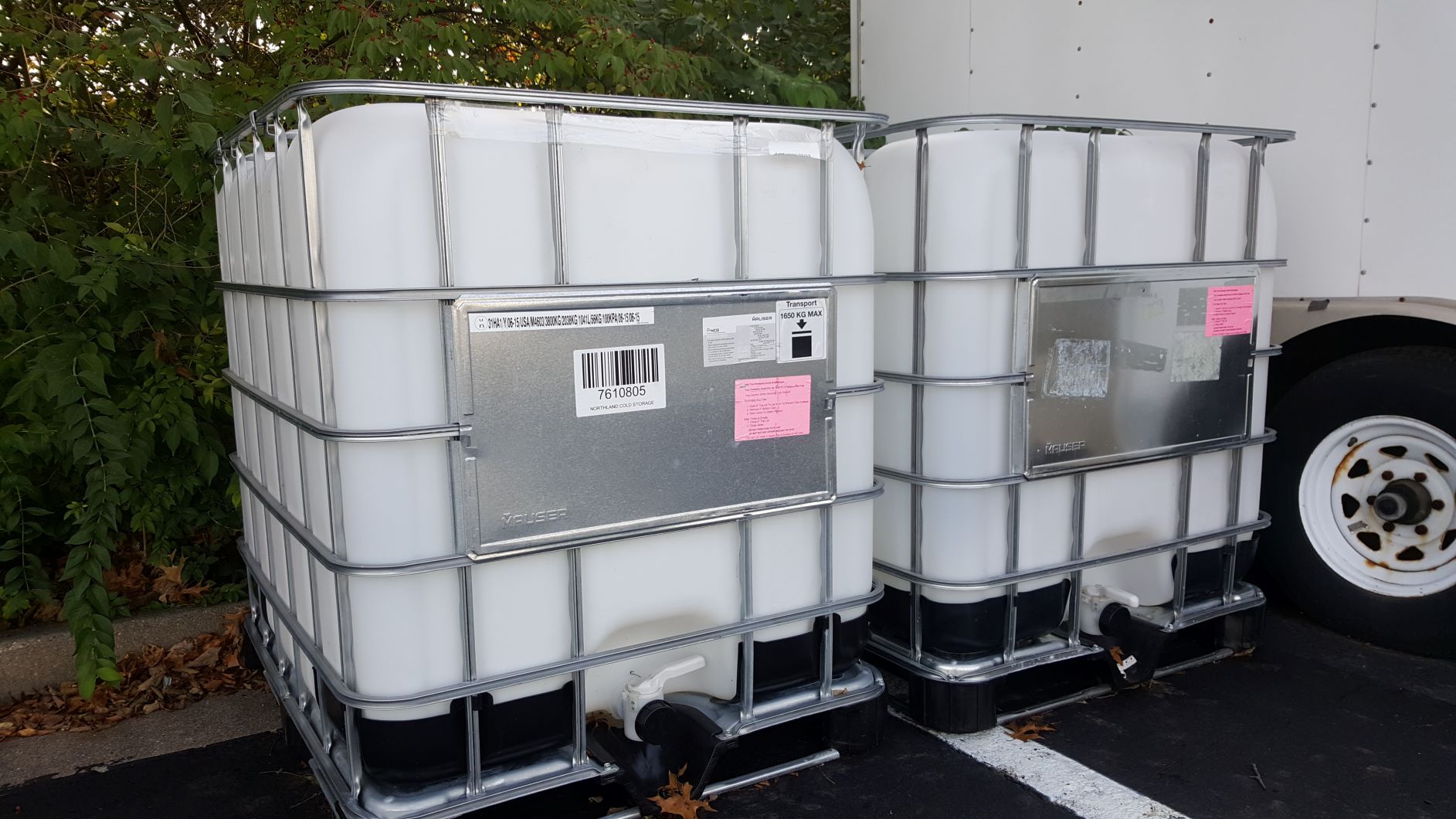
An IBC (intermediate bulk container) used for the transportation of a hazardous material (HazMat) must be designed, manufactured, tested, and marked to indicate it meets a packaging specification of the USDOT/PHMSA.
The United Nations Performance Oriented Standard (aka: UN Standard) is one of several packaging specifications accepted for use within the U.S. by USDOT/PHMSA.
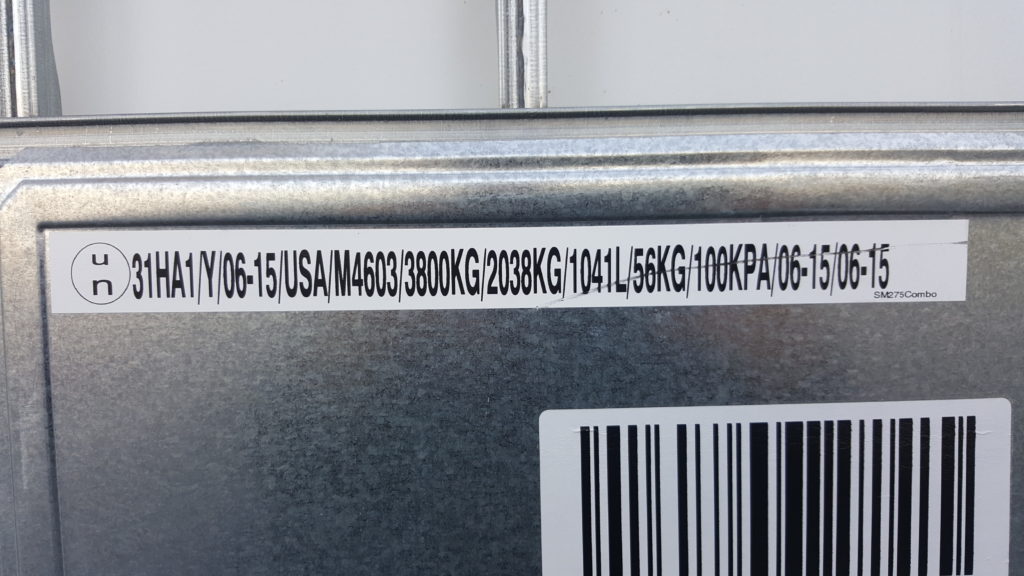
An IBC that meets the UN Standard must display the UN Standard mark as specified at 49 CFR 178.703. This mark must be visible in transportation.
In order to continue in service, IBCs must be retested and inspected as follows:
Leakproofness testing every 2.5 years if it is designed to retain liquids.
An external visual inspection every 2.5 years to ensure it continues to meet the requirements of the UN Standard.
An internal inspection every 5 years to ensure it continues to meet the requirements of the UN Standard.
UN Standard packaging is not required for non-HazMat.
However…
If a UN Standard packaging is used for a non-HazMat, the packaging is subject to all of the requirements of the UN Standard including the retest and reinspection.
Therefore, if you use a UN Standard packaging for the transportation of a non-HazMat the IBC must continue to be retested every 2.5 years – and more as indicated above – in order to retain its UN Standard. It is a violation to use a packaging marked to indicate it meets the UN Standard when it does not.
Solution:
Use IBCs that do not display the UN Standard mark for transport of non-HazMat.
If UN Standard mark is visible, then obliterate, remove, or securely cover prior to transport of non-HazMat.
I hope this helps. Please contact me with any other questions.
He required clarification:
So, as long as the UN marking is off the tote, it can be shipped?
Interested in a Webinar that covers this topic, and more!
Sometimes the USDOT/PHMSA Hazardous Materials Regulations can be tricky; sometimes they don’t make any sense. “Why does it matter if the material in transport is non-HazMat?” My HazMat Employee training can help you to make sense of it all.
Q&A: Do I have to placard bulk tanks when they’re empty?
The question, November 05, 2020:
Good afternoon,
I have a question about carrying bulk tanks. I recently got stop and was told that I was in violation because I didn’t have my placards showing with flammable material. I told the DOT officer that my bulk tanks were empty and that to my understanding that once you are empty you cant show your placards as flammable anymore. Well, long story short I got a ticket for not showing my placards as flammable even though the totes were empty.
Are the “bulk tanks” or “totes” you refer to a bulk packaging? I presume they are.
Are the bulk tanks / totes empty to the point where they are sufficiently cleaned of residue and purged of vapors to remove any potential hazard per 49 CFR 173.29(b)(2)(ii)? I presume they are not and still contain some residue of the HazMat.
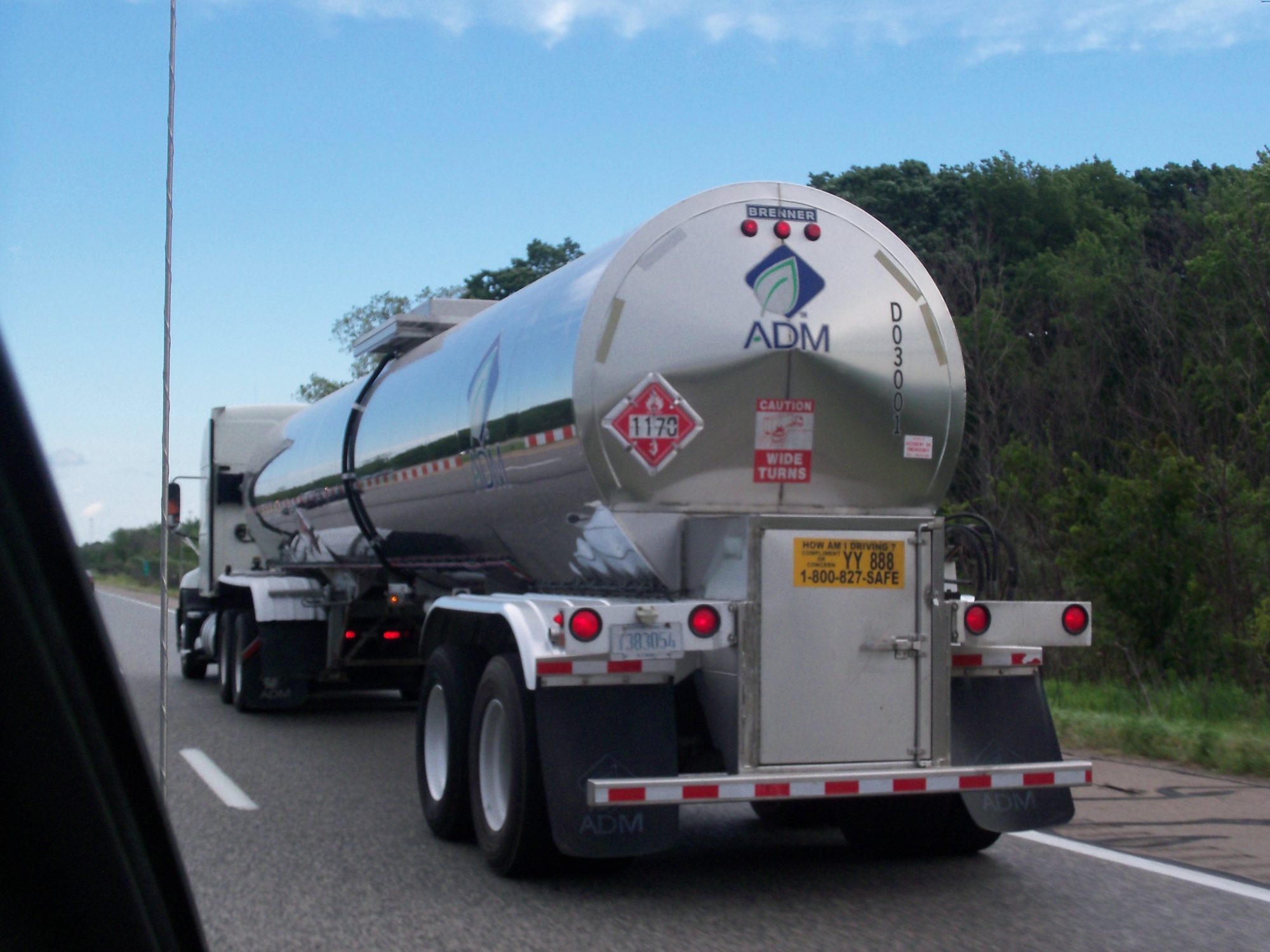
If this situation involves a bulk packaging that still contains the residue of a Class 3 Flammable Liquid (even just vapors), then – unfortunately – the DOT officer is correct in that the packaging must continue to display the placards it was required to display when full. In fact, the entire consignment is subject to full regulation, which requires:
Required display of placards and identification number on the bulk packaging.
Probably didn’t help him much since he already had the ticket. But, better to be sure for next time.
Contact me before you or one of your drivers are ticketed by USDOT for a HazMat transportation violation.
The Requirements of 40 CFR 262.16(b)(9)(iv) Respond to Emergencies at Small Quantity Generator of Hazardous Waste
Federal regulations of the U.S. Environmental Protection Agency (USEPA) require a small quantity generator of hazardous waste (SQG) to maintain equipment and processes to prevent a hazardous waste emergency and to respond to it if one occurs. The regulations are found in the following SQG conditions for exemption:
40 CFR 262.16(b)(8) Preparedness and prevention
40 CFR 262.16(b)(9) Emergency procedures
This article is the tenth – and final – in a series that closely examines and explains these regulations.
The purpose of this article is to identify and explain: 40 CFR 262.16(b)(9)(iv) Ensure familiarity with emergency procedures at small quantity generator of hazardous waste. (more…)
The Requirements of 40 CFR 262.16(b)(9)(iii) Ensure Familiarity with Emergency Procedures for Small Quantity Generator of Hazardous Waste
Federal regulations of the U.S. Environmental Protection Agency (USEPA) require a small quantity generator of hazardous waste (SQG) to maintain equipment and processes to prevent a hazardous waste emergency and to respond to it if one occurs. The regulations are found in the following SQG conditions for exemption:
40 CFR 262.16(b)(8) Preparedness and prevention
40 CFR 262.16(b)(9) Emergency procedures
This article is the ninth in a series that closely examines and explains these regulations.
The purpose of this article is to identify and explain: 40 CFR 262.16(b)(9)(iii) Ensure familiarity with emergency procedures at small quantity generator of hazardous waste. (more…)
Q&A: Why does the E3 code indicate a dangerous good is not eligible for the De Minimus exception?
Just two days before Christmas 2020 and I’m still getting questions like this:
Greetings Mr. Stoehr,
I hope this email finds you well and celebrating the holidays.
I read the following requirement for shipping de minimis: “If the code isE1, E2, E4 or E5, the goods can be shipped as de minimis. If the code is E0 or E3 your dangerous goods cannot be shipped using this provision.
What is the the reason why we cannot ship if the code is E3? I understand if it is E0. E3 is similar to E2, only the maximum net quantity per outer package is less.
Thank you for contacting me. I will try to answer your question below.
I presume you are referring to the De Minimis Quantities exception of the International Air Transport Association (IATA) at 2.6.10 of the IATA Dangerous Goods Regulations. While there is a similar De Minimis Quantities exception at 49 CFR 173.4b in the Hazardous Materials Regulations of the Pipeline and Hazardous Materials Safety Administration within the U.S. Department of Transportation (USDOT/PHMSA), the domestic regulations do not use the “E codes” as do those of IATA.
The “E codes” (E0, E1, E2, E3, E4, & E5) are found in column F of the List of Dangerous Goods. Their primary purpose is to identify the limits of the Excepted Quantity exception.
Once the E code is determined for a dangerous good the shipper or packer is directed to 2.6 of the IATA Dangerous Goods Regulations to determine the inner and outer packaging quantity limits and packaging requirements for transport as an Excepted Quantity.
Within 2.6 at 2.6.10 are the requirements for transport subject to the De Minimis exception. There, as noted above, the De Minimis exception is limited solely to dangerous goods associated with the E codes of E1, E2, E4, & E5.
Why not E3?
I don’t know for certain why E3 is excluded from eligibility for the De Minimis exception.
However, I can surmise it is not due to the quantity limits but more likely due to the type of dangerous good that is assigned the E3 code. It is possible that the dangerous good assigned E3 as an excepted quantity is not acceptable to ship by air as DeMinimis.
I did a quick review of most of the List of Dangerous Goods and discovered that every E3 code in column F was associated with a Class 3 Flammable Liquid in Packing Group I.
I hope that helps. Please contact me with any other questions.
Thanks for giving this a shot – we kinda went in a circle – I did the same. Have wonderful holiday
Conclusion:
Not every answer has a satisfactory answer in the regulations. Though I couldn’t answer this “why?” question, I’m sure I’ll be able to answer and “how” question you may have about the transportation of dangerous goods or hazardous materials.