
The previous regulations for accumulation of hazardous waste in a satellite accumulation area (SAA) and those revised by the Generator Improvements Rule, do not define the term, “under the control of the operator”. In an effort to assist generators to better understand this term and to foster improved compliance with the SAA regulations, USEPA provided examples in the preamble to the proposed rule and requested comments on additional practices that would constitute “under he control of the operator.” These examples were provided in the preamble to the final rule.
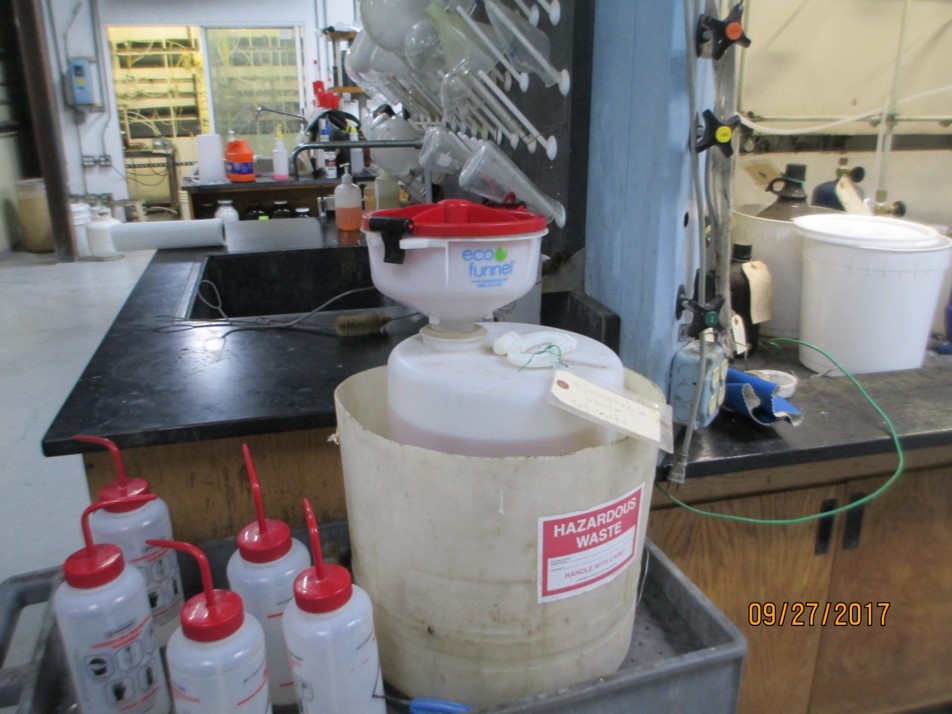
Examples of the Meaning of “Under the Control of the Operator”
FAQ: Must the “Operator” of a satellite accumulation area be a single individual?
Background:
The satellite accumulation area (SAA) regulations of the US. Environmental Protection Agency (USEPA) at 40 CFR 262.15 mandate that the container of hazardous waste in the SAA be “under the control of the operator of the process generating the waste,…”
Daniels Training Services, Inc. 815.821.1550 |
Answer: (FR 81, no. 228, 11.28.16 85768)
USEPA believes that there can be more than one operator per SAA over time. For example, as employees change shifts over the course of a day, the role of the operator can be transferred from one employee to another.
Likewise, the Agency believes that there can also be more than one operator per SAA at the same time. For example, multiple operators may be running laboratory equipment in the same room and share hazardous waste containers located in a single SAA.
However, the term operator does refer to an individual or individuals responsible for the equipment or processes generating the hazardous waste and does not refer to a company or entity as a whole.
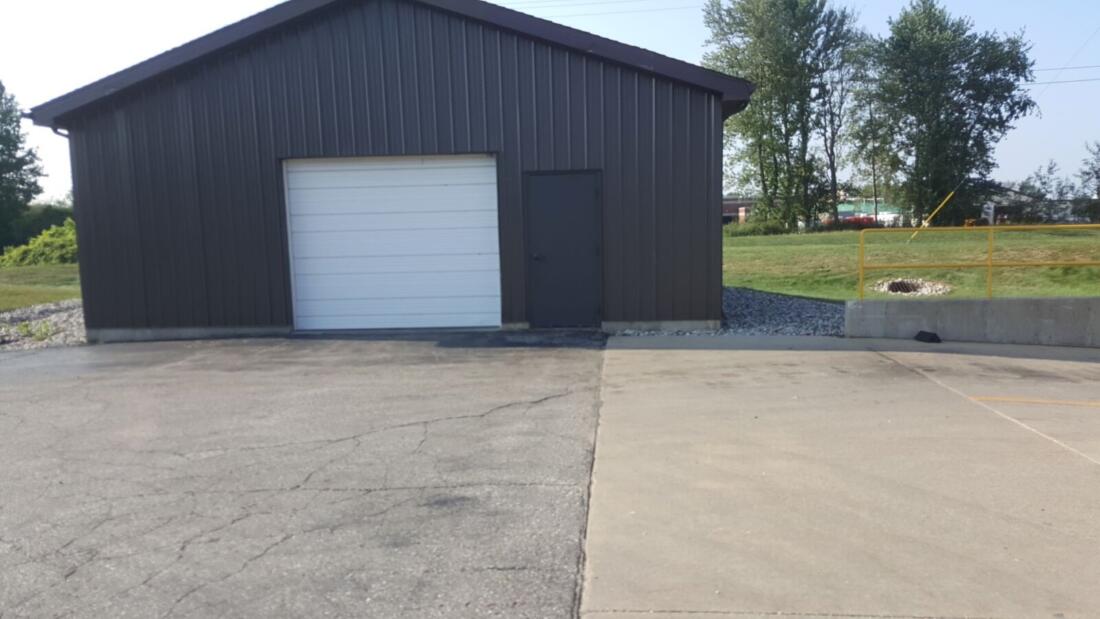
USEPA Rescinds Memo Regarding Accumulating Reactive Hazardous Waste Away From the Point of Generation
USEPA’s RCRA Online is a source for memos and guidance from USEPA regarding the hazardous waste regulations. In a memo dated January 13, 1988, USEPA wrote that a storage shed located outside of a building where a reactive hazardous waste (D003) is initially generated could be considered a SAA (RO 11317). The Generator Improvements Rule rescinded this memo and revoked this interpretation.
The purpose of this article is to explain the USEPA changing its interpretation of “at or near the point of generation” by rescinding an earlier interpretation.
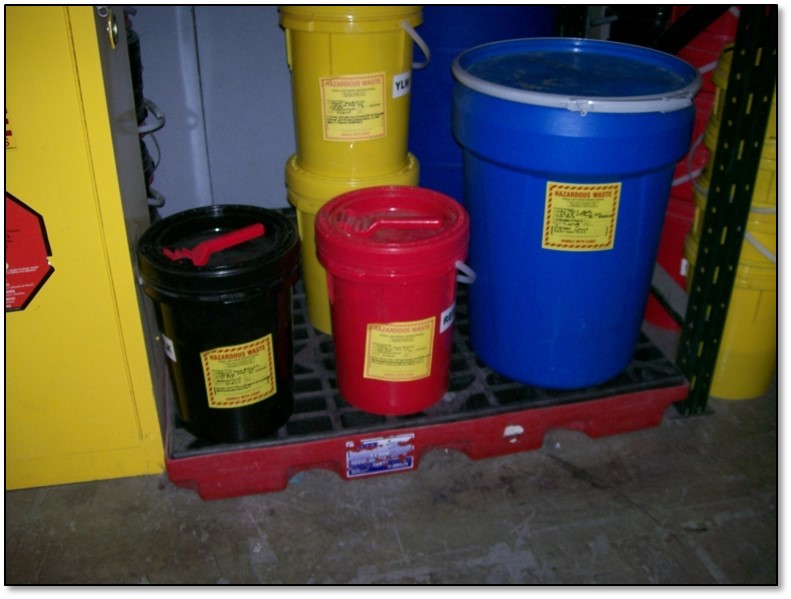
Generator May Choose to Manage Hazardous Waste in a Satellite Accumulation Area
The satellite accumulation area (SAA) regulations provide an option for generators to manage hazardous waste containers instead of in a central accumulation area (CAA). Containers managed in a SAA are not required to comply with many of the regulations applicable to the large quantity generator (LQG) and small quantity generator (SQG).
Revisions to these regulations by the Generator Improvements Rule now clarify the option to manage hazardous waste in a SAA and the relief from regulation it provides.
The purpose of this article is to explain the rewording of 40 CFR 262.15(a) clarifying the generator option to manage hazardous waste in a SAA or CAA.
Responding to Leaking or Damaged Containers in the Satellite Accumulation Area
Based on a recommendation from commenters, USEPA made a minor wording change to 40 CFR 262.15(a)(1) to explicitly require an immediate response to a leaking or damaged container in a satellite accumulation area (SAA). The revised regulations also clarify the applicable regulations if the container is moved to a central accumulation area (CAA). This change is part of the many revisions to generator regulations made by the Generator Improvements Rule.
The purpose of this article is to explain the addition of the word “immediately” and other language to 40 CFR 262.15(a)(1) regarding containers that are not in good condition or begin to leak.
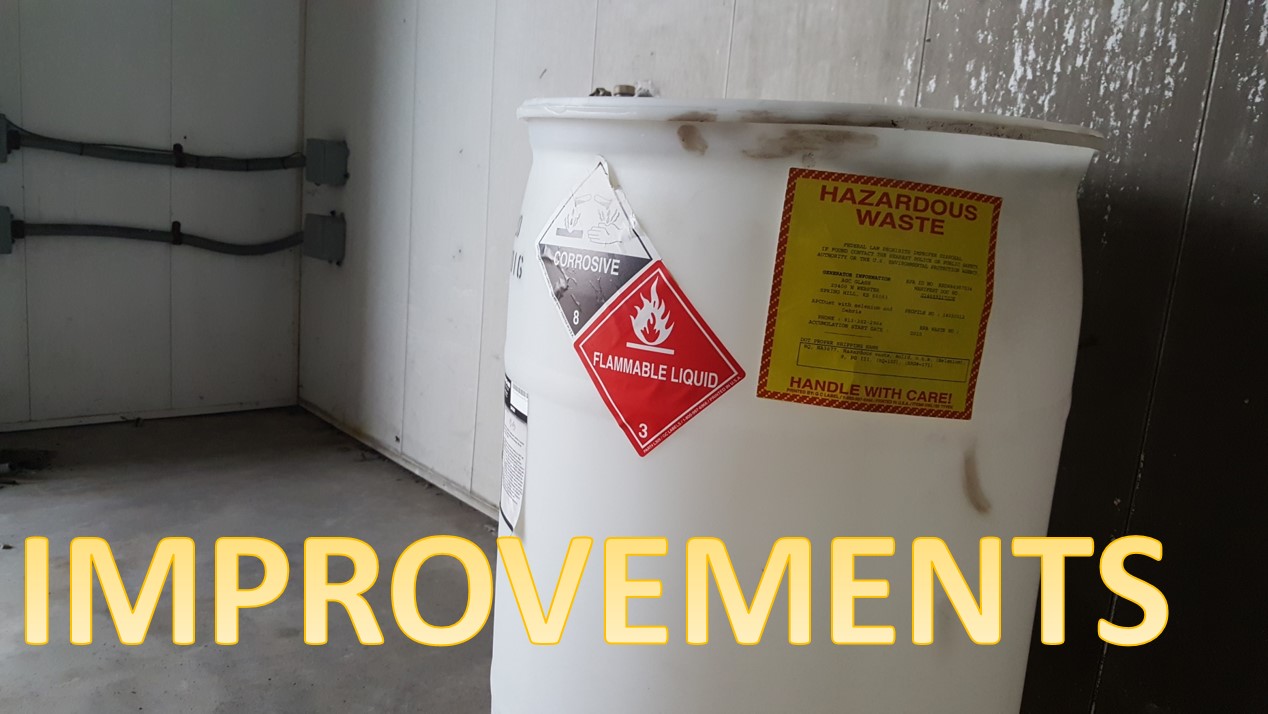
Applicability of Preparedness, Prevention, & Emergency Procedures to Satellite Accumulation Area
Prior to the Generator Improvements Rule, the waste accumulated in a SAA was not subject to the preparedness, prevention, and emergency procedure regulations; but that’s changed. Under the revised regulations all areas of a facility where hazardous waste is generated, accumulated, or treated is subject to the regulations of §262, Subpart M or §262.16(b)(8-9). That, of course, includes hazardous waste in a SAA.
The purpose of this article is to explain the regulations at 40 CFR 262.15(a)(7-8) that expand the applicability of the preparedness, prevention and emergency procedure regulations to the satellite accumulation area.
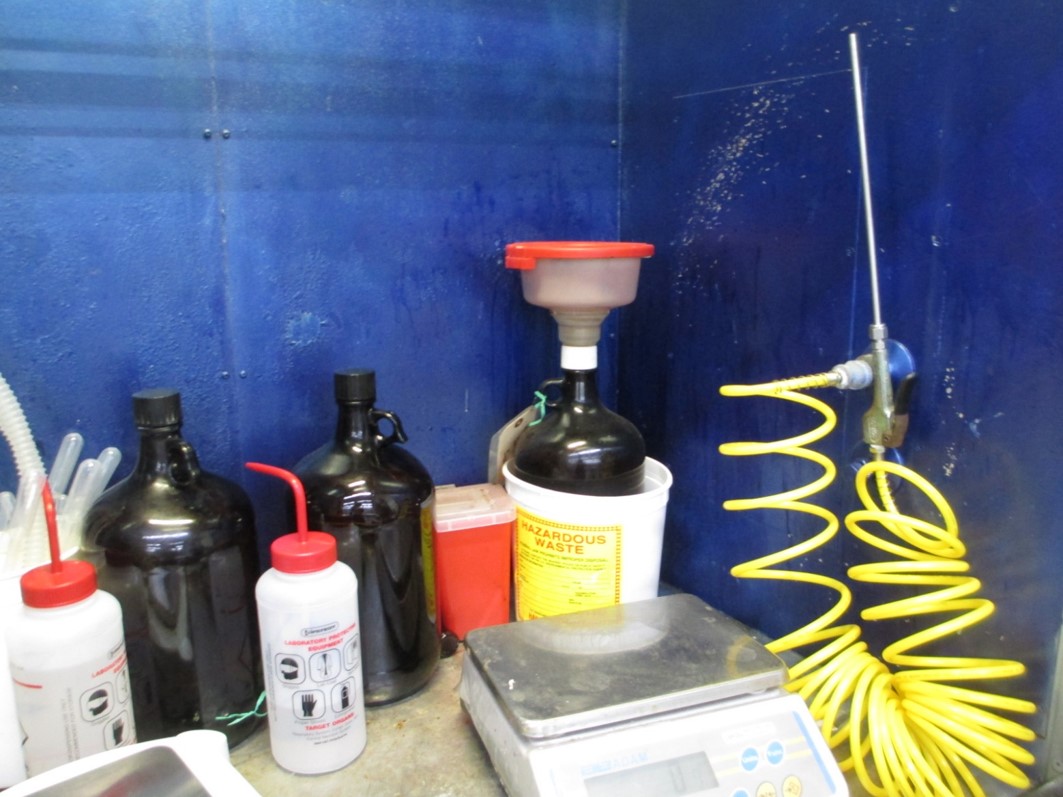
USEPA Modifies the Language for Generator Options When the Maximum Volume or Weight is Exceeded in a Satellite Accumulation Area
Generators that accumulate waste in a satellite accumulation area (SAA) must comply with the regulations of 40 CFR 262.15. This includes maintaining waste below certain volume and/or weight thresholds and then complying with specific requirements when those thresholds are exceeded. Prior to the Generator Improvements Rule the regulations specifying generator requirements after the threshold weight or volume was exceeded in a SAA were not clear; the revised regulations change this.
The purpose of this article is to explain the regulations at 40 CFR 262.15(a)(6) that more clearly state the generator options for managing “excess waste” in a satellite accumulation area.
USEPA Provides a Maximum Weight for Acute Hazardous Waste Accumulation in a Satellite Accumulation Area
Generators of hazardous waste may accumulate acute hazardous waste and/or non-acute hazardous waste in containers in a satellite accumulation area (SAA). Prior to the Generator Improvements Rule USEPA used separate volume thresholds for these two wastes: one quart or fifty-five gallons, respectively. When the volume threshold is exceeded, the generator must take certain actions within a certain time-frame to continue in compliance with the SAA regulations of 40 CFR 262.15. Revisions of the Generator Improvements Rule added a weight threshold for acute hazardous waste accumulated in a SAA.
The purpose of this article is to explain the regulations at 40 CFR 262.15(a) that provide a maximum weight for the accumulation of acute hazardous waste in a SAA.
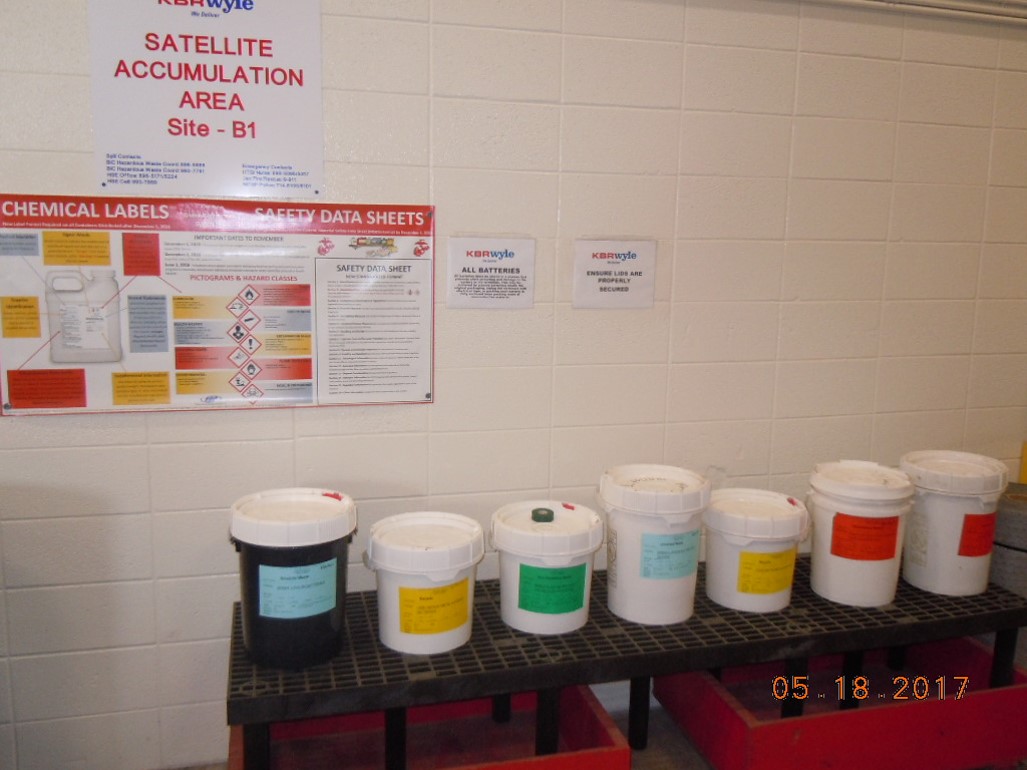
USEPA Clarifies “three days” for Removal of Hazardous Waste From Satellite Accumulation Area to Central Accumulation Area
Generators who accumulate hazardous waste in a satellite accumulation area (SAA) are likely familiar with the requirement to remove waste from the SAA to the central accumulation area (CAA) when the threshold volume is reached. A generator may also be aware this must be done within three (3) days. The previous SAA regulations at 40 CFR 262.34(c)(2) vaguely indicated this removal be accomplished, “within three days”. Under the Generator Improvements Rule, the USEPA amended the regulations to replace the term “three days” with “three consecutive calendar days”.
The purpose of this article is to explain the regulations at 40 CFR 262.15(a)(6) that require the removal of excess hazardous waste from a satellite accumulation area within three consecutive calendar days.
Q&A: How do I transport empty DOT 406 bulk fuel cargo tanks from Europe to U.S.?
A question from a soldier in the U.S. Army on July 20, 202o:
CLASSIFICATION: UNCLASSIFIED
Hello Daniels Training Services, INC. Team,
I read through your internet article USDOT Requirements for Shipments of Empty Packagings. Thanks for posting it.
I have a couple of questions on behalf of the US Army Europe.
Situation: We have DOT 406 Bulk Fuel Cargo Tanks that must be returned to numerous Army bases across the USA from Europe. The tanks have contained fuel and have been completely drained (including pipes, pumps and removal filtering systems) according to the manufacturers technical manuals. There may be “Crevice” residue fuel trapped in pipe connection seals that is undrainable. We will use military vessels to get them back from Europe to the nearest port in the USA. The tanks will have onward shipping by commercial trucks to their final destinations in the USA. We find no examples or provisions in the 49 CFR 171-173 that define “Cleaning/Purging” certificates or statements. We want to make sure that the “Cleaning/Purging” certificate statement we prepare here in Europe is acceptable for commercial carriers in the USA to authorize them to carry these Bulk Fuel Cargo tanks as a Non-Hazardous Material shipment.
Question 1. What resource document tells me the “SHIPPER” is responsible to know the exact provisions (standards) of what is meant by sufficiently cleaned of residue and purged of Flammable Liquid Vapors” for the below fuel types?
Question 2. Must tanks be cleaned with liquid substance?
Question 3. Or is “Draining all liquids & ventilating vapors below LEL levels to satisfy both terms, “Sufficiently Cleaned of Residue and Purged of Flammable Liquid Vapors” even if the temporary LEL of 0.00%(V) id recorded?
| Bulk Packaging Type | Capacity | HazMat Label | Marking | Placard |
|---|---|---|---|---|
| Intermediate Bulk Container (IBC) | All (Option 1) | No labels. 172.400(a)(2) | Identification number on all four sides. No regulation explicitly allows for the display of the ID# on 4 sides of an IBC w/ a capacity of <3,785 L but it is not forbidden. | Placard on all four sides. 172.504(a) |
| All (Option 2) | No labels. 172.400(a)(2) | Identification number on two opposing sides if capacity of bulk packaging is less than 3,785 L. 172.302(a)(2). Bulk packaging with a capacity of 3,785 L or more must display the identification number on all four sides and therefore may not take advantage of this exception since per 172.332, the identification number must be displayed on or near the placard. 172.302(a)(1) | Placard on two opposite sides. 172.514(c)(4) | |
| 1.8 m3 or more. | HazMat label on two opposite sides. 172.406(e)(6) | Identification number and proper shipping name as if for a non-bulk packaging per 172.301(a)(1). 172.514(c)(4) Identification number as if for a non-bulk packaging per 172.301(a)(1). 172.336(d) and 15-0120 | No placards. 172.514(c)(4) | |
| Less than 1.8 m3. | Label one side. 172.406(e)(6) | Identification number and proper shipping name as if for a non-bulk packaging per 172.301(a)(1). 172.514(c)(4) and 15-0120 Identification number as if for a non-bulk packaging per 172.301(a)(1). 172.336(d) | No placards. 172.514(c)(4) | |
| Large Packaging | All (Option 1) | No labels. 172.400(a)(2) | Identification number on all four sides. No regulation explicitly allows for the display of the ID# on 4 sides of a large packaging w/ a capacity of <3,785 L but it is not forbidden. | Placard on all four sides. 172.504(a) |
| All (Option 2) | No labels. 172.400(a)(2) | Identification number on two opposing sides if capacity of bulk packaging is less than 3,785 L. 172.302(a)(2). Bulk packaging with a capacity of 3,785 L or more must display the identification number on all four sides and therefore may not take advantage of this exception since per 172.332, the identification number must be displayed on or near the placard. 172.302(a)(1) | Placard on two opposite sides. 172.514(c)(4) | |
| 1.8 m3 or more. | HazMat label on two opposite sides. 172.406(e)(1) | Identification number as if for a non-bulk packaging per 172.301(a)(1). 172.336(d) and 15-0120 | No placards. 172.514(c)(5) | |
| Less than 1.8 m3. | Label one side. 172.406(e)(1) | Identification number as if for a non-bulk packaging per 172.301(a)(1). 172.336(d) and 15-0120 | No placards. 172.514(c)(5) | |
| Bulk Packaging other than portable tank, cargo tank, or tank car, e.g. bulk bag or box | All | No labels. 172.400(a)(2) | Identification number on all four sides. No regulation explicitly allows for the display of the ID# on 4 sides of a bulk packaging w/ a capacity of <3,785 L but it is not forbidden. | Placard on all four sides. 172.504(a) |
| 18 m3 or more. | No labels. 172.400(a)(2) | Identification number on all four sides. 172.302(a)(1) | Placard on all four sides. 172.514(c)(3) | |
| 1.8 m3 or more and less than 18 m3. (Option 1) | Label on two opposite sides. 172.406(e)(1) | Identification number as if for a non-bulk packaging per 172.301(a)(1). 172.336(d) and 15-0120 | No placards. 172.514(c)(3) | |
| 1.8 m3 or more and less than 18 m3. (Option 2) | No labels. 172.400(a)(2) | Identification number on two opposing sides if capacity of bulk packaging is less than 3,785 L. 172.302(a)(2). Bulk packaging with a capacity of 3,785 L or more must display the identification number on all four sides and therefore may not take advantage of this exception since per 172.332, the identification number must be displayed on or near the placard. 172.302(a)(1) | Placard on two opposite sides. 172.514(c)(3) | |
| Less than 1.8 m3. | Label one side. 172.406(e)(1) | Identification number as if for a non-bulk packaging per 172.301(a)(1). 172.336(d) and 15-0120 | No placards. 172.514(c)(3) |
As you can see above, all these fuels have different Lower/Upper Explosion Limits.
Question 4. Would you recommend that we set the standard with a LEL of 0.00% (V)?
Purpose of your efforts will help us establish a template certificate “Drain/Clean/Purge” statement for Fuel Cargi Tanks shipping for Soldiers returning from missions in support of the US Army in Europe.
Thank you in advance for any assistance you may provide us.
Interested in a Webinar that covers this topic, and more! |
My reply that same day:
I will review and reply.
He was able to wait:
Mr. Stoehr,
Thank you, standing-by.
My final answer 06.21.20:
Please see below. My answers – like the article you referred to earlier – are derived from the Hazardous Materials Regulations (HMR) of the Pipeline and Hazardous Materials Safety Administration within the US Department of Transportation (USDOT/PHMSA). The transportation in commerce of a hazardous material to, from, or through, the U.S. is subject to the HMR.
Question 1:
- There is no clear regulatory citation on this specific point in the HMR.
- 49 CFR 171.8 identifies the person who offers or offeror of a hazardous material (aka: the shipper) as a person who performs or is responsible for performing a pre-transportation function (described at §171.1(b)) or makes the HazMat available to the carrier.
- The shipper is responsible for compliance with §173.29 Empty packagings as it is with the remainder of part 173.
- The shipper must determine if the consignment is a HazMat and if so, what type and then communicate that information to the carrier. This requires the shipper to determine if a packaging, “Is sufficiently cleaned of residue and purged of vapors to remove any potential hazard”, or “Is refilled with a material which is not hazardous to such an extent that any residue remaining in the packaging no longer poses a hazard;”
- In sum: There are no examples or provisions in the HMR for cleaning or purging certificates or statements.
Question 2:
- This is easier. No.
- 49 CFR 173.29(b)(2)(ii) requires the packaging to be, “…sufficiently cleaned of residue and purged of vapors to remove any potential hazard;” it does not prescribe how to do this.
Question 3:
- The HMR do not reference the LEL or UEL.
- It is up to you as the shipper to ensure compliance with §173.29. The HMR does not indicate how you do this.
Question 4:
- I do not recommend you set the standard with a LEL of 0.00%(V) since that is not indicated as a standard at §173.29.
- Instead, I recommend you ensure compliance with the conditions of §173.29.
Purpose:
I think it a good idea to draft a “certificate of drain/clean/purge” though one is not required by the HMR. In my experience, most carriers wish to see one if they suspect the presence of HazMat.
I hope this helps. Please contact me with any other questions.
Contact me with any questions you may have about the generation, identification, management, and disposal of hazardous waste Daniels Training Services, Inc. 815.821.1550 |
Conclusion:
That was the last I heard from him. I hope the project went well. This is a common question among shippers of hazardous materials: How do I ensure the packaging is empty per 49 CFR 173.29? What certification is required? The answer is this: It is up to the shipper to determine if a packaging is in compliance with the requirements of 49 CFR 173.29 and then to offer it for transportation accordingly.