PO Box 1232 Freeport, IL 61032

A Different Kind Of Training

A Different Kind Of Training

A Different Kind Of Training

Hazardous Waste Management at a 10 Day Transfer Facility

Who Signs the Manifest if More Than One Driver From the Same Company?

Here’s a question from a person with years of experience in the hazardous waste industry.  I know because he and I worked together years ago.  His latest question, from July 30th, 2015, is part of an ongoing conversation we’ve been having about the USEPA regulations for a hazardous waste transporter; and in particular, those regulations regarding the handling of hazardous waste in a 10-day transfer facility:

Is it necessary to have a different driver from the same company sign the RCRA Manifest as Transporter 2 when taking possession of it at a transfer facility from the driver who signed as Transporter 1?  I spoke to a lady from the USEPA who said “well sure you want the 2nd transporter from the same company to sign, how else would you know who was driving” she was not real convincing. I spoke to <<name of state regulatory agency redacted>> and to a guy in <<name of state redacted>> and they both said no just the first driver from one company only needs to sign. If you come across anything please let me know. I will keep talking to people and looking things up. I would really like a concrete answer.

My response just a few hours later (7.30.15):

When in doubt.  Go to the regulations.

III. Instructions for Transporters Item 17. Transporters’ Acknowledgments of Receipt Enter the name of the person accepting the waste on behalf of the first transporter. That person must acknowledge acceptance of the waste described on the manifest by signing and entering the date of receipt. Only one signature per transportation company is required. Signatures are not required to track the movement of wastes in and out of transfer facilities, unless there is a change of custody between transporters. If applicable, enter the name of the person accepting the waste on behalf of the second transporter. That person must acknowledge acceptance of the waste described on the manifest by signing and entering the date of receipt.

emphasis mine.
 
The same is found in the Appendix to 40 CFR 262 and is printed as instructions on the back of the Uniform Hazardous Waste Manifest.
I hope this helps.
Dan
Another satisfied, well…not a customer, just an old friend who happens to also be in the hazardous waste transportation and disposal industry.

Hey Dan,

Thanks for the quick help, I really appreciate it. The good news is it sounds like we have been doing it correct to date. It always drives me nuts when I get different answers from people. You are right, when in doubt go to the regs.

Thanks again,

Contact me with any questions you may have about the generation, identification, management, and disposal of hazardous waste

Daniels Training Services

815.821.1550

Info@DanielsTraining.com

https://danielstraining.com/

FMCSR and Seat Belt Safety

Nine Myths About Safety Belts for Truck Drivers

The Federal Motor Carrier Safety Administration (FMCSA) within the U.S. Department of Transportation regulates the interstate – and, to a certain degree and under certain conditions, intrastate – transportation by highway of persons and property by a Commercial Motor Vehicle.
If you operate a CMV, the FMCSA wants you to do so safely and in compliance with the Federal Motor Carrier Safety Regulations (FMCSR) which require the driver of a CMV to wear a safety belt.
The purpose of this article is to identify and dispel nine myths related to safety belt use in CMVs. (more…)

Obtaining a Uniform Hazardous Waste Manifest from a Registered Printer

The Uniform Hazardous Waste Manifest is a document required by both the PHMSA/USDOT and the USEPA for the off-site transportation of hazardous waste and PCB Waste from its point of generation to its final treatment, recycling, or disposal.  But it’s not as easy as that…

  • Federal regulations require the manifest be used for offsite transportation of hazardous waste generated by a Large Quantity Generator (LQG) and a Small Quantity Generator (SQG) of hazardous waste but not from a Conditionally Exempt Small Quantity Generator (CESQG).
  • An authorized state may require the use of the uniform hazardous waste manifest from a CESQG.
  • An authorized state may require the use of the uniform hazardous waste manifest for other wastes it has identified as hazardous.
  • Any state may require the use of the uniform hazardous waste manifest for non-hazardous wastes.
  • A waste transporter and/or the Treatment, Storage, and Disposal Facility (TSDF) may require the use of the uniform hazardous waste manifest as a condition of its acceptance.

The purpose of this article is to identify the responsibility of a hazardous waste generator to obtain the uniform hazardous waste manifest from a registered manifest printer. (more…)

The Ultimate Tool for Puncturing and Draining Used Oil Filters

Oil filtersAnyone who generates used oil filters should use this tool to ensure the proper removal of used oil from their oil filters prior to disposal or recycling.

View a simple and informative YouTube video here:

Or, check out the website for more information:  Sabretooth Recycler

Contact me with any questions you may have about the generation, identification, management, and disposal of hazardous waste

Daniels Training Services

815.821.1550

Info@DanielsTraining.com

https://danielstraining.com/

Regulated Medical Waste and the Hazardous Waste Determination

I RECEIVED A QUESTION FROM A COMPANY WITH WHICH I’VE HAD A LONG AND FULFILLING RELATIONSHIP.  I WAS GLAD TO HELP WHEN I RECEIVED THIS EMAIL ON APRIL 22ND:

Hello Dan.  I hope everything is going well for you.

Have you ever ran into a infectious waste that is potentially flammable too?  The generator can’t even find a lab to test it and the question has come up about both EPA waste designation and DOT.  Does infectious waste take precedence and you don’t need to consider the flammability for either DOT or RCRA?  Just asking if you knew something off the top, don’t need to investigate.

I DID HAVE SOMETHING OFF THE TOP – AND DID A LITTLE INVESTIGATING TOO – TO DELIVER BACK AN ANSWER THAT SAME DAY:

State of IllinoisUSEPA does not regulate Medical Waste.  Illinois EPA does however, as a Potentially Infectious Medical Waste.  USDOT regulates as an Infectious Substance when in transportation.  OSHA regulates as a BioHazard when worker exposure is a concern.

A generator is required to make a hazardous waste determination for all waste, therefore they must determine if D001 applies.  If testing is not possible, they can make determination based on generator knowledge.
A separate determination is made when offered for transportation as a hazardous material per USDOT.  There it will likely be a Class 3 Flammable Liquid, a USEPA hazardous waste (depending on generator status), and a Division 6.2 Infectious Substance.
See below for articles related to this subject:The BioHazard Marking
Please let me know if you have any other questions.
HIS REPLY JUST A FEW MINUTES LATER:

Thank you Dan.

Have a great day,.

AND THAT WAS IT.  THE ENTIRE Q&A COMPLETED IN A FEW HOURS OF AN AFTERNOON.  I CAN BE JUST AS QUICK ANSWERING YOUR QUESTIONS, SO DON’T HESITATE TO ASK ME.

Contact me with any questions you may have about the generation, identification, management, and disposal of hazardous waste

Daniels Training Services

815.821.1550

Info@DanielsTraining.com

https://danielstraining.com/

Federal Register logo

June  2015 – Rules & Regulations, Proposed Rules, and Notices Regarding the Management of Hazardous Waste and the Transportation of Hazardous Materials

One of the hardest challenges for an EHS Professional is staying aware of changes to the Federal Regulations that affect your compliance.  Luckily, these new rules and regulations don’t just appear overnight.  Often they are the result of years of Notices of Proposed Rulemakings by the respective regulatory agencies followed by requests for comment from the regulated industry (that’s you!)  These comments may cause the agency to change the proposed rule which results in further notices until – perhaps months or years later – a Final Rule is published.  Usually the Final Rule is published months before it becomes effective. The Rulemaking Process is designed to encourage participation of the regulated industry and to ensure no one is caught flat-footed by changes to the Code of Federal Regulations.  This entire process is published periodically in the Federal Register.

On its website the US Government Printing Office makes a wealth of Federal publications available for review and download; one of these is the Federal Register.

Published by the Office of the Federal Register, National Archives and Records Administration (NARA), the Federal Register is the official daily publication for rules, proposed rules, and notices of Federal agencies and organizations, as well as executive orders and other presidential documents.

What I have done for the month of June 2015 is reviewed the list of publications in the Federal Register from the agencies listed below.  I have only included published notices that affect the management of waste and the transportation of hazardous materials.

  • Environmental Protection Agency (EPA) publications related to the generation, management, and disposal of solid waste, hazardous waste, universal waste, and used oil.
  • The following agencies – all within the Department of Transportation – for publications solely related to the transportation of hazardous materials (HazMat).
    • Pipeline & Hazardous Materials Safety Administration (PHMSA).
    • Federal Motor Carrier Safety Administration (FMCSA).
    • Federal Railroad Administration (FRA).
    • Federal Aviation Administration (FAA).

DISCLAIMER:  Please note that this is my best effort to identify the relevant announcements in the Federal Register that may be of interest to generators of hazardous waste and shippers of hazardous materials.  I encourage you to review the list of Federal Register publications yourself to ensure regulatory compliance.

 June 1, 2015 through June 30, 2015

Logo for US Environmental Protection AgencyUSEPA – US Environmental Protection Agency:

Publications not related to the management of hazardous waste, solid waste, universal waste, or used oil are not included here.

Rules and Regulations:

None

Proposed Rules:

Idaho: Authorization of State Hazardous Waste Management Program Revision Pages 31338 – 31342 [FR DOC # 2015-12932] PDF | Text | More

Contact me with any questions you may have about the management of hazardous waste

Daniels Training Services

815.821.1550

Info@DanielsTraining.com

https://danielstraining.com/


Notices:

Agency Information Collection Activities; Proposed Collection; Comment Request; Criteria for Classification of Solid Waste Disposal Facilities and Practices, Recordkeeping and Reporting Requirements Pages 34154 – 34155 [FR DOC # 2015-14658] PDF | Text | More

Agency Information Collection Activities; Proposed Collection; Comment Request; Hazardous Remediation Waste Management Requirements (HWIR Contaminated Media) Pages 34156 – 34157 [FR DOC # 2015-14657] PDF | Text | More

Federal Aviation AdministratinoFAA – Federal Aviation Administration:

Publications not related to the transportation of hazardous materials are not included here.

Rules and Regulations:

None

Proposed Rules:

None

Notices:

None

FMCSA – Federal Motor Carrier Safety Administration:

The FMCSA sets the minimum standards for Commercial Driver's Licenses

Publications not related to the transportation of hazardous materials are not included here.

Rules and Regulations:

Incorporation by Reference; North American Standard Out-of-Service Criteria; Hazardous Materials Safety Permits Pages 34839 – 34841 [FR DOC # 2015-14961] PDF | Text | More

State Compliance With Commercial Driver’s License Program: Correction Pages 36930 – 36932 [FR DOC # 2015-15906] PDF | Text | More

Proposed Rules:

Parts and Accessories Necessary for Safe Operation: Federal Motor Vehicle Safety Standards Certification for Commercial Motor Vehicles Operated by United States-Domiciled Motor Carriers Pages 34588 – 34593 [FR DOC # 2015-14934]     PDF | Text | More

Hazardous Materials Safety Permit (HMSP) Program: Amendment to Enforcement Policy Pages 35253 – 35255 [FR DOC # 2015-15091] PDF | Text | More

Notices:

None

Federal Railroad AdministrationFRA – Federal Railroad Administration:

Publications not related to the transportation of hazardous materials are not included here.

Rules and Regulations:

None

Proposed Rules:

None

Notices:

None

PHMSA – Pipeline and Hazardous Materials Safety Logo for the Pipeline and Hazardous Materials Safety Administration (PHMSA)Administration:

Publications not related to the transportation of hazardous materials are not included here.

Rules and Regulations:

None

Proposed Rules:

None

Notices:

None

Information can be helpful but it’s useless if you are not able to make sense of it.  You must be able to determine how any changes to the rules and regulations (final or proposed) will affect your operations, and communicate the necessary information to your personnel.  I can help you to do that.

Contact me with any questions you may have about the transportation of hazardous materials by air, highway, vessel, or rail

International and Domestic

Daniels Training Services

815.821.1550

Info@DanielsTraining.com

https://danielstraining.com/

Please contact me for a free training consultation to determine your regulatory requirements and how training can help you to attain and maintain compliance with the regulations of the US Environmental Protection Agency (and your state) and the PHMSA, FAA, FRA, & FMCSA of the US Department of Transportation.

Display of Class 9 Miscellaneous Placard

Q&A: The Exceptions from Placarding at 49 CFR 172.504(c) and Class 9 Miscellaneous

May 20, 2015: A question from someone with whom I have not yet had the opportunity to do business. In other words, a HazMat Professional – not a customer – who needs help with a question:

Mr. Stoehr,

I was hoping you could answer a question that has been bugging me for a while.

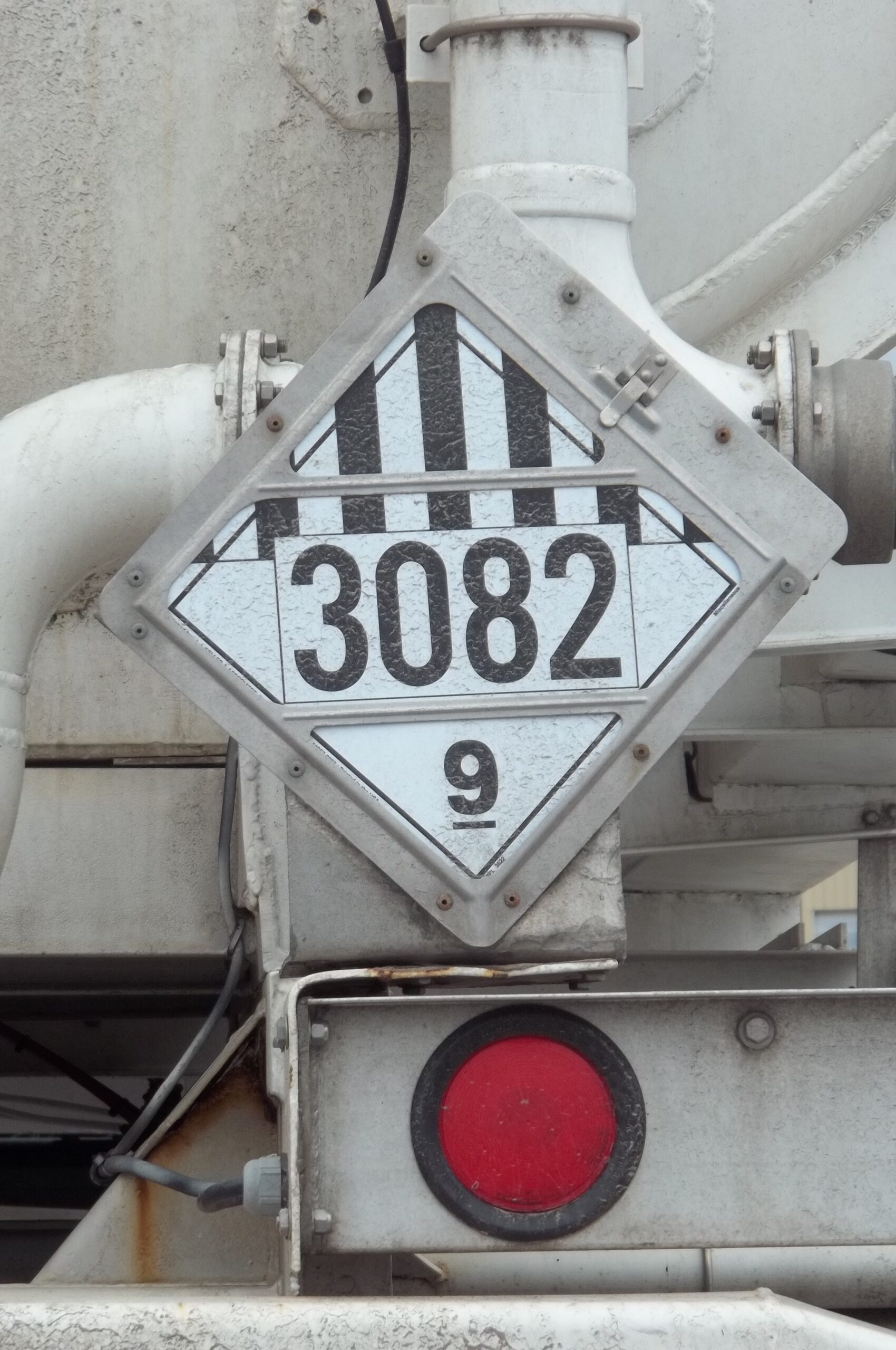
Suppose a freight container, containing 900 pounds of Class 9 hazardous material and 200 pounds of another Table 2 Hazardous material – let’s say it is corrosive- is moving within the US. 49 CFR 172.504(c) makes placards optional* for a freight container with fewer than 1,001 pounds of Table 2 hazardous materials. Further 49 CFR 172.504(f)(9) exempts the showing of the Class 9 placard since the shipment is moving domestically.Class 9 Miscellaneous placard on truck

I’ve only ever been able to interpret this as follows:
The shipment has 1,100 aggregate gross weight of Table 2 Hazardous Materials, so placards (Corrosive and Class 9) are required. Further the shipment is moving domestically so the Class 9 placard is not required. Therefore the corrosive placard is required.

However some shippers I interact with insist the corrosive placard is not required because the Class 9 hazardous material is exempted from placarding and the remaining hazardous materials are below the 1,001 lb threshold.

Do you know which interpretation is correct? Has a clarification to this issue ever been documented to your knowledge? Any help is appreciated.

P.S. I don’t need an answer to this, but… if my interpretation is correct, could a DANGEROUS placard be used instead of a corrosive placard?

*DTS Note:  “Optional”?  Read this article:  Driver Option to Display Placards @ 49 CFR 172.502(c)

I knew this one was going to take some time, so I replied and let him know I would get back to him soon (4.20.15):

Thanks for the question. I will look into it and get back to you.

My reply on June 2, 2015:

Short answer: A shipper or carrier of HazMat is not required to include the weight of a Class 9 Miscellaneous for the purpose of determining the placarding exception at 49 CFR 172.504(c).

Example: 500 lbs Class 3 Flammable and 600 lbs Class 9 Miscellaneous (both in non-bulk packaging) = No placards required since the aggregate gross weight of HazMat counted toward the threshold is only 500 lbs.
The answer to ‘Why?’ is a little more complicated.

It’s initially confusing because Table 2 at 49 CFR 172.504(e) includes Class 9 Miscellaneous [with a reference to 49 CFR 172.504(f)(9)] and because 49 CFR 172.504(c) specifically includes the HazMat identified in Table 2 in its threshold determination, “…when hazardous materials covered by table 2 of this section are transported by highway or rail…” (emphasis mine).  These two references to Class 9 Miscellaneous along with the other hazard class placards might lead one to think that it is included when determining if the exception at 49 CFR 172.504(c) applies to your mixed cargo of Class 9 Miscellaneous and other HazMat.

However, two regulatory citations – and an old letter of interpretation from PHMSA (09-007)* confirm my earlier ‘short answer’.

Regulation #1: 49 CFR 172.504(a) General, includes the following:
(a) Except as otherwise provided in this subchapter, each bulk packaging, freight container, unit load device, transport vehicle or rail car containing any quantity of a hazardous material must be placarded on each side and each end with the type of placards specified in tables 1 and 2 of this section and in accordance with other placarding requirements of this subpart,…(emphasis mine, again)
So, right off the bat the Part indicates that their might be exceptions to the rule as it initially appears in the regulations.

Regulation #2: 49 CFR 172.504(f)(9), which is referenced in Table 2, states that the Class 9 Miscellaneous placard is not required to be displayed within the U.S. This can be interpreted to mean that it is not counted towards placarding thresholds as well.

The trump card is the PHMSA Letter of Interpretation (09-007)* which clearly states in answer to this question:

Only materials that are covered by Table 2 and that require placarding are included in the aggregate gross weight. Although Class 9 is covered by Table 2, it does not require placarding.

(emphasis mine)

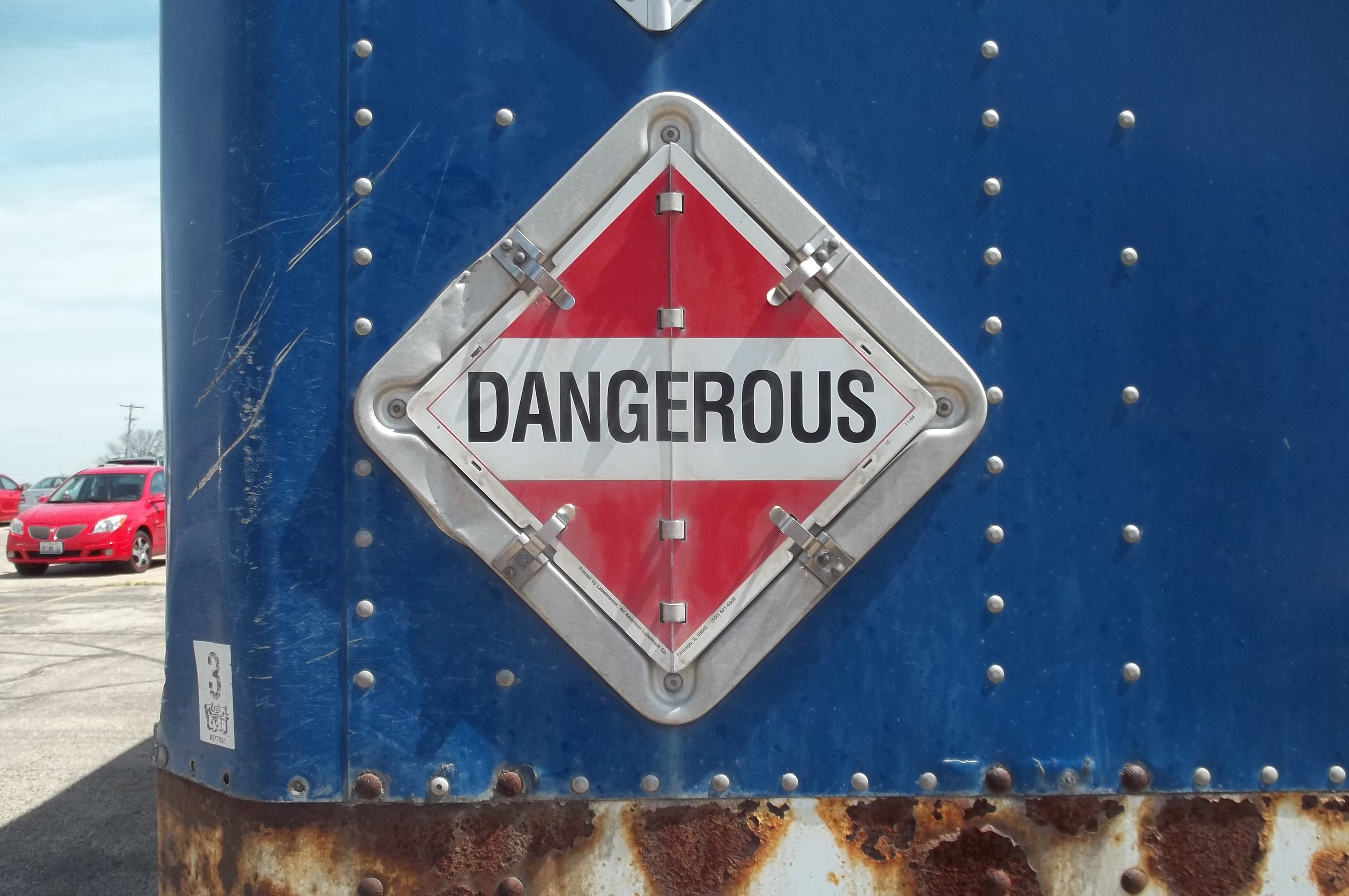
As to your P.S., the answer to that is ‘No’ as well. Given the above is correct, and pursuant to 49 CFR 172.504(b), the Dangerous placard can only be used when two or more hazardous materials that require placarding are present (and, of course, other conditions of using the Dangerous placard are met. For example: When not to use the Dangerous Placard).Dangerous Placard

I hope this helps.

Please don’t hesitate to contact me with any other questions.

*DTS Note:  This letter of interpretation from PHMSA/USDOT is valid though, due to its age, it no longer appears on their on-line database.  Perhaps it’s time for someone to request another letter of interpretation on this topic in order to refresh the database?

Contact me with any questions you may have about the transportation of hazardous materials by air, highway, vessel, or rail

International and Domestic

Daniels Training Services

815.821.1550

Info@DanielsTraining.com

https://danielstraining.com/

These kinds of questions come up all the time regarding the transportation of hazardous materials.  And, as you can see, their are as many differences of opinion on the answer as their are questions.  If you can’t find the answers to your questions, then by all means contact me.  I’m more than happy to assist you with your question about HazMat transportation.

Q&A: Use of the Dangerous Placard on a Motor Vehicle in Transportation

A question from someone I’ve assisted in the past (April 21, 2015):

Daniel…..lend me your thoughts…..


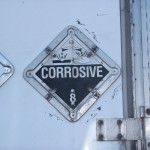
Example: I have 2500 lbs. of flammable so I know I have to placard for it Hazard class 8 corrosive placardspecifically.  I also have 200 pounds of corrosive.  Would  I placard for dangerous as well since my gross weight of everything is over 1001, or does placarding for the flammable reset my requirements of 1001 lbs. for placarding for dangerous for the rest.
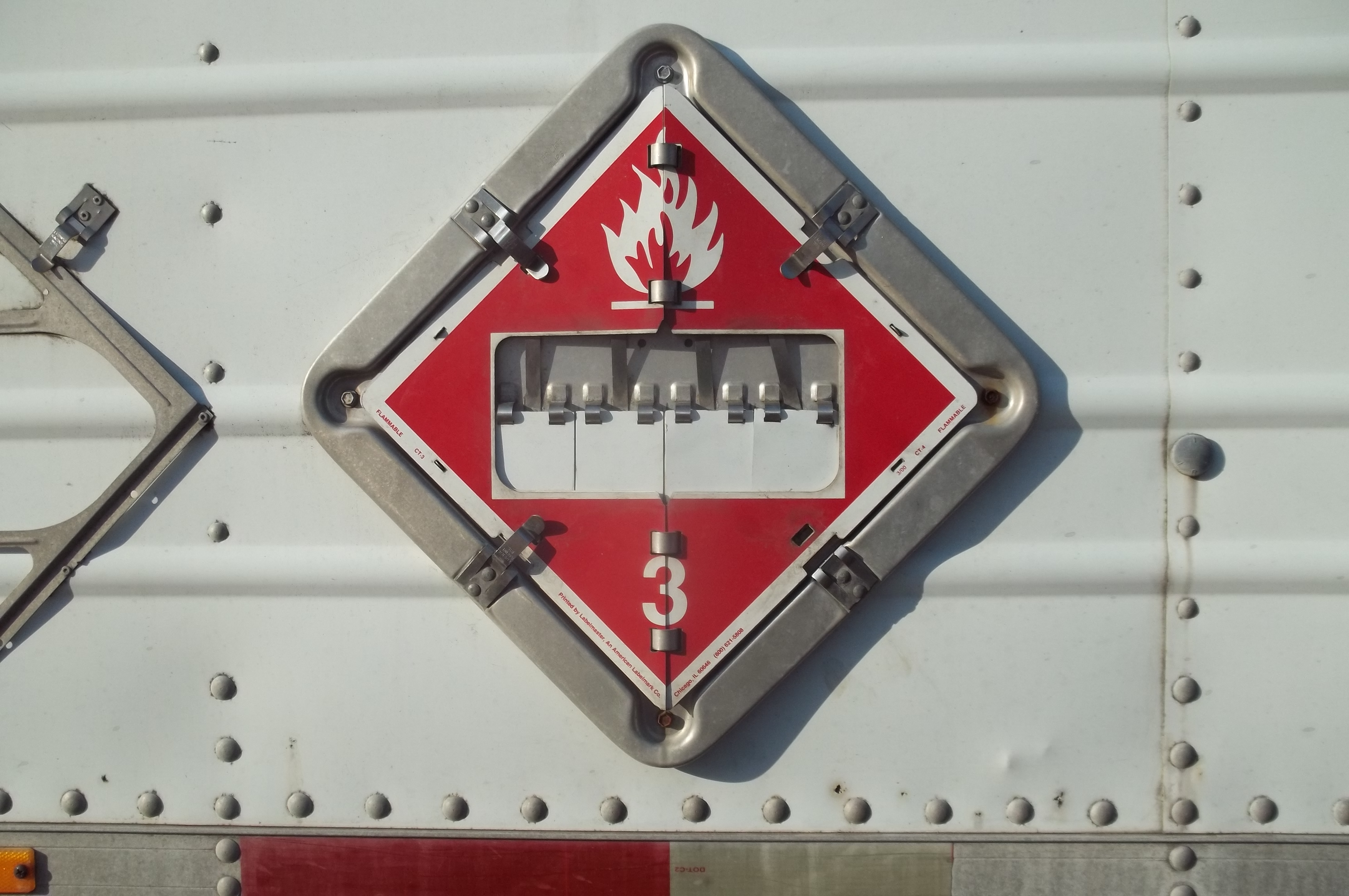

Placard for Class 3 Flammable LiquidWe have a mix of opinions about the use of the dangerous placard in this scenario.  I myself believe the flammable and dangerous placard should be displayed in the above scenario.  As always I value your opinon and thoughts.  Thanks in advance..

My reply the next day (4.22.15):

Thank you for contacting me.  Below are your options for the situation you describe:

  1. Placard both flammable and corrosive except as noted in #3.
  2. Placard Dangerous only except as noted in #3.
  3. If the 2,500 lb of flammable was loaded at one location, then the Flammable placard must be displayed for it specifically and the Corrosive placard must be displayed for the remaining 200 lb of corrosive.

Please note:

  • I assume these are all in non-bulk packagings.
  • Placarding requirements are based on the gross aggregate weight of HazMat on the vehicle (including the weight of the packaging).  Once you meet or exceed the 1,001 lbs threshold you must placard for each HazMat or remove all placards and display Dangerous.
  • However, when 2,205 lbs or more of one HazMat is loaded at one loading facility, then the placard for that HazMat must be displayed.
I can provide more information and cite the applicable regulations if necessary.
Please contact me if you have any other questions.


Apparently he didn’t have any other questions, because I didn’t hear from him after that.

Dangerous PlacardMore…

Don’t hesitate to contact me if you have a question about the transportation of hazardous materials, I’m glad to help.

Contact me with any questions you may have about the transportation of hazardous materials by air, highway, vessel, or rail

International and Domestic

Daniels Training Services

815.821.1550

Info@DanielsTraining.com

https://danielstraining.com/

Display of placard on front of motor vehicle

Training HazMat Drivers in Hijacking Prevention

The Hazardous Material Regulations of the PHMSA/USDOT at 49 CFR 172.704(a)(4) mandate Security Awareness Training be provided to all HazMat Employees with their initial and triennial HazMat Employee Training.  This training should provide an awareness of security risks associated with HazMat transportation and methods designed to enhance transportation security. It must also include a component covering how to recognize and respond to possible security threats.  The purpose of this article is to provide suggested content for Security Awareness Training for HazMat Employees who operate a motor vehicle over a public roadway. (more…)

The Requirements of the Dangerous Cargo Manifest for HazMat Transportation by Vessel

Pursuant to 49 CFR 172, Subpart C, the shipper of a hazardous material (HazMat) is required to prepare a shipping paper that – unless specifically excepted by the Hazardous Material Regulations – includes the following information:

  • The HazMat’s basic description [§172.202(a)(1-4)].
  • Total quantity of HazMat (unless by air) [§172.202(a)(5)].  Total quantity by air is at §172.202(a)(6).
  • Number and type of packages [§172.202(a)(7)].
  • The HazMat’s additional description, if necessary (§172.203)
  • Emergency response telephone number [§172.201(d)].
  • Shipper’s certification (§172.204).
  • And pursuant to §172, Subpart G, emergency response information must be immediately available for use whenever a HazMat is present in transportation.

But we’re not here to review the requirements for a HazMat Shipping paper, theTransportation of dangerous goods by vessel purpose of this article is to identify and explain the requirements of the Dangerous Cargo Manifest when a hazardous material is transported by vessel. (more…)

Search Website