PO Box 1232 Freeport, IL 61032

A Different Kind Of Training

A Different Kind Of Training

A Different Kind Of Training

FAQ: Copper Chloride (UN2802) as a Hazardous Material

A question I received May 1, 2015 from a business associate within the community of hazardous material Shippers, Carriers, and Destination Facilities:

Hey Dan,

At work we had a discussion and really could not come to a conclusion.
I would like your input when you have a few moments.

  • A customer has 1 pound of copper chloride to dispose of.
  • We put it in a labpack for shipping.
  • Copper chloride is in 172.101 as UN2802, copper chloride, 8, III
  • But it is shown in column 1 with the RQ symbol.
  • The RQ for copper chloride is 10 lbs with the @ symbol (not significant).

My understanding is that since we are shipping less than an RQ, the shipment is not subject to 49 CFR.

If I am correct, please cite the relevant regs.

If I am incorrect, please let me know how.

Thanks very much.

Contact me with any questions you may have about the transportation of hazardous materials by air, highway, vessel, or rail

International and Domestic

Daniels Training Services

815.821.1550

Info@DanielsTraining.com

https://danielstraining.com/

My reply on May 8, 2015:

First some clarification and my assumptions:

  • Since it is being sent for disposal, the copper chloride is a solid waste and possibly a hazardous waste per the regulations of the USEPA if it is either Listed or exhibits a Characteristic and is not otherwise excluded from regulation.
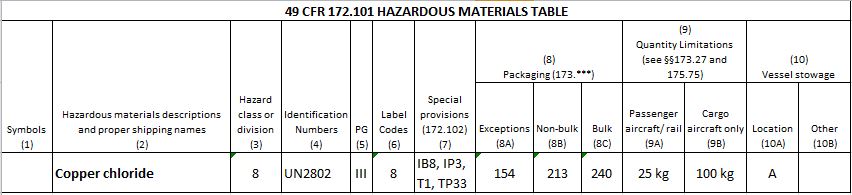
  • Copper chloride is identified by its technical name in column 2 of the Hazardous Materials Table (49 CFR 172.101) as a proper shipping name:

Hazardous materials table entry for copper chloride

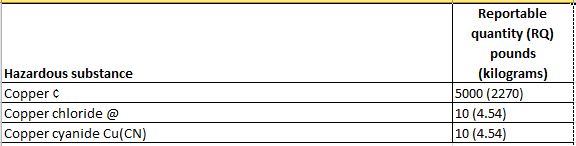
  • Copper chloride is identified as a hazardous substance with a reportable quantity of 10 lbs (4.54 kg) in Table 1 of Appendix A to the hazardous materials table:

Hazardous substance table entry for copper chloride

  • I agree that the @ symbol does not impact copper chloride’s classification.
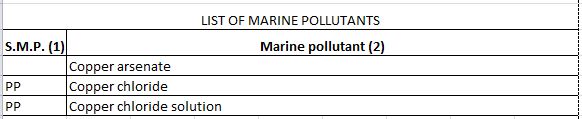
  • Copper chloride is also identified as a severe marine pollutant (PP) in Appendix B to the hazardous materials table:

Marine pollutant table entry for copper chloride

However, pursuant to 49 CFR 171.4(c) a marine pollutant is not subject to the HMR when transported by motor vehicle, rail car, or aircraft in a non-bulk packaging.

Like this article?

Subscribe to my Monthly Newsletter

No marketing emails!

My answer to your question:

I believe the copper chloride must be shipped as a hazardous material (i.e. it is subject to 49 CFR) because it is designated as hazardous in the hazardous materials table at 49 CFR 172.101 (see earlier in this article).  Its status as a hazardous material can be confirmed by determining if it meets the definition of a Class 8 Corrosive as is indicated in column 3 of the hazardous materials table.  If so, it is a hazardous material no matter if it is a Reportable Quantity of a hazardous substance or not.

I hope this helps.  Please don’t hesitate to contact me with any other questions.

I didn’t hear again from this person on this topic so I assume my answer was satisfactory.  I wouldn’t mind hearing from you, though.  So please contact me with any question you may have about the transportation of hazardous materials or hazardous waste.  I won’t use your letter as an article unless you approve.

FAQ: When is HazMat Employee Driver Training not Required?

Here’s a question from someone who attended one of my Training Seminars (now suspended) on October 8, 2015:

Dan did you say in training that companies can use a hazmat drivers license as hazmat training and not train them on hazmat every three years?

Sent from my iPhone

Contact me with any questions you may have about the transportation of hazardous materials by air, highway, vessel, or rail

International and Domestic

Daniels Training Services

815.821.1550

Info@DanielsTraining.com

https://danielstraining.com/

My response later that day (10.8.15):

USDOT regulations allow the HazMat Employer to rely on a driver’s maintenance of their CDL (with routine testing and renewal required by their state) as compliance with the requirement to train HazMat drivers at 49 CFR 177.816.

However, this does not preclude the requirement to provide triennial HazMat Employee Training.
It is also important to note that a Commercial Driver’s License is only required if a motor vehicle transports a quantity of HazMat that requires placarding.  It is quite possible that a driver of a motor vehicle transporting HazMat does not require placarding nor a CDL.
In other words, HazMat Employee Training is required every three years for the operator of a motor vehicle transporting any amount of HazMat, but the HazMat Employer may opt out of providing the additional Driver Training if they feel the maintenance of the CDL with endorsements is sufficient.

Daniels Training Services

815.821.1550

Info@DanielsTraining.com

https://danielstraining.com/

Read this article of mine for more information:  USDOT Driver Training Requirements.

I hope this helps.  Please don’t hesitate to contact me with any other questions.
Thanks
Dan
Got a question about training your HazMat Drivers or any other HazMat Employee?  Contact me and I’ll be glad to help.

FAQs: Walking HazMat Across the Street. Is it Regulated Transportation?

(9.28.15) A question from a site where I had provided Onsite HazMat Employee training in September 2014:

Dan,

A question came up while we were conducting training. We have employees that fill small containers of fresh acid in the lab and then walk across the street to the where the acid will be used. Would the person transporting the container be required to attend the DOT training?

My response later that day (9.28.15):

No. For two reasons:

  • First, the act of walking is not identified by PHMSA/USDOT as transportation and thus is not subject to the Hazardous Material Regulations.  At 49 CFR 171.8 Transportation is defined as:

Transportation or transport means the movement of property and loading, unloading, or storage incidental to that movement.

So, transportation is movement but it doesn’t specify how, so it’s possible that walking is regulated as transportation.  However, 49 CFR 171.1(c)(1) describes regulated transportation of a hazardous material as including:

Movement of a hazardous material by rail car, aircraft, motor vehicle, or vessel…

And, movement is defined at 49 CFR 171.8 as:

Movement means the physical transfer of a hazardous material from one geographic location to another by rail car, aircraft, motor vehicle, or vessel.

Therefore, the act of walking, even if transporting a hazardous material, is not subject to the HMR.

Daniels Training Services

815.821.1550

Info@DanielsTraining.com

https://danielstraining.com/

  • Secondly, I am not certain to which of your facilities you are referring (they have two) but if it is an internal “street” and the HazMat doesn’t leave your property, then it is not subject to the HMR which applies to transportation in commerce on a public roadway.  Again, 49 CFR 171.8 defines movement as the transfer of a HazMat from one geographic location to another (see above), which would not include its transfer within a contiguous property.

Further, 49 CFR 171.1(d) identifies activities that are exempt from the HMR as including:

Rail and motor vehicle movements of a hazardous material exclusively within a contiguous facility boundary where public access is restricted, except to the extent that the movement is on or crosses a public road or is on track that is part of the general railroad system of transportation, unless access to the public road is restricted by signals, lights, gates, or similar controls.

Like this article?

Subscribe to my Monthly Newsletter

No marketing emails!

So, the movement of a hazardous material – even if by motor vehicle – is not subject to the HMR if the movement takes place within a contiguous facility boundary where public access is restricted, i.e. is on private property.

I hope this helps.

Thanks

Dan

It doesn’t matter to me whether you’re a past customer, future customer, or no customer at all!  I’m happy to answer your questions about the transportation of hazardous materials.

Federal Register logo

Federal Register Publications From USEPA, FAA, FMCSA, FRA, & PHMSA for November 2015

See below for a brief summary of announcements in the Federal Register by the US EPA on the subject of Hazardous Waste and the Pipeline & Hazardous Materials Safety Administration (PHMSA), Federal Motor Carrier Safety Administration (FMCSA), Federal Railroad Administration (FRA), and the Federal Aviation Administration (FAA) of the US DOT on the subject of Transportation of Hazardous Materials.

Please note that this is my best effort to identify the relevant announcements in the Federal Register that may be of interest to generators of hazardous waste and shippers of hazardous materials.  I encourage you to review the list of Federal Register publications yourself to ensure regulatory compliance.

November 1, 2015 through November 30, 2015

Logo for US Environmental Protection AgencyUSEPA – US Environmental Protection Agency:

Publications not related to the management of hazardous waste, solid waste, universal waste, or used oil are not included here.

Rules and Regulations:

None

Proposed Rules:

Hazardous Waste Generator Improvements Pages 68490 – 68491 [FR DOC # 2015-28099] PDF | Text | More

Management Standards for Hazardous Waste Pharmaceuticals Pages 68491 – 68491 [FR DOC # 2015-28100] PDF | Text | More

Request for Comment: Kentucky Underground Injection Control (UIC) Program; Primacy Approval Pages 69629 – 69630 [FR DOC # 2015-28662]         PDF | Text | More

Revision to the Research, Development and Demonstration Permits Rule for Municipal Solid Waste Landfills Pages 70180 – 70183 [FR DOC # 2015-28666] PDF | Text | More

Notices:

Underground Injection Control Program; Hazardous Waste Injection Restrictions; Petition for Exemption Reissuance-Class I Hazardous Waste Injection; DuPont Pontchartrain, LaPlace, Louisiana Pages 69220 – 69220 [FR DOC # 2015-28484] PDF | Text | More

Like this article?

Subscribe to my Monthly Newsletter

No marketing emails!

Federal Aviation AdministratinoFAA – Federal Aviation Administration:

Publications not related to the transportation of hazardous materials are not included here.

Rules and Regulations:

None

Proposed Rules:

None

Notices:

None

Daniels Training Services

815.821.1550

Info@DanielsTraining.com

https://danielstraining.com/

FMCSA – Federal Motor Carrier Safety Administration:
The FMCSA sets the minimum standards for Commercial Driver's Licenses
The FMCSA sets the minimum standards for Commercial Driver’s Licenses

Publications not related to the transportation of hazardous materials are not included here.

Rules and Regulations:

Prohibiting Coercion of Commercial Motor Vehicle Drivers Pages 74695 – 74710 [FR DOC # 2015-30237] PDF | Text | More

Proposed Rules:

None

Notices:

None

Federal Railroad AdministrationFRA – Federal Railroad Administration:

Publications not related to the transportation of hazardous materials are not included here.

Rules and Regulations:

None

Proposed Rules:

None

Notices:

None

Daniels Training Services

815.821.1550

Info@DanielsTraining.com

https://danielstraining.com/

PHMSA – Pipeline and Hazardous Materials Safety Administration:Logo for the Pipeline and Hazardous Materials Safety Administration (PHMSA)

Publications not related to the transportation of hazardous materials are not included here.

Rules and Regulations:

Hazardous Materials: Enhanced Tank Car Standards and Operational Controls for High-Hazard Flammable Trains Pages 71952 – 71973 [FR DOC # 2015-28774] PDF | Text | More

Hazardous Materials: Editorial Corrections and Clarifications (RRR) Pages 72914 – 72929 [FR DOC # 2015-29683] PDF | Text | More

Proposed Rules:

None

Notices:

Hazardous Materials: Explosive Approvals-Compliance With Special Provision 347 Pages 67485 – 67489 [FR DOC # 2015-27784]  PDF | Text | More

Hazardous Materials: New York City Permit Requirements for Transportation of Certain Hazardous Materials Pages 68382 – 68383 [FR DOC # 2015-28012] PDF | Text | More

Hazardous Materials: Notice of Suspension of Del-Med, Inc., Edison, NJ for DOT-SP 8308 Pages 68898 – 68899 [FR DOC # 2015-28311] PDF | Text | More

Hazardous Materials: California and Los Angeles County Requirements Applicable to the On-Site Handling and Transportation of Hazardous Materials Pages 70874 – 70879 [FR DOC # 2015-28921] PDF | Text | More

Hazardous Materials: Notice of Application for Modification of Special Permit Pages 74210 – 74211 [FR DOC # 2015-29955] PDF | Text | More

Hazardous Materials: Notice of Application for Special Permits Pages 74212 – 74212 [FR DOC # 2015-29956] PDF | Text | More

Hazardous Materials: Delayed Applications Pages 74213 – 74213 [FR DOC # 2015-29937] PDF | Text | More

Hazardous Materials: Actions on Special Permit Applications Pages 74213 – 74215 [FR DOC # 2015-29957] PDF | Text | More

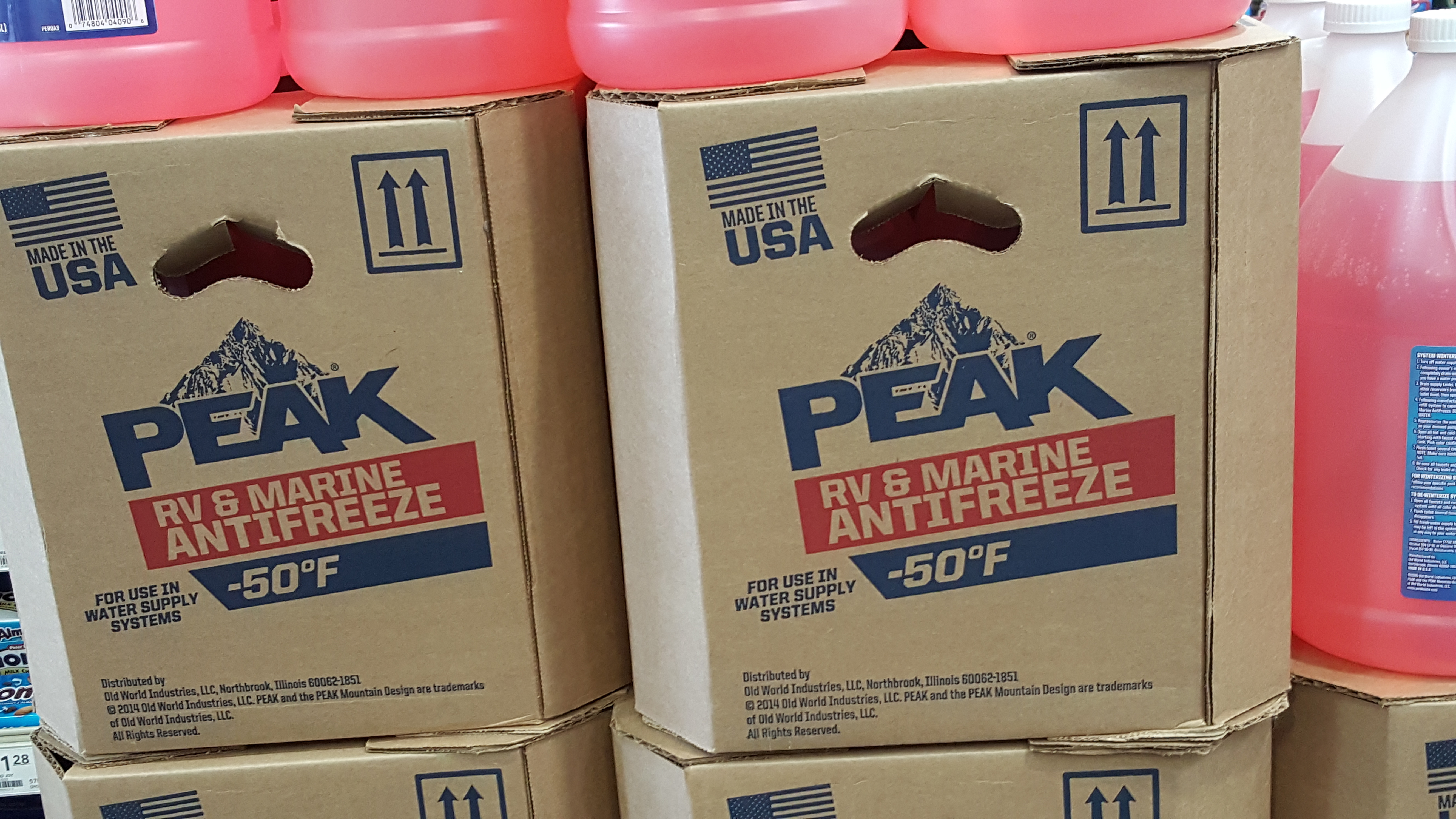
Package Orientation Arrows on HazMat Packaging

So common you many notice them let alone be aware that they are a package marking required by the hazardous Material Regulations of the PHMSA/USDOT:  Package orientation arrows.  The purpose of this article is to explain the requirements for the use of the package orientation arrows at 49 CFR 172.312 and §173.25.HazMat packaging with package orientation arrows (more…)

What can you do with Used Oil?

Used Oil is defined at 40 CFR 279.1:

Used oil means any oil that has been refined from crude oil, or any synthetic oil, that has been used and as a result of such use is contaminated by physical or chemical impurities.

So a used oil must be:

  • Refined from crude oil or synthetic oil…not animal or vegetable.
  • Used…as a lubricant, coolant, noncontact heat-transfer fluid, hydraulic fluid, buoyant, or other similar purpose; not unused stock or off-spec material, though spill residue is OK.

And…

  • Contaminated with impurities because of its use.  Physical impurities include: water, metal shavings, sawdust, or dirt; while examples of chemical impurities include:  toxic metals, halogenated or non-halogenated solvents.

The definition of used oil does not include oil-based products used as solvents.

Further, at §279.10(a):

EPA presumes that used oil is to be recycled unless a used oil handler disposes of used oil, or sends used oil for disposal.

This presumption of the EPA means that the regulations of Part 279 apply to a used oil even if it is ultimately sent to final disposal – and not recycling or fuel blending which is clearly the intent of these regulations.  The applicable regulations will apply only at the point of disposal.

Even better, a used oil may be managed according to these regulations even if it exhibits a hazardous waste characteristic:

  • Ignitablity (D001)
  • Corrosivity (D002)
  • Reactivity (D003)
  • Toxicity (D004 – D043)

Read more about the identification and management of used oil

This information is based on the Federal EPA regulations at 40 CFR 279.  Your state may have more strict regulations for its management of used oil.  Check with your state environmental agency before using any of these options.
If you have a used oil, what are you going to do with Used oil in IBCit?

Accumulate used oil on-site prior to off-site transportation for recycling provided that:

  • The used oil is accumulated in tanks (aboveground or underground) or containers only.  Tanks and/or containers of used oil are not subject to the regulations for hazardous waste containers or tanks at 40 CFR 265, subpart I & J, respectively
  • Tanks and/or containers of used oil are in good condition: no severe rusting, apparent structural defects or deterioration and no visible leaks.
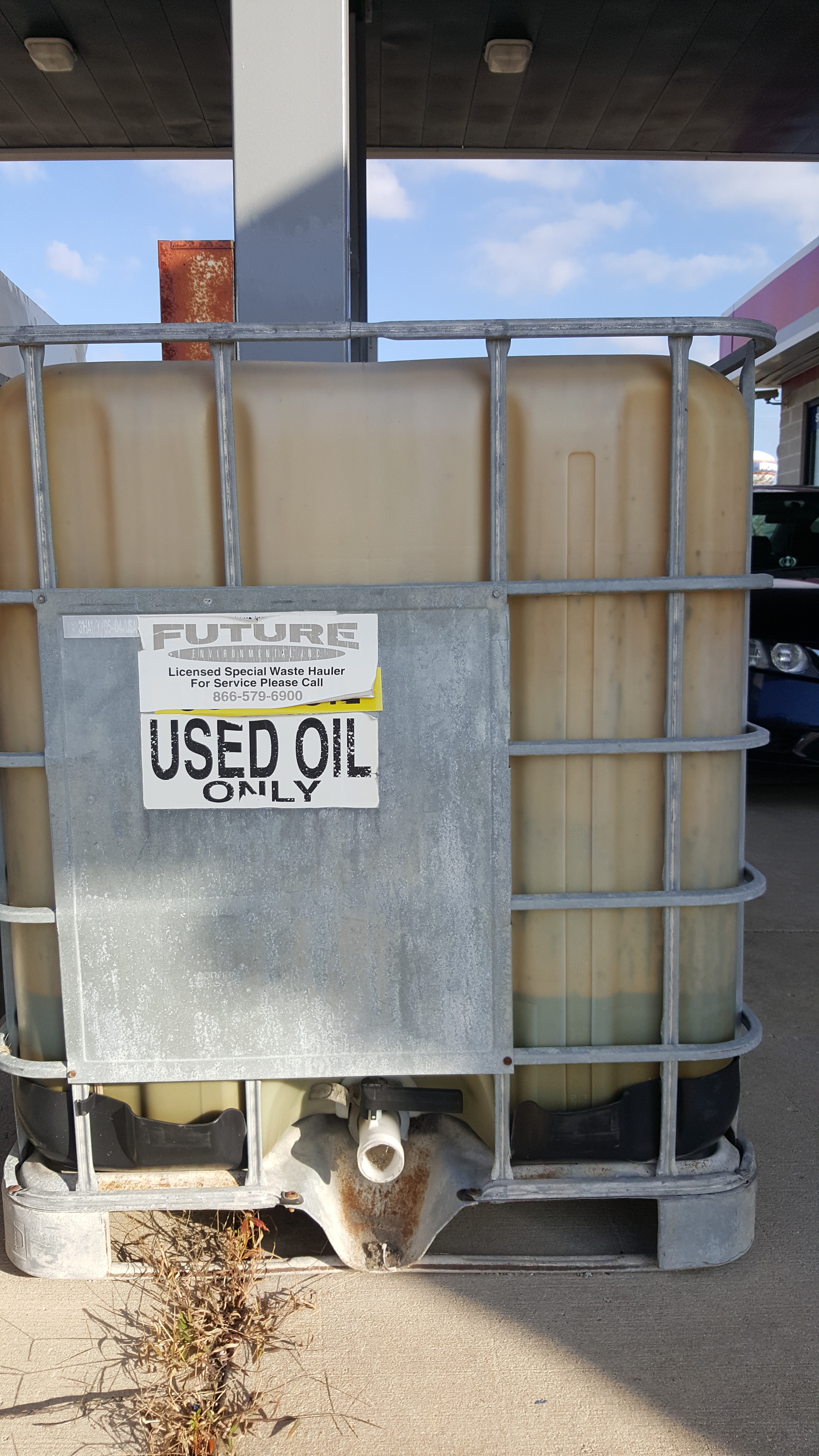
  • Aboveground tanks and/or containers of used oil are labeled “used oil”.
  • Fill pipes used to transfer used oil into underground storage tanks are labeled “used oil”.
  • The generator responds promptly to a release of used oil to the environment, to include:
    • Stop the release.
    • Contain the released used oil.
    • Clean up and manage properly the released used oil and other materials.
    • If necessary, repair or replace any leaking used oil storage containers or tanks prior to returning them to service.
But why settle for that when the used oil standard lets you do so much more?

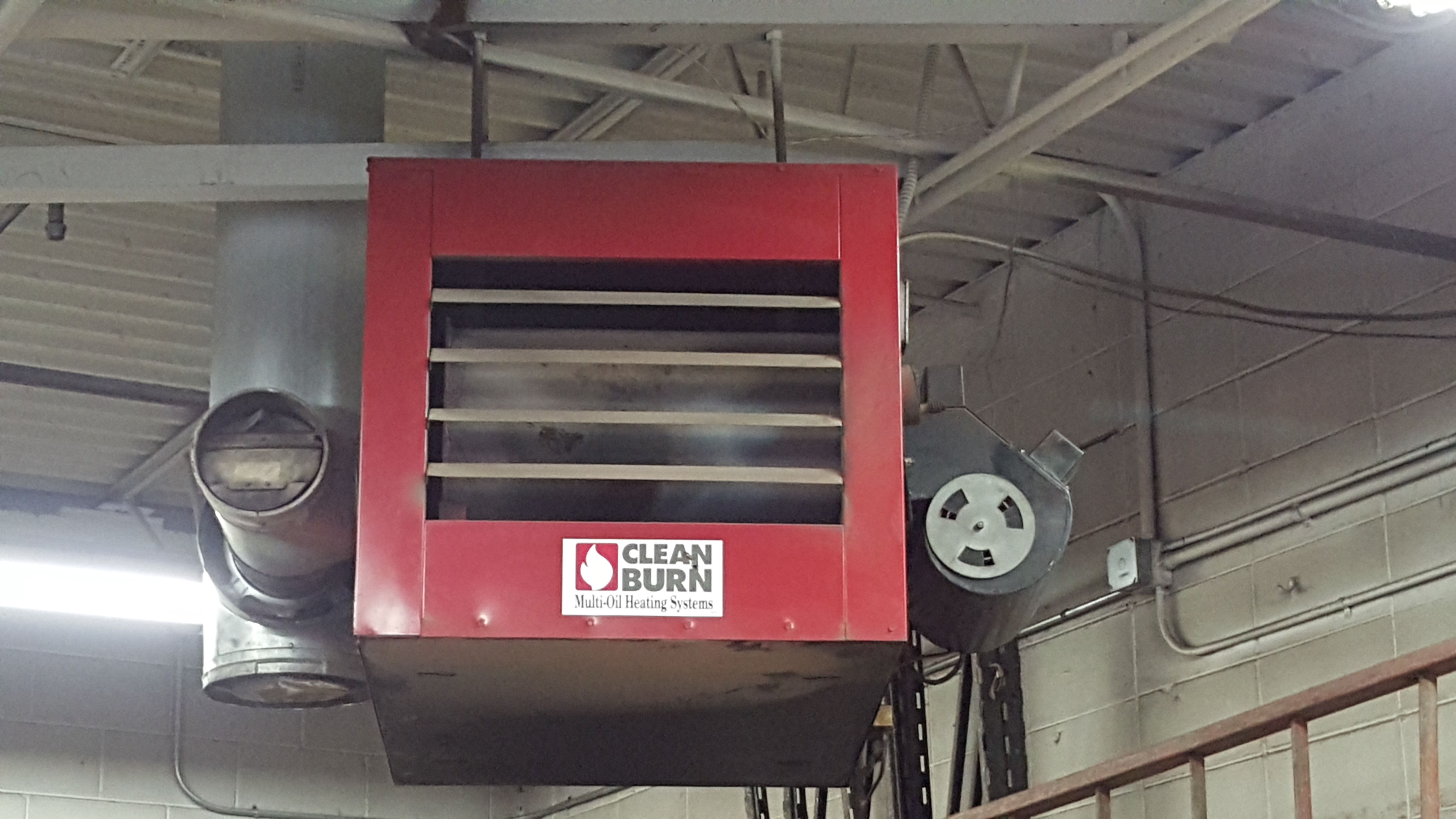
Generators may burn used oil on-site in used oil-fired space heaters provided that:Space heater in shop burning used oil

  • The heater burns only used oil that the owner or operator generates or used oil received from household do-it-yourself used oil generators.
  • The heater is designed to have a maximum capacity of not more than 0.5 million Btu per hour.
  • The combustion gases from the heater are vented outside the building, i.e. “to ambient air”.
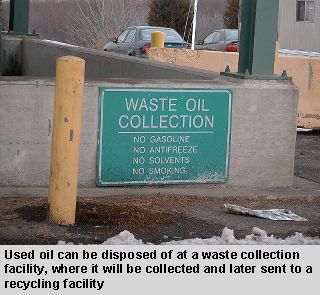
Used oil collection center
Free disposal – by recycling or fuel blending – of your used oil

Generators may self-transport – without an EPA identification number – small amounts of used oil to approved collection centers provided that:

  • The used oil is generated at the generator’s site or collected from household do-it-yourselfers.
  • The generator transports the used oil in a vehicle owned by the generator or owned by an employee of the generator.
  • The generator transports no more than 55 gallons of used oil at any one time.

And…

  • The generator transports the used oil to a used oil collection center that is registered, licensed, permitted, or recognized by a state/county/municipal government to manage used oil.

Household “do-it-yourselfer” used oil means oil that is derived from households, such as used oil generated by individuals who generate used oil through the maintenance of their personal vehicles.

Like this article?

Subscribe to my Monthly Newsletter

No marketing emails!

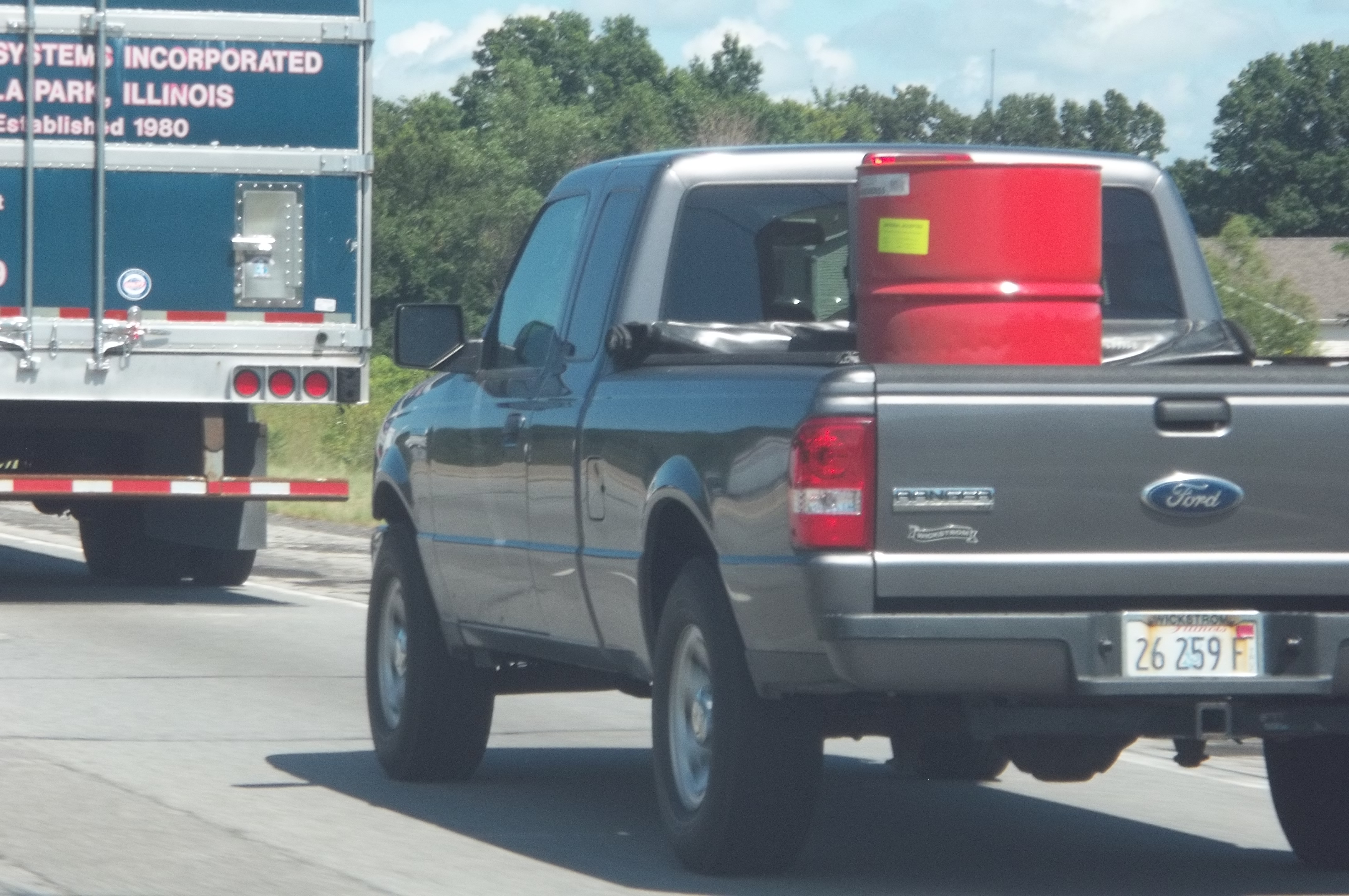
Generators may self-transport – without an EPA identification number – small amounts of used oil to aggregation points owned by the generator provided that:

  • The used oil is generated at the generator’s site only, no household do-it-yourselfers.
  • The generator transports the used oil in a vehicle owned by the generator or owned by an employee of the generator.
  • The generator transports no more than 55 gallons of used oil at any one time.Self-transport of used oil

And…

  • The generator transports the used oil to a property that is owned and/or operated by the generator.

Generators may arrange for used oil to be transported by a third party transporter – without an EPA identification number – provided that:

  • The used oil is reclaimed under a contractual agreement known as a “tolling arrangement”
  • Under the tolling arrangement, reclaimed oil is returned by the processor/re-refiner to the generator for use as a lubricant, cutting oil, or coolant.
  • The processor/rerefiner must own and operate the vehicles used to transport the used oil to and from the generator.
  • The tolling arrangement must indicate:
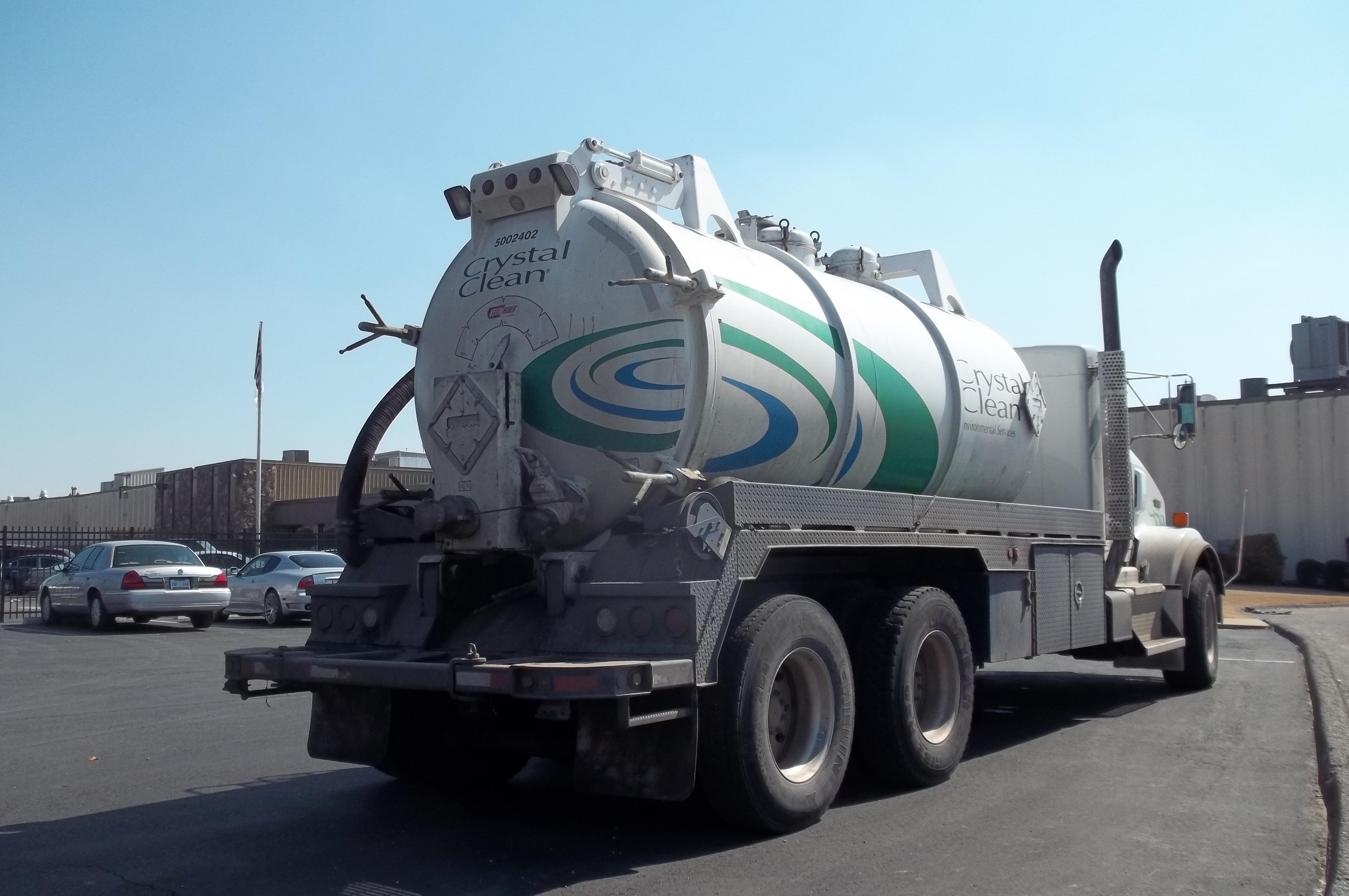
    Used oil in cargo tank truck
    In a Tolling Arrangement, the transporter of the used oil & processed/rerefined oil must be the processor/rerefiner
    • The type of used oil.
    • The frequency of shipments.
    • Owner and operator of the vehicle used to transport the used oil to the processing/re-refining facility and to deliver recycled used oil back to the generator.  As noted above, this must be the processor/rerefiner.
    • That reclaimed oil will be returned to the generator.

Contact me with any questions you may have about the generation, identification, management, and disposal of hazardous waste, universal waste, and used oil

Daniels Training Services

815.821.1550

Info@DanielsTraining.com

https://danielstraining.com/

Mixtures of some hazardous waste and used oil may be managed as a used oil provided that (Part 1):

Mixtures of some hazardous waste and used oil may be managed as a used oil provided that (Part 2):

  • Both the used oil and the hazardous waste are from the same generator.
  • The hazardous waste exhibits any characteristic of a hazardous waste.  i.e. Ignitability, Corrosivity, Reactivity, and/or Toxicity.
  • The resulting mixture does not exhibit any hazardous waste characteristic.
  • Read more about mixtures of used oil and hazardous waste.

Mixtures of some hazardous waste and used oil may be managed as a used oil provided that (Part 3):

Mixtures of some hazardous waste and used oil may be managed as a used oil provided that (Part 4):

Not sure of your hazardous waste generator status?

Take this short survey

Man with fuel hoseGenerators may mix used oil and diesel fuel provided that:

  • Used oil and diesel fuel are mixed on-site.
  • Used oil and diesel fuel are mixed by the generator of the used oil.
  • Mixture of used oil and diesel fuel is for use in generator’s own vehicles.
  • Prior to mixing, used oil must be managed as a used oil subject to the Standards for Used Oil Generators at 40 CFR 279, Subpart C.

Stated succinctly at 40 CFR 279.10(d), a mixture of used oil and diesel fuel is no longer subject to the used oil regulations after mixing and is essentially the same as product.

(d) Mixtures of used oil with products. (1) Except as provided in paragraph (d)(2) of this section, mixtures of used oil and fuels or other fuel products are subject to regulation as used oil under this part.

(2) Mixtures of used oil and diesel fuel mixed on-site by the generator of the used oil for use in the generator’s own vehicles are not subject to this part once the used oil and diesel fuel have been mixed. Prior to mixing, the used oil is subject to the requirements of subpart C of this part.

While the mixing must take place on-site, their is no indication that the vehicle use is limited to on-site.

The used oil standard provides for several options instead of simple on-site storage and off-site recycling.  Again, I caution:  This information is based on the Federal EPA regulations at 40 CFR 279.  Your state may have more strict regulations for its management of used oil. Check with your state environmental agency before using any of these options.

Daniels Training Services

815.821.1550

Info@DanielsTraining.com

https://danielstraining.com/

Oklahoma Generator Regulations for Hazardous Waste, Universal Waste, Used Oil, and Non-Hazardous Waste

A summary of the state regulations of Oklahoma pertaining to the management of hazardous waste, universal waste, used oil, and non-hazardous waste.

Disclaimer:

This information is provided as guidance only.  Do not use to determine compliance with either State or Federal Regulations.

State Environmental Agency:

The Oklahoma Department of Environmental Quality (ODEQ) is authorized by the USEPA to manage the regulations of the Resource Conservation and Recovery Act (RCRA) in Oklahoma.

Logo for the Oklahoma Department of Environmental Quality

The Regulations:

State regulations for the management of hazardous waste are found in Title 252, Chapter 205 of the Oklahoma Administrative Code.

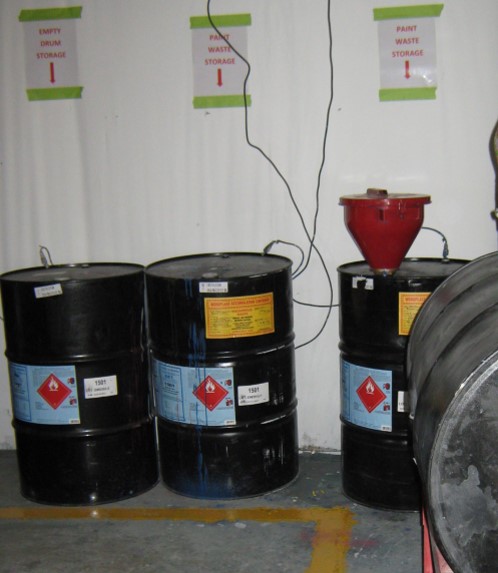
Correct Management of Hazardous Waste ContainersHazardous Waste Generator Status:

Oklahoma has adopted the Federal Rules for the definition of hazardous waste generator status:

  • Generate ≥1,000 kg/mo hazardous waste or >1 kg/mo acute hazardous waste or >100 kg/mo acute hazardous waste spill residue or soil = Large Quantity Generator of hazardous waste (LQG).
  • Generate >100 but <1,000 kg/mo hazardous waste = Small Quantity Generator of hazardous waste (SQG).
  • Generate ≤100 kg/mo hazardous waste and ≤1 kg/mo acute hazardous waste and ≤100 kg/mo acute hazardous waste spill residue or soil = Conditionally Exempt Small Quantity Generator of hazardous waste (CESQG).

Not sure of your hazardous waste generator status?

Take this short survey

Facility Identification Number:

A Large Quantity Generator of hazardous waste and a Small Quantity Generator of hazardous waste in Oklahoma must have a twelve-digit USEPA identification number assigned by the ODEQ.  CESQGs that voluntarily obtain an EPA ID Number will enter the ODEQ’s inspectable universe.

Facilities with an EPA ID Number must pay an annual monitoring fee.  The monitoring fee covers the year in which the invoice is issued. For example, the 2015 invoices were mailed in late December, 2014 with their delivery anticipated in early 2015.

Oklahoma does not have state identification numbers for hazardous waste generators.

Universal Waste:

ODEQ has adopted the Federal Rule for the identification and management of universal waste.

  • Four (4) potential hazardous wastes may be managed as universal waste:
    • Lamps
    • Batteries
    • Mercury-containing devices
    • Recalled or cancelled pesticides
  • Four (4) types of universal waste facilities:
    • Small Quantity Universal Waste Handler
    • Large Quantity Universal Waste Handler
    • Universal Waste Destination Facility
    • Universal Waste Transporter
  • Universal waste may be accumulated on-site for no more than one year.  However, universal waste may be accumulated on-site for longer than one year if the universal waste handler can document the need for additional storage time, e.g. single container of universal waste is not yet full.
  • Universal Waste Handler must provide training for employees applicable to handler status.
    • Small Quantity Handler must “inform” employees who work with or around universal waste how to manage it in compliance with the regulations and how to respond to a universal waste spill, leak, or emergency.
    • Large Quantity Handler must “ensure” all employees who work with or around universal waste are “thoroughly familiar” with how to manage it in compliance with the regulations and how to respond to a universal waste spill, leak, or emergency.
  • Deliberate crushing of universal waste lamps precludes their management as universal waste and requires their management as a hazardous waste.

Like this article?

Subscribe to my Monthly Newsletter

No marketing emails!

Used Oil:

ODEQ has adopted the Federal Rule for the identification and management of used oil.

  • Definition of used oil:
    • Petroleum-based or synthetic.
    • Used and contaminated by that use.
    • Destined for fuel-blending or recycling.
    • Cannot be contaminated with a listed hazardous waste.  Be especially cautious with any potential exposure to chlorinated solvents.
  • Management of used oil:
    • No on-site accumulation time limit.
    • May be accumulated in tanks or containers.
    • Tanks or containers must be labeled “Used Oil”.
    • Spills and leaks cleaned up immediately.
    • Cannot use for dust suppression.
    • May self-transport ≤55 gallons at a time in company owned vehicles to a registered collection site or another location owned by the generator.
    • Transporters of used oil (other than excluded self-transport described above) must have a USEPA Identification Number.
  • Used oil filters should be hot-drained to where they are completely free of liquids.  They then may be recycled as scrap metal.  Federal exclusion from regulation for non-terne plated used oil filters.

Training of Facility Personnel:

Hazardous Waste Personnel Training and the CESQG

Oklahoma has adopted the Federal rule for an employer’s responsibility to provide training for all Hazardous Waste Personnel (aka:  Facility Personnel).

  • LQG RCRA Training – Initial training (w/i 6 months) and annual review.  See below for a more thorough description of the RCRA Training requirements for Facility Personnel of an LQG.
  • SQG RCRA Training – Ensure all employees are “thoroughly familiar” with how to handle hazardous waste and how to respond to a hazardous waste emergency.
    • The ODEQ has a more strict interpretation of the Federal regulations when it comes to Hazardous Waste Personnel Training at an SQG.  The text below is from an ODEQ Power Point slide from the Hazardous Waste Small Quantity Generator Seminar:

SQGs are required to perform training for all employees who are involved with hazardous waste.  Involvement includes:

  • Handling of the waste (from generation point to the container).
  • Management of the waste (managing the container).
  • Manifesting the waste (the person who signs the manifest and the person who maintains the manifest).
  • Emergency or Contingency Plan (all employees should know the Emergency Coordinator and what to do in emergency events)

Handlers of universal waste have responsibility for some form of training as well.  Refer to the Universal Waste portion of this document.

Training requirements for the Facility Personnel of a Large Quantity Generator of hazardous waste:

  • All Facility Personnel must be trained on the management of hazardous waste in a way that teaches them how to do their job in compliance with State and Federal regulations.
  • Training program may be classroom instruction or on-the-job training or a combination of the two.
  • Employer must ensure that the training program includes all the elements the training records indicate were addressed during training. In other words:  “Say what you do.  Do what you say!”
  • Training program must be directed by a person trained in hazardous waste management procedures.
  • Training program must include instruction which teaches Facility Personnel what they need to know in order to perform their job duties in compliance with State and Federal hazardous waste regulations. This includes responding to a hazardous waste emergency as described in the facility’s RCRA Contingency Plan.
  • At a minimum, the training program must ensure that Facility Personnel are able to respond effectively to emergencies.
  • Training must familiarize Facility Personnel with emergency procedures, emergency equipment, and emergency systems including where applicable:
    • Procedures for using, inspecting, repairing, and replacing emergency and monitoring equipment.
    • Key parameters for automatic waste feed cut-off systems.
    • Communications or alarm systems.
    • Response to fires or explosions.
    • Shutdown of operations.
  • Facility Personnel must successfully complete the program required within six months after the date of their employment or assignment or to a new position.
  • Untrained Facility Personnel must be directly supervised by trained and knowledgeable Facility Personnel until they receive training.
  • Facility Personnel must take part in an annual review of the initial training.

Training Services I provide for HazMat Employees & Hazardous Waste Personnel:

Onsite Training

Webinar Training

On-Line Training

Hazardous Waste Emergency Preparedness and Prevention:

ODEQ has adopted the USEPA regulations at 40 CFR 265, Subpart C Preparedness and Prevention, including:

  • The requirements of Subpart C apply to Large Quantity Generators and Small Quantity Generators of hazardous waste. They do not apply to a CESQG.
  • Facility must be maintained and operated in a manner to minimize the possibility of a fire, explosion, or unplanned release of hazardous waste or hazardous waste constituent.
  • Facility must provide the following equipment:
    • Internal emergency communication system or alarm.
    • A device capable of summoning emergency assistance from external agencies.
    • Fire suppression equipment.
    • Spill control equipment.
    • Decontamination equipment.
    • Water at adequate volume to supply fire suppression system.
  • All equipment must be tested and maintained as necessary.
  • Facility must ensure immediate access to emergency communication or alarm systems.
  • Facility must provide adequate aisle space to allow for unobstructed movement of personnel and equipment to any area of the facility in an emergency.
  • Facility must designate its primary external emergency response agencies.
  • Facility must attempt to familiarize external emergency response agencies with the layout of its facility, the potential hazards, and other emergency response information.

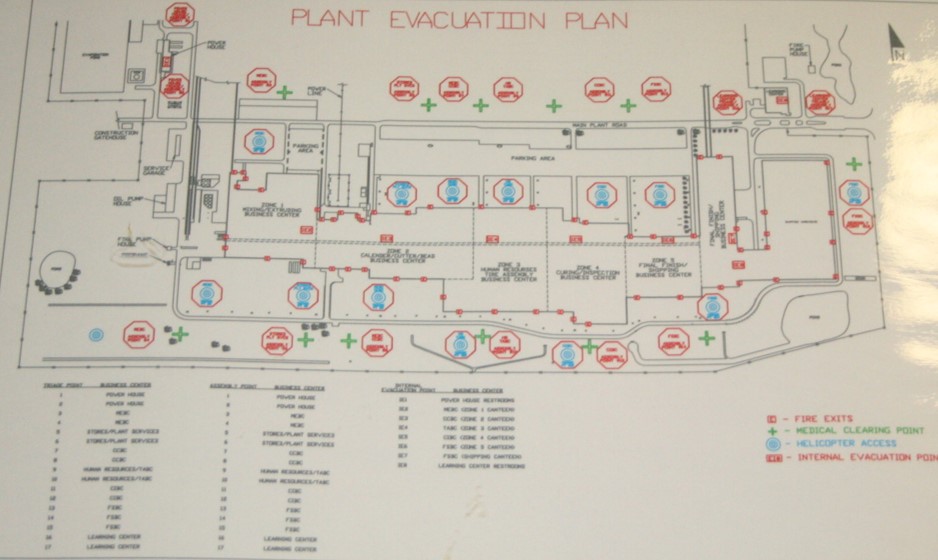
Contingency Plan and Emergency Procedures:Plant Evacuation Plan

ODEQ follows the Federal rule at 40 CFR 265, Subpart D Contingency Plan and Emergency Procedures, including:

  • The requirements of Subpart D apply to a Large Quantity Generator of hazardous waste, but not to a Small Quantity Generator or a CESQG.
  • Facility must have a documented contingency plan designed to minimize hazards to human health and the environment from a fire, explosion, or unplanned release of a hazardous waste.
  • Contingency Plan to include:
    • Description of actions facility personnel will take in the event of an emergency.
    • Arrangements to respond in an emergency agreed to by state and local emergency response agencies.
    • Name and address – office and home – of emergency coordinators.
    • List of all emergency equipment at the facility including its location, a physical description, and its capabilities.
    • Facility evacuation plan.
  • Contingency plan may be combined with other emergency response plans at the facility such as the Spill Prevention Control and Countermeasure (SPCC) Plan required for certain facilities by the Clean Water Act, and many others. This combined plan is known as the Integrated Contingency Plan or “One Plan”.
  • A copy of the contingency plan must be maintained at the facility and copies provided to local emergency response agencies.
  • Contingency plan must be reviewed and immediately amended if the facility changes, the regulations changes, or the plan fails in an emergency.
  • At least one facility employee must function as the emergency coordinator.
  • Responsibilities of the emergency coordinator:
    • Activate internal alarms or communication system.
    • Notify state or local agencies as necessary.
    • Identify the nature of any emergency.
    • Assess possible hazards to human health or the environment.
    • Make external notifications to local, state, and Federal agencies depending on the nature of the emergency.
    • Ensure the emergency does not spread or recur.
    • Monitor operations that may shut-down during the emergency to ensure there are no leaks, pressure build-ups, etc.
    • After the emergency, provide for disposal of any waste.
    • Ensure no incompatible material enters the contaminated area.
    • Ensure all emergency response equipment is restored to a useable condition.
    • Note in the operating record relevant information about the incident.
    • Submit a written report about the incident to the ODEQ within 15 days.

Reporting of Spills, Releases and Emergencies:

ODEQ spill reporting hotline is (800) 522-0206

Uniform Hazardous Waste Manifest:

USEPA requires the use of the Uniform Hazardous Waste Manifest for both large quantity generators and small quantity generators of hazardous waste – but not CESQGs – without regard for state regulations.  It is the responsibility of the generator of the waste to ensure the manifest is obtained from a registered printer.

The Exception Report:

  • A Large Quantity Generator of hazardous waste must contact the initial transporter or the Designated Facility identified on the Uniform Hazardous Waste Manifest if he has not received a copy of the manifest signed by the Designated Facility within 35 days of the date the manifest was accepted – and signed – by the initial transporter.
  • An LQG must submit an Exception Report to the ODEQ if he has not received a copy of the manifest signed by the Designated Facility within 45 days of the date the manifest was accepted – and signed – by the initial transporter.
  • A Small Quantity Generator of hazardous waste must submit a legible copy of the manifest with some indication he has not received confirmation of delivery to the ODEQ if he has not received a copy of the manifest signed by the Designated Facility within 45 days of the date the manifest was accepted – and signed – by the initial transporter.

The Waste Minimization Statement:

  • Reference is made to the Waste Minimization Statement (40 CFR 262.27) in the Generator’s/Offeror’s Certification in Section 15 of the Uniform Hazardous Waste Manifest. It reads:   “I certify that the waste minimization statement identified in 40 CFR 262.27(a) (If I am a large quantity generator) or (b) (if I am a small quantity generator) is true.”
  • The Waste Minimization Statement for a Large Quantity Generator of hazardous waste reads: “I am a large quantity generator. I have a program in place to reduce the volume and toxicity of waste generated to the degree I have determined to be economically practicable and I have selected the practicable method of treatment, storage, or disposal currently available to me which minimizes the present and future threat to human health and the environment;”
  • The Waste Minimization Statement for a Small Quantity Generator of hazardous waste reads: “I am a small quantity generator. I have made a good faith effort to minimize my waste generation and select the best waste management method that is available to me and that I can afford.”

Oklahoma does not have any state-specific requirements related to the management of the Uniform Hazardous Waste Manifest:

  • No state-specific waste codes.
  • Oklahoma does not require copies of manifests be submitted to the ODEQ regardless of whether the waste originates or is disposed of in the state. The only exceptions are when the shipment is an international shipment or the ODEQ is the generator of the waste.  Mailing address for ODEQ:

Oklahoma Department of Environmental Quality

Land Protection Division

PO Box 1677

Oklahoma City, OK 73101-1677

  • ODEQ no longer requires the disposal plan number on manifests. The regulations were amended to remove this requirement in conformance with the federal uniform hazardous waste manifest regulations.

Reporting:

Facilities are required to submit an Initial Notification of Regulated Waste Activity Form (Federal Form 8700-12) prior to beginning any of the following activities:

  • Large Quantity Generator or Small Quantity Generator of hazardous waste.
  • Hazardous waste transporter or transfer facility.
  • Hazardous Waste Treatment, Storage, or Disposal Facility.
  • Large Quantity Handler or Destination Facility for universal waste.
  • Hazardous waste recycler.
  • Transport, process, or re-refine used oil; burn off-spec used oil for energy recovery; or market used oil.
  • Eligible academic entity opting into 40 CFR 262, Subpart K.
  • Managing a hazardous secondary material.

Facilities are required to submit a Subsequent Notification of Regulated Waste Activity Form (Federal Form 8700-12) for any of the following activities:

  • Change to site contact or ownership.
  • Change to type of RCRA Subtitle C activity conducted.
  • An eligible academic entity opting into or out of regs for managing lab hazardous wastes at 40 CFR 262, Subpart K.
  • Change to management of hazardous secondary material.

Provisional numbers (for emergency situations and one-time events) that are good for one year can be obtained by contacting OK DEQ at (405) 702-5100. These numbers can be assigned at the time of the telephone call. Information needed to assign the provisional number is the name of the generator and location where the waste is generated. The location must have a street address or distance from a highway intersection in addition to the city and county. If the location is in a rural area, use the name of the nearest town.

Large Quantity Generators of hazardous waste (not SQGs or CESQGs) must submit the Biennial Hazardous Waste Report by March 1st of every even-numbered year for the previous calendar year.

Oklahoma large quantity generators are required to submit a quarterly report summarizing wastes generated in a given calendar quarter (OAC 252:205-5-3).  Treatment Storage and Disposal Facilities are required to submit a monthly report summarizing wastes treated, stored or disposed of each month (OAC 252:205-9-2).  To correct errors on reports already submitted to DEQ, an LQG or TSDF must make a copy of the report submitted, mark it revised, add the corrections and mark the corrections as revised.

Oklahoma has no reporting requirements for small quantity generators nor conditionally exempt small quantity generators unless they become large quantity generators.

ODEQ requires a Disposal Plan for in-state large quantity generators and out-of-state LQGs that dispose of their hazardous waste in Oklahoma TSDFs.  This includes SQGs, CESQGs, and non-generators of waste if they generate above LQG threshold quantity hazardous waste due to a spill or cleanup of historical waste.  Only wastes defined as hazardous wastes by federal regulations (40 CFR 260-277) need to be included on a Disposal Plan. Nonhazardous waste identified on a Disposal Plan must comply with all hazardous waste regulations.

To obtain a Disposal Plan, facilities must submit an application with the required information (see below) and pay a fee.  Approval by the ODEQ is typically less than five days.  Emergency approvals can be obtained in as little as a few hours.  One Time Disposal Plans expire automatically after one year from the date the plan originated. Continuous disposal plans must renewed annually.  Invoices are mailed the month before the anniversary date

Required information on the Disposal Plan application:

  • EPA ID Number.
  • Basic facility information: company name, mailing and site address, contact person information.
  • Detailed waste description: waste common name, USEPA waste code, estimated amount of waste produced (not binding), Physical characteristics (solid, liquid, etc.), chemical characteristics (flash point, pH, etc.).  A USDOT Shipping Description is usually too vague to accurately describe a particular waste stream and should not be used for required waste common name.
  • Process generating waste, e.g.: soil remediation, paint boot operations, TSDF consolidation, etc.
  • Treatment Storage and Disposal Facility information: EPA ID Number , name and address.
  • Signature of plant contact. The Disposal Plan may not be signed a broker or consultant of the facility.

Recordkeeping:

ODEQ has adopted the Federal rule for recordkeeping of documents demonstrating compliance with the RCRA regulations.  Read  the Federal Rule for maintaining records of RCRA documents.  In general, an LQG or SQG must maintain copies of documents as a record for three years from its effective date.

On-Site Management of Hazardous Waste in Containers:Hazardous waste container in poor condition

  • Containers in good condition
  • Containers compatible with contents.
  • Containers kept closed except when adding or removing hazardous waste.
  • Hazardous waste or hazardous waste residue must not be present on the outside of the container.
  • Containers must be labeled:
    • “Hazardous Waste”
    • Date of initial accumulation (unless managed in a Satellite Accumulation Area pursuant to 40 CFR 262.34(c)).

Contact me with any questions you may have about the transportation of hazardous materials or the management of hazardous waste

Daniels Training Services

815.821.1550

Info@DanielsTraining.com

https://danielstraining.com/

Satellite Accumulation of Hazardous Waste:

ODEQ has adopted the Federal Rule at 40 CFR 262.34(c):

  • Limited to containers only, no tanks.
  • Container must be at or near point of generation of hazardous waste.
  • Container must be under the control of the operator of the process generating the hazardous waste.
  • No more than 55 gallons of hazardous waste or 1 quart of acute hazardous waste in a single satellite accumulation area.
  • No limit on number of satellite accumulation areas in a facility or the aggregate volume of hazardous waste maintained in satellite accumulation areas.
  • Container must be labeled with the words “Hazardous Waste” or some other description of the container contents, eg. “Paint Waste”.
  • May have more than one container in a single satellite accumulation area.
  • May have more than one type of hazardous waste in a single satellite accumulation area.
  • When 55 gallon or 1 quart volume threshold is reached, hazardous waste container must be immediately dated.  Generator is allowed three calendar days to move the hazardous waste container from the satellite accumulation area to the central accumulation area (aka:  90/180 day accumulation area).  Once moved to the central accumulation area, the generator may re-date the container and accumulate it on-site for the number of days appropriate for their hazardous waste generator status.
  • Container in satellite accumulation area must be kept closed except when adding or removing hazardous waste.  Container must be maintained in good condition.
  • Containers in satellite accumulation areas are not subject to the following:
    • Training requirements for facility personnel, though training is still highly recommended.
    • Weekly container inspections, though recommended.
    • RCRA air emission standards of 40 CFR 265, Subpart CC.
  • Hazardous waste managed correctly in a satellite accumulation area is not subject to on-site accumulation time limits.
  • Hazardous waste managed in a satellite accumulation area continues to be counted towards a generators hazardous waste generator status.

Management of Hazardous Waste by a Conditionally Exempt Small Quantity Generator (CESQG)

ODEQ has adopted the Federal Rule at 40 CFR 261.5. In order to maintain its status as a Conditionally Exempt Small Quantity Generator of hazardous waste a CESQG must comply with the following:

  1. Complete the hazardous waste determination for all waste generated. While maintaining a record of the hazardous waste determination is not required, it is recommended.
  2. Do not accumulate ≥1,000 kg of hazardous waste on-site at one time. If so, the CESQG becomes subject to all of the requirements of a Small Quantity Generator (SQG).
  3. Treat or dispose of hazardous waste on-site or ensure delivery to an off-site treatment, storage or disposal facility. Whether on-site or off, the TSDF must be one of the following:
  • Permitted by the USEPA to manage hazardous waste.
  • Authorized by a state to manage hazardous waste if that state has an authorized hazardous waste program under RCRA. This state authorization does not require a permit.  It could include a household hazardous waste collection site that is authorized by ODEQ.
  • Permitted by a state to manage municipal solid waste.
  • Permitted by a state to manage non-municipal non-hazardous waste.
  • Beneficially uses or reuses, or legitimately recycles or reclaims its waste; or treats its waste prior to beneficial use or reuse, or legitimate recycling or reclamation.
  • For universal waste, a universal waste handler or destination facility subject to the requirements of part 273 of this chapter.

Management of Solvent-Contaminated Wipes:

conditional exclusion for solvent-contaminated wipes from both Solid Waste & Hazardous Waste became effective in the Federal regulations of the USEPA on January 31, 2014.  States with authorized hazardous waste programs have the option to adopt the regulation as is or with its own modifications or to reject the conditional exclusion entirely (Status of Solvent Wipe Conditional Exclusion in Your State).

Based on a telephone conversation with Roarke Blackwell of the ODEQ on November 18, 2015, the ODEQ has adopted the Federal Rule for the solvent-contaminated wipe exclusion.

Use of State-Certified Labs for Hazardous Waste Determination:

Lab personnel

Pursuant to a telephone conversation with Roarke Blackwell of the ODEQ, the agency does not require the use of a state-certified or approved lab for the analysis of samples for the hazardous waste determination.

Non-Hazardous Waste:

In Oklahoma, a non-hazardous industrial waste must be managed on-site in a manner that does not cause harm to the environment or create a nuisance.  In addition, non-hazardous industrial waste must be disposed of in a state-approve or RCRA permitted facility.

More information about non-hazardous industrial waste in Oklahoma can be found on the ODEQ Solid Waste Main Page.

Do you have a question about some aspect of the Oklahoma hazardous waste regulations that you don’t see here?  Please ask me.  I’m glad to help.

Daniels Training Services

815.821.1550

Info@DanielsTraining.com

https://danielstraining.com/

Sources of additional information:


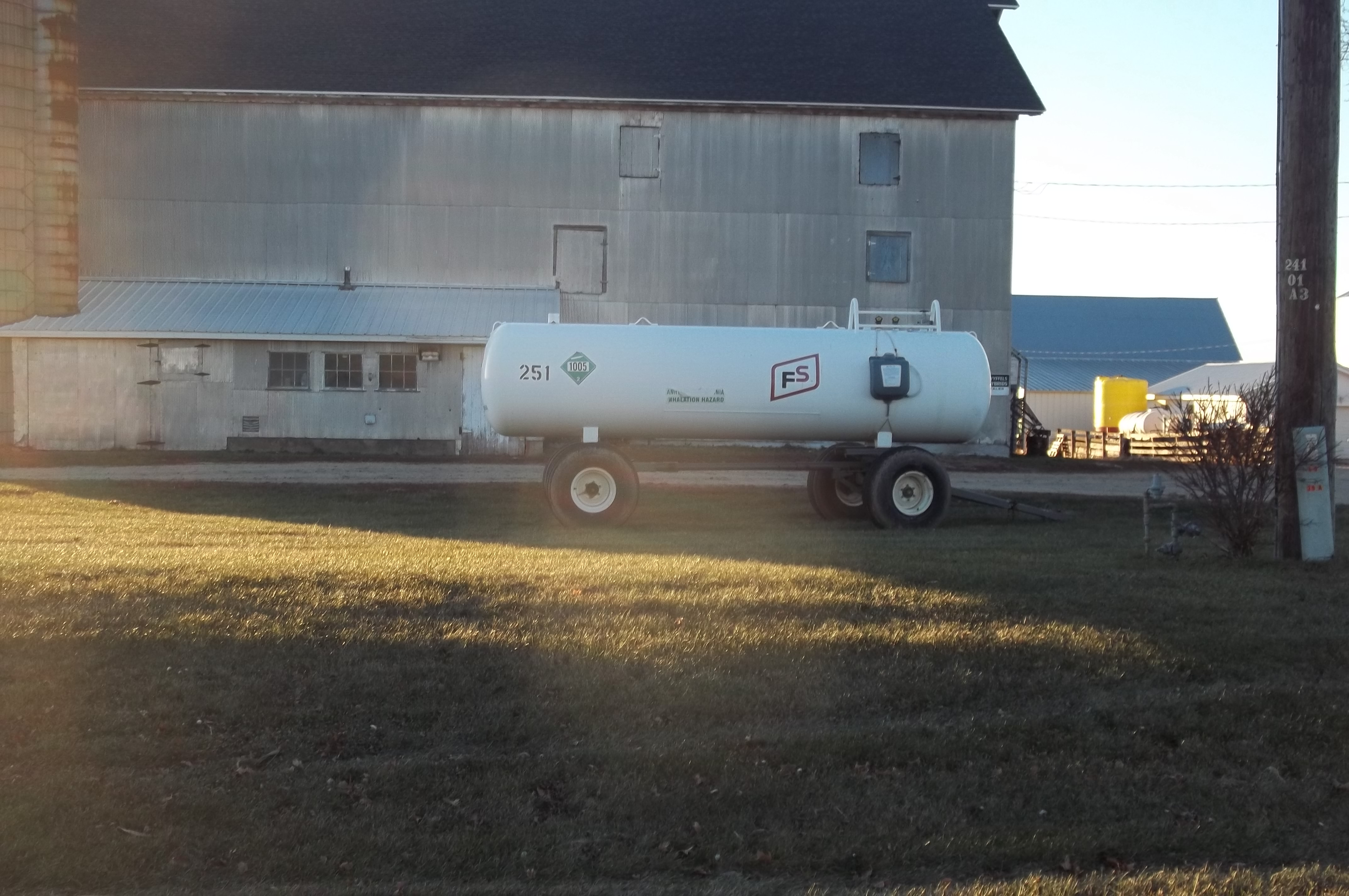
Transportation of Anhydrous Ammonia by Highway in a Nurse Tank

Farm building and anhydrous ammonia nurse tankIf you live in or near an area where farming is a significant part of the economy, then you are probably familiar with the site of a truck or tractor pulling a trailer with one or more nurse tanks of anhydrous ammonia.  The purpose of this article is to identify and explain the applicable Hazardous Material Regulations of PHMSA/USDOT for the transportation in commerce of anhydrous ammonia in nurse tanks by motor vehicle (i.e. highway). (more…)

NASA Pays $50,660 Penalty to Settle Alleged Violations of the Clean Air Act and RCRA

The Bullet:

The National Aeronautics and Space Administration has agreed to pay a $50,660 penalty to settle alleged violations of federal environmental regulations of the USEPA at the Goddard Space Flight Center, Wallops Island, VA.

Who:

United State Environmental Protection Agency – Region 3

Contact: Roy Seneca, seneca.roy@epa.gov 215-814-5567

What:

EPA cited NASA for violations of the Clean Air Act and the Resource Conservation and Recovery Act (RCRA).

As part of the settlement, NASA has neither admitted nor denied liability for the alleged violations, but has certified its compliance with applicable RCRA and Clean Air Act requirements

Where:

The alleged violations occurred at the Goddard Space Flight Center, Wallops Island, VA.

When:

Published by EPA on November 10, 2015.

No indication in the article of when the alleged violations took place or when enforcement actions began.

Why:

Violations of RCRA hazardous waste regulations cited by EPA include:

  • Requirements for labeling and dating hazardous waste containers used for waste lead solder and alcohol rags.  Hazardous waste containers must be marked with the words “Hazardous Waste” and the date of initial accumulation.
  • Inadequate packaging and labeling of universal wastes (e.g., discarded lamps that may contain mercury or other hazardous substances).  Read my article about universal waste.

NASA also allegedly did not comply with a Clean Air Act permit requirement to obtain a certification from its fuel supplier on the sulfur content and compliance with industry standards for fuel oil used at the facility.

How:

The Virginia Department of Environmental Quality (VDEQ) is authorized by the USEPA to administer the hazardous waste program under RCRA in Virginia.  However, in this situation the regulations were enforced by the USEPA and not VDEQ.  Whichever Agency pursued the enforcement and whatever regulations – state or Federal – they enforced, what cannot be missed here is that a unit of the Federal government – and NASA, no less! – is subject to the same regulations, and the same penalties, as a private business.Logo for the Virginia Department of Environmental Quality

Conclusion:

The take-away from this whole matter is that a government agency – state or Federal – is subject to the regulations of the Resource Conservation and Recovery Act enforced by the USEPA or a state with an authorized hazardous waste program.

Read this article I wrote on the USEPA and USDOT definition of a “Person” or refer to the definition of a person in the Federal USEPA regulations at 40 CFR 260.10:

Person means an individual, trust, firm, joint stock company, Federal Agency, corporation (including a government corporation), partnership, association, State, municipality, commission, political subdivision of a State, or any interstate body.

Contact me with any questions you may have about the generation, identification, management, and disposal of hazardous waste

Daniels Training Services

815.821.1550

Info@DanielsTraining.com

https://danielstraining.com/

The Management of Hazardous Waste in Missouri

Generators of hazardous waste in Missouri must comply with the state-specific regulations of the Missouri Department of Natural Resources (MDNR).  As a state with an authorized hazardous waste program, MDNR may make its regulations more strict and more broad than those of the USEPA – and they have!

The media you see below is a presentation I provided to the Greater Ozarks Chapter of Hazardous Materials Managers August 16, 2013.  I only had one hour for my presentation, so what you see below is only a summary.

After you’ve viewed the presentation, please contact me with any questions you may have about the generation, management, transportation, and disposal of hazardous waste, universal waste, used oil, and non-hazardous waste in Missouri.

Some more information for hazardous waste generators in Missouri:

MDNR regulations for the accumulation of hazardous waste in Satellite Accumulation Containers

Contact me with any questions you may have about the generation, identification, management, and disposal of hazardous waste

Daniels Training Services

815.821.1550

Info@DanielsTraining.com

https://danielstraining.com/

Search Website