PO Box 1232 Freeport, IL 61032

A Different Kind Of Training

A Different Kind Of Training

A Different Kind Of Training

Two Exemptions From Universal Waste Regulations in California

California EPA Department of Toxic Substances Control Regulations
The hazardous waste regulations in California are more strict & more broad than those of the USEPA.

The Federal regulations of the USEPA at 40 CFR 273 identify four types of universal waste:

  • Lamps
  • Batteries
  • Mercury-containing equipment
  • Recalled or cancelled pesticides

States that choose to operate their own authorized hazardous waste program may retain these four, slightly revise their names and definitions, and even add to this list creating state-specific universal waste.

The California Department of Toxic Substances and Control (DTSC) regulates the management of seven (7) types of universal waste, six of them in Title 22, Division 4.5, Chapter 23 of the California Code of Regulations (CCR):

  • Batteries
  • Electronic devices
  • Mercury-containing equipment
  • Lamps
  • Cathode ray tubes
  • Cathode ray tube glass

And one more in the California Health and Safety Code (HSC) at 25201.16:

  • Aerosol cans

USEPA regulations identify four types of facilities involved in the management of universal waste:

  • Large Quantity Handler – a generator of universal waste or one who receives universal waste from other universal waste handler, accumulates universal waste, and sends universal waste to another universal waste handler, to a destination facility, or to a foreign destination and accumulates 5,000 kilograms or more of universal waste at any time.
  • Small Quantity Handler – a generator of universal waste or one who receives universal waste from other universal waste handler, accumulates universal waste, and sends universal waste to another universal waste handler, to a destination facility, or to a foreign destination and does not accumulate 5,000 kilograms or more of universal waste at any time.
  • Transporter – a person engaged in the off-site transportation of universal waste by air, rail, highway, or water.
  • Destination Facility – a facility that treats, disposes of, or recycles universal waste.

The DTSC identifies only the following regulated entities under its Universal Waste Rule:

  • Transporter – a person engaged in the off-site transportation of universal waste by air, rail, highway, or water.
  • Destination Facility – a facility that treats, disposes of, or recycles universal waste.
  • Universal Waste Handler – a generator of universal waste or one who receives universal waste from other universal waste handler, accumulates universal waste, and sends universal waste to another universal waste handler, to a destination facility, or to a foreign destination.

Contact me with any questions you may have about the generation, identification, management, and disposal of hazardous waste

Daniels Training Services

815.821.1550

Info@DanielsTraining.com

https://danielstraining.com/

Note that the DTSC does not identify a Small Quantity Handler nor a Large Quantity Handler of universal waste.  It does, however, identify two different types of “generators” which are included in the definition of a universal waste handler:

  • Conditionally Exempt Small Quantity Universal Waste Generator (CESQUWG)

and…

  • Household (aka Household Universal Waste Generator)
CESQUWG:
A RCRA hazardous waste is a waste that matches the Federal USEPA criteria for a listed or characteristic hazardous waste.
Household:
  • Single detached residence or a single unit of a multiple residence unit and all structures belonging to the household.
  • California Best Western hotel
    This California hotel is not a “household” for the purposes of the Universal Waste Rule.

    It does not include a hotel, motel, bunkhouse, ranger station, crew quarters, campground, picnic ground, or day-use recreation facility.
DTSC specifically excludes hotel, motel, bunkhouse, ranger station, crew quarters, campground, picnic ground, or day-use recreation facility from the definition of a household because those sites are included in the Federal USEPA Household Hazardous Waste Exclusion at 40 CFR 261.4(b)(1).

These two types of a universal waste handler are important because they are both subject to an exemption (at 66273.8, Title 22 of the CCR) from full regulation as a universal waste handler; in other words, they don’t have to comply with all of the regulations that a non-exempt universal waste handler must.  Though these exemptions are addressed separately in the CCR, the conditions to which each generator is subject are the same.  Therefore, the conditions required to comply with either the household universal waste generator exemption or the conditionally exempt small quantity universal waste generator exemption are described below.

  • The generator must not dispose of the universal waste.
  • The universal waste is relinquished to one of the following:
    • Another universal waste handler.
    • A universal waste transporter (e.g. for curbside collection).
    • A destination facility.
    • An authorized curbside household hazardous waste collection program.
  • Generator does not treat the universal waste, except as summarized below.  Allowed treatment of universal waste by an exempt generator includes:
    • Sorting batteries by type.
    • Mixing battery types in one container.
    • Discharging batteries to remove charge.
    • Regenerating used batteries.
    • Disassembling batteries or battery packs into individual batteries or cells.
    • Removing batteries from consumer products.
    • Removing electrolyte from batteries.
    • Remove a lamp from a product or structure.
    • A CESQUWG may remove mercury batteries from mercury-added novelties.
    • Any other treatment of a mercury-containing device, such as remove ampules and mercury switches, drain pressure or vacuum gauges containing mercury, must comply with universal waste handler treatment requirements of §66273.70 -§66273.77 and the applicable management requirements for that mercury-containing equipment.
    • Remove discrete assemblies (e.g. batteries, ink cartridges) from electronic devices which are typically removed for replacement during normal operation.
    • Remove CRTs from electronic devices in a manner that prevents breakage of CRT.
    • Dismantle or otherwise manually segregate components (e.g. circuit boards, integrated circuits, metals, plastic, wiring, batteries, lamps, &etc.) from an electronic device.
    • Remove the yoke from a CRT without breaking the CRT glass.
Each of the above allowed treatment comes with their own conditions that must be complied with in order to conduct the activity.
  • Any material produced from treatment of universal waste are properly classified and managed according to DTSC regulations.

And that’s it!  A household universal waste generator or CESQUWG need only ensure proper off-site disposal of their universal waste, take some basic precautions for it’s on-site management, and comply with the requirements for its treatment if they choose that option.

Daniels Training Services

815.821.1550

Info@DanielsTraining.com

https://danielstraining.com/

What, then, is a household universal waste generator or a CESQUWG exempt from?  Well, a brief list of the requirements of a universal waste handler includes:

  • Immediately contain all releases of universal waste and determine if the release is a hazardous waste and manage appropriately.
  • Label and mark universal waste containers.
  • Obtain an EPA Identification number (unless already have one) if accumulate 5,000 kg or more on-site at any time.
  • Accumulate universal waste on-site for no more than one year.
  • Demonstrate amount of time universal waste has been on-site.
  • Universal waste must be shipped only to another universal waste handler, a destination facility, or a foreign destination.
  • Off-site shipments of universal waste need not be described on a Uniform Hazardous Waste Manifest but some form of record must be kept of all shipments received or shipped off-site.
  • Train all personnel who manage universal waste.
  • Notify DTSC 30 days prior if intend to accept and accumulate universal waste CRTs, CRT glass or electronic devices from off-site sources.
  • Submit annual report by February 1 for previous calendar year if accept >100 kg of CRTs, CRT glass, or electronic devices from off-site locations or generate 5,000 kg or more of CRTs, CRT glass, or electronic devices in a calendar year.
  • Other on-site management requirements specific to each type of universal waste.

The pictures below are not a violation for a CESQUWG in California:

Question:

Are universal waste aerosol cans subject to the exemptions of 22 CCR 66273.8?

Answer:
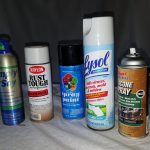
Aerosol cans
Aerosol cans, even those generated by a household, are subject to full regulation under the California Universal Waste Rule.

No.  HSC 25201.16(d)(2) makes it clear, “The exemptions described in Chapter 23 (commencing with Section 66273.1) of Division 4.5 of Title 22 of the California Code of Regulations for universal waste generated by households and conditionally exempt small quantity universal waste generators of universal waste do not apply to universal waste aerosol cans.”

Generators of hazardous waste in California have many incentives to manage their hazardous waste under the universal waste option.  One is this:

Effective January 1, 2016 universal waste is no longer required to be included when determining the status of a hazardous waste generator.  View the DTSC’s rescinded letter of interpretation which had required universal waste to be included when determining hazardous waste generator status.

Please contact me if you have any questions about the Universal Waste Rule in California or the training you must provide for personnel who manage universal waste at your facility.

Daniels Training Services

815.821.1550

Info@DanielsTraining.com

https://danielstraining.com/


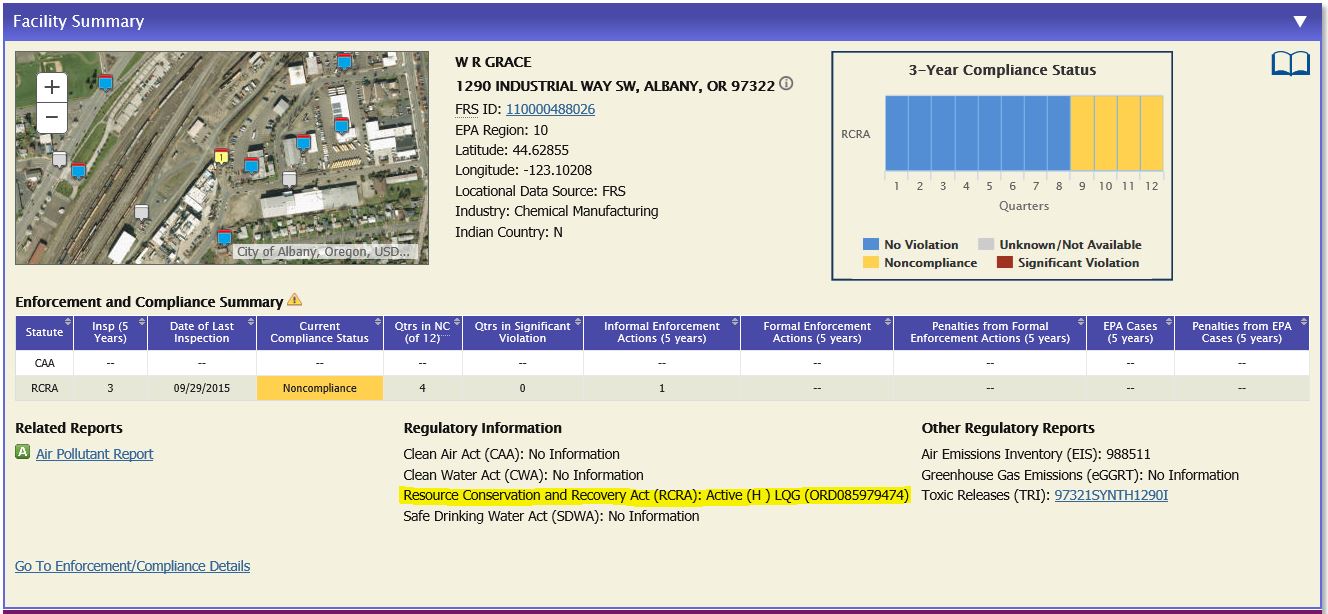
USEPA ECHO database information for W.R. Grace facility in Albany, OF

Oregon DEQ Fines W.R. Grace & Co. $6,600 for Hazardous Waste Transport Violations

The Bullet:

The Oregon Department of Environmental Quality (OR DEQ) has fined W.R. Grace & Co. $6,600 for illegally transporting hazardous waste to its Albany facility.

Who:

W.R. Grace and Company is an American chemical conglomerate based in Columbia, Maryland. Grace is divided into three business segments—Grace Catalysts Technologies, Grace Materials Technologies, and Grace Construction Products. Wikipedia

The Oregon Department of Environmental Quality is the chief regulatory agency of the government of the U.S. state of Oregon responsible for protecting and enhancing the state’s natural resources and managing sanitary and toxic waste disposal. Wikipedia

Daniels Training Services

815.821.1550

Info@DanielsTraining.com

https://danielstraining.com/

What:

The Oregon DEQ alleges that on June 10, 2015, W.R. Grace directed a hazardous waste transporter to transport hazardous waste from its warehouse in Portland, OR to its facility in Albany, OR.  The company didn’t prepare a uniform hazardous waste manifest as required by Federal USEPA (and USDOT) and state OR DEQ regulations for the transportation of hazardous waste in commerce.  The uniform hazardous waste manifest is a document that tracks a hazardous waste from “cradle-to-grave”, i.e. from the physical location of its initial generation and accumulation, through all phases of transportation – and transporters – to its destination.

Further, the W.R. Grace Albany facility is not a permitted Treatment, Storage or Disposal Facility (TSDF) of hazardous waste.  It is a violation for a generator of hazardous waste to arrange for the transport of a hazardous waste to any facility other than a permitted hazardous waste TSDF.

W.R. Grace & Co. was also cited for violating an emergency preparedness requirement by failing to maintain adequate aisle space to allow access for emergency personnel and equipment. That citation did not carry a fine.  Read more about the requirement to provide aisle space for emergency response.

Where:

The two W.R. Grace facilities involved in this alleged violation are located in Portland, OR and Albany, OR.

When:

The date of the alleged violation was June 10, 2015.

The company had until April 28 to appeal the penalty with the Oregon DEQ.

Why:

A generator of a waste – any waste not just a hazardous waste – is responsible for its “cradle-to-grave” management.  This includes its management at the point of generation, how and by whom it is transported, and to where it is transported for treatment, storage or disposal.

There are steps every hazardous waste generator should take to ensure proper “cradle-to-grave” management of its hazardous waste.  Read:  What’s a Hazardous Waste Generator to do About Cradle-to-Grave Management of its Hazardous Waste?

Federal and state agencies – in this case the Oregon DEQ – are authorized to enforce the regulations applicable to generators and transporters of hazardous waste and the hazardous waste TSDFs.

How:

The state of Oregon’s hazardous waste program is authorized by the USEPA as allowed by the Resource Conservation and Recovery Act (RCRA) of 1976.  This means that the OR DEQ is the primary management and enforcement agency for the RCRA regulations in Oregon.  OR DEQ is allowed to adopt the Federal regulations as written, revise them to fit its own needs, and make them more strict as it desires.  The one thing OR DEQ cannot do is make its version of the RCRA regulations less strict or less broad than those of the USEPA.  Therefore it is the responsibility of the OR DEQ to ensure the proper “cradle-to-grave” management of hazardous waste (and universal waste, used oil, and non-hazardous waste) within the state of Oregon.

Conclusion:

Though not mentioned in the news release, I presume the W.R. Grace facility to be either a Large Quantity Generator (LQG) or Small Quantity Generator (SQG) of hazardous waste and not a Conditionally Exempt Generator (CEG).

Though - as of this writing - USEPA and most state regulations refer to the smallest hazardous waste generator status as a Conditionally Exempt Small Quantity Generator (CESQG), the state of Oregon uses the term Conditionally Exempt Generator (CEG).

My suspicion was confirmed by a quick search on the USEPA’s website:  Enforcement and Compliance History Online (ECHO).

USEPA ECHO database information for W.R. Grace facility in Albany, OF

Why did I presume LQG or SQG?  Simply because a Conditionally Exempt Generator is not required to use the uniform hazardous waste manifest, is not required to use a hazardous waste transporter, is not required to utilize a hazardous waste TSDF for the final destination of its waste and is not subject to the Emergency Preparedness and Prevention regulations of 40 CFR 265, Subpart C.

Not sure of your hazardous waste generator status?

Take this short survey

A simple oversight:  arranging for the transport of a hazardous waste without the proper paperwork, results in serious fines for another company.  You can avoid these fines and meet the regulatory training requirements of the USDOT for HazMat Employees and those of the USEPA (and your state) for Hazardous Waste Personnel by contracting for my Onsite Training or Web-Based Training.

Daniels Training Services

815.821.1550

Info@DanielsTraining.com

https://danielstraining.com/

More Information:

View the enforcement letter: https://www.oregon.gov/deq/nr/042016graceE.pdf

To view the full news release visit http://www.oregon.gov/newsroom/Pages/NewsDetail.aspx?newsid=1079.

Contact:
Sarah Wheeler, Environmental Law Specialist, Portland, 503-229-6927,wheeler.sarah@deq.state.or.us

Susan Shewczyk, Hazardous Waste Compliance Inspector, Salem, 503- 378-5310,

Texas Commission on Environmental Quality to Host Pollution Prevention Waste Management Workshop

A business should always be looking for ways to reduce the amount of waste it generates.  Those generators that are the status of a large quantity generator or small quantity generator are subject to the requirements of the Waste Minimization Certification which mandates certain pollution prevention efforts.

Not sure of your hazardous waste generator status?
 TAKE THIS SHORT SURVEY

The state of Texas takes this one step further by including in the Texas Administrative Code a requirement for subject facilities to comply with the Pollution Prevention Planning regulations of the Texas Commission on Environmental Quality (TCEQ) at 30 TAC 335, subchapter Q.

Texas facilities subject to the Pollution Prevention Planning regulations are:

  • Large quantity generators of hazardous waste and small quantity generators of hazardous waste that submit the Annual Waste Summary.
  • All facilities that submit the Toxic Release Inventory (TRI).

I don’t intend to summarize all of the requirements of the P2 Planning regulations here.  Instead I’ll direct you to two guidance documents from the TCEQ:

Too much?  Need help?  Don’t worry, that’s what the TCEQ is here for!

TCEQ is hosting a Pollution Prevention Waste Management Workshop on September 7, 2016 at the J.J. Pickle Research Campus, The University of Texas at Austin.

You can find more information and/or register for the workshop at the TCEQ event page:  TCEQ Pollution Prevention Waste Management Workshop

What better way to learn the requirements of the P2 Planning regulations than the agency that enforces them?

Contact me with any questions you may have about the generation, identification, management, and disposal of hazardous waste

Daniels Training Services

815.821.1550

Info@DanielsTraining.com

https://danielstraining.com/

Q&A: What Training is Required in Order for a Person at an SQG to Sign the Hazardous Waste Manifest?

(1.7.16)  Sometimes it doesn’t take much of a question to get my attention:

Training required to sign shipping manifest for SQG.

My reply that same day:

If your question is if training is required for employees of an SQG who sign the hazardous waste manifest, I will try to answer that below.

Please don’t hesitate to contact me with any other questions.
Daniel Stoehr
Daniels Training Services

Contact me with any questions you may have about the generation, identification, management, and disposal of hazardous waste

Daniels Training Services

815.821.1550

Info@DanielsTraining.com

https://danielstraining.com/

And that was it.  Haven’t heard from him since.  I’d like to hear from you though, if you have a question about the transportation of hazardous materials or the management of waste (hazardous, universal, non-hazardous, & used oil).

Q&A: Is an Instructor Necessary for HazMat Employee and RCRA Training?

An email from a past customer on 1.7.16:

Does self study training comply with EPA regulations? In other words can we have our people go through the materials on their own, take quizzes, etc and comply OR does someone here have to administer (classroom)?
What I have read is that the e-learning, classroom, etc. has to be “directed” by someone qualified. Does that mean that person has to give the classes or can we buy the materials and have them e-learn?
Class room traiinng is getting harder to get people to and e-learning is a little easier as people can do it when they have time, but want to make sure it complies with EPA/DOT.
Thanks

Since this was a past customer of my Onsite Training I didn’t want to lose them to eLearning (something I don’t currently do) but I had to tell them the truth (1.7.16):

Thank you for contacting me.  I’m happy to answer your questions.

USEPA/State regulations for training of hazardous waste personnel:
  • The requirement for a initial training and an annual review apply only to a large quantity generator of hazardous waste.
  • EPA regulations at 40 CFR 265.16(a)(2) require the training program to be directed by a person who has been trained per the initial and annual requirements:  “This program must be directed by a person trained in hazardous waste management procedures.”  So, at least one person must meet the training requirements of 40 CFR 265.16 in order to provide the training for others.
  • The EPA regulations do not forbid self-study or other elearning methods nor do they require a person direct a class of trainees.
  • Your state may regulations may be more strict than the EPA regulations – e.g. the regulations in Colorado require training to be both classroom and on-the-job.

USDOT regulations for training of HazMat Employees:

All states require annual training of Facility Personnel of an LQG
Be sure your RCRA Training addresses the regulations of your state.
  • DOT does not have a requirement that the training provider be trained or experienced in any way.
  • DOT regulations do not forbid self-study or other elearning methods nor do they require a person direct a class of trainees.
In both cases the regulations place the burden of responsibility of meeting the training requirements on the employer.  So, absent of a direct regulation of how to provide the training the employer must ensure the training requirement of 40 CFR 265.16 (EPA) and 49 CFR 172, Subpart H (DOT).
 
I provide both EPA (and state) and DOT training in the following formats:
Thank you very much and please don’t hesitate to contact me with any questions.
Also, you may be interested in my Monthly Newsletter on the Hazardous Waste regulations of the USEPA and the HazMat Transportation regulations of the USDOT.
NO MARKETING EMAILS.

Q&A: Shipping Chemistry Sets in Time for Christmas

An email I received December 17, 2015 (I swear I am not making this up!):

Hi Daniel,

I have a question regarding the hazmat shipping exception: Small Quantities for Highway and Rail. I’m trying to ship an order of chemistry sets which have 8 hazardous materials:

(3 grams)   Calcium Metal                                UN1401                                4.3

(25mL)       Hydrogen Peroxide                         UN2984                                5.1

(20 grams)  Magnesium                                    UN1869                                          4.1

(25 grams)  Potassium Persulfate                     UN1492                                5.1

(1 gram)     Silver Nitrate                                  UN1493                                5.1

(15 grams)  Potassium Permanganate               UN1490                                5.1

(30 grams)  Sodium Hydroxide                          UN1823                                8

(20mL)       Sulfuric Acid                                  UN2796                                8

Each chemical is in either Packing Group II or III. To my best judgement, this falls under the Small Quantities exception. Is that correct? Also, would the class 8 materials need to be shipped separately? When I researched segregation/compatibility, class 8 was the only class that raised an issue. Any help is greatly appreciated.

(12.18.16)  I was traveling and figured that a short answer was better than no answer, so I pointed him to the applicable regulation:

I can give you a quick answer right now.

Based on the information you’ve provided, I suggest you refer to 49 CFR 173.161 for packaging instructions for chemical kits and first aid kits.

Please don’t hesitate to contact me with any other questions.
A few days later, and back in the office, I decided to see if I could be of any more help (12.22.16):
I am back in the office and have more time to discuss the above with you if you have additional questions.

Like this article?

Subscribe to my Monthly Newsletter

No marketing emails!

A little too late for Christmas but he did write me back on January 4, 2016:

Sorry for the delayed response. If I were to ship the sets using the Small Quantities for Highway and Rail method, is the package still considered hazmat? There isn’t a large price difference in shipping the sets as hazmat, I’m just curious if I need to mark them as such or not.

Thanks for the help,
My reply that day:

The packing instructions of 49 CFR 173.161 allows for the transportation of chemical kits per the Small Quantity or Excepted Quantity exceptions.  If so, they still remain a hazardous material but are excepted from most of the requirements of the hazardous material regulations, e.g. specification packaging, shipping papers, HazMat labels, HazMat Employee training (perhaps!).

I suggest you refer to 173.161.
Please don’t hesitate to contact me with any questions or if you require HazMat Employee training.

Contact me with any questions you may have about the transportation of hazardous materials by air, highway, vessel, or rail

International and Domestic

Daniels Training Services

815.821.1550

Info@DanielsTraining.com

https://danielstraining.com/

I hope that limited assistance was enough to keep me on the “Good” list.

Don’t you hesitate to contact me with any questions you may have about the transportation of chemical kits, first aid kits, or any other hazardous material.

Q&A: Using the Marine Pollutant Marking by Land and Water

Here’s a question someone posted to Hazmat101, a Yahoogroup on December 1, 2015:

To  compare notes.

  1. Are marine pollutant placards required on a truck that contains non-bulk packages on its way to the port per 49 CFR? What if the truck has placards for Flammable packages?
  2. Are marine pollutant placards required on a freight  container with non-bulk packages shipped by water from the continental  U.S. to Hawaii  under 49 CFR (not the IMDG code)? What if the freight containers has placards for Flammable packages?
  3. Are marine pollutant placards required on a freight  container with non-bulk packages shipped by water under  the IMDG code? What if the freight container has placards for Flammable packages?

Citations appreciated.

Thanks in advance.

My reply that day (I must have been in the office!):
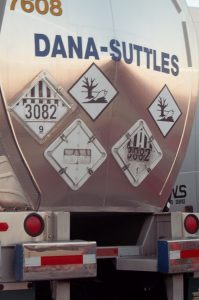
  • Just a point of clarification, the Marine Pollutant marking is not a label nor a placard even if it is the size of one or the other.  It is a marking (49 CFR 172.322).
  • Marine Pollutant MarkingThe marine pollutant marking is not required on a vehicle that is transporting non-bulk packagings by highway since per 49 CFR 171.4 the hazardous material regulations do not apply to a Marine Pollutant transported by highway (or rail or air) in a non-bulk packaging.  It might be OK to display the Marine Pollutant marking on the vehicle even if it is not required, but I am not certain.  The presence of the Flammable Liquid placard does not impact display of the Marine Pollutant marking.
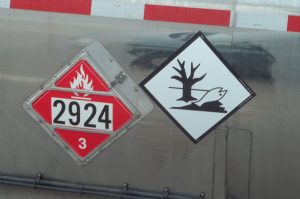
  • A non-bulk packaging of a Marine Pollutant shipped by vessel is subject to the hazardous material regulations and therefore the non-bulk packaging and the freight container must bear the Marine Pollutant marking.  Marine Pollutant marking is not required on some non-bulk packagings of less than or equal to 5 L or 5 Kg (172.322(d)), however, a freight container of non-bulk packagings that do not have the Marine Pollutant marking due to 49 CFR 172.322(d) will still need to be marked with a placard-sized Marine Pollutant marking on all four sides (172.322(c)).The presence of the Flammable Liquid placard does Marine Pollutant Marking and Class 3 Placardnot impact display of the Marine Pollutant marking.
  • IMDG code requirements are the same as USDOT/PHMSA.  Non-bulk packaging of 5 liters or less or 5 Kg or less need not display the Marine Pollutant marking (5.2.1.6).  However, the freight container they are packed in must display the Marine Pollutant marking (5.3.2.3).  The presence of the Flammable Liquid placard does not impact display of the Marine Pollutant marking.
I hope this helps.  Please don’t hesitate to contact me with any other questions.
Daniel Stoehr
Daniels Training Services

Interested in a Webinar that covers this topic, and more!

My Webinar Training Schedule

Cargo tank truck with Class 9 placards and the Marine Pollutant markingAnd a post from someone else in the group that same day as well:

PC:
-The 49CFR never calls it a placard but in 49CFR 172.322(c) it talks about a truck being labeled with the marine pollutant mark.-49CFR 171.4 As long as you are on the road and not the water marine pollutants in non-bulk packaging don’t have to follow the rules for marine pollutants.-49CFR 172.322 has rules for Marine Pollutants.

Contact me with any questions you may have about the transportation of hazardous materials by air, highway, vessel, or rail

International and Domestic

Daniels Training Services

815.821.1550

Info@DanielsTraining.com

https://danielstraining.com/

Documenting the On-Site Accumulation Time Limit for Universal Wastes

The Universal Waste Rule of the USEPA regulations at 40 CFR 273 provides a valuable option for generators of certain hazardous waste – indeed, they must be a hazardous waste in order to be eligible to be a universal waste – to manage them under a lighter regulatory burden known as universal waste.

The USEPA currently identifies four universal waste:

  • Lamps
  • Batteries
  • Mercury-containing equipment
  • Recalled or canceled pesticides
Every state with an authorized hazardous waste program has the option to add to these base four thereby creating their own state-specific universal waste.

You can read more about the identification and management of universal waste here:  The Universal Waste Option for the Management of Hazardous Waste.

The purpose of this article is to focus on just one requirement of the universal waste regulations:  The responsibility of the universal waste handler to demonstrate the number of days its universal waste has accumulated on-site. (more…)

EPA Fines Kawasaki Rail Car for Improper Storage and Handling of Hazardous Waste

EPA Inspection Found Dozens of Containers of Hazardous Wastes

The Bullet:

A company is inspected, issued a notice of violation, and settles with USEPA to avoid a long costly legal process they will likely lose.  The cost to settle is high and this doesn’t include the costs to come into compliance.

Who:

Kawasaki Rail Car, Inc. (“Kawasaki”) of Yonkers, NY

U.S. Environmental Protection Agency – Region 2

What:

As part of the agreement, Kawasaki will come into compliance with all federal hazardous waste laws and pay a $71,120 penalty.

Where:

Kawasaki’s facility is at 29 Wells Avenue in Yonkers.

When:

Announced:  April 28, 2016

Why:

No indication in the press release of the specific alleged violations, just…

EPA inspections revealed the company had generated hazardous wastes and had stored these wastes without a permit.

and…

An EPA inspection revealed several dozen containers containing waste paints and solvents, discarded gasoline and unlabeled containers of hazardous wastes. A number of containers of hazardous waste were corroded and leaking.

My best guess is that the facility is a large quantity generator of hazardous waste and accumulated hazardous waste on-site for longer than 90 days or could not prove that the hazardous had not been there longer than 90 days.  Accumulation of hazardous waste for greater than 90 days cannot be done without a permit.  The release also mentions the condition of the containers which violates 40 CFR 265, subpart I.

Not sure of your hazardous waste generator status?

 Take this short survey

How:

Though New York has an authorized hazardous waste program under RCRA, the USEPA may still conduct inspections and enforcement of Federal regulations, as is the case here.

Curious about the status of your state?  RCRA Authorization in U.S. States

Conclusion:

Unlike other enforcement actions, this one did not indicate a multi-year process of inspections, NOVs, more inspections, &etc. before the fines are finally paid.  This appears to be a fairly brief and simple story, resulting in significant costs for the business.  Costs that could have been avoided with some simple steps that include my Onsite Training services.

Contact: John Martin, (212) 637-3662, martin.johnj@epa.gov

For more information about federal hazardous waste law, visit: http://epa.gov/osw/hazard

Contact me with any questions you may have about the generation, identification, management, and disposal of hazardous waste

Daniels Training Services

815.821.1550

Info@DanielsTraining.com

https://danielstraining.com/

Michigan DEQ Launches New Drug Disposal Web Page

Training: 49 CFR 172, Subpart H and 40 CFR 265.16
Training for RCRA Personnel and HazMat Employees in Michigan

On April 29th, 2016 the Michigan Department of Environmental Quality (MDEQ) launched its new Drug Disposal Web Page for businesses and citizens of Michigan.  It includes:

  • Locations and information on drug “takeback” activities throughout the state.
  • Provides information for the healthcare industry on proper drug disposal.
  •  Drug disposal options for both households and non-households, i.e. commercial or industry.
  • Universal Waste Guidance in Michigan.  Why?  Because Michigan is one of only two states – what up Florida? – that allows disposal of pharmaceuticals as a universal waste.  View my presentation on this topic:  The Identification and Management of Universal Waste in Michigan.
Unwanted drugs should not be flushed down the drain!

More on Michigan:

Contact me with any questions you may have about the generation, identification, management, and disposal of hazardous waste

Daniels Training Services

815.821.1550

Info@DanielsTraining.com

https://danielstraining.com/

Search Website