PO Box 1232 Freeport, IL 61032

A Different Kind Of Training

A Different Kind Of Training

A Different Kind Of Training

Relief of Requirements for Periodic Tests and Inspections of Cargo Tanks and Portable Tanks within the State of Alaska

The Bullet:

Due to the ongoing Coronavirus Disease 2019 (COVID-19) public health emergency, USDOT/PHMSA and USDOT/FMCSA will not take enforcement action against any person operating a CTMV or portable tank that is not more than 90 days beyond its testing or inspection date.

Read the notice

Who:
  • The Pipeline and Hazardous Materials Safety Administration within the U.S. Department of Transportation (USDOT/PHMSA).
  • The Federal Motor Carrier Safety Administration within the U.S. Department of Transportation (USDOT/FMCSA).
  • Department of Health and Human Services (HHS).
What:

Cargo tank motor vehicles (CTMVs) and portable tanks are subject to the following requirements for periodic testing and inspection:

  • Per 49 CFR 180.407(a)(1) a CTMV may not be filled with a HazMat and offered for transportation if it has exceeded its periodic test or inspection due date as indicated in §180.407(c).
  • Per §180.605(a) a portable tank may not be returned for transportation if it has exceeded its periodic test or inspection due date as indicated in §180.605(c).

The enforcement discretion applies only to the following:

  • CTMVs and portable tanks transporting HazMat along Alaska’s state highways.
  • CTMVs / portable tanks are no more than 90 days beyond required periodic testing or inspection dates.
USDOT/PHMSA  and USDOT/FMCSA will not take enforcement action against any person operating a CTMV or portable tank that is not more than 90 days beyond its testing or inspection date, as required by 49 CFR §§ 180.407(a)(1) and (c), or 180.605(a) and (c).

To qualify for this enforcement discretion a motor carrier must complete the following:

  • CTMVs and portable tanks are not more than 90 days beyond the required periodic testing or inspection date.
  • Comply with the HMR to the maximum extent practicable.
  • Document why COVID-19 travel restrictions make compliance with the periodic testing and inspection regulations impracticable prior to operating CTMVs or portable tanks.
  • Make such documentation available for inspection by USDOT/FMCSA or USDOT/PHMSA.
Where:
  • This relief applies only to CTMVs and portable tanks transported by highway within the State of Alaska.
  • Shipments by other modes of transportation and in other states and territories of the U.S. must meet all requirements of the Hazardous Materials Regulations (HMR; 49 CFR Parts 171-180) unless relief has been provided elsewhere.

Contact me with any questions you may have about the transportation of hazardous materials by air, highway, vessel, or rail

International and Domestic

Daniels Training Services, Inc.

815.821.1550

Info@DanielsTraining.com

https://danielstraining.com/

When:
Why:

USDOT/PHMSA acknowledges the following:

  • The ongoing COVID-19 public health emergency has created travel restrictions throughout the U.S.
  • Travel restrictions within the state of Alaska and between Alaska and the contiguous 48 states have reduced the number of available inspectors.
How:

USDOT/PHMSA plays a leading role in the safe transportation of hazardous materials by all modes: highway, rail, air, & vessel. This includes the testing and inspection requirements for CMTVs and portable tanks.

Conclusion:

Yet another example of a regulatory agency providing relief from compliance with full regulations when necessary but in a very limited scope. Make certain your operations comply with all other requirements of the HMR – and the Federal Motor Carriers Safety Regulations (FMCSR) – if you are a motor carrier or a person operating a CTMV or transporting a portable tank. Contact me if you require HazMat Employee Training required by USDOT/PHMSA and Driver Training.
Off-Site Transportation of COVID-19 Waste

The COVID-19 public health emergency within the U.S. has created an unprecedented challenge for EHS professionals. One challenge: what to do with the waste generated during the testing for the coronavirus and the treatment of those with COVID-19? An earlier article (FAQ: Are wastes associated with COVID-19 a hazardous waste?) explained the status of this waste under Federal regulations of the USEPA and state regulations – primarily for its on-site management.

This article will address the regulatory requirements of the U.S. Environmental Protection Agency (USEPA), state environmental regulatory agencies, and the Pipeline and Hazardous Materials Safety Administration within the U.S. Department of Transportation (USDOT/PHMSA) for the off-site transportation of waste contaminated – or potentially contaminated – with SARS-CoV-2 (the virus that causes COVID-19). (more…)

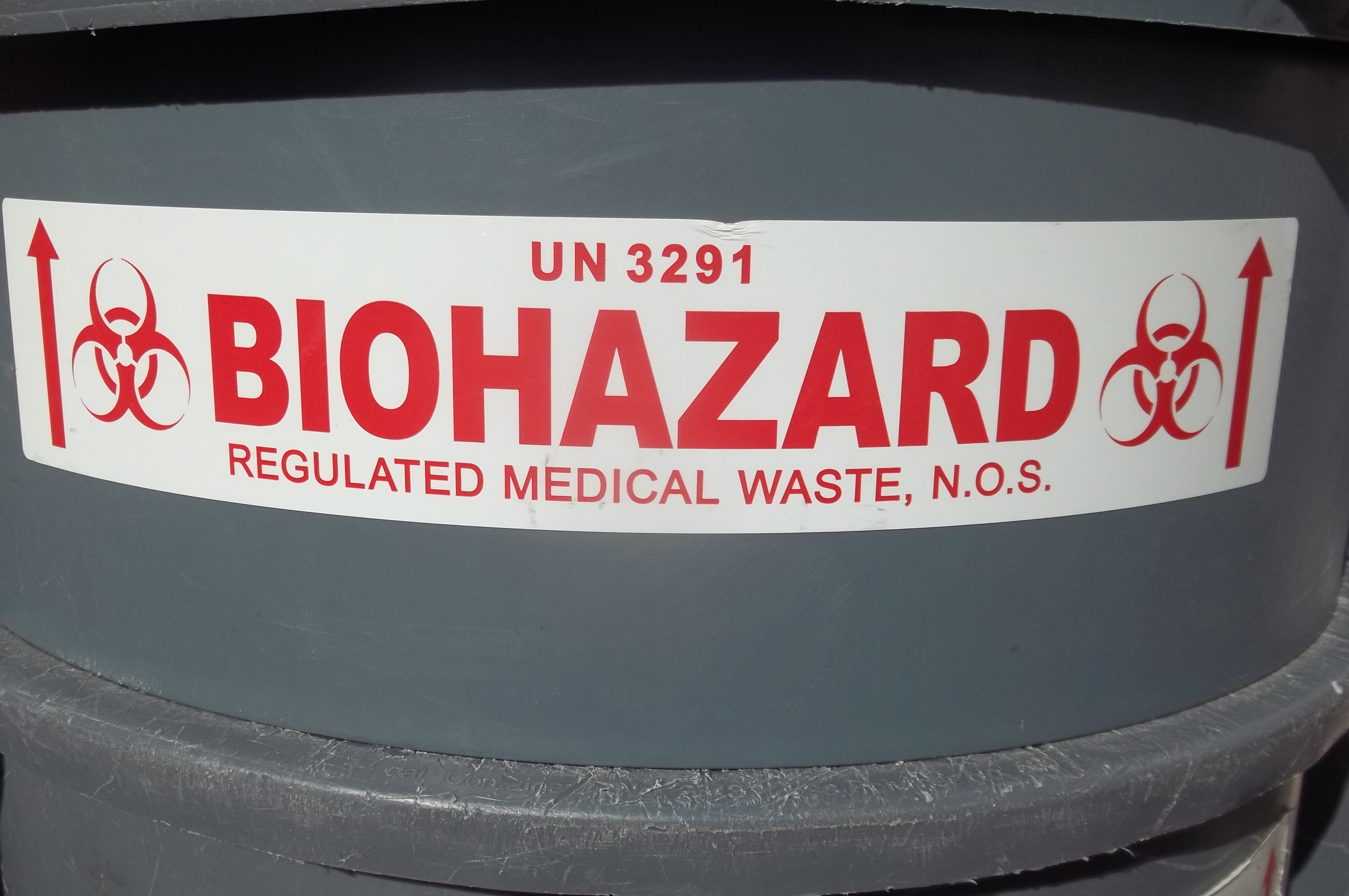
UN3291 Regulated Medical Waste

FAQ: Are wastes associated with COVID-19 a hazardous waste?

No.  Wastes such as used medical equipment or personal protective equipment contaminated with the coronavirus are not regulated as a hazardous waste under USEPA regulations.

Regulations codified under the Resource Conservation and Recovery Act (RCRA) identify solid waste as a any discarded material not excluded by regulation.  The used medical equipment, personal protective equipment (PPE), or COVID-19 test kits generated in connection with the diagnosis, treatment, or immunization of persons infected – or suspected of being infected – with SARS-CoV-2 (the virus that causes COVID-19) will be a solid waste.

Like this article?

Subscribe to my Monthly Newsletter

No marketing emails!

To meet the criteria of a hazardous waste, a solid waste must be one – or both – of the following according to USEPA regulations:

  • Identified on one of the lists of hazardous waste at 40 CFR 261, subpart D; i.e., a listed hazardous waste.
  • Display one of the characteristics of a hazardous waste identified at 261, subpart C; i.e., a characteristic hazardous waste.
Lists of hazardous waste:UN3291 Regulated Medical Waste
  • F001-F039 – Hazardous waste from non-specific sources.
  • K001-K181 – Hazardous waste from specific sources.
  • U001-U411 – Discarded commercial chemical products, off-specification species, container residues, and spill residues thereof (toxic).
  • P001-P205 – Discarded commercial chemical products, off-specification species, container residues, and spill residues thereof (acutely toxic).
Characteristics of hazardous waste:
  • D001 – Characteristic of Ignitability.  Liquid, solid, or gas that can self-ignite and burn vigorously or is capable of ignition at a temperature below a regulatory threshold.  It also includes oxidizers.
  • D002 – Characteristic of Corrosivity.  Liquid of low (acid) or high (alkaline) pH or liquid capable of corroding steel.
  • D003 – Characteristic of Reactivity.  Includes: waste that is unstable and readily undergoes violent change without detonation; waste that reacts violently with water; waste that emits toxic levels of cyanide or sulfide gas, waste that is capable of detonation.
  • D004-D043 – Characteristic of Toxicity. Waste that contains an identified toxin that is leachable from the waste and is above a regulatory threshold.

Contact me with any questions you may have about the generation, identification, management, and disposal of hazardous waste

Daniels Training Services, Inc.

815.821.1550

Info@DanielsTraining.com

https://danielstraining.com/

USEPA regulations do not define wastes as hazardous due to their infectious nature, including those contaminated by the novel coronavirus which causes COVID-19.  It is up to the generator of the waste to complete the hazardous waste determinationHowever, I can, with some confidence, write that it is unlikely a solid waste contaminated with SARS-CoV-2 will either be a listed hazardous waste or display a characteristic of a hazardous waste.

Non-hazardous solid waste – including waste contaminated with SARS-CoV-2 – is subject to state regulatory programs.  This includes states that lack RCRA authorization, e.g., Iowa, Alaska, and Puerto Rico.  State regulations for the management of medical waste vary between the states.  For example, not all states refer to this waste as medical waste, but I will for this article.  This website is a great place to start to determine the regulations of your state for the management of medical waste.
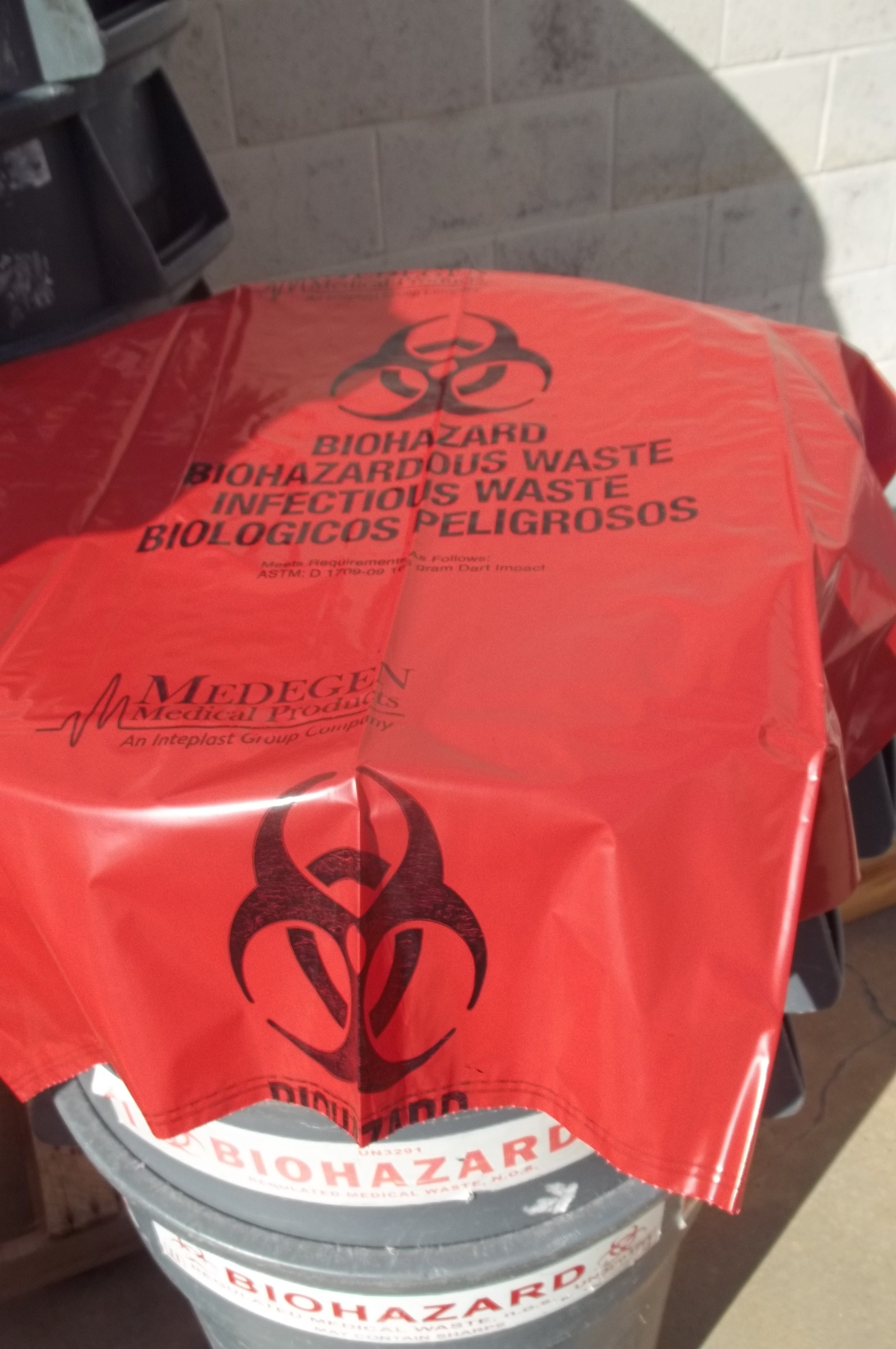
BioHazard red bag

The Centers for Disease Control and Prevention (CDC) has helpful guidance for medical waste generated by healthcare facilities:

Medical waste (trash) coming from healthcare facilities treating COVID-2019 patients is no different than waste coming from facilities without COVID-19 patients. CDC’s guidance states that management of laundry, food service utensils, and medical waste should be performed in accordance with routine procedures. There is no evidence to suggest that facility waste needs any additional disinfection.

More guidance about environmental infection control is available in section 7 of CDC’s Interim Infection Prevention and Control Recommendations for Patients with Confirmed COVID-19 or Persons Under Investigation for COVID-19 in Healthcare Settings.

If you are a healthcare provider, medical facility, hospital, community-based testing site, or some other commercial or government facility generating a waste potentially contaminated with the SARS-CoV-2 virus, you should do the following regarding that waste:

  1. Conduct a documented hazardous waste determination.
  2. If a hazardous waste (unlikely), manage it according to USEPA and state regulations as a hazardous waste.  Be sure to inform the transporter and designated facility it may be contaminated with the coronavirus.
  3. If not a hazardous waste, research your state regulations to determine your cradle-to-grave responsibility for its on-site and off-site management as a medical waste.
  4. Follow CDC and OSHA guidelines to ensure worker protection.
  5. Comply with USDOT/PHMSA regulations for its off-site transportation as a Division 6.2 Infectious Substance.
  6. Keep records of all activities.
  7. Be safe.

Daniels Training Services, Inc.

815.821.1550

Info@DanielsTraining.com

https://danielstraining.com/

USEPA and most states do not regulate the wastes generated by a homeowner.  Even California does not currently regulate home-generated medical waste, with the exception of sharps (i.e., needles).  Therefore, household waste that has come in contact with someone who has COVID-19 should be managed with prudence but is not subject to regulation.  This fact sheet from the Illinois EPA contains information helpful to any homeowner for management of this waste and related items.

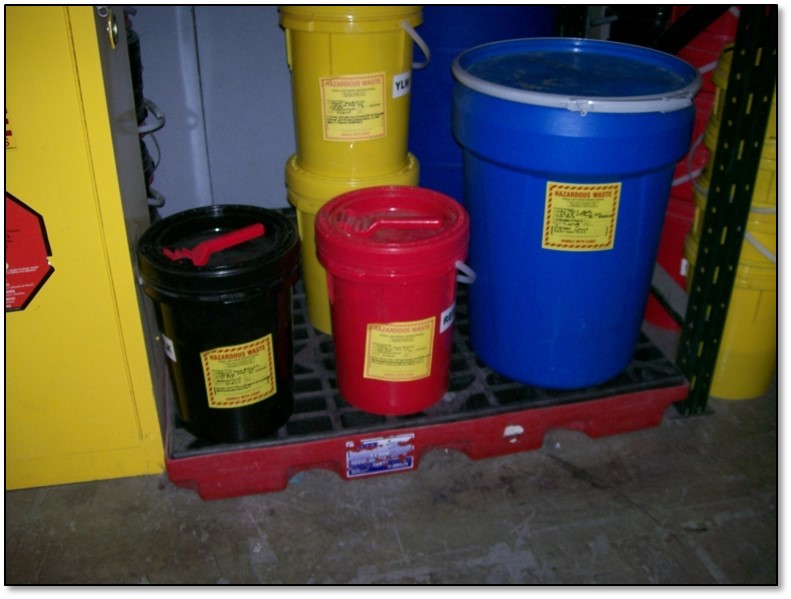
Good Storage of Hazardous Waste Containers

FAQ: Can a hazardous waste generator exceed their on-site accumulation volume limit due to the COVID-19 public health emergency?

Yes.  USEPA allows for an exceedance of the hazardous waste generator volume threshold / limit if due to the COVID-19 public health emergency.

Pursuant to Federal USEPA regulations some generators of hazardous waste are limited to the volume of hazardous waste they may accumulate on-site at one time.  Generators that exceed this limit / threshold either lose their allowance to accumulate hazardous waste without a permit (SQG) or must comply with the regulations of the higher generator category (VSQG to SQG).  Those thresholds / limits:

  • Large quantity generator (LQG) has no volume threshold or limit.
  • Small quantity generator (SQG) may not exceed 6,000 kg (13,200 lb) of hazardous waste on-site at one time.
  • Very small quantity generator (VSQG) may not exceed 1,000 kg (2,200 lb) of hazardous waste on-site at one time.

Unlike the on-site accumulation time limit for hazardous waste accumulated by LQGs and SQGs, USEPA regulations do not provide for an exceedance to these volume thresholds / limits.

Not sure of your hazardous waste generator category?

Take this short survey

That has changed due to USEPA’s Temporary Enforcement Discretion Policy in Light of COVID-19.  Part I.D.4 reads (emphasis added):

If a facility is a generator of hazardous waste and, due to disruptions caused by the COVID-19 pandemic, is unable to transfer the waste off-site within the time periods required under RCRA to maintain its generator status, the facility should continue to properly label and store such waste and take the steps identified under Part I.A, above. If these steps are met, as an exercise of enforcement discretion, the EPA will treat such entities to be hazardous waste generators, and not treatment, storage and disposal facilities. In addition, as an exercise of enforcement discretion, the EPA will treat Very Small Quantity Generators and Small Quantity Generators as retaining that status, even if the amount of hazardous waste stored on site exceeds a regulatory volume threshold due to the generator’s inability to arrange for shipping of hazardous waste off of the generator’s site due to the COVID-19 pandemic.

Note1:  The reference to Part I.A in the above quotation is to the General Conditions of the enforcement discretion which pretty much says:

  • Generators should make every effort to comply with their environmental compliance obligations, and;
  • If compliance is not reasonably practical, generators should act responsibly to minimize the effects and duration of the non-compliance, return to compliance ASAP, and document everything.

Please refer to this article if you are interested in the first part of the above quotation that refers to the enforcement discretion available for the on-site accumulation time limits of a LQG and SQG

USEPA’s temporary policy clearly allows for an enforcement discretion if a VSQG or SQG exceeds their on-site accumulation volume limit / threshold as long as other conditions of the policy are met.

Daniels Training Services, Inc.

815.821.1550

Info@DanielsTraining.com

https://danielstraining.com/

So, what’s a hazardous waste generator to do?

  1. Contact your regional USEPA (if you operate in a state lacking RCRA authorization) or your state environmental agency (if your state has RCRA authorization) to inform them you will – or have – exceeded your on-site accumulation volume threshold / limit.  This notification is not required by the regulations or the enforcement discretion, but I recommend you do it anyway.  Read: RCRA State Authorization
  2. Comply with all other Federal and state regulations applicable to your hazardous waste generator category to the best of your ability during the COVID-19 public health emergency.
  3. Non-compliance with other regulatory requirements (e.g., weekly inspections) due to the COVID-19 public health emergency must be addressed separately.
  4. Document your activities and correspondence and maintain as a record.
  5. Return to compliance as soon as you are able.
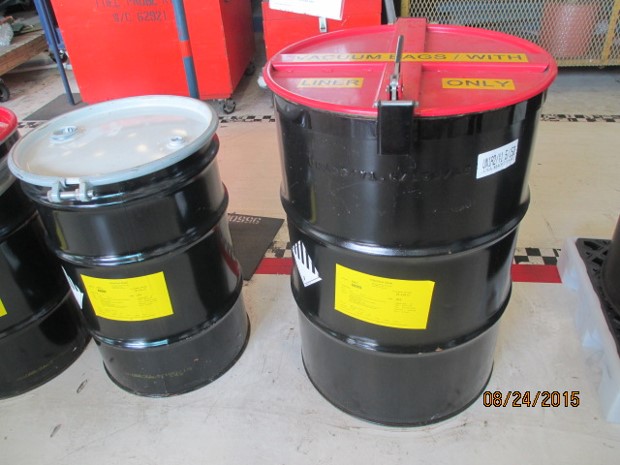
Two closed & labeled Haz Waste containers

FAQ: Can a hazardous waste generator receive an extension to their on-site accumulation time limits due to the COVID-19 public health emergency?

Yes.  USEPA allows for an extension to accumulation time limits due to the COVID-19 public health emergency.

Pursuant to Federal USEPA regulations at 40 CFR 262.16(d) for a small quantity generator of hazardous waste (SQG) and §262.17(b) for a large quantity generator (LQG), an extension to the standard on-site accumulation time limit (180 or 270 days for a SQG, 90 days for a LQG) of up to 30 days may be granted by USEPA (or your state if it has an authorized hazardous waste program).  This extension may be granted if…

…hazardous wastes must remain on site for longer than 90 days (or 180 or 270 days for an SQG) due to unforeseen, temporary, and uncontrollable circumstances.  An extension of up to 30 days may be granted at the discretion of the Regional Administrator on a case-by-case basis.

I believe the current COVID-19 public health emergency qualifies for this extension.

Not sure of your hazardous waste generator category?

Take this short survey

Also, from USEPA’s Temporary Enforcement Discretion Policy in light of COVID-19.  Part I.D.4 reads:

If a facility is a generator of hazardous waste and, due to disruptions caused by the COVID-19 pandemic, is unable to transfer the waste off-site within the time periods required under RCRA to maintain its generator status, the facility should continue to properly label and store such waste and take the steps identified under Part I.A, above. If these steps are met, as an exercise of enforcement discretion, the EPA will treat such entities to be hazardous waste generators, and not treatment, storage and disposal facilities. In addition, as an exercise of enforcement discretion, the EPA will treat Very Small Quantity Generators and Small Quantity Generators as retaining that status, even if the amount of hazardous waste stored on site exceeds a regulatory volume threshold due to the generator’s inability to arrange for shipping of hazardous waste off of the generator’s site due to the COVID-19 pandemic.

Note1:  The reference to Part I.A in the above quotation is to the General Conditions of the enforcement discretion which pretty much says:

  • Generators should make every effort to comply with their environmental compliance obligations, and;
  • If compliance is not reasonably practical, generators should act responsibly to minimize the effects and duration of the non-compliance, return to compliance ASAP, and document everything.

Note2:  The reference to amount of hazardous waste accumulated by a VSQG or SQG in the above quotation will be addressed in a separate article. 

USEPA’s temporary policy clearly allows for an enforcement discretion if an SQG or LQG exceeds their on-site accumulation time limits as long as other conditions of the policy are met.

The language on USEPA’s website of FAQ’s related to hazardous waste generators and COVID-19 are less clear than the above.  But there also it states that generators may request an extension to their on-site accumulation time limits from USEPA or their state as is allowed by §262.16(d) and §262.17(b).

Daniels Training Services, Inc.

815.821.1550

Info@DanielsTraining.com

https://danielstraining.com/

So, what’s a hazardous waste generator to do?

  1. Contact your regional USEPA (if you operate in a state lacking RCRA authorization) or your state environmental agency (if your state has RCRA authorization) to request an extension to the on-site accumulation time limit.  Read: RCRA State Authorization
  2. Comply with all other Federal and state regulations applicable to your hazardous waste to the best of your ability during the COVID-19 public health emergency.
  3. Non-compliance with other regulatory requirements (e.g., weekly inspections) due to the COVID-19 public health emergency must be addressed separately.
  4. Document your activities and correspondence and maintain as a record.
  5. Return to compliance as soon as you are able.
UN Performance Oriented Packaging Mark

USDOT Notice of Enforcement Discretion for the Manufacturing of Packaging Designs Beyond Periodic Retesting Dates

The Bullet:

Due to the COVID-19 public health emergency, USDOT/PHMSA issued a notice of enforcement discretion for the continued manufacturing of United Nations (UN) Performance Oriented Packaging used in the transportation of hazardous materials (HazMat) which have exceeded their periodic retesting dates.  USDOT/PHMSA is providing temporary relief from enforcement action if packaging manufacturers are unable to conduct periodic design qualification retesting within 90-days of a retest date due to COVID-19 operational disruptions.

See the Notice of Enforcement Discretion for the Continued Manufacturing of Performance Oriented Packaging Designs Exceeding Their Periodic Retesting Date for more details.

Who:
  • William S. Schoonover / Associate Administrator for Hazardous Materials Safety
  • The agency: the Pipeline and Hazardous Materials Safety Administration within the U.S. Department of Transportation (USDOT/PHMSA).
  • The affected:  manufacturers of United Nations Performance Oriented Packaging.
What does the HMR require?
  • The Hazardous Materials Regulations (HMR, 49 CFR Parts 171-180) prescribe that UN Performance Oriented Packaging design types be subjected to periodic retesting every twelve (12) to twenty-four (24) months, depending on the design type (see §178.601(e), §178.801(e), §178.955(e), and §178.1035(e)).
  • Periodic design testing is required to recertify the design type for continued production of a UN Performance Oriented Packaging.

Daniels Training Services, Inc.

815.821.1550

Info@DanielsTraining.com

https://danielstraining.com/

What is the relief?
  • PHMSA gives notice that it will not take enforcement action against any company that continues to manufacture a UN Performance Oriented Packaging conforming to a tested design that is not more than 90 days beyond its periodic retest date.
  • The relief applies to manufacturers of:
    • Non-bulk packagings.
    • Intermediate bulk containers (IBCs).
    • Large packagings.
    • Flexible bulk containers.
  • This relief only applies to designs tested and certified for Packing Group (PG) II (Y-marked) or PG III (Z-marked) hazardous materials.  PG I (X-marked) designs are not eligible for this enforcement discretion.
  • All production tests required under the HMR must still be met during the manufacturing process.  As such, relief from production testing is not being granted.  For example, the requirements in §178.604 and §178.813 for leakproofness testing of non-bulk packages and IBCs continue to apply.
  • The following packaging types are eligible for relief from the periodic retest requirement:
    • UN Specification non-bulk packagings manufactured in accordance with part 178, subpart L and M to PG II and III performance standards.
    • UN Specification IBCs manufactured in accordance with part 178, subpart N and O to PG II and III performance standards.
    • UN Specification large packagings manufactured in accordance with part 178, subpart P and Q to PG II and III performance standards.
    • UN Specification flexible bulk containers manufactured in accordance with part 178, subpart R and S.
  • To qualify for this enforcement discretion, a manufacturer must document the reasons why compliance is not possible prior to manufacturing packagings which are not more than 90 days beyond the required periodic retesting date.
  • The packaging manufacturer must maintain a copy of the document stating why compliance is not possible and the most recent test report (design qualification or periodic retest, as appropriate) until the packaging is again successfully retested.
  • USDOT/PHMSA expects manufacturers to complete missing tests in a timely manner as soon as testing capability is regained.
  • No other relief from HMR requirements (e.g., production leakproofness testing) is provided in this notice.
Where:

This relief applies to manufacturers of UN Performance Oriented Packaging regardless of whether they are domestic (within U.S.) or foreign (manufactured outside of U.S.).

Note:  UN standard packaging manufactured outside the U.S. is an authorized packaging subject to the conditions and limitations of §173.24(d)(2).

When:
Virus Image COVID-19
Photo by Martin Sanchez on Unsplash
Why:
  • Due to the Coronavirus Disease 2019 (COVID-19) public health emergency, the USDOT/PHMSA) has received several inquiries from members of the regulated community requesting an extension of periodic retest date requirements for packaging used in the transportation of hazardous materials.
  • Industry stakeholders state that, absent an extension of these periods, continued manufacturing of packagings that conform to tested designs would be inhibited, and a shortage of available UN Specification packagings may develop.
  • Non-bulk packaging design types such as drums, jerricans, pails, IBCs, large packagings, and flexible bulk containers are subject to frequent quality control testing in production to verify conformance with design specifications.  Additionally, all liquid-rated non-bulk packagings and IBCs as well as IBCs intended to be discharged under pressure are subjected to production leakproofness testing in accordance with HMR requirements prior to filling.

Note:

Centers for Disease Control and Prevention (CDC) recommends consumers use an alcohol-based hand sanitizer that contains at least 60% ethanol or 70% isopropanol.

How:
  • USDOT/PHMSA’s mission is to protect people and the environment by advancing the safe transportation of energy and other hazardous materials that are essential to our daily lives.  To do this, the agency establishes national policy, sets and enforces standards, educates, and conducts research to prevent incidents.
  • This document is a temporary notice of enforcement discretion.  Regulated entities may rely on this notice as a safeguard from departmental enforcement as described herein.  To the extent this notice includes guidance on how regulated entities may comply with existing regulations, it does not have the force and effect of law and is not meant to bind the regulated entities in any way.
Conclusion:

As the COVID-19 public health emergency continues to affect the world’s economy through its manufacturing and transportation industries (and many others), USDOT/PHMSA and other U.S. regulatory agencies will continue to offer reliefs of this kind.  Refer to my blog for other instances of regulatory relief offered by USDOT/PHMSA and USEPA.

Notice as well that this relief came after petitioning by “industry stakeholders”; ‘the squeaky wheel gets the grease!”  If you find your industry hindered by compliance with the HMR during the COVID-19 public health emergency, be sure to ask USDOT/PHMSA for relief.

USDOT Offers Relief From Regulation for Transport of Sanitizers and Disinfectants During COVID-19 Public Health Emergency

The Bullet:

During this public health emergency, USDOT/PHMSA is providing relief for certain hazardous materials (HazMat), e.g., sanitizing and disinfecting materials, transported for the purpose of protecting the health and safety of employees – and contractors – directly supporting the logistical operations of transportation companies.  The relief – as an enforcement discretion – mirrors the relief provided for HazMat transported under the materials of trade exception at 49 CFR 173 .6.

Carrier MOTS Relief Notice

Who:
  • Pipeline and Hazardous Materials Safety Administration within the U.S. Department of Transportation (USDOT/PHMSA).
  • Transportation companies within the U.S.

Like this article?

Subscribe to my Monthly Newsletter

No marketing emails!

What is the materials of trade exception?

The materials of trade exception exempts certain hazardous materials and quantities in motor vehicle shipments from the requirements of the Hazardous Materials Regulations (HMR).  Under the HMR, a material of trade means a hazardous material that is carried on a motor vehicle for one of three reasons:

  • Protecting the health and safety of the motor vehicle operator or passengers.
  • Supporting the operation or maintenance of a motor vehicle.
  • By a private motor carrier in direct support of a principal business that is other than transportation by motor vehicle.

Sanitizing and disinfecting products transported by a logistics company’s own transportation network to support the health and safety of employees at the company’s facilities do not meet any of these three definitions.  Therefore, the materials of trade exception will not address this specific need which is the intent of this relief.

For more information about the materials of trade exception, read: 49 CFR 173.6 – The Materials of Trade Exception

What is the relief?
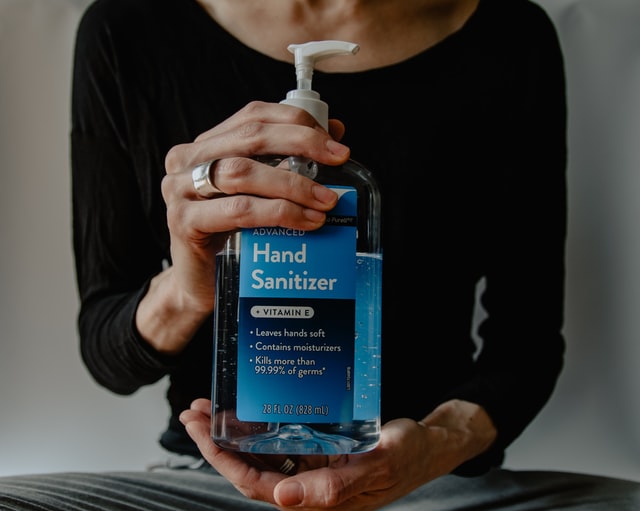
Person with Hand Sanitizer Pump
Photo by Kelly Sikkema on Unsplash

USDOT/PHMSA gives notice that it will not take enforcement action against any carrier transporting sanitizing and disinfecting materials carried on a motor vehicle for the purposes of protecting the health and safety of employees of the carrier – this includes contractors working for the carrier – provided the following criteria are met:

  • The sanitizing and disinfecting materials, such as hand sanitizers and spray disinfectants, are intended to allow employees to adhere to Centers for Disease Control and Prevention guidelines for protecting against COVID-19.
  • The sanitizing and disinfecting materials are being provided to protect the health and safety of employees and eligible contractors who directly support the operations of the carrier, such as by sorting packages, loading and unloading packages, and driving delivery vehicles.
  • The sanitizing and disinfecting materials are transported by motor vehicle.
  • The shipment complies with the hazard class, quantity, packaging, hazard communication, and aggregate gross weight requirements specified in 49 CFR § 173.6 Materials of Trade provisions.
  • Transport of these materials for purposes other than use by employees or contractors of the carrier (e.g., retail sale) is not authorized.

Contact me with any questions you may have about the transportation of hazardous materials by air, highway, vessel, or rail

International and Domestic

Daniels Training Services, Inc.

815.821.1550

Info@DanielsTraining.com

https://danielstraining.com/

Where:
  • This relief applies to transportation within the United States.
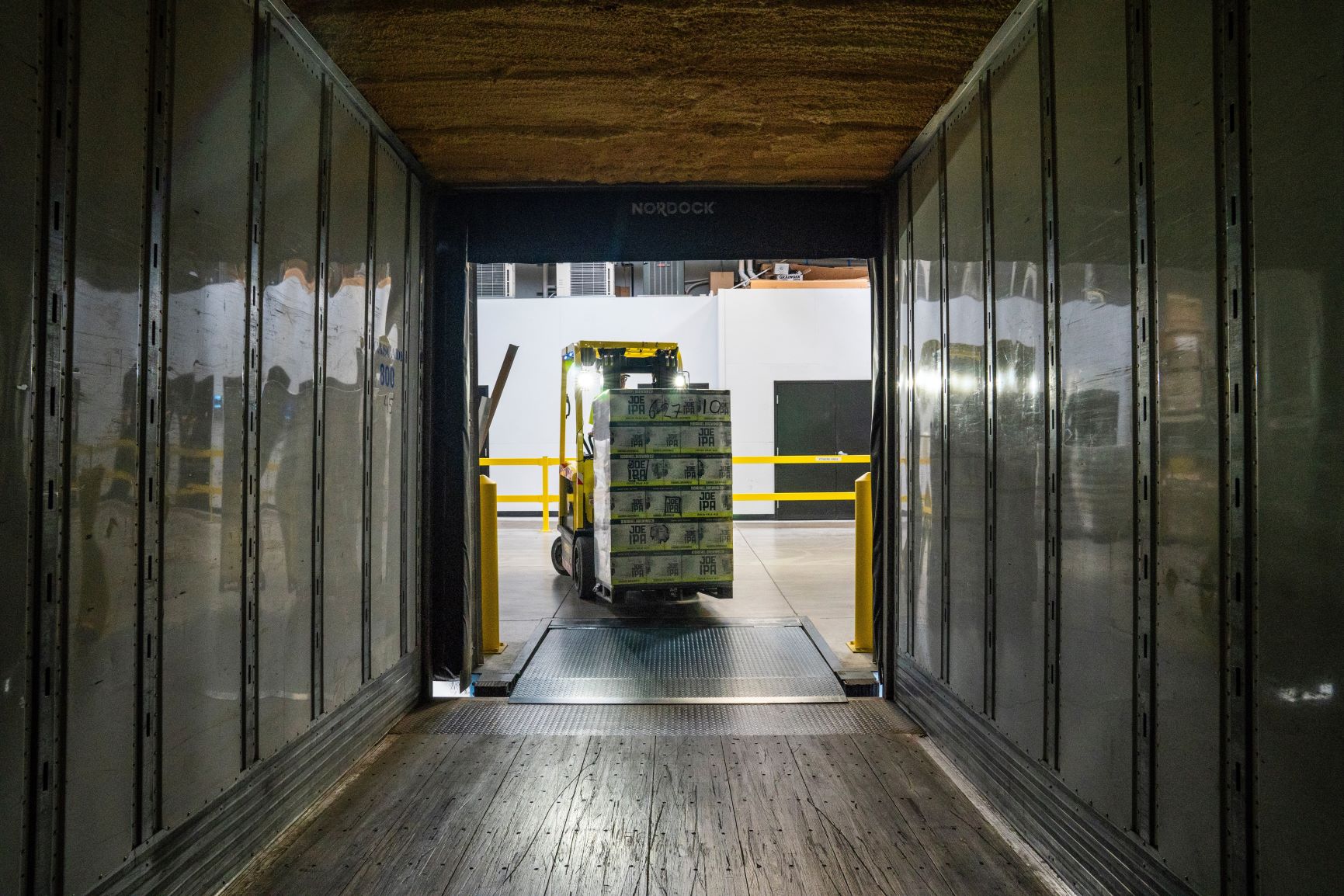
Fork truck loading vehicle
Photo by Elevate on Unsplash
When:
Why:

Because of the ongoing Coronavirus Disease 2019 (COVID-19) public health emergency, there has been a notable increase in the demand for products used for sanitization and disinfection purposes – many of which may be classified as HazMat for transportation as defined by the HMR.

  • An alcohol-based sanitizer may be a Class 3 Flammable Liquid.
  • A disinfectant may be a Class 8 Corrosive Material.
How:

PHMSA’s mission is to protect people and the environment by advancing the safe transportation of energy and other hazardous materials that are essential to our daily lives. To do this, the agency establishes national policy, sets and enforces standards, educates, and conducts research to prevent incidents. We also prepare the public and first responders to reduce consequences if an incident does occur.

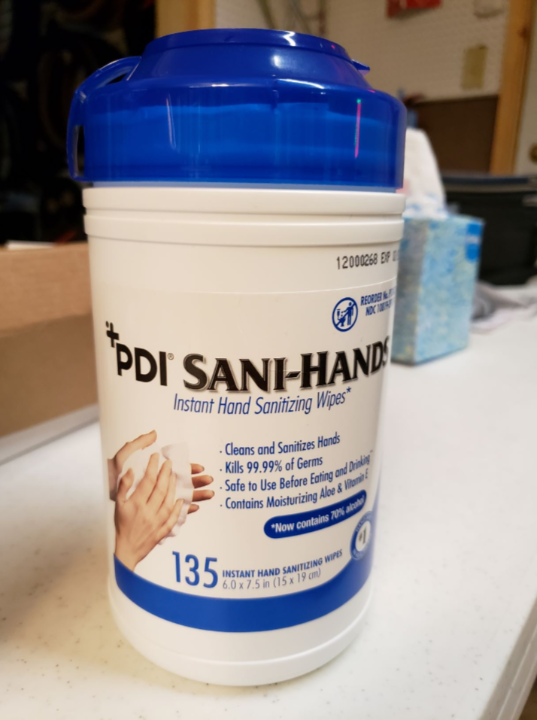
Conclusion:Hand Sanitizer Wipes

This relief represents USDOT/PHMSA’s latest attempt to facilitate the transportation of hazardous materials in response to the COVID-19 public health emergency.  An earlier example:  Temporary Policy for the Transportation of Certain Alcohol-Based Hand Sanitizer Products During the Public Health Emergency (COVID-19) provides relief for new manufacturers and subsequent transporters of alcohol-based hand sanitizer.

Social Distancing Sign

FAQ: How do I maintain social distancing when exchanging HazMat shipping papers?

Under the Hazardous Materials Regulations (HMR) of the Pipeline and Hazardous Materials Safety Administration within the U.S. Department of Transportation (USDOT/PHMSA), no physical contact between parties is required during the creation, review, certification, and exchange of shipping papers created to accompany consignments of hazardous materials (HazMat).

Shipping papers may be exchanged by any of the following methods:

  • Attach the document to a clipboard, place it on a table, and step away while the paper is signed.
  • Send the document via email or other means of electronic transmission.

Q: Does that second bullet point, “send the document via email or other means of electronic transmission.” mean an electronic version of the shipping paper will suffice and the driver does not require a paper copy in his/her possession during transportation?

A: No. The language of USDOT/PHMSA’s notice is unclear and can be misleading. The HMR at 49 CFR 172.201(a)(5) allow for an electronic shipping paper only for consignments of HazMat transported by rail and §177.817(e) requires the driver of the motor vehicle to maintain a paper copy of the shipping paper when the HazMat is in transportation. I believe what USDOT/PHMSA means here is that a shipper may prepare a shipping paper and email it to the carrier who may then print, sign as a representative of the shipper (this is discussed later in the notice), and maintain a paper copy during transportation.

Social Distancing Sign
Photo by LOGAN WEAVER on Unsplash
What about the shipper’s certification statement?

§172.204(d) of the HMR indicates the shipper’s certification on a shipping paper,

Must be legibly signed by a principal, officer, partner, or employee of the shipper or his agent; and may be legibly signed manually by typewriter, or by other mechanical means.

The person signing the shipper’s certification statement may be an agent of the shipper, this may be an employee of the carrier.  The driver may sign the certification statement as an agent of the shipper if he/she has direct knowledge that the materials are in proper condition for transportation (LOI 11-0201).

The shipper may request a person – e.g., the driver – to sign the shipping paper on its behalf.  This request may be made verbally or in writing and may be transmitted electronically (e.g., text message or email).

Like this article?

Subscribe to my Monthly Newsletter

No marketing emails!

Using the methods outlined above, it is possible for shippers and carriers to satisfy the safety requirements of the HMR while maintaining appropriate social distancing

Read the notice from USDOT/PHMSA on the HazMat Shipping Paper and Social Distancing

US Department of Transportation Issues National Emergency Declaration for Commercial Vehicles Delivering Relief in Response to the Coronavirus Outbreak (Extension and Expansion of 04.08.20)

The Bullet:

On March 13, 2020, the U.S. Department of Transportation’s Federal Motor Carrier Safety Administration (FMCSA) issued a national emergency declaration to provide hours-of-service regulatory relief to commercial vehicle drivers transporting emergency relief in response to the nationwide coronavirus (COVID-19) outbreak.  This declaration was expanded on March 18, 2020 and again expanded and extended on April 08, 2020.

Read the 04.08.20 press release

Note:

The situation is changing rapidly.  Please stay up-to-date on this topic by going directly to the FMCSA website.

Who:
  • The U.S. Department of Transportation’s Federal Motor Carrier Safety Administration (FMCSA) issued the relief.  The FMCSA was established as a separate administration within the U.S. Department of Transportation (DOT) on January 1, 2000.
    • Press Contact:
      • FMCSA Office of Public Affairs/1200 New Jersey Avenue, SE/Washington, DC 20590
      • Email: FMCSA.PublicAffairs@dot.gov
      • Phone: 202-366-9999
  • Relief is applicable to commercial motor vehicle operations providing direct assistance supporting emergency relief efforts intended to meet immediate needs of the current COVID-19 public health emergency.
  • Motor carriers or drivers currently subject to an out-of-service order are not eligible for the relief granted by this declaration until they have met the applicable conditions for its rescission and the order has been rescinded by FMCSA.

Note:

Centers for Disease Control and Prevention (CDC) recommends consumers use an alcohol-based hand sanitizer that contains at least 60% ethanol or 70% isopropanol.

What:
  • Motor carriers and drivers providing direct assistance in support of relief efforts related to the COVID-19 outbreaks are granted emergency relief from Parts 390 through 399 of the FMCSRs, except as restricted herein.
  • Covered activities include transportation to meet immediate needs for:
    1. Medical supplies and equipment related to the testing, diagnosis and treatment of COVID-19.
    2. Supplies and equipment necessary for community safety, sanitation, and prevention of community transmission of COVID-19 such as masks, gloves, hand sanitizer, soap and disinfectants.
    3. Food, paper products and other groceries for emergency restocking of distribution centers or stores.
    4. Immediate precursor raw materials — such as paper, plastic or alcohol — that are required and to be used for the manufacture of items in categories (1), (2), or (3).
    5. Fuel
    6. Liquefied gases to be used in refrigeration or cooling systems.
    7. Equipment, supplies and persons necessary to establish and manage temporary housing, quarantine, and isolation facilities related to COVID-19.
    8. Persons designated by Federal, State or local authorities for medical, isolation, or quarantine purposes.
    9. Persons necessary to provide other medical or emergency services, the supply of which may be affected by the COVID-19 response.
  • Once delivery is complete, the driver must receive a minimum of off duty hours as applicable:
    • Ten (10) hours off duty if transporting property.
    • Eight (8) hours if transporting passengers.
  • Direct assistance does not include:
    • Routine commercial deliveries, including mixed loads with a nominal quantity of qualifying emergency relief added to obtain the benefits of the emergency declaration.
  • Direct assistance terminates in either of the following circumstances:
    • A driver or commercial motor vehicle is used in interstate commerce to transport cargo or provide services that are not in support of emergency relief efforts related to the COVID-19 outbreaks.
    • The motor carrier dispatches a driver or commercial motor vehicle to another location to begin operations in commerce.
  • Motor carriers and drivers providing direct assistance to the Nationwide emergency are not granted emergency relief from, and must continue to comply with, the following Federal Motor Carrier Safety Regulations and conditions:
    • 49 CFR § 392.2 related to the operation of a commercial motor vehicle in accordance with State laws and regulations, including compliance with applicable speed limits and other traffic restrictions.
    • 49 CFR § 392.3 related to operation of a commercial motor vehicle while a driver’s ability or alertness is so impaired, or so likely to become impaired, through fatigue, illness, or any other cause, as to make it unsafe for him/her to begin or continue to operate the motor vehicle.
    • Motor carriers shall not require or allow fatigued drivers to operate a commercial motor vehicle. A driver who informs a carrier that he/she needs immediate rest shall be given at least ten consecutive hours before the driver is required to return to service.
    • A motor carrier whose driver is involved in a crash while operating under this emergency declaration must report any recordable crash within 24 hours, by phone or in writing, to the FMCSA Division Office where the motor carrier is domiciled. The carrier must report the date, time, location, driver, vehicle identification, and brief description of the crash.
    • Nothing in this Emergency Declaration shall be construed as an exemption from any of the following:
      • Controlled substance and alcohol uses and testing requirement (49 CFR Part 382).
      • The commercial driver’s license requirements (49 CFR Part 383).
      • The financial responsibility (insurance) requirements (49 CFR Part 387).
      • The hazardous material regulations (49 CFR Parts 100-180).
      • Applicable size and weight requirements.
      • Any other portion of the regulations not specifically exempted under 49 CFR § 390.23.
    • Motor carriers or drivers currently subject to an out-of-service order are not eligible for the relief granted by this declaration until they have met the applicable conditions for its rescission and the order has been rescinded by FMCSA in writing.

Daniels Training Services, Inc.

815.821.1550

Info@DanielsTraining.com

https://danielstraining.com/

Where:
  • Applicable to the fifty United States of America and the District of Columbia.
Why:
  • This declaration will help America’s commercial drivers get these critical goods to impacted areas faster and more efficiently.
How:
  • The primary mission of the Federal Motor Carrier Safety Administration (FMCSA) is to reduce crashes, injuries and fatalities involving large trucks and buses.
When:
  • Original published 03.13.20.
  • Expanded and published 03.18.20
  • The extension and expansion of Emergency Declaration No. 2020-002 is effective immediately and shall remain in effect until 11:59 P.M. (ET), May 15, 2020, or until the revocation of the Presidentially declared COVID-19 national emergency, whichever is sooner.
Conclusion:

This relief is one of many issued by FMCSA and other regulatory agencies to end the current public health emergency due to COVID-19.  If you are a driver of a CMV, please be safe.

Read FMCSA’s national emergency declaration

Contact me with any questions you may have about the transportation of hazardous materials by air, highway, vessel, or rail

International and Domestic

Daniels Training Services, Inc.

815.821.1550

Info@DanielsTraining.com

https://danielstraining.com/

Didja’ know?
  • This declaration is the first time FMCSA has issued nation-wide relief and follows President Trump issuing of a national emergency declaration in response to the virus.


USDOT/PHMSA Temporary Policy for Transportation of Alcohol-Based Hand Sanitizer REVISED 12.07.20

Because of the ongoing COVID-19 public health emergency, the Pipeline and Hazardous Materials Safety Division within the U.S. Department of Transportation (USDOT/PHMSA) is providing temporary relief from the Hazardous Materials Regulations (HMR) for the manufacturers and subsequent transporters of alcohol-based Hand Sanitizers made under specific FDA guidance.

The purpose of this article is to identify and explain the requirements of the USDOT/PHMSA Temporary Policy for the Transportation of Certain Alcohol-Based Hand Sanitizer Products During the Public Health Emergency (COVID-19). (more…)

Search Website