PO Box 1232 Freeport, IL 61032

A Different Kind Of Training

A Different Kind Of Training

A Different Kind Of Training

Special Permits, Exemptions, Approvals and Exceptions to the US DOT Hazardous Material Regulations

The Hazardous Materials Regulations (HMR) contain everything you need to know about the transportation of hazardous materials in commerce; or do they?  The Pipeline and Hazardous Materials Safety Administration (PHMSA) within the US DOT understands that in some situations a hazardous material may be transported safely even when not in compliance with the HMR due to technological advancement, additional safety precautions unforeseen by the PHMSA, or an emergency situation such as war or natural disaster that may require temporary relief from the full HMR.  It is for those reasons – and others – that special permitsapprovalsexemptions and regulatory exceptions were created.  I will briefly summarize the characteristics of these regulatory extensions, how they may be of use, and where more information is available.

Special Permits:

A special permit may be requested for any aspect of the HMR and is defined at 49 CFR 171.8 as, “a document issued by the Associate Administrator, or other designated Department official, under the authority of 49 U.S.C. 5117 permitting a person to perform a function that is not otherwise permitted under subchapter A or C of this chapter, or other regulations issued under 49 U.S.C. 5101 et seq. ( e.g., Federal Motor Carrier Safety routing requirements).”   Special permits – once known as exemptions; the name was changed because it sounded too much like an exception (more on that later) – may be granted to an applicant for an emergency situation, or when a safe alternative to the HMR can be demonstrated.

The application must meet the requirements of 49 CFR 107, Subpart B and include evidence that the special permit will achieve the same safety level of the HMR or is consistent with the public interest (ie. the benefit to the public of the special permit outweighs the risk, such as in an emergency).  PHMSA’s review of your application will include an evaluation of your compliance history, I don’t suggest you request a special permit for something you have been issued a violation.

If the special permit is granted, compliance with its requirements are the responsibility of the applicant; this includes training HazMat Employees on its conditions and submitting a new application prior to its expiration date.  Your requirements are the same if your application creates a new special permit or you apply to be a party to an existing one.  You need not be party to a special permit if you are a carrier forwarding a hazardous material under someone else’s special permit as long as you do not re-package the HazMat.

A guidance document with more information about special permits can be found here.  If you wish to learn if a special permit exists that you may wish to be a party to, a Special Permit Search Tool can be found here.  The search capability is limited however, so you might be best served by speaking directly with the HazMat Info Line @:  800.467.4922.  It is not uncommon for some or all of the conditions of a special permit of proven safety to be converted to a regulatory exception by the PHMSA.  In this case the conditions of the former special permit are codified in the regulations and are available for use by all of the regulated community.  More on exceptions in just a little bit.

Approvals:

Approvals – similar to special permits in many respects (see here for a point-by-point comparison) – are defined at 49 CFR 171.8 as, “a written authorization, including a competent authority approval, from the Associate Administrator or other designated Department official, to perform a function for which prior authorization by the Associate Administrator is required under subchapter C of this chapter (49 CFR parts 171 through 180.)”  The biggest difference between a special permit and an approval is that the HMR must contain a specific allowance for the approval in order for it to be issued.  If no specific allowance is present in the HMR, then a special permit must be requested in order to get relief from the regulations.  Other characteristics of an approval include:

  • May offer relief from the regulations if a level of safety can be guaranteed or the public interest is served.
  • A written application must be submitted and written documentation of approval granted.
  • May cover domestic or international transportation (special permits are good for domestic transportation only).
  • Unlike special permits, you may not apply to be party to an approval; each approval is specific to its applicant.
  • Unlike special permits, approvals typically do not have an expiration date and are valid until terminated, there is change in the product or circumstances, or it is incorporated into the HMR.

More information about approvals – including search tools – can be found here.  If unable to find what you need, I again recommend you to the HazMat Info Line @:  800.467.4922.

Exceptions:

Special permits (formerly known as exemptions) and approvals – after many years – may find themselves codified in the HMR as exceptions if they have been proven to achieve an adequate level of safety or serve the public interest.  Once made into an exception, they are available for use by anyone without written approval from PHMSA.  Exceptions can come in many different forms and are found throughout the HMR.  Some of the most common/useful include:

When shipping HazMat you may come upon an occasion where the HMR does not allow you to do something you feel necessary; don’t give up, there may be a regulatory exception that fits just what you are trying to do, the authorization to request an approval may exist, a special permit may already exist that you may apply to be party to, or PHMSA may grant your request for a new special permit.  In any case, awareness of the regulations through training will help you have a better understanding of the options available to you, and hey; training is what I do! Join me at one of my nationwide open enrollment training events to learn about the regulations pertaining to the transportation of HazMat and the US EPA regulations regarding the handling of hazardous waste.  This one day of training fulfills the regulatory requirements of the PHMSA for the transportation of HazMat Employees per 49 CFR 172, Subpart H and those of the US EPA for Large Quantity Generators of hazardous waste per 40 CFR 265.16.
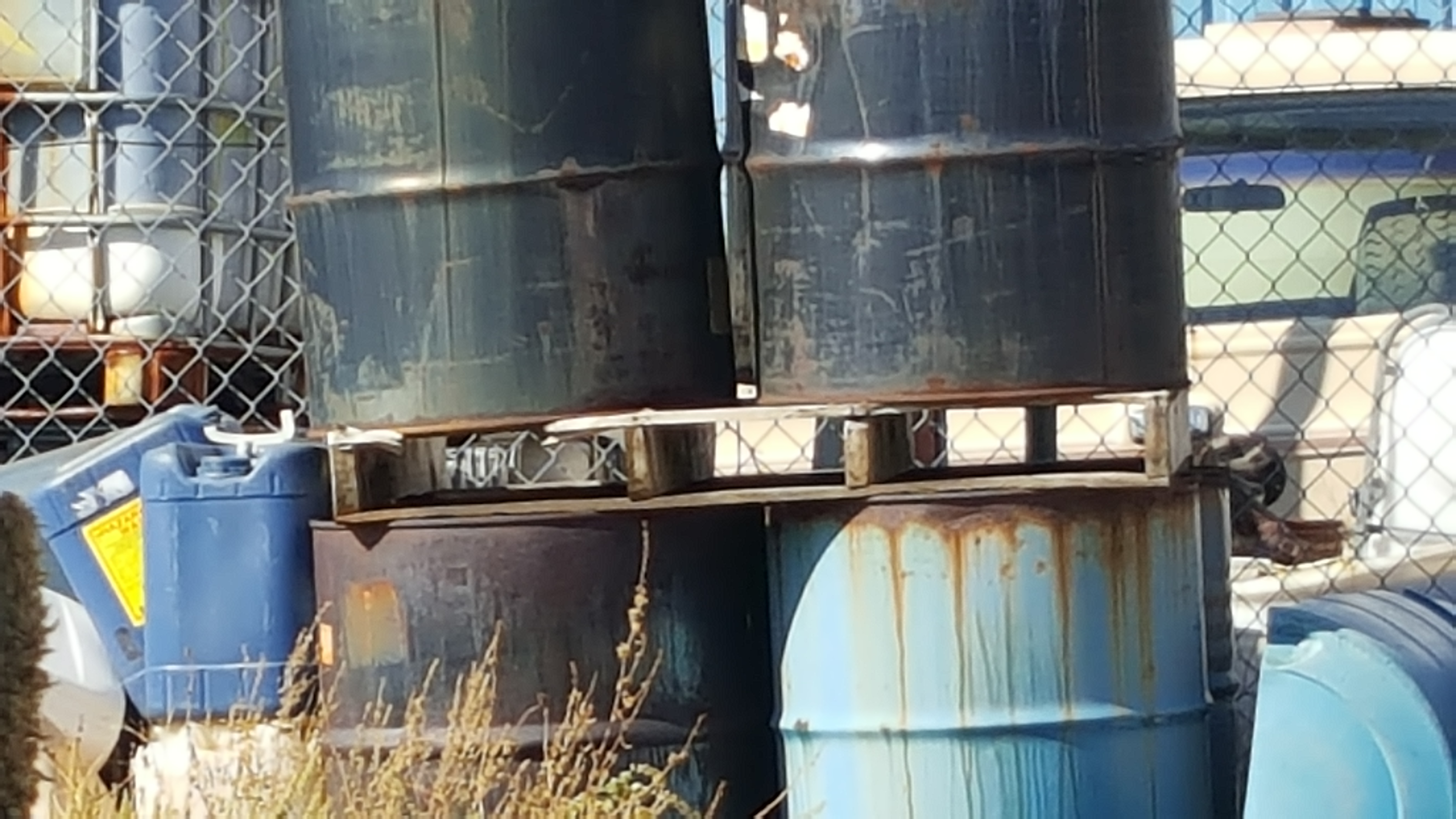
Solvent Distillation as a Means to Reclaim Spent Solvents

Does your company purchase virgin solvent and dispose of spent solvent off-site?  If you answered yes, you’re not alone.  The costs associated with the purchase of virgin solvent and its off-site disposal is a significant financial burden for many manufacturers.  If you haven’t before perhaps you should consider the use of on-site solvent recycling equipment such as a solvent distillation unit.  Before making such a purchase you must take into account a variety of factors such as:  safety concerns, labor needs, regulatory compliance, costs, and the effect on production.  This article will focus on US EPA regulatory requirements.

States may differ in their interpretation of these Federal regulations, so I suggest you work closely with your state environmental agency before you begin on-site solvent distillation of your spent solvent.  Read here for more information about generator on-site treatment of hazardous waste in general.

The benefits of recycling of your spent solvent through distillation include:

  • Reduced purchase costs for virgin solvent.
  • Reduced disposal costs for spent solvent.
  • Possible change in hazardous waste generator status due to reduction in amount of hazardous waste generated.

A solvent distillation unit heats a spent solvent – we’ll assume it to be a hazardous waste – to its boiling point, evaporating the solvent.  The solvent vapor passes into a condensing chamber where it is recovered in its liquid form for reuse.  Any contaminants – with a different boiling point than the solvent – collect as still bottoms.  That is a vastly over-simplified description of the solvent distillation process; what then about the regulatory compliance issues?

The solvent distillation unit itself, which is a form of treatment as defined at 40 CFR 260.10, is exempt from regulation pursuant to 40 CFR 261.6(c)(1) (RO11200).  Therefore, the operation of a solvent distillation unit itself would not subject a hazardous waste generator to the permitting requirements of the Resource Conservation and Recovery Act (RCRA).  Nor is the solvent distillation unit subject to the hazardous waste generator standards of 40 CFR 262.  However, as we’ll see, the spent solvent prior to distillation and any still bottoms removed from the unit may be subject to these requirements.

Once it has been reclaimed by the distillation process to where it may be returned to its former use (the same as if it was virgin solvent) the former spent solvent is no longer a solid waste per 40 CFR 261.3(c)(2)(i) (RO12911) and therefore, cannot be a hazardous waste.  As far as the US EPA regulations are concerned it is no different than virgin solvent unless you intend to burn it or use it in a manner that constitutes disposal.  If and when you are no longer able to reclaim the spent solvent for reuse it then becomes subject to the hazardous waste determinationrequirements of 40 CFR 262.11 and the hazardous waste generator standards of 40 CFR 262.  Care must be taken to ensure you count your hazardous waste generation properly to determine your hazardous waste generator status; keep reading to ensure you don’t double-count.

Any solvent distillation unit will generate what is called a still bottom which is the contaminants removed from the spent solvent and accumulated within the unit.  Your operations may differ, but it is safe to assume that the still bottoms from a solvent distillation unit will be a listed hazardous waste per 40 CFR 261.31 (RO12911).  Though the still bottoms may accumulate in the solvent distillation unit for a period of time, since the unit is exempt from regulation the still bottoms are considered a newly generated waste – and subject to the hazardous waste generator standards of 40 CFR 262 – when they are removed from the unit (RO11420).  As with the spent solvent, read on to make sure you count the amount of hazardous waste you have generate in a calendar month with care to determine your hazardous waste generator status.

The regulatory status of the spent solvent prior to its introduction into the solvent distillation unit depends on whether or not it is stored or accumulated prior to its reclamation.  Pursuant to 40 CFR 261.6(c)(2) if the spent solvent is recycled without prior storage it is not subject to RCRA regulations (its still bottoms are however), you need only…

  • Obtain a US EPA ID number for your site if you don’t already have one.
  • Comply with the requirements of 40 CFR 265.71 and 265.72 regarding the use of the Uniform Hazardous Waste Manifest for off-site disposal of hazardous waste.
  • Comply with the RCRA air emission standards of 40 CFR 265 Subparts AA & BB.

If the spent solvent is recycled after prior storage it is subject to the full hazardous waste generator standards of 40 CFR 262 up until the point it enters the solvent distillation unit (Faxback 12895).  This includes the on-site accumulation time limits of 90 days for an LQG and 180 or 270 days for an SQG.

One final point concerns when the spent solvent or the still bottoms are counted towards your hazardous waste generator status.  As noted in the previous paragraph, if the spent solvent is recycled without prior storage it is exempt from the requirement to count it towards your generator status, but the still bottoms generated by the process are not.  If stored prior to recycling, it gets a bit trickier.  40 CFR 261.5 – though directed in its title towards conditionally exempt small quantity generators – applies to all hazardous waste generators.  At 40 CFR 261.5(d) we find:

(d) In determining the quantity of hazardous waste generated, a generator need not include:

  1. Hazardous waste when it is removed from on-site storage; or
  2. Hazardous waste produced by on-site treatment (including reclamation) of his hazardous waste, so long as the hazardous waste that is treated was counted once; or
  3. Spent materials that are generated, reclaimed, and subsequently reused on-site, so long as such spent materials have been counted once.

The above regulations are clear that whether it’s the still bottoms generated in the reclamation process (#2 above); or the spent solvent that is reclaimed and reused (#3 above) you need only count the amount of solvent begun withand not each batch of spent solvent or still bottoms.  What the regulations do not make clear – but RO 12699 does – is that since your generator status is determined by the amount of hazardous waste you generate in a calendar month this count must be made once each month.

Research the applicable regulations, determine the cost/benefits, and be sure to speak to your state environmental agency.  Once satisfied with the above, go ahead and begin recycling your spent solvent for reuse on-site.  Contact me with any questions or to let me know how things went for you.  Better yet, come to one of my nationwide trainingevents, or let me come to your site to train all of your Hazardous Waste Personnel and DOT HazMat Employees for one flat fee of $1,749.  I look forward to hearing from you.

Hazardous Waste Generator On-Site Treatment of Hazardous Waste

US EPA regulations allow hazardous waste generators to accumulate and treat hazardous waste on-site without obtaining a permit as long as they meet the applicable on-site management requirements for their status (Large Quantity Generator, Small Quantity Generator or Very Small Quantity Generator) and some additional limitations on the forms of treatment.  Generators should proceed with caution if they intend to treat their hazardous waste, however.  Some forms of treatment allow you to exclude what otherwise would be hazardous waste from regulation by RCRA entirely, other treatment processes are exempt from RCRA, but the waste prior to – and perhaps after – treatment may not be excluded from regulation as a hazardous waste.  Also if a permit is required but not obtained for a treatment method, you may find yourself facing fines as an unpermitted treatment facility.  I’ll do my best to explain the allowances and restrictions of the regulations while pointing you to the applicable regulations and/or US EPA guidance documents.  Keep in mind that these are Federal regulations; your State can have its own version of these regulations and its own interpretations and guidance documents.  Be sure to check with your State regulatory agency to ensure compliance.

First, you should know that treatment is defined at 40 CFR 260.10 as:

Any method, technique, or process, including neutralization, designed to change the physical, chemical, or biological character or composition of any hazardous waste so as to neutralize such waste, or so as to recover energy or material resources from the waste, or so as to render such waste non-hazardous, or less hazardous; safer to transport, store, or dispose of; or amenable for recovery, amenable for storage, or reduced in volume.

Interested in site specific training at your site that covers this topic, and more!

Ask me about my Onsite Training

Secondly, regardless of the treatment method you choose there are restrictions that limit the options available to you without a permit, they are:

  • You may only treat the hazardous waste you generate on-site (Faxback 11066).
  • Thermal treatment is not allowed.  This restriction includes evaporation by applied or ambient heat as well(RCRA Online 12923).
  • Dilution of the hazardous waste is not allowed per the Land Disposal Restrictions of 40 CFR 268.3.

Third, there are three treatment processes that are specifically exempted from RCRA permit requirements per 40 CFR 270.1(c)(2).  The three methods defined at 40 CFR 260.10 are:

  1. Elementary neutralization units – “A device used for neutralizing wastes that are hazardous only because they exhibit the corrosivity characteristic defined in §261.22 of this chapter, or they are listed in subpart D of part 261 of the chapter only for this reason; and meets the definition of tank, tank system, container, transport vehicle, or vessel in §260.10 of this chapter.”
  2. Wastewater treatment units – “A device which is part of a wastewater treatment facility that is subject to regulation under either section 402 or 307(b) of the Clean Water Act; and receives and treats or stores an influent wastewater that is a hazardous waste as defined in §261.3 of this chapter, or that generates and accumulates a wastewater treatment sludge that is a hazardous waste as defined in §261.3 of this chapter, or treats or stores a wastewater treatment sludge which is a hazardous waste as defined in §261.3 of this Chapter; and meets the definition of tank or tank system in §260.10 of this chapter.”
  3. Totally enclosed treatment units – “A facility for the treatment of hazardous waste which is directly connected to an industrial production process and which is constructed and operated in a manner which prevents the release of any hazardous waste or any constituent thereof into the environment during treatment. An example is a pipe in which waste acid is neutralized.”

Contact me the next time hazardous waste generator USEPA training is due to expire.

If after treatment the waste no longer meets the definition of a hazardous waste, then it is no longer subject to RCRA.  If treated immediately upon generation, it will not be subject to any of the requirements of RCRA including the requirement to count it towards your generator status threshold.  However the storage of any hazardous waste prior to treatment must be counted toward your generator status and managed on-site as a hazardous waste until such time as treatment makes it non-hazardous.  So, in order for the hazardous waste you generate on-site to be exempt from RCRA regulation, you must accomplish each of the following:

  1. Treat immediately upon generation.
  2. Use one of the treatment methods listed above.
  3. Treat the waste until no hazardous characteristics remain and the applicable Land Disposal Restriction treatment standards of 40 CFR 268 are met.

If your treatment method is not one of those three, and you wish to avoid the hassle of obtaining a RCRA permit as a treatment facility, then you must ensure that your treatment method takes place in compliance with the applicable regulations for one of the following three generator accumulation units (defined at 40 CFR 260.10) recognized by US EPA:

  • Containers – “Any portable device in which a material is stored, transported, treated, disposed of, or otherwise handled.” Managed per 40 CFR 265, Subpart I.
  • Tanks – “A stationary device, designed to contain an accumulation of hazardous waste which is constructed primarily of non-earthen materials (e.g., wood, concrete, steel, plastic) which provide structural support”.Managed per 40 CFR 265, Subpart J.
  • Containment buildings – “A hazardous waste management unit that is used to store or treat hazardous waste under the provisions of subpart DD of parts 264 or 265 of this chapter.” Managed per 40 CFR 265, Subpart DD.

Like this article?

Subscribe to my Monthly Newsletter

No marketing emails!

The US EPA has indicated in preambles to the Federal hazardous waste rules (46 FR 2806, January 12, 1981 & 51 FR 10168, March 24, 1986) and in written responses to queries (RO 11261) that generators may treat hazardous waste on-site in the above accumulation units.  Be sure to comply with the regulations applicable to your generator status – LQG, SQG, or VSQG – as well.  An acceptable form of treatment is the addition of absorbent material to waste in a container or the addition of waste to absorbent material in a container at the first moment waste is placed in the container.

Note that a fourth hazardous waste management unit:  Drip pads – “An engineered structure consisting of a curbed, free-draining base, constructed of non-earthen materials and designed to convey preservative kick-back or drippage from treated wood, precipitation, and surface water run-on to an associated collection system at wood preserving plants.” – and managed per 40 CFR 265, Subpart W, is not included in the above.  US EPA does not allow the use of drip pads – which are specific to the wood-preserving industry – to be used for the treatment of hazardous waste.

Also note that the use of containment buildings for the accumulation or treatment of hazardous waste is restricted solely to Large Quantity Generators.  If a Small Quantity Generator wishes to use a containment building, it will have to comply with the applicable LQG regulations.

Whatever treatment method you choose, it is likely that at some point you will generate a waste – perhaps a hazardous waste – as a result of the treatment process that requires disposal.  Care must be taken in determining if, and when, this hazardous waste may be counted toward your generator status.  Waste may be generated by one of the following methods:

  • Residue from the on-going treatment process.
  • The treated material no longer meets specifications and cannot be returned to use.
  • A spent material accumulated on-site prior to treatment and reuse.

This US EPA written opinion answers that question and refers the reader to the preamble to a Federal Register and the applicable regulations in 40 CFR 261.5(d) for its justification (RCRA Online 11341).  Part 261.5 refers specifically to Conditionally Exempt Small Quantity Generators of hazardous waste, but the waste counting method it contains applies to all hazardous waste generators.  I suggest you read these documents for a more full explanation, but in sum any hazardous waste generated as a result of a treatment process need only be counted toward your generator status once in a calendar month.

Contact me with any questions you may have about the generation, identification, management, and disposal of hazardous waste

Daniels Training Services, Inc.

815.821.1550

Info@DanielsTraining.com

https://danielstraining.com/

If you are concerned about the cost of hazardous waste disposal and feel you have the type of waste that would respond well to one of the three treatment methods that don’t require a permit – elementary neutralization of a spent acid or base for example – you may wish to consider on-site treatment of your hazardous waste.  I suggest a call to your state environmental agency after a thorough review of the applicable regulations to confirm your requirements.

The on-site treatment of hazardous waste is just one aspect of a generator’s hazardous waste management responsibilities that I address in my Onsite and Webinar Training.

US DOT Exception for Combustible Liquid Hazardous Materials

You may be familiar with several hazardous materials such as diesel fuel or kerosene that, depending on their formulation, may have a slightly higher flashpoint than more obvious flammable liquids such as gasoline.  However, you may not be aware of the exclusion from full regulation that is allowed for these high-flash materials and how it may be of use to you.

combustible liquid is defined at 49 CFR 173.120(b)(1) as any liquid that does not meet the definition of any other hazard class and has a flash point of >60˚C (>140˚F) and <93˚C (<200˚F).  A flammable liquid is defined at 49 CFR 173.120(a) as a liquid with a flash point ≤60˚C (≤140˚F), or any liquid in bulk packaging with a flashpoint ≥37.8˚C (≥100˚F) that is intentionally heated and transported above its flashpoint (some exceptions).

There are great advantages to shipping a hazardous material as a combustible liquid instead of as a flammable liquid which will be addressed later.  However, what are you to do if the flashpoint of your hazardous material is ≤60˚C (≤140˚F), thus making it a flammable liquid by definition?  Do you have no choice but to ship it as a flammable liquid?  Not necessarily; there is a regulatory exemption [see 49 CFR 173.150(f)] that allows you to reclassify and ship a flammable liquid as a combustible liquid.  To do so, your flammable liquid must meet the following conditions:

  • Doesn’t meet the definition of any other hazard class.
  • To be transported within the U.S. only.
  • Has a flashpoint of ≥100˚F and ≤140˚F. Click here for an illustration of these temperature ranges.
  • To be transported by rail or highway.
  • Is not a flammable liquid that is also an elevated temperature material that has been intentionally heated and is transported above its flashpoint.

Like this article?

Subscribe to my Monthly Newsletter

No marketing emails!

If you are able reclassify your flammable liquid as a combustible liquid, you must research further to see which of the two following options are available to you.

Option 1:

If the combustible liquid is in a non-bulk package and is not a hazardous waste, hazardous substance, or marine pollutant; then it is not subject to any of the Hazardous Materials Regulations.

Option 2:

If the combustible liquid is in a bulk package or is a hazardous waste, hazardous substance, or marine pollutant; then it is still subject to the following requirements of the HMR:

  • Shipping papers.
  • Markings.
  • Placarding (if in bulk only).
  • Incident reporting.
  • The general packaging requirements of 49 CFR 173, Subpart B.
  • Triennial HazMat Employee training.
  • Emergency response information.

The only exceptions allowed in Option 2 then are those for package labeling and security plans, not as good as option 1, but better than nothing.

Contact me with any questions you may have about the transportation of hazardous materials by air, highway, vessel, or rail

International and Domestic

Daniels Training Services

815.821.1550

Info@DanielsTraining.com

https://danielstraining.com/

Perhaps the combustible liquid exemption may be suitable for your operations, perhaps not.  If you are able to reclassify your flammable liquid to a combustible liquid and then use Option 1, you will see a significant reduction in your regulatory requirements and related costs.  In any event, knowing about this exemption and others can provide you with a more complete knowledge of the Hazardous Material Regulations.

What is the US EPA Program WasteWise?

(Boston, Mass. – Dec. 14, 2011) – Three WasteWise partners in New England were recognized by the U.S. Environmental Protection Agency (EPA) for outstanding achievements as 2011 WasteWise award winners. Nationally, there were 29 winners, with awards in categories including business, government, and educational sectors.  You can read the full news release here, but I think I’d be remiss if I didn’t send a shout-out to those three New England companies:

  • Raytheon Company, Mass.
  • Cannon Grange #152 Inc., Conn.
  • Genzyme Corporation (Mass.)

So just what exactly is WasteWise?  You can learn much more about it from its website, or check out this factsheet, but WasteWise – founded in 1994 and with more than 2,700 members – is a US EPA program that encourages a variety of different organizations and businesses to voluntarily commit to waste reduction and recycling goals.  By becoming a member of WasteWise, you obtain access to a variety of tools to help you reach those waste goals and to promote your efforts to your customers, your community, and the world.

Organizations may join WasteWise as either a Partner or an Endorser.  A Partner commits to reduce their own waste production whereas an Endorser is a branch of government or other organization that uses the tools available through WasteWise to convince its members of the benefits of waste reduction and recycling.  Eligible members include but are not limited to all sizes of:  US businesses, State & local governments, non-profit organizations, and trade associations.

As a member, you have access to all of the following:

It’s the third bullet point of the above that you see on display at the top of this article, and on the US EPA website of the 2011 WasteWise Award Winners.  As a member, you have the opportunity to promote your company – and be promoted – as a company that cares about the environment and is doing something about it; this alone might be reason enough to join up.  An additional incentive is having access to the WasteWise Re-TRAC System.  This new data management and reporting system allows you to collect, organize, analyze, and report your waste reduction activities and to generate reports such as the WasteWise Climate Profile report.

If you are considering becoming a member, but don’t know if WasteWise has the resources to assist your specific interests, check out their Targeted Initiatives and see if there is a Challenge or Campaign that directly addresses your waste generation.  And why not involve the office personnel as well?  WasteWise has a tool for determining the carbon footprint of office operations including:  company-owned vehicle transportation; purchased electricity; waste disposal; and leased assets, franchises, and outsourced activities.

Take a look at the information available, determine if WasteWise is a good fit for your operations, and then take it to management and see what they think.  Let me know how it works for you, I’ve never been able to convince a company to voluntarily commit to any US EPA program.  Perhaps you’ll have better luck.

Pharmaceuticals as Hazardous Waste

(Kansas City, Kan., Nov. 23, 2011) – Eldo W.R.M.S., Inc., a commercial goods salvage wholesale and retail business, has agreed to pay a $23,900 civil penalty to the United States to settle a series of hazardous waste violations at its facility in Grandview, MO (more).  Read the whole news release and you’ll learn that the most significant violation had to do with the incorrect on-site management and off-site disposal of pharmaceuticals.  You may be surprised to learn that pharmaceuticals are not identified specifically in the RCRA regulations (40 CFR 239 to 299), nor is there any exclusion from the regulations allowed.  Rather, they are subject to the hazardous waste determination requirements of 40 CFR 262.11 the same as any other discarded material and may have to be managed as a hazardous waste.  It may also surprise you to learn that there are no US EPA regulations specifically regarding the management or off-site shipment of medical waste.  In the absence of Federal regulation of medical waste, many states have created their own, but they don’t include pharmaceuticals (see here for more information).  If you generate pharmaceuticals as a waste, you should be aware of the applicable regulations, your disposal options, and some potential regulatory relief coming down the pike.

This US EPA website has a lot of helpful information about pharmaceuticals:  what they are, their dangers, and proper disposal methods; as part of a larger group of potential pollutants known as Pharmaceuticals and Personal Care Products (PPCP’s).  PPCP’s include:

  • Prescription and over-the counter therapeutic drugs
  • Veterinary drugs
  • Fragrances
  • Cosmetics
  • Sun-screen products
  • Diagnostic agents
  • Nutraceuticals (e.g., vitamins)

Sources of PPCP’s include:

  • Human activity
  • Residues from pharmaceutical manufacturing (well defined and controlled)
  • Residues from hospitals
  • Illicit drugs
  • Veterinary drug use, especially antibiotics and steroids
  • Agribusiness

The dangers to the environment from PPCP’s lies in their ability to infiltrate water systems relied upon for drinking water or wildlife, thus the importance of compliance with the regulations.  Without any current regulations addressing PPCP’s specifically, you must manage it as any other discarded material:

  • Determine if it is subject to any of the regulatory exemptions for solid waste or hazardous waste.
  • Determine if it is subject to the recycling exemption.
  • Determine if it is either a listed or characteristic hazardous waste.
  • If it is a hazardous waste, count it towards your generator status threshold.
  • Comply with the applicable regulatory requirements of your generator status.
  • Ensure your off-site transportation and disposal is with a licensed hazardous waste hauler and medical waste disposal facility.

I mentioned the possibility of regulatory relief, didn’t I?  There is a proposal to include pharmaceuticals with the current universal wastes.  This could be a great relief to generators of this waste as the universal waste regulations allow for longer on-site accumulation, less stringent container requirements, and little to no inspection and training; learn more about universal waste here.

Pharmaceuticals and PPCP’s are just one of many types of waste that require your attention.  If you generate any hazardous waste or ship or receive any hazardous material, you will benefit from my training events where I meet and exceed both the US EPA hazardous waste and the US DOT HazMat Employee training requirements in one day.  Review my schedule to find a date and location convenient to you or contact me to schedule on-site training.

The Five Types of HazMat Employee Training

To achieve its goal of safe transportation of hazardous materials (HazMat), the Pipeline and Hazardous Materials Safety Administration (PHMSA) within the US DOT requires any person who performs a function involving the transportation of hazardous materials within the US to receive training on the safe and proper execution of those functions.  It is you as the HazMat Employer who must certify that the training and testing – that’s right, testing is required – of your HazMat Employees is sufficient to comply with the regulations.  With this responsibility to train, test, and certify the training of applicable employees, it is important for you to know what the regulations are and how you must comply with them.

First, you should review 49 CFR 172, Subpart H since it includes everything you need to know about the applicability, frequency, and content of HazMat Employee training.  You may also review the training information available on thePHMSA website.  There are the following five types of training that may be required:

  1. General Awareness Familiarization Training
  2. Function Specific Training
  3. Safety Training
  4. Security General Awareness Training
  5. In-Depth Security Training

General Awareness/Familiarization Training is required for all HazMat Employees.  It must provide familiarity with the Hazardous Materials Regulations (HMR) and enable the HazMat Employee to identify a hazardous material using the hazard communication methods:  shipping papers, placards, labeling, and marking.

Function Specific Training is required for all HazMat Employees.  This training must instruct each HazMat Employee how to perform their specific job function(s) in compliance with the regulations.  This may include:  the completion and signing of shipping papers (including the Uniform Hazardous Waste Manifest), the loading or unloading of hazardous material packages from a vehicle, the transfer of bulk quantities of hazardous materials from a tank truck or railroad tank car, the preparation of hazardous material packages for shipment, and more.  If applicable to your operations, training per the requirements of the International Civil Aviation or the International Maritime Organization for the shipment of Dangerous Goods may be provided in lieu of training on the requirements of the HMR.

Safety Training is required for all HazMat Employees.  This training must address the potential hazards posed by the HazMat in use at the facility.  It must also instruct the HazMat Employees in the ways they and their employer can provide protection from these hazards, the emergency response procedures of 49 CFR 172, Subpart G, and accident avoidance.

Security General Awareness has been required for all HazMat Employees since March 25, 2003.  This training must include the following:

  1. Awareness of security risks associated with hazardous materials transportation.
  2. Awareness of methods to enhance transportation security.
  3. How to recognize and respond to possible security threats.

In-Depth Security Training is required only for applicable HazMat employees of companies that are required to have a DOT Security Plan.  DOT Security Plan applicability can be determined at 49 CFR 172.800(b).  Note that the conditions to determine applicability changed effective October 1, 2010; you can read more about that here.  An applicable HazMat Employee – one who requires In-Depth Security Training – is one who: handles hazardous materials covered by the Plan, performs a regulated function related to the hazardous materials covered by the Plan, or is responsible for implementing the Plan.  Training must include:

  • Company security objectives.
  • Organizational security structure.
  • Specific security procedures.
  • Specific security duties and responsibilities for each employee.
  • Specific actions to be taken by each employee in the event of a security breach.

Training required by OSHA, EPA or other agencies may suffice to fulfill the DOT training requirements above.  In other words, you don’t need to train your employees on the same material twice as long as the training addresses the specific components outlined above.  Whatever you do, be sure to retain the required documentation to prove you conducted the necessary training and testing.

The purpose of training is to increase awareness of safety and regulatory requirements.  It is hoped that the resulting awareness leads to fewer HazMat transportation incidents and related injuries/fatalities.  Effective training can do much more than meet the regulatory requirements however, it can provide your HazMat Employees with the information and the tools they need to perform their job functions safely and more efficiently.  Don’t take my word for it, read on the PHMSA website about its PHMSA Training Requirements.

Applicability of the HMR to HazMat Unloading Operations

HazMat Employee is defined at 49 CFR 171.8 as a full-time, part-time, temporary, or self-employed person who in the course of employment directly affects hazardous materials transportation safety.  This includes but is not limited to persons who:

  • Load, unload, or handle hazardous materials.
  • Design, manufacture, inspect, recondition, or repair hazardous material packagings.
  • Prepares hazardous materials for transportation.
  • Is responsible for safe transportation of hazardous materials.
  • Operates a vehicle used to transport hazardous materials.

The above definition may not be as complete as you may wish since it does not identify specific activities that meet the definition of a HazMat Employee.  Yet, you as the HazMat Employer have the responsibility to…

  1. Identify which of your operations are subject to the US DOT Hazardous Material Regulations (HMR).
  2. Determine which employees meet the US DOT definition of a HazMat Employee.
  3. Train, test, and certify your HazMat Employees every three years pursuant to 49 CFR 172, Subpart H.

This article will focus on one aspect of handling hazardous materials in transportation, that of unloading hazardous materials from the vehicle into your facility.  Below are three scenarios at a “Company A” and an explanation of how each may or may not be subject to the HMR and whether or not its employees are HazMat Employees.

Company A receives hazardous materials in a variety of forms:

  1. 55-gallon drums (non-bulk packagings) and 300-gallon portable tanks (bulk packagings) delivered by semitrailer to its Receiving Dock.  Company A’s employees assist the driver in the transfer of packagings from the vehicle into its facility.
  2. 5,000-gallon semitrailer tanker (cargo tank motor vehicle or CTMV) unloads bulk quantities at its tank farm.  While unloading operations are handled by the driver of the CTMV, a Company A employee supervises the process.
  3. 22,000-gallon railroad tank cars are detached from the train by railroad personnel, moved onto a private spur owned by Company A, and left for facility personnel to unload.

First, you must understand which activities are subject to the Hazardous Material Regulations (HMR).  Pursuant to49 CFR 171.1(c), the full HMR apply to the transportation in commerce of a hazardous material and each person involved in that process.  “Transportation” means the movement of property and loading, unloading, and storage incidental to that movement.  “Unloading incidental to movement” means removing a package or containerized hazardous material from a transport vehicle.  It also includes the emptying of a bulk packaging, such as a CTMV after it has been delivered when the performed by the driver or in his/her presence.   This last part is critical.  If the driver is not present for the unloading of the vehicle, the activity does not meet the definition found at 49 CFR 171.8 of “Unloading incidental to movement” and therefore, the activity – though in all other ways similar to “Unloading incidental to movement” – is not subject to the HMR and the employees involved in unloading cannot be HazMat Employees.  Read on…

In example #1 above, the unloading of the non-bulk and bulk packagings from the semitrailer meets the definition of “Unloading incidental to movement” since the driver of the vehicle remains on-site during the process.  It is therefore subject to regulation under the HMR.  Any of Company A’s employees involved in the unloading of that vehicle, including direct supervisors of employees involved, meet the definition of a HazMat Employee.

Example #2 is also subject to the HMR since the unloading of a bulk packaging while the driver is present meets the definition of “Unloading incidental to movement”.  This is a bit more of a challenge for some companies since they argue that the driver is responsible for the unloading and their employees are only there to ensure company policies and procedures are followed.  No matter, any Company A employee involved in the unloading of a bulk packaging while the driver is present will meet the regulatory definition of a HazMat Employee.

Example #3 differs from #2 in that the railroad personnel detach the tank car from the train and leave it for Company A employees to unload after the railroad personnel have left the property.  This operation does not meet the definition of “Unloading incidental to movement” since no “carrier personnel” (ie. railroad personnel) are present during the unloading.  Therefore, the unloading is not subject to the HMR – though the regulations of OSHA and US EPA may apply – and the Company A employees involved in unloading the railroad tank car are not HazMat Employees.

A US DOT interpretation letter that formed the basis of this article can be found here.

This article looks at only three examples of HazMat transportation activities in the identification of HazMat Employees; you may likely have many more.  If you offer hazardous materials – including hazardous waste – for shipment, then it is likely you have operations that meet the definition of “Loading incidental to movement” which are subject to the HMR and involve HazMat Employees.

You can learn more about who is a HazMat Employee at your facility, what training is required, and receive the required training yourself all in the afternoon session of my one-day public training events held nationwide and year-round, see here for a schedule.  The morning session meets the US EPA training requirements for RCRA Personnel employed by Large Quantity Generators of hazardous waste identified at 40 CFR 265.16.  So, in one day you will meet the training requirements of both the US EPA and the US DOT and learn a lot more about these critical regulations.

US DOT Requirements for the Shipment of Empty HazMat Packagings

It’s quite likely that at one time or another you have had to deal with the off-site shipment of empty packagings.  Most manufacturing facilities experience this when they empty various non-bulk (usually 55-gallons or smaller) packagings of their contents and then either return them to the supplier or send to them to a facility for reconditioning, remanufacture, or reuse.   If these packagings contained a hazardous material as defined by US DOT, then the shipment is subject to the requirements of the Hazardous Materials Regulations (HMR).  However, the HMR includes an exception from full regulation if the provisions of 49 CFR 173.29 are met.  Whatever your situation, a good understanding of the provisions and exclusions for shipment of empty packagings will help ensure you maintain compliance with US DOT regulations.

You must first understand that an empty packaging containing only the residue of its original hazardous material contents is subject to the same requirements of the HMR as it was when it contained a greater quantity (i.e. when it was full).  This includes use of the four hazard communication methods:  shipping papers, placards, labels, and markings; and the training required in 49 CFR 172, Subpart H for the HazMat Employees who prepare the empty packagings for shipment.  The two most useful exclusions in 49 CFR 173.29 can be found in paragraphs (b) & (c) and are explained below.  While paragraph (b) excludes the shipment from all of the HMR, it also contains the most restrictive provisions to gain that exclusion.  Paragraph c excludes the shipper from only some of the HMR, but is much easier to comply with.

Daniels Training Services, Inc.

815.821.1550

Info@DanielsTraining.com

https://danielstraining.com/

A close reading of 49 CFR 173.29(b) reveals that your empty packaging shipment – bulk and non-bulk – is not subject to any requirement of the HMR if you are able to meet all of the following provisions, as applicable:

First, any hazard communication method that identifies the empty packaging as containing a hazarous material (i.e. marking, labels, placards, etc.) are removed, obliterated, or securely covered in transportation.  Note that the requirement to remove all hazard communication is not necessary if the packagings are shipped in a transport vehicle or freight container, are not visible in transportation, and are loaded by you – the shipper – and unloaded by you or the consignee – the destination facility.

Second, the empty packaging is either unused, sufficiently cleaned of residue and purged of vapors to remove any potential hazard, or is refilled with a non-hazardous material such that any residue now won’t pose a threat.  Note that “cleaned of residue and purged…” and “now won’t pose a threat” is intentionally not defined by regulation.  It is your responsibility as the shipper to ensure these provisions are met.

Third, if the empty packaging contains only the residue of an ORM-D Consumer Commodity,  a Division 2.2 non-flammable gas described in 49 CFR 173.29(b)(2)(iv)(B), or the residue does not meet the definition of a hazardous substance, a hazardous waste, or a marine pollutant.  An example of where this last provision might apply is if a shipment is regulated as a hazardous material solely due to it being above the RQ in a single packaging and thus a hazardous substance.  If the amount of material in an empty container is below the RQ, then the material is no longer a hazardous substance and no longer subject to the HMR (02-0100).

So in conclusion, 49 CFR 173.29(b) allows you to ship packagings – both bulk and non-bulk – without any of the requirements of the HMR as long as all the hazards are removed – or not judged to be much of a hazard in the first place, such as ORM-D – and any information identifying the packaging as hazardous are removed or not visible in transportation.

49 CFR 173.29(c), while not as extensive in the exclusions from the HMR as is paragraph (b), also does not contain as many hoops to jump through.  It is most likely the applicable regulation if you ship empty non-bulk packagings to a drum re-conditioner or back to the material supplier.  There are three provisions or which you must be aware.

First, it must be a non-bulk packaging as defined at 49 CFR 171.8 which is a HazMat packaging that is:

  • ≤119 gallon capacity for a liquid.
  • ≤119 gallon and ≤882 pound capacity for a solid.
  • ≤1,000 gallon water capacity for a gas.

Read: Bulk Packaging Explained!

Second, the residue in the empty packaging may only be a hazardous material covered by Table 2 of 49 CFR 172.504 (see below) and is not a Poison Inhalation Hazard.

Table 2

Hazard Class or DivisionPlacard Name
1.4EXPLOSIVES 1.4
1.5EXPLOSIVES 1.5
1.6EXPLOSIVES 1.6
2.1FLAMMABLE GAS
2.2NON-FLAMMABLE GAS
3FLAMMABLE
Combustible LiquidCOMBUSTIBLE
4.1FLAMMABLE SOLID
4.2SPONTANEOUSLY COMBUSTIBLE
5.1OXIDIZER
5.2 (Other than organic peroxide, Type B, liquid or solid, temperature controlled)ORGANIC PEROXIDE
6.1 (Other than material poisonous by inhalation)POISON
6.2 (Infectious Substance)NONE
8CORROSIVE
9CLASS 9 (placard not required for domestic transportation)
ORM-DNONE

If the two above provisions are met for your shipment, then it is not subject to the placarding requirements of 49 CFR 172, Subpart F.

Further, if your shipment of non-bulk packages from Table 2 is transported by a contract or private carrier – not a common carrier – and is destined for reconditioning, remanufacture, or reuse, then you are not required to use a shipping paper as is required for most HazMat shipments per 49 CFR 172, Subpart C (00-0340).  For an explanation of these terms – contract, private, and common carrier – please refer to this guidance letter from USDOT/PHMSA (02-0259).

If required, 49 CFR 173.29(e) refers you to the regulations pertaining to shipping papers found at 49 CFR 172.203(e).  For most shipments – bulk and non-bulk – the description on the shipping paper may include, “RESIDUE: Last Contained…” near the basic description of the hazardous material.  For shipments in a tank car only, which is included in the definition at 49 CFR 171.8 of a railroad car, the description on the shipping paper must include, “RESIDUE: LAST CONTAINED…” before the basic description.

Note that 49 CFR 173.29(c) does not exclude the requirement to train your HazMat Employees per 49 CFR 172, Subpart H.  Therefore any employee that prepares the empty packagings for shipment, completes or signs the shipping papers, or loads/unloads the empty packagings onto the vehicle must receive DOT Hazardous Materials Training.

You must also ensure compliance with the US EPA regulations for emptying the container (US EPA refers to it as a container, not a packaging) in order to ensure the residue is no longer a hazardous waste.  The applicable US EPA regulations can be found at 40 CFR 261.7.  If you generate any hazardous waste, you may be subject to the training requirements of 40 CFR 265.16 for any employees who handle hazardous waste or sign a hazardous waste manifest.

Read: The “RCRA Empty” Exemption from Hazardous Waste Regulation

Contact me with any questions you may have about the transportation of hazardous materials by air, highway, vessel, or rail

International and Domestic

Daniels Training Services, Inc.

815.821.1550

Info@DanielsTraining.com

https://danielstraining.com/

If you are a shipper of empty packagings, then it is quite likely that you and perhaps several of your employees require triennial HazMat Employee training as required by the US DOT and annual RCRA Employee training per US EPA.

D003 – The Characteristic Hazardous Waste Code for Reactive Waste

The first step in the waste identification process – assuming you’ve already identified the material as a waste – is to determine if it is a solid waste as defined at 40 CFR 261.2.  Once identified it is the responsibility of the generator of the solid waste to determine if it is a hazardous waste.  If it is not excluded from regulation pursuant to 40 CFR 261.4then it likely is a hazardous waste.  A hazardous waste may be a listed hazardous waste per 40 CFR 261, Subpart Dand it may also be a characteristic hazardous waste.  A characteristic hazardous waste determination must be made by the generator by one of two methods:

  • Test the waste by a method specified in 40 CFR 261, Subpart C, such as flash point, pH, or toxicity.
  • Apply “Generator Knowledge” of the material based on its chemical composition (refer to the MSDS) or the process of generation.

The above description is far too brief for a process as complicated and important as a generator’s waste determination.  However, the process itself is not the point of this article and that quick synopsis allowed me to jump to what is the point:  One of the four hazardous waste characteristics – REACTIVITY.  Reactivity (waste code D003) joins three other characteristic hazardous wastes:

  • D001 – Ignitability
  • D002 – Corrosive
  • D004 to D043 – Toxicity

Reactive hazardous waste is unique among the characteristic hazardous wastes in that it lacks an approved test method to aid you in determination.  You must rely on your knowledge of the waste and the processes of generation.  Some definitions from other regulatory agencies may assist you in this determination, more on this later.

A reactive hazardous waste is identified in 40 CFR 261.23.  It is a solid waste that is not excluded at 40 CFR 261.4and it displays any of the following:

  1. It is normally unstable and readily undergoes violent change without detonating.
  2. It reacts violently with water.
  3. It forms potentially explosive mixtures with water.
  4. When mixed with water, it generates toxic gases, vapors or fumes in a quantity sufficient to present a danger to human health or the environment.
  5. It is a cyanide or sulfide bearing waste which, when exposed to pH conditions between 2 and 12.5, can generate toxic gases, vapors or fumes in a quantity sufficient to present a danger to human health or the environment.
  6. It is capable of detonation or explosive reaction if it is subjected to a strong initiating source or if heated under confinement.
  7. It is readily capable of detonation or explosive decomposition or reaction at standard temperature and pressure.
  8. It is a forbidden explosive as defined in 49 CFR 173.54, or is a Division 1.1, 1.2 or 1.3 explosive as defined in 49 CFR 173.50 and 173.53.

A reactive hazardous waste can include:

  • Cyanide-bearing electroplating solutions.
  • Lithium batteries – It may be best to manage fully-charged lithium batteries as a universal waste.
  • Sodium metal.
  • White and yellow phosphorus.
  • Aerosol cans if not destined for recycling or “RCRA Empty” per 40 CFR 261.7(b)(2).

I intend to devote an article to the last bullet point of the above at a later date.  For now, I suggest you do everything possible to completely empty aerosol cans for their intended use.  You may also wish to consider the purchase of an aerosol can puncture device.  Or, manage your aerosol cans as a D003 hazardous waste.

Lastly, as I wrote earlier, though US EPA doesn’t provide much guidance as to what a reactive hazardous waste may be, other agencies, notably OSHA and the US DOT have some regulatory definitions that you may find helpful.  They are:

OSHA @ 29 CFR 1910.1200

  • Pyrophoric chemical
  • Unstable reactive chemical
  • Water-reactive chemical

US DOT @ 49 CFR 173.124

  • Spontaneously combustible material
  • Self-heating material
  • Dangerous when wet

A reactive hazardous waste may be a material like Trinitrotoluene that you are certain will never be found at your facility.  Or, it may be a more common material like a lithium battery or an aerosol can.  Whichever, you are responsible for determining the hazardous waste characteristics – or lack of- for all of your waste.  This completed, you must then determine the quantity of hazardous waste you generate and from that, your hazardous waste generator status.  Your regulatory requirements as a generator of hazardous waste are determined by your status:  Large Quantity Generator, Small Quantity Generator, or Conditionally Exempt Small Quantity Generator.

I cover all this, and a lot more in the four hour morning session of my 1 day training events.  These four hours meet the US EPA training requirements for hazardous waste personnel found at 40 CFR 265.16.  The four hours of the afternoon are dedicated to fulfilling the training requirements for DOT HazMat Employees found at 49 CFR 172, Subpart H.  Click here to see if there is a date and location convenient to you.

Search Website