
All too often the costly and time-consuming TCLP test method (Toxicity Characteristic Leachate Procedure) is used to determine the applicability of a characteristic waste code for Toxicity (D004 to D043) when other less expensive options which are accepted by the US EPA are available. (more…)
How to Determine the Toxicity Hazardous Waste Characteristic Without TCLP
Exemptions From the Requirement to use a Shipping Paper When Transporting a Hazardous Material
Believe it or not, there are times when a shipping paper is not required for the transportation of a hazardous material in commerce. Since it is the responsibility of the Shipper to describe the hazardous material on the shipping paper, your awareness of this exclusion is important. The regulations for the applicability of the shipping paper to the transportation of a hazardous material are found at 49 CFR 172.200 and explained below. (more…)
How to Distinguish a Hazardous Material From non-Hazardous Material on a Shipping Paper
When preparing a shipping paper you are required to distinguish the hazardous materials (such as solvent-based paints, resins, adhesives, acids, etc.) from any materials that are not hazardous (hydraulic oils, water-based paints, pallets, widgets, etc.). 49 CFR 172.201(a)(1) specifies your options to distinguish the hazardous materials from the non-hazardous, they are:
- Enter the hazardous material first in order of appearance.
- Print the basic description of the hazardous material (identification number, proper shipping name, hazard class, & Packing Group) in a color that clearly contrasts with the shipping description of the non-hazardous material.
- If the shipping paper is a reproduction, where a difference in ink color won’t be detected, the entry for a hazardous material may be highlighted with a contrasting color to distinguish if from non-hazardous materials.
- If a column captioned ‘HM’ (for Hazardous Material) before the basic description is present, you may place an ‘X’ in this column on the same line as the entry for the hazardous material. Entries for non-hazardous materials would not receive an ‘X’ in the ‘HM’ column. You may replace the ‘X’ with ‘RQ’ if the hazardous material is also a Reportable Quantity of a hazardous substance.
Contact me with any questions you may have about the generation, identification, management, and disposal of hazardous waste Daniels Training Services, Inc. 815.821.1550 |
Whether you prepare shipping papers, which includes Bills of Lading and Uniform Hazardous Waste Manifests, or merely review and sign them, you must be aware of these requirements to distinguish the hazardous materials from non-hazardous materials.
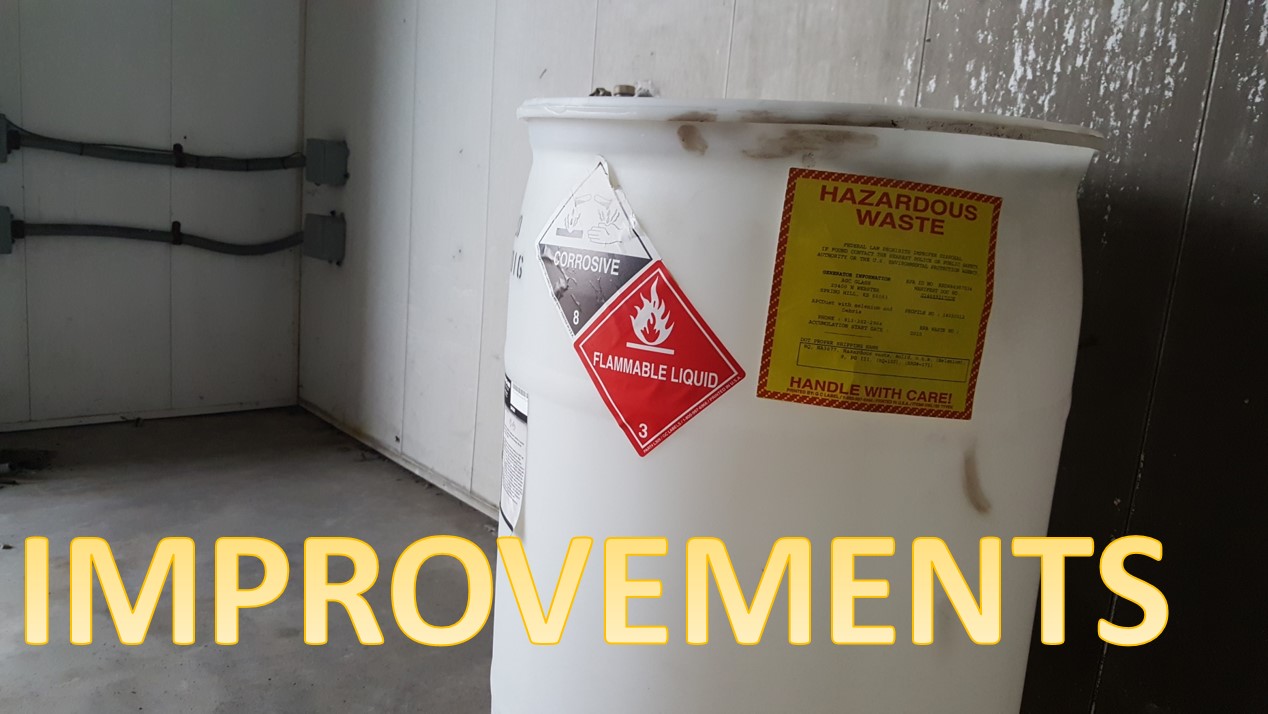
FAQ: How does the Generator Improvements Rule define an acute hazardous waste?
Prior to May 30, 2017 the Federal regulations of the USEPA lacked a clear definition of the term “acute hazardous waste”. That changed with the implementation of the Generator Improvements Rule. (more…)
When not to use the Dangerous Placard for Shipments of HazMat
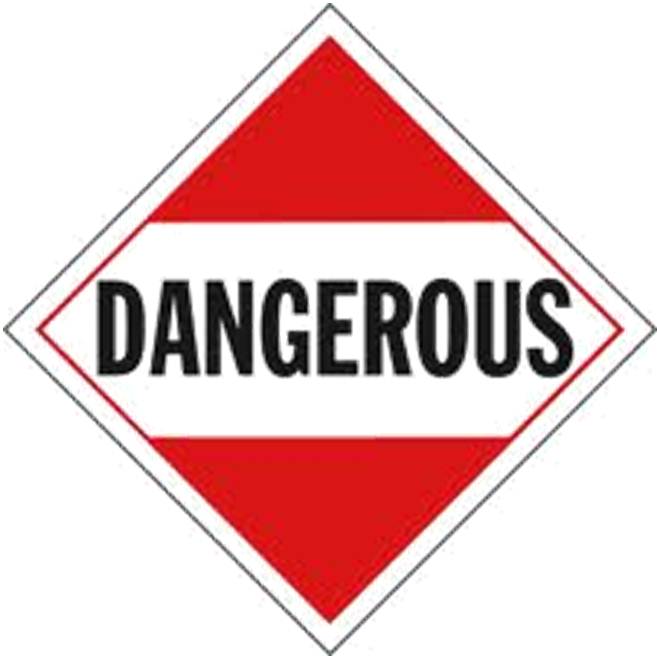 Unless an exception exists, each bulk packaging, freight container, unit load device, transport vehicle or rail car (see 49 CFR 171.8 – Definitions for a better understanding of these terms) containing any quantity of a hazardous material must be placarded on each side and each end with the type of placards specified in tables 1 and 2 found at 49 CFR 172.504(e). The DANGEROUS placard is a useful tool for carriers of hazardous materials because it allows them to substitute one placard for any two or more hazardous materials that require placarding. (more…)
You may Display Placards When not Required by the Hazardous Material Regulations
The determination of the placarding requirements for a shipment of hazardous materials (found at 49 CFR 172, Subpart F) are, initially, straightforward. Placarding of a transport vehicle or freight container to be transported by highway or rail is required for…
- Any quantity of a hazardous material found in Table 1 of the Placarding Tables.
- Any quantity of a hazardous material found in Table 2 of the Placarding Tables in a bulk packaging.
- When the aggregate gross weight of all Table 2 hazardous materials in non-bulk packagings in the transport vehicle or freight container is ≥1,001 lbs.
But of course, it gets more complicated from there. You may be surprised to learn that 49 CFR 172.502(c) allows for the display of placards for a hazardous material even when not required by regulation, if the placarding otherwise conforms to the requirements of 49 CFR 172, Subpart F.
So, this means that even if none of the conditions in #’s 1-3 above are met, a carrier may desire to display placards on a shipment of hazardous materials and this will not be in violation of the Hazardous Materials Regulations (HMR).
The HMR are filled with little exceptions and restrictions just like this one. Make certain you and your HazMat Employees have received the training required by 49 CFR 172, Subpart H to ensure they maintain your company’s regulatory compliance. Contact me for a free consultation on your training needs.
Who are the “Facility Personnel” of a Hazardous Waste Generator who Must Receive Annual Training?
If you are a Large Quantity Generator (LQG) of hazardous waste you may be aware of the requirement to train your Facility Personnel annually. “But”, you may ask, “ just who are my Facility Personnel?” (more…)
Precious Metal Recovery from Hazardous Waste
If you generate a hazardous waste that contains economically significant amounts of gold, silver, platinum, palladium, iridium, osmium, rhodium, ruthenium, or any combination of these, you may be able to take advantage of the exemption from regulation found in 40 CFR 266.70 – Recyclable Materials Utilized for Precious Metal Recovery. First, let’s get a better understanding of some of the terms used and the applicability of this exemption.
- The material to be recovered must be one or more of the following:
- Gold
- Silver
- Platinum
- Palladium
- Iridium
- Osmium
- Rhodium
- Ruthenium
- The exclusion only applies to a recyclable material which, according to 40 CFR 261.6(a)(1), is a hazardous waste (either characteristic or listed) that would be subject to full regulation if sent for disposal but instead is recycled.
- The recyclable material must be reclaimed which is defined at 40 CFR 261.1(c)(4) as a material processed to recover a usable product, in this case a precious metal.
- The precious metal to be reclaimed must be in an amount that is “economically significant”. What does that mean?
EPA’s position has been that indicators of an economically significant amount and therefore legitimate precious metal recovery include:
- Efficient recovery operations. You should be making an effort to recover every morsel of the waste due to its value.
- No land disposal of waste. Natch.
- Payment by the reclaimer to the waste generator. This demonstrates that the waste has an inherent value due to the presence of its precious metals.
The absence of one or more of the above may demonstrate to the EPA that your waste is not eligible for this exemption and may be subject to full RCRA regulation as a hazardous waste. As the generator, you must be able to demonstrate [see 40 CFR 261.2(f)] you are engaged in a legitimate recovery activity(RO14267).
If you are eligible for this exemption you are subject to the following requirements:
- Submit a Notification of Regulated Waste Activity form to your State environmental agency or regional US EPA office as applicable.
- Use the Uniform Hazardous Waste Manifest for off-site shipments.
- Refer to 40 CFR 266.70(b)(3) if you intend to import or export waste for precious metal recovery.
- You must be able to demonstrate through recordkeeping that the recyclable material is not accumulated speculatively as defined at 40 CFR 261.1(c)(8).
- And that’s it. No other requirements of the RCRA regulations (labeling, inspections, training, on-site accumulation time limits, etc.) would apply to the waste.
Eligibility of this exemption is determined by the type of waste you generate and the recycling options available to you. The most important criteria is if the waste has a value due to the presence of certain precious metals. If it does, you may be able to use this exemption to reduce your regulatory burden. Training on the hazardous waste regulations of the US EPA – required for facility personnel of a large quantity generator of hazardous waste – is a good idea for anyone who generates a hazardous waste or recyclable material. You may also be interested in HazMat Employee training required by the US Department of Transportation. I do both. Contact me for a free consultation of your training needs.
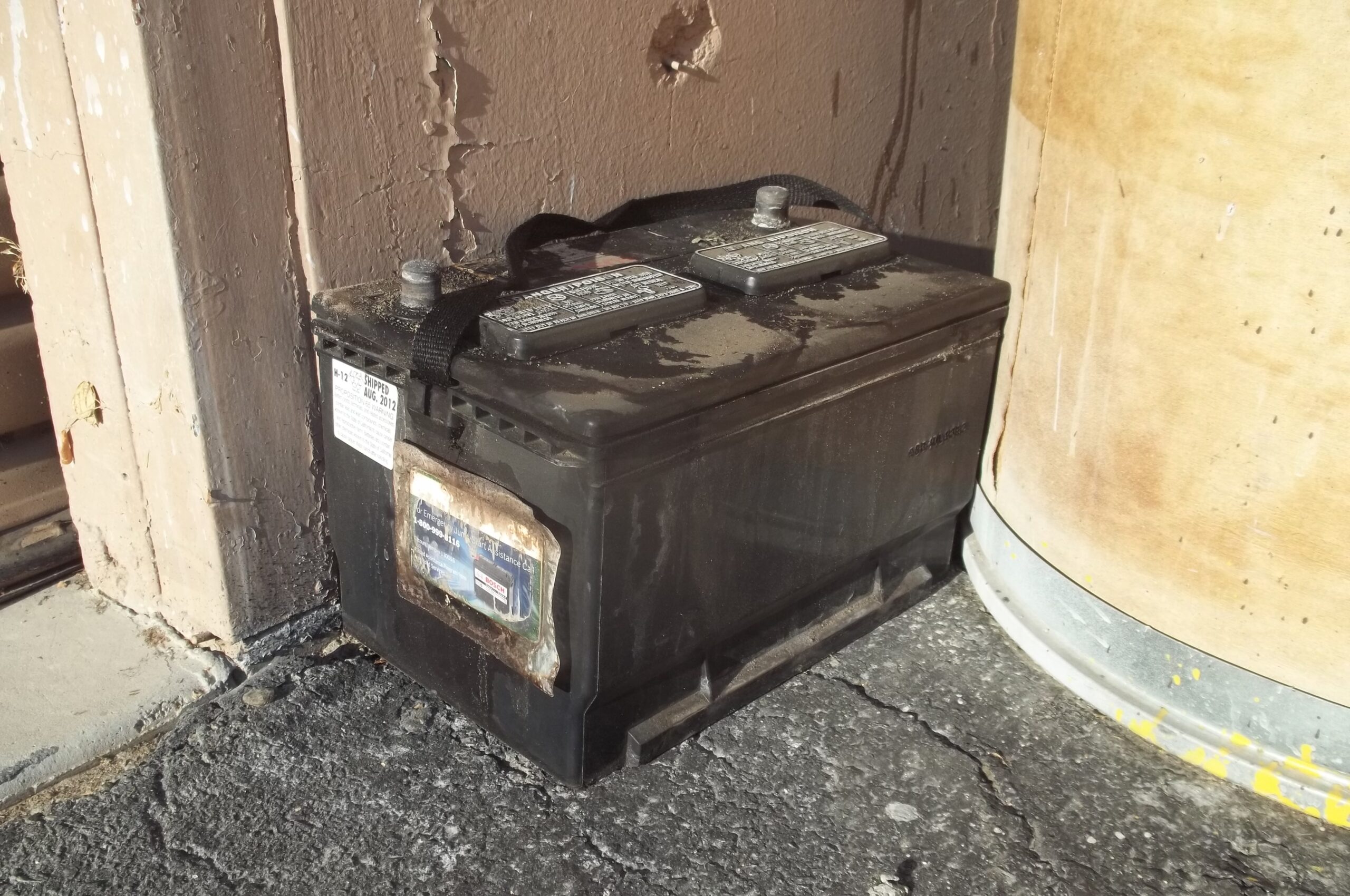
Management Options for Generators of Spent Lead Acid Batteries
If you generate spent lead acid batteries (SLABs) you have three options for on-site handling and disposal under the regulations of the Resource Conservation and Recovery Act (RCRA) regulations enforced by the US EPA. In decreasing order of regulatory burden…
- Manage as a hazardous waste [characteristic for Corrosivity (D002) and Toxicity for Lead (D008)]. This means notification and reporting as a hazardous waste, labeling and container requirements, inspections, and training commensurate with your generator status.
- Manage as a universal waste pursuant to the requirements of 40 CFR 273. This allows for a lesser level of requirements for on-site handling, off-site disposal, and 1 year of on-site accumulation.
- Manage per the regulations created for the reclamation of spent lead acid batteries: 40 CFR 266, Subpart G.
Option #3 is by far the best, as it entails the least amount of generator requirements for handling and disposal of spent lead acid batteries. However, before you select this option, you should be aware of the definition of terms used in the regulatory code.
- Reclamation – to be eligible for this exemption, batteries must be destined for reclamation which means, “processed to recover a usable product” and not disposal.
- Spent – this exemption may not be used for new batteries. Spent means, “it has been used and as a result of contamination can no longer serve the purpose for which it was produced without processing”.
- Lead Acid Batteries – only lead acid batteries (liquid or dry) are eligible for this exemption. If you generate other batteries (eg. lithium, mercury, silver, nickel/cadmium, etc.), you should consider the universal waste option.
- Intact – though not mentioned specifically in the regulations, this exemption only applies to intact lead acid batteries that are spent and destined for reclamation (RO14147).
Like this article? Subscribe to my Monthly Newsletter No marketing emails! |
The table found in 40 CFR 266.80(a) does a very good job of summarizing the applicable regulations for anyone involved in the generation, collection, storage, transportation, and reclamation of spent lead acid batteries. Note the following key points from the table:
- (1) If spent lead acid batteries are to be reclaimed by regeneration (such as by electrolyte replacement), then the batteries are not subject to the requirements of RCRA throughout their life cycle (cradle to grave) except for the requirement to identify the batteries as a characteristic or listed hazardous waste per 40 CFR 261 and conduct the hazardous waste determination per 40 CFR 262.11. This means, no labeling or container requirements, no inspection or employee training, and no time limit for on-site accumulation.
- (2-5) If the batteries are to be reclaimed by a method other than regeneration, then the applicable land disposal restrictions of 40 CFR 268 apply in addition to the hazardous waste identification and determination requirements.
- (4) Storage of the batteries prior to reclamation by a method other than regeneration adds the requirements of 40 CFR 266.80(b) in addition to 40 CFR 261, 40 CFR 262.11, and 40 CFR 268.
- (6-7) Export of spent lead acid batteries for reclamation opens up a whole different can of worms that necessitates a careful reading of the regulations.
Interested in site specific training at your site that covers this topic, and more! Ask me about my Onsite Training |
40 CFR 266, Subpart G was designed by the US EPA to ensure the safe recycling of spent lead acid batteries in a manner that protects human health and the environment. If your batteries are reclaimed by regeneration, then you can choose a very light regulatory burden to maintain compliance. Keep in mind that these are Federal regulations, your State may differ in its regulation of spent lead acid batteries.
Training on the hazardous waste regulations of the US EPA and States with authorized RCRA programs will help you to maintain compliance with all of the applicable requirements of RCRA.
The Symbols of Column 1 of the Hazardous Materials Table
If you are a carrier or shipper of hazardous materials, you should already be familiar with the Hazardous Materials Table. Found at 49 CFR 172.101, it contains the necessary information to complete the shipping paper and comply with other aspects of the Hazardous Material Regulations (HMR) of the Department of Transportation. You may not be familiar with the purpose and importance of the symbols that may be found in Column 1 of the HMT. These symbols (+, A, D, G, I, W), if present, will affect how the hazardous materials shipment is prepared and transported.
- The plus (+) sign fixes the proper shipping name, hazard class and packing group – but not the identification number – whether or not the material actually has the hazards of that class, packing group or any other hazard class definition. It’s purpose is to indicate a material that is known by the DOT to pose a risk to humans, such as: Aniline, Benzaldehyde, Bromine, Sulfuryl Chloride, and others. There may be times where the plus sign is assigned to a mixture or solution where the hazard to humans differs from that of the pure material (think methanol mixed with soil and water). In that case you may select an alternative shipping name that represents the hazards posed by the material (LOI 04-0204).
- The letter ‘A’ means the HMR only applies to the material if it is to be transported by aircraft. However, the HMR does apply, regardless of the mode of transportation, if the material is a hazardous substance or hazardous waste (check US DOT definitions at 49 CFR 171.8). A shipping description with ‘A’ in column 1 of the HMT may be used for a material to be transported by vessel or motor vehicle provided all applicable requirements of the HMR are met.
- The letter ‘D’ identifies a proper shipping name that is accepted for domestic transportation, but may not be acceptable for transportation under international regulations (the International Maritime Organization or International Civil Aviation Organization). An alternate proper shipping name may be selected for either domestic or international transportation.
- The letter ‘G’ identifies proper shipping names for which one or more technical names of the hazardous material must be entered in parentheses, near the basic description. This past article of mine explains in detail the requirements of 49 CFR 172.203(k) and the use of the technical name.
- The letter ‘I’, a counterpart to letter ‘D’, identifies proper shipping names which are accepted for international transportation of HazMat. An alternate proper shipping name may be selected when only domestic transportation is involved.
- The letter ‘W’, a fellow traveler with letter A, denotes a material that is subject to the requirements of the HMR only when transported by vessel (which means any form of watercraft used as a means of transportation on the water). Just like the letter ‘A’, the requirements of the HMR do apply if the material is a hazardous substance or a hazardous waste. A shipping description with ‘W’ in column 1 of the HMT may be used for a material to be transported by aircraft or motor vehicle provided all applicable requirements of the HMR are met.
A full understanding of the Hazardous Material Regulations of the DOT must include the use of the Hazardous Materials Table to determine the proper shipping description for your hazardous materials. I provide training on the regulations of the DOT pertaining to the shipment of HazMat and those of the EPA for the generation of hazardous waste. Contact me for a free consultation of your training needs.