PO Box 1232 Freeport, IL 61032

A Different Kind Of Training

A Different Kind Of Training

A Different Kind Of Training

Elevated Temperature Liquid, n.o.s.

What is an Elevated Temperature Material?

Defined at 49 CFR 171.8, “Elevated Temperature Material means a material which, when offered for transportation or transported in a bulk packaging:

  1. Is in a liquid phase and at a temperature at or above 100 °C (212 °F);
  2. Is in a liquid phase with a flash point at or above 38 °C (100 °F) that is intentionally heated and offered for transportation or transported at or above its flash point;or,
  3. Is in a solid phase and at a temperature at or above 240 °C (464 °F).”

Note that in addition to meeting one of the three conditions listed it also must be “offered for transportation or transported in a bulk packaging…” in order to be defined as an Elevated Temperature Material.  That means, the same material transported in a non-bulk packaging can not be an Elevated Temperature Material.

Understanding what is, and isn’t, an Elevated Temperature Material is important since it is specifically included in the definition of a Hazardous Material, also at 49 CFR 171.8, “Hazardous material means a substance or material that the Secretary of Transportation has determined is capable of posing an unreasonable risk to health, safety, and property when transported in commerce, and has designated as hazardous under section 5103 of Federal hazardous materials transportation law (49 U.S.C. 5103). The term includes hazardous substances, hazardous wastes, marine pollutants, Elevated Temperature Materials, materials designated as hazardous in the Hazardous Materials Table (see 49 CFR 172.101), and materials that meet the defining criteria for hazard classes and divisions in part 173 of subchapter C of this chapter.”

An Elevated Temperature Material may be a hazardous material solely because it matches the definition in §171.8 or it may possess additional hazards (flammable, corrosive, reactive, etc.).  Either way, you must choose a proper shipping name from the Hazardous Materials Table and follow the requirements of the Hazardous Material Regulations.

On the shipping paper, the word “HOT” must immediately proceed the proper shipping name unless “elevated temperature” or “molten” is already included in the proper shipping name [49 CFR 172.203(n)].  However, you may include the word “HOT” on the shipping paper, even if not required, as additional information.

While there is no “HOT” label or placard, you must ensure that the bulk packaging containing your Elevated Temperature Material is labeled and placarded pursuant to 49 CFR 172, Subpart F applicable to its hazard class (Flammable, Class 9, or other).  The labeling and placarding requirements for bulk packagings can be complicated, but in general:

  • A bulk packaging of ≥1,000 gallons capacity must be placarded and marked with the identification number on all four sides.
  • A bulk packaging of <1,000 gallons capacity may be placarded or labeled on two opposing sides and may be marked with the identification number on two opposing sides.

Like this article?

Subscribe to my Monthly Newsletter

No marketing emails!

There are, however, marking requirements specific to Elevated Temperature Materials found at 49 CFR 172.325, they include:

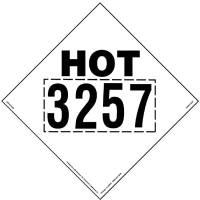
  • A bulk packaging containing an Elevated Temperature Material must display the “HOT” marking on two opposing sides.  This marking, while not a placard, must meet the specific requirements of §172.325(a) and have the “same outside dimensions as a placard”.
  • A bulk packaging of an Elevated Temperature Material that is molten aluminum or molten sulfur must be marked “MOLTEN ALUMINIUM” or “MOLTEN SULFUR” in the same manner as described in §172.325(a).
  • If the identification number marking is displayed on a white-square-on-point display configuration [§172.336(b)], the word “HOT” may be displayed in the upper corner of the display.  If you use this option, you must comply with the requirements of §172.325(c).

You should also check 49 CFR 173.427 which contains additional requirements for bulk packagings of certain Elevated Temperature Materials.

If you offer for shipment an Elevated Temperature Material, then you are a shipper of hazardous materials.  Any of your employees involved in the transportation of hazardous materials must receive triennial HazMat Employee Training.  Contact me to determine your training requirements and how best to meet them.

Daniels Training Services

815.821.1550

Info@DanielsTraining.com

https://danielstraining.com/

Alaskan Municipality Fined for Hazardous Waste Violations

Contact Information: Hanady Kader, EPA Public Affairs, 206-553-0454, kader.hanady@epa.gov Jack Boller, EPA RCRA Unit, 206-553-2953, boller.jack@epa.gov

(Seattle—Sept. 14, 2012) The Kenai Peninsula Borough has agreed to construct a building to store hazardous waste following violations of federal waste management rules at its maintenance facility in Soldotna, Alaska, according to a settlement with the U.S. Environmental Protection Agency.

“Proper hazardous waste management prevents costly, dangerous spills and keeps communities safe,” said Scott Downey, Manager of the Hazardous Waste Compliance Unit in EPA’s Seattle office. “We’re glad that the shop will soon have a building where it can manage hazardous waste more effectively.”

An EPA inspection in 2009 identified hazardous waste violations. The facility failed to determine if waste it was managing was hazardous waste, and failed to label containers of hazardous waste and used oil waste. The substances included paint thinners, kerosene and a mix of solvent and anti-freeze. The improperly labeled containers ranged in size from two-gallon containers to a 300-gallon tank.

The borough offered to construct the building to store hazardous waste as a way to mitigate the penalty EPA sought to address the violations of the Resource Conservation and Recovery Act. Under the settlement, the borough will construct and operate the building and pay a penalty of nearly $12,800.

Good training, my training, serves several purposes.  It will fulfill the training requirements of the US EPA for large quantity generators of hazardous waste and it will inform you of the applicable regulations and what you must do to maintain compliance.  Good training, my training, will reduce or eliminate the potential for this type of violations and fines.  Contact me to determine the kind of training that is right for you.

Flash Point for Determination of Ignitable Liquid Hazardous Waste

Flash Point is a term used by the US EPA when characterizing an Ignitable Hazardous Waste and the US DOT when classifying a Flammable or Combustible Liquid.  Though similar, there are differences in how these two Federal agencies define and describe this term.  If you work with solvent, inks, paints, resins, fuels, or many other organic hydrocarbons it is necessary for you to be familiar with how both the US DOT and the US EPA identify this term and its role in identifying a hazardous material or a hazardous waste.  The purpose of this article is to describe the use of the Flash Point for determining an Ignitable Liquid Characteristic Hazardous Waste per the regulations of the US EPA.  You may also be interested in the US DOT’s use of Flash Point for the Classification of a Class 3 Flammable or Combustible Liquid.

Unlike the DOT’s definition of Flash Point and its precise instructions about which method to use to determine it depending on the conditions of the sample (see link above), the US EPA offers no definition of what is meant by Flash Point and takes little time in 40 CFR 261.21 to list the test methods for determining Flash Point, they are…

  1. Pensky-Martens Closed Cup Tester using the test method specified in ASTM Standard D-93-79 or D-93-80 (incorporated by reference, see Section 260.11).
  2. Seta flash Closed Cup Tester, using the test method specified in ASTM Standard D-3278-78 (incorporated by reference, see Section 260.11).
  3. An equivalent test method approved by the US EPA under procedures set forth in Section 260.20 and 260.21.

These are just the regulations of the US EPA pertaining to the determination of one type of hazardous waste:  Ignitable Liquids.  There are many more, and you must be familiar with all of them if you generate hazardous waste.  My one day of training addresses the regulations of both the US DOT and the US EPA, it will help you to properly classify your hazardous materials and identify your hazardous waste.  Contact me to schedule the right kind of training for you.

Flash Point for Classification of US DOT Flammable and Combustible Liquids

Flash Point is a term used by the US EPA when characterizing an Ignitable Hazardous Waste and the US DOT when classifying a Flammable or Combustible Liquid.  Though similar, there are differences in how these two Federal agencies define and describe this term.  If you work with solvent, inks, paints, resins, fuels, or many other organic hydrocarbons it is necessary for you to be familiar with how both the US DOT and the US EPA identify this term and its role in identifying a hazardous material or a hazardous waste.  The purpose of this article is to describe the use of the Flash Point for classifying a Flammable or Combustible Liquid per the regulations of the US DOT.  You may also be interested in the US EPA’s use of Flash Point for the Determination of a Characteristic Ignitable Liquid Hazardous Waste.

The US DOT defines Flash Point at 49 CFR 173.120(c)(1):  “Flash Point means the minimum temperature at which a liquid gives off vapor within a test vessel in sufficient concentration to form an ignitable mixture with air near the surface of the liquid.”  It goes on to describe the methods to determine Flash Point based on the characteristics of the sample:

1.  For a homogeneous, single-phase, liquid having a viscosity <45 S.U.S. at 38°C (100°F) that does not form a surface film while under test, one of the following test procedures shall be used:

    • Standard Method of Test for Flash Point by Tag Closed Cup Tester, (ASTM D 56) (IBR; see §171.7 of this subchapter).
    • Standard Test Methods for Flash Point of Liquids by Small Scale Closed-Cup Apparatus, (ASTM D 3278) (IBR; see §171.7 of this subchapter).
    • Standard Test Methods for Flash Point by Small Scale Closed Tester, (ASTM D 3828) (IBR; see §171.7 of this subchapter).

2.  For a liquid other than one meeting all the criteria of #1 above, one of the following test procedures must be used:

    • Standard Test Methods for Flash Point by Pensky-Martens Closed Cup Tester, (ASTM D 93) (IBR; see §171.7 of this subchapter).  For cutback asphalt, use Method B of ASTM D 93 or alternative tests authorized in this standard.
    • Standard Test Methods for Flash Point of Liquids by Small Scale Closed-Cup Appartus (ASTM D 3279) (IBR; see §171.7 of this subchapter).
    • Determination of Flash/No Flash – Closed Cup Equilibrium Method (ISO 1516) (IBR; see §171.7 of this subchapter).
    • Determination of Flash Point – Closed Cup Equilibrium Method (ISO 1523) (IBR; see §171.7 of this subchapter).
    • Determination of Flash Point – Pensky-Martens Closed Cup Method (ISO 2719) (IBR; see §171.7 of this subchapter).
    • Determination of Flash Point – Rapid Equilibrium Closed Cup Method (ISO 3679) (IBR; see §171.7 of this subchapter).
    • Determination of Flash/No Flash – Rapid Equilibrium Closed Cup Method (ISO 3680) (IBR; see §171.7 of this subchapter).
    • Determination of Flash Point – Abel Closed-Cup Method (ISO 13736) (IBR; see §171.7 of this subchapter).

3.  If the liquid is a mixture of compounds with different volatility and Flash Points (eg. mixed solvents and paint), its Flash Point must be determined by one of the methods in #’s 1 & 2 above on the material in the form in which it is to be shipped.  Note that the form it is to be shipped in may differ from the form in which is was received as product or its form at its point of generation as a hazardous waste.  If by this test the Flash Point is greater than -7°C (20°F), then a second test shall be made by the procedure described in §173.120(c)(2) which is too complicated for me to describe here.

4.  And one final thing:  for Flash Point determinations by Setaflash closed tester, the glass syringe specified need not be used as the method of measurement of the test sample if a minimum quantity of 2 mL (0.1 oz) is assured in the test cup.

These are just the regulations of the US DOT pertaining to the determination of one class of hazardous material:  Flammable and Combustible Liquids.  There are many more, and you must be familiar with all of them if you ship or receive hazardous materials in any quantity, including hazardous waste.  My one day of training addresses the regulations of both the US DOT and the US EPA, it will help you to properly classify your hazardous materials and identify your hazardous waste.  Contact me to schedule the right kind of training for you.

Flammable and Combustible Liquid Hazardous Materials

Both Flammable and Combustible Liquids are Class 3 hazardous materials defined and described by the USDOT/PHMSA at 49 CFR 173.120.  Too often, this type of hazardous material is assumed to be the same as a USEPA hazardous waste with the characteristic of ignitability (D001).  Though similar in many respects, the terms originate from different federal agencies and have differing determination criteria.  The purpose of this article is to identfiy and describe both a Class 3 Flammable Liquid and a Class 3 Combustible Liquid as defined and regulated by USDOT/PHMSA.

For more information about ignitable hazardous waste read: US EPA Determination of an Ignitable Liquid as a Hazardous Waste.

Like this article?

Subscribe to my Monthly Newsletter

No marketing emails!

A Flammable Liquid “means a liquid having a flash point of ≤60°C (140°F), or any material in a liquid phase with a flash point ≥37.8°C (100°F) that is intentionally heated and offered for transportation or transported at or above its flash point in a bulk packaging…”

So, to meet the definition of a Class 3 Flammable Liquid it must be…

  1. A liquid with a flash point of ≤60°C (140°F), or;
  2. Any material with a flash point ≥37.8°C (100°F), that is…
    • Intentionally heated and offered for transportation, or;
    • Transported at or above its flash point in a bulk packaging.

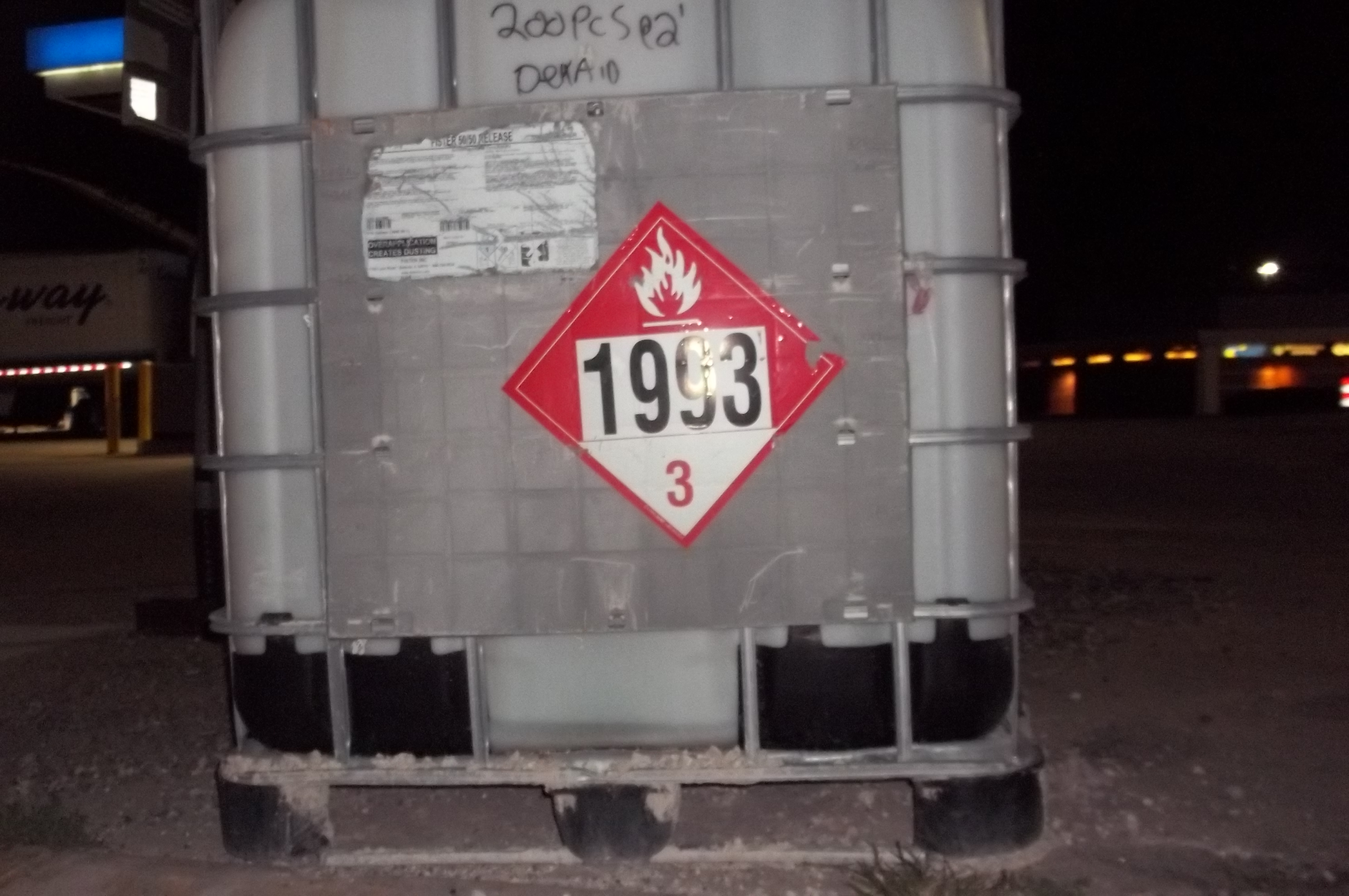
Even if matching the above description, the following materials are exempt from definition as a Flammable Liquid:UN1993 in Intermediate Bulk Container

  1. Any liquid meeting one of the definitions of a Class 2 (Divisions 2.1, 2.2, & 2.3) compressed gas at 49 CFR 173.115.
  2. Any mixture having one or more components with a flash point ≥60°C (140°F), that make up at least 99% of the total volume of the mixture, if the mixture is not offered for transportation or transported at or above its flash point.
  3. Any liquid with a flash point >35°C (95°F) that does not sustain combustion according to ASTM D 2406 (IBR, see §171.7 of this subchapter) or the procedure in appendix H of this part.
  4. Any liquid with a flash point >35°C (95°F) and with a fire point >100°C (212°F) according to ISO 2592 (IBR, see §171.7 of this subchapter).
  5. Any liquid with a flash point >35°C (95°F) which is in a water-miscible solution with a water content of more than 90% by mass.

Interested in site specific training at your site that covers this topic, and more!

Ask me about my Onsite Training

A Combustible Liquid “means any liquid that does not meet the definition of any other hazard class specified in this subchapter and has a flash point >60°C (140°F) and <93°C (200°F).”

So, to meet the US DOT definition of a Class 3 Combustible Liquid it must…

  1. Not meet the definition of any other US DOT hazard class, and;
  2. Be a liquid with a flash point >60°C (140°F) and <93°C (200°F).

In some cases, the US DOT will allow you to reclassify a Flammable Liquid as a Combustible Liquid to take advantage of the reduced regulatory burden when transporting Combustible Liquids.

Contact me with any questions you may have about the transportation of hazardous materials by air, highway, vessel, or rail

International and Domestic

Daniels Training Services, Inc.

815.821.1550

Info@DanielsTraining.com

https://danielstraining.com/

Whether it’s a Flammable Liquid, Combustible Liquid, or liquid Ignitable hazardous waste it is your responsibility to keep them straight and to determine if you are subject to their unique regulations when handling or transporting them.

EPA Fines U.S. Virgin Islands Health Department for Long Term Mismanagement of Chemicals and Pesticides; Decaying and Mislabeled Containers Found at Two Facilities

(New York, N.Y.) The U.S. Environmental Protection Agency has found that the U.S. Virgin Islands Department of Health violated federal law governing the handling and storage of hazardous waste at two of its facilities and has fined the agency $68,000 for the violations. EPA inspections at the facilities, the Old Municipal Facility in Charlotte Amalie, St. Thomas and 3500 Estate Richmond, Christiansted in St. Croix, found unlabeled and decaying containers of chemicals and pesticides on the properties. Many of the containers spilled and the USVI Department of Health failed to properly identify what types of waste were being stored. In some instances, the hazardous chemicals had been kept on-site for over ten years in a state of neglect and decay. Among the hundreds of hazardous chemicals on-site were pyrethrin (a neurotoxin), chlorpyrifos (an insecticide) and calcium hypochlorite (a bleach) – all of which are toxic. Federal environmental law requires hazardous chemicals to be stored, handled and disposed of properly to safeguard public health and the environment.

Pesticides and insecticides are intended to harm or kill pests and are toxic by design. They can be very harmful to people’s health depending on the toxicity of the pesticide and the level of exposure. Pesticides have been linked to various forms of illnesses in humans, ranging from skin and eye irritation to cancer. Some pesticides may also affect the hormone or endocrine systems. All chemicals should be handled properly to protect people’s health. 

“Pesticides are chemicals that must be handled and stored carefully and properly to protect the health of workers and the people who live near the facilities,” said Judith A. Enck, EPA Regional Administrator. “In this case, the U.S. Virgin Islands Department of Health repeatedly violated federal hazardous waste laws. Government, especially a health agency, should lead by example and ensure that pesticides and chemicals are properly handled.”

The Department of Health stores pesticide products to be used in the event of an outbreak of infectious disease. Among the violations, the Department of Health failed to determine which substances should be considered hazardous waste, as required by law, to ensure that they are managed properly. Correctly determining whether a waste meets the definition of hazardous waste is essential to determining how the waste must be managed. The Department of Health also failed to maintain and operate its facilities in a manner that minimized the possibility of a fire, explosion or accidental release of chemicals. 

In 1998, the Department of Health asked the EPA for help in removing and properly disposing of outdated chemical products stored in one of its chemical storage buildings at the Old Municipal Facility in Charlotte Amalie, St. Thomas. The EPA responded, removed and properly disposed of the outdated chemicals and pesticides. Over 850 gallons of liquid pesticides and over 1,700 pounds of solid pesticides were removed by the EPA. Subsequently, the EPA strongly recommended that the Department of Health develop and follow pesticide storage and handling regulations to avoid a repeat of the environmental hazard.

In 2008, the EPA conducted an inspection of the St. Thomas facility and also visited 3500 Estate Richmond in St. Croix. Once again, the EPA observed conditions of neglect and sloppy practices. Pesticide products were abandoned and had spilled throughout the facilities. The EPA reiterated the need for the development of and adherence to a pesticide storage and handling program. 

On September 30, 2010, the EPA ordered the Department of Health to institute a program to properly manage and dispose of pesticide products. Since the initial order, the department has properly removed all outdated chemicals, conducted an inventory of the remaining chemicals, properly stored them and created a pesticide storage and handling program. The EPA conducted follow-up inspections in 2011 and confirmed that the remaining chemicals were properly stored. In March 2012, the EPA issued its final order in this case, requiring the Department of Health to pay a $68,000 penalty.

Electro-Coatings of Iowa, Inc., to Pay $19,171 Civil Penalty for Hazardous Waste Violations in Cedar Rapids, Iowa

(Kansas City, Kan., July 26, 2012) – Electro-Coatings of Iowa, Inc., a chrome, nickel, and zinc plating operation, has agreed to pay a $19,171 civil penalty to the United States to settle a series of Resource Conservation and Recovery Act (RCRA) violations in Cedar Rapids, Iowa. In addition to paying the civil penalty, the company will spend a minimum of $110,000 to install technology that will reduce the amount of hazardous chrome waste generated at the facility as a supplemental environmental project.

According to an administrative consent agreement and final order filed by EPA Region 7 in Kansas City, Kan., an EPA inspector conducted an inspection at the company’s Cedar Rapids facility in May 2011, and noted several violations of the federal act which regulates hazardous waste.

“Facilities that generate hazardous waste must ensure that the proper procedures are followed in the handling, storage, and management of the waste stream,” EPA Region 7 Administrator Karl Brooks said. “Proper management practices reduce the risk of harm to human health and the environment in the event of an accidental release.”

Electro-Coatings of Iowa, Inc., generates a large quantity of hazardous waste, over 1,000 kilograms per month. The violations included storage of hazardous waste for longer than 90 days without a RCRA permit, hazardous waste container management violations, emergency equipment violations, training violations, RCRA contingency plan violations, universal waste management violations, operation of a hazardous waste facility without a RCRA permit, and failing to comply with hazardous waste generator requirements, including failure to label waste containers, failure to date waste containers, and failure to keep waste containers closed.

By agreeing to the settlement with EPA, Electro-Coatings of Iowa, Inc., has certified that it is now in compliance with the RCRA regulations.

The Requirements for Generators of Residual Waste in Pennsylvania

The US Environmental Protection Agency (US EPA) is the Federal agency responsible for protecting the environment within the US from the affects of pollution.  Legislation passed by Congress and signed by the President provides US EPA with the authority to create and enforce regulations to accomplish the goal of environmental protection.

Subtitle C of the Resource Conservation and Recovery Act (RCRA) requires “Cradle to Grave” regulation of all hazardous waste.   That is, from its point of generation through its transportation in commerce to its final destination or “Grave”.

Subtitle D of RCRA delegates the creation and enforcement of regulations for non-hazardous waste to the States.

As a state with an approved hazardous waste management program, the Pennsylvania Department of Environmental Protection (PDEP), Bureau of Waste Management in Pennsylvania is authorized to create and enforce its own hazardous waste regulations.  Under the authority granted to it by RCRA Subtitle D, PDEP has created state-specific regulations for the management of non-hazardous waste from an industrial source; it refers to this waste as:  Residual Waste.

Residual waste is a non-hazardous industrial waste produced by industrial, mining, and agricultural operations.  It may be a liquid, solid, or gas.  It does not include certain coal mining wastes and wastes from normal farming activities.  It also does not include waste identified as hazardous.

Examples of Residual Waste include:

Ash from coal and Residual Waste burning facilities (~40% of total)Contaminated soilCeramicsGypsum board
LinoleumLeatherRubberTextiles
GlassIndustrial equipmentElectronicsPumps
RubberDetergents & cleanersPesticidesFertilizers

Residual waste does not include:

  • Sanitary sewage
  • Uncontaminated non-contact cooling water
  • Office, lunchroom, restroom wastes
  • Construction and demolition debris

If you generate a residual waste you must comply with the applicable state laws and regulations in 25 PA Code, Subchapter B.  Your regulatory burden will depend upon the amount of residual waste you generate.  A summary of the regulatory requirements are below.

If at any site in the previous year you generated more than an average of 2,200 lbs of Residual Waste per month, you must:

  1. Submit the biennial report per §287.52.
  2. Prepare a source reduction strategy per §287.53.

And/or, if at any site in the previous year you generated more than 2,200 lbs of an individual Residual Waste in any single month, you must also complete the required chemical analysis of waste per §287.54.

The requirements of §287.52-54 don’t apply to waste generated in the following manner:

  • Residual waste generated as a result of collecting the waste.
  • Waste created from a spill, release, fire, accident, or other unplanned event.
  • Oil used as a lubricant in an internal combustion engine or for other lubricating in a motor vehicle which is unsuitable for further use.

If you store residual waste at your site (its point of generation) for any period of time, you must also comply with the requirements of Chapter 299, which require generators of residual waste to…

  • Routinely inspect their facility and maintain records of inspections (§299.112).
  • Store for no more than one year, unless you wish to be considered a residual waste disposal facility (§299.113).
  • Prevent it from becoming a nuisance (§299.115).
  • Manage storm water runoff and prevent groundwater degradation (§299.117).
  • Manage in either containers (§299.121) or tanks (§299.122).
  • Whether managed in containers or tanks, residual waste must be labeled as “Residual Waste” and the type of residual waste identified.

Chapter 299 contains more information specific to other management units for residual waste:

  1. Storage piles.
  2. Impoundments.

It also contains requirements for specific types of waste:

  1. Ash residue from residual waste incineration.
  2. Friable asbestos.
  3. PCB waste.
  4. Waste tires.

These state laws and regulations are enforced by the PA DEP by conducting on-site investigations, responding to complaints, and prosecuting violators.  Compliance with Pennsylvania’s (or any State’s) regulations for non-hazardous waste requires a thorough knowledge of the State regulations and the workings of the State Agency (in this case the PDEP).  While I refer to State regulations in my public training workshops, it is in my on-site training that I really dig deep into what you need to know about State and Federal regulations.  Contact me to discuss the training you need for your facility.

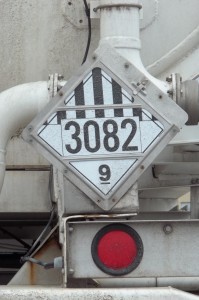
Class 9 placards on cargo tank truck

Is the CLASS 9 Placard Required?

For international transportation (anywhere outside the U.S.) the answer is yes; the CLASS 9 placard must be used if the applicable placarding threshold is met.  For domestic transportation, including international transportation that occurs within the US, the answer is no; the CLASS 9 placard is not required pursuant to a placarding exception found at 49 CFR 172.504(f)(9).

Like this article?

Subscribe to my Monthly Newsletter

No marketing emails!

This is true even if the CLASS 9 hazardous material…

  • Is in a bulk packaging, or;
  • The aggregate weight of Table 2 hazardous materials on the vehicle (including CLASS 9) is ≥1,001 pounds.

    Display of Class 9 Miscellaneous Placard
    The Class 9 Placard is not required within the U.S.

But we’ve all seen the CLASS 9 placard in use on the highways, so what gives?  While not required, the CLASS 9 placard is allowed for domestic transportation if desired by the Carrier.  It is frequently seen when used to mark bulk packagings of >1,000 gallons (including motor vehicles) on all four sides with the identification number.  If this is the case, a CLASS 9 placard would be seen with the four digit identification number displayed across its middle.

You may think the placarding of a truck hauling HazMat is the concern of the driver, but it is your responsibility as the Shipper to offer placards to the driver of your hazardous materials shipment.

Contact me with any questions you may have about the transportation of hazardous materials by air, highway, vessel, or rail

International and Domestic

Daniels Training Services

815.821.1550

Info@DanielsTraining.com

https://danielstraining.com/

There’s even more to learn about the transportation of hazardous materials, and I can help.  Contact me for a free consultation.

Providence Facility Faces EPA Penalty for Hazardous Waste Violations

Release Date: 04/17/2012

Contact Information: David Deegan, (617) 918-1017

(Boston, Mass. – April 17, 2012) – The owner and operator of a hazardous waste management facility in Providence, R.I. face an EPA penalty for violating federal and state hazardous waste laws.

According to the recent complaint filed by EPA’s New England office, Northland Environmental and PSC Environmental Services (operator and owner of the facility, respectively) violated state and federal hazardous waste laws, as well as their state issued permit to operate a commercial hazardous waste and non-hazardous waste treatment, storage and transfer facility located on Allens Avenue in Providence.

The facility is located in a densely populated Environmental Justice (EJ) area of Providence.  EPA considers it an EJ area due to the high proportion of minority and low-income population, which historically has had higher exposure to pollutants than other segments of the population.

In its complaint, EPA details 16 counts of hazardous waste management violations at the facility.  The most significant violations were that the companies failed to properly determine that some of the wastes managed and shipped off site as non-hazardous wastes, were in fact, hazardous. This resulted in hazardous wastes being disposed of at facilities not designed or permitted to handle hazardous wastes. In addition, Northland Environmental and PSC Environmental Services failed to properly list all hazardous waste constituents on required notification and shipping documents. These violations could result in hazardous wastes not being properly managed and treated by the final disposal facilities. Moreover, many incompatible hazardous wastes were stored next to one another without adequate means of separation or protection, potentially resulting in fires or explosions.

PSC Environmental Services owns and Northland Environmental operates the facility, which accepts and handles a variety of wastes, including acids, alkalis, flammable wastes, water reactive wastes, cyanides, sulfides, oxidizers, toxic wastes, oily wastes, photochemical wastes and laboratory packs. Hazardous and non-hazardous wastes are received at the facility, stored and or consolidated and then shipped off site for treatment and/or disposal. The affiliated companies face a penalty of up to $37,500 per violation per day.

Search Website