PO Box 1232 Freeport, IL 61032

A Different Kind Of Training

A Different Kind Of Training

A Different Kind Of Training

RCRA Conditional Exclusion for Solvent-Contaminated Wipes

In a press release dated July 23, 2013 the USEPA announced a modification of the RCRA regulations to conditionally exclude solvent-contaminated wipes from certain hazardous waste requirements.  This long-awaited final rule makes the following changes to the USEPA’s hazardous waste regulations:

RCRA exclusion for solvent contaminated wipes
A new conditional exclusion in the RCRA regulations is available for solvent contaminated wipes
  • Creates the following new terms and definitions at 40 CFR 260.10:
    • No free liquids
    • Solvent-contaminated wipes
    • Wipe
  • Creates a new conditional exclusion from definition as a solid waste at 40 CFR 261.4(a)(26):  Solvent-Contaminated Wipes Sent for Cleaning and Reuse
  • Creates a new conditional exclusion from definition as a hazardous waste at 40 CFR 261.4(b)(18):  Solvent-Contaminated Wipes, Except Wipes with Trichloroethylene, Sent for Disposal
The effective date for this regulation – ie. the date it becomes an enforceable USEPA regulation – is set as six (6) months from the date of its publication in the Federal Register.  It was published in the FR today (July 31, 2013) making it effective on January 31, 2014.

The exclusion is expected to be used by and be a significant cost-savings for thousands of US businesses.  To ensure you are one of them, carefully review the regulatory requirements and modify your operations accordingly. (more…)

The Management of Hazardous Waste Generated Off-Shore

The regulations of the the Resource Conservation and Recovery Act (RCRA) apply generally to any hazardous waste generated, transported, treated, stored, or disposed of within the US.  But what of a hazardous waste generated in waters off the coast of the US, perhaps on a vessel or an oil platform or rig?  The purpose of this article is to explain the applicability of the hazardous waste regulations of the USEPA and the HazMat Transportation regulations of the USDOT/PHMSA to the generation and transportation of hazardous waste within and without US territorial waters. (more…)

RCRA Recordkeeping Requirements – Emergency Preparedness & Prevention

The RCRA regulations @ 40 CFR 265, Subpart C – Preparedness and Prevention apply to both Large Quantity Generators and Small Quantity Generators of hazardous waste [via §262.34(a)(4) & §262.34(d)(4), respectively].  A close review of the entire Subpart reveals little in the way of a requirement for documentation or recordkeeping.  The one place where a document is mentioned, “…the operating record…” is in §265.37(b), more on that later.  You may, however, wish to create documents and keep records of certain activities required by the Subpart in order to demonstrate compliance with the regulations and to fulfill the wishes of the USEPA.  This will include Testing and Maintenance of Equipment (§265.33) and Arrangements With Local Authorities (§265.37). (more…)

EPA Reduces Regulatory Burden for Industrial Facilities Using Solvent Wipes

This is big news!  The regulated industry has been waiting for this Final Rule for some time.  This will affect the Federal RCRA regulations that most states with authorized hazardous waste programs “adopt by reference” into their state regulations.  Prior to this Final Rule most states already had some form of this exclusion, but it was not codified in the regulations.  Below is the news release from the USEPA, I’ll write an article on this soon providing a summary and what you need to know.

Common-sense exclusion will save industry up to $27.8 million per year

Release Date: 07/23/2013
Contact Information: Enesta Jones, jones.enesta@epa.gov, 202-564-7873, 202-564-4355

WASHINGTON – Today the U.S. Environmental Protection Agency (EPA) modified the hazardous waste management regulations under the Resource Conservation and Recovery Act (RCRA) to conditionally exclude solvent-contaminated wipes from hazardous waste regulations provided that businesses clean or dispose of them properly. The rule is based on EPA’s final risk analysis, which was peer reviewed in 2008 and published for public comment in 2009, that concluded wipes contaminated with certain hazardous solvents do not pose significant risk to human health and the environment when managed properly. EPA estimates that the final rule will result in a net savings of between $21.7 million and $27.8 million per year.

Wipes are used in conjunction with solvents for cleaning and other purposes by tens of thousands of facilities in numerous industrial sectors, such as printers, automobile repair shops and manufacturers of automobiles, electronics, furniture and chemicals.

“Today’s rule uses the latest science to provide a regulatory framework for managing solvent-contaminated wipes that is appropriate to the level of risk posed by these materials,” said Mathy Stanislaus, assistant administrator for EPA’s Office of Solid Waste and Emergency Response. “I’ve heard directly from stakeholders about the benefits of this rule and the need to finalize it. The rule reduces costs for thousands of businesses, many of which are small businesses, while maintaining protection of human health and the environment.”

Today’s final rule excludes wipes that are contaminated with solvents listed as hazardous wastes under RCRA that are cleaned or disposed of properly. To be excluded, solvent-contaminated wipes must be managed in closed, labeled containers and cannot contain free liquids when sent for cleaning or disposal. Additionally, facilities that generate solvent-contaminated wipes must comply with certain recordkeeping requirements and may not accumulate wipes for longer than 180 days.

EPA estimates that the final rule will result in a net savings of $18 million per year in avoided regulatory costs and between $3.7 million and $9.9 million per year in other expected benefits, including pollution prevention, waste minimization and fire prevention benefits.

Today’s rule is consistent with President Obama’s Executive Order 13563, Improving Regulation and Regulatory Review, which charges federal agencies to monitor regulatory effectiveness and to help make agency regulatory programs more effective or less burdensome in achieving the regulatory objectives.

EPA first proposed modified regulations for solvent-contaminated wipes on November 20, 2003, and published a revised risk assessment for public comment on October 27, 2009. The docket for this rulemaking is EPA-HQ-RCRA-2003-0004 and can be accessed at http://www.regulations.gov once the final rule is published.

More information about this rulemaking:http://www.epa.gov/epawaste/hazard/wastetypes/wasteid/solvents/wipes.htm

40 CFR 261.4(b)(5) – The Hazardous Waste Exclusion for Oil, Gas, & Geothermal E&P Waste

The Requirements of 40 CFR 265.37 Arrangements with Local Authorities for Hazardous Waste Generators

In the previous article of this series I described the requirements of 40 CFR 265.35 – Required aisle space.  That section of Part 265 indicated what was needed to provide the necessary aisle space within a facility.  Though §265.36 exists, it is reserved, so there are no regulations to review currently.

The purpose of this article: identify and explain the requirements of 40 CFR 265.37 – Arrangements with local authorities for generators of hazardous waste under the emergency preparedness and prevention regulations of 40 CFR 265, subpart C.  This article is the seventh – and last – in a series that looked closely at each section of 40 CFR 265, Subpart C and explained its requirements, how they apply to generators of hazardous waste, and what is required for compliance.  Keep in mind that the regulations of your State may differ from these Federal regulations.

Hold on a minute!  These regulations were revised and moved to a new location within Title 40 of the CFR by the Generator Improvements Rule.  If your state has not yet adopted the Generator Improvements Rule, then this article is still applicable to you (but it won’t be for much longer).  If your state has adopted and been authorized to enforce the Generator Improvements Rule, then these regulations no longer apply to you.  Read: What is the status of the Generator Improvements Rule in my state?

To see an explanation of these regulations as revised by the Generator Improvements Rule you must refer to the following:

Not sure of your hazardous waste generator category?

Take this short survey

To see an explanation of the regulations prior to the revisions of the Generator Improvements Rule, please continue reading this article. (more…)

The Manufacturing Process Unit (MPU) Exclusion of 40 CFR 261.4(c)

In most situations a hazardous waste is generated as a recognizable by-product, spent material, sludge, or residue of a manufacturing process.  Typically, the the moment a hazardous waste is generated (its point of generation) it is immediately contained in a hazardous waste management unit and becomes subject to the RCRA regulations.  However, there are times when a hazardous waste’s point of generation may be within and/or part of a manufacturing process, such as in a process tank or pipeline.  In this case, must it be managed as a hazardous waste while it remains in the process tank or pipeline? (more…)

North Carolina Used Oil Recycling Business and Owner Plead Guilty to Unlawful Handling of PCB-Contaminated Used Oil and Other Crimes

Benjamin Franklin Pass, 60, and P&W Waste Oil Services Inc. of Wilmington, N.C., pleaded guilty today in federal court in the Eastern District of North Carolina for violations of the Toxic Substances Control Act, as well as for making false statements and failing to pay several years of taxes, announced the Department of Justice’s Environment and Natural Resources Division and the U.S. Attorney’s Office for the Eastern District of North Carolina.  The defendants admitted to, among other things, the unlawful handling of a toxic substance that resulted in widespread contamination.
The P&W facility in Leland, N.C., included a tank farm consisting of multiple tanks ranging from 20,000 gallons to 500,000 gallons.  The facility is located approximately 500 feet to the east of the Cape Fear River and a federally recognized wetland.As part of its business operations, P&W transported, processed and marketed used oil contaminated with polychlorinated biphenyls (PCBs).  P&W received the used oil from small and large companies, such as automotive service stations, transformer repair companies and marinas.  P&W also conducted tank cleaning and waste removal.According to the charges filed in federal court in Raleigh, N.C., and information stated in open court, the defendants knowingly failed to comply with regulations covering PCB-contaminated used oil by unlawfully transporting, storing and disposing of used oil contaminated with PCBs.  Specifically, in July 2009, an employee transported waste oil containing fluid from five PCB transformers from a site in Wallace, S.C., to the P&W facility.  The investigation revealed that the waste oil was contaminated with PCB concentrations in excess of 500 parts per million.

“Enforcing our environmental laws is essential to protecting the health of North Carolina’s residents and their natural resources,” said Robert G. Dreher, Acting Assistant Attorney General for the Justice Department’s Environment and Natural Resources Division.  “PCBs are well known to pose substantial risks to human health and the environment and must be handled responsibly and lawfully.  We will continue to vigorously prosecute those who ignore the laws Congress enacted in order to protect the people and the environment from coming into contact with this toxic substance.”

“This disregard of environmental protections resulted in significant contamination,” said U.S. Attorney for the Eastern District of North Carolina Thomas G. Walker.  “The defendant’s conduct placed an economic burden on the United States and an unreasonable risk to the health and safety of the citizens of North Carolina.”

Despite knowledge of the investigation into the defendants’ illegal handling of PCB-contaminated used oil, Pass and an employee of P&W (at Pass’ direction) continued to unlawfully dilute the contaminated used oil.  The mishandling of the PCB-contaminated used oil resulted in the wide-spread contamination at the site and other sites, resulting in millions of dollars in cleanup costs.

PCBs pose such an unreasonable risk of injury to human health and the environment that effective Jan. 1, 1978, Congress banned the production of PCBs and mandated that no person may distribute in commerce, or use any PCBs other than in a totally enclosed manner, and directed the U.S. Environmental Protection Agency (EPA) to promulgate rules phasing out the manufacture of PCBs and regulating their disposal.

As part of the plea agreements, Pass agreed to pay $538,587, plus interest, in restitution to the Internal Revenue Service.  P&W agreed to pay restitution in the amount of $19 million as compensation to Colonial Oil and International Paper for the costs associated with the storage and proper disposal of PCB-contaminated used oil as well as any monetary losses associated with the illegal handling, storage and transportation of toxic substances.  P&W also agreed to a five-year term of probation and to take remedial action to address the environmental contamination at its facility in eastern North Carolina and other leased property in eastern North Carolina, including but not limited to, the proper treatment and/or disposal of PCB-contaminated waste oil.

Currently, efforts are underway to clean up the contamination at P&W’s facility in Leland, N.C., which has been designated a Superfund site by the EPA.  Superfund is the name given to the federal environmental program established to clean up the nation’s uncontrolled hazardous waste sites.

“The license to run a business is not a license to avoid paying taxes,” said Richard Weber, Chief, Internal Revenue Service (IRS) Criminal Investigation. “IRS Criminal Investigation provides financial investigative expertise in our work with our law enforcement partners.  As today’s announcement shows, our skills support a wide range of investigations.  Pass’ plea demonstrates the strength of our collective efforts to enforce the law and ensure public trust.”

“The defendant’s failure to notify EPA of the presence and intentional dilution of PCB-contaminated fuel oil not only posed a risk to public health and the environment, but also demonstrated the level of disregard for the laws that were designed to protect us.” said Maureen O’Mara, Special Agent in Charge of Environmental Protection Agency’s (EPA) criminal enforcement office in Atlanta.  “Today’s guilty plea sends a clear message that the government will prosecute those who recklessly endanger the health of our communities and environment by ignoring the law.”

The defendants entered their plea before U.S. District Judge James C. Dever III of the Eastern District of North Carolina.

U.S. Attorney Walker and Acting Assistant Attorney General Dreher praised the efforts of the EPA’s Criminal Investigation Division and the IRS’s Office of Criminal Investigations and the U.S. Coast Guard’s Criminal Investigative Services for their diligent work in the investigation of this matter.  Assistant U.S. Attorney Banumathi Rangarajan of the Eastern District of North Carolina and Trial Attorney Shennie Patel of the Justice Department’s Environmental Crimes Section of the Environment and Natural Resources Division are the prosecutors in charge of the case.

The Used Oil regulations under the Resource Conservation and Recovery Act (RCRA) allow generators of certain wastes to manage them under a set of standards that are more relaxed than those for hazardous waste, the Used Oil Standard at 40 CFR 279.  This is allowed even if the Used Oil exhibits the characteristics of a hazardous waste:  Ignitability, Corrosivity, Reactivity, & Toxicity.  However, per 40 CFR 279.10(i) the Used Oil Regulations are not applicable if the waste contains PCBs at concentrations of 50 ppm or greater.  Wastes with PCB concentrations above the 50 ppm threshold may not dilute the waste in order to lower its concentration (as in this case) unless the dilution is specifically allowed at 40 CFR 761.

Though not regulated as a hazardous waste, the Used Oil Standard is a part of the RCRA regulations and does contain its own specific requirements to ensure compliance.  It is just one of the topics I cover thoroughly at my Hazardous Waste Personnel Training Seminars, Onsite Training, and Web-Based Training.


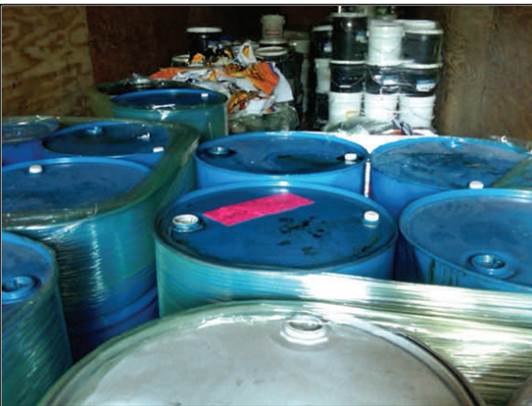
Photo of hazardous waste containers in a trailer

Missouri Man Sentenced for Abandoning Hazardous Waste – EPA Bulletin June 2013

On June 4, 2013, MICHAEL J. REDDING, JR., was sentenced to complete a three-year term of probation with a special condition of six months’ home detention. He also was ordered to pay $9,000 in restitution for clean-up costs.  Redding previously pleaded guilty to two RCRA violations stemming from the transportation and abandonment of hazardous waste. In early 2010, the defendant acquired equipment and assets from a bankrupt printing business.  In April, he directed a five-man crew to remove items from the buildings, including drums containing hazardous waste.  Those drums were then transported, without manifests, to another facility that was not permitted to store hazardous waste.  This case was investigated by the United States Environmental Protection Agency Criminal Investigation Division.  It is being prosecuted by Assistant U.S. Attorney Dianna Collins.

Photo of hazardous waste containers in a trailer
Containers of hazardous wastes stored in this trailer prior to being abandoned by Redding
It is interesting to note that this activity as described above is a violation not only of the USEPA’s hazardous waste regulations, but also the Hazardous Materials Regulations of the PHMSA/USDOT.  The transportation of a hazardous waste without a Uniform Hazardous Waste Manifest (or some other shipping paper in the case of a Conditionally Exempt Small Quantity Generator) is itself a violation of the HMR.  It is not mentioned in the article, but is safe to assume that the transportation of the hazardous waste included other violations of the HMR as well, such as:
  • No HazMat Labels or required markings on the containers identifying them as a hazardous material and a hazardous waste.
  • No placards on the truck though the quantity in the image makes it likely they were required.
  • No emergency response information or phone number provided to the carrier.
  • Incorrect segregation and securement of hazardous materials in the vehicle (just look at that picture!)
  • No HazMat Employee training for anyone involved in the transportation of the hazardous material/hazardous waste.  HazMat Employee training for the driver of the vehicle would also require Driver Training.
  • It is possible that a HazMat Safety Permit may be required (take this survey to see if it applies to you).
  • It is likely that registration as a shipper and a carrier of HazMat would be required (take this survey to see if it applies to you).

The transportation of a hazardous waste is subject to the regulations of both the USEPA (and your state) and the PHMSA/USDOT.  Violations of one Agency’s regulations could result in the violation of another’s, quickly compounding your violations, fines, and headaches.  Be sure you are in compliance with the regulations of both agencies, attend one of my Training Seminars, schedule Onsite Training, or register for my Web-Based Training.  No matter what you choose you will meet the training requirements of the respective agencies and you will learn what you need to maintain compliance at your facility year-round.

Contact Daniels Training Services @: 815.821.1550

The Requirement to Submit a Written HazMat Incident Report (DOT Form F 5800.1)

In an earlier article I wrote about the two types of HazMat Incident Reports required by 49 CFR 171.15 & 171.16, respectively:  Telephonic & Written.  The article continued by revealing that the responsibility to submit a HazMat Incident Report will usually fall on the carrier and not the shipper since they are the ones most likely to be in “control” of a hazardous substance when it is in transportation.  Therefore, a carrier of HazMat must be aware of these reporting requirements while a shipper of HazMat should be aware of them.  In this article I’ll review the conditions that require the submittal of a written hazardous materials incident report (DOT Form 5800.1) per 49 CFR 171.16. (more…)

Search Website