PO Box 1232 Freeport, IL 61032

A Different Kind Of Training

A Different Kind Of Training

A Different Kind Of Training

Guidebook for Development of an Area Contingency Plan for Environmental Emergencies

The Bullet:

The US Environmental Protection Agency has created a guidebook for the creation of an Area Contingency Plan.  It is available for download as a PDF file from EPA’s Office of Emergency Management web site, or you may download the pdf of the Guidebook directly:  USEPA Area Contingency Planning Handbook, Volume 1.0

Who:

It was developed by EPA’s Area Planning Workgroup.

What:

An Area Contingency Plan is a reference document prepared for the use of all agencies engaged in responding to environmental emergencies in a defined geographic area.

Where:

With the release of this ACP the EPA hopes to assist local and regional emergency planners to work within a standardized national format for area contingency planning.

When:

Created during 2011 & 2012.  Released March of 2013.

Why:

Though primarily intended for use by EPA emergency response program personnel, the open publication of this ACP can serve other purposes, including:

  • To inform other agencies of EPA’s planning process.
  • To maintain a national consistency in the basic content of the ACP.
How:

This Handbook is a guide and reference for the development of Area Contingency Plans (ACPs) for environmental emergencies.

Conclusion:

A document such as this can be very helpful to someone who is responsible for emergency response planning over a regional, or even a local area, “Throughout this Handbook, the terms ‘Area Contingency Plan’ and ‘ACP’ also encompass the processes for developing and managing Sub-Area Plans and Geographic Response Plans, which have scopes more limited than the ACP itself.”

The stakeholders in an ACP will certainly include generators of hazardous waste and transporters of hazardous materials.  Contact me with questions about the training required for hazardous waste generators and HazMat Employers.
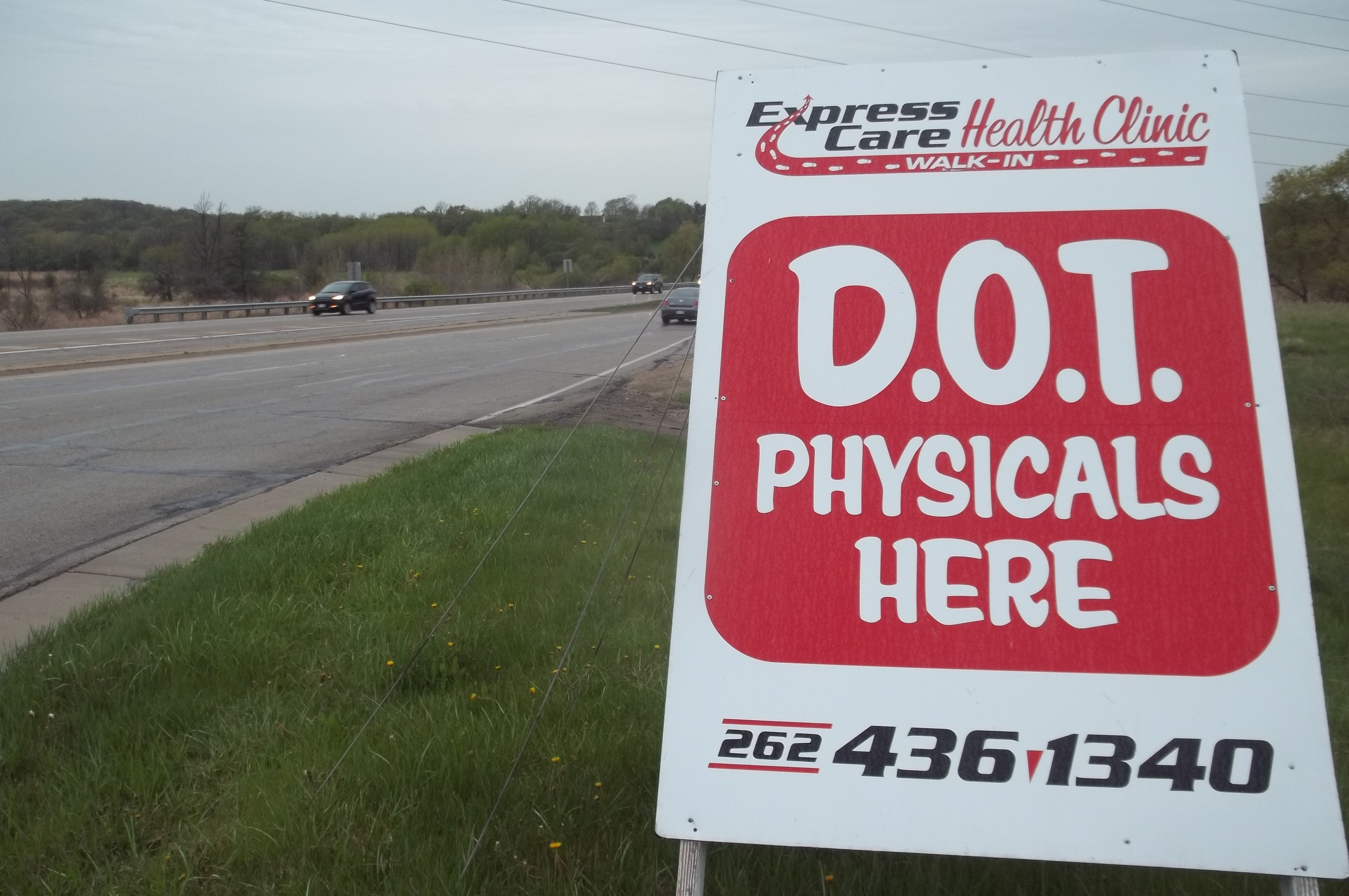
USDOT physicals required for drivers of CMVs

Deadline May 21, 2014: CMV Drivers Must Have Valid Medical Certificate Signed by a Medical Examiner

The Bullet:

FMCSA announcement:  By May 21, 2014 drivers of Commercial Motor Vehicles must have their medical examinations performed by a Certified Medical Examiner listed on the FMCSA’s National Registry of Certified Medical Examiners.

Read this article for more information about CMVs and HazMat transportation.

Who:

Established January 1, 2000, the Federal Motor Carrier Safety Administration (FMCSA) regulates the trucking industry within the United States.  More about the FMCSA’s mission.

The regulations of the FMCSA apply to CMVs engaged in interstate transportation (ie. between two or more states).  The regulation of intrastate transportation (ie. within the a state) of CMVs is the responsibility of that state.

What:

An interstate CMV driver is currently required to have a valid medical certificate signed by a medical examiner. After May 21, 2014, however, an interstate CMV driver will need the signature of a certified medical examiner on their medical certificate.  If you’ve already had an exam and have a current certificate that certificate will be valid until its regular expiration date.

Where:
Attention Interstate CMV Drivers
FMCSA Regulations apply to the interstate transportation in commerce of goods & persons

This regulation takes effect nationwide as of May 21, 2014.

When:

The requirement of a CMV driver to have a valid medical certificate signed by a certified medical examiner goes into effect May 21, 2014.

Why:

To keep America’s interstate CMV drivers healthy and our roads safer.

How:

Use the following tools to find certified medical examiners in your area—or anywhere in the country.

1.       Visit the National Registry Web site and search by Zip Code, State, or examiner name.

2.       Choose a certified medical examiner from the list and call to make an appointment.

3.       If your preferred health care professional isn’t on the list, simply refer him or her to the Certified Medical Examiners page to learn more about getting certified.

Conclusion:

Please spread the word and encourage your fellow CMV drivers to find a Certified Medical Examiner by May 21st. They can find more information in the Fact Sheet for Drivers or by going to the National Registry Web site, so pass it along!

Thank you for keeping America moving and for your commitment to safer roadways.

A driver of a motor vehicle over a public roadway transporting any amount of a hazardous material, meets the definition of a HazMat Employee and requires initial (w/i 90 days) and triennial HazMat Employee training.  Please contact me for a free consultation of the training requirements for your drivers.

Daniels Training Services

815.821.1550/Info@DanielsTraining.com/https://danielstraining.com/

The Shipper’s Certification on a Hazardous Materials Shipping Paper

The transportation in commerce of a hazardous material will require a description of the HazMat on a shipping paper unless an exception is identified in 49 CFR 172.200(b).  Pursuant to 49 CFR 172.204, the HazMat shipping paper must include a certification by the shipper that the hazardous material offered for transportation is in compliance with all applicable regulations.  The purpose of this article is to describe the requirements for the shipper’s certification on a shipping paper for the transportation in commerce of a hazardous material. (more…)

Correcting Mistakes on a Uniform Hazardous Waste Manifest

Everybody makes mistakes, right?  But what if those mistakes are made by a generator of hazardous waste on the uniform hazardous waste manifest?  In this article I will explain the regulatory requirements of both the USEPA and the USDOT/PHMSA for correcting mistakes on the uniform hazardous waste manifest (Manifest). (more…)

Ammunition Manufacturing Facility in Anoka, MN Find $44,500 by MPCA for Hazardous Waste Violations

The Bullet:

Federal Cartridge Company has been fined and required to take corrective actions as a result of hazardous waste violations at its ammunition manufacturing facility in Anoka, MN.

Read the press release:  Federal Cartridge Company in Anoka penalized for hazardous waste violations

Contact:  Stephen Mikkelson of MPCA at (218) 316-3887 for more information.

Who:
What:

Federal Cartridge Company has been assessed a fine of $44,500 for the following violations of MPCA regulations:

  • Failure to clean up a discharge of wastewater containing lead.  The leachable concentration of lead in the discharge was determined to be greater than the regulatory threshold of 5.0 mg/L and therefore a hazardous waste for the Toxicity Characteristic of Lead.  By not promptly cleaning-up the discharge of wastewater it becomes on-site disposal of hazardous waste to land without a permit.
  • Failure to gain prior approval from MPCA or to modify its hazardous waste facility permit for construction of a waste treatment tank.  Since the press release refers to a “waste treatment tank” and not a wastewater treatment tank, I assume that Federal Cartridge Company treats its own hazardous waste on-site to reduce it’s volume, make it non-hazardous, or make it easier or cheaper to dispose of.  Further, reference is made to the company’s “hazardous waste facility permit”.  Treatment of wastewater is regulated under the Clean Water Act (CWA) whereas treatment of waste is regulated under the Resource Conservation and Recovery Act (RCRA).
Where:

Federal Cartridge Company is located in Anoka, MN

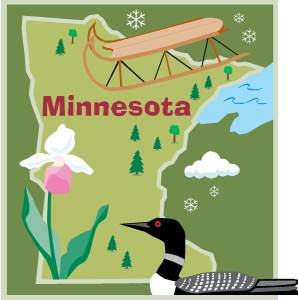
MPCA & hazardous waste regulations in Minnesota
Be sure you’re in compliance with the MPCA!
When:
  • Initial inspection by MPCA conducted May 2013.
  • Construction project (without MPCA approval) initiated later in 2013.
  • Penalty announced by the MPCA March 19, 2014.
Why:

The actions of Federal Cartridge Company are viewed by MPCA to be a threat to the health and safety of the people and environment of Minnesota and therefore require correction and a penalty.

How:

As a state with an authorized hazardous waste program under RCRA, the MPCA is responsible for the enforcement of hazardous waste regulations in Minnesota.  A state may make its own regulations more strict and more broad than those of the USEPA, which MPCA has done.  MPCA may enter a facility at any reasonable time to conduct an inspection of its property, collect samples for analysis, and review company records.

Conclusion:

Two important take-aways from this incident:

  1. A spill or release that is not promptly cleaned-up may be identified as disposal by a regulatory agency.  If the spill or residue is a hazardous waste, then watch out!
  2. No action should be taken at an industrial facility (and not just industrial, take a look at the $81 MILLION fine paid by WalMart) without considering the impact on environmental regulatory compliance, state and Federal.

Daniels Training Services

815.821.1550/Info@DanielsTraining.com/https://danielstraining.com/

ADEQ in Arizona

Cathode Ray Tube Recycling Facility Fined by Arizona DEQ

The Bullet:

Dlubak Glass, based in Blairsville, PA will pay a fine of $120,000 to the Arizona Department of Environmental Quality for violations of the Resource Conservation and Recovery Act (RCRA) regulations.

Read the ADEQ press release:  Arizona DEQ fines glass recycler

ADEQ in Arizona
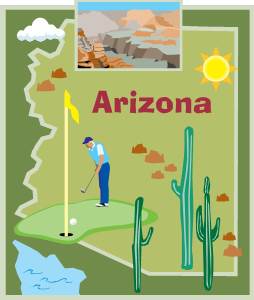
The ADEQ regulates hazardous waste in Arizona
 Who:

Dlubak Glass, based in Blairsville, PA operates a cathode ray tube recycling facility in Yuma, AZ.  Violations were found and civil penalty assessed by the Arizona Department of Environmental Quality.

What:

“During an inspection ADEQ inspectors found broken CRT glass throughout the five-acre facility and stained soil in several locations. The stained soil also was observed extending about 20 feet into an orchard adjoining the Dlubak property. Samples taken on the property found levels of lead as much as 75 times more than the maximum federal and state exceedance level of five milligrams per liter.

In addition, the broken glass was stored in open, unlabeled cardboard containers and washing activities were conducted on an outdoor concrete pad. State regulations require that all CRT storage and processing activities be conducted within a building with a roof, floor and walls.”

Dlubak Glass was assessed a penalty of $120,000 for the above violations.

Where:

The Dlubak Glass facility where the violations occurred is located at 19538 S. Avenue 1 East in Yuma, AZ.  Dlubak Glass has other plants located in Pennsylvania, Ohio, Kentucky,Texas, and Oklahoma.

When:

Date of initial inspection was not indicated in the ADEQ press release.  The date the decision was announced was March 7, 2014.

Why:

“Their unlawful management of hazardous waste put employees and the environment at risk,” said ADEQ Director Henry Darwin. “But they hired environmental consultants, changed their operating procedures and did the soil cleanup in reaching a resolution in the case.”

Cathode ray tubes are found in many older computer monitors and televisions.  If recycled properly they are excluded from the definition of a solid waste and are therefore subject to little or no regulation.  However, the exclusion hinges on proper recycling of the CRTs which was not the case here.  If improperly managed during recycling CRTs may release lead and other harmful pollutants into the environment.

How:

As a state with an authorized hazardous waste program, the Arizona DEQ has the authority to inspect, investigate, and assess fines of facility’s found to be in violation of state regulations.  The state regulations of the ADEQ are designed to protect the health and safety of the environment and people of Arizona.

Conclusion:
If you generate a hazardous waste it is important that you conduct an audit of the facilities that receive your waste for treatment (eg. recycling) storage or disposal.  It is especially important if you are using a conditional exclusion from regulation for your waste that depends upon its proper recycling by the TSDF.

Not sure of your hazardous waste generator status?

Take this short survey

You must also provide initial (within 90 days) and annual training for all facility personnel if you are an LQG of hazardous waste.  Confused?  Call me for a free consultation on the regulations of the USEPA, ADEQ or the USDOT.

MPCA & hazardous waste regulations in Minnesota

Hazardous and Solid Waste Violations at Crow Wing County Landfill

The Bullet:
MPCA & hazardous waste regulations in Minnesota
Be sure you’re in compliance with the MPCA!

A county landfill has paid a civil penalty of $12k for its illegal acceptance of liquid hazardous waste.  View the release from the MPCA:  Crow Wing County Landfill penalized for hazardous and solid waste violations

Who:

Crow Wing County Landfill and the Minnesota Pollution Control Agency (MPCA).  Contact:  Stephen Mikkelson, (218) 316-3887

What:

The facility accepted for temporary storage 15 barrels labeled as a characteristic hazardous waste (D001 for Ignitability). The barrels were disposed of in the municipal solid waste portion of the landfill.

Where:

Crow Wing County Landfill is located east of Brainerd, MN

When:

Violation occurred November of 2012.

Announced March 5, 2014

Why:

A hazardous waste (D001 for Ignitability) must be treated, stored, or disposed of only at a facility that has a permit under Subtitle C of the Resource Conservation and Recovery Act (RCRA).  Such a facility would also have to operate in compliance with the USEPA regulations of 40 CFR 264/265 (or their State equivalent).  A municipal solid waste landfill cannot accept hazardous waste for disposal unless there is an exception allowed by the state for hazardous waste from a Conditionally Exempt Small Quantity Generator (CESQG).  Given the quantity of hazardous waste in this case, it is unlikely it originated from a CESQG.  Also, liquids of all kinds (hazardous or non-hazardous) are banned from landfill disposal.

How:

As a state with an authorized hazardous waste program, the MPCA has the authority to enforce hazardous waste regulations within Minnesota.

Daniels Training Services

815.821.1550/Info@DanielsTraining.com/https://danielstraining.com/

Please don’t hesitate to contact me if you have any questions about the management of hazardous waste or the transportation of hazardous materials.

The Requirements of 40 CFR 265.54 Amendment of the RCRA Contingency Plan for Large Quantity Generator of Hazardous Waste

This article is the sixth in a series that takes a close look at the requirements of 40 CFR 265, Subpart D – Contingency Plan and Emergency Procedures.  This Subpart, along with the remainder for Part 265 is applicable to permitted hazardous waste treatment, storage, and disposal facilities (TSDFs) and to large quantity generators of hazardous waste (LQGs).  A Contingency Plan and the emergency procedures outlined in Subpart D are critical for the safe operation of a hazardous waste facility and to ensure compliance with state and Federal regulations.

The purpose of this article is to read, review, and explain the requirements of 40 CFR 265.54 Amendment of Contingency Plan.

Hold on a minute!  These regulations were revised and moved to a new location within Title 40 of the CFR by the Generator Improvements Rule.  If your state has not yet adopted the Generator Improvements Rule, then this article is still applicable to you (but it won’t be for much longer).  If your state has adopted and been authorized to enforce the Generator Improvements Rule, then these regulations no longer apply to you.  Read: What is the status of the Generator Improvements Rule in my state?

To see an explanation of these regulations as revised by the Generator Improvements Rule you must refer to the following:

Not sure of your hazardous waste generator category?

Take this short survey

To see an explanation of the regulations prior to the revisions of the Generator Improvements Rule, please continue reading this article. (more…)

The New Solvent Wipes Conditional Exclusion in Iowa

Way back in July 23, 2013 the Environmental Protection Agency (EPA) announced an impending – and long awaited – modification of the nation’s hazardous waste regulations to conditionally exclude certain solvent-contaminated wipes from specific hazardous waste requirements.  This long-awaited final rule makes the following changes to the EPA’s hazardous waste regulations:

RCRA exclusion for solvent contaminated wipes
What is the status of the Solvent Wipe Rule in Iowa?
  • Creates the following new terms and definitions at 40 CFR 260.10:
    • No free liquids
    • Solvent-contaminated wipes
    • Wipe
  • Creates a new conditional exclusion from definition as a solid waste at 40 CFR 261.4(a)(26):  Solvent-Contaminated Wipes Sent for Cleaning and Reuse
  • Creates a new conditional exclusion from definition as a hazardous waste at 40 CFR 261.4(b)(18):  Solvent-Contaminated Wipes, Except Wipes with Trichloroethylene, Sent for Disposal.

These new Federal regulations went into effect on January 31, 2014.  However, since they  represent a relaxation and reduction of existing EPA regulations they are not effective in states with an authorized hazardous waste program unless and until that state chooses to adopt them.  Among the states with an authorized hazaroud waste program, some have chosen to adopt the Federal rule as their own, some are in consideration, and others have indicated an intention not to adopt it, but what about Iowa?

The conditional exclusion for solvent wipes in Iowa
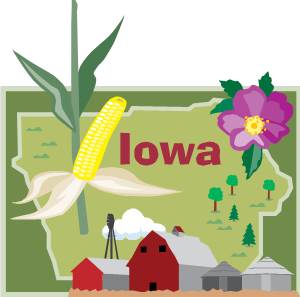
Iowa follows the Federal regulations for the management of hazardous waste.

Iowa does not have an authorized hazardous waste program under RCRA and, according to an informal conversation with an IDNR official, it has no intention of ever acquiring one.  Therefore this Federal rule is effective in Iowa as of January 31st 2014 and a person or business in Iowa has the option to follow this conditional exclusion for the management of its solvent-contaminated wipes.  Please carefully review the requirements of this conditional exclusion to determine your compliance with these Federal regulations.


First we’ll start with the new definitions in §260.10:

No free liquids, as used in 40 CFR 261.4(a)(26) and 40 CFR 261.4(b)(18), means that solvent-contaminated wipes may not contain free liquids as determined by Method 9095B (Paint Filter Liquids Test), included in “Test Methods for Evaluating Solid Waste, Physical/Chemical Methods” (EPA Publication SW-846), which is incorporated by reference, and that there is no free liquid in the container holding wipes.  No free liquids may also be determined using another standard or test method as defined by an authorized state.

Solvent-contaminated wipe means a wipe that, after use or after cleaning up a spill, either (1) contains one or more of the F001 through F005 solvents listed in 40 CFR 261.31 or the corresponding P- or U- listed solvents found in 40 CFR 261.33; (2) exhibits a hazardous characteristic found in 40 CFR part 261 subpart C when that characteristic results from a solvent listed in 40 CFR part 261; and/or (3) exhibits only the hazardous waste characteristic of ignitability found in 40 CFR 261.21 due to the presence of one or more solvents that are not listed in 40 CFR part 261. Solvent-contaminated wipes that contain listed hazardous waste other than solvents, or exhibit the characteristic of toxicity, corrosivity, or reactivity due to contaminants other than solvents, are not eligible for the exclusions at 40 CFR 261.4(a)(26) and 40 CFR 261.4(b)(18).

Wipe means a woven or non-woven shop towel, rag, pad, or swab made of wood pulp, fabric, cotton, polyester blends, or other material.

The definition of No Free Liquids may mistakenly lead you to believe that any free liquids in a solvent-contaminated wipes container precludes the use of this exclusion; this is not so.  The issue of free liquids in the solvent-contaminated wipes container will be addressed later in this article.

Like this article?

Subscribe to my Monthly Newsletter

No marketing emails!

To meet the definition and be subject to the exclusion a solvent-contaminated wipe must be either of the following:

  • Cleaned and reused after use at an industrial laundry or dry cleaner (hereafter referred to as “reusable wipes”).

Or…

  • Disposed of after use at a municipal solid waste landfill or a solid waste combustion unit (hereafter referred to as “disposable wipes”).

In addition, a solvent contaminated wipe must be one of the following:

  • A wipe containing one or more F001-F005 listed solvents found in §261.31 or the corresponding P- or U-listed solvents found in §261.33, including those listed in Table 1:

Table 1 – Listed Solvents (from 40 CFR 261) for the Solvent-Contaminated Wipes Conditional Exclusion

Acetone

Isobutyl Alcohol

Benzene

Methanol

n-Butanol

Methyl Ethyl Ketone

Chlorobenzene

Methyl Isobutyl Ketone

Creosols

Methylene Chloride

Cyclohexanone

Tetrachloroethylene

1,2-Dichlorobenzene

Toluene

Ethyl Acetate

1,1,2-Trichloroethane

Ethyl Benzene

Trichloroethylene

(for reusable wipes only)

2-Ethoxyethanol

Xylenes

Or…

  • A wipe that exhibits a hazardous waste characteristic (Ignitability, Corrosivity, Reactivity, or Toxicity) resulting from a solvent listed in Table 1.

Or…

  • A wipe that exhibits only the hazardous characteristic of Ignitability resulting from a solvent not listed in §261 or Table 1.

Question:

What is an example of a solvent that exhibits only the hazardous characteristic of Ignitability from a solvent not listed in §261?

Answer:

Isopropyl Alcohol (aka Isopropanol) is just one example.

Whether reusable or disposable, a solvent-contaminated wipe must be managed according to specific requirements in order be subject to the exclusion, these include:

Container for Solvent Contaminated Wipes
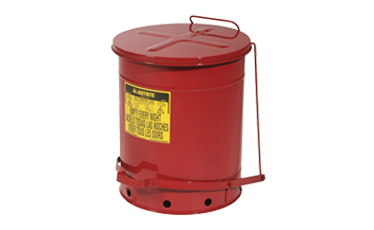
Solvent Contaminated Wipes Must be Kept in a Closed Container
  • On-site accumulation and off-site transportation must be in closed containers (sealed for off-site transportation) that are capable of containing free liquids, if any are present.
  • Containers must be labeled:  “Excluded Solvent-Contaminated Wipes”.
  • On-site accumulation of solvent-contaminated wipes may not exceed 180 days.
  • Containers of solvent-contaminated wipes may not contain free liquids at the point of being sent off-site.  If present, any free liquids removed from the wipes during its on-site accumulation will need to be managed as a hazardous waste.  Free liquids may be present in a solvent-contaminated wipes container for the 180 days that it remains on-site and need not be managed as a distinct wastestream until the point the wipes are shipped off-site for disposal or laundering.
  • Generators of solvent-contaminated wipes must maintain records of documents that include:
    • Name and address of the laundry, dry cleaner, landfill, or combustion unit.
    • Evidence that the 180 day on-site accumulation limit has not been exceeded.  This can be accomplished by placing the initial date of accumulation on the container.
    • Description of the process the generator is using to meet the “no free liquids” condition.
  • As noted above, the presence of free liquids in the solvent-contaminated wipes container is not a violation of the regulations.  However, the free liquids, if present, must be managed properly when the solvent-contaminated wipes are shipped off-site.  To determine if free liquids are present, refer to the definition in §260.10, it references the EPA standard method to identify the presence of free liquids:  the Paint Filter Test.
  • A reusable wipe, if excluded from definition as a solid waste at 40 CFR 261.4(a)(26) is neither a solid waste nor a hazardous waste and is therefore not subject to any regulation in Iowa other than the requirements of the exclusion itself.
  • A disposable wipe, if excluded from definition as a hazardous waste at 40 CFR 261.4(b)(18), remains a solid waste and may be an Iowa Special Waste.  In Iowa, generators of Special Waste must receive approval from a landfill prior to disposal (see:  Special Waste Authorization in Iowa).
  • Disposable wipes that are contaminated with Trichloroethylene are not eligible for the exclusion.  EPA feels wipes contaminated with Trichloroethylene are not safe for disposal in a municipal solid waste landfill.  Therefore, these disposable wipes will need to be managed as a hazardous waste.
  • Reusable wipes must go to a laundry or dry cleaner whose wastewater discharge, if any, is regulated under the Clean Water Act.  Disposable wipes must go to one of the following:
    • A combustor regulated under the Clean Air Act.
    • A hazardous waste combustor, boiler, or industrial furnace regulated under RCRA.
    • A municipal solid waste landfill or hazardous waste landfill regulated under RCRA.

Daniels Training Services

815.821.1550/Info@DanielsTraining.com/https://danielstraining.com/

Much more information about the Solvent Wipe Rule can be found at the following sources:

Please don’t hesitate to contact me with any questions about the Solvent Wipe Rule or the management of hazardous waste in Iowa.

Recycling Industrial Waste (both Hazardous and Non-Hazardous) and Non-Industrial Hazardous Waste in Texas

A generator of any waste in Texas must take care to ensure compliance with the regulations of the Texas Commission on Environmental Quality (TCEQ).  The first step is to determine if the waste generated is an industrial solid waste or a non-industrial solid waste (read:  The Identification of Industrial and Non-Industrial Waste in Texas).  Only hazardous waste from a non-industrial source is subject to TCEQ regulation whereas both hazardous and non-hazardous waste from an industrial source is subject to regulation by the TCEQ.  But no matter whether it is hazardous waste from a non-industrial source or all waste from an industrial source, there is the possibility that, if recycled properly, the waste may be excluded from some or all regulation of the TCEQ.

TCEQ training for hazardous waste personnel
Exemptions from regulation are available for both hazardous and non-hazardous waste

To quote the TCEQ, “The regulations that govern industrial and hazardous waste recycling are fairly complex.”  That, I believe, is a Texas-sized understatement!  These regulations can be very complex, so proceed with caution.  After reading this summary of the existing regulations I suggest you conduct further research (additional sources of information are available at the end of this article). (more…)

Search Website