PO Box 1232 Freeport, IL 61032

A Different Kind Of Training

A Different Kind Of Training

A Different Kind Of Training

What is a Totally Enclosed Treatment Facility?

A Totally Enclosed Treatment Facility, sometimes referred to as a Totally Enclosed Treatment Unit, is an exclusion in the RCRA regulations available to generators of hazardous waste.  It allows a generator to conduct on-site treatment (definition below) of its hazardous waste without being subject to the RCRA permitting requirements of 40 CFR Parts 264 or 265; the exclusions are found in §264.1(g)(5) and §265.1(c)(9), respectively.  Further, if the hazardous waste is managed immediately upon generation in a Totally Enclosed Treatment Facility and the treated effluent is a non-hazardous waste, then the waste is not subject to RCRA regulations from its point of generation and does not count toward the facility’s generator status [§ 261.5(c)(2)].  Though it sounds enticing, “So long, Large Quantity Generator status!” the scope of the TETF exclusion is very limited; the purpose of this article is to explain the definition of a Totally Enclosed Treatment Facility for hazardous waste.

Not sure of your hazardous waste generator status?

Take this short survey

(more…)

Orientation of a label on a HazMat packaging

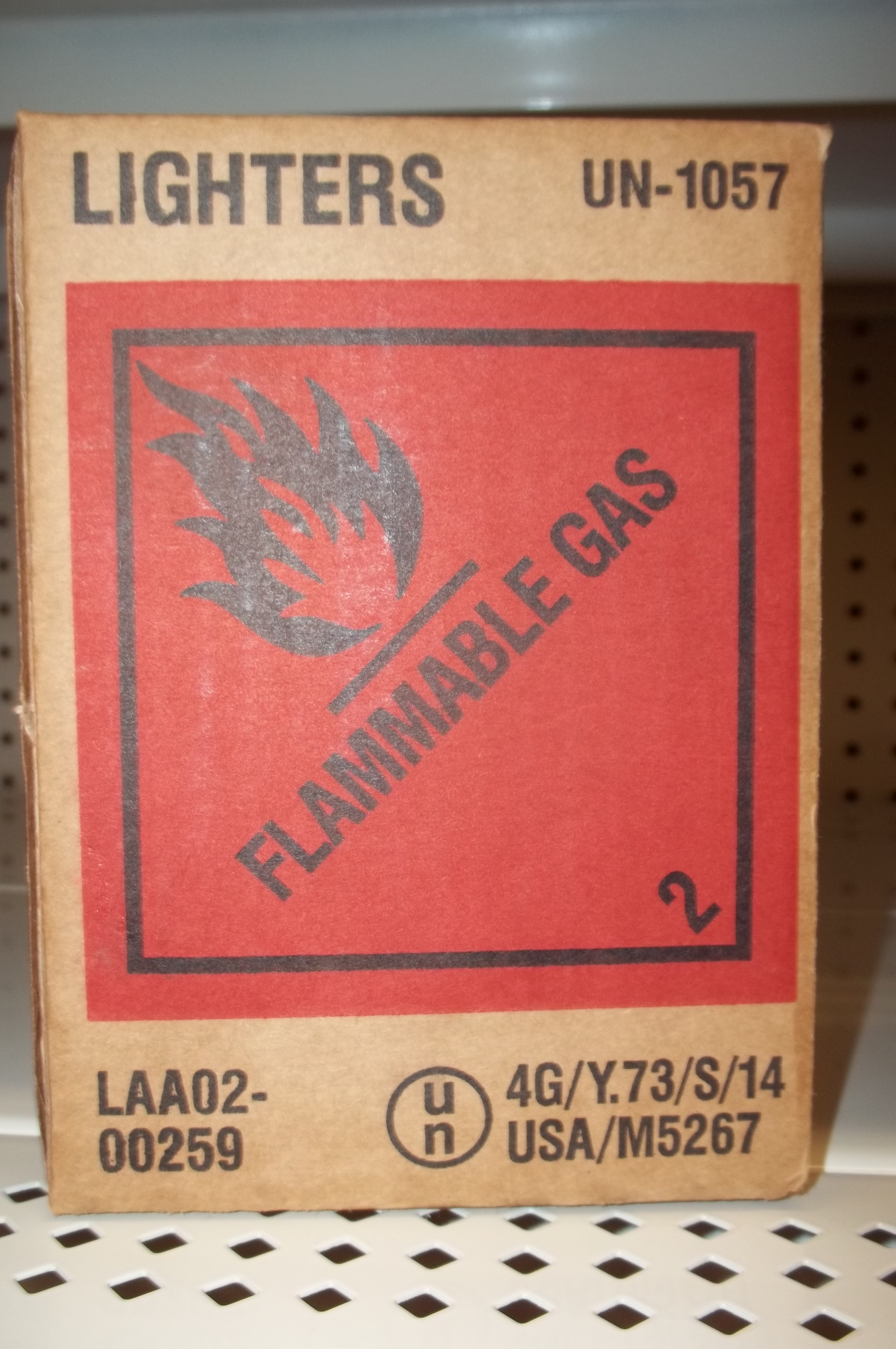
Proper Placement and Orientation of Labels for the Transportation of Hazardous Materials in Non-Bulk Packaging

Pursuant to the PHMSA/USDOT Hazardous Material Regulations (HMR) at 49 CFR 172.400, each person who offers for transportation or transports a hazardous material in any of the following packages or containment devices shall label them as specified in Column 6 of the hazardous materials table at §172.101:

  • A non-bulk package.
  • A bulk packaging, other than a cargo tank, portable tank, or tank car, with a volumetric capacity of less than 18 m3 (640 cubic feet), unless placarded in accordance with subpart F of this part.
  • A portable tank of less than 3,785 L (1000 gallons) capacity, unless placarded in accordance with subpart F of this part.
  • A DOT Specification 106 or 110 multi-unit tank car tank, unless placarded in accordance with subpart F of this part.
  • An overpack, freight container or unit load device, of less than 18 m3 (640 cubic feet), which contains a package for which labels are required, unless placarded or marked in accordance with §172.512 of this part.

The purpose of this article is to reveal an interpretation of the HMR that allows for some variability in the placement and orientation of HazMat Labels on non-bulk packages. (more…)

Release to waters of the state

US EPA, Region 7 Fact Sheet: General Release (Spill) Reporting Requirements

A characteristic of my Onsite Training is to explain the facility’s reporting requirements in the event of a spill or release; particularly if it involves a hazardous waste.  This can be a challenge due to differing reporting requirements among the states and the number of US EPA regulations that require reporting of various incidents.  To assist in the determination of reporting responsibilities, US EPA Region 7 (Serving Iowa, Kansas, Missouri, Nebraska and 9 Tribal Nations) created a fact sheet documenting the reporting requirements for various incidents under the Clean Air Act (CAA), Clean Water Act (CWA), Comprehensive Environmental Response, Compensation, and Liability Act (CERCLA), Emergency Planning and Community Right-to-Know Act (EPCRA), Resource Conservation and Recovery Act (RCRA), and Toxic Substances Control Act (TSCA).

Release to waters of the state
Research your spill and release reporting requirements before the emergency

Please refer to this webpage for the latest version of this very helpful data:  Fact Sheet: General Release (Spill) Reporting Requirements

Please note the following regarding the Fact Sheet:

  • It is only a guide meant to assist regulated facilities in determining their compliance.
  • It does not cover all Federal reporting requirements.
  • Regional, state, and local reporting requirements are not addressed here.
  • The best way to determine your reporting requirements is to research the applicable regulations prior to an emergency.

Please refer to my earlier articles for a more in-depth look at the reporting requirements of CERCLA & EPCRA:

My HazMat Employee and RCRA Training is one way to ensure compliance with the regulatory requirements of both the USEPA and your State.  Contact me for a free training consultation.

Daniels Training Services

815.821.1550

Info@DanielsTraining.com

https://danielstraining.com/

U.S. EPA settles with two San Joaquin Valley companies to ensure safe handling of hazardous waste

The Bullet:

US EPA announced the conclusions of enforcement actions against two hazardous waste generators in California’s San Joaquin Valley.  Fines paid by the two facilities total $75,200.  Read the US EPA press release:  U.S. EPA settles with two San Joaquin Valley companies to ensure safe handling of hazardous waste

Who:

WCR, Inc., a heat exchanger refurbishing facility.

B.C. Laboratories, Inc., a company that provides environmental testing services for commercial and government clients.

US Environmental Protection Agency – Region 9.  Media Contact: Nahal Mogharabi, 213-244-1815, mogharabi.nahal@epa.gov

What:

Alleged violations of WCR, Inc.:

  • Failure to properly label and close hazardous waste containers.
  • Failure to maintain a hazardous waste container in good condition, leading to minor leaks.
  • Failure to minimize the possibility of unplanned releases by storing the leaking container in an outdoor, uncovered area.
  • Failure to conduct required weekly inspections.

WCR has agreed to pay $34,600 to resolve these violations.

Alleged violations of B.C. Laboratories:

  • Failure to properly label and close hazardous waste containers.
  • Failure to provide adequate aisle space to allow unobstructed access by personnel and inspectors.
  • Failure to submit a biennial hazardous waste report.
  • Not following proper practices, posing a greater risk of hazardous waste releases into the environment.

B.C. Laboratories has agreed to pay $40,600 to resolve these violations.

Where:

WCR, Inc. is located in Fresno, CA

B.C. Laboratories, Inc. is located in Bakersfield, CA.

When:

WCR, Inc. was inspected by US EPA in March 2013.

B.C. Laboratories, Inc. was inspected by EPA in November 2012.

News release dated June 26, 2014

Why:

“Facilities that deal with hazardous waste are responsible for its safe storage and handling,” said Jared Blumenfeld, EPA’s Regional Administrator for the Pacific Southwest. “It’s vital to protect employees and nearby communities from the risks of accidental leaks and releases of harmful waste products.”

How:

The Resource Conservation and Recovery Act (RCRA) authorizes EPA to oversee the generation, transportation, treatment, storage, and disposal of hazardous waste. Under RCRA, hazardous waste must be stored, handled and disposed of using measures that safeguard public health and the environment.

Conclusion:

In this situation the US EPA brought this enforcement action against the two California businesses and not the Department of Toxic Substances Control (DTSC) of the California Environmental Protection Agency (Cal EPA).  Whatever the enforcement agency (State or Federal), the RCRA regulations will be enforced.  I can provide the training you need to comply with both State (California’s hazardous waste regulations are more strict and more broad than those of the US EPA) and Federal regulations.

Contact me for a free training consultation.

Daniels Training Services

815.821.1550

Info@DanielsTraining.com

https://danielstraining.com/

For more information on the Region’s 2011-2014 Strategic Plan for the San Joaquin Valley, please visit: www.epa.gov/region9/strategicplan/sanjoaquin.html

The Advocate: TCEQ’s Quarterly Small Business and Local Government Assistance Rules Update

Subscription to The Advocate – either electronic or hardcopy – is a must for any small business or local government agency in Texas.

TCEQ training for hazardous waste personnel
TCEQ regulates hazardous and non-hazardous waste from both industrial and non-industrial facilities.

The Advocate is the TCEQ’s Small Business and Local Government Assistance rules update, printed quarterly, containing information regarding compliance issues and regulatory concerns that affect small businesses and local governments.

From its banner:  For and about small businesses and local governments affected by environmental regulations

Take a look at The Advocate for 3rd Quarter 2014, or access the library of issues going back to Winter of 1997!

You can receive a hard-copy edition in the mail at no charge or you can sign up to receive an e-mail alert when each new issue is available on TCEQ’s web site.  Find out how to subscribe to either electronic or hardcopy.

No matter whether state or Federal, compliance with the regulations begins with knowledge.  I recommend you take advantage of this source of information to increase your knowledge of the regulations of the Texas Commission on Environmental Quality.  And, be sure to attend my one day Training Seminar in Austin, TX on August 13, 2014.  You’ll come away with an expanded awareness of the TCEQ regulations for the management of Industrial Solid Waste, Hazardous Waste, Universal Waste, and Used Oil.

Be sure to contact me with any questions you may have about the Texas regulations for the management of waste.

Daniels Training Services

815.821.1550

Info@DanielsTraining.com

https://danielstraining.com/


Virginia Chemical Distributor to Pay $612,339 for Violations of Hazardous Waste Storage Regulations

The Bullet:

A chemical distribution facility in Roanoke, Va was ordered by an administrative law judge to pay a $612,339 penalty for multiple violations of federal and state hazardous waste storage regulations.

Who:

United States Environmental Agency (USEPA) issued the violations.

Chem-Solv, Inc. is the operator of the facility.

Austin Holdings-VA, L.L.C. is the facility owner.

What:

Alleged violations include:

  • Storing hazardous waste in an open tank that did not have an engineering assessment or air emission controls.
  • Storing hazardous waste for greater than 90 days without a permit.
  • Failure to perform daily inspections of hazardous waste tanks.
  • Failure to perform hazardous waste determinations on the wastes in the open tank, aerosol waste, and other wastes generated at the facility.
  • Open hazardous waste tank had been improperly removed, without compliance with a RCRA closure plan.

The companies have a right to appeal the decision to EPA’s Environmental Appeals Board.

Where:

Chem-Solv, Inc. is located in Roanoke, VA

Austin Holdings-VA, L.L.C. is the facility owner.

When:

Judge’s opinion issued June 5, 2014

News release dated June 24, 2014

Why:

Violations of the Resource Conservation and Recovery Act (RCRA), such as these are alleged, can threaten public health and the environment and require costly cleanups through improper storage and disposal of hazardous waste.  The enforcement of RCRA regulations by the USEPA can eliminate these threats.

How:

Despite the fact that Virginia has an authorized hazardous waste program (I find it interesting that there is no mention of the Virginia Department of Environmental Quality in this release) and that the alleged violations include violations of State regulations, the USEPA is the primary investigation and enforcement agency for this case.

Conclusion:

Though not mentioned as an alleged violation, I would not be surprised to find that this facility has not completed the required training for Hazardous Waste Personnel.  High-quality Hazardous Waste Personnel training such as mine would have provided the information necessary to prevent the alleged violations. Contact me to provide this training or to answer any questions you may have about the RCRA regulations of the USEPA or your State.

Daniels Training Services

815.821.1550

Info@DanielsTraining.com

https://danielstraining.com/

View the press release:  Virginia Chemical Distributor to Pay $612,339 for Violations of Hazardous Waste Storage Regulations

Contact Information: Donna Heron 215-814-5113 / heron.donna@epa.gov

The Judge’s decision is available at: http://www.epa.gov/aljhomep/orders/2014/RCRA-03-2011-0068_Chemsolv_14-06-05_ID_Biro.pdf


The Requirement of a HazMat Carrier to Provide Contact Information

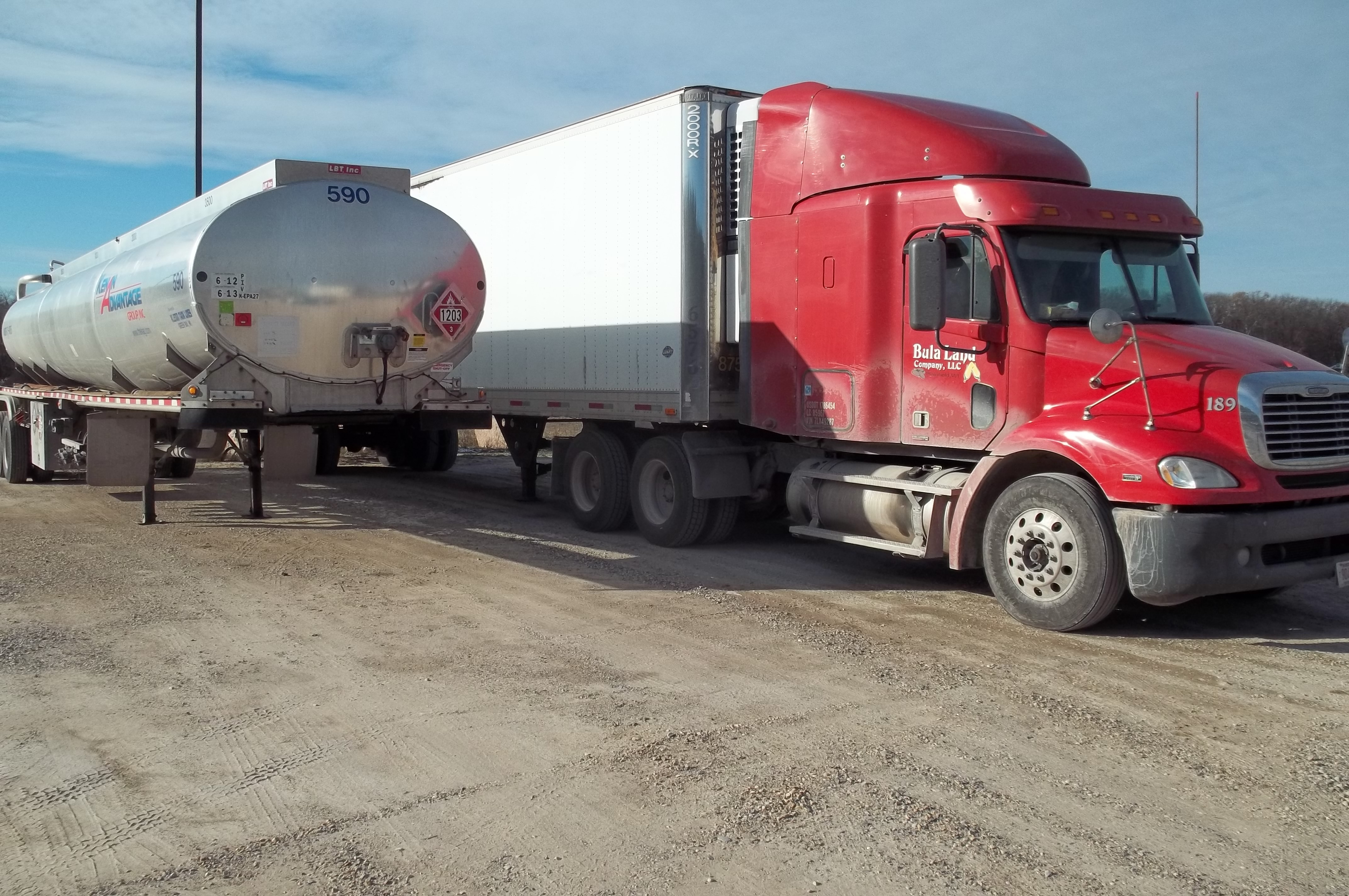
Throughout the Hazardous Material Regulations (HMR) of the PHMSA/USDOT it is primarily the responsibility of the Shipper of a hazardous material to provide the information necessary to safely transport the HazMat and to communicate its potential hazards.  However, 49 CFR 172.606 contains requirements for the Carrier to provide contact information during certain situations of HazMat transportation.  The purpose of this article is to explain in detail the requirements of this regulation, summarized as follows:

Transport Vehicle (bulk tank) Separated From Motive Power
49 CFR 172.606 requires the Carrier to provide information in this situation
  1. A HazMat Carrier must instruct the operators of the vehicle to contact them in the event of an incident involving the HazMat pursuant to paragraph (a) of §172.606.
  2. The HazMat Carrier must make information available with the hazardous material whenever it is parked during transportation and is separated from its motive power pursuant to paragraph (b) & (c) of §172.606.

(more…)

Delaware Composting Facility Issued NOV by DNREC

The Bullet:

The DNREC issued an NOV (Notice of Violation) to a commercial composting company based on information it provided in its quarterly report and an inspection of the site.  Potential violations  include exceeding the facility’s limits for on-site storage of yard and wood waste and the presence of plastic bags at the site.

Who:

DNREC – Department of Natural Resources and Environmental Control (Delaware) – Solid & Hazardous Waste Program

Wilmington Organic Recycling Center is the location of alleged violations.

Peninsula Compost Company, LLC is the Owner/Operator of site.

What:

Alleged violations documented on the NOV:

  1. Quarterly report showed that the storage limits for yard and wood waste overs exceeded the storage limits established in the BUD.  A Beneficial Use Project Determination, or BUD, establishes the limits within which a composting facility such as this must operate.
  2. Acceptance of prohibited waste – non-compostable plastic bags.
  3. Plastic continues to be abundant throughout Peninsula’s composting process with minimal effort to eliminate the contamination.
  4. Prohibited waste, especially plastic residual waste from the screening process, was stored on the ground with no enclosure.
Where:

Peninsula Compost Company, LLC and the Wilmington Organic Recycling Center are both located in Wilmington, DE

When:

Violations were noted on May 5, 2014.

Enforcement action served June 26, 2014.

Why:

Though facilities such as this are not subject to the high level of regulation as a hazardous waste TSDF, they still must comply with State and Federal regulations designed to protect the environment.  It seems clear from the alleged violations of this NOV, that the presence of plastic in composted material is a concern of the DNREC.

How:

Under Subtitle D of the Resource Conservation and Recovery Act (RCRA) the management of solid waste that is not a hazardous waste is primarily the responsibility of the State and not the US EPA.  Delaware exercised this authority to ensure the protection of the environment and the related health and safety of its citizens.

Conclusion:

It’s not only violations of the hazardous waste regulations that can result in NOVs and fines.  If you ship your non-hazardous waste to a facility such as this, be sure to perform an audit of its operations to determine if it is compliance with State and/or Federal regulations.

Contact me if you have any questions about the management of hazardous or non-hazardous waste.

Daniels Training Services

815.821.1550

Info@DanielsTraining.com

https://danielstraining.com/

MN Pollution Control Agency Completes 68 Enforcement Cases in Second Quarter of 2014

The MPCA completed 68 enforcement cases in 41 Minnesota counties during just the second quarter of 2014 (April-June).  The civil penalties collected due to these violations exceed $735,000.  The MPCA has 107 environmental enforcement investigations that are ongoing and may yet lead to additional civil penalties.

A complete list of all enforcement actions can be found on the agency’s web site at www.pca.state.mn.us.

The following is a brief summary of all 68 cases completed during the second quarter of 2014:

  •  Greenheck Fan Corp., dba Innovent Air Handling Equipment LLC, Minneapolis, for air quality violations, $365,000 (this includes $315,000 toward a supplemental environmental project)
  • Industrial Finishing Services, Perham, for air quality violations, $60,000
  • Twin Ports Excavating LP, Duluth, for stormwater violations, $53,000 (all to be spent on a supplemental environmental project)
  • Two Harbors WWTP, Two Harbors, for water quality violations, $19,000
  • La Roche’s, Inc., Faribault, for subsurface sewage treatment systems violations, $14,000
  • Gold’n Plum Farms LLC, Sauk Rapids, for air quality violations, $10,000
  • Whistling Valley Development WWTP, Lake Elmo, for water quality violations, $10,000
  • Norway Beach, Cass Lake, for water quality violations, $8,413
  • Schriever Farm LLC, Harmony, for feedlot violations, $6,500
  • Vincent & Nancy Hajek property, Glenville, for solid and hazardous waste violations, $6,500
  • Stussy Construction, Inc., Mantorville, for stormwater violations, $5,795
  • A&F Consulting Group, Winona, for asbestos violations, $5,775
  • Sleep Inn Marshall LLC, Marshall, for stormwater violations, $5,700
  • Geo’s Paint & Finish LLC, Brainerd, for hazardous waste violations, $5,688
  • 528 Partnership LLP, St. Paul, for stormwater violations, $5,600
  • Aaron Carlson Corporation, Minneapolis, for hazardous waste violations, $5,500
  • Steven Mogard, dba Royal Flush Sanitation S&P, Ortonville, for subsurface sewage treatment systems violations, $5,400
  • Hedstrom Lumber Co., Inc., Grand Marais, for air quality violations, $5,050
  • Burns Excavating, Inc., Medina, for stormwater violations, $4,850
  • Rich Demeules, Medina, for stormwater violations, $4,850
  • Albany Recycling Center LLC, Albany, for stormwater violations, $4,700
  • Clearwater Paving, Bemidji, for stormwater violations, $4,700
  • NuCrane Manufacturing, Hutchinson, for stormwater violations, $4,700
  • Consolidated Construction Co., Inc., Marshall, for stormwater violations, $4,300
  • Westman Freightliner, Mankato, for stormwater violations, $4,200
  • Arrowhead Recycling Center, Two Harbors, for stormwater violations, $4,150
  • Castle Danger Demolition Landfill, Two Harbors, for stormwater violations, $4,150
  • AW Kuettel and Sons, Inc., Duluth, for stormwater violations, $4,083.75
  • Fosston WWTP, Fosston, for water quality violations, $4,019
  • Sam’s Well Drilling, Inc., Kevin Sorge property, Austin, for water quality violations, $4,000
  • BH Heselton Demolition Landfill, Faribault, for stormwater violations, $3,900
  • Cedar Lake Engineering, Inc., Maple Lake, for stormwater violations, $3,900
  • Concast, Inc., Zumbrota, for stormwater violations, $3,900
  • Innova Industries, Inc., Fergus Falls, for stormwater violations, $3,900
  • PaR Nuclear, Shoreview, for stormwater violations, $3,900
  • Pepsi Beverages Co., Burnsville, for stormwater violations, $3,900
  • Scott Equipment Co., New Prague, for stormwater violations, $3,900
  • Silgan Containers Mfg. Corp., Savage, for stormwater violations, $3,900
  • Viracon, Inc., Owatonna, for air quality violations, $3,700
  • Otter Tail Power Co., Hoot Lake Plant, Fergus Falls, for water quality violations, $3,550
  • Gerdau Ameristeel US, Inc., St. Paul, for air quality violations, $3,500
  • Prinsco, Inc., Prinsburg, for stormwater violations, $3,400
  • L&S Construction, Springfield, for stormwater violations, $3,000
  • Zufall Pit, Owatonna, for stormwater violations, $2,854
  • Allen & Joey Greibrok, Austin, for asbestos violations, $2,750
  • Automotive Concepts, New Hope, for air quality violations, $2,700
  • Avon Body Shop, Avon, for air quality violations, $2,500
  • Red Wing Cabinetry, Red Wing, for air quality violations, $2,025
  • Brad Moe, Chanhassen, for stormwater violations, 1,900
  • Cans R Us, Inc., Little Falls, for subsurface sewage treatment system violations, $1,800
  • Lake City WWTP, Lake City, for water quality violations, $1,775
  • St. Francis Medical Center, Breckenridge, for air quality violations, $1,688
  • ISD 676-Badger Public Schools, Badger, for air quality violations, $1,688
  • Lundin Construction-NM, Cromwell, for air quality violations, $1,688
  • Marcom Service, Inc., New Hope, for air quality violations, $1,688
  • Rajala Mill Company, Bigfork, for air quality violations, $1,688
  • Spring Prairie Hutterite Colony WWTP, Hawley, for water quality violations, $1,625
  • Kaufman Container, Minneapolis, for air quality violations, $1,563
  • Eugene Holst, Austin, for water quality violations, $1,500
  • Judy Marshal & Susan Kehret, c/o Patricia Woodfill, Brownsdale, for water quality violations, $1,500
  • Daniel Weaver, dba Earth Science Soil Testing, North Branch, for subsurface sewage treatment system violations, $1,150
  • Vreeman Construction, Raymond, for solid and hazardous waste violations, $1,150
  • Gaines Auto Salvage, dba Bridley’s Auto Salvage, Glenville, for stormwater violations, $1,150
  • Superior Truck Auto & Marine, Minnesota City, for air quality violations, $810
  • Ripley’s Inc., Erhard, for subsurface sewage treatment system violations, $660
  • Nick Schmitz, North Branch, for subsurface sewage treatment system violations, $625
  • State Bank of Easton, Wells, for asbestos violations, $500
  • Judy Machining, Inc., Goodview, for air quality violations, $500

Don’t despair businesses of the Gopher State!  Imposing monetary penalties is only part of the MPCA’s enforcement process.  Agency staff will provide assistance, support, and information on the steps and tools necessary to achieve compliance for any company or local government that requests it.

A complete summary of environmental enforcement actions and news releases can be found on the MPCA’s News Media Center Web page.  For questions on specific enforcement cases, please contact Stephen Mikkelson, Information Officer at (218) 316-3887, or toll free at (800) 657-3864.

St. Paul • Brainerd • Detroit Lakes • Duluth • Mankato • Marshall • Rochester • Willmar
www.pca.state.mn.us

Toll-free and TDD 800-657-3864

Don’t Wait! Register now for the Ohio EPA’s 8th Annual Compliance Assistance Conference

Every person (business or government agency) subject to the regulations of the Ohio EPA should attend the Compliance Assistance Conference hosted by the Ohio EPA scheduled for September 23rd & 24th.  The Conference should have something for everyone who needs to know about the environmental protection regulations of the OH EPA.  While a large part of the Conference is directed toward businesses that need to know the basic requirements of environmental regulatory compliance, the agenda also includes advanced topics such as air permitting requirements for Major Sources (Title V) and an in-depth look at the regulations pertaining to the management of hazardous waste.

The general agenda for the two-day conference covers a variety of environmental compliance-related topics, including:

  •  EPCRA, TRI and RMP Reporting
  • Air Permitting Basics and Reporting
  • Preparing for an Ohio EPA Inspection
  • Hazardous Waste Requirements – Basic and Advanced Sessions
  • Understanding Source Water Protection Areas and How to Protect Them *NEW*
  • SPCC Requirements – Basic Overview and In-Depth Course *NEW*
  • Reporting When Things Go Wrong
  • Solid Waste Basics and Recycling Opportunities
  • NPDES Permits and Electronic (e-DMR) Reporting and GIS Capabilities at Ohio EPA *REVISED*
  • Ohio EPA’s new eDoc Management System *NEW*
  • Major Source/Title V Permitting and New Source Review (NSR)
  • Effectively Communicating with Ohio EPA – Strategies for Success *NEW*
  • Storm Water Requirements for Industrial Activity *REVISED*
  • Wetland Requirements for Construction . . . and much more!

A special multi-session course is being offered this year on SPCC (Spill Prevention Control & Countermeasure) requirements, presented by an expert from US EPA.

If you require assistance completing minor source air permit applications, the Conference offers a hands-on session on this topic.

Also included new breakout sessions and new speakers to the line-up.

During the general session, business leaders will share their insight as to how they’ve gone above and beyond to meet their compliance obligations and implement sustainable business practices.

All this, and the fee is only $135/person for both days!

Be sure to attend my one day Hazardous Waste (RCRA) & HazMat Employee (USDOT) training seminar on September 25th in Columbus, OH!

Get your HazMat Employee & RCRA certification.

Hazardous Waste Personnel training, HazMat Employee Training
High-quality RCRA and HazMat Employee training


To view the complete conference agenda and register for the event, visit Ohio EPA’s Compliance Conference website at http://epa.ohio.gov/compliance_conference.aspx.

For more information contact:
Laurie Stevenson
Ohio EPA, Director’s Office
Deputy Director, Business Relations
614.644.2344
laurie.stevenson@epa.ohio.gov

Search Website