PO Box 1232 Freeport, IL 61032

A Different Kind Of Training

A Different Kind Of Training

A Different Kind Of Training

PHMSA Offers One-Day HazMat Transportation Training Workshops in 2015

Logo for the Pipeline and Hazardous Materials Safety Administration (PHMSA)PHMSA’s Hazardous Materials Safety Assistance Team conducts workshops specialized to meet the needs of industry or the public safety community. These free one-day events are scheduled across the nation (see below).

The Hazardous Materials Regulations (HMR; 49 CFR Parts 171-180) specify requirements for the safe and secure transportation of hazardous materials in commerce by rail car, aircraft, vessel, and motor vehicle. These comprehensive regulations govern transportation-related activities by offerors (e.g., shippers, brokers, forwarding agents, freight forwarders, and warehousers); carriers (e.g., common, contract, and private); packaging manufacturers, reconditioners, testers, and retesters; and independent inspection agencies.

The HMR apply to each person who performs, or causes to be performed, functions related to the transportation of hazardous materials such as determination of, and compliance with, basic conditions for offering; filling packages; marking and labeling packages; preparing shipping papers; handling, loading, securing and segregating packages within a transport vehicle, freight container or cargo hold; and transporting hazardous materials.

This free one-day workshop provides an overview of how to use the HMR and a summary of many of the requirements found in the HMR which can affect transportation safety to include: Training Requirements, Packaging, Hazard Communications, and Security.

Who should attend?
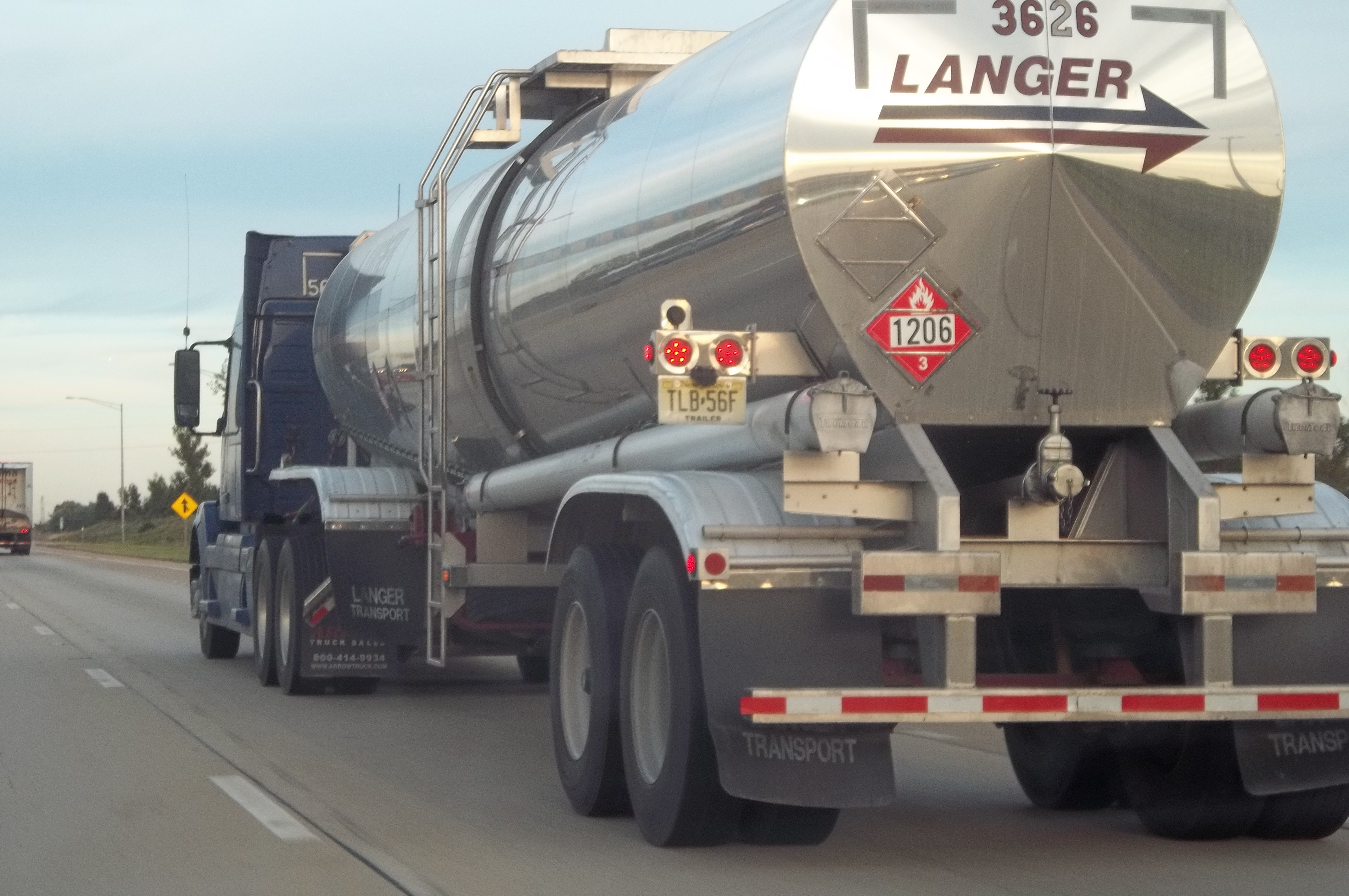
Cargo Tank Motor Vehicle of UN1206 Heptanes
The loading, unloading, or operation of a motor vehicle containing flammable liquids requires HazMat Employee training.

Anyone who offers or transports hazardous materials in commerce or has a desire to learn more about US DOT’s Hazardous Materials Regulations.

What does it cost?

Nothing.  There is no cost for this one-day workshop on the hazardous material regulations.  It is sponsored by the Pipeline and Hazardous Materials Safety Administration.

Is prior registration required?

Yes, please register yourself and any others you wish to attend with you.  Information about the venues for the workshops and to register can be found here:  Registration page for PHMSA HazMat Transportation One-Day Workshops in 2015.

What information is covered at the one-day workshops?

The transportation workshops provide a basic overview of the regulatory requirements – what they are, how they apply, and how to comply with them, for shipping and transporting Hazardous Materials. The workshops address the same information as the Hazmat Basics track given at the Multimodal Seminars and include overviews of the Training and Security Requirements.

Will attendance at this PHMSA workshop fulfill my HazMat Employee training requirements (initial and/or triennial)?

Likely not, since the PHMSA workshop does not include a test, which is a requirement of HazMat Employee training per 49 CFR 172.702(d).  Also, the requirement to provide Function Specific Training at 49 CFR 172.704(a)(2) may be difficult to meet given the general nature of the PHMSA workshop.  However, a HazMat Employer may use a PHMSA workshop as the basis for his/her HazMat Employee training and may meet the regulatory requirements by providing any additional Function Specific Training that may be necessary and by administering a test (either written or verbal).  The final requirement would be to document the completion of the training per the requirements of 49 CFR 172.704(d).

Where and when are the PHMSA workshops being held?

Currently there are 30 workshops scheduled through September 2015.  Check back to the PHMSA website (Seminars, Workshops, and Meetings) for up-to-date information.

HazMat Employee Training
Good training can prevent fines and ensure compliance with all Federal and State regulations.

These PHMSA workshops are a great learning opportunity for all experience and knowledge-levels of HazMat Employees.  If this isn’t enough for you, consider the PHMSA’s two-day multimodal seminars.  I will definitely attend at least one of these workshops in 2015, and I hope you do as well.  You will likely come away with an improved knowledge of the HMR including the requirement to provide training for all of your HazMat Employees.  That’s where I come in.  Contact me for your mandatory HazMat Employee training and your Hazardous Waste Personnel (RCRA) training as well.

OME

Check out the Ozarks Materials Exchange

The Ozarks Materials Exchange (OME) is a free online materials exchange service that enables businesses, nonprofit organizations, government agencies, and artists to create and search online listings of Available and Wanted materials. It works to connect generators or users of difficult to match materials with counterparts who need or have materials.

Recycling in Missouri

Acceptable materials for exchange:

  • Brown goods and accessories
  • Chemicals
  • Construction and demolition
  • Drums
  • Fluorescent lights
  • Glass
  • Liquid waste
  • Metals
  • Miscellaneous
  • Motor vehicle items
  • Organic waste
  • Paper
  • Plastics
  • Rubber
  • Textiles
  • Tires
  • White goods
  • Wood

Got it? Looking for it? Find it on the Ozarks Materials Exchange at ReuseOzarks.org

The OME does not buy, sell, store, or transport materials.

For more information: 417.864.2003

Hazardous Waste Report Reminder for Ohio Businesses

From the Ohio Environmental Protection Agency Division of Materials and Waste Management:

In February of 2013, the Division of Materials and Waste Management (DMWM) changed the requirements for submitting the Hazardous Waste Report from annual to biennial. Generator and TSD data has since only been collected for odd numbered years and is due by March 1st for the following year. Please do not submit reports for 2014 as data for even numbered years is no longer required. If you need to submit a report prior to 2016 for the 2015 calendar year, please contact us.

However, if you normally submit other reports or data with your annual report that are not part of that report (e.g., the ground water monitoring annual report required by OAC 3745-65-94) please be aware that the frequency of these reports or data has not changed.

If you have any questions about this, or any other reporting issues, please contact Thomas Babb at 614-914-2527 or through email at thomas.babb@epa.ohio.gov

Required Information on the Shipper’s Declaration of Dangerous Goods

Section 8 of the International Air Transport Association (IATA) Dangerous Goods Regulations require the shipper of a dangerous good to provide the information specified by the regulations for each and every consignment of dangerous goods unless an exception is provided at 8.0.1.2.  This information may be provided in one of two formats:

  • By EDP (electronic data processing) or EDI (electronic data interchange) techniques, if the operator agrees.

Or…

  • By the use of the “Shipper’s Declaration of Dangerous Goods”.

The purpose of this article will be to identify the information that a shipper must provide to the operator when offering a dangerous good for transportation by air.  The same information must appear on the Shipper’s Declaration of Dangerous Goods or in the form of an EDP or EDI. (more…)

Q&A: Transporting Asbestos as a Hazardous Material and the HazMat Endorsement on the Commercial Driver’s License

Here’s a question I received through my website:

Good afternoon, I was wondering if you could tell me if a CDL driver needs a HAZ-Mat endorsement to haul asbestos, either friable or Non-friable?

Thank you,

My response:

Asbestos is listed as a hazardous material (Class 9 Miscellaneous) in the Hazardous Materials Table at 49 CFR 172.101.

Inline image 2
Special Provision 156 in column 7 of the Table reads as follows:

 Asbestos that is immersed or fixed in a natural or artificial binder material, such as cement, plastic, asphalt, resins or mineral ore, or contained in manufactured products is not subject to the requirements of this subchapter.

Bag of asbestos wasteThough the terms friable and non-friable are not used, it seems clear that PHMSA/USDOT is saying that a non-friable form of asbestos is not regulated as a hazardous material, whereas a friable form is.
However, just because it is a hazardous material doesn’t necessarily mean the driver needs the HazMat endorsement on their CDL.  The HazMat endorsement is required on the CDL when the vehicle transports an amount of hazardous material that requires placarding (More…)  In the U.S., a vehicle transporting only Class 9 Miscellaneous is not required to be placarded (More…)  Therefore, a driver of a motor vehicle transporting only Class 9 is not required to have the HazMat endorsement on their CDL.
The driver and anyone else who handles friable asbestos in transportation (e.g. loading, unloading, operating motor vehicle, preparing shipping papers, packaging for transport, etc…) is a HazMat Employee and requires initial and triennial HazMat Employee training as required by the PHMSA/USDOT (this is distinct from OSHA training).
I can provide the training you require.
Please don’t hesitate to contact me with any other questions.
Dan

Contact me with any questions you may have about the transportation of hazardous materials by air, highway, vessel, or rail

International and Domestic

Daniels Training Services, Inc.

815.821.1550

Info@DanielsTraining.com

https://danielstraining.com/

Changes to the 56th Edition of the IATA DGR Related to Lithium Batteries

The 56th Edition of the Dangerous Goods Regulations of the International Air Transport Association (2015) contains many significant changes.  None of them followed with more widespread interest than those related to the transportation by air of lithium batteries.  Below is a summary of the changes to the IATA DGR related to the transportation of lithium batteries.

2.3—Dangerous Goods Carried by Passengers or Crew

The provisions applicable to portable electronic devices, including medical devices containing lithium batteries and spare batteries have been restructured to set the requirements out in three parts:

1. Spare lithium batteries above a specified size, which are permitted only with the approval of the operator, and that must be in carry-on baggage;

2. Lithium battery powered electronic devices containing batteries above a specified size, which are permitted only with the approval of the operator; and

3. Portable electronic devices (PED) and spare batteries for such devices where the batteries are at or below the specified size which are permitted without operator approval. PED may be in checked or carry-on baggage. All spare batteries must be in carry-on baggage.

4—Identification
4.2—List of Dangerous Goods

Amendments to the List of Dangerous Goods include:

  • Removal of the packing group from all of the entries for articles that had been assigned a packing group, e.g. batteries, containing sodium, lithium batteries; mercury in manufactured articles.
  • The entry UN 3090, Lithium metal batteries has been amended to show “forbidden“ across columns I/J to identify that these batteries are now restricted to Cargo Aircraft Only. There is no change to the entries for UN 3091, lithium metal batteries packed with equipment or lithium metal batteries contained in equipment.
4.4—Special Provisions

A201 —is a new special provision assigned against UN 3090 Lithium metal batteries to identify that lithium metal batteries may be carried on a passenger aircraft subject to specific limitations on the size and quantity of lithium metal batteries in a package and per consignment. The detail of these limitations are set out in the Supplement to the ICAO Technical Instructions.

5—Packing

PI 966 and PI 969 —These packing instructions apply to lithium ion and lithium metal batteries packed with equipment respectively. The provisions have been revised to clarify that the number of lithium batteries in a package must not exceed the number for the equipment’s operation plus two spares.

PI 968 —In accordance with the change in Table 4.2 to limit UN 3090, Lithium metal batteries to cargo aircraft only, the provisions of PI 968 have been revised to identify that these batteries are not permitted on passenger aircraft. This includes a requirement that packages prepared in accordance with Section II must bear a Cargo Aircraft Only label in addition to the lithium battery handling label, and also that packages in Section II are subject to the conditions for consolidations and removes the allowance for these packages to be placed in a unit load device, except by the operator.

8—Documentation

8.1.6.11.7 —A paragraph has been added to clarify that for shipments of lithium batteries prepared under Section IB of PI 965 and PI 968 that the information required on the additional document may be included on the Shipper’s Declaration or may be on an additional document.

That’s it for changes referenced in the Introduction to the 56th Edition of the IATA Dangerous Goods Regulations.  Please note that the list is intended to assist the Shippers, Packers, and Operators to identify the main changes introduced in the 56th Edition for 2015 and must not be considered an exhaustive listing.

Contact me with any questions you may have about the transportation of hazardous materials by air, highway, vessel, or railInternational and Domestic

Daniels Training Services

815.821.1550

Info@DanielsTraining.com

https://danielstraining.com/

December 2014 – Rules & Regulations, Proposed Rules, and Notices Regarding the Management of Hazardous Waste and the Transportation of Hazardous Materials

On its website the US Government Printing Office makes a wealth of Federal publications available for review and download; one of these is the Federal Register.

Federal Register logo
The Federal Register is the tool used by the US Government to communicate with interested parties

Published by the Office of the Federal Register, National Archives and Records Administration (NARA), the Federal Register is the official daily publication for rules, proposed rules, and notices of Federal agencies and organizations, as well as executive orders and other presidential documents.

See below for a brief summary of announcements in the Federal Register by the US EPA on the subject of Hazardous Waste and the Pipeline & Hazardous Materials Safety Administration (PHMSA), Federal Railroad Administration (FRA), and the Federal Aviation Administration (FAA) of the US DOT on the subject of Transportation of Hazardous Materials.

The Federal Register is a great way to look down the road and see potential changes to the regulations long before they are put into effect (sometimes The Rulemaking Process takes years before a final rule is issued, if ever).  Knowledge of these potential changes provides you with several advantages:

  • Additional time to modify your business operations to comply.
  • Awareness of on what topics the regulatory agencies intend to focus their efforts.
  • The ability to register your concerns, complaints, suggestions, etc. in order to modify the proposed rule before a final rule is issued.  It can be done, really!
  • Make changes to your training program to account for changes that become effective before the next training cycle.
  • Alert you to the need to re-train your employees prior to their next scheduled training cycle, if necessary.
  • Keep you abreast of changes to the regulations that affect your business and/or your industry group.

Please note that this is my best effort to identify the relevant announcements in the Federal Register that may be of interest to generators of hazardous waste and shippers of hazardous materials.  I encourage you to review the list of Federal Register publications yourself to ensure regulatory compliance.

December 1, 2014 through December 31, 2014

USEPA – US Environmental Protection Agency:Logo for US Environmental Protection Agency

Publications not related to the management of hazardous waste, solid waste, universal waste, or used oil are not included here.

Rules and Regulations:

Fall 2014 Regulatory Agenda Pages 76771 – 76778 [FR DOC # 2014-28976] PDF | Text | More

Proposed Rules:

None

Contact me with any questions you may have about the management of hazardous wasteDaniels Training Services815.821.1550Info@DanielsTraining.comhttps://danielstraining.com/

Notices:

Underground Injection Control Program; Hazardous Waste Injection Restrictions; Reissuance of a Petition for Exemption-Class I Hazardous Waste Injection; Pergan Marshall, LLC Marshall, TX Pages 73071 – 73071 [FR DOC # 2014-28810]  PDF | Text | More

Twenty-Seventh Update of the Federal Agency Hazardous Waste Compliance Docket Pages 78850 – 78855 [FR DOC # 2014-30687] PDF | Text | More

FAA – Federal Aviation Administration:

Federal Aviation AdministratinoPublications not related to the transportation of hazardous materials are not included here.

Rules and Regulations:

None

Proposed Rules:

None

Notices:

Eighteenth Meeting: RTCA Special Committee 225, Rechargeable Lithium Battery and Battery Systems Pages 76441 – 76441 [FR DOC # 2014-29909] PDF | Text | More

FMCSA – Federal Motor Carrier Safety Administration:
The FMCSA sets the minimum standards for Commercial Driver's Licenses
The FMCSA sets the minimum standards for Commercial Driver’s Licenses

Publications not related to the transportation of hazardous materials are not included here.

Rules and Regulations:

None

Proposed Rules:

Minimum Training Requirements for Entry-Level Driver Commercial Motor Vehicle Operators; Establishment of a Negotiated Rulemaking Committee Pages 73273 – 73276 [FR DOC # 2014-28919] PDF | Text | More

Notices:

None

FRA – Federal Railroad Administration:

Publications not related to the transportation of hazardous materials are not included here.

Rules and Regulations:

None

Proposed Rules:

None

Notices:

None

PHMSA – Pipeline and Hazardous Materials Safety Administration:

Logo for the Pipeline and Hazardous Materials Safety Administration (PHMSA)Publications not related to the transportation of hazardous materials are not included here.

Rules and Regulations:

None

Proposed Rules:

None

Notices:

None

Information can be helpful but it’s useless if you are not able to make sense of it.  You must be able to determine how any changes to the rules and regulations (final or proposed) will affect your operations, and communicate the necessary information to your personnel.  I can help you to do that.

Contact me with any questions you may have about the transportation of hazardous materials by air, highway, vessel, or railInternational and DomesticDaniels Training Services815.821.1550Info@DanielsTraining.com

https://danielstraining.com/

Please contact for a free training consultation to determine your regulatory requirements and how training can help you to attain and maintain compliance with the regulations of the US Environmental Protection Agency (and your state) and the PHMSA, FAA, FRA, & FMCSA of the US Department Of Transportation.

What’s Wrong with These Pictures? Display of Hazardous Material Placards

Class 5 Oxidizer placard
With exceptions, placards will be required when transporting HazMat

There are exceptions, but in most cases the transportation in commerce of any quantity of a hazardous material will require the display of placards on each side and each end of each of the following:

  • Bulk packaging
  • Freight container
  • Unit load device
  • Transport vehicle; this includes a motor vehicle (see below for a definition)
  • Rail car

When it comes to placards, compliance with the Hazardous Material Regulations (HMR) requires three things:

  1. Determine what placards are required pursuant to 49 CFR 172.504.
  2. Select a placard of the correct specifications at 49 CFR 172.519.
  3. Display the placard properly according to the requirements of 49 CFR 172.516.

This article will address the requirements of 49 CFR 172.516 Visibility and display of placards. (more…)

Mining Overburden – The RCRA Exclusion From Hazardous Waste at 40 CFR 261.4(b)(3)

100

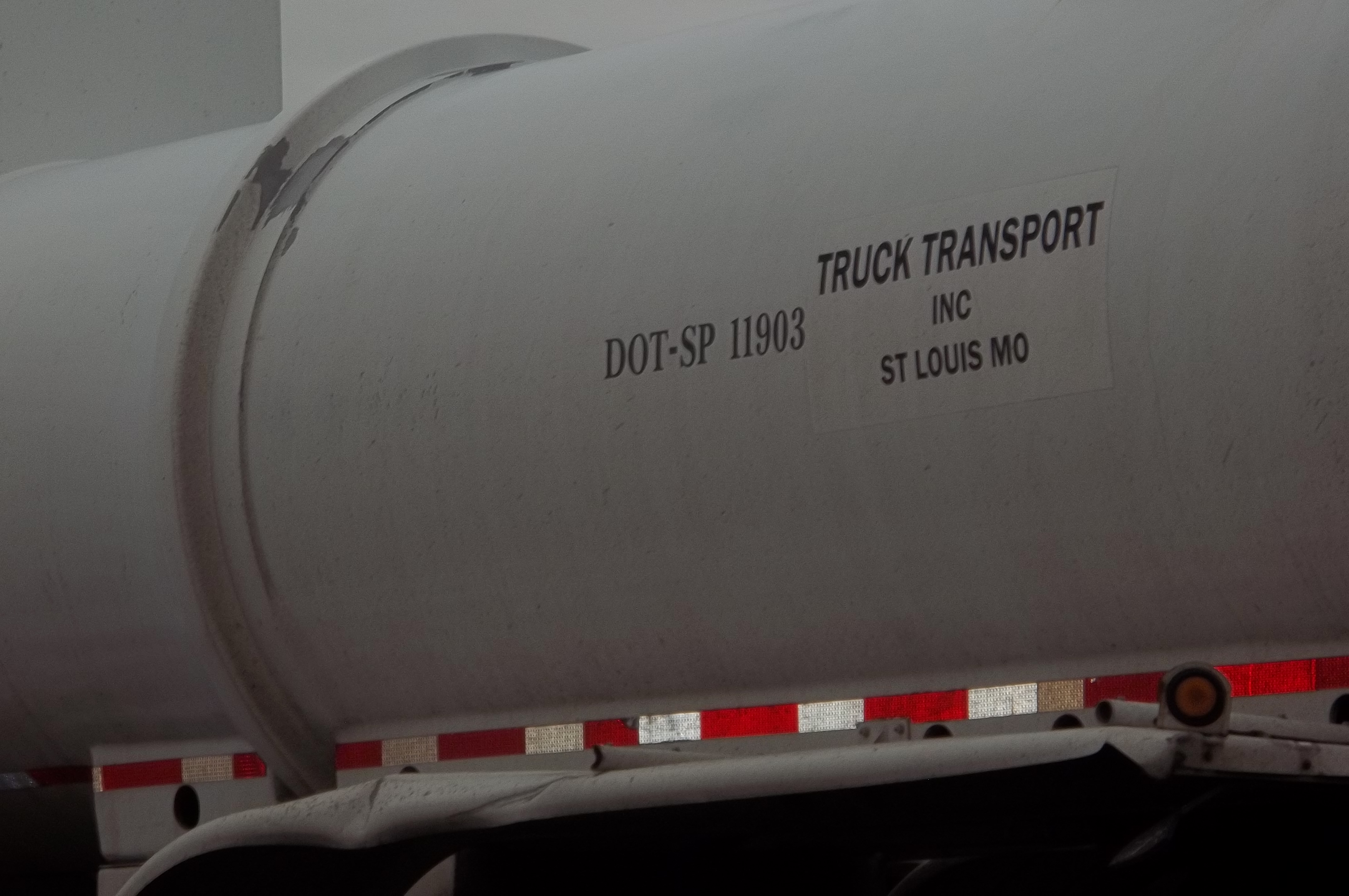
DOT-SP 11903 on a Cargo Tank

I’ve seen a lot of markings on cargo tanks before, but never one like this.  What’s it mean?

What's the meaning of this marking on a cargo tank?
What’s the meaning of this marking on a cargo tank?

Truck Transport, Inc. is a name of a St. Louis, MO company I know nothing about.  It’s the letters and numbers next to the name that have my interest; what does DOT-SP 11903 on a cargo tank motor vehicle mean?

DOT-SP 11903 refers to a Special Permit (“SP”) issued by the Pipeline and Hazardous Material Safety Administration (PHMSA) within the USDOT – hence the “DOT” and “11903” is the identification number it’s assigned.  So we know what DOT-SP 11903 symbolizes, but what does it mean?

A Special Permit – which used to be known as an Exemption and identified by the prefix DOT-E – is a specifically issued document that authorizes a regulated shipper, carrier, or HazMat packaging manufacturer (as in this case) to conduct operations in a manner not allowed in the Hazardous Material Regulations.  Basically, by complying with the requirements of the special permit you may disregard certain regulations of the HMR.

I won’t go through all the tedious details of this special permit, if interested you can do that yourself, instead I’ll summarize its high points:

  • The current (tenth) revision issued May 16, 2012 expires on February 29, 2016.  The Grantee or a representative will have to apply for a renewal of the special permit prior to that date.  Or, it is possible that the conditions of the special permit will be incorporated into the HMR and thereby negate the need for the Special Permit.
  • This Special Permit was granted to Comptank Corporation of Bothwell, Ontario, Canada.  I assume that this company wanted to manufacture a type of cargo tank for sale within the US that was not authorized by the HMR.  This special permit allows them to manufacture such a cargo tank and for a shipper and carrier to utilize them for the transportation in commerce of a hazardous material.  From the Special Permit:

This special permit authorizes the manufacture, marking, sale and use of non-DOT specification cargo tank motor vehicles constructed from glass fiber reinforced plastics (GFRP) conforming with all regulations applicable to a DOT 407 or DOT 42 cargo tank motor vehicle except as specified herein, for the transportation in commerce of the materials listed in paragraph 6 below.

  • Only the following hazardous materials may be transported in a cargo tank under this Special Permit (summarized from paragraph 6):
    • Class 8 Corrosive materials authorized for transport in a lined MC-312 cargo tank and Class 8 liquid and semi-solid wastes of various descriptions and packing groups I, II, & III.
    • Class 3 Flammable or Combustible liquid and semi-solid wastes of various descriptions and packing groups I, II, & III.
    • Class 6.1 Poisonous/Toxic liquid and semi-solid wastes of various descriptions and packing groups I, II, & III.
    • Class 9 Miscellaneous liquid and semi-solid wastes of various descriptions and packing group III.
  • Section 7 Safety and Control Measures includes the following:
    • Acceptable specifications for the cargo tank authorized by this Special Permit.  A lot of details of interest solely to the manufacturer of the cargo tank.
    • Operational controls for the shippers of HazMat and cargo tank owners using cargo tanks authorized by this Special Permit; including:
      • If transporting Class 3 Flammable and Combustible Liquids the cargo tank must be equipped with a spring loaded relief valve.
      • The compatibility of the cargo tank with the HazMat must be confirmed by both the shipper and the carrier prior to being offered for transportation.
  • Special Provisions of Section 8:
    DOT-SP 11903 special permit on a cargo tank motor vehicle
    This Special Permit allows for the transport of a hazardous material in a non-specification packaging.
    • The use of this Special Permit is not limited solely to those identified by name as its holders.  A person may re-ship a HazMat they received in this packaging as long as the packaging is not modified and it is offered for transportation in compliance with the HMR and DOT-SP 11903.
    • A copy of the Special Permit must be maintained by the shipper of the HazMat and the manufacturer of the cargo tank.  Section 10 requires a copy to be kept by the carrier as well.
    • Each cargo tank authorized by this Special Permit must be marked with one of the following (I apologize; I didn’t get a picture of either one):
      • Name of the manufacturer and location (city and state) of the facility where manufactured.
      • A registration symbol approved by the Agency for a specific manufacturing facility.
    • Information specified in Section 8(g) of the Special Permit must be plainly and durably marked on the cargo tank.  Once again, I failed to get a picture!
  • All HazMat Employees must receive training on the requirements of this Special Permit as it applies to their job responsibilities.

Contact me with any questions you may have about the transportation of hazardous materials by air, highway, vessel, or rail

International and Domestic

Daniels Training Services

815.821.1550

Info@DanielsTraining.com

https://danielstraining.com/

Don’t overlook the value a carefully crafted Special Permit can provide to your company.

Search Website