
If you transport or offer for shipment HazMat that meet the definition of an Elevated Temperature Material, than you must be aware of the requirement to provide an additional description on the shipping paper in some circumstances. Please view this short Slideshare presentation and then contact me if you have any questions. (more…)
The Additional Description on a Shipping Paper of a Hazardous Material: 49 CFR 172.203(n) – Elevated Temperature Material
Published in the Federal Register in March 2015 for the Management of Hazardous Waste and the Transportation of Hazardous Materials
On its website the US Government Printing Office makes a wealth of Federal publications available for review and download; one of these is the Federal Register.
Published by the Office of the Federal Register, National Archives and Records Administration (NARA), the Federal Register is the official daily publication for rules, proposed rules, and notices of Federal agencies and organizations, as well as executive orders and other presidential documents.
See below for a brief summary of announcements in the Federal Register by the US EPA on the subject of Hazardous Waste and the Pipeline & Hazardous Materials Safety Administration (PHMSA), Federal Railroad Administration (FRA), and the Federal Aviation Administration (FAA) of the US DOT on the subject of Transportation of Hazardous Materials.
The Federal Register is a great way to look down the road and see potential changes to the regulations long before they are put into effect (sometimes The Rulemaking Process takes years before a final rule is issued, if ever). Knowledge of these potential changes provides you with several advantages:
- Additional time to modify your business operations to comply.
- Awareness of on what topics the regulatory agencies intend to focus their efforts.
- The ability to register your concerns, complaints, suggestions, etc. in order to modify the proposed rule before a final rule is issued. It can be done, really!
- Make changes to your training program to account for changes that become effective before the next training cycle.
- Alert you to the need to re-train your employees prior to their next scheduled training cycle, if necessary.
- Keep you abreast of changes to the regulations that affect your business and/or your industry group.
Please note that this is my best effort to identify the relevant announcements in the Federal Register that may be of interest to generators of hazardous waste and shippers of hazardous materials. I encourage you to review the list of Federal Register publications yourself to ensure regulatory compliance.
March 1, 2015 through March 31, 2015
 USEPA – US Environmental Protection Agency:
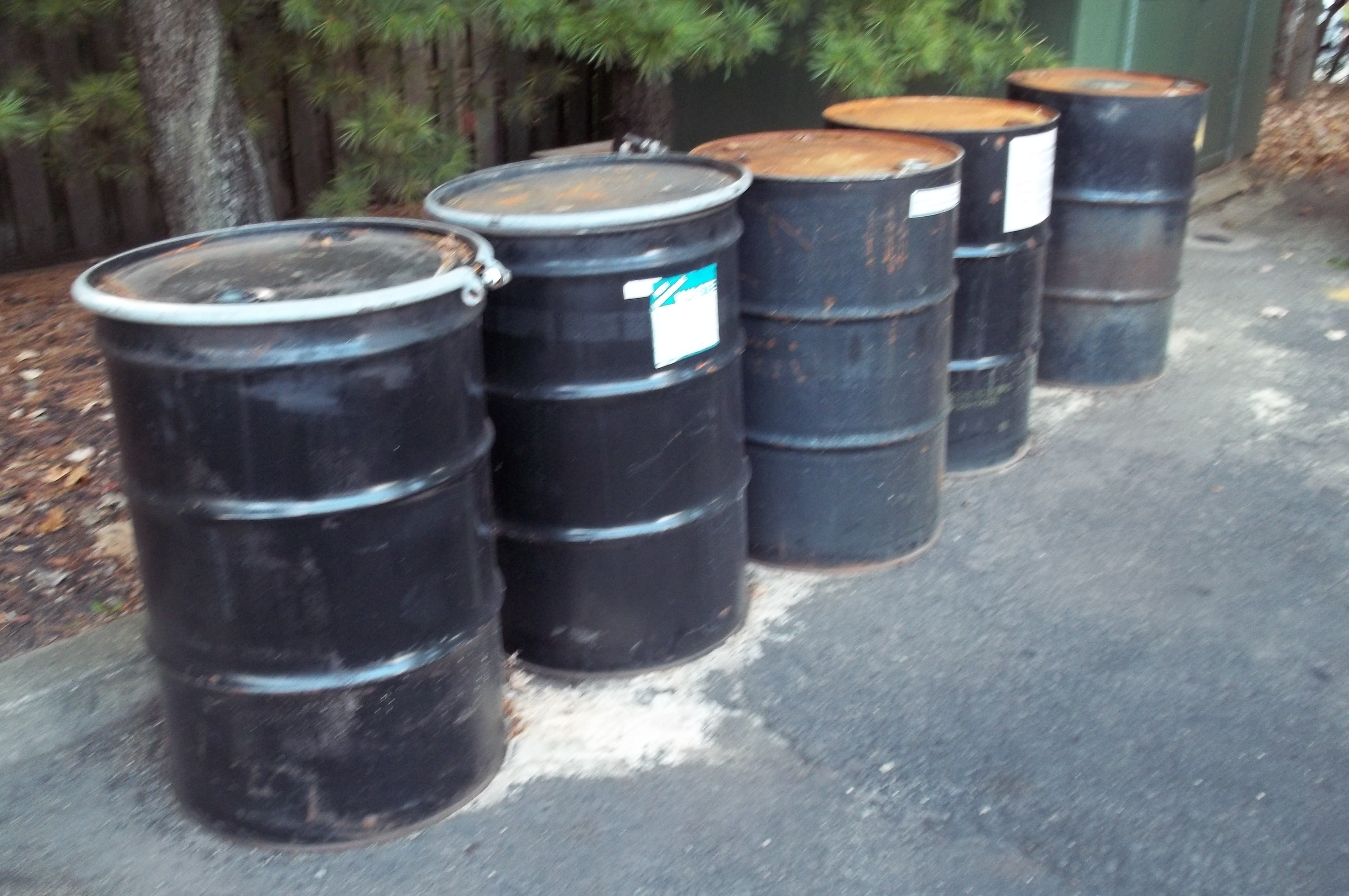
Publications not related to the management of hazardous waste, solid waste, universal waste, or used oil are not included here.
Rules and Regulations:
Tennessee: Final Authorization of State Hazardous Waste Management Program Revisions Pages 14847 – 14852 [FR DOC # 2015-06512] PDF | Text | More
Proposed Rules:
Improving EPA Regulations Pages 12372 – 12373 [FR DOC # 2015-05303] PDF | Text | More
Contact me with any questions you may have about the management of hazardous waste Daniels Training Services 815.821.1550 |
Tennessee: Final Authorization of State Hazardous Waste Management Program Revisions Pages 14894 – 14894 [FR DOC # 2015-06511] PDF | Text | More
Michigan: Final Authorization of State Hazardous Waste Management Program Revision Pages 17021 – 17024 [FR DOC # 2015-07347] PDF | Text | More
Notices:
Notice of Final Decision To Reissue the ArcelorMittal Burns Harbor, LLC Land-Ban Exemption Pages 12170 – 12171 [FR DOC # 2015-05240] PDF | Text | More
Notice of Final Decision To Reissue the Vickery Environmental, Inc. Land-Ban Exemption Pages 16374 – 16378 [FR DOC # 2015-06970] PDF | Text | More
FAA – Federal Aviation Administration:

Publications not related to the transportation of hazardous materials are not included here.
Rules and Regulations:
None
Proposed Rules:
None
Notices:
Nineteenth Meeting: RTCA Special Committee 225, Rechargeable Lithium Battery and Battery Systems Pages 14229 – 14229 [FR DOC # 2015-06260] PDF | Text | More
Hazardous Materials Safety Program Pages 14243 – 14244 [FR DOC # 2015-06158] PDF | Text | More
FMCSA – Federal Motor Carrier Safety Administration:
Publications not related to the transportation of hazardous materials are not included here.
Rules and Regulations:
None
Proposed Rules:
Minimum Training Requirements for Entry-Level Drivers of Commercial Motor Vehicles: Negotiated Rulemaking Committee Meetings Pages 12136 – 12137 [FR DOC # 2015-05197] PDF | Text | More
Notices:
Motor Carrier Safety Advisory Committee (MCSAC): Public Meeting Pages 13663 – 13664 [FR DOC # 2015-05940] PDF | Text | More
FRA – Federal Railroad Administration:
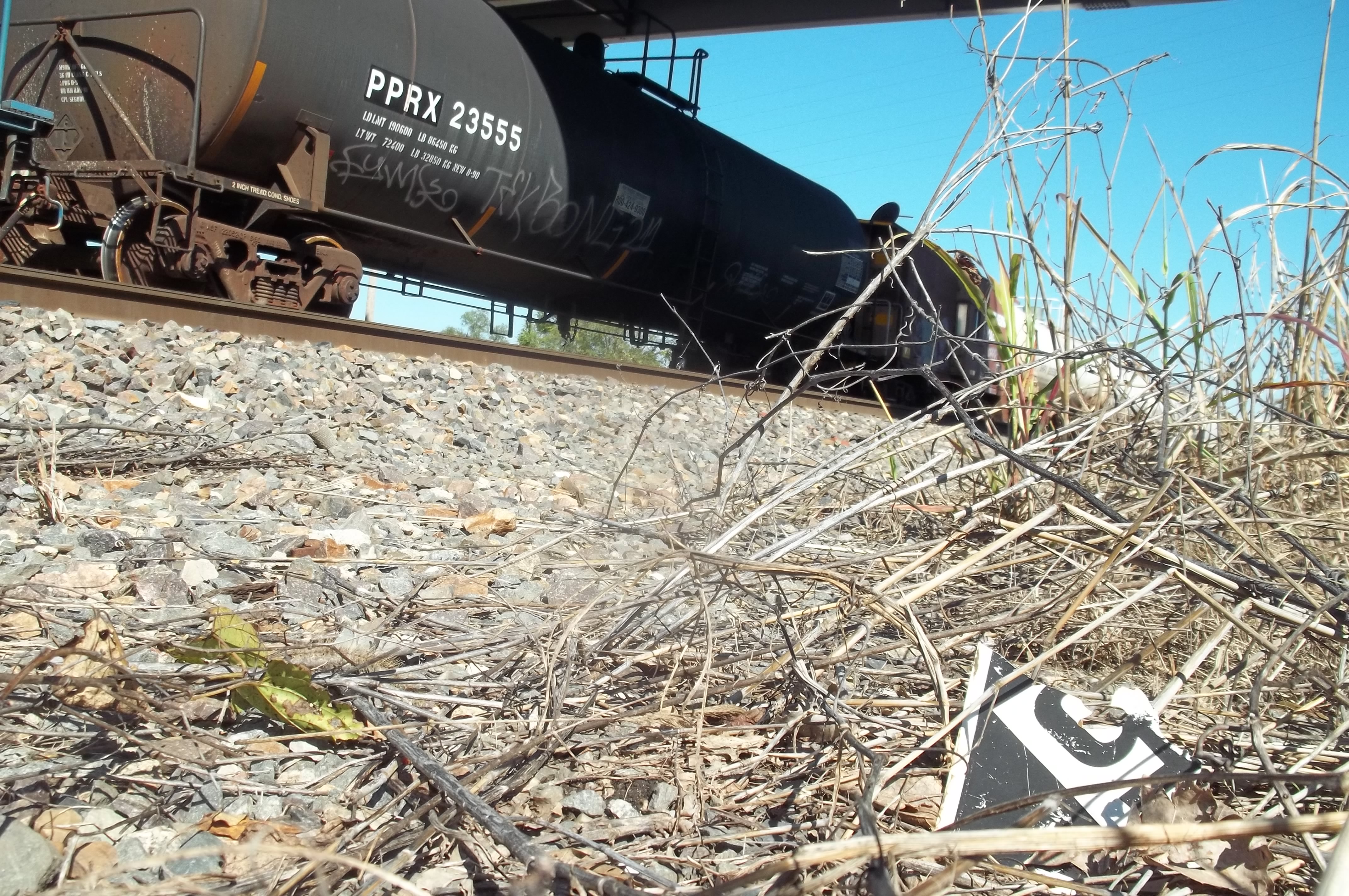
Publications not related to the transportation of hazardous materials are not included here.
Rules and Regulations:
Railworthiness Directive for Railroad Tank Cars Equipped With Certain McKenzie Valve & Machining LLC Valves Pages 14027 – 14029 [FR DOC # 2015-06213] PDF | Text | More
Proposed Rules:
None
Notices:
Filing Process for Petitions for Waiver and Other Exemptions, Applications, and Special Approvals Pages 13458 – 13458 [FR DOC # 2015-05751] PDF | Text | More
PHMSA – Pipeline and Hazardous Materials Safety Administration:
Publications not related to the transportation of hazardous materials are not included here.
Rules and Regulations:
Hazardous Materials: Spare Fuel Cell Cartridges Containing Flammable Gas Transported by Aircraft in Passenger and Crew Member Checked Baggage Pages 16579 – 16583 [FR DOC # 2015-07109] PDF | Text | More
Proposed Rules:
None
Notices:
Hazardous Materials: Notice of Application for Modification of Special Permit Pages 15657 – 15658 [FR DOC # 2015-06473] PDF | Text | More
Hazardous Materials: Notice of Application for Special Permits Pages 15658 – 15659 [FR DOC # 2015-06469] PDF | Text | More
Hazardous Materials: Actions on Special Permit Applications Pages 15659 – 15660 [FR DOC # 2015-06463] PDF | Text | More
Hazardous Materials: Delayed Applications Pages 15660 – 15661 [FR DOC # 2015-06471] PDF | Text | More
Information can be helpful but it’s useless if you are not able to make sense of it. You must be able to determine how any changes to the rules and regulations (final or proposed) will affect your operations, and communicate the necessary information to your personnel. I can help you to do that.
| Contact me with any questions you may have about the transportation of hazardous materials by air, highway, vessel, or rail International and Domestic Daniels Training Services 815.821.1550 |
Please contact me for a free training consultation to determine your regulatory requirements and how training can help you to attain and maintain compliance with the regulations of the US Environmental Protection Agency (and your state) and the PHMSA, FAA, FRA, & FMCSA of the US Department Of Transportation.

Pinnacle Oilfield Services Violates Environmental Laws in Louisiana
The Bullet:
Pinnacle Oilfield Services, Inc in Broussard, LA will pay a $146,585 civil penalty along with undertaking other measures due to its violations of the Resource Conservation and Recovery Act (RCRA).
Who:
Pinnacle Oilfield Services, Inc., in Broussard, LA
U.S. Environmental Protection Agency: Contact: Joe Hubbard or Jennah Durant at 214-665-2200 or r6press@epa.gov
What:
The Resource Conservation and Recovery Act (RCRA) is the basis for all State and Federal regulations for the “cradle-to-grave” management of hazardous waste. It is the responsibility of all waste generators to – along with many other responsibilities – perform a hazardous waste determination, determine their hazardous waste generator status, report that status to the appropriate regulatory authority (Louisiana DEQ in this case), and then comply with the “cradle-to-grave” regulations applicable to their hazardous waste generator status.
Where:
Pinnacle Oilfield Services, Inc. is located in Broussard, LA
When:
- USEPA news release dated 3/23/2015.
- No other dates regarding this case were made available in the news release, which is unusual.
Why:
Pinnacle has since 1994 reported as a Conditionally Exempt Small Quantity Generator (CESQG) of hazardous waste (i.e. generate ≤100 Kg of hazardous waste a month. However, USEPA found that during the past five years, the facility was actually a Large Quantity Generator (LQG) of hazardous waste generating ≥1,000 Kg of hazardous waste per month.
How:
It is interesting that USEPA is the lead enforcement agency in this case and there is not even a mention of the Louisiana DEQ, whose state this business operates in. However, even in states with authorized hazardous waste programs like Louisiana, the USEPA may still come in to conduct its own inspections and assess violations and civil penalties as it sees fit.
Conclusion:
Correctly determining your hazardous waste generator status is a relatively simple exercise but, as in this instance, a very critical one. Make certain you have accounted for all eligible hazardous waste you generate when determining your hazardous waste generator status. Remember that your status could change from month-to-month. And, if you are an LQG, you must provide annual training for all facility personnel who may come in contact with hazardous waste.
Daniels Training Services 815.821.1550 |
Please contact me to provide this training for you.
A Brief Summary of the 2015 Definition of Solid Waste Rule
What is the 2015 Definition of Solid Waste Rule?
The 2015 Definition of Solid Waste Rule (2015 DSW) is a revision to the 2008 Definition of Solid Waste Rule. Its purpose is to improve the 2008 DSW Rule by encouraging recycling and increasing environmental safeguards.
What does the 2015 DSW do?
The 2015 DSW maintains and improves two solid waste recycling exclusions from the 2008 DSW:
- The Generator-Controlled Exclusion at 40 CFR 261.4(a)(23): Retained and revised to strengthen its requirements. Also…
- The Transfer-Based Exclusion at 40 CFR 261.4(a)(24): Revised to where it is now the Verified Recycler Exclusion at 40 CFR 261.4(a)(24) (still).
The 2015 DSW also:
- Adds a new exclusion: The Remanufacturing Exclusion for Spent Solvents at 40 CFR 261.4(a)(27). Also…
- Revises the legitimacy criteria for solid waste recycling exclusions at 40 CFR 260.43 and then expands its application to all recycling exclusion and exemptions.
- Codifies the sham recycling prohibition at 40 CFR 261.2(g). This is also explained in my article on the Legitimacy Criteria.
- Creates and codifies a new regulatory definition of “contained” at 40 CFR 260.10 applicable to hazardous secondary materials during storage.
- Creates a new notification requirement for recyclers of hazardous secondary materials utilizing an exclusion, variance, or non-waste determination under the 2015 DSW.
- Adds emergency preparedness and response requirements at 40 CFR 261, Subpart M for generators using the Generator-Controlled Exclusion or the Transfer-Based Exclusion.
- Amends the speculative accumulation provision at 40 CFR 261.1(c)(8) to add a recordkeeping requirement for all persons subject to speculative accumulation.
- Revises existing variances and non-waste determinations at 40 CFR 260.30, 260.31, 260.33, and 260.34.
What are the important dates related to the 2015 DSW?
- Signed: December 10, 2014.
- Published in Federal Register: January 13, 2015.
- Effective at the Federal level and in states lacking an authorized hazardous waste program (Iowa and Alaska. Also: Puerto Rico, Virgin Islands, American Samoa, Marianna Islands, and some tribal lands): July 13, 2015.
- Effective in states with an authorized hazardous waste program when the state decides to modify its current program it adopted from the 2008 DSW or adopt the new 2015 DSW.
In general, the requirements of the 2015 DSW will not be effective in an authorized state until it chooses to adopt them. States are required to adopt the provisions of the 2015 DSW that are more strict than current regulations, these include:
- The prohibition of sham recycling.
- The definition of the legitimacy criteria.
- The addition of accumulation date tracking for speculative accumulation.
- Changes to the solid waste variance and non-waste determination.
Read: State Authorization Under RCRA and the 2015 Definition of Solid Waste Rule
This has been great, but where can I go for more information?
DSW Team Members:
- Tracy Atagi / atagi.tracy@epa.gov / 703.308.8672
- Amanda Kohler / kohler.amanda@epa.gov / 703.347.8975
- Kathy Lett / lett.kathy@epa.gov / 703.605.0761
- Mary Beth Sheridan / sheridan.marybeth@epa.gov / 703.308.4941
And…
EPA Website: Final Rule 2015 Definition of Solid Waste
Daniels Training Services 815.821.1550 |
The USEPA anticipates that over 5,000 industrial facilities in 634 industries throughout the U.S. have the potential to be affected by the 2015 DSW Final Rule. Are you one of them? Contact me if you have any questions about any provision of the 2015 DSW or the management of hazardous waste.
The Marking of a Hazardous Waste Container in California
Like most states, California is authorized to manage its own hazardous waste program. And like a lot of other states, California’s hazardous waste program – administered by the Department of Toxic Substances Control (DTSC) within the California EPA (Cal EPA) – is more strict in its regulation of, and more broad in its definition of, a hazardous waste. But this is California, so being just a little more broad and a little more strict is not enough; they have to set the bar high. In brief summation, the DTSC hazardous waste regulations differ from those of the USEPA and most other states by being…
…more broad in their definition of a hazardous waste. To the point of regulating the following as a hazardous waste:
- Friable asbestos containing material of ≥1% asbestos.
- Used oil
- Some anti-freeze
- Corrosive solids
- Nickel, copper, & cobalt containing wastes (among others)
And…
…more strict regulations for the cradle-to-grave management of this expanded class of hazardous waste, including:
- No recognition of the Conditionally Exempt Small Quantity Generator status.
- “California Empty” (aka: Drip Dry) as an alternative to USEPA’s “RCRA Empty”.
- One year of on-site accumulation for hazardous waste in a satellite accumulation area v. unlimited time for on-site accumulation in an SAA per the USEPA regulations.
- Increased marking requirements for hazardous waste containers during on-site accumulation.
It is this last point that is the subject of this article: The requirements of the DTSC for the marking of a hazardous waste container used for on-site accumulation of a hazardous waste. (more…)
Federal Railroad Administration Directive of 3.13.15: “Replace Those Unapproved Tank Car Valves!”
This directive from the Federal Railroad Administration (one of many modal-specific administrations within the USDOT) requires the owners of DOT Specification 111 railroad tank cars to replace unapproved valves currently in use in ~6,000 of such transport vehicles. The unapproved valves that are the subject of this directive are UNNR ball valves manufactured and sold by McKenzie Valve & Machining LLC. During the investigation of several railroad tank cars found to be leaking Bakken Crude Oil it was determined that the valves (a 3″ valve is the real problem but the 1″ and 2″ versions must be replaced as well) were the source of the leak and were not approved for use on railroad tank cars.
The directive requires the owners of the tank cars to replace the unapproved valves on the following schedule:
- 3″ ball valves must be removed from railroad tank cars within 60 days of the directive date.
- 1″ & 2″ ball valves must be removed within 90 days of the directive date.
- After removal and replacement of the unapproved valves on each affected tank car they may be placed back into service transporting hazardous materials.
McKenzie may obtain approval for the continued use of its 1″ & 2″ ball valves in railroad tank cars transporting HazMat if it is able to demonstrate the safety of those valves and obtain approval from the Association of American Railroads (AAR) Tank Car Committee.
View the press release for this directive.
Oregon DEQ Fines Agilyx Corporation $45,600 for Hazardous Waste Violations
The Bullet:
The Oregon DEQ fined Agilyx Corporation $45,600 for multiple and repeated violations of the state’s hazardous waste regulations. The facility was developing a production process that converts plastic to crude oil under contract with Waste Management. Read the Oregon DEQ press release: Oregon DEQ Fines Agilyx Corporation $45,600 for Hazardous Waste Violations
Who:
Oregon Department of Environmental Quality
811 SW Sixth Avenue, Portland, OR 97204 | Tel/503-229-5696
- Steve Siegel, Environmental Law Specialist, Portland, 503-229-5395
- Jay Collins, Hazardous Waste Program, Portland, 503-229-5008
Agilyx Corporation at 701 N. Hunt St., in Portland. It operates under contract a with Waste Management.
What:
Violations include:
- Failure to properly label containers containing hazardous waste.
- Failure to mark the containers with accumulation start dates.
- Storing hazardous waste for more than 90 days without a permit.
- Storing hazardous waste in containers that were not kept closed except when actively adding or removing hazardous waste.
- Failure to maintain a current contingency plan.
DEQ also cited the company, without penalty for:
- Failing to leave adequate aisle space between containers
- Failing to store universal waste in closed containers.
When:
- Initial inspection by Oregon DEQ conducted on September 2, 2014.
- Notice of Civil Penalty Assessment and Order from Oregon DEQ to Agilyx Corporation: March 9, 2015
- Pres Release Date: March 16, 2015.
- Agilyx has until April 2, 2015 to appeal the penalty.
Where:
- Oregon Department of Environmental Quality 811 SW Sixth Avenue, Portland, OR 97204 | Tel/503-229-5696
- Agilyx Corporation at 701 N. Hunt St., in Portland, OR 97217
Why:
Oregon DEQ issued this penalty because improper management of hazardous waste threatens public health and the environment. Failure to comply with hazardous waste regulations increases the risk that the public or the environment could be harmed by mismanagement of hazardous waste. DEQ is particularly concerned because it identified similar violations during a 2011 environmental audit and during a 2013 inspection of another Agilyx facility in Tigard, OR.
How:
The Oregon DEQ is the enforcement agency for environmental regulations in the state of Oregon – one part of those environmental regulations are the hazardous waste regulations. Oregon DEQ is authorized under the Resource Conservation and Recovery Act (RCRA) to manage the hazardous waste program in Oregon as long as its state regulations are at least as strict and as broad as those of the USEPA. This give Oregon DEQ the ability to conduct inspections of regulated facilities within its jurisdiction and to issue fines for violations of its state regulations.
Conclusion:
It appears that Agilyx is a company that is trying to do the right thing: After all, who can argue with turning waste plastic into high grade crude oil? But it appears from this press release that they became lax on complying with the state hazardous waste regulations.
All of the violations Agilyx was cited for are addressed in my Hazardous Waste Personnel (RCRA) Training. Whether it’s my Training Seminar, Webinars, or Onsite Training, attendees learn what the regulations are that apply to them and what they can do to maintain compliance. My Onsite Training has the added benefit of offering an informal consultation and walk-through of your facility included with the price of the training. I’m fairly confident I would have discovered most of these violations during my time on-site and brought them to the attention of the facility’s EHS Coordinator.
Good RCRA Training – my training – can prevent violations like these and at a fraction of the cost.
Changes to the Final Rule – Mandatory Compliance Date – for the Transportation of Lithium Batteries
Announcements from regulatory agencies of the US Government in the Federal Register can have a significant impact on your business. Therefore it’s important for you to continuously monitor Federal Register publications for announcements applicable to your operations. I can help you to do this.
Sometimes an announcement in the Federal Register calls for a more thorough explanation than just what is conveyed by the headline. That is the point of this article. Here I will briefly summarize, and provide access to more information, on a specific Federal Register announcement: Hazardous Materials: Transportation of Lithium Batteries. (more…)
The use of OSHA (GHS) Pictograms and USDOT HazMat Labels on the Same Packaging
Are the GHS-compliant pictograms required by the revised OSHA HazCom Standard allowed to be displayed on a packaging that also displays the HazMat Labels (and other markings) required by the USDOT/PHMSA?
The short answer is yes. Though current OSHA regulations have confused the issue (more on that below) you can rest assured that a packaging regulated as hazardous by both the USDOT/PHMSA and OSHA can display both the new pictograms and the HazMat labels and markings. To clarify this confusing situation I will present the issue from the distinct perspective of each regulatory agency.
Learn more about the GHS, OSHA’s HazCom, and its relation to the HMR… (more…)
Introduction to Hazardous Waste Webinar Series by the Michigan DEQ

For a business in Michigan what better way is there to learn the correct method of regulatory compliance than to get it right from the Michigan Department of Environmental Quality (MDEQ)? And here are a few more chances to do just that!
MDEQ has two upcoming dates to attend live webinars on the management of hazardous waste in the Wolverine State.
Accumulation, Storage, and Labeling Requirements

March 11
10:00 – 11:00 AM
This second webinar in the series will provide an overview of the requirements associated with onsite hazardous waste management, including: accumulation limits and timelines, storage requirements for hazardous waste in designated storage areas and satellite containers, container labeling requirements, closed container requirements, and Subpart CC requirements.
Generator Record keeping and Inspections

March 19
10:00 – 11:00 AM
This third webinar of the series provides an overview of the records that a hazardous waste generator is required to maintain, including waste characterizations, monthly waste inventory, uniform manifests, and land disposal restriction notifications. The webinar will also provide an overview of what to expect during a DEQ hazardous waste inspection.
This is good stuff and I highly recommend you take advantage of it. Afterwards, if you realize you or your employees require the Hazardous Waste Personnel training required by RCRA I recommend you attend my Training Seminar in Detroit, MI on April 23, 2015 where you’ll fulfill the training requirements of the USEPA, MDEQ, and USDOT all in one day!
Daniels Training Services 815.821.1550 |
Questions about registering for the MDEQ webinars:
Alana Berthold
bertholda@michigan.gov
517-284-6854