PO Box 1232 Freeport, IL 61032

A Different Kind Of Training

A Different Kind Of Training

A Different Kind Of Training

11 Questions to Ask Your HazMat Employee Training Provider

I am only one of many companies that provide HazMat Employee training.  Of course, I highly recommend my services, but how are you to know if I’m the right trainer for you?  One way is to check out my website to review the information there.  Another is to contact me for a free consultation on your training needs.  A third way, and the point of this article, is to ask the following questions of any prospective training provider; their answers – as compared to mine – will help in making your decision.  You may also be interested in another article of mine:  8 Questions to ask Your RCRA Training Provider.

1.  How do I identify my HazMat Employees?

A:  I have found that most companies do not identify all of their HazMat Employees to begin with and therefore fail to train adequately.  A HazMat Employee is defined at 49 CFR 171.8, and includes a person who in the course of employment directly affects hazardous materials transportation safety.  Please read here for a complete description of who is a HazMat Employee at your facility.

2.  What are the regulations that require training of HazMat Employees?

A:  the regulations for HazMat Employee training can be found at 49 CFR 172, Subpart H.

3.  Does your HazMat Employee training include a test?

A:  The answer should be ‘Yes’.  49 CFR 172.702(d) requires testing as a part of HazMat Employee training.

4.  Is this training required by the US Department of Transportation (DOT) or the Pipeline and Hazardous Materials Safety Administration (PHMSA)?

A:  A trick question, the PHMSA is actually the administration within the DOT that is responsible for the domestic transportation of hazardous materials (and all materials by pipeline).  I’d give them a pass if they say DOT, but PHMSA is the better answer.

5.  Are you, or is your HazMat Employee training, certified by the DOT/PHMSA?

A:  The correct answer is ‘No’.  Neither the PHMSA nor the DOT “certifies” a training provider or training material.

6.  Will you certify or ensure that my HazMat Employees are adequately trained and tested?

A:  It is a little-known, but critical, fact that 49 CFR 172.702(a) & (d) requires the HazMat Employer (that’s you) to ensure their HazMat Employees are adequately trained and tested, not the training provider.  The correct answer is, “Yes, I provide the training and testing; you as the HazMat Employer ensure it is adequate.”

7.  How often is HazMat Employee training required?

A:  An easy one.  Initial training must be provided for new HazMat Employees (either recent hires or newly assigned job duties) within 90 days of employment, and they must be supervised by trained personnel in that time.  Recurrent training must take place at least once every three years (triennially) per 49 CFR 172.704(c).

 8.  What recordkeeping is required for HazMat Employee training?

A:  The correct answer to this question is very important since improper training recordkeeping is one of the top violations issued to HazMat Employers.  The HazMat Employee training recordkeeping requirements can be found at 49 CFR 172.704(d), and include:

  1. The HazMat Employee’s name.
  2. The most recent training completion date.
  3. A description, copy, or location of the training materials.
  4. Name and address of the training provider.
  5. Certification of training and testing.

9.  What subjects must HazMat Employee training include?

A:  The requirements for HazMat Employee training content are documented at 49 CFR 172.7o4(a), and include:

  1. General Awareness/Familiarization Training
  2. Function Specific Training
  3. Safety Training
  4. Security General Awareness Training
  5. In-Depth Security Training (if applicable)

 Read here for a more complete explanation of the required training content for HazMat Employees.

10.  What training is required for HazMat Employees who transport hazardous materials over a public roadway?

A:  A person who transports any quantity of a hazardous material over a public roadway must receive HazMat Training as indicated in #9 above and must receive driver training per 49 CFR 177.816.  The maintenance of a Commercial Drivers License (CDL) with the HazMat endorsement may suffice in lieu of this training for some drivers.  Read here for a more thorough explanation of the training requirements for HazMat drivers.

11.  Are you a lawyer?

A:  I have nothing against lawyers, and in some situations, their services are invaluable.  However, they don’t always make the best trainers because their experience has been interpreting the regulations and their legal justification instead of what you must do to comply with them.  My experience prior to starting this business has been “on the shop floor”:  driving a truck, handling hazardous waste, completing weekly inspections, conducting agency inspections, preparing shipping papers, and more of the like.  I feel my job as a trainer is to reveal the regulations and teach you methods of compliance I have learned over the years, not the Genesis of the regulations.  At my training you’ll learn how to do your job, not why you have to do it.

I could go on, but these are the big ones.  Incorrect answers to the above, or a “huh?” are warning signs telling you to look elsewhere for your training provider.  As I indicated above, I am willing to answer any questions you may have about HazMat Employee training, or the other training service I provide:  RCRA training for hazardous waste personnel.  I complete both training requirements (HazMat Employee and RCRA) in one day, either at an open enrollment training event or as on-site training.  Either way, it is great training at a great price.
Managing Aerosol Cans Under the RCRA Scrap Metal Exemption

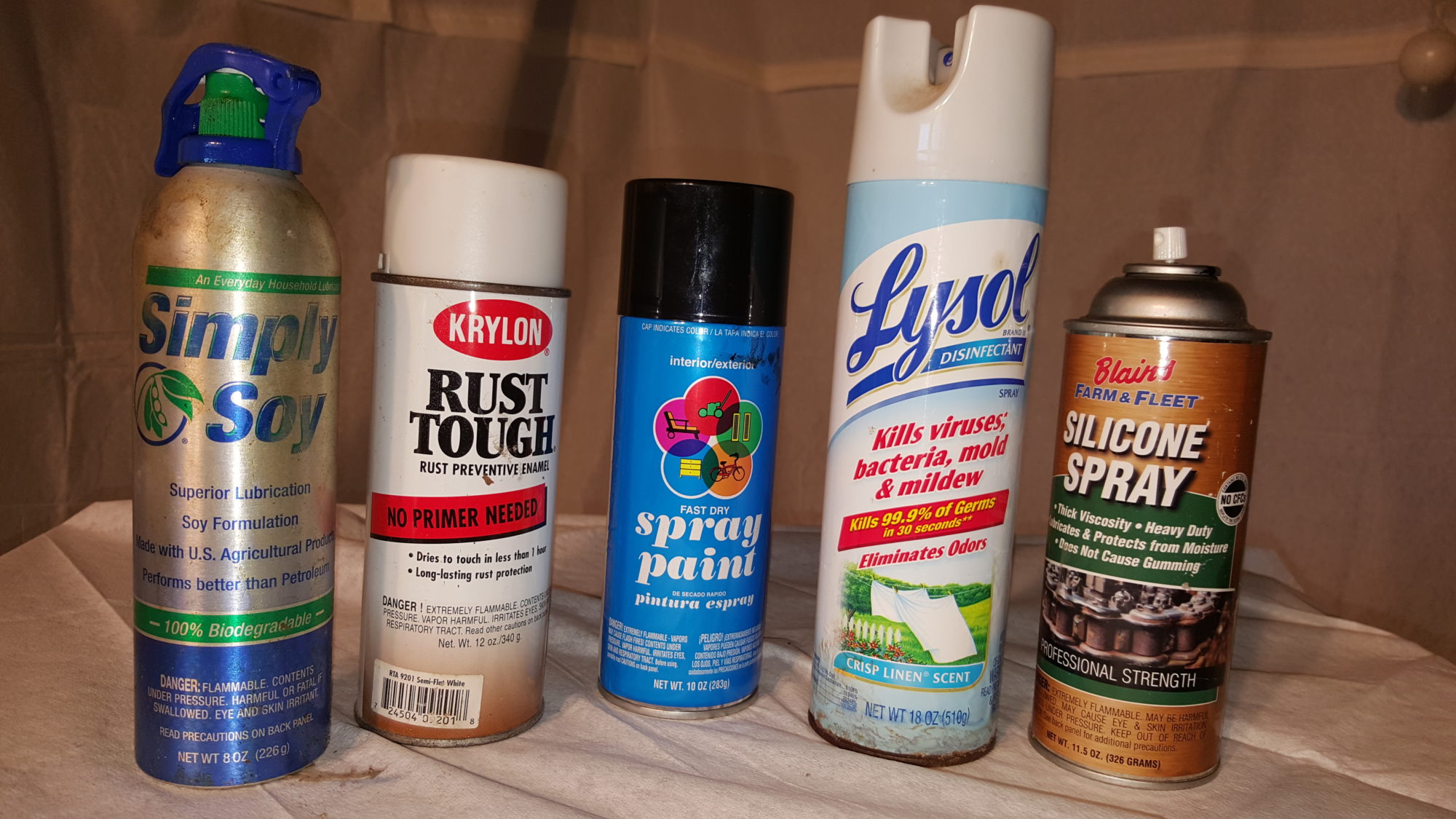
If your operations generate empty – or nearly empty – aerosol cans as a waste you must be aware of your requirements as a generator of hazardous waste under the Resource Conservation and Recovery Act (RCRA).  First of all, you must be aware that unless the aerosol cans meet the definition of RCRA Empty found at 40 CFR 261.7 it is subject to the requirement to perform a hazardous waste determination per 40 CFR 262.11.  This determination may very well reveal that your aerosol cans are a characteristic hazardous waste for Ignitability or Reactivity, or perhaps a listed hazardous waste.  Don’t panic however, RCRA includes an exemption from full regulation that can include your aerosol cans, if managed properly.

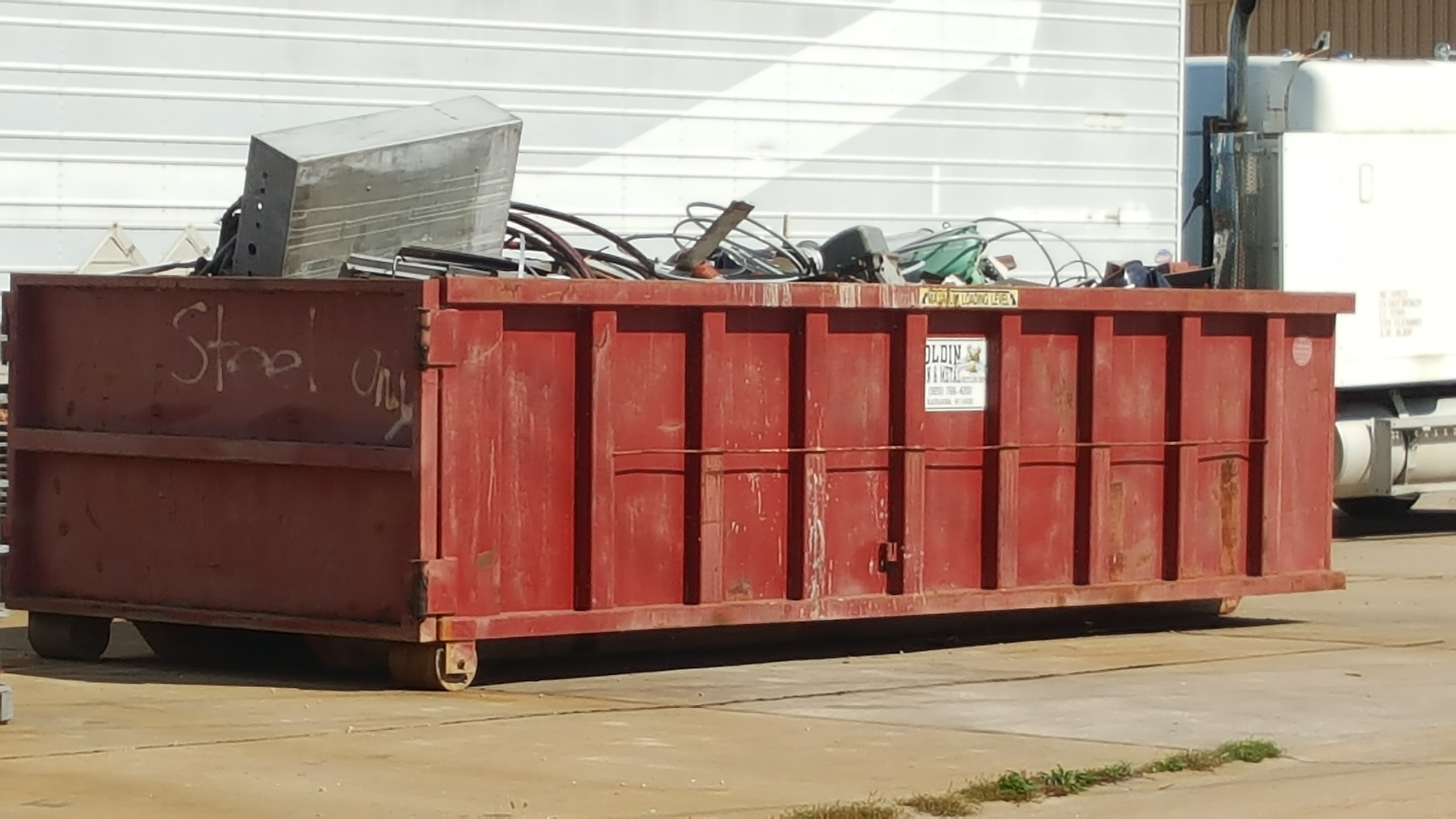
Open-top roll-off container holding scrap metal for recyclingThe key is the Scrap Metal Exemption found at 40 CFR 261.6(a)(3)(ii).   The exemption exists because EPA believes that some wastes – even hazardous wastes – pose a lower risk to the environment when recycled.  The exemption allows for certain recycled hazardous materials (known as “recyclable materials”) to be released from full regulation as a hazardous waste under Subtitle C of RCRA.

Like this article?

Subscribe to my Monthly Newsletter

No marketing emails!

Scrap metal is a solid waste when disposed of or recycled.  However, if recycled (i.e., reclaimed to recover a usable product), the Scrap Metal Exemption can be used to exempt it from regulation as a hazardous waste.  What, therefore, is a scrap metal?  Defined at 40 CFR 261.1(c)(6) as, “bits and pieces of metal parts (e.g., bars, turnings, rods, sheets, wire) or metal pieces that may be combined together with bolts or soldering (e.g., radiators, scrap automobiles, railroad box cars), which when worn or superfluous can be recycled.”  Some key points of the definition:

  • “Bits and pieces of metal parts” or metal pieces combined to make manufactured articles.  It does not include dusts, fines, or sludges.
  • Must be “worn or superfluous”, i.e., no longer fit for use.
  • “Can be recycled”.  It must be acceptable to a recycler.

aerosol cansMany items may fit into this definition, one of them is a steel aerosol can; with or without the residue of a liquid or a compressed gas.  If applicable, the scrap metal exemption allows you to accumulate, store, empty, puncture, and drain your steel aerosol cans as part of the recycling process exempt from RCRA regulation.  EPA does not regulate this exempt recycling process, but it does recommend you…

  • Empty the aerosols in a safe manner and in a way that protects the environment.  This means don’t brace the can and whack it with a hammer and nail (I’ve seen it done) or throw it into a bonfire for kicks (don’t get any ideas).
  • Capture the compressed gases and any liquid residue.  The liquid residue will likely be a hazardous waste for Ignitability and possibly for a listed hazardous waste.  If a filter is used to capture the released compressed gases, that will be subject to a hazardous waste determination as well.

A good way to meet the EPA recommendations is to purchase an aerosol can puncture device and install it on a DOT-Approved container.  Follow the manufacturer’s instructions for use of the device, and manage the container as a satellite accumulation area for hazardous waste.

Contact me with any questions you may have about the generation, identification, management, and disposal of hazardous waste

Daniels Training Services, Inc.

815.821.1550

Info@DanielsTraining.com

https://danielstraining.com/

The above is based on the US EPA Federal regulations.  Your state, county, or municipality may have regulations addressing the handling and disposal of aerosol cans.  Also, your scrap metal recycler should be informed of your actions.

UPDATE: EPA proposed in 2018 to allow non-empty aerosol cans to be managed as a universal waste.  Unless the current interruption in federal government operations continues (written 01.21.19), this should become law in 2019.  This will clarify and ease the management of non-empty aerosol cans.

Not only does my RCRA Training meet the regulatory requirements for large quantity generators of hazardous waste, it also contains information that you can apply in your day-to-day operations to maintain compliance.  But RCRA Training is only part of what I do.  I also provide HazMat Employee Training required by the US DOT.  Contact me for a free consultation on your training needs.

RCRA Training is the Solution for South Carolina Company Facing EPA Fines for Hazardous Waste Violations

Sumter Coatings, Inc. (SCI) in Sumter, SC must pay a $55,000 civil penalty as part of a settlement with the US Environmental Protection Agency for violations of the Resource Conservation and Recovery Act (RCRA) regulations discovered at its facility during a joint US EPA & SC Department of Health and Environment inspection (press release).  Alleged violations of the hazardous waste regulations include:

  • Improper management of hazardous waste containers on site;
  • Failure to provide a sufficient base beneath containers which held hazardous waste;
  • Failure to make a hazardous waste determination;
  • Failure to inspect all areas where hazardous waste containers are stored weekly;
  • Failure to develop personnel training program to ensure compliance with hazardous waste regulations;
  • Failure to update information contained in the contingency plan, along with failing to make arrangements with local police and hospital authorities regarding the contingency plan and submitting copies of the contingency plan to first responders.
Along with the civil penalty noted above, the EPA also required the company to develop a personnel training program, develop a schedule for implementation of the training program, and identify facility employees that require training.

It is sadly ironic that yet another company is developing a training program under the shadow of an enforcement action when proactive implementation of RCRA training could have precluded the violations from occurring in the first place.  Hazardous waste training is required for all personnel of a large quantity generator who handle, manage, generate, work around, treat, recycle, etc. hazardous waste and is highly recommended for similar employees of small quantity generators.  In addition to being a regulatory requirement, it is also a good way for you and your personnel to maintain compliance with the full array of hazardous waste regulations applicable to your operations.

I can provide RCRA Training and DOT HazMat Employee training in a variety of formats and locations; either at my open enrollment events held nationwide and year round, or right at your facility with on-site training tailored to your site-specific needs.  Please review my training schedule to find a date and location convenient to you, or contact me for a free training consultation.

EPA Mapping Tool Improves Public Access to Enforcement Actions Under RCRA, CWA, CAA, & Others

Last year EPA announced the launch of a new mapping feature within its Enforcement and Compliance History Online (ECHO) database.  Updated monthly, it includes information on enforcement actions – undertaken by EPA at the Federal level or by authorized State environmental agencies – against businesses like yours.  This new feature is part of the EPA’s ongoing effort to improve transparency and include more parties in maintaining regulatory compliance and protecting the environment.

The result of this “transparency” is that businesses such as yours must prepare to address – and be addressed by – a general public and other interested parties who now have ready access to critical information about your facility’s compliance status.  All enforcement actions undertaken by State and Federal agencies are included.  The data may be searched by year, media (air, water, waste, or multiple), by State, or other criteria.  The mapping tool also allows users to focus on specific facilities and view:

  • Facility name.
  • Applicable environmental statute with potential violation.
  • Link to detailed information about the facility’s compliance status on the ECHO database.

What does this mean for you?  Now more than ever, enforcement actions against your company are “Public Knowledge”.  Once an applicable action is taken by a State or Federal agency, there is no way to prevent it quickly becoming available to neighbors, concerned citizens, media, environmental groups, and your competitors.  The best way to prevent this kind of stain on your company image is to preclude the necessity for an enforcement action in the first place.

Maintain compliance with all State and Federal regulations.  Begin by ensuring any employees who generate, manage, or handle hazardous waste receive annual RCRA (aka: Hazardous Waste Personnel) Training.  It is also likely that you have employees that require the DOT’s HazMat Employee training.  I can provide both of those trainings at a reasonable price and at a location convenient for you.  Review my open enrollment training schedule, and my prices, or contact me about on-site training.

Electroplater in Cedar Falls, IA Must Cleanup its Property Subject to RCRA’s Authority

Under the authority of the Resource Conservation and Recovery Act (RCRA), US EPA Region 7 ordered an out of business electroplater in Cedar Falls, IA to immediately comply with RCRA regulations and cleanup hazardous waste contamination on its property (press release).

RCRA is typically known for its regulation of hazardous waste “Cradle to Grave”.

  • “Cradle” being the hazardous waste generator,
  • “to” being the transportation of the hazardous waste to off-site treatment, storage, or disposal, and;
  • “Grave”, the final disposition of the waste, typically by application into or on the land.

Less well known is RCRA’s provisions for the remediation or cleanup of hazardous waste from active hazardous waste facilities – such as this one – both generators (ie. Cradle) and Treatment Storage and Disposal Facilities (ie. Grave).

RCRA authority however, does not extend to the remediation and cleanup of hazardous waste contamination at inactive or abandoned sites or from spills that require emergency response.  The cleanup of these sites is left to CERCLA, the Comprehensive Environmental Response, Compensation, and Liability Act; commonly called Superfund.

Whatever the Act or regulation, improper management of hazardous waste can result in significant costs in the form of agency fines and the need for cleanup.  Contact me to ensure your RCRA training and DOT HazMat Employee training is sufficient to prevent an enforcement action of this type.

The regulations pertaining to universal waste may vary by state

RCRA State Authorization

The Resource Conservation and Recovery Act (RCRA), signed into law in 1976, tasked the US Environmental Protection Agency (EPA) to draft and enforce the regulations that form the Federal program based on the Act.  RCRA authorized EPA to delegate the primary responsibility of implementing the hazardous waste program to States and Territories with approved programs.  To achieve approved program status (aka:  RCRA Authorization), a States’ program must be substantially equivalent to, consistent with, and no less stringent than the Federal program.

State Authorization for Hazardous Waste Regulations
A state may have its own RCRA Regulations

What this means is that a State with a business-friendly agenda can’t take the EPA regulations and water them down as a gift to hazardous waste generators within their borders.  A more common occurrence is a State will go beyond the Federal program to be more strict and more broad in its regulation of hazardous waste.  Examples of this include:

  • Annual hazardous waste reports instead of biennial.
  • State-specific forms required for the Notification of Regulated Waste Activity.
  • State-specific listed and characteristic hazardous waste.
  • Containment requirements for hazardous waste Central Accumulation Areas at un-permitted hazardous waste generators – EPA requires containment for permitted facilities only.
  • Time limits for accumulation of hazardous waste in Satellite Accumulation Areas.
  • More…

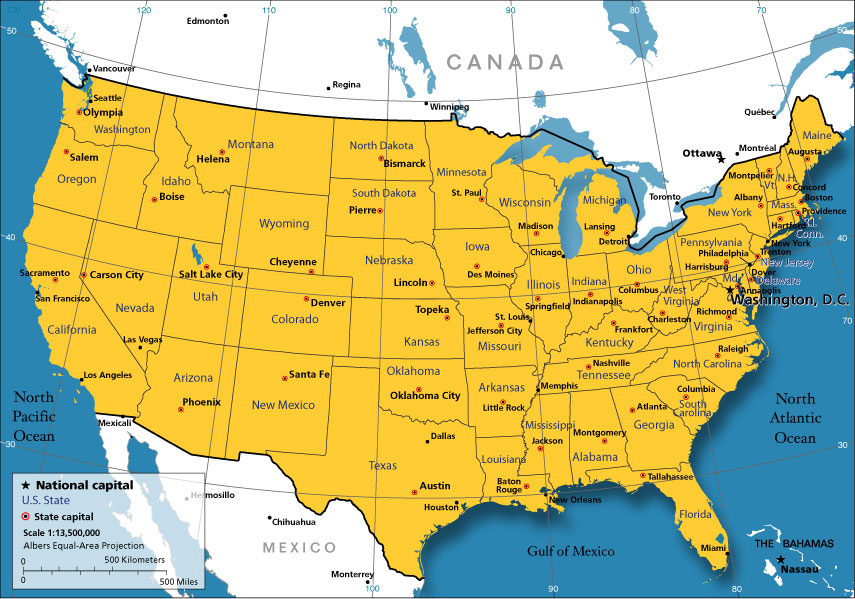
So, does your State have RCRA Authorization?  Unless your located in Iowa or Alaska, the answer is yes.  These two States lack authorization for a State RCRA program and defer to their EPA Regional authority (Region 7 & 10, respectively) for enforcement of the Federal regulations within their state.  In the remaining 48 states the primary RCRA enforcement authority is that State’s environmental compliance agency (they go by many names).

So that’s the 50 states, but what about the District of Columbia, tribal lands, and the Territories?  The status of those entities are as follows:

Authorized RCRA ProgramLacks RCRA Authorization
District of ColumbiaPuerto Rico
GuamThe Virgin Islands
American Samoa
Commonwealth of the Northern Mariana Islands
Tribal Lands (unless the State specifically receives authorization for them within its borders)

Note:  sometimes American Samoa and the Commonwealth of the Northern Mariana Islands are referred to as one entity, the Trust Territories.

FAQs:

Q:  My business is in a state with RCRA authorization, does that mean I don’t have to obey EPA regulations?

A:  No.  What it does mean is that the regulations of your state are your first source for determining compliance with RCRA.  Often a state will incorporate EPA regulations into its own unchanged or simply refer you to the Federal regulations to determine compliance.

Q:  My business is in a state with RCRA Authorization, does this mean I will never be inspected by the Feds?

A:  No.  Despite allowing a state with an authorized RCRA program to take the lead in enforcing its own regulations, the EPA maintains its right to conduct inspections in any state.  If inspected by the EPA, compliance with your state regulations will still be required.

Q:  The Federal hazardous waste regulations recently changed and I’m unsure of the status of the regulations of my state, what do I do?

A:  You must first determine if your state has an authorized hazardous waste program.  If it does, than it is likely, though not certain, that the regulations will not be immediately effective in your state.  Instead your state must decide if it will adopt the new Federal regulations, reject them, or come up with its own version that is at least as strict and as broad as the Federal rule.  If your state lacks RCRA authorization, then the rule will be effective in your state as soon as it is effective in the Federal regulations.

Q:  My state has RCRA authorization and so do the neighboring states, must I comply with the other state’s regulations in addition to my own?

A:  You do if you have business in that state.  For example, you might generate a waste that is determined to be non-hazardous by the regulations of your state, but it is possible that another state – based on its own regulations – may determine the waste to be hazardous.  If you intend to ship your non-hazardous waste out-of-state for disposal you will have to consider the regulations of that state as well as your own.

If you haven’t already, take the time to learn more about your State environmental agency and your state-specific regulations; three good sources are:

  1. EPA RCRA Authorization homepage
  2. EPA Summary of State Programs
  3. RCRA/Hazardous Waste Resource Locator provided by ENVCAP
All states require annual training of Facility Personnel of an LQG
Be sure your RCRA Training addresses the regulations of your state.

My Onsite Training is the way to go it you want training focused on the regulations of your state and how they apply to your operations.  Site specific training is also available through a Webinar.

Daniels Training Services

815.821.1550/Info@DanielsTraining.com/https://danielstraining.com/

Please contact me for a free consultation to determine which regulations apply to your operations and what training is right for you.

Generator Determination of P- & U- Listed Hazardous Waste

A company I am familiar with is a Large Quantity Generator (LQG) of hazardous waste, largely due to the generation of what it has determined to be U-listed hazardous waste.  The point of generation for the waste is an air pollution control device (dust collector) that services a process where several raw materials – some U-listed – are mixed.  It is my opinion that the waste determination in this case is incorrect in that a U-code (and a P-code for that matter) does not apply in this case.  I shared this opinion with company representatives and was met with skepticism.  Let’s review this particular aspect of the P- and U-codes and see what you think.

First, a little background:

P- and U-wastes are identified at 40 CFR 261.33 and along with F- and K-wastes make up the four kinds of listed hazardous wastes.  P- and U- wastes are discarded commercial chemical products, off-specification species, container reisdues, and spill residues thereof.  EPA further described them at the publication of the Final Rule (45 FR 33115):

“EPA intended to encompass those chemical products which possessed toxic or other hazardous properties and which, for various reasons, are sometimes thrown away in pure or undiluted form.  The reasons for discarding these materials might be that the materials did not meet the required specifications, that inventories were being reduced, or that the product line had changed.  The regulation was intended to designate chemicals themselves as hazardous wastes, if discarded, not to list all wastes which might contain these chemical constituents.  In drawing up these lists, the agency drew heavily on previous work by EPA and other organizations identifying substances of particular concern [e.g. ,the Department of Transportation].”  Emphasis mine.

The key to proper determination of a P- or U-listed hazardous waste is the identification of a Commercial Chemical Product (CCP), the regulations include several references to CCP’s, including:

  1. Virgin or unused materials whose name appears on the P- or U-list.Hazardous Waste Accumulation Area
  2. Manufacturing chemical intermediates whose name appears on the P-or U-list.
  3. Off-specification species of listed virgin or chemical intermediates.
  4. Container residues of listed materials that are not “RCRA Empty” per 40 CFR 261.7.
  5. Residue and spill clean-up of listed materials.

A comment included with 40 CFR 261.33(d) clarifies this further:

“Comment: The phrase “commercial chemical product or manufacturing chemical intermediate having the generic name listed in .  .  .” refers to a chemical substance which is manufactured or formulated for commercial or manufacturing use which consists of the commercially pure grade of the chemical, any technical grades of the chemical that are produced or marketed, and all formulations in which the chemical is the sole active ingredient. It does not refer to a material, such as a manufacturing process waste, that contains any of the substances listed in paragraph (e) or (f). Where a manufacturing process waste is deemed to be a hazardous waste because it contains a substance listed in paragraph (e) or (f), such waste will be listed in either §261.31 or §261.32 or will be identified as a hazardous waste by the characteristics set forth in subpart C of this part.”  Once again, emphasis mine.

Once again, the EPA makes clear that both P- and U-codes are meant to be applied to virgin material or a manufacturing chemical intermediate which has not yet been processed or reacted.  P- and U-codes are specifically not to be used for manufacturing process waste.  OK, what is a manufacturing process waste?

Quite simply, a manufacturing process waste is any waste generated once the CCP or manufacturing chemical intermediate has left the “Material Handling Stage” and entered the “Manufacturing Process”.  If the point of generation of the waste (ie. the moment it is or is decided to be discarded) is within the manufacturing process it is a manufacturing process waste.  A manufacturing process waste cannot be a CCP or manufacturing chemical intermediate.  Therefore it cannot be a P- or U-listed hazardous waste.

Please note however that if the P- and U-codes don’t apply, the waste may still be hazardous as a F- or K-listed hazardous waste.  Or, it may be hazardous for one of the four characteristics:  ignitability, corrosivity, reactivity, or toxicity.  It could also be a combination of several of the above.

My example company should remove the U-codes from this waste and, assuming no other listed or characteristic hazards, reclassify it as  a non-hazardous waste.  This will likely change its hazardous waste generator status from LQG to Small Quantity Generator (SQG).

Some mistakes a company makes in its interpretation of the hazardous waste regulations can cost money in fines and violations.  Others, like this one, result in unnecessary waste disposal costs and adherence to overly restrictive regulations (ie. LQG instead of SQG).  Both of these kinds of mistakes can be avoided by attending one of my open enrollment training sessions.  At my training I cover the EPA regulations for hazardous waste personnel in the 1st half of the day (4 hours) and the DOT regulations for the transportation of hazardous materials in the 2nd half (4 hours).  One day is all it takes to get you back in compliance and avoiding costly mistakes like this.

DOT logo

DOT’s Enhanced Enforcement Authority Procedures for Hazardous Material Transportation

DOT logoIn a Final Rule issued 3.2.11 and effective 5.2.11 the Department of Transportation (DOT) added a new part (49 CFR 109) to its existing enforcement procedures found in 49 CFR 107, Subpart D.  This new part specifies the procedures DOT enforcement officials will follow to complete inspections of hazardous material packages.  It is important that your HazMat Employees are properly trained to avoid the kinds of mistakes that may result in a DOT investigation of your packages in shipment.

There are several administrations within the DOT that are empowered to make investigation of hazardous material packages in domestic transportation, they are:

An investigator of any of these administrations, and the Coast Guard, may halt the transportation of a hazardous material package and direct it to an examination facility, interview persons and gather information to determine the contents,and open outer packages or overpacks to inspect inner packages or packaging components.  At the close of its investigation the inspector may reclose the package and return it to transportation.

An investigator may take any or all of the above actions whenever he/she believes that a hazardous material package, or a package they believe to contain hazardous materials, does not comply with the regulations of the DOT.  If an imminent hazard is believed to exist or a package is found to be non-compliant the investigator has the authority to issue an out-of-service order prohibiting the further transportation of the hazardous material until it is returned to compliance.

The new regulations also allow the DOT to issue emergency orders as restrictions, prohibitions, recalls, and out-of-service orders without advanced notice or a hearing if it determines an imminent hazard exists or the hazardous material transportation regulations have been violated.

And what are regulations without enforcement?  Punitive damages and civil penalties (eg. $$money$$) may be issued if violations are found.

What this means to you is that your shipment of hazardous material – including hazardous waste – may be stopped, opened, inspected, and halted in transportation if a violation is found.  This could have an impact on your sales, but also your compliance with the Environmental Protection Agency (EPA) regulations regarding hazardous waste.  Proper packaging, labeling, and marking of a hazardous waste for shipment is a requirement of the EPA as well as the DOT and a violation of one’s regulations may be the violation of the others.

So do everything you can to ensure your shipments of hazardous materials and hazardous waste are in compliance with the regulations of both the DOT and the EPA (not to mention state-specific regulations).  The best way to do this is to attend one of my training events.

My training comes in two formats (web-based is not yet available) they are:

  • Open enrollment training held nationwide and year-round, and;
  • On-site training brought to your door and tailored to your site-specific needs.

Whichever you choose, my training meets and exceeds the training requirements of both the EPA found at 40 CFR 265.16 and those of the DOT found at 49 CFR 172, Subpart H.  Both in one day!

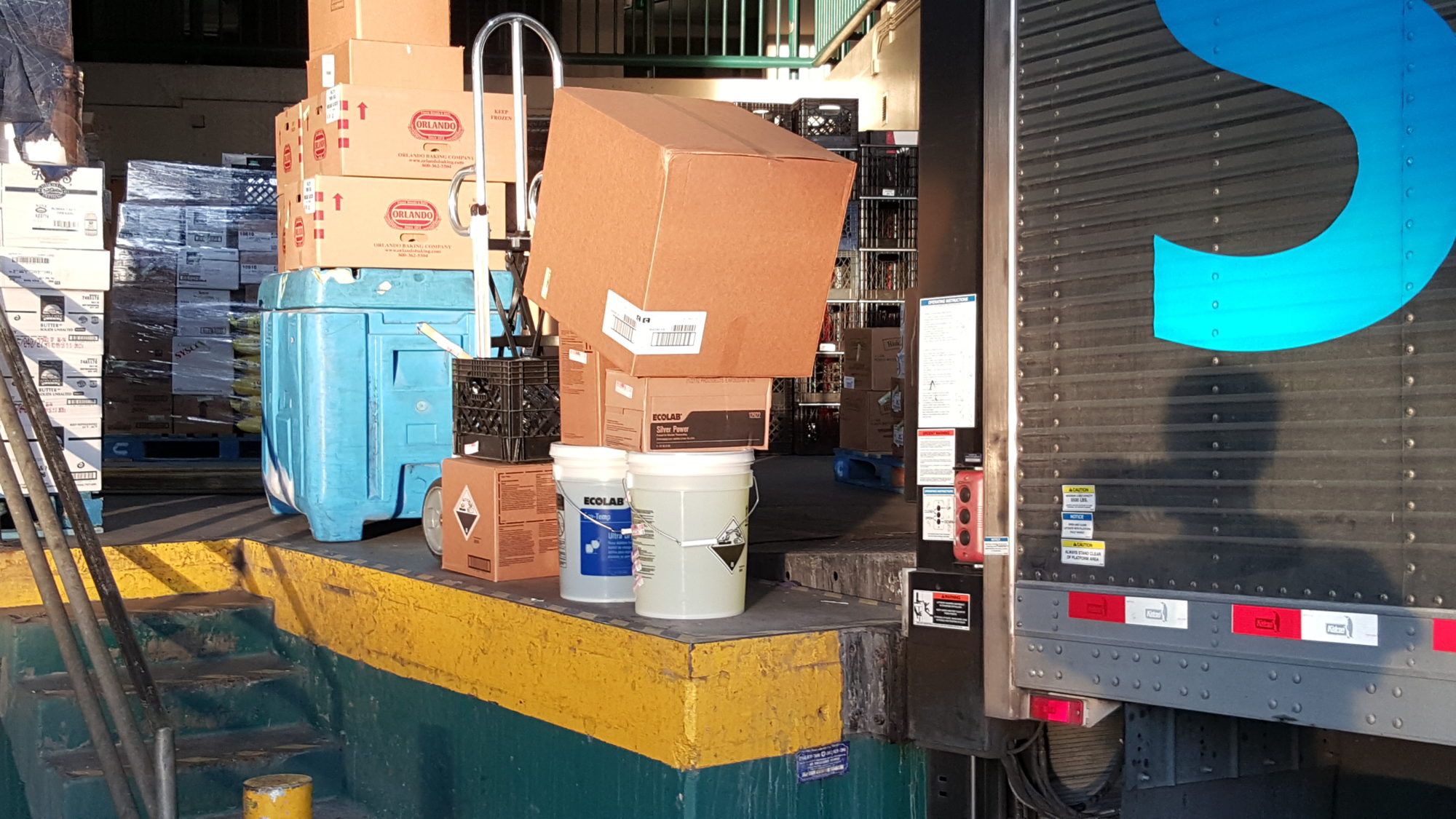
Hazardous materials on shipping dock

Who is the “Shipper” When Transporting a Hazardous Material?

Despite its frequent use in the Hazardous Materials Regulations (HMR) of the Pipeline and Hazardous Materials Safety Administration (PHMSA) – which itself is one of thirteen administrations and bureaus within the U.S. Department of Transportation (USDOT) – the term “shipper” is not clearly defined in the HMR.  Yet if you offer for shipment a hazardous material (i.e. arrange for a carrier to transport it from your site to its final destination), then your actions characterize you as a shipper and subject you to all the applicable requirements of the HMR.

The purpose of this article is to identify, describe, and clarify the use of the term shipper in the Hazardous Materials Regulations of the USDOT/PHMSA. (more…)

Hazardous Waste Label

Hazardous Waste Violations Could Result in HazMat Transportation Violations

Hazardous Waste Label(Boston, Mass. – Feb. 17, 2012) – A Rhode Island company that conducts printing, coating and finishing of specialty fabrics has been ordered by EPA to come into compliance with federal hazardous waste management regulations.

Its violations include a failure to:

  • Complete a hazardous waste determination for the waste it generates.
  • Separate incompatible hazardous wastes.
  • Provide adequate RCRA Training for its employees.
  • Maintain a hazardous waste contingency plan.
  • Properly manage and label its universal waste.

Usually I would harp on the failure to provide adequate RCRA Training since this sort of training is just what I do, actually it’s only part of what I do, but read on.  However, I’m going to conjecture that violations of the EPA regulations will inevitably result in violations of the Department of Transportation (DOT) hazardous material transportation regulations and possibly cause a hazardous materials incident; here’s how.

I’ll assume that as a printer, the Rhode Island company uses flammable liquids as solvents, thinners, cleaners, in its inks, etc.  It is quite possible that the hazardous waste determination failure was for materials such as these.  If so, what should be an ignitable hazardous waste with the characteristic waste code of D001, might be identified as a non-hazardous material.  This kind of mistake will then lead to the other hazardous waste violations noted in the press release.  But what about when the hazardous waste is shipped off-site for disposal or treatment, what then?

I’ll assume that this company is a Large Quantity Generator (LQG) of hazardous waste and therefore must use a Uniform Hazardous Waste Manifest for its off-site shipments of hazardous waste.  The use and proper completion of the manifest is a requirement of both the EPA and the DOT.  Therefore, an incomplete or missing hazardous waste determination may result in the improper completion of the manifest.  It may also result in the incorrect use of the remaining three hazard communication methods required by DOT for shipments of hazardous waste.  Along with the manifest as a shipping paper, they are:

  1. Placards
  2. Labels
  3. Markings

Clearly, a violation of the EPA regulations to conduct a hazardous waste determination (40 CFR 262.11) can result in a violation of the DOT regulations when shipping hazardous waste.  And not just a violation of the regulations.  According to the DOT ~80% of hazardous material incidents in transportation are due to human error; another ~15% are due to package failure.  Errors may result not only in violations and fines, but serious personal injury or damage to property.

The solution?  One word:  Training.

I provide the training that addresses all of these issues and more; conducted either as open enrollment training held nationwide and year-round or as on-site training tailored to your site specific needs.  At my training you will learn the regulations of the EPA for facility personnel found at 40 CFR 265.16 and those of the DOT for HazMat Employees found at 49 CFR 172, Subpart H.

Contact me to arrange for training to bring you back into compliance and avoid these costly and dangerous violations.

Search Website