PO Box 1232 Freeport, IL 61032

A Different Kind Of Training

A Different Kind Of Training

A Different Kind Of Training

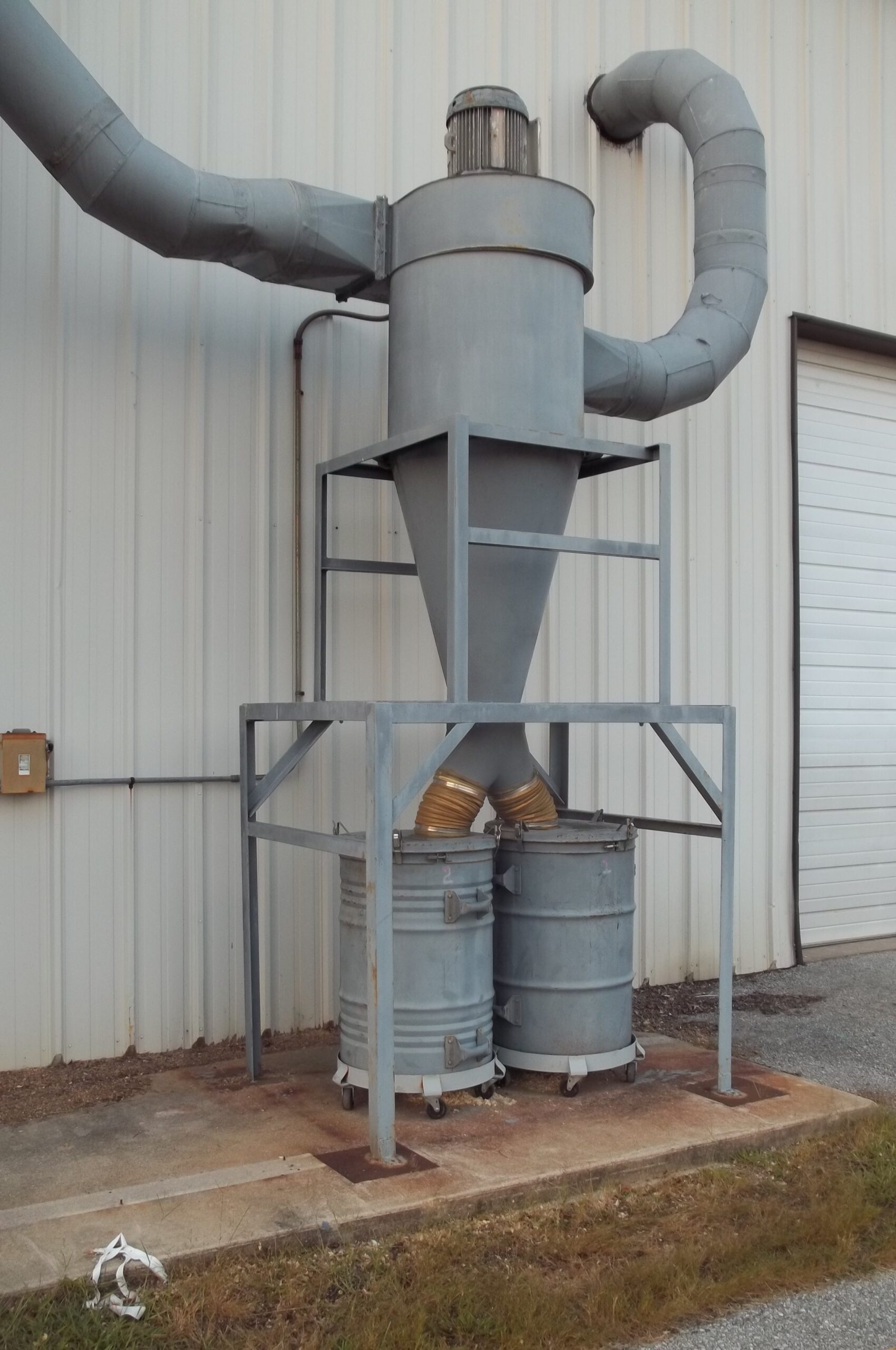
Air pollution control devices

What is a Sludge? The US EPA Definition

Like the term “solid waste”, “sludge” when used by the EPA can be confusing.  It can be found in 40 CFR 261.2 as part of EPA’s description of what wastes may and may not be a solid waste (more on that below) .  The reason for this confusion is that the EPA definition of a sludge differs from the common English definition:

EPA definition of sludge from 40 CFR 260.10:  Sludge means any solid, semi-solid, or liquid waste generated from a municipal, commercial, or industrial wastewater treatment plant, water supply treatment plant, or air pollution control facility exclusive of the treated effluent from a wastewater treatment plant.

Whereas the standard English definition:  Thick, soft, wet mud or a similar viscous mixture of liquid and solid components, esp. the product of an industrial or refining process.

(more…)

The Recordkeeping Requirements for RCRA Training for Hazardous Waste Personnel

In an earlier article I explained the requirements for training of Facility Personnel at a Large Quantity Generator (LQG) of hazardous waste.  Just as important as providing the correct training is documenting its successful completion, that is the point of this article.

40 CFR 265.16 contains all of the regulations pertaining to the training of Facility Personnel at an LQG.  Paragraph (d) of that section mandates what your recordkeeping must include:

  1. The job title for each position at the facility related to hazardous waste management, and the name of the employee filling each job.
  2. A written job description for each position listed above.  Description may be consistent with your current job title descriptions (eg. Lead Maintenance, 2nd Shift Crew Chief, etc.), but it must include the requisite skill, education, or other qualifications, and duties of facility personnel assigned to each position.
  3. A written description of the type and amount of training (initial and annual review) to be provided.
  4. Record of training completion.  If on the job experience is used in lieu of classroom training, then documentation of its completion.

Records of training must be maintained by the owner or operator at the facility.  If a vendor or contractor provides this training for you, make certain you retain copies of the required records at your site.  Training records must be maintained…

  • For current personnel until facility closure.
  • For former employees at least three years from the last day of employment.

And, an interesting aspect of the training records for Facility Personnel is that while they may be transferred within the same company, they may not be transferred if personnel begin employment with a new company.  I find this interesting since the DOT’s training requirements for HazMat Employees does allow for the transfer of training records between companies.  The EPA realizes that the management of hazardous waste is site specific and requires training that can focus on the safe handling of hazardous waste at that location.

If you wish to receive high-quality RCRA Training and DOT HazMat Employee Training for you and a few coworkers, I suggest you sign up for one of my public/open enrollment training events.  If however, you require training for many employees and/or want site specific training, I suggest you contact me to arrange for on-site training.  Either way, it is important that you comply with the requirement to annually train your Facility Personnel who may be exposed to hazardous waste.

The Uniform Hazardous Waste Manifest and Personal Liability

I used to work for a hazardous waste disposal company named Laidlaw Environmental Services in Pecatonica, IL.  A frequent question I was asked as I directed the client to sign the Uniform Hazardous Waste Manifest (Manifest) was:  “Will I go to jail for this?”  I’d laugh and try to reassure them that we had everything under control and they were not going to jail.  But the question is valid:  Can the person who signs the Manifest be held personally liable for errors and omissions on the shipping paper or in the shipment itself?  The answer, is yes.

The EPA notes that its requirements for preparing and signing Manifests are based on the corresponding DOT regulations for the use of shipping papers for hazardous materials.  Note that the Certification Statement in section 15 of the Manifest refers to the “Generator’s/Offeror’s Certification” and not just the generator of the hazardous waste.  Offeror (sometimes used interchangeably with Shipper) is a term used by the DOT.  You can read more about the responsibilities of a shipper/offeror, but in brief, per the DOT an offeror is any person who performs or is responsible for performing a pre-transportation function for the shipment.  This definition is deliberately vague and creates a situation where there may be more than one offeror/shipper, each of which could be held jointly and severally responsible for violations of the Hazardous Material Regulations (HMR).

DOT assumes that the signer of the shipper’s certification will have personal knowledge of the waste shipment and its preparation for transportation.  Not that it is not necessary for the signer to be an officer of the entity generating the waste, it could be anyone (vendor, consultant, employee, carrier) who is knowledgeable about the shipment and the applicable regulations and is willing to sign on the dotted line.

Whomever is to sign the manifest should carefully read the certification statement:

I hereby declare that the contents of this consignment are fully and accurately described abouve by the proper shipping name, and are classified, packaged, marked and labeled/placarded, and are in all respects in proper condition for transport according to applicable international and national governmental regulations.  If export shipment and I am the Primary Exporter, I certify that the contents of this consignment conform to the terms of the attached EPA Acknowledgement of Consent.

Note that the certification covers more than just the information on the Manifest.  You are also certifying that all aspects of the shipment are in compliance with the HMR, so be sure you are involved with the preparation, loading, and securing of hazardous waste shipments prior to signing the Manifest.

But what if I’m trained and knowledgeable, I do my best and sign the Manifest, but something is wrong.  You’re saying I would be held personally liable?  Me?!?  Well, yes.  Typically the employer of the person signing would be subject to enforcement actions, in situations of egregious or criminal violations, the signer could be held personally liable.

Don’t get caught out of compliance.  Contact me for the DOT HazMat Employee Training and the RCRA Training for Hazardous Waste Personnel that will help you to ensure you are following the regulations of both the DOT and the EPA when you ship hazardous waste.

Options for the Recycling of Scrap Circuit Boards

If you generate scrap circuit boards as a waste, you may be unaware of your options for disposal or recycling under USEPAs hazardous waste regulations.  The purpose of this article is to identify and briefly explain your options for the management of scrap circuit boards. (more…)

Empty Steel Aerosol Cans as a Reactive Hazardous Waste (D003)

Pursuant to 40 CFR 262.11 it is the responsibility of the generator to determine if the waste they generate is hazardous.  This responsibility applies to empty steel aerosol cans that are likely generated somewhere within your facility (think:  Maintenance).  While your site specific conditions may vary, for the purposes of this article I will make some assumptions about the contents and nature of your empty aerosol cans.  Based on those assumptions, it is possible that empty steel aerosol cans meet the definition of a hazardous waste:

  • D001 for Ignitability – The liquid content residue (if any) and the compressed gas propellant (if any) may separately meet the definition of ignitability.
  • D002 for Corrosivity – The liquid content residue (if any) may meet the definition of corrosivity (eg. oven cleaner).
  • D003 for Reactivity – The aerosol can as an article may meet the definition of reactivity.
  • Doo4 – D043 for Toxicity – The liquid content residue (if any) may meet the definition of toxicity (eg. chlorinated solvents, pesticides).
  • U-Listed or P-Listed – The liquid content residue (if any) may be listed at 40 CFR 261.33.

The MSDS and/or analysis of a representative sample will provide you with the information you need to determine if any of the above hazards are present, except for the D003.  Since D003 is determined entirely by your knowledge of the operation (D003 – The Characteristic Hazardous Waste Code for Reactive Waste) there is not an acceptable test method.  And EPA provides little help:

…we are not at this time able to make a categorical determination as to whether various types of cans that may have contained a wide range of products exhibit the characteristic of reactivity.  It remains the responsibility of the generator of any particular waste to make this determination (see 40 CFR 262.11) [RO 11806].

So, the ball is back in your court.  Luckily for you there are some options available for the management of your empty steel aerosol cans, even if they are a hazardous waste; you can read about Managing Aerosol Cans Under the RCRA Scrap Metal Exemption.

Contact me for a free consultation to determine how best to meet the training requirements of the EPA for Hazardous Waste Personnel (RCRA Training) and those of the DOT for HazMat Employees.


DOT Requirements for Frequency of HazMat Employee Training

When must you train your HazMat Employees:  How soon after employment begins, and how frequently must you provide refresher training?  Fortunately 49 CFR 172.704(c) provides answers to these questions.

First of all a new hire or one whose job function changes to become a HazMat Employee must receive HazMat Employee Training (see:  The Five Types of HazMat Employee Training) within 90 days.  And, they must be under the direct supervision of a properly trained and knowledgeable HazMat Employee until they receive training.

HazMat Employees must receive full recurrent training (not a refresher, but the full training) at least once every three years thereafter, ie. triennially.  The sole exception to this 3-year cycle is for HazMat Employees who require In-Depth Security Training.  Any time the Security Plan is revised, those HazMat Employees must be trained within 90 days of the implementation of the revised plan.

If your new employee received their HazMat Employee training with a former employer, their previous training will suffice as long as you obtain and maintain a current record of their training.

As the HazMat Employer you are responsible to ensure your HazMat Employees have been trained on the requirements of this part and tested by appropriate means.  You are also responsible for all of the requirements of the Hazardous Material Regulations (HMR) regardless of whether the required training has been completed.

If it’s been more than three years since your last HazMat Employee Training, or you’ve hired new HazMat Employees since your last training, or you’ve just lost track of when training was last completed, you should call me for a free consultation on your training needs.  While we’re talking we can discuss the training requirements of the EPA for your Hazardous Waste Personnel as well.

When to Remove Hazardous Waste From a Satellite Accumulation Area

The EPA regulations for the management of hazardous waste in “Satellite Accumulation Areas”, which, incidentally doesn’t define or use the term “Satellite Accumulation Areas” can be found at 40 CFR 262.34(c).  Here we learn the seven most important requirements to maintain compliance:

  1. No more than 55 gallons of hazardous waste or one quart of acutely hazardous waste.
  2. In containers.
  3. At or near the point of generation where the waste initially accumulates.
  4. Waste is under the control of the operator of the process generating the waste.
  5. Comply with 40 CFR parts:  265.171 – Condition of Containers, 265.172 – Compatibility of Waste with Container, and 265.173(a)Closed Container.
  6. Mark container with the words “Hazardous Waste” or other words that identify the contents (ie. Waste Flammable Paint).
  7. When volume threshold from #1 is reached, generator has three (3) days to comply with applicable regulations as a generator of hazardous waste (either large quantity generator or small quantity generator).

#7 stated another way:  When the volume threshold is reached the container must be closed, labeled “Hazardous Waste” and the date marked on the container.  Within three days the container must be moved to the Central Accumulation Area (aka:  90/180 day accumulation area).  What is meant by “three days”?  Pursuant to RCRA On-Line FAQ’s:

Three days means three consecutive days.  It does not mean three working days or three business days.  Originally, the Agency had proposed to use 72 hours as the time limit but realized that determining when 72 hours had elapsed would have required placing both the date and time of day on containers.  In the final rule the Agency switched to using three days so that generators only need to date containers that hold the excess of 55 gallons of hazardous waste (or 1 quart of acute hazardous waste).

So, as an example, today is Thursday, May 10th and sometime tonight on second shift a container in an SAA reaches the 55 gallon threshold.  The operator, being properly trained and informed, closes the container, marks the date (4.10.12) on the exterior, and goes home.  If the container is not moved to the CAA on the 11th, by the time you arrive for work on Monday May 14th – only two business days later, but four consecutive days – you’ve got yourself a violation of the regulations.

It’s little things like this that can be misunderstood and result in violations.  It is these aspects of the regulations that I pride myself on covering in my RCRA Training for Hazardous Waste Personnel.  I perform the same service for HazMat Employees who require triennial training by the DOT.  Whether it’s public/open enrollment or on-site, I can provide the training you need in one day.

General Display Requirements for Hazardous Material Placards

In an earlier article I wrote about the requirement of the Hazardous Materials Regulations (HMR) of the Pipeline and Hazardous Materials Safety Administration within the U.S. Department of Transportation (USDOT/PHMSA) to ensure the visibility of placards on a motor vehicle or rail car in transportation.  Read:  Visibility Requirements for Hazardous Materials Placards.

Those regulations at 49 CFR 172.516(a,b) affect where a carrier must display HazMat placards on a rail car or motor vehicle.  Also important – and the subject of this article – are the remaining requirements of that part –  §172.516(c-e) – for the display of hazmat placards in all vehicles and all packagings that require placards. (more…)

Avoid Double-Counting of Hazardous Waste When Determining Generator Status

In an earlier article I directed you towards the applicable regulations (40 CFR 261.5) for determining your hazardous waste generator status.  Specifically, 40 CFR 261.5(c) listed the hazardous wastes that need not be counted toward your generator status.

Another concern when summing the amount of hazardous waste generated is double-counting.  To avoid double counting 261.5(d) lists the types of waste you need not count toward your generator status as they have been counted already:

  1. Hazardous waste when removed from on-site storage.
  2. Hazardous waste produced by on-site treatment (including reclamation) as long as the hazardous waste was counted once.
  3. Spent materials generated, reclaimed, and subsequently reused on site, as long as the spent material is counted once during the calendar month.

The key determination in each of the above situations is:  When is the Point of Generation (POG) of the hazardous waste?  If you know that, then understanding of the above regulations becomes easier.  So…

  1. “Hazardous waste when removed from on-site storage.”:  The POG is the process, event, or activity that created the hazardous waste which, we can assume, was then transferred to the on-site storage area.  It is counted towards your generator status at the POG, anything after that would be double-counting and is not necessary.
  2. “Hazardous waste produced by on-site treatment (including reclamation) as long as the hazardous waste was counted once.”:  On-site treatment and reclamation can be tricky, you may wish to read my articles on the topics of:  Treatment of Hazardous Waste and Spent Solvent Reclamation.  In brief, on-site treatment involves a process where a spent material is removed from its POG as a hazardous waste, treated, and then either returned to use or disposed of.  The treatment process may itself generate a hazardous waste which is referred to here.  If you counted the hazardous waste as it entered treatment, there is no need to count the hazardous waste generated by the treatment.
  3. “Spent materials generated, reclaimed, and subsequently reused on site, as long as the spent material is counted once during the calendar month.”:  In this example a spent material is removed from its POG as a hazardous waste, but is in some way made suitable for reuse on site.  This may happen several times during a calendar month.  In this situation, you need only count the amount of hazardous waste the first time it is generated in that month.  Note that a new month means counting the spent material again even if it is an amount carried over from the previous month.

Correctly accounting for the hazardous waste you generate is an early step in maintaining compliance with the regulations of the EPA.    You must then comply with the applicable regulations based on your hazardous waste generator status.  One of the requirements of a Large Quantity Generator (LQG) is to provide annual training for all personnel exposed to hazardous waste.  Contact me for a free consultation of your requirements to provide RCRA Training for Hazardous Waste Personnel and DOT HazMat Employee Training.

Counting Hazardous Waste to Determine Generator Status

In order to determine your status as a generator of hazardous waste:  Large Quantity Generator (LQG), Small Quantity Generator (SQG), or Conditionally Exempt Small Quantity Generator (CESQG), you must know how much hazardous waste and/or acute hazardous waste you generate in a calendar month (EPA guidance:  Generator Summary Chart).  Just as important as knowing what waste to count is knowing what waste not to count towards your generator status.

The applicable regulations can be found in 40 CFR 261.5 which is entitled:  Special Requirements for Hazardous Waste Generated by Conditionally Exempt Small Quantity Generators.  Don’t let the title fool you, while a reasonable person may infer these regulations apply only to CESQG’s in fact they apply to all generators of hazardous waste.

According to 40 CFR 261.5(c), when determining your hazardous waste generator status, you must count all hazardous waste you generate, except hazardous waste that:

§261.4(c) allows for exemption from regulation as a hazardous waste for up to 90 days for a hazardous waste generated in an out of service product or raw materials storage tank, vehicle, manufacturing process or unit, or pipeline.

§261.4(d-f) allows for exemption from regulation as a hazardous waste for waste characterization samples and treatability samples.

§261.6(a)(3) exemptions from RCRA regulation for specified recyclable materials.

§261.7(a)(1) is the exemption from RCRA regulation for the residue of empty containers (aka:  The RCRA Empty Exemption).

§261.8 is the exemption from regulation under RCRA for PCB’s regulated under the Toxic Substances Control Act (TSCA).

Research these regulations carefully to ensure the determination of your hazardous waste generator status is correct.  Then contact me for a free consultation of your requirements to provide RCRA Training for Hazardous Waste Personnel and DOT HazMat Employee Training.  I provide both of these in one day training sessions either at public events or at your facility.

You may also be interested in this article where I review the regulations regarding double-counting of your hazardous waste generation.

Search Website